I.3.25 Pompeii. Casa dei Guerrieri or the House of the Bronzehandlers.
Linked to I.3.26. Excavated 1869.
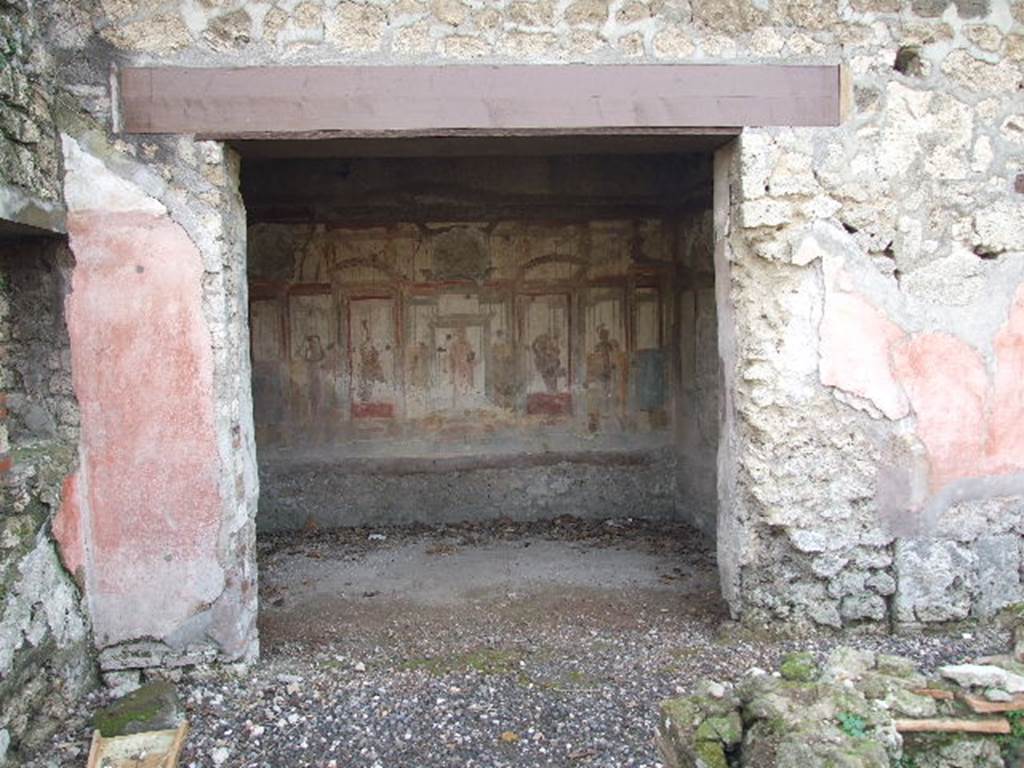
I.3.25 Pompeii. December 2006. Looking south into doorway to oecus.
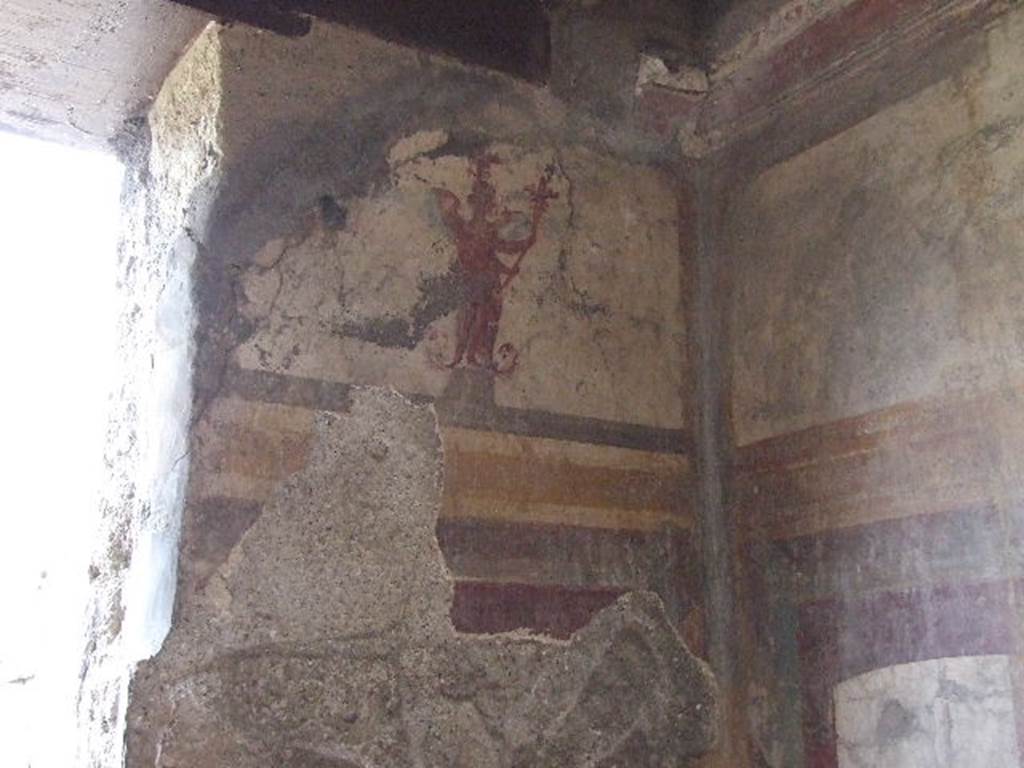
I.3.25 Pompeii. December 2006. Oecus, with detail of wall painting of (Egyptian?) deity in north-east corner.
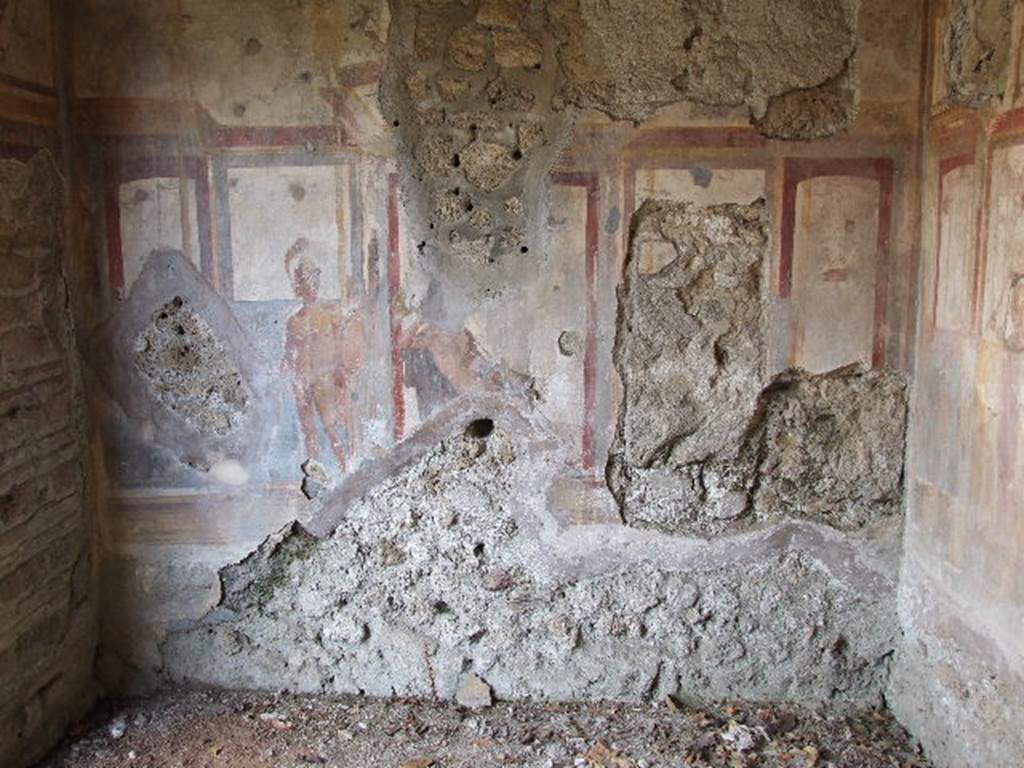
I.3.25 Pompeii. December 2006. Oecus, east wall.
To the right of the centre panel was a painting of a
warrior, which was similar to the one on the left. It was stolen in 1977.
See Schefold, K., 1962. Vergessenes Pompeji. Bern: Francke. (p. 126 T: 91 for east and south walls).
By 1981, at least one of the paintings from the east wall had been recovered.
This would have been located in the upper south-east corner above the stolen painting to the right of the centre panel.
It was of a figure, which can be seen in Schefold’s picture 91, and also
See Pompei
1748-1980, I tempi della documentazione, catalogue of the 1981-2 exhibition,
(p.72, figs 32 and 33).
See Schefold, K., 1962. Vergessenes Pompeji. Bern: Francke. (p. 126 T: 91).
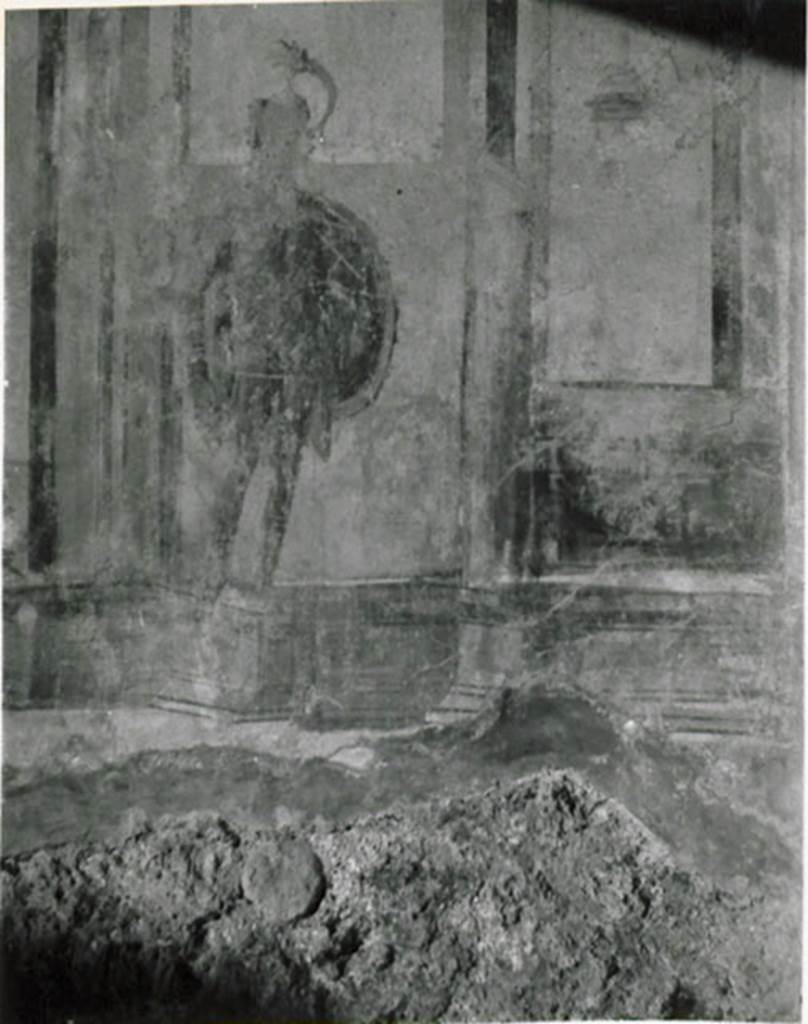
I.3.25 Pompeii. 1935 photograph taken by Tatiana Warscher. Oecus east wall.
Figure at the south end of the east wall, stolen in 1977.
According to Warscher, unfortunately she could not photograph the walls of the oecus because of the dimness of the light.
She was limited to photograph only the first figure on the east wall.
Warscher called this room a triclinium, although she acknowledged that Fiorelli described it as an oecus.
See Warscher, T, 1935: Codex Topographicus Pompejanus, Regio I, 3: (no.69), Rome, DAIR, whose copyright it remains.
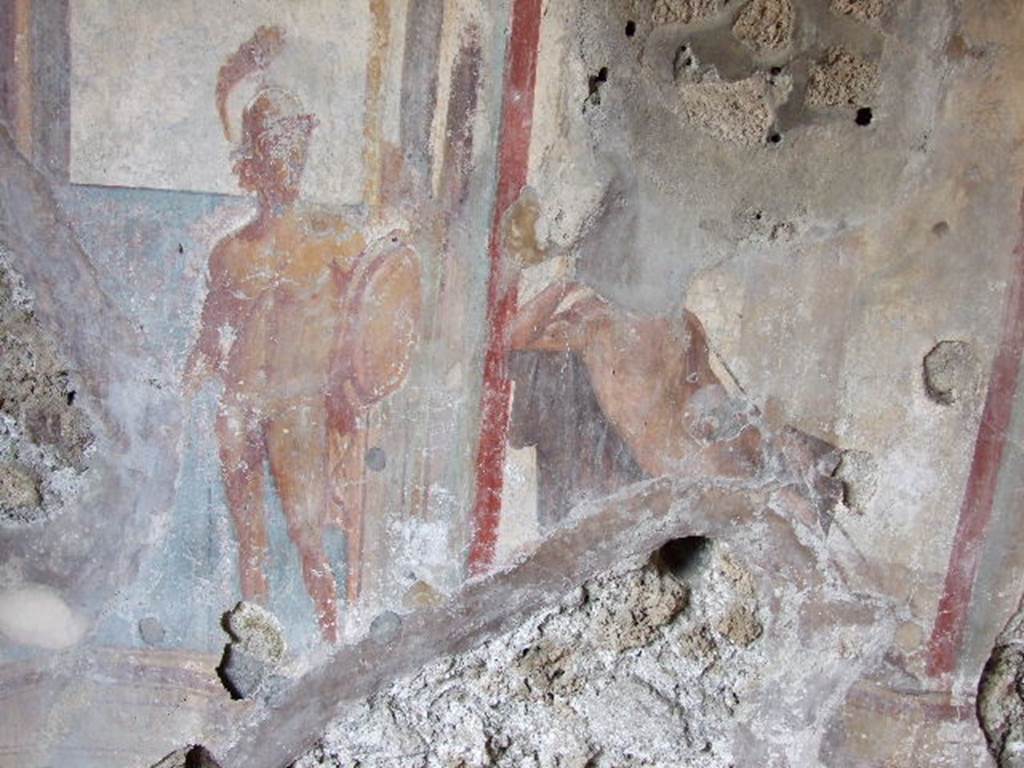
I.3.25 Pompeii. December 2006. Oecus, east wall.
Detail of wall painting of Apollo in judgement. His right arm rested on a chair and was supporting his head in thought.
A warrior to the left symbolised beauty.
Kuivalainen believes the figure on the right (head and feet destroyed) to be Bacchus.
See Kuivalainen, I., 2021. The Portrayal of Pompeian Bacchus. Commentationes Humanarum Litterarum 140. Helsinki: Finnish Society of Sciences and Letters, (p.104, B18).
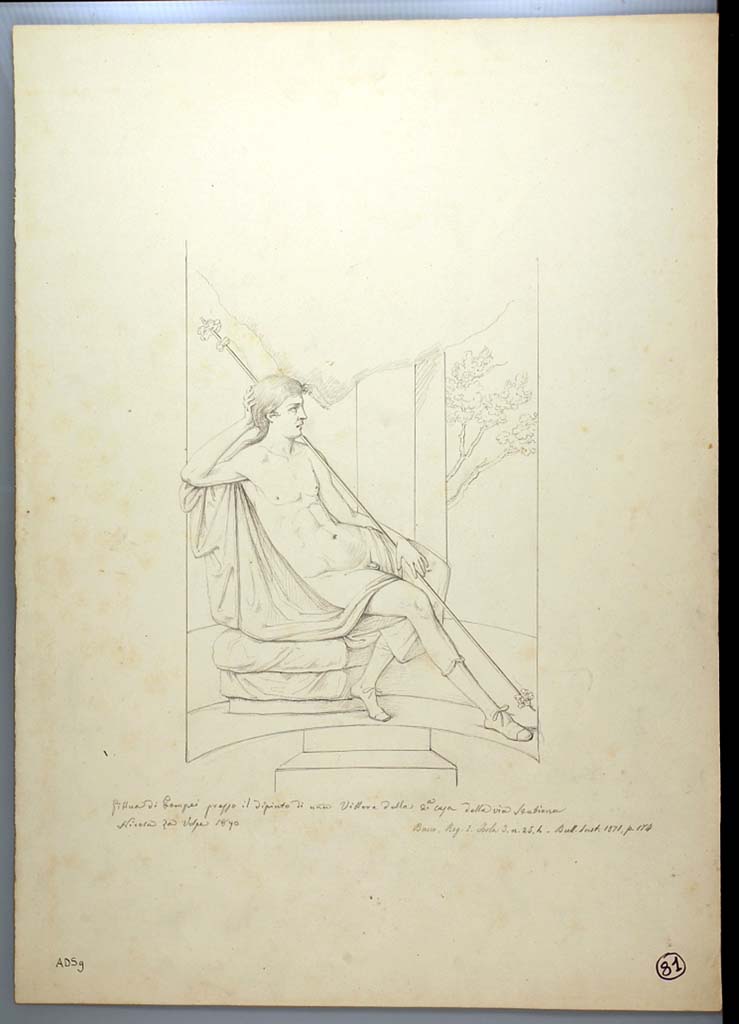
I.3.25 Pompeii. Drawing by Nicola La Volpe, 1870, of painting seen in centre of east wall of oecus.
See Sogliano, A., 1879. Le pitture murali campane scoverte negli anni 1867-79. Napoli: Giannini. (p.38, no.156, described as young Dionysus)
Now in Naples Archaeological Museum. Inventory number ADS 9.
Photo © ICCD. https://www.catalogo.beniculturali.it
Utilizzabili alle
condizioni della licenza Attribuzione - Non commerciale - Condividi
allo stesso modo 2.5 Italia (CC BY-NC-SA 2.5 IT)
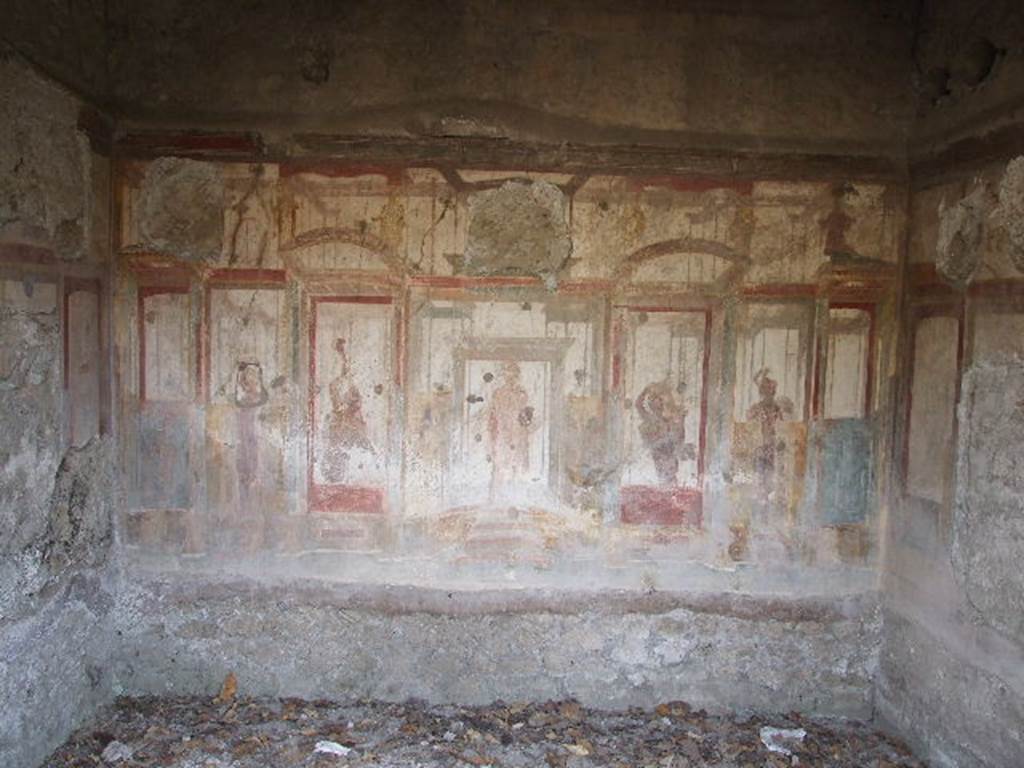
I.3.25 Pompeii. December 2006. South wall of oecus. Stage type painting or scaenae frons.
Herbig interpreted this room as representing the quarrel of Aphrodite and Hesperus over beauty, with Apollo in judgement.
See Schefold, K., 1962. Vergessenes Pompeji. Bern: Francke. (p. 126 T: 90,2; 91)
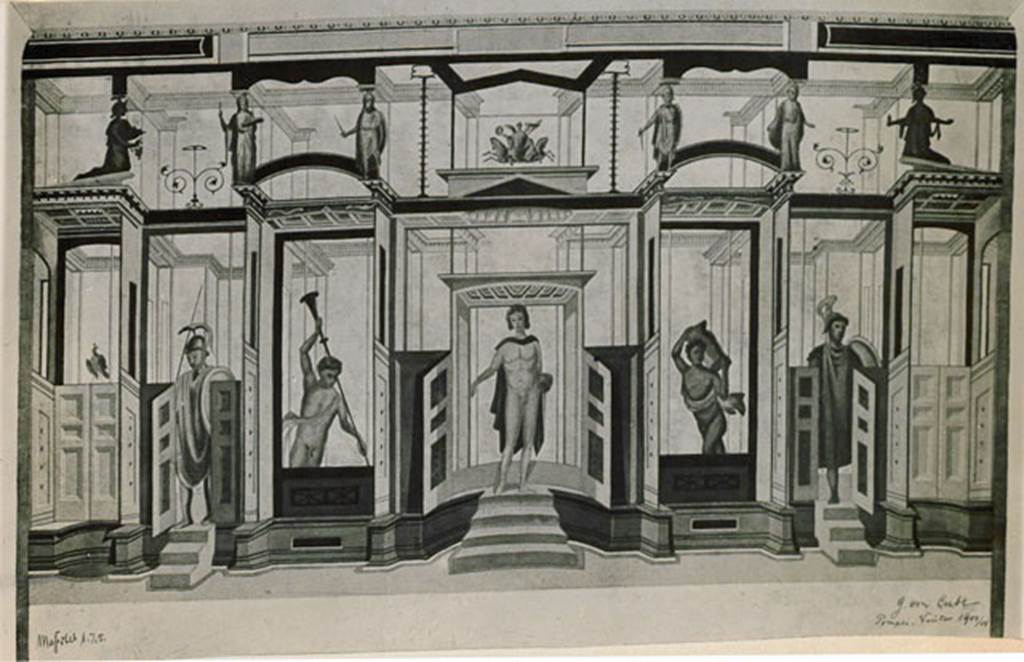
I.3.25 Pompeii. 1935 photograph taken by Tatiana Warscher.
According to Warscher, not having found a photograph of the walls of this room, she included a reproduction of the design from G. von Cube, the author of the study published in his article entitled “Die römische Scenae Frons”, Tavola II, p.22
See Warscher, T, 1935: Codex Topographicus Pompejanus, Regio I, 3: (no.70), Rome, DAIR, whose copyright it remains.
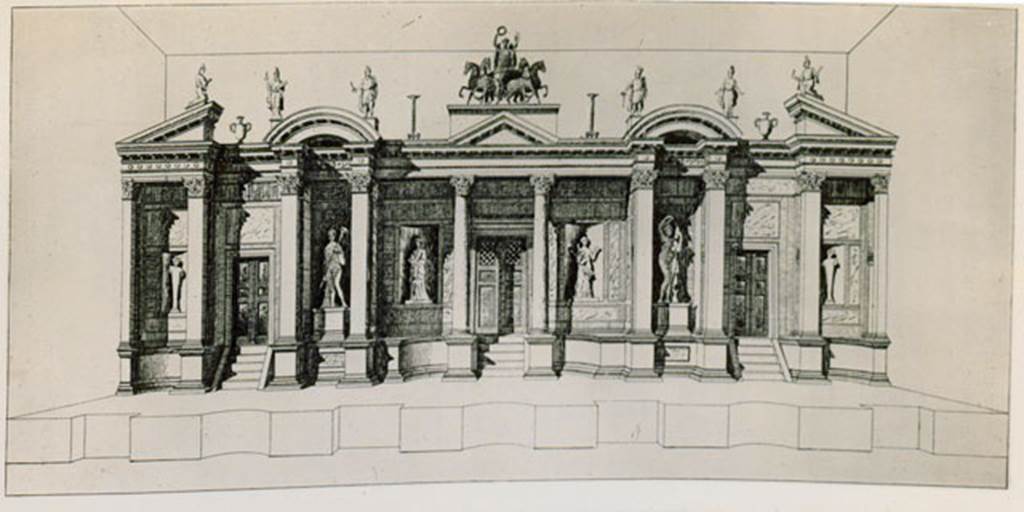
I.3.25 Pompeii.
1935 photograph taken by Tatiana Warscher of a reproduction of the reconstruction of the “Scaenae Frons”. (Tavola III, p.23)
See Warscher, T, 1935: Codex Topographicus Pompejanus, Regio I, 3: (no.71), Rome, DAIR, whose copyright it remains.
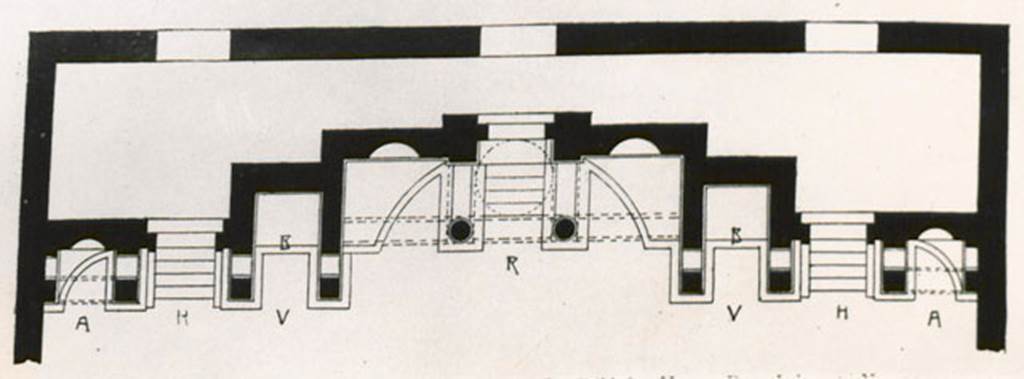
I.3.25 Pompeii. 1935 photograph taken by Tatiana Warscher of the plan of the “Scaenae Frons”. (Fig.2, p.24)
See Warscher, T, 1935: Codex Topographicus Pompejanus, Regio I, 3: (no.71a), Rome, DAIR, whose copyright it remains.
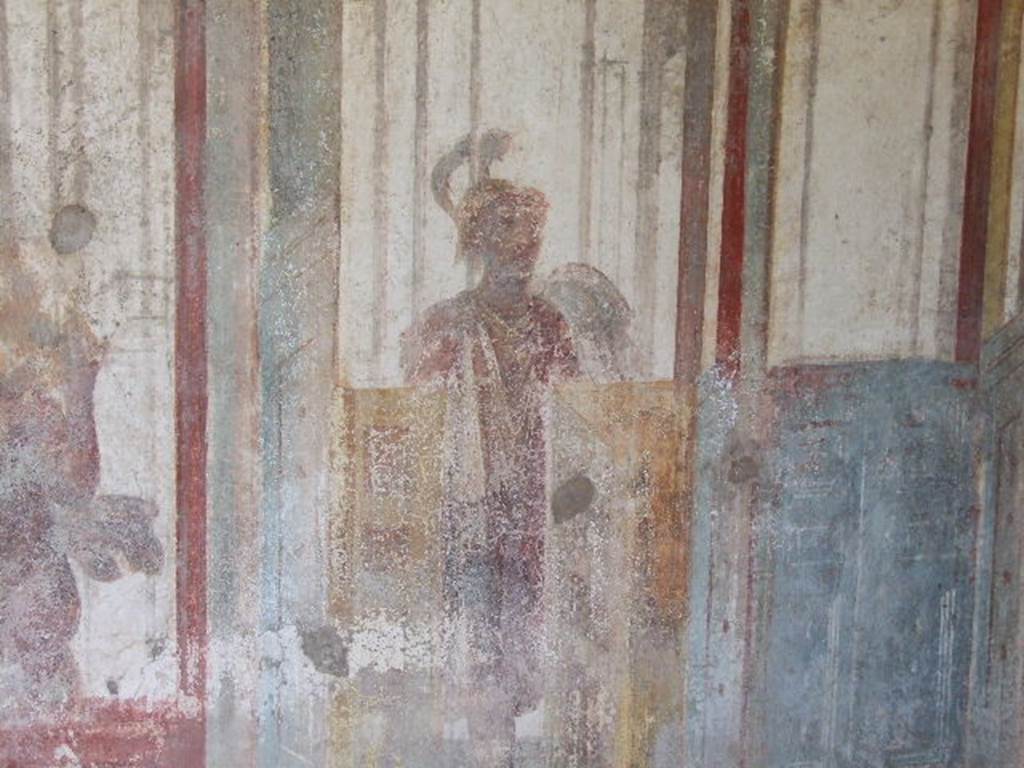
I.3.25 Pompeii. December 2006. South wall, with detail of wall painting of warrior.
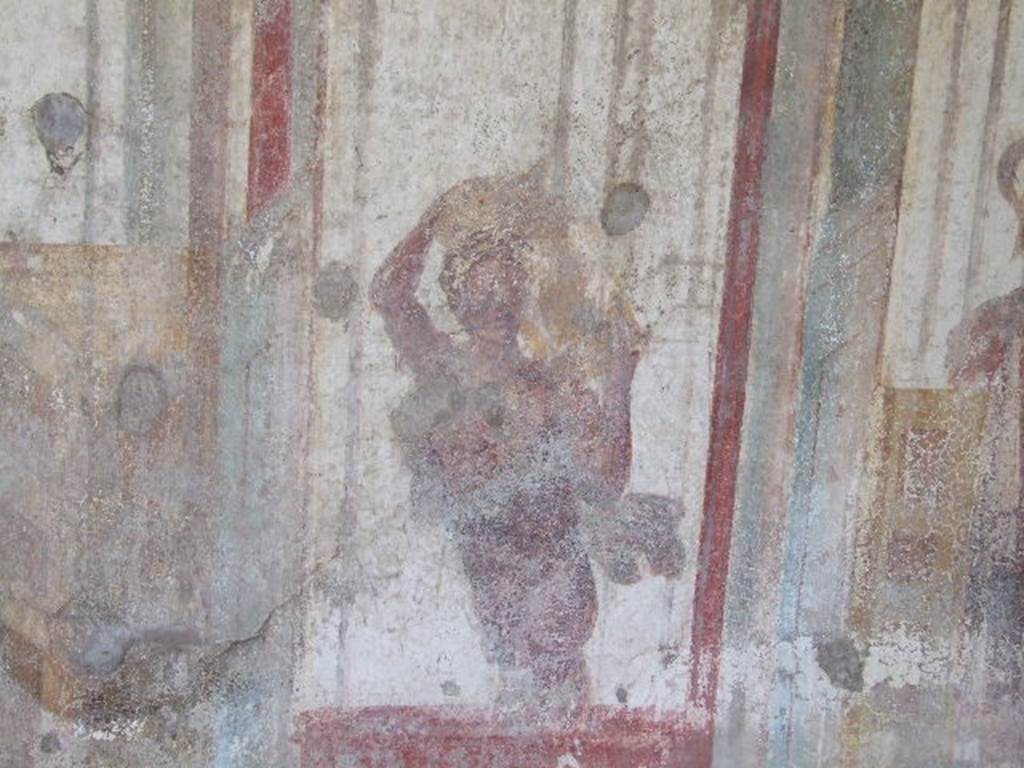
I.3.25 Pompeii. December 2006. South wall, with detail of wall painting of figure carrying a vase.
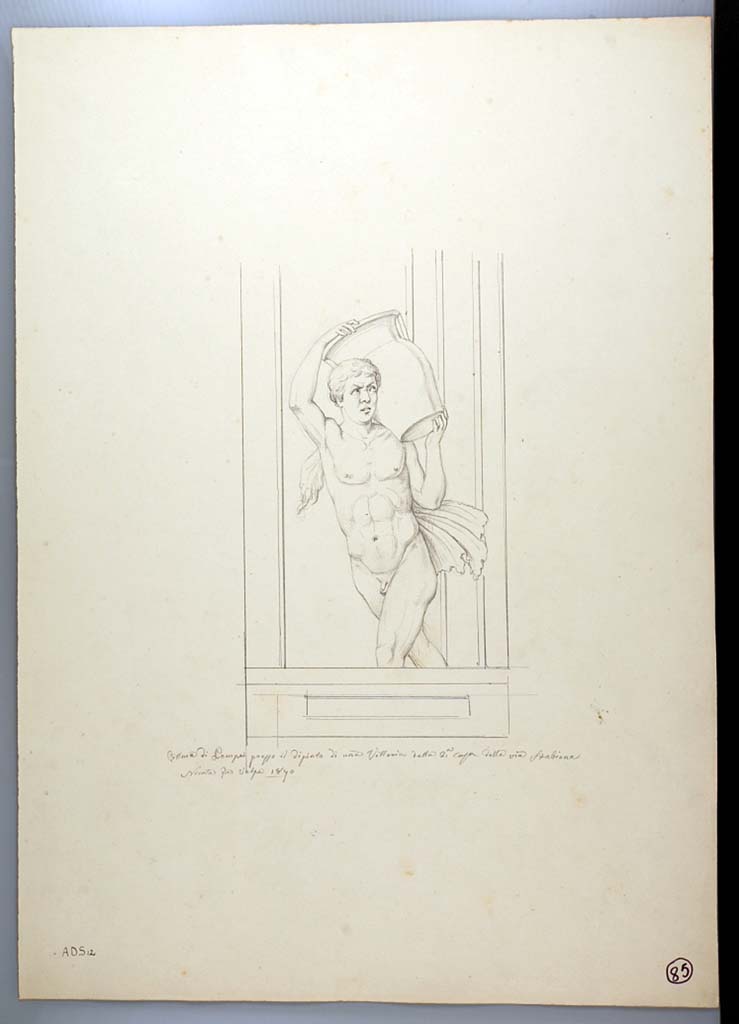
I.3.25 Pompeii.
1870 drawing by Nicola La Volpe of figure on west side of central figure on south wall.
See Sogliano, A., 1879. Le pitture murali campane scoverte negli anni 1867-79. Napoli: Giannini. (p.43, no.187, perhaps a Satyr carrying a vase.)
Now in Naples Archaeological Museum. Inventory number ADS 12.
Photo © ICCD. https://www.catalogo.beniculturali.it
Utilizzabili alle
condizioni della licenza Attribuzione - Non commerciale - Condividi
allo stesso modo 2.5 Italia (CC BY-NC-SA 2.5 IT)
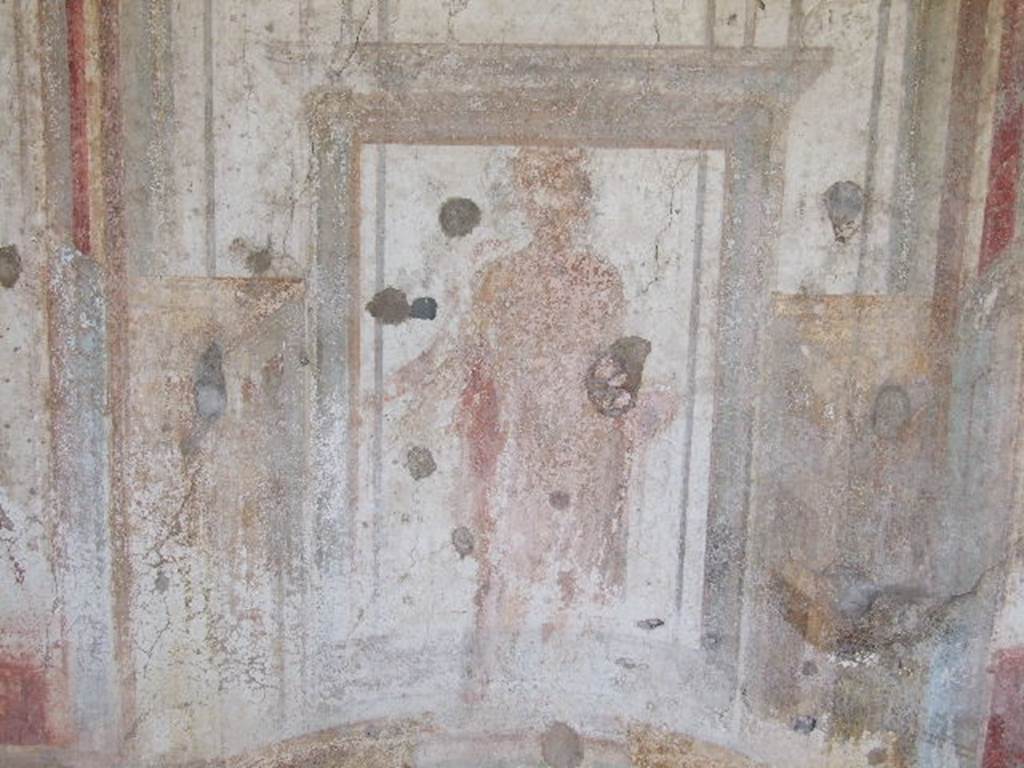
I.3.25 Pompeii. December 2006. South wall, with detail of wall painting of Hesperus.
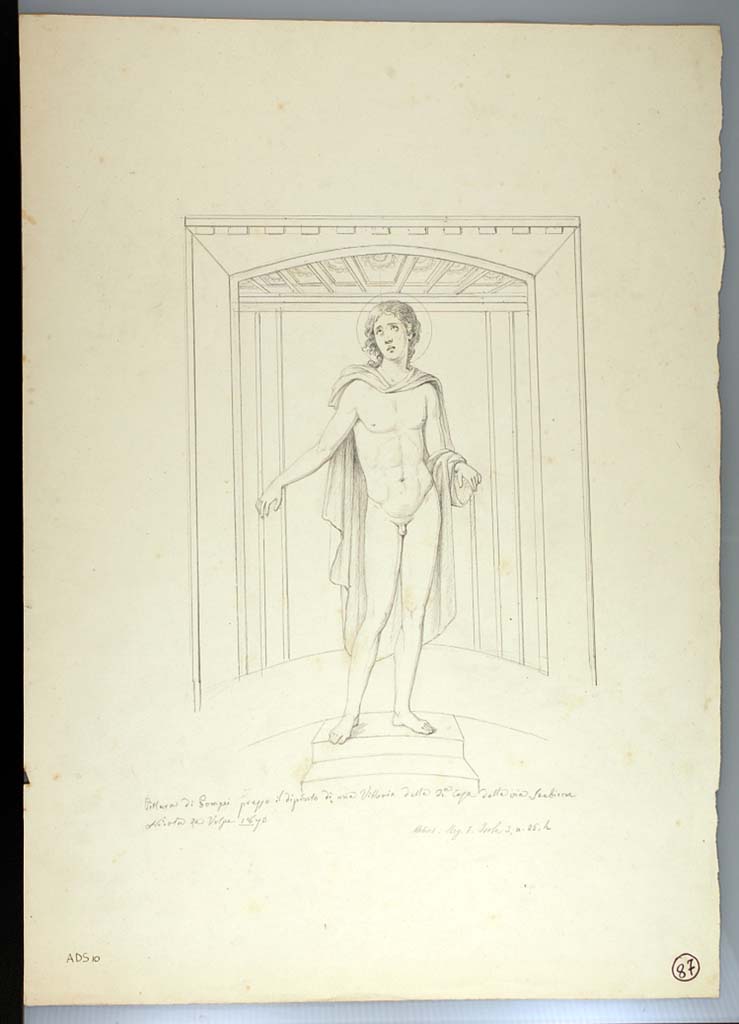
I.3.25 Pompeii.
1870 drawing by Nicola La Volpe of central painting of Hesperus from south wall.
See Sogliano, A., 1879. Le pitture murali campane scoverte negli anni 1867-79. Napoli: Giannini. (p.74, no.455, described as Helios).
Now in Naples Archaeological Museum. Inventory number ADS 10.
Photo © ICCD. https://www.catalogo.beniculturali.it
Utilizzabili alle
condizioni della licenza Attribuzione - Non commerciale - Condividi
allo stesso modo 2.5 Italia (CC BY-NC-SA 2.5 IT)
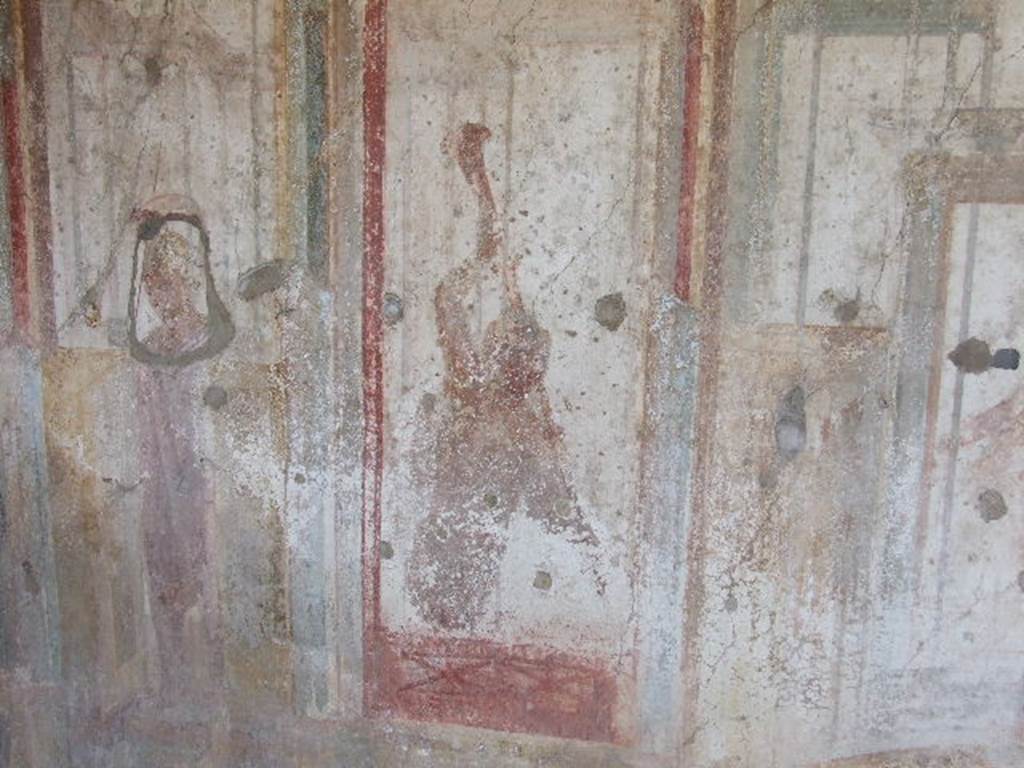
I.3.25 Pompeii. December 2006. South wall, with detail of wall painting of trumpet player, or carrier of a torch.
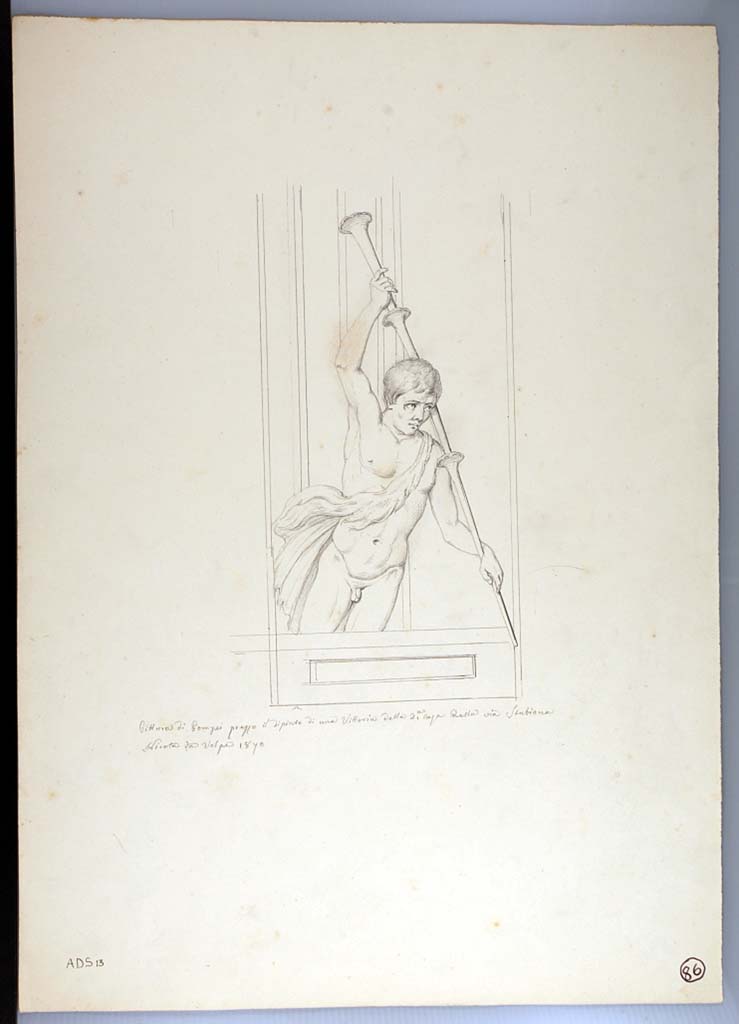
I.3.25 Pompeii. South wall of oecus, on east side of central painting.
1870 drawing by Nicola La Volpe of a carrier of a torch seen in the architecture.
See Sogliano, A., 1879. Le pitture murali campane scoverte negli anni 1867-79. Napoli: Giannini. (p.43, no.186, described as a Satyr).
Now in Naples Archaeological Museum. Inventory number ADS 13.
Photo © ICCD. https://www.catalogo.beniculturali.it
Utilizzabili alle
condizioni della licenza Attribuzione - Non commerciale - Condividi
allo stesso modo 2.5 Italia (CC BY-NC-SA 2.5 IT)
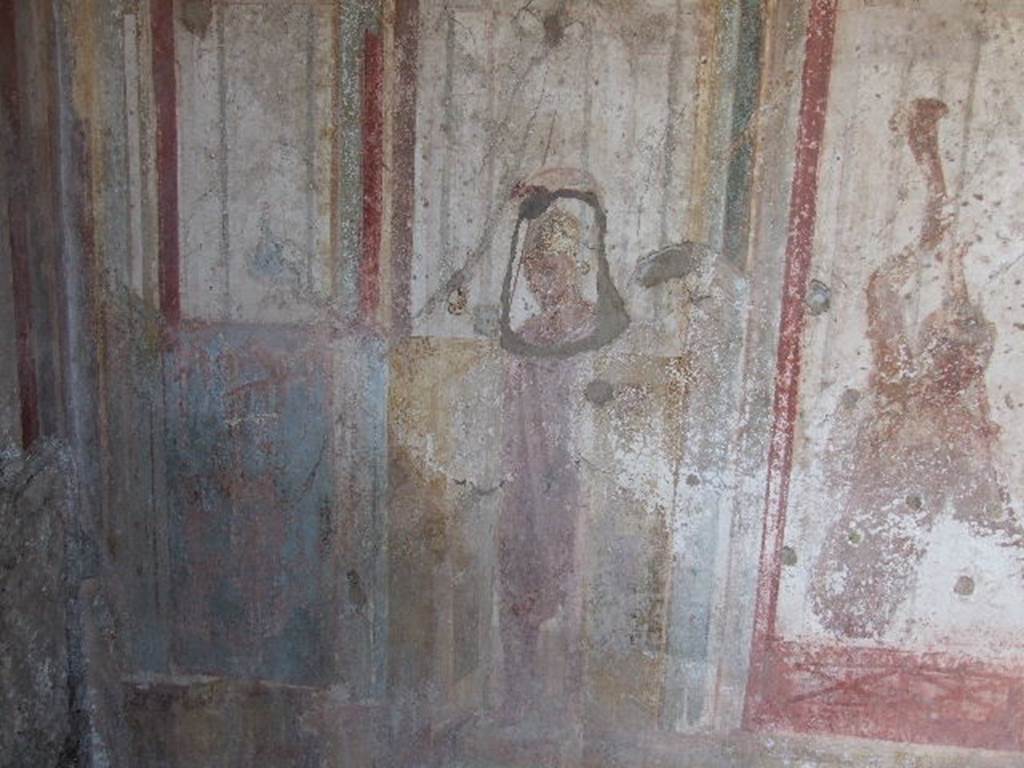
I.3.25 Pompeii. December 2006. South wall, with detail of wall painting of armed warrior with helmet, shield and lance.
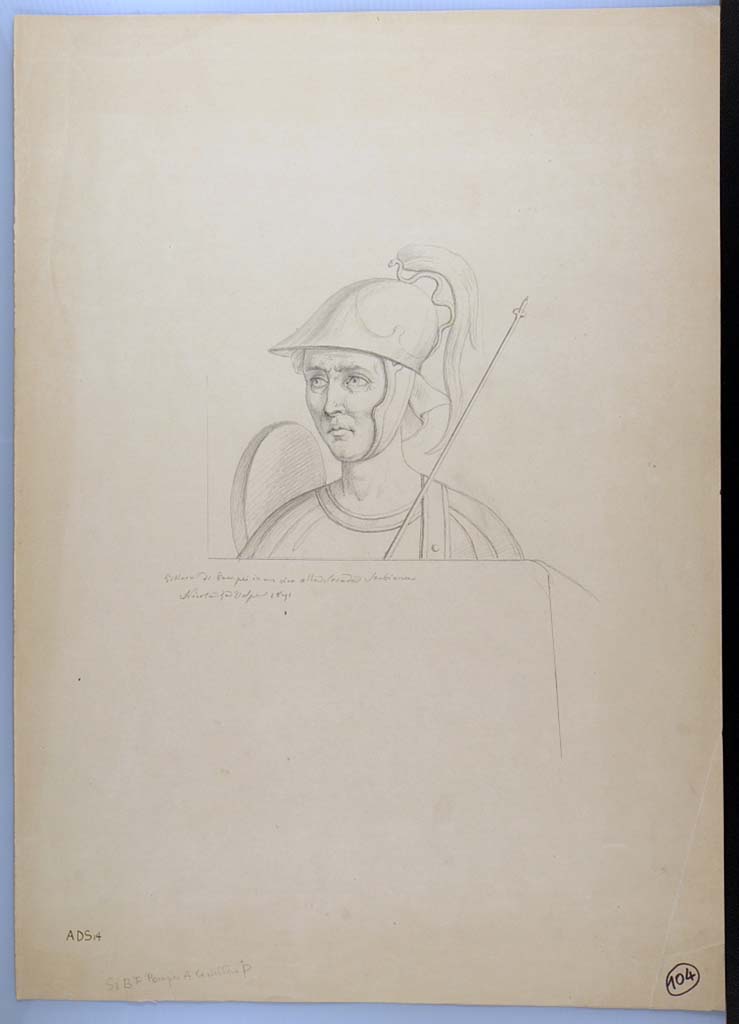
I.3.25 Pompeii.
1870 drawing by Nicola La Volpe of an armed soldier with helmet, shield and lance.
From east side of south wall of oecus.
See Sogliano, A., 1879. Le pitture murali campane scoverte negli anni 1867-79. Napoli: Giannini. (p.152, no.767).
Now in Naples Archaeological Museum. Inventory number ADS 14.
Photo © ICCD. https://www.catalogo.beniculturali.it
Utilizzabili alle
condizioni della licenza Attribuzione - Non commerciale - Condividi
allo stesso modo 2.5 Italia (CC BY-NC-SA 2.5 IT)
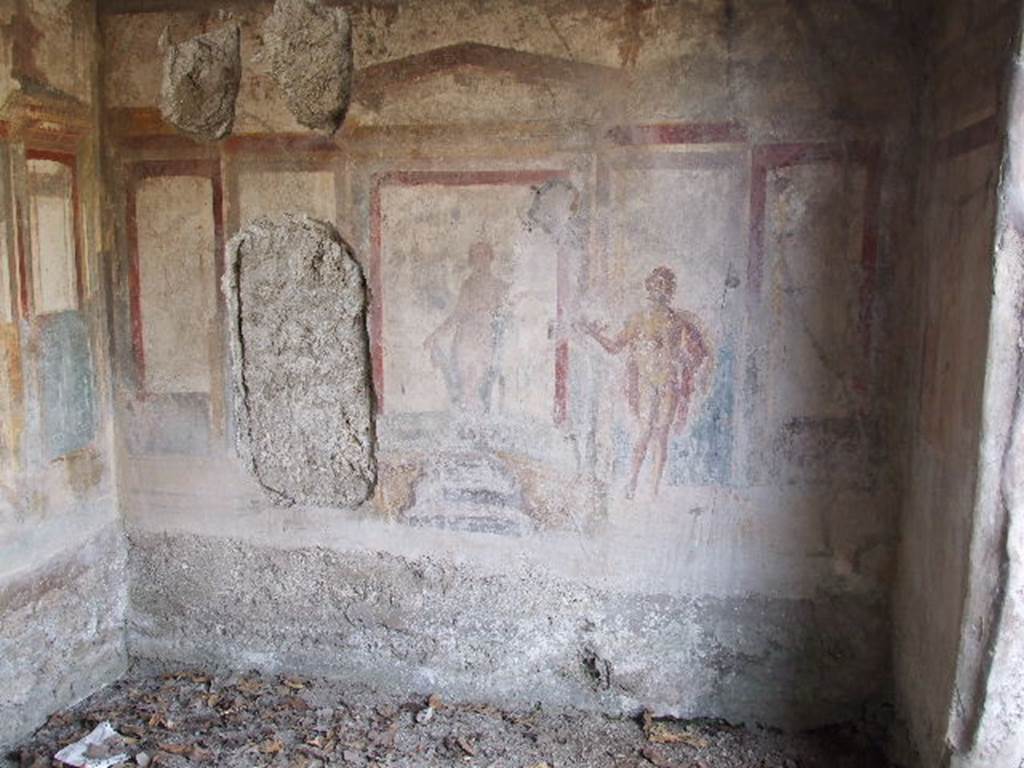
I.3.25 Pompeii. December 2006. West wall. Painting of Aphrodite, warrior and naked youth.
In the missing plaster gaps were paintings of a warrior and,
above that, of two deities, one kneeling (Egyptian?). These were stolen in 1977.
See Schefold, K.,
1962. Vergessenes Pompeji. Bern:
Francke. (p. 126 T: 90,2).
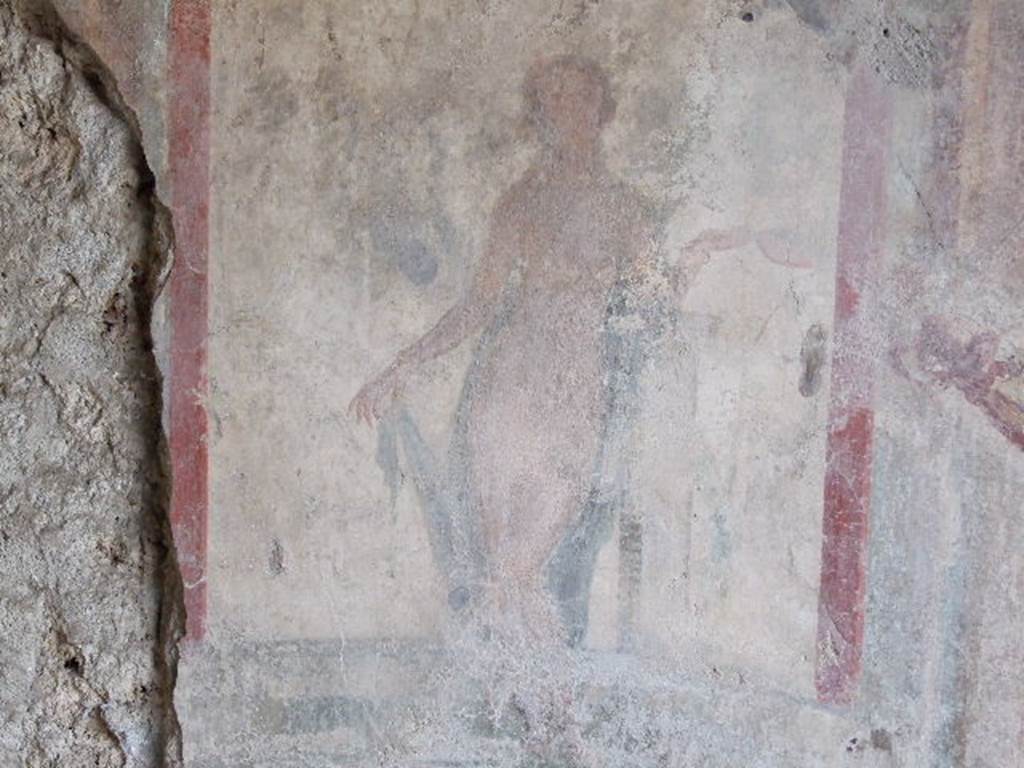
I.3.25 Pompeii. December 2006. Detail of wall painting on west wall.
Aphrodite leaning on a pillar, with left leg over the right leg holding the end of her robe with her right hand.
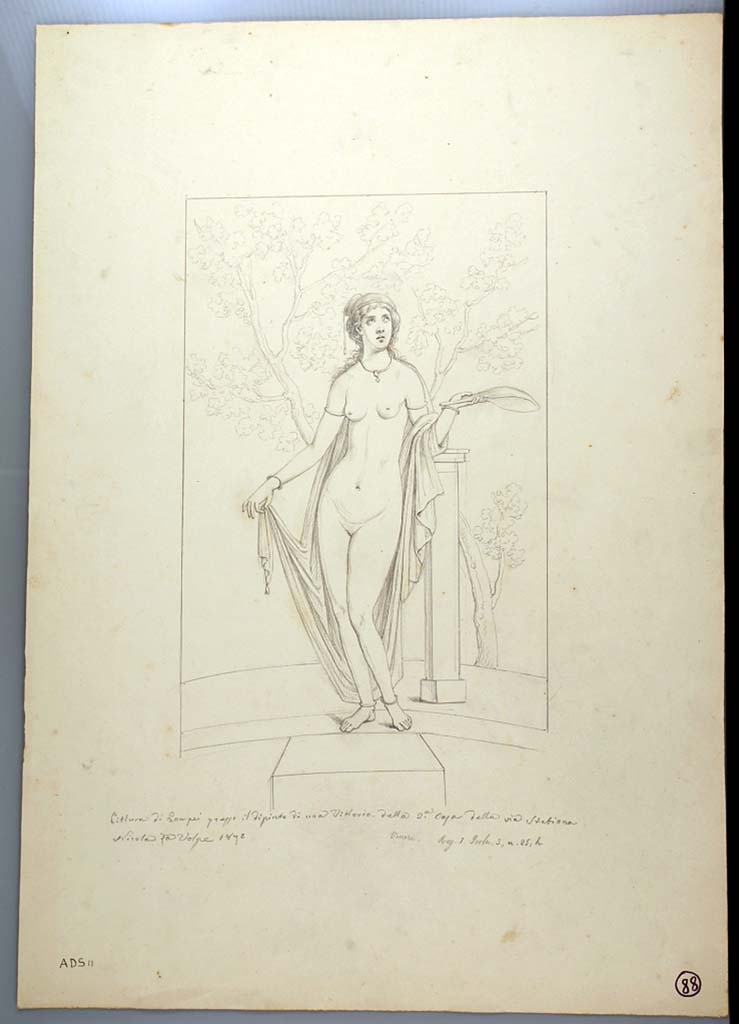
I.3.25 Pompeii.
1870 drawing of Aphrodite by Nicola La Volpe from centre of west wall in oecus.
See Sogliano, A., 1879. Le pitture murali campane scoverte negli anni 1867-79. Napoli: Giannini. (p.32, no.127).
Now in Naples Archaeological Museum. Inventory number ADS 11.
Photo © ICCD. https://www.catalogo.beniculturali.it
Utilizzabili alle condizioni della licenza Attribuzione
- Non commerciale - Condividi allo stesso modo 2.5 Italia (CC BY-NC-SA 2.5 IT)
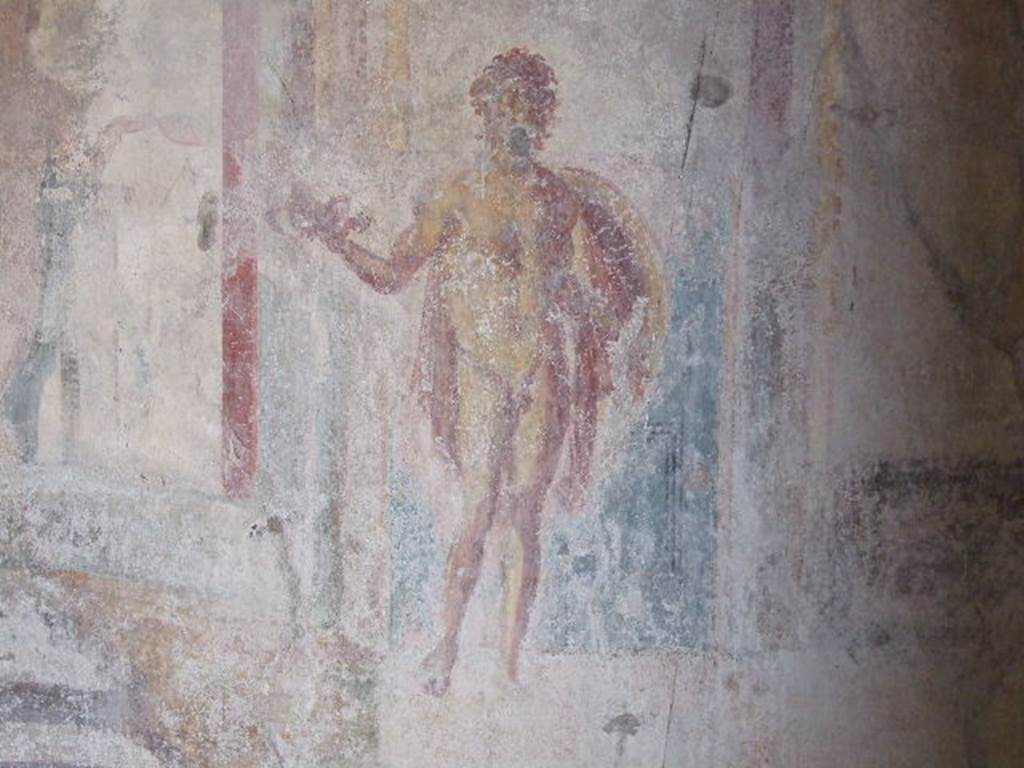
I.3.25 Pompeii. December 2006. Detail of wall painting on west wall. A naked youth symbolising beauty.