SGD and SGH Pompeii. Tombs at Stabian Gate or Porta Stabia.
SGD Schola Tomb of Marcus Tullius. SGH Enclosure at rear.
Excavated 1888 to 1890.
Just outside the Porta di Stabia a pair of tufa schola tombs came to light in 1888-90.
The one, closest to the gate, is identified by a pair of lava cippi, one to either side, as the tomb of M. Tullius, given by decree of the decuriones.
M. Tullius appears to have been the man who built the Aedes Fortunae Augustae, three times duovir and tribunus militum a populo.
Both tombs were no longer respected after A.D. 62 but were buried under dumps of debris from the earthquake.
According to L. Richardson Jr., the schola of Tullius has remains of a rectangular base behind the midpoint that probably carried another inscription, and it is the later of the two, built when the pomerial strip was no longer needed.
See Notizie degli Scavi di Antichità, 1889,
280; 1890, 329-331; 1891, 273-274.
See Richardson, L., 1988. Pompeii, An Architectural History. Baltimore: John Hopkins U. P. (p.254-5).
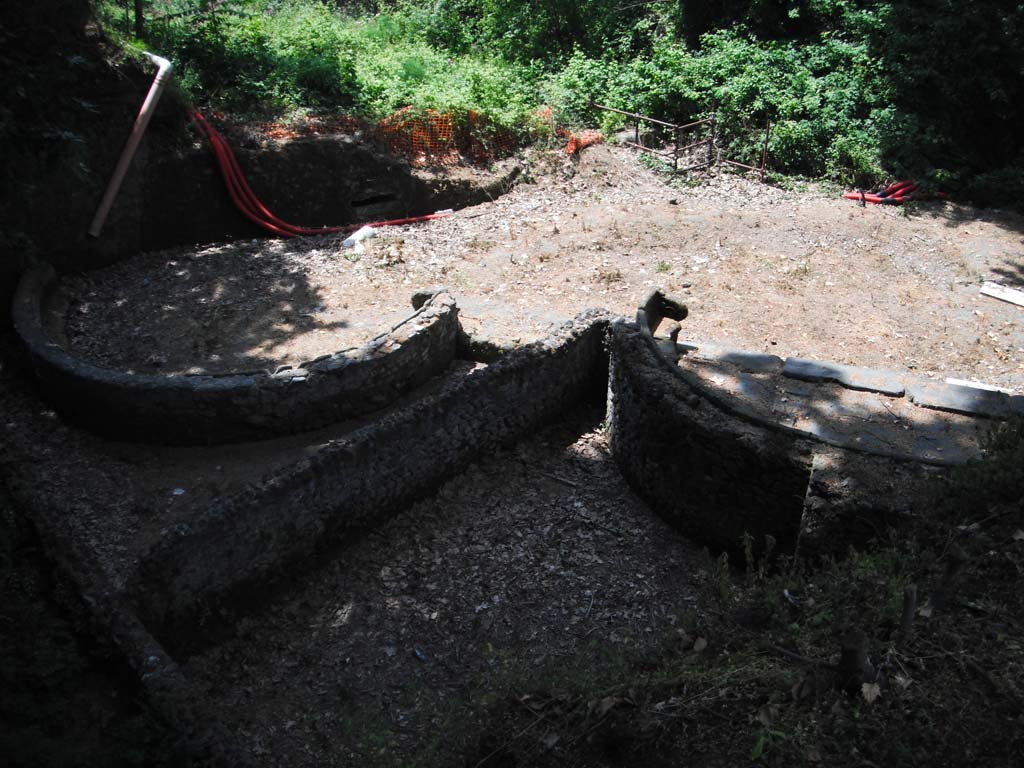
SGH Pompeii. May 2011. Tomb of M Tullius. Enclosure on right behind schola. Photo courtesy of Ivo van der Graaff.
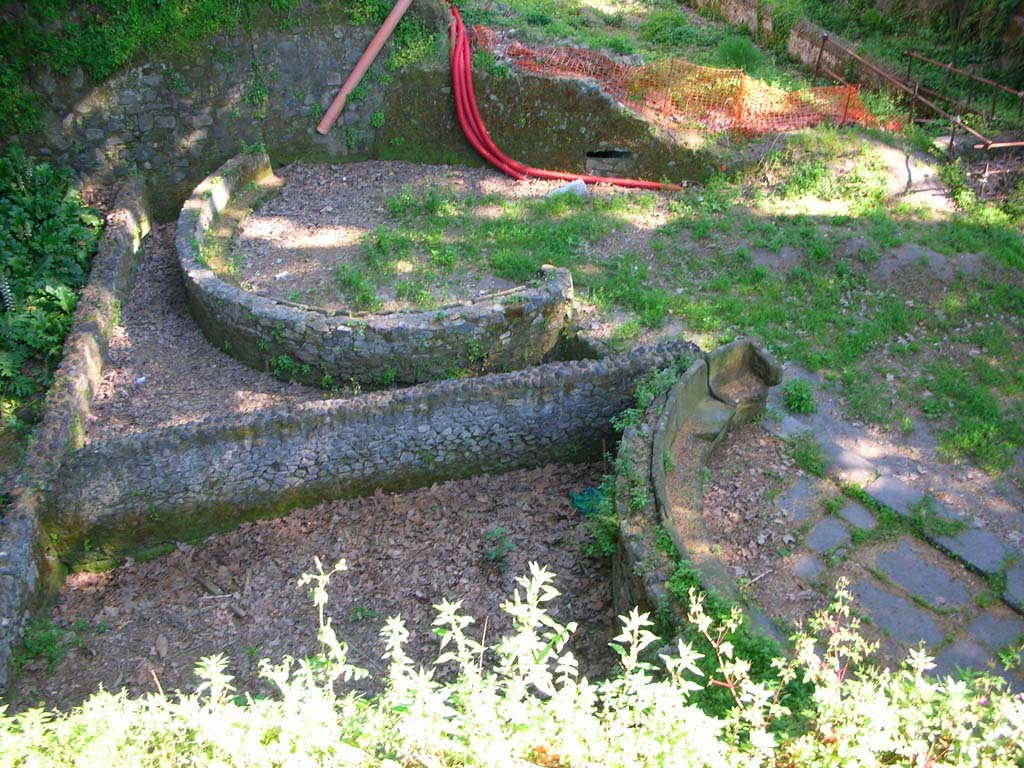
SGH Pompeii. May 2010.
Tomb of M Tullius. Enclosure at front of photo behind schola. Photo courtesy of
Ivo van der Graaff.
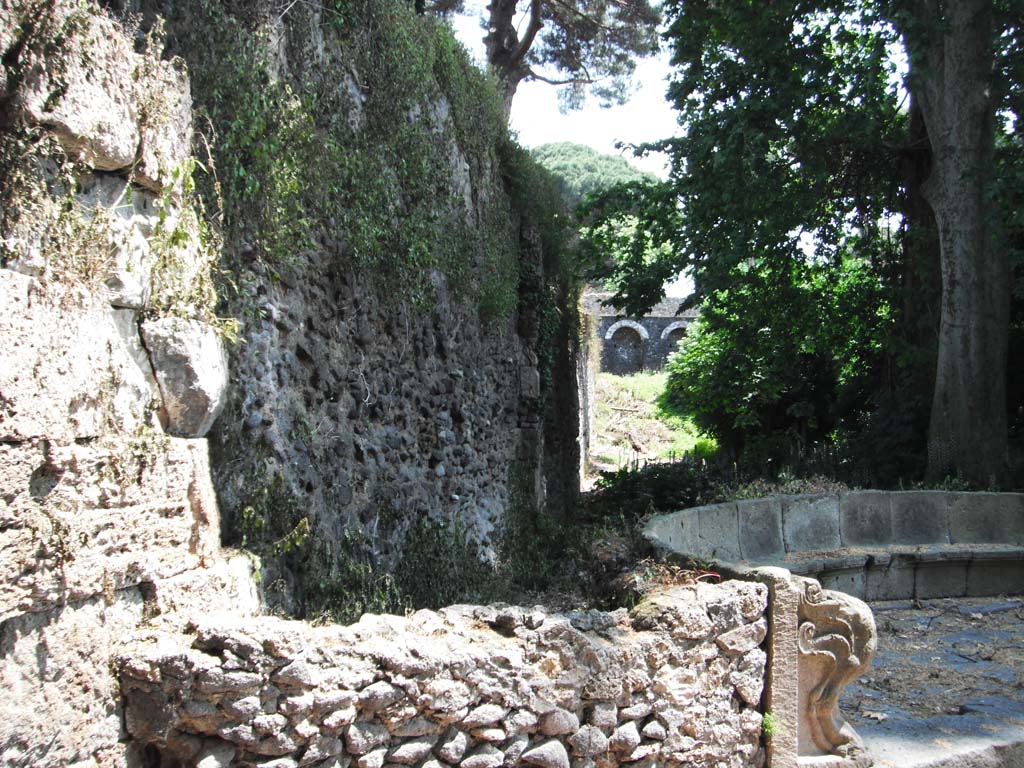
SGH Pompeii. May 2011. Tomb of M Tullius. Enclosure behind
schola. Photo courtesy of Ivo van der Graaff.
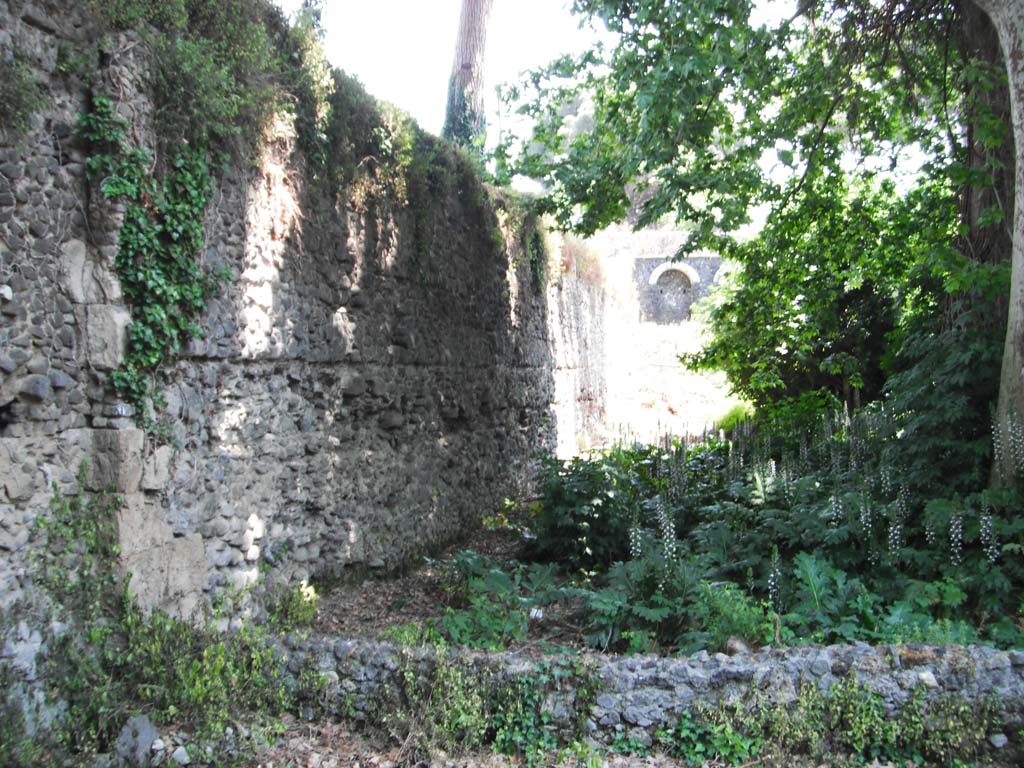
SGH Pompeii. May 2011. Tomb of M Tullius. Enclosure behind
schola. Photo courtesy of Ivo van der Graaff.
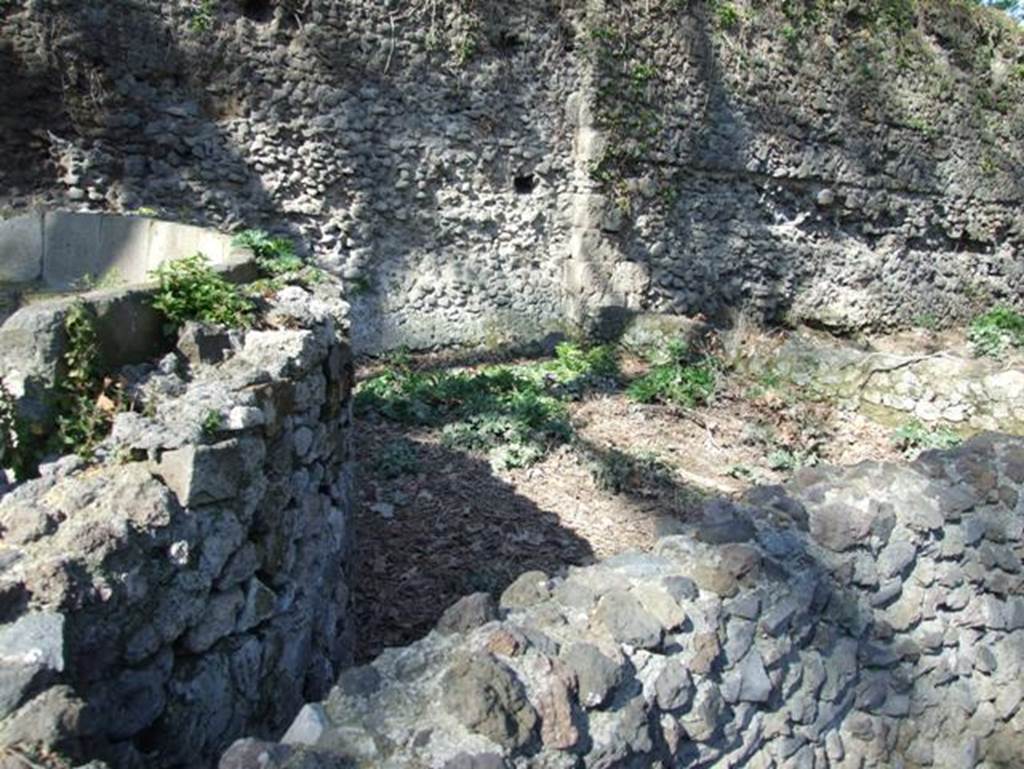
SGH Pompeii. March 2009. Tomb of M Tullius. Enclosure behind schola.
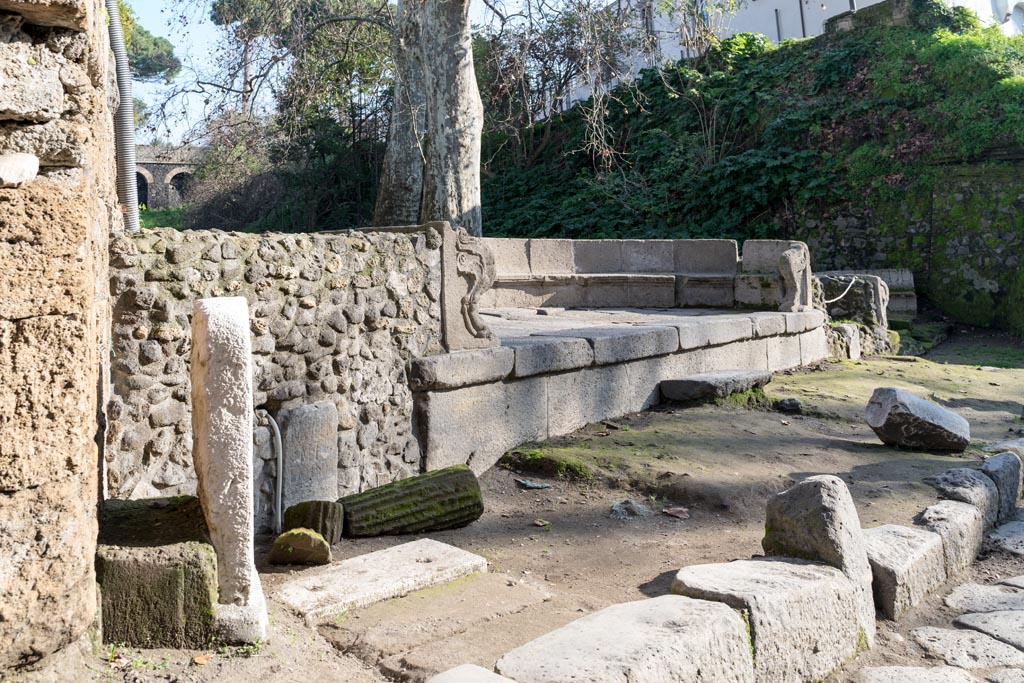
Photo courtesy of Johannes Eber.
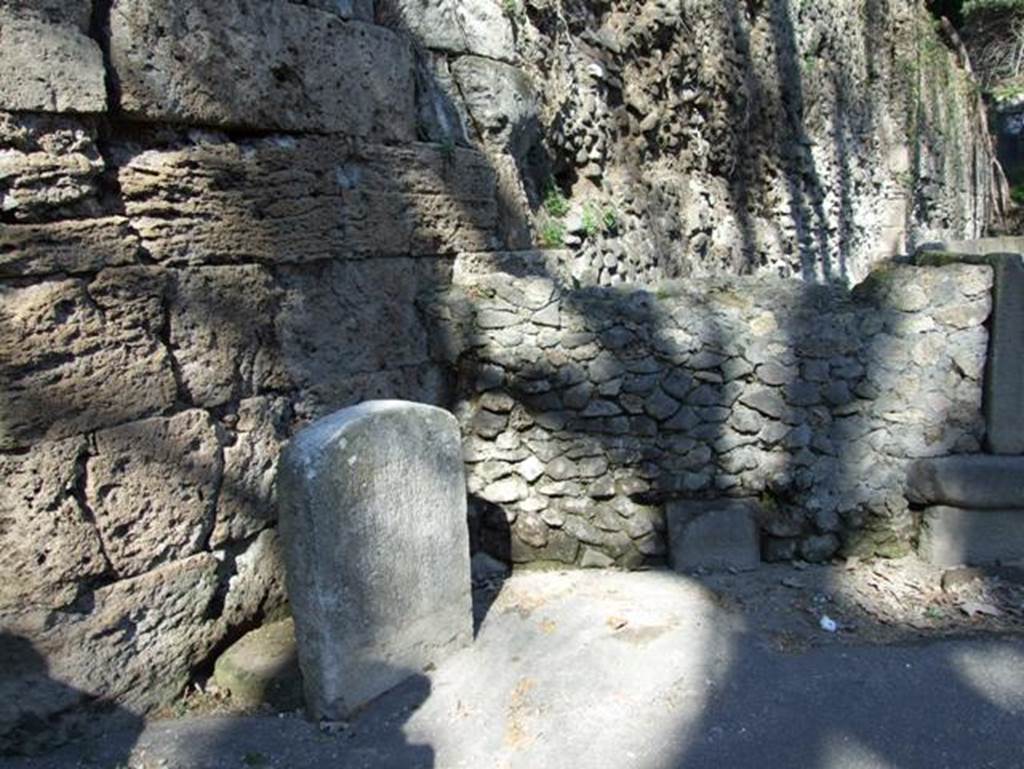
SGH Pompeii. March 2009. Front of enclosure on north side of schola with small boundary stone behind larger Cippus.
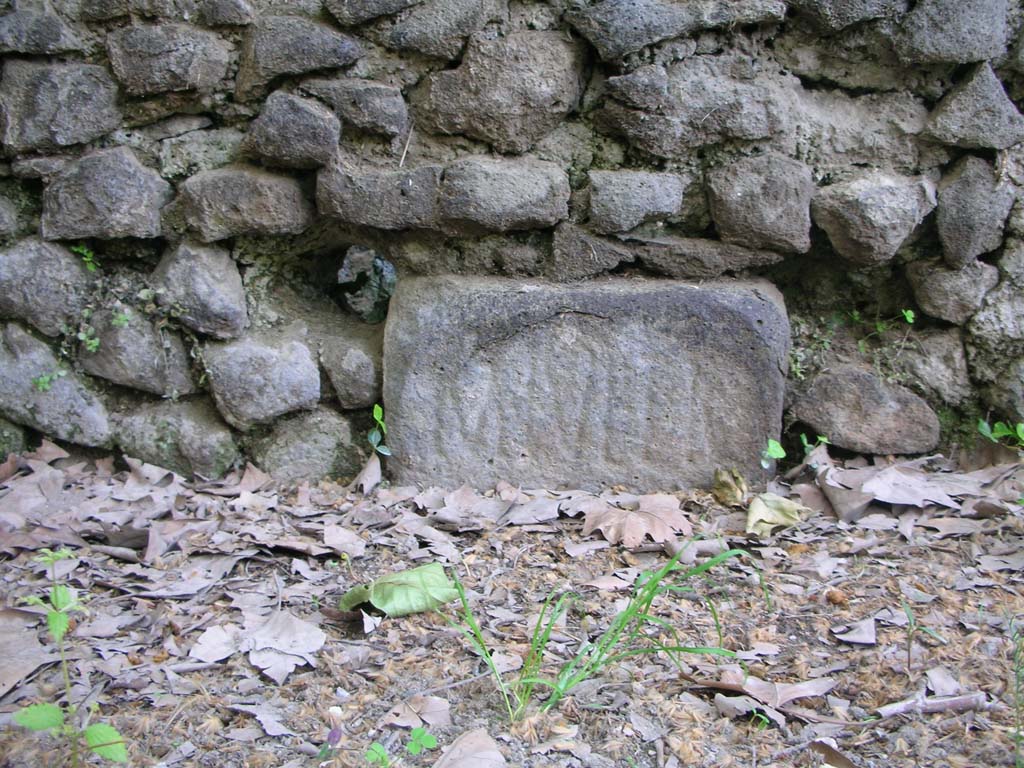
SGH Pompeii. May 2010. Front of enclosure on north side of schola with small boundary stone of M. Tullio. Photo courtesy of Ivo van der Graaff.
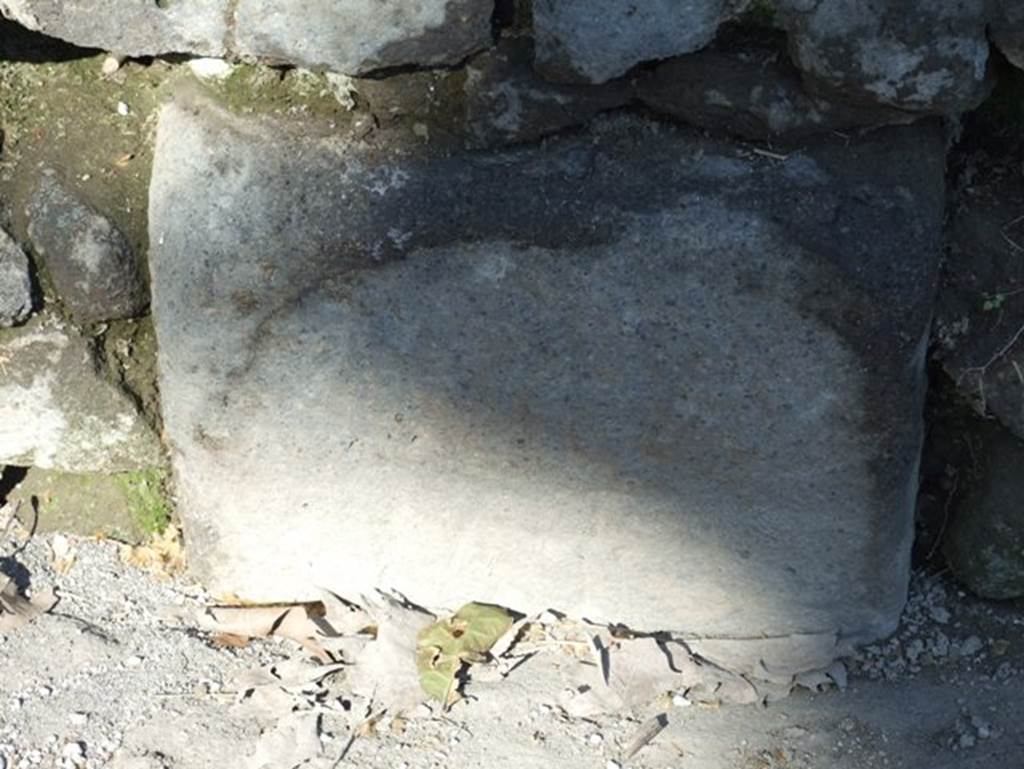
SGH Pompeii. March 2009. North end boundary stone on front wall of enclosure.
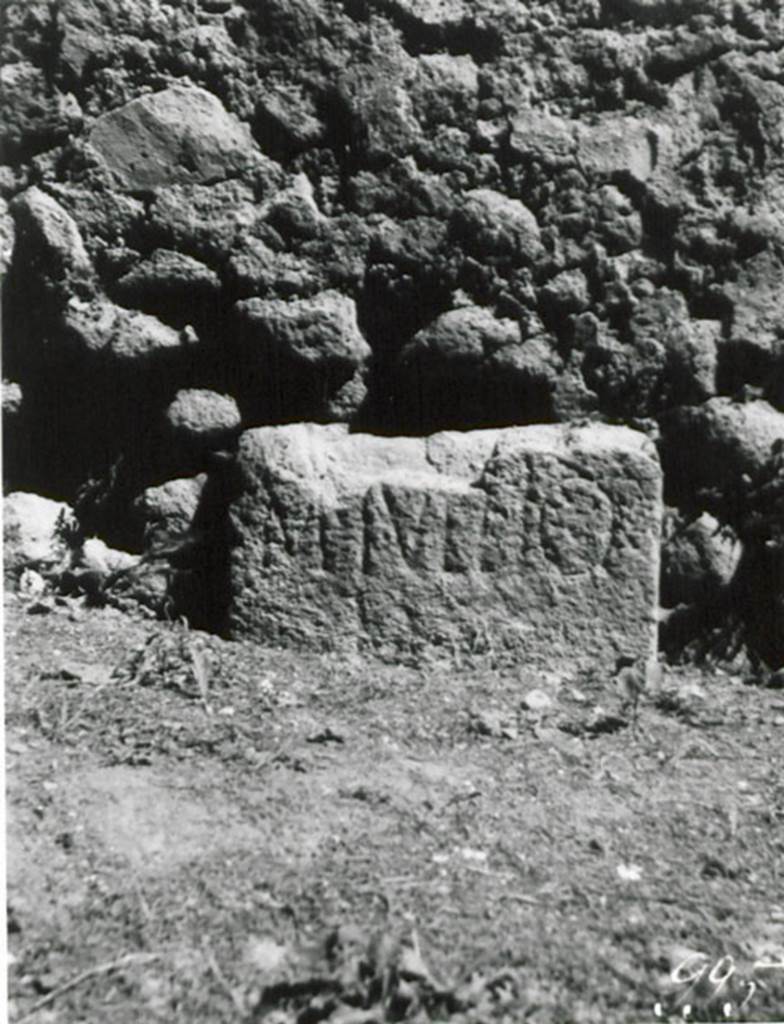
SGH Pompeii. c.1936 photo by Tatiana Warscher. Boundary stone on front wall of enclosure.
See Warscher T., 1936. Codex Topographicus Pompeianus Regio I.1, I.5. Rome: DAIR. No. 5.
![SGH Pompeii. May 2006. According to Mau: The memorial tablet belonging to the monument nearest the gate has disappeared, but two boundary stones at the corners of the lot bear the Latin inscription :
M. Tullio M. f. ex D(ecurionem) D(ecreto)
'To Marcus Tullius son of Marcus, in accordance with a vote of the city council.' The Tullius named was perhaps the builder of the temple of Fortuna Augusta. See Mau, A., 1907, translated by Kelsey F. W. Pompeii: Its Life and Art. New York: Macmillan. (p.422-3, p.126). The Epigraphik-Datenbank Clauss/Slaby (See www.manfredclauss.de) has the entry as
M(arco) Tullio / M(arci) f(ilio) / ex d(ecreto) d(ecurionum) [EE-08-01, 00330 = EE-08-01, 00857d]](tombs%20stabg1_files/image017.jpg)
SGH Pompeii. May 2006. Boundary stone.
According to Mau: The memorial tablet belonging to the monument nearest the gate has disappeared, but two boundary stones at the corners of the lot bear the Latin inscription :
M. Tullio
M. f. ex D(ecurionem) D(ecreto)
'To Marcus Tullius son of Marcus, in accordance with a vote of the city council.'
The Tullius named was perhaps the builder of the temple of Fortuna Augusta.
See Mau, A., 1907, translated by Kelsey F. W. Pompeii: Its Life and Art. New York: Macmillan. (p.422-3, p.126).
The Epigraphik-Datenbank Clauss/Slaby (See www.manfredclauss.de) has the entry as
M(arco) Tullio
M(arci) f(ilio)
ex d(ecreto)
d(ecurionum) [EE-08-01, 00330 =
EE-08-01, 00857d]
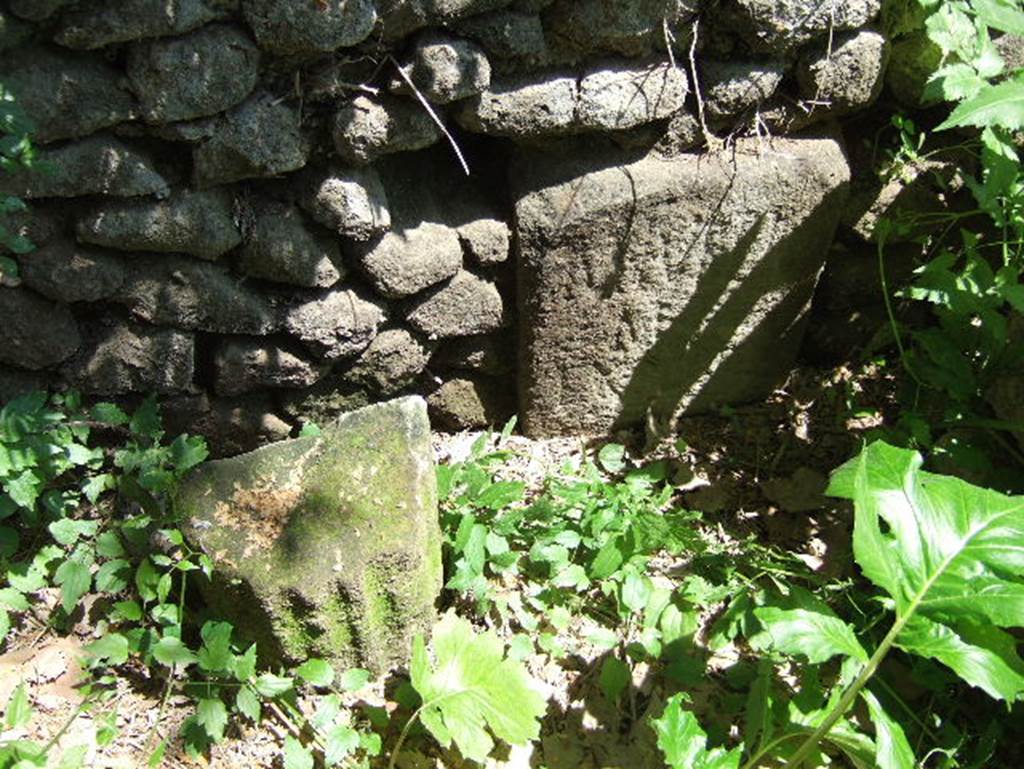
SGH Pompeii. May 2006. Boundary stone.
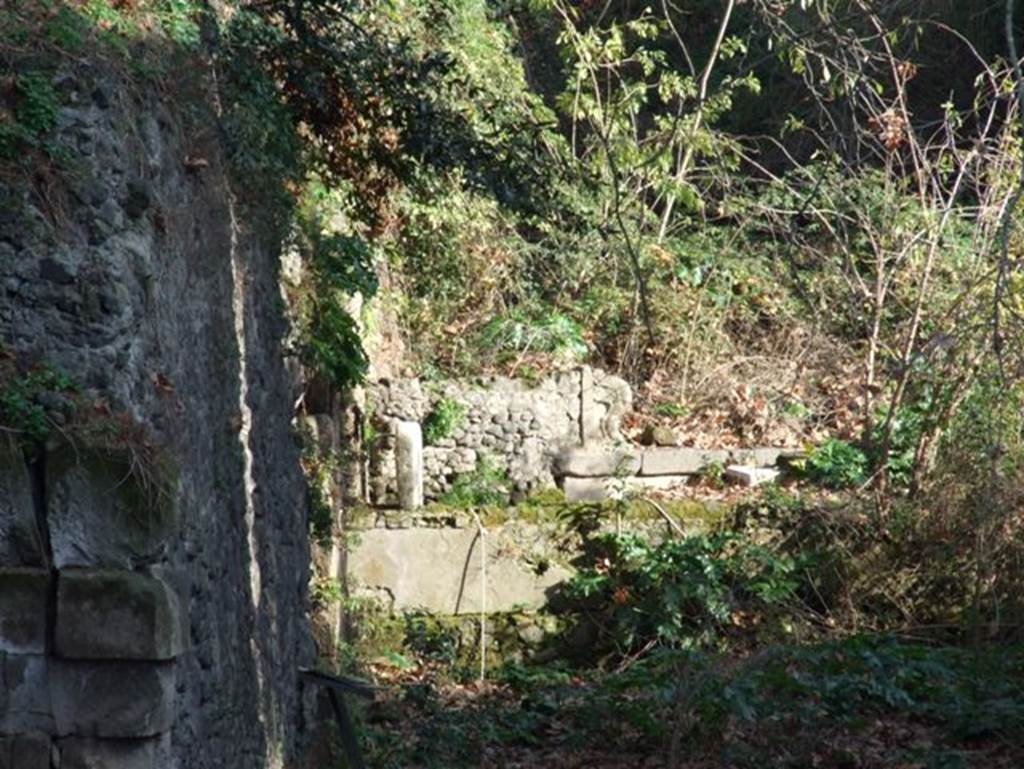
SGH Pompeii. December 2007. Looking east to wall of enclosure and north end of schola.
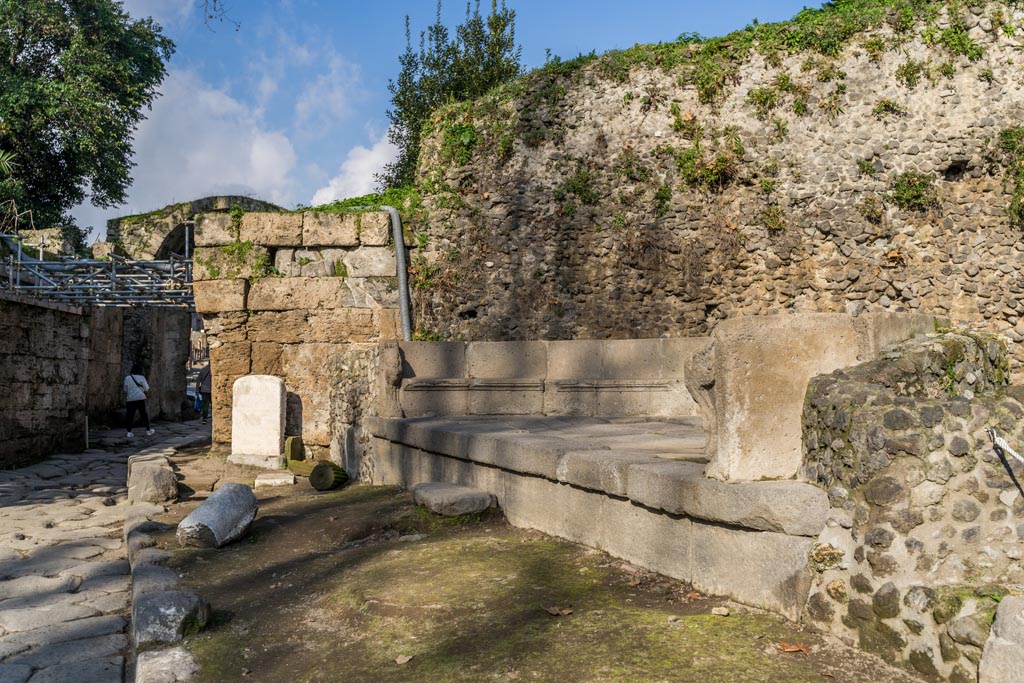
SGD Pompeii. January 2023. Looking north towards the Cippus and the schola tomb, south-east of the Stabian Gate.
A step in front of the tomb is now visible. Photo courtesy of Johannes Eber.
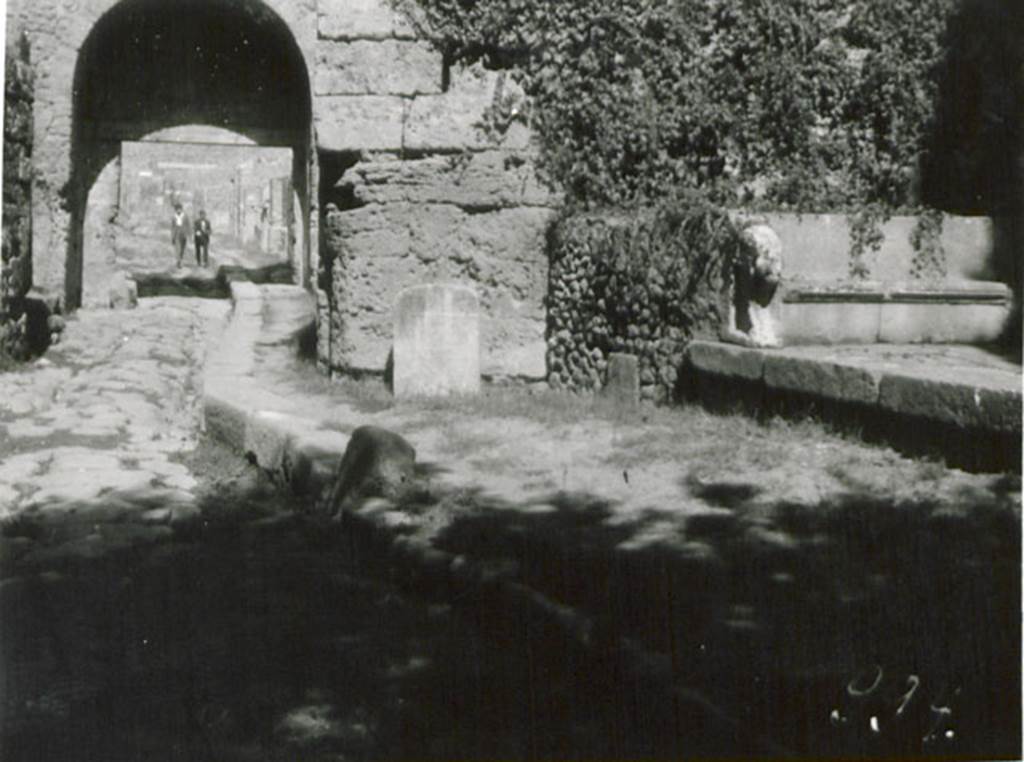
SGH Pompeii. Photograph c. 1936 by Tatiana Warscher.
Looking north past the Cippus, the tomb enclosure and the north end of the schola.
See Warscher T., 1936. Codex Topographicus Pompeianus Regio I.1, I.5. Rome: DAIR. No. 1.
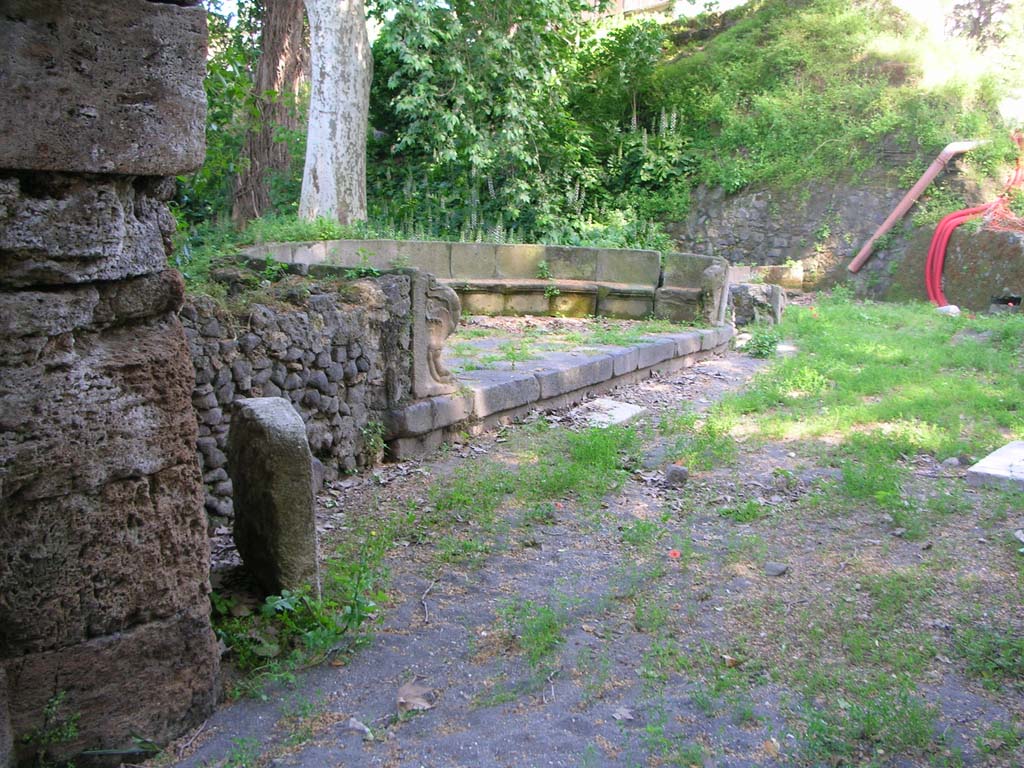
SGD Pompeii. May 2010. Schola tomb of M. Tullio. Photo courtesy of Ivo van der Graaff.
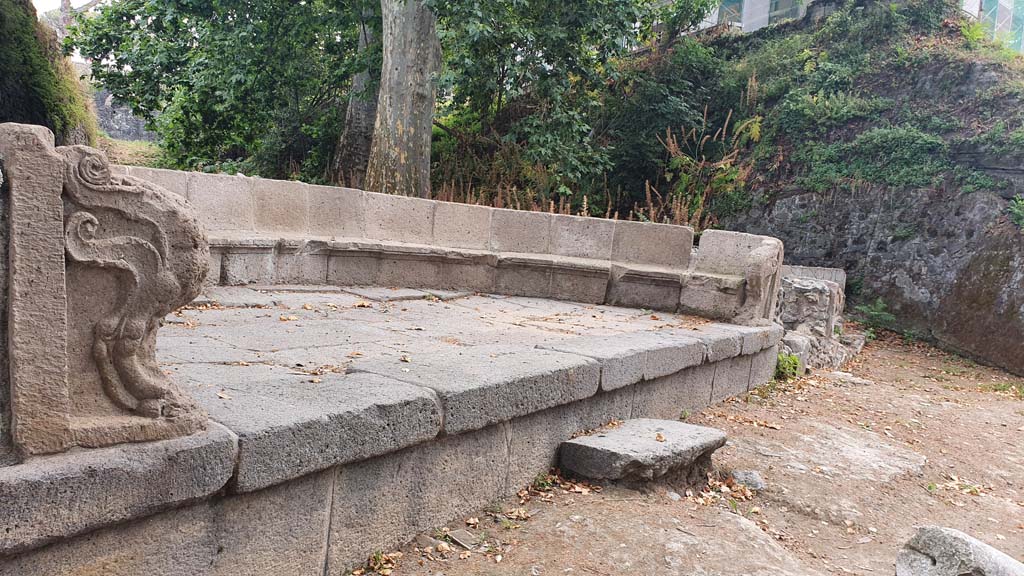
SGD Pompeii. August 2021. Schola, looking south-east.
Foto Annette Haug, ERC Grant 681269 DÉCOR
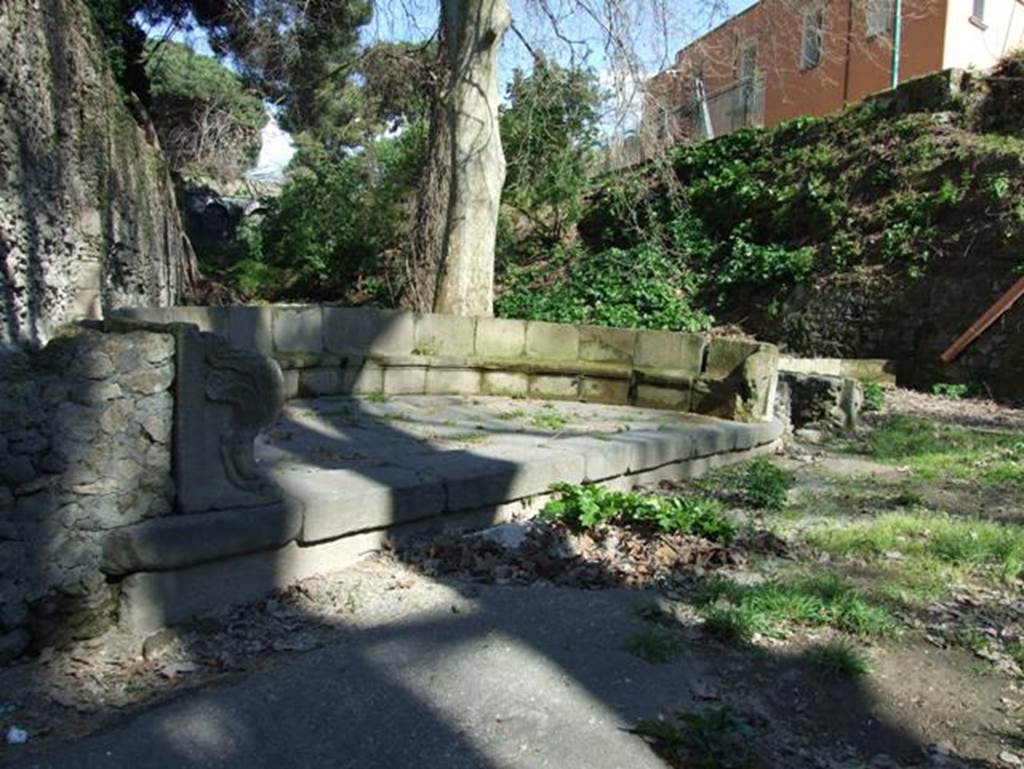
SGD Pompeii. March 2009. Schola looking south.
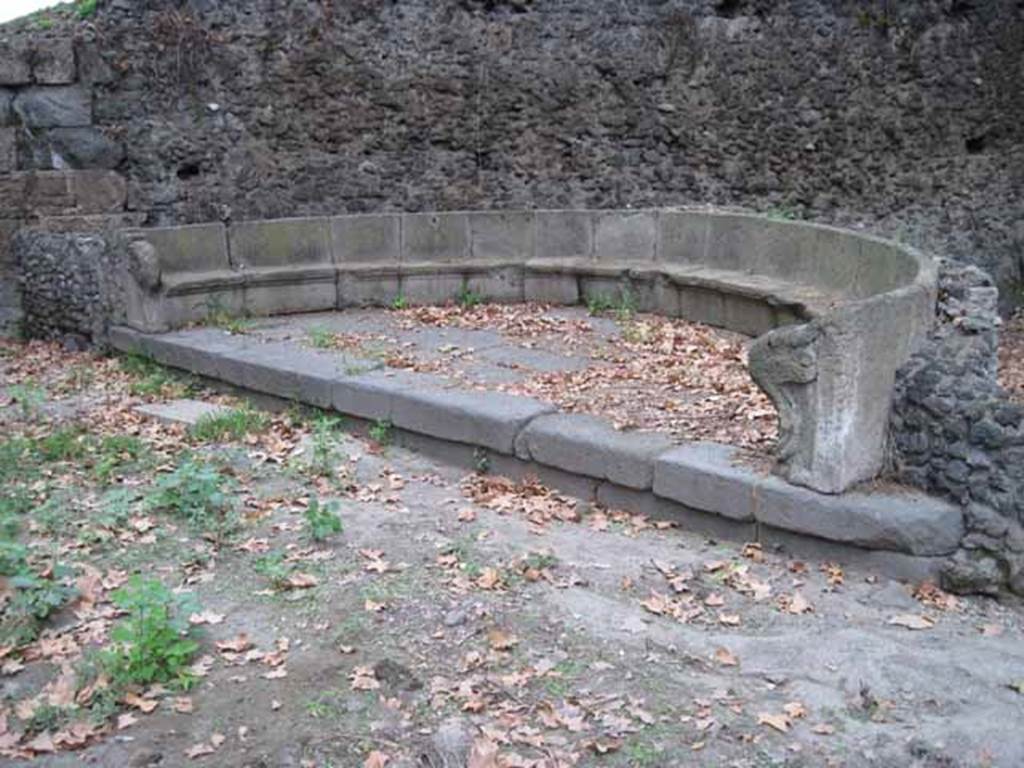
SGD Pompeii. September 2010. Schola tomb of Marcus Tullius. Looking north-east towards wall. Photo courtesy of Drew Baker.
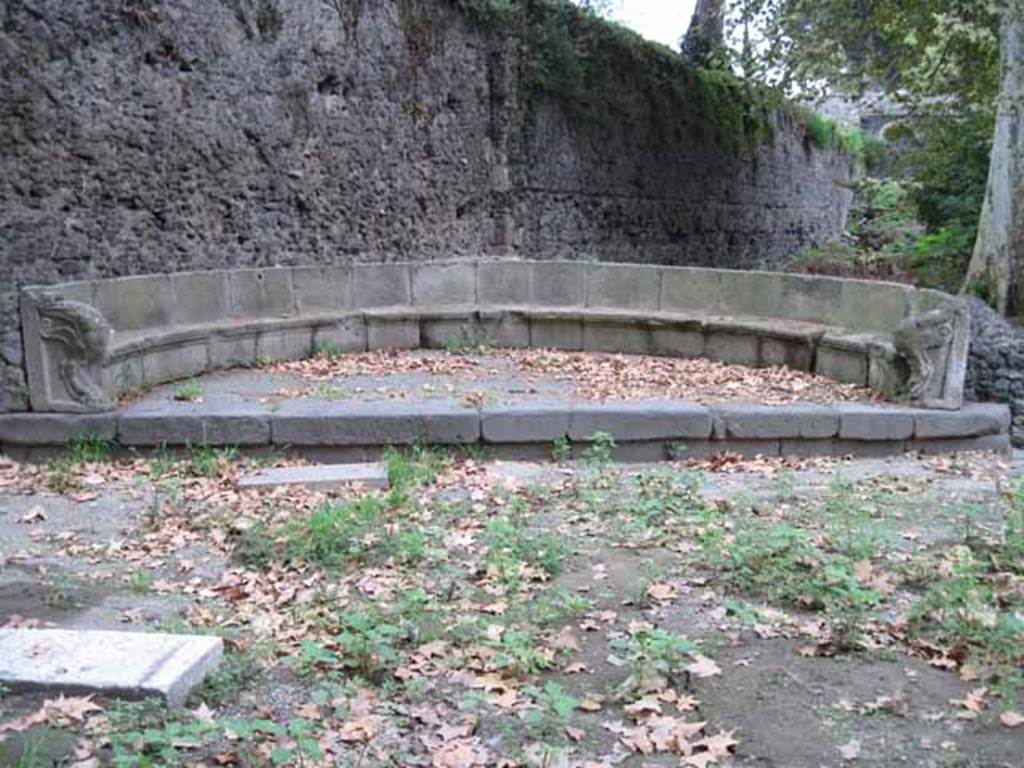
SGD Pompeii. September 2010. Schola tomb of Marcus Tullius. Looking east along wall. Photo courtesy of Drew Baker.
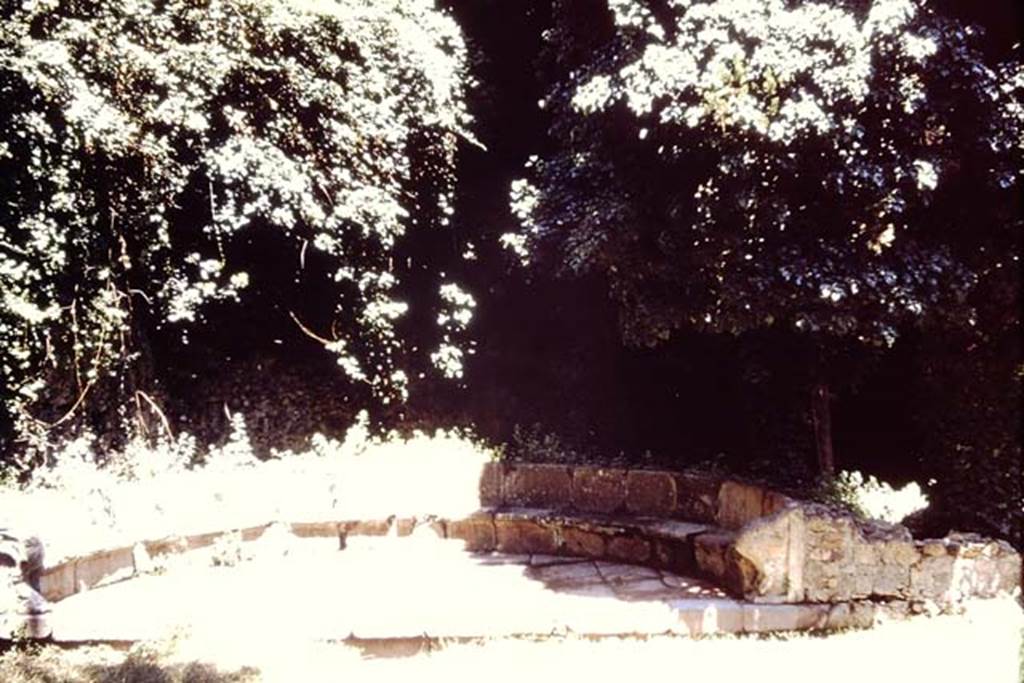
SGD Pompeii. 1961. Schola tomb of Marcus Tullius. Photo by Stanley A. Jashemski.
Source: The Wilhelmina and Stanley A. Jashemski archive in the University of Maryland Library, Special Collections (See collection page) and made available under the Creative Commons Attribution-Non Commercial License v.4. See Licence and use details.
J61f0749
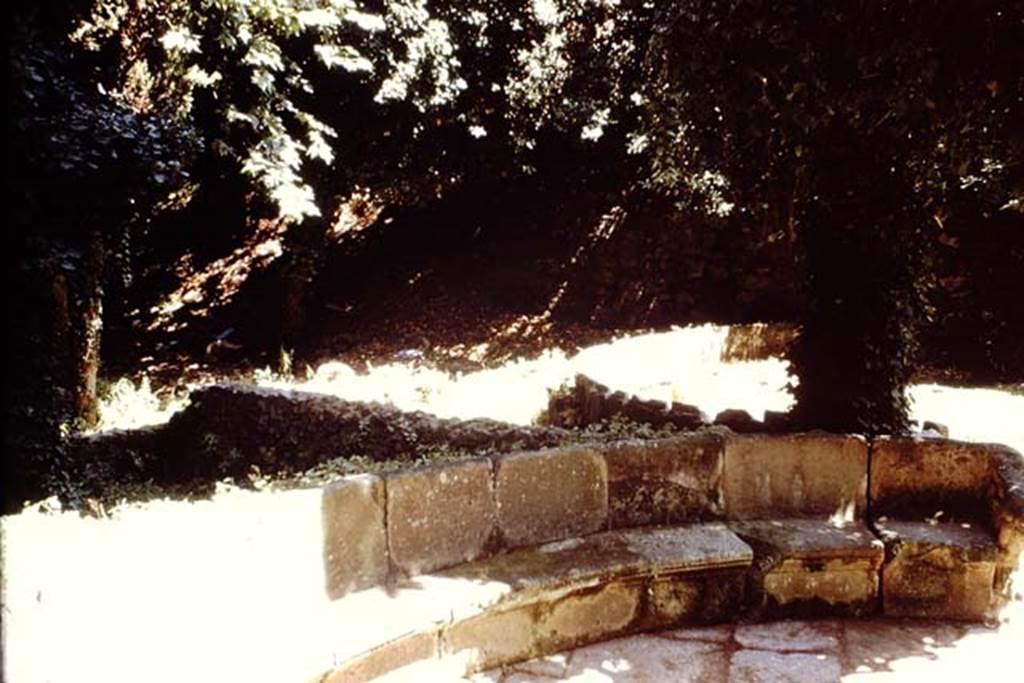
SGD Pompeii. 1961.
Schola tomb of Marcus Tullius, looking towards rear enclosures SGH and SGG. Photo by Stanley A. Jashemski.
Source: The Wilhelmina and Stanley A. Jashemski archive in the University of Maryland Library, Special Collections (See collection page) and made available under the Creative Commons Attribution-Non Commercial License v.4. See Licence and use details.
J61f0754
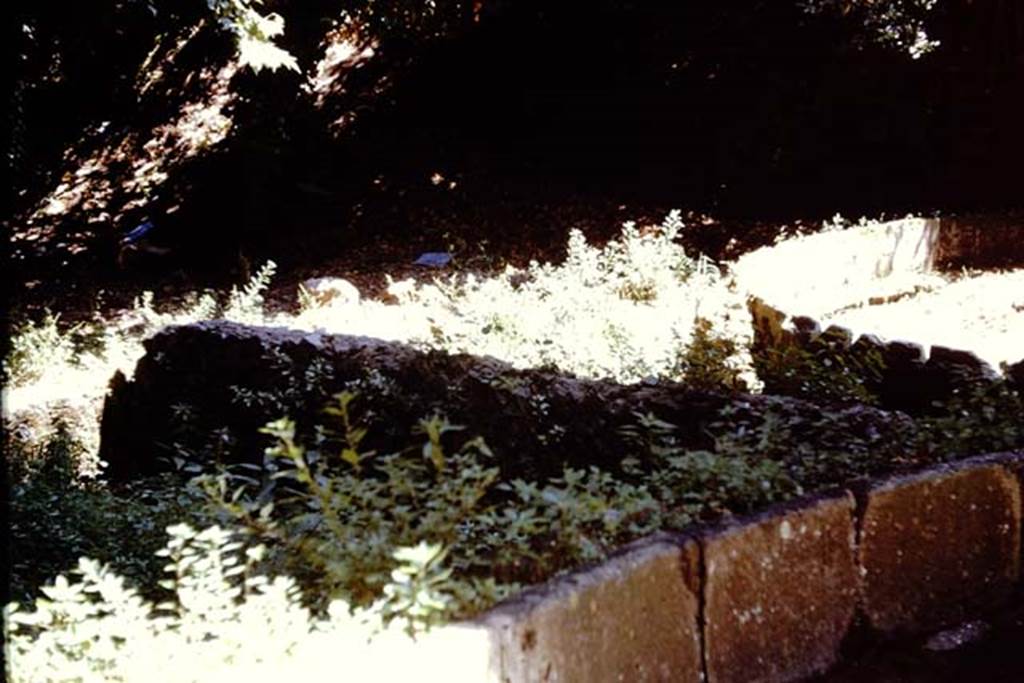
SGD Pompeii. 1961. Looking towards SGH and SGG, rear enclosures of both schola tombs. Photo by Stanley A. Jashemski.
Source: The Wilhelmina and Stanley A. Jashemski archive in the University of Maryland Library, Special Collections (See collection page) and made available under the Creative Commons Attribution-Non Commercial License v.4. See Licence and use details.
J61f0751
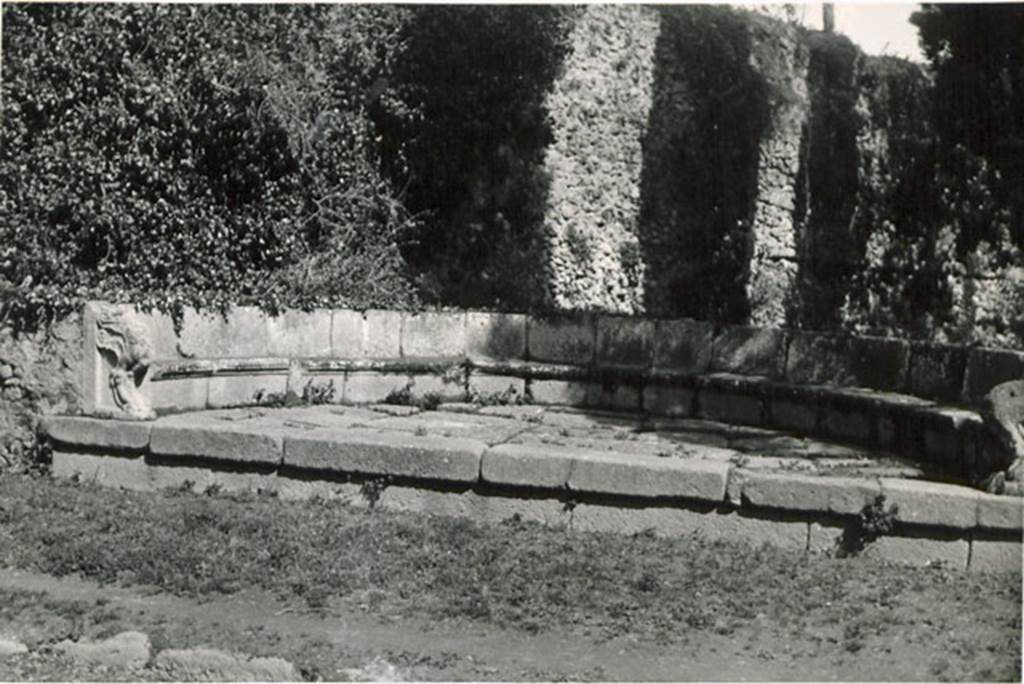
SGD Pompeii. c.1936 photo of schola tomb of Marcus Tullius.
See Warscher T., 1936. Codex Topographicus Pompeianus Regio I.1, I.5. Rome: DAIR. No. 3.
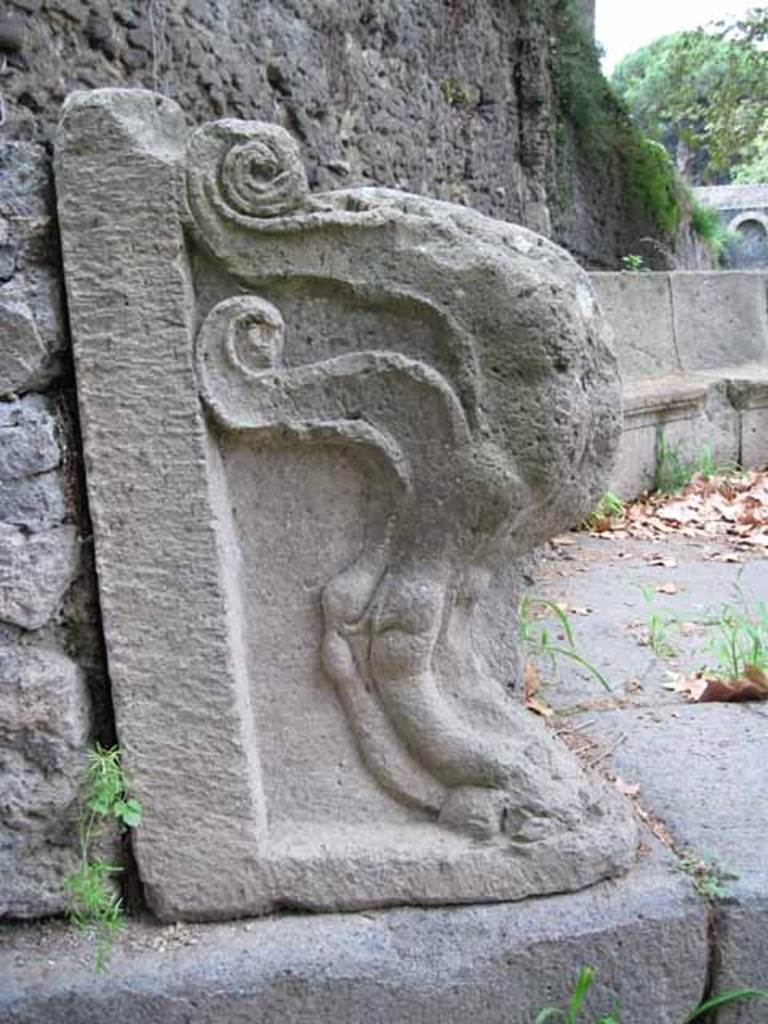
SGD Pompeii. September 2010.
Carving of a paw at north end terminus of schola. Photo courtesy of Drew Baker.
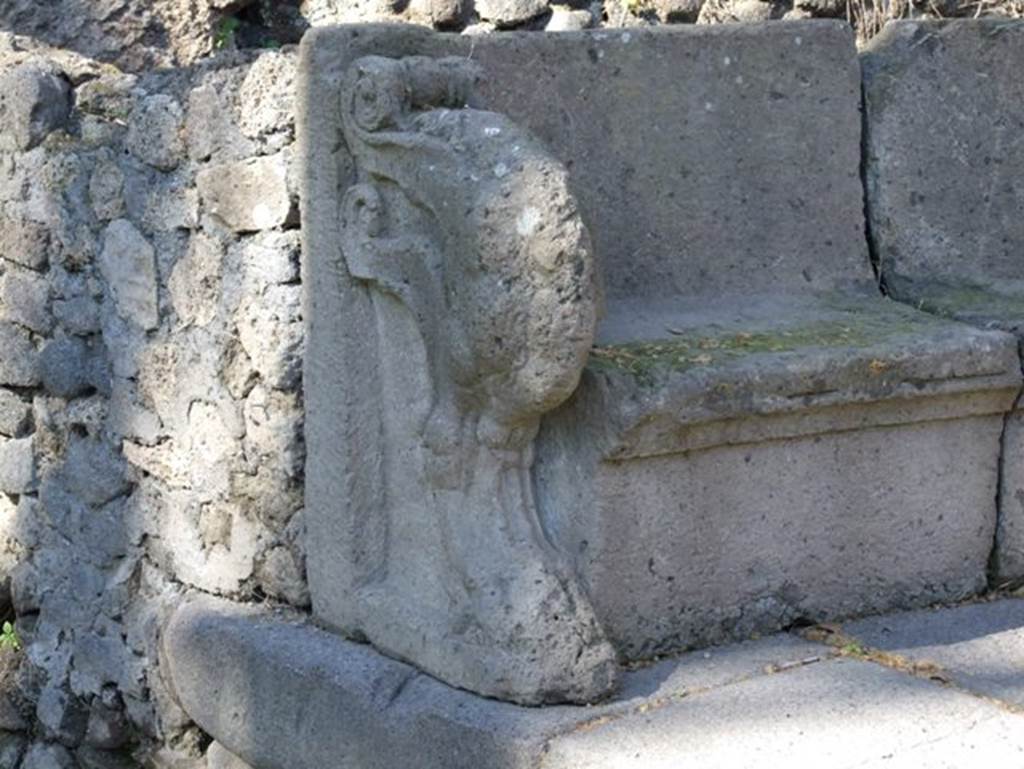
SGD Pompeii. March 2009. Schola north end and wall of enclosure SGH.
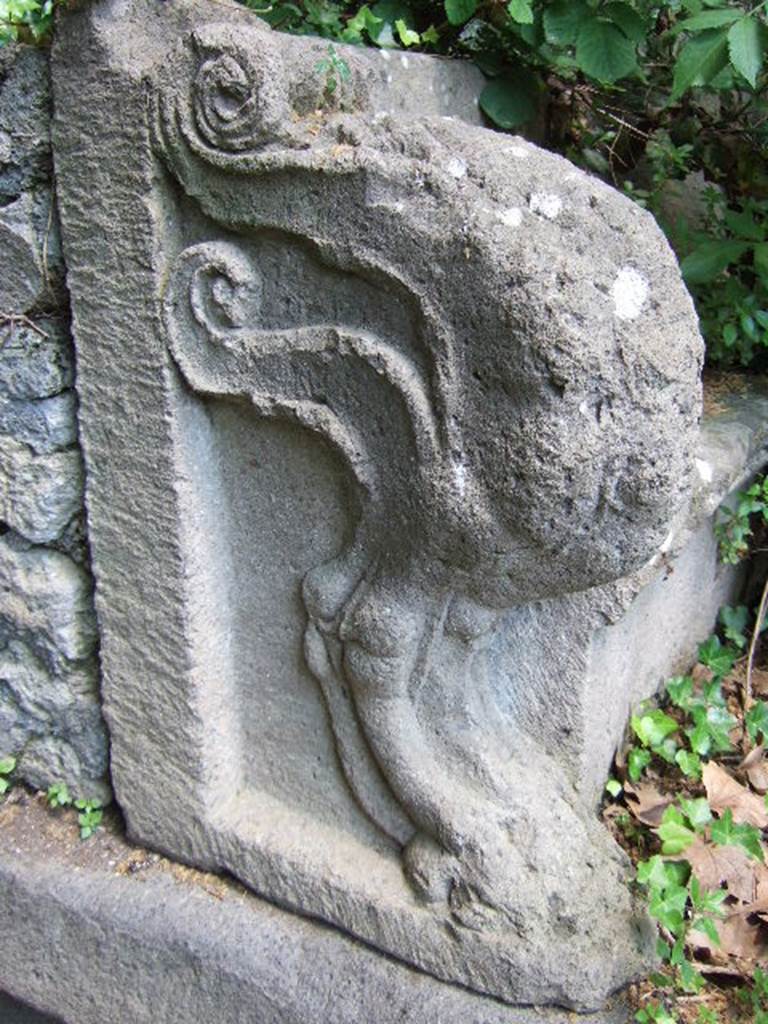
SGD Pompeii. May 2006. Schola north end with carving of paw.
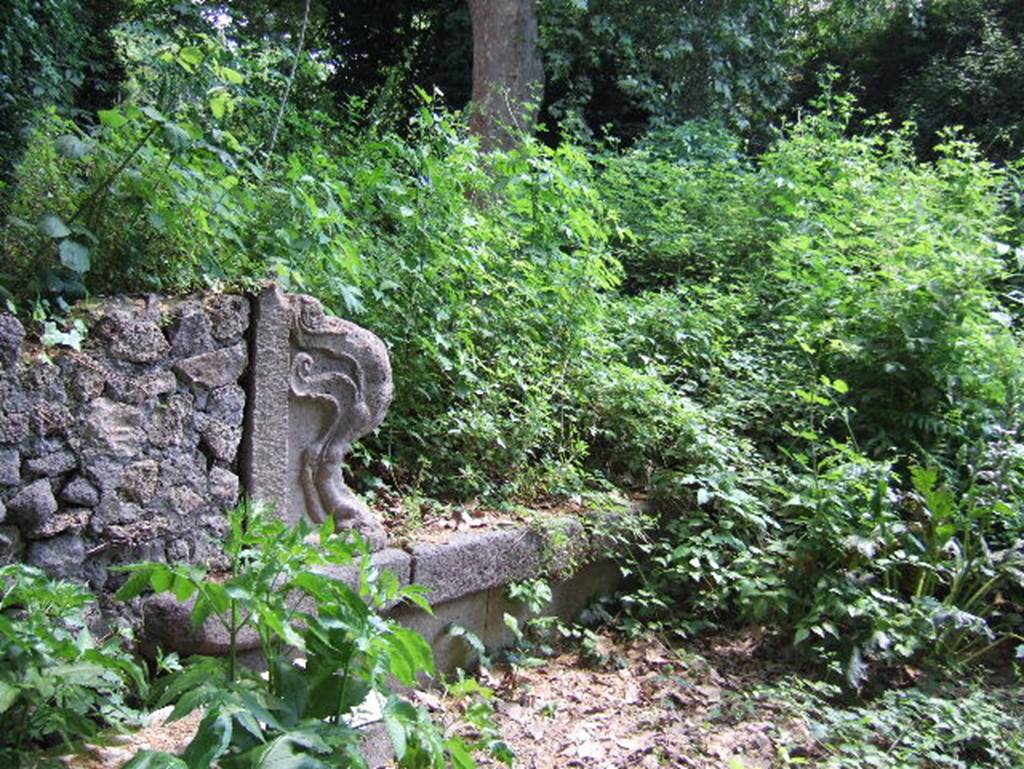
SGD Pompeii. May 2006. North end.
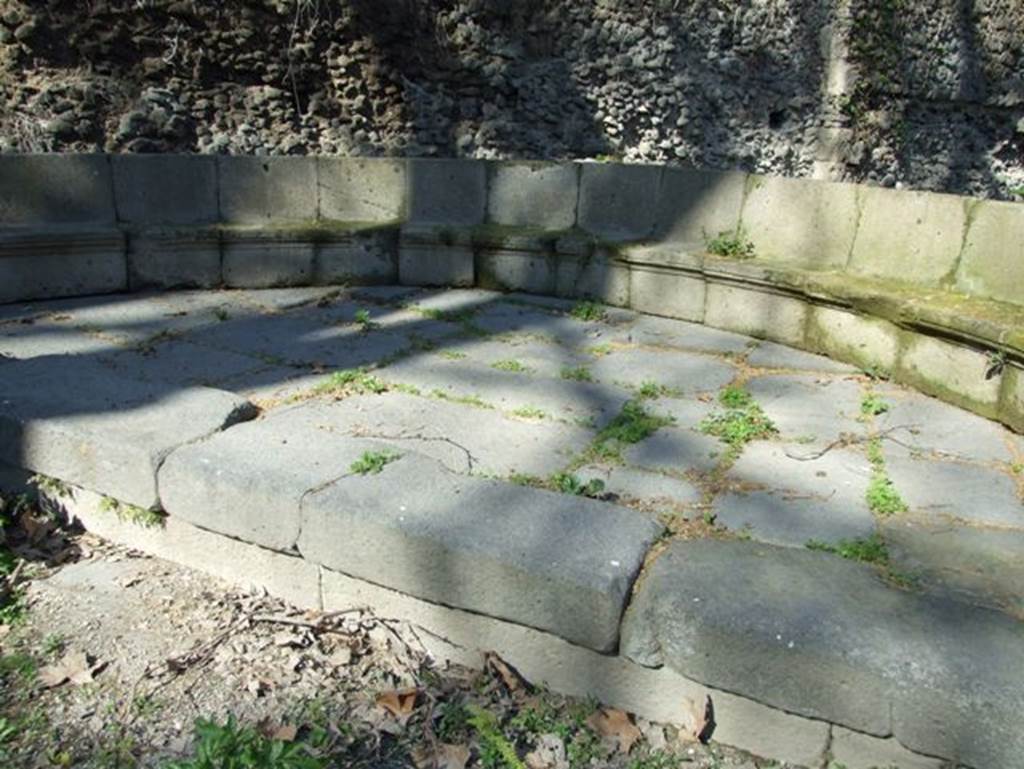
SGD Pompeii. March 2009. Schola centre.
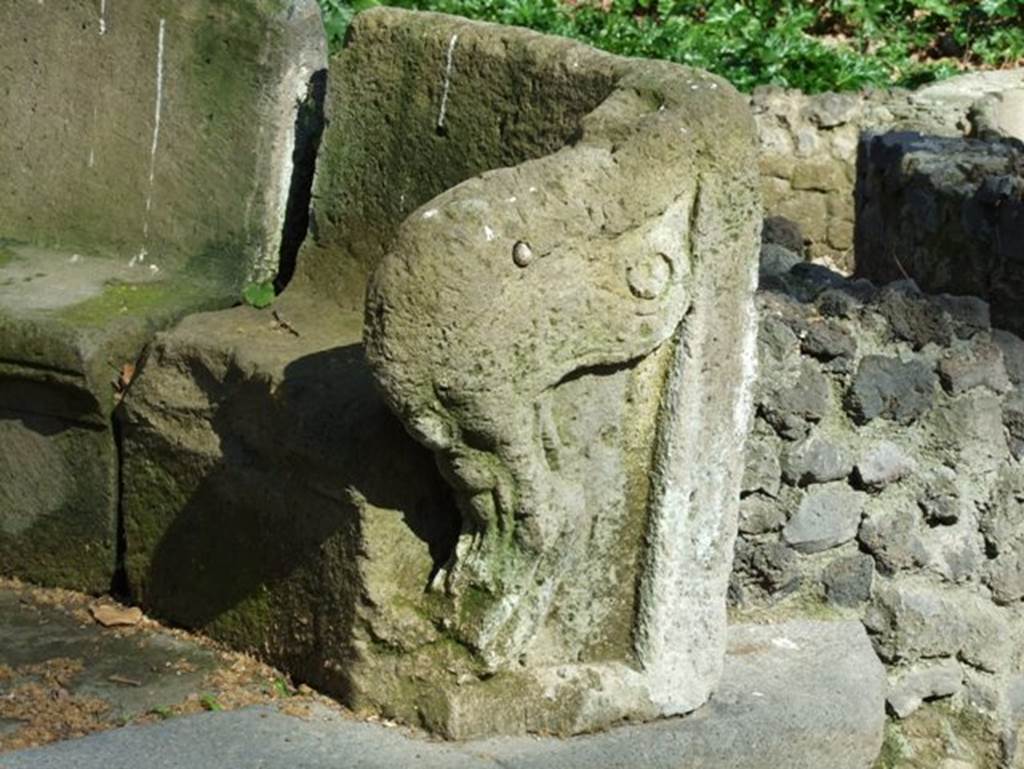
SGD Pompeii. March 2009. Schola south end with remains of carving of paw.
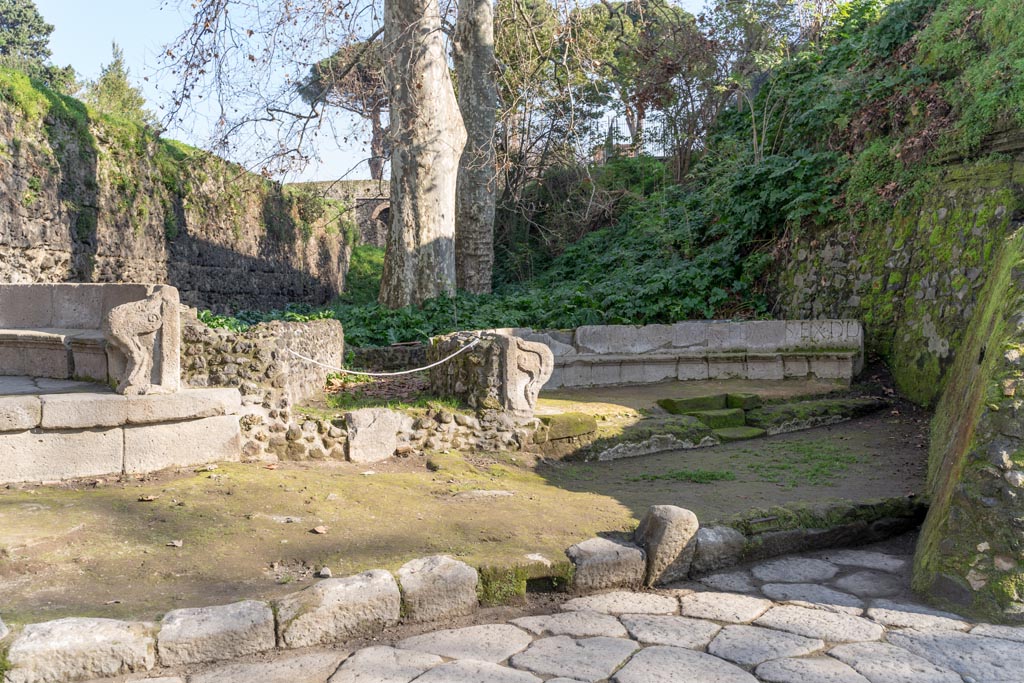
SGD Pompeii, south end on left. January 2023. Looking east towards two schola tombs, with SGF, on right.
The entrance to the enclosure behind the tomb is in the centre.
In front of the entrance the road surface, a drain set in the kerb, and the steps in the centre front of the tomb, are visible.
Photo courtesy of Johannes Eber.