IX.7.21 Pompeii. Caupona of Tertius.
Linked to IX.7.22. Excavated 1880.
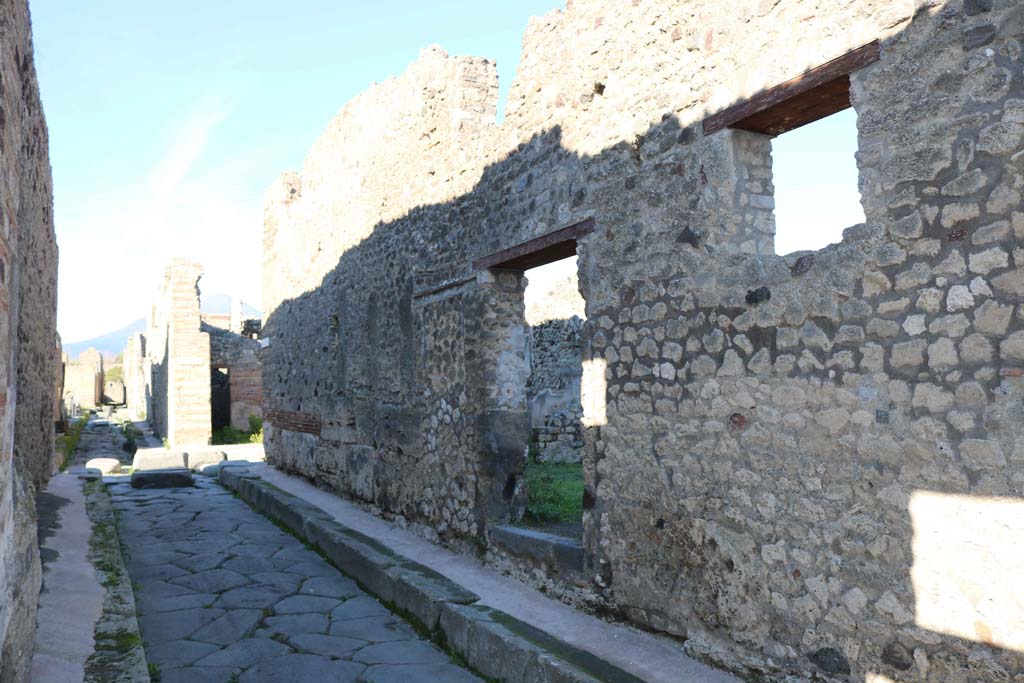
IX.7.21 Pompeii. December 2018.
Looking north along east side of Vicolo di Tesmo, towards entrance
doorway. Photo courtesy of Aude Durand.
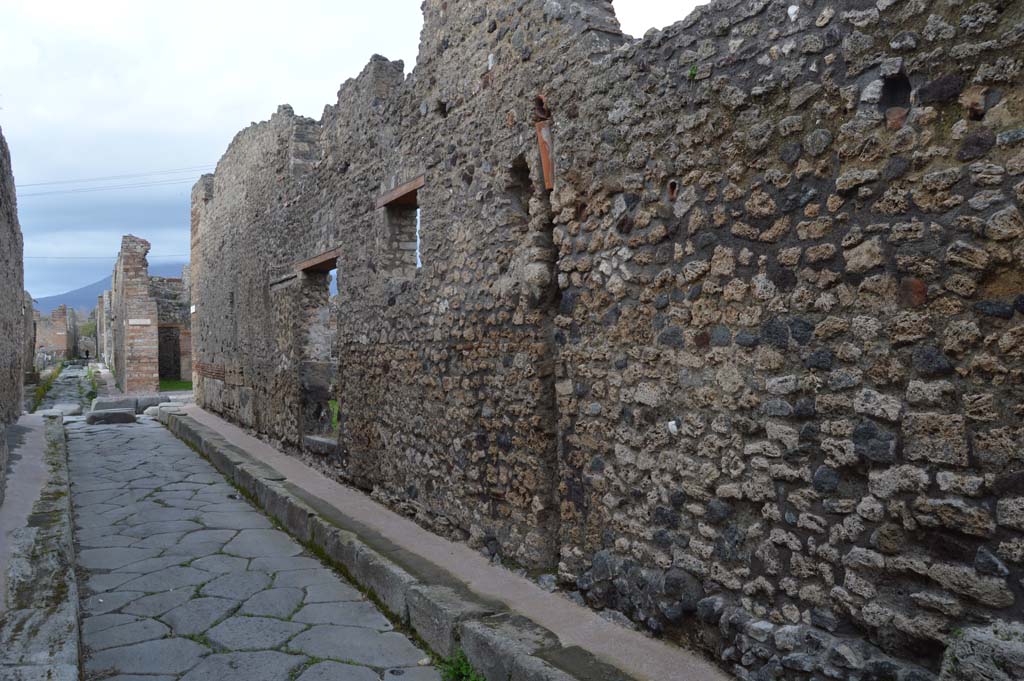
Foto Taylor Lauritsen, ERC Grant 681269 DÉCOR.
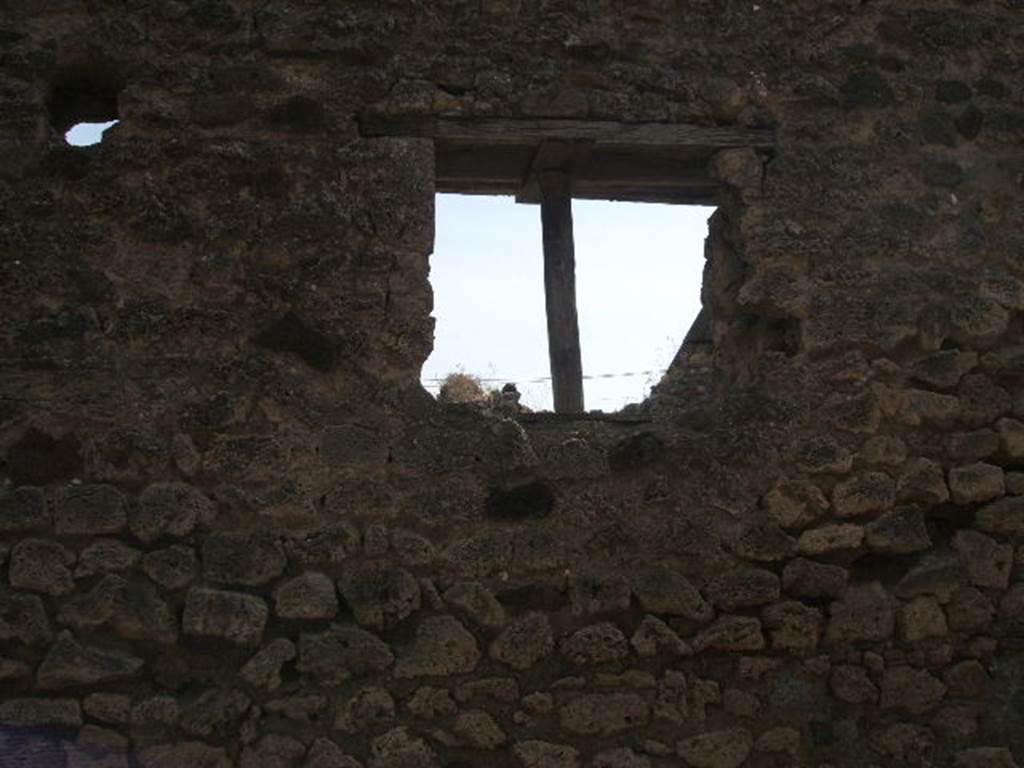
IX.7.21 Pompeii. May 2005. Window on exterior wall on Vicolo di Tesmo, south of entrance doorway.
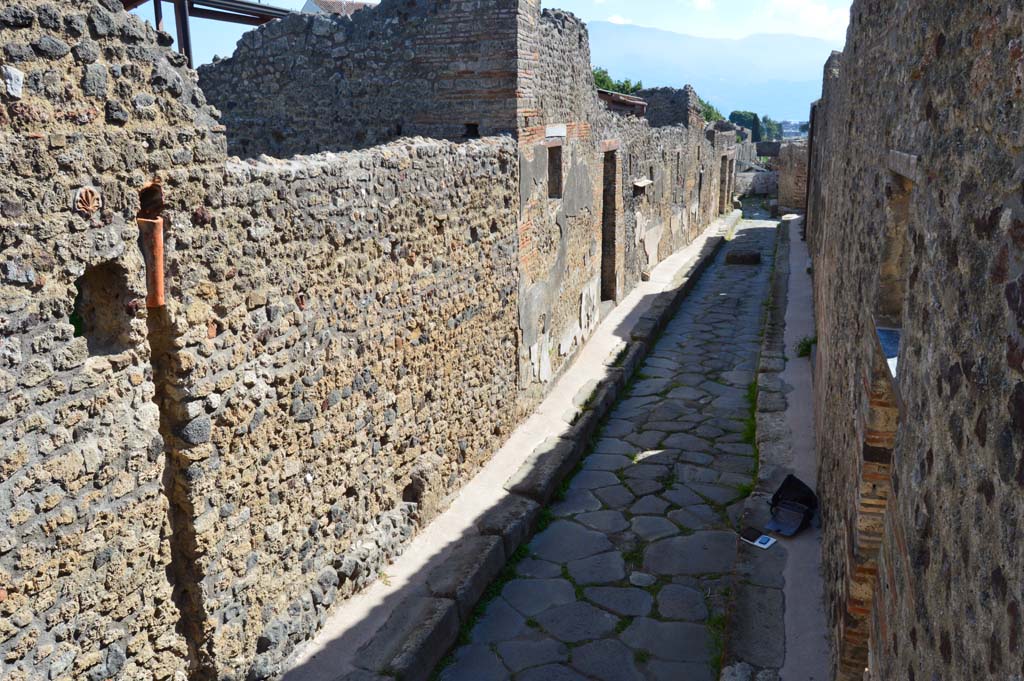
Vicolo di Tesmo, Pompeii.
October 2017. Looking south from wall
façade of IX.7.21, on left.
Foto Taylor Lauritsen, ERC Grant 681269 DÉCOR.
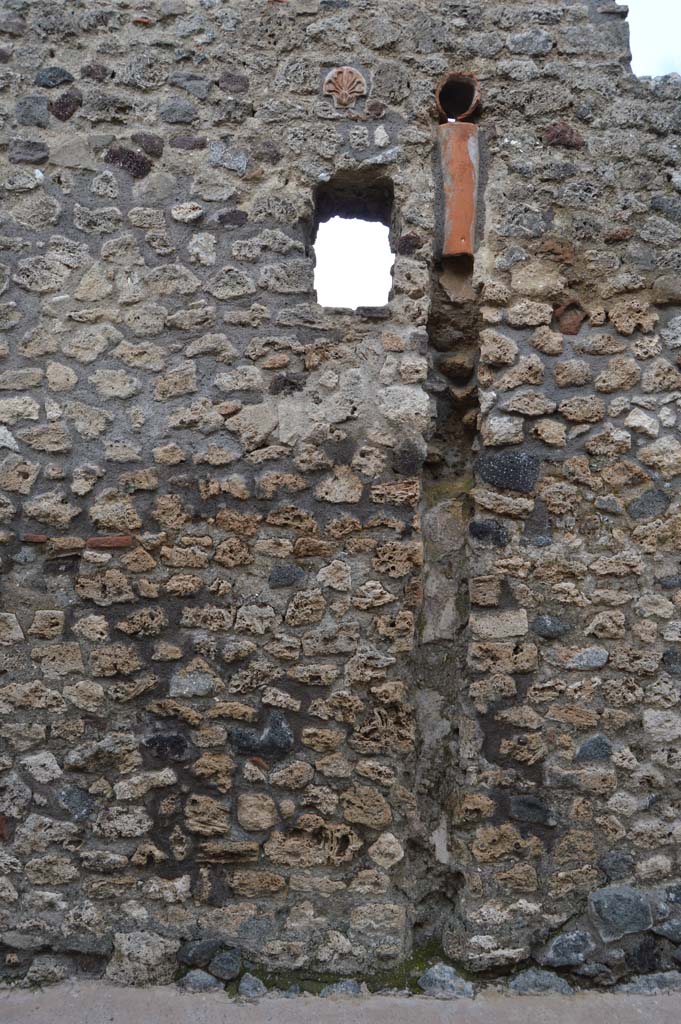
IX.7.21 Pompeii. March 2018.
Looking east towards downpipe from upper floor,
and terracotta decoration embedded in masonry.
Foto Taylor Lauritsen, ERC
Grant 681269 DÉCOR.
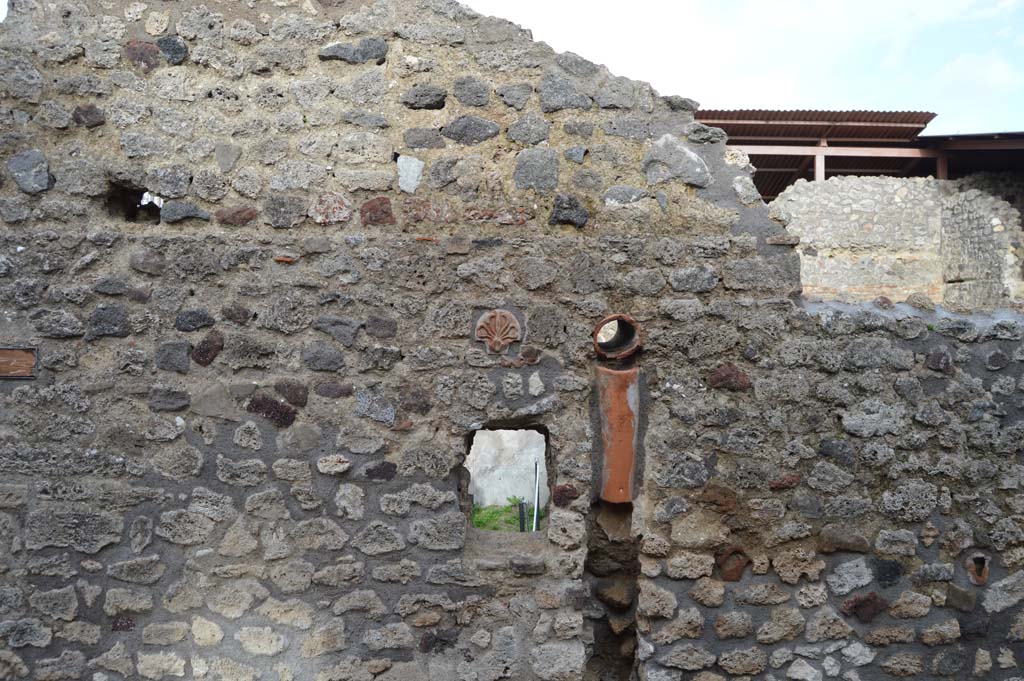
Looking
east towards upper wall of façade, downpipe from upper floor, and terracotta
decoration embedded in masonry.
Foto Taylor Lauritsen, ERC Grant 681269 DÉCOR.
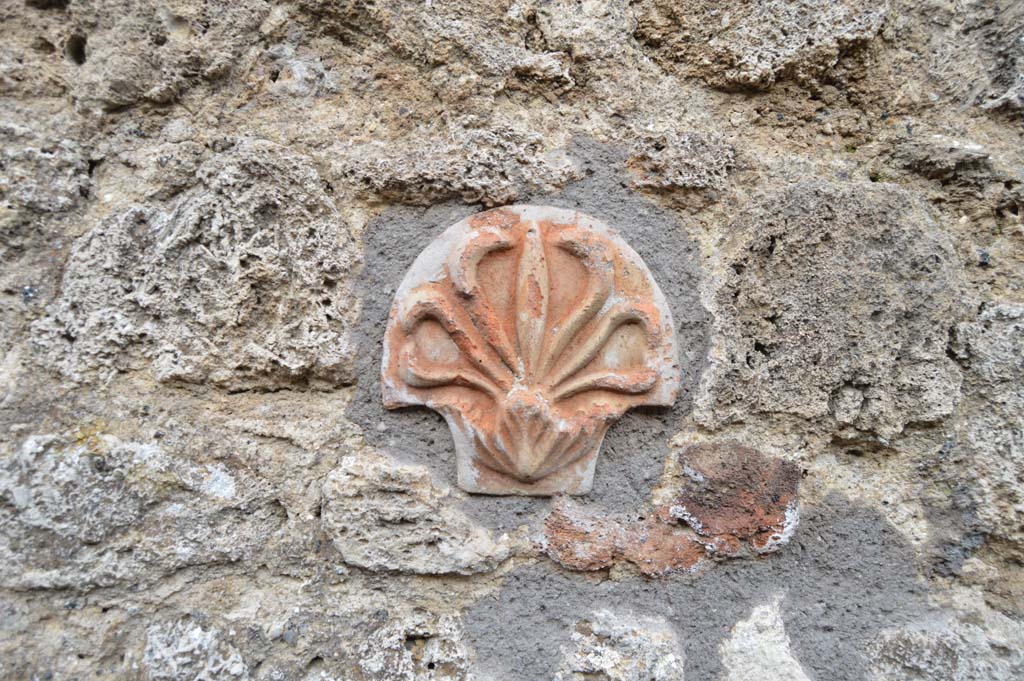
IX.7.21
Pompeii. March 2018. Looking east towards terracotta decoration embedded in
masonry.
Foto Taylor Lauritsen, ERC Grant 681269 DÉCOR.
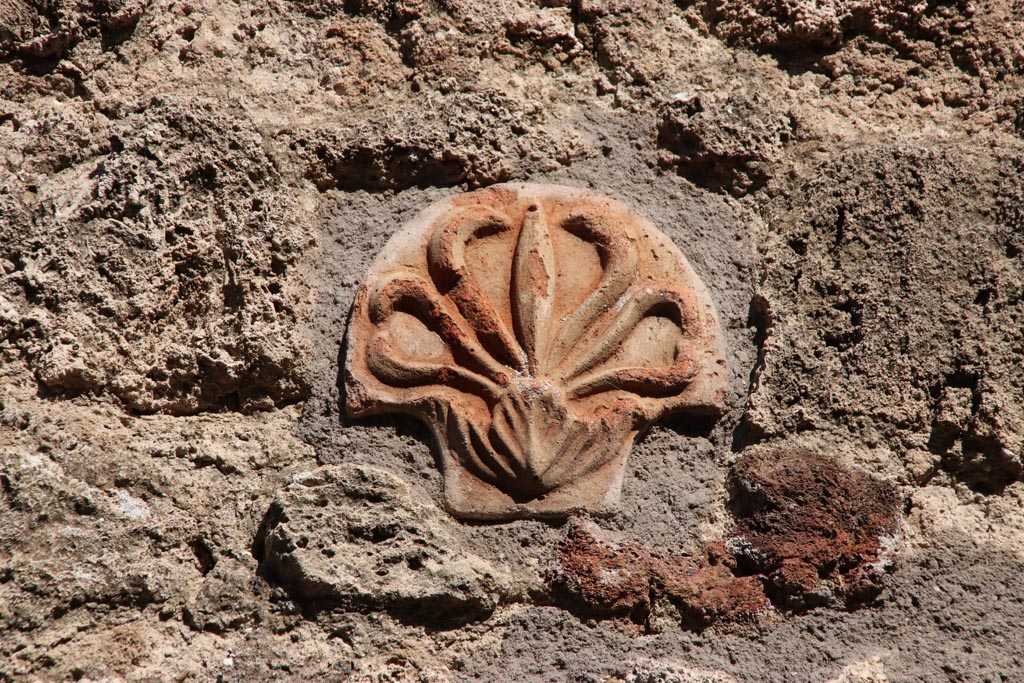
IX.7.21
Pompeii. October 2022. Detail of terracotta decoration. Photo courtesy
of Klaus Heese.
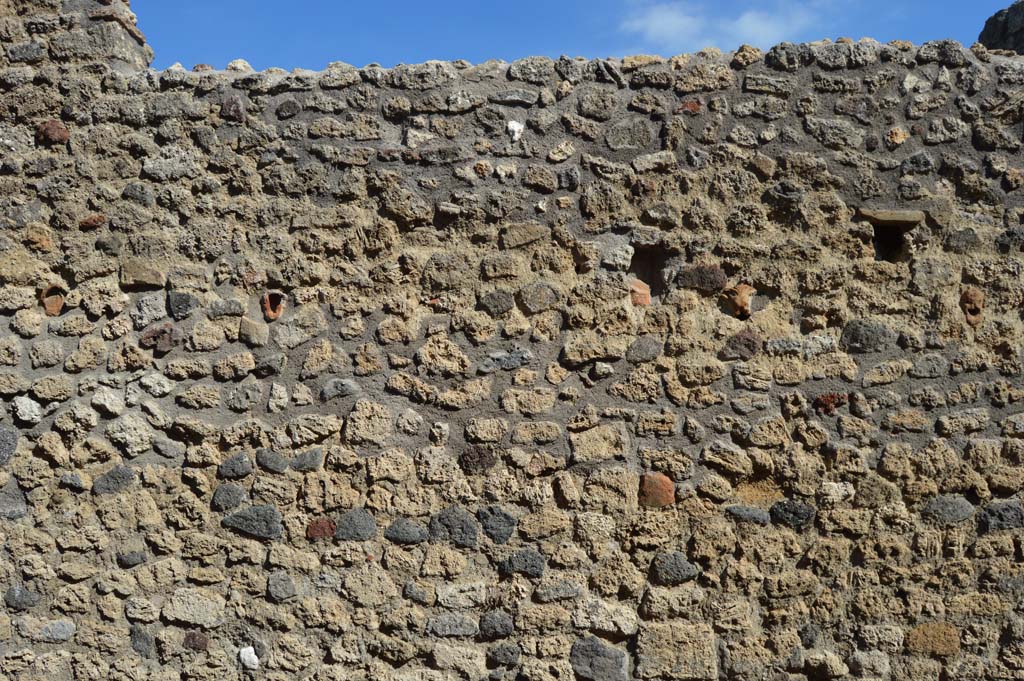
IX.7.21
Pompeii. October 2017. Façade with terracotta mask decorations embedded into
masonry.
Foto Taylor Lauritsen, ERC Grant 681269 DÉCOR.
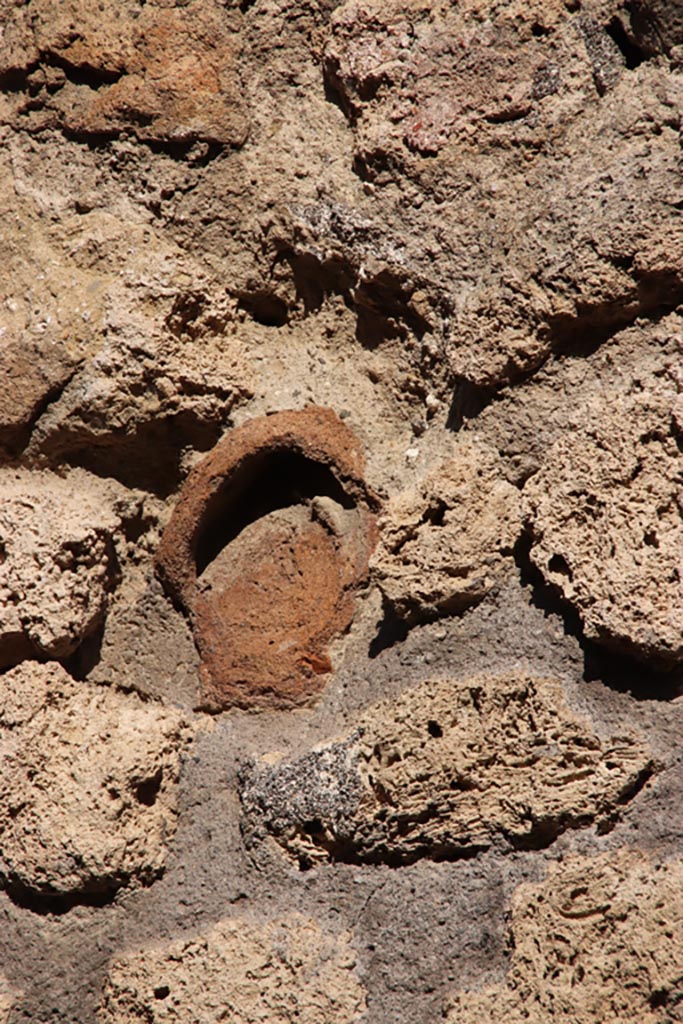
IX.7.21 Pompeii. Pompeii. October 2022.
Terracotta decoration embedded in wall. Photo courtesy of Klaus Heese.
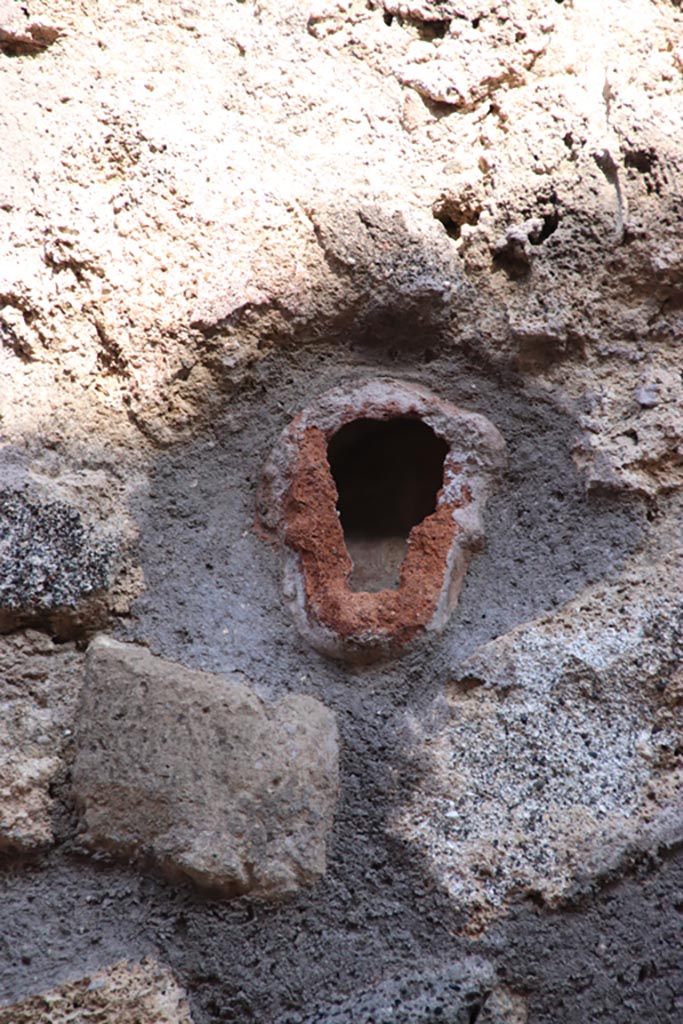
IX.7.21 Pompeii. Pompeii. October 2022.
Detail of remains of terracotta decoration embedded in wall. Photo courtesy of Klaus Heese.
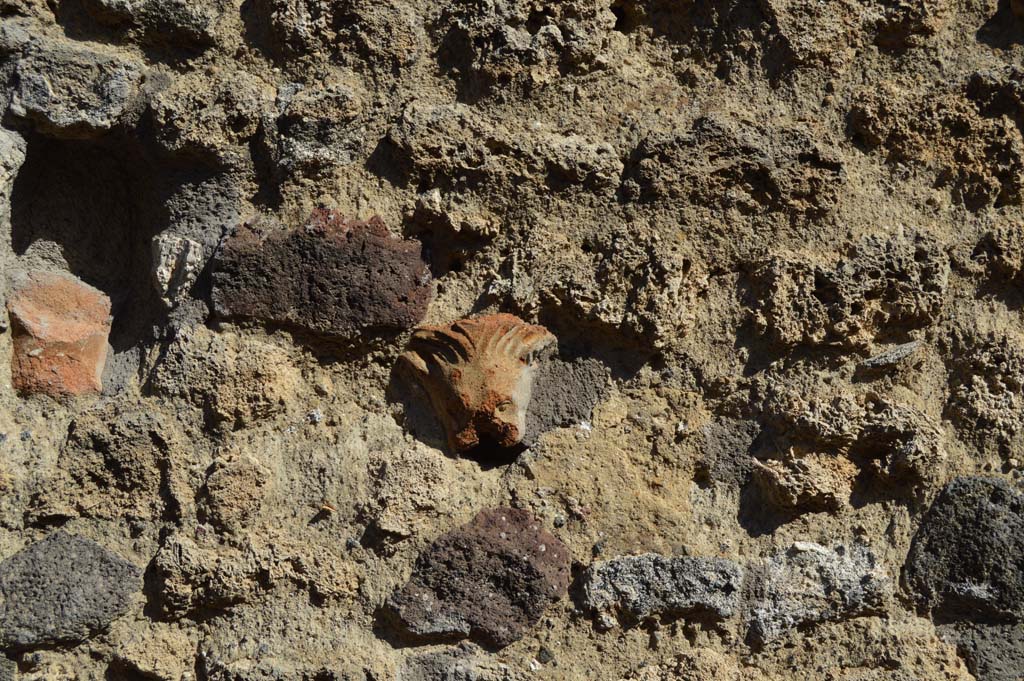
IX.7.21
Pompeii. October 2017. Façade with terracotta lion decoration embedded into
masonry.
Foto Taylor Lauritsen, ERC Grant 681269 DÉCOR.
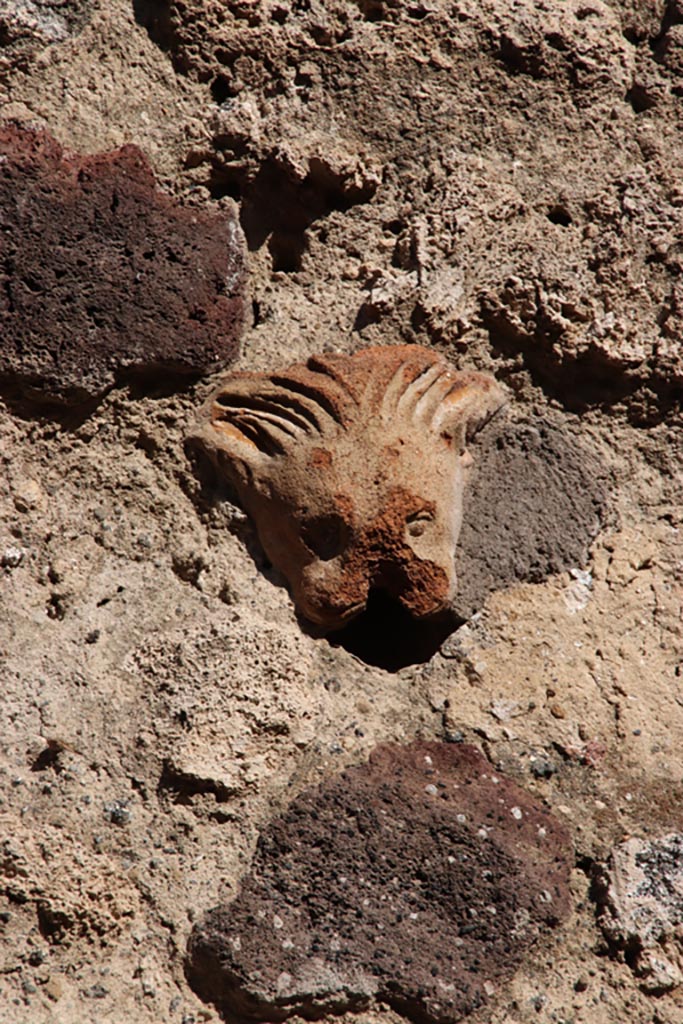
IX.7.21 Pompeii. Pompeii. October 2022.
Detail of terracotta lion decoration embedded in wall. Photo courtesy of Klaus Heese.
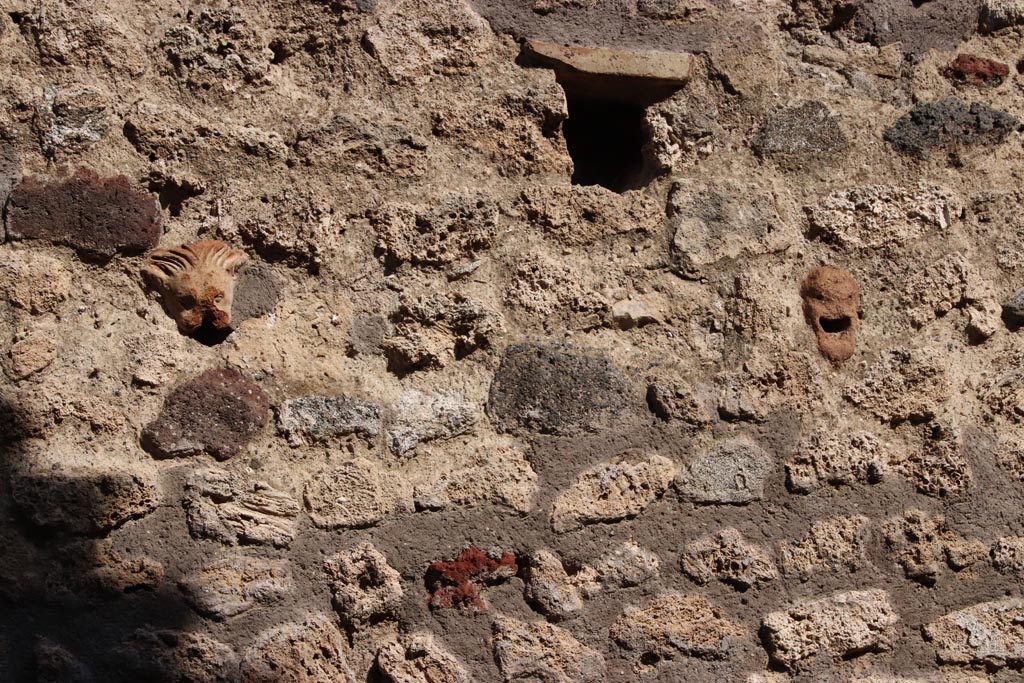
IX.7.21
Pompeii. Pompeii. October 2022. Detail of upper wall façade. Photo
courtesy of Klaus Heese.
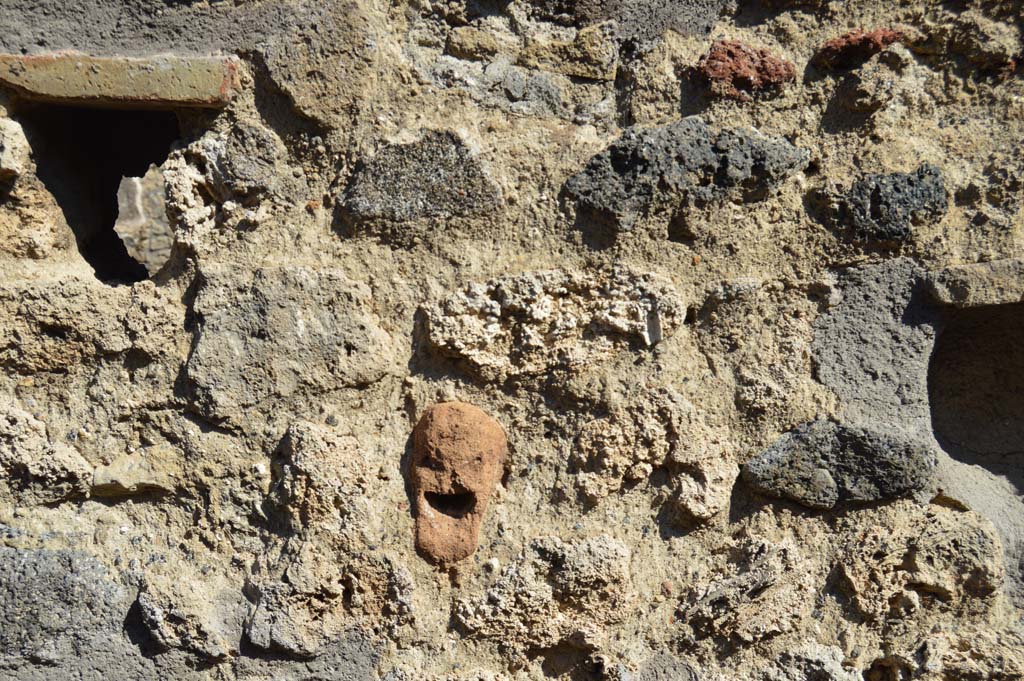
IX.7.21 Pompeii. October 2017. Façade with
terracotta mask decoration embedded into masonry.
Foto Taylor Lauritsen, ERC
Grant 681269 DÉCOR.
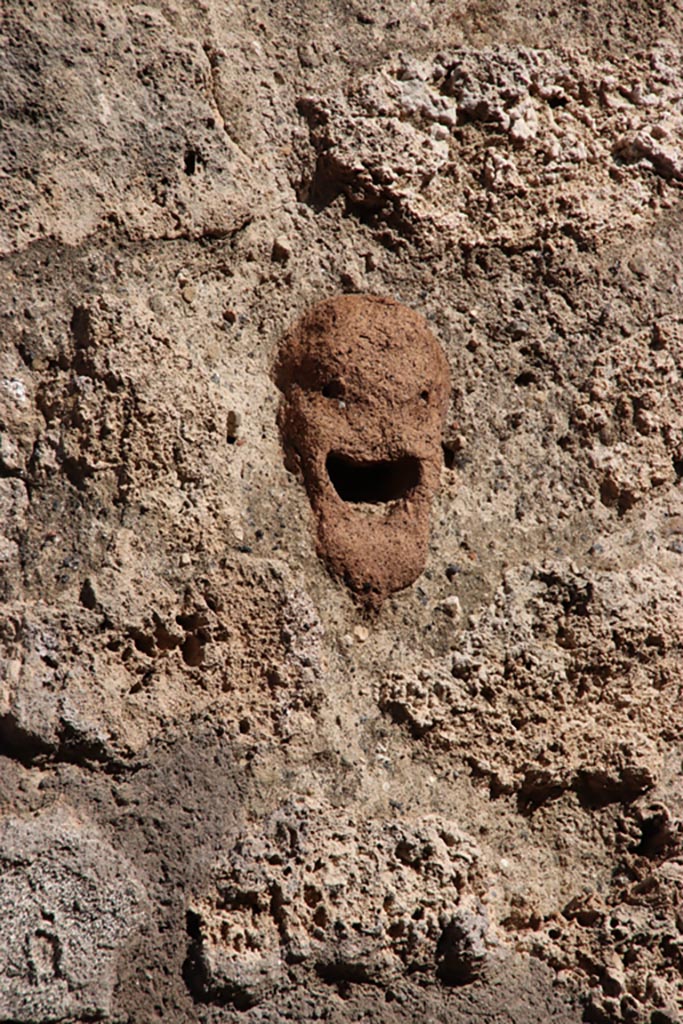
IX.7.21 Pompeii. Pompeii. October 2022.
Detail of terracotta mask decoration embedded in wall. Photo courtesy of Klaus Heese.
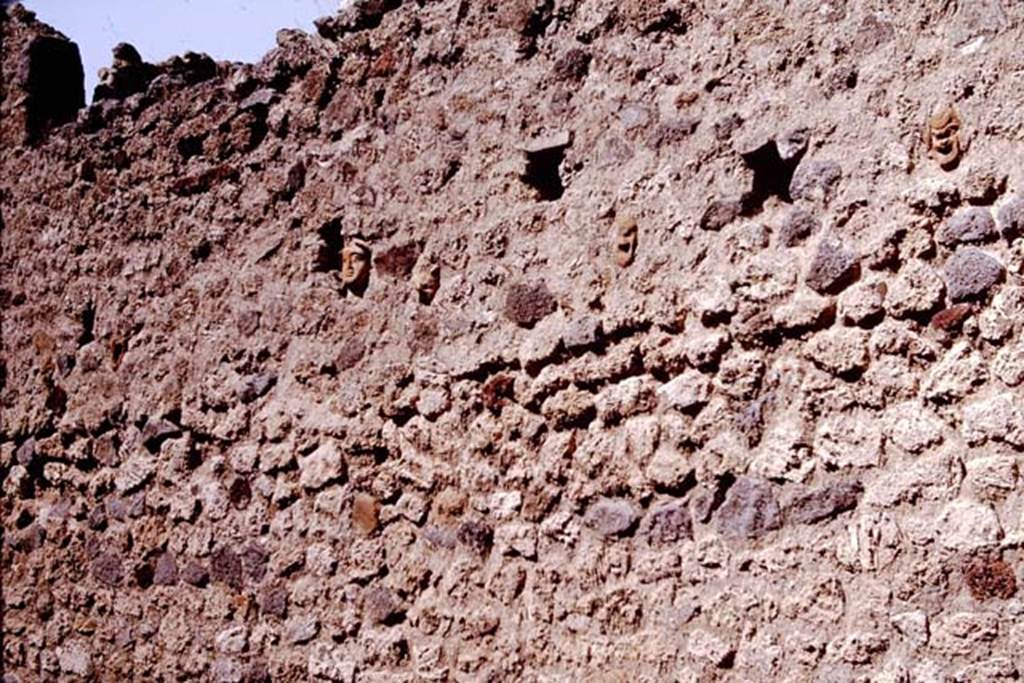
IX.7.21 Pompeii. 1964.
Exterior wall between IX/7/20 and 21, showing masks embedded in the wall. Photo by Stanley A. Jashemski.
Source: The Wilhelmina and Stanley A. Jashemski archive in the University of Maryland Library, Special Collections (See collection page) and made available under the Creative Commons Attribution-Non-Commercial License v.4. See Licence and use details.
J64f1574
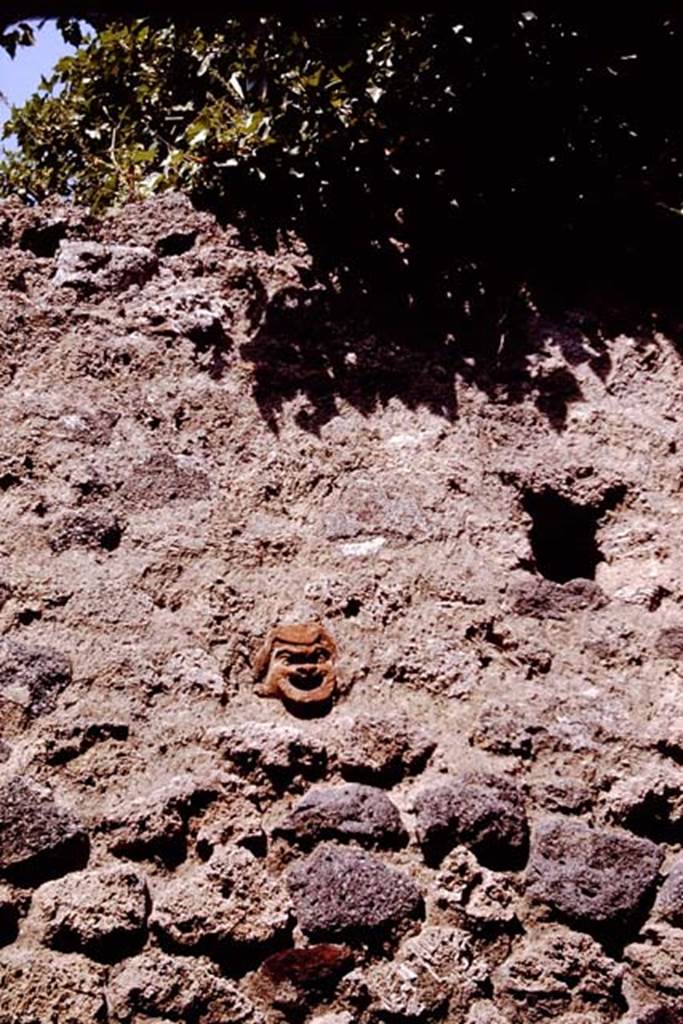
IX.7.21 Pompeii. 1964.
Exterior wall between IX/7/20 and 21, showing mask embedded in the wall. Photo by Stanley A. Jashemski.
Source: The Wilhelmina and Stanley A. Jashemski archive in the University of Maryland Library, Special Collections (See collection page) and made available under the Creative Commons Attribution-Non-Commercial License v.4. See Licence and use details.
J64f1575
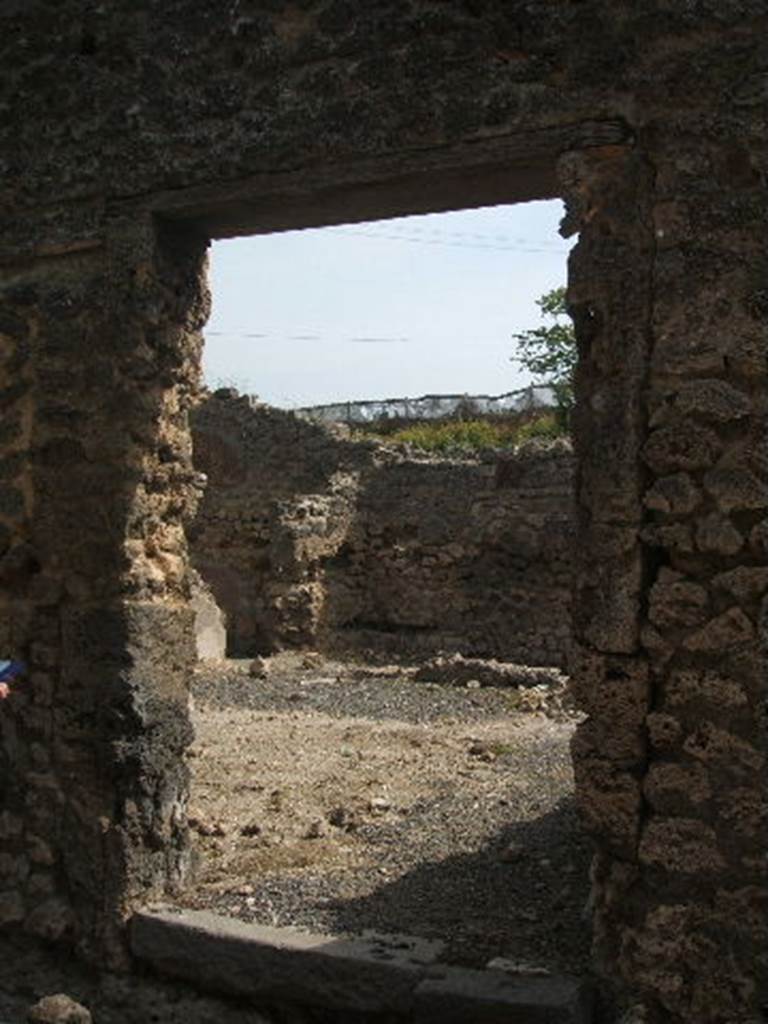
IX.7.21 Pompeii. May 2005. Entrance doorway, looking east.
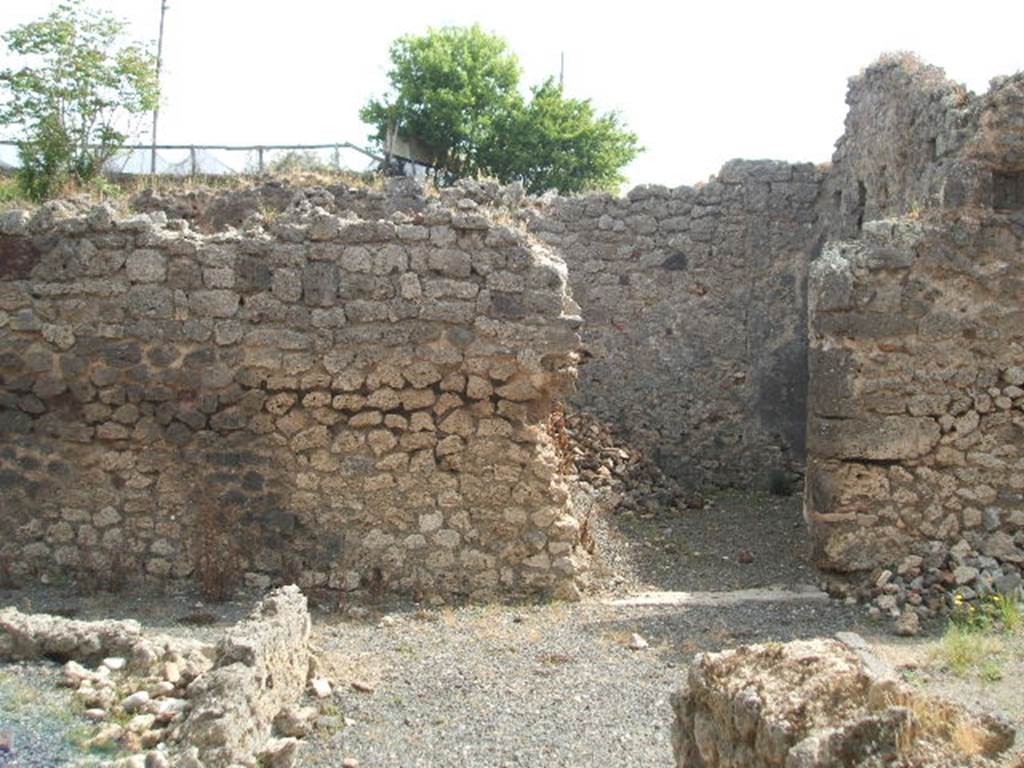
IX.7.21 Pompeii. May 2005. Looking east across atrium to doorway to room, according to Mau possibly used as a dining room.
Leaning against the east wall of the atrium would have been the stairs leading to the rooms on the upper floor, above the north-east corner of the atrium.
Under the stairs in the north-east corner would have been a storage area or cupboard.
In the lower left corner of the photo, can be seen the remains of the pluteus from around the impluvium.
The four brick pilasters of the Corinthian atrium are now vanished.
See Mau in Bullettino dell’Instituto di Corrispondenza
Archeologica (DAIR), 1882, (p.184)
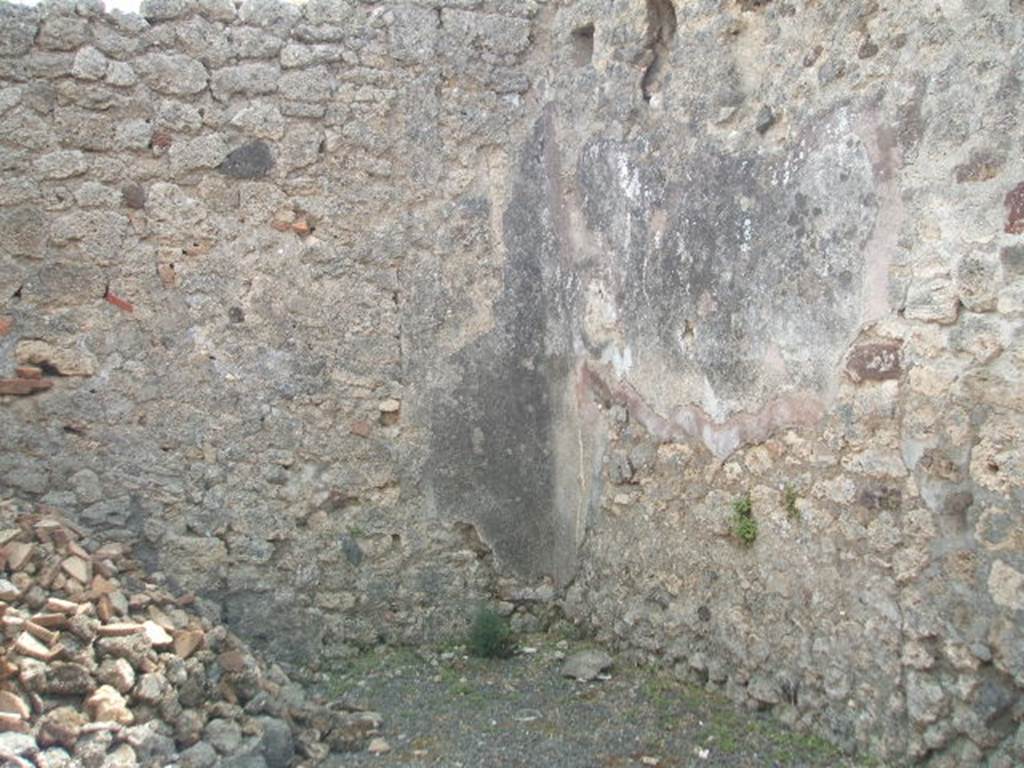
IX.7.21 Pompeii. May 2005. South-east corner of room on east side of atrium.
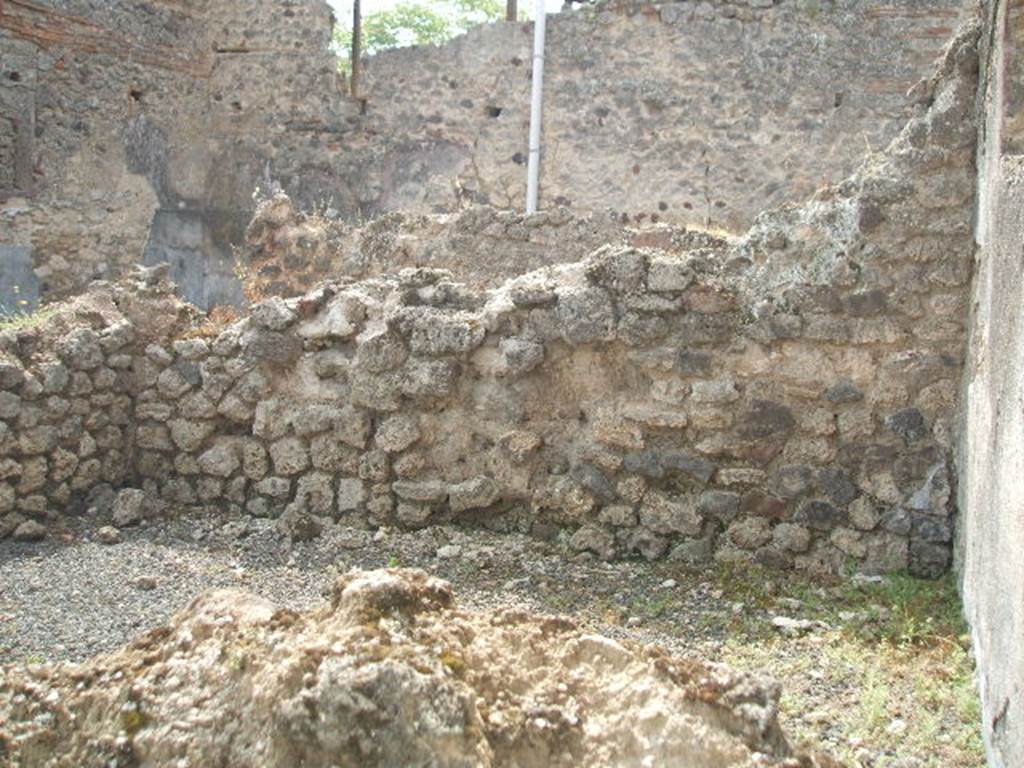
IX.7.21 Pompeii. May 2005. Looking south across rooms on right side of entrance.
According to Mau, the left end of this room would have been a small area accessible by two doorways and separated from the corridor by a thin wall.
The right end of this room was probably used as a dining room.
See Mau in Bullettino dell’Instituto di Corrispondenza
Archeologica (DAIR), 1882, (p.184)
According to Eschebach these would have been the kitchen, at the right end, and storage-room for amphora, on the left end.
See Eschebach, L., 1993. Gebäudeverzeichnis und Stadtplan der antiken Stadt Pompeji. Köln: Böhlau. (p.435)
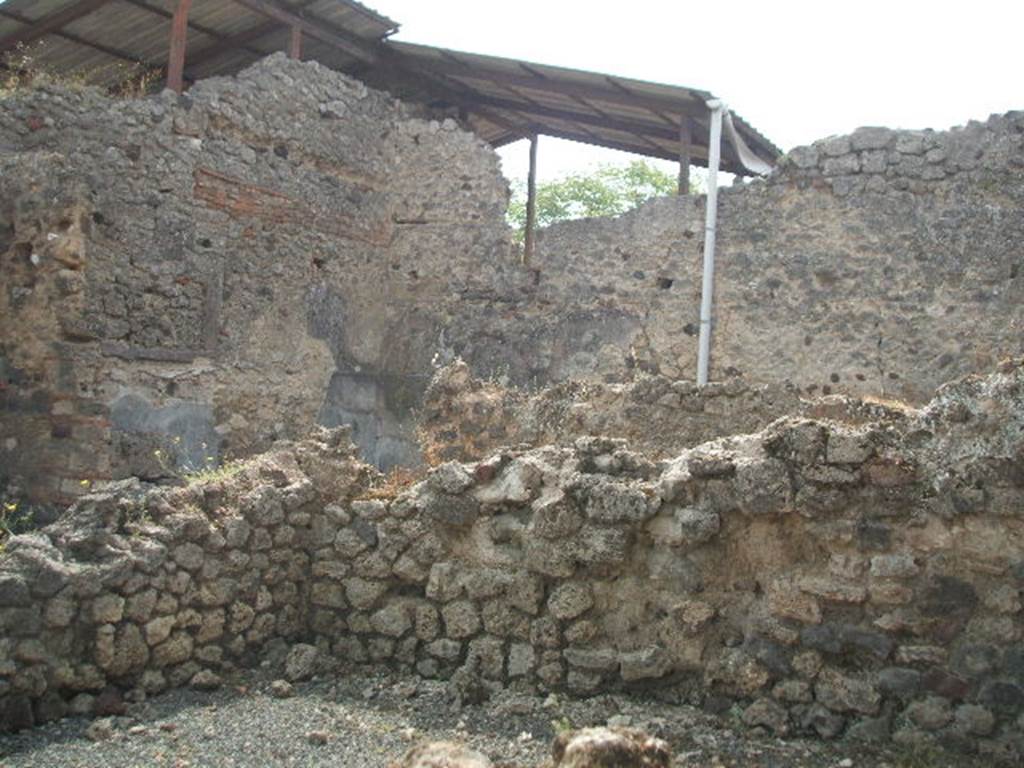
IX.7.21 Pompeii. May 2005.
Looking south-east across site of small room. At the rear of the south wall is the corridor leading to the latrine.
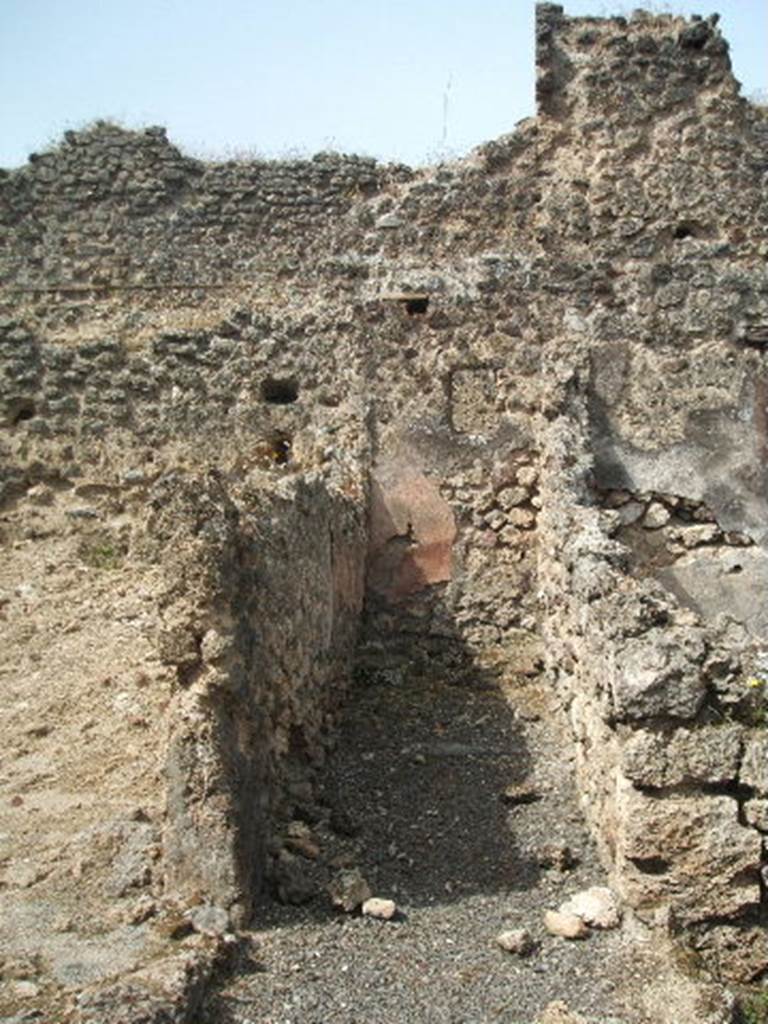
IX.7.21 Pompeii. May 2005. Corridor leading to latrine. Looking west.
According to Boyce, on the south wall of the passage leading to the latrine was painted the figure of Fortuna.
See Boyce G. K., 1937. Corpus of the Lararia of Pompeii. Rome: MAAR 14. (p.88, no.442 and Pl. 26,2)
![Lararium wall painting of Isis Fortuna found in corridor leading to latrine of IX.7.21/2. Now in Naples Archaeological Museum. Inventory number: 112285. According to Boyce, to the left of Fortuna is a nude man, squatting in a position appropriate to the wording painted above his head -
Cacator
Cave Malv [CIL IV 3832].
A serpent rises on each side of him, as if he is replacing the usual altar with offerings. Below the painting a terracotta monopodium stood against the wall, perhaps serving as an altar. See Boyce G. K., 1937. Corpus of the Lararia of Pompeii. Rome: MAAR 14. (p.88, no.442 and Pl. 26,2) See Fröhlich, T., 1991. Lararien und Fassadenbilder in den Vesuvstädten. Mainz: von Zabern. (L106, Picture 10,1) According to Hobson, a painting from a latrine shows the goddess Fortuna next to a man between 2 snakes, apparently advising the person entering the toilet to beware of the danger of the pollution of defecation: Cacator cave malu(m). [CIL IV 3832]. See Hobson, B., 2009. Latrinae et foricae: Toilets in the Roman World. London; Duckworth. (p.111)](9%2007%2021_files/image036.jpg)
Lararium wall painting of Isis Fortuna found in corridor leading to latrine of IX.7.21/2.
Now in Naples Archaeological Museum. Inventory number 112285.
According to Boyce, to the left of Fortuna is a nude man, squatting in a position appropriate to the wording painted above his head -
Cacator
Cave Malv [CIL IV 3832].
A serpent rises on each side of him, as if he is replacing the usual altar with offerings.
Below the painting a terracotta monopodium stood against the wall, perhaps serving as an altar.
See Boyce G. K., 1937. Corpus of the Lararia of Pompeii. Rome: MAAR 14. (p.88, no.442 and Pl. 26, 2)
See Fröhlich, T., 1991. Lararien und Fassadenbilder in den Vesuvstädten. Mainz: von Zabern. (L106, Picture 10, 1)
According to Hobson, a painting from a latrine shows the goddess Fortuna next to a man between 2 snakes, apparently advising the person entering the toilet to beware of the danger of the pollution of defecation:
Cacator cave
malu(m). [CIL IV 3832].
See Hobson, B., 2009. Latrinae et foricae: Toilets in the Roman World. London; Duckworth. (p.111).
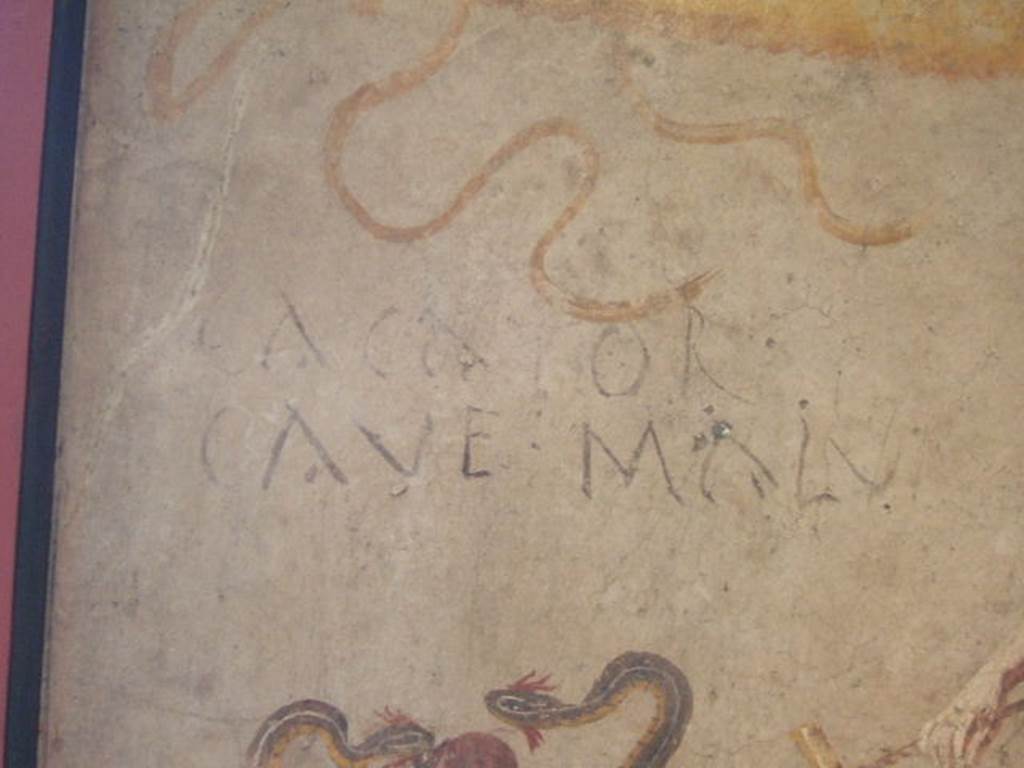
Cacator Cave Malu(m) inscription found on lararium wall painting of Isis Fortuna found in IX.7.21/22.
Now in Naples Archaeological Museum. Inventory number 112285
According to Giacobello, the house communicated with the workshop, across the atrium.
In the corridor that led to the latrine, was found the fresco figuring Fortuna, a male figure and serpents, with the inscription Cacator cave malu(m).
See Giacobello, F., 2008. Larari Pompeiani: Iconografia e culto dei Lari in ambito domestico. Milano: LED Edizioni. (p.250)
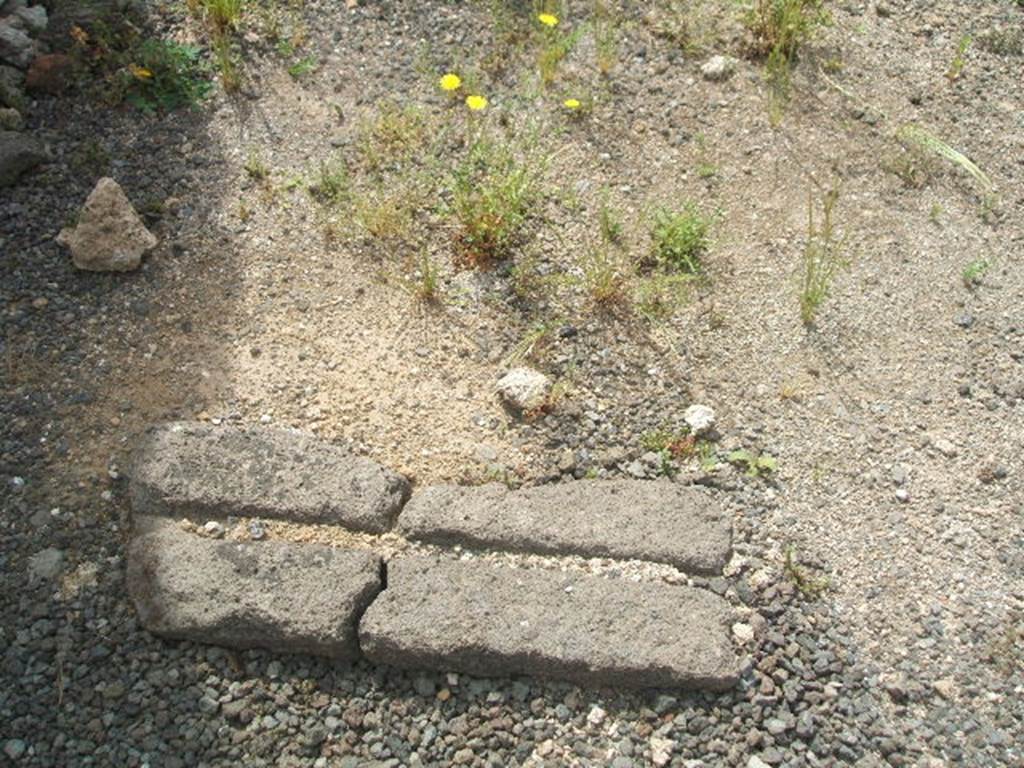
IX.7.21 Pompeii. May 2005. Remains of a threshold or door sill.
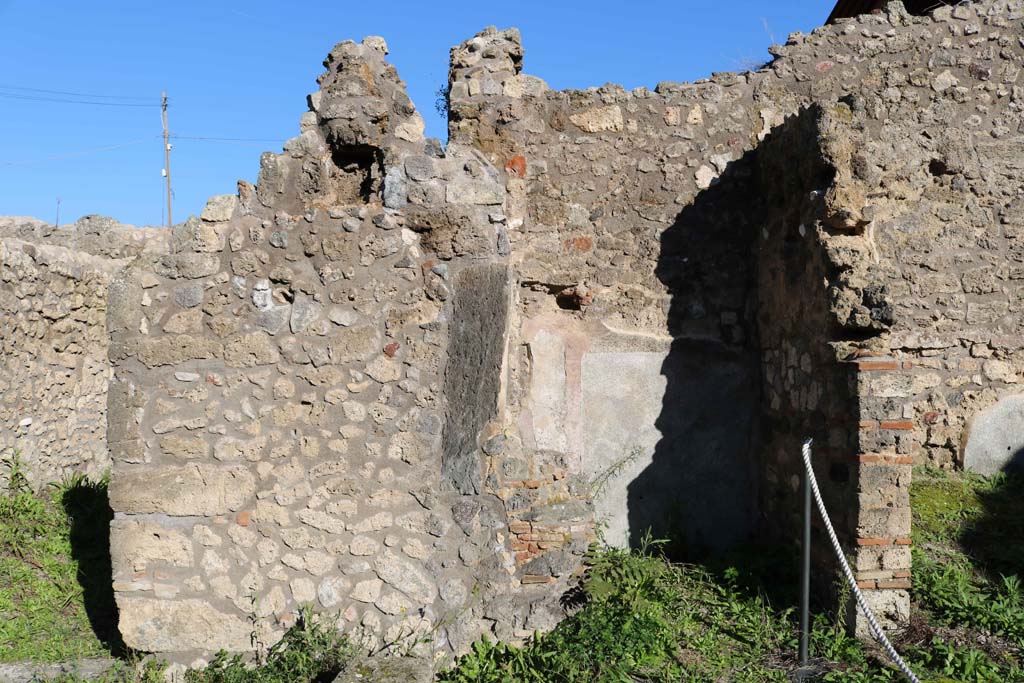
IX.7.21 Pompeii. December
2018. Looking east opposite corridor, into small room or cupboard area. Photo courtesy of Aude
Durand.
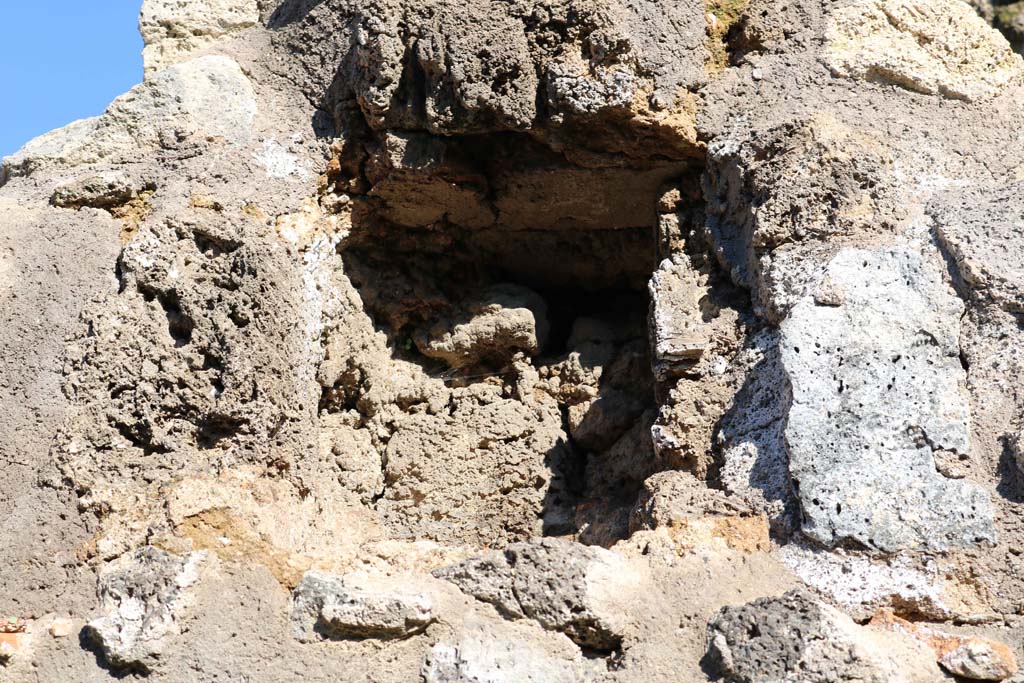
IX.7.21 Pompeii. December 2018.
Niche or recess high up on
east wall, near small room or cupboard area. Photo courtesy of Aude Durand.
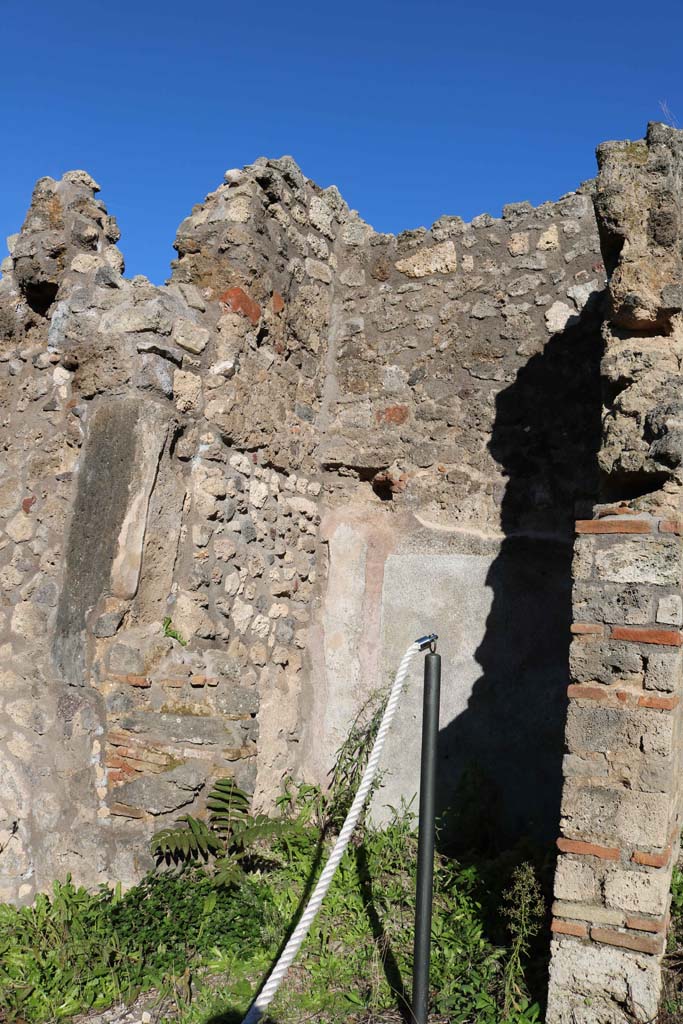
IX.7.21 Pompeii. December
2018.
Looking north-east into small
room or cupboard, opposite corridor. Photo courtesy of Aude Durand.
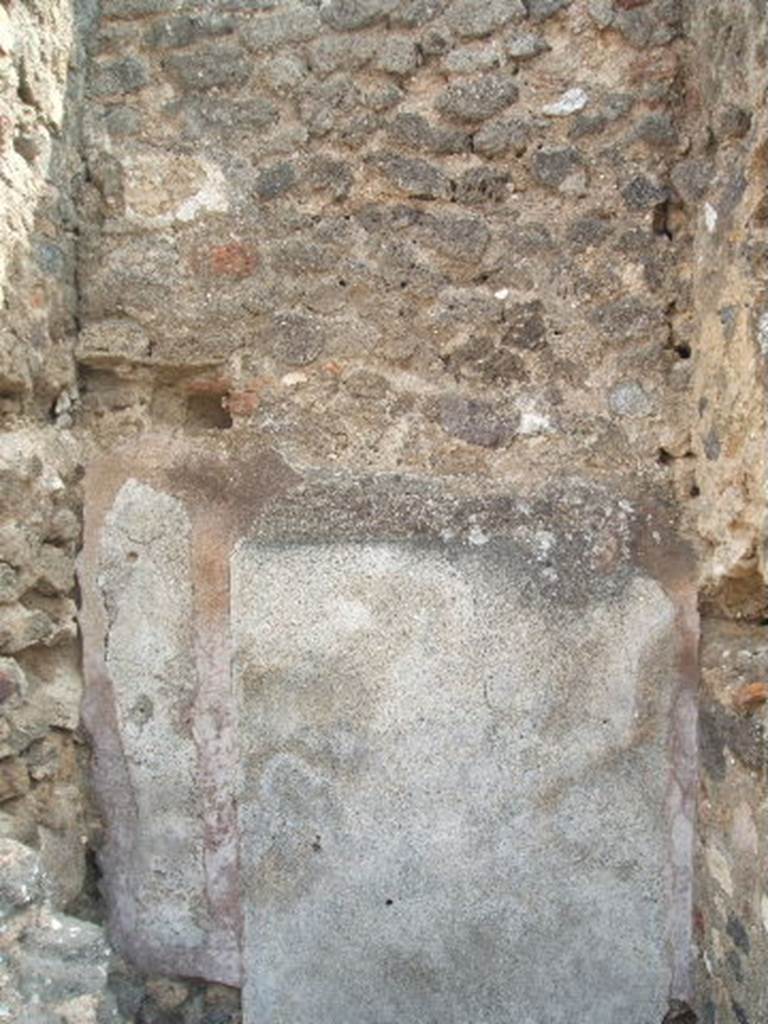
IX.7.21 Pompeii. May 2005. Looking east in small room or cupboard area, opposite corridor.
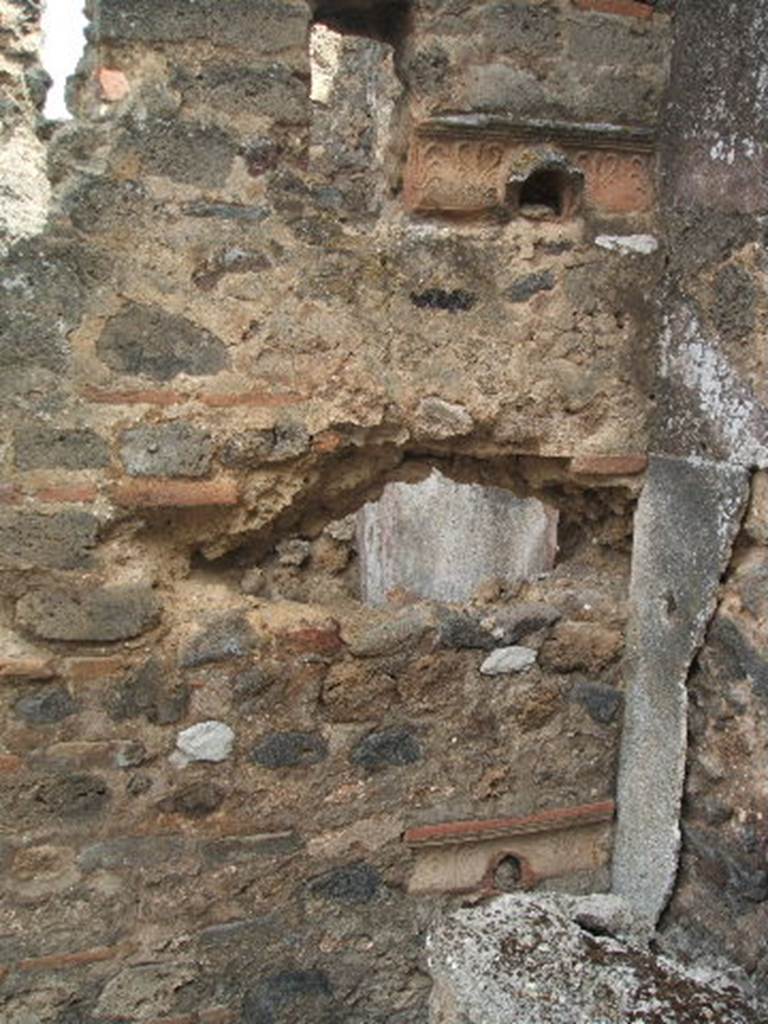
IX.7.21 Pompeii. May 2005. Looking through north wall into small room from north-east corner of garden.
Grondaie (waterspouts) built into the wall in antiquity, one with the head of a lion, the other with the head of a dolphin.
According to Mau, also buried into the wall was a small head of terracotta but it was badly damaged.
See Mau in Bullettino dell’Instituto di Corrispondenza
Archeologica (DAIR), 1882, (p.184)
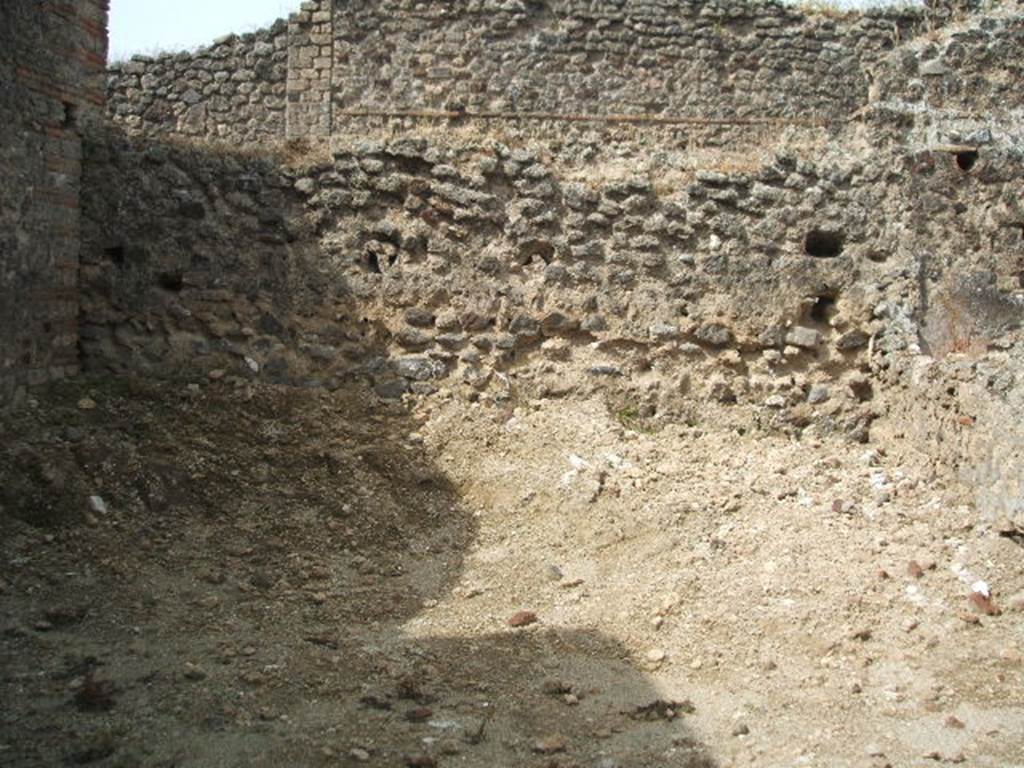
IX.7.21 Pompeii. May 2005. West side of garden area.
According to Jashemski, at the rear of the caupona was a small garden area.
Amongst the items found in the garden were three feet from a marble table, a monopodium, and, set in the soil, several little mill-stones, and a large terracotta dolium.
See Jashemski, W. F., 1993. The Gardens of Pompeii, Volume II: Appendices. New York: Caratzas. (p.242)
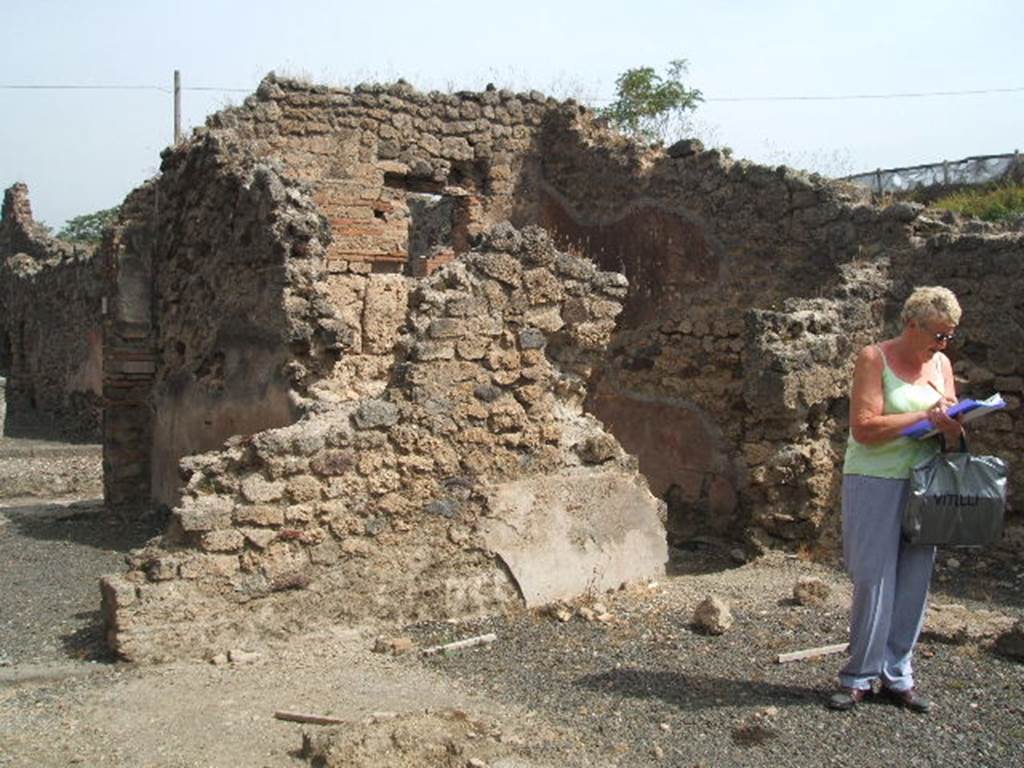
IX.7.21/22 Pompeii. May 2005.
North-east corner of atrium, with doorway on left to IX.7.22, and doorway to its other room with remains of red plaster, on right.
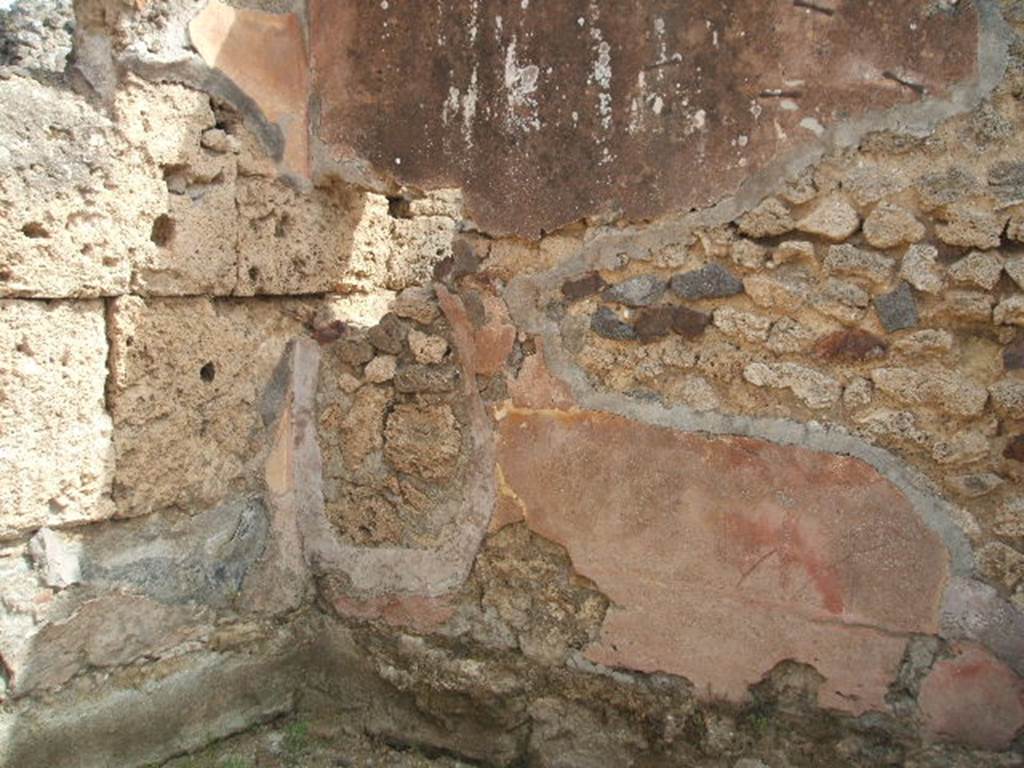
IX.7.21/22 Pompeii. May 2005. Remains of painted plaster in north-east corner of the room on east side of caupona.
According to Mau, this room was the only one that had well conserved plaster.
It was painted simply and clumsily in the last IV style, and on a yellow background.
In the middle of each of the divisions on the walls, there were similar square paintings representing a bird pecking at fruit, on a yellow background.
See Mau in Bullettino dell’Instituto di Corrispondenza
Archeologica (DAIR), 1882, (p.194)
According to PPP, the north wall had a red lower area.
The east wall had the lower portion of the walls painted red, in the middle area were narrow red central divisions with yellow panels, the upper area was painted red.
The south wall had the lower portion painted red, the middle section painted yellow with panels.
See Bragantini, de Vos, Badoni, 1986. Pitture e Pavimenti di Pompei, Parte 3. Rome: ICCD. (p.507)
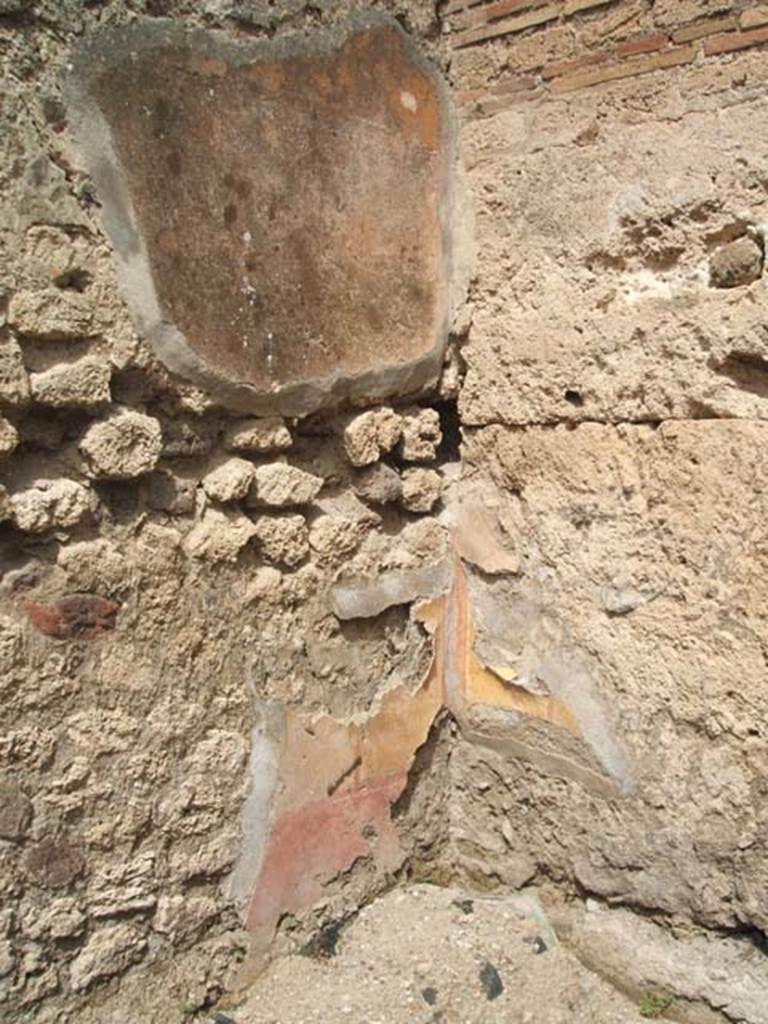
IX.7.21/22 Pompeii. May 2005. Remains of painted plaster in the room on east side of caupona.
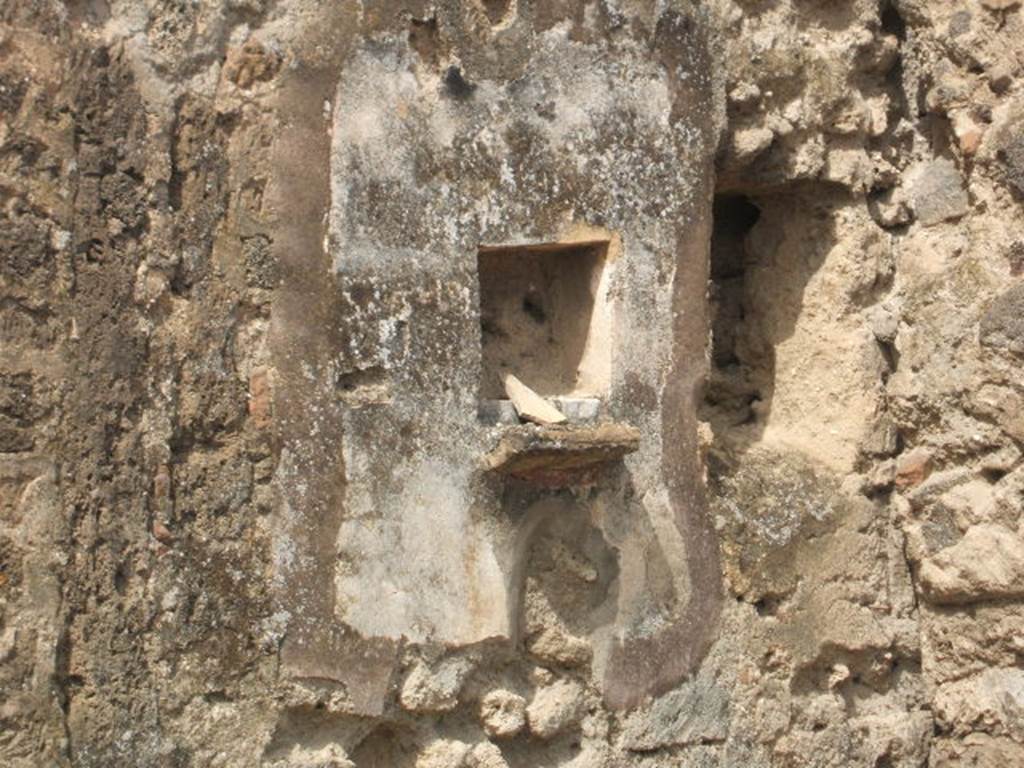
IX.7.21 Pompeii. May 2005. Square niche on west wall of atrium.
According to Boyce, in the north-west corner of the atrium was the hearth.
Above the hearth in the west wall was a panel of white stucco. In the panel was a square niche.
Its edges were outlined in red against the white background and below it was a cornice.
On the reddish coloured back wall of the niche was painted a white object, which Mau was unable to identify.
He did state that it was not a phallus.
Below the niche was a painted garland of red and green leaves and below it a burning altar with a pine-cone.
On either side of the altar was a yellow serpent.
The serpent on the left had a red crest and beard, the head of the other was damaged.
See Boyce G. K., 1937. Corpus of the Lararia of Pompeii. Rome: MAAR 14. (p.88, no.441, and Pl.4, 4)
According to Giacobello, the painting is no longer conserved.
See Giacobello,
F., 2008. Larari Pompeiani: Iconografia e
culto dei Lari in ambito domestico. Milano: LED Edizioni. (p.250)
See Mau in Bullettino dell’Instituto di Corrispondenza
Archeologica (DAIR), 1882, (p.195)
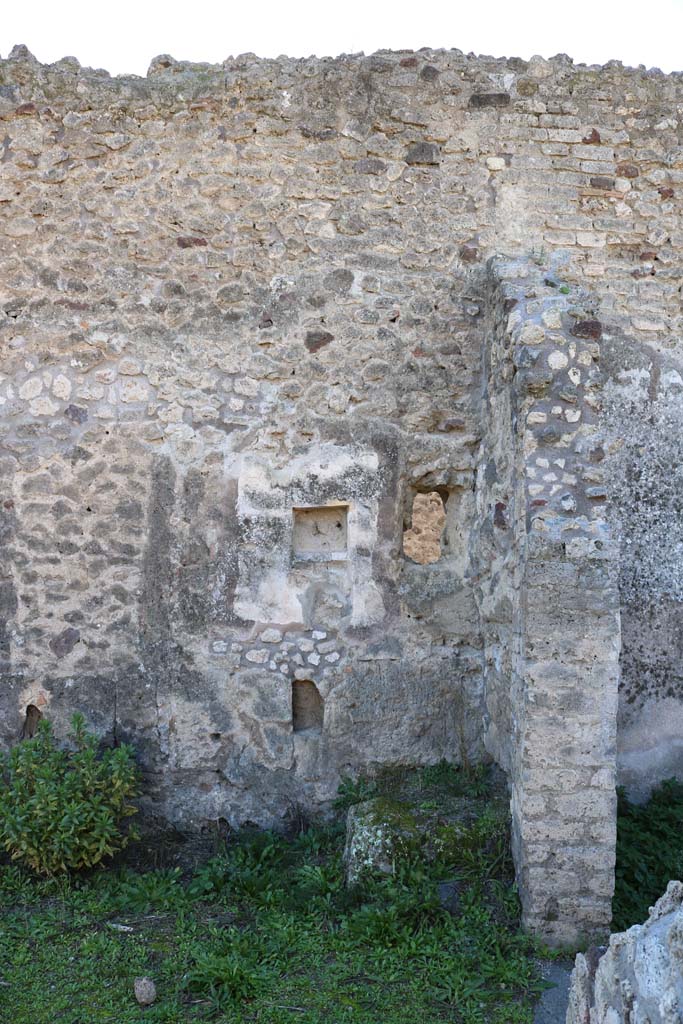
IX.7.21 Pompeii. December 2018.
Looking towards west wall of atrium. Photo
courtesy of Aude Durand.
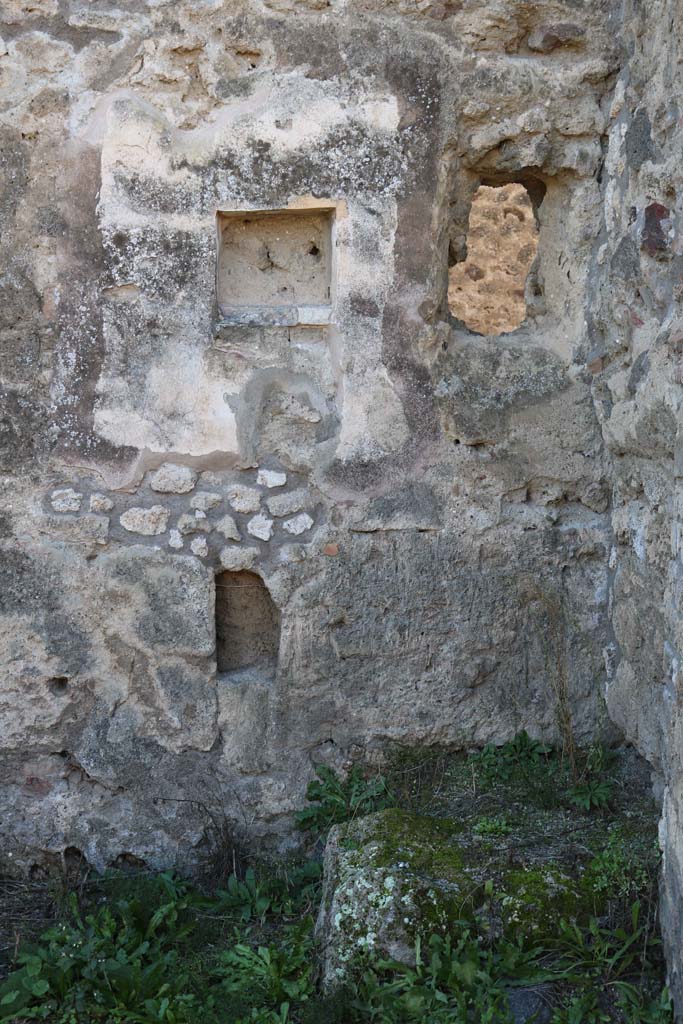
IX.7.21 Pompeii. December 2018.
Looking towards west wall of atrium, with niche
and hearth. Photo courtesy of Aude Durand.
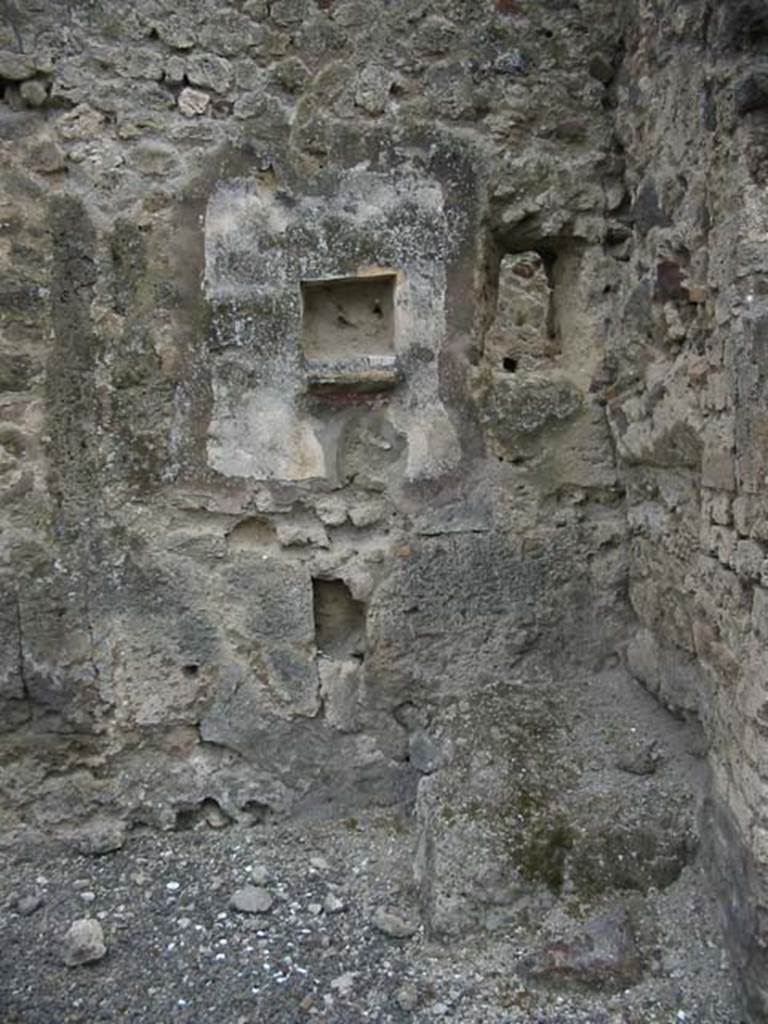
IX.7.21 Pompeii. May 2003. Hearth in north-west corner of atrium. Photo courtesy of Nicolas Monteix.
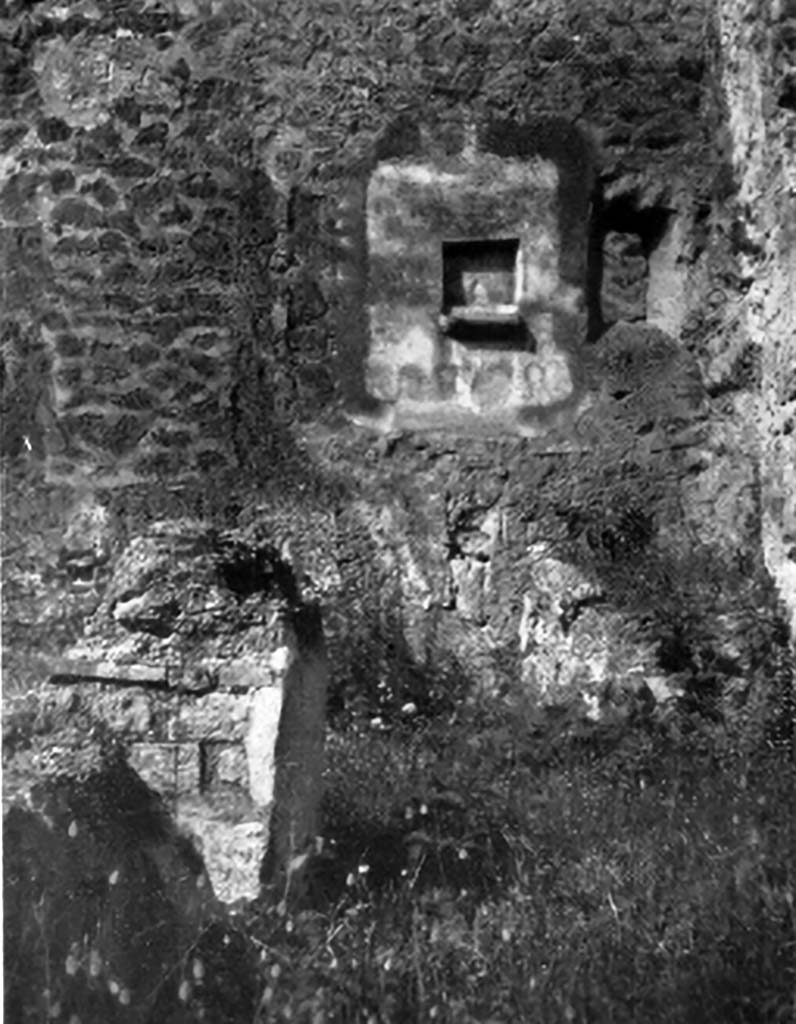
IX.7.21 Pompeii.1930s photo by Tatiana Warscher of lararium niche and hearth.
According to Boyce, above the hearth in the west wall was a panel of white stucco. In the panel was a square niche.
Below the niche was a painted garland of red and green leaves and below it a burning altar with a pine-cone.
On either side of the altar was a yellow serpent.
The serpent on the left had a red crest and beard, the head of the other was damaged.
See Boyce G. K., 1937. Corpus of the Lararia of Pompeii. Rome: MAAR 14. (p.88, no.441, and Pl.4, 4)
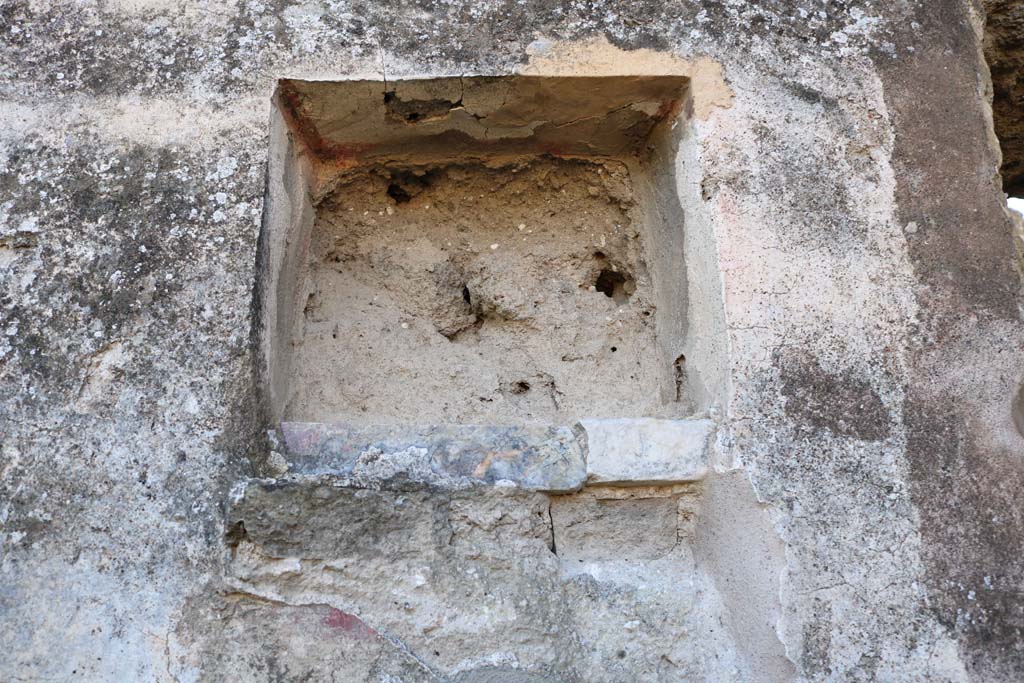
IX.7.21 Pompeii. December 2018. Square lararium niche set into west wall of atrium. Photo courtesy of Aude Durand
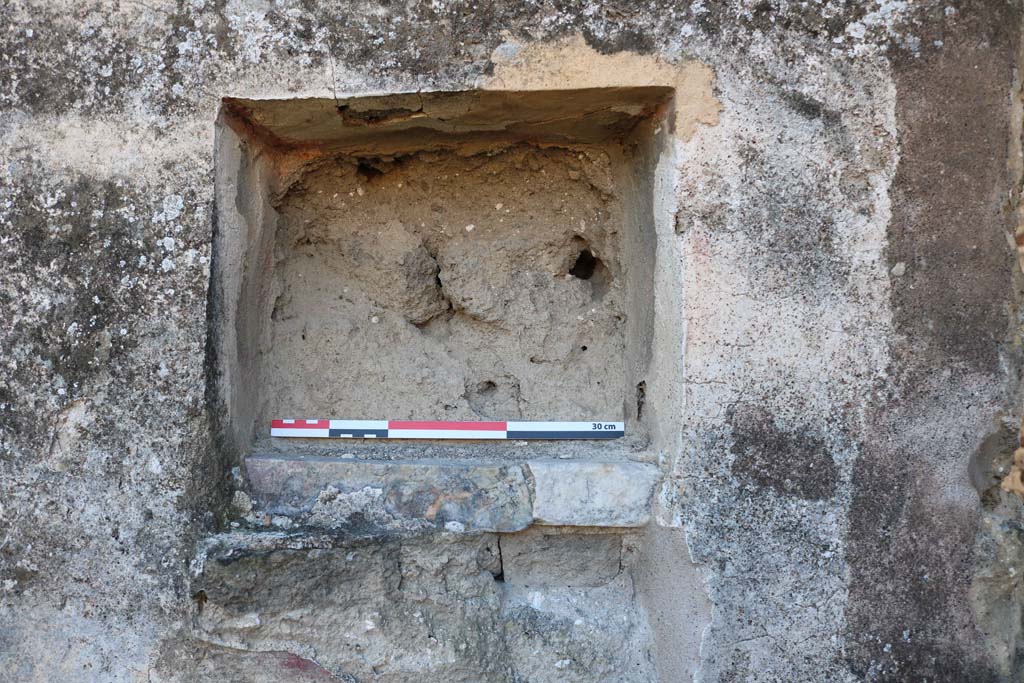
IX.7.21 Pompeii. December 2018. Detail of lararium niche in west wall of atrium. Photo courtesy of Aude Durand