IX.6.8 Pompeii. Lupanar of
Amandus or Casa del Larario (di Venere?).
Excavated 1880.
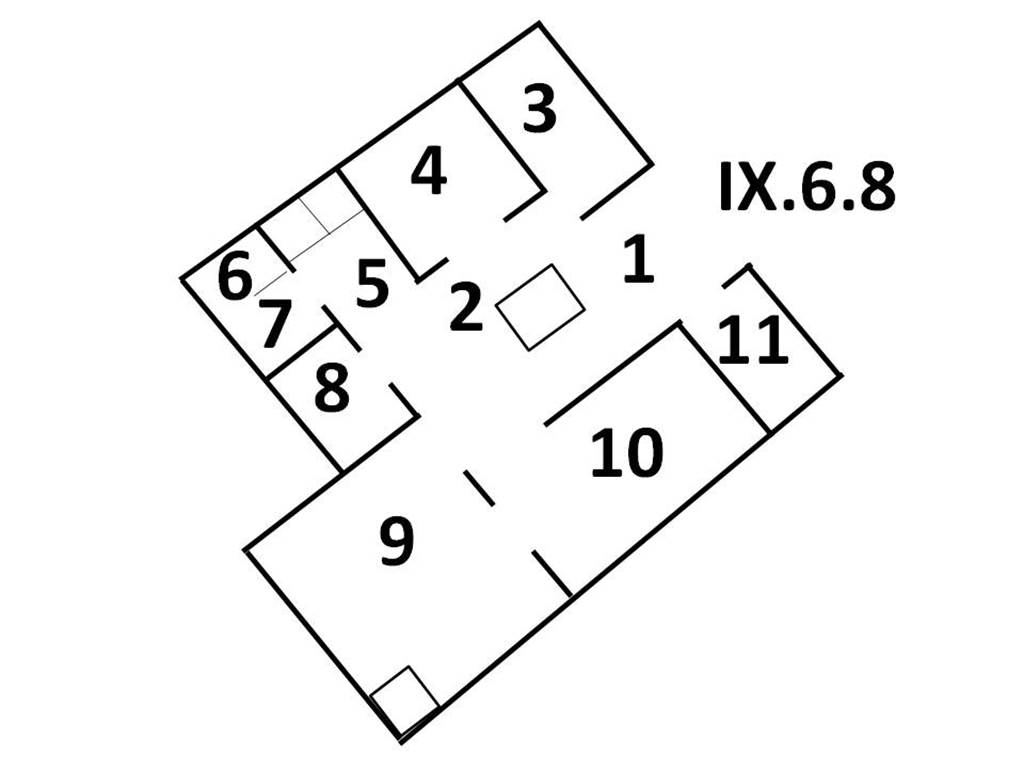
IX.6.8 Pompeii. Room plan.
Key:
Room 1: vestibule
Room 2: atrium
Room 3: cubicula
Room 4: oecus
Room 5: stairs to upper floor
Room 6: small room
Room 7: small room
Room 8: small room
Room 9: garden area
Room 10: triclinium
Room 11: cubicula
Sogliano (in Notizie degli Scavi di Antichità,1880, p.231), recorded that “towards the north-east corner, where graffiti was read and transcribed in the last Report, was the entrance to a modest little house, in which earlier a part of the garden with an aedicula was uncovered. Like that of the house, which was discovered (insula on the east, number 3 – IX.6.c?), this entrance was devoid of the usual corridor, and introduced directly into an atrium with an impluvium in the middle, on the right side of which were some rustic rooms, nearly excavated, while the left side to the south was altogether still buried. Opposite was the passageway to the small garden, which had the above-mentioned semi-circular aedicula in its south-west corner with a decoration of raised and painted stucco; on the small pediment, which appeared resting on two grooved pillars with Corinthian capitals, you could see the “patera ombelicata” raised relief in the middle. The knife on one side, and on the other an instrument, reminiscent of that used for the “aspersio” [sprinkling]. The vault was decorated with the usual shells in relief, and on the inside on a yellow background, was a painted tree around which some birds flew.
To the side, at the extremity of the semicircle, two cupids were painted, and in the triangles, between the pillars and the arch, were two sea-monsters. The altar was also covered with stucco, and on the front was a painted tragic mask”.
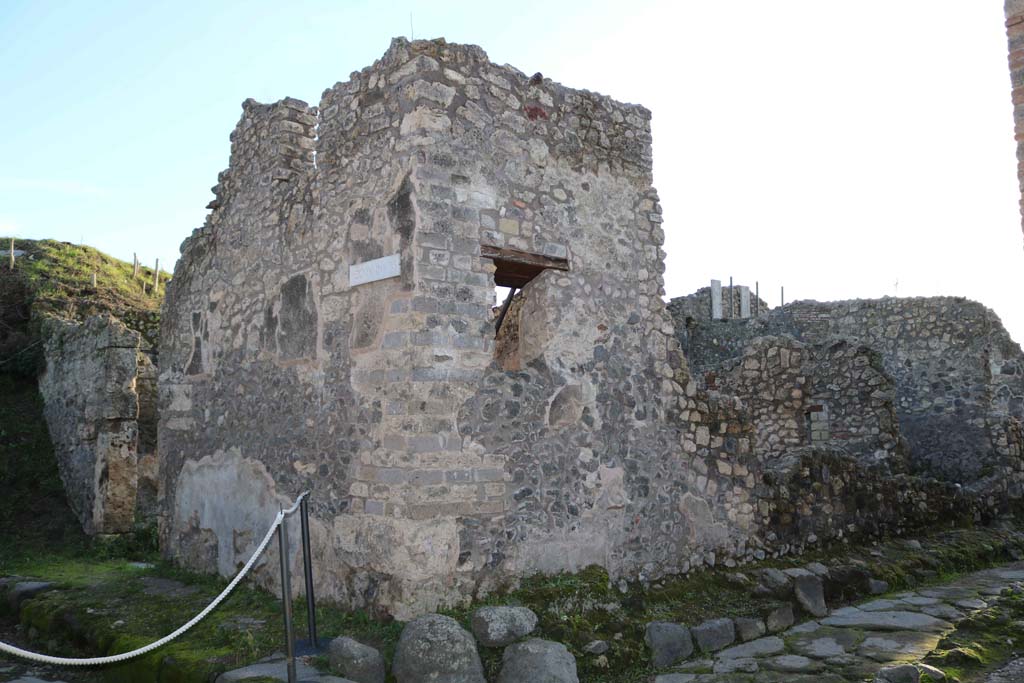
IX.6.8 Pompeii. December 2018.
Looking south-west towards corner of insula,
with entrance doorway, on left. Photo courtesy of Aude Durand.
![IX.8 Pompeii. May 2005. Small vicolo, looking south into unexcavated area. NE corner of IX.6.8 According to Della Corte, he thought an unknown Amandus lived here, due to the recommendation found here.
It was found on the right (north side) of the entrance, on the north-east corner of the insula. It read – Amandus rog(at) cum reliquis [CIL IV 3707] See Della Corte, M., 1965. Case ed Abitanti di Pompei. Napoli: Fausto Fiorentino. (p.163)
According to Epigraphik-Datenbank Clauss/Slaby (See www.manfredclauss.de), it read -
Verum IIvir(um) o(ro) v(os) f(aciatis)
d(ignum) r(ei) p(ublicae) Amandus rog(at)
c[u]m rel[l]iquis [CI IV 3707]](9%2006%2008_files/image006.jpg)
IX.8 Pompeii, on left. May 2005. Small vicolo, looking south into unexcavated area. NE corner of IX.6.8, on right.
According to Della Corte, he thought an unknown Amandus lived here, due to the recommendation found here.
It was found on the right (north side) of the entrance, on the north-east corner of the insula. It read –
Amandus rog(at)
cum reliquis [CIL IV 3707]
See Della Corte, M., 1965. Case ed Abitanti di Pompei. Napoli: Fausto Fiorentino. (p.163)
According to Epigraphik-Datenbank Clauss/Slaby (See www.manfredclauss.de), it read -
Verum IIvir(um)
o(ro) v(os) f(aciatis)
d(ignum) r(ei)
p(ublicae) Amandus rog(at)
c[u]m rel[l]iquis [CI IV 3707]
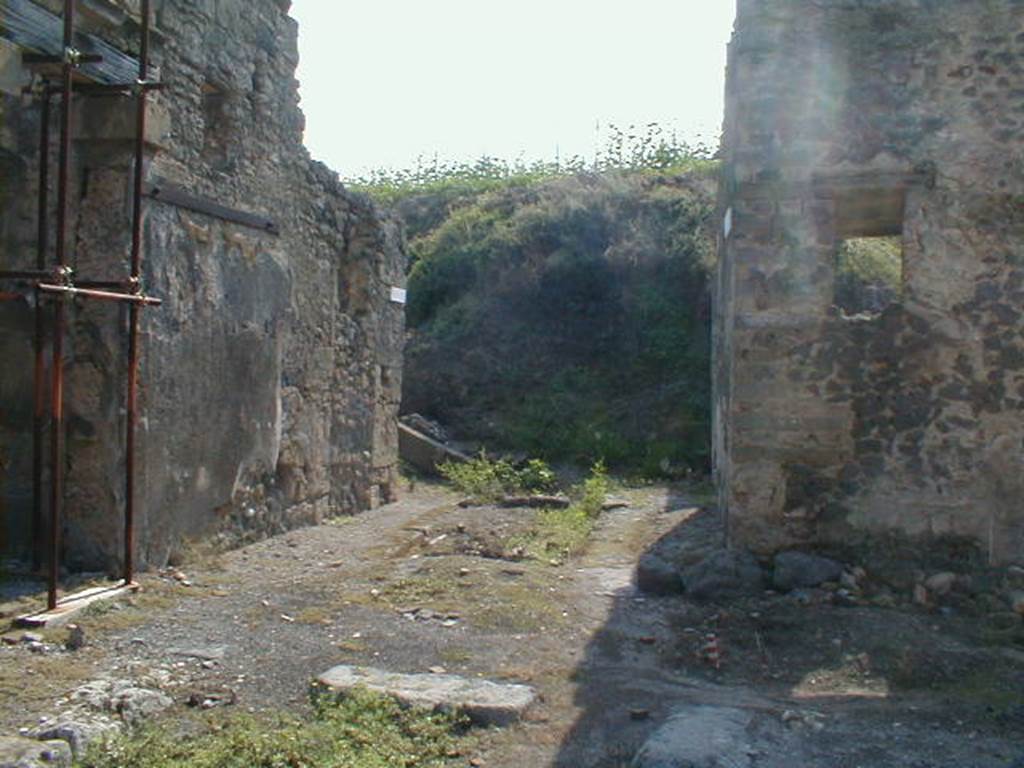
IX.8 Pompeii on left. End of Vicolo del Centenario, looking south (into the unexcavated). Corner of IX.6.8, on right.
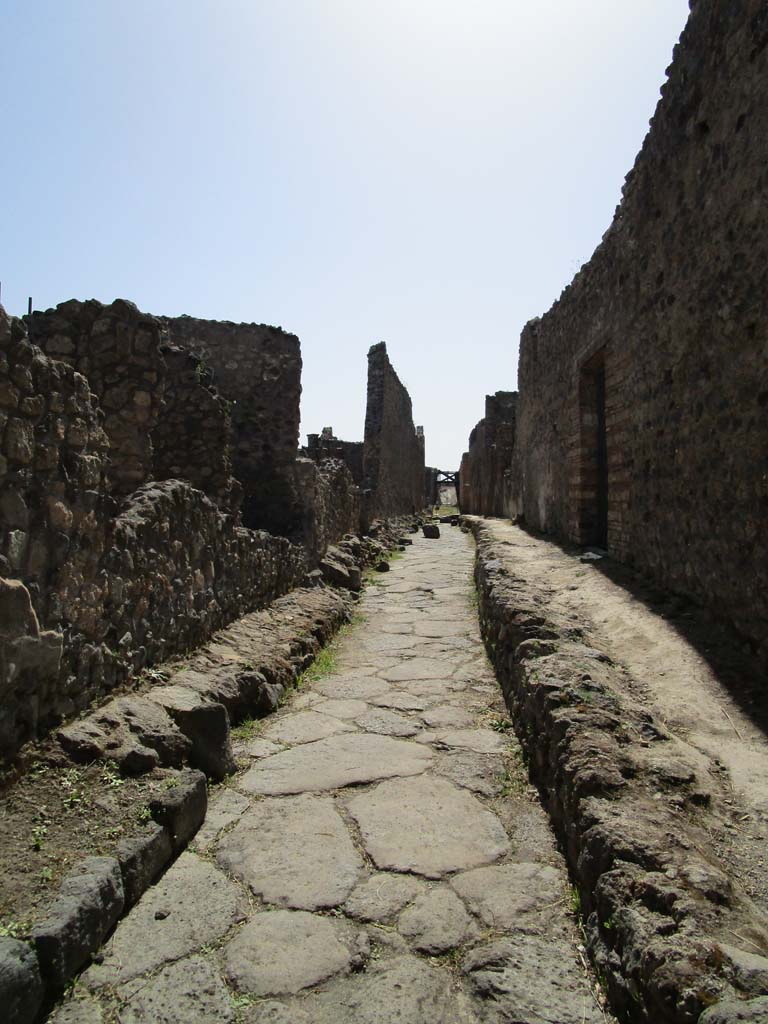
Unnamed vicolo
between IX.6 and IX.5
Pompeii. April 2019.
Looking
west from junction with Vicolo del Centenario. Photo courtesy of Rick Bauer.
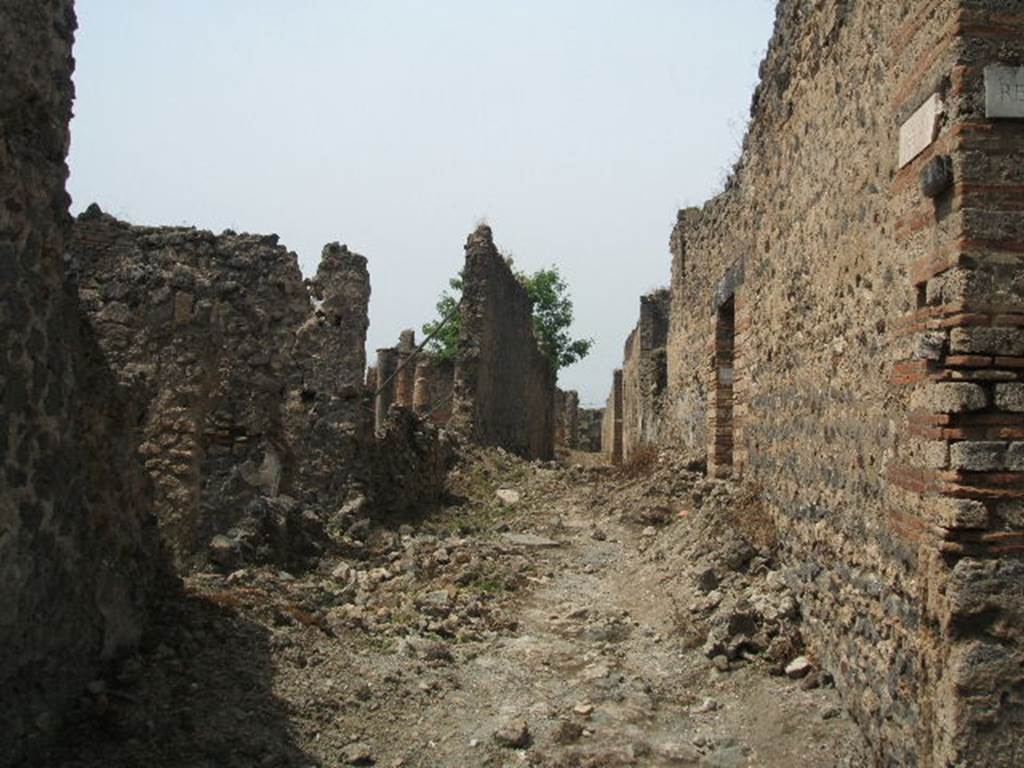
IX.6.8 (North exterior wall), on left. May 2005. Unnamed vicolo looking west. Corner of IX.5, on right.
![IX.6.8 Pompeii. May 2005. Entrance doorway, looking west across site of vestibule 1 and atrium 2.
According to Della Corte, this was a small house of irregular plan with eight rooms grouped around an atrium.
He thought an obscure Amandus lived and worked here.
He said inscriptions like Quisquis amat per(eat) [CIL IV 5186] and Messius hic nihil futuit [CIL IV 5187] found written on the atrium walls, tended to prove this was a Lupanare, held by Amandus.
See Della Corte, M., 1965. Case ed Abitanti di Pompei. Napoli: Fausto Fiorentino. (p.163)](9%2006%2008_files/image013.jpg)
IX.6.8 Pompeii. May 2005. Entrance doorway, looking west across site of vestibule 1 and atrium 2.
According to Della Corte, this was a small house of irregular plan with eight rooms grouped around an atrium.
He thought an obscure Amandus lived and worked here.
He said inscriptions like Quisquis amat per(eat) [CIL IV 5186] and Messius hic nihil futuit [CIL IV 5187] found written on the atrium walls, tended to prove this was a Lupanare, held by Amandus.
See Della Corte,
M., 1965. Case ed Abitanti di Pompei.
Napoli: Fausto Fiorentino. (p.163).
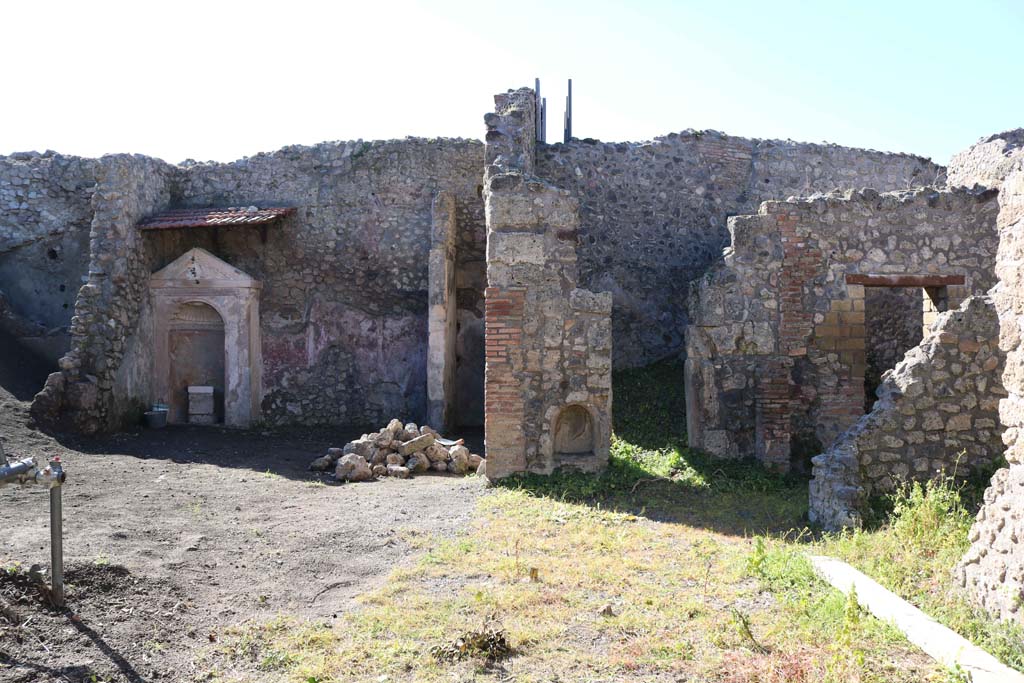
IX.6.8 Pompeii. February 2020. Looking west
across atrium. Photo courtesy of Aude Durand.
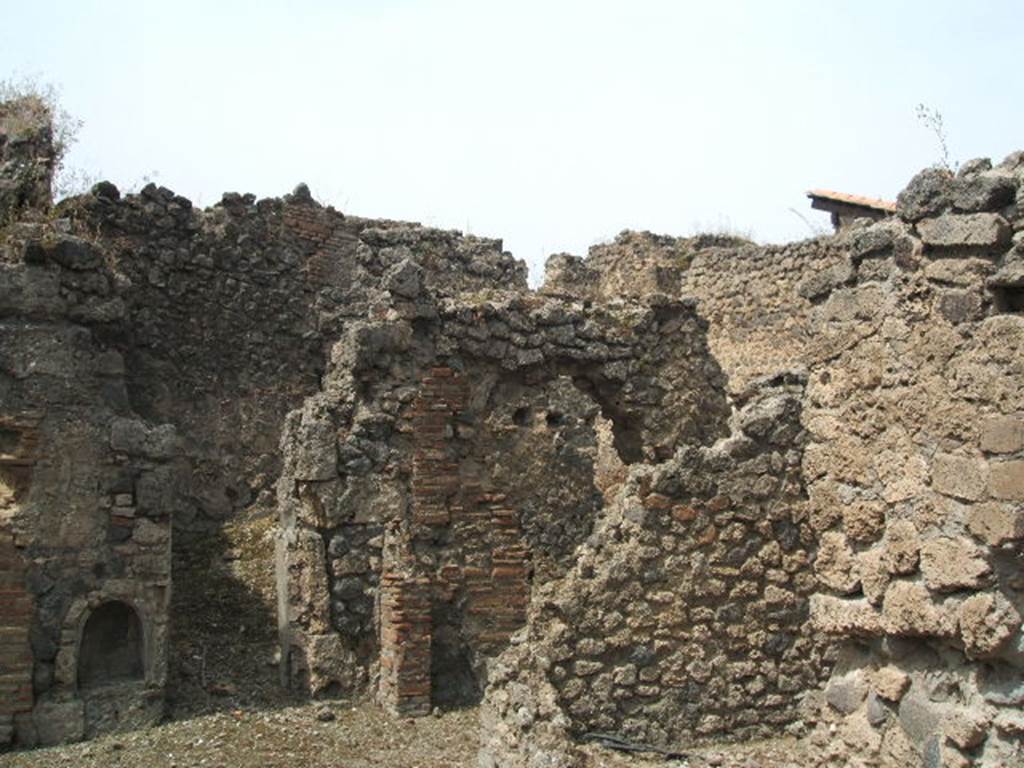
IX.6.8 Pompeii. May 2005. Looking north-west across atrium 2 to doorways to rooms 8, 7/6, 5 and 4, on right.
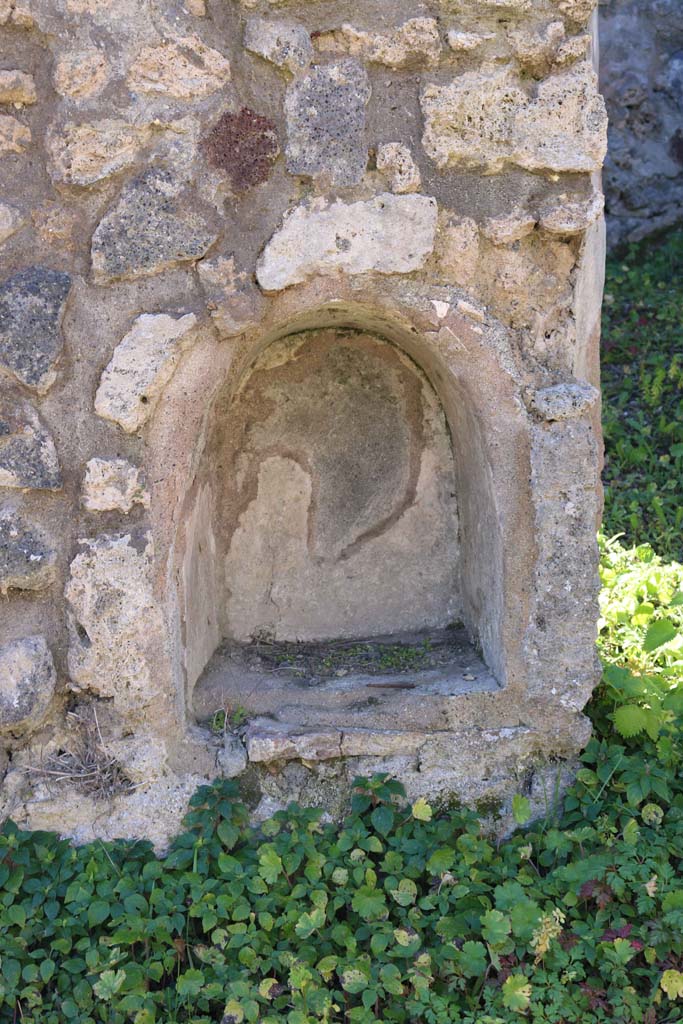
IX.6.8 Pompeii. February 2020. Niche set into
pilaster in atrium. Photo courtesy of Aude Durand.
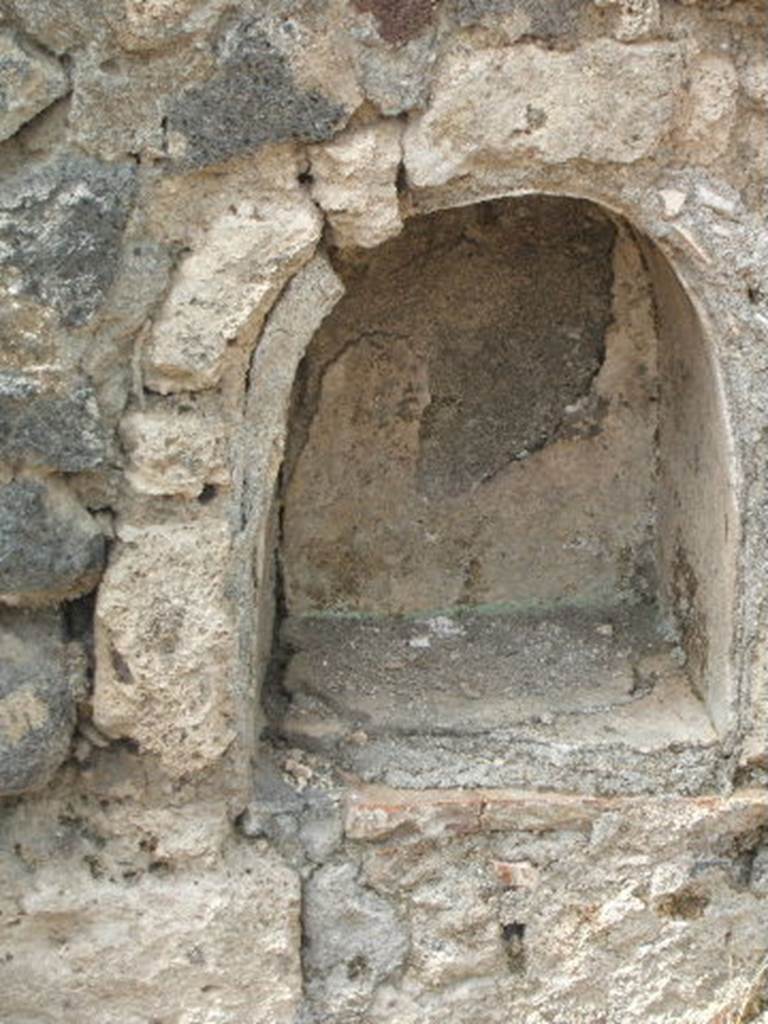
IX.6.8 Pompeii. May 2005. Niche on west side of atrium 2.
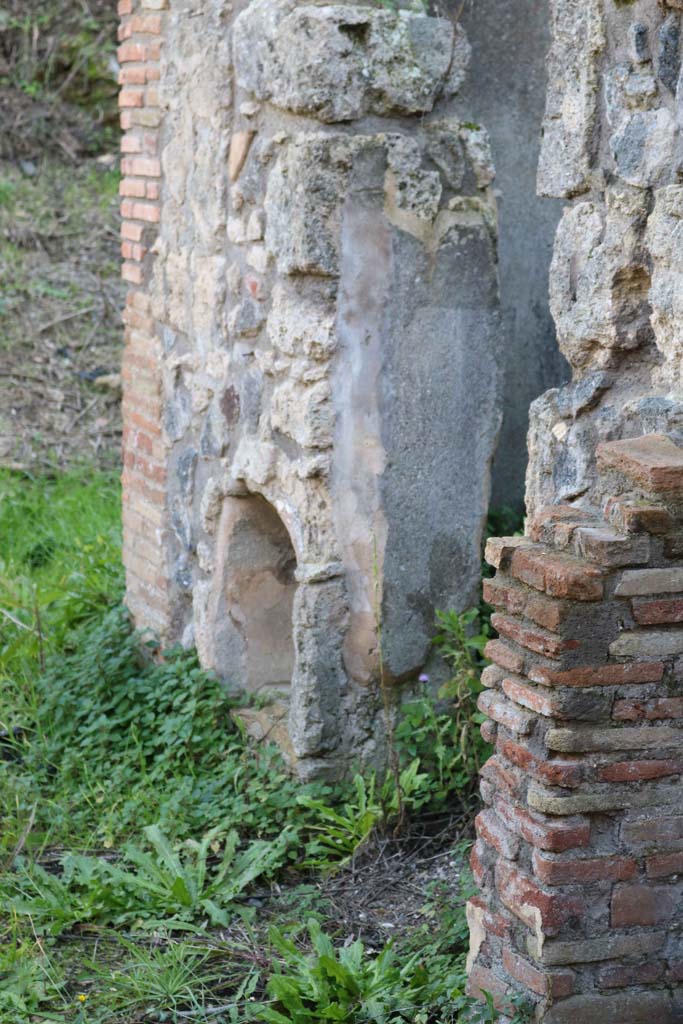
IX.6.8 Pompeii. December 2018.
Looking south towards niche set into pilaster,
and doorway to room 8.
Photo courtesy of Aude Durand.
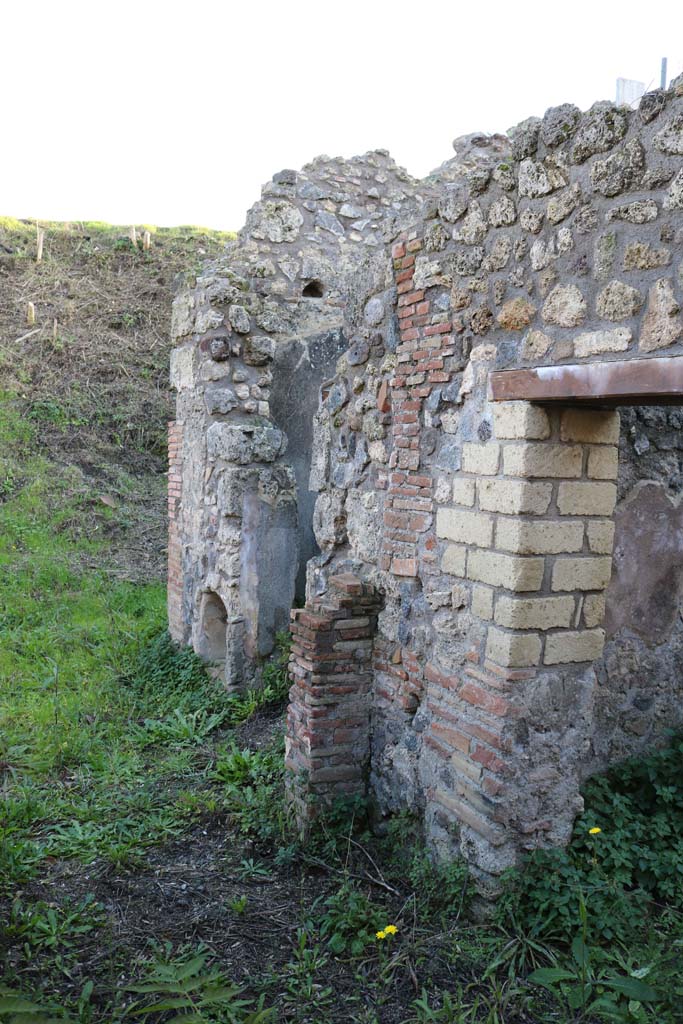
IX.6.8 Pompeii. December 2018.
Doorways into rooms 8, and 7/6, on right. Photo
courtesy of Aude Durand.
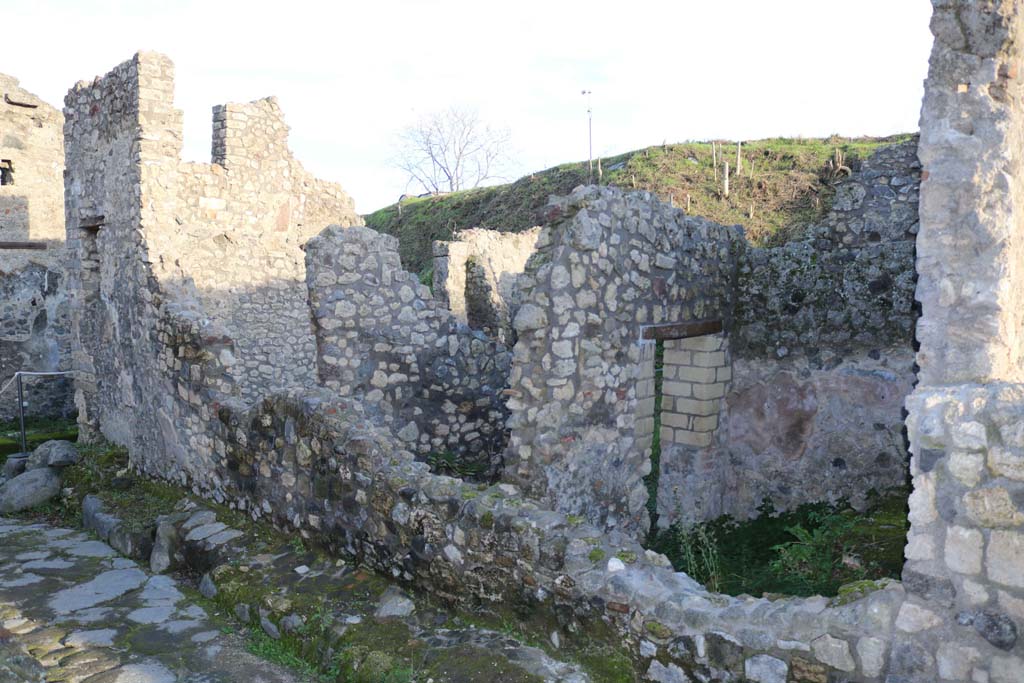
IX.6.8 Pompeii. December 2018.
Photo taken from roadway on north side, on the
right is room 6 and 7. Photo courtesy of Aude Durand.
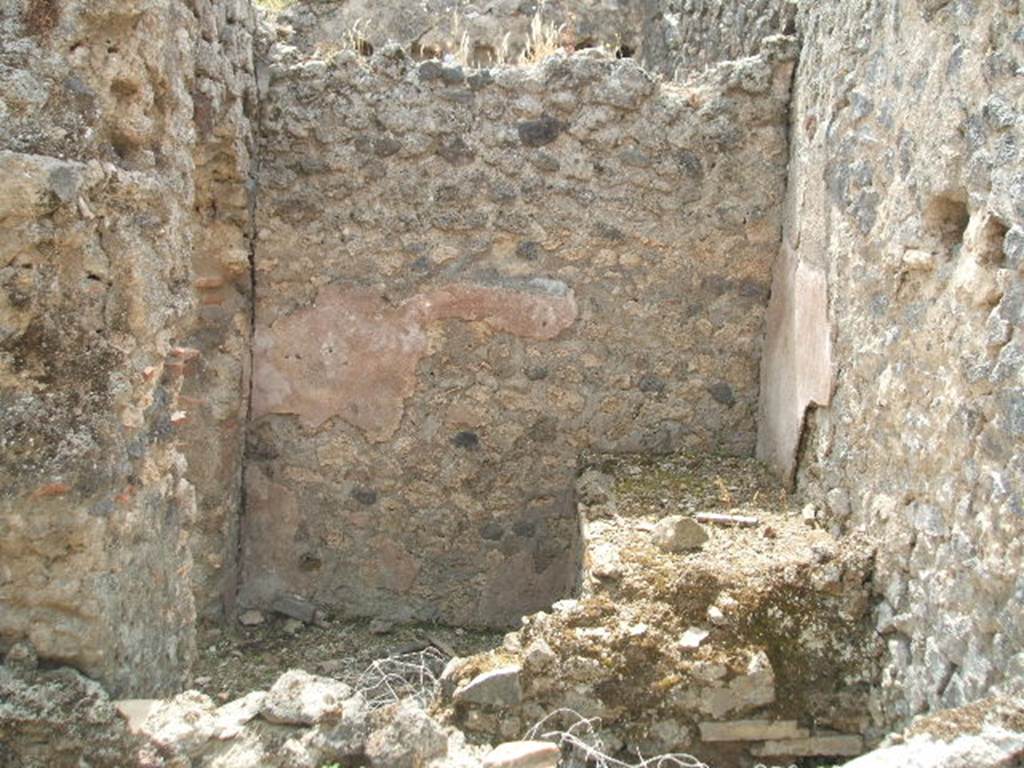
IX.6.8 Pompeii. May 2005. Looking south into kitchen area.
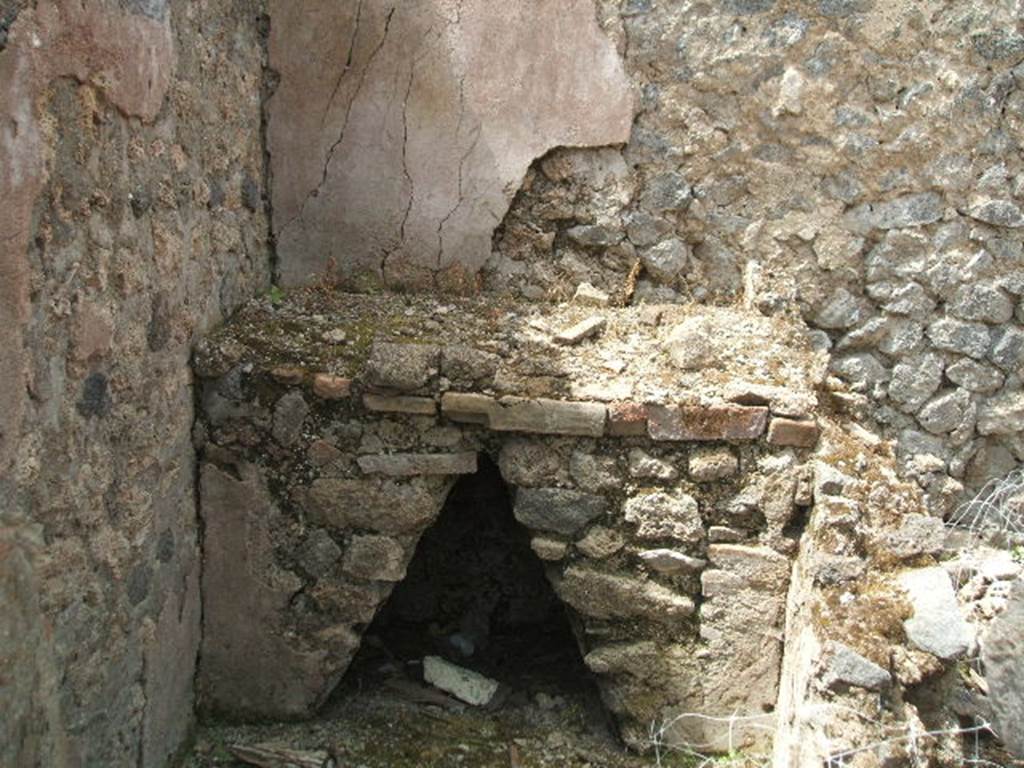
IX.6.8 Pompeii. May 2005. Looking west into kitchen area, with remains of hearth.
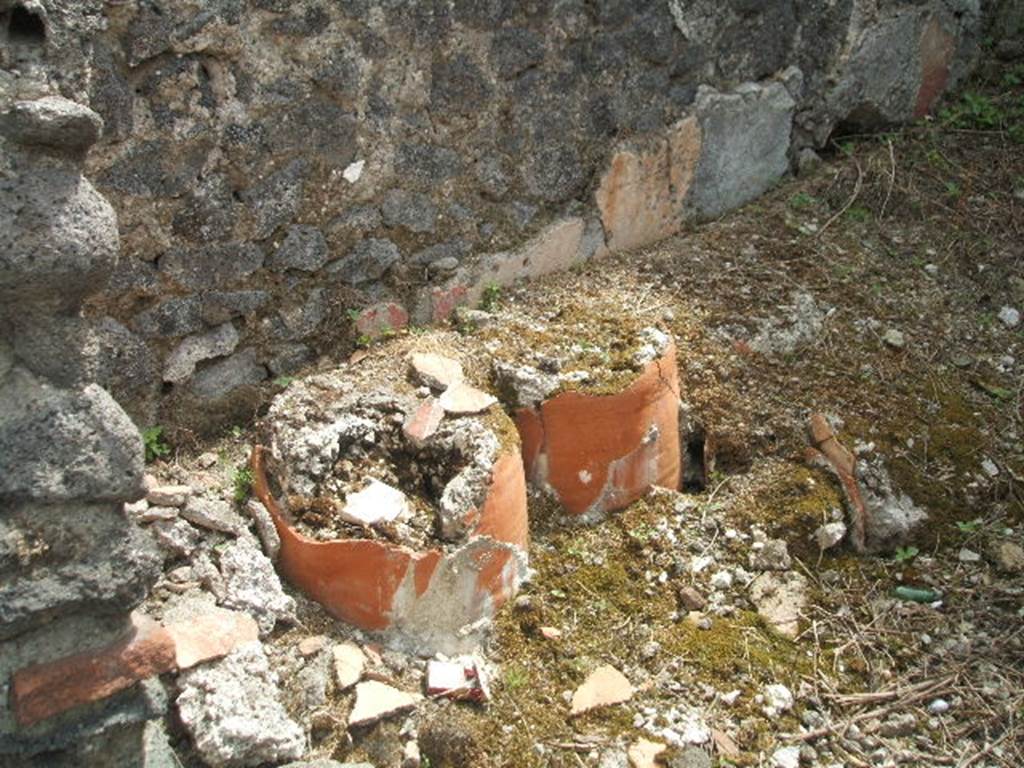
IX.6.8 Pompeii. May 2005. Two buried amphorae.
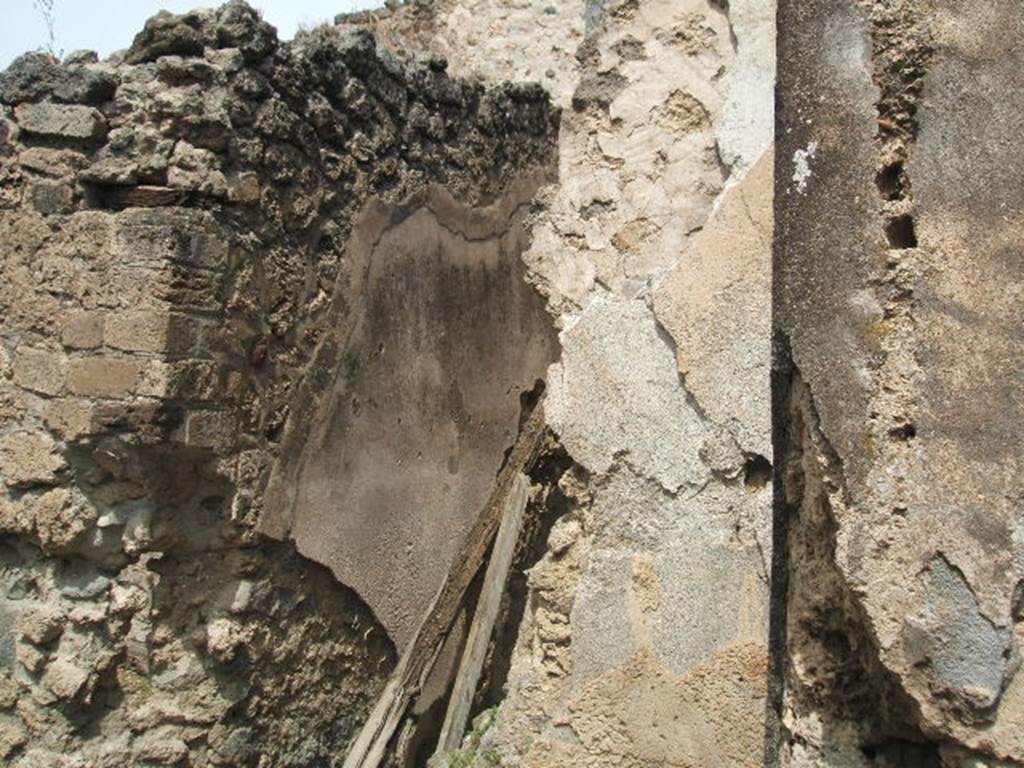
IX.6.8 Pompeii. May 2005. Room 3 on north side of atrium.
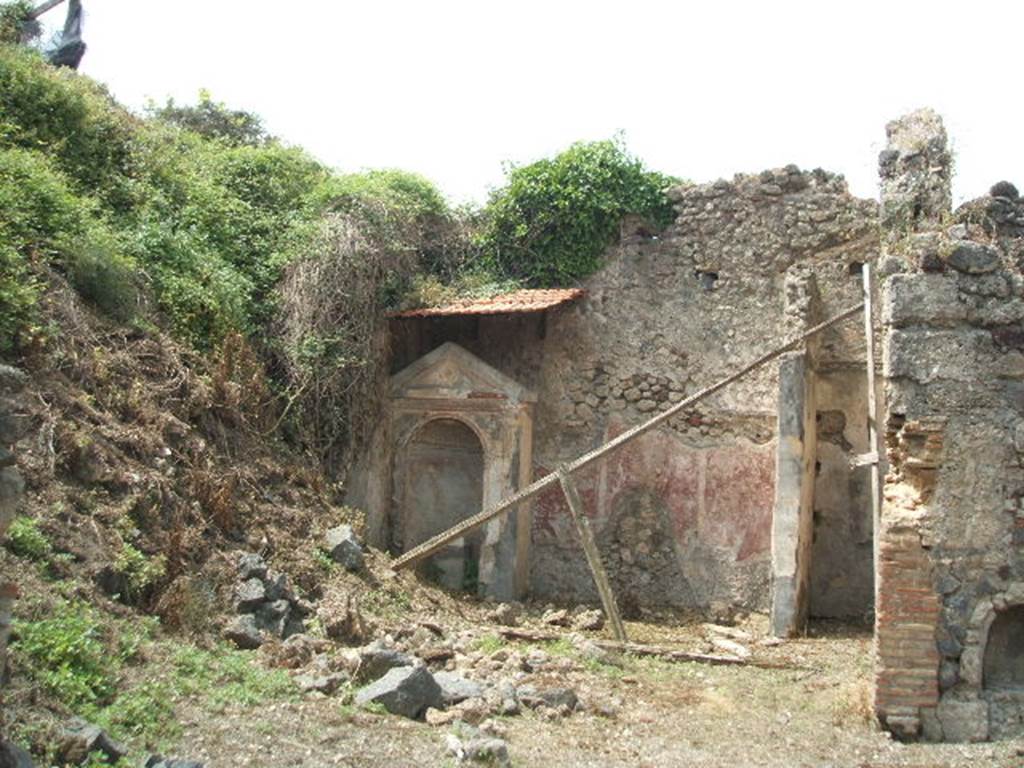
IX.6.8 Pompeii. May 2005. Looking towards west wall of garden area 9 with large aedicula lararium in south-west corner.
In the north-west corner is a partition wall forming a cupboard/storeroom.
The garden, entered directly from the atrium, occupied the south-west part of this small house.
In the south-west corner of the garden stood a large aedicula niche lararium.
The interior of the niche, coated with yellow stucco, had a painting of a leafy tree with birds flying around it.
On the floor of the niche was a rectangular, stucco covered base, which Sogliano identified as an altar.
Boyce identified it as a statue base decorated with a painted mask on the front.
See Jashemski, W. F., 1993. The Gardens of Pompeii, Volume II: Appendices. New York: Caratzas. (p.238)
According to Boyce, his reference was Not. Scavi, 1880, 231; Bull. Inst., 1882, 116.
See Boyce G. K., 1937. Corpus of the Lararia of Pompeii. Rome: MAAR 14. (p.87, no.432, and Pl.37,1)
According to Giacobello, aedicula on west wall of garden, today not conserved.
It was of rectangular form opening into an arched niche decorated with a stucco shell.
On the lower part, frescoed in yellow, were birds in flight, and a cherub with a double flute near to the depicted tree.
Recovered from inside the niche, was an altar decorated with marble, and on the main side, was a tragic mask.
See Giacobello, F., 2008. Larari Pompeiani: Iconografia e culto dei Lari in ambito domestico. Milano: LED Edizioni. (p.286).
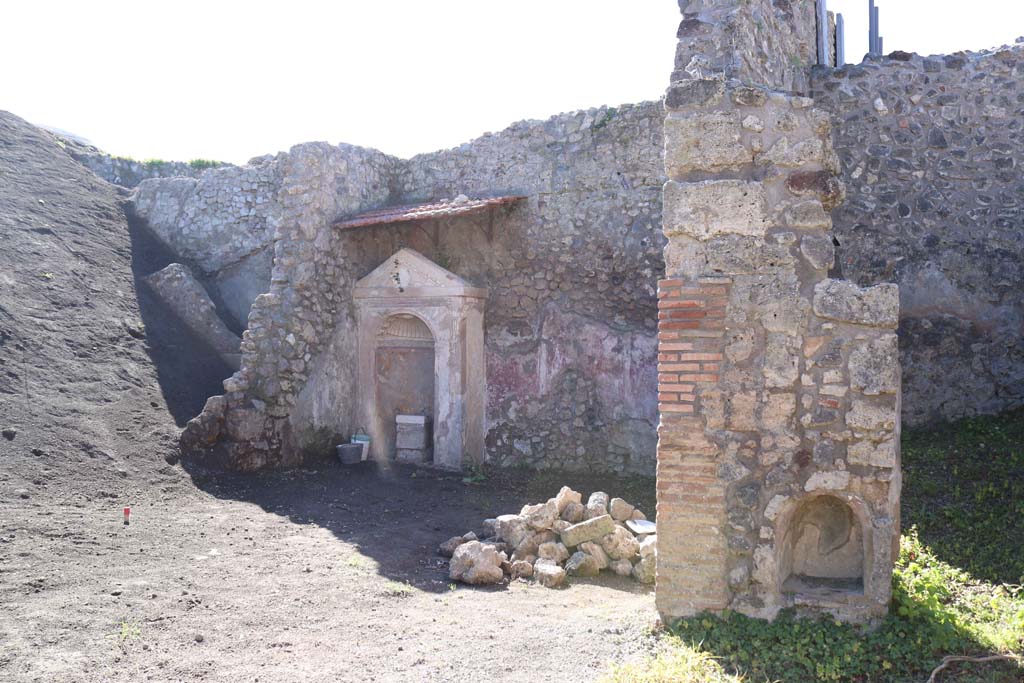
IX.6.8 Pompeii. February 2020. Looking
south-west across atrium towards lararium. Photo courtesy of Aude Durand.
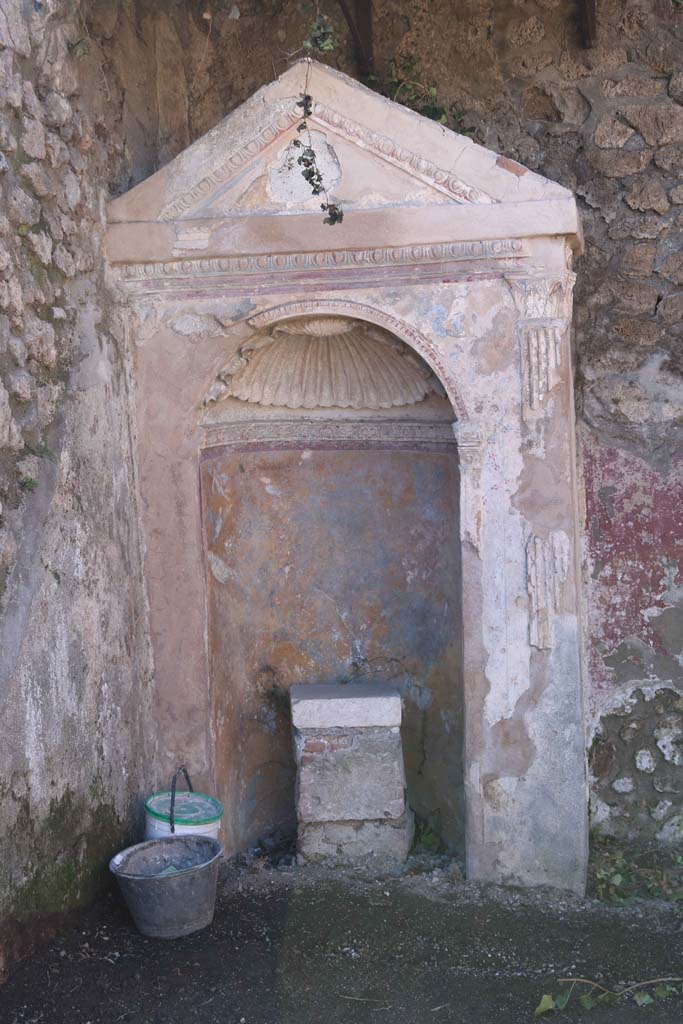
IX.6.8 Pompeii. February 2020.
Aedicula lararium in
garden area 9. Photo
courtesy of Aude Durand.
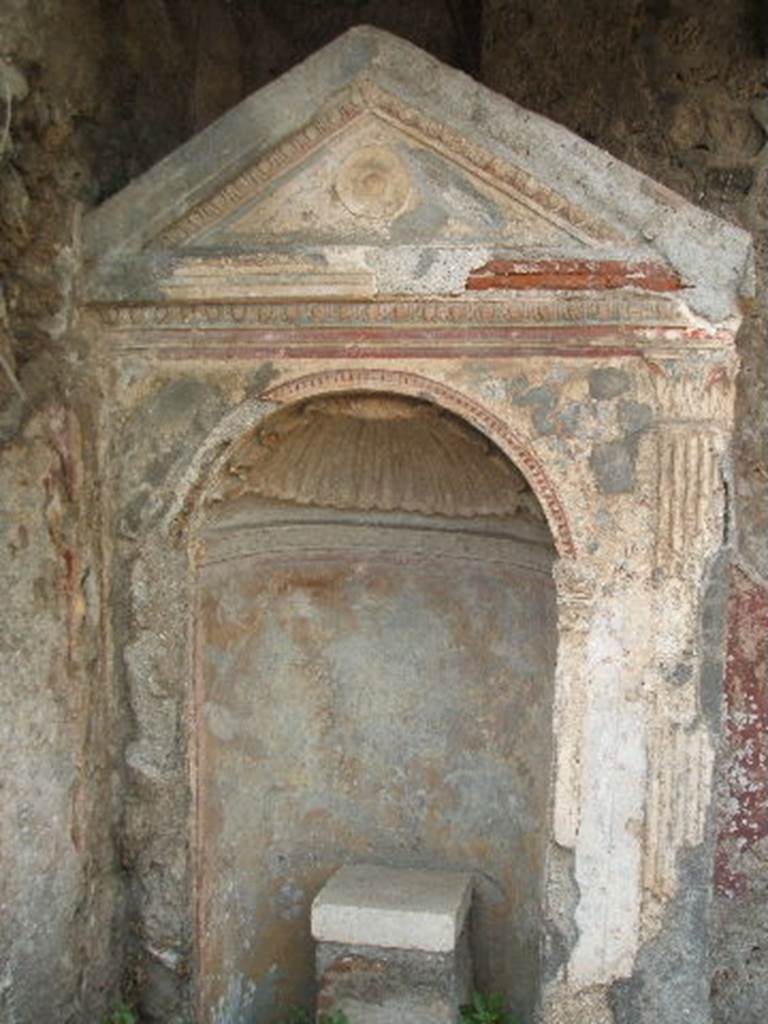
IX.6.8 Pompeii. May 2005. Aedicula lararium in garden area 9.
The interior of the niche was coated with yellow stucco. It had a painting of a leafy tree with birds flying around it.
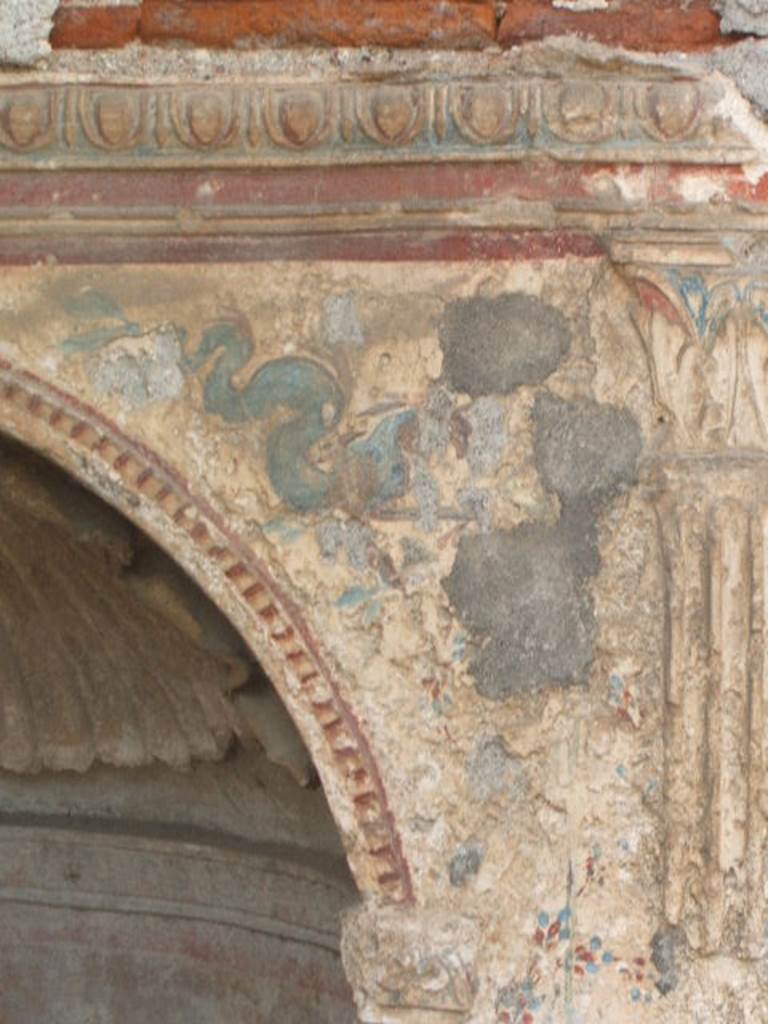
IX.6.8 Pompeii. May 2005. Detail from aedicula lararium of a sea-monster.
Stucco and painted plaster on front external, upper north corner.
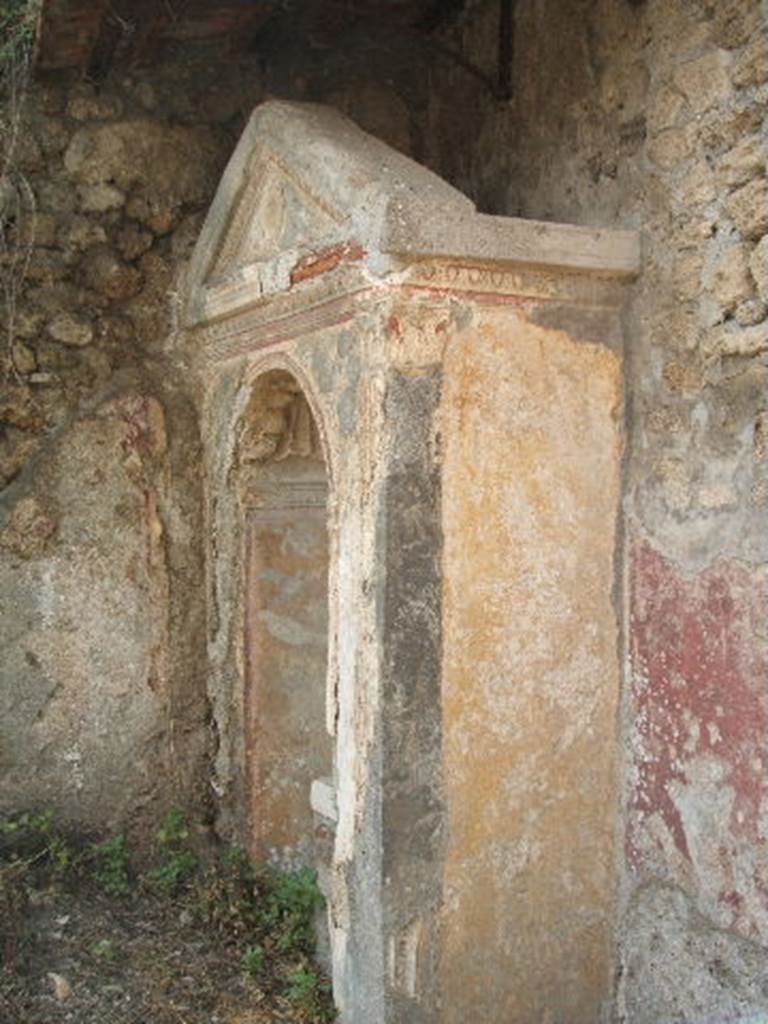
IX.6.8 Pompeii. May 2005. Painted stucco on north side of aedicula lararium.
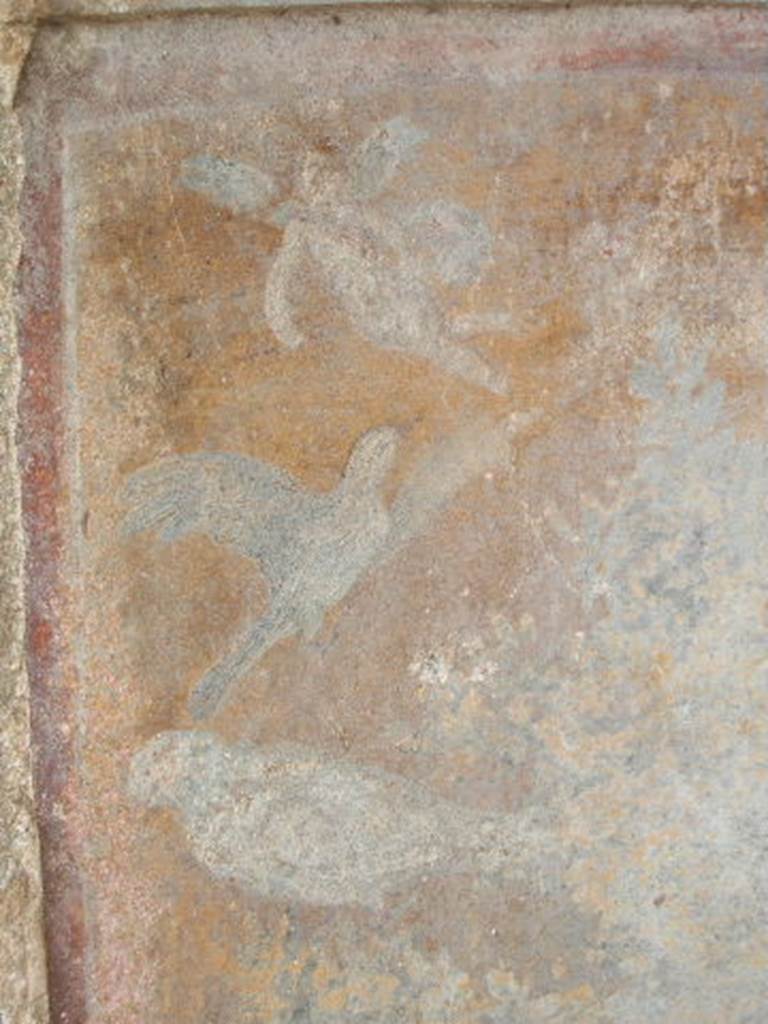
IX.6.8 Pompeii. May 2005.
Aedicula Lararium with painted plaster showing flying cupid and birds, from south side of niche.
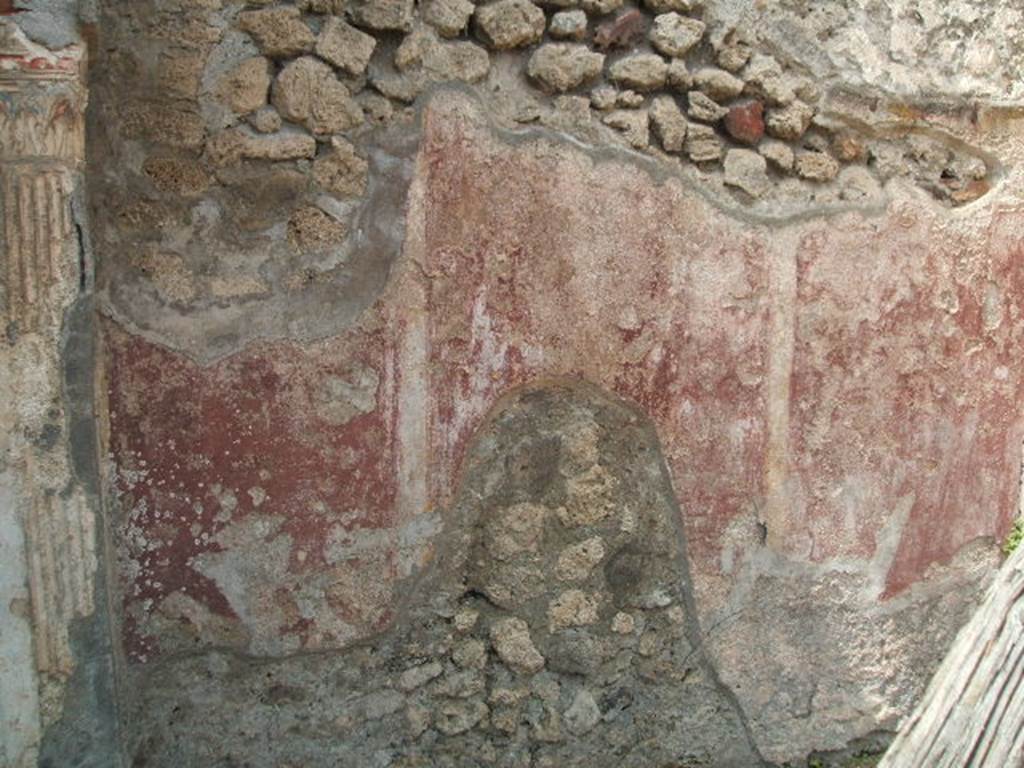
IX.6.8 Pompeii. May 2005. Remains of painted plaster on garden 9 west wall on north side of lararium.
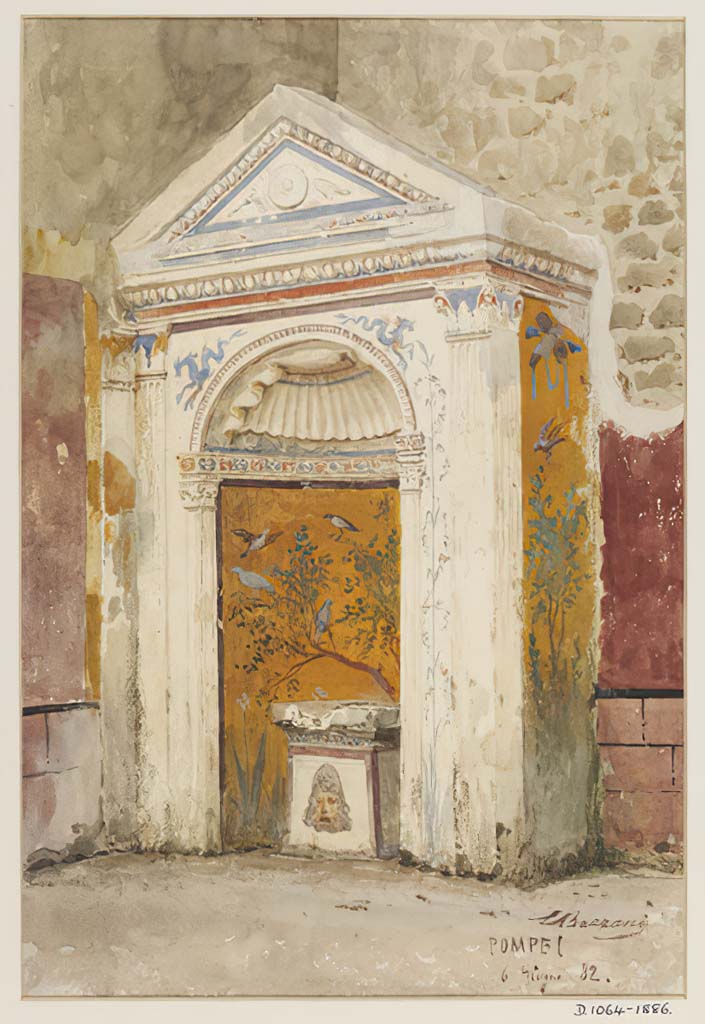
IX.6.8 Pompeii. 6th June 1882. Garden 9, south-west corner.
Frescoed fountain with birds and floral motif in Pompeii
watercolour by Luigi Bazzani.
Photo © Victoria and Albert Museum. Inventory number 1064-1886.
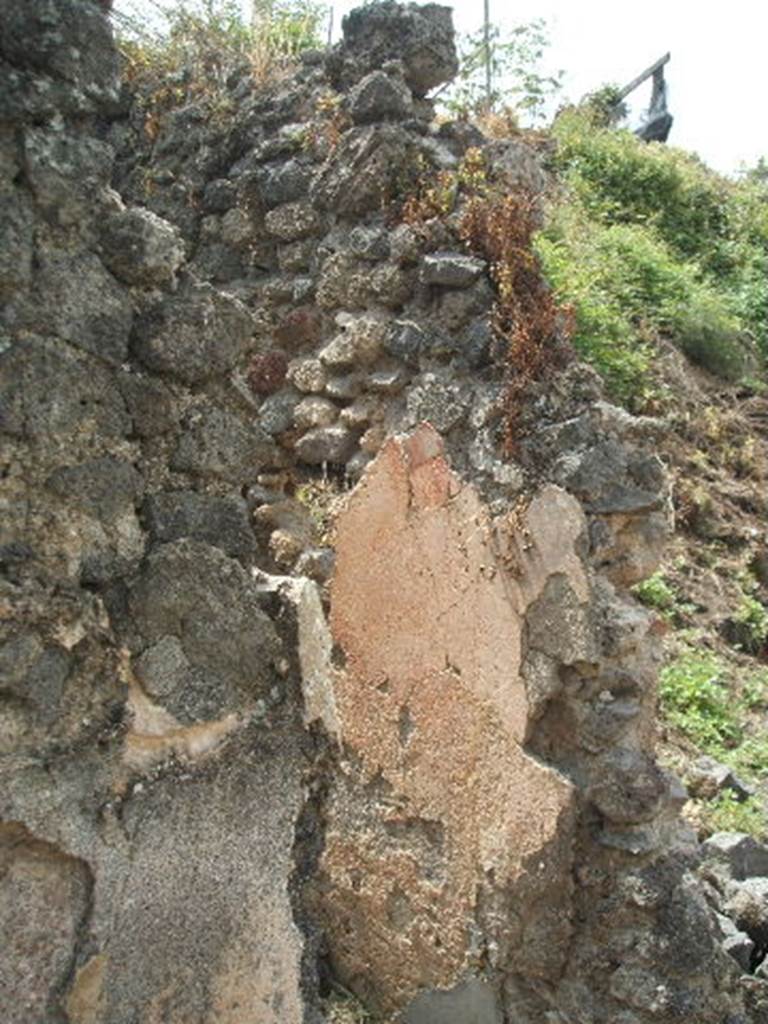
IX.6.8 Pompeii. May 2005. Remains of painted plaster on south side of atrium 2.