VIII.4.4 Pompeii. Casa dei Postumii or Domus M. Holconi Rufi or House of Holconius Rufus.
Linked to VIII.4.2, VIII.4.3, VIII.4.5, VIII.4.6, VIII.4.49 and VII.4.50.
Excavated 1766, 1855 and 1861. (Strada d’Olconio 4).
Part 1 Part 2 Part 3 Part 4 Part 5
Part 6 Part 7 Plan
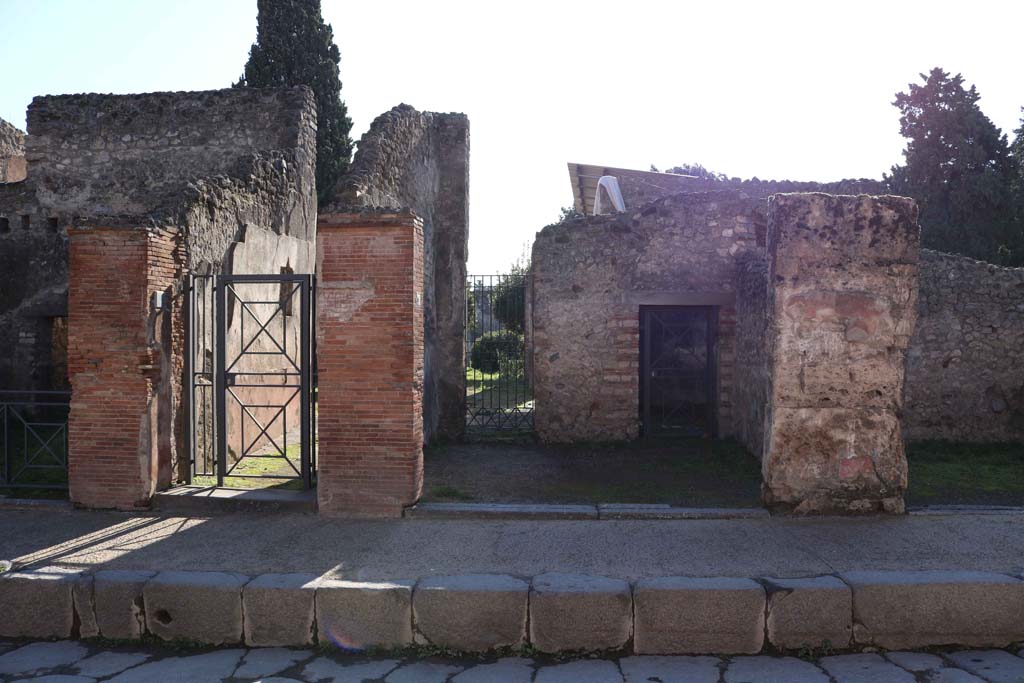
VIII.4.4 Pompeii, on
left. December 2018. Looking south to
entrance doorway. Photo courtesy of Aude Durand.
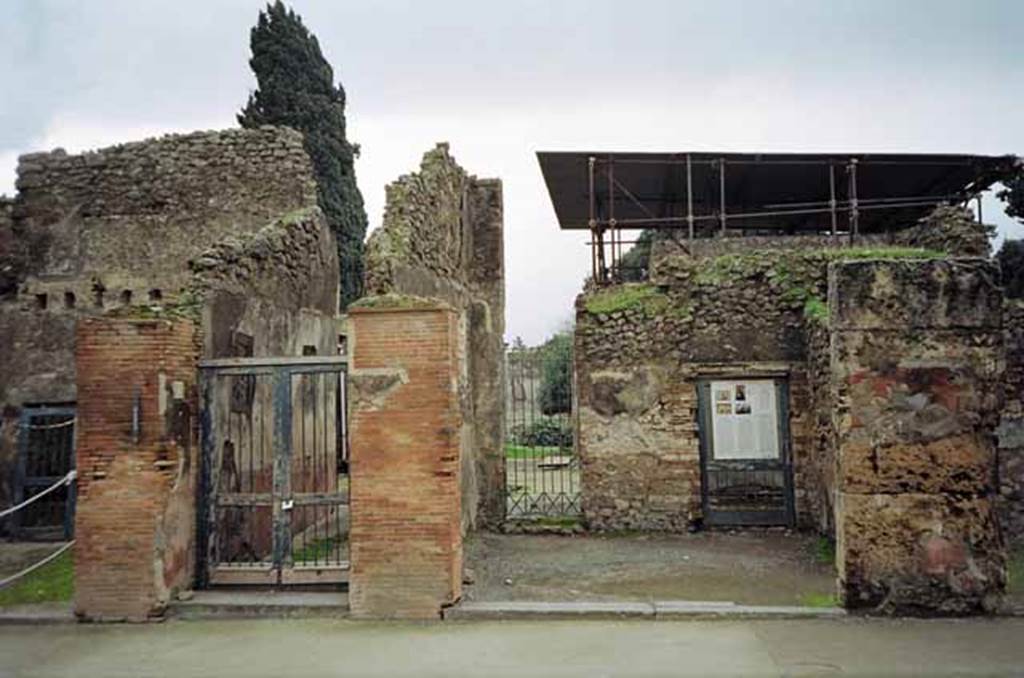
VIII.4.4 Pompeii. January 2010. Entrance to house, on the left, and linked shop at VIII.4.3, on the right. Photo courtesy of Rick Bauer.
![VIII.4.4 Pompeii. September 2004. Entrance. In June 1855, painted graffiti was found on the pilaster on the right of the entrance, between VIII.4.5 and 4.
Capellam
d(uum)v(irum) i(ure) d(icundo) o(ro) v(os) f(aciatis) [CIL IV 729]
L(ucium) C(eium) S(ecundum) II vir(um)
(......)
facit [CIL IV 780]
Postumium [CIL IV 781]
L(ucium) C(eium) S(ecundum) [CIL IV 781a]
See Pagano, M. and Prisciandaro, R., 2006. Studio sulle provenienze degli oggetti rinvenuti negli scavi borbonici del regno di Napoli. Naples, Nicola Longobardi. (p.173)](8%2004%2004_files/image006.jpg)
VIII.4.4 Pompeii. September 2004. Entrance.
In June 1855, painted graffiti were found on the pilaster on the left of the entrance, between VIII.4.5 and 4.
Capellam
d(uum)v(irum) i(ure)
d(icundo) o(ro) v(os)
f(aciatis) [CIL IV 729]
L(ucium) C(eium)
S(ecundum) II vir(um)
(......)
facit [CIL IV 780]
Postumium [CIL IV 781]
L(ucium) C(eium)
S(ecundum) [CIL IV 781a]
See Pagano, M. and Prisciandaro, R., 2006. Studio sulle provenienze degli oggetti rinvenuti negli scavi borbonici del regno di Napoli. Naples, Nicola Longobardi. (p.173)
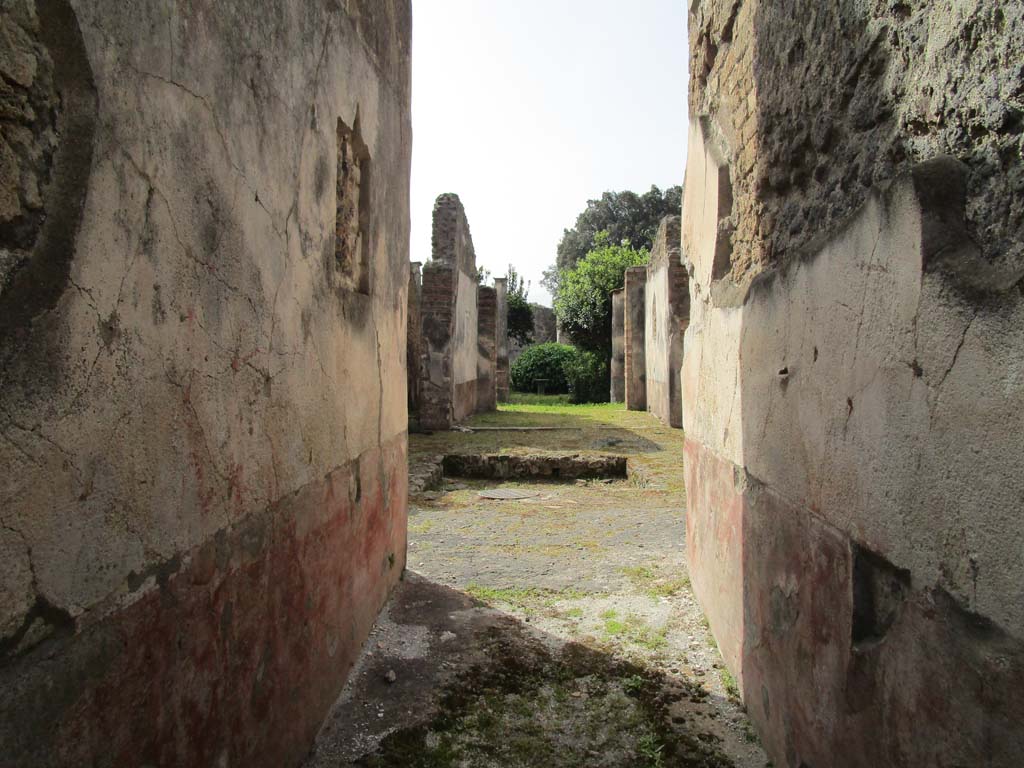
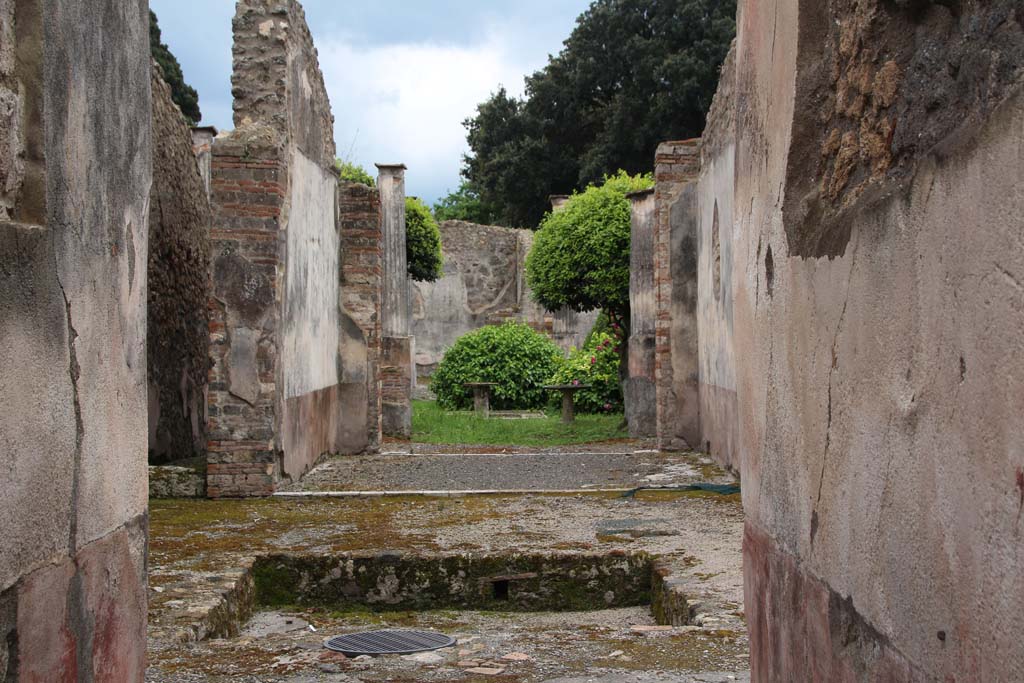
VIII.4.4 Pompeii. April 2019.
Looking south through fauces/entrance corridor, across atrium, through tablinum, to peristyle. Photo courtesy of Rick Bauer.
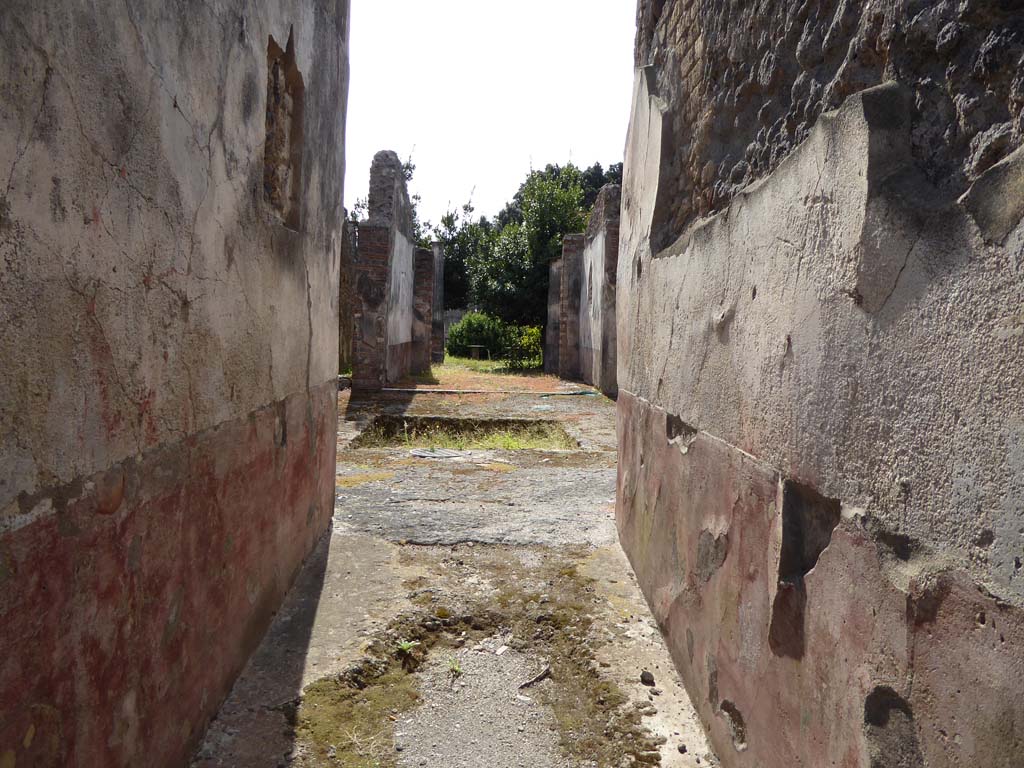
VIII.4.4 Pompeii. September 2015. Looking south through
fauces/entrance corridor, across atrium, through tablinum, to peristyle.
Foto Annette Haug, ERC Grant 681269 DÉCOR.
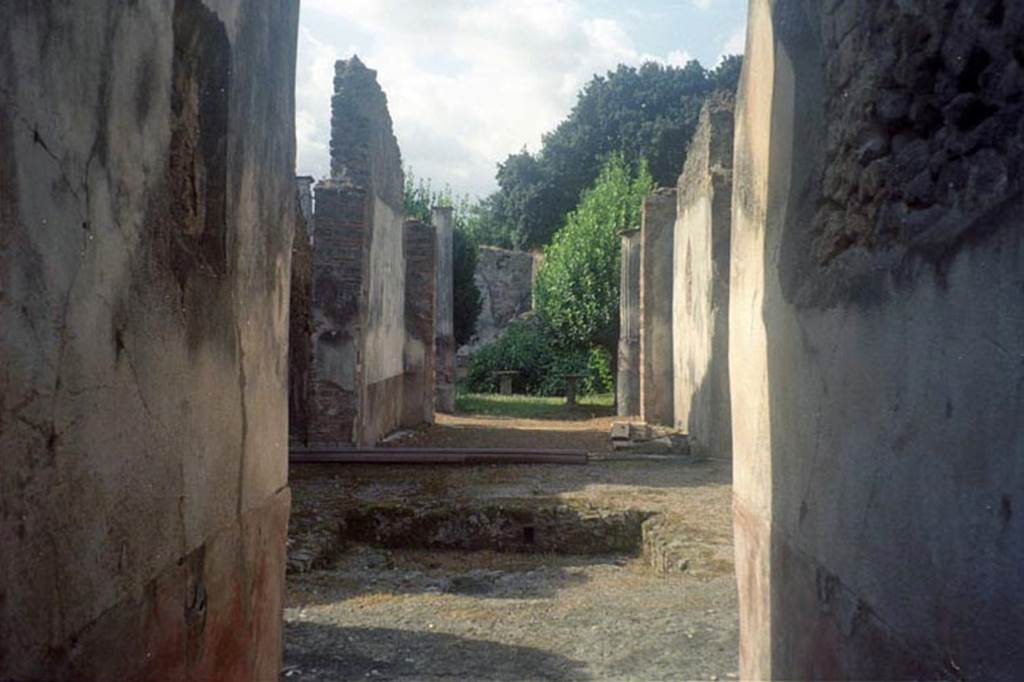
Looking south
through fauces/entrance corridor, across atrium, through tablinum, to
peristyle. Photo courtesy of Klaus
Heese.
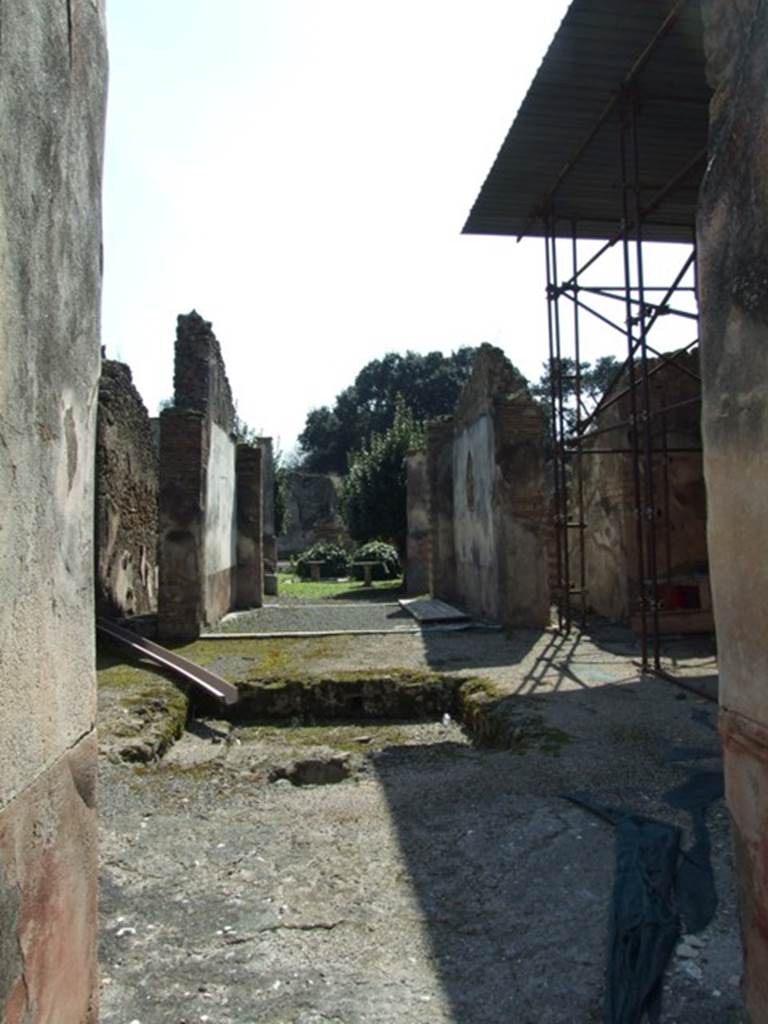
VIII.4.4 Pompeii. July 2011.
Looking south through fauces, across atrium, through tablinum, to peristyle. Photo courtesy of Rick Bauer.
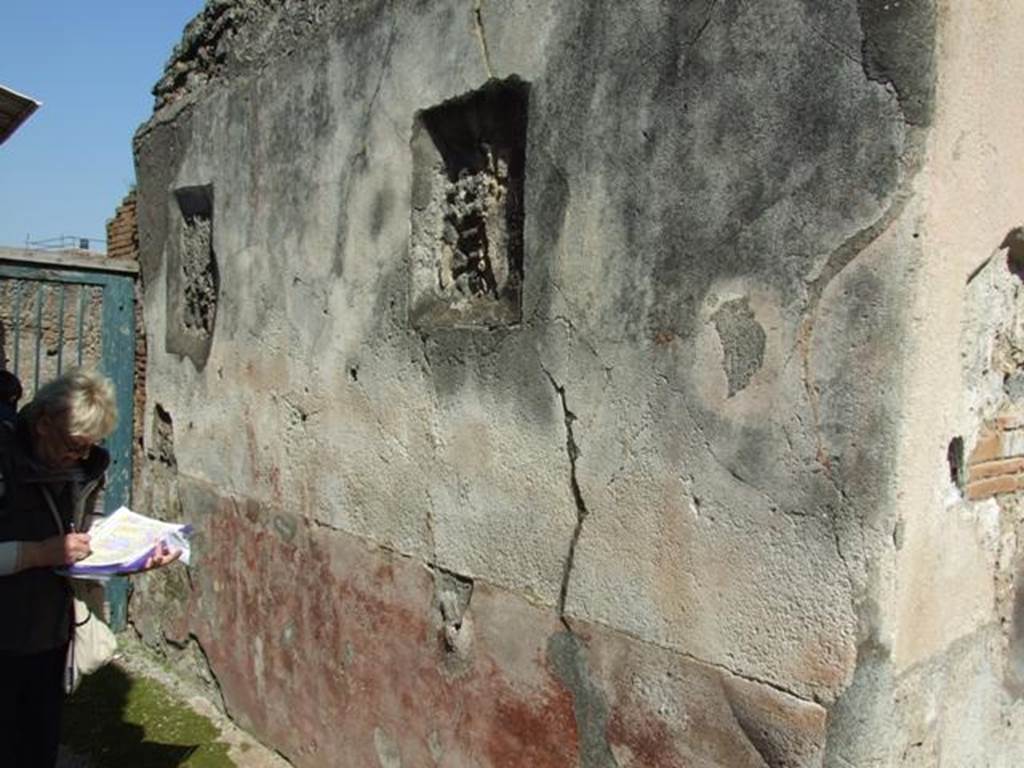
VIII.4.4 Pompeii. March 2009.
Looking south through fauces, across atrium, through tablinum, to peristyle.
VIII.4.4 Pompeii. March 2009. Entrance corridor or fauces, east wall.
Originally these walls would have been painted black in the upper part, red at the lower part and divided into three panels by green lines.
These panels contained paintings of aquatic birds.
High up on the black wall, in the middle of painted fantasy architecture, were paintings of nymphs.
These were detached and taken to Naples Museum at the time of their discovery.
According to Richardson, these were
Floating figure carrying a wreath of ivy. Now in Naples Archaeological Museum. Inventory number 9149. (Helbig 1909)
Floating figure carrying the baetylus sceptre of Venus. Now in Naples Archaeological Museum. Inventory number 9300. (Helbig 1920)
Floating figure carrying a calathus. Now in Naples Archaeological Museum. Inventory number 9144. (Helbig 1913)
Floating figure carrying a looking glass. This painting seems to have been lost. (Helbig 1942).
See Richardson, L., 2000. A Catalog of Identifiable Figure Painters of Ancient Pompeii,
Herculaneum. Baltimore: John
Hopkins. (p.156)
See Helbig, W., 1868. Wandgemälde der vom Vesuv verschütteten Städte Campaniens. Leipzig: Breitkopf und Härtel.
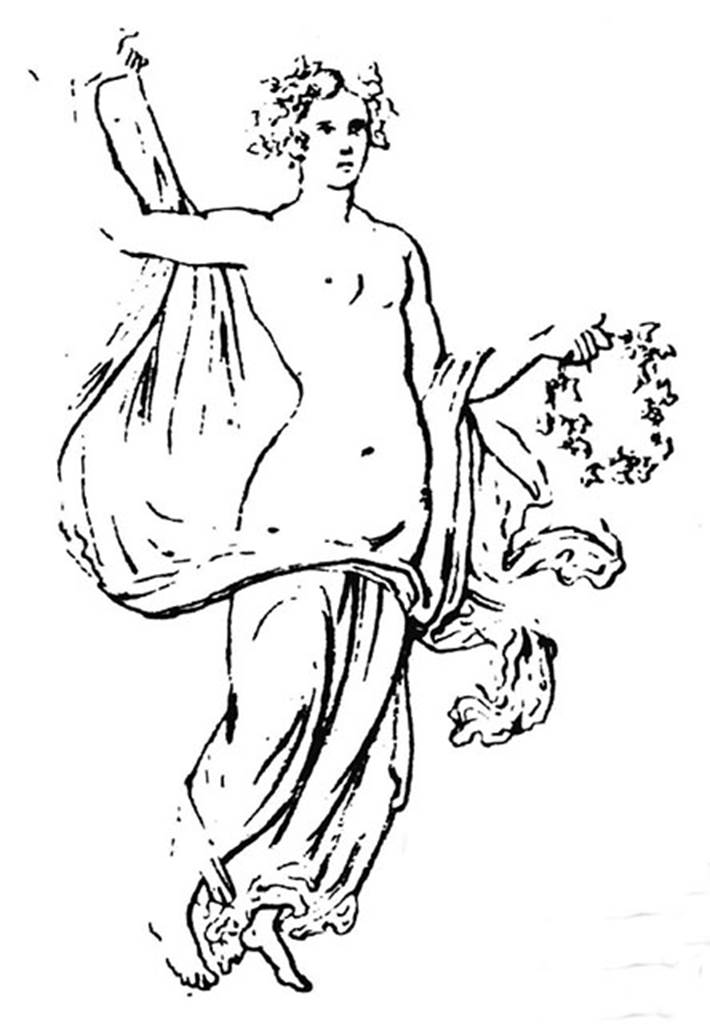
VIII.4.4 Pompeii. Entrance corridor or fauces. 1861 drawing of floating figure carrying a wreath of ivy.
Now in Naples Archaeological Museum. Inventory number 9149.
See Giornale di Scavi 1861, Tav. III no. 1.
See Richardson, L., 2000. A Catalog of Identifiable Figure Painters of Ancient Pompeii,
Herculaneum. Baltimore: John
Hopkins. (p.156)
See Helbig, W., 1868. Wandgemälde der vom Vesuv verschütteten Städte Campaniens. Leipzig: Breitkopf und Härtel, 1909.
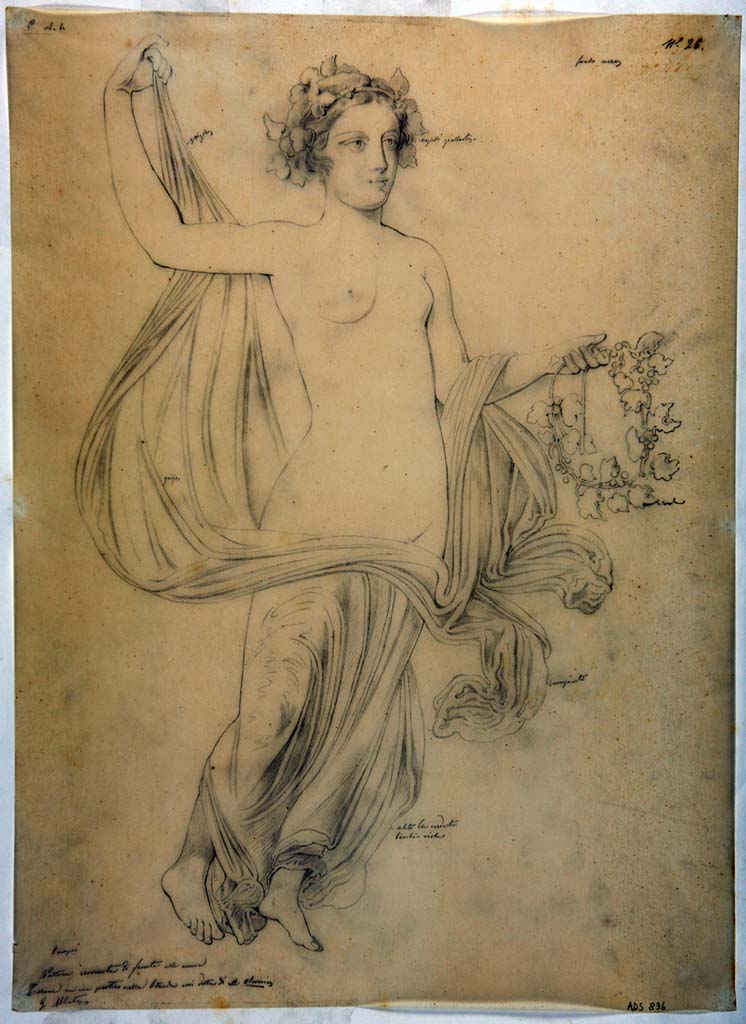
VIII.4.4 Pompeii.
Entrance corridor or fauces. Pre-1849 drawing by G. Abbate of floating figure carrying a wreath of ivy.
Now in Naples Archaeological Museum. Inventory number ADS836.
According to the
ICCD scheda, "Il disegno raffigura la vignetta che decorava una parete del
vestibolo 1 della Casa di Holconius Rufus a Pompei (VIII 4, 4), staccata e
conservata al Museo Archeologico Nazionale di Napoli (inv. 9149)".
Photo © ICCD. https://www.catalogo.beniculturali.it/
Utilizzabili alle
condizioni della licenza Attribuzione - Non commerciale - Condividi
allo stesso modo 2.5 Italia (CC BY-NC-SA 2.5 IT)
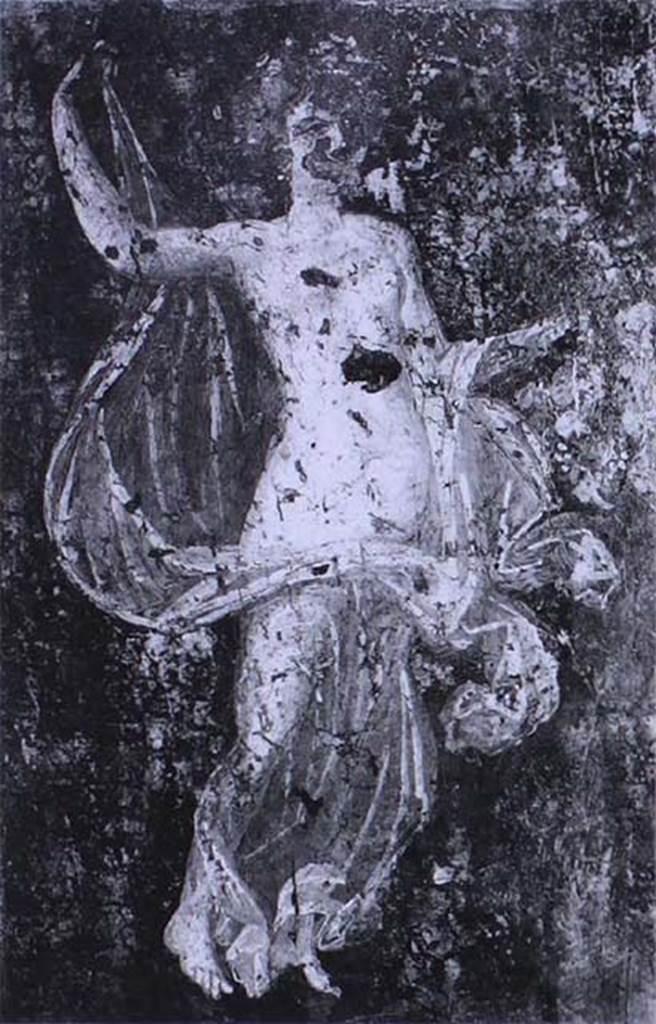
VIII.4.4 Pompeii. Entrance corridor or fauces. Floating figure carrying a wreath of ivy.
Now in Naples Archaeological Museum. Inventory number 9149.
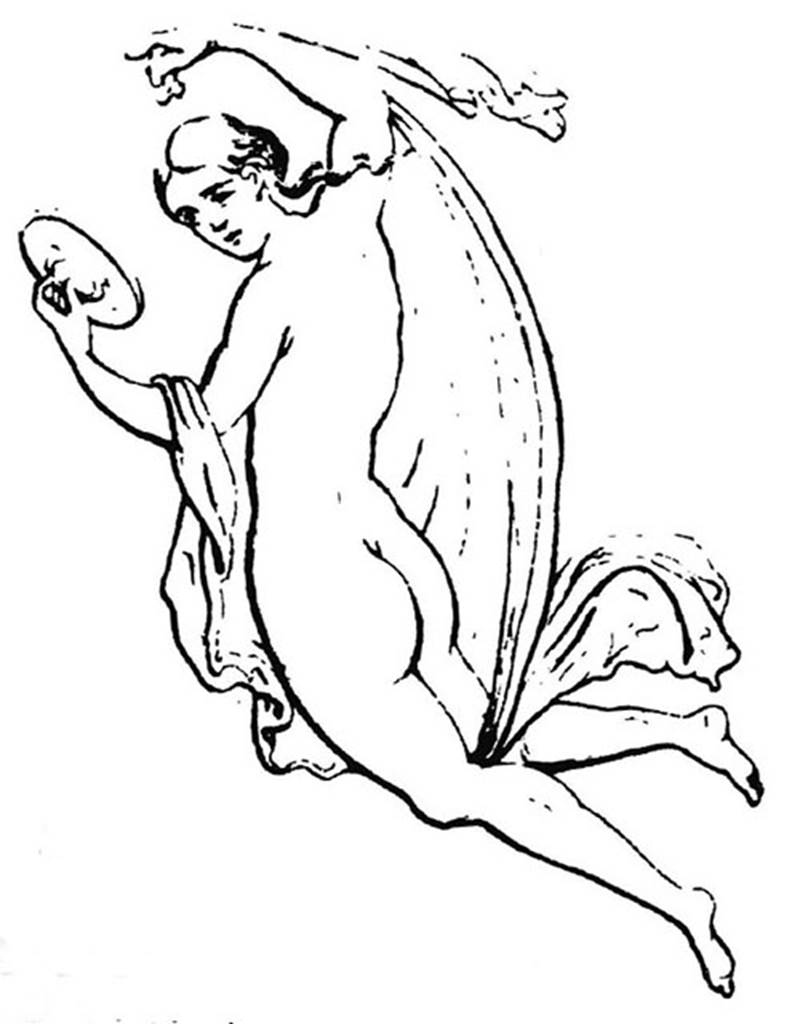
VIII.4.4 Pompeii. Entrance corridor or fauces. 1861 drawing of floating figure carrying a mirror.
This painting seems to have been lost.
See Giornale di Scavi 1861, Tav. III no. 2.
See Richardson, L., 2000. A Catalog of Identifiable Figure Painters of Ancient Pompeii,
Herculaneum. Baltimore: John
Hopkins. (p.156)
See Helbig, W., 1868. Wandgemälde der vom Vesuv verschütteten Städte Campaniens. Leipzig: Breitkopf und Härtel, 1942.
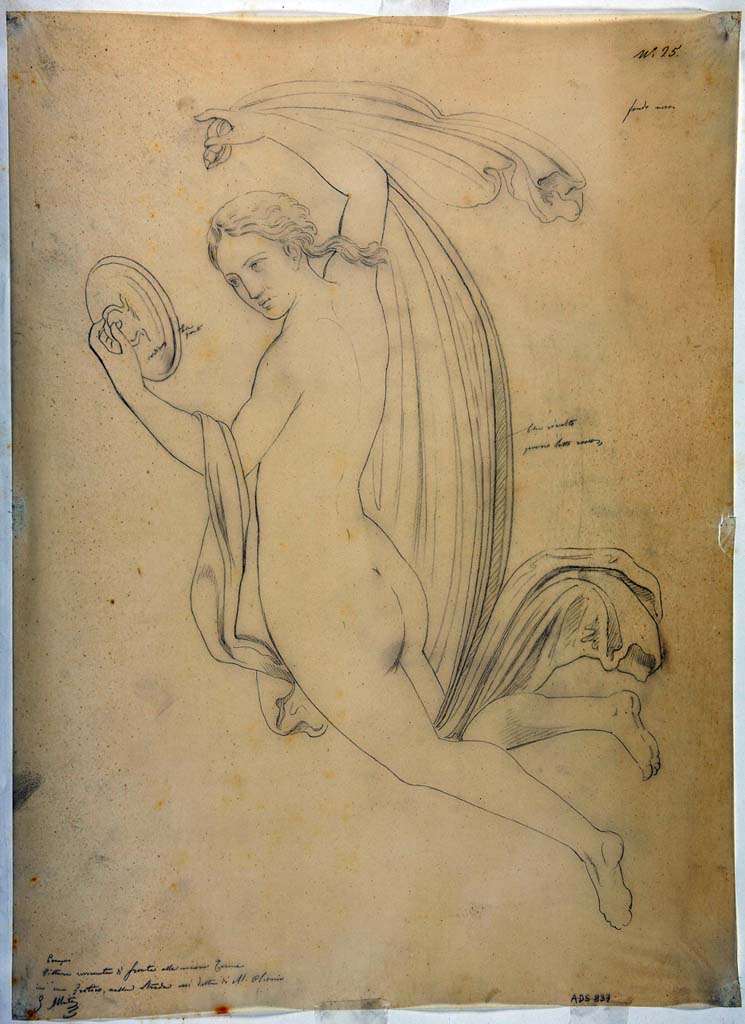
VIII.4.4 Pompeii.
Entrance corridor or fauces. Pre-1849 drawing by G. Abbate of floating figure carrying a mirror.
According to the
ICCD Scheda, "Il disegno raffigura la vignetta che decorava una parete del
vestibolo 1 della Casa di Holconius Rufus a Pompei (VIII 4, 4), staccata e
conservata al Museo Archeologico Nazionale di Napoli".
Now in Naples Archaeological Museum. Inventory number ADS837.
Photo © ICCD. https://www.catalogo.beniculturali.it
Utilizzabili alle condizioni della licenza Attribuzione
- Non commerciale - Condividi allo stesso modo 2.5 Italia (CC BY-NC-SA 2.5 IT)
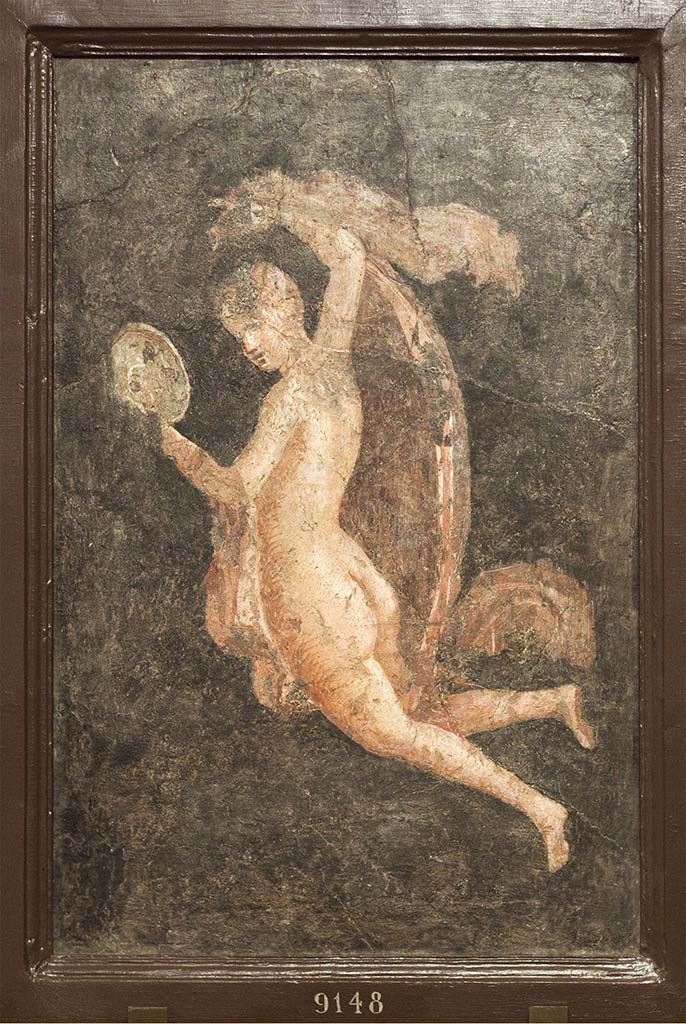
VIII.4.4 Pompeii. Entrance corridor or fauces. Painting of floating figure carrying a mirror.
It seems to match the 1861 drawing.
This was on exhibition in Moscow but was said on its card to be from "ПОМПЕИ (?)" or "Pompeii (?)".
Now in Naples Archaeological Museum. Inventory number 9148.
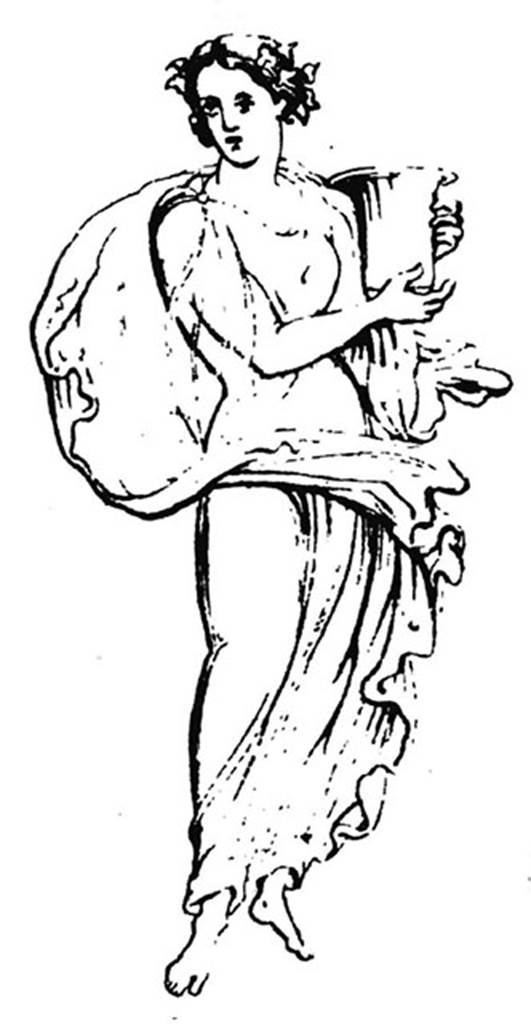
VIII.4.4 Pompeii. Entrance corridor or fauces.
1861 drawing of floating figure carrying a kalathos (a hat shaped vase, a symbol of fertility).
Now in Naples Archaeological Museum. Inventory number 9144.
See Giornale di Scavi 1861, Tav. III no. 3.
See Richardson, L., 2000. A Catalog of Identifiable Figure Painters of Ancient Pompeii,
Herculaneum. Baltimore: John
Hopkins. (p.156)
See Helbig, W., 1868. Wandgemälde der vom Vesuv verschütteten Städte Campaniens. Leipzig: Breitkopf und Härtel, 1913.
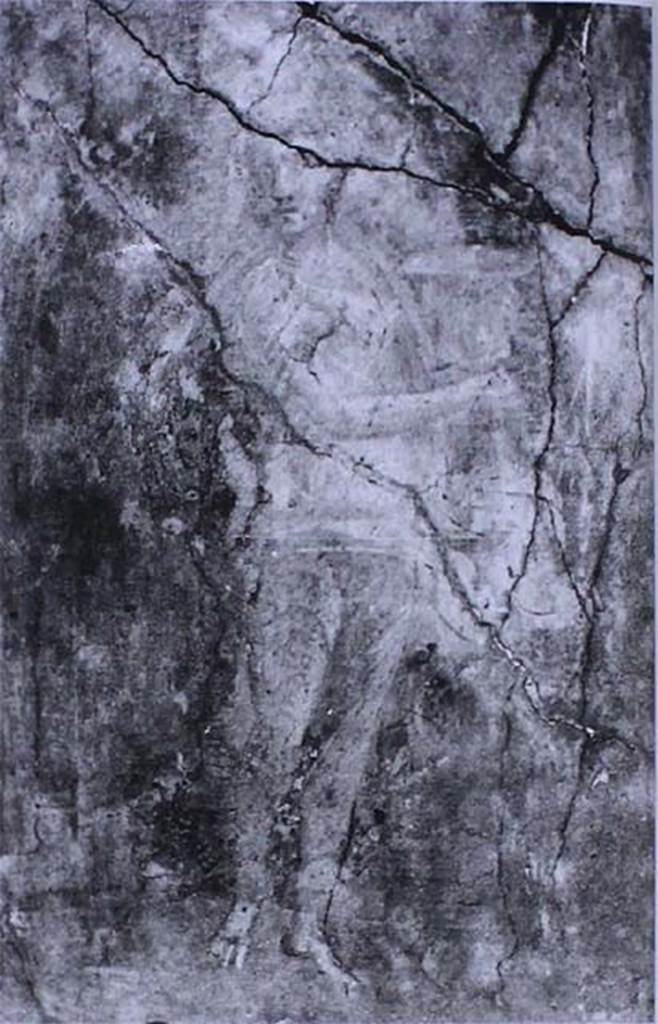
VIII.4.4 Pompeii. Entrance corridor or fauces. Floating figure carrying a kalathos (vase).
Now in Naples Archaeological Museum. Inventory number 9144.
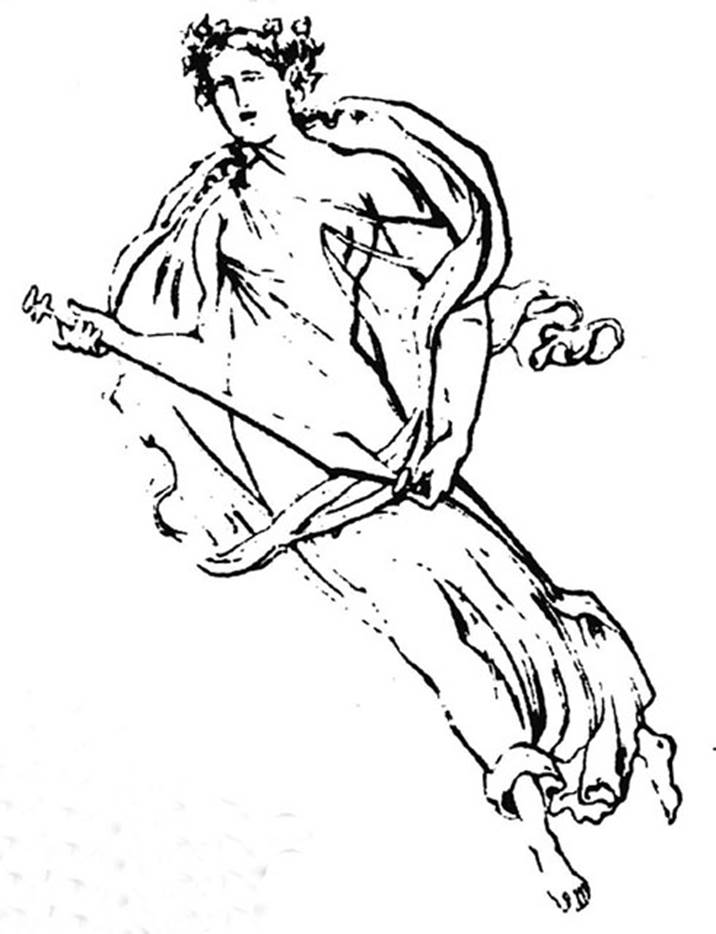
VIII.4.4 Pompeii. Entrance corridor or fauces.
1861 drawing of floating figure carrying the baetylus sceptre of Venus.
Now in Naples Archaeological Museum. Inventory number 9300.
See Giornale di Scavi 1861, Tav. III no. 4.
See Richardson, L., 2000. A Catalog of Identifiable Figure Painters of Ancient Pompeii,
Herculaneum. Baltimore: John
Hopkins. (p.156)
See Helbig, W., 1868. Wandgemälde der vom Vesuv verschütteten Städte Campaniens. Leipzig: Breitkopf und Härtel, 1920.
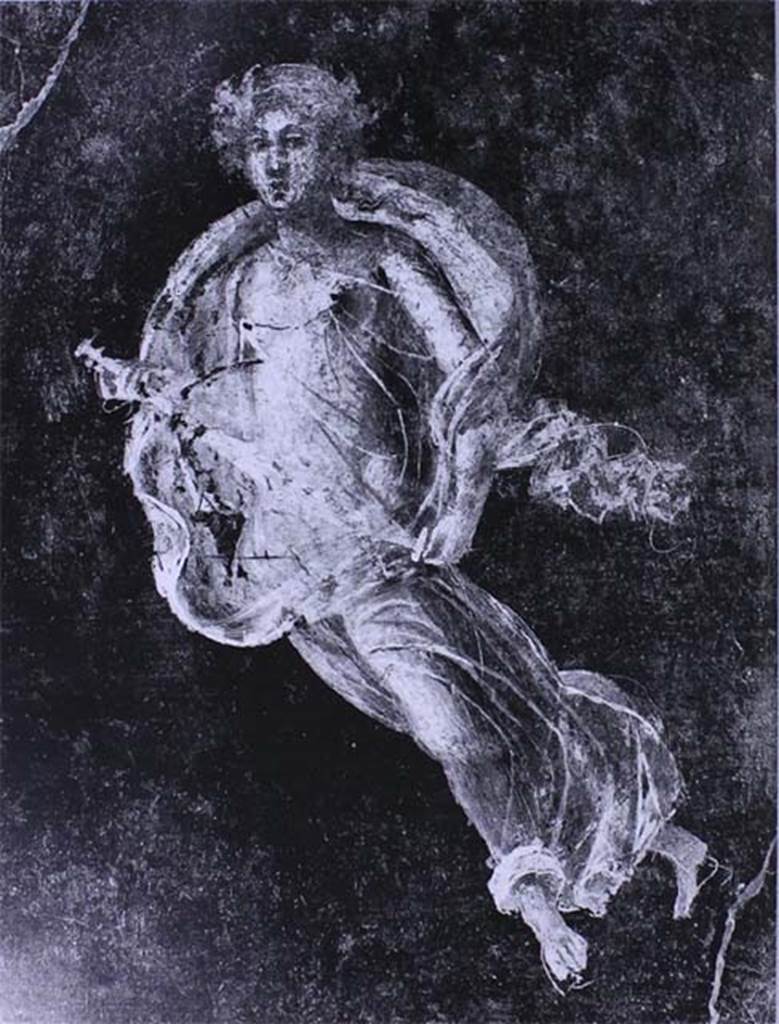
VIII.4.4 Pompeii. Entrance corridor or fauces. Floating figure carrying the baetylus sceptre of Venus.
Now in Naples Archaeological Museum. Inventory number 9300.
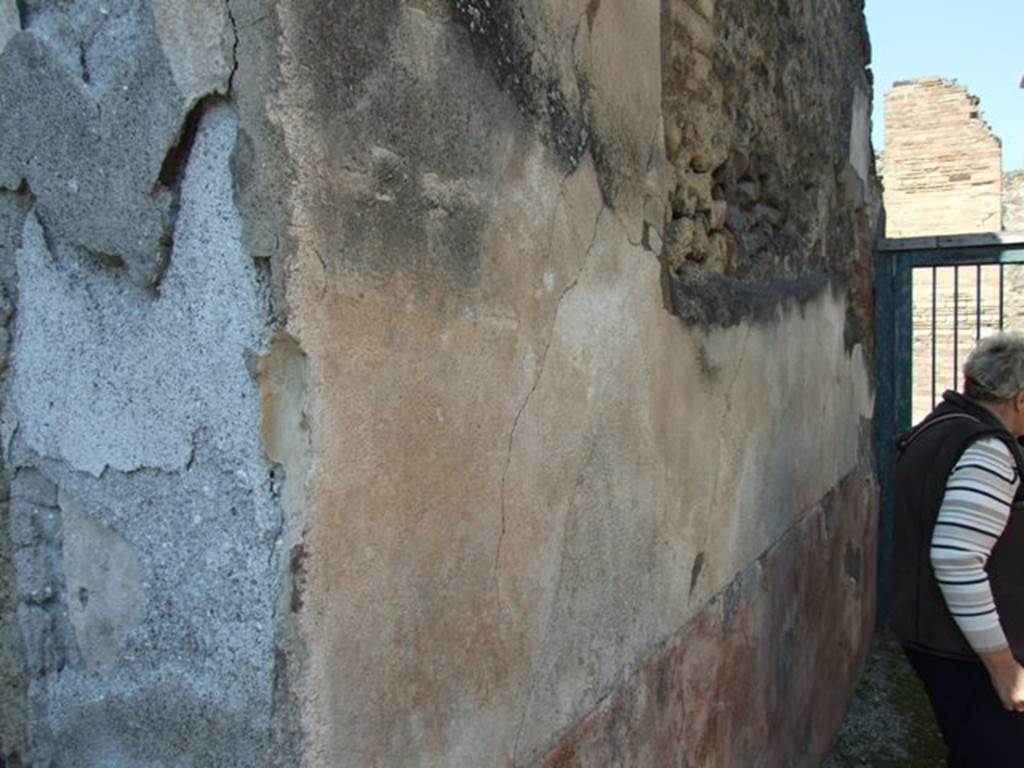
VIII.4.4 Pompeii. March 2009. Entrance corridor or fauces, west wall.
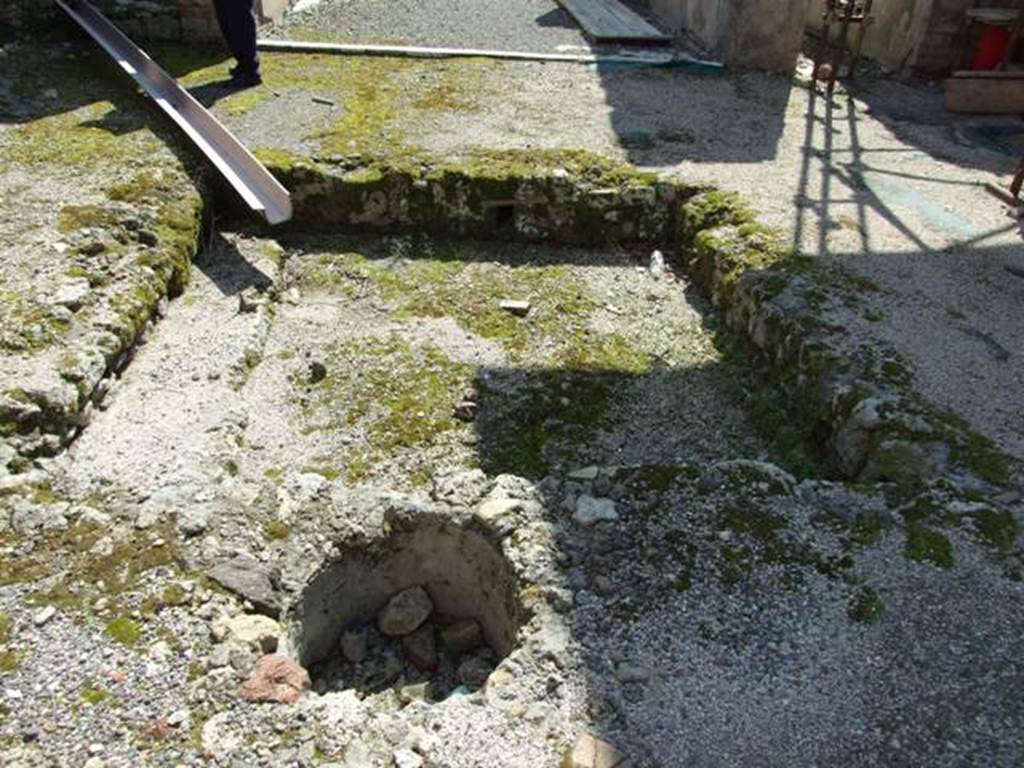
VIII.4.4 Pompeii. March 2009. Room 1, impluvium in atrium, together with blocked cistern.
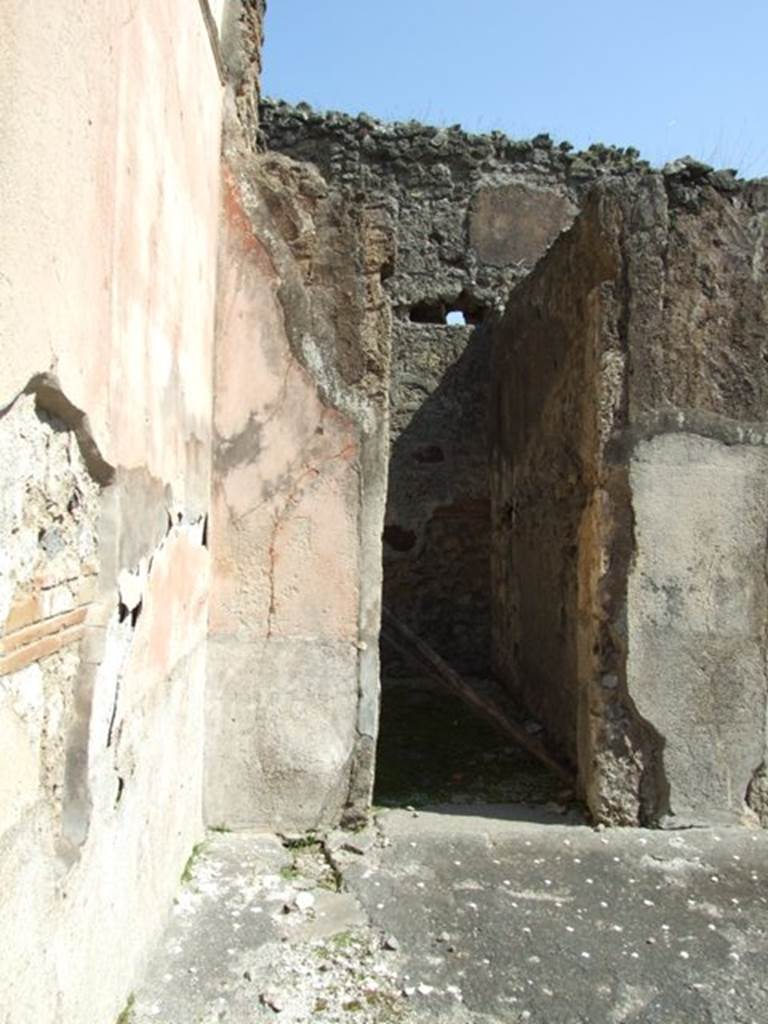
VIII.4.4 Pompeii. March 2009. Doorway to room 2, the rear room of shop at VIII.4.5.
The floor of the atrium shows a simple covering in lavapesto punctuated by a regular white dot tesserae.
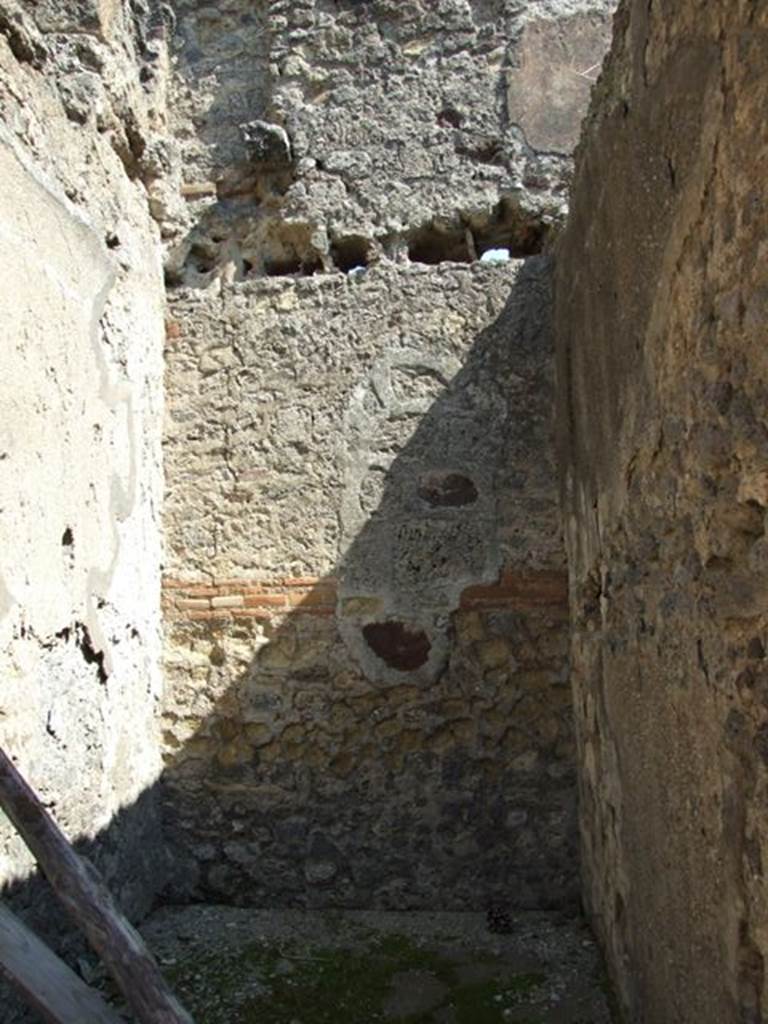
VIII.4.4 Pompeii. March 2009. Room 2, east wall.
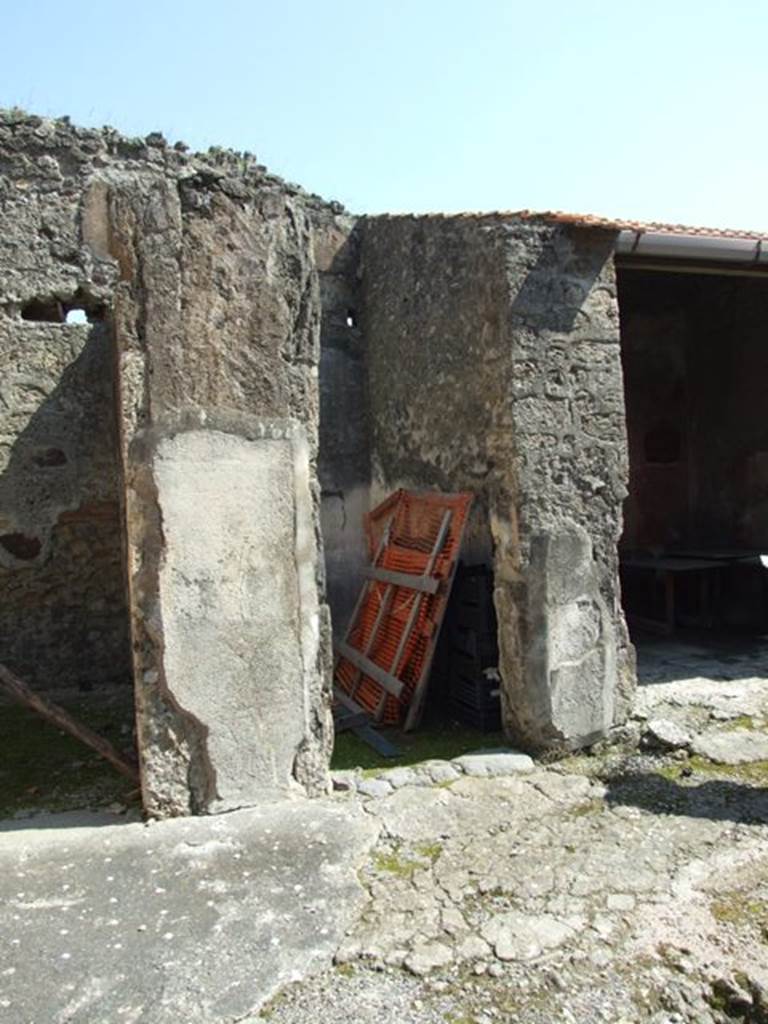
VIII.4.4 Pompeii. March 2009. Doorway to room 3.
According to PPM, the floor in this room was of lavapesto, whereas the atrium floor can be seen to include small tesserae of small white dots.
On the east side of the south wall of room 3, a medallion containing a griffin could be seen in the side panel, but hardly a trace is now left.
This room also had a Dionysian theme, similar to room 22, in that in the central panel of the white middle zone of the wall was a painting of a maenad and a satyr.
On the west side of the south wall, with a faded zoccolo and a white middle zone, was a panel crossed by a candelabra and medallion containing a griffin.
According to Fiorelli, “the threshold of the room was formed of Vesuvian stone, and the floor was of opus signinum with small pieces of marble encrusted into it for decoration.
The zoccolo of the walls were red and showed painted green plants, the middle zone was white divided into panels by small green lines and yellow ornaments:
there were branches with leaves, and yellow candelabra topped with ornate globes, nearly similar to those from the cubiculum facing across the atrium.” (See room 22).
See Pompei: Pitture e Mosaici, Vol. VIII, Roma: Istituto della enciclopedia italiana, pp. 451ff.
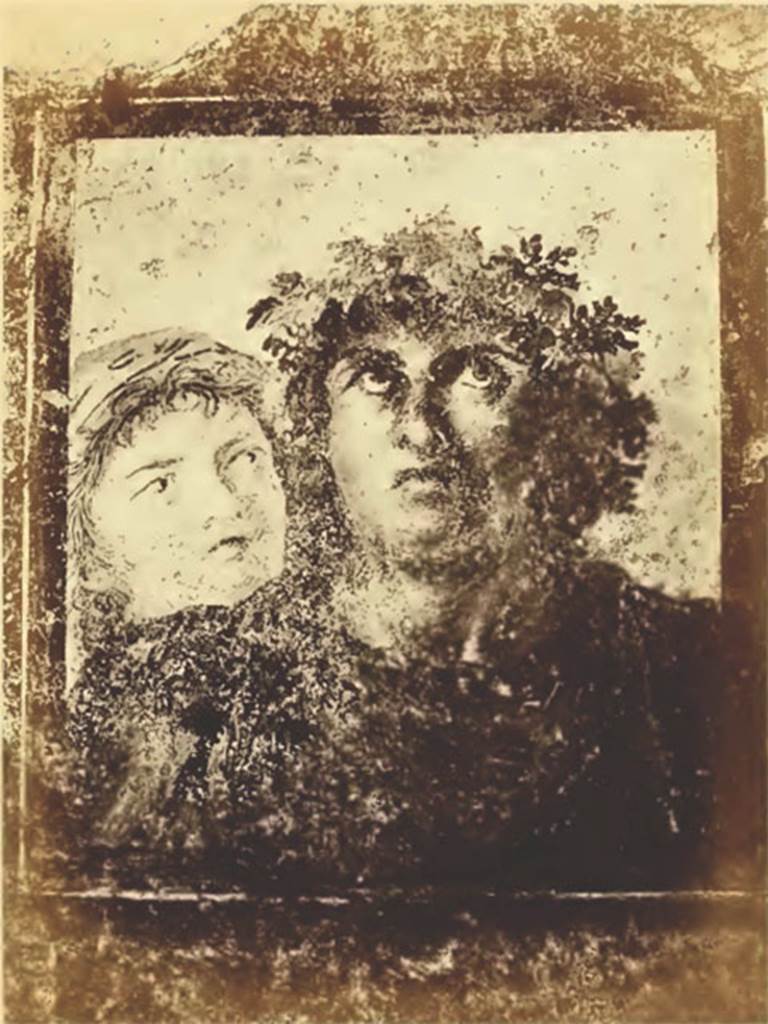
VIII.4.4 Pompeii. 1867. According to Dyer, this showed a wall painting of Dionysus and Faun.
See Dyer, T., 1867. The Ruins of Pompeii. London: Bell and Daldy, (p. 100).
According to Fiorelli, “in the room, on the two side walls on either side of the door, two painted birds pecking at the grass could be seen.
In the middle on both side walls was a painting, and on each side of the paintings were medallions showing red flying griffins on a white background.
One of the medallions, on the left, was missing because the wall had been “holed” by the ancients.
The paintings in the middle showed
– on the right, the head of a woman with red dress and red ornament on her head, nearby was the head of a young male whose form was similar to a satyr, which would suggest that this cubiculum similarly to the one opposite, featured Bacchic scenes. (See room 22)
- on the left, another head of a woman with blue dress, shown with the head of a youth.
In the facing wall was a vast hole made by the ancient burrowers after the catastrophe.
There was only one painting, and it was a vivid painting of Silenus crowned with Ivy and wearing a green cloak, in his right hand he held a stick and a cup in his left.”
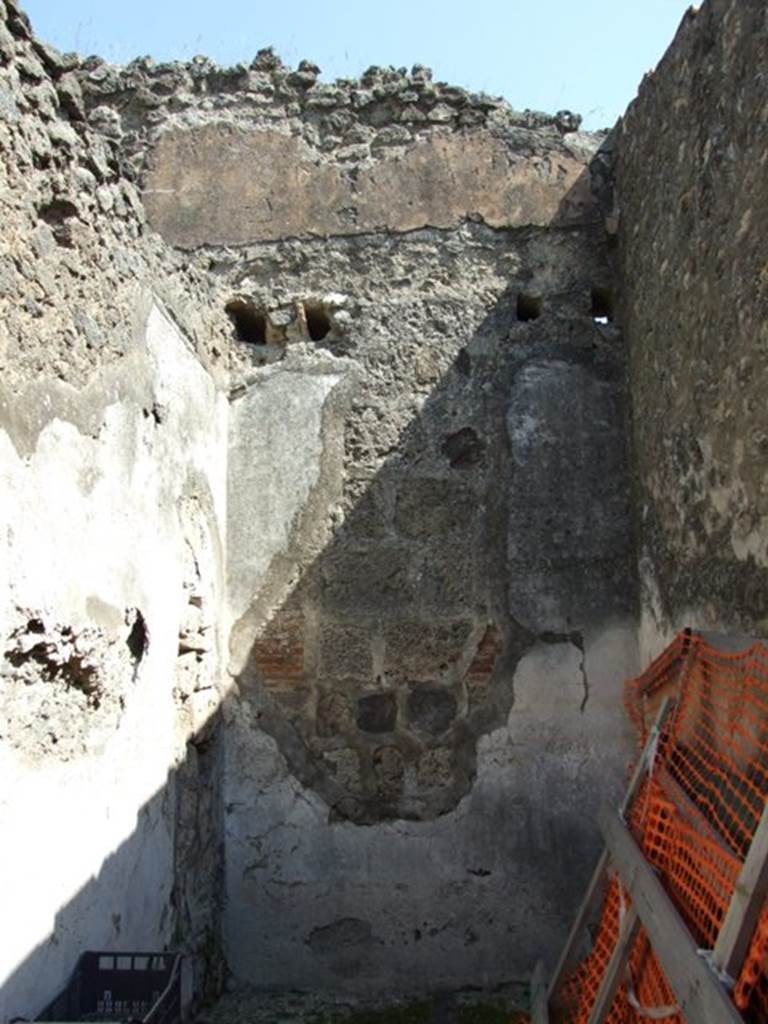
VIII.4.4 Pompeii. March 2009. Room 3, looking east.
According to PPM in the north-east corner were the remains of a moulded stucco cornice.
The holes for the supports of the floor joists of the room above could be seen.
A large hole, filled by the restorers, was found. This was a sign that ancient searchers had been in the room.
The decorative scheme from the short wall is completely lost.
The zoccolo was red, in a side panel of the middle zone was a painting showing the head of Silenus (H 413).
See Helbig, W.,
1868. Wandgemälde der vom Vesuv
verschütteten Städte Campaniens. Leipzig: Breitkopf und Härtel, (413)
See Pompei: Pitture e Mosaici, Vol. VIII, Roma: Istituto della enciclopedia italiana, pp. 451ff.
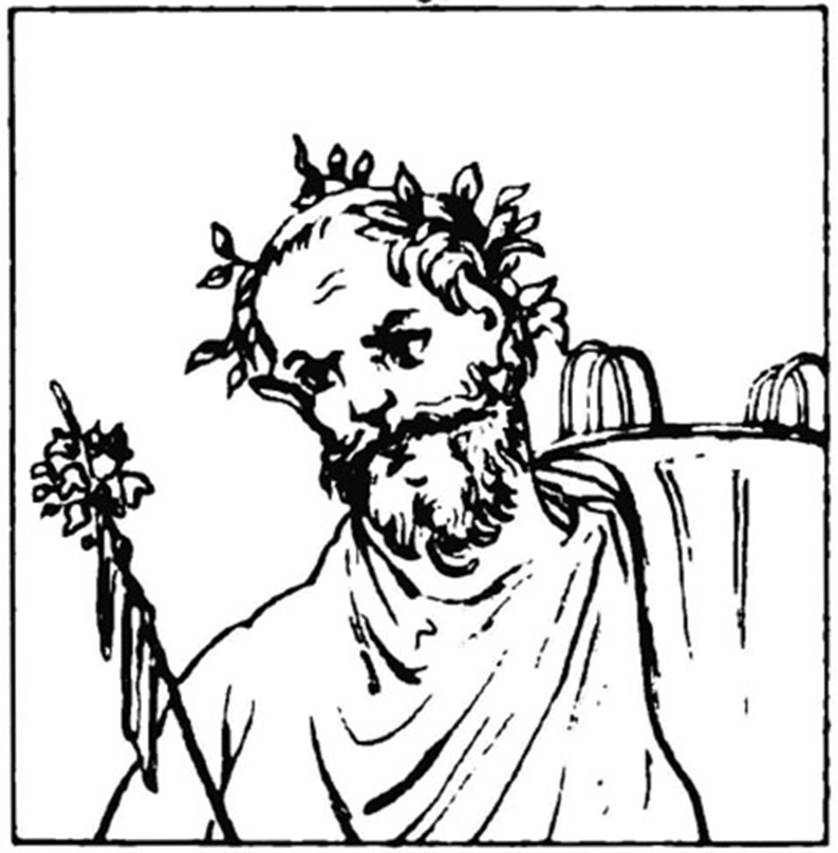
VIII.4.4 Pompeii. Cubiculum 3, east wall. 1861 drawing of a bust of Silenus.
In his right hand he has a thyrsus and in his left a cup.
See Giornale di Scavi, 1861, (p.19-22 and Tav. IV fig. 8).
See Helbig, W., 1868. Wandgemälde der vom Vesuv verschütteten Städte Campaniens. Leipzig: Breitkopf und Härtel, 413.
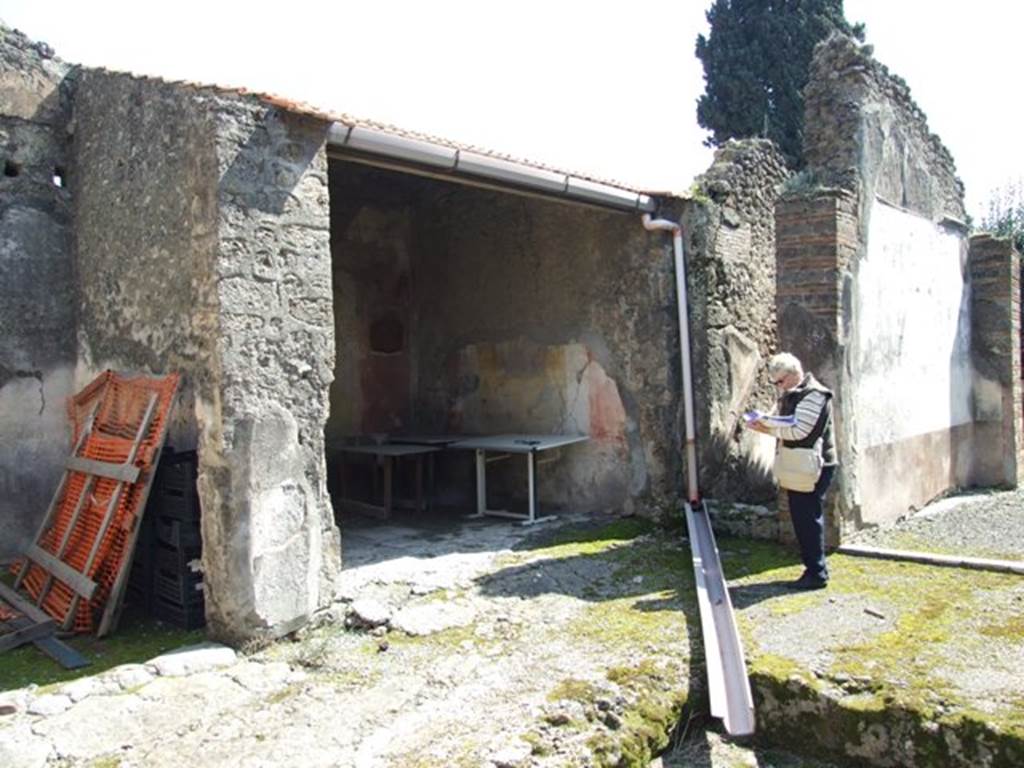
VIII.4.4 Pompeii. March 2009. Room 4, ala on east side.
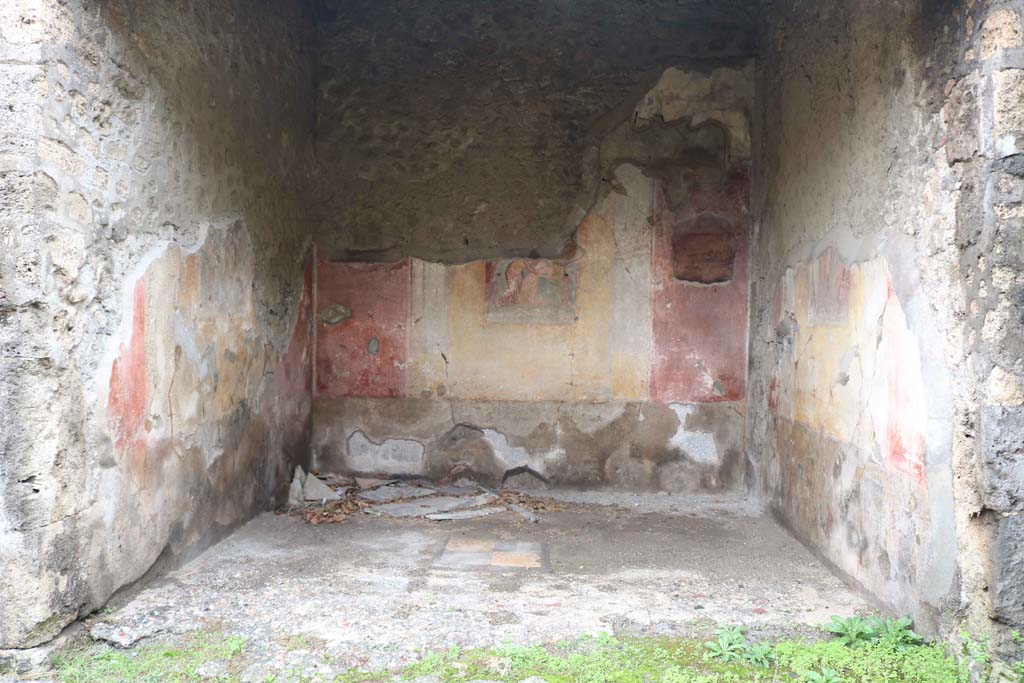
VIII.4.4 Pompeii. December 2018. Room 4,
looking east in ala. Photo courtesy of Aude Durand.
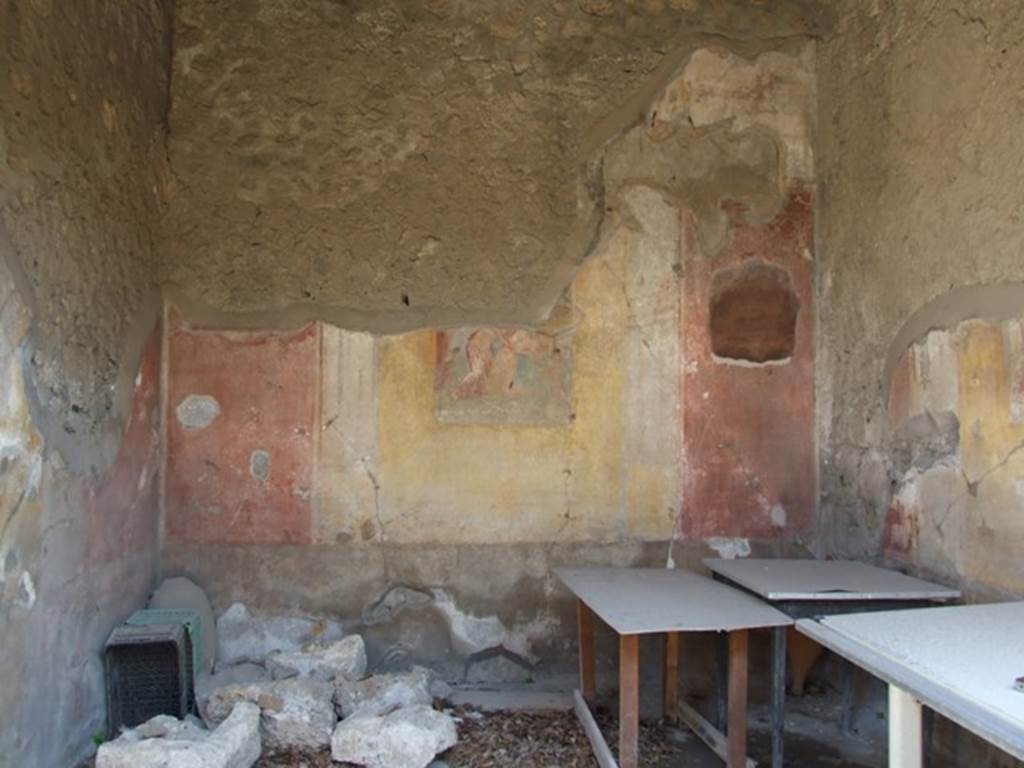
VIII.4.4 Pompeii. March 2009. Room 4, east wall of ala.
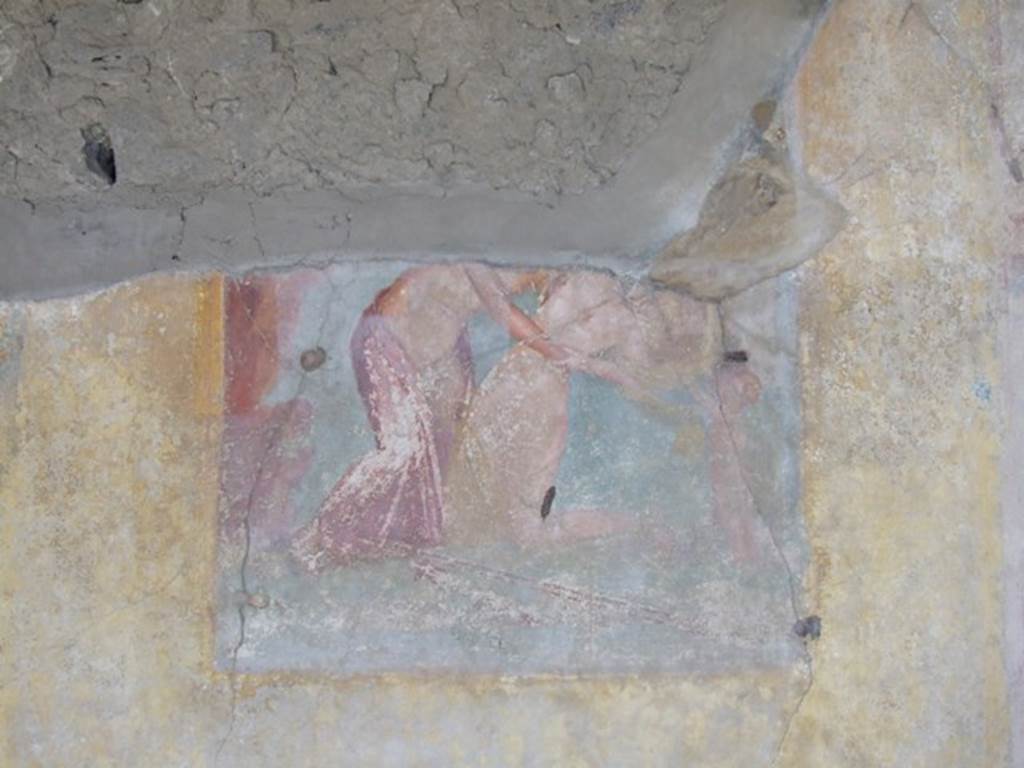
VIII.4.4 Pompeii. March 2009. Room 4, east wall. Remains of wall painting of Apollo and Daphne with Eros.
See Helbig, W., 1868. Wandgemälde der vom Vesuv verschütteten Städte Campaniens. Leipzig: Breitkopf und Härtel. (209).
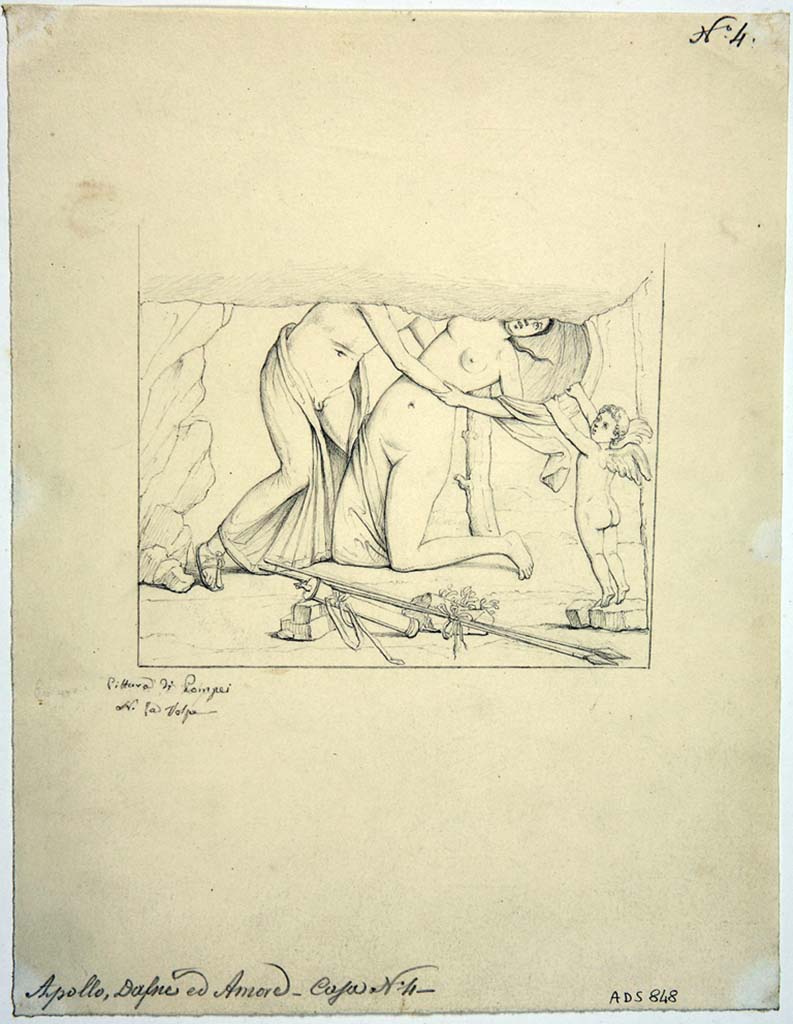
VIII.4.4 Pompeii. Room 4, east wall.
Drawing by Nicola La Volpe, of painting of Apollo and Daphne from centre of east wall.
The upper half of the painting was missing when excavated.
Now in Naples Archaeological Museum. Inventory number ADS 848.
Photo © ICCD. https://www.catalogo.beniculturali.it
Utilizzabili alle
condizioni della licenza Attribuzione - Non commerciale - Condividi
allo stesso modo 2.5 Italia (CC BY-NC-SA 2.5 IT)
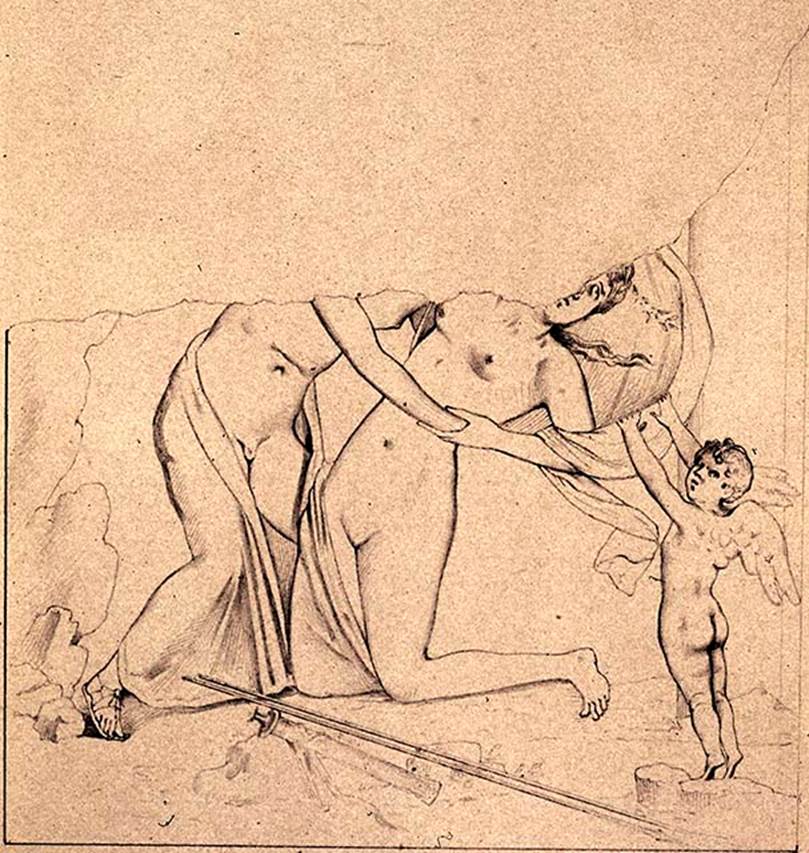
VIII.4.4 Pompeii.
Room 4, east wall. 19th century drawing by A. Aureli of painting of Apollo and Daphne with Eros.
Photo © Deutsches Archäologisches Institut, Abteilung Rom, Arkiv.
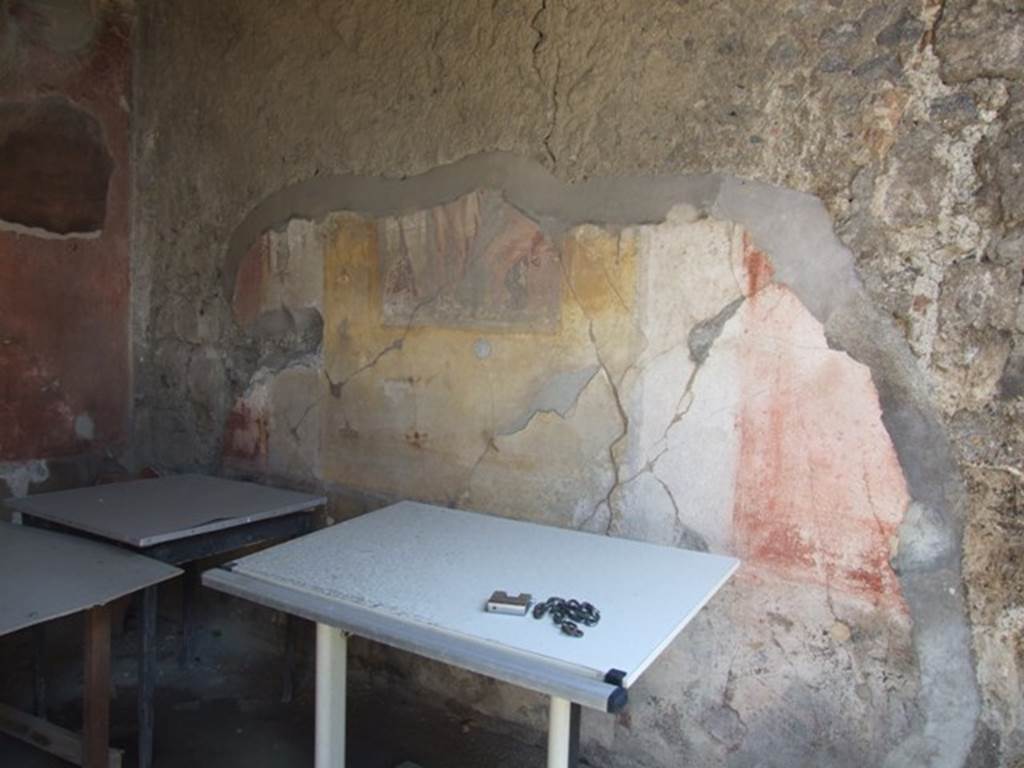
VIII.4.4 Pompeii. March 2009. Room 4, south wall.
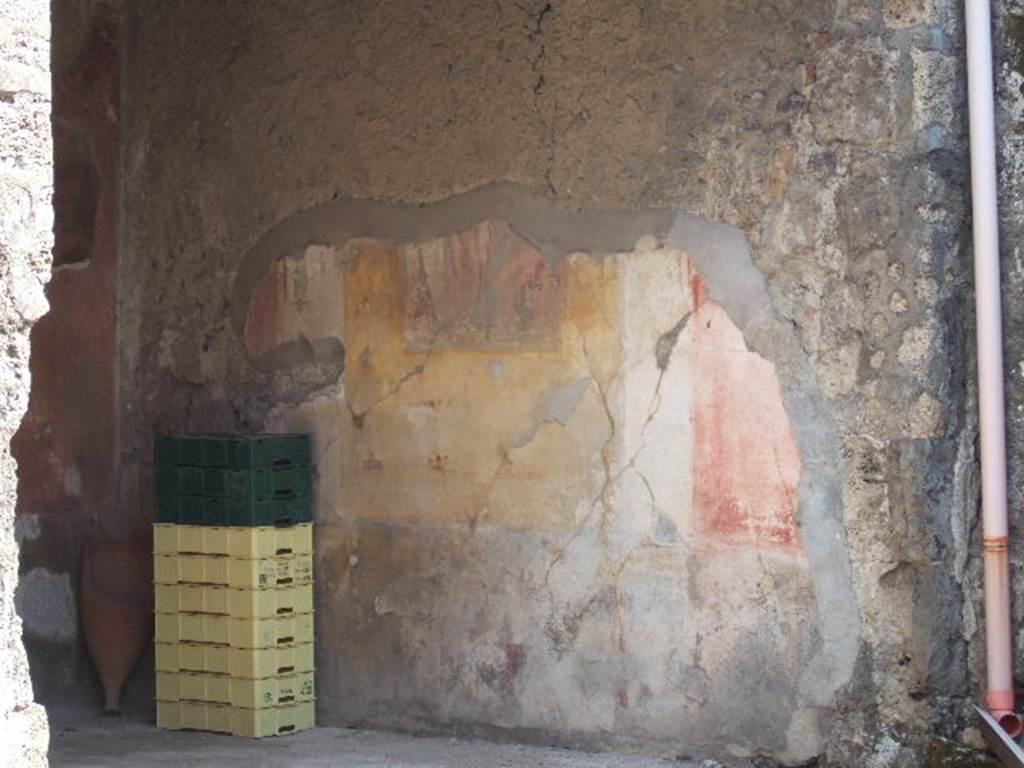
VIII.4.4 Pompeii. September 2005. Room 4, south wall of the ala on the east side of the atrium.
Remains of painting of Hercules (Fiorelli also refers to a female figure) and a seated male figure who holds two lances.
See Pappalardo, U., 2001. La Descrizione di Pompei per Giuseppe Fiorelli (1875). Napoli: Massa Editore. (p.126).
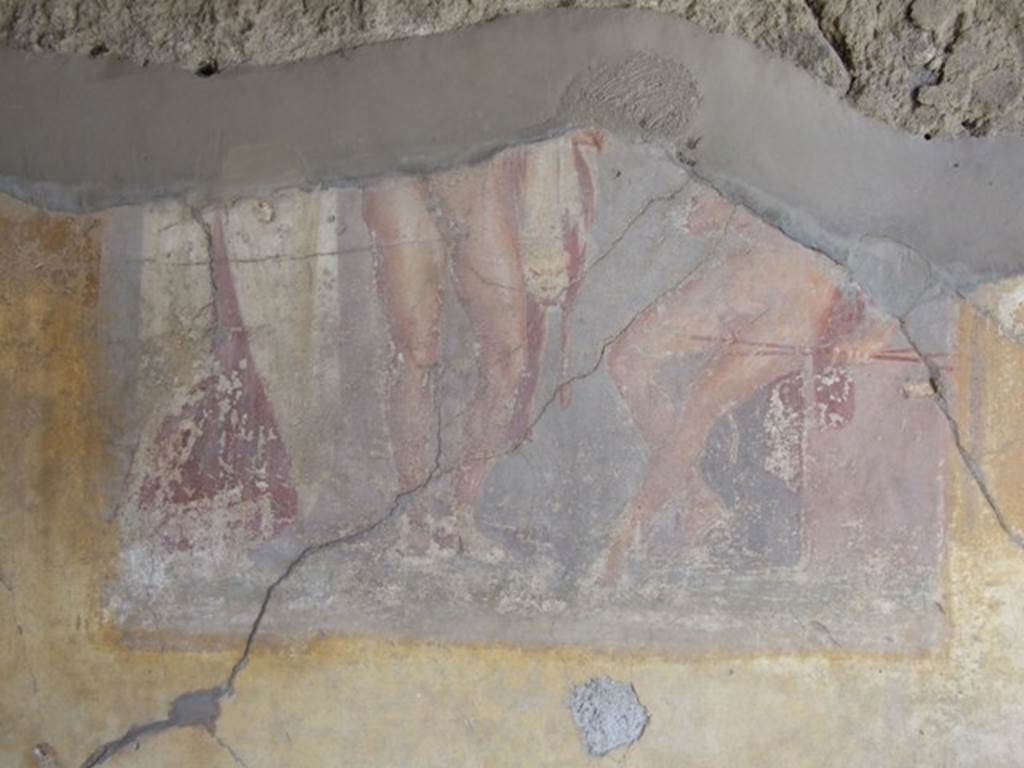
VIII.4.4 Pompeii. March 2009. Room 4, south wall.
Wall painting of Alcestis, on left, Hercules, in the centre, recognisable by the lion skin, Admetus, sitting on the right.
See Carratelli,
G. P., 1990-2003. Pompei: Pitture e Mosaici. Roma: Istituto della enciclopedia
italiana.
See also Helbig, W., 1868. Wandgemälde der vom Vesuv verschütteten Städte Campaniens. Leipzig: Breitkopf und Härtel. (1149).
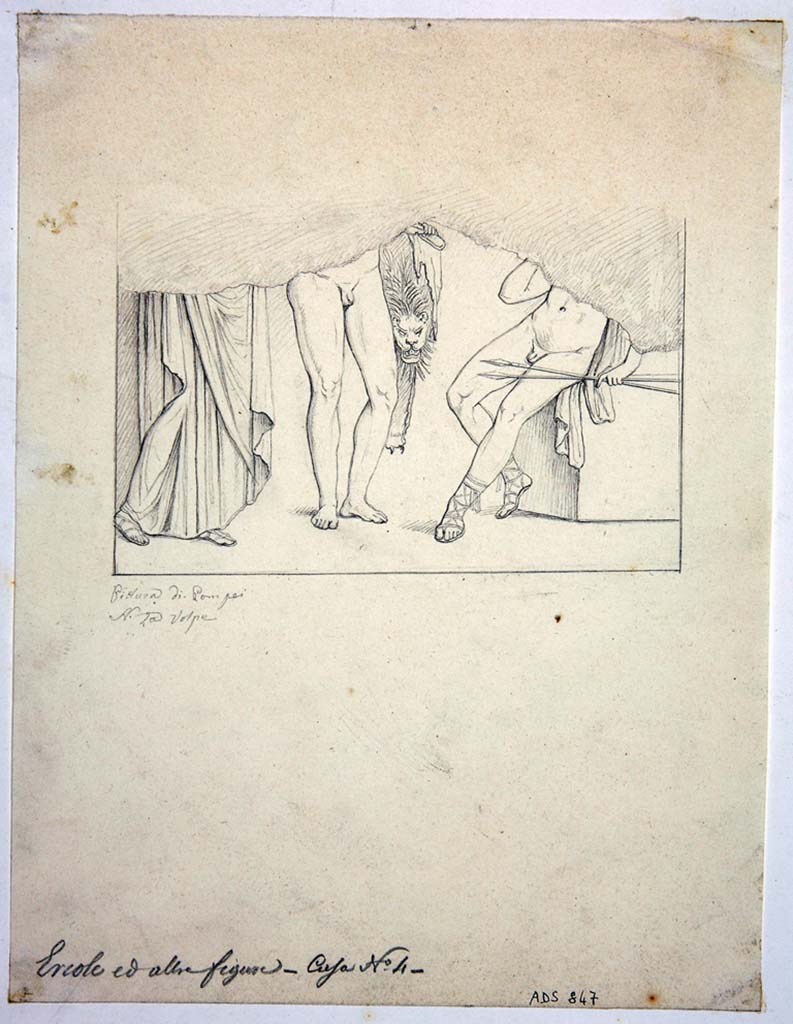
VIII.4.4 Pompeii. Room 4, south wall.
Drawing by Nicola La Volpe, of painting of Hercules between Alcestis and Admetus from centre of south wall.
Now in Naples Archaeological Museum. Inventory number ADS 847.
Photo © ICCD. https://www.catalogo.beniculturali.it
Utilizzabili alle
condizioni della licenza Attribuzione - Non commerciale - Condividi
allo stesso modo 2.5 Italia (CC BY-NC-SA 2.5 IT)
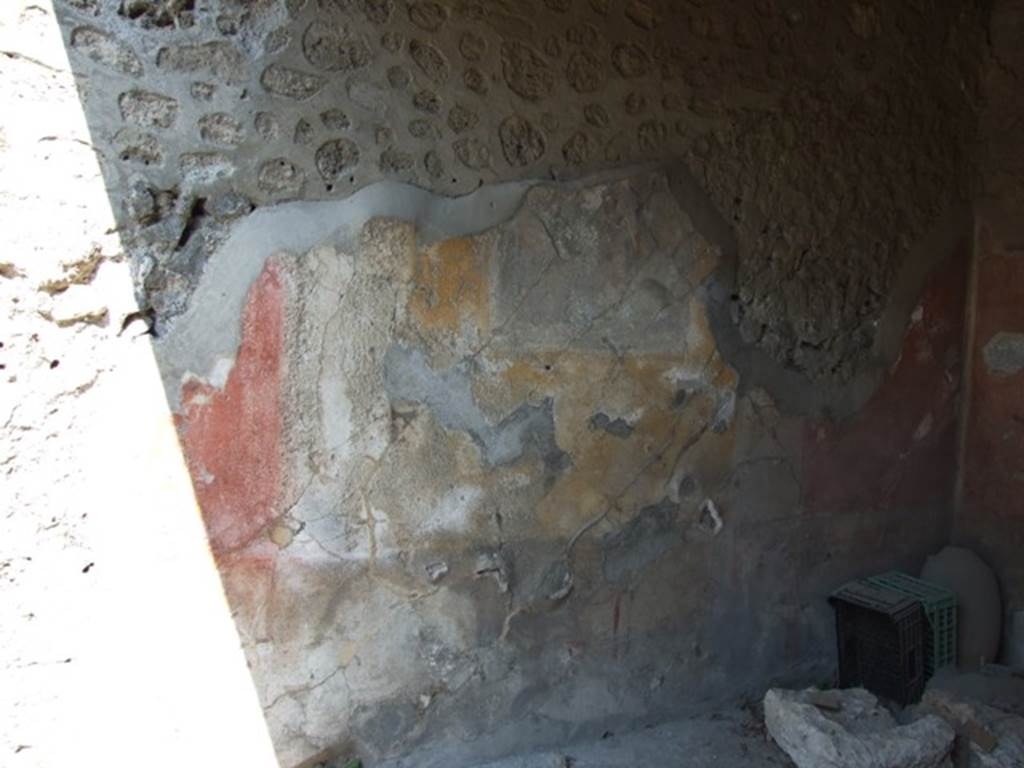
VIII.4.4 Pompeii. March 2009. Room 4, north wall of ala.
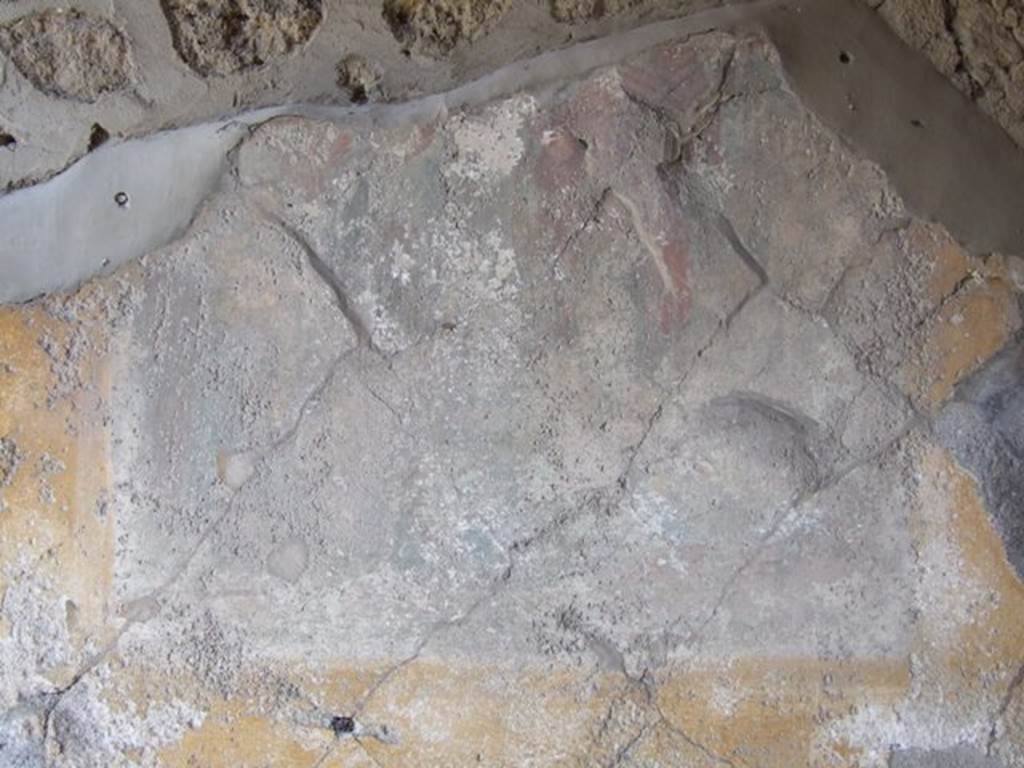
VIII.4.4 Pompeii. March 2009. Room 4, north wall. Remains of wall painting of Perseus and Andromeda.
See Helbig, W., 1868. Wandgemälde der vom Vesuv verschütteten Städte Campaniens. Leipzig: Breitkopf und Härtel. (1192).
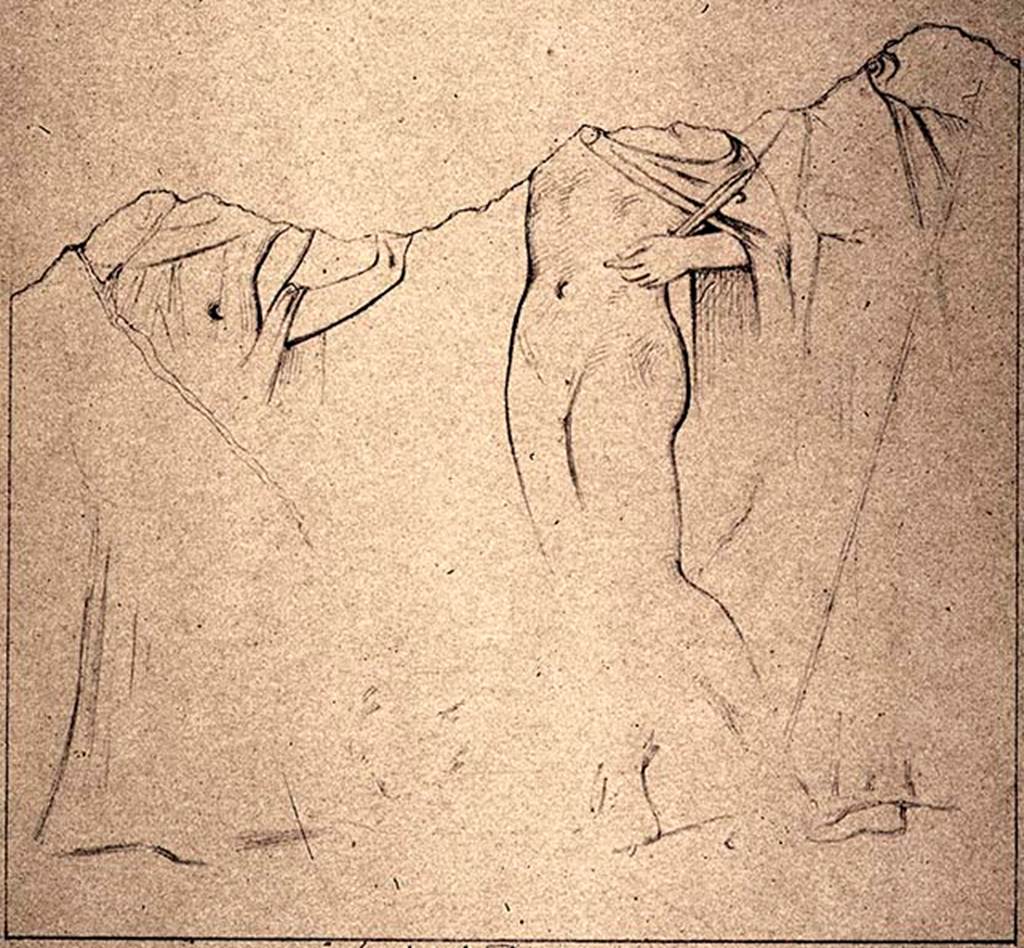
VIII.4.4 Pompeii. Room 4, north wall. Youth between two women. Perseus liberating Andromeda.
Photo © Deutsches
Archäologisches Institut, Abteilung Rom, Arkiv.
See Pompei: Pitture e Mosaici, Vol. VIII, Roma: Istituto della enciclopedia italiana, p. 475.
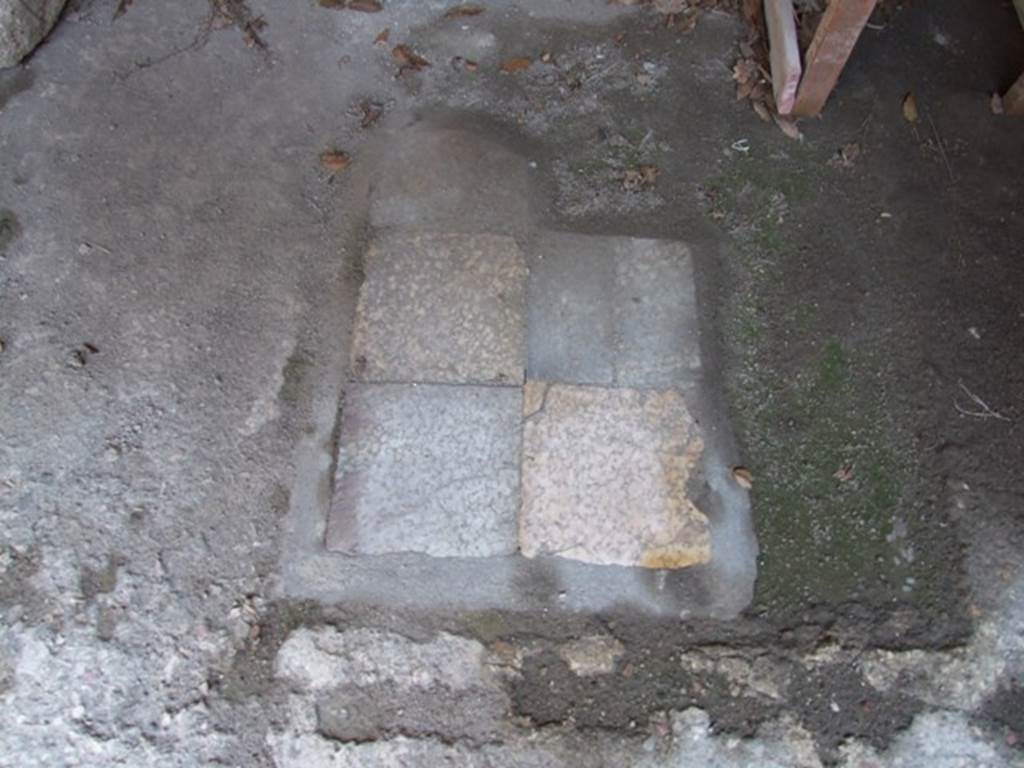
VIII.4.4 Pompeii. March 2009. Room 4, floor of ala, made of cocciopesto with coloured marble squares.
Part 2 Part 3
Part 4 Part 5 Part 6
Part 7 Plan