VIII.3.14 Pompeii. Casa della
Regina Carolina or House of Queen Caroline.
Excavated 1809, 1812, 1818, 1826 and 1839. Restoration 2015/16.
Part 1 Part 2
The Casa della Regina Carolina (CRC) project, Pompeii: has just published its Preliminary Report on 2018 and 2019 Field Seasons –
According to Barrett, Gleason and Marzano –
The first published excavations at the Casa della Regina Carolina took place in the early 19th century, (Note 19 below).
However, the archaeologists removed only the volcanic deposits, leaving the floors and garden largely unexcavated below the 79 CE ground level. Furthermore, and partly because of the early date of the initial excavations, the house has seen very little systematic academic study.
Aside from a few brief mentions in specialist publications, little detailed discussion of the house as a whole has appeared since the 19th century, (Note 20 below). Additionally, the house’s pre-79 CE phases remain entirely unstudied.
The house was largely exposed during the periods of Bourbon and Napoleonic rule and takes its name from Queen Caroline Bonaparte Murat; her patronage supported the excavation, as well as the production of an accurate plan of the house by the project architect, François Mazois, (Note 21 below). Writing in 1824, Mazois refers to the house as partially excavated, and Gell and Gandy say that Queen Caroline “instituted an excavation” in this street in 1813, (Note 22 below). However, it seems that house VIII.3.14 had already been partially investigated by the Bourbons in the 18th century. Engravings and paintings from the first decade of the 19th century, depicting paintings in the central rooms, suggest that this portion of the house had indeed been exposed even before Queen Caroline’s excavations.
(Note 23). Two engravings in Le Antichità di Ercolano esposte reproduce a scene with Apollo, Chiron and Aesculapius, now at the Museo Archeologico Nazionale di Napoli (MANN), as well as a scene from the same room featuring nymphs crowning a seated female figure, and give the date of discovery as the 20th October 29, 1763, (Note 24 below).
It is apparent from Mazois’ published plan and description of the site that the majority of the house had been exposed by the 1820s, but the garden still remained unexcavated, (Note 25 below).
The initial excavation of the garden took place over a decade later, in 1839. The Casa della Regina Carolina was one of multiple structures excavated at this time, as recorded in a preliminary field report in Bullettino dell’Istituto di corrispondenza archeologia, (Note 26 below).
Within this publication, the discussion of the Casa della Regina Carolina occupies less than a page. However, the author, Heinrich Wilhelm Schulz, does make reference to the excavation of “un vasto giardino quadrato”; briefly describes several now-lost paintings of pygmies, centaurs, and Bacchantes; and notes that the garden contained two shrine structures, two marble herms, a fragmentary marble candelabrum, a statue of Diana, a marble head of Jupiter, and an unspecified quantity of bronze vessels, (Note 27 below). Further information from the 1839 excavations appears in the excavation daybooks published by Fiorelli in Pompeianarum antiquitatum historia (1862), (Note 28 below).
Notes from page 5 –
Note 19 - E.g., SCHULZ 1841: 120-121; DYER 1870: 314-317; FIORELLI 1875: 326; see further bibliography in BASSANI 2008: 229.
Note 20 - Later publications briefly describe the garden shrines (e.g., BOYCE 1937: 75, nos. 350, 351; BASSANI 2008: 228-229; GIACOBELLO 2008: 282) and garden (JASHEMSKI 1993: 211). The most recent synthetic discussion of the house, in Pompei: pitture e mosaici (BRAGANTINI 1998), focuses primarily on the architecture and wall paintings.
Note 21 - DE CARO 2015.
Note 22 - GELL, GANDY 1852: 139; MAZOIS 1824: 49.
Notes from page 6 -
Note 24 - MANN inv. nos. 8846 and 9127; see BAYARDI, CARCANI 1779: 217-221, pl. 50.
Note 25 - MAZOIS 1824: 49-50, pl. XII.
Note 26 - SCHULZ 1841.
Note 27 - SCHULZ 1841: 121.
Note 28 - FIORELLI 1862: 372-374, 1864: 153-155.
See HTTPS://CENTAUR.READING.AC.UK/95360/ pages 5 and 6.
According to Gell -
“In the year 1813, Queen Caroline instituted an excavation in the street which runs from the south-east angle of the Forum towards the theatre.
On removing the new soil, about eighteen inches in thickness, a skeleton was discovered, scarcely covered with the volcanic matter, being ten feet above the ancient pavement.
This individual had secured 860 silver, 42 bronze, and 8 small imperial gold coins, which were found with the skeleton, wrapped in a cloth.
The pictures represented in the following plates (from the left ala) are from this excavation; but the frequent wettings they have undergone, to freshen the colours for the observation of the curious, have loosened great part of the fresco from the wall, until few traces remain for future revival.”
See Gell, W. and Gandy, J., 1852. Pompeiana: Third Edition. London: Bohn. (p.139).
According to CTP –
“For political reasons, after the fall of Joachim Murat and the restoration of the Bourbons, the name of this house, given in honour of Carolina Murat, was changed to the Casa di Adone”,
See Van der Poel, H. B., 1983. Corpus Topographicum Pompeianum, Part II. Austin: University of Texas. (Note 10 on p.301).
Quoting W. Gell, Pompeiana 1, London 1832, p.6, and Breton, 1870, p.496.
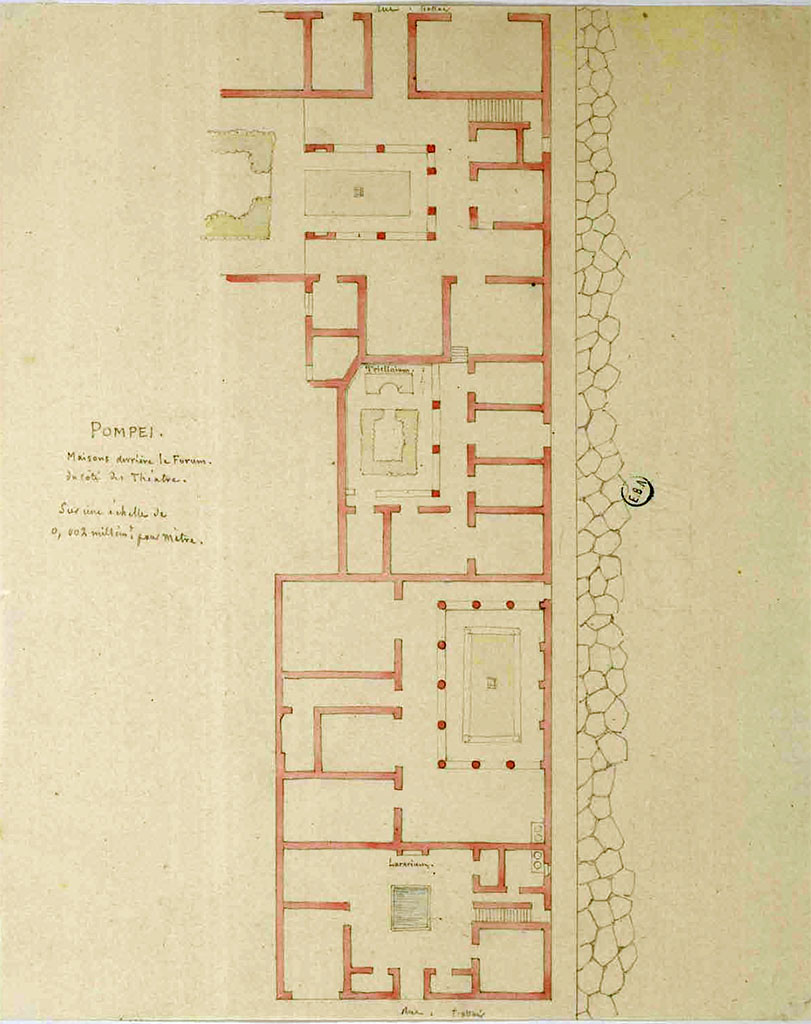
VIII.3.14 Pompeii. Entrance doorway at top, including (lower) VIII.3.16, 17 and 18.
Note on painting: Pompéi, maisons derrière le Forum, du côté des théâtres.
See Lesueur, Jean-Baptiste Ciceron. Voyage en
Italie de Jean-Baptiste Ciceron Lesueur (1794-1883), pl. 7.
See Book on INHA reference INHA NUM PC 15469 (04) « Licence Ouverte / Open Licence » Etalab
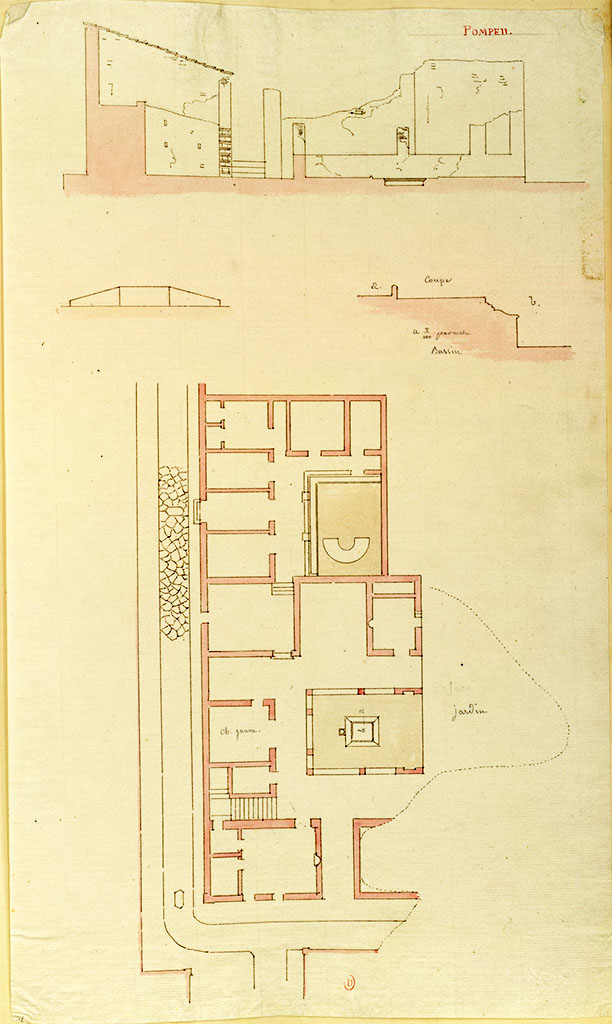
VIII.3.14 and VII.3.15 Pompeii. Mai 1823?
Undated
cross sections and plan of the two houses, linked at the time, and only partly
excavated.
The
INHA web site records:
Annotations par Chenavard : "coupe",
"bassin", "ch. Jaune", "bassin".
Dans la partie supérieure du feuillet, coupe nord-sud sur
l'atrium de la Casa della Regina Carolina.
Au-dessous, coupe du stibadium dans le
jardin.
A droite, profil de la moulure de l'impluvium de marbre.
Dans la partie inférieure du feuillet, plan de la même
maison.
Le document semble reproduit.
Signé : monogramme
See Chenavard, Antoine-Marie (1787-1883) et al. Voyage
d'Italie, croquis Tome 3, pl. 94.
INHA Identifiant
numérique : NUM MS 703 (3). See Book
on INHA
Document placé sous « Licence
Ouverte / Open
Licence » Etalab
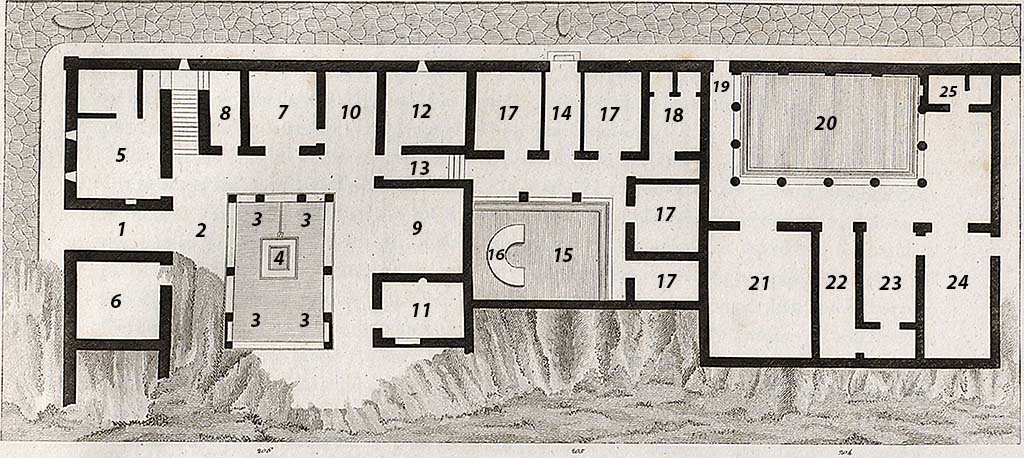
VIII.3.14 Pompeii, on left, linked by steps with VII.3.15, in centre. pre-1824.
Plan by Mazois of area on south side of Insula 3, in Reg. VIII. North is at the bottom on this plan.
On the right of the
plan, with the entrance at 19, (now numbered VIII.3.16) Mazois describes the
peristyle area of the house linked to VIII.3.18.
See Mazois, F., 1824. Les Ruines de Pompei : Second
Partie. Paris : Firmin Didot, p. 50 pl. XII, fig. I.
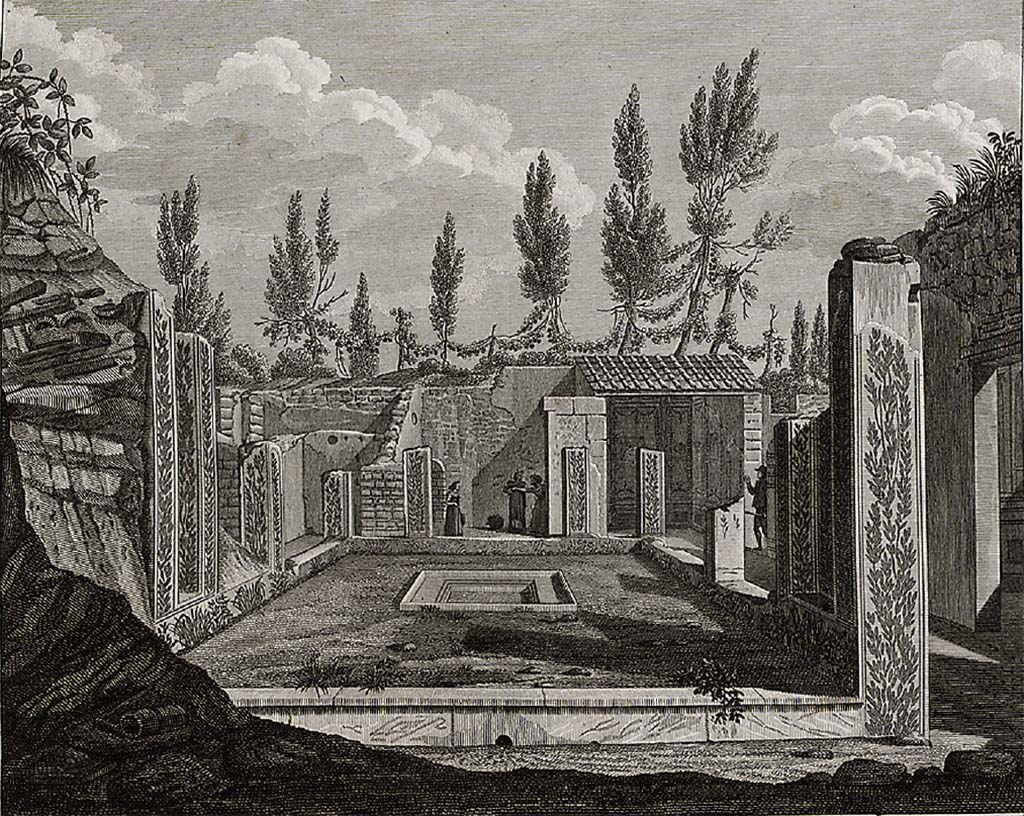
VIII.3.14 Pompeii. pre-1824. Drawing by Mazois, looking south across Corinthian atrium in its actual state.
At the south end (with the figures) would be the oecus 7, and next to it on right the ala 10, with well decorated walls.
On the right is the doorway to the cubiculum/lararium 11.
Next to that, but out of sight, is the tablinum 9 and beyond that, where the single figure is standing, is corridor 13 which links to the next house.
See Mazois, F., 1824. Les Ruines de Pompei : Second
Partie. Paris : Firmin Didot, p. 50 pl. XII, fig. III.
According to Mazois –
“It is only partly excavated: however, this excavation deserves to be completed, because the paintings and decorations found there are of the best taste and a beautiful execution.
This
dwelling has an entrance corridor 1, which leads to a Corinthian atrium 2,
formed by pilasters on a pluteus or support wall, that surrounded the
uncovered part of cavaedium 3. In the centre is a marble basin 4, by means of
which rainwater is collected, and which at the same time serves as a basin for
a small fountain whose lead pipes have been found.
The
kitchen 5, is found near to the entrance; several rooms 6, 7, 8, 12, are
distributed around the atrium.
Facing
the entrance corridor is the tablinum 9.
One of the ala, numbered 10, was uncovered; it is decorated with paintings as rich as they are elegant, and whose conservation is perfect.
Next to the tablinum
is the lararium 11, which is second to room 10 for the delicacy and brilliance
of its painted decorations.
Passageway 13 leads
to another part of the house which could be considered, if necessary, as a
separate dwelling; for it is very common in Pompeii to see several houses of
the same insula having communicating doors.
This main building has everything that can constitute a complete dwelling: an entrance 14; a courtyard 15; rooms 17 and 18, for living quarters; a kitchen 19. However, I would think to look at it as an annexe of the big house; then the courtyard 15, covered with a trellis and decorated with a table bed in masonry 16, would serve as a summer dining room."
See Mazois, F., 1824. Les Ruines de Pompei : Second
Partie. Paris : Firmin Didot, p. 49-50.
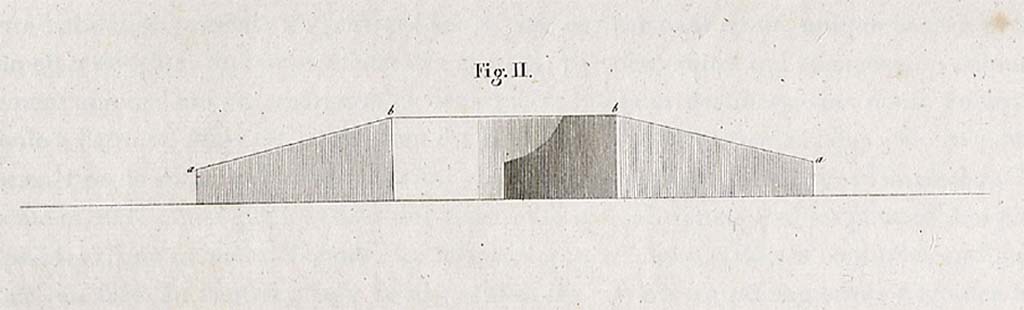
VIII.3.14 Pompeii. pre-1824. Drawing by Mazois of the sigma 16.
This table bed, of a
circular shape, is what was called a sigma; there are portable ones
"Accept this sigma as a circular form”, said Martial; “they hold eight
people." In the centre, a monopodium, or round table with a single foot,
is placed; several marble ones have been found in the excavations.
See Mazois, F., 1824. Les Ruines de Pompei : Second
Partie. Paris : Firmin Didot, p. 50 pl. XII, fig. II.
The
third part of Fig I offers the plan of a house with the entry no, 19, straight and
not very big, which seems to announce a dwelling strongly ordinary: however,
with a courtyard 20, surrounded by columns, which are remarkably rendered, I
would like to conjecture that this is the private part of a much bigger
dwelling, which was linked by a door which one can see in number 24. (He
refers here to the doorway of the tablinum into the atrium of VIII.3.18). Number 21 is a large room in the north-east
corner of the peristyle: numbers 22, 23, 25 would have been for domestic use.”
See Mazois, F., 1824. Les Ruines de Pompei : Second
Partie. Paris : Firmin Didot, p. 50 pl. XII, fig. I.
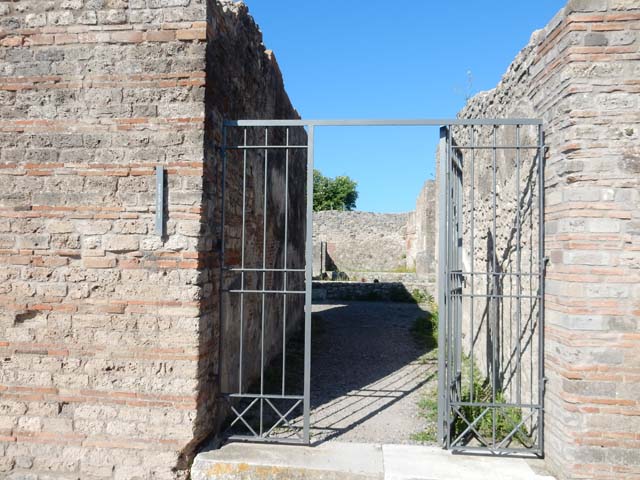
VIII.3.14 Pompeii. May 2016. Looking west to entrance doorway. Photo courtesy of Buzz Ferebee.
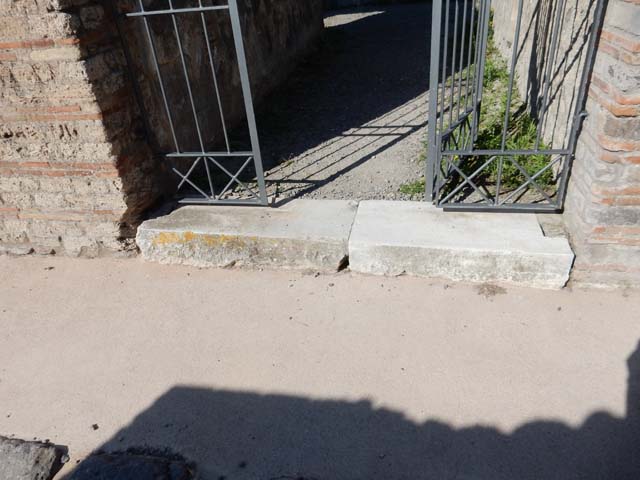
VIII.3.14 Pompeii. May 2016. Step to entrance doorway. Photo courtesy of Buzz Ferebee.
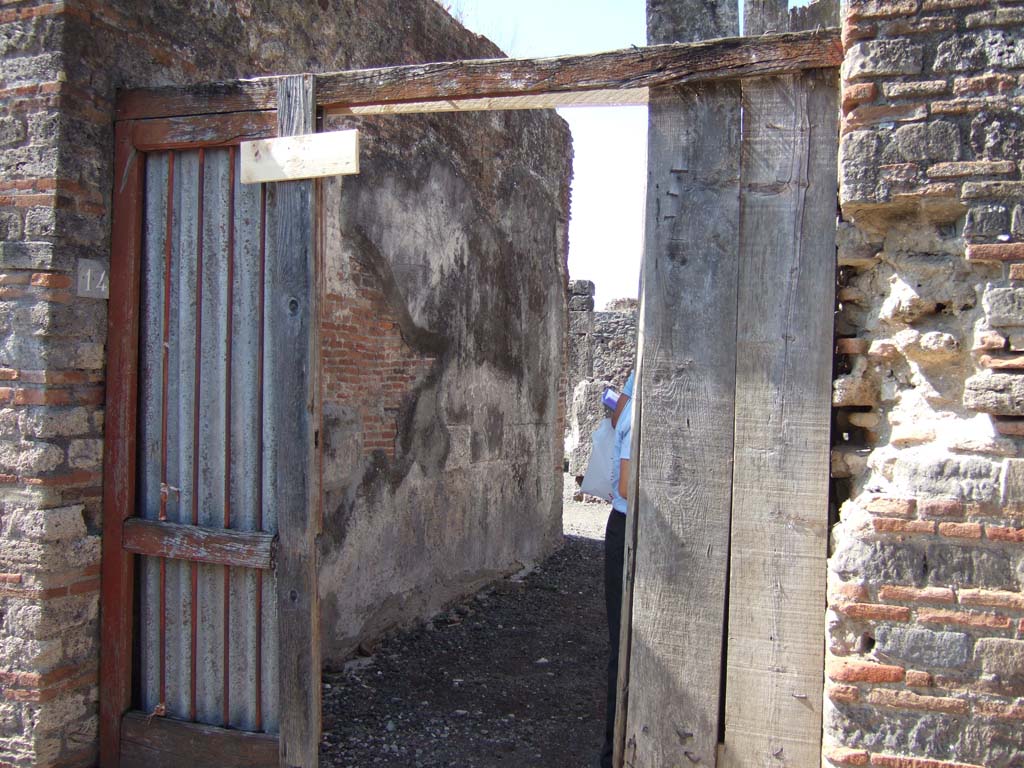
VIII.3.14 Pompeii. September 2005. Looking west towards entrance doorway and south wall of fauces/corridor.
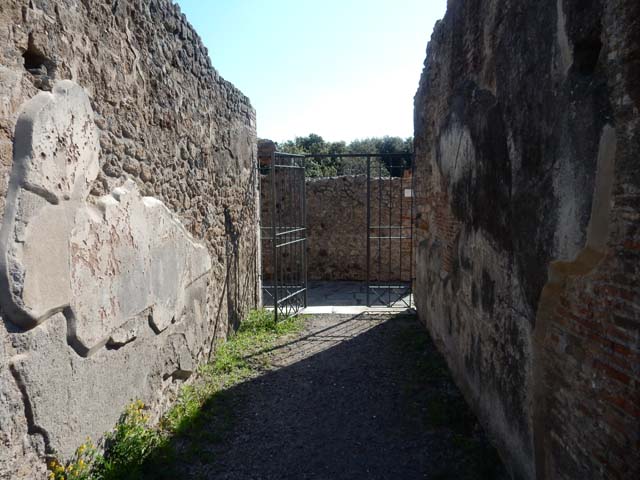
VIII.3.14 Pompeii. May 2016. Looking east along entrance fauces towards entrance doorway. Photo courtesy of Buzz Ferebee.
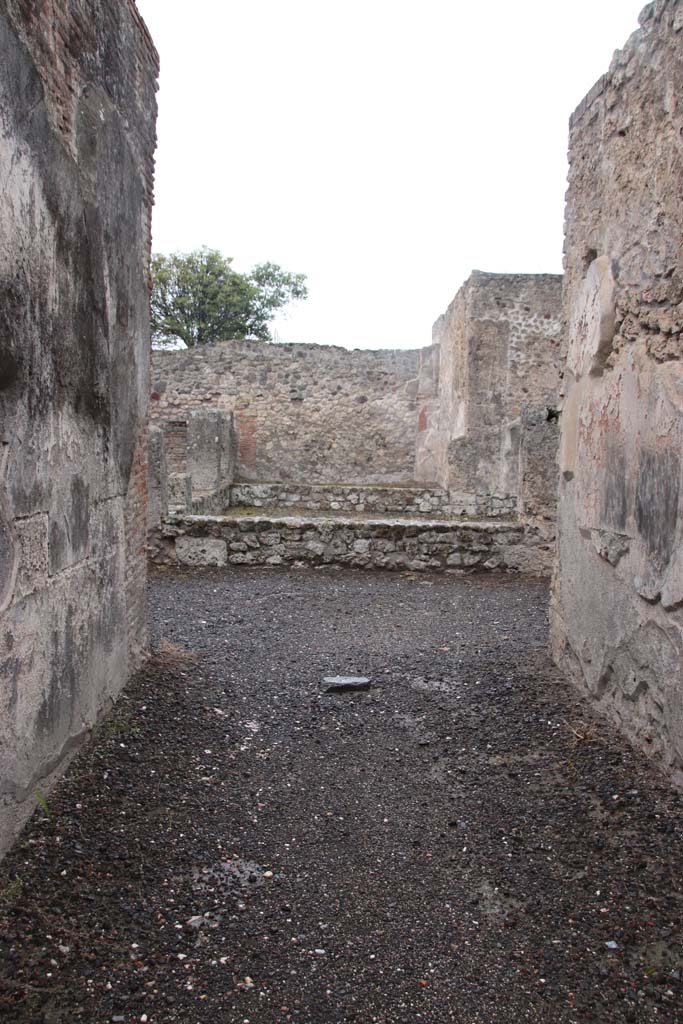
VIII.3.14 Pompeii. October 2020.
Looking west along entrance fauces to atrium, and across to tablinum. Photo courtesy of Klaus Heese.
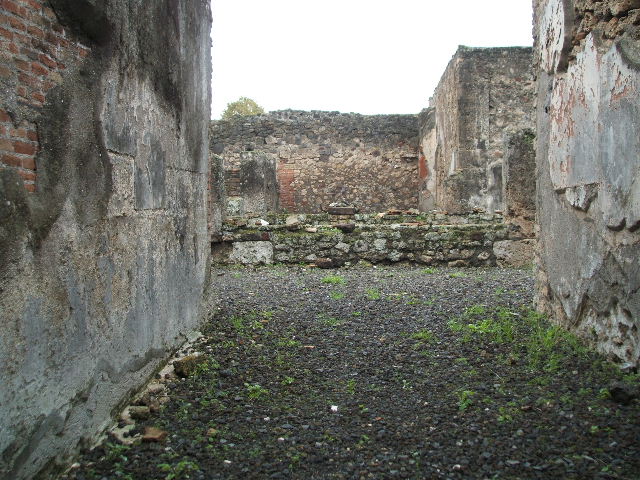
VIII.3.14 Pompeii. May 2005. Looking west along entrance fauces to atrium, and across to tablinum.
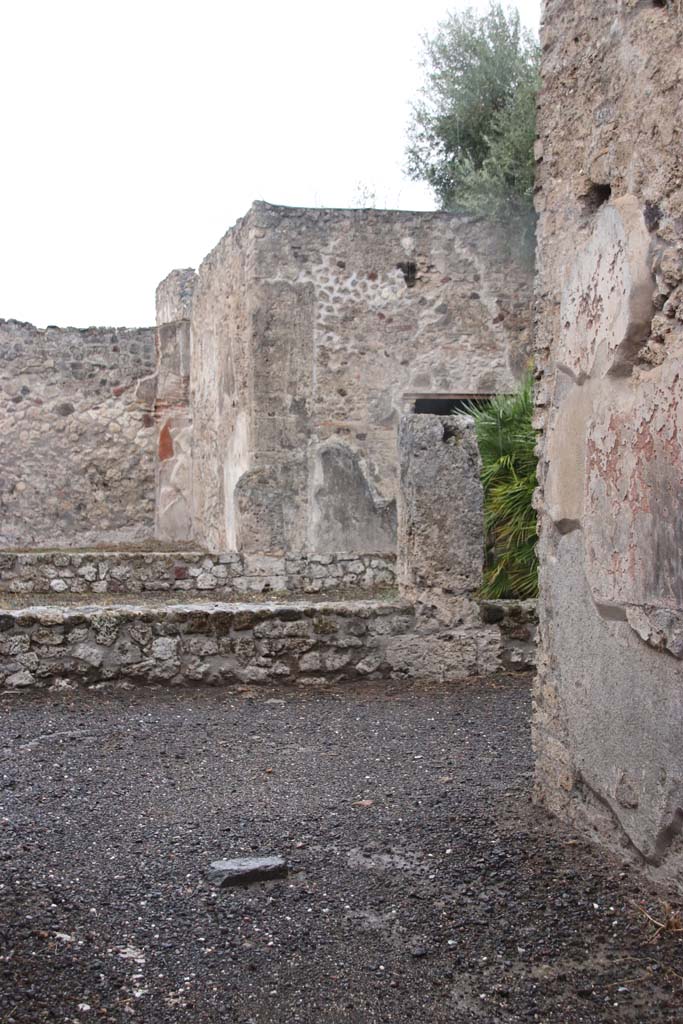
VIII.3.14 Pompeii. October 2020.
Looking towards north side of entrance corridor, and atrium. Photo courtesy of Klaus Heese.
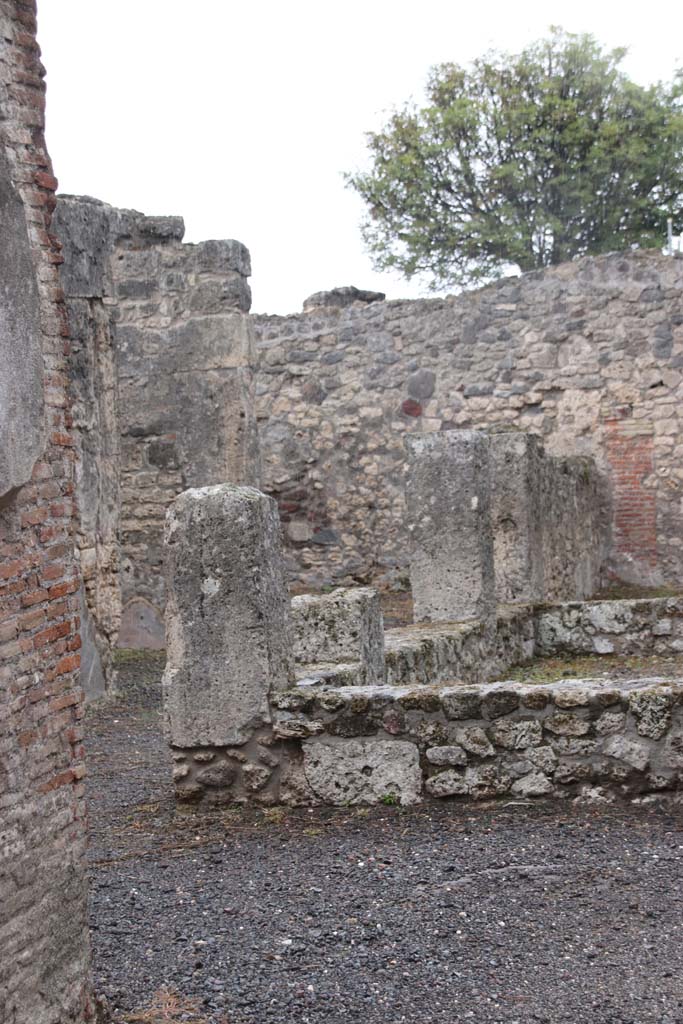
VIII.3.14 Pompeii. October 2020.
Looking west across south side of atrium. Photo courtesy of Klaus Heese.
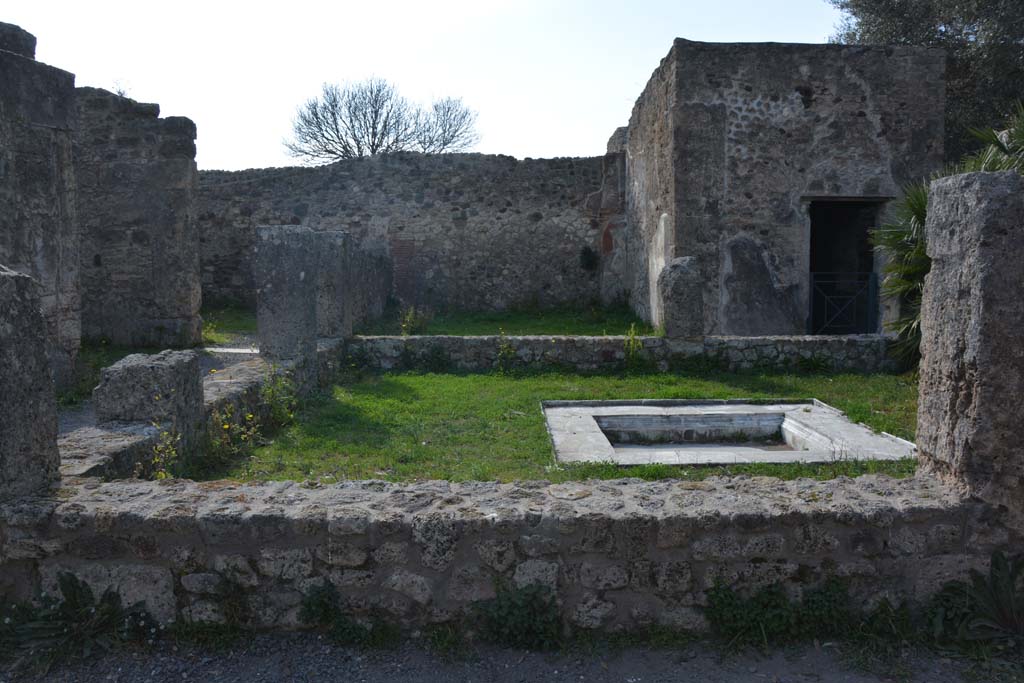
VIII.3.14 Pompeii. March 2019. Looking west across atrium.
Foto Annette Haug, ERC Grant 681269 DÉCOR.
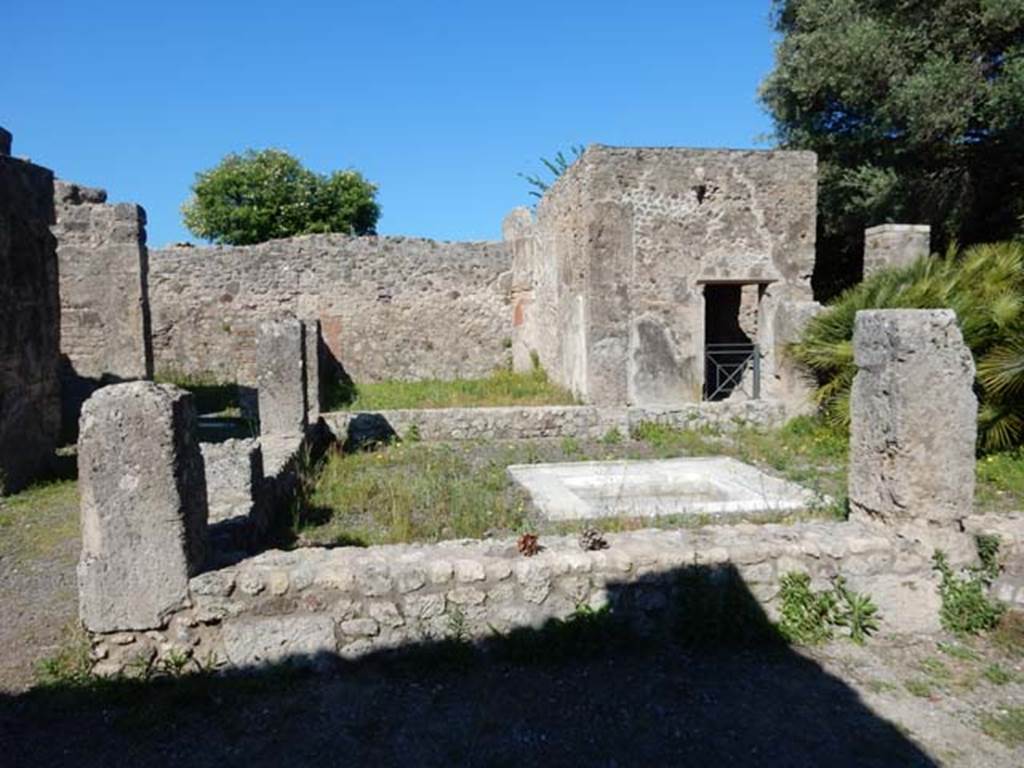
VIII.3.14 Pompeii. May 2016. Looking west across atrium. Photo courtesy of Buzz Ferebee.
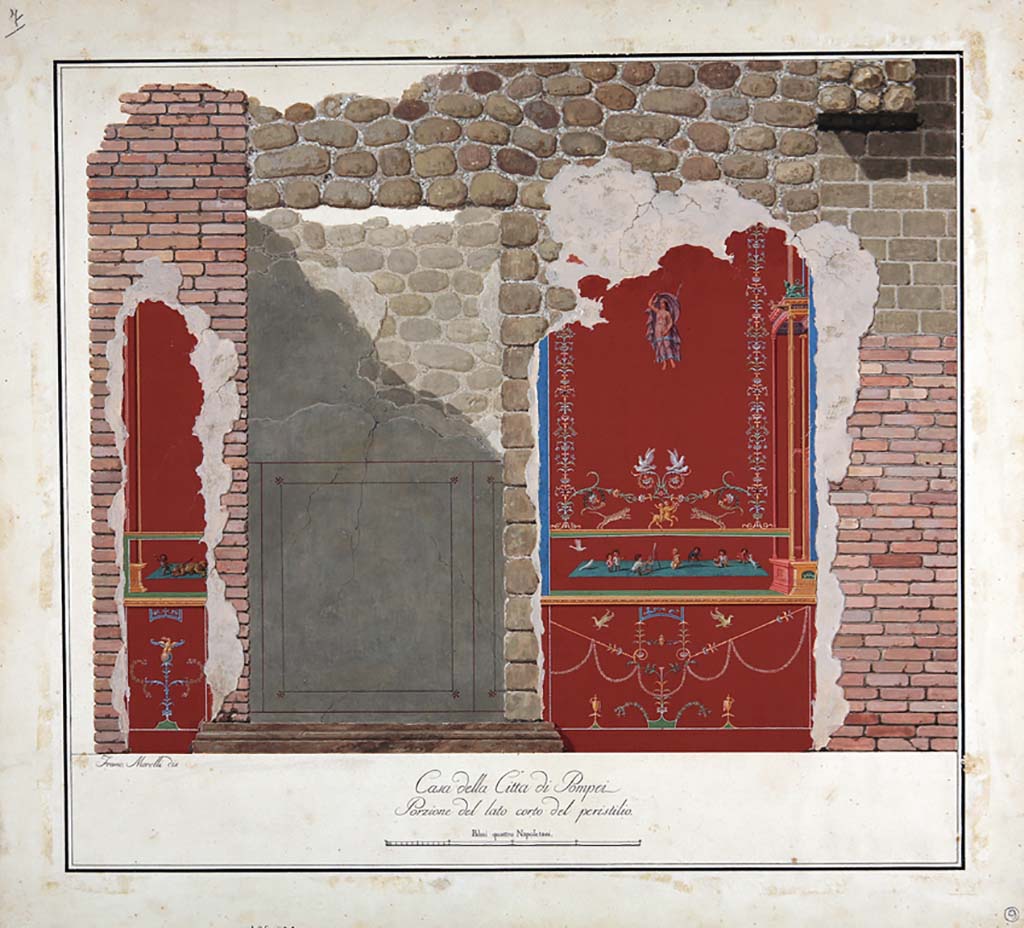
VIII.3.14 Pompeii. C. 1806. Painting by F. Morelli of a wall in the atrium/short wall of the peristyle.
On the left is a pygmy hunting a lion. On the right is a pygmy painter, Helbig 1537.
See Carratelli,
G. P., 1990-2003. Pompei: Pitture e Mosaici: vol. VIII.
Roma: Istituto della enciclopedia italiana, p. 398.
See Helbig, W.,
1868. Wandgemälde der vom
Vesuv verschütteten Städte Campaniens. Leipzig: Breitkopf und Härtel, 1537.
Now in Naples Archaeological Museum. Inventory number ADS 820.
Photo © ICCD. https://www.catalogo.beniculturali.it/
Utilizzabili alle
condizioni della licenza Attribuzione - Non commerciale - Condividi
allo stesso modo 2.5 Italia (CC BY-NC-SA 2.5 IT)
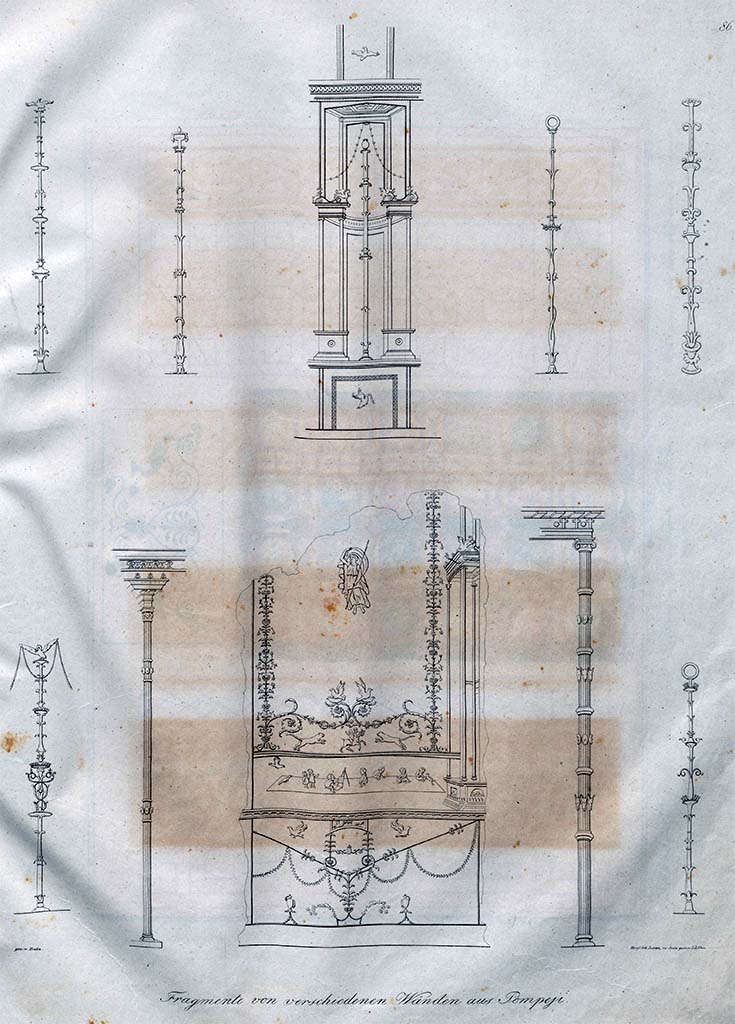
The
central lower drawing is of a wall in the atrium/short wall of the
peristyle showing the predella with the pygmy painter, as painted by Morelli,
above.
See Zahn, W., 1828-29. Die schönsten Ornamente
und merkwürdigsten Gemälde aus Pompeji, Herkulanum und Stabiae: I. Berlin:
Reimer, taf. 86.
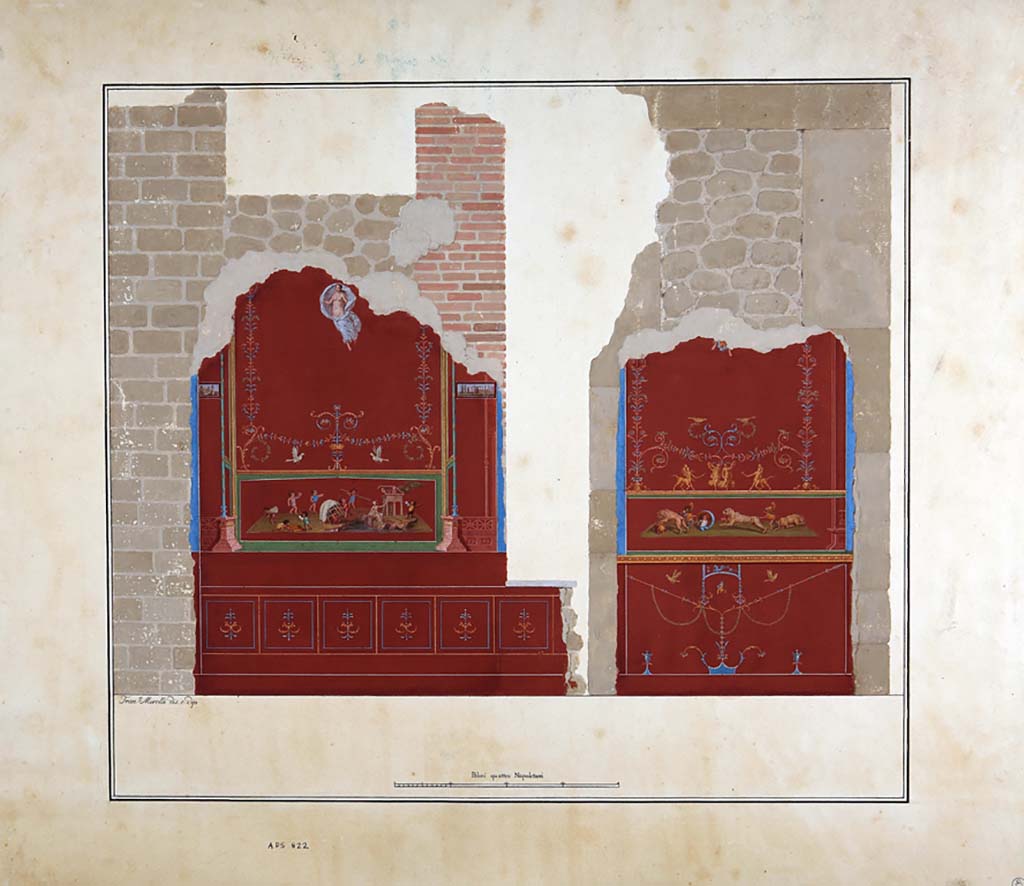
VIII.3.14 Pompeii. C. 1806. Painting by F. Morelli of a wall in the atrium.
On the left are pygmies in a fullonica. On the right are pygmies as gladiators fighting lions.
See Carratelli,
G. P., 1990-2003. Pompei: Pitture e Mosaici: vol. VIII.
Roma: Istituto della enciclopedia italiana, p. 399.
Now in Naples Archaeological Museum. Inventory number ADS 822.
Photo © ICCD. https://www.catalogo.beniculturali.it/
Utilizzabili alle
condizioni della licenza Attribuzione - Non commerciale - Condividi
allo stesso modo 2.5 Italia (CC BY-NC-SA 2.5 IT)
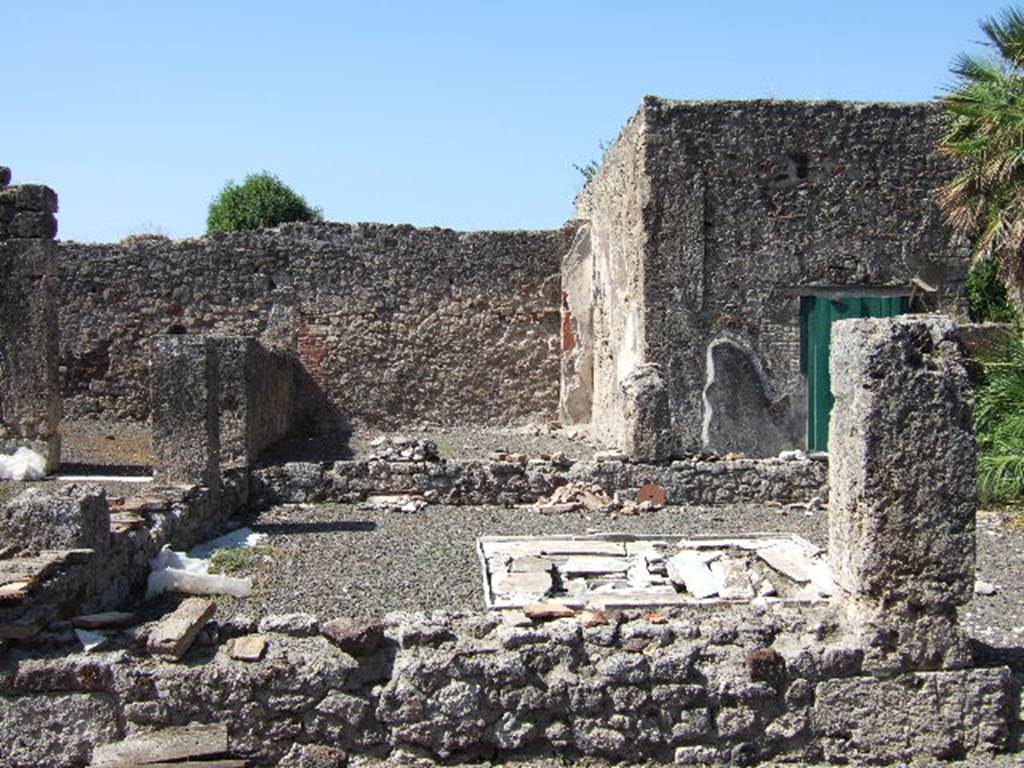
VIII.3.14 Pompeii. September 2005. Looking west across atrium towards tablinum.
According to Fiorelli, the roof of the atrium was held up by the pilasters, between which was a pluteus (wall) enclosing the impluvium in the centre.
Eschebach counted 11 pilasters.
See Pappalardo, U., 2001. La Descrizione di Pompei per
Giuseppe Fiorelli (1875). Napoli: Massa Editore.
(p.124)
See Eschebach, L., 1993. Gebäudeverzeichnis und Stadtplan der antiken Stadt Pompeji. Köln: Böhlau. (p.365).
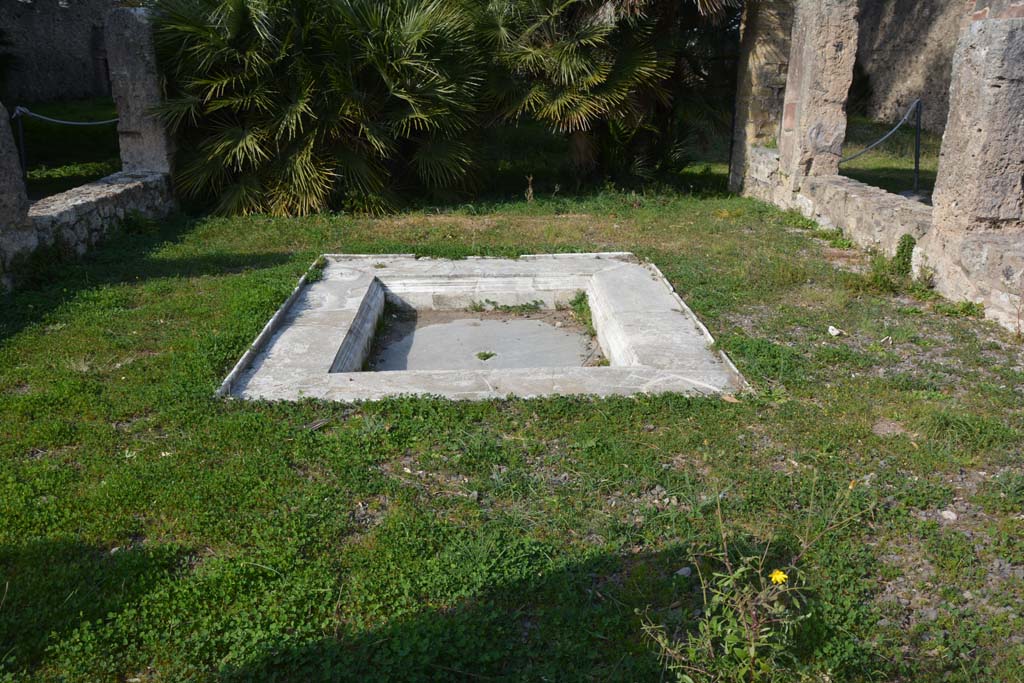
VIII.3.14 Pompeii. March 2019. Looking north across impluvium.
Foto Annette Haug, ERC
Grant 681269 DÉCOR.
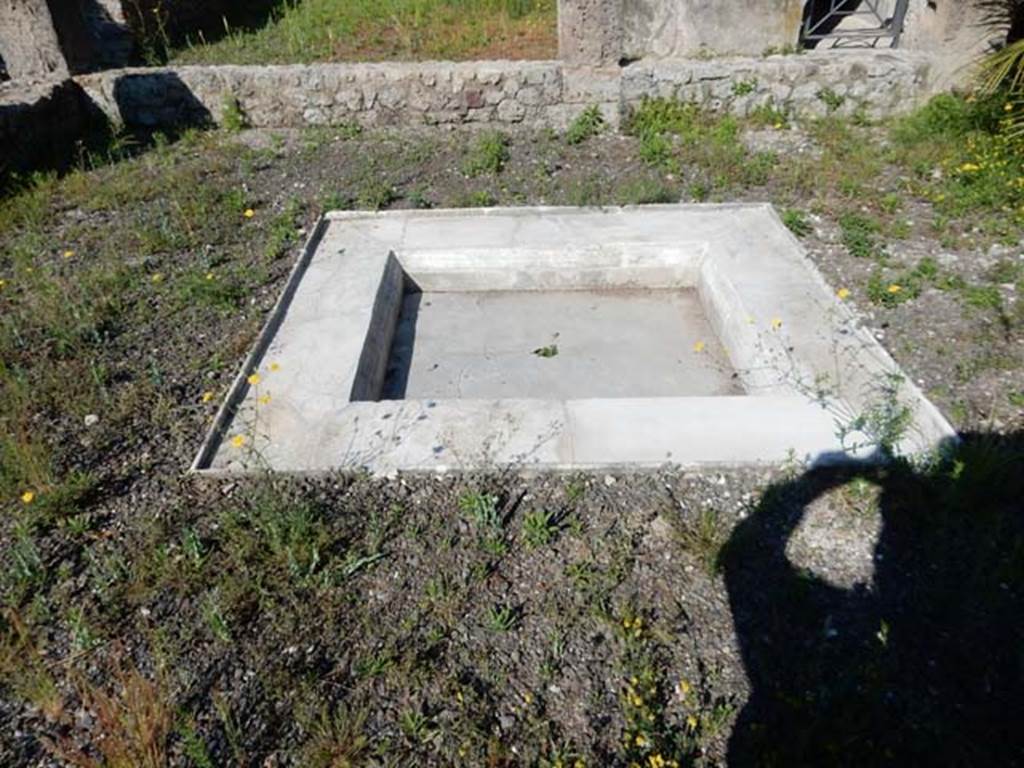
VIII.3.14 Pompeii. May 2016. Impluvium in atrium, after restoration. Photo courtesy of Buzz Ferebee.
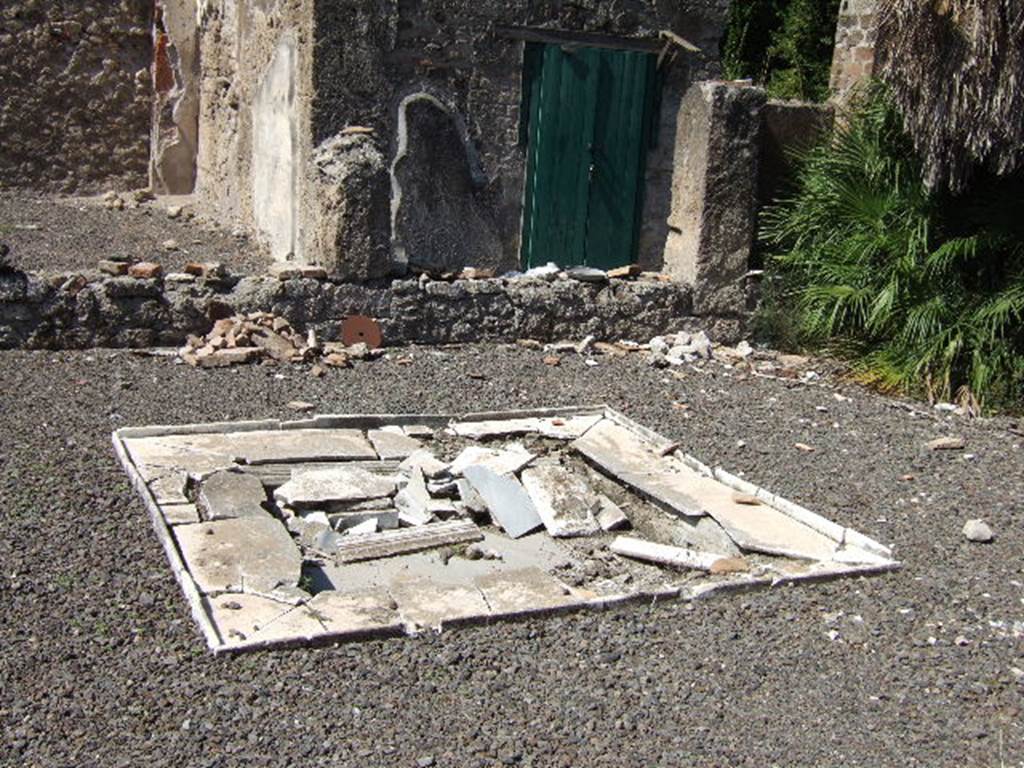
VIII.3.14 Pompeii. September 2005. Impluvium in atrium.
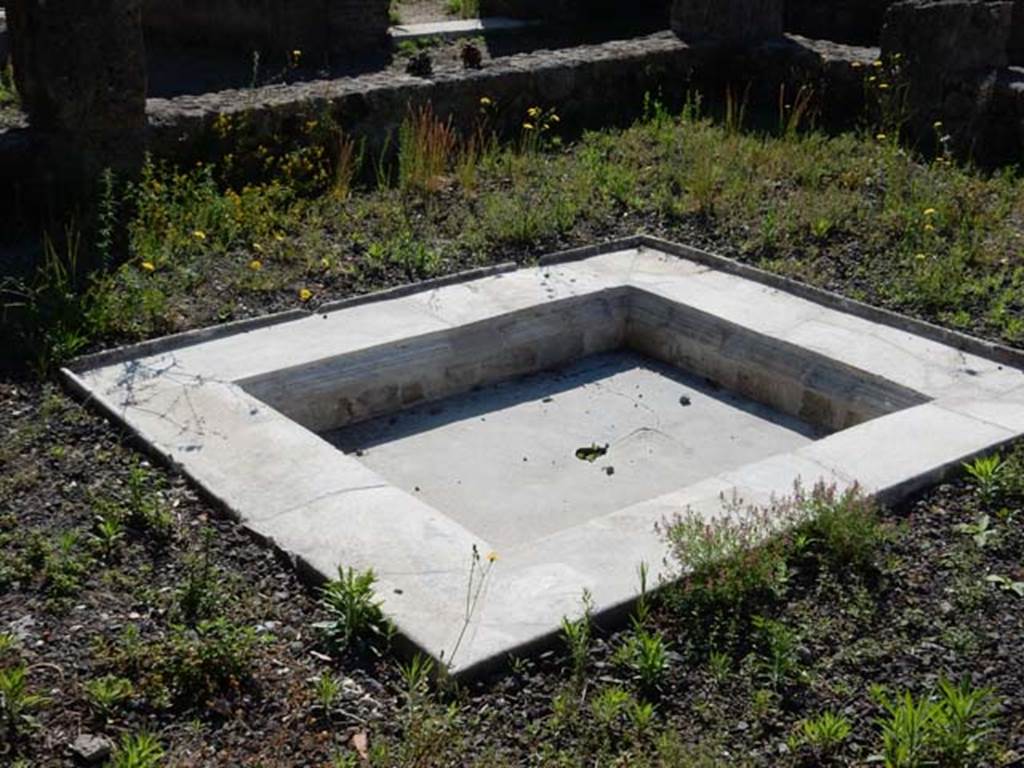
VIII.3.14 Pompeii. May 2016. Impluvium in atrium. Photo courtesy of Buzz Ferebee.
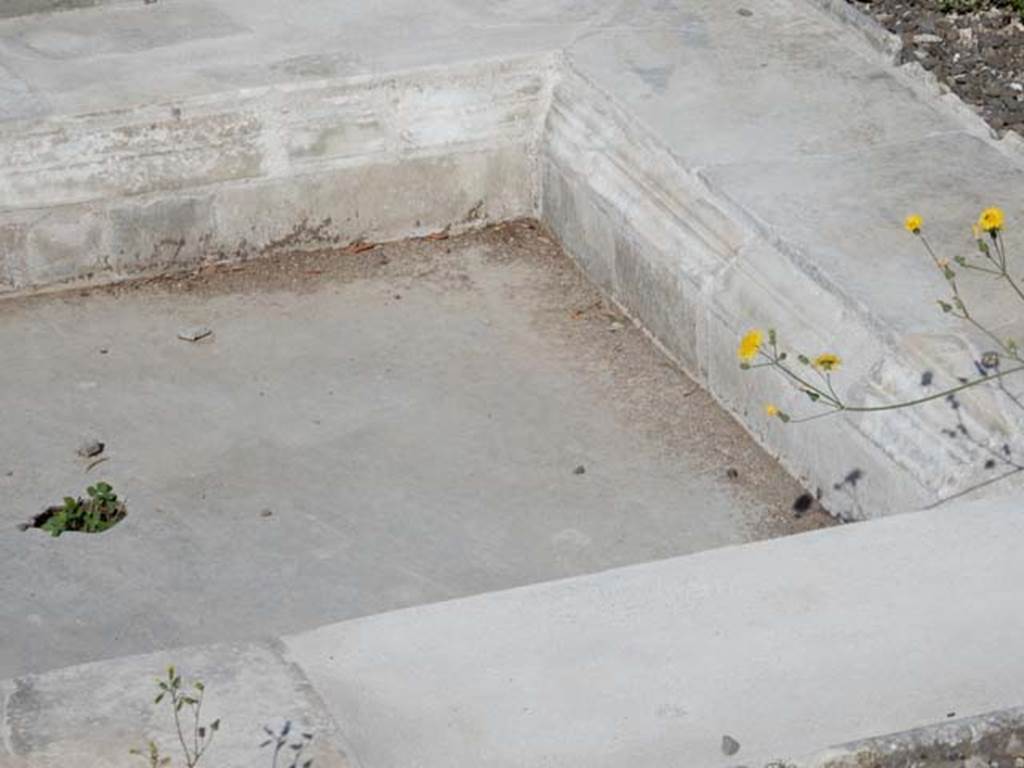
VIII.3.14 Pompeii. May 2016. Detail of impluvium. Photo courtesy of Buzz Ferebee.
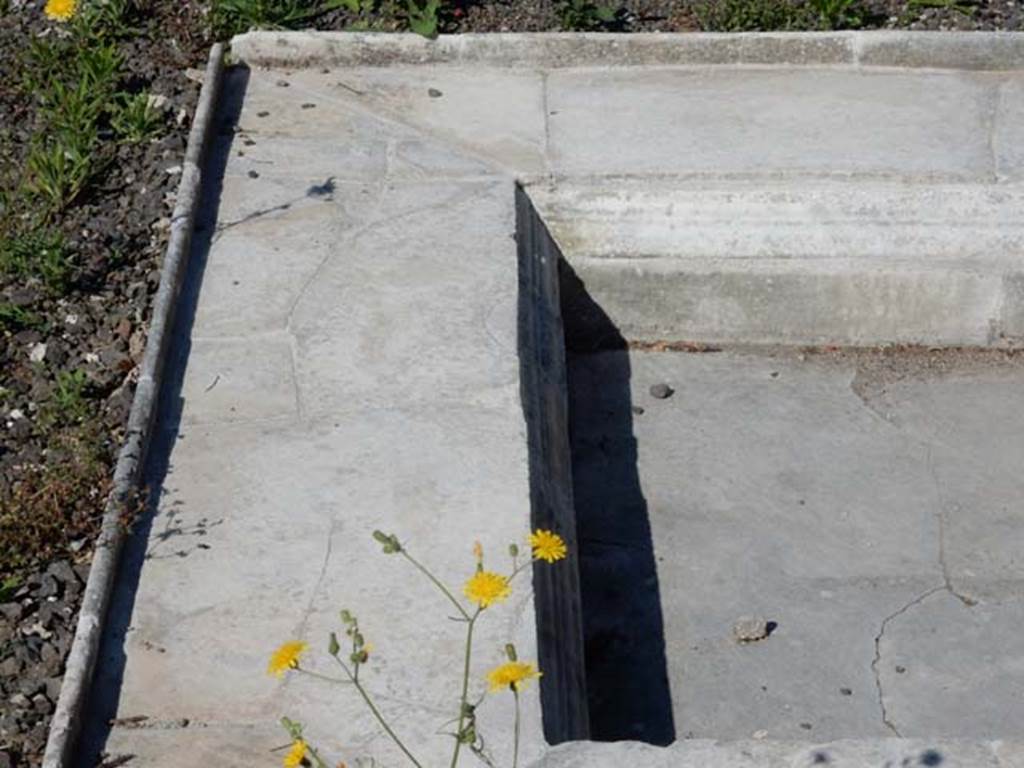
VIII.3.14 Pompeii. May 2016. Detail of impluvium in atrium. Photo courtesy of Buzz Ferebee.
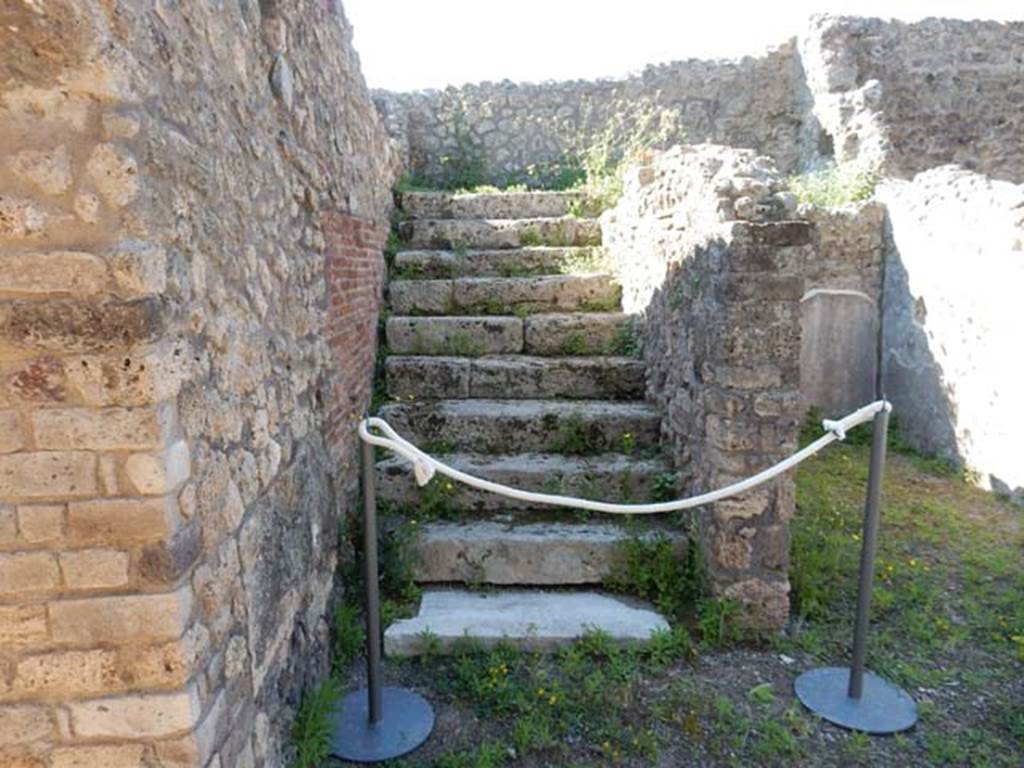
VIII.3.14 Pompeii. May 2016. Steps to upper floor. Photo courtesy of Buzz Ferebee.
According to Fiorelli –
“………..on the opposite side of the atrium were the steps to the
upper floor, followed by a storeroom, made smaller in later times, a spacious
cubiculum and an ala. In this room, (the
ala) two paintings were seen, now destroyed: the one representing two
deities of light, that is a young man with a nimbus having a star on his head,
clutching two rods, next to a woman with a diadem and holding a sceptre,
between them was a Cupid: the other Perseus and Andromeda.
The heads (medallions?) of Pan and Bacchus remain around the
walls, and that of a woman with a large fan in the form of a sheet.
See Pappalardo,
U., 2001. La Descrizione di Pompei per
Giuseppe Fiorelli (1875). Napoli: Massa Editore. (p.124)
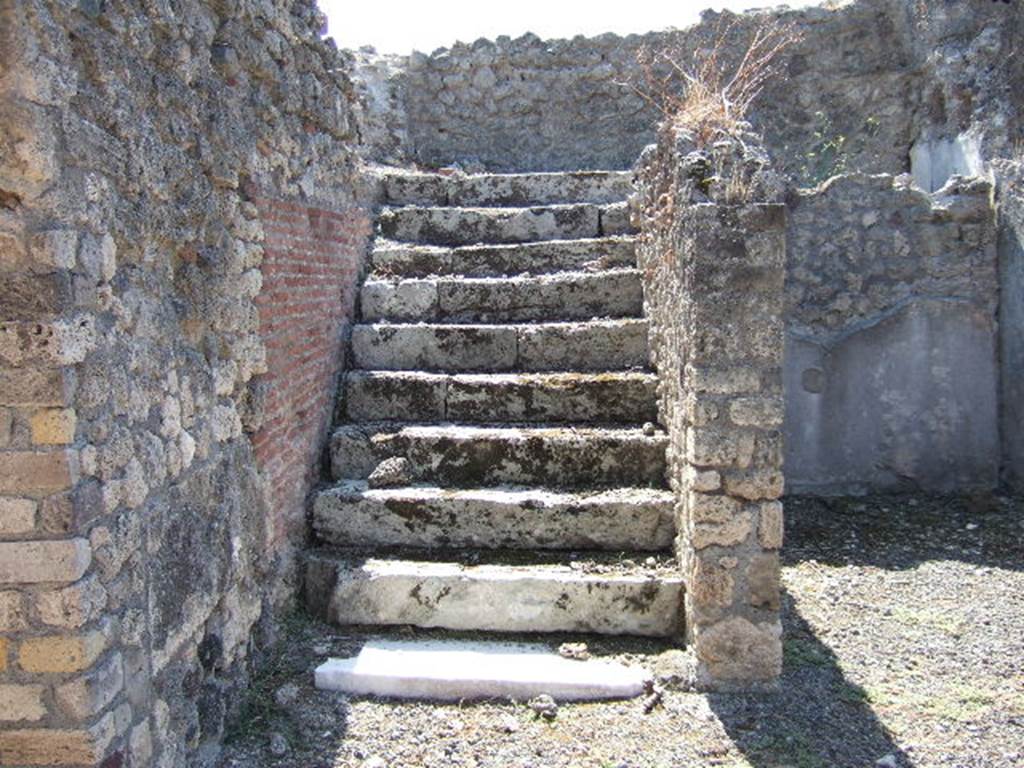
VIII.3.14 Pompeii. September 2005. Steps to upper floor in south-east corner of atrium.
On the extreme left is the doorway to the kitchen, latrine and small storeroom.
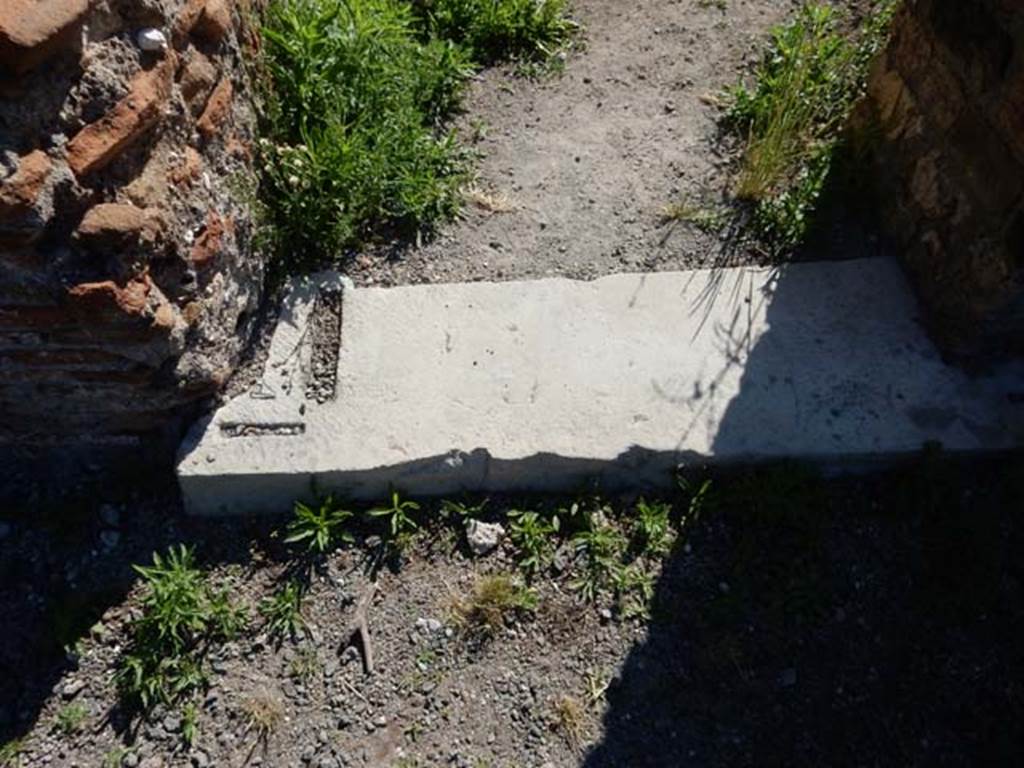
VIII.3.14 Pompeii. May 2016. Doorway threshold to kitchen area. Photo courtesy of Buzz Ferebee.
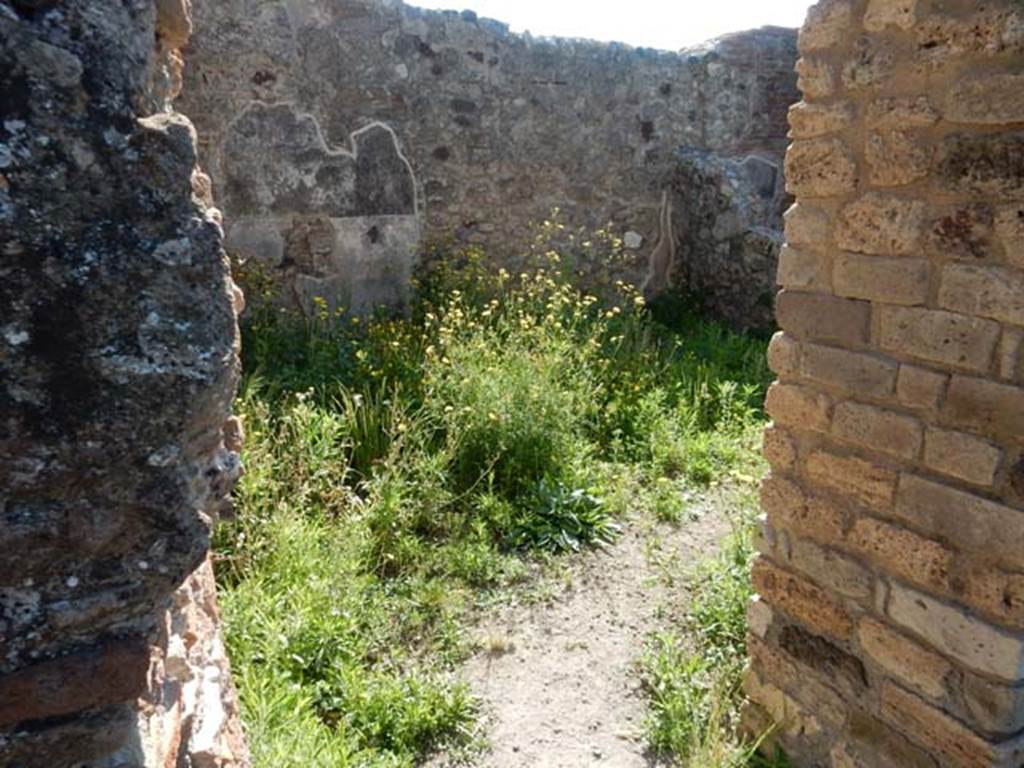
VIII.3.14 Pompeii. May 2016. Looking east into kitchen area. Photo courtesy of Buzz Ferebee.
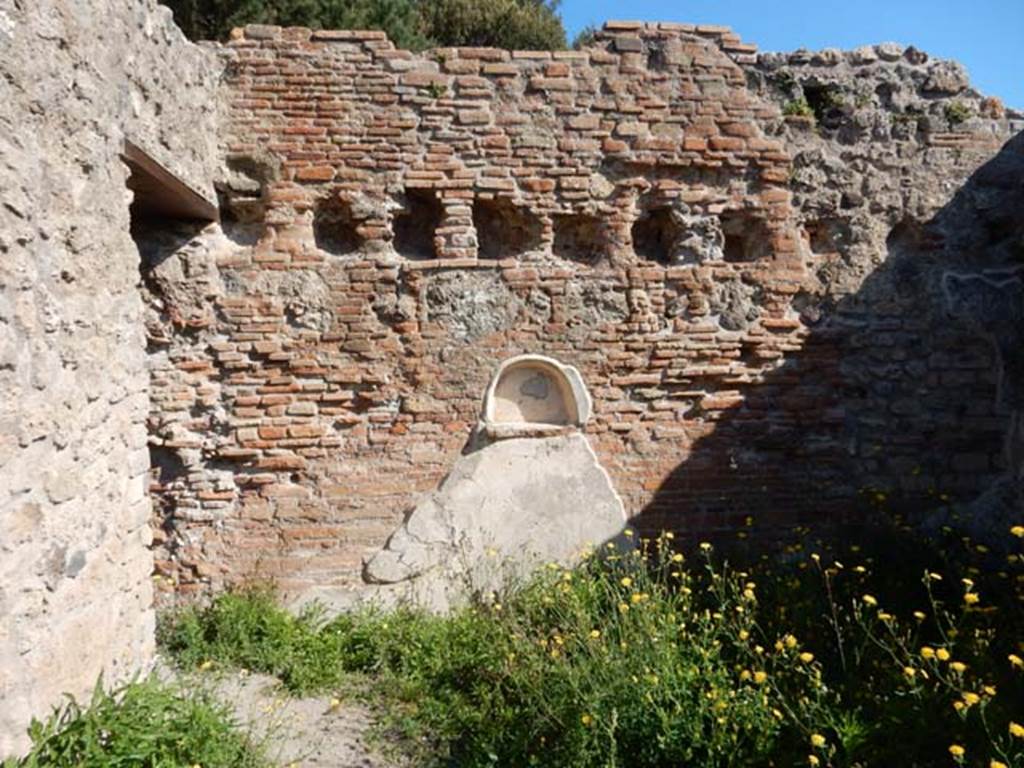
VIII.3.14 Pompeii. May 2016.
North wall of kitchen area, with holes for support beams of the upper floor. Photo courtesy of Buzz Ferebee.
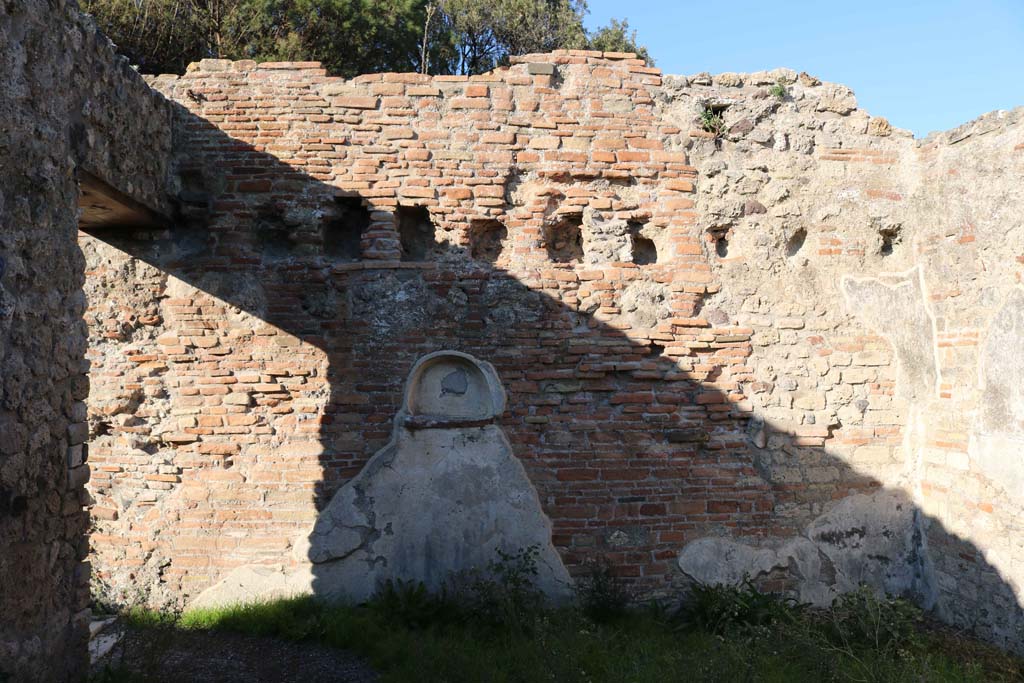
VIII.3.14 Pompeii.
December 2018. Looking towards north wall of kitchen, with niche. Photo
courtesy of Aude Durand.
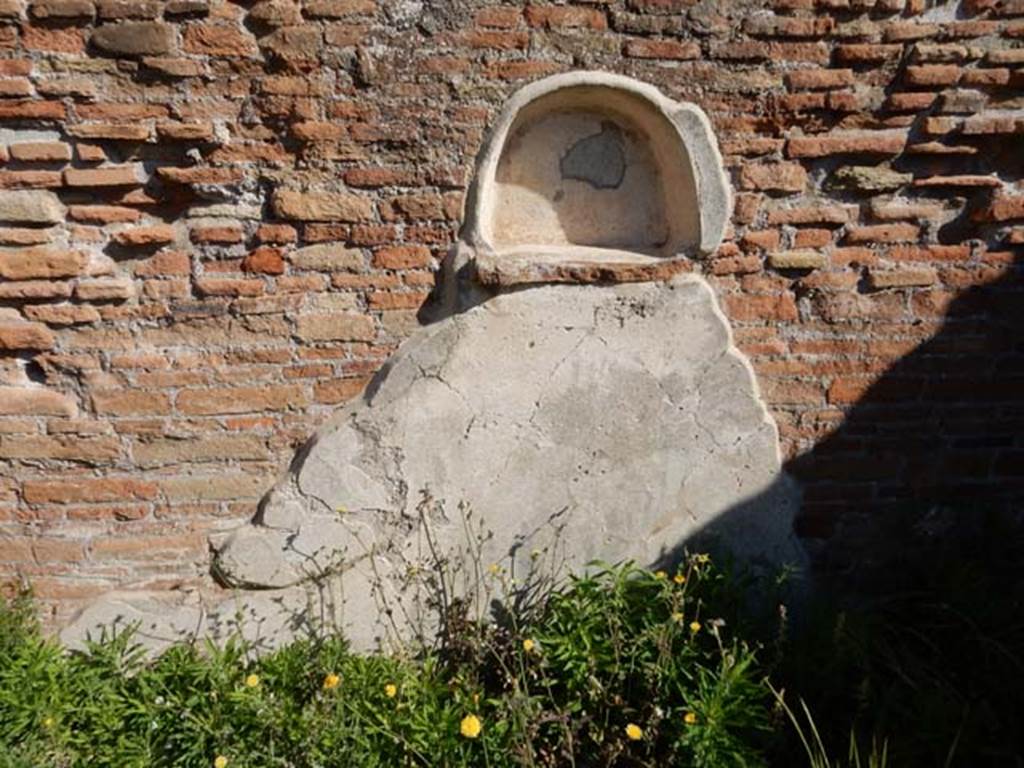
VIII.3.14 Pompeii. May 2016. Niche in north wall of kitchen area. Photo courtesy of Buzz Ferebee.
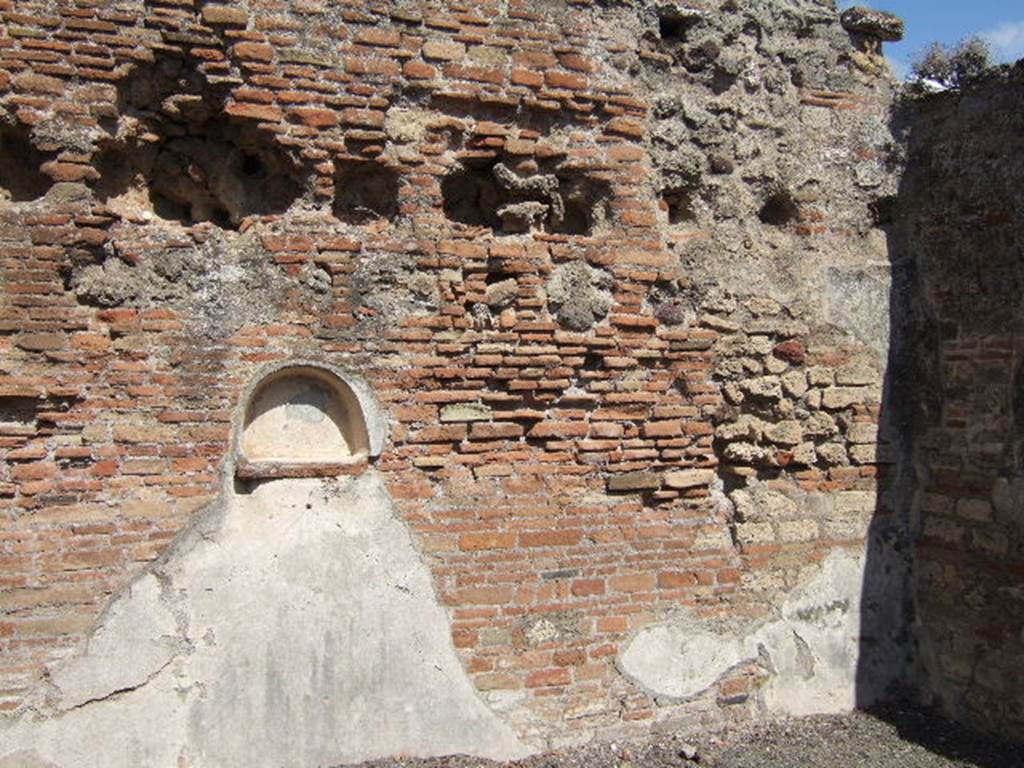
VIII.3.14 Pompeii. September 2005. North wall of kitchen with niche.
According to Boyce, in the north wall was an arched niche.
Its floor was a projecting tile, its walls were coated with white stucco outlined with red stripes.
See Boyce G. K., 1937. Corpus of the Lararia of Pompeii. Rome: MAAR 14. (p.75, no.353).
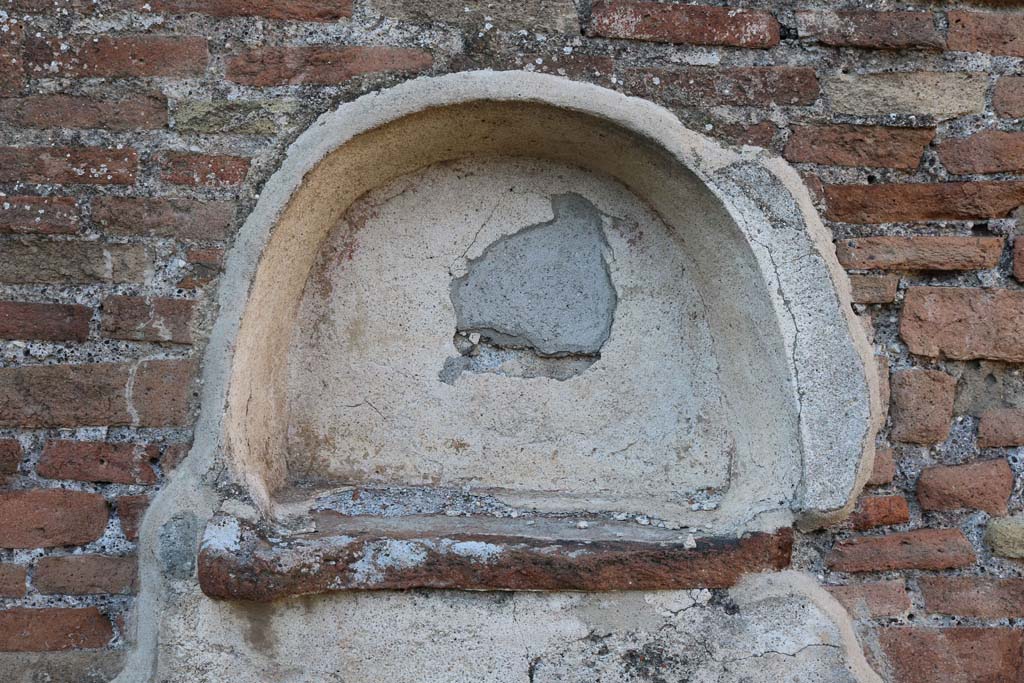
VIII.3.14 Pompeii.
December 2018. Detail of arched niche set into north wall of kitchen. Photo
courtesy of Aude Durand.
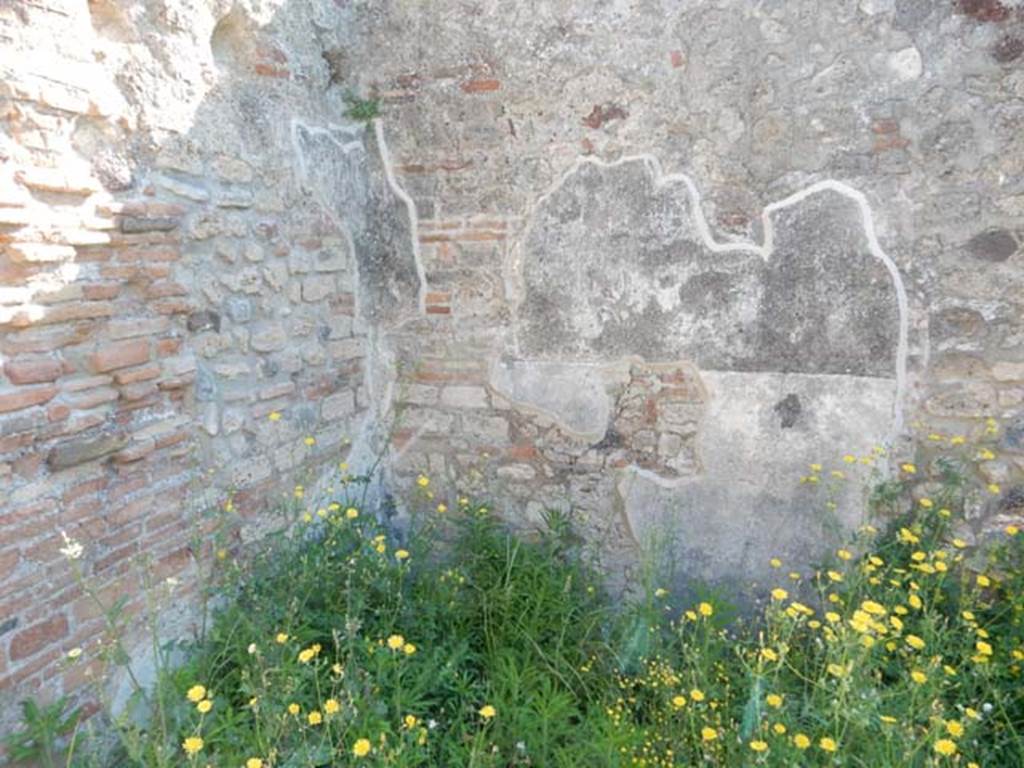
VIII.3.14 Pompeii. May 2016. North-east corner of kitchen area. Photo courtesy of Buzz Ferebee.
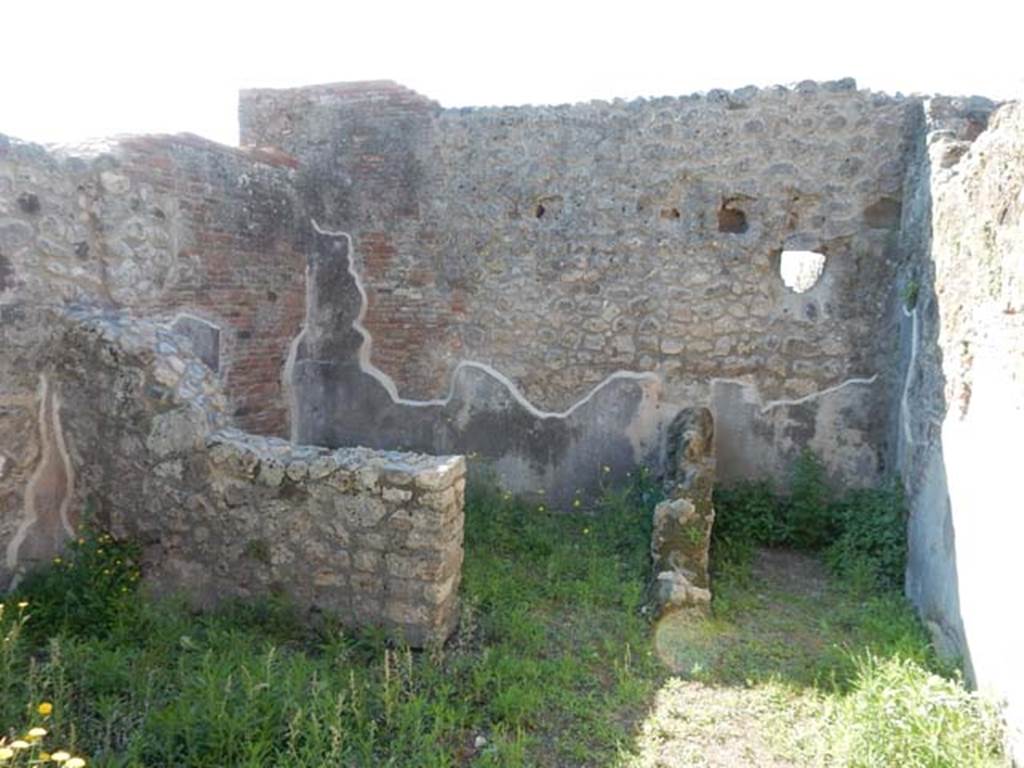
VIII.3.14 Pompeii. May 2016.
Looking south in kitchen area towards small room/storeroom and latrine. Photo courtesy of Buzz Ferebee.
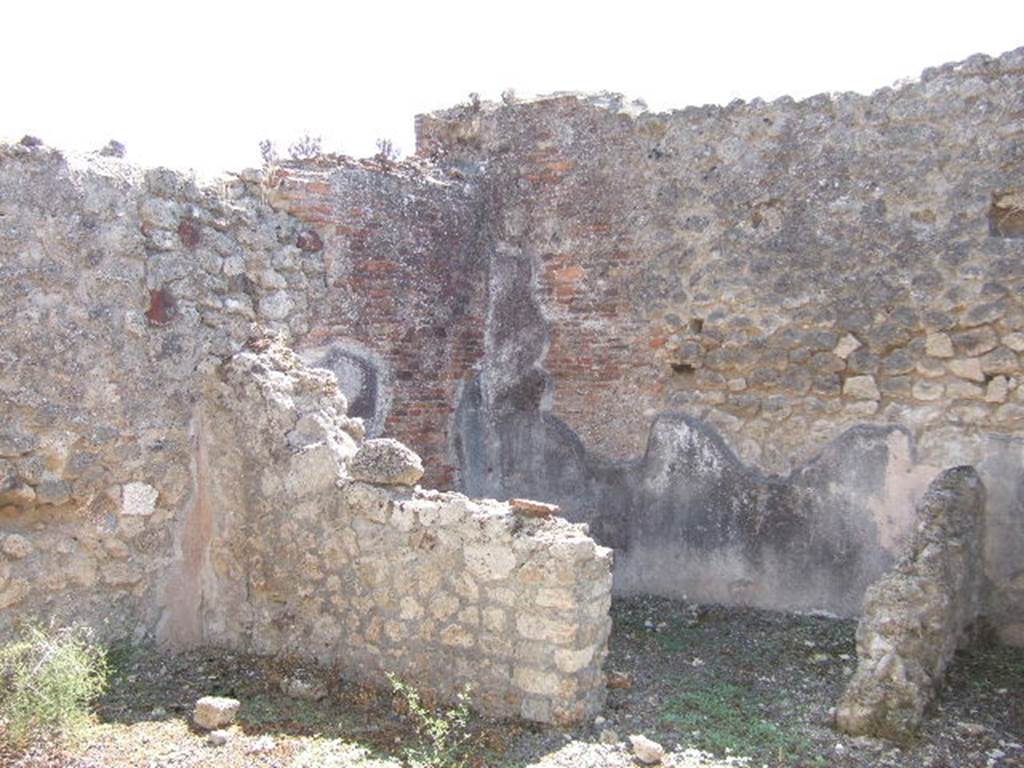
VIII.3.14 Pompeii. September 2005.
Looking south in kitchen towards small storeroom. The latrine is on the extreme right of the photo.
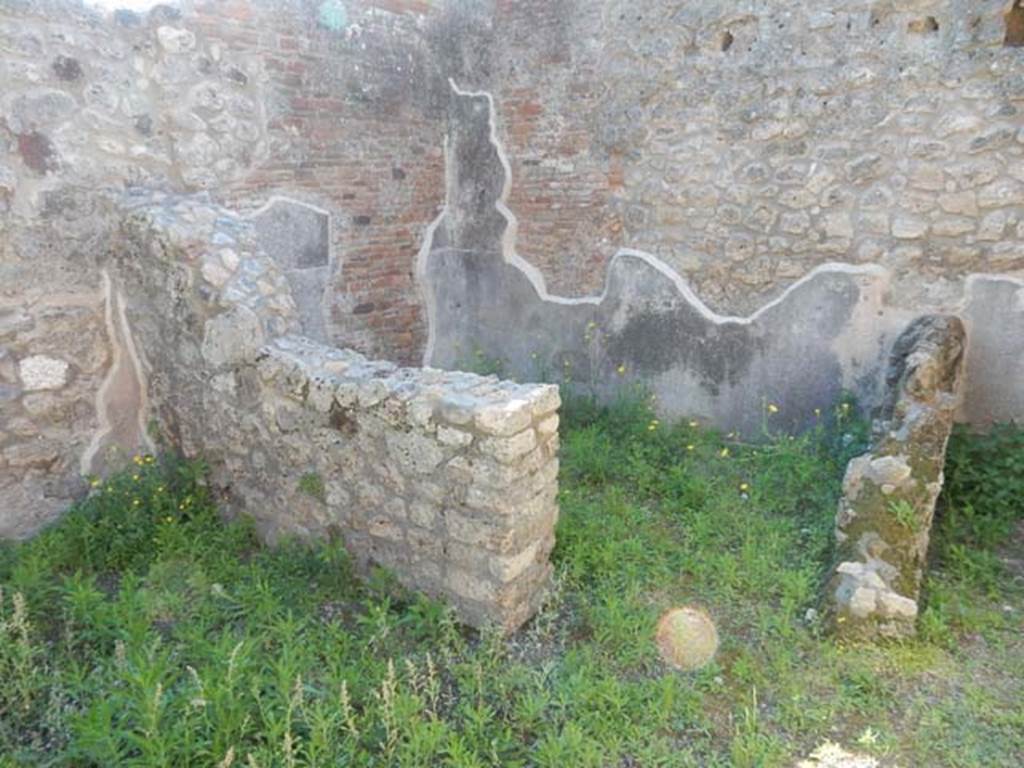
VIII.3.14 Pompeii. May 2016. Small storeroom in kitchen area. Photo courtesy of Buzz Ferebee.
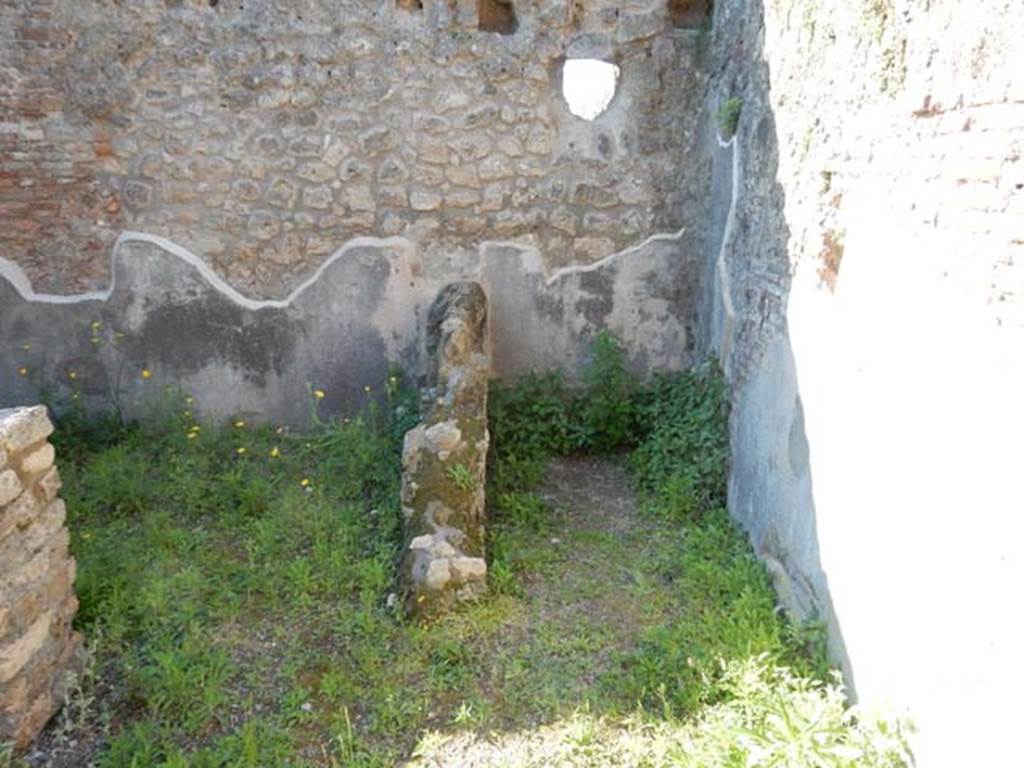
VIII.3.14 Pompeii. May 2016. Latrine, on right. Photo courtesy of Buzz Ferebee.
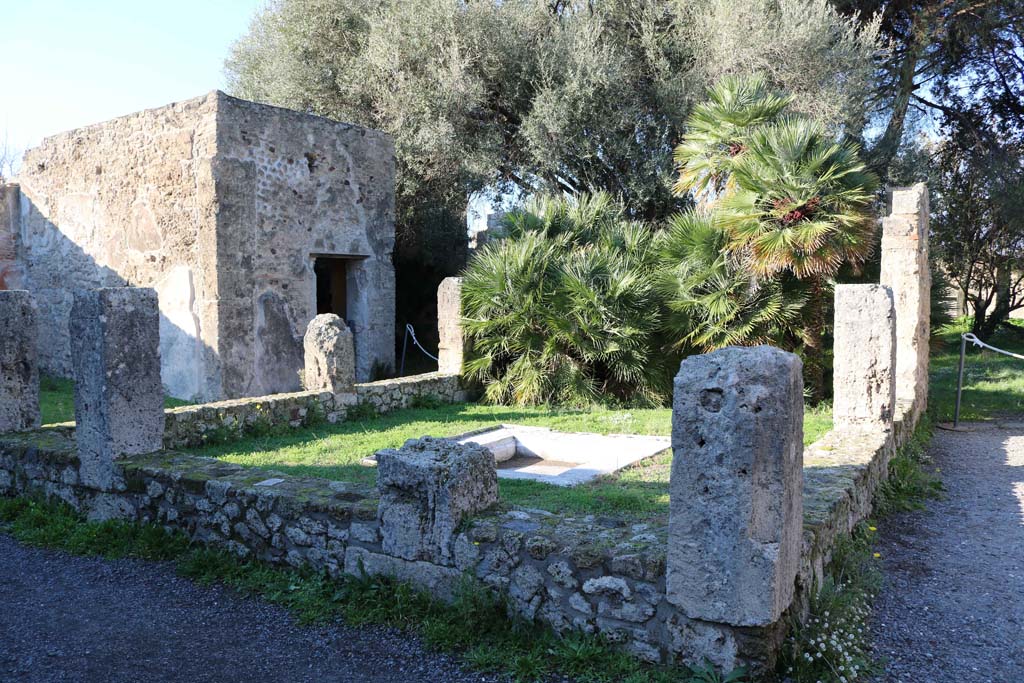
VIII.3.14
Pompeii. December 2018.
Looking north-west across atrium, from south-east
corner near kitchen. Photo courtesy of Aude Durand.
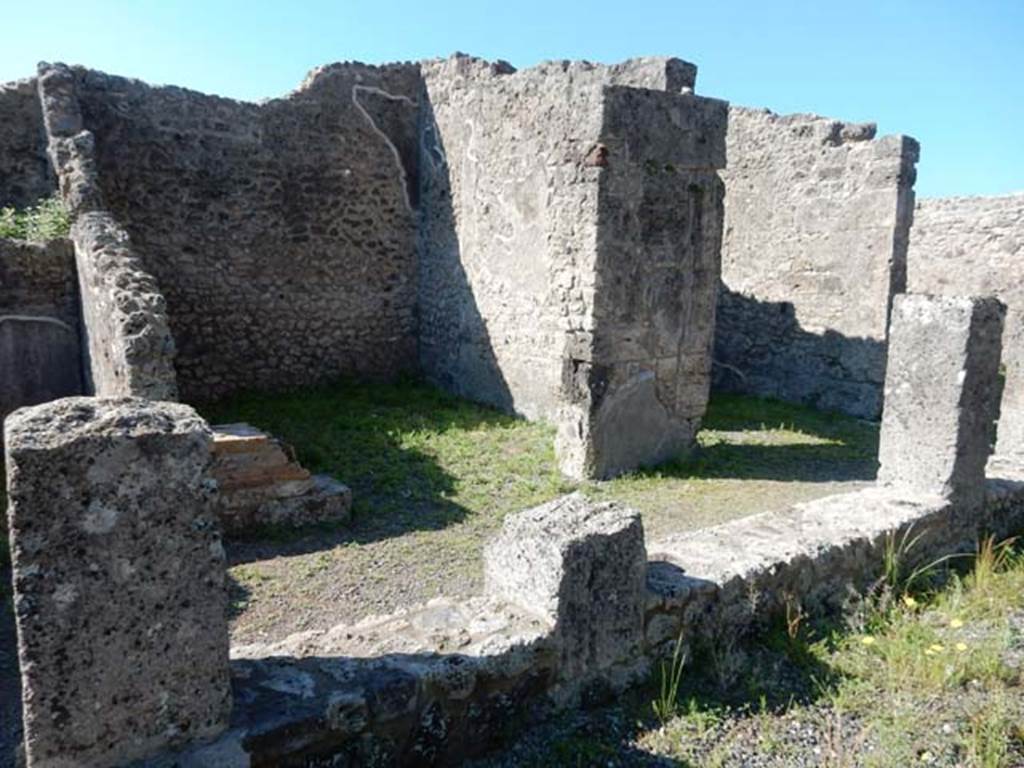
VIII.3.14 Pompeii. May 2016. Looking towards rooms on south side of atrium.
The oecus can be seen on the left of centre, the ala towards the right. Photo courtesy of Buzz Ferebee.
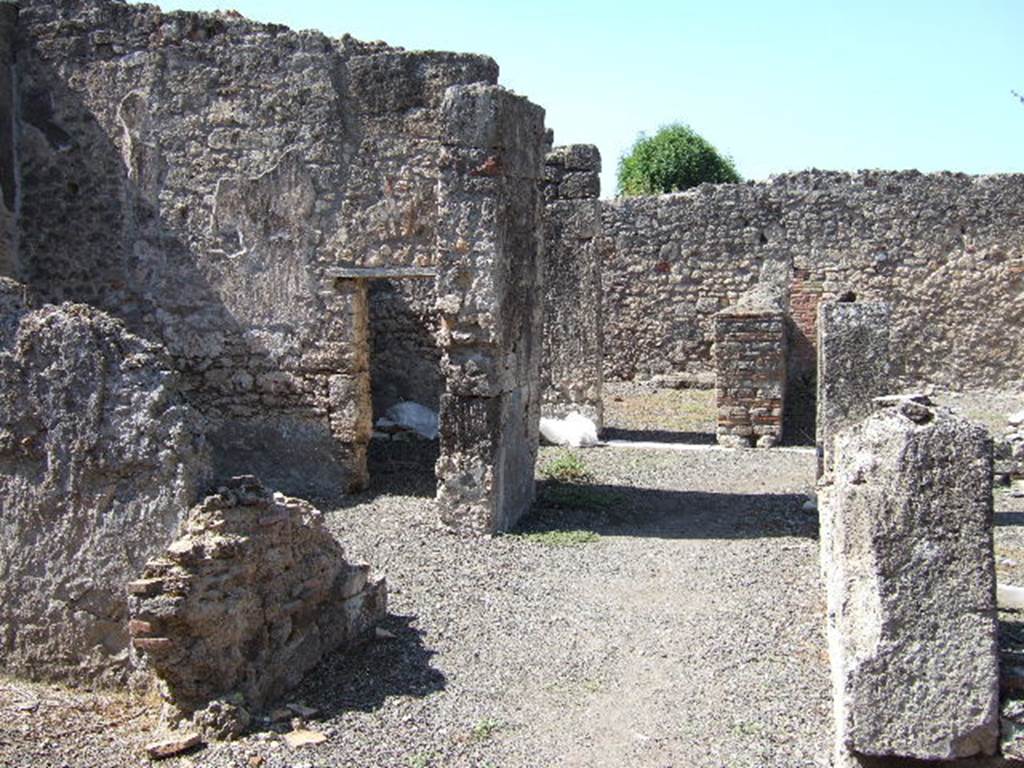
VIII.3.14 Pompeii. September 2005. Looking west across south side of atrium.
On the left would be the oecus, with connecting doorway into the ala, and then doorway to triclinium, ahead.
According to Helbig, in the left ala would have been paintings of uncertain local deities (no.965),
Busts (nos.557 and 1421f) and a wall painting of Perseus and Andromeda (no.1191)
See Helbig, W., 1868. Wandgemälde der vom Vesuv verschütteten Städte Campaniens. Leipzig: Breitkopf und Härtel. (nos.965, 557, 1421f and 1191)
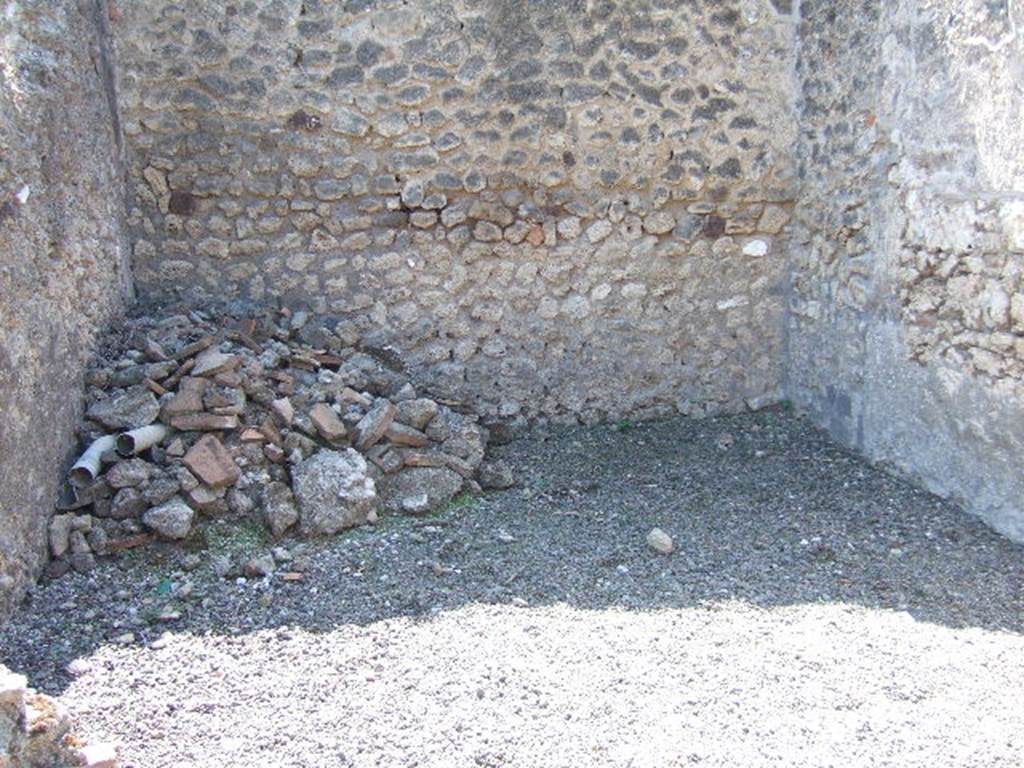
VIII.3.14 Pompeii. September 2005. Looking south in oecus.
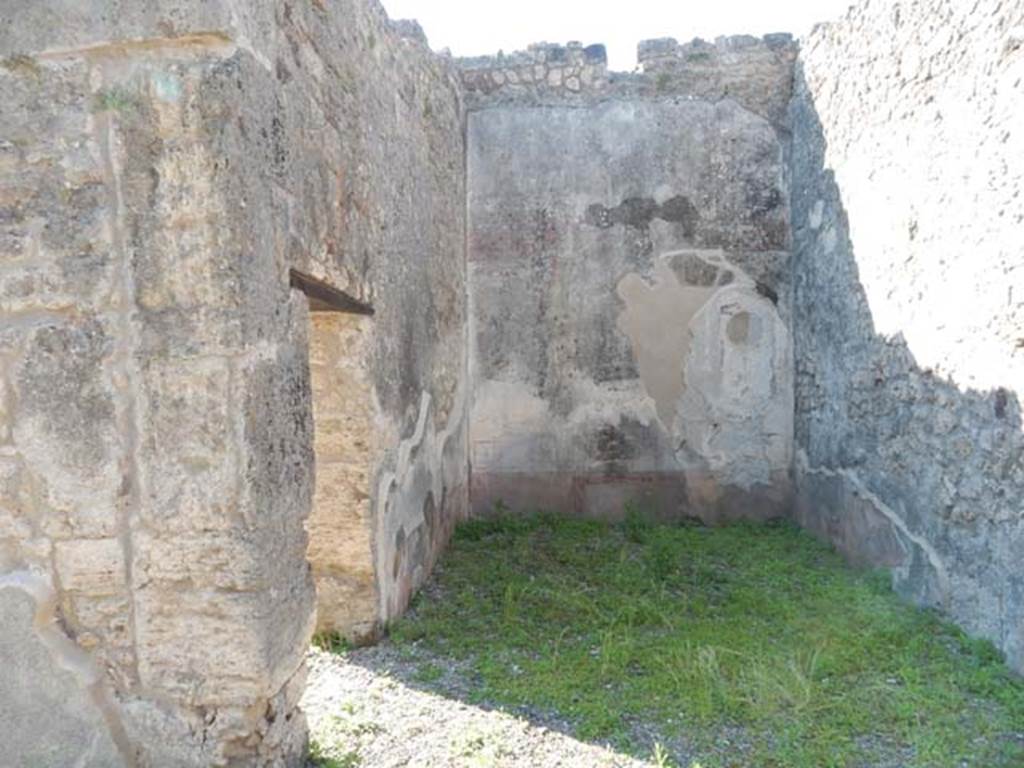
VIII.3.14 Pompeii. May 2016. Looking south in ala, on south side of atrium.
The connecting doorway into the oecus can be seen in the wall on the left, the east wall. Photo courtesy of Buzz Ferebee.
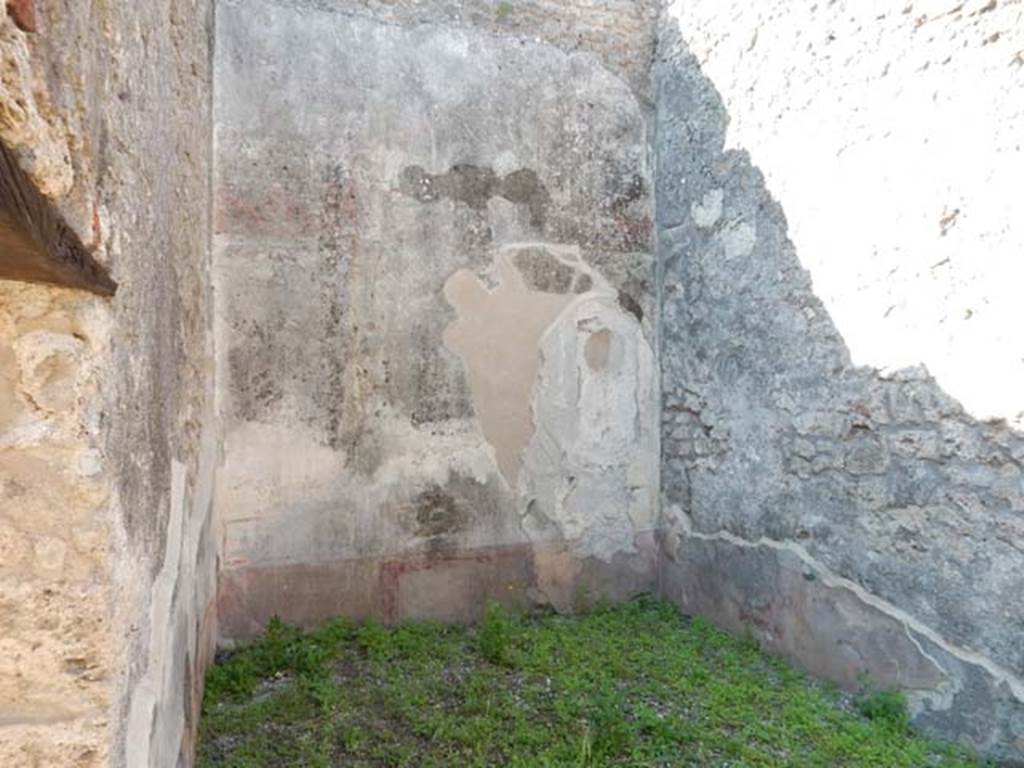
VIII.3.14 Pompeii. May 2016. South wall of ala. Photo courtesy of Buzz Ferebee.
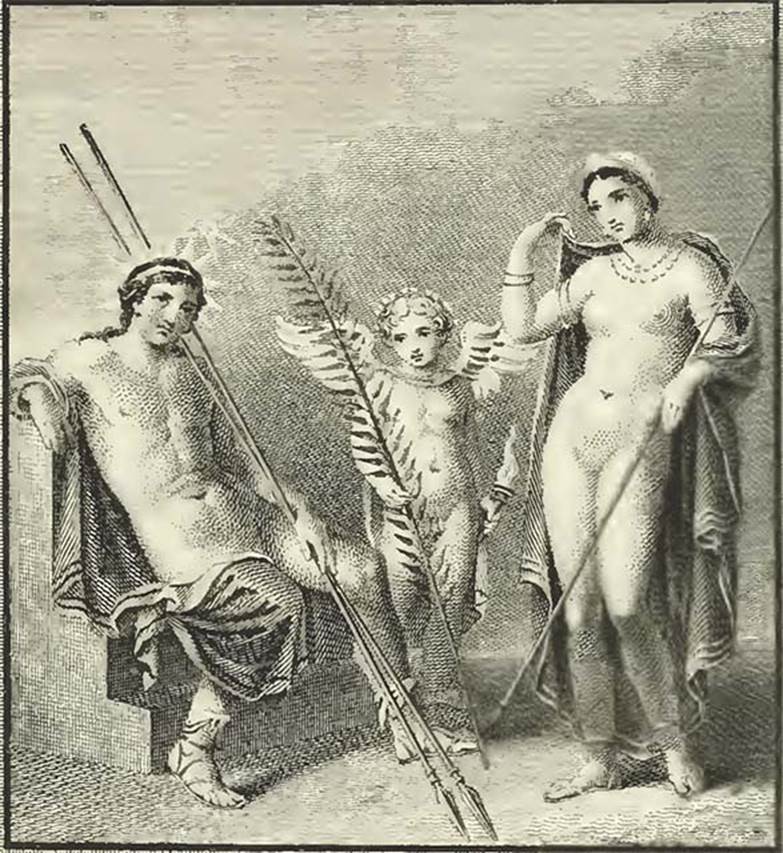
VIII.3.14 Pompeii. Left Ala, south wall. 1819 drawing of painting of deities found here.
According to Gell, a male figure, whose head is surrounded with rays, reclines upon a seat.
Before him appears a female, bearing a wand and purple peplum.
Between them is Hymen, whose head is encircled with a wreath.
He has a torch in one hand, in the other a branch of palm.
It would be difficult to say precisely what persons the painter has here intended to represent.
The palm branch is possibly symbolic of the victory of Cupid over the goddess of chastity.
See Gell W. and Gandy J., 1817-19. Pompeiana. London: Rodwell and Martin, p. 193-4, pl. XLI.
See Schefold, K.,
1957. Die Wände Pompejis. Berlin: De
Gruyter. p. 221.
See Helbig, W., 1868. Wandgemälde der vom Vesuv verschütteten Städte Campaniens. Leipzig: Breitkopf und Härtel. (no. 965)
![VIII.3.14 Pompeii. c.1819 painting by W. Gell of deities seen on the south wall of the left ala.
See Gell W & Gandy, J.P: Pompeii published 1819 [Dessins publiés dans l'ouvrage de Sir William Gell et John P. Gandy, Pompeiana: the topography, edifices and ornaments of Pompei, 1817-1819], pl. 75.
See book in Bibliothèque de l'Institut National d'Histoire de l'Art [France], collections Jacques Doucet Gell Dessins 1817-1819
Use Etalab Open Licence ou Etalab Licence Ouverte](8%2003%2014%20p1_files/image077.jpg)
VIII.3.14 Pompeii. c.1819 painting by W. Gell of deities seen on the south wall of the left ala.
See Gell W & Gandy, J.P: Pompeii published 1819 [Dessins publiés dans l'ouvrage de Sir William Gell et John P. Gandy, Pompeiana: the topography, edifices and ornaments of Pompei, 1817-1819], pl. 75.
See book in
Bibliothèque de l'Institut National d'Histoire de l'Art [France], collections
Jacques Doucet Gell Dessins 1817-1819
Use Etalab Open Licence ou Etalab Licence
Ouverte
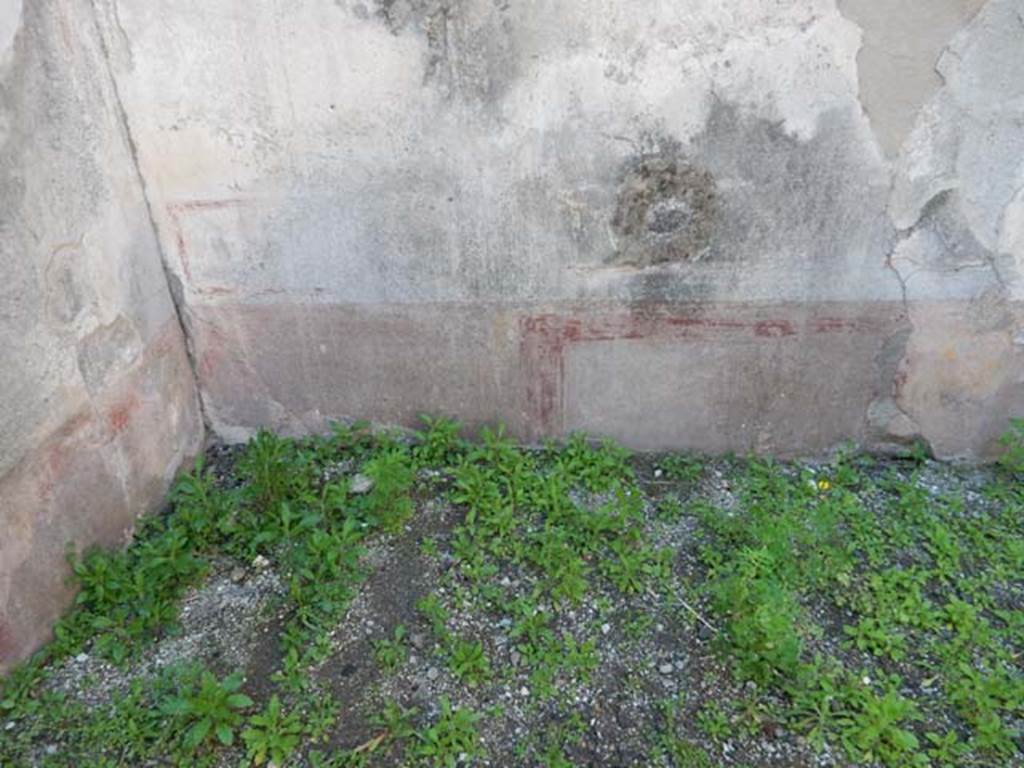
VIII.3.14 Pompeii. May 2016.
Zoccolo on lower part of south wall of ala, with remains of painted decoration. Photo courtesy of Buzz Ferebee.
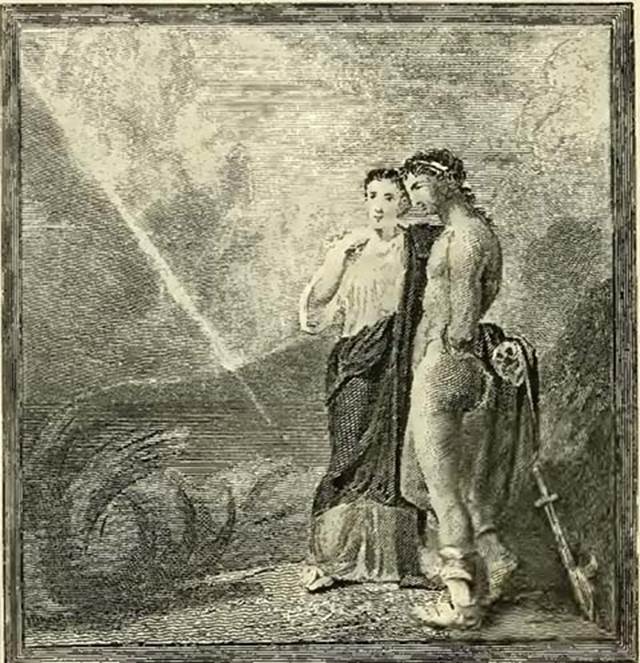
VIII.3.14 Pompeii. Wall in left Ala. 1875 drawing of painting of Perseus and Andromeda.
According to Gell, this, without doubt, represents Perseus, after having liberated Andromeda, and petrified the sea-monster, to which she had been exposed.
The wings upon his head and feet;
The head of the Gorgon Medusa, held behind him, lest by its view the beholder should be turned to stone;
The harpe, or two-pointed, scythe-like, adamantine sword, he received from Vulcan;
All clearly point out the son of Jupiter and Danae.
Andromeda wears a pink or white tunic, with a blue peplum.
See Gell W and Gandy J, 1875. Pompeiana. London: Chatto and Windus. p. 105, pl. 43.
See Schefold, K.,
1957. Die Wände Pompejis. Berlin: De
Gruyter. p. 221.
See Helbig, W., 1868. Wandgemälde der vom Vesuv verschütteten Städte Campaniens. Leipzig: Breitkopf und Härtel. (no.1191).
![VIII.3.14 Pompeii. c.1819 painting by W. Gell of Perseus and Andromeda, from a wall in the left ala.
The note on the painting says: in scavi della Regina Carolina.
See Gell W & Gandy, J.P: Pompeii published 1819 [Dessins publiés dans l'ouvrage de Sir William Gell et John P. Gandy, Pompeiana: the topography, edifices and ornaments of Pompei, 1817-1819], pl. 74.
See book in Bibliothèque de l'Institut National d'Histoire de l'Art [France], collections Jacques Doucet Gell Dessins 1817-1819
Use Etalab Open Licence ou Etalab Licence Ouverte](8%2003%2014%20p1_files/image082.jpg)
VIII.3.14 Pompeii. c.1819 painting by W. Gell of Perseus and Andromeda, from a wall in the left ala.
The note on the painting says: in scavi della Regina Carolina.
See Gell W & Gandy, J.P: Pompeii published 1819 [Dessins publiés dans l'ouvrage de Sir William Gell et John P. Gandy, Pompeiana: the topography, edifices and ornaments of Pompei, 1817-1819], pl. 74.
See book in
Bibliothèque de l'Institut National d'Histoire de l'Art [France], collections
Jacques Doucet Gell Dessins 1817-1819
Use Etalab Open Licence ou Etalab Licence
Ouverte
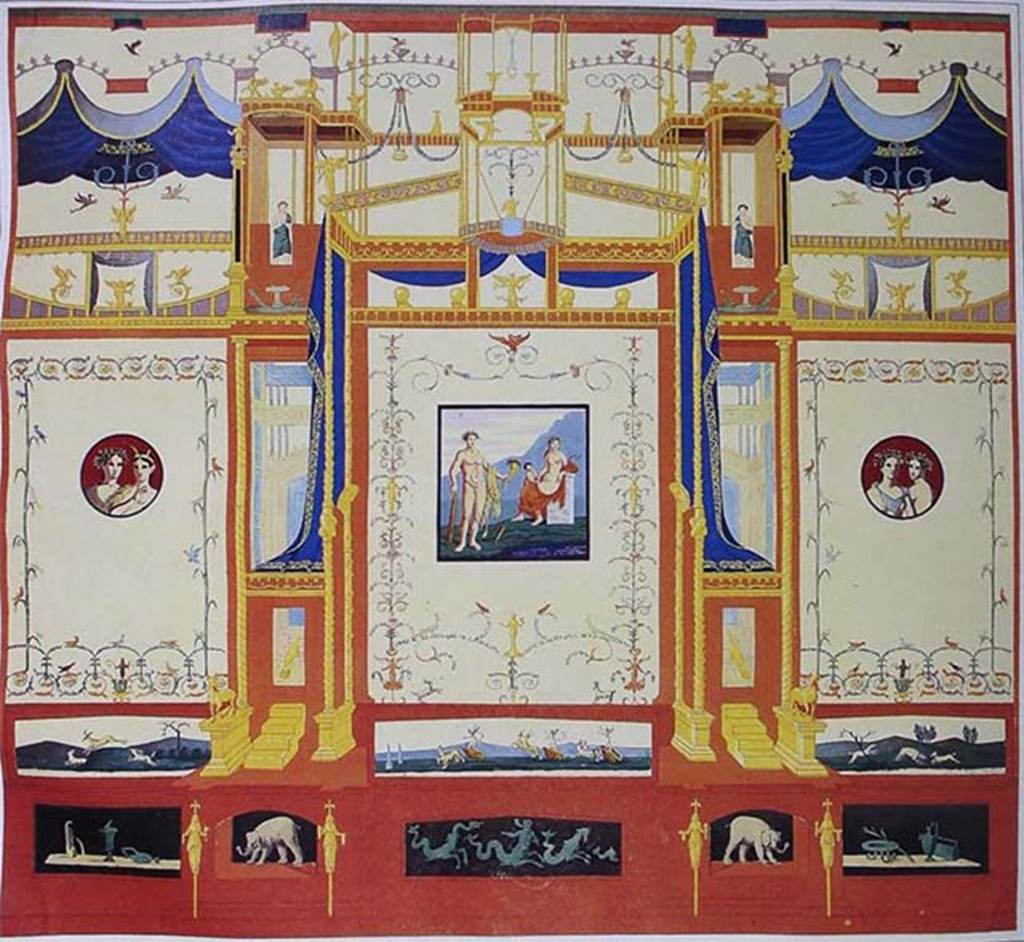
VIII.3.14 Pompeii. Nineteenth-century painting of architectural scene on “long side” in left Ala.
According to PPM, this painting, which was traditionally
recognized as a wall from VIII.2.39 must now be identified as a wall (either
east or west) of the ala of VIII.3.14.
According to Eristov this is from the north wall.
See Eristov, H., 1993, in Functional and Spatial Analysis of Wall painting. Leiden, pp. 189-192.
According to Ornati, the decoration was from one of the side walls (east or west) as is apparent, in addition to the observation of the remains in situ, from the caption attached to the table in Ornati that specified that it was the 'long side' the room.
On the base are paintings of vessels, two elephants, and sea animals.
In the predella are hunt scenes and cupids driving chariots.
In the centre is a painting of Hercules after the victory over Achelous for the hand of Deianira.
Right is a medallion of a faun and bacchante.
Left is a medallion of two lovely followers of the gods of harvest.
See Carratelli,
G. P., 1990-2003. Pompei: Pitture e Mosaici: Vol. VIII. Roma: Istituto della enciclopedia
italiana, p. 402.
See Gli ornati delle pareti ed i pavimenti delle
stanze dell'antica Pompei incisi in rame: 1808, tav. 51 or 1838, tav. 8.
See Helbig, W.,
1868. Wandgemälde der vom Vesuv
verschütteten Städte Campaniens. Leipzig: Breitkopf und Härtel, 1521, 1522, 789, 1150, 1191, 557, 1421.
See D’Amelio P.,
1888. Dipinti murali scelti di Pompei. Napoli:
Richter, tav. IX.
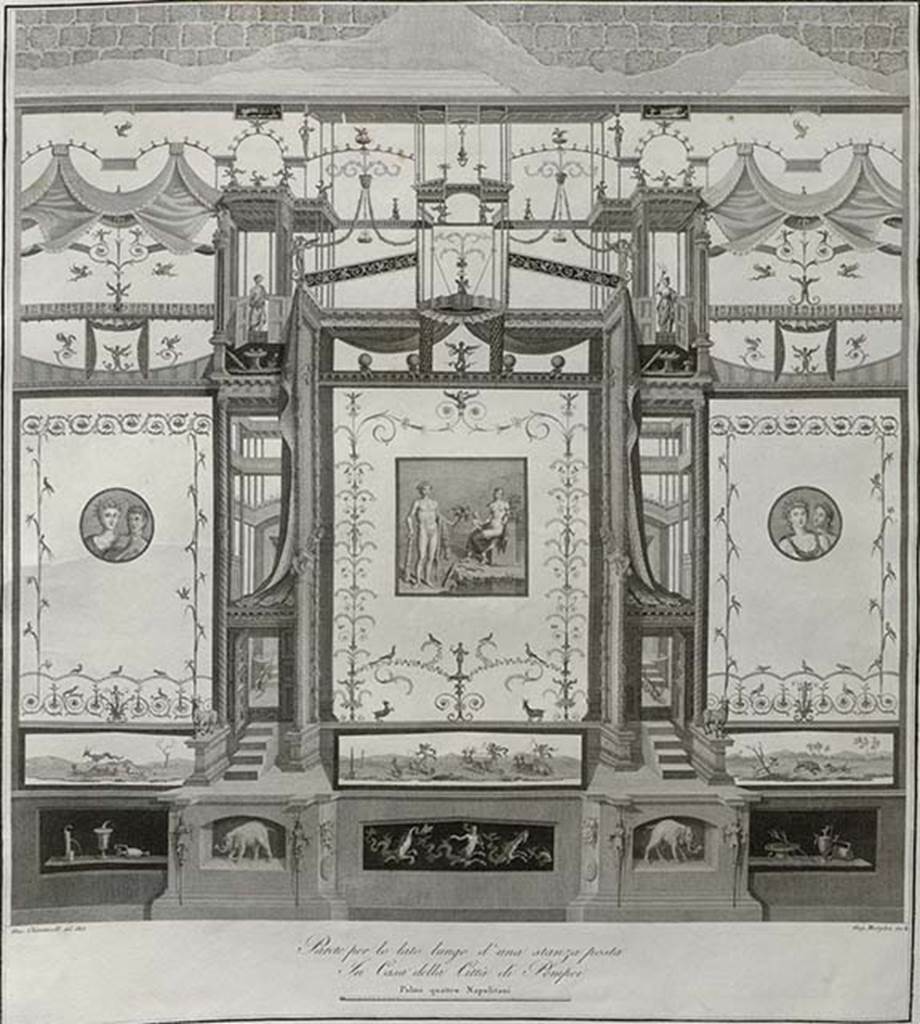
VIII.3.14 Pompeii. Painting dated 1805 by G. Chiantarelli of architectural scene on “long side” in left Ala.
According to Eristov this is from the north wall.
The wall system that can be guessed on the back wall (north) corresponds, with a few variations, to that given in the engravings; it differs by the absence of escapement (the wall is shorter) and a hanging double festoon above the lateral fields.
« Le système
pariétal que l'on devine sur le mur du fond (nord) correspond, à quelques
variantes près, à celui que donnent les gravures; il en diffère par l'absence
d'échappées (le mur est moins long) et
par une tenture à double feston au-dessus des champs latéraux. »
According to Ornati, it is a very valuable wall from the Casa del Cortile tetrastilo di Pompei.
It is however the example used for comparison of the north wall of VIII.3.14 by Eristov in fig. 7.
See Gli ornati delle pareti ed i pavimenti delle
stanze dell'antica Pompei incisi in rame: 1808, tav. 51 or 1838, indice 8, tav. 8.
See Eristov, H., 1993, in Functional and Spatial Analysis of Wall painting. Leiden, pp. 189-192, figs. 6-7.
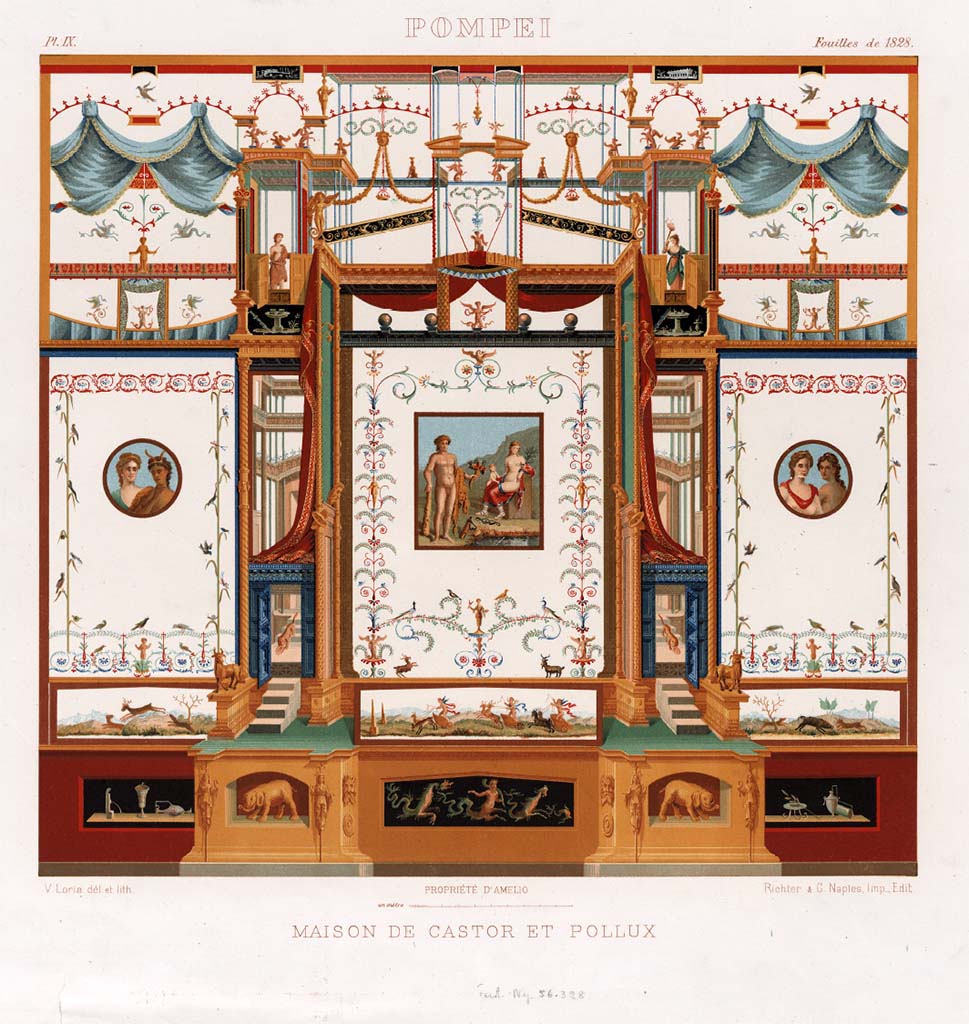
VIII.3.14 or VI.9.6 Pompeii. Painting of wall by V. Loria entitled House of Castor and Pollux, published by D'Amelio.
See D’Amelio P., 1888. Dipinti murali scelti di Pompei. Napoli: Richter, Tav. IX.
However, Curtius clearly references it as "Wand aus dem Hause
Josephs II., Pompeji. (VIII.2.39) (Nach D'Amelio, Dipinti murali, Tafel IX)".
The words under the painting attribute it to the House of Castor
and Pollux (VI.9.6).
See D’Amelio P., 1888. Dipinti Murali di Pompei. Naples: Richter, p. 9 and Tav. IX.
![VIII.3.14, Pompeii. c.1819 painting by W. Gell showing part of painted decoration at the side of the central panel.
See Gell W & Gandy, J.P: Pompeii published 1819 [Dessins publiés dans l'ouvrage de Sir William Gell et John P. Gandy, Pompeiana: the topography, edifices and ornaments of Pompei, 1817-1819], pl. 73.
See book in Bibliothèque de l'Institut National d'Histoire de l'Art [France], collections Jacques Doucet Gell Dessins 1817-1819
Use Etalab Open Licence ou Etalab Licence Ouverte](8%2003%2014%20p1_files/image088.jpg)
VIII.3.14, Pompeii. c.1819 painting by W. Gell showing part of painted decoration at the side of the central panel.
See Gell W & Gandy, J.P: Pompeii published 1819 [Dessins publiés dans l'ouvrage de Sir William Gell et John P. Gandy, Pompeiana: the topography, edifices and ornaments of Pompei, 1817-1819], pl. 73.
See book in Bibliothèque de l'Institut National
d'Histoire de l'Art [France], collections Jacques Doucet Gell
Dessins 1817-1819
Use Etalab Open Licence ou
Etalab Licence Ouverte
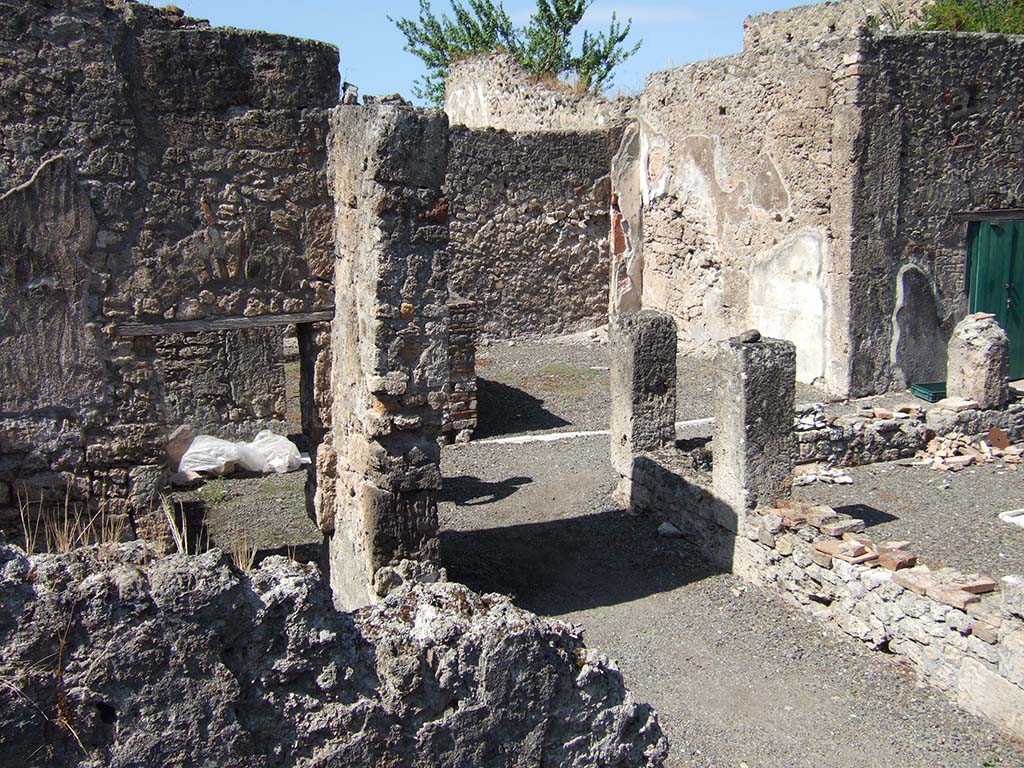
VIII.3.14 Pompeii. September 2005. Looking west across atrium towards tablinum/exedra.
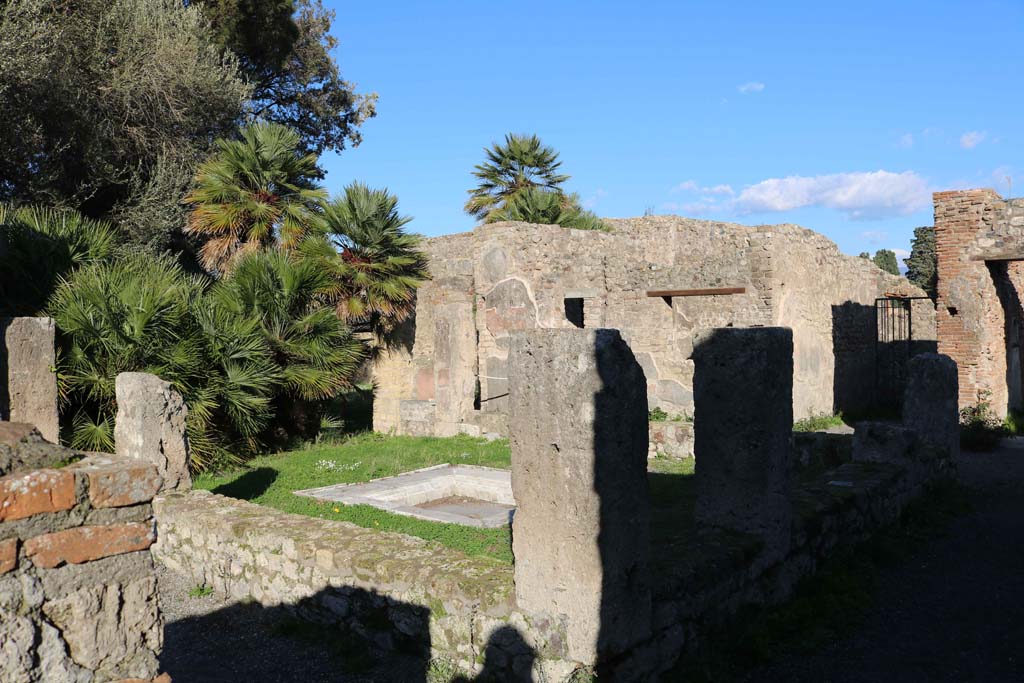
VIII.3.14 Pompeii.
December 2018.
Looking north-east
across atrium, from south-west corner near doorway to triclinium. Photo
courtesy of Aude Durand.
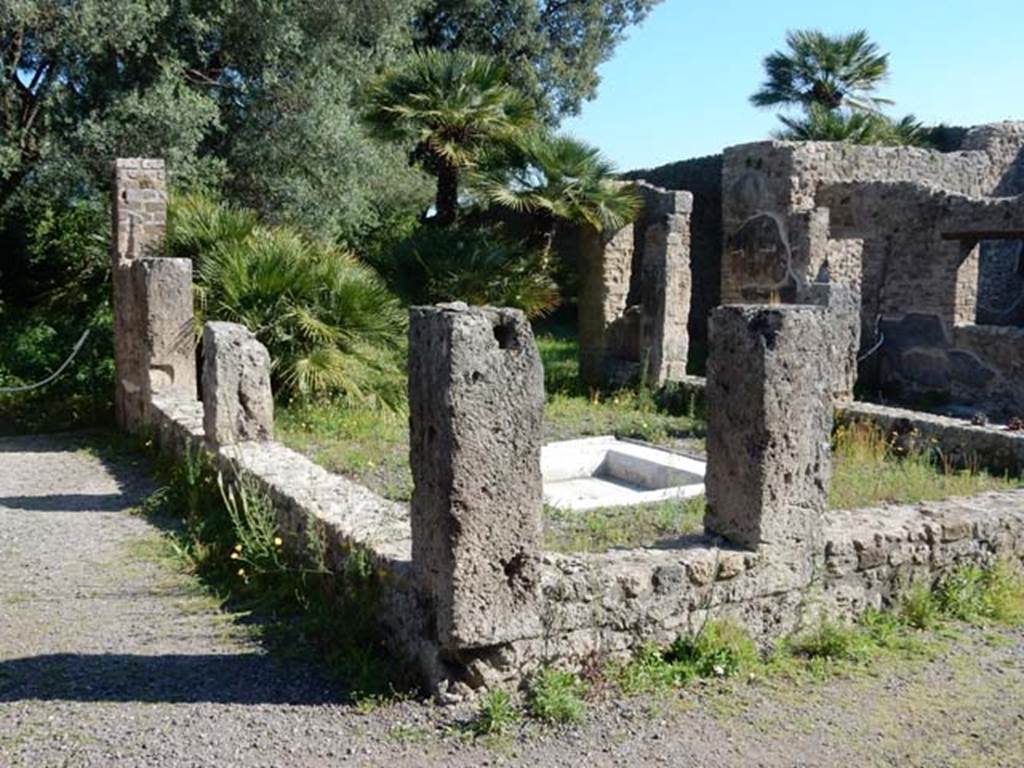
VIII.3.14 Pompeii. May 2016. Looking north from south-west corner of atrium. Photo courtesy of Buzz Ferebee.
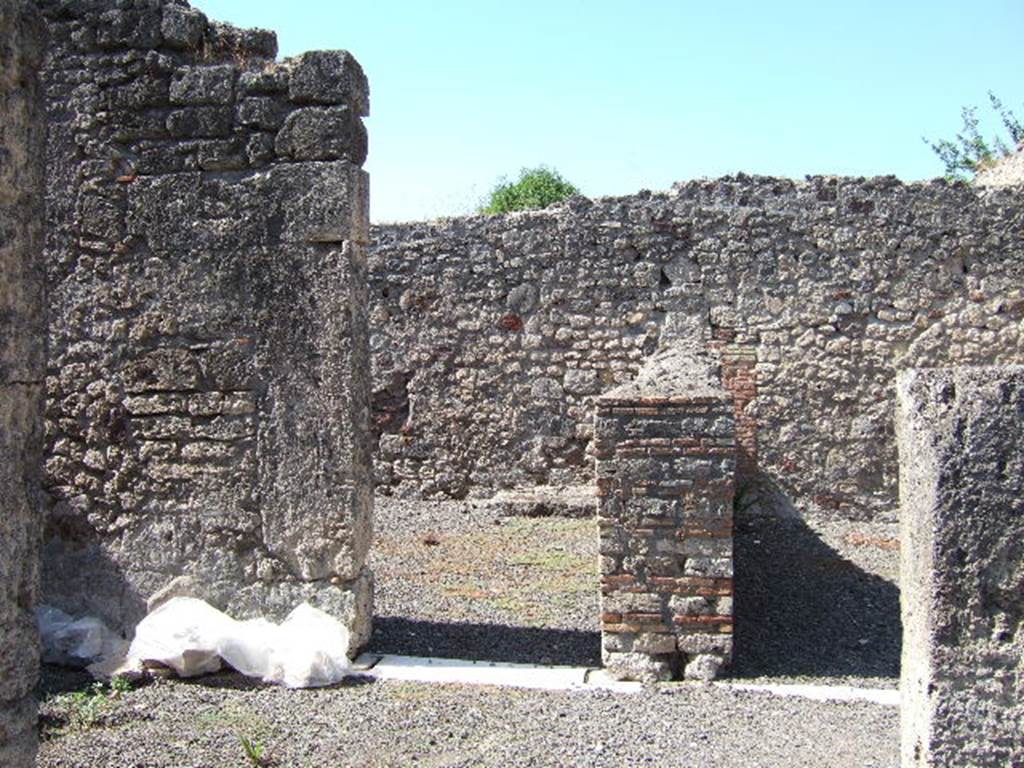
VIII.3.14 Pompeii. September 2005. Looking west from atrium to doorway to triclinium, on left.
According to Fiorelli –
“In the corner of the triclinium, the remains of the beginning of a stairway, which in the previous era communicated between this house and the one next-door, can be seen.”
See Pappalardo, U., 2001. La Descrizione di Pompei per Giuseppe Fiorelli (1875). Napoli: Massa Editore. (p.124)
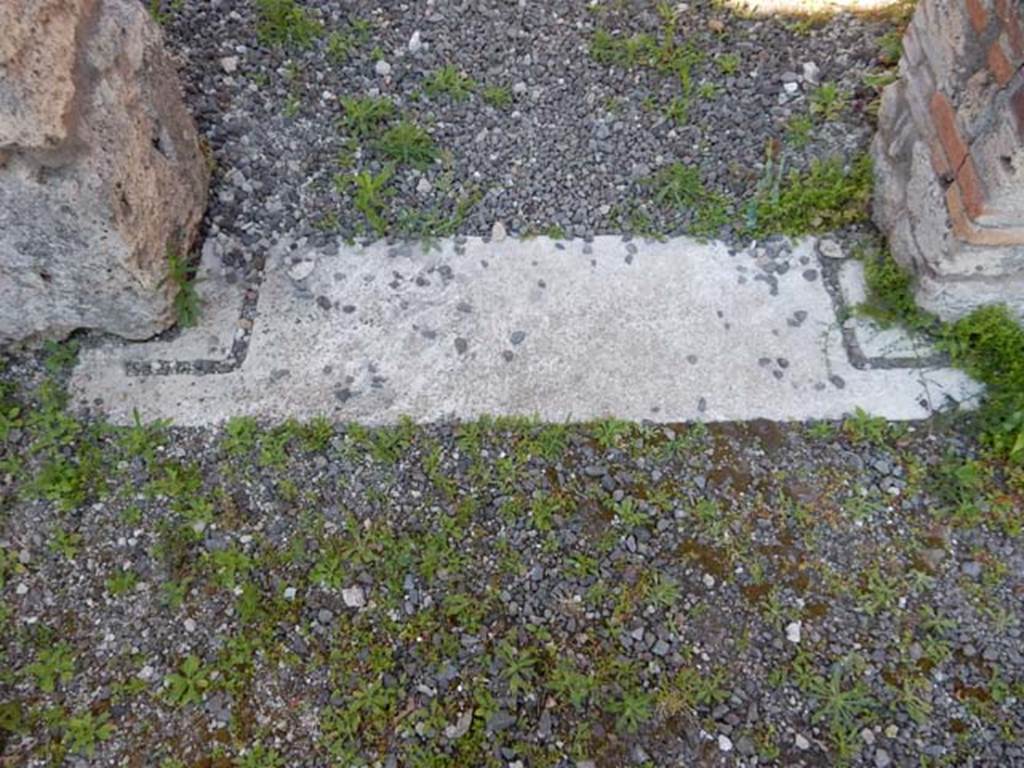
VIII.3.14 Pompeii. May 2016. Threshold of doorway leading into triclinium. Photo courtesy of Buzz Ferebee.
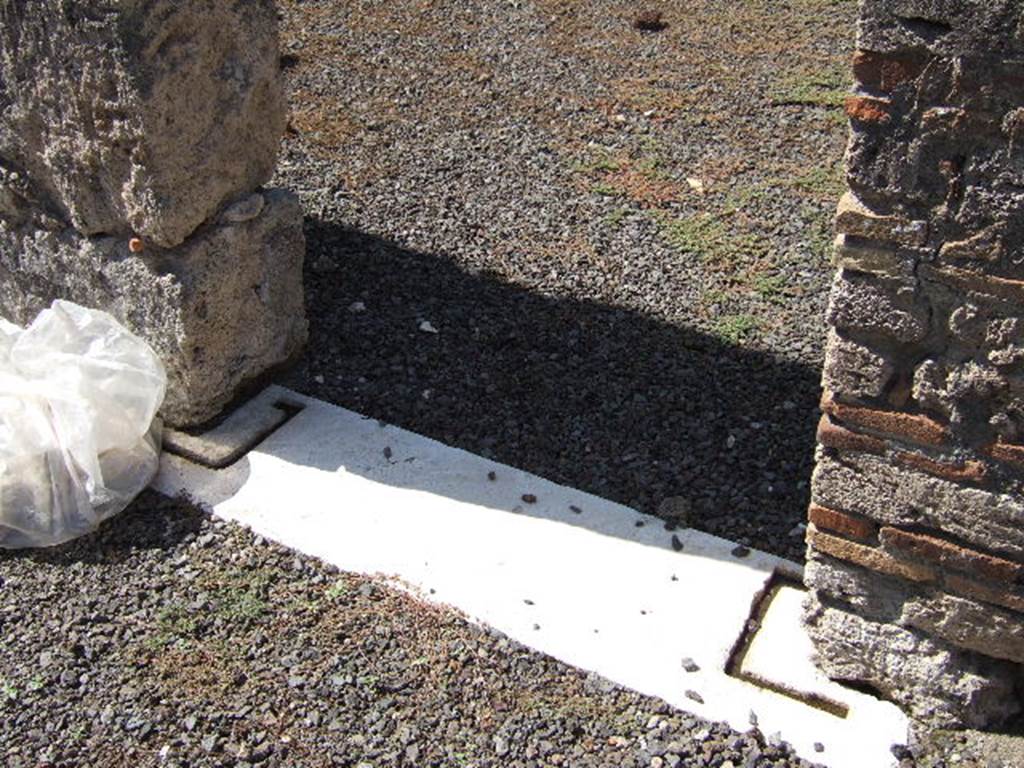
VIII.3.14 Pompeii. September 2005. Threshold or sill of doorway to triclinium.
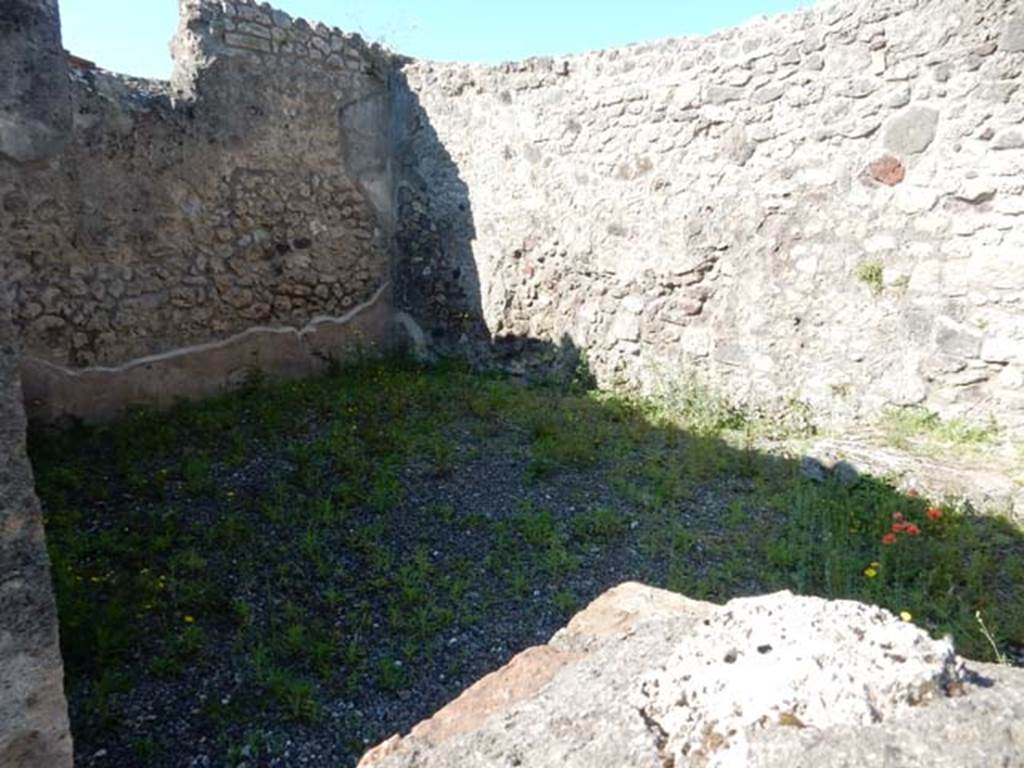
VIII.3.14 Pompeii. May 2016. Looking through doorway into triclinium. Photo courtesy of Buzz Ferebee.
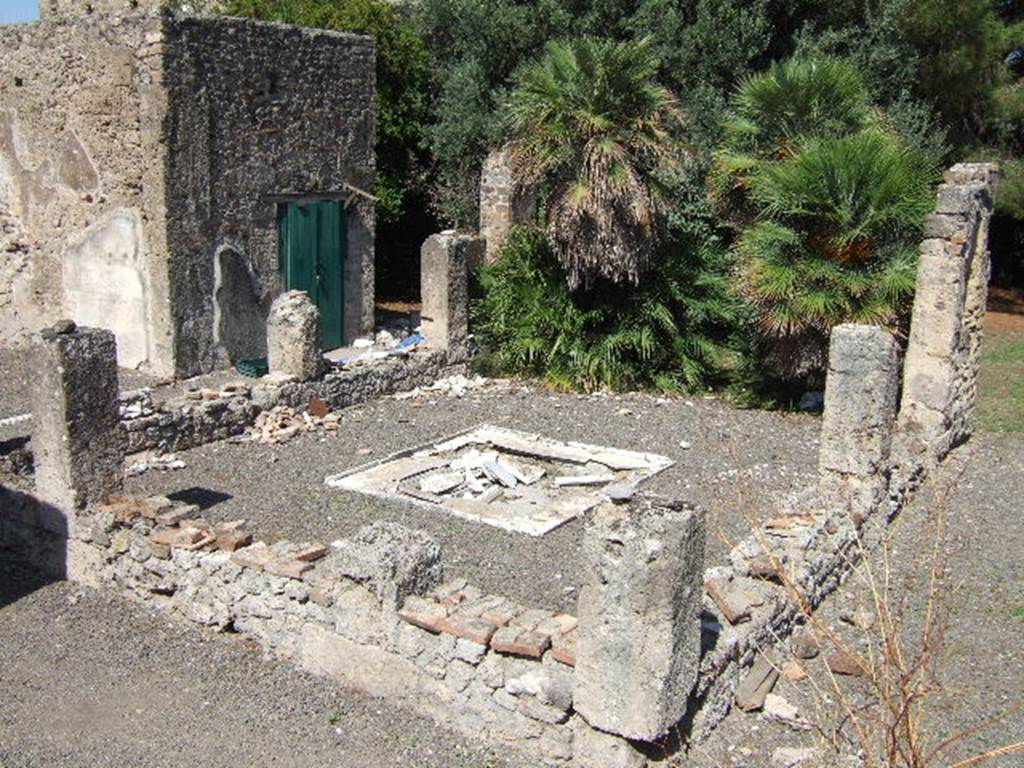
VIII.3.14 Pompeii. September 2005. Looking north-west across atrium.
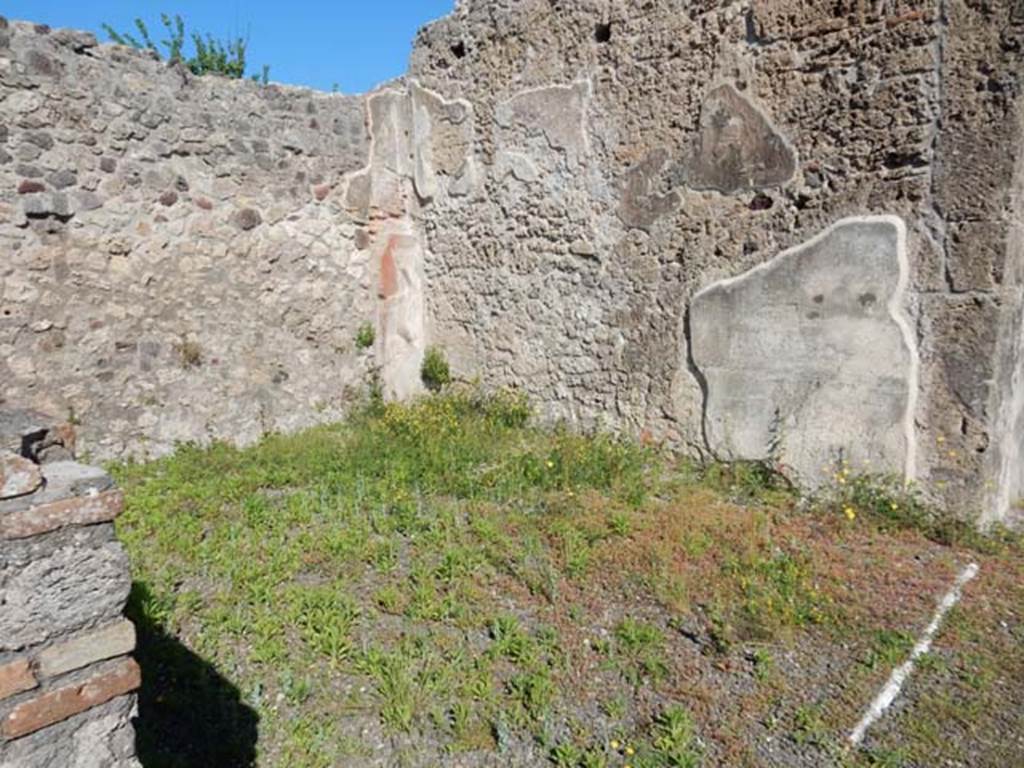
VIII.3.14 Pompeii. May 2016.
Looking towards west and north walls of tablinum/exedra on west side of atrium. Photo courtesy of Buzz Ferebee.
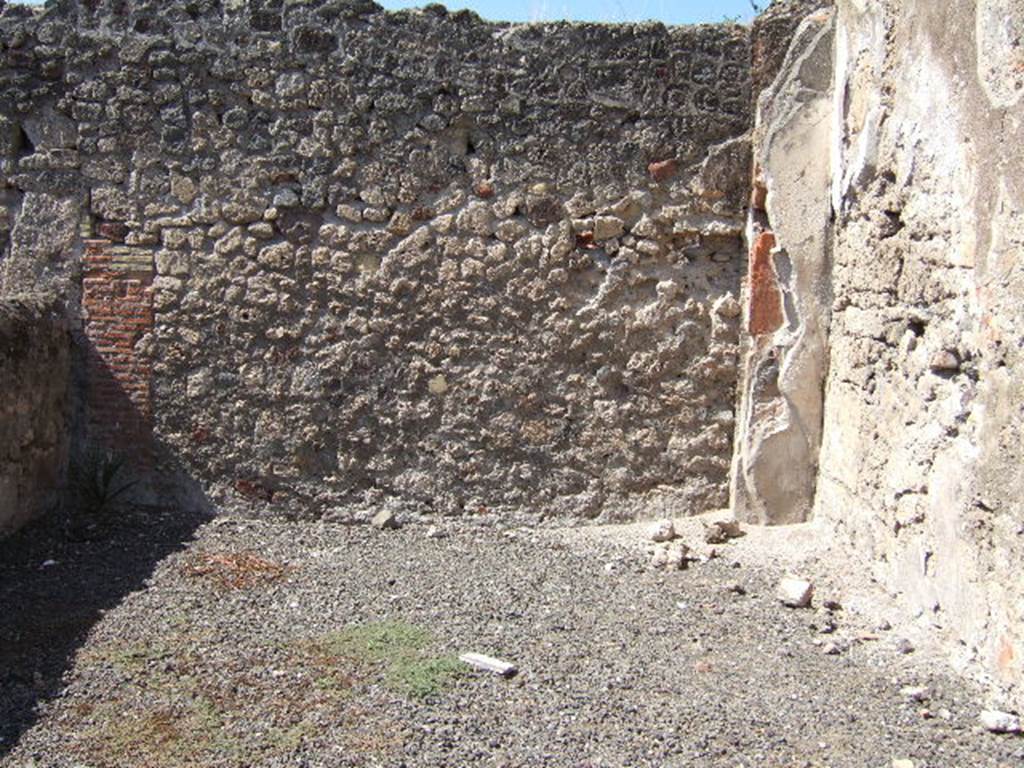
VIII.3.14 Pompeii. September 2005. Looking west into tablinum/exedra.
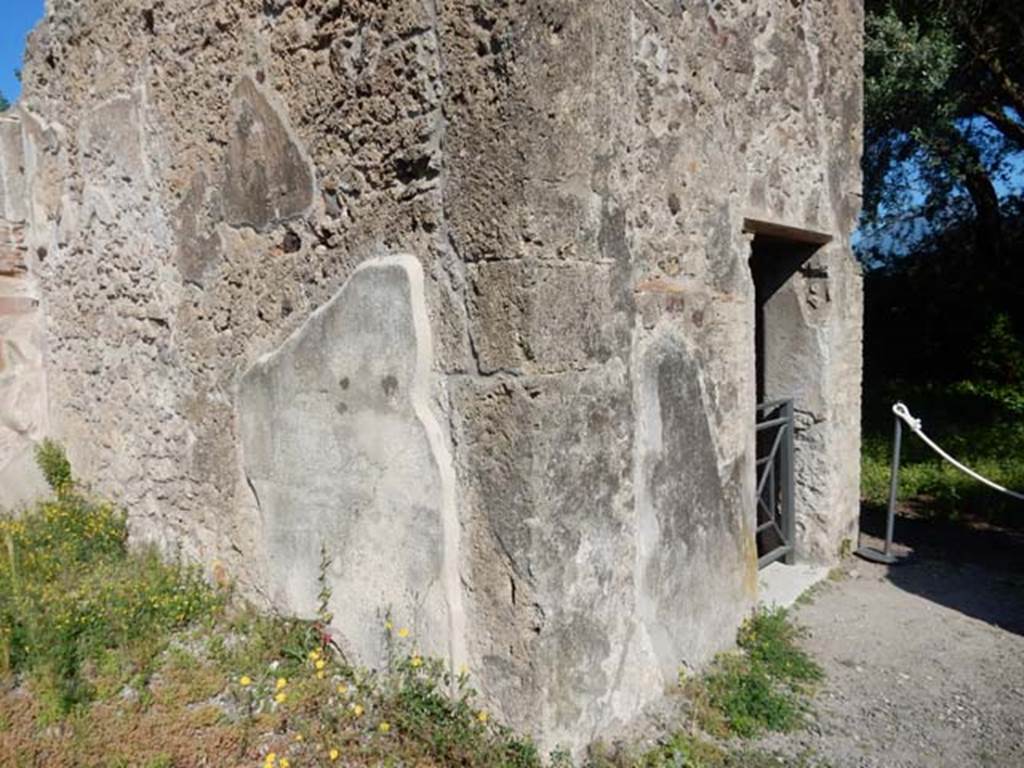
VIII.3.14 Pompeii. May 2016.
North wall of tablinum/exedra, on left, and doorway to cubiculum, centre right. Photo courtesy of Buzz Ferebee.
According to Fiorelli –
“The tablinum was located facing the entrance doorway, between the
triclinium - which contained the remains of the beginning of a staircase, which
in the previous era communicated between this house and the one next-door, and
a windowed cubiculum with its decorations more intact, but devoid of the
paintings which had adorned it, two of which were located into the Naples Museum.”
See Pappalardo, U., 2001. La Descrizione di Pompei per Giuseppe Fiorelli (1875). Napoli: Massa Editore. (p.124)