VIII.3.8 Pompeii. House of the Wild Boar or Casa del Cinghiale I.
Excavated 1809, 1819, 1826 & 1837. (Strada dell’Abbondanza 8).
According to PPM, this house may not have been excavated in 1809 but has been mistaken for VI.5.19 from where a mosaic with a boar (and the inscription Festus/cum/Torquato) was found.
See Carratelli, G. P., 1990-2003. Pompei: Pitture e Mosaici: Vol. VIII. Roma: Istituto della enciclopedia italiana, p. 363.
See Fiorelli G., 1860. Pompeianarum antiquitatum historia, Vol. 1: 1748 - 1818, Naples, 1.2, (p.14, and preceding pages 12 and 13).
According to Breton, the house was excavated between 1838 and 1840.
See Breton, Ernest. 1870.
Pompeia, Guide de visite a Pompéi, 3rd Ed.
Paris, Guerin, (p.453).
Part 1 Part 2
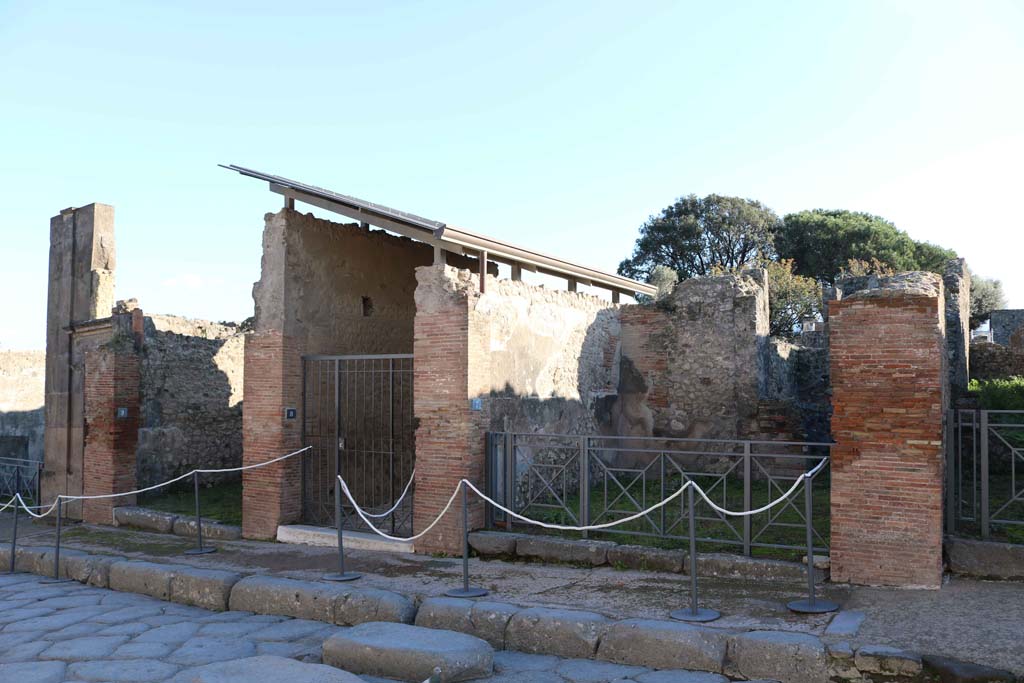
VIII.3.8 Pompeii, centre left. December 2018.
Looking towards entrances on south side of Via dell’Abbondanza.
Photo courtesy of Aude Durand.
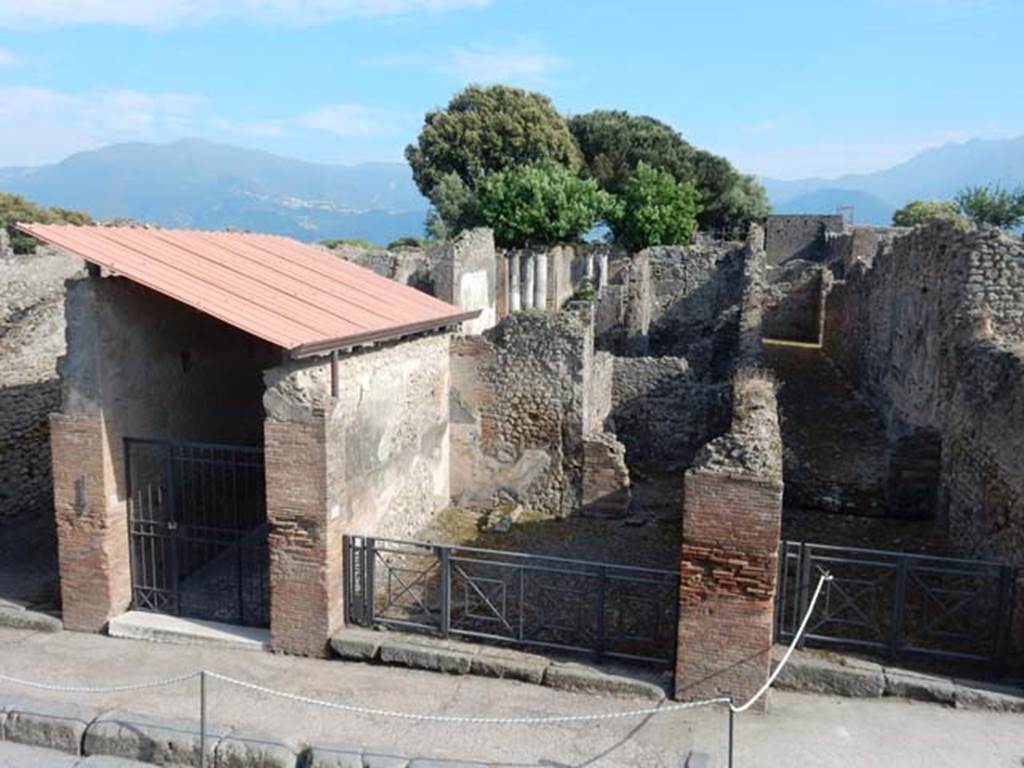
VIII.3.8 Pompeii, on left. May 2015.
Looking south across Via dell’Abbondanza towards entrance doorway. Photo courtesy of Buzz Ferebee.
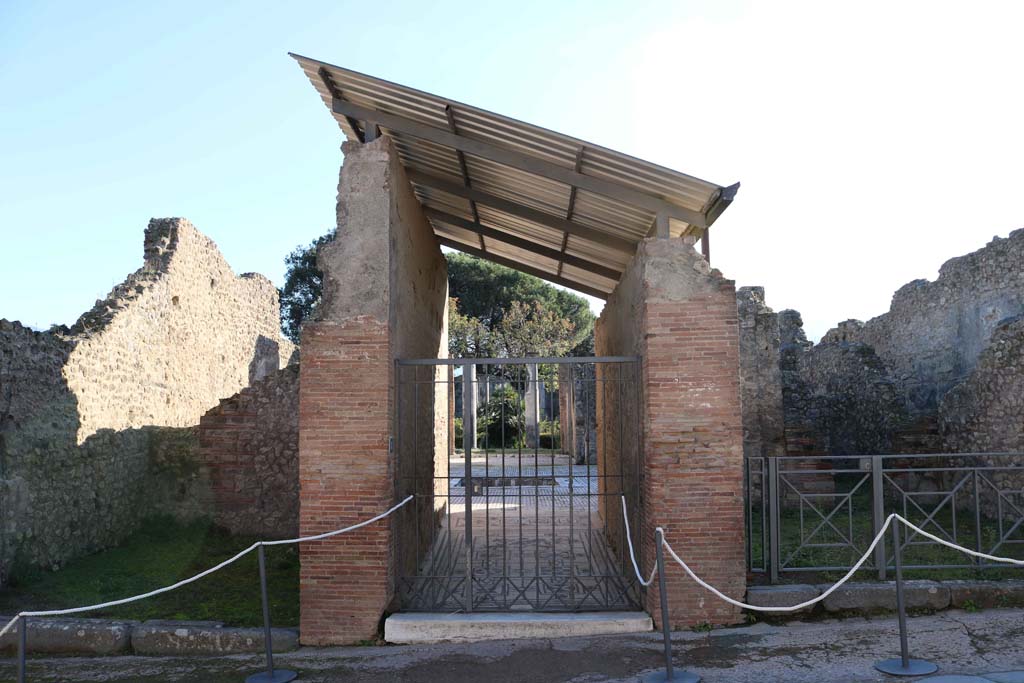
VIII.3.8 Pompeii., December 2018.
Looking
towards entrance doorway on south side of Via dell’Abbondanza. Photo courtesy
of Aude Durand.
![VIII.3.8 Pompeii. December 2005. Entrance doorway. According to Della Corte, because of the recommendations written on the front of the entrance, he was sure this was the house of the Coeli.
(L.) Coelius Caldus rogat [CIL IV 708]
(L.) C(oel)ius (Post)umus cupit [CIL IV 720 with Note 3 on page 228)
Very mutilated was a 3rd recommendation - Fa…… mis… ? rog(at) [CIL IV 707]
See Della Corte, M., 1965. Case ed Abitanti di Pompei. Napoli: Fausto Fiorentino. (p.228)
According to Epigraphik-Datenbank Clauss/Slaby (See www.manfredclauss.de), these read as -
C(aium) Cuspium
Pansam aed(ilem) o(ro) v(os) f(aciatis)
Coelius Calius r(o)g(at) [CIL IV 708]
L(ucium) Popidium Secundum N[3]
aed(ilem) iuvenem innocuae aetatis d(ignum) r(ei) p(ublicae) c[3]uius [3]umus cupit
[3]o facit [CIL IV 720]
Popidium
cum Pansa
Fa[3]mis[3] rog(at) cum sui(s) [CIL IV 707]](8%2003%2008_files/image007.jpg)
VIII.3.8 Pompeii. December 2005. Entrance doorway.
According to Della Corte, because of the recommendations written on the front of the entrance, he was sure this was the house of the Coeli.
(L.) Coelius
Caldus rogat [CIL IV 708]
(L.) C(oel)ius (Post)umus cupit [CIL IV 720 with Note 3 on page 228)
Very mutilated was a 3rd recommendation - Fa…… mis… ? rog(at) [CIL IV 707]
See Della Corte, M., 1965. Case ed Abitanti di Pompei. Napoli: Fausto Fiorentino. (p.228)
According to Epigraphik-Datenbank Clauss/Slaby (See www.manfredclauss.de), these read as -
C(aium) Cuspium
Pansam aed(ilem)
o(ro) v(os) f(aciatis)
Coelius Calius
r(o)g(at) [CIL IV 708]
L(ucium) Popidium
Secundum N[3]
aed(ilem) iuvenem
innocuae aetatis d(ignum)
r(ei) p(ublicae) c[3]uius
[3]umus cupit
[3]o facit
[CIL IV 720]
Popidium
cum Pansa
Fa[3]mis[3] rog(at)
cum sui(s) [CIL IV 707]
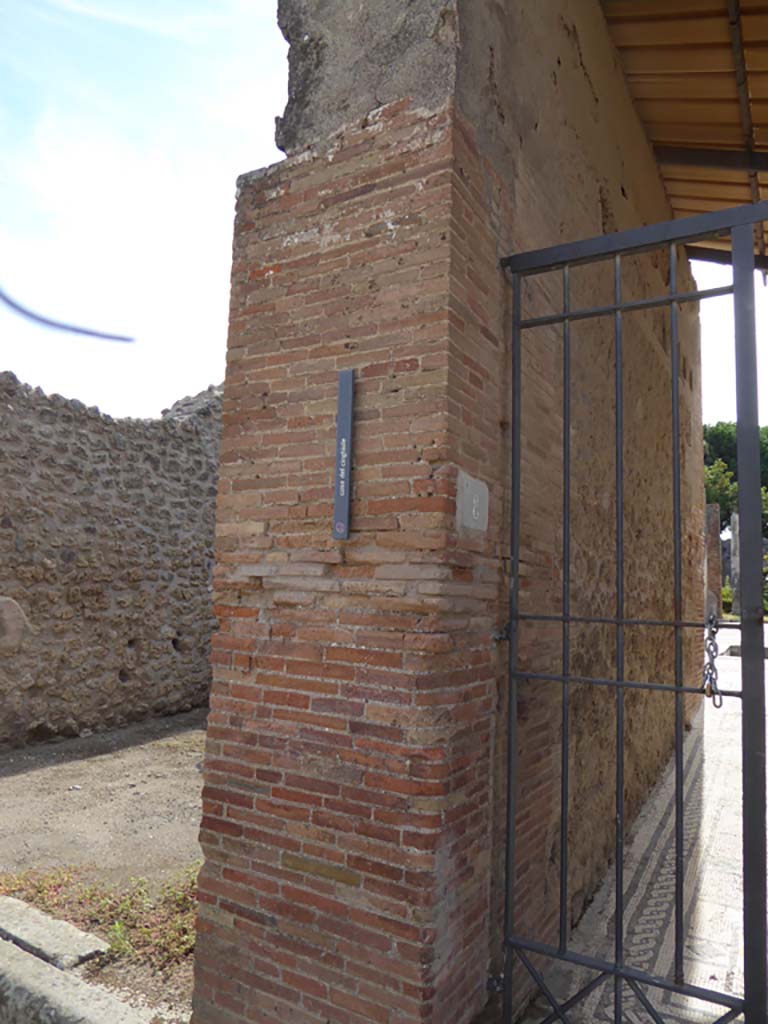
VIII.3.8 Pompeii. September 2015. Pilaster on left (east) side of
entrance corridor.
Foto Annette Haug, ERC
Grant 681269 DÉCOR.
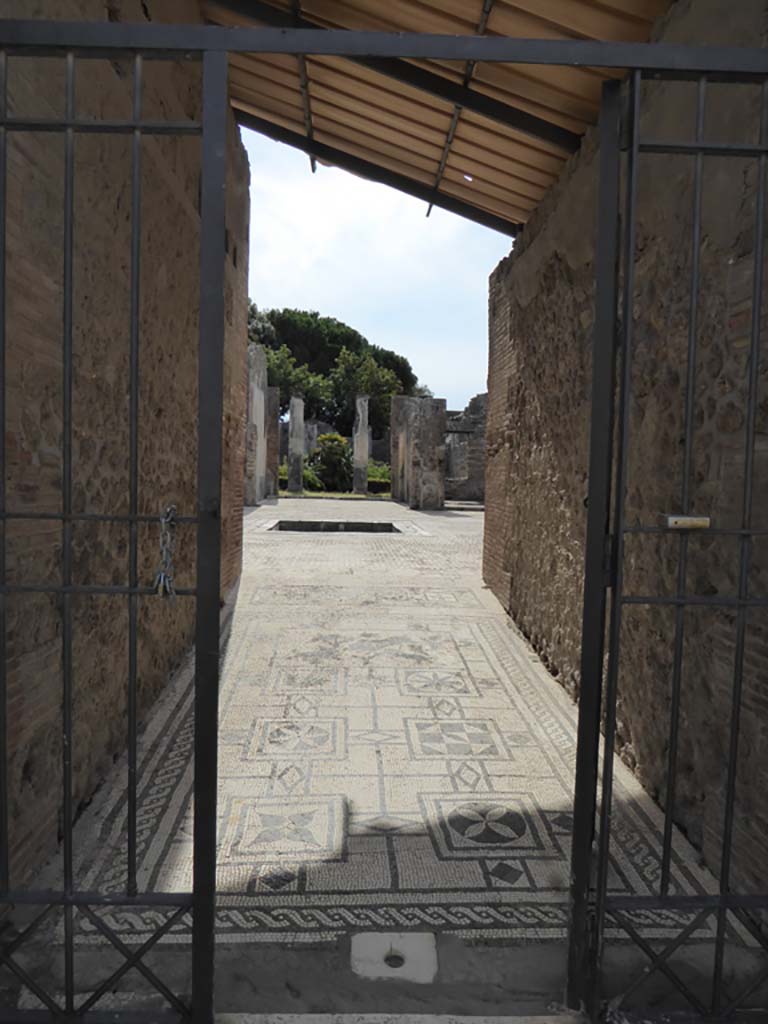
VIII.3.8 Pompeii. September 2015. Looking south through
entrance doorway towards atrium.
Foto Annette Haug, ERC
Grant 681269 DÉCOR
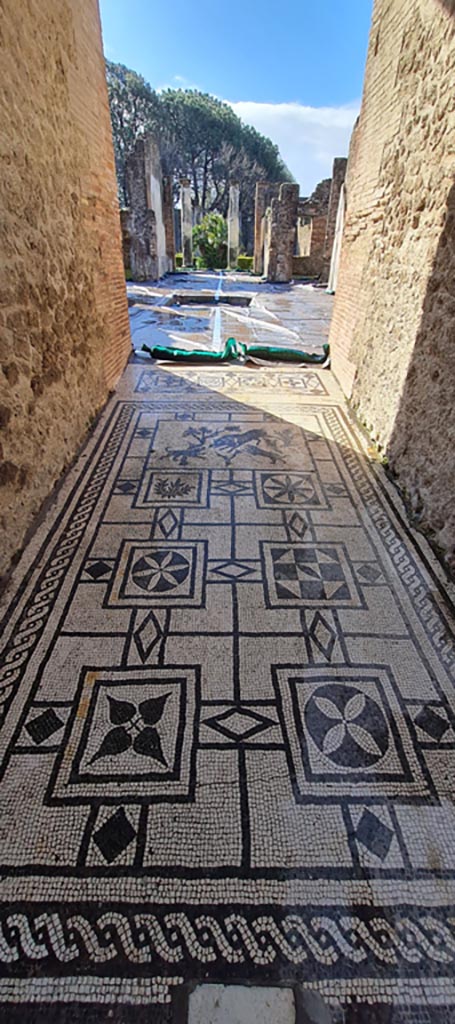
VIII.3.8 Pompeii. April 2022.
Looking south along mosaic in entrance corridor towards atrium.
Photo courtesy of
Giuseppe Ciaramella.
VIII.3.8 Pompeii. May 2021.
Looking south from entrance doorway along mosaic in corridor/fauces towards atrium.
Photo courtesy of Davide Peluso.
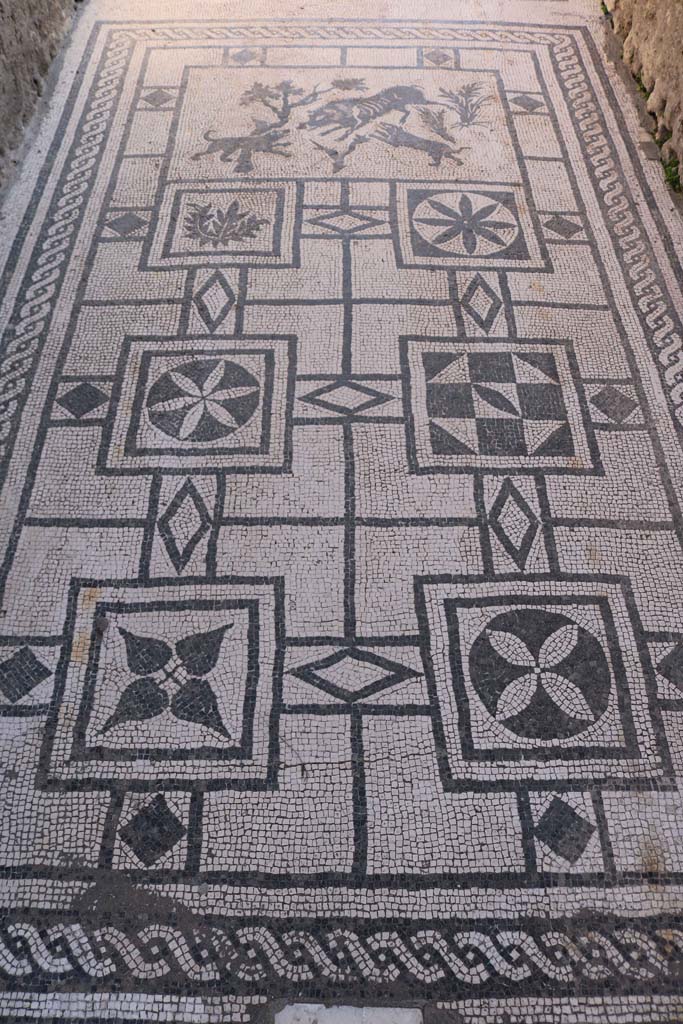
VIII.3.8 Pompeii. December 2018.
Looking south from entrance doorway along mosaic in
corridor/fauces. Photo courtesy of Aude Durand.
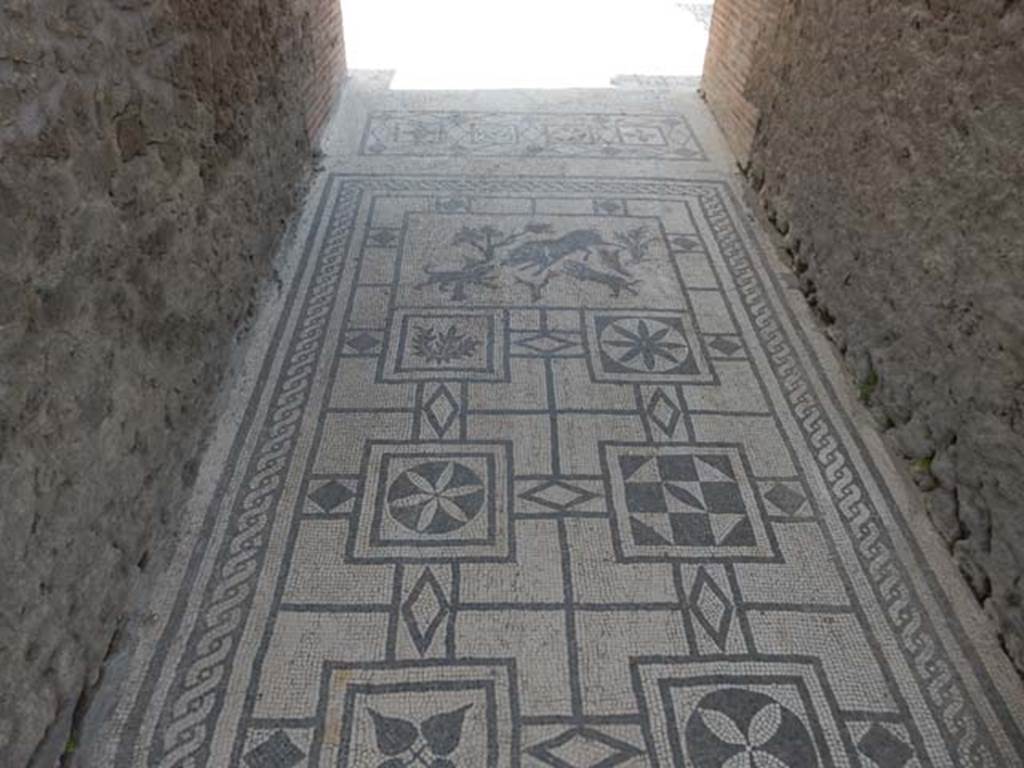
VIII.3.8 Pompeii. May 2016.
Looking south from entrance doorway along mosaic in corridor/fauces. Photo courtesy of Buzz Ferebee.
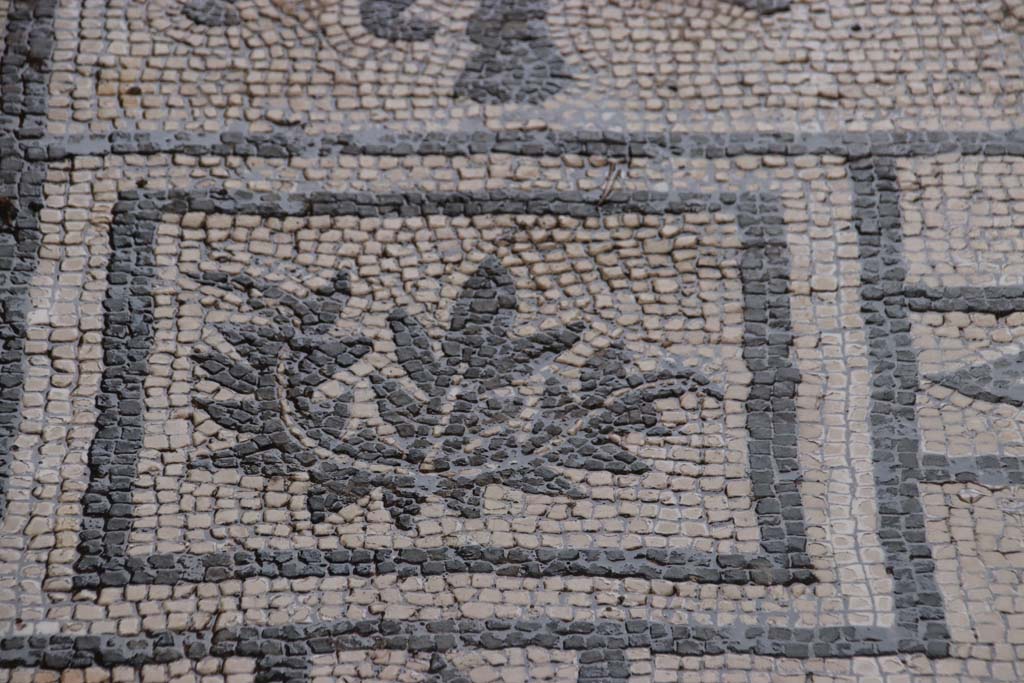
VIII.3.8 Pompeii. October 2020. Detail of mosaic in corridor/fauces. Photo courtesy of Klaus Heese.
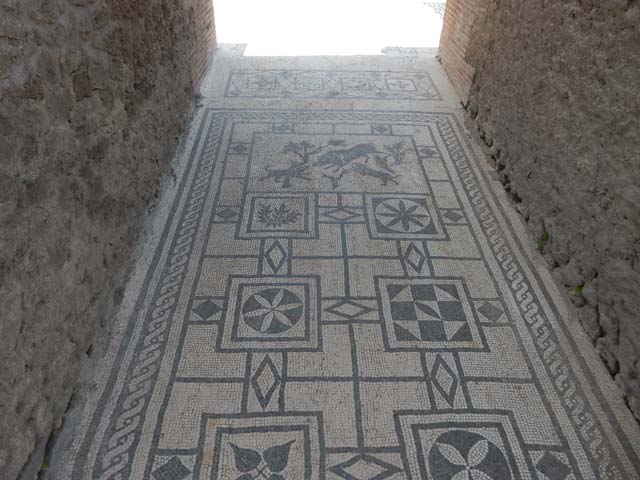
VIII.3.8 Pompeii. October 2020. Detail of mosaic in corridor/fauces. Photo courtesy of Klaus Heese.
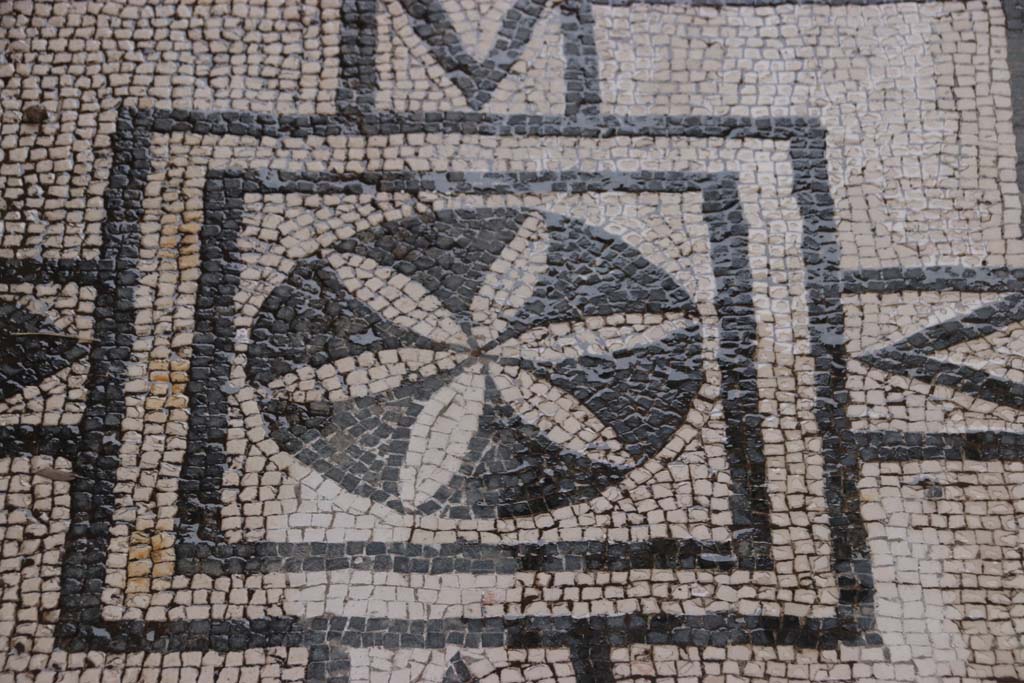
VIII.3.8 Pompeii. October 2020. Detail of mosaic in corridor/fauces. Photo courtesy of Klaus Heese.
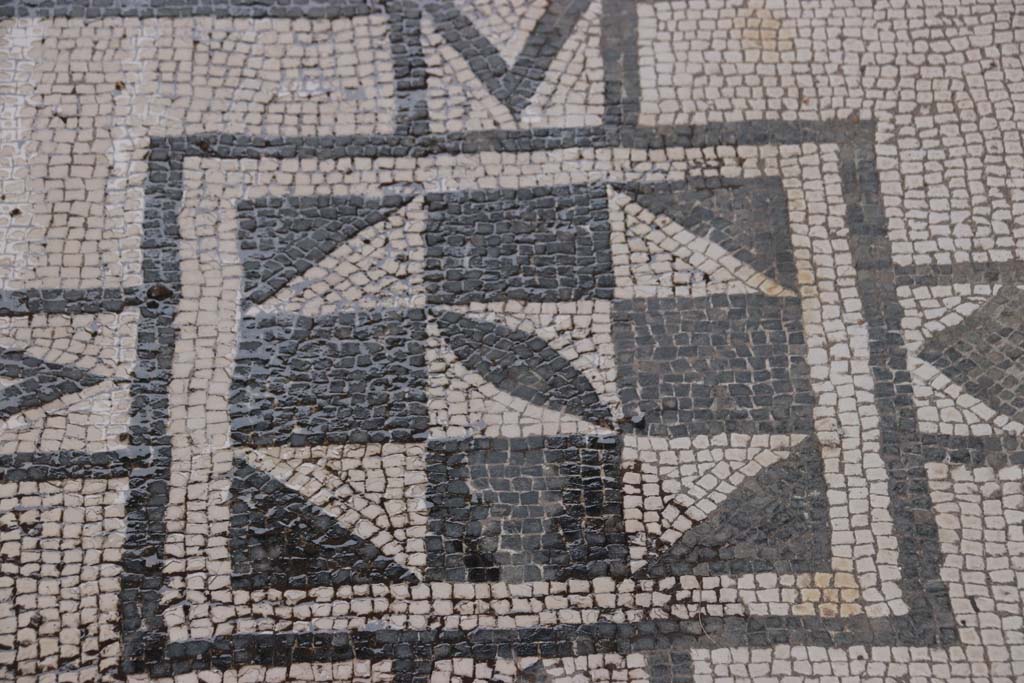
VIII.3.8 Pompeii. October 2020. Detail of mosaic in corridor/fauces. Photo courtesy of Klaus Heese.
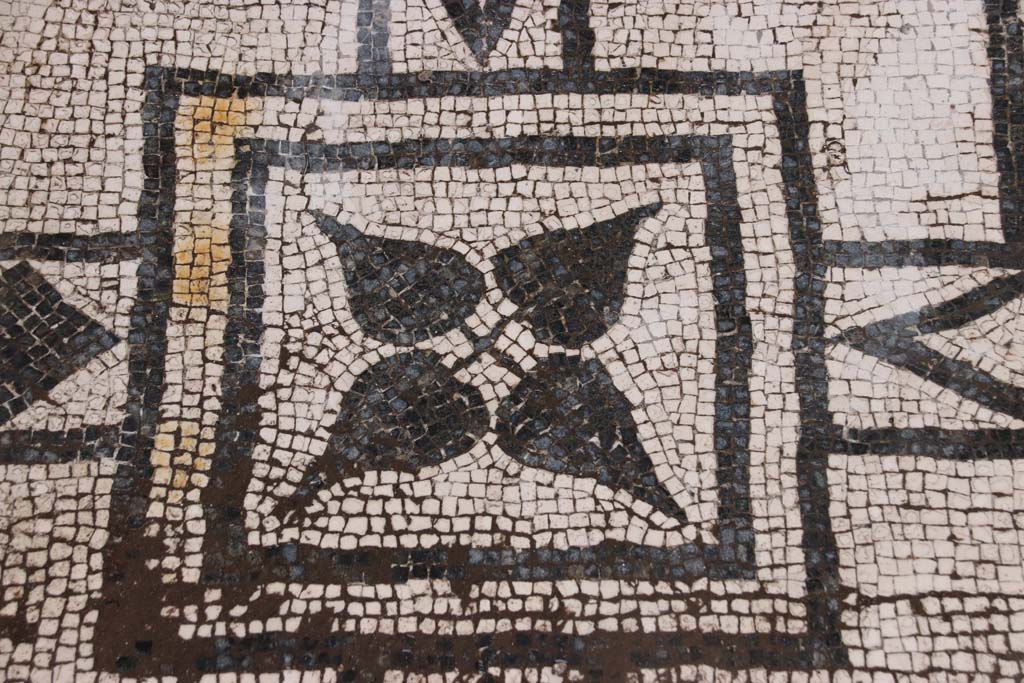
VIII.3.8 Pompeii. October 2020. Detail of mosaic in corridor/fauces. Photo courtesy of Klaus Heese.
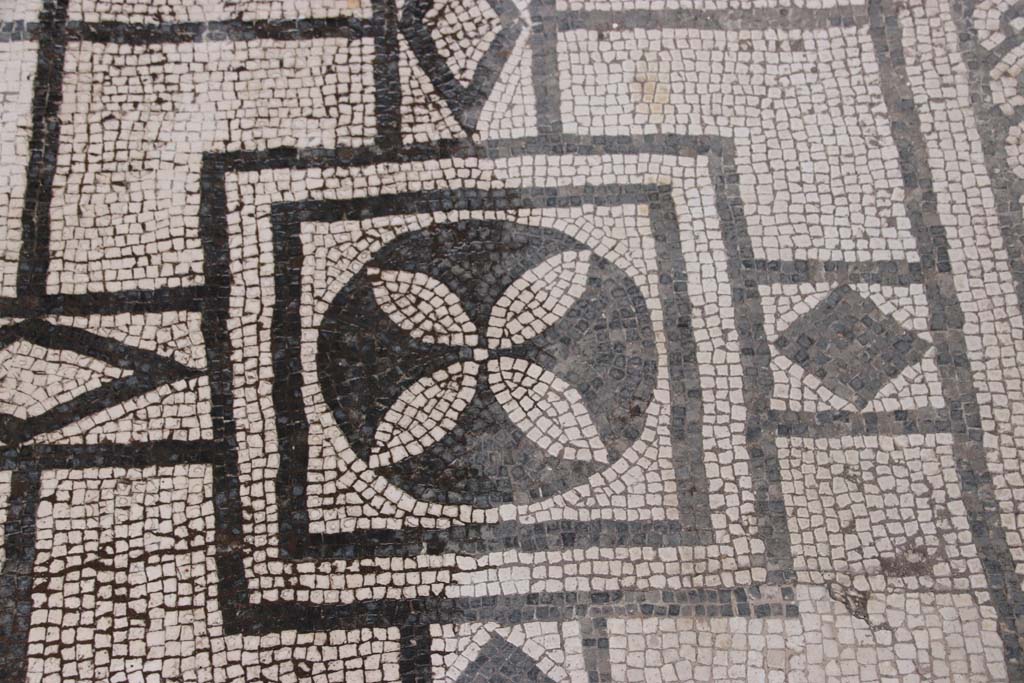
VIII.3.8 Pompeii. October 2020. Detail of mosaic in corridor/fauces. Photo courtesy of Klaus Heese.
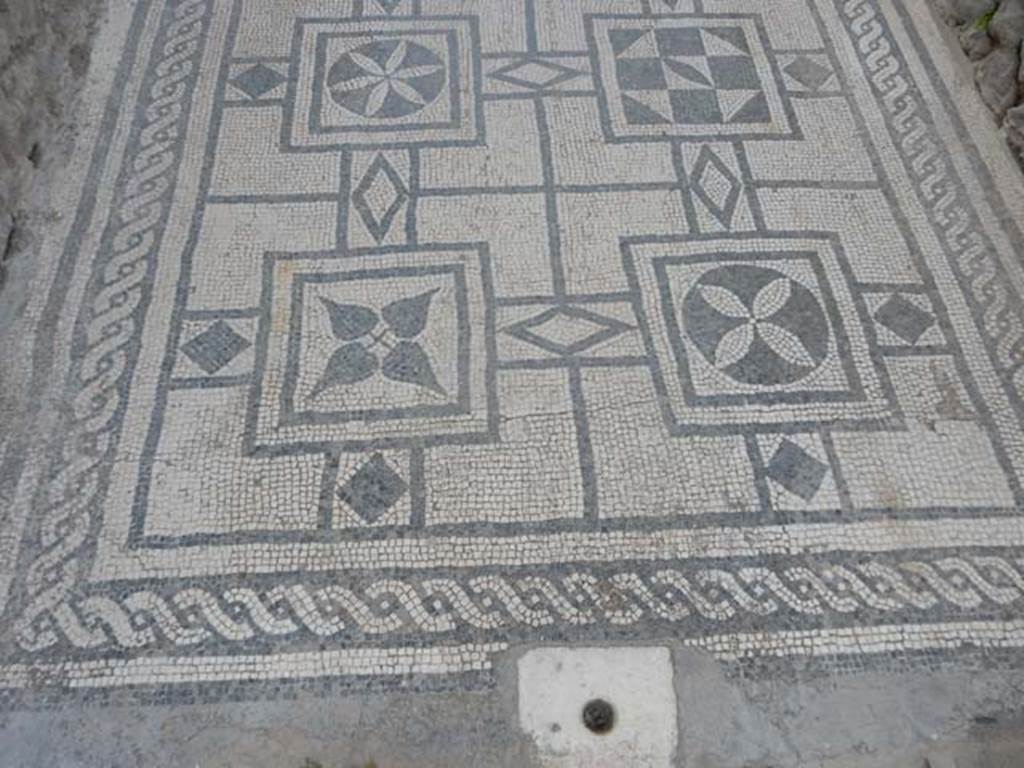
VIII.3.8 Pompeii. May 2016. Mosaic in entrance corridor/fauces, at northern end. Photo courtesy of Buzz Ferebee.
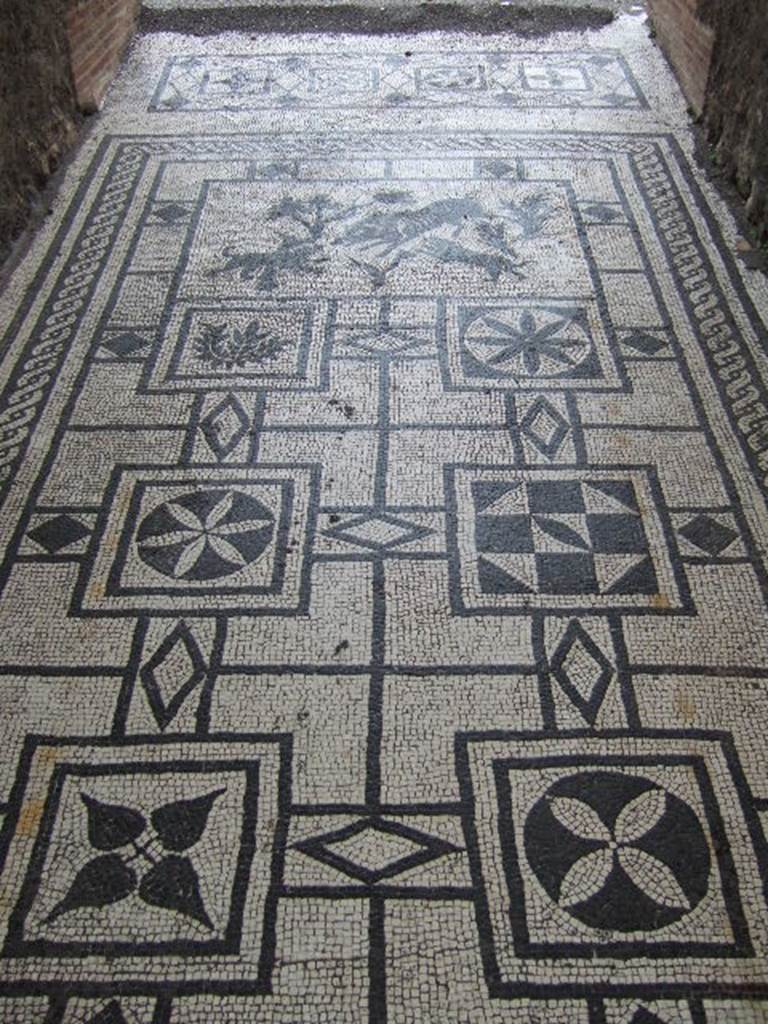
VIII.3.8 Pompeii.
December 2005. Mosaic in entrance corridor.
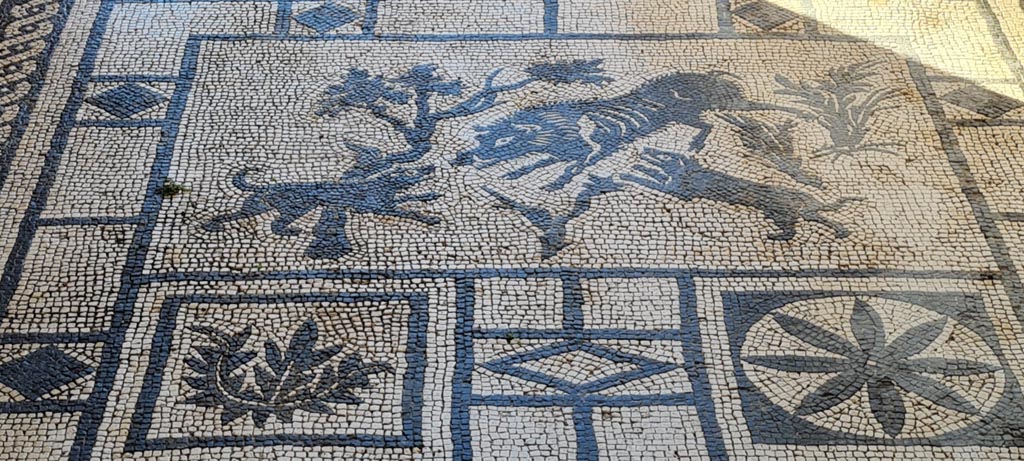
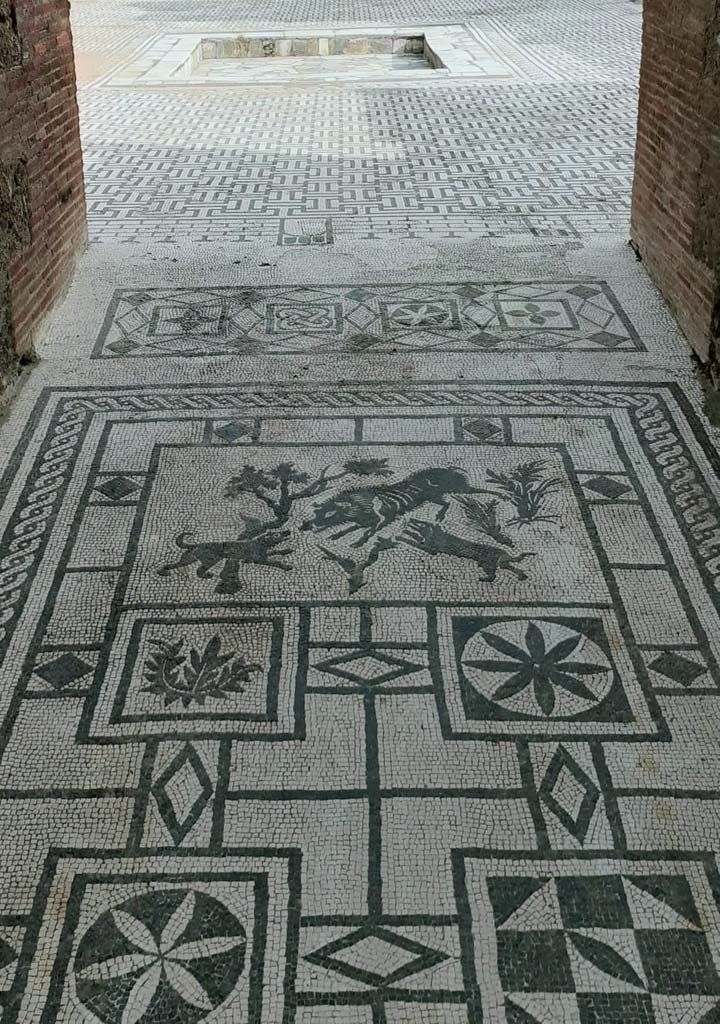
VIII.3.8 Pompeii. April 2022. Mosaic
of boar being attacked by dogs. Photo courtesy of Giuseppe Ciaramella.
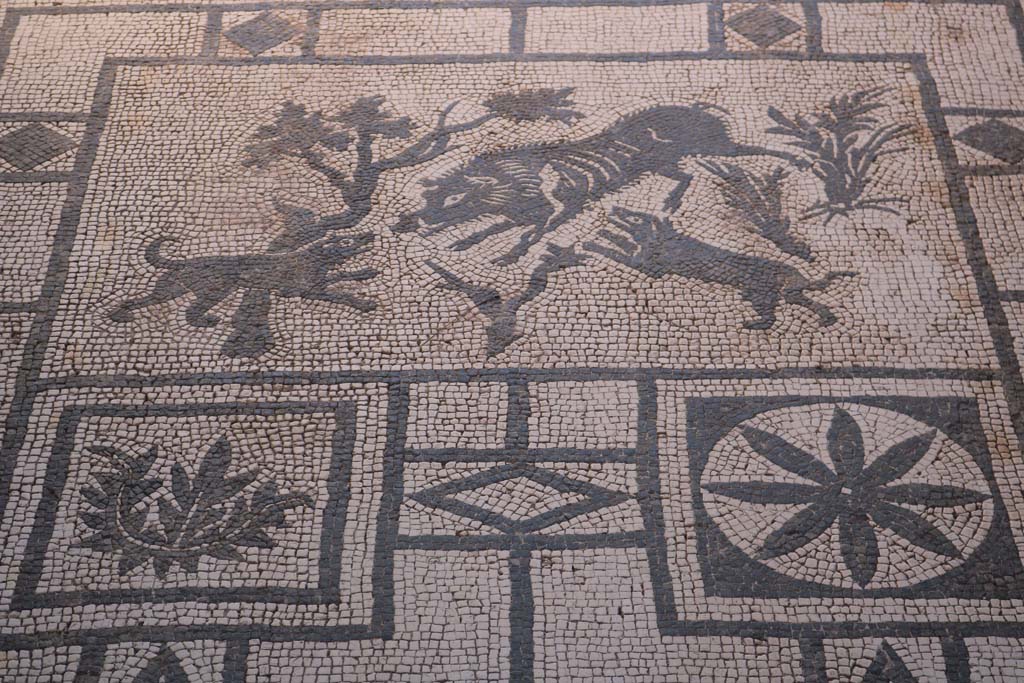
VIII.3.8
Pompeii. December 2018.
Mosaic of boar
(cinghiale) being attacked by dogs, from entrance corridor. Photo courtesy of Aude Durand.
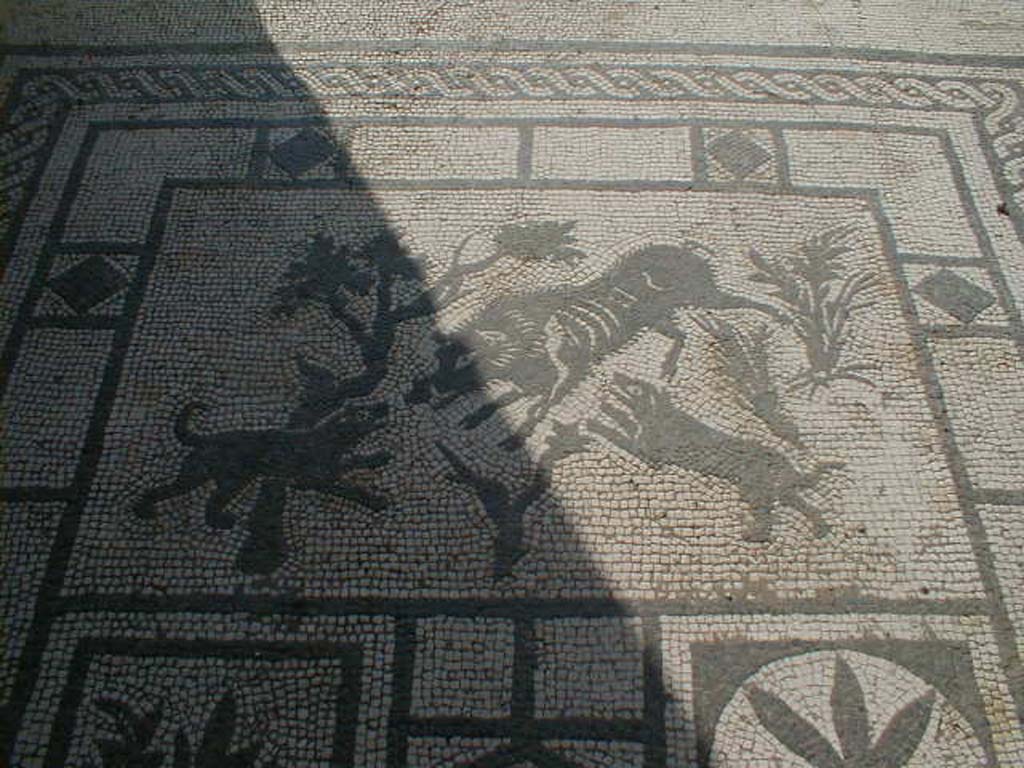
VIII.3.8 Pompeii. September 2004. Wild boar mosaic in entrance corridor.
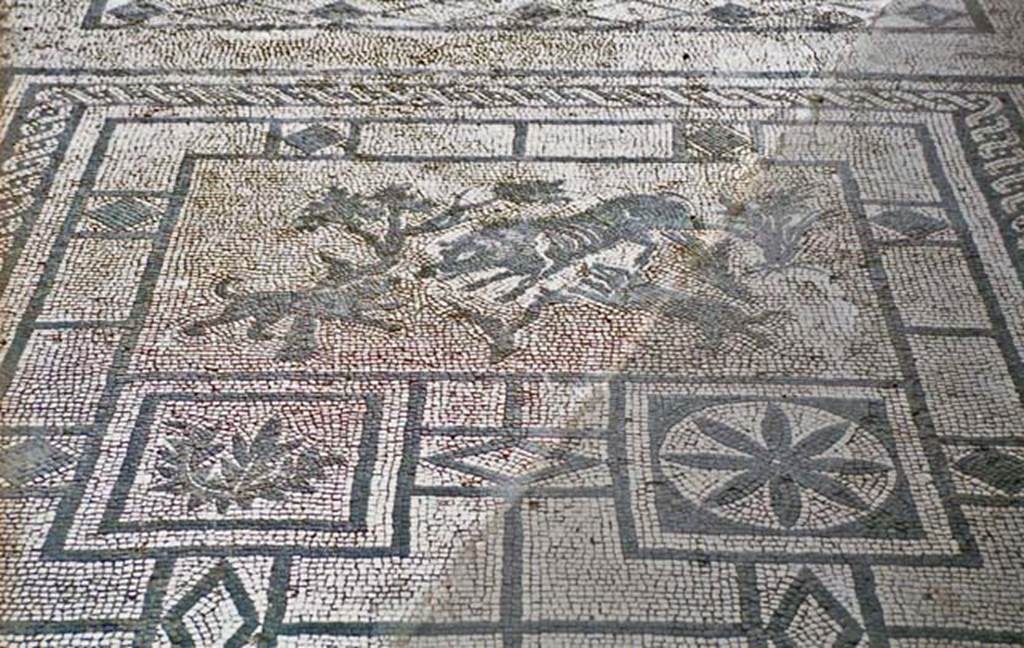
VIII.3.8 Pompeii. October 2001. Wild boar mosaic in entrance corridor. Photo courtesy of Peter Woods.
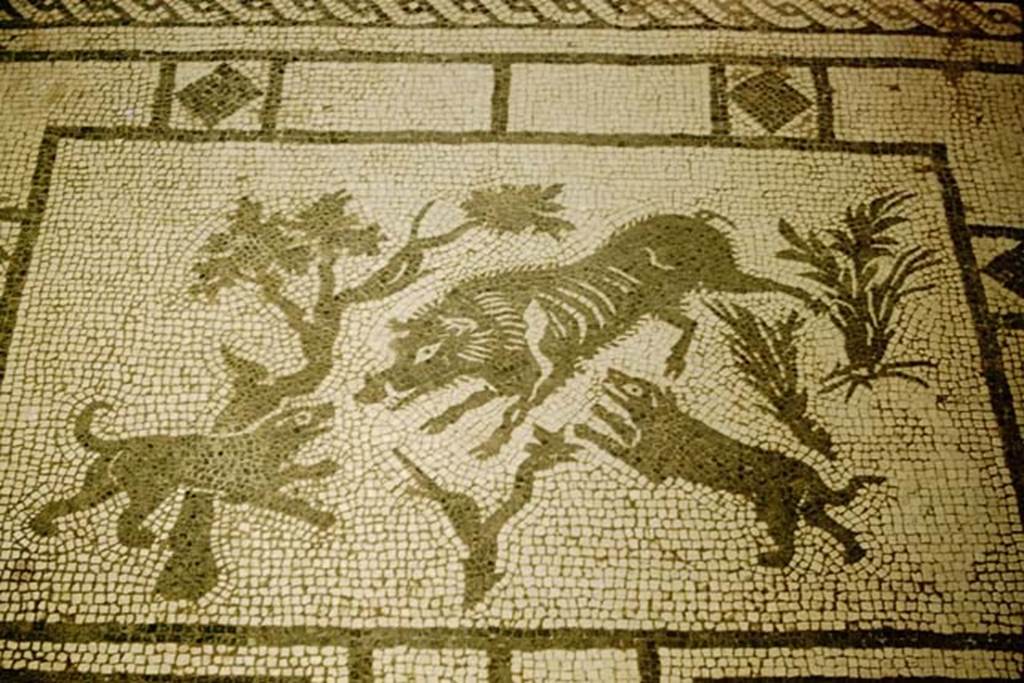
VIII.3.8 Pompeii. 1957. Wild boar mosaic in entrance corridor. Photo by Stanley A. Jashemski.
Source: The Wilhelmina and Stanley A. Jashemski archive in the University of Maryland Library, Special Collections (See collection page) and made available under the Creative Commons Attribution-Non-Commercial License v.4. See Licence and use details.
J57f0358
![VIII.3.8 Pompeii. September 2004. Mosaic floor of entrance corridor and atrium, looking south.
At the end of the fauces corridor was a mosaic of a boar being attacked by two dogs.
The decoration around the edge of the atrium mosaic was of a fortified city, gates and castellated towers set at intervals around a city wall.
On 18th April 1819, two lettered seals were found in this house.
One read as –
Q(uinti) DELLI
AMICI [CIL X 8058, 30]
The other read –
C(ai) IULI
SVAVIS [CIL X 8058, 43]
See Pagano, M. and Prisciandaro, R., 2006. Studio sulle provenienze degli oggetti rinvenuti negli scavi borbonici del regno di Napoli. Naples: Nicola Longobardi. (p. 119)](8%2003%2008_files/image032.jpg)
VIII.3.8 Pompeii. September 2004. Mosaic floor of entrance corridor and atrium, looking south.
At the end of the fauces corridor was a mosaic of a boar being attacked by two dogs.
The decoration around the edge of the atrium mosaic was of a fortified city, gates and castellated towers set at intervals around a city wall.
On 18th April 1819, two lettered seals were found in this house.
One read as –
Q(uinti) DELLI
AMICI [CIL
X 8058, 30]
The other read –
C(ai) IULI
SVAVIS [CIL
X 8058, 43]
See Pagano, M. and Prisciandaro, R., 2006. Studio sulle provenienze degli oggetti rinvenuti negli scavi borbonici del regno di Napoli. Naples: Nicola Longobardi. (p. 119)
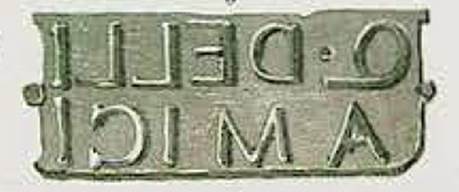
VIII.3.8 Pompeii. 1862 painting of the seal of Quinti Delli Amici.
Now in Naples Archaeological Museum. Inventory number: 4737.
See Niccolini F, 1862. Le case ed i monumenti di Pompei: Volume Secondo. Napoli, Desc. Gen Tav. 56, no. 6.
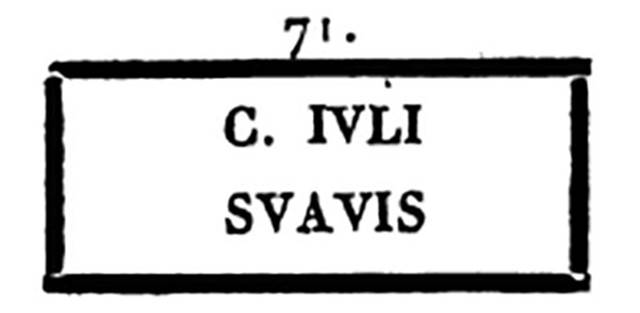
VIII.3.8 Pompeii. 1834 drawing of the seal of Cai Iuli Suavis.
Now in Naples Archaeological Museum. Inventory number: 4739.
See Guarini R., 1834. Alcuni suggelli antichi spiegati da Raimondo Guarini. Napoli: Soc. Filomatica, p. 60, no. 71.
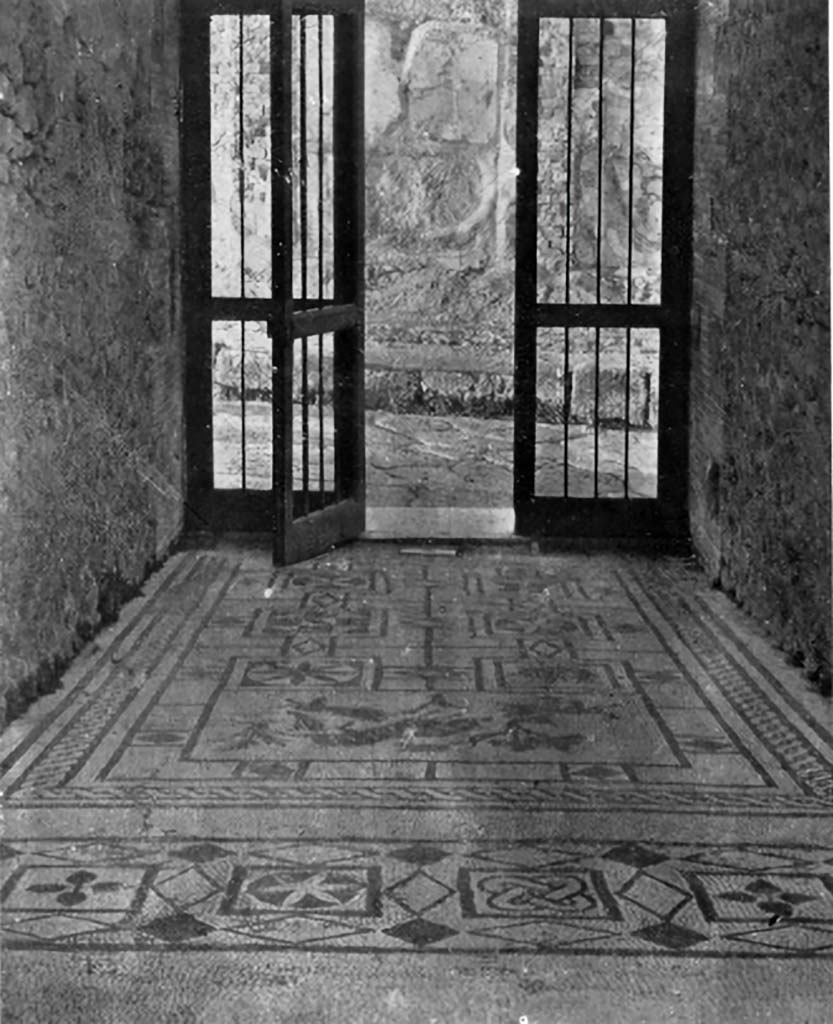
VIII.3.8
Pompeii. c.1930. Looking north along mosaic in entrance corridor towards
entrance doorway.
See Blake,
M., (1930). The pavements of the Roman Buildings of the Republic and Early
Empire. Rome, MAAR, 8, (p.99,103,108,120 & Pl.26, tav.1).
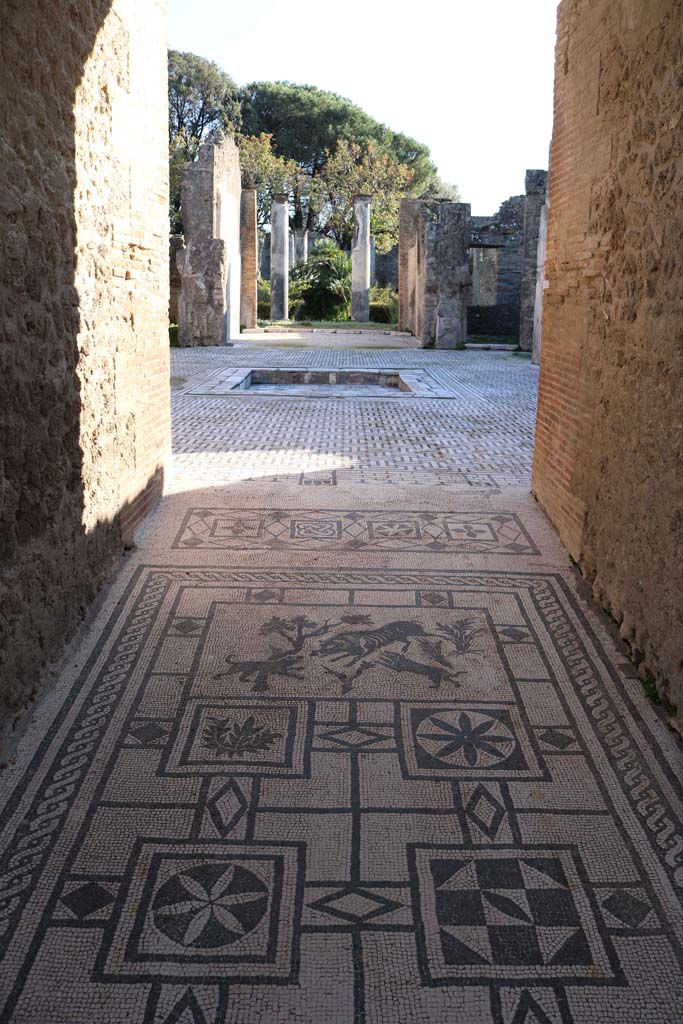
VIII.3.8
Pompeii., December 2018.
Looking south along mosaic in entrance corridor towards atrium, through tablinum to peristyle.
Photo
courtesy of Aude Durand.
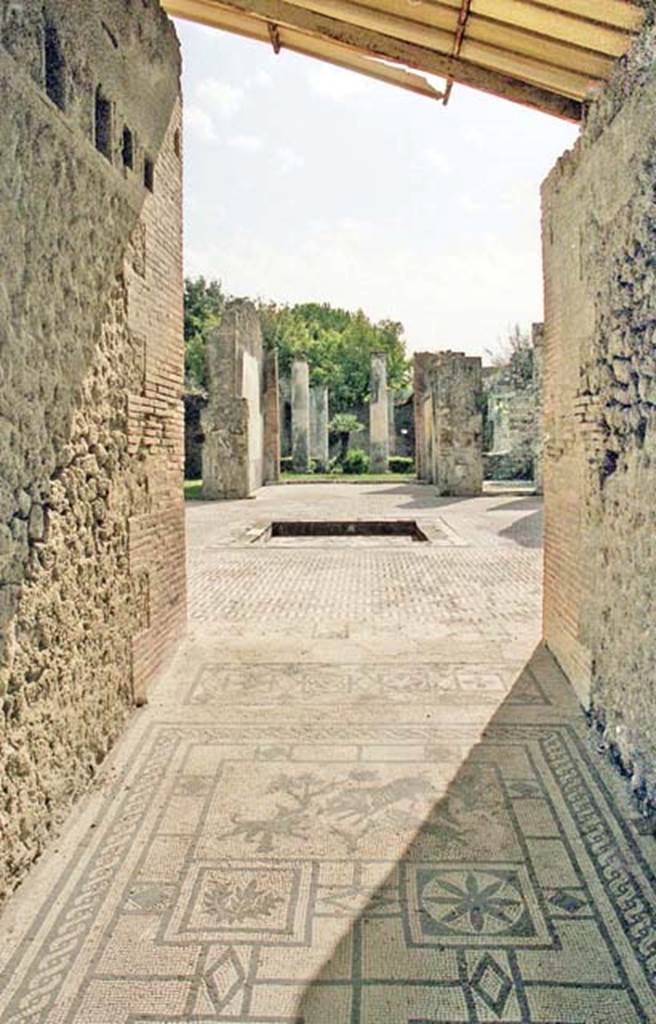
VIII.3.8 Pompeii. October 2001.
Looking south along entrance corridor towards atrium, through tablinum to peristyle.
Photo courtesy of Peter Woods.
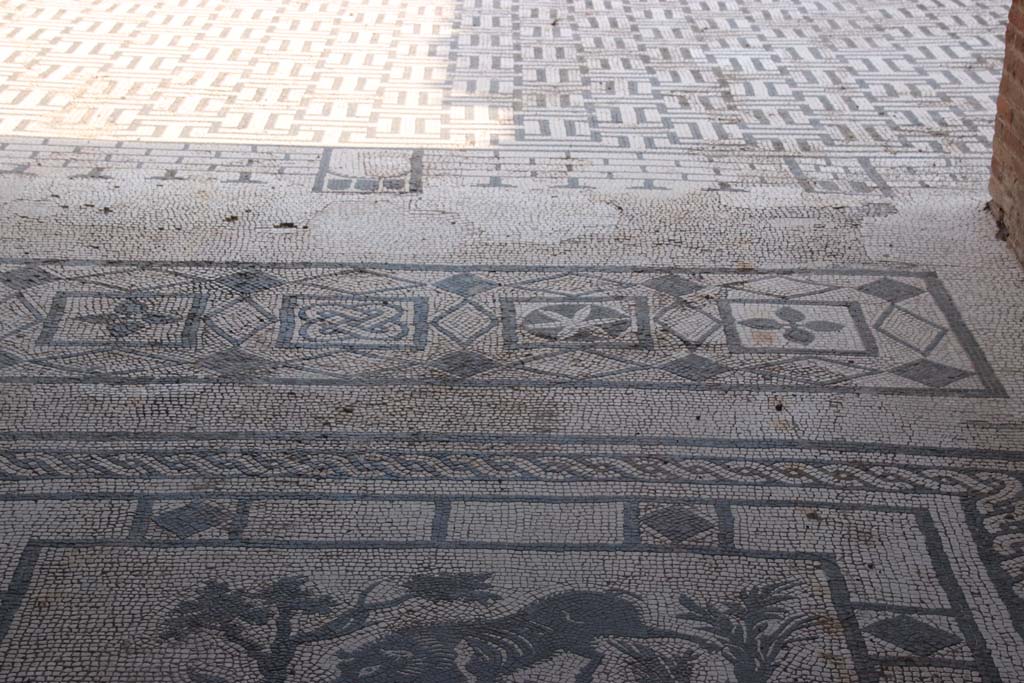
VIII.3.8 Pompeii. September 2021.
Looking
south along mosaic in entrance corridor towards atrium flooring. Photo courtesy
of Klaus Heese.
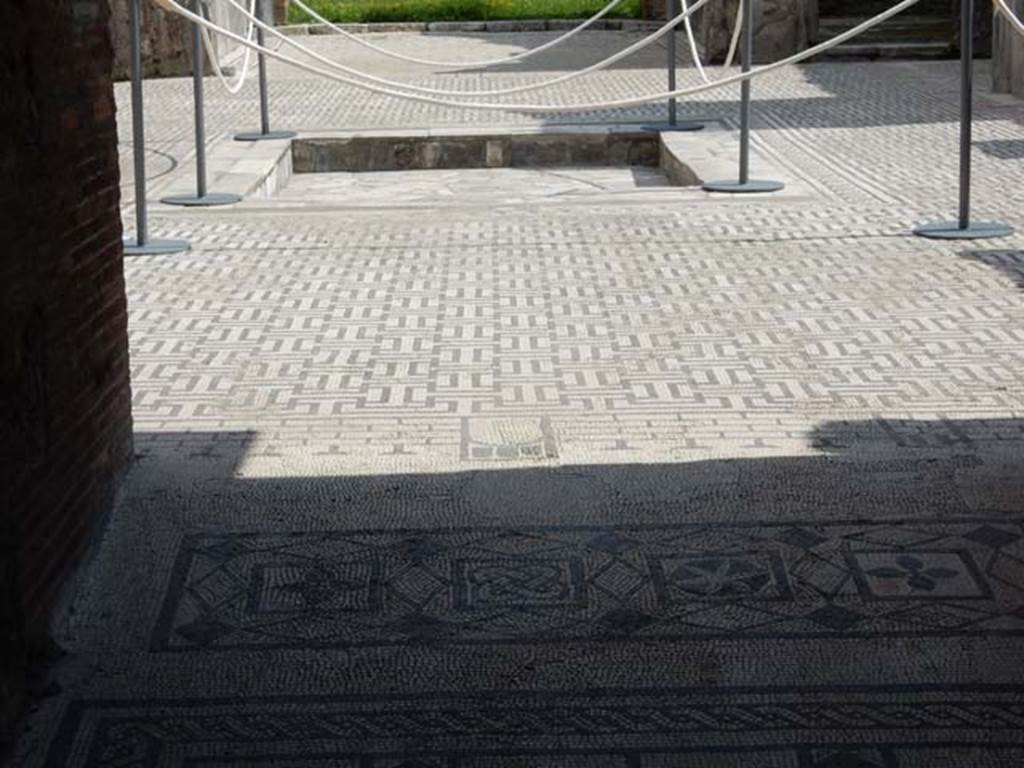
VIII.3.8 Pompeii. May 2016.
Looking south from mosaic in entrance corridor towards atrium floor mosaic. Photo courtesy of Buzz Ferebee.
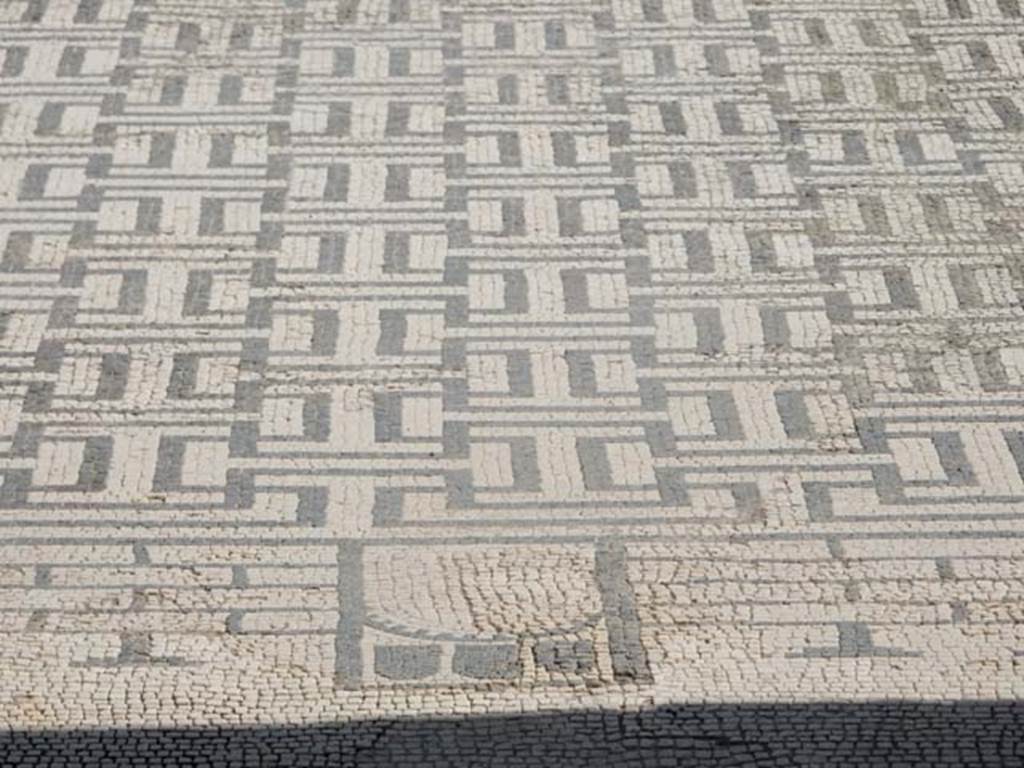
VIII.3.8 Pompeii. May 2016.
Detail of one of the mosaic towers around the border in the atrium floor. Photo courtesy of Buzz Ferebee.
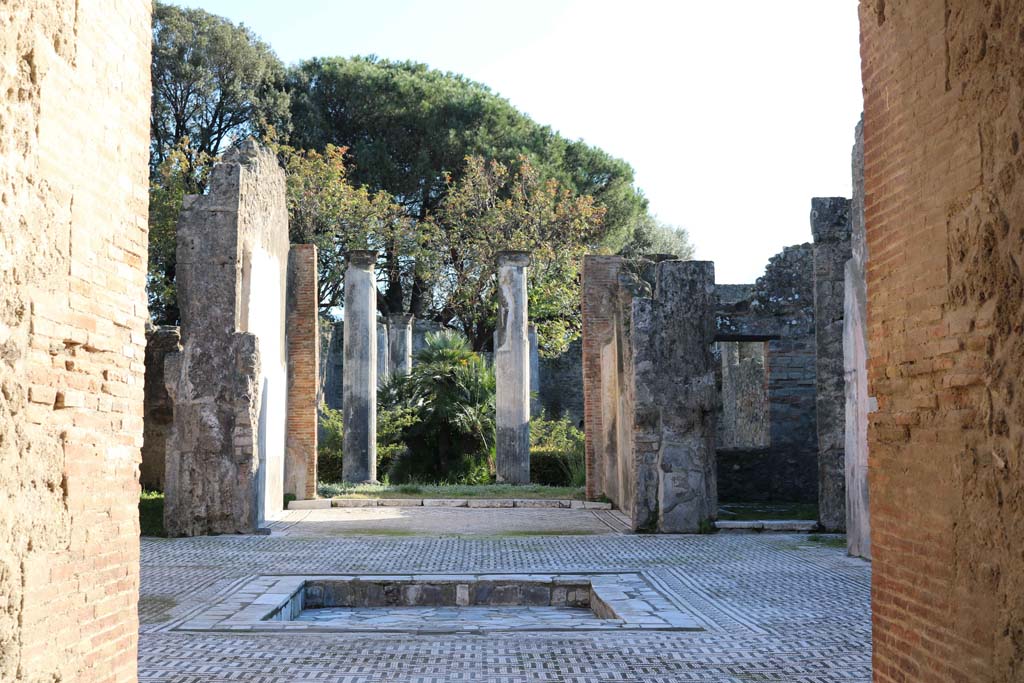
VIII.3.8 Pompeii., December 2018.
Looking south from
entrance corridor towards impluvium in the atrium and across the tablinum to
the peristyle. Photo
courtesy of Aude Durand.
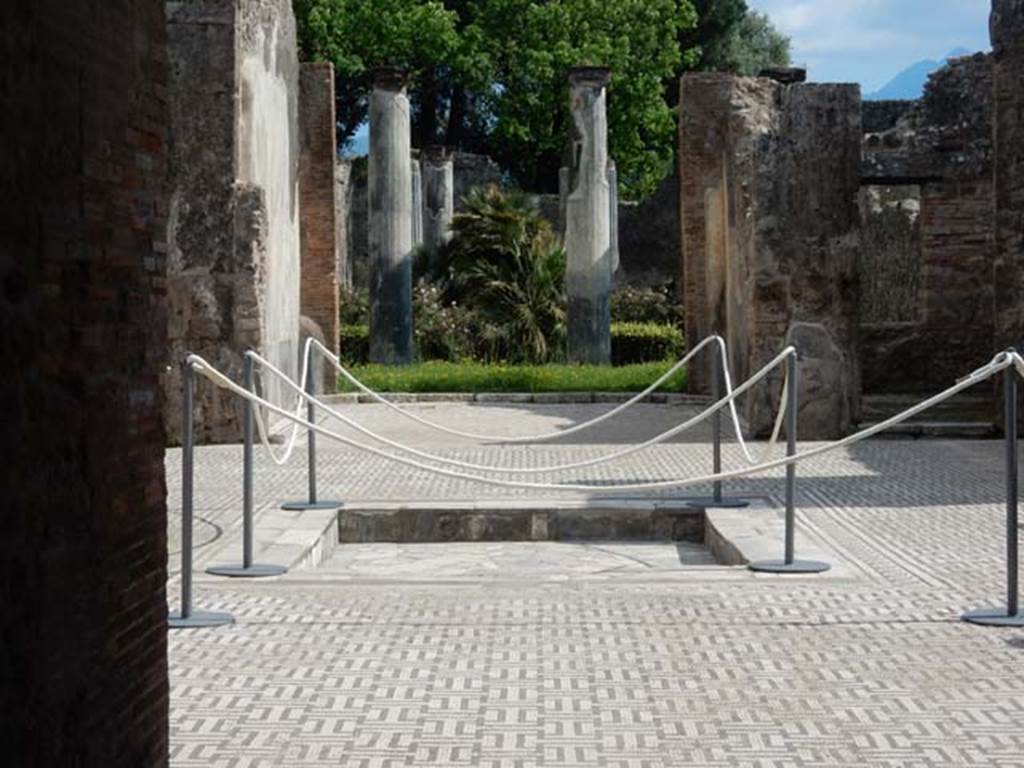
VIII.3.8 Pompeii. May 2016.
Looking south across the impluvium in the atrium towards the tablinum and peristyle. Photo courtesy of Buzz Ferebee.
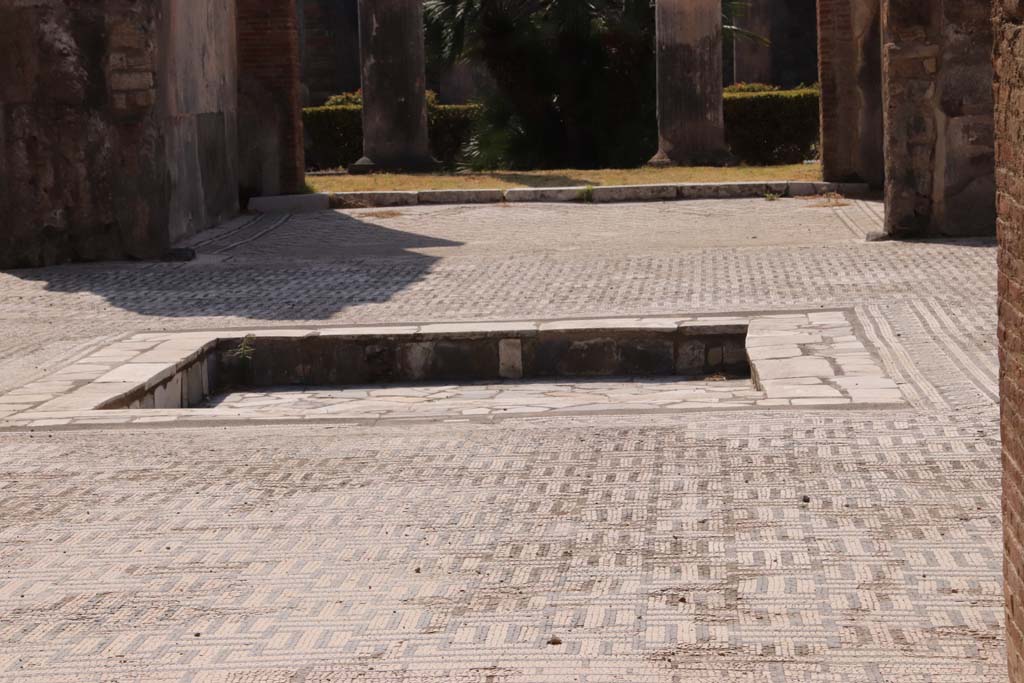
VIII.3.8 Pompeii. September 2019.
Looking south across the atrium flooring towards the impluvium and across towards the tablinum and peristyle. Photo courtesy of Klaus Heese.
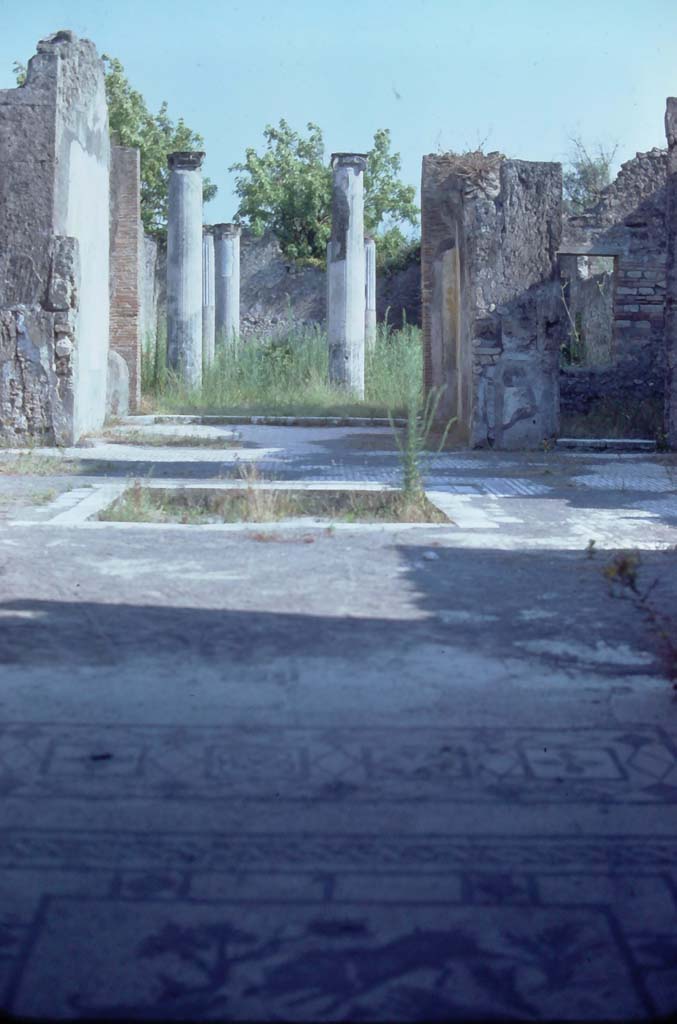
VIII.3.8 Pompeii, 7th August 1976.
Looking south across the impluvium in the atrium towards the tablinum and peristyle.
Photo courtesy of Rick Bauer, from Dr George Fay’s slides
collection.
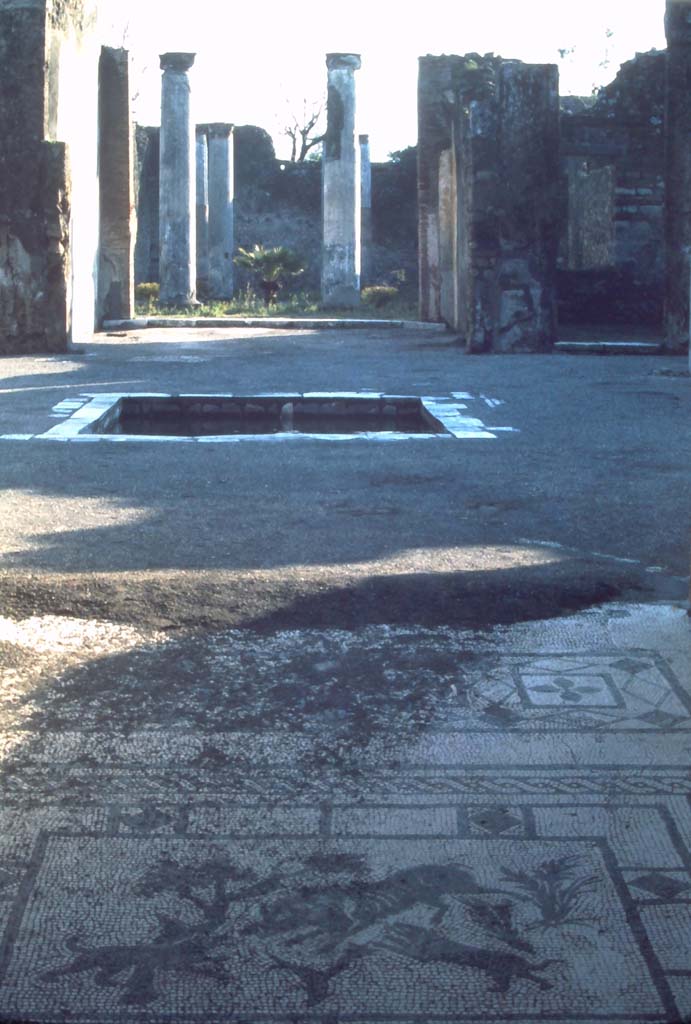
VIII.3.8 Pompeii. 4th December 1971.
Looking south from end of mosaic in fauces, across atrium to peristyle.
Photo courtesy of Rick Bauer, from Dr George Fay’s slides
collection.
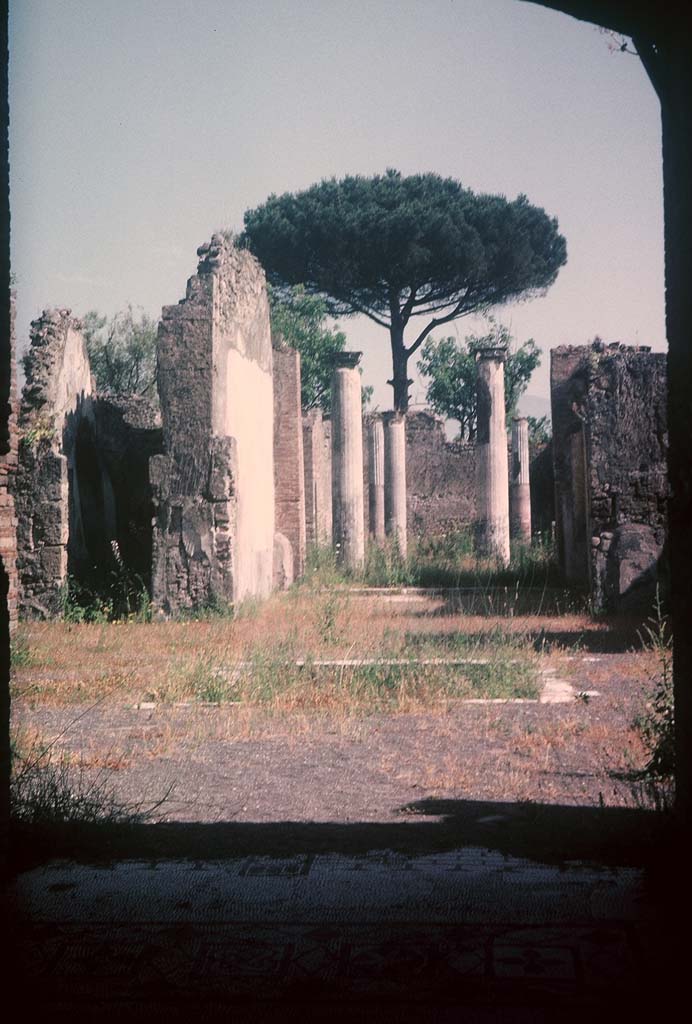
VIII.3.8 Pompeii. August 1965.
Looking south from end of mosaic in fauces, across atrium to peristyle. Photo courtesy of Rick Bauer.
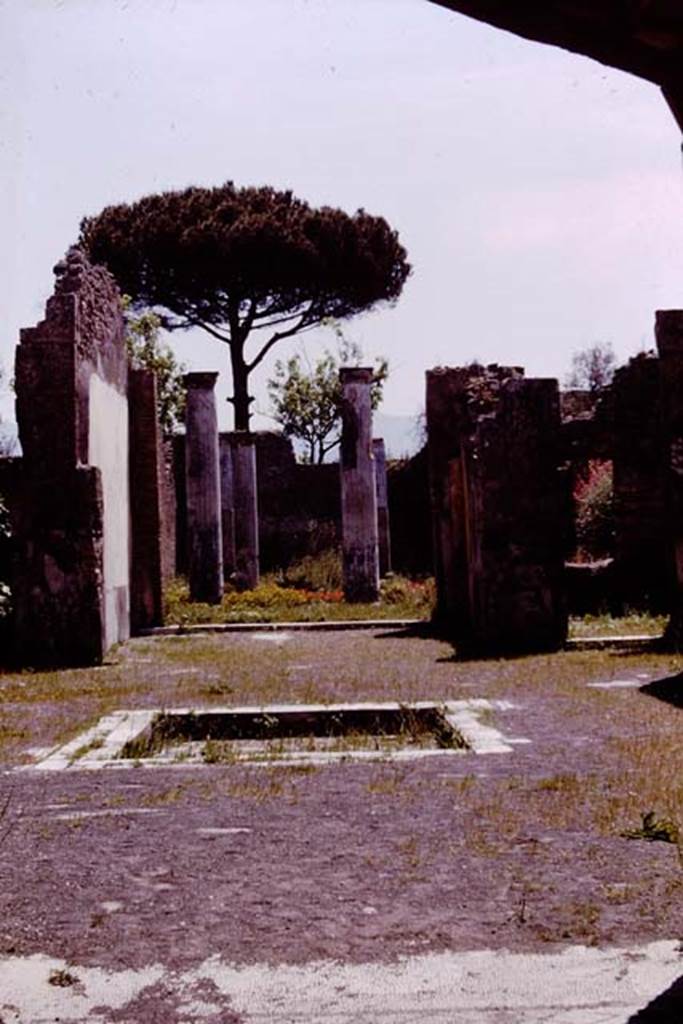
VIII.3.8 Pompeii. 1964.
Looking south across atrium towards peristyle. Photo by Stanley A. Jashemski.
Source: The Wilhelmina and Stanley A. Jashemski archive in the University of Maryland Library, Special Collections (See collection page) and made available under the Creative Commons Attribution-Non-Commercial License v.4. See Licence and use details.
J64f0026
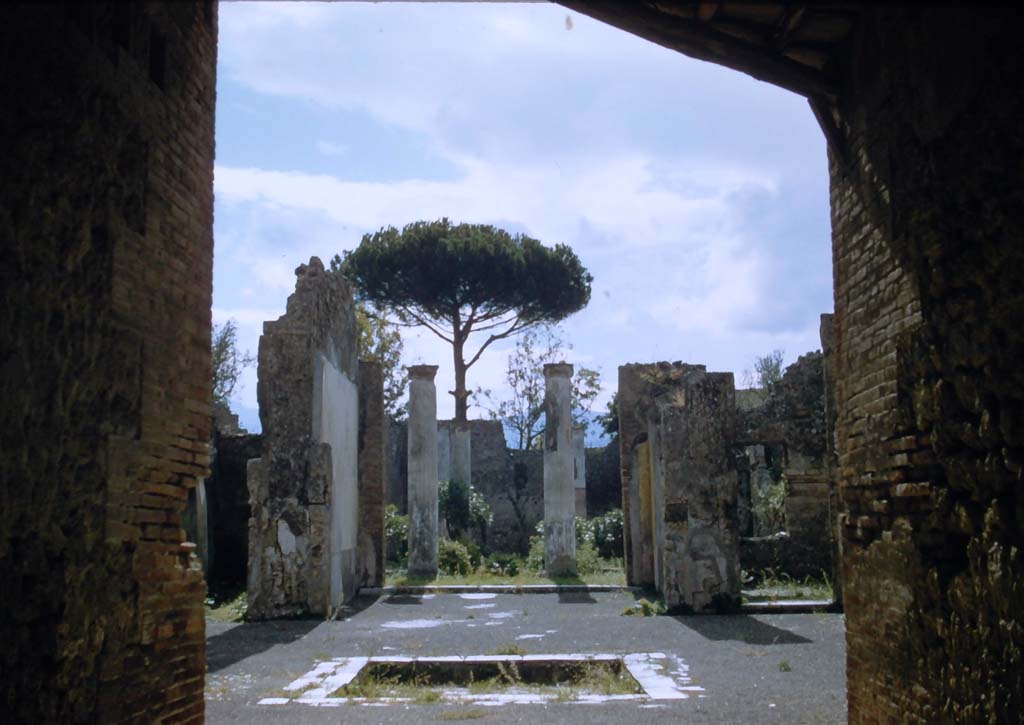
VIII.3.8 Pompeii. November 1958. Looking south
from entrance doorway towards peristyle. Photo courtesy of Rick Bauer.
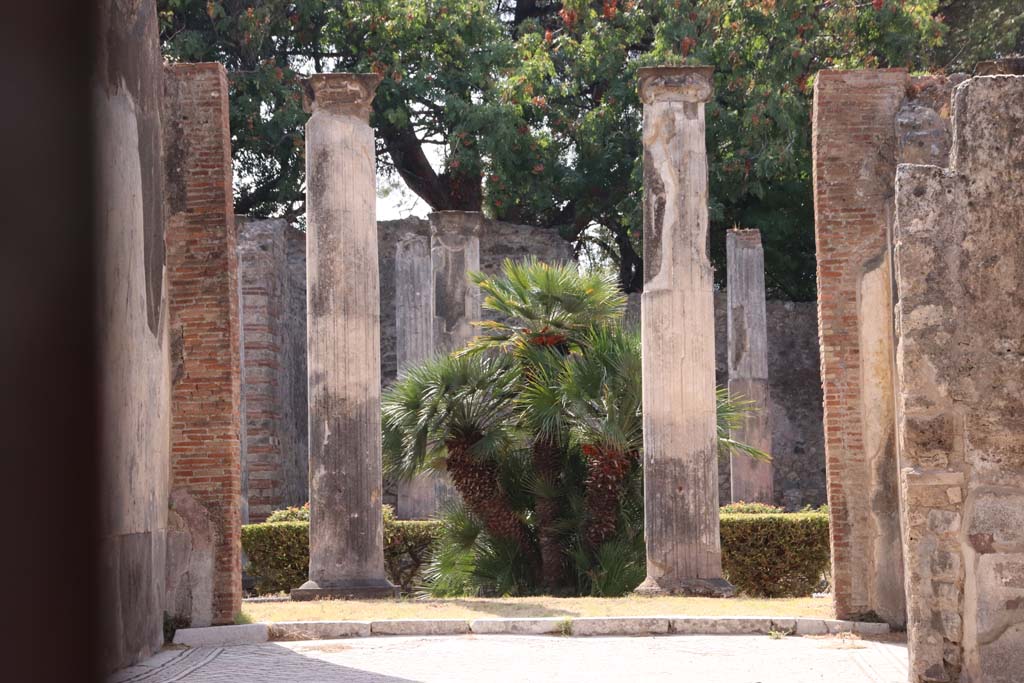
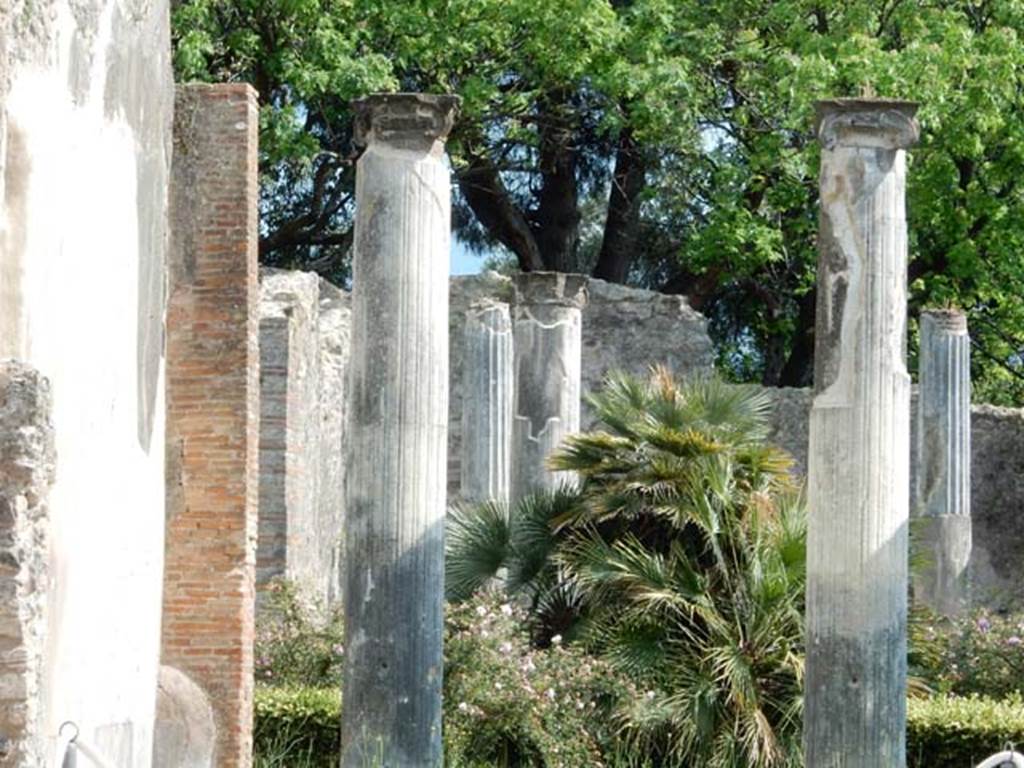
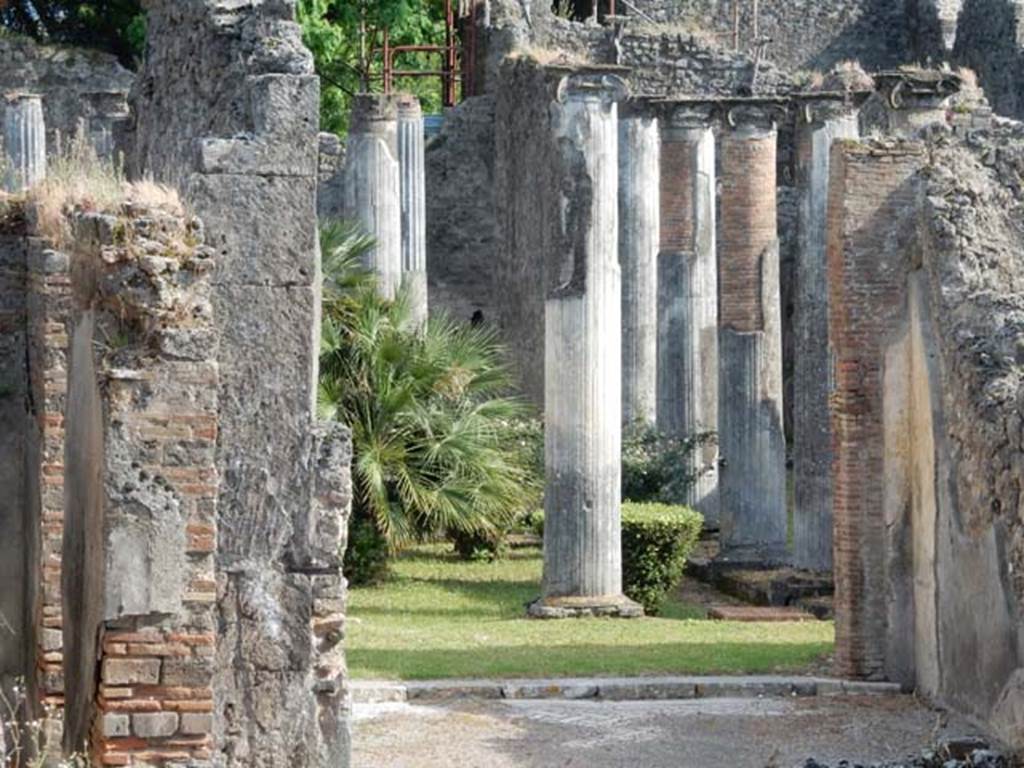
VIII.3.8 Pompeii. May 2016.
Looking south from tablinum into the peristyle, with the east wall of the tablinum, on left. Photo courtesy of Buzz Ferebee.
VIII.3.8 Pompeii. May 2016.
Looking south from tablinum into the peristyle, with the west wall of the tablinum, on right. Photo courtesy of Buzz Ferebee.
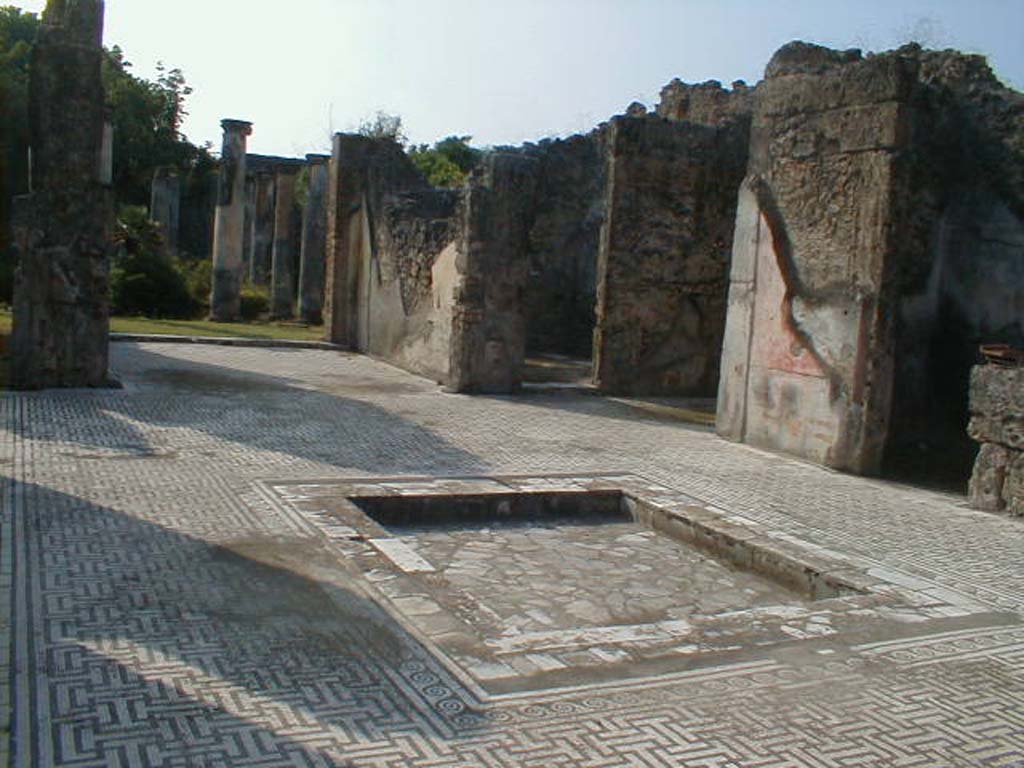
VIII.3.8 Pompeii. September 2004.
Looking south-west across atrium and decorated impluvium, towards tablinum, doorway to oecus and west ala, open onto atrium.
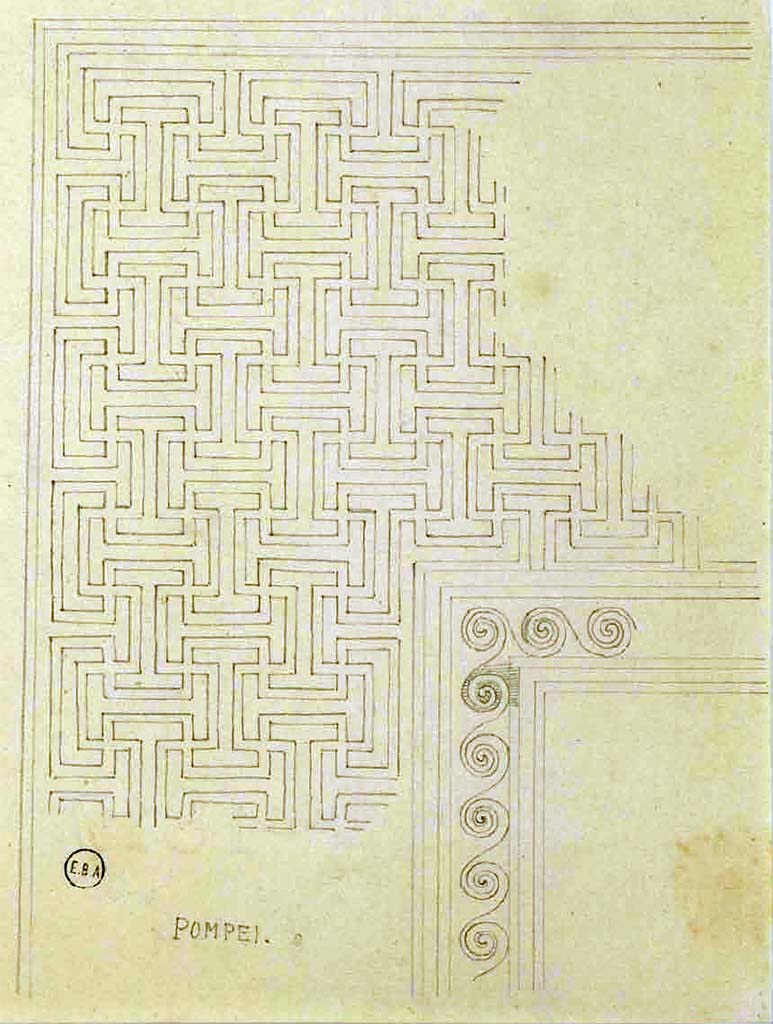
VIII.3.8 Pompeii. Drawing by Lesueur of mosaic flooring and impluvium surround.
See
Lesueur, Jean-Baptiste Cicéron. Voyage en Italie de Jean-Baptiste Cicéron Lesueur
(1794-1883), pl. 40.
See
Book on INHA référence INHA NUM PC 15469
(04) « Licence Ouverte / Open Licence » Etalab
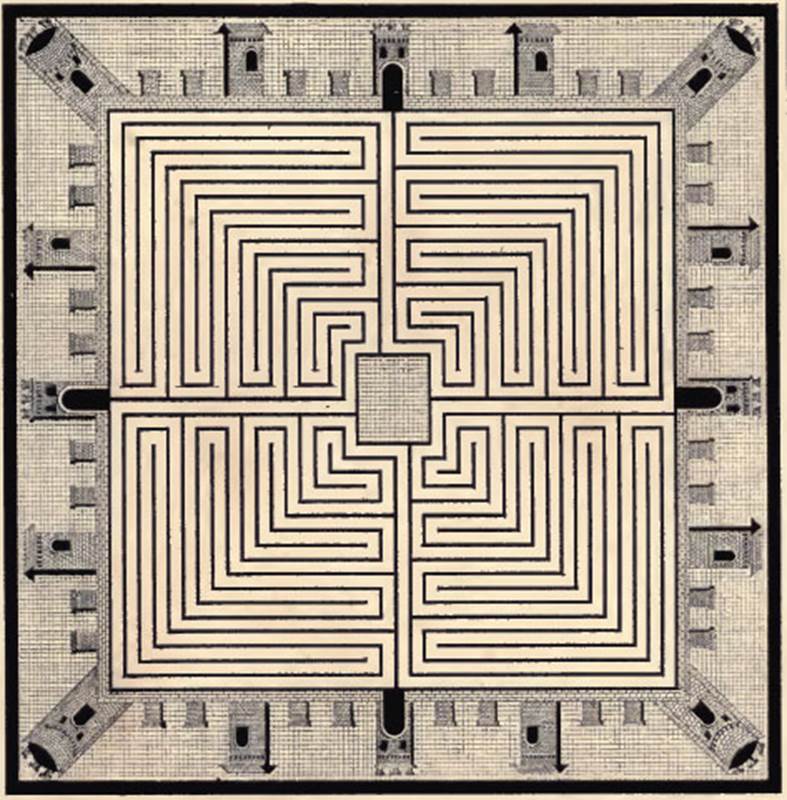
VIII.3.8 Pompeii.
Drawing of decoration around the edge of atrium mosaic showing a fortified city, gates and castellated towers set at intervals around a city wall
See Roux, H., 1839. Herculanem et Pompei recueil général des Peintures, Bronzes, Mosaïques : Tome 5. Paris: Didot. (Pl. 4).
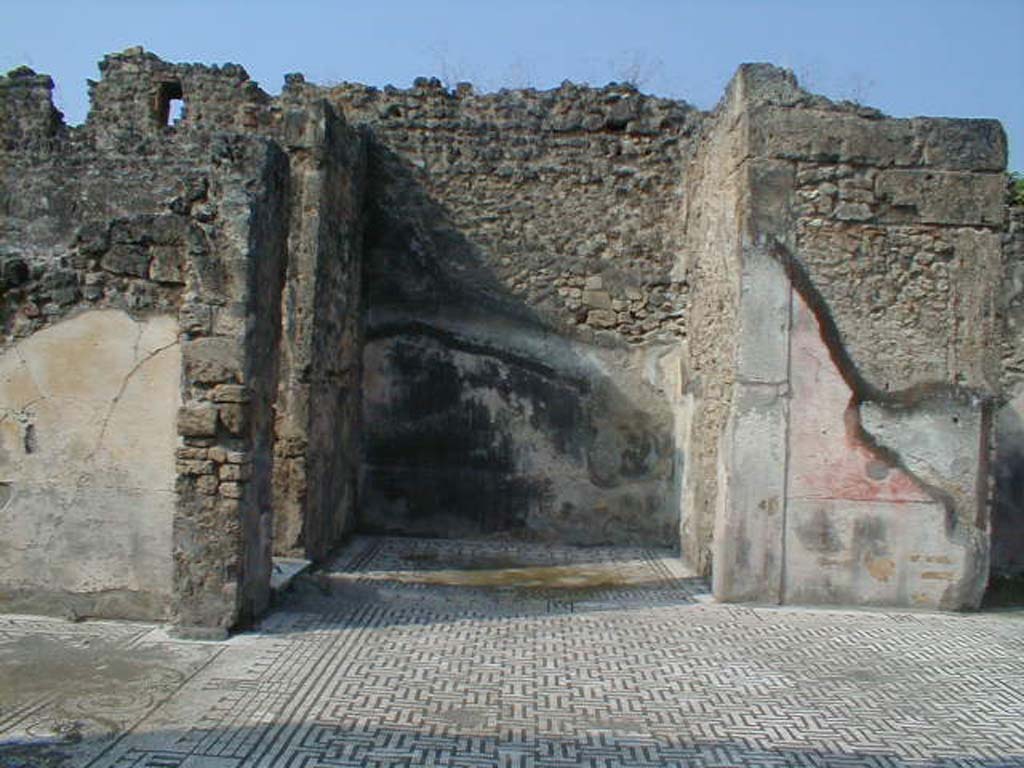
VIII.3.8 Pompeii. September 2004. Looking west towards ala on west side of atrium.
The floor of the ala was of black and white mosaic, similar to that of the atrium, but separated by a threshold (of meander of double T’s).
The carpet of the mosaic was ornamented with a net of hexagons and rectangles, whereas the border was a row of black squares.
On the left is the entrance to the tablinum, and the doorway to an oecus.
On the left of the atrium mosaic, the decoration of castellated towers can be seen.
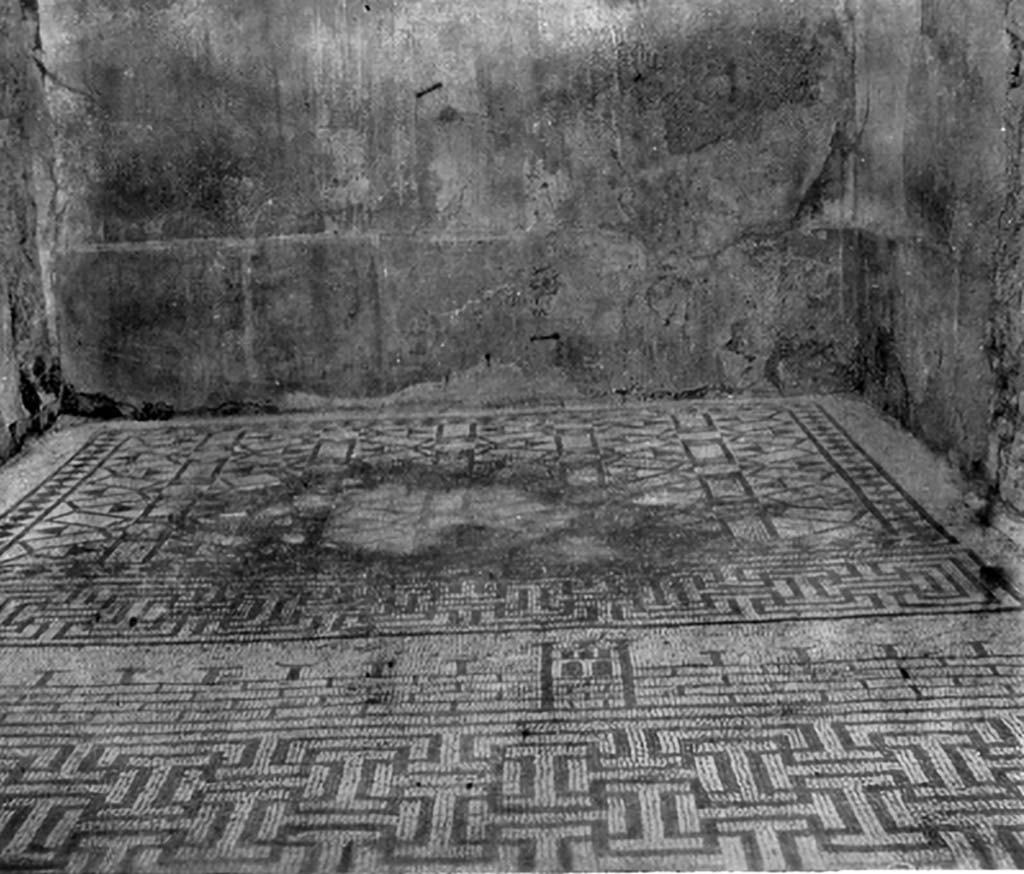
VIII.3.8 Pompeii. c.1930. Black and white mosaic flooring of west ala, linking with the atrium.
See Blake,
M., (1930). The pavements of the Roman Buildings of the Republic and Early
Empire. Rome, MAAR, 8, (p. 99,107,109 & Pl.27, tav.1).
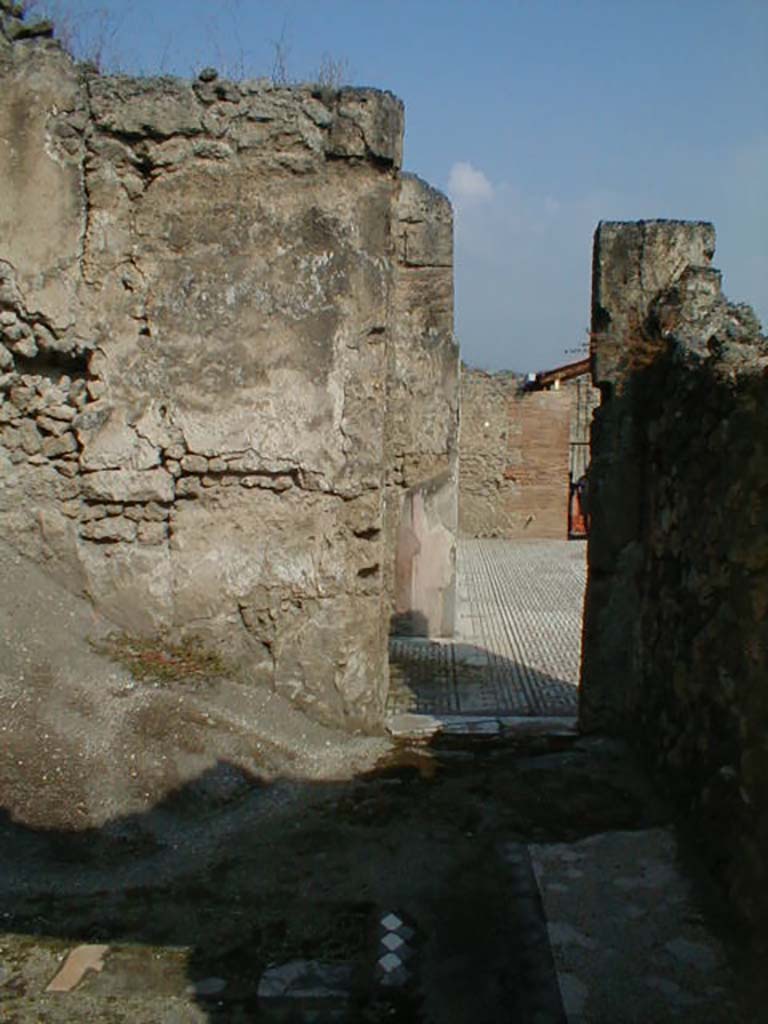
VIII.3.8 Pompeii. September 2004. North wall of oecus, with doorway to atrium.
The floor of this room was formed by diamonds of limestone tiles belonging to a most ancient floor, which was edged by a high fascia of white mosaic tiles.
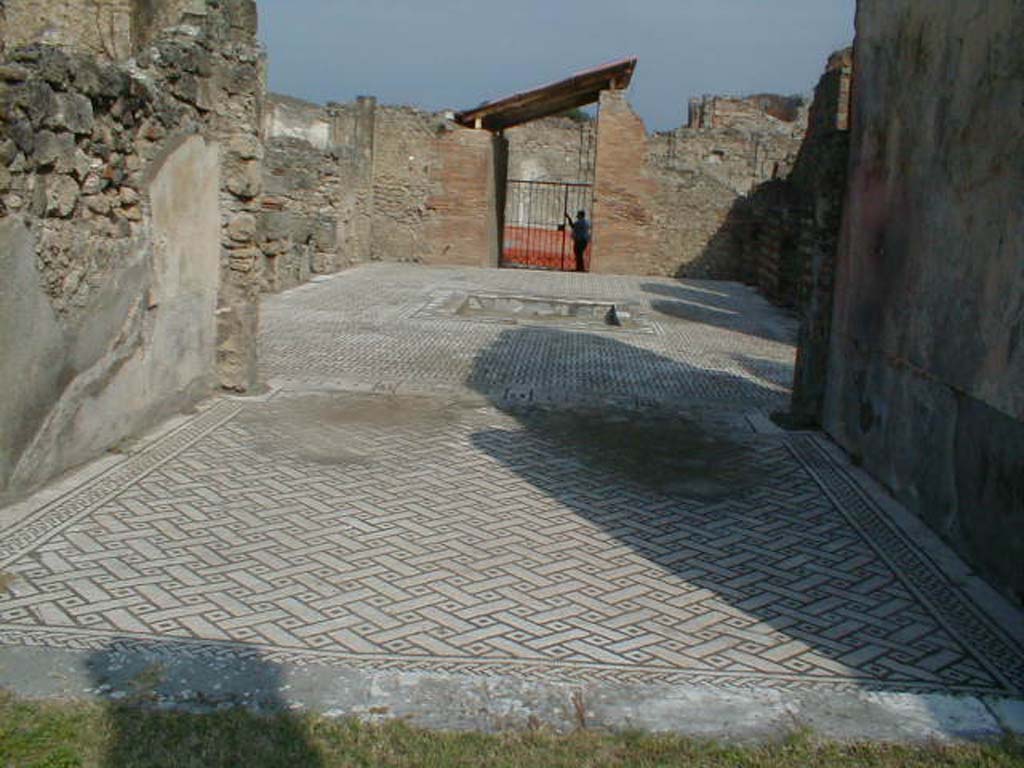
VIII.3.8 Pompeii. September 2004. Looking north across mosaic floors in tablinum and atrium towards entrance.
The black and white mosaic floor of the tablinum showed a carpet style of squares and rectangles.
The threshold between the tablinum and atrium was of a plant decoration, consisting of a central head of acanthus with tendrils.
The tablinum was completely open onto the atrium and the peristyle.
In the centre of east wall of the tablinum, but now lost, was seen a painting of Mars and Venus.
The zoccolo was painted red, and the middle zone was painted yellow with panels separated by narrow compartments.
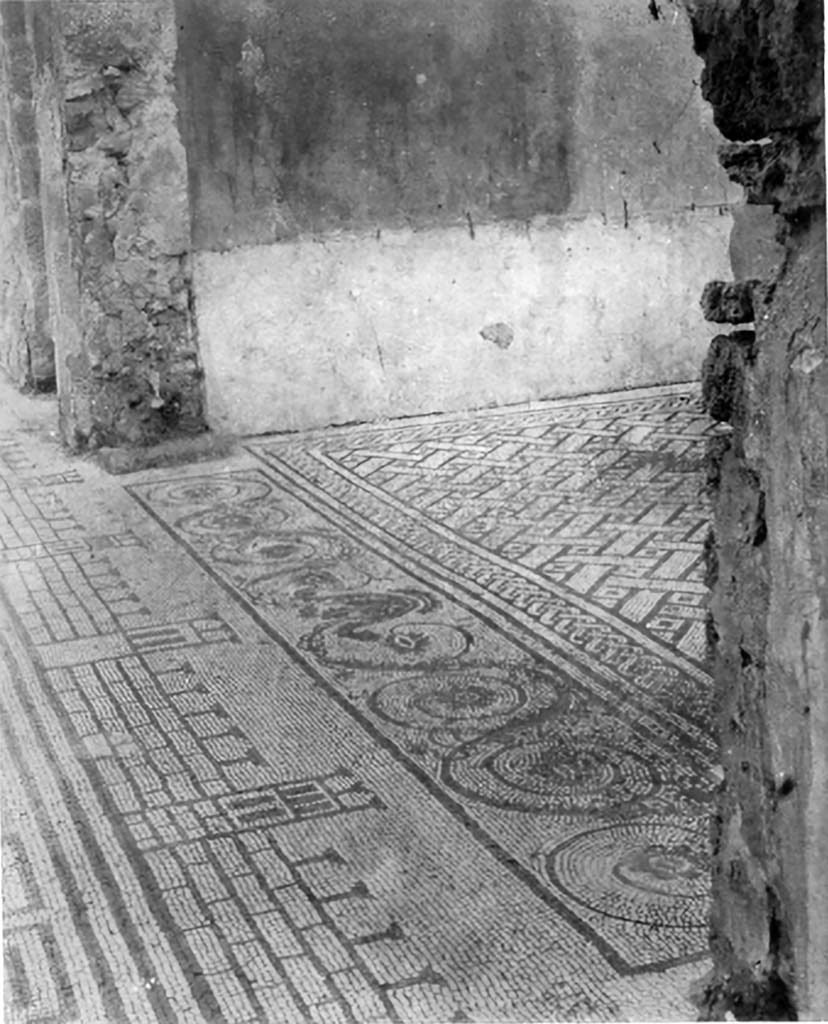
VIII.3.8
Pompeii. c.1930.
Looking
east along north side of tablinum showing threshold and flooring of tablinum,
on right, joining with atrium, on left.
See Blake, M., (1930). The pavements of the Roman Buildings of the Republic and Early Empire. Rome, MAAR, 8, (p. 99, 106, 108 & Pl.26, tav.3).
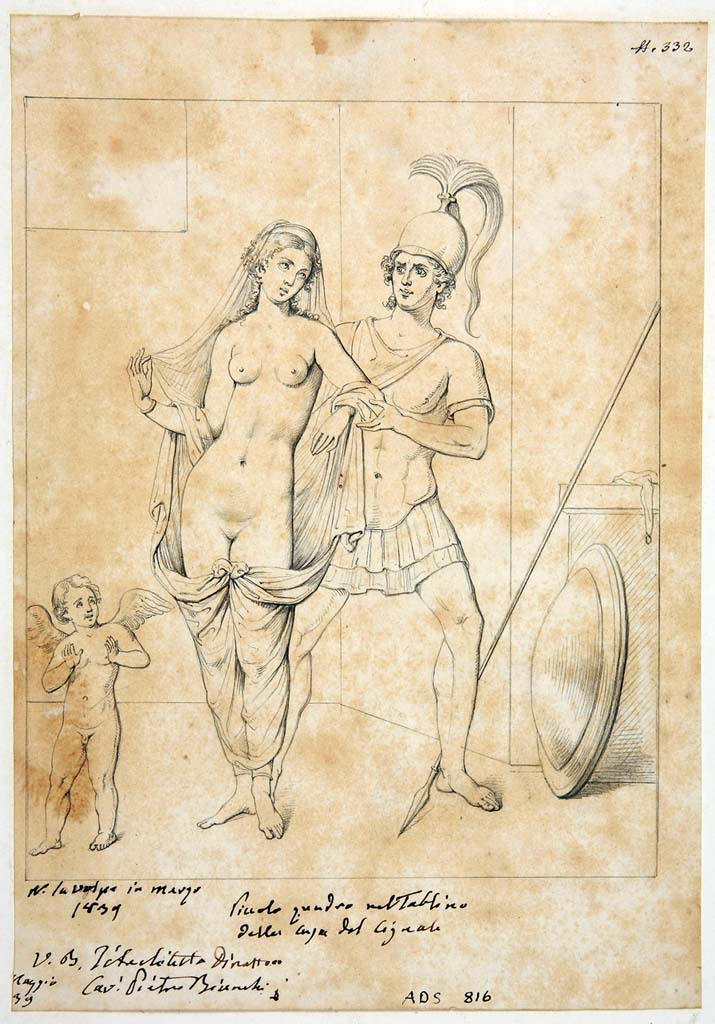
VIII.3.8 Pompeii.
Drawing by Nicola La Volpe, March 1839, of painting from east wall of tablinum of Mars and Venus.
See Helbig, W., 1868. Wandgemälde der vom Vesuv verschütteten Städte Campaniens. Leipzig: Breitkopf und Härtel, (326).
Now in Naples Archaeological Museum. Inventory number ADS 816.
Photo © ICCD. https://www.catalogo.beniculturali.it
Utilizzabili alle condizioni della licenza Attribuzione
- Non commerciale - Condividi allo stesso modo 2.5 Italia (CC BY-NC-SA 2.5 IT)
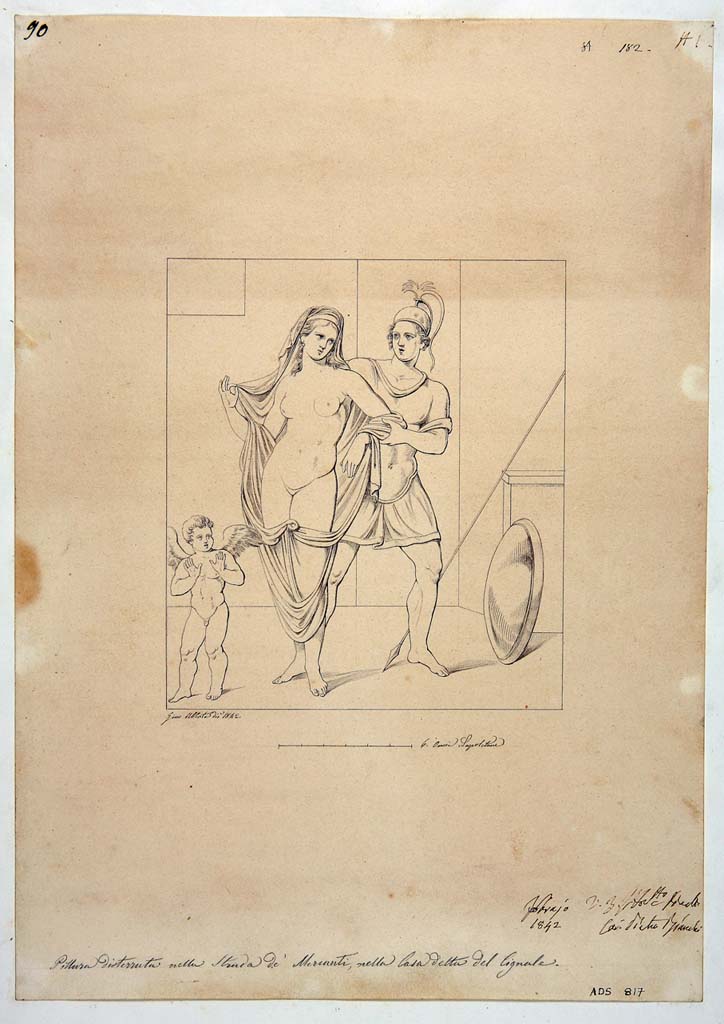
VIII.3.8 Pompeii.
One of two nearly identical drawings by Giuseppe Abbate, 1842, of painting of Mars and Venus, from tablinum.
According to Helbig, by 1860 it was already badly preserved and hardly recognisable. (Helbig 326).
Now in Naples Archaeological Museum. Inventory number ADS 817.
Photo © ICCD. https://www.catalogo.beniculturali.it
Utilizzabili alle
condizioni della licenza Attribuzione - Non commerciale - Condividi
allo stesso modo 2.5 Italia (CC BY-NC-SA 2.5 IT)
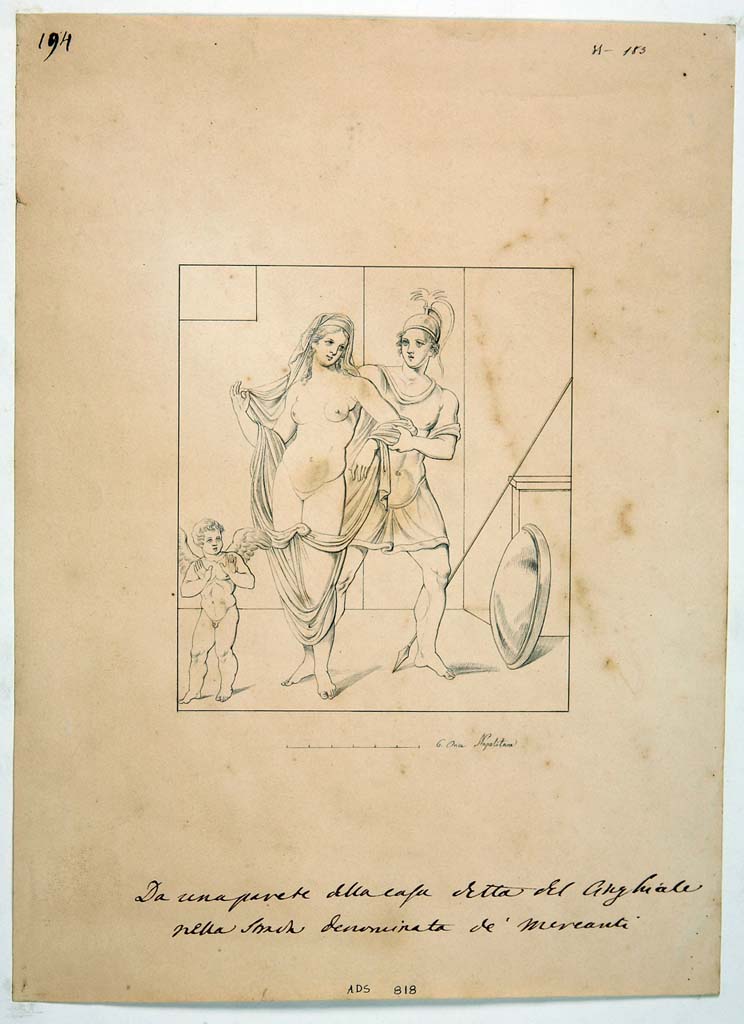
VIII.3.8 Pompeii.
Second of two nearly identical drawings by Giuseppe Abbate, 1842, of painting of Mars and Venus, from tablinum.
Now in Naples Archaeological Museum. Inventory number ADS 818.
Photo © ICCD. https://www.catalogo.beniculturali.it
Utilizzabili alle
condizioni della licenza Attribuzione - Non commerciale - Condividi
allo stesso modo 2.5 Italia (CC BY-NC-SA 2.5 IT)
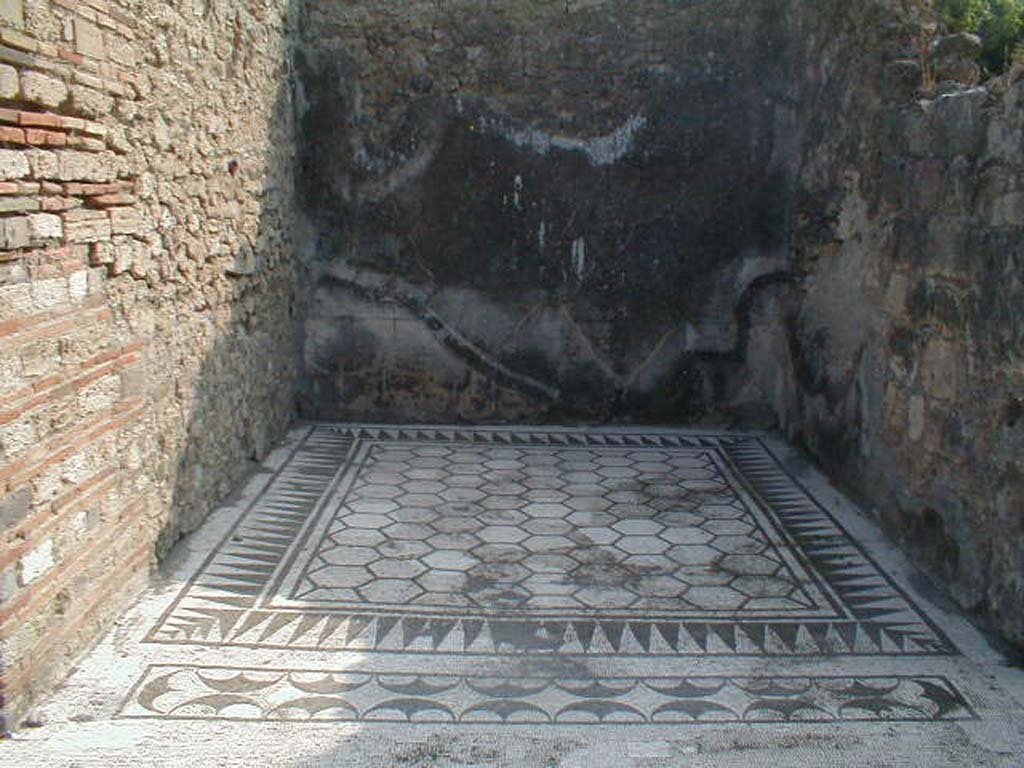
VIII.3.8 Pompeii. September 2004. Looking east towards ala on east side of atrium.
The floor was of black and white mosaic, carpet style with a net of octagons within a border of wolves teeth (denti di lupo).
The threshold at the west end towards the atrium shows a frieze of opposing shields (una fascia con peltae contrapposte).
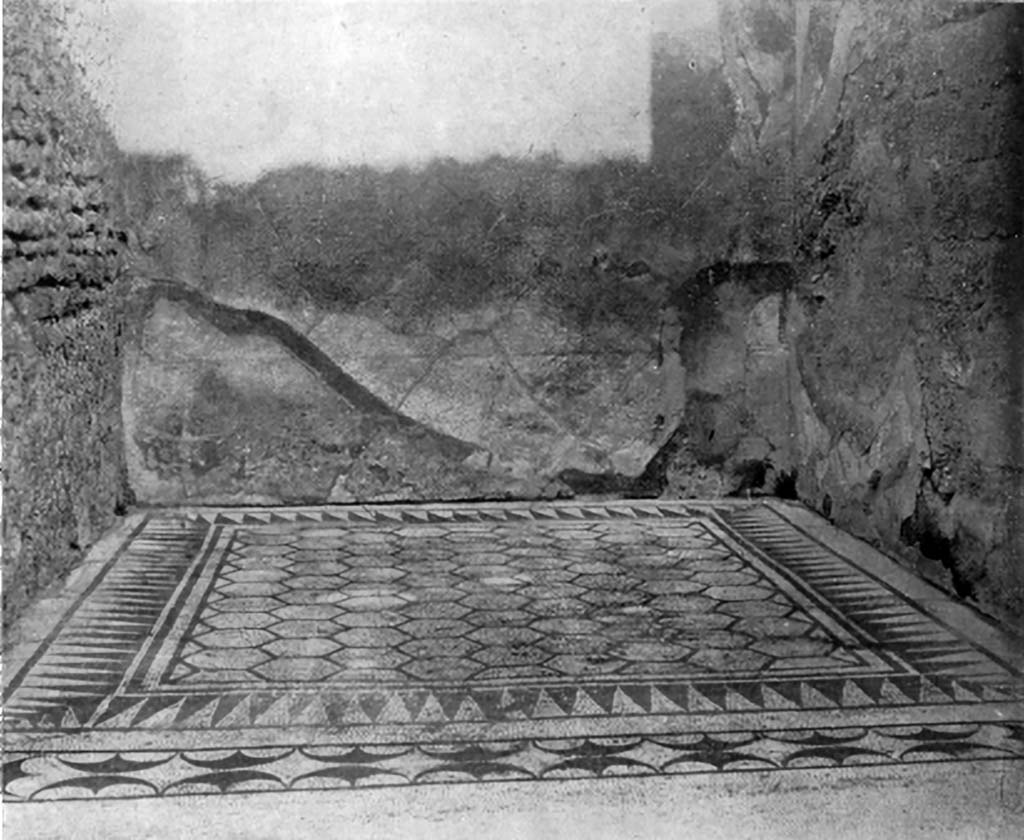
VIII.3.8 Pompeii. c.1930. Looking east across flooring of ala on east side of atrium.
See Blake, M., (1930). The pavements of the Roman Buildings of the Republic and Early Empire. Rome, MAAR, 8, (p.99,107,109 & Pl.27, tav.2).