VIII.2.28 Pompeii. Casa del Ninfeo or House with Nymphaeum.
Excavated 1758? 1886, 1928.
Part 1 Part 2
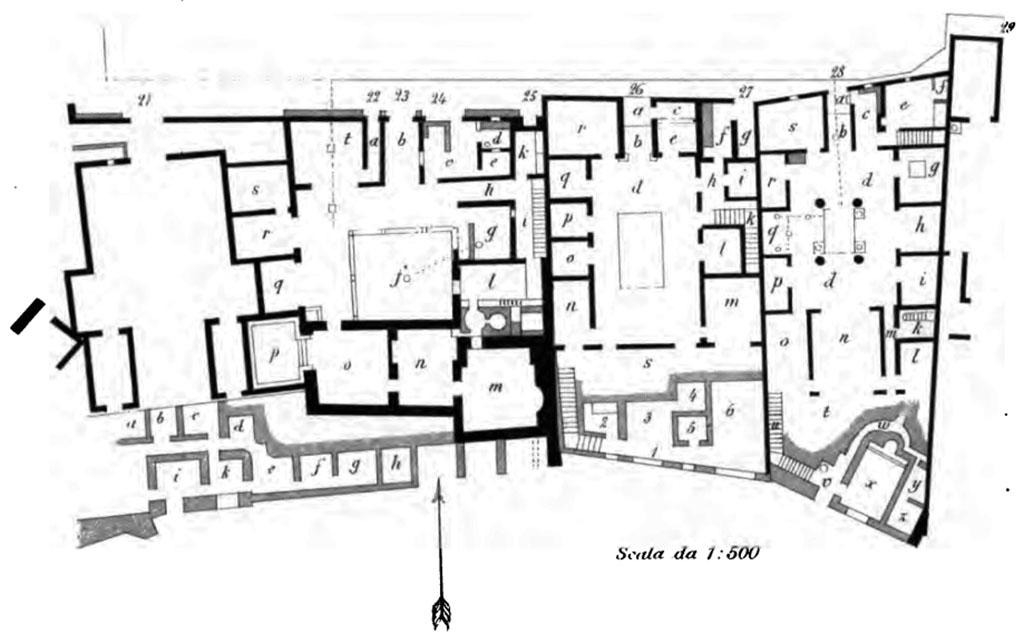
VIII.2.28 Pompeii. !888 plan of house and adjacent houses from BdI.
According to Mau, these houses were unearthed, incompletely however, at the time of the first excavations, and then reburied.
See Bullettino dell’Instituto di Corrispondenza
Archeologica (DAIR), 1888, (p.181, and Taf. VII.)
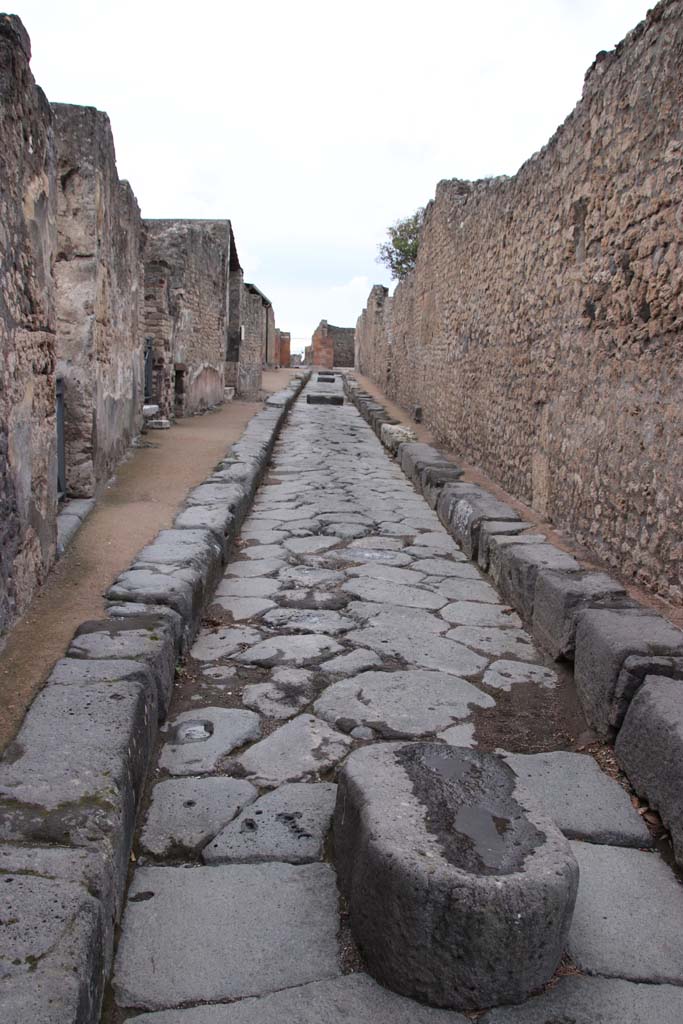
VII.2.28 Pompeii, on left. October 2020.
Looking west on Vicolo della Regina, in the year of the pandemic. Photo courtesy of Klaus Heese.
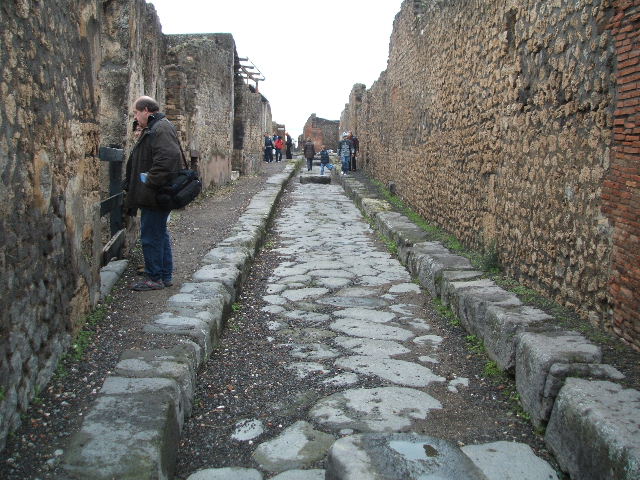
VIII.2.28 Pompeii. December 2005. Via della Regina looking west. VIII.3 on right.
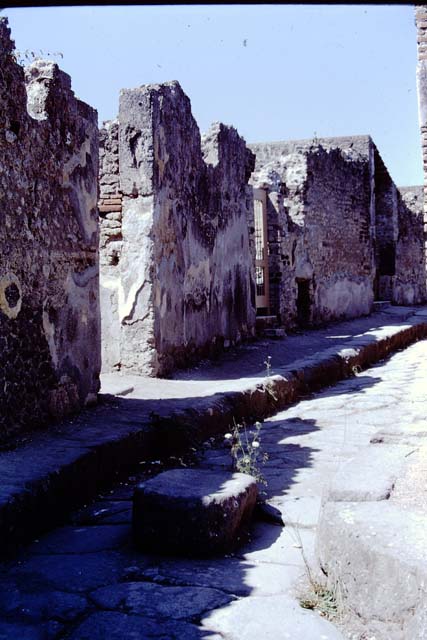
VIII.2.28 Pompeii, on left. 1968.
Looking west along south side of Via della Regina, to doorways of VIII.2.28, 27 and 26.
Photo by Stanley A. Jashemski.
Source: The Wilhelmina and Stanley A. Jashemski archive in the University of Maryland Library, Special Collections (See collection page) and made available under the Creative Commons Attribution-Non-Commercial License v.4. See Licence and use details.
J68f1066
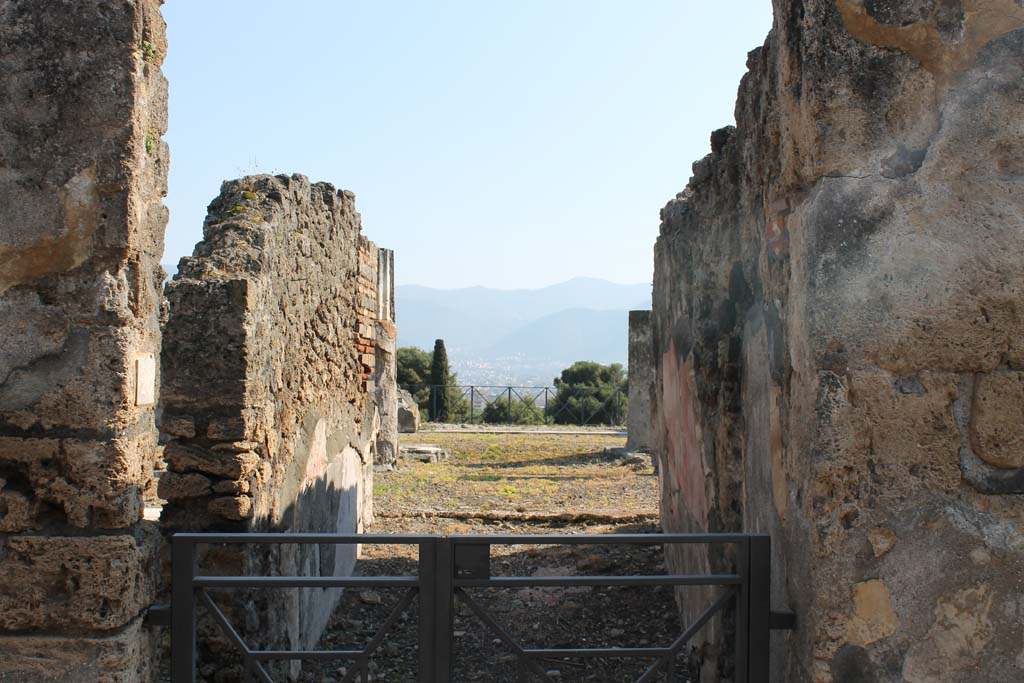
VIII.2.28 Pompeii. March 2014. Looking south through entrance
doorway.
Foto Annette Haug, ERC Grant 681269 DÉCOR.
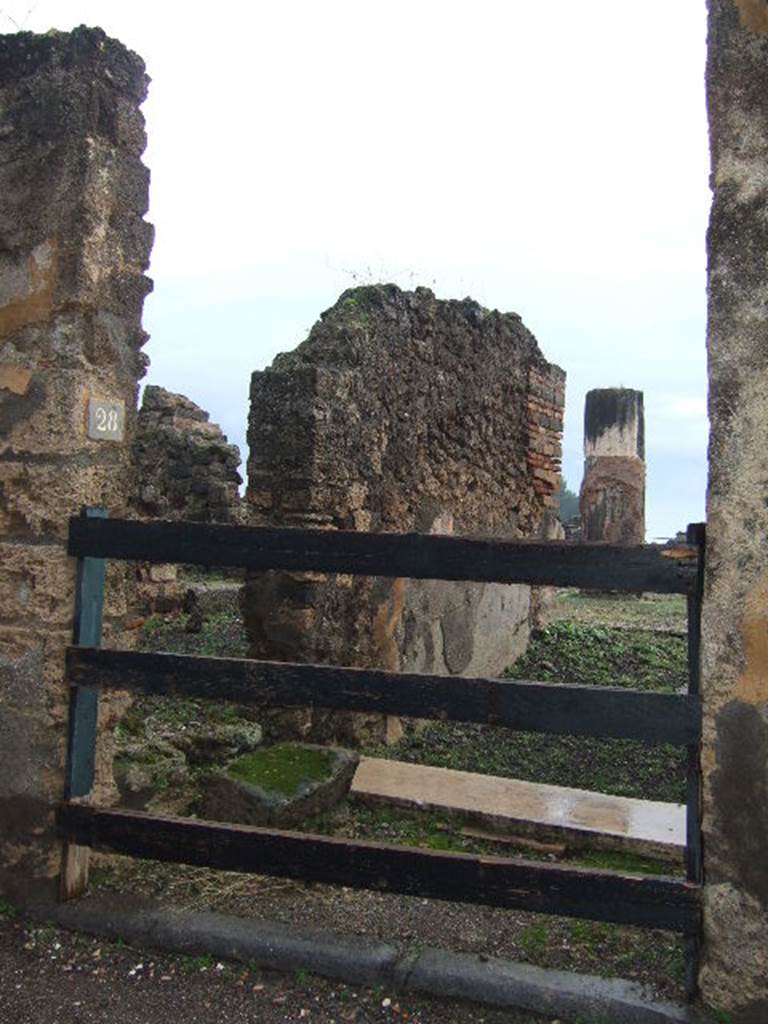
VIII.2.28 Pompeii. December 2005. Entrance doorway.
On the left (east) is a doorway leading to the anteroom of the kitchen, and to the kitchen and latrine.
The kitchen and latrine are to the east of the anteroom.
The kitchen had a hearth built against the east wall, and the latrine with a small window was in the north-east corner.
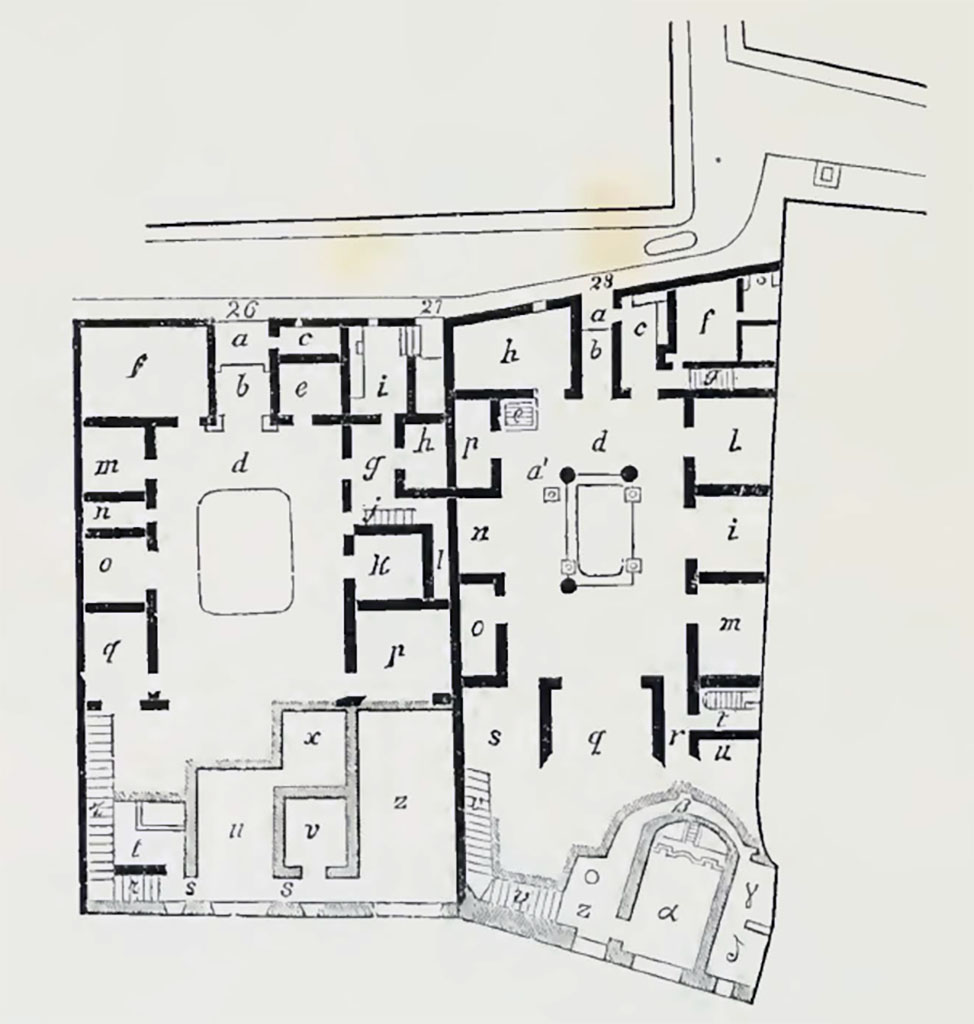
VIII.2.28 Pompeii. 1888 plan of house, on right, combined with VIII.2.26/27 on left.
(Bold black = floor at street level, Grey = lower floor).
See Notizie degli Scavi di
Antichità, 1888, p.510.
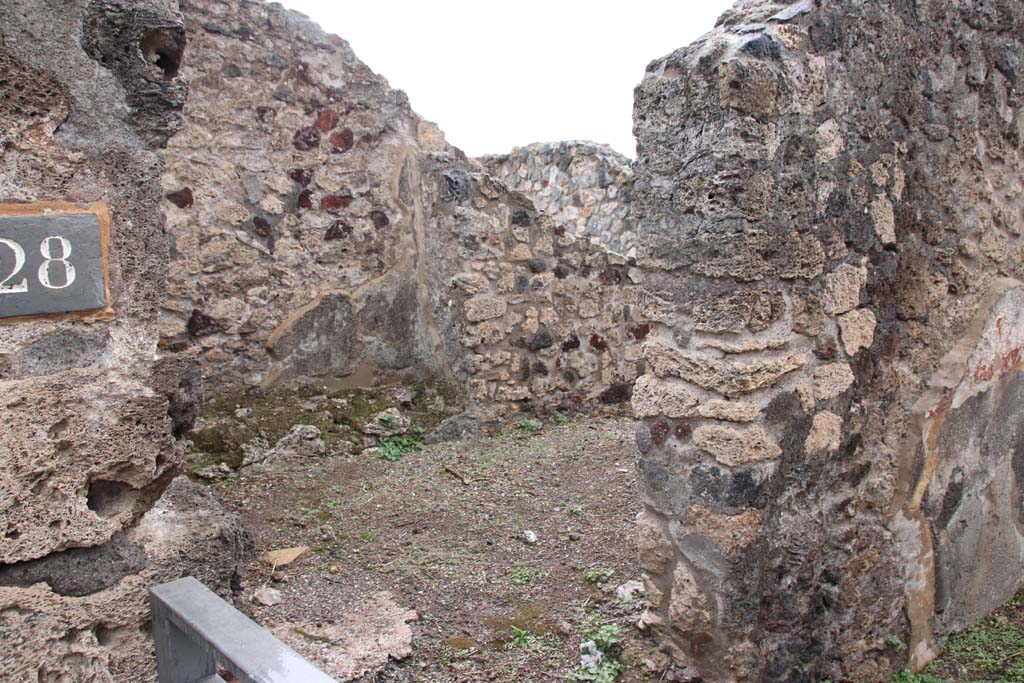
VIII.2.28 Pompeii. October 2020.
Looking through doorway on left (east) side of entrance corridor, leading to the anteroom of the kitchen. Photo courtesy of Klaus Heese.
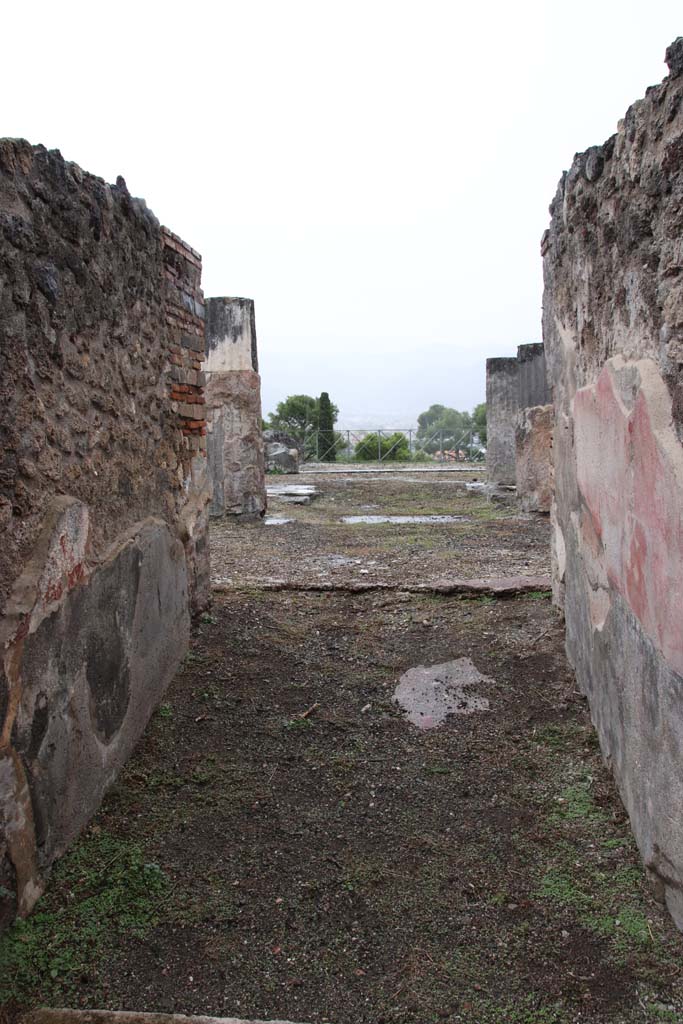
VIII.2.28 Pompeii. October 2020.
Looking south along entrance fauces or corridor. Photo courtesy of Klaus Heese.
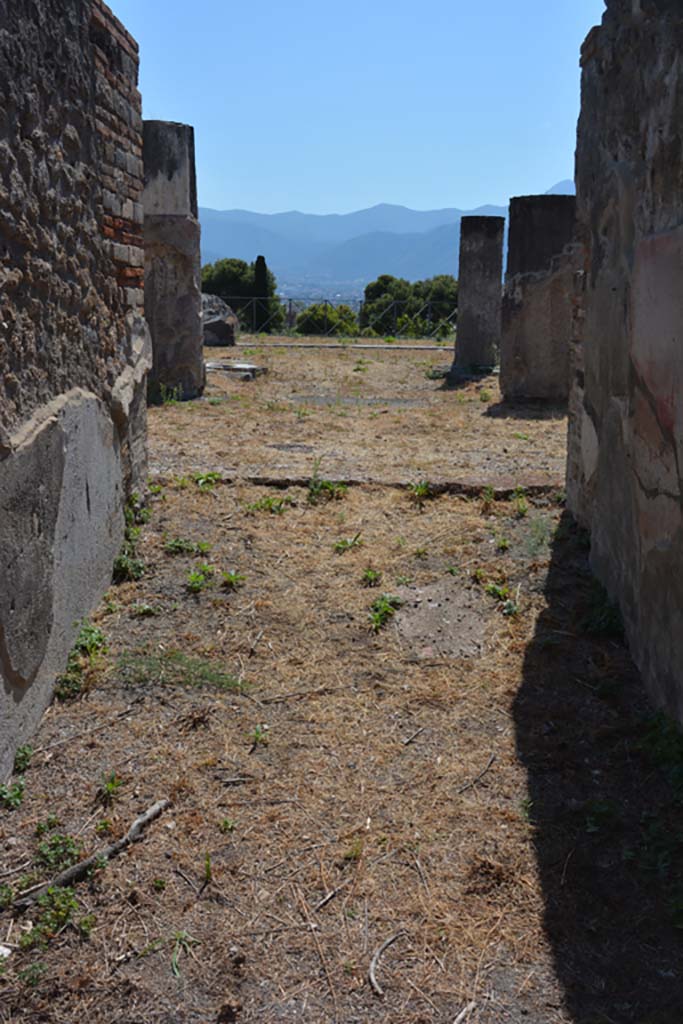
VIII.2.28
Pompeii. March 2019. Looking south towards atrium from entrance
corridor/fauces.
Foto
Annette Haug, ERC Grant 681269 DÉCOR.
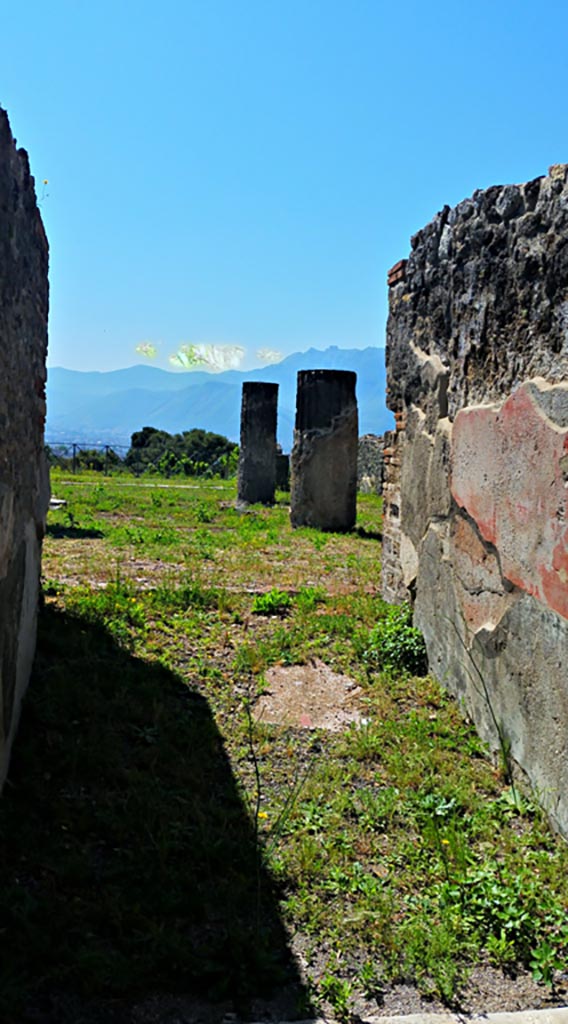
VIII.2.28
Pompeii. 2016/2017.
Looking south along west wall of entrance corridor. Photo courtesy of Giuseppe Ciaramella.
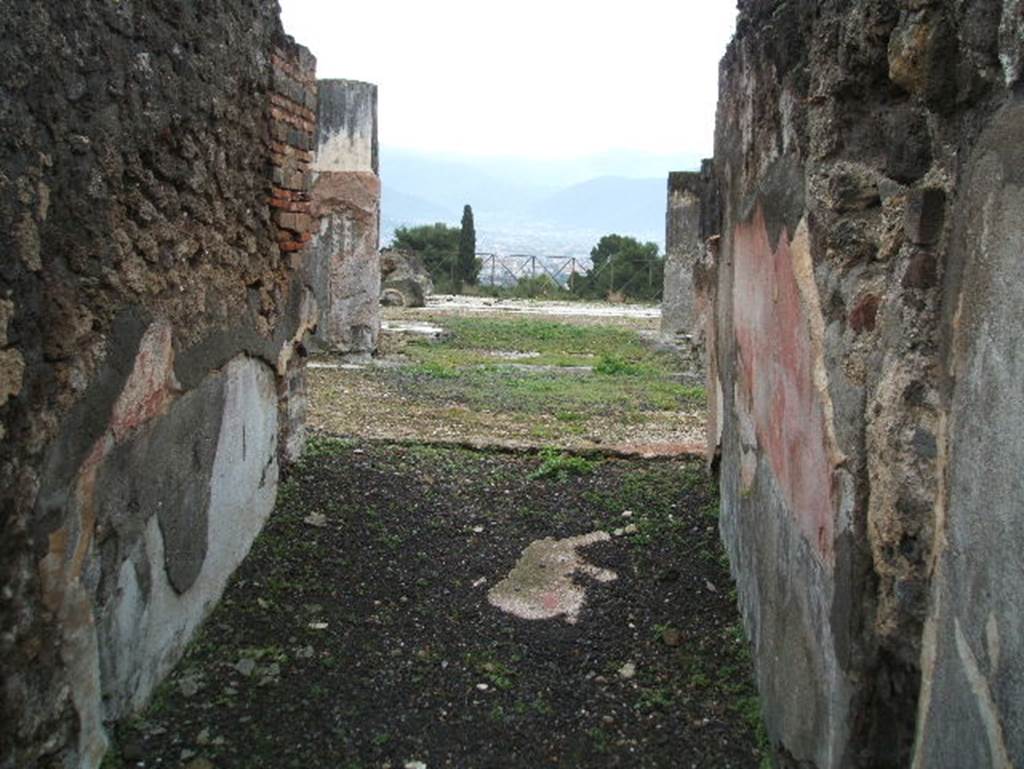
VIII.2.28 Pompeii. December 2005. Entrance fauces or corridor, looking south.
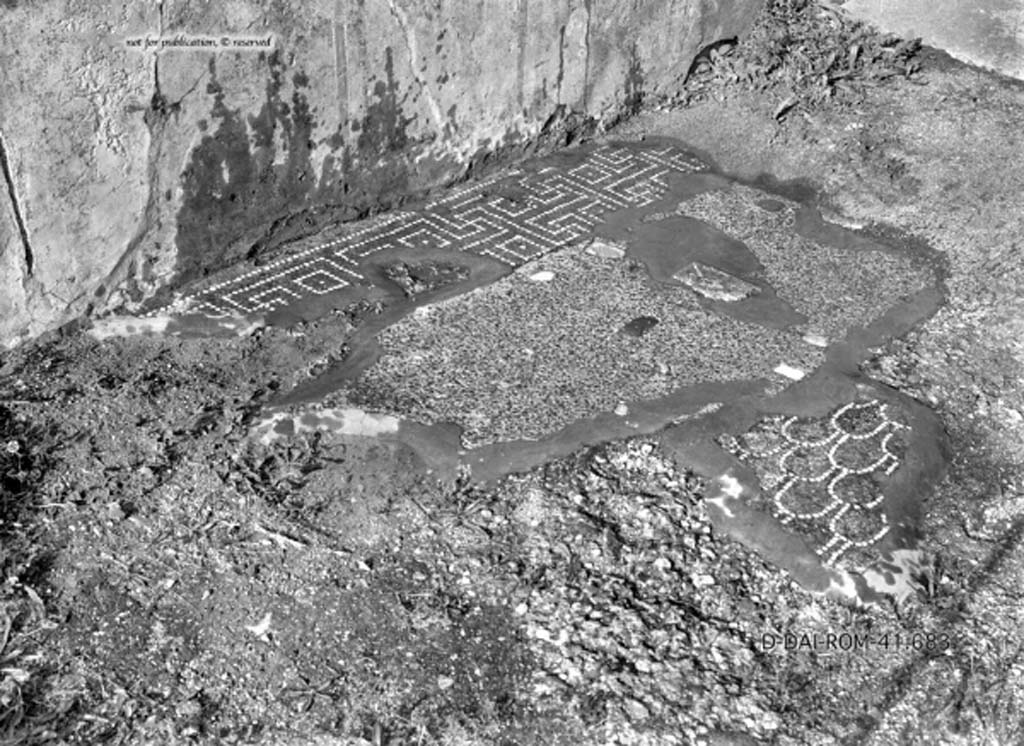
VIII.2.28 Pompeii. c.1930. Entrance vestibule/corridor.
DAIR 41.683.
Photo © Deutsches Archäologisches Institut, Abteilung Rom, Arkiv.
See Pernice, E. 1938. Pavimente und Figürliche Mosaiken:
Die Hellenistische Kunst in Pompeji, Band VI. Berlin: de Gruyter, (taf. 30.6.)
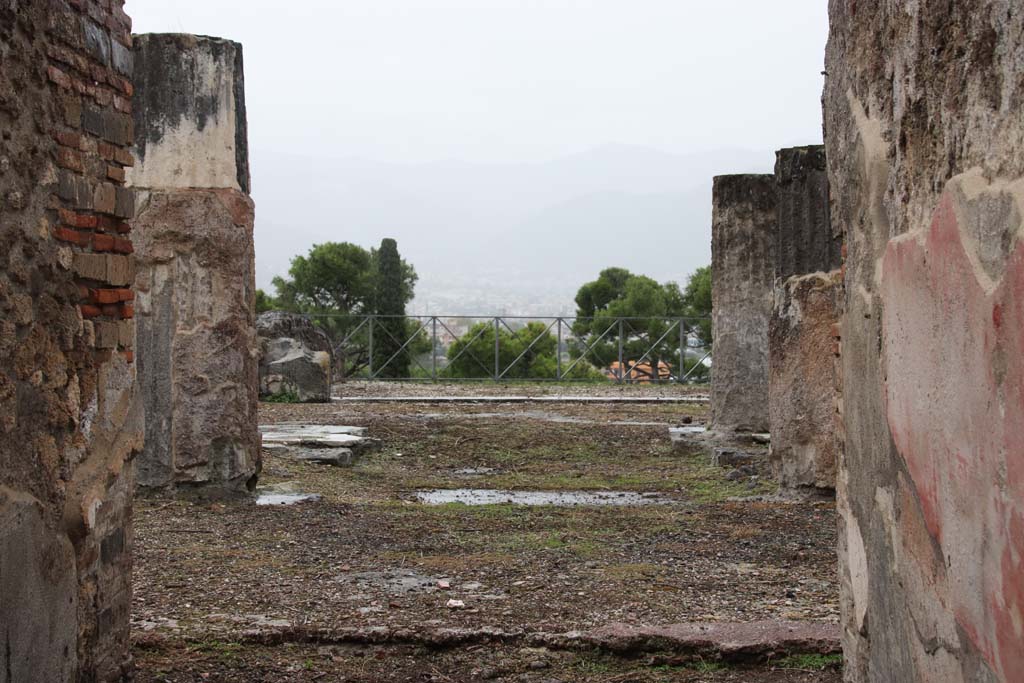
VIII.2.28 Pompeii. October 2020.
Looking south across atrium towards the tablinum, and at its rear the remains of the terrace. Photo courtesy of Klaus Heese.
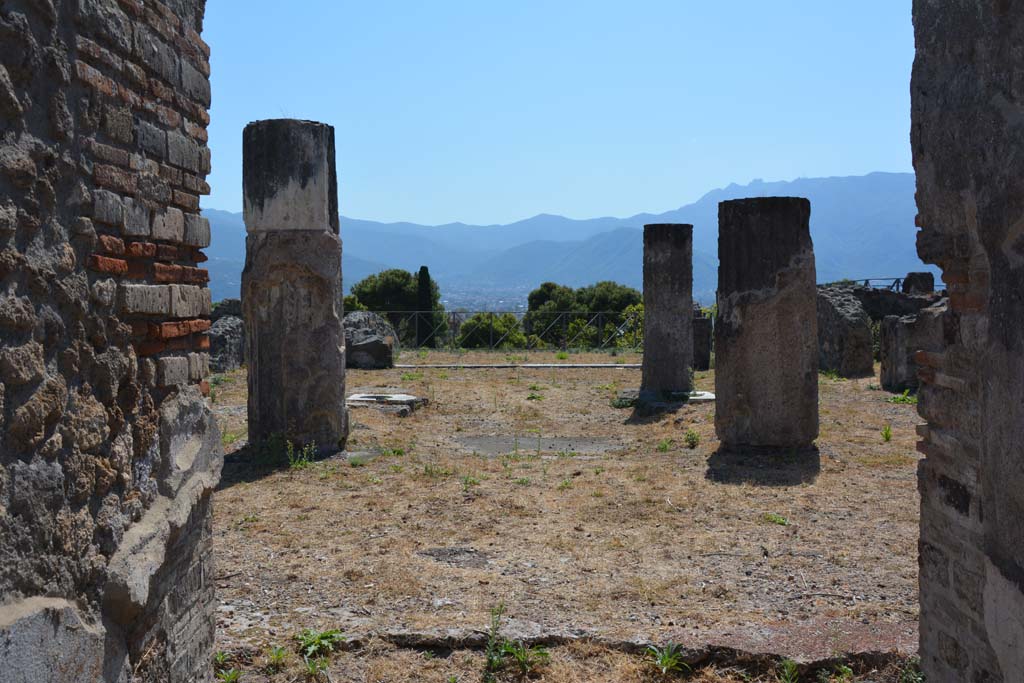
VIII.2.28 Pompeii. March 2019. Looking
south across atrium towards the tablinum.
Foto
Annette Haug, ERC Grant 681269 DÉCOR.
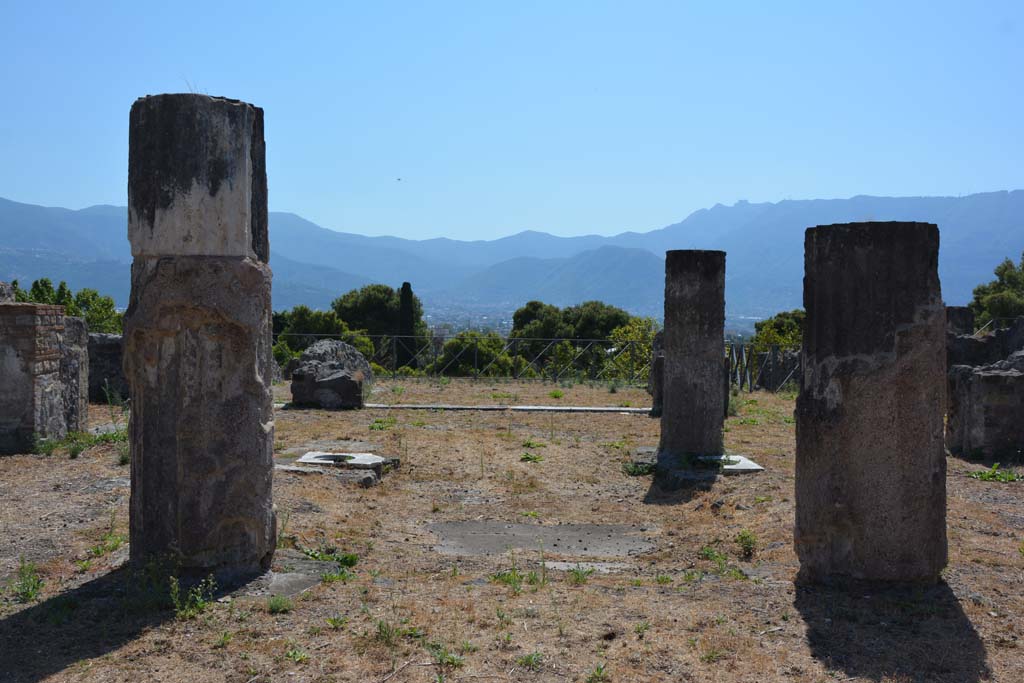
VIII.2.28
Pompeii. March 2019. Looking south across site of impluvium in atrium with
columns of tufa.
Foto
Annette Haug, ERC Grant 681269 DÉCOR.
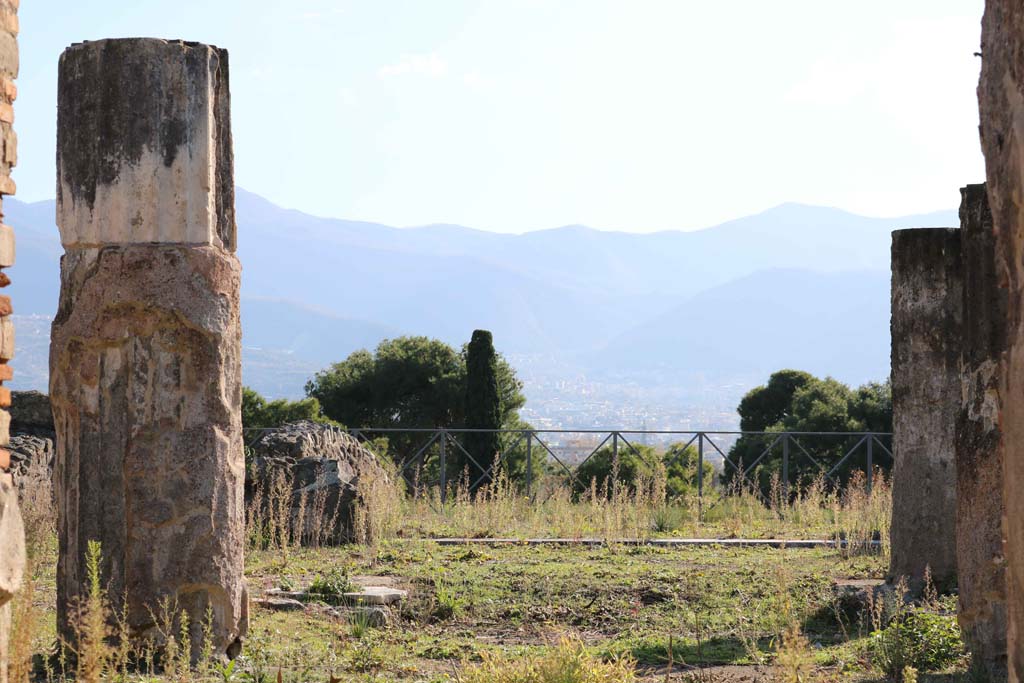
VIII.2.28 Pompeii. December 2018.
Looking south across site of impluvium in atrium towards
site of tablinum. Photo courtesy of Aude Durand.
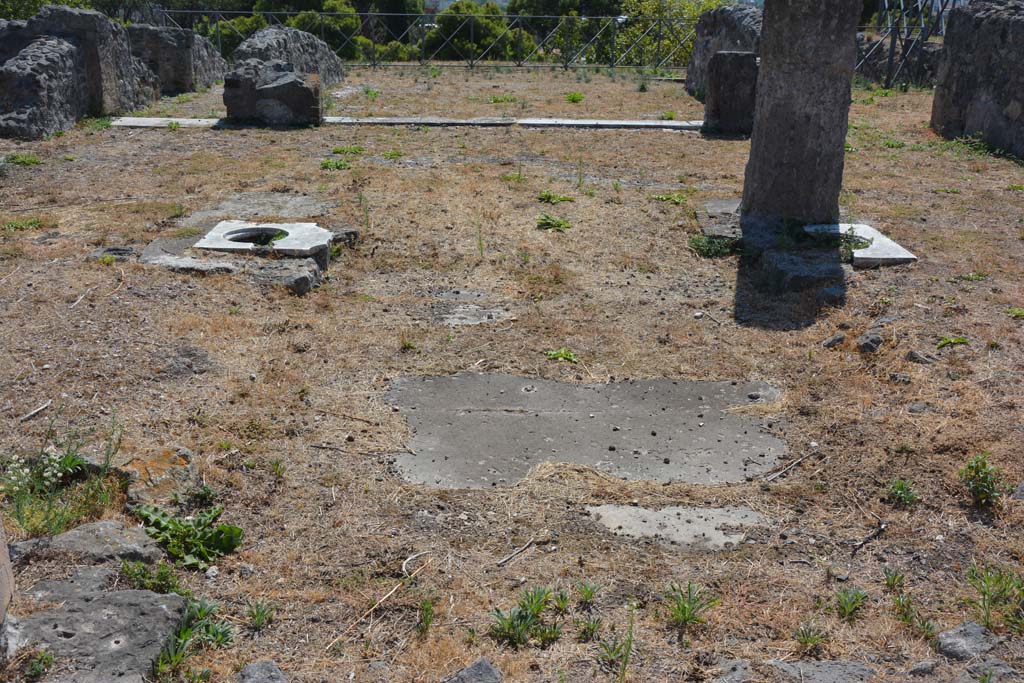
VIII.2.28 Pompeii. March 2019.
Looking south across impluvium in atrium towards tablinum.
Foto
Annette Haug, ERC Grant 681269 DÉCOR.
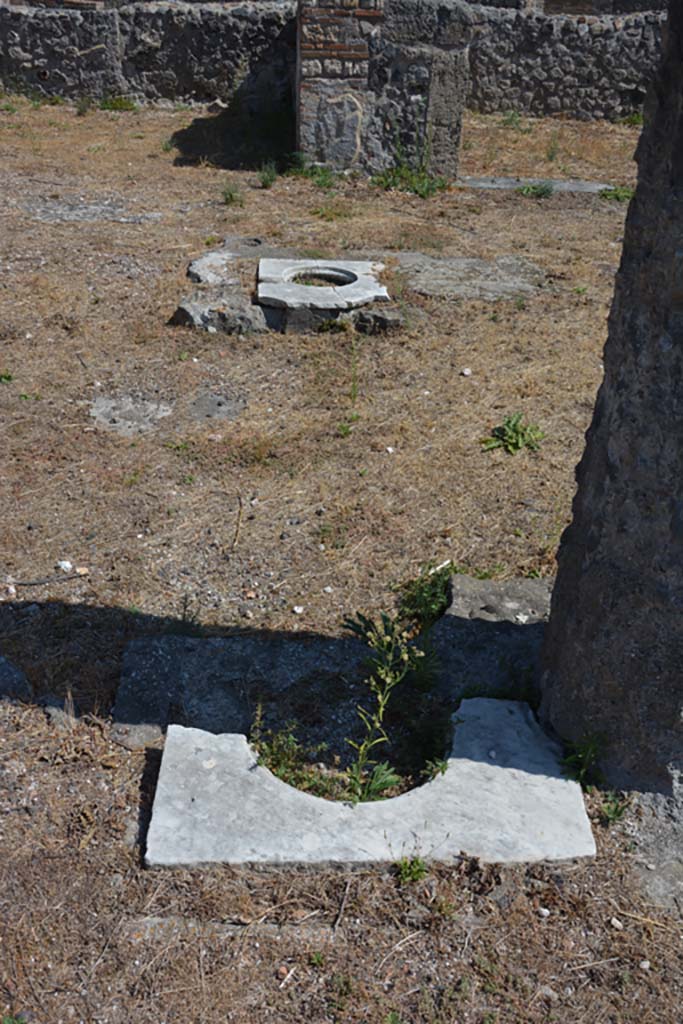
VIII.2.28 Pompeii. March 2019.
Looking
east across south side of impluvium with remains of cistern-mouths.
Foto
Annette Haug, ERC Grant 681269 DÉCOR.
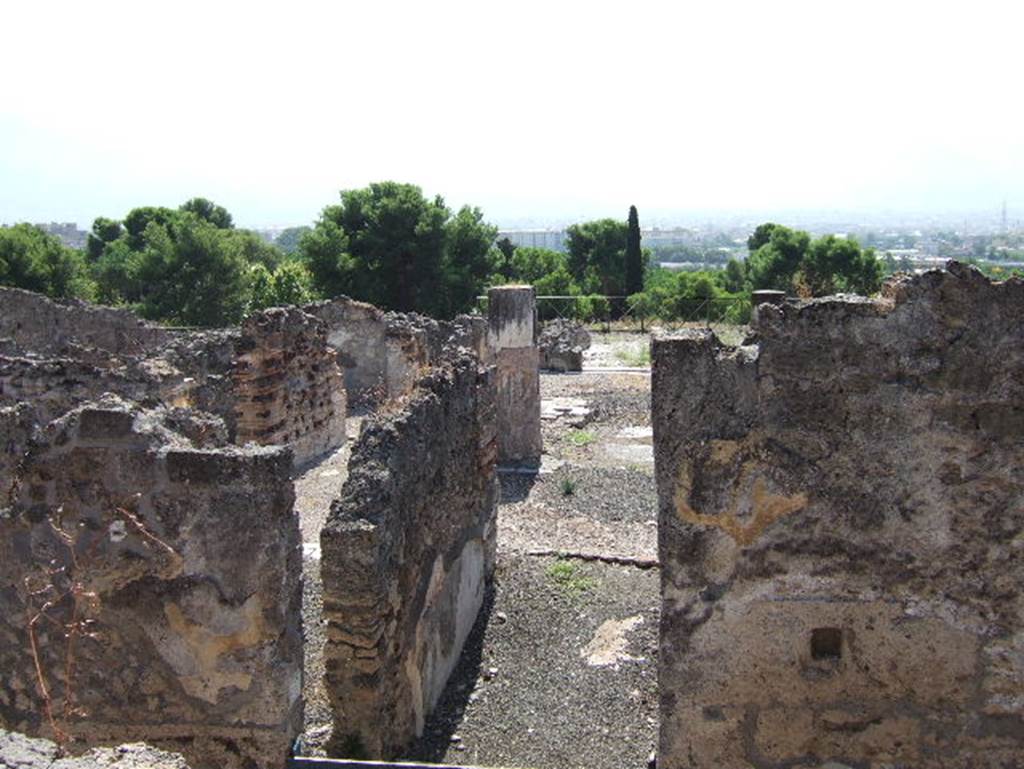
VIII.2.28 Pompeii. September 2005.
Looking south towards entrance and atrium, at its rear is the tablinum, and the remains of the terrace. Taken from Casa della Regina Carolina.
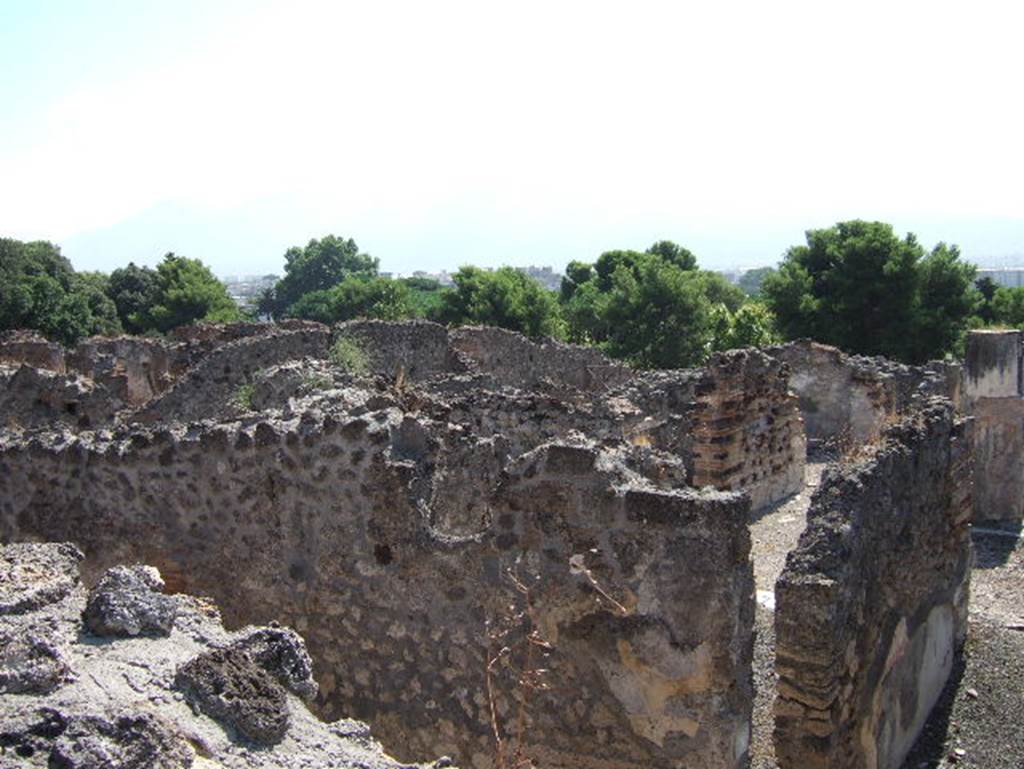
VIII.2.28 Pompeii and VIII.2.29. September 2005. Looking south-east from Casa della Regina Carolina.
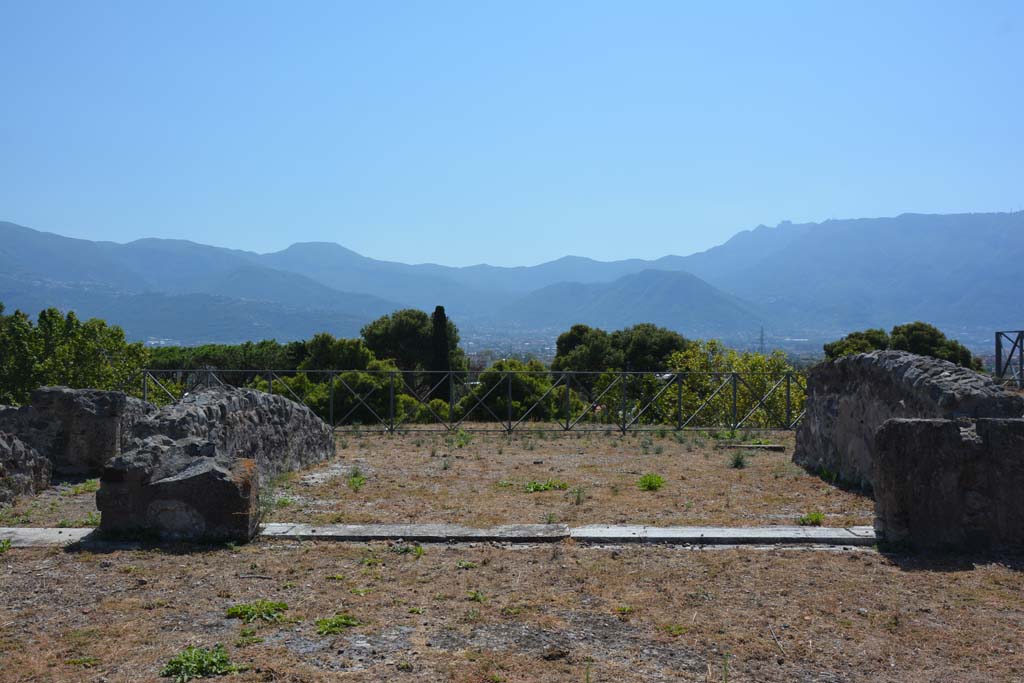
Foto
Annette Haug, ERC Grant 681269 DÉCOR.
VIII.2.28
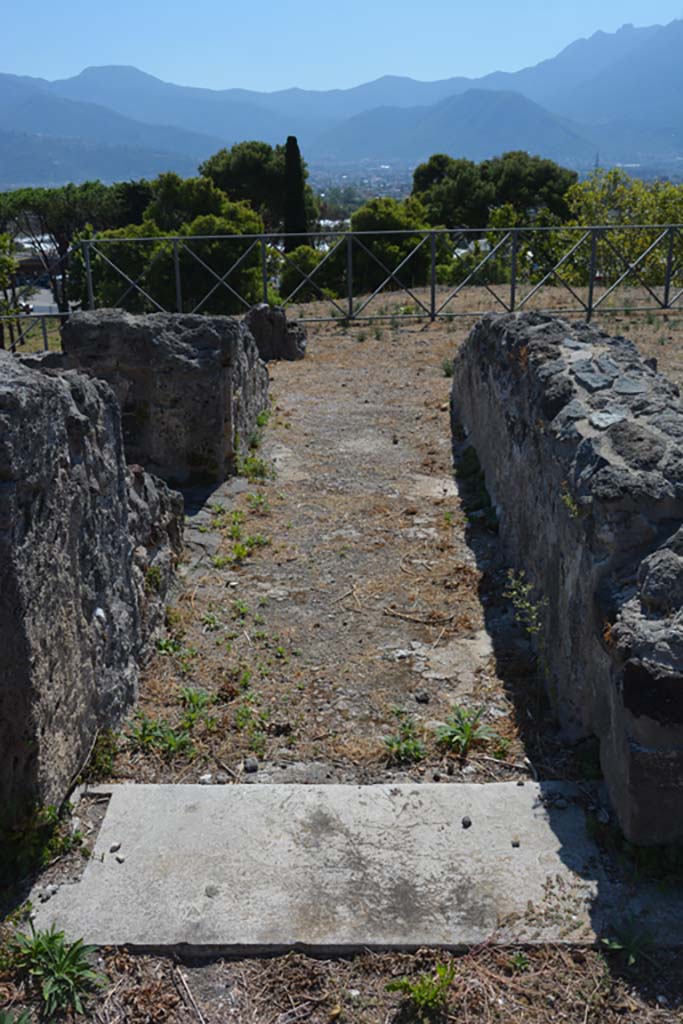
Pompeii. March 2019. Corridor to rear on east side of tablinum, looking south.
Foto
Annette Haug, ERC Grant 681269 DÉCOR.
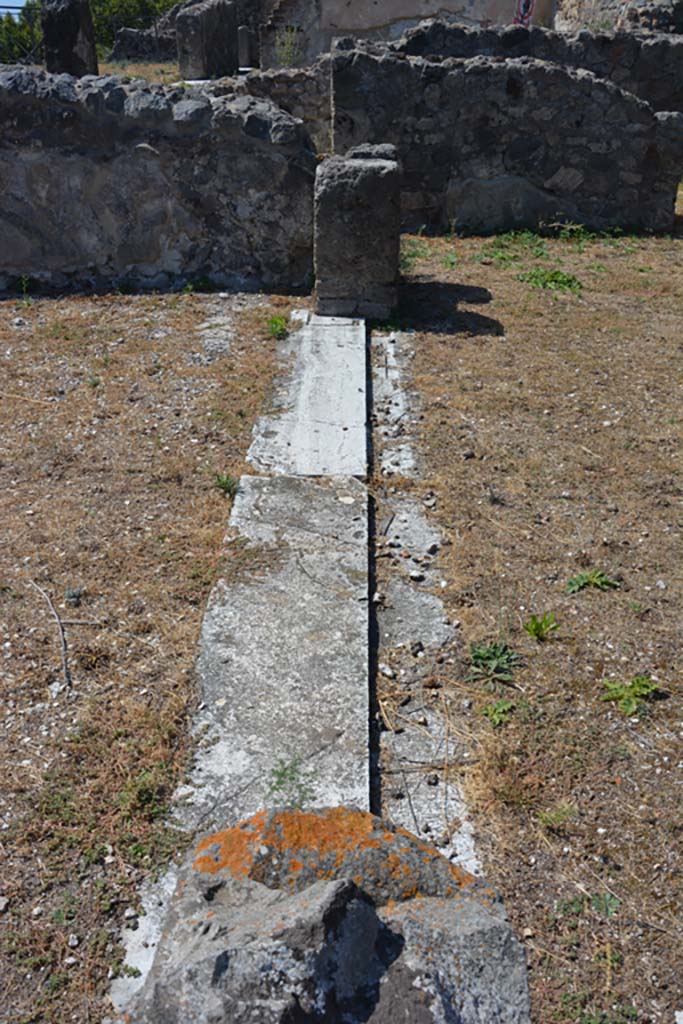
VIII.2.28 Pompeii. March 2019.
Looking west across doorway threshold between tablinum, on left,
and atrium, on right.
Foto Annette Haug, ERC Grant 681269 DÉCOR.
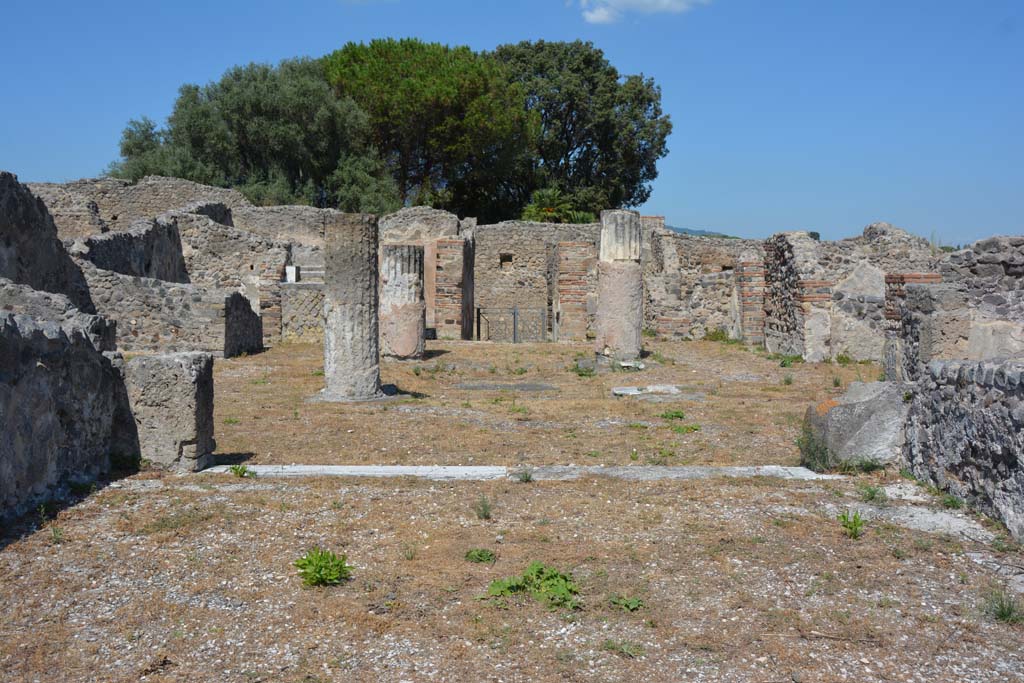
VIII.2.28 Pompeii. March 2019. Looking north from tablinum across
tetrastyle atrium towards entrance doorway, in centre.
Foto Annette Haug, ERC Grant 681269 DÉCOR.
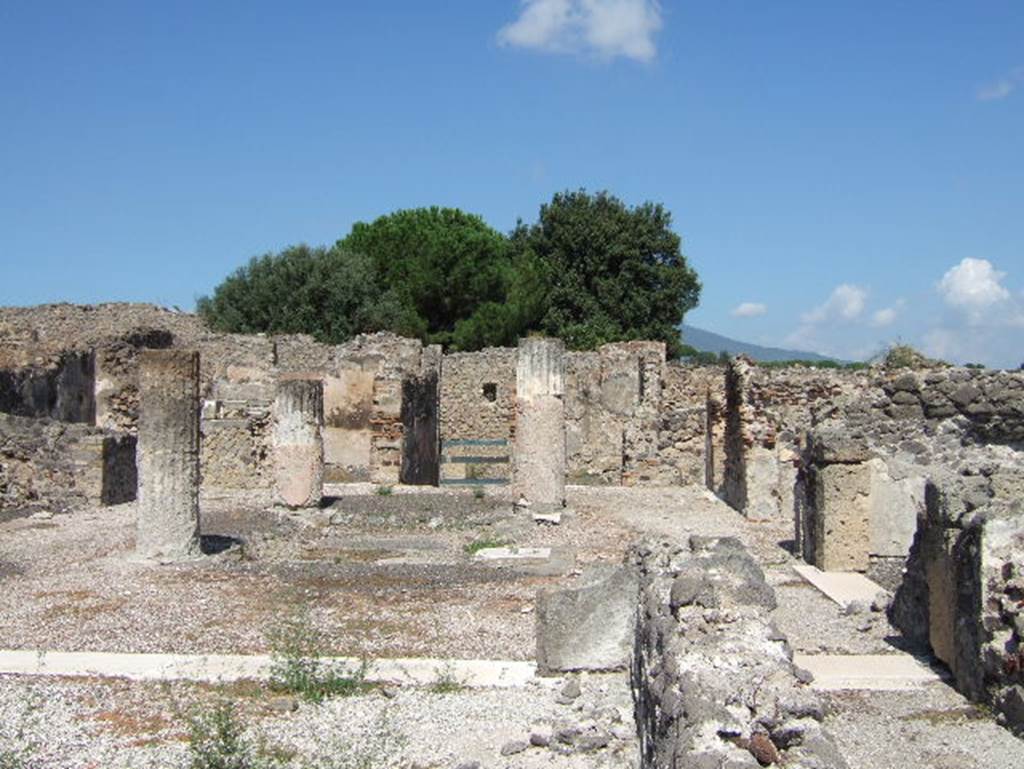
VIII.2.28 Pompeii. September 2005. Looking north across tetrastyle atrium from tablinum, towards entrance, in centre.
According to Richardson, the room in the north-west corner of the atrium (west of the entrance corridor) may have been a triclinium.
Between the triclinium and a storeroom next to it, the lararium was built.
See Richardson, L., 1988. Pompeii: An Architectural History. Baltimore: John Hopkins University Press. (p.231-2).
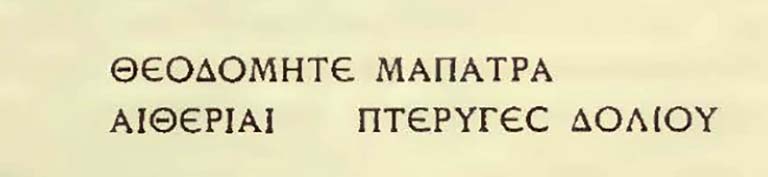
VIII.2.26 Pompeii.
Graffito seen on south wall of triclinium in north-west corner of atrium.
According to NdS,
“To the right of the entrance corridor (andron) was the room
“h” which was quite spacious with floor of mattone pesto and decoration on a
black background: in the height of the north wall a window opened onto the
roadway, and on the south wall was a graffito. The second verse was unfinished.”
See Notizie degli Scavi di
Antichità, 1888, (p.511).
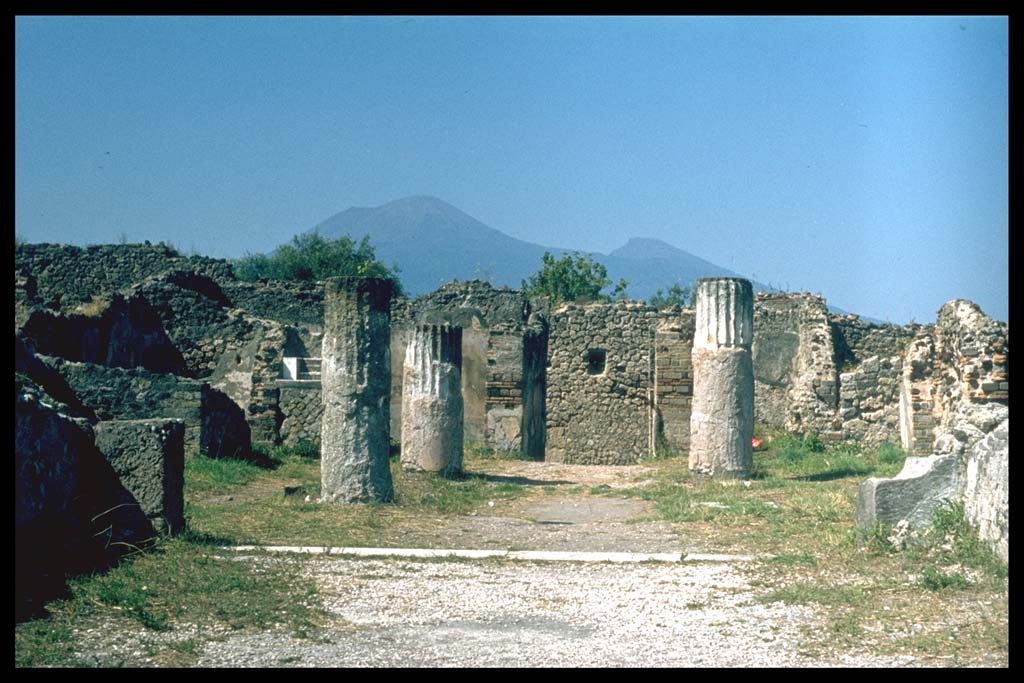
VIII.2.28 Pompeii. Looking north across tablinum across atrium towards entrance.
Photographed 1970-79 by Günther Einhorn, picture courtesy of his son Ralf Einhorn.
According to Richardson, the tablinum was open on both its north and south sides.
On the atrium end, the sill preserved cuttings for some sort of closure, perhaps a folding screen.
In both its west and east wall, it had doorways at its south end, the west doorway leading to a large exedra, which was also open across its whole south side to the view.
On the east side of the tablinum was a corridor, the doorway in the east wall led into this corridor.
From the corridor was a doorway to a small cubiculum, and a small exedra also facing south across the terrace.
Beyond these rooms stretched a broad flat terrace that must have been finished with a parapet, no trace of which survives.
See Richardson, L., 1988. Pompeii: An Architectural History. Baltimore: John Hopkins University Press. (p.231-2).
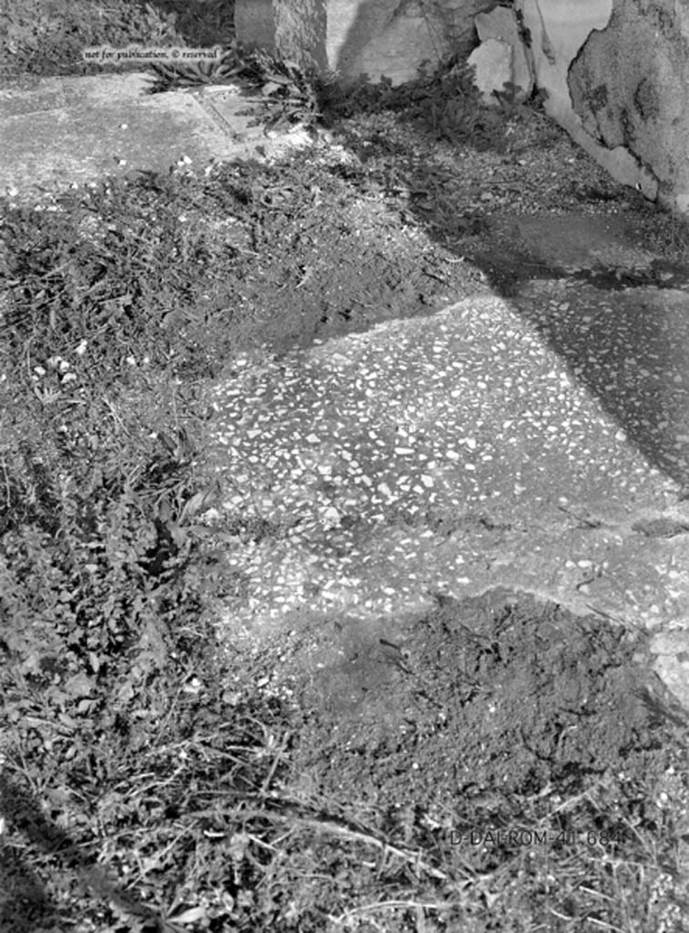
VIII.2.28 Pompeii. c.1930. Flooring in tablinum embedded with flakes of
travertine.
DAIR 41.684. Photo © Deutsches
Archäologisches Institut, Abteilung Rom, Arkiv.
See Pernice, E. 1938. Pavimente und Figürliche Mosaiken:
Die Hellenistische Kunst in Pompeji, Band VI. Berlin: de Gruyter, (taf. 31.1)
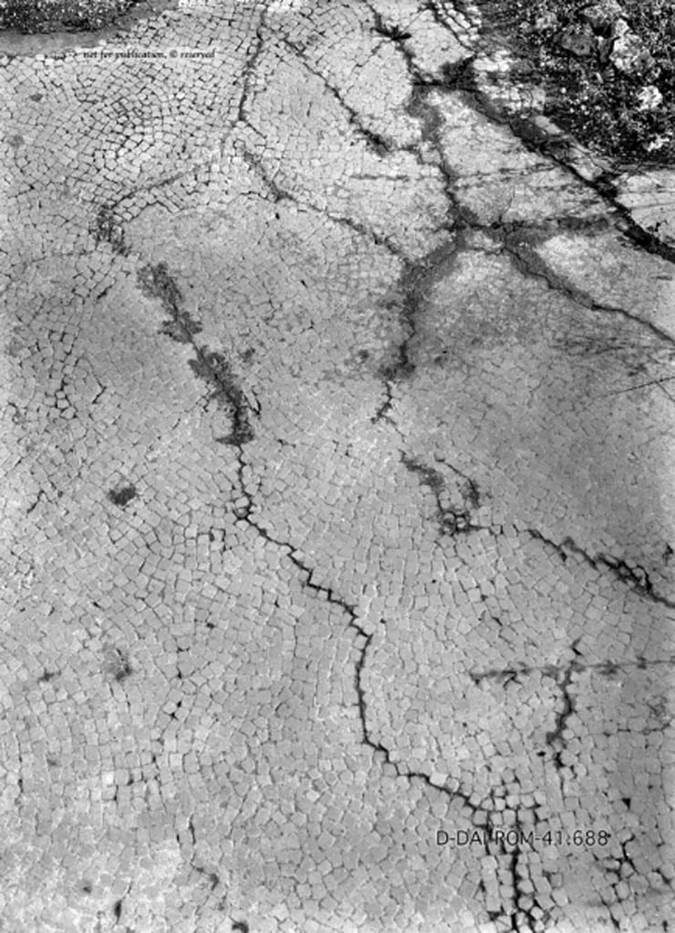
VIII.2.28
Pompeii. c.1930. Flooring in room on the left of the tablinum.
DAIR 41.688. Photo © Deutsches
Archäologisches Institut, Abteilung Rom, Arkiv.
See Pernice, E. 1938. Pavimente und Figürliche Mosaiken:
Die Hellenistische Kunst in Pompeji, Band VI. Berlin: de Gruyter, (taf. 31.5)
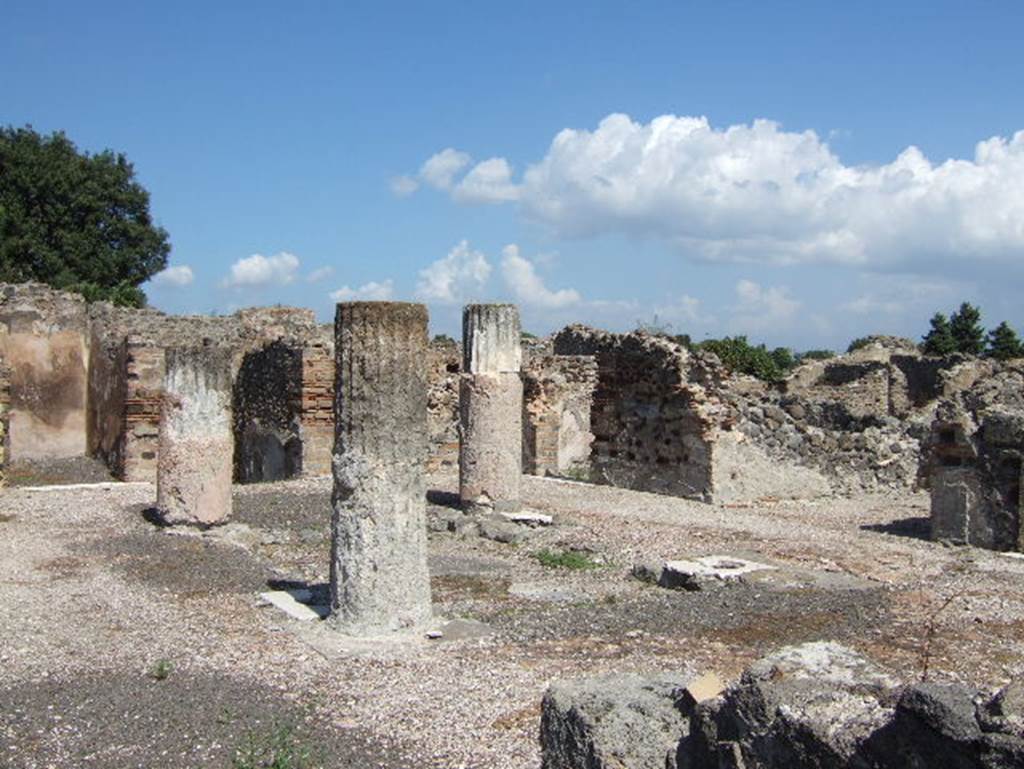
VIII.2.28 Pompeii. September 2005. Looking north-east across tetrastyle atrium.
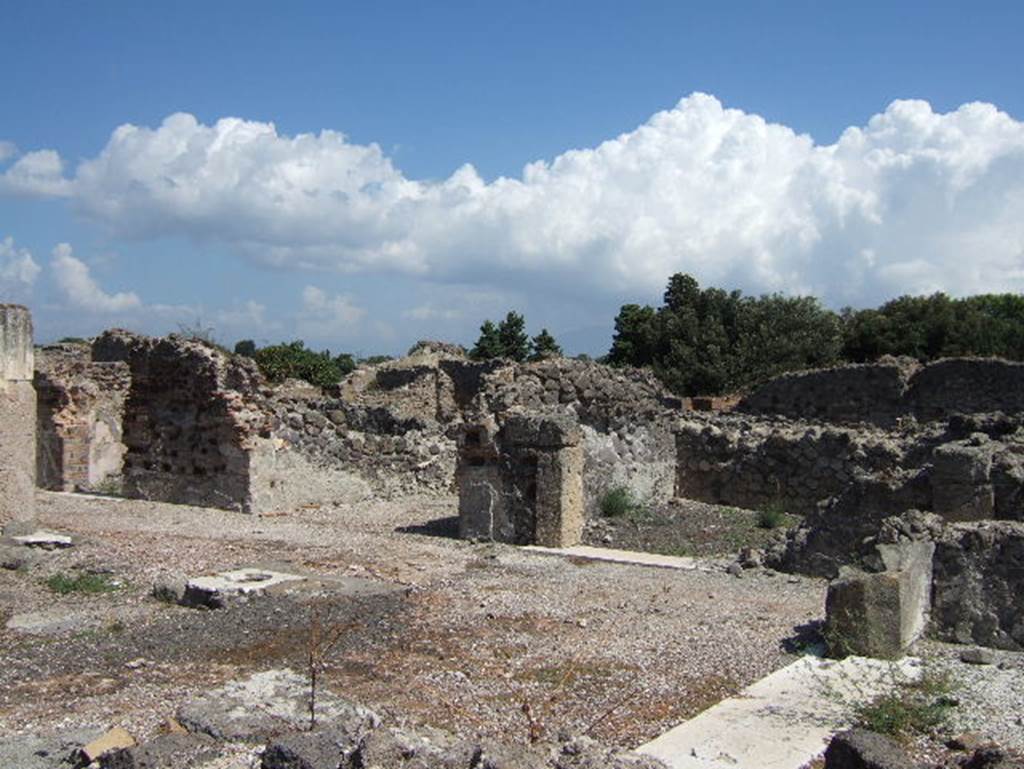
VIII.2.28 Pompeii. September 2005. Rooms on east side of atrium, cubiculum, east ala and another cubiculum.
According to Richardson, in the tetrastyle atria the alae are located in the centre of each side, and here they were originally framed with pilasters.
See Richardson, L., 1988. Pompeii: An Architectural History. Baltimore: John Hopkins University Press. (p.231-2).
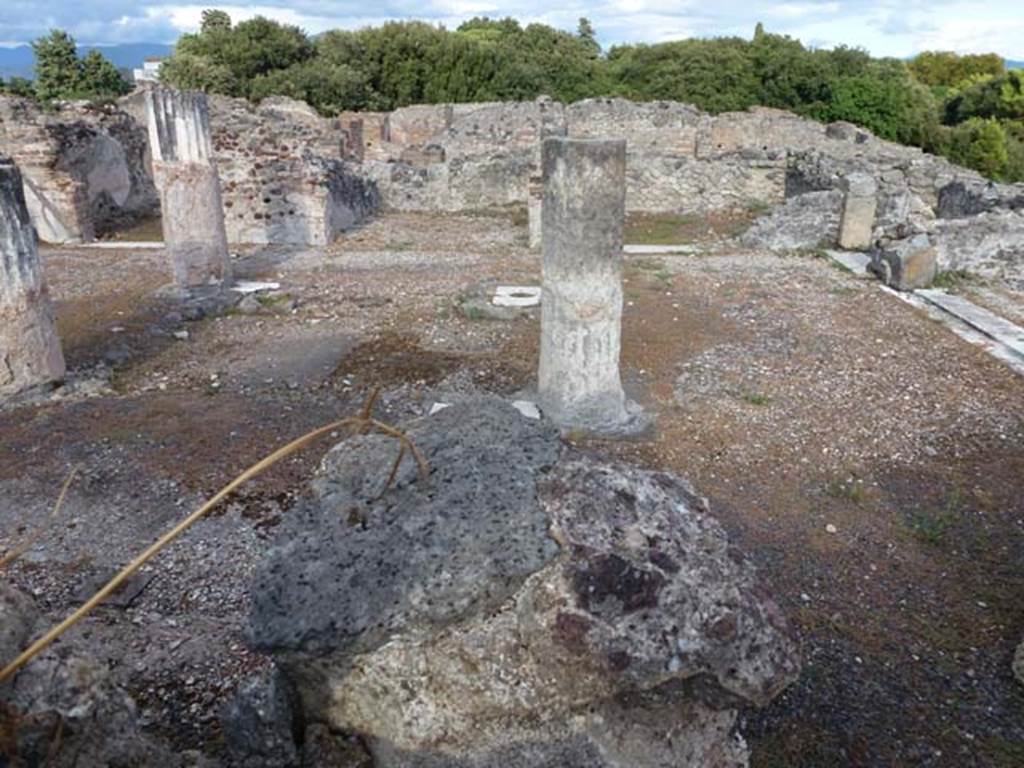
VIII.2.28 Pompeii. September 2011. Looking east across atrium.
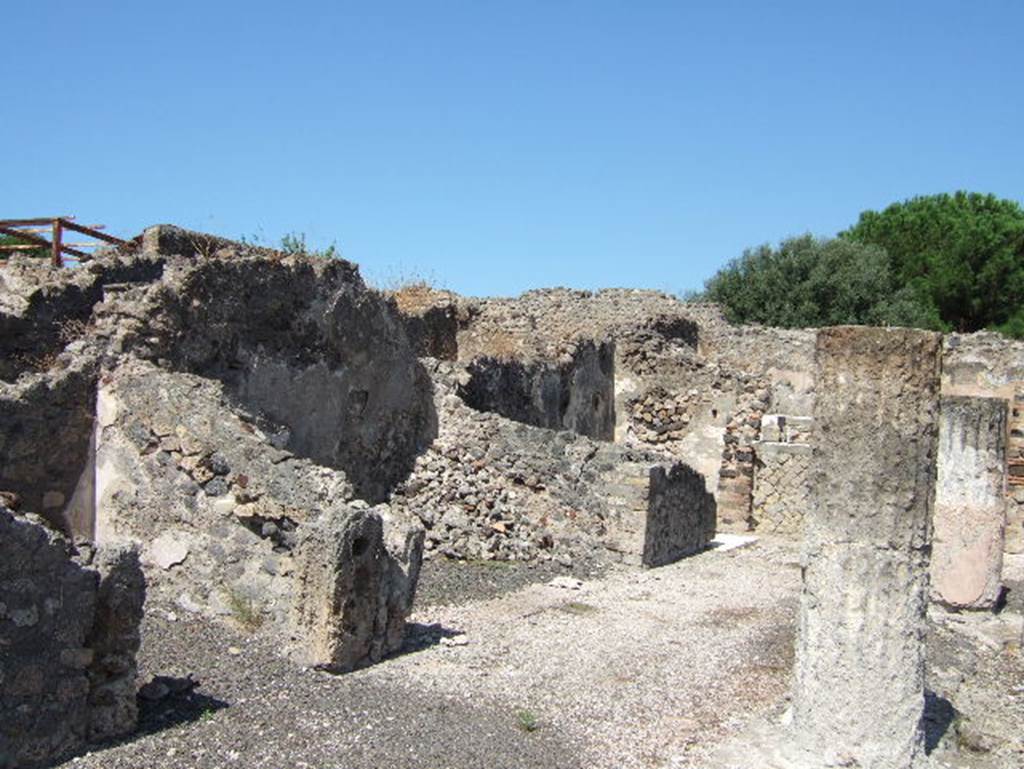
VIII.2.28 Pompeii. September 2005. Rooms on west side of atrium.
According to Richardson, the rooms on the west side of the atrium were much shallower than those on the east.
The small rooms on either side of the central ala may have been storerooms.
See Richardson, L., 1988. Pompeii: An Architectural History. Baltimore: John Hopkins University Press. (p.231-2).
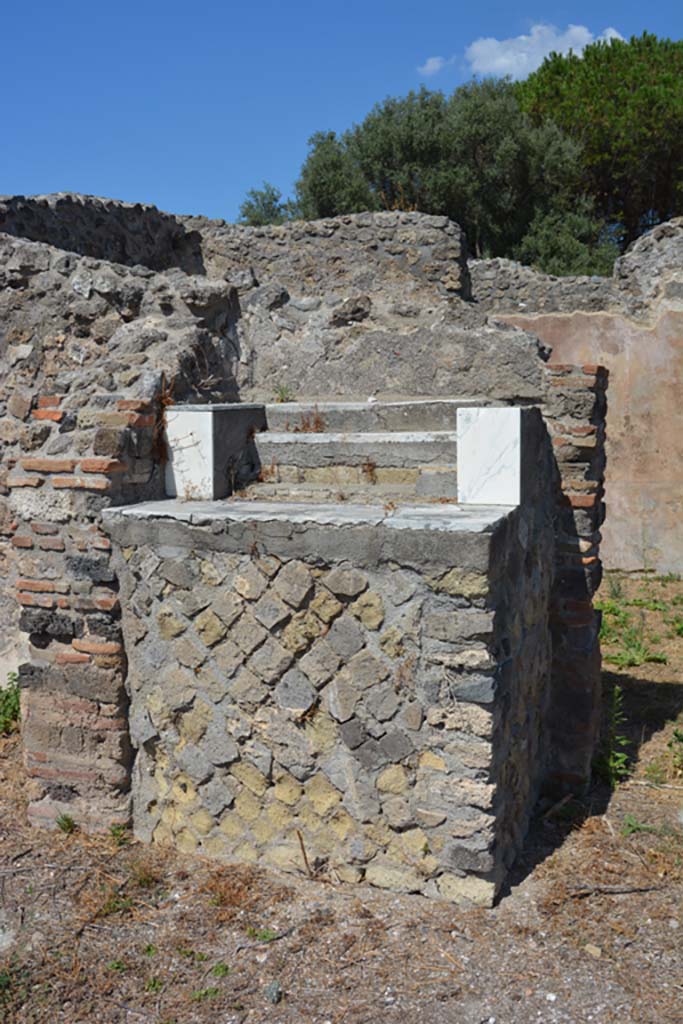
VIII.2.28 Pompeii. March 2019.
Lararium base in north-west corner of atrium.
Foto Annette Haug, ERC Grant 681269 DÉCOR.
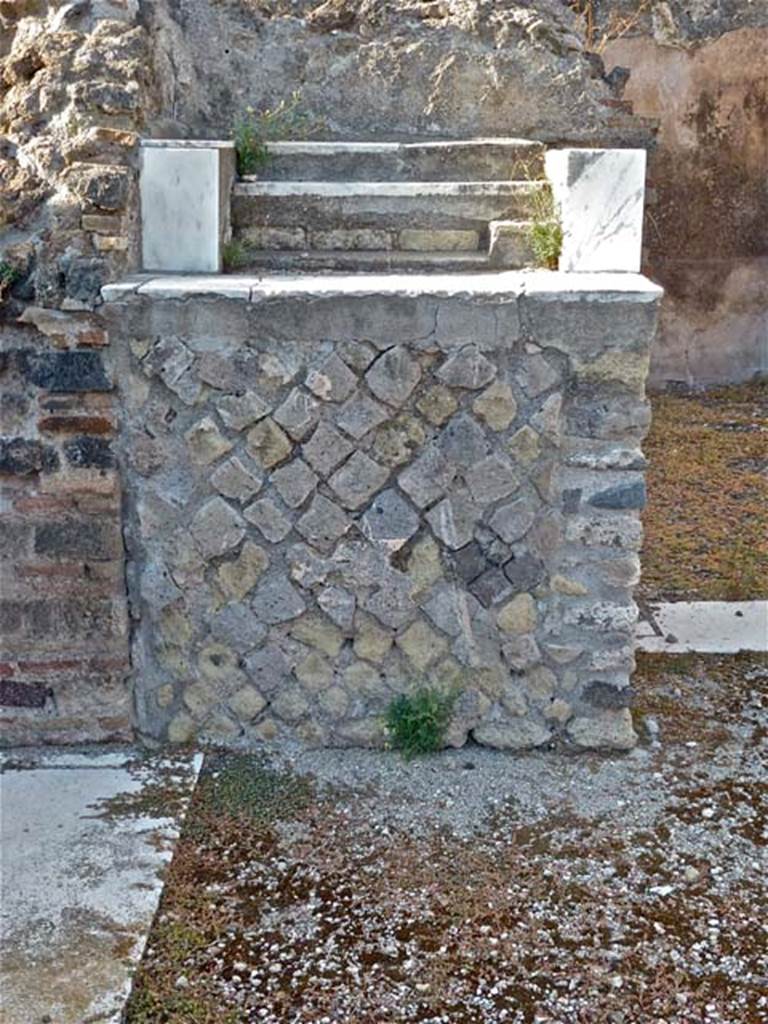
VIII.2.28 Pompeii. September 2011. Base of Lararium.
In the north-west corner of the atrium is a masonry base. This was the lararium.
The top of it had three small steps of marble (see below).
The aedicula that was originally on the base has disappeared.
On the north wall above the base, when excavated, the figures of the Lares could still be seen.
See Boyce G. K., 1937. Corpus of the Lararia of Pompeii. Rome: MAAR 14. (p74, no.345)
According to NdS –
“The base was faced with plaster imitating coloured marble, on top of which were three small steps recovered with precious coloured marble.”
See Notizie degli Scavi di
Antichità, 1887, (p.511).
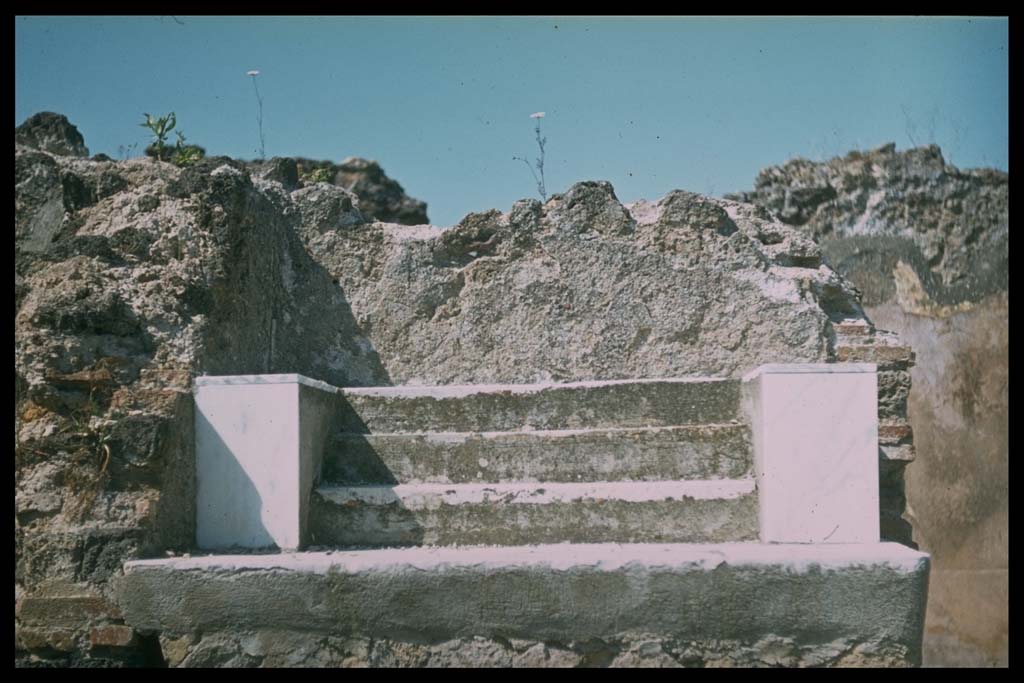
VIII.2.28 Pompeii. Three small steps on top of lararium base.
Photographed 1970-79 by Günther Einhorn, picture courtesy of his son Ralf Einhorn.
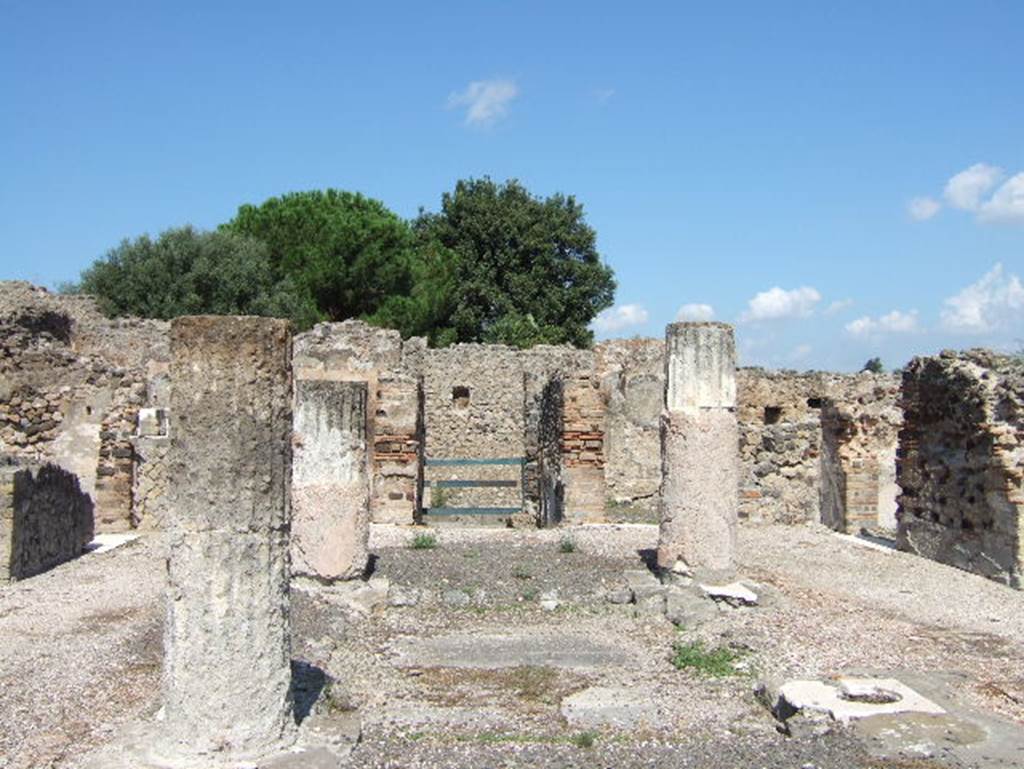
VIII.2.28 Pompeii. September 2005. Looking north across impluvium and columns in atrium.
![VIII.2.28 Pompeii. Found on 28th June 1758.
Wall painting of a counting frame on a pile of coins, an inscribed open diptych, a cask with fruit and a bag which may contain coins.
The open diptych contains CIL IV 1174.
Now in Naples Archaeological Museum. Inventory number 4675.
See Pagano, M. and Prisciandaro, R., 2006. Studio sulle provenienze degli oggetti rinvenuti negli scavi borbonici del regno di Napoli. Naples : Nicola Longobardi.
(p.27 where the last line of CIL IV 1174 is given as “actu cara”) PAH I, 1, 77.
See Helbig, W., 1868. Wandgemälde der vom Vesuv verschütteten Städte Campaniens. Leipzig: Breitkopf und Härtel. (1725).
See Varone, A. and Stefani, G., 2009. Titulorum Pictorum Pompeianorum, Rome: L’erma di Bretschneider, (p.365)
According to Epigraphik-Datenbank Clauss/Slaby (See www.manfredclauss.de), CIL IV 1174 reads
Septimea
Acci caese
Marcella
Amaranti
actu(m) Pom(peis) [CIL IV 1174]](8%2002%2028%20p1_files/image056.jpg)
VIII.2.28 Pompeii. Found on 28th June 1758.
Wall painting of a counting frame on a pile of coins, an inscribed open diptych, a cask with fruit and a bag which may contain coins.
The open diptych writing is recorded in CIL IV 1174.
Now in Naples Archaeological Museum. Inventory number 4675.
See Pagano, M. and Prisciandaro, R., 2006. Studio sulle provenienze degli oggetti rinvenuti negli scavi borbonici del regno di Napoli. Naples : Nicola Longobardi, (p.27 where the last line of CIL IV 1174 is given as “actu cara”) PAH I, 1, 77.
See Helbig, W.,
1868. Wandgemälde der vom Vesuv
verschütteten Städte Campaniens. Leipzig: Breitkopf und Härtel. (1725).
See Varone, A.
and Stefani, G., 2009. Titulorum Pictorum
Pompeianorum, Rome: L’erma di Bretschneider, (p.365)
According
to Epigraphik-Datenbank Clauss/Slaby (See www.manfredclauss.de), CIL IV 1174 reads
Septimea
Acci caese
Marcella
Amaranti
actu(m)
Pom(peis) [CIL IV 1174]
![VIII.2.28 Pompeii. Found on 28th June 1758. Wall painting of a small piece of architecture, two books, two ink stands and a pen, and a semi open scroll with many words visible. The scroll contained a poem found in several places in Pompeii. See CIL IV 1173. Now in Naples Archaeological Museum. Inventory number 4676. See Pagano, M. and Prisciandaro, R., 2006. Studio sulle provenienze degli oggetti rinvenuti negli scavi borbonici del regno di Napoli. Naples : Nicola Longobardi. (p.27) PAH I, 1, 77.
See Varone, A., 2002. Erotica Pompeiana: Love Inscriptions on the Walls of Pompeii, Rome: L’erma di Bretschneider. (p.62-3).
See Helbig, W., 1868. Wandgemälde der vom Vesuv verschütteten Städte Campaniens. Leipzig: Breitkopf und Härtel. (1724).
According to Epigraphik-Datenbank Clauss/Slaby (See www.manfredclauss.de), CIL IV 1173 reads
Quisquis
ama(t) valia(t)
peria(t) qui nescit ama[re]
bis tanti
periapt
quisqu
is amare
vota(t)
felices
adias maneas
o Martia
si te vidi
dum nobis
maxima
cura placet [CIL IV 1173]](8%2002%2028%20p1_files/image058.jpg)
VIII.2.28 Pompeii. Found on 28th June 1758.
Wall painting of a small piece of architecture, two books, two ink stands and a pen, and a semi open scroll with many words visible.
The scroll contained a poem found in several places in Pompeii. See CIL IV 1173.
Now in Naples Archaeological Museum. Inventory number 4676.
See Pagano, M.
and Prisciandaro, R., 2006. Studio sulle
provenienze degli oggetti rinvenuti negli scavi borbonici del regno di
Napoli. Naples : Nicola Longobardi. (p.27)
See Fiorelli G.,
1860. Pompeianarum antiquitatum historia,
Vol. 1: 1748 - 1818, Naples, 1, 77.
See Varone, A., 2002. Erotica
Pompeiana: Love Inscriptions on the Walls of Pompeii, Rome: L’erma di
Bretschneider. (p.62-3).
See Helbig, W.,
1868. Wandgemälde der vom Vesuv
verschütteten Städte Campaniens. Leipzig: Breitkopf und Härtel. (1724).
According to
Epigraphik-Datenbank Clauss/Slaby (See www.manfredclauss.de), CIL IV 1173 reads
Quisquis
ama(t) valia(t)
peria(t) qui
nescit ama[re]
bis tanti
periapt
quisqu
is amare
vota(t)
felices
adias maneas
o Martia
si te vidi
dum nobis
maxima
cura placet [CIL IV 1173]