VII.12.3 Pompeii. House of L. Caecilius Capella or Casa del Principe Enrico di Olanda.
Linked to VII.12.4. Excavated 1845
and 1863.
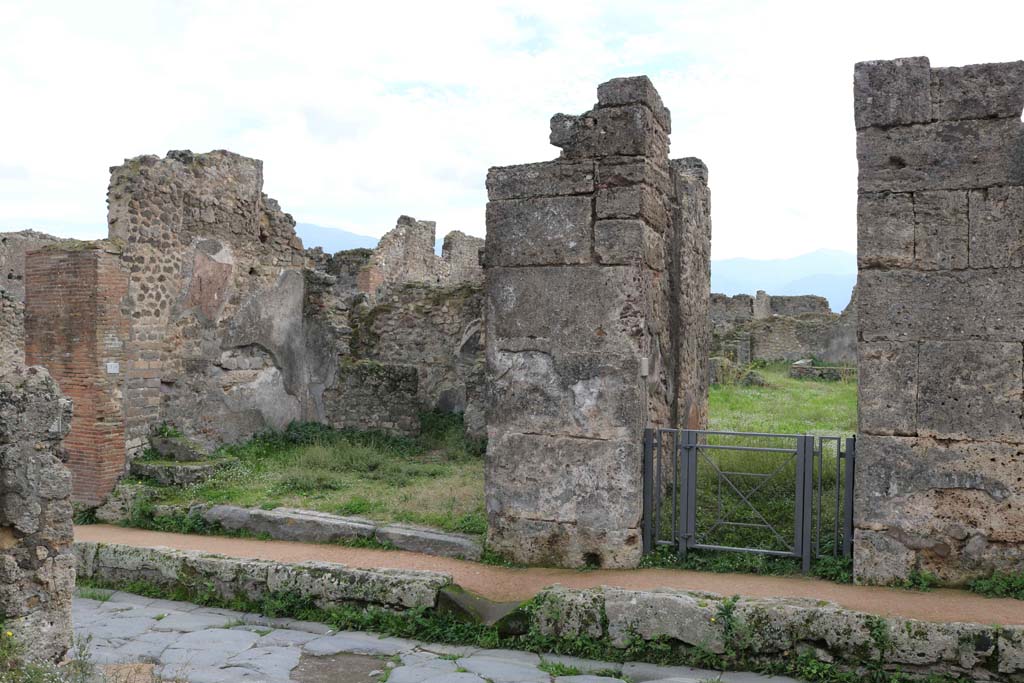
VII.12.3 Pompeii on right, and VII.12.4 on left.
December 2018.
Looking south on Via degli Augustali towards doorways. Photo courtesy of Aude Durand.
![VII.12.3 Pompeii. September 2005. Looking east towards entrance doorway (on right) and shop (on left).
According to Della Corte, an electoral recommendation was found written on the wall to the right of entrance number 3. It read –
Capella facit [CIL IV 617]
Also found on the wall to the left of shop VII.12.4 was –
Capella fac [CIL IV 619]
He thought it was very likely these referred to the candidate L. Caecilius Capella.
See Della Corte, M., 1965. Case ed Abitanti di Pompei. Napoli: Fausto Fiorentino. (p.183)
According to Epigraphik-Datenbank Clauss/Slaby (See www.manfredclauss.de), these read –
Firmum aed(ilem) o(ro) v(os) f(aciatis) Capella
facit [CIL IV 617]
C(aium) Cuspium Pansam
aed(ilem) Capella fac(iat) [CIL IV 619]](7%2012%2003_files/image004.jpg)
VII.12.3 Pompeii. September 2005. Looking east towards entrance doorway (on right) and shop (on left).
According to Della Corte, an electoral recommendation was found written on the wall to the right of entrance number 3. It read –
Capella
facit [CIL IV 617]
Also found on the wall to the left of shop VII.12.4 was –
Capella fac [CIL IV 619]
He thought it was very likely these referred to the candidate L. Caecilius Capella.
See Della Corte, M., 1965. Case ed Abitanti di Pompei. Napoli: Fausto Fiorentino. (p.183)
According to Epigraphik-Datenbank Clauss/Slaby (See www.manfredclauss.de), these read –
Firmum aed(ilem)
o(ro) v(os) f(aciatis) Capella
facit [CIL IV 617]
C(aium) Cuspium
Pansam
aed(ilem) Capella
fac(iat) [CIL IV 619]
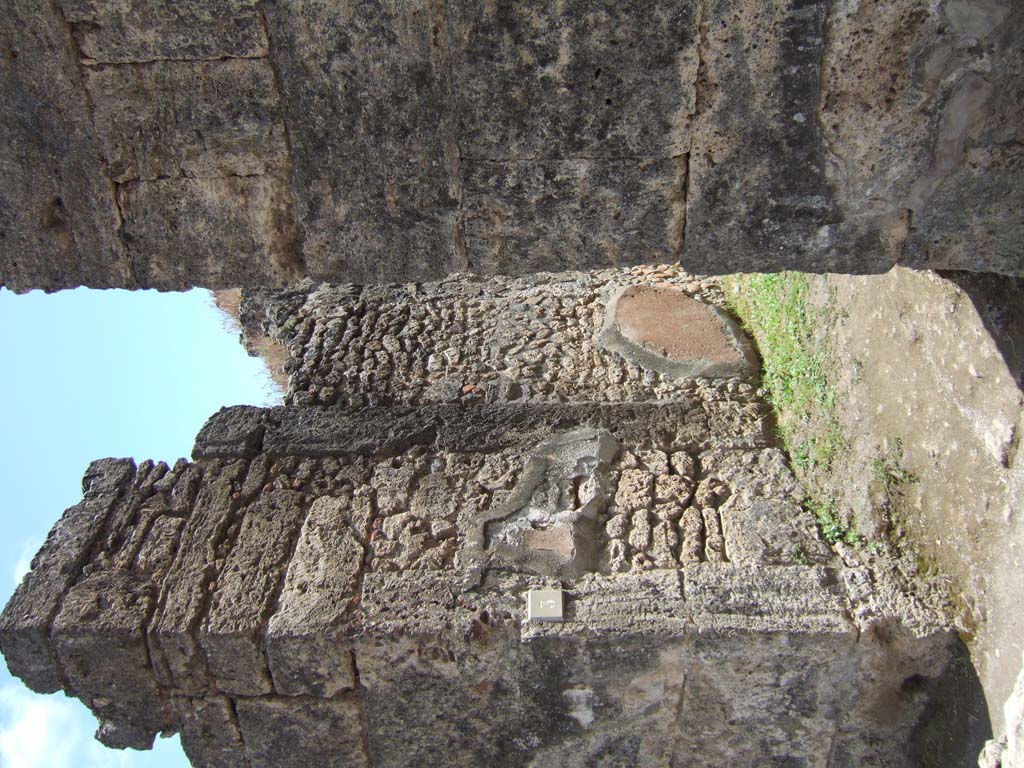
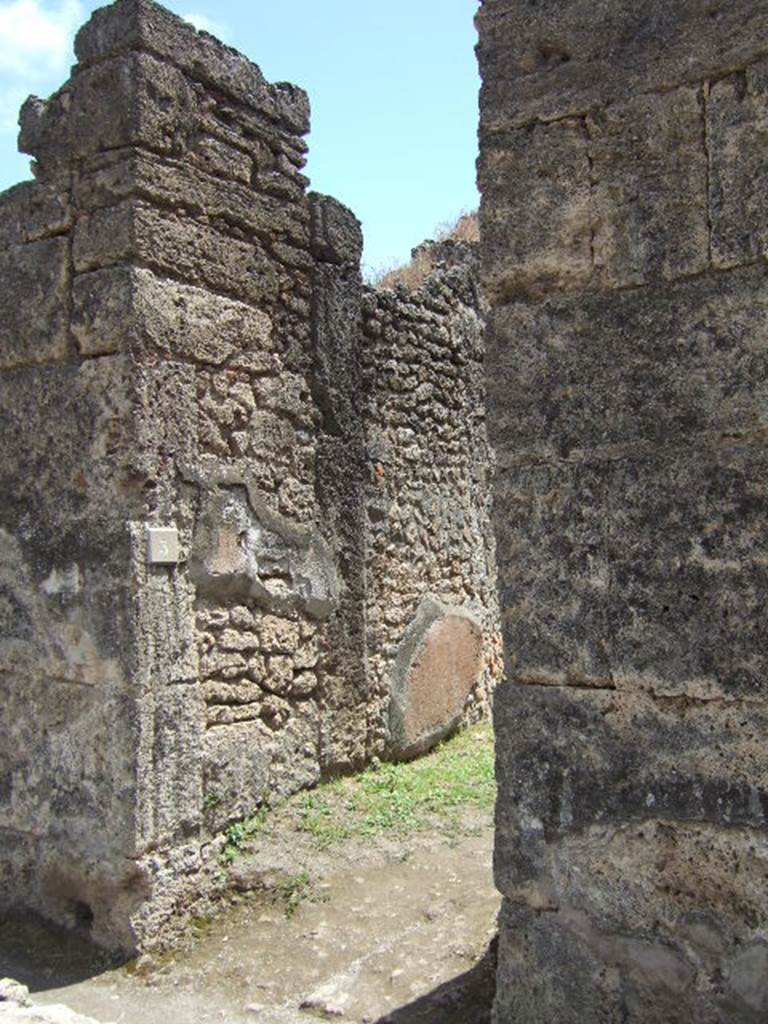
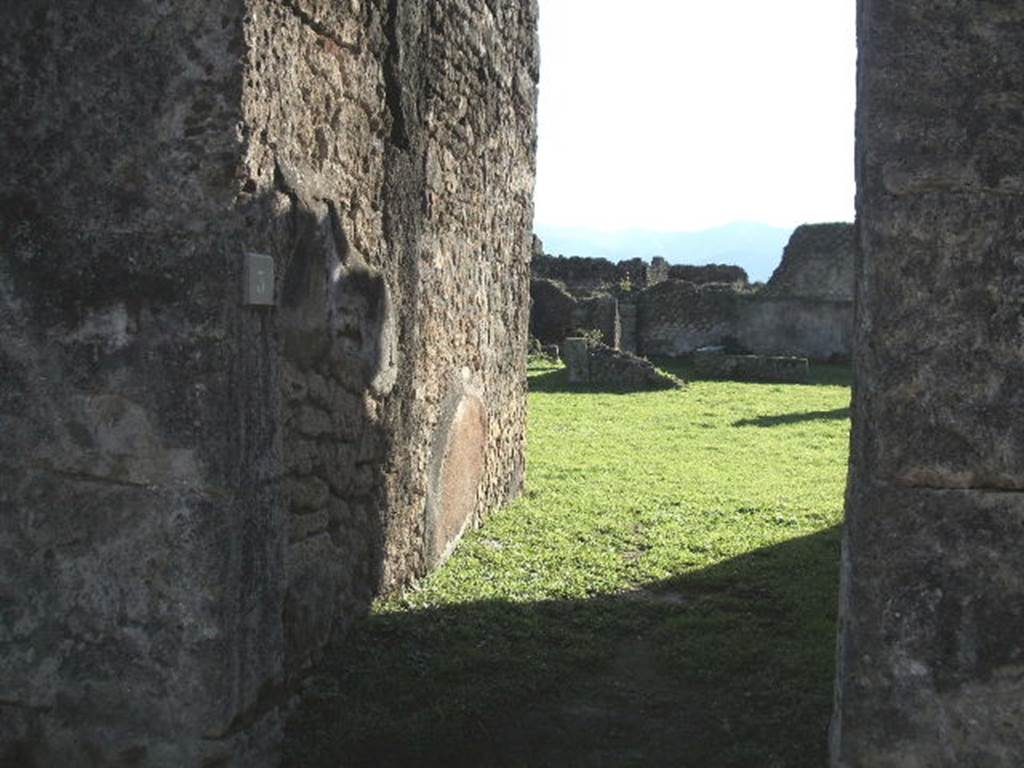
VII.12.3 Pompeii. December 2004. Looking south along entrance corridor to atrium.
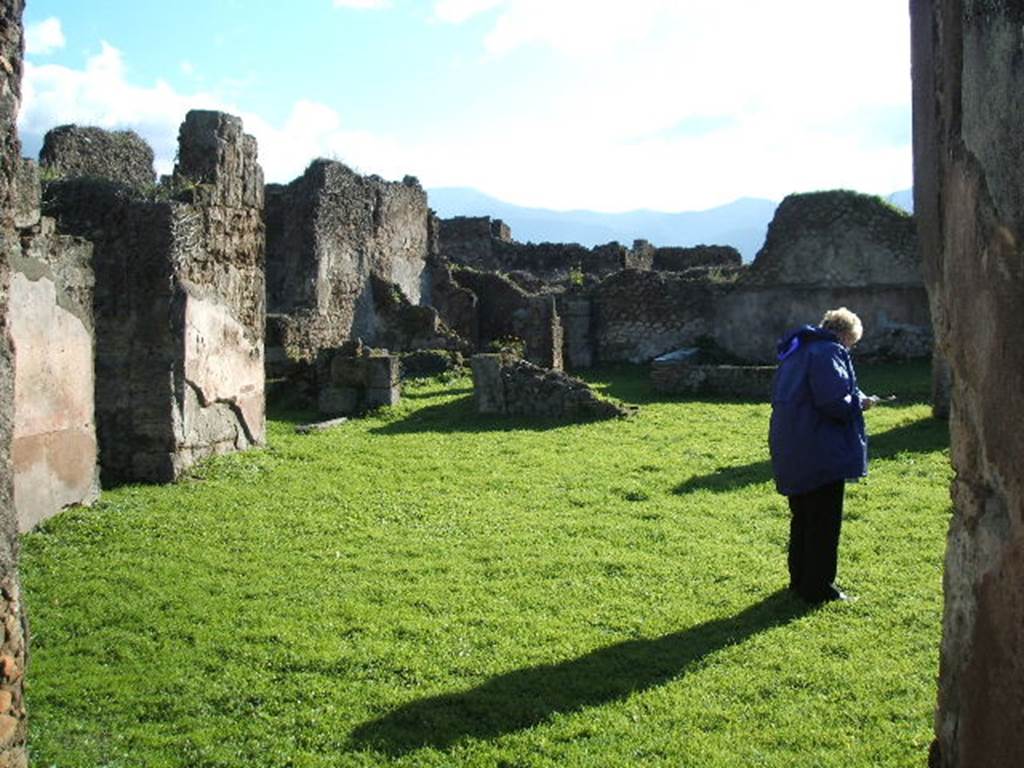
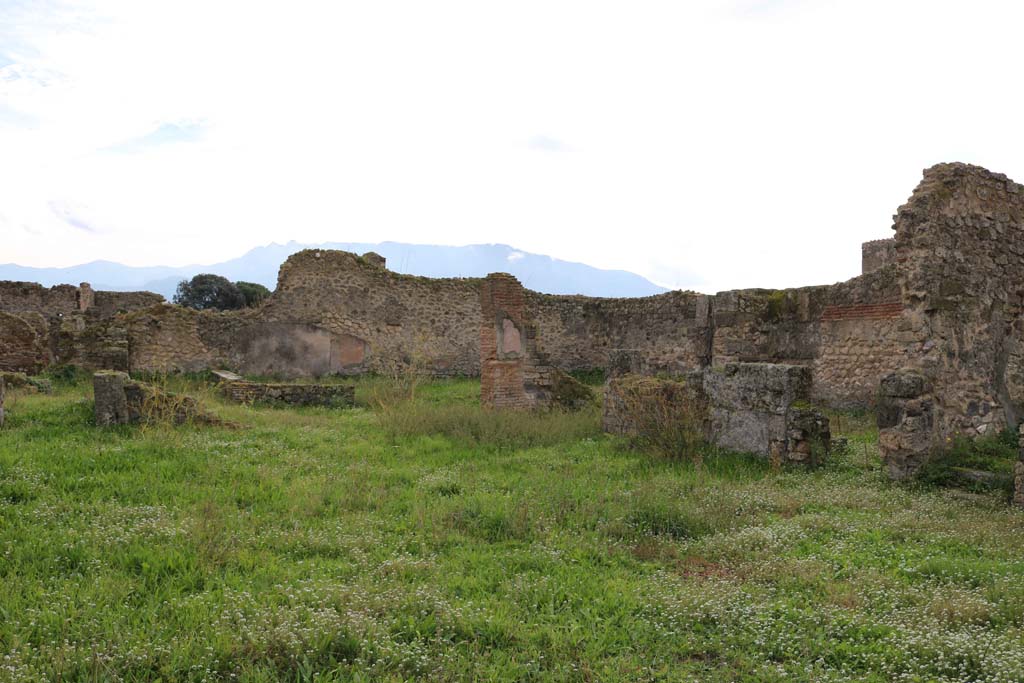
VII.12.3 Pompeii. December 2018.
Looking south-west from entrance doorway
towards peristyle garden in centre. Photo
courtesy of Aude Durand.
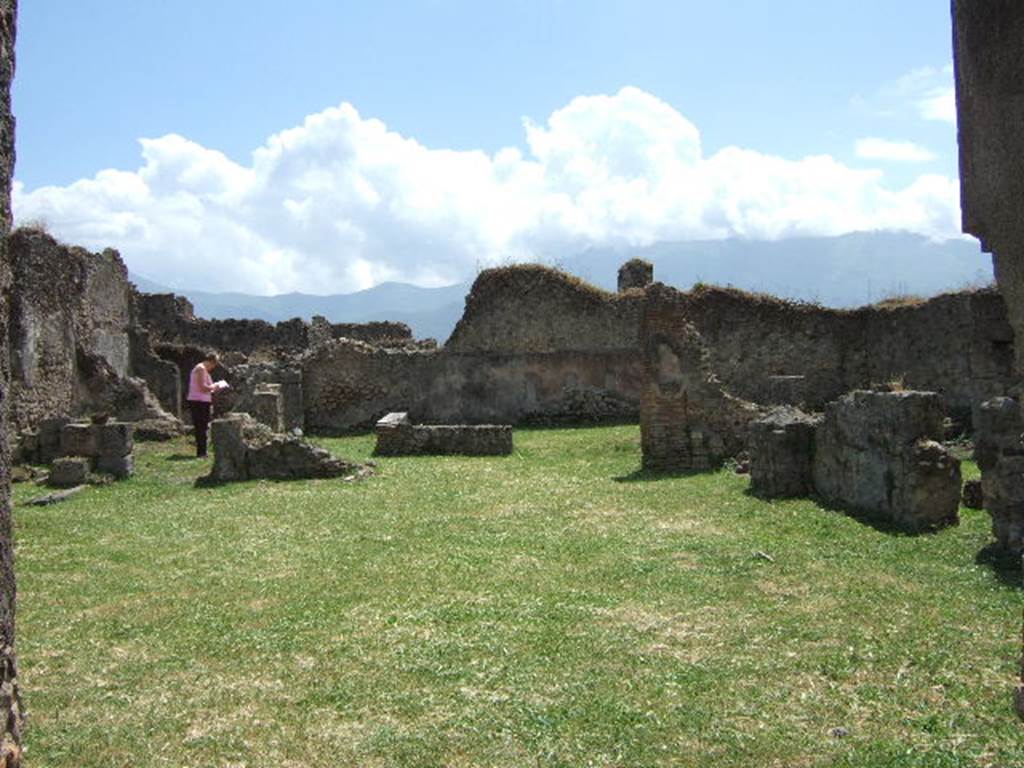
According to Jashemski, at the rear of the large atrium was a peristyle garden, excavated in 1863.
This was enclosed by a portico on the north and east supported by two columns.
It was bordered by a low wall which had an entrance to the garden on the north.
At the west end of the garden was a shallow marble pool which had a fountain.
The triclinium off the north portico had a wide opening which gave a good view of the garden and fountain, as did the exedra on the east.
See Jashemski, W. F., 1993. The Gardens of Pompeii, Volume II: Appendices. New York: Caratzas. (p.193)
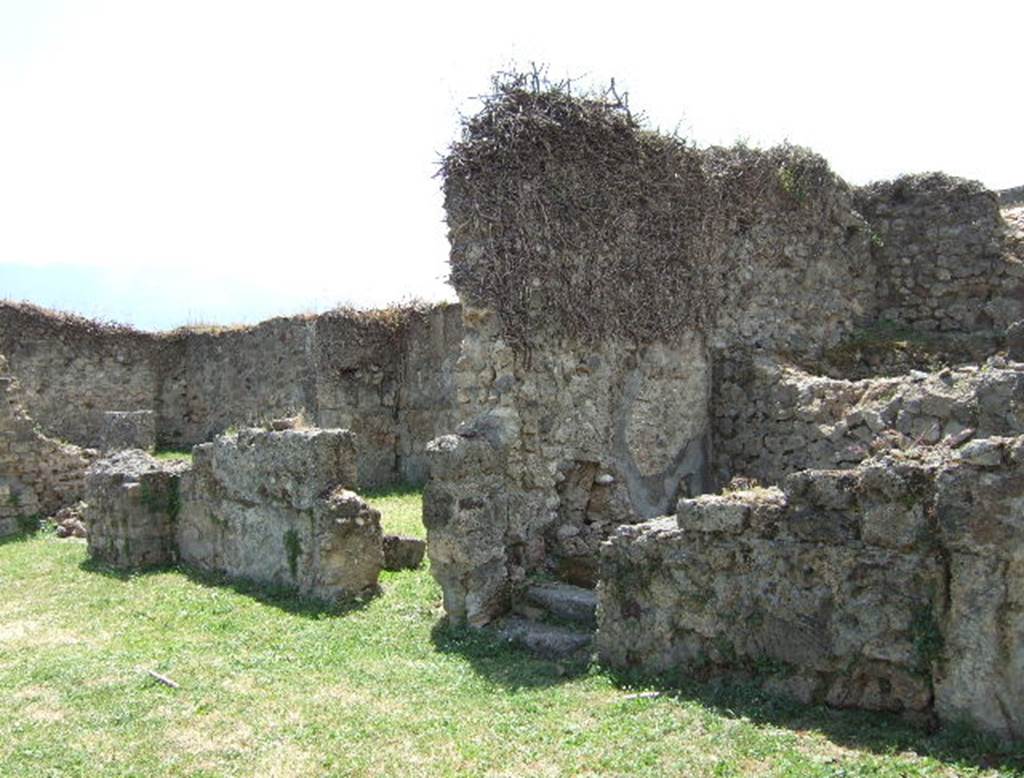
VII.12.3 Pompeii. May 2006. Rooms on west side of atrium.
According to Eschebach, on the right side of the atrium were steps to the upper floor, these are on the right of the photo above.
On the left of the photo, there was a windowed triclinium with a wide opening onto the north portico of the garden.
Also, on the right was a lararium.
See Eschebach, L., 1993. Gebäudeverzeichnis und Stadtplan der antiken Stadt Pompeji. Köln: Böhlau. (p.326)
According to Boyce, on the west side of the atrium Fiorelli reported a larario; but now there only remains a ruined brick base.
This may have supported an aedicula.
See Boyce G. K., 1937. Corpus of the Lararia of Pompeii. Rome: MAAR 14. (p.70, no.312)
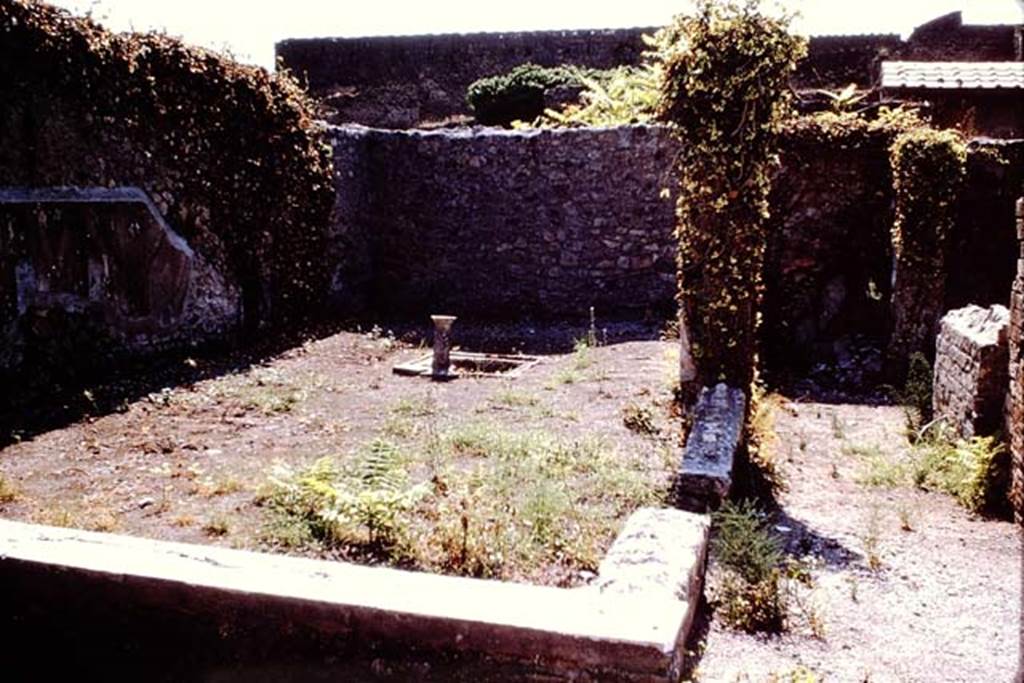
VII.12.3 Pompeii. 1966. Looking west across peristyle garden. Photo by Stanley A. Jashemski.
Source: The Wilhelmina and Stanley A. Jashemski archive in the University of Maryland Library, Special Collections (See collection page) and made available under the Creative Commons Attribution-Non Commercial License v.4. See Licence and use details.
Jmit0001
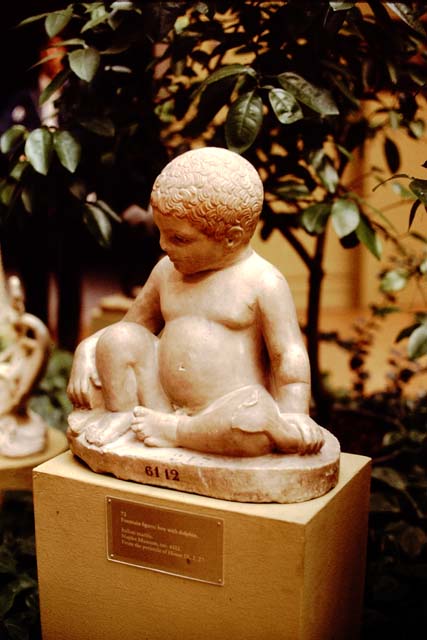
The marble fountain statuette of a nude boy sitting on the ground, grasping the head and tail of a dolphin appears to have come from this house.
The find spot is given as “Vicolo di Augusto, prima casa a destra, peristilio” and was found on 1st June 1863. The statuette still shows some traces of colour.
The statue is now in the Naples Archaeological Museum, inventory number 6112.
See Jashemski, W. F., 1993. The Gardens of Pompeii, Volume II: Appendices. New York: Caratzas. (p.193)
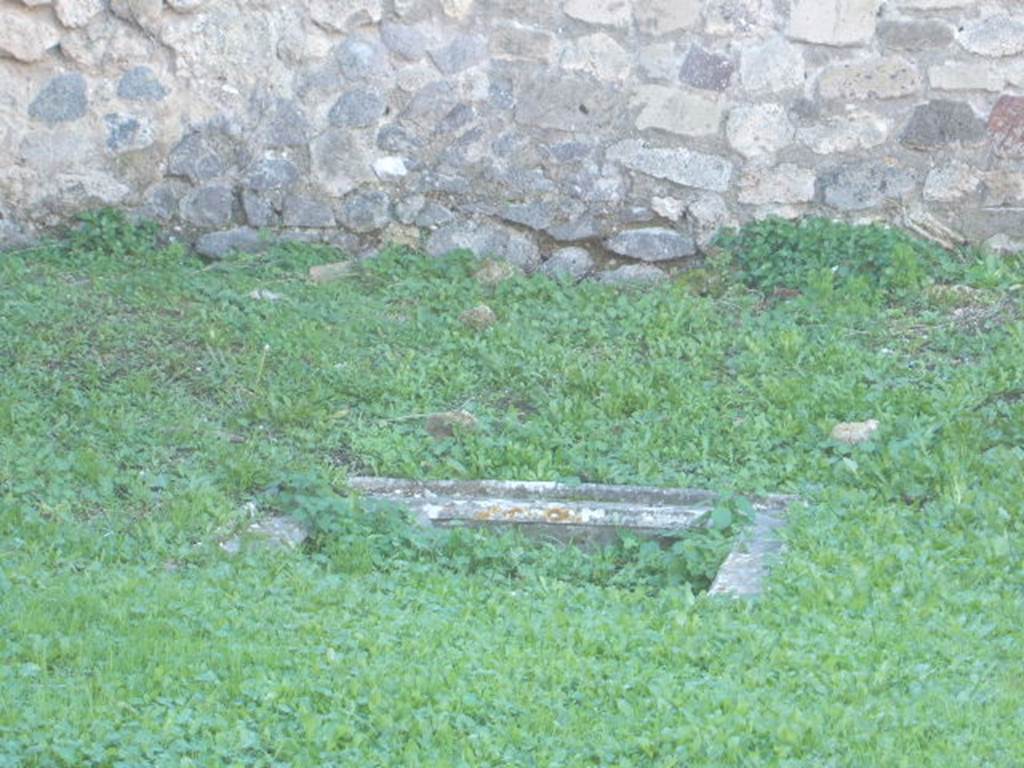
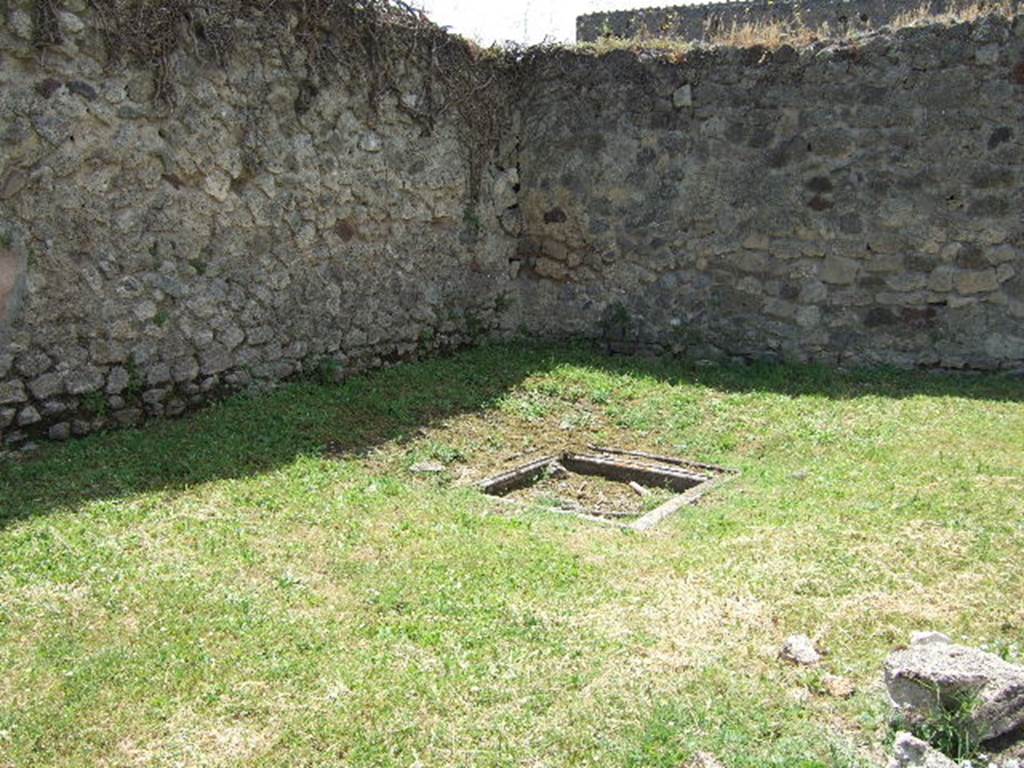
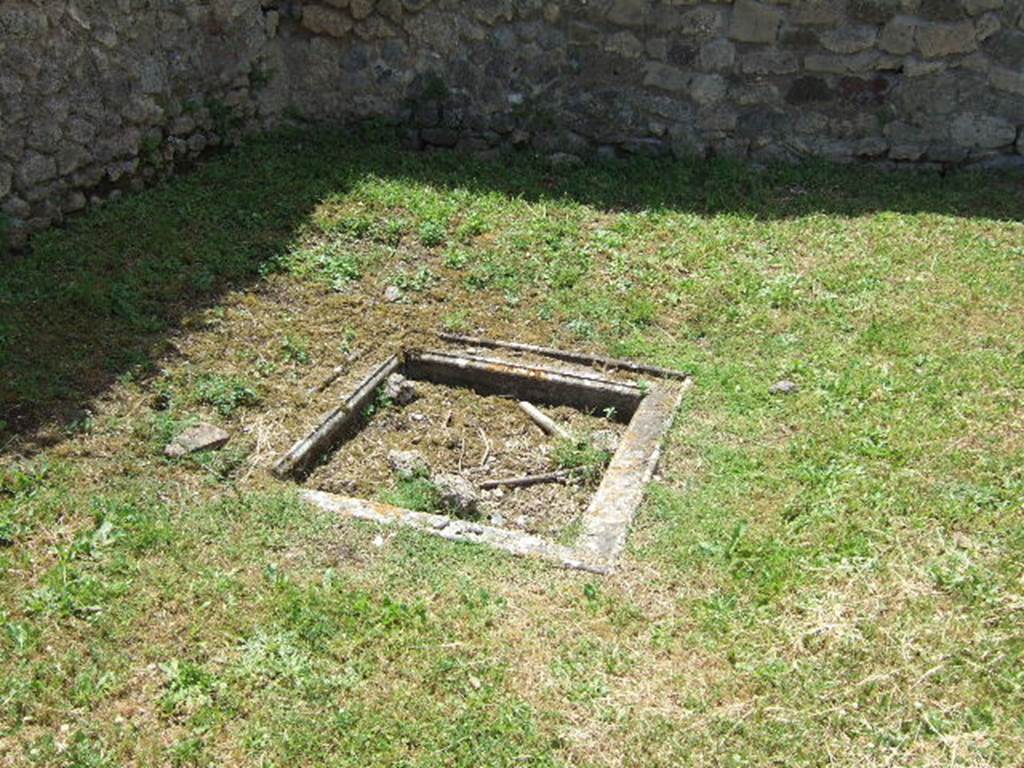
VII.12.3 Pompeii. December 2004. Shallow pool at west end of peristyle garden.
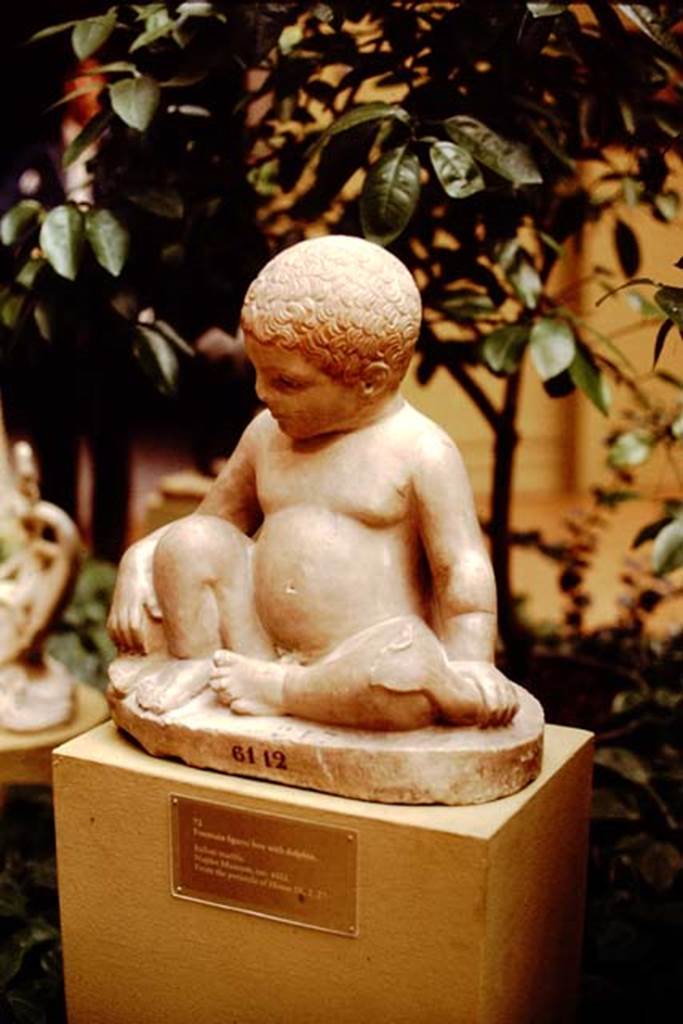
VII.12.3 Pompeii, 1978.
Marble fountain statuette of a nude boy seated on the ground and grasping the head and tail of a dolphin, (0.40m high).
This was found on 1st April 1863 in the peristyle.
Now in Naples Archaeological Museum, inventory number 6112.
Photo by Stanley A. Jashemski.
Source: The Wilhelmina and Stanley A. Jashemski archive in the University of Maryland Library, Special Collections (See collection page) and made available under the Creative Commons Attribution-Non Commercial License v.4. See Licence and use details.
J78f0031
According to Wilhelmina, in the catalogue of Pompeii 79, no.89, (ed. By Ward-Perkins and Claridge), the provenance of this statuette is given as IX.2.27.
See Jashemski, W. F., 1993. The Gardens of Pompeii,
Volume II: Appendices. New York:
Caratzas. (p.193)
For further
information,
See Marmora
Pompeiana nel Museo Archeologico Nazionale di Napoli: Studi della
Soprintendenza archeologica di Pompei, No.26. (C22, on p.133).
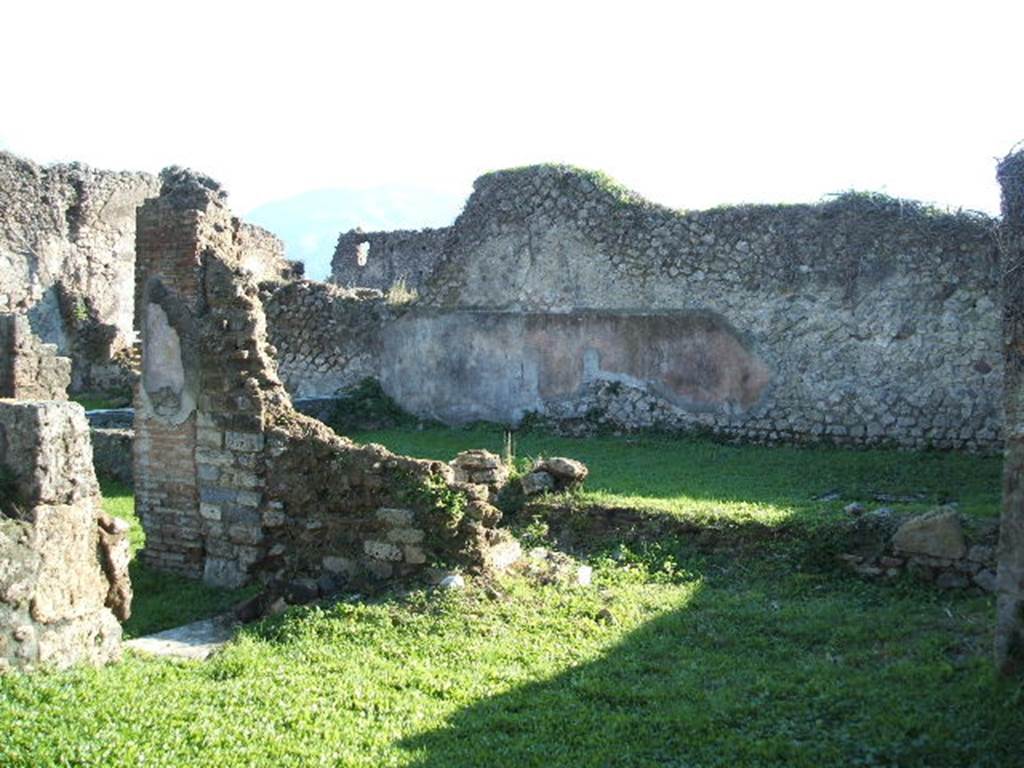
VII.12.3 Pompeii. May 2006. Looking south across triclinium towards peristyle garden.
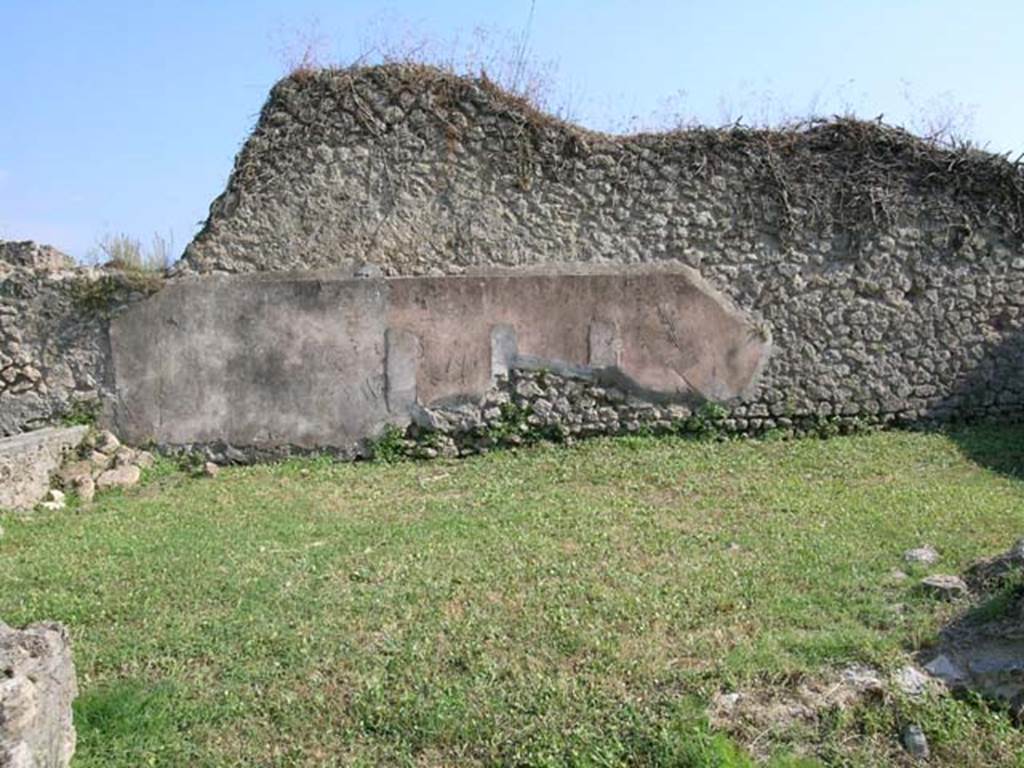
VII.12.3 Pompeii. May 2003. South wall of peristyle garden. Photo courtesy of Nicolas Monteix.
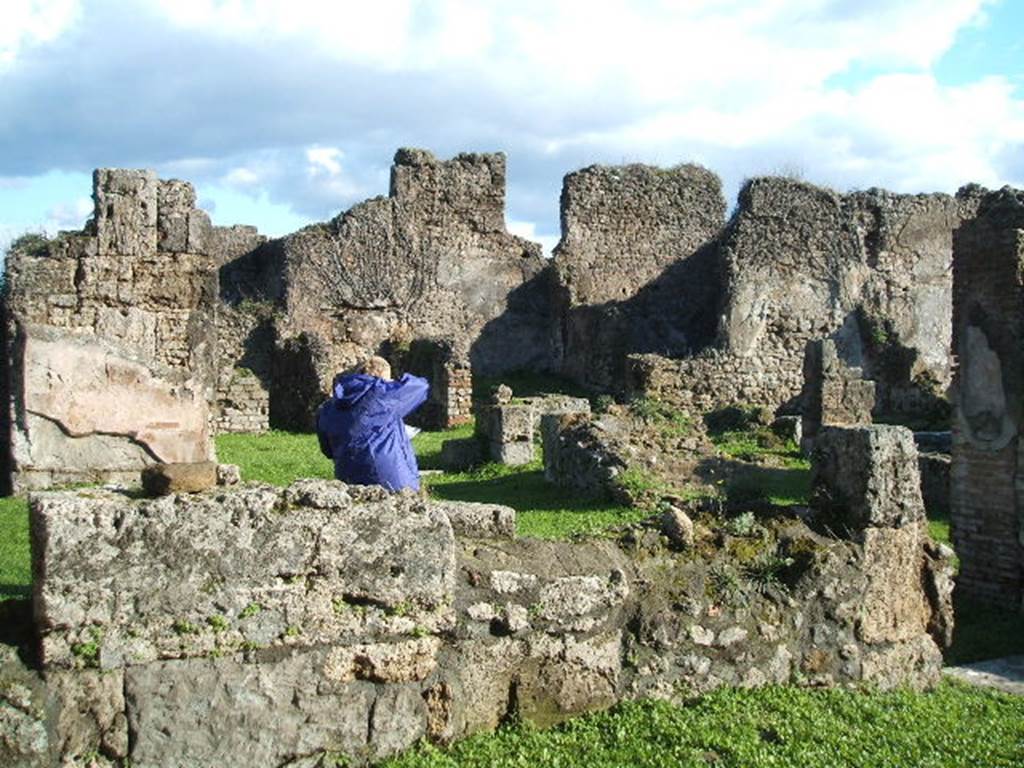
VII.12.3 Pompeii. December 2004. Looking south-east from triclinium towards atrium and east side of house.
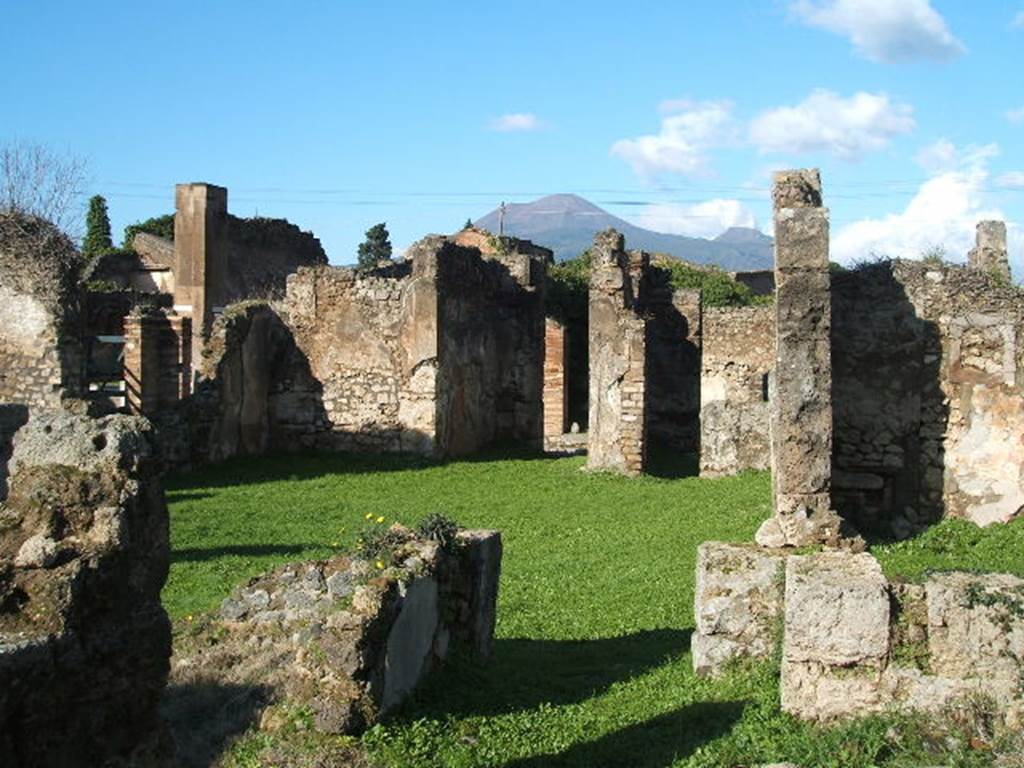
VII.12.3 Pompeii. December 2004. Looking north across atrium towards entrance corridor, from east side.
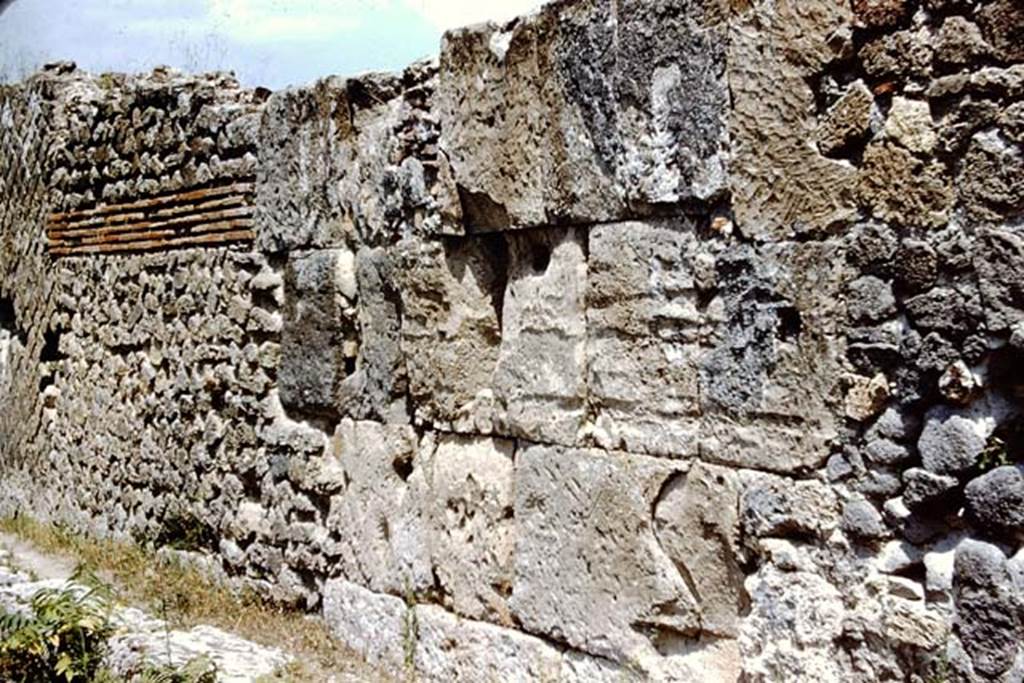
VII.12.3
Pompeii. 1959. Exterior west wall on east side of Vicolo di Eumachia. Photo by
Stanley A. Jashemski.
Source: The
Wilhelmina and Stanley A. Jashemski archive in the University of Maryland
Library, Special Collections (See collection page) and made available under the Creative
Commons Attribution-Non Commercial License v.4. See Licence and use details.
J59f0383