VII.9.40 Pompeii. Dwelling house entrance.
Linked to VII .9.41 and VII .9.27. Excavated 1817, 1823.
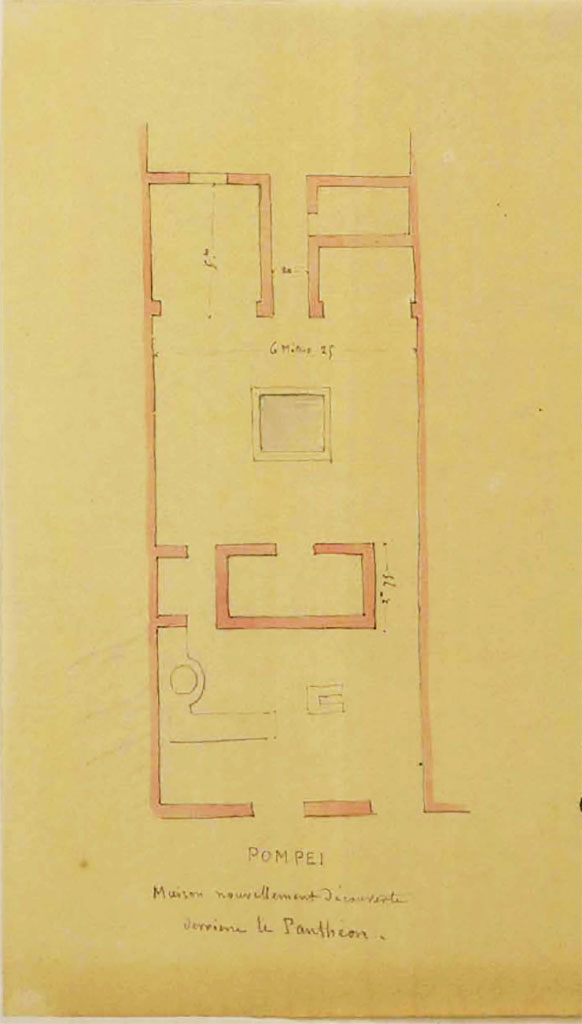
VII.9.40/41 Pompeii. Described as “House newly excavated behind the Pantheon”.
Undated sketch by Lesueur, showing doorway to corridor to house at VII.9.40, lower right, and doorway to shop at VII.9.41, lower centre. The upper doorway would lead into the garden area, and then VII.9.27.
See
Lesueur, Jean-Baptiste Ciceron. Voyage en Italie de Jean-Baptiste Ciceron
Lesueur (1794-1883), pl. 42.
See Book on INHA reference INHA NUM PC 15469 (04) « Licence Ouverte / Open Licence » Etalab
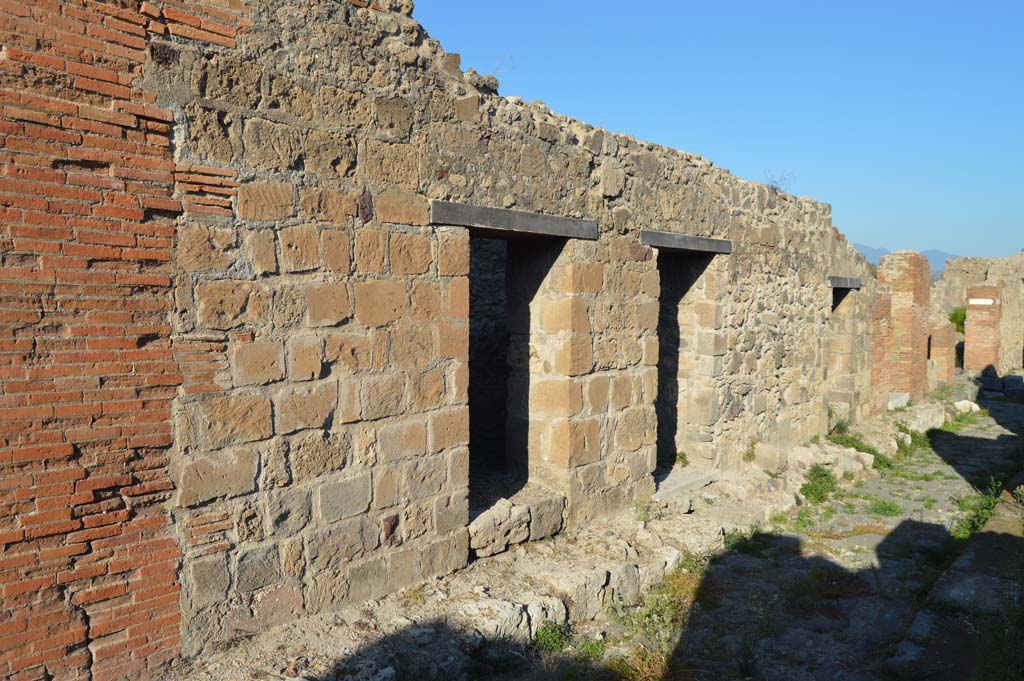
VII.9.41 and VII.9.40
Pompeii. October 2017.
Looking east on Vicolo del
Balcone Pensile towards junction with Vicolo di Eumachia, on right.
Foto Taylor Lauritsen, ERC Grant 681269 DÉCOR.
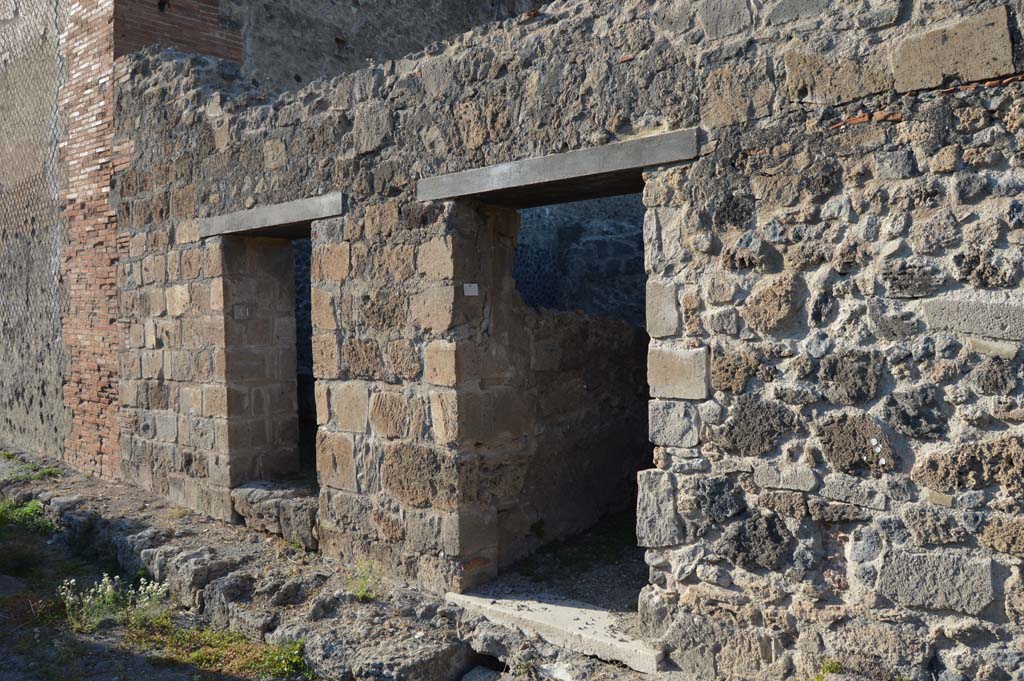
VII.9.40 Pompeii, on right.
October 2017. Looking north-west to entrance doorway on Vicolo del Balcone
Pensile.
Foto Taylor Lauritsen, ERC Grant 681269 DÉCOR.
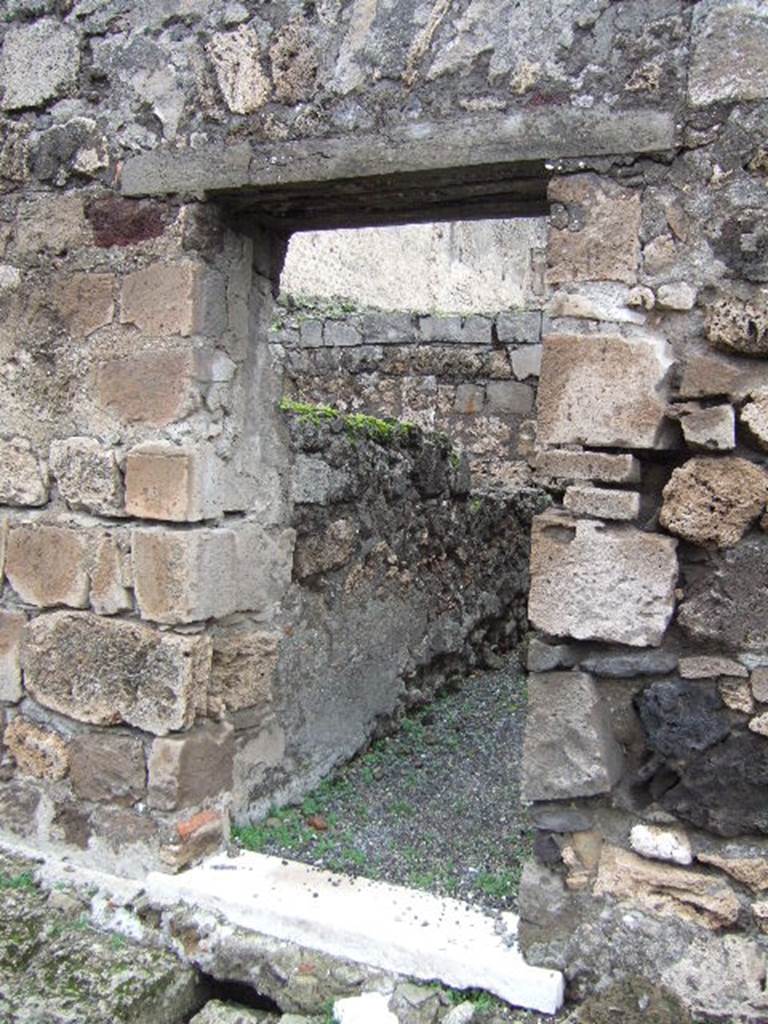
VII.9.40 Pompeii. December 2005. Entrance doorway.
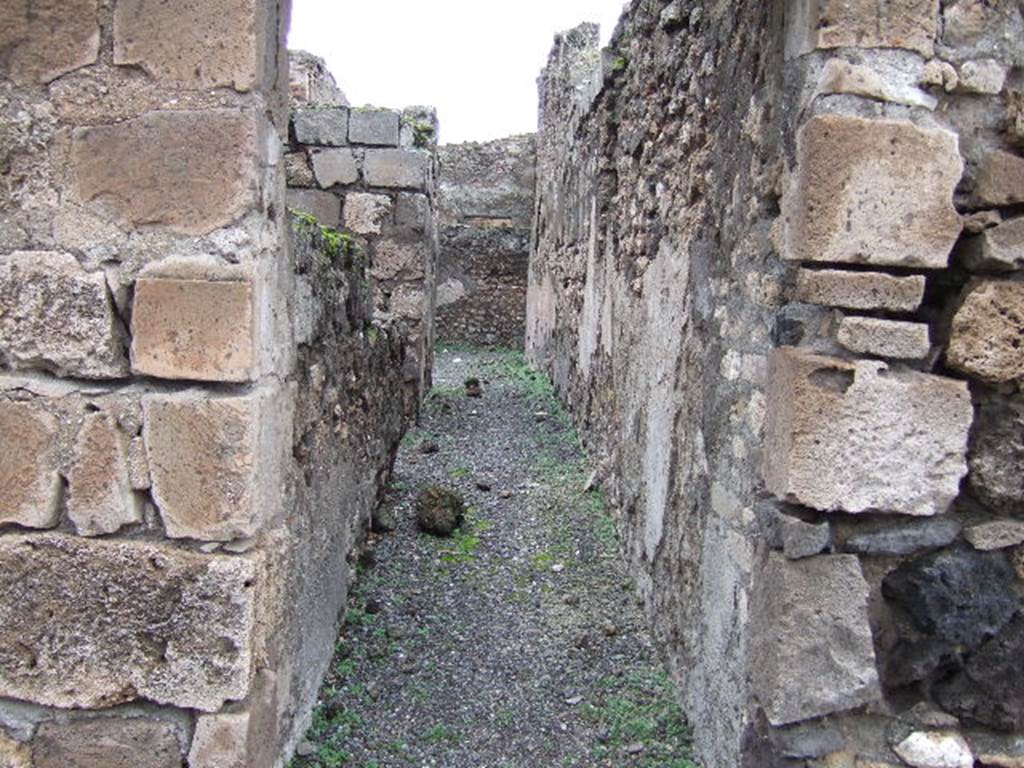
VII.9.40 Pompeii. December 2005. Looking north along corridor leading to atrium.
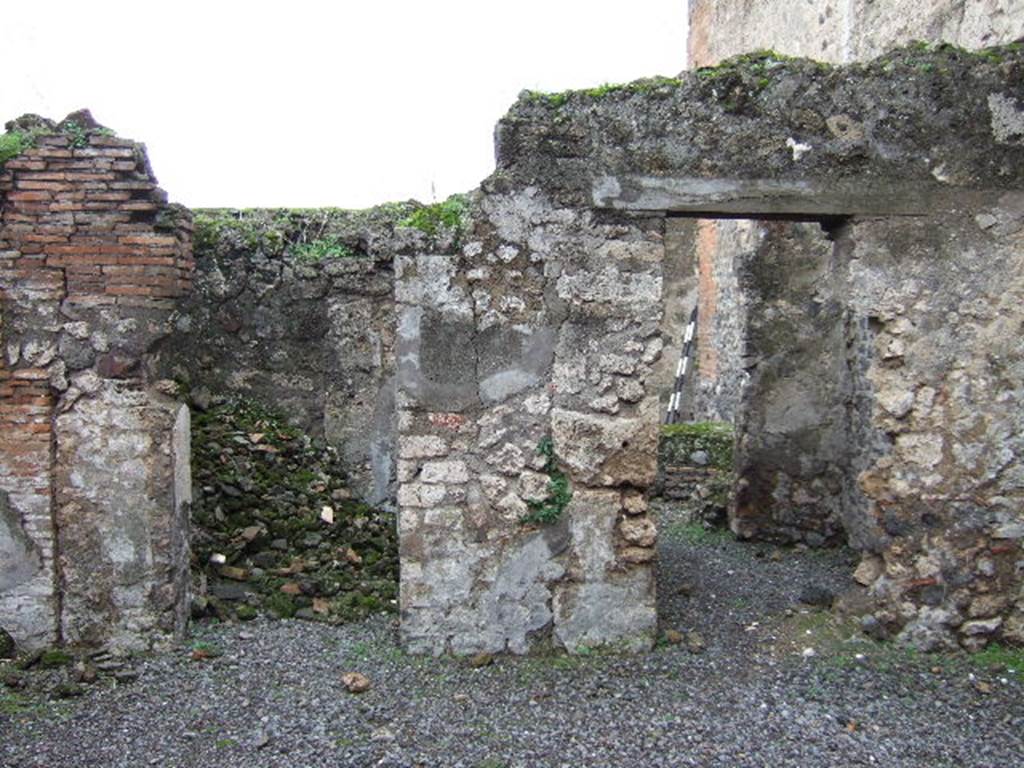
VII.9.40 Pompeii. December 2005. Two doorways to rooms on south side of atrium. On the left the doorway to a cubiculum.
On the right, a doorway looking south into room with steps to upper floor, linking to workshop at VII.9.41.
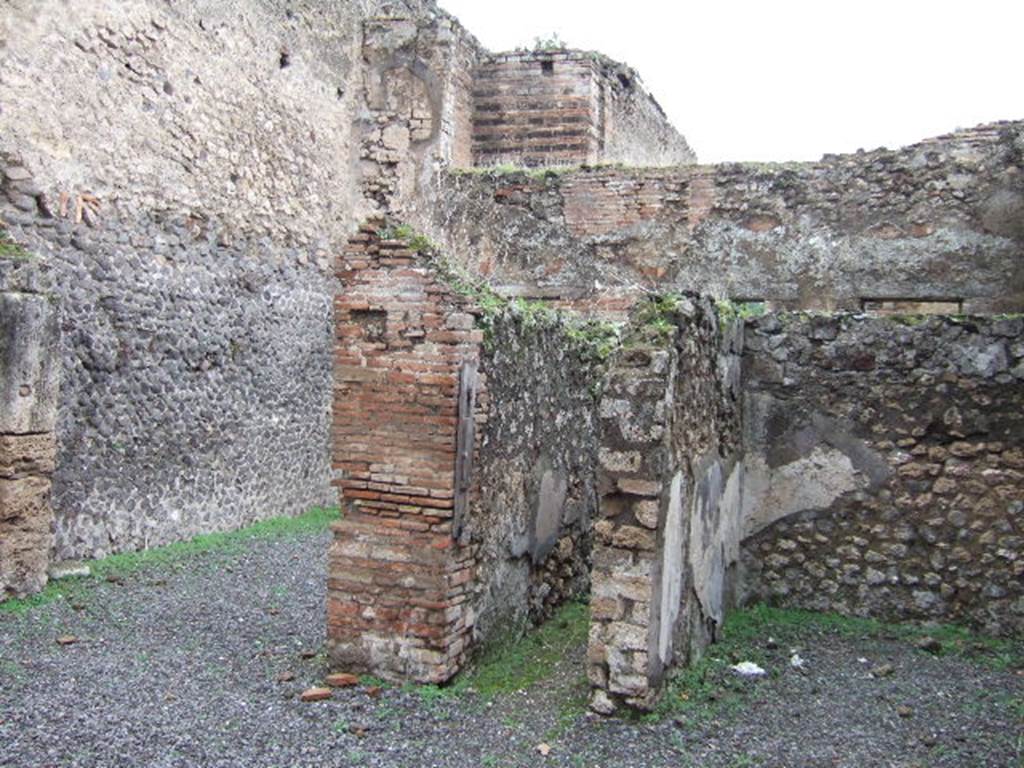
VII.9.40 Pompeii. December 2005. Three doorways on north side of atrium.
On the left the doorway to the triclinium with a window onto the garden at the rear.
In the centre, a corridor leading north to doorway to garden area, stairs to upper floor, and a cubiculum with window overlooking the garden.
On the right, the tablinum. The stairs to the upper floor would have been behind the tablinum.
According to Jashemski, this narrow shop-house, which reached through the entire insula, had a large shop fronting onto Via degli Augustali, a little wool-scouring plant (VII.9.41) and separate entrance doorway on the Vicolo del Balcone Pensile leading to the home of the owner, in the middle.
The garden was at the rear of the living quarters.
It had a garden painting on the south wall which was visible from the Via degli Augustali through a very wide opening in the rear room of the shop.
Little remains of the garden today.
There was also a fountain, mentioned by Fiorelli and Niccolini, but there are scant remains of it today.
A door from the living quarters led into the garden, and both the triclinium and a cubiculum had a large window opening into the garden.
The large opening in the rear room of the shop also showed that the garden was intended to be enjoyed by those in the shop at VII.9.27.
See Jashemski, W. F., 1993. The Gardens of Pompeii, Volume II: Appendices. New York: Caratzas. (p.189)
Jashemski also noted that the garden painting on the south wall of the garden was not mentioned in any of the reports.
In 1961, when she cleaned the brambles from this garden, on the wall between the door and the window of the cubiculum, she found the painting of a low garden fence with painted plants still visible above it.
Behind the fence was painted a fountain supported on three slender legs.
There were also faint traces of what appeared to be a similar fountain beyond the painted fence on the opposite side of the door, and perhaps another on the other side of the cubiculum window.
See Jashemski, W. F., 1993. The Gardens of Pompeii, Volume II: Appendices. New York: Caratzas. (p.363-4, no.79)
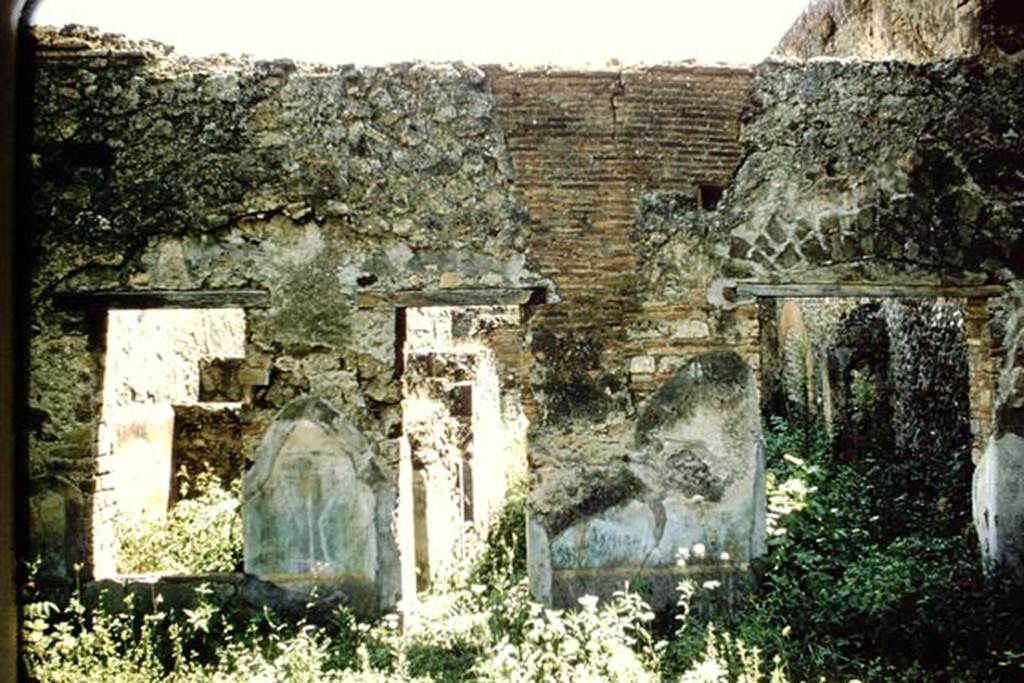
VII.9.40/27 Pompeii. 1959. Looking south across garden area, through a central doorway to corridor leading to atrium.
On either side of the doorway is a window, on the left overlooking the garden from a cubiculum, on the right from the triclinium. Photo by Stanley A. Jashemski.
Source: The Wilhelmina and Stanley A. Jashemski archive in the University of Maryland Library, Special Collections (See collection page) and made available under the Creative Commons Attribution-Non Commercial License v.4. See Licence and use details.
J59f0387
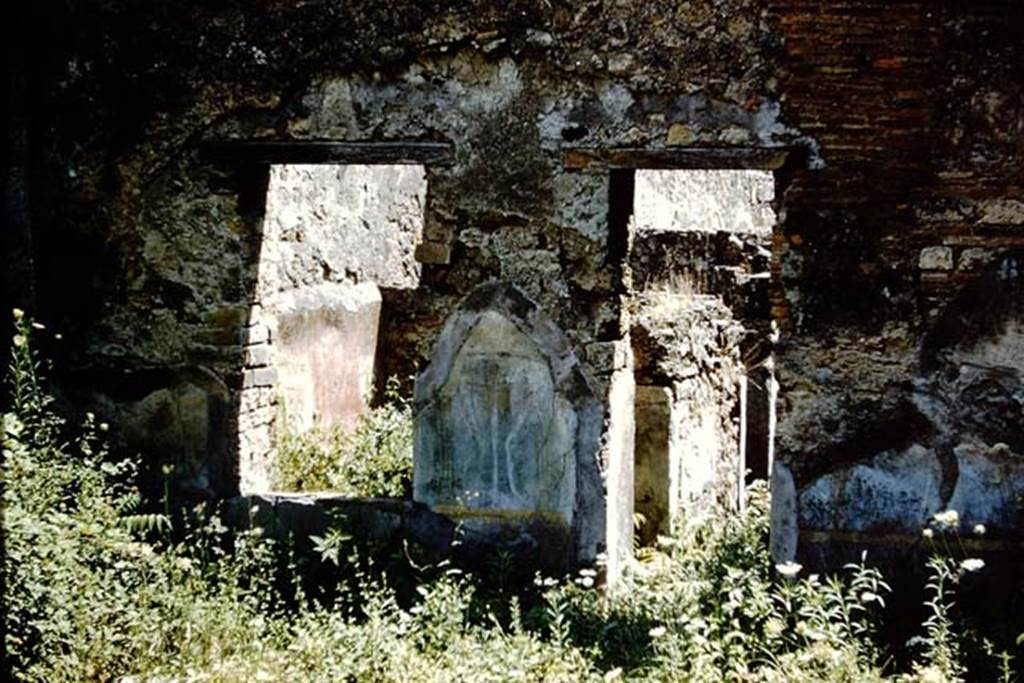
VII.9.40/27 Pompeii. 1959. South wall of garden area with the small remains of a garden painting. Photo by Stanley A. Jashemski.
Source: The Wilhelmina and Stanley A. Jashemski archive in the University of Maryland Library, Special Collections (See collection page) and made available under the Creative Commons Attribution-Non Commercial License v.4. See Licence and use details.
J59f0386