VII.7.10 Pompeii. Domus di Romolo e Remo or House of Romulus & Remus or House of Fabius H….
Linked to VII.7.13. Excavated 1859
and 1864.
Bombed in 1943. Severely damaged and
many paintings were lost.
Structural restoration 1950. Restored 2014.
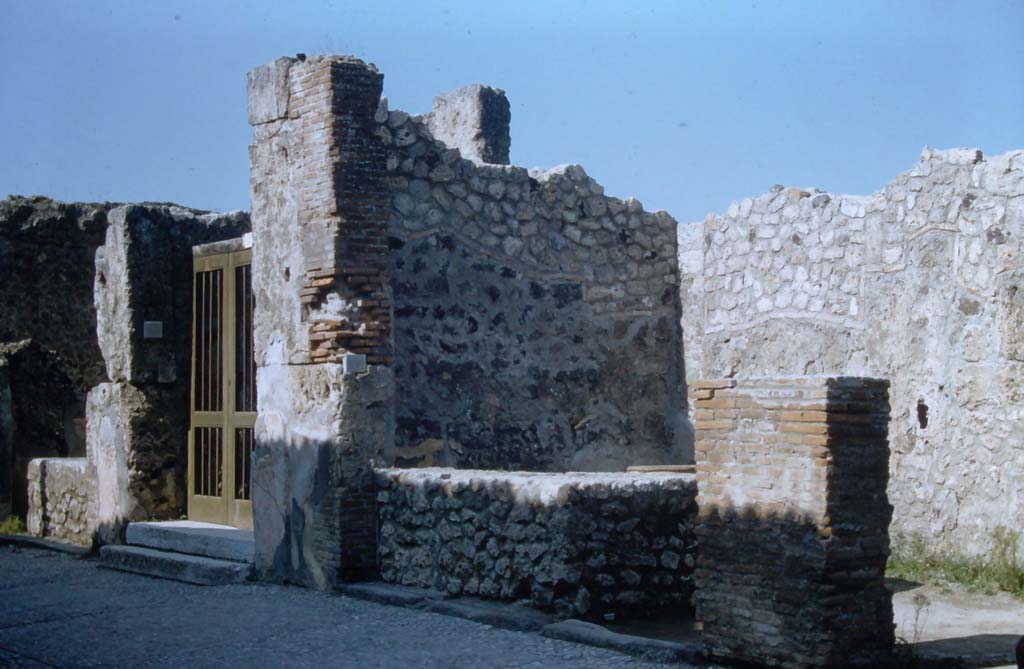
VII.7.11, VII.7.10 and
VII.7.9, Pompeii. November 1961. Entrance doorways on north
side of Via Marina. Photo courtesy of Rick Bauer.
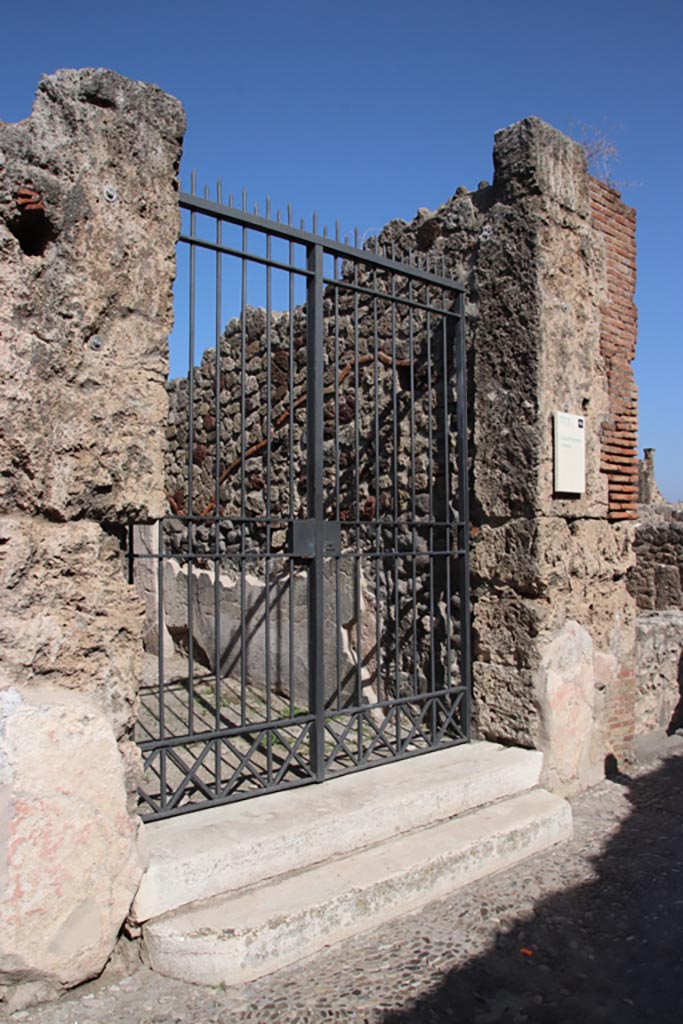
VII.7.10 Pompeii. October
2023. Entrance doorway. Photo courtesy of Klaus Heese.
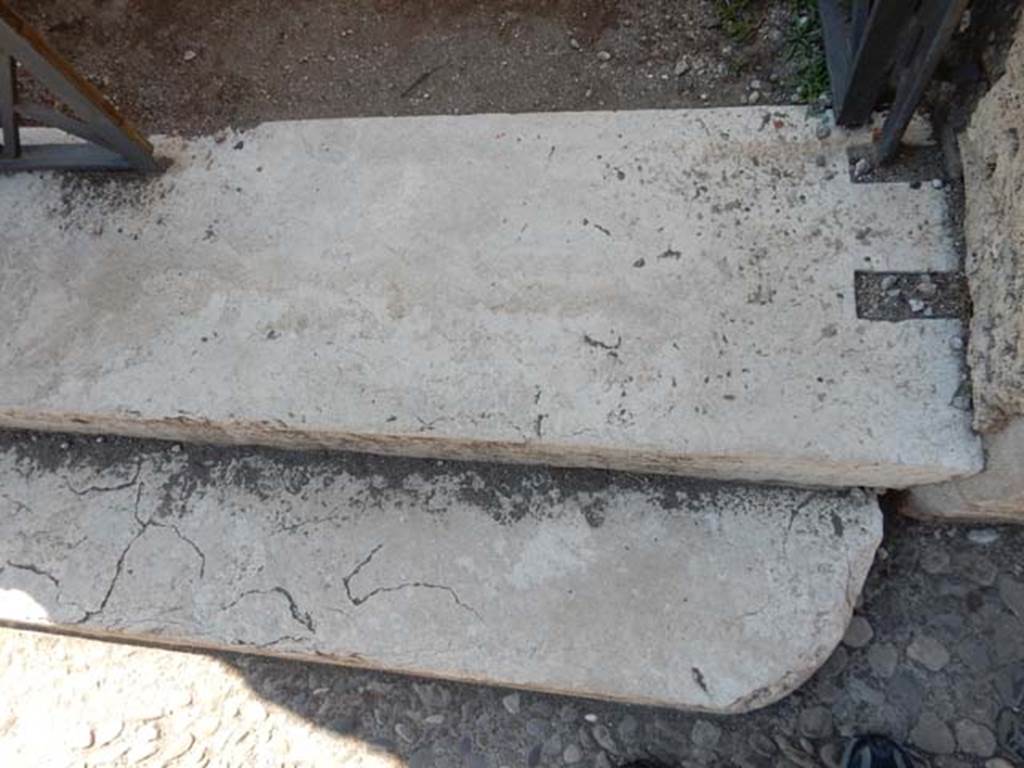
VII.7.10 Pompeii. May 2018. Marble step of entrance doorway. Photo courtesy of Buzz Ferebee.
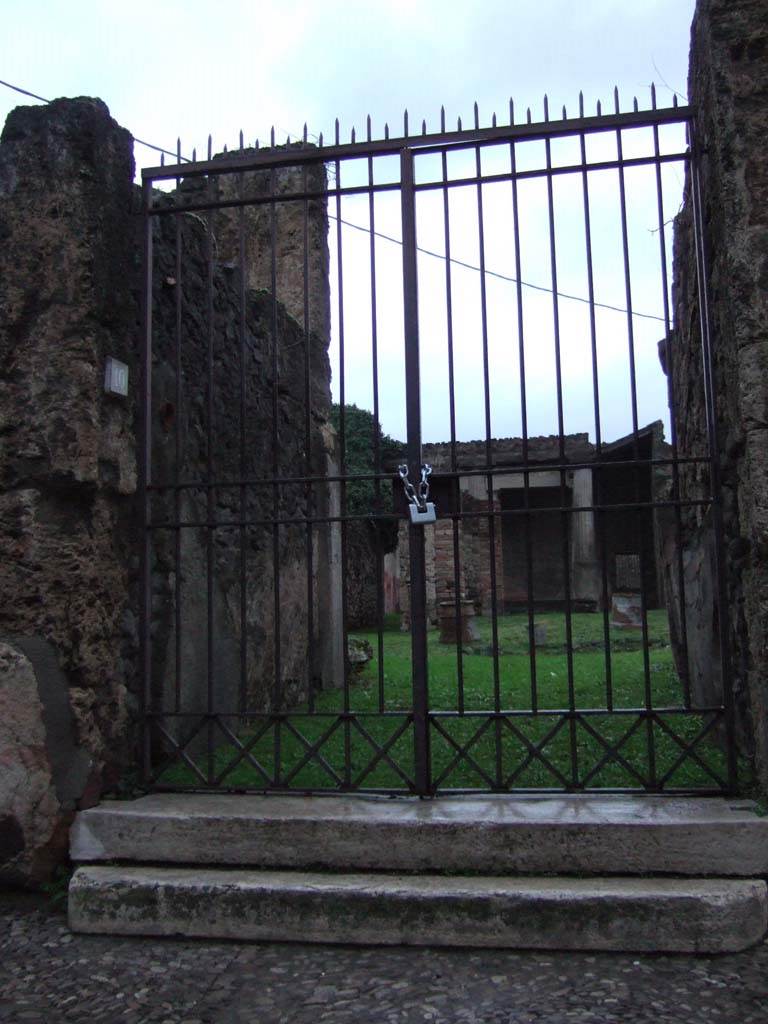
VII.7.10 Pompeii. December 2005. Entrance doorway, looking north.
According to Garcia y Garcia, this house was hit extremely hard by the bombing on the night of 24th August 1943.
It caused the partial demolition of the atrium and its room on the east, as well as the room to the west of the tablinum comprising part of the western perimeter wall.
Also destroyed were two big pilasters on the east side of the peristyle, three rooms on the north-east side of this, and part of the northern perimeter wall.
A second bomb hit the area near the rear exit at VII.7.13 during the night of 13th September 1943.
Due to these repeated assaults, nearly all the paintings of the fourth style fell and perished.
In an oecus, the painting described as the birth of Rome showing the wolf with the twins Romulus and Remus was lost. This painting gave the name to the house.
See Garcia y Garcia, L., 2006. Danni di guerra a Pompei. Rome: L’Erma di Bretschneider.
(p.115-116).
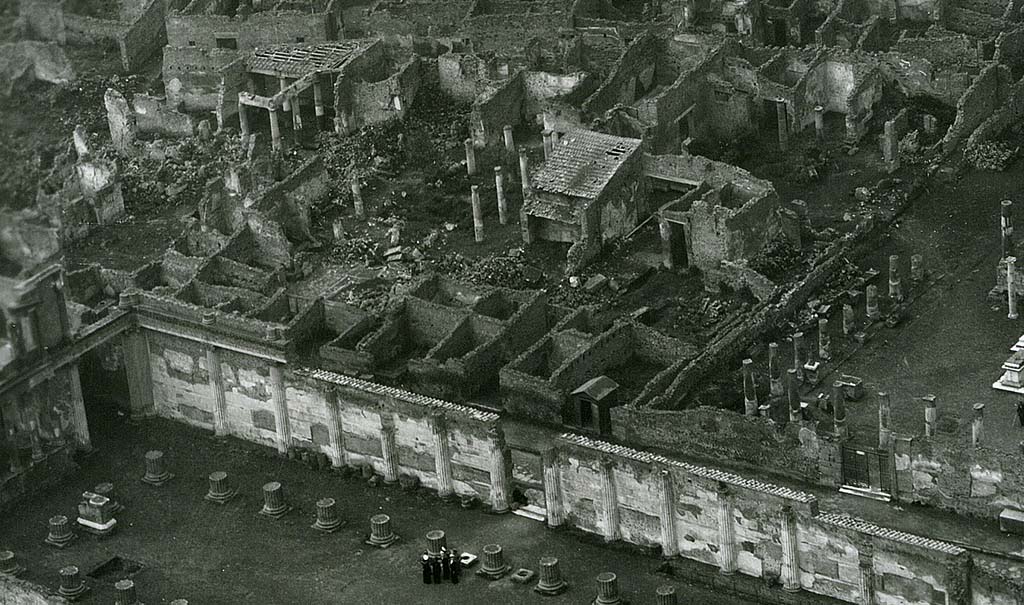
VII.7.10 Pompeii. 1944, detail taken from USAAF aerial photo.
Looking north-west across the Basilica
and Via Marina, lower left in photo.
On the north side of the Via Marina, in
the upper part of the photo, the house of House of Romulus and Remus
(VII.7.10), and House of Tryptolemus (VII.7.5 and VII.7.2) can be seen on the
west side of the Temple of Apollo, which is on the right. Photo courtesy of
Rick Bauer.
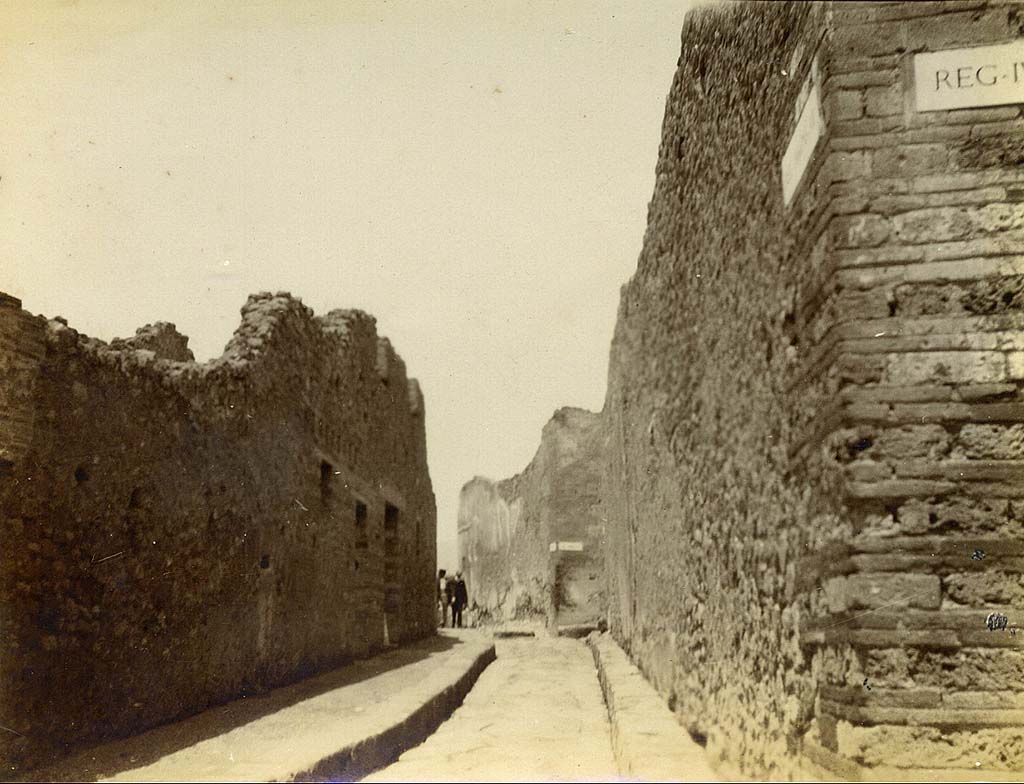
Vicolo del Gigante between VII.16 and VII.7. 1905. Looking north from Via Marina. Photo courtesy of Rick Bauer.
A very interesting photo showing on the left, what appears to be the front façade and doorways of VII.16.8 and 9.
On the right is the west wall of VII.7.12.11.10, before its destruction in the 1943 bombing.
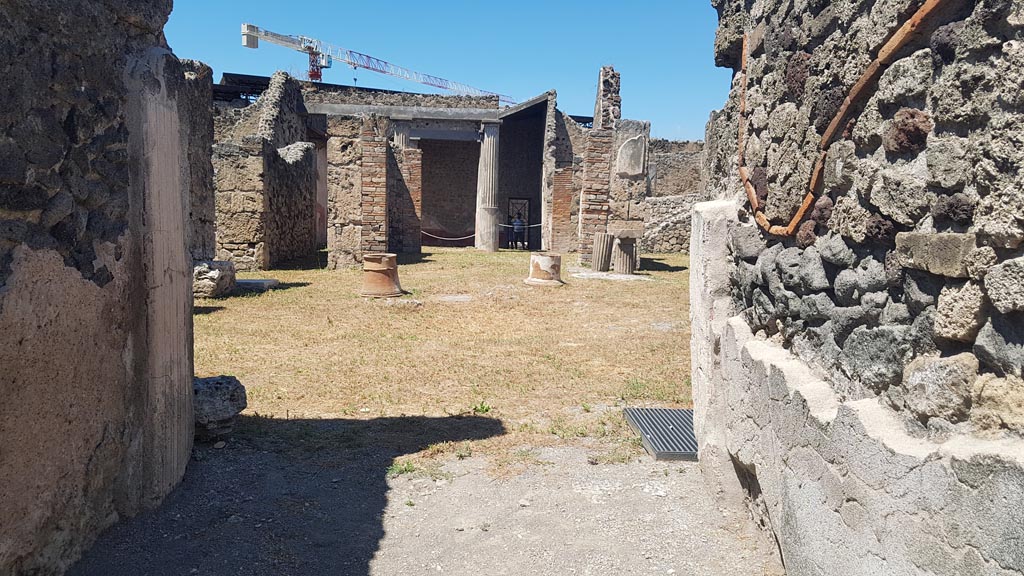
VII.7.10 Pompeii.
August 2023.
Looking north from entrance doorway across atrium towards
peristyle and rear doorway at VII.7.13. Photo
courtesy of Maribel Velasco.
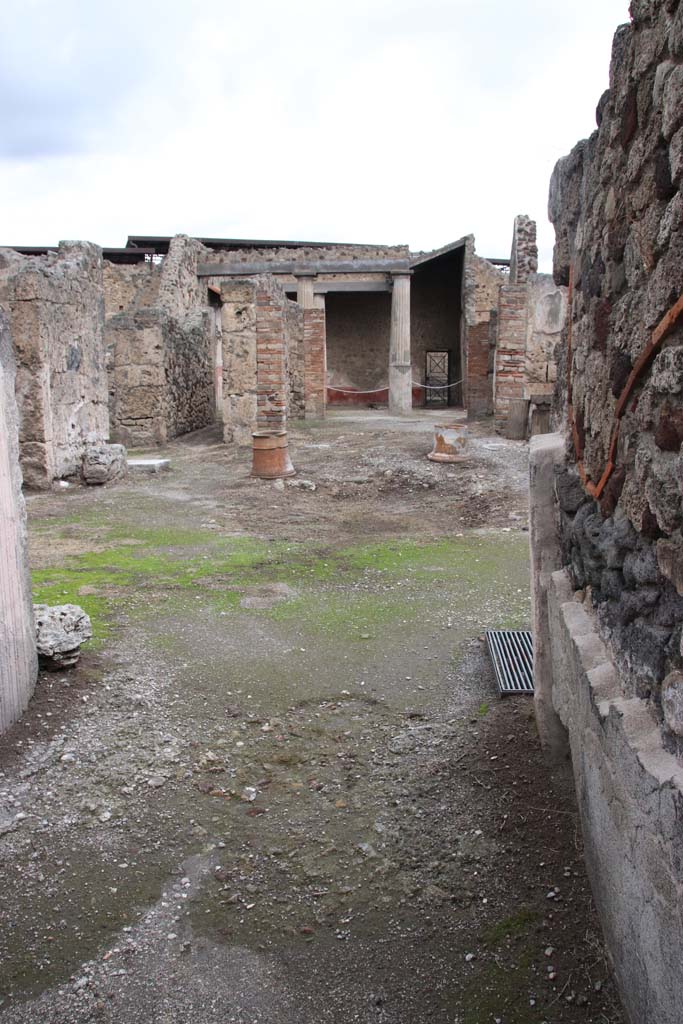
VII.7.10 Pompeii. October 2020.
Looking north from entrance doorway towards peristyle and rear
doorway at VII.7.13.
Photo courtesy of Klaus Heese.
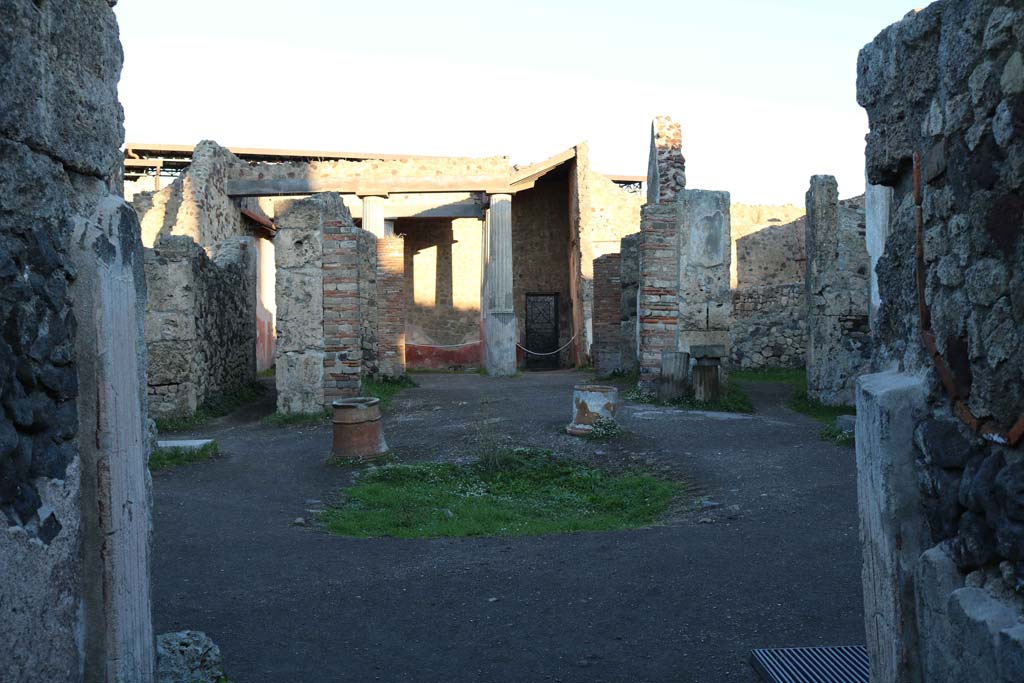
VII.7.10 Pompeii. December 2018.
Looking north from entrance doorway across
atrium, towards peristyle and rear doorway at VII.7.13. Photo courtesy of Aude
Durand.
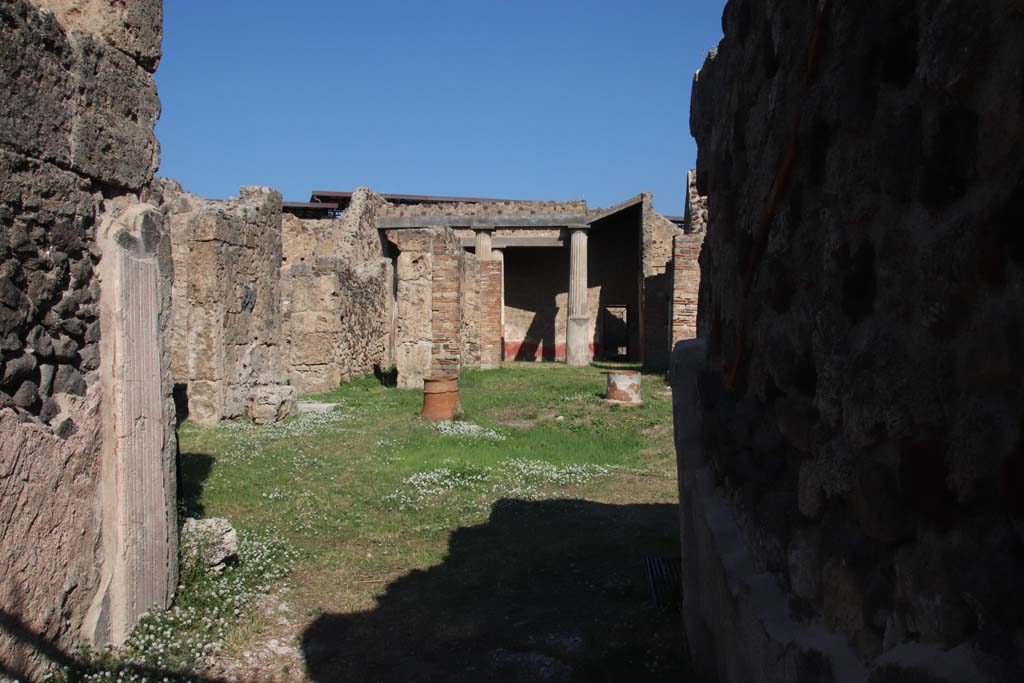
Photo
courtesy of Klaus Heese.
Pagano diceva –
“Dal vestibolo o protiro si passa all’atrio col
suo impluvio nel mezzo per raccogliere le acque piovane, ed accosto al medesimo
sta la bocca di un piccola cisterna. Lateralmente sono disposte quattro
stanzette da dormire, cubicoli, con due ale; e da quella a
sinistra si passa in un’apotheca che conteneva tre scansie di legno, di cui
rimangono le impronte. Tra il secondo cubicolo e l’ala a dritta, trovasi
collocato un masso rettangolare di pietra Vesuviana, ove appariscono tracce di
osside di ferro. Era quello il posto ove tenevasi la cassa del peculio di quel
proprietario, la quale era anche fermata al muro mediante una placca di ferro,
che esiste tuttora in buona parte.
Di fronte all’ingresso era la sala di ricevimento, tablino,
ed a dritta di esso, in quella sala preceduta da due gradini di marmo bianco,
trovasi dipinta la lupa che nutrisce i gemelli.
A sinistra del medesimo tablino sta uno stretto pasaggio,
fauces, che mette nell’interno dell’abitazione destinata per le donne.
Il centro era abbelito da giardinetto di fiori, ed il muro di prospetto mostra
un grandioso dipinto di animali, cioe un serpente avvolto ad un tronco, un
elefante, un toro, un muletto, un caprio, un leone, una volpe, un orso. A
sinistra era rappresentato un giardino con fontana fiancheggiata da Cariatidi,
da un grosso pavone, e sormontata dal simulacro di Sileno sdraiato sull’otre.
Dalla porta a sinistra si entra nella stanza da pranzo,
seguita dalla cucina, munita di cesso (ora restaurato con legno moderno).
Sul lato dritto dello stesso giardino era un recesso
senza porta, ove apparisce il sito della scalinata di legno, che menava al
piano superiore.
Finalmente in fondo era la porta postica o di uscita,
sporgente in un vicoletto.”
See Pagano, N. (1881). Guida di Pompei, ed.9. (p.13-15). (see under photo below, for
translation).
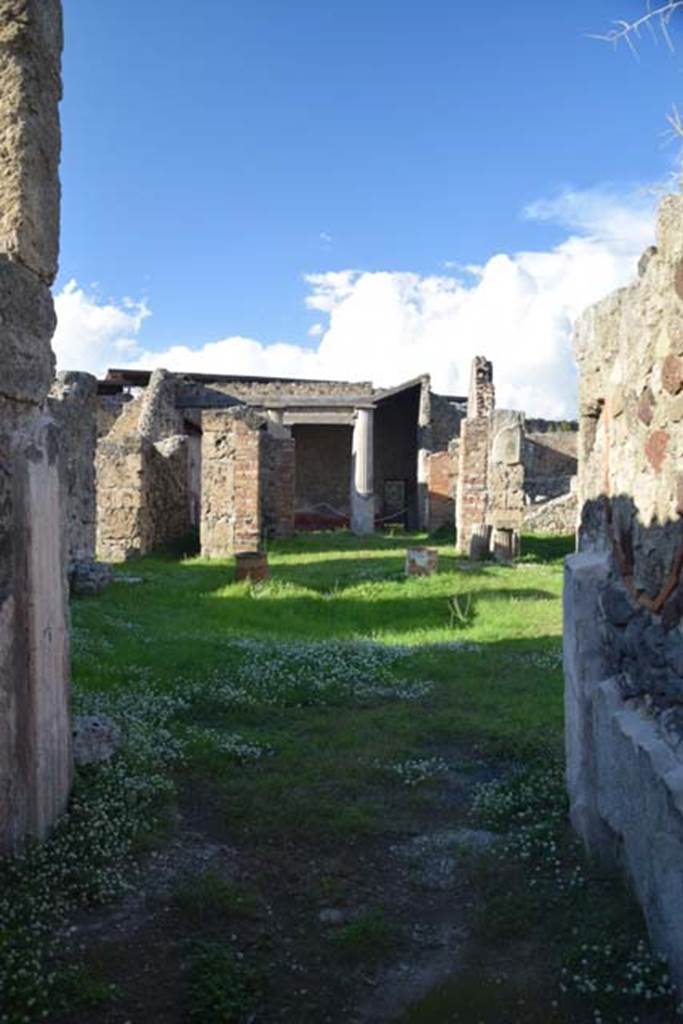
VII.7.10
Pompeii. November 2016. Looking north from entrance doorway.
Photo courtesy
of Marie Schulze.
(translation
- According to Pagano –
"From the
vestibule, or prothyrum you pass into the atrium with its impluvium in the
middle to collect the rainwater, and nearby to the same is the mouth of a small
cistern. Four bedrooms, cubicoli, are arranged at the sides, with two alae; and
from the one on the left you pass into a small room/cupboard, apotheca, which
contained three wooden shelves, of which the outline remains. Between the
second cubiculum and the ala on the right, there is a rectangular block of
Vesuvian stone, where traces of iron oxide can be seen. This was the place
where the money chest of the owner was kept, which was also closed to the wall
by an iron plate, which still exists for the most part.
Facing the
entrance doorway was the reception room, tablinum, and to the right of it, in
that room preceded by two steps of white marble, was the painting of the wolf
that feeds the twins.
To the left of
the same tablinum is a narrow corridor, fauces, which leads into the interior
of the house intended for women. In the centre was a garden of flowers, and the
prospect of a wall of a grandiose painting of animals, that is a snake wrapped
around a tree trunk, an elephant, a bull, a mule, a goat, a lion, a fox, a
bear. To the left was seen a garden with fountain flanked by Caryatids, with a
large peacock, and topped by statue of a Silenus lying on his wineskin.
From the door
on the left you enter the dining room, followed by the kitchen, equipped with a
toilet (now restored with modern wood). (Note this would have been c,1881).
On the right
side of the same garden was a recess without a door, where the site of the
wooden stairs, which led up to the upper floor would have been.
Finally, at
the rear was the rear door or exit door, protruding into a vicolo/alley.")
See Pagano, N. (1881). Guida di Pompei, ed.9. (p.13-15).
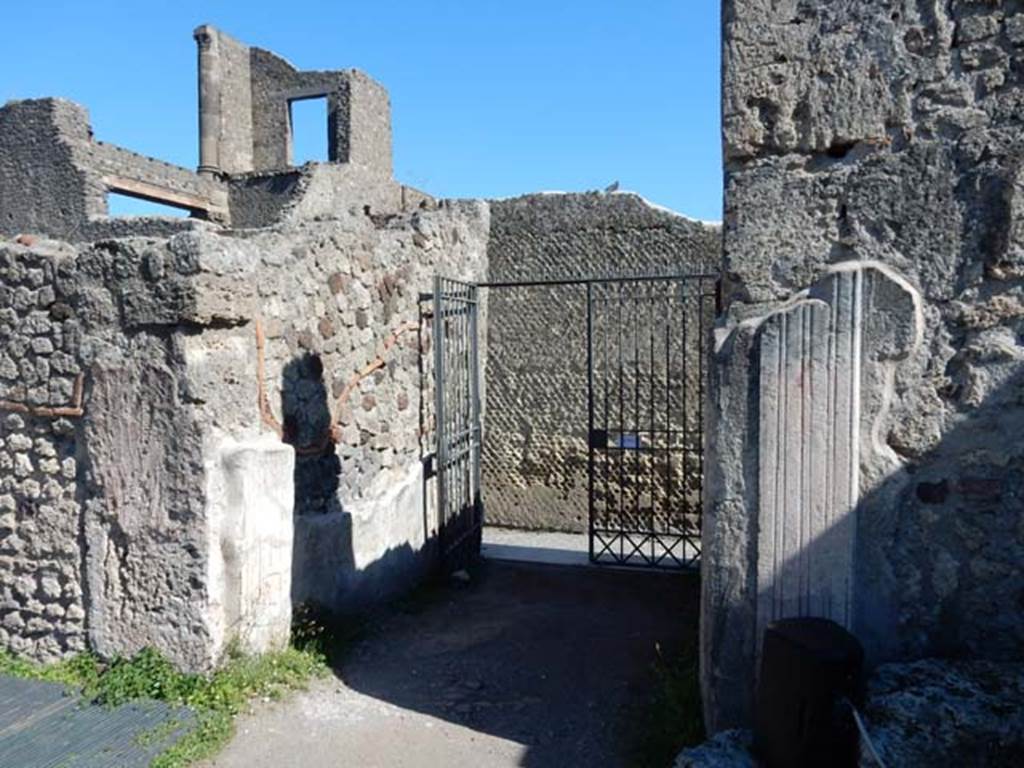
VII.7.10 Pompeii. May 2018. Looking south towards entrance corridor and doorway, from atrium. Photo courtesy of Buzz Ferebee.
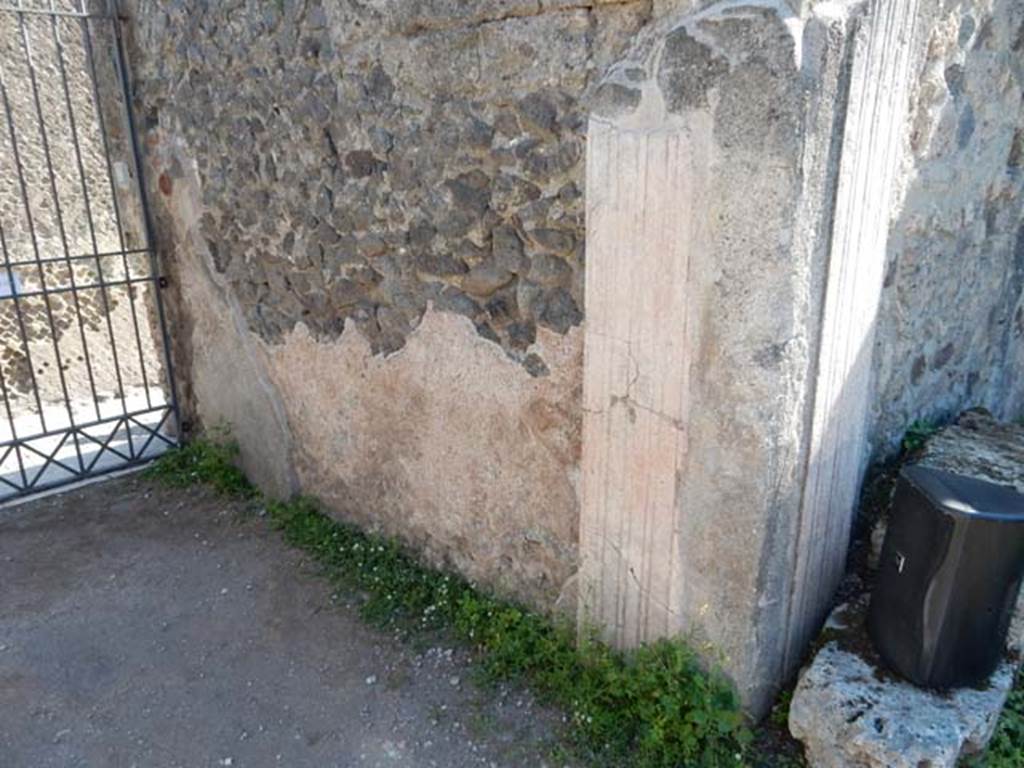
VII.7.10 Pompeii. May 2018. West side of entrance corridor. Photo courtesy of Buzz Ferebee.
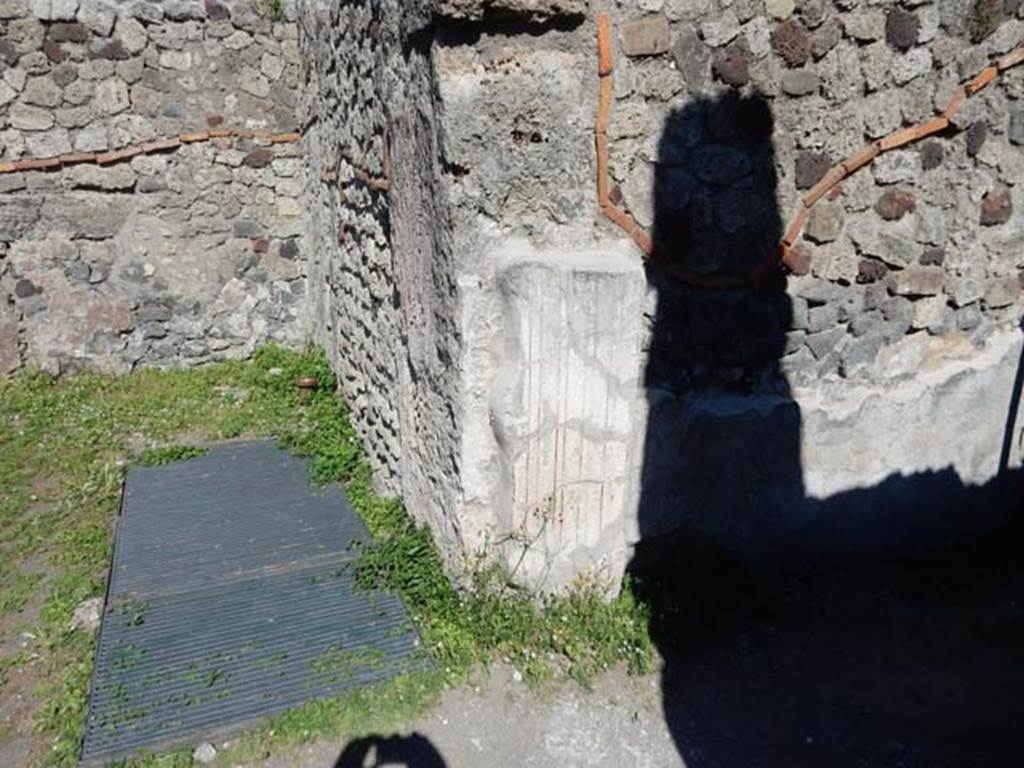
VII.7.10 Pompeii. May 2018. Looking towards east side of entrance corridor. Photo courtesy of Buzz Ferebee.
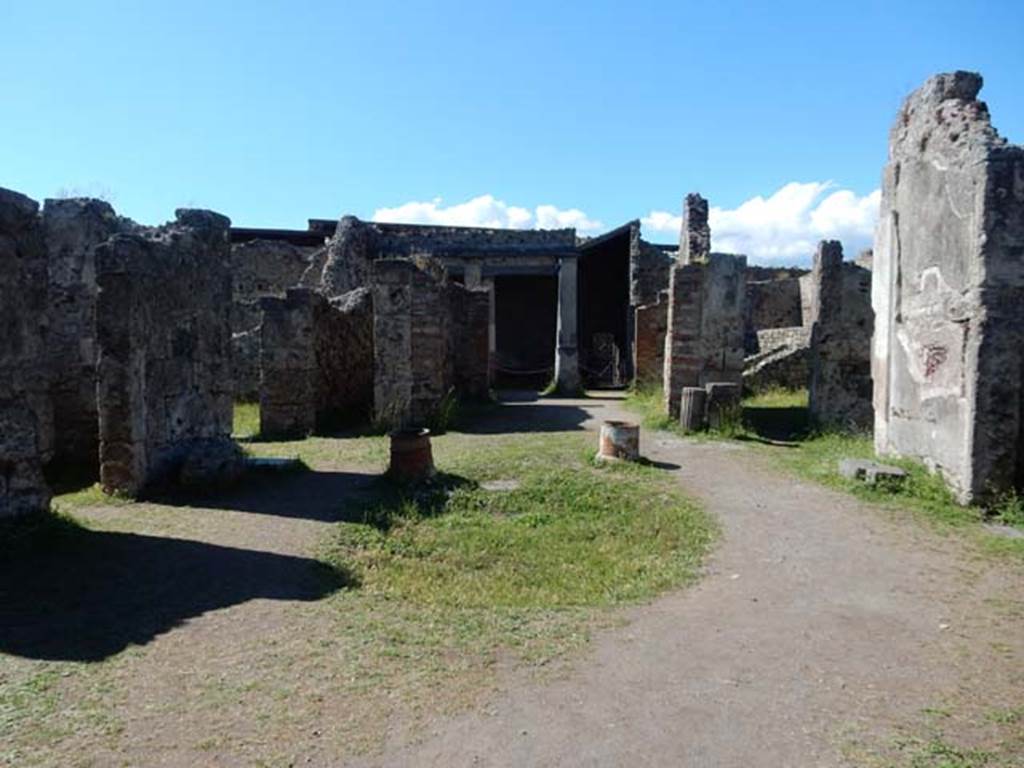
VII.7.10 Pompeii. May 2018.
Looking north across atrium towards the recess for the impluvium, having been found without any slabs of decoration.
A short distance away, the terracotta puteal for the cistern mouth was found. Photo courtesy of Buzz Ferebee.
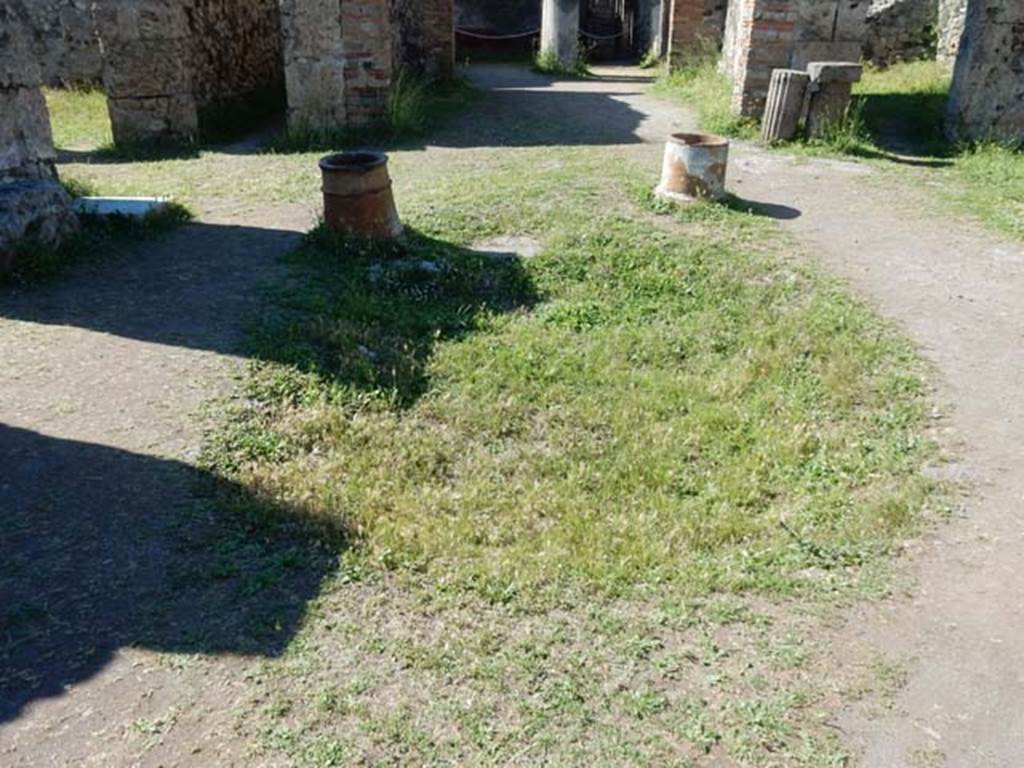
VII.7.10 Pompeii. May 2018. Site of impluvium in atrium. Photo courtesy of Buzz Ferebee.
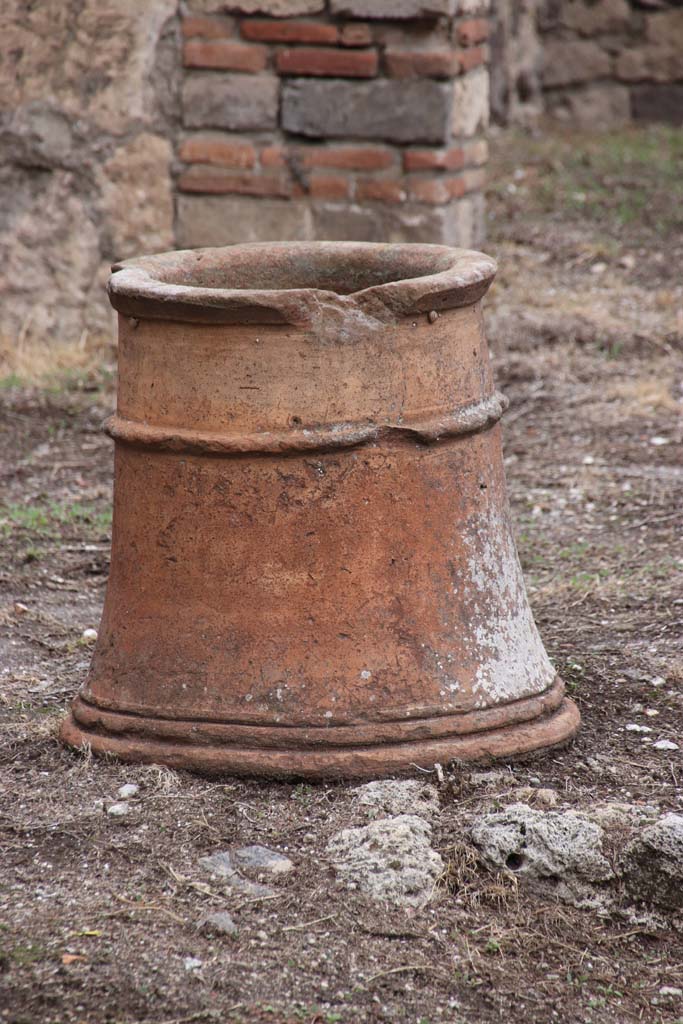
VII.7.10 Pompeii. October 2020. Terracotta puteal in atrium. Photo courtesy of Klaus Heese.
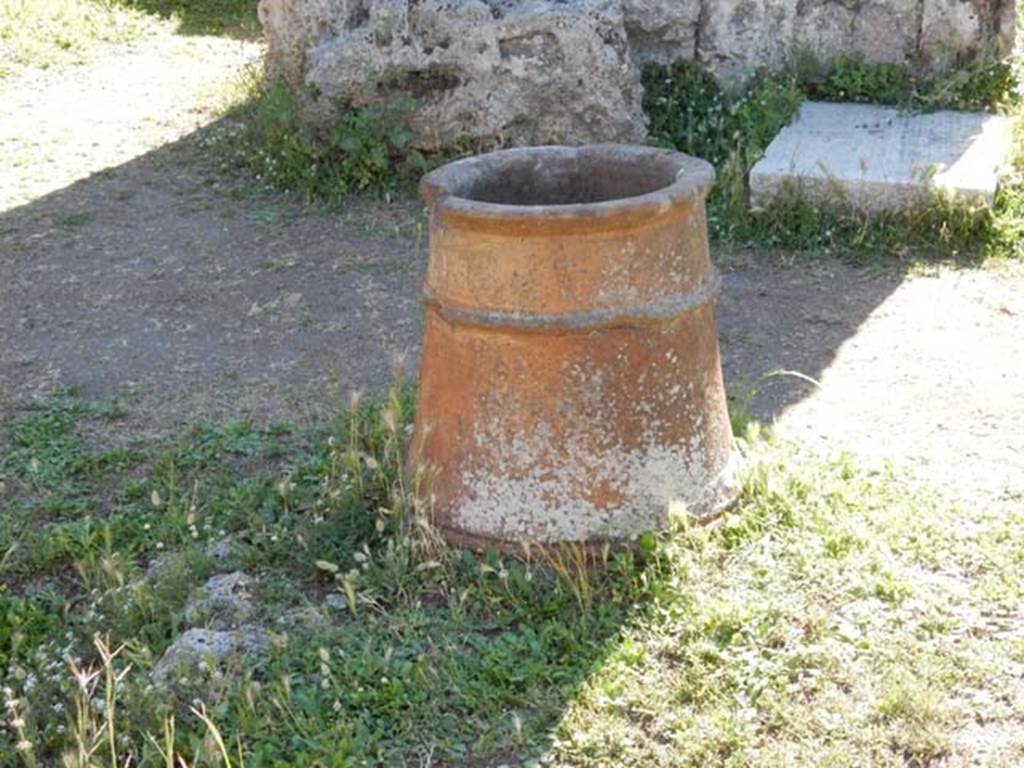
VII.7.10 Pompeii. May 2018. Terracotta puteal for covering cistern-mouth. Photo courtesy of Buzz Ferebee.
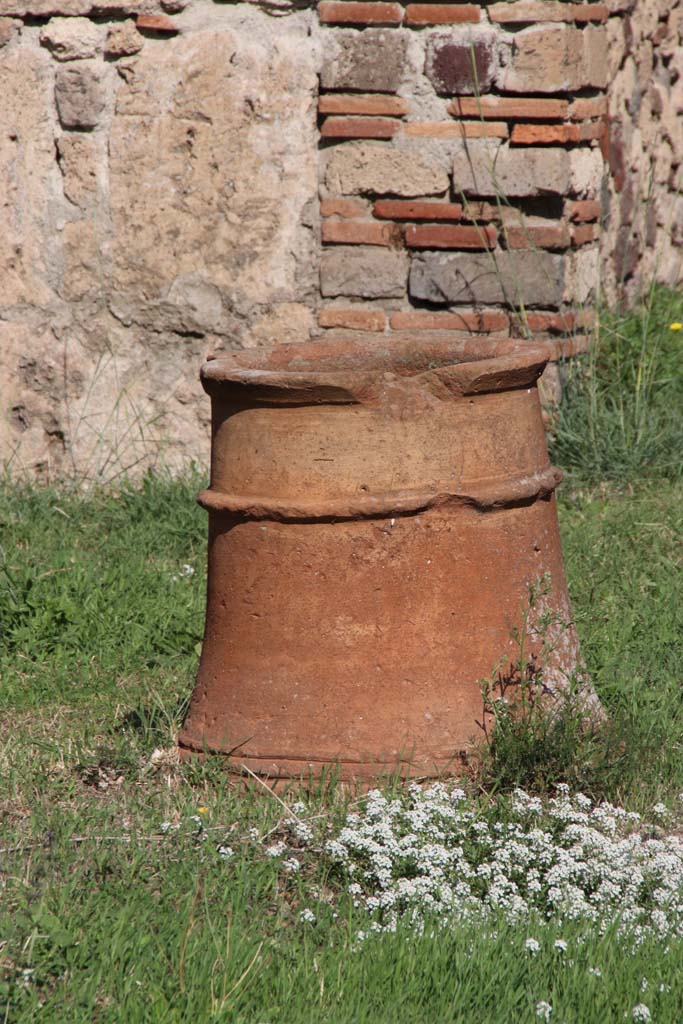
VII.7.10 Pompeii. September 2017. Terracotta puteal in
atrium. Photo
courtesy of Klaus Heese.
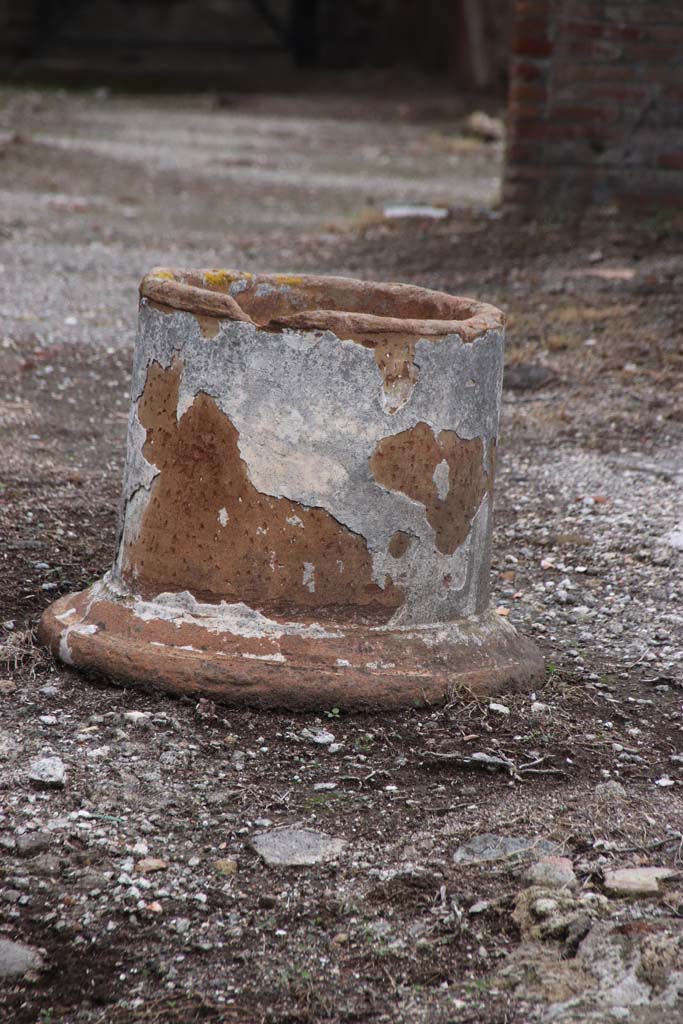
VII.7.10 Pompeii. October 2020. Terracotta pot/puteal in atrium. Photo courtesy of Klaus Heese.
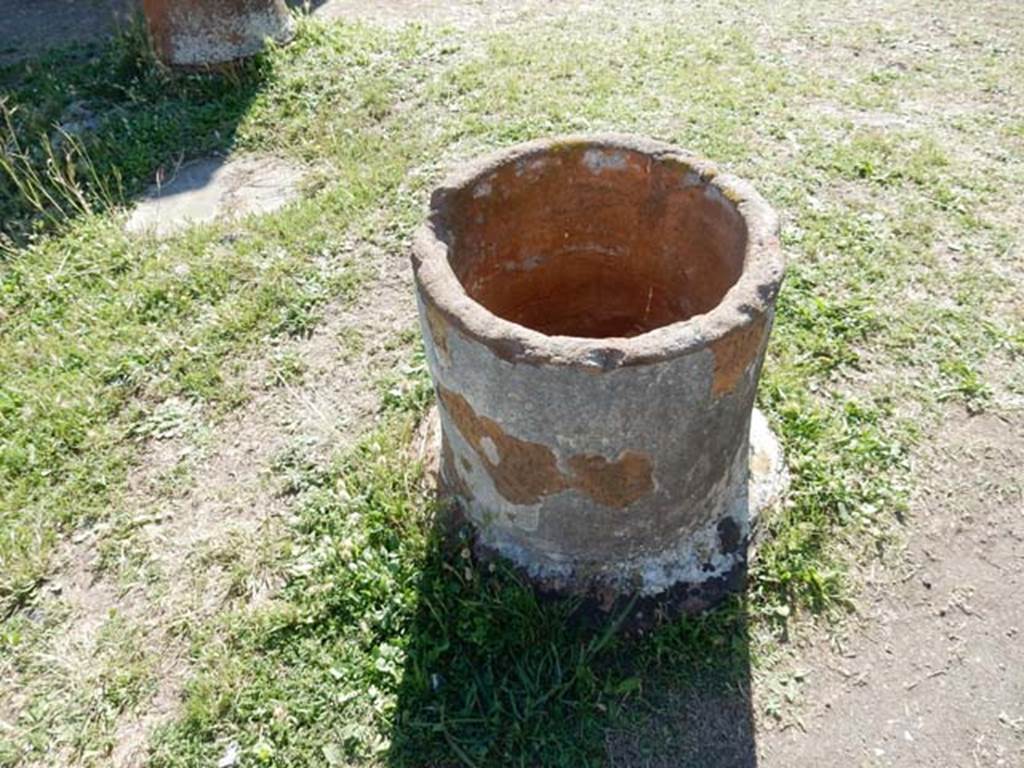
VII.7.10 Pompeii. May 2018. Terracotta pot/puteal in atrium. Photo courtesy of Buzz Ferebee.
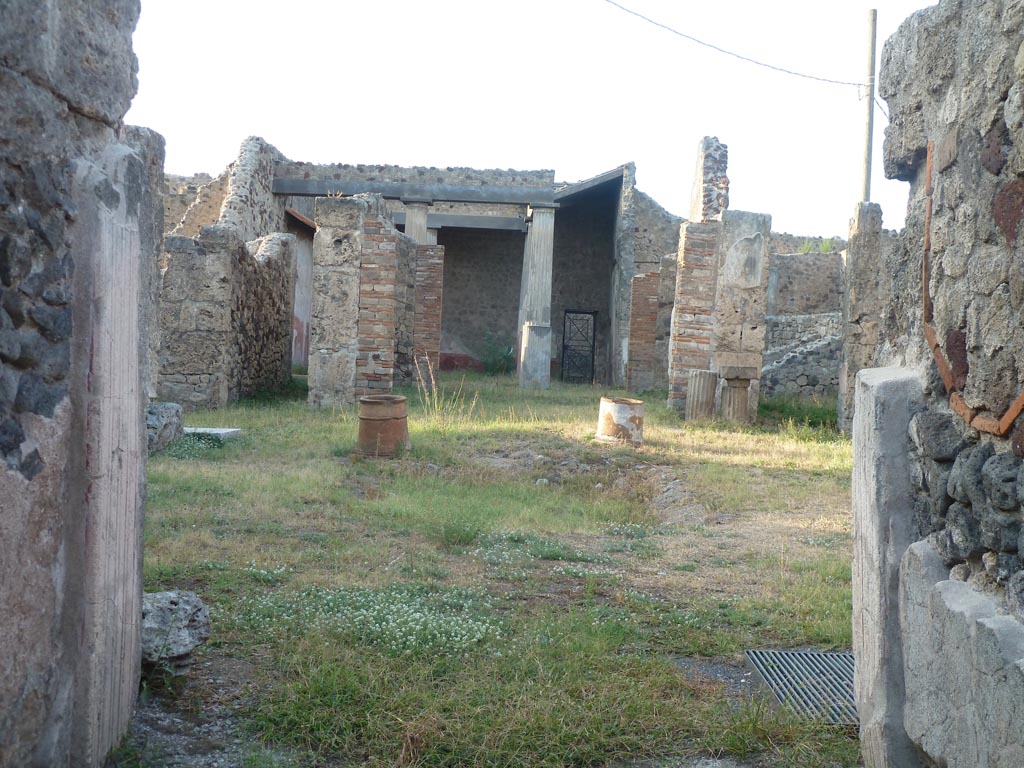
VII.7.10 Pompeii. September 2015. Looking north from entrance doorway.
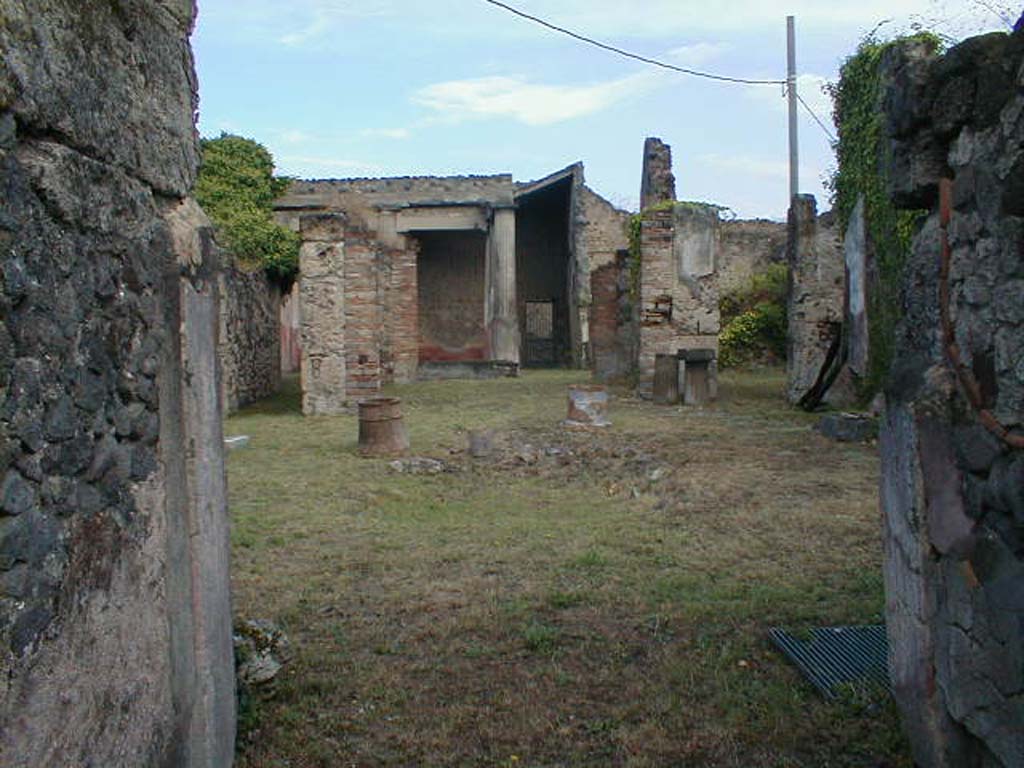
VII.7.10 Pompeii. September 2004. Looking north across atrium, from entrance fauces.
According to Boyce, against the west wall of the tablinum, near the entrance from the atrium, stood a high masonry base upon which may have rested the lararium.
See Boyce G. K., 1937. Corpus of the Lararia of Pompeii. Rome: MAAR 14. (p.68, no.297)
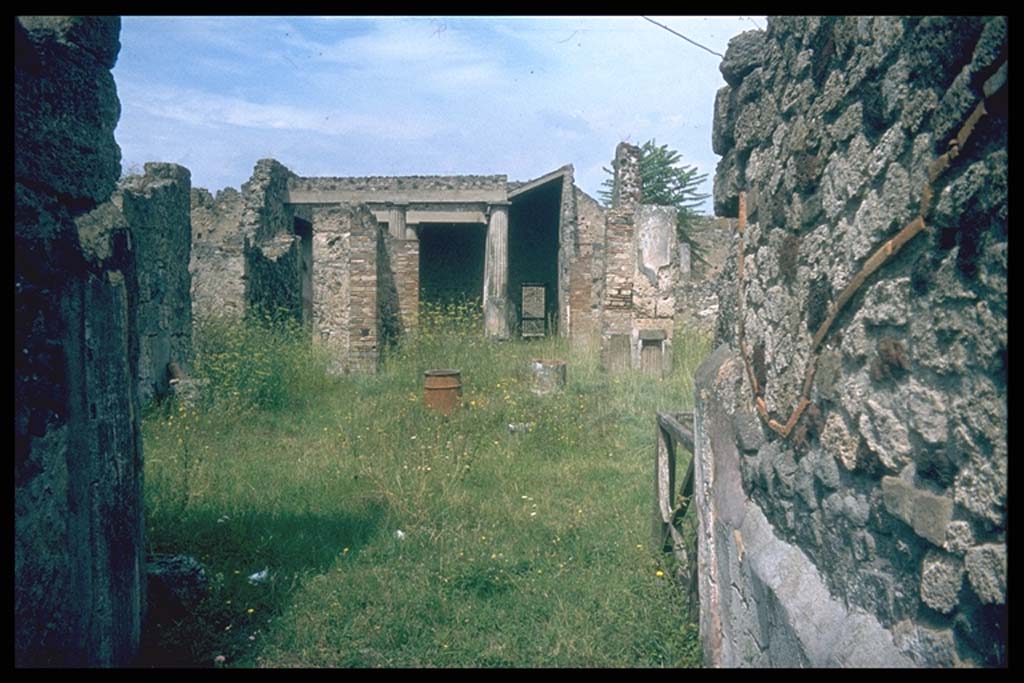
VII.7.10 Pompeii. Looking north across atrium, from entrance fauces.
Photographed 1970-79 by Günther Einhorn, picture courtesy of his son Ralf Einhorn.
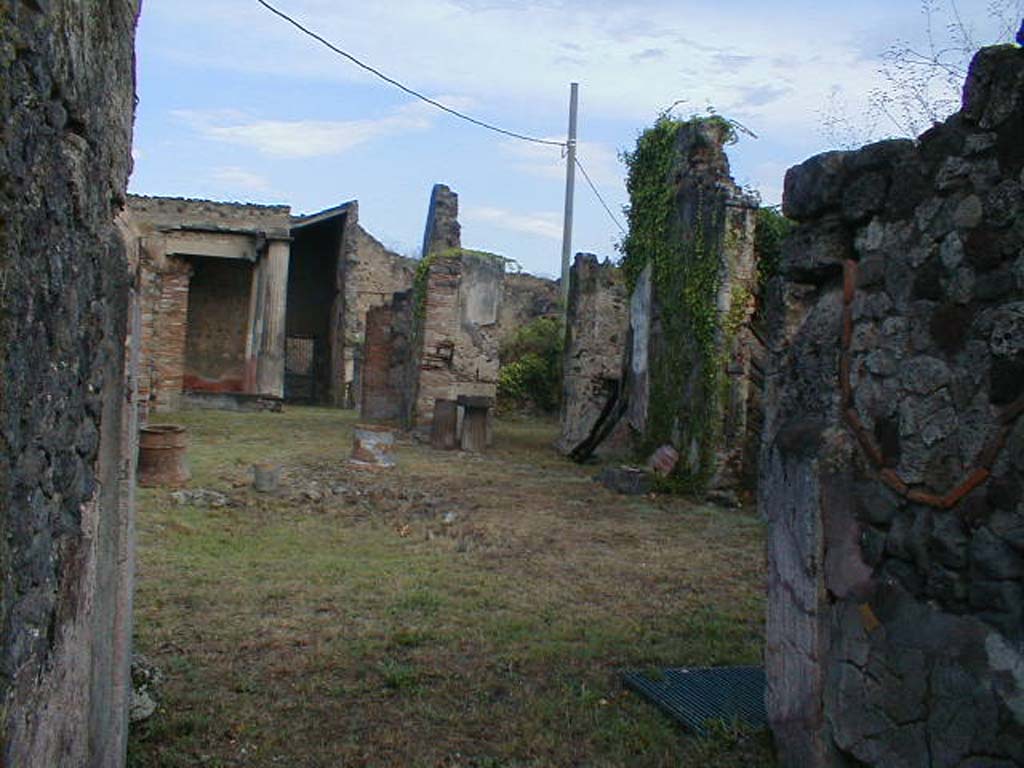
According to Della Corte, near the oecus (n) on the east side of the tablinum, skeletons of two men, a boy and two dogs were found.
One of the adult skeletons had a gold ring on a finger on his left hand, and another of bronze with the wording FA-H. He also had a lot of money on him.
Della Corte without hesitation interpreted his name as Fa(bius) H…….
See Della Corte,
M., 1965. Case ed Abitanti di Pompei.
Napoli: Fausto Fiorentino. (p.218, S.43 = C.X.8058)
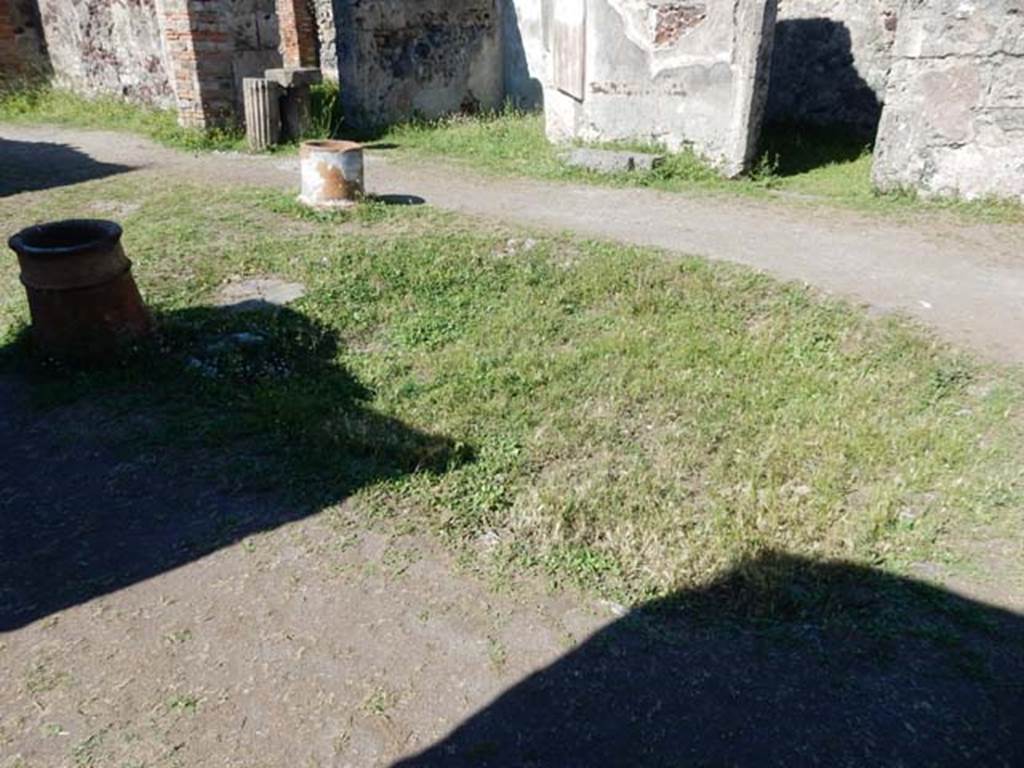
VII.7.10 Pompeii. May 2018.
Looking north-east across atrium towards east ala, upper centre left, and doorway to cubiculum f, upper right.
The stone slab on the floor between the two doorways would have been for the family “strong-box”.
The remains of the wooden strongbox were found here, covered with iron and decorated with bronze in relief. Photo courtesy of Buzz Ferebee.
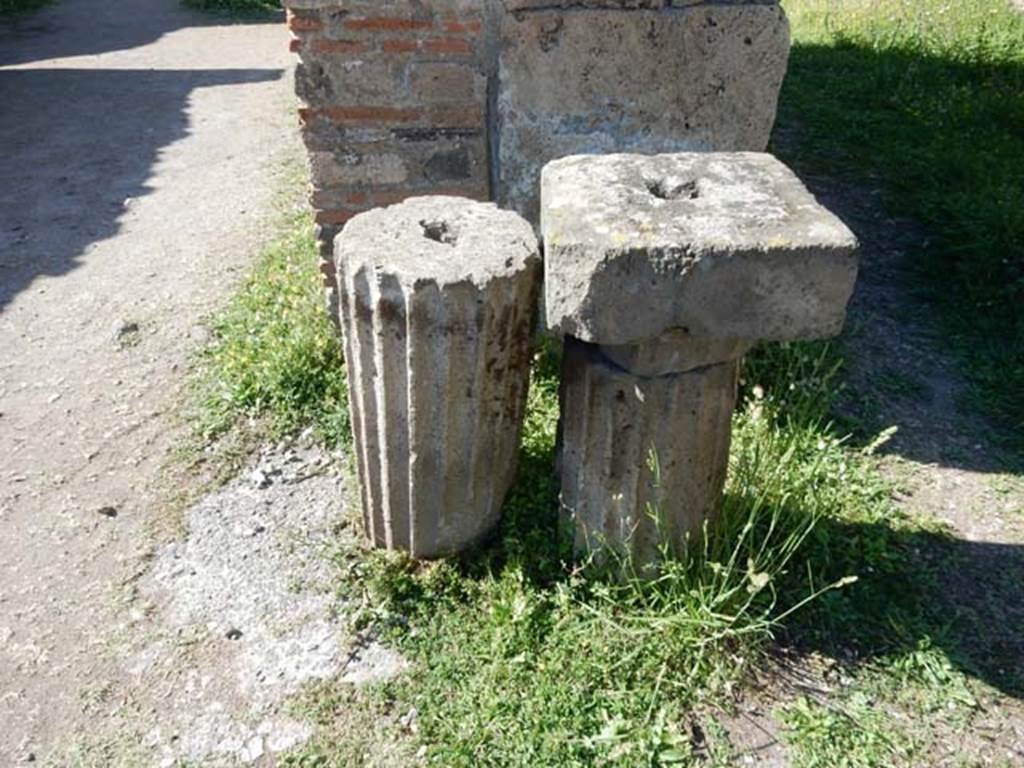
VII.7.10 Pompeii. May 2018.
Atrium, north-east corner, remains of columns and a square capital which may have been decoration from the upper floor.
To the left of the column, the cocciopesto flooring dotted with large white tesserae is still preserved. Photo courtesy of Buzz Ferebee.
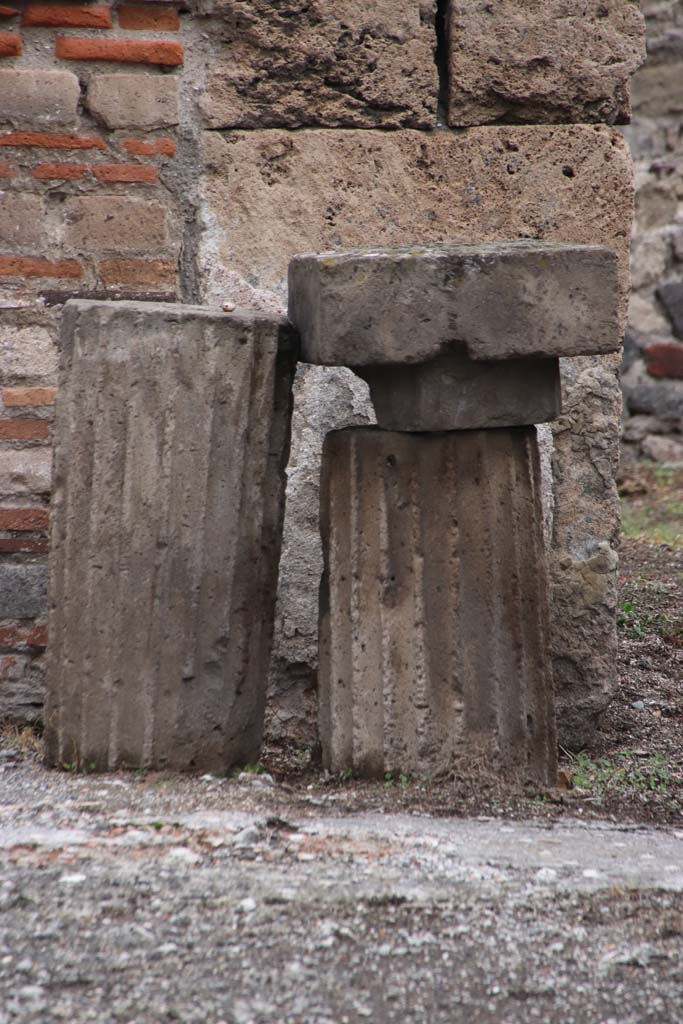
VII.7.10 Pompeii. October 2020.
Atrium, remains of columns and square capital. Photo courtesy of Klaus Heese.
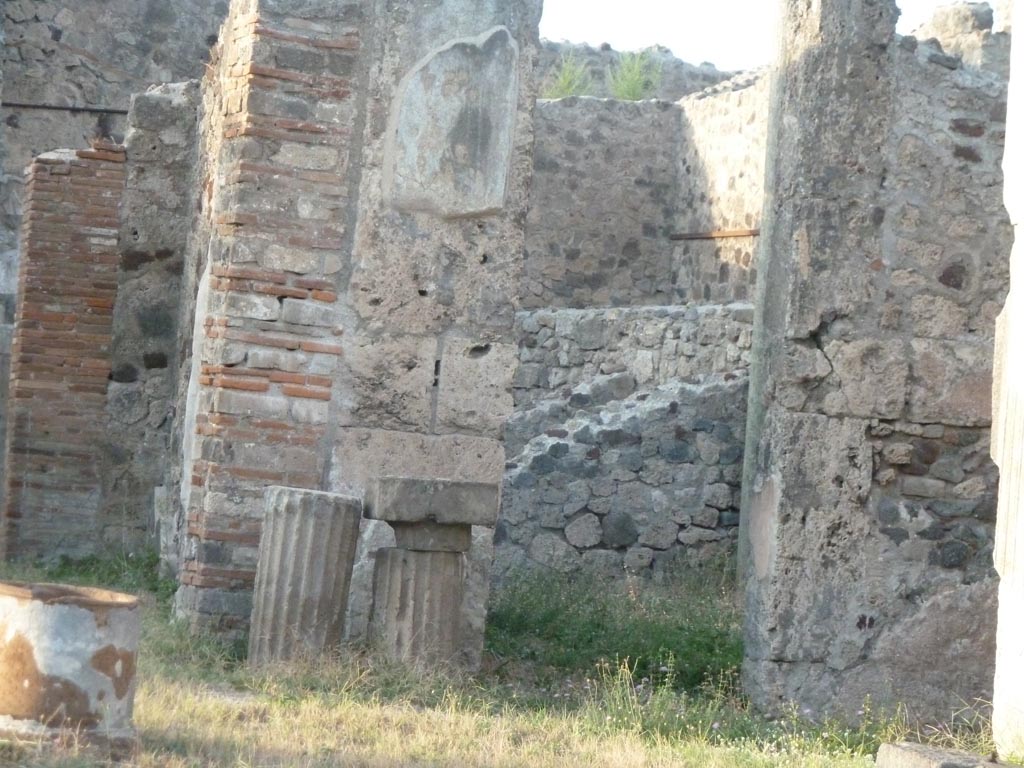
VII.7.10 Pompeii. September 2015. Looking north-east from entrance doorway across atrium.
On the left is the east side of the tablinum (k), and the doorway to oecus (n) on east side of tablinum, on right.
In oecus (n), the painting described as the birth of Rome showing the wolf with the twins Romulus and Remus would have been seen, prior to the 1943 bombing. The painting was destroyed. This painting gave the name to the house.
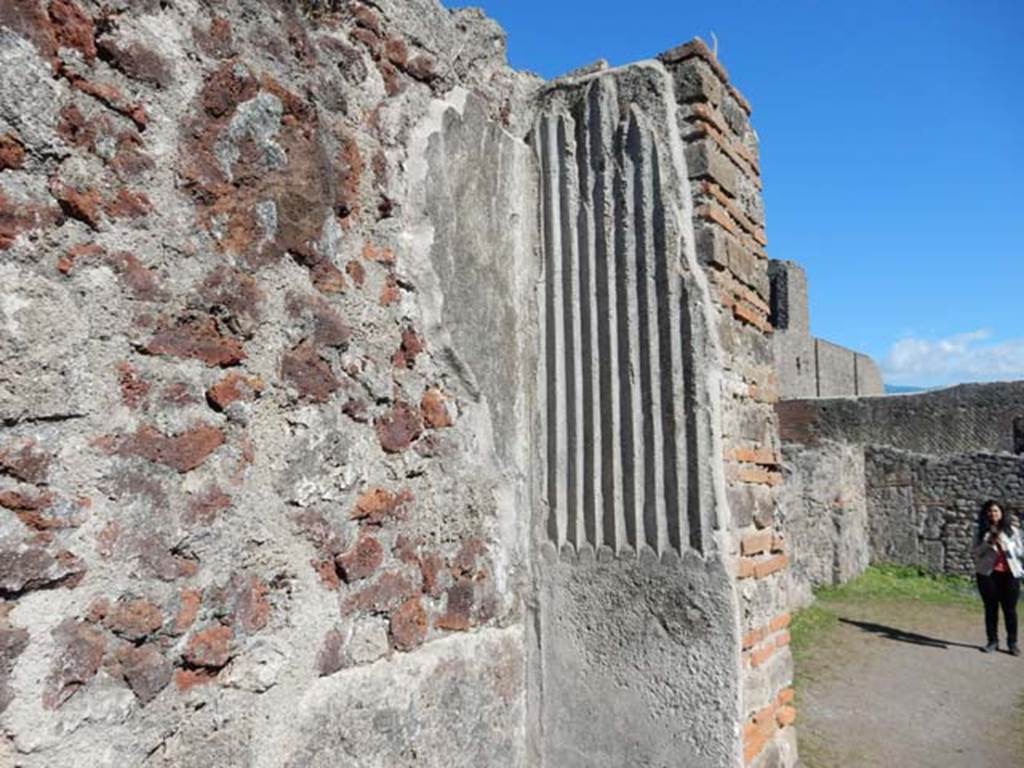
VII.7.10 Pompeii. May 2018. Looking south along east wall of tablinum (k) into atrium. Photo courtesy of Buzz Ferebee.
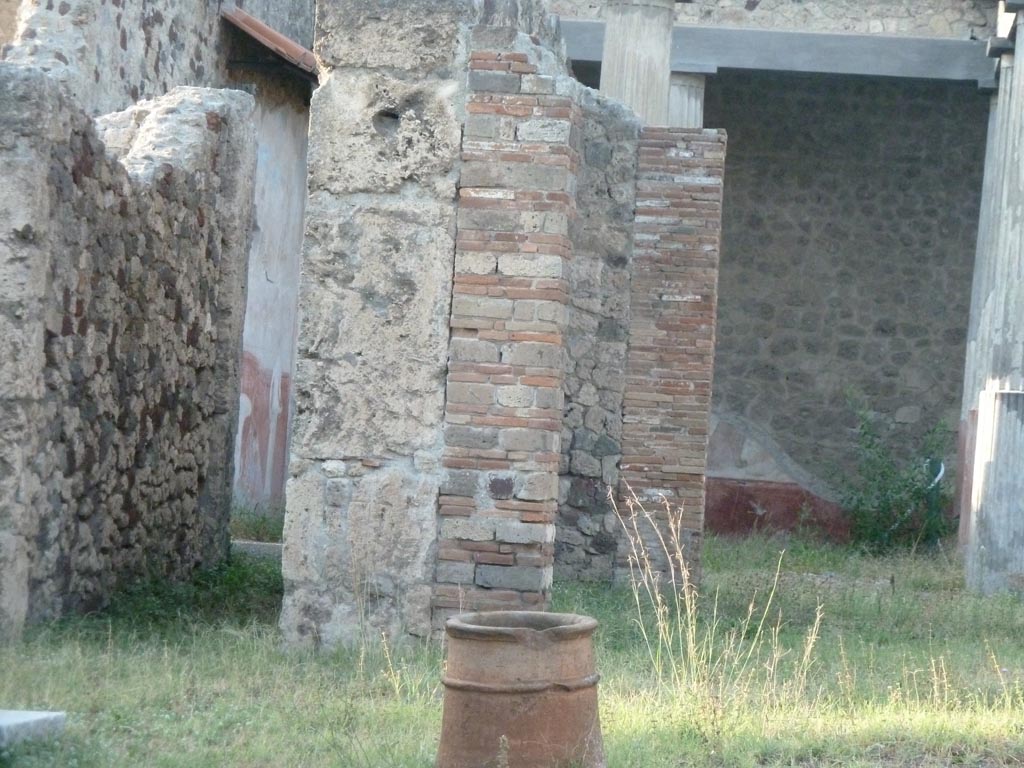
VII.7.10 Pompeii. September 2015.
Looking north from entrance doorway towards corridor to rear peristyle garden (L), on left, and west side of tablinum (k), on right.
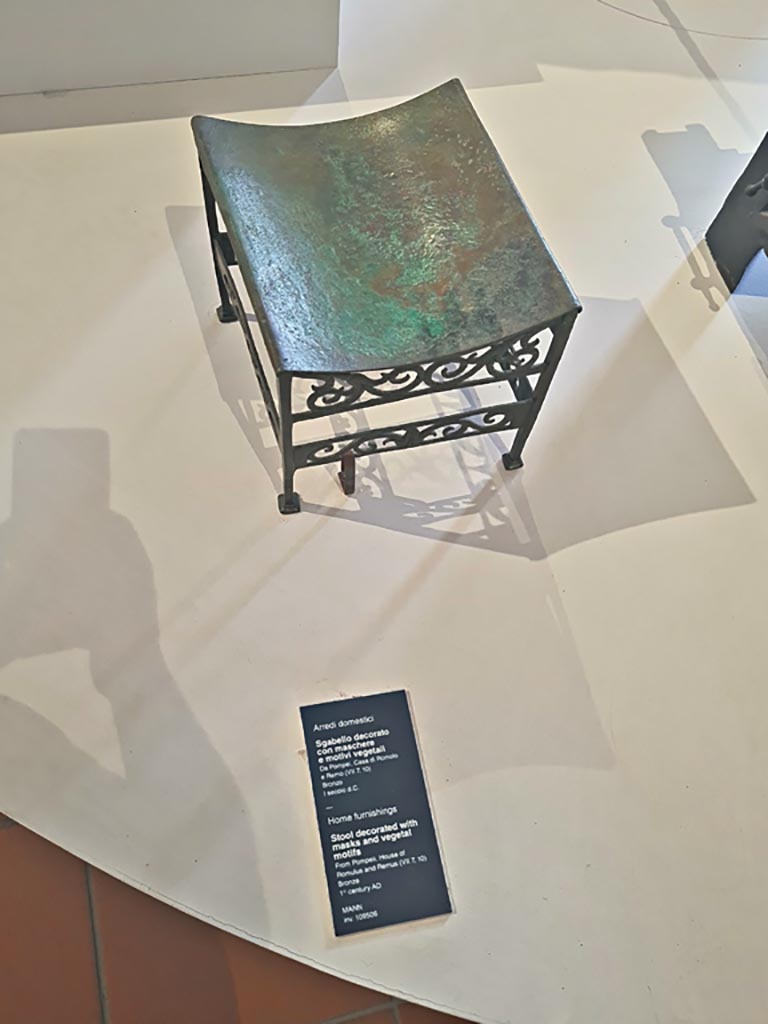
VII.7.10 Pompeii. October 2023. Bronze stool decorated with masks and vegetal motifs, found in house.
Now in Naples
Archaeological Museum. Inventory number 109506. Photo courtesy of
Giuseppe Ciaramella.
On display in “L’altra MANN” exhibition, October 2023, at Naples Archaeological Museum.
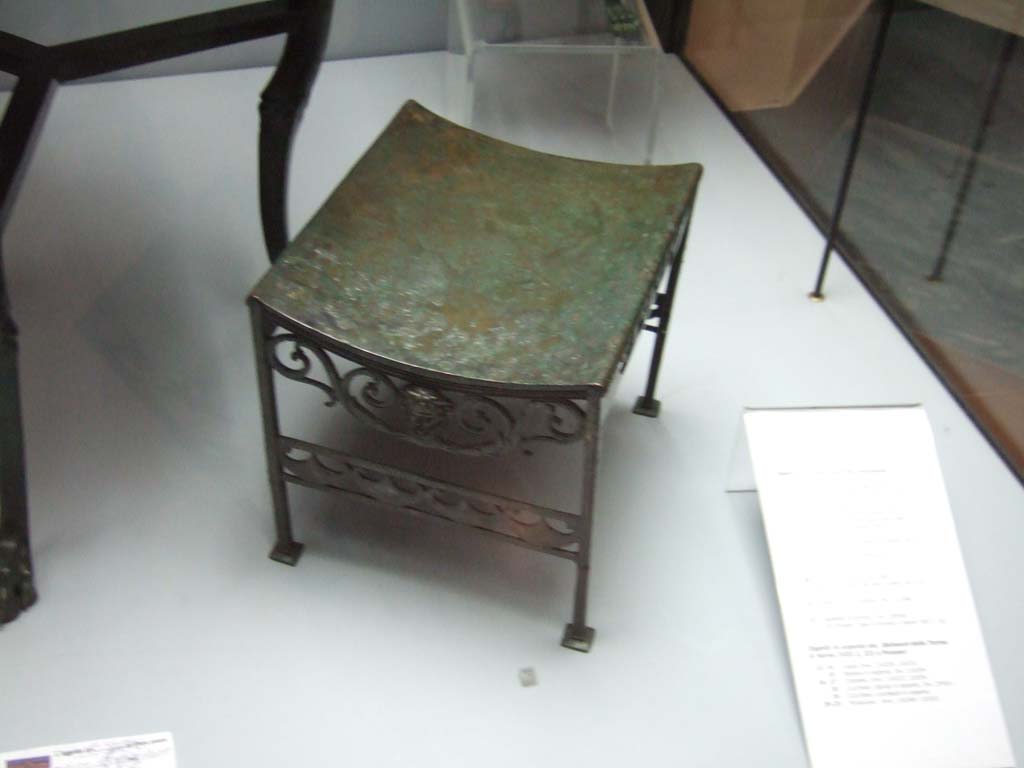
VII.7.10 Pompeii. Bronze stool found in house.
Now in Naples Archaeological Museum. Inventory number 109506.
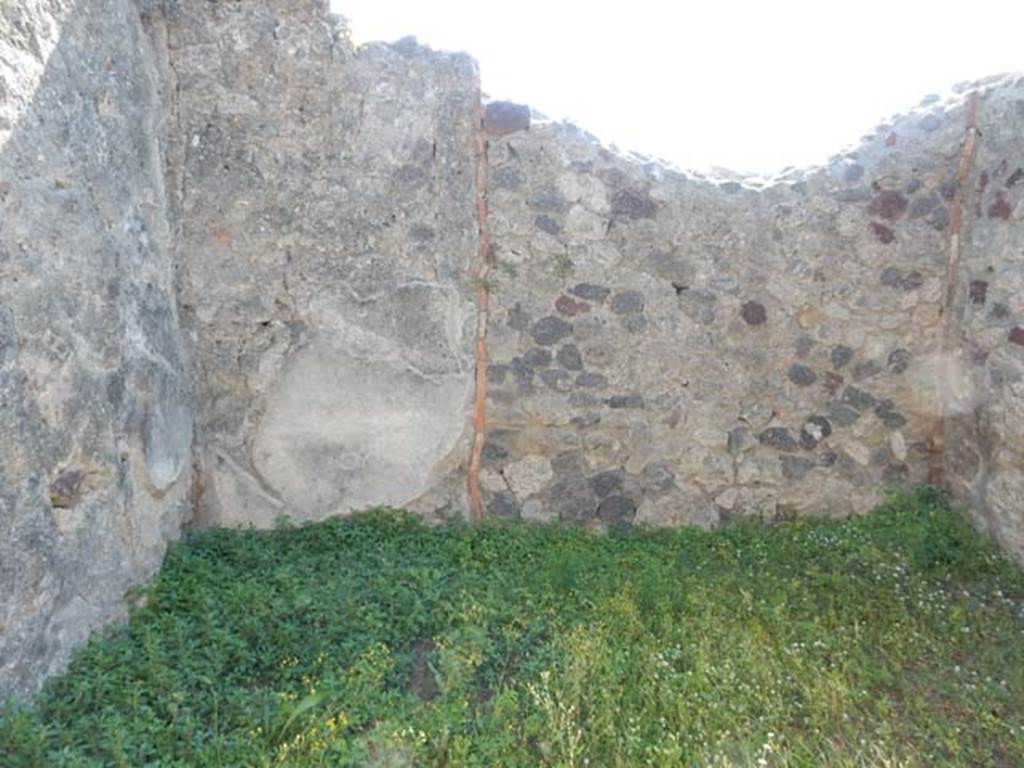
VII.7.10 Pompeii. May 2018. Room (c) on west side of atrium, looking west. Photo courtesy of Buzz Ferebee.
According to Sogliano, fragments of a painting were found in this cubiculum. He described –
“Here you can see the remains of a figure, as it seems, manly, sitting and facing left. The upper part of the body was naked, the lower part covered with a dark-red cloak, which descending along his back rests with a sleeve on the left arm, and in whose hand he held an upside-down thyrsus. The head was missing as well as all of the right side of the figure with his legs; judging from its great abandonment one would think of Dionysus."
(“Vi si vede
l’avanzo di una figura, come pare, virile, seduta e rivolta a sinistra. Nuda la
parte superiore del corpo ha la inferiore coverta di clamide rosso-scura, la
quale scendendole lungo il dorso riposa con un lembo sul braccio sinistro, che
era poggiato, e nella cui mano essa regge un tirso capovolto. Manca la testa e
tutto il lato destra della figura con le gambe; a guidicare dal suo mole
abbandono si penserebbe a Dioniso.”)
Sogliano, A. (1879): Le pitture murali Campane scoverte negli anni 1867-79. (p.39, no.162).
Kuivalainen comments –
“Another variation of a common theme, in which the figure is identified by the thyrsus and the pose”.
See Kuivalainen, I., 2021. The Portrayal of Pompeian Bacchus.
Commentationes Humanarum Litterarum
140. Helsinki: Finnish Society of Sciences and Letters, (p.101, B12).
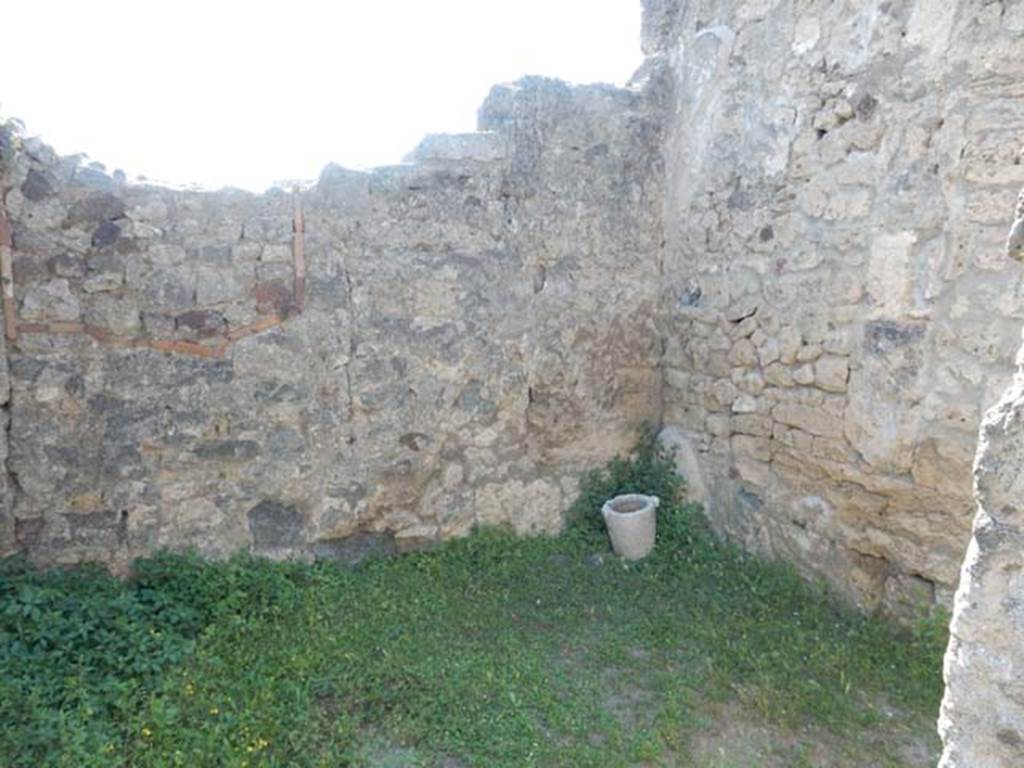
VII.7.10 Pompeii. May 2018. Looking through doorway to room (d) on west side of atrium.
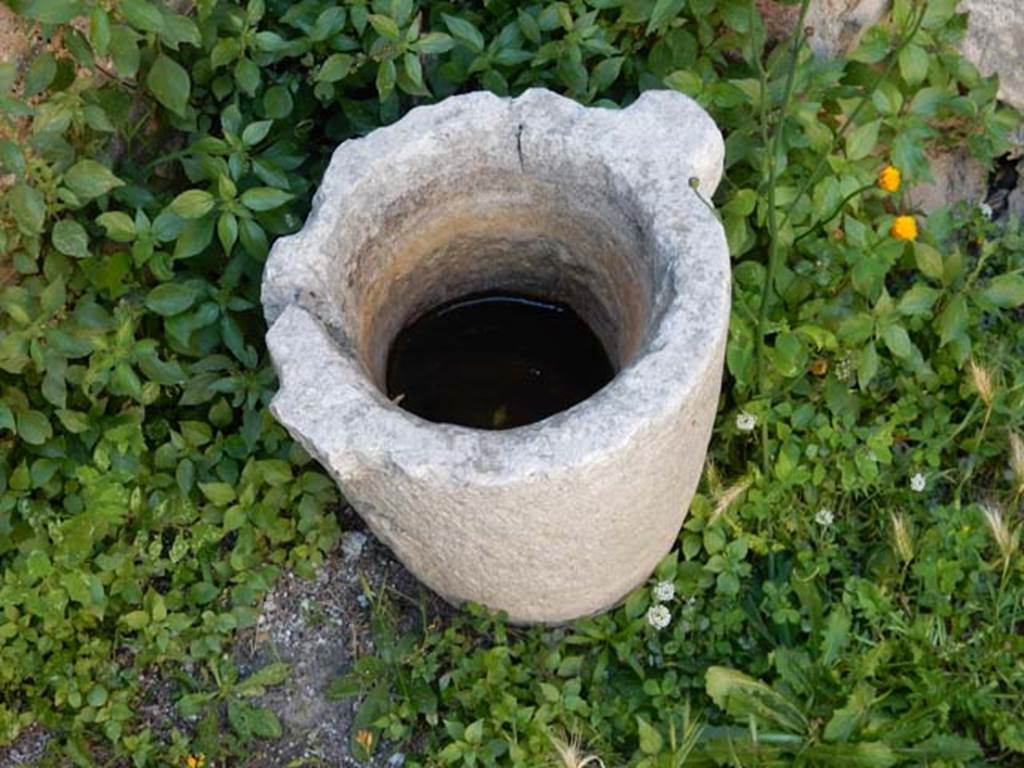
VII.7.10 Pompeii. May 2018. Room (d), pot. Photo courtesy of Buzz Ferebee.
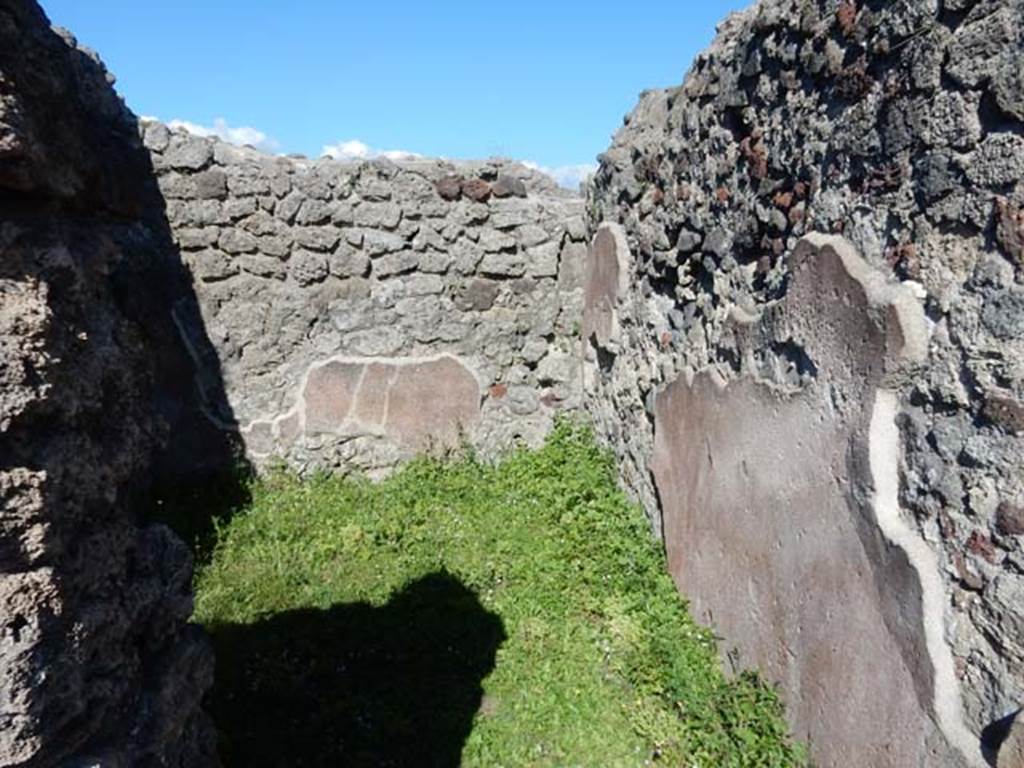
VII.7.10 Pompeii. May 2018. Looking east through doorway from atrium into cubiculum (e). Photo courtesy of Buzz Ferebee.
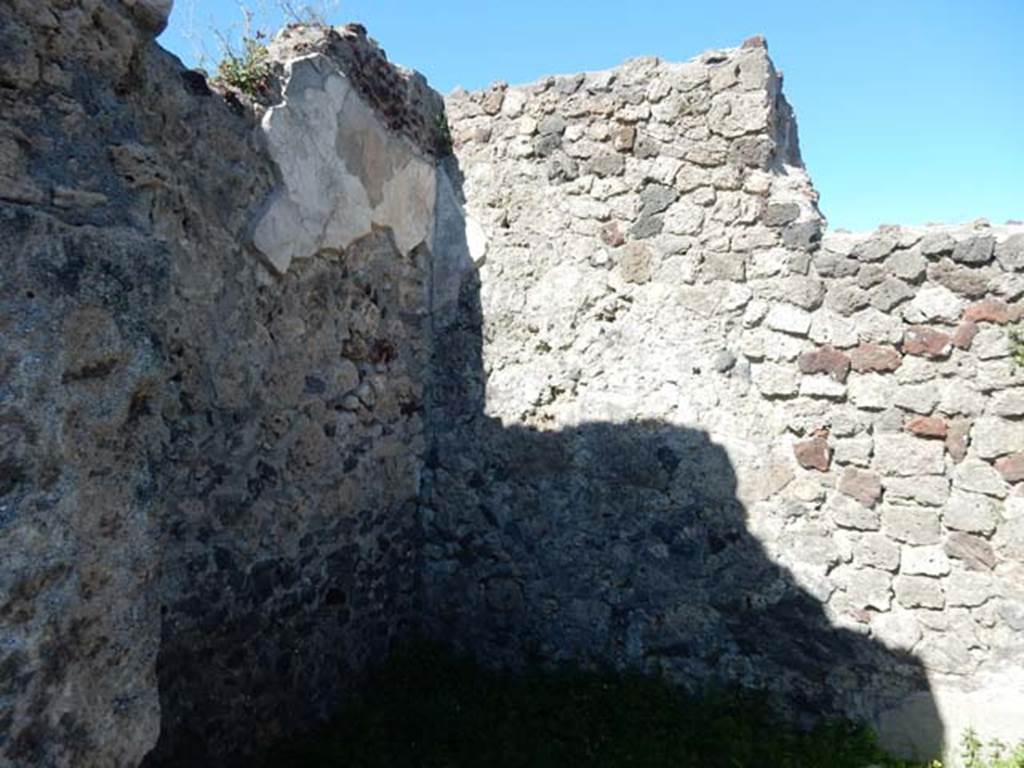
VII.7.10 Pompeii. May 2018.
Looking north-east into cubiculum f, from doorway in atrium on east side. Photo courtesy of Buzz Ferebee.
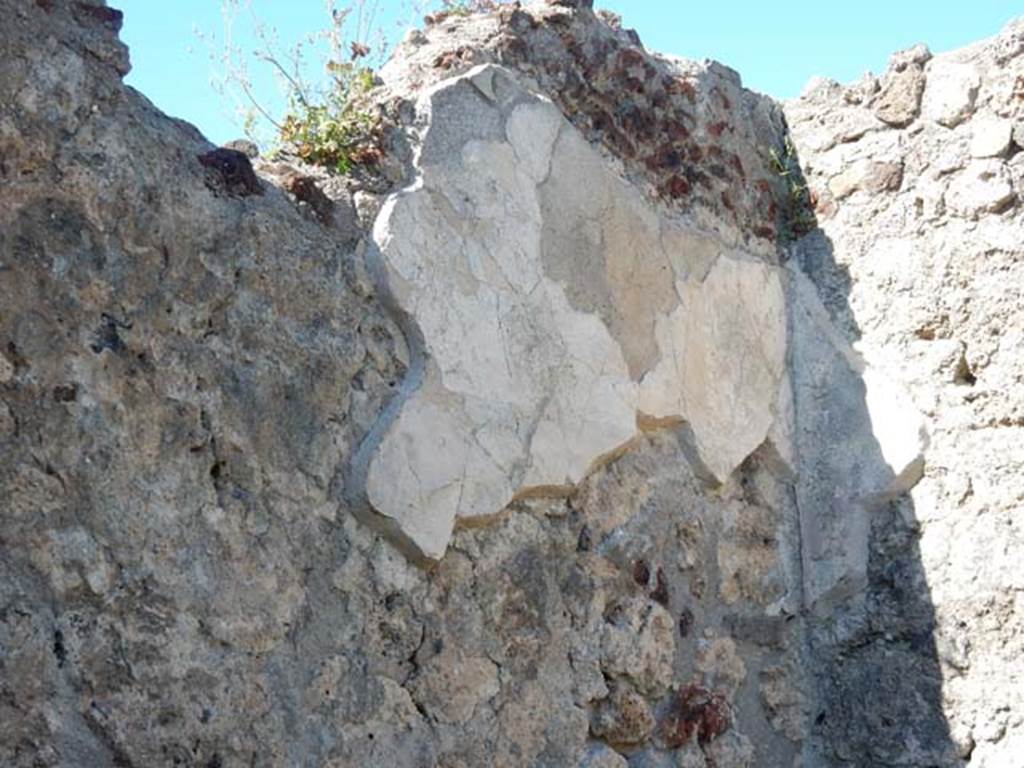
VII.7.10 Pompeii. May 2018.
Cubiculum f, upper north wall with remains of white painted decoration, perhaps with slight traces of painted panels or architecture.
Photo courtesy of Buzz Ferebee.
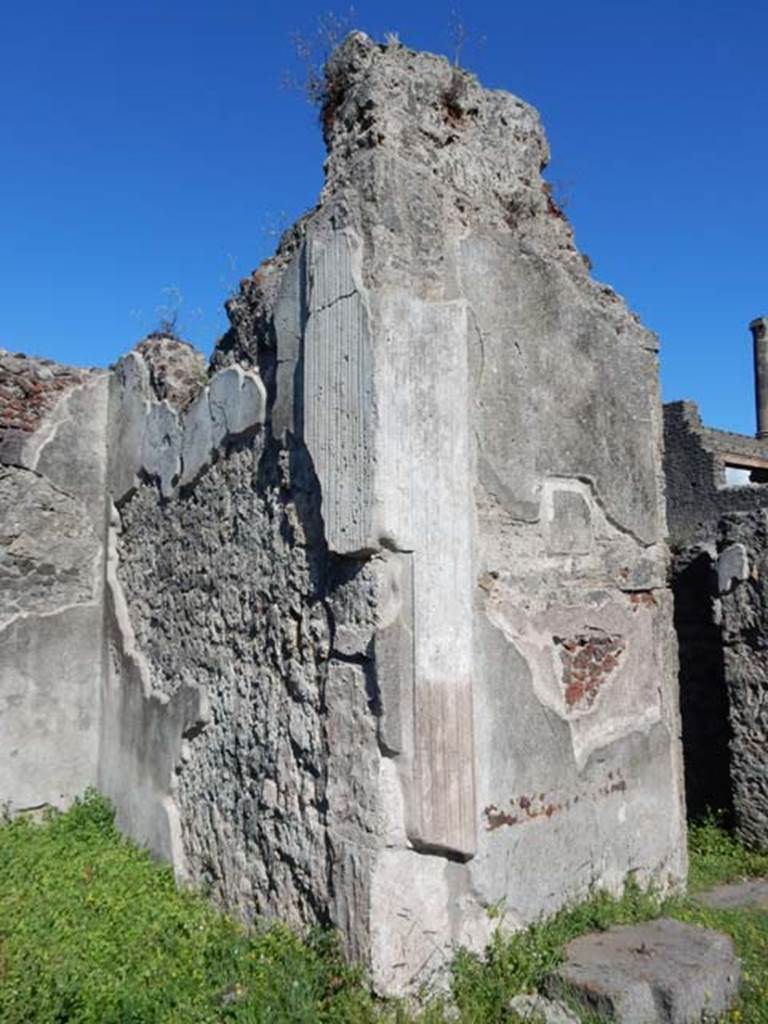
VII.7.10 Pompeii. May 2018.
South wall of ala (g) on east side of atrium, with stone block for holding strong-box, lower right.
Photo courtesy of Buzz Ferebee.
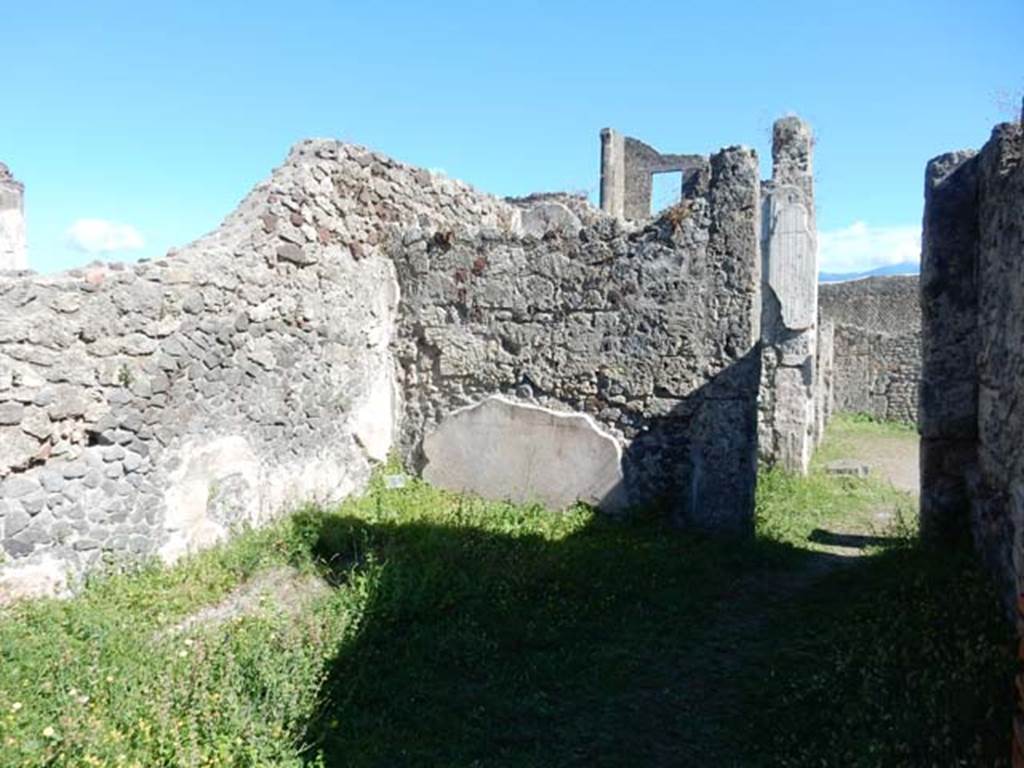
VII.7.10 Pompeii. May 2018.
Room, (n), oecus on east side of tablinum, looking towards south-east corner, and doorway to atrium in south wall.
Photo courtesy of Buzz Ferebee.
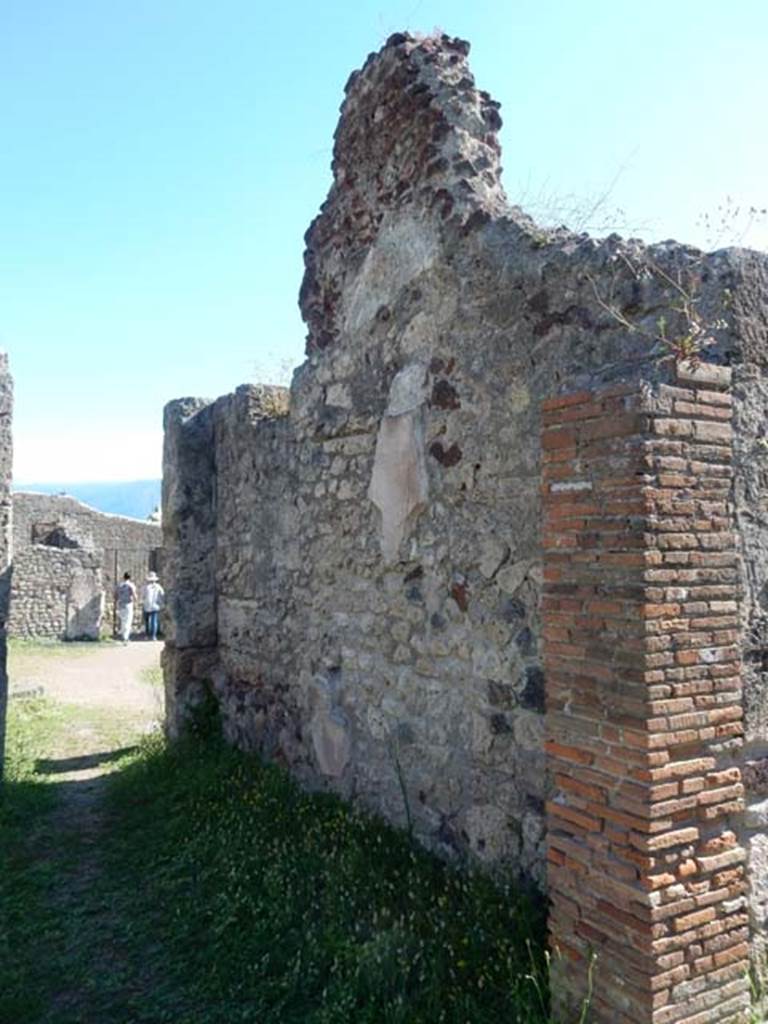
VII.7.10 Pompeii. May 2018.
Room (n), an oecus, looking towards doorway to atrium and west wall. Photo courtesy of Buzz Ferebee.
According to PPM, “in this room, to the left of where you enter, therefore probably on the west wall, the painting of Romulus and Remus with the wolf was found, but already very badly preserved when it was found in 1864.”
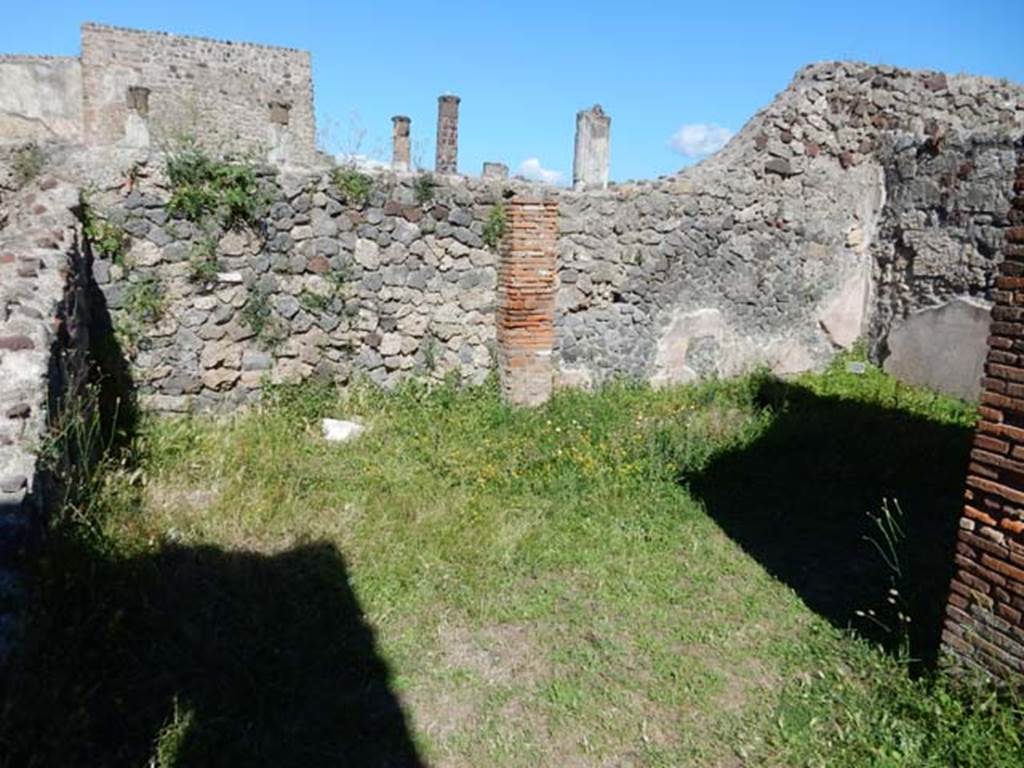
VII.7.10 Pompeii. May 2018. Looking east from south portico through open doorway to room (n). Photo courtesy of Buzz Ferebee.
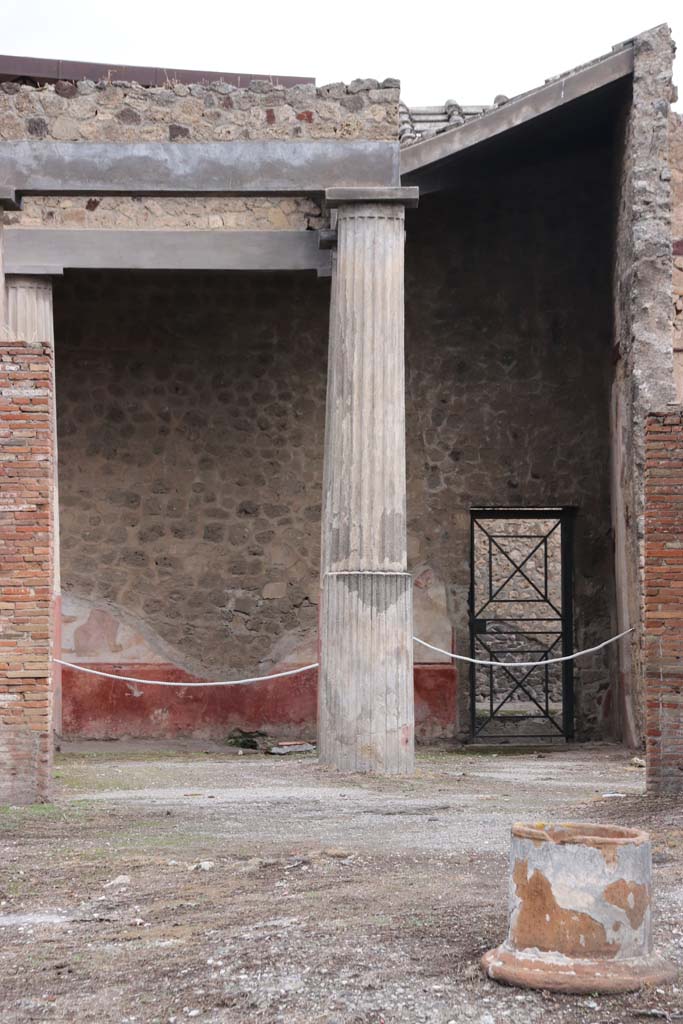
VII.7.10 Pompeii. October 2020.
Looking north across peristyle towards rear doorway at VII.7.13. Photo courtesy of Klaus Heese.
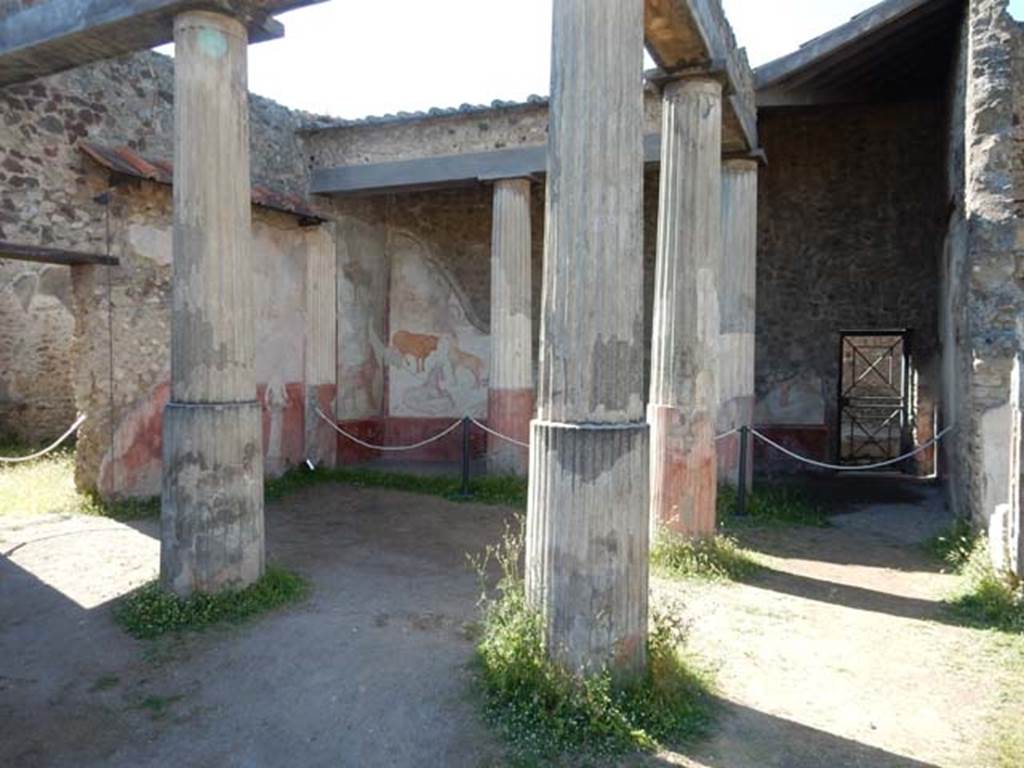
VII.7.10 Pompeii. May 2018. Looking from south portico, at rear of tablinum, towards rear entrance at VII.7.13, on right.
The doorway to the kitchen area is on the left. Photo courtesy of Buzz Ferebee.
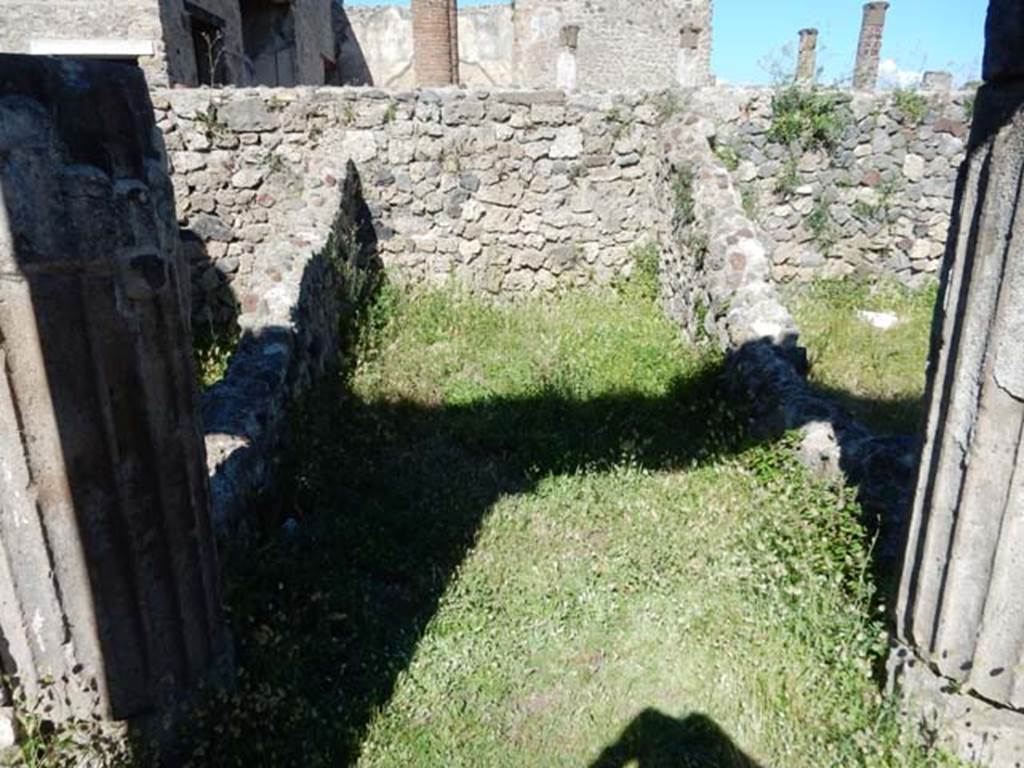
VII.7.10 Pompeii. May 2018. Room (o), looking east from peristyle. Photo courtesy of Buzz Ferebee.
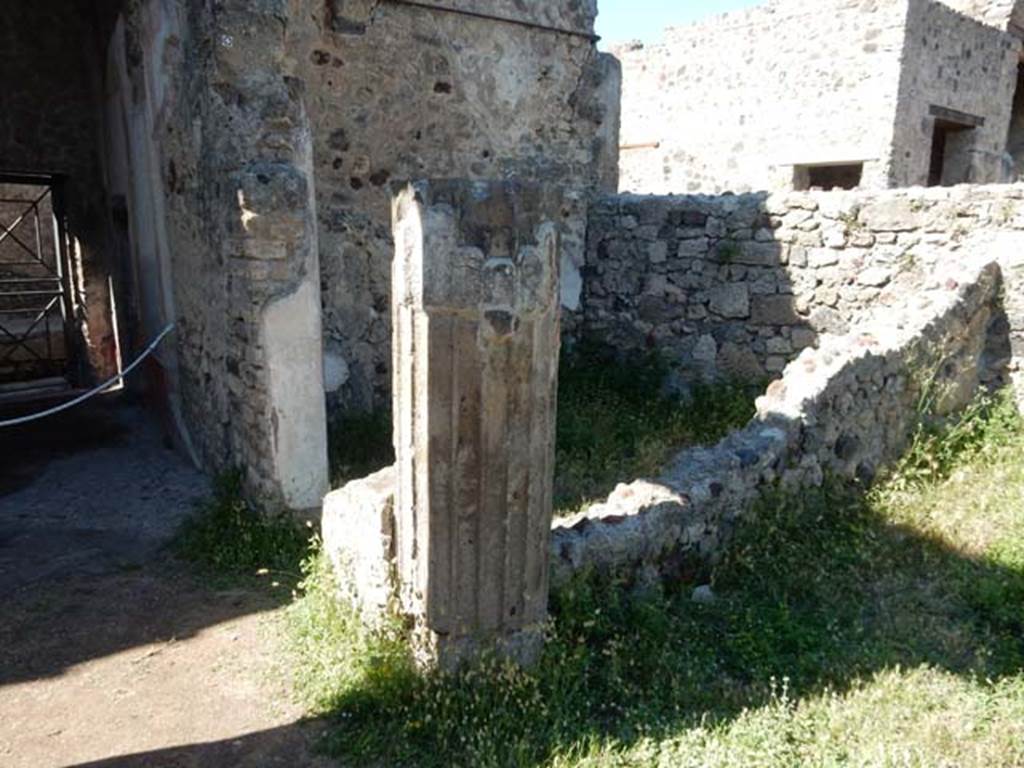
VII.7.10 Pompeii. May 2018.
Looking north-east towards room (r) on east side of peristyle, and room (o), on right. Photo courtesy of Buzz Ferebee.
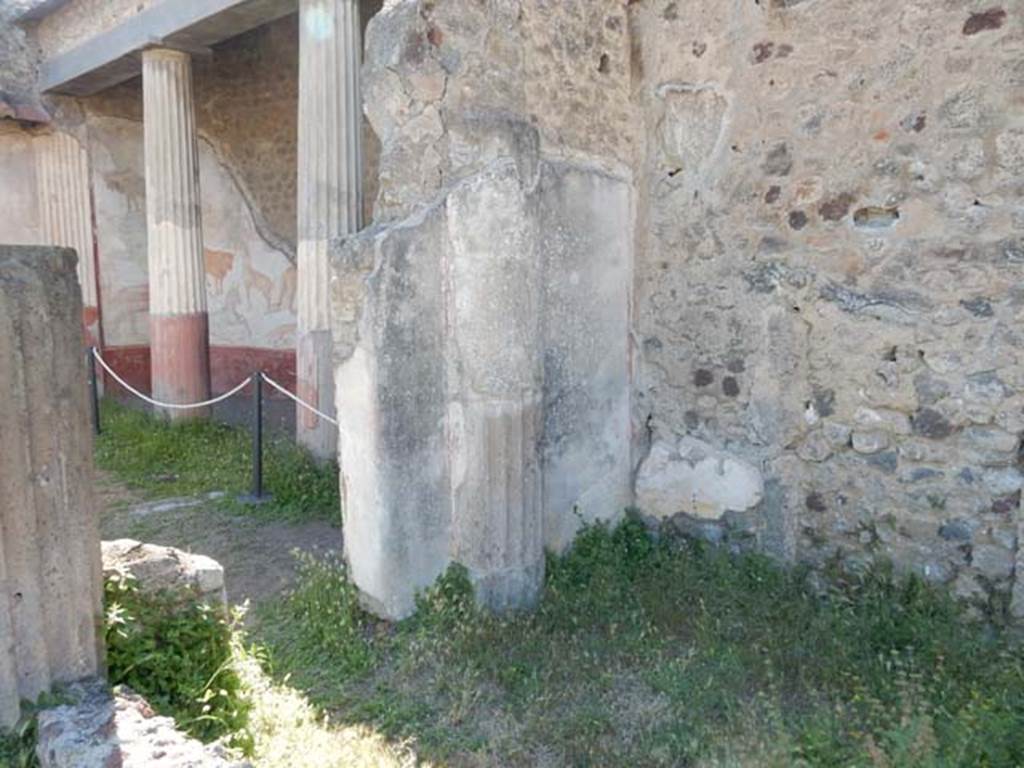
VII.7.10 Pompeii. May 2018. Room (r), looking towards doorway to peristyle and north-west corner.
Embedded in the west wall is a fluted tufa column. Photo courtesy of Buzz Ferebee.