VII.7.5 Pompeii. Casa di
Trittolemo or House of Tryptolemus
or House of the Cissonii or House of L. Calpurnius Diogenes.
Linked to VII .7.2, VII.7.4, VII .7.14 and VII .7.15.
Excavated 1859 and 1871. Bombed in 1943, restored 1946, and 2014.
Part 1 Part 2 Part 3 Part 4 Plan of VII.7.5 and VII.7.14
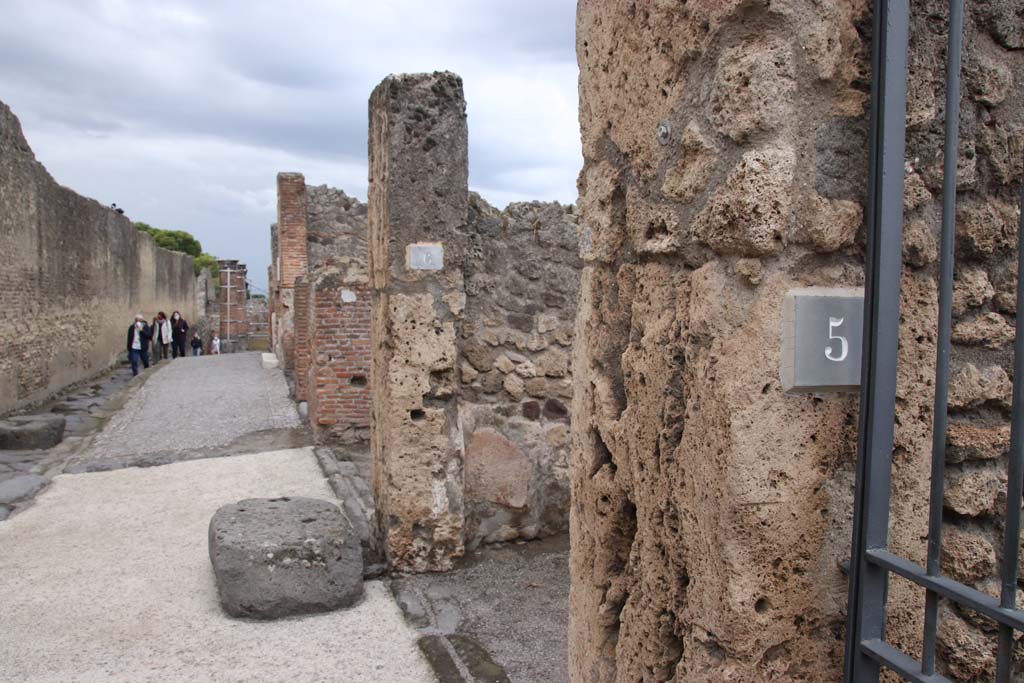
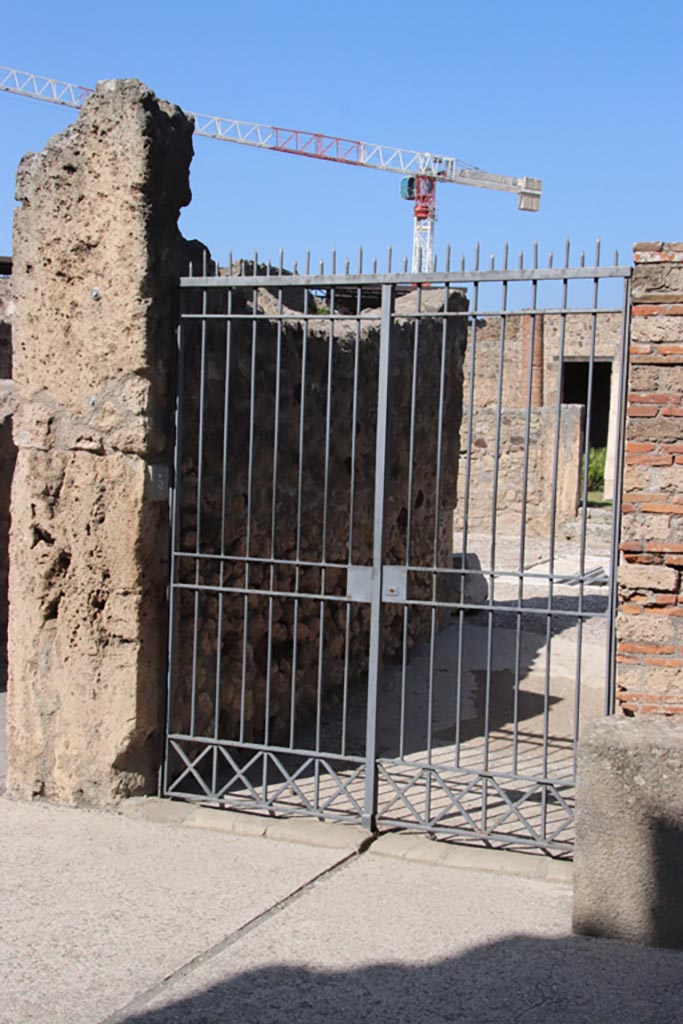
VII.7.5 Pompeii. October 2023. Entrance
doorway. Photo courtesy of Klaus Heese.
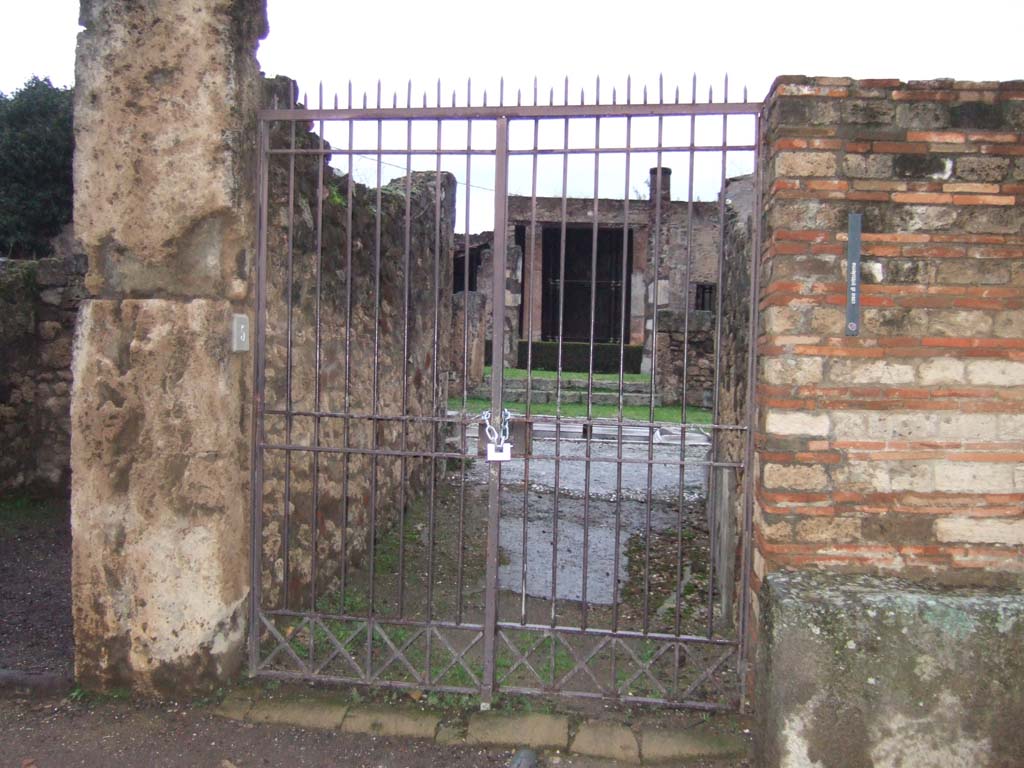
VII.7.5 Pompeii. December 2005. Looking north to entrance doorway into fauces (a).
Little remains of the floor which consisted of a mixture of lavapesto interspersed with large marble chips.
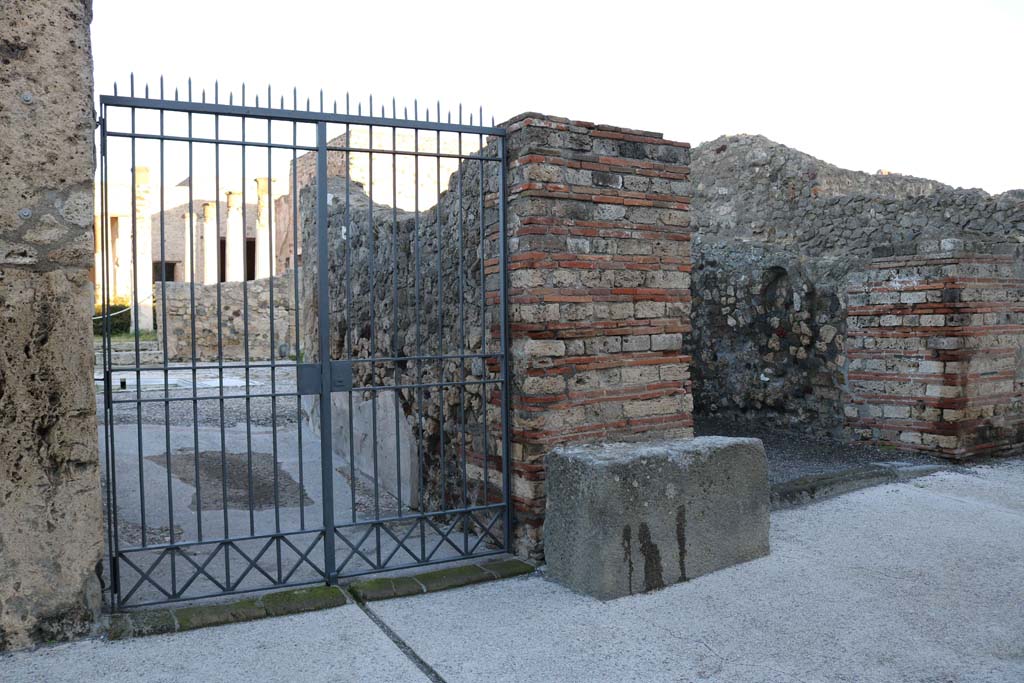
VII.7.5
Pompeii on left. December 2018.
Looking
towards entrance doorway, with VII.7.4 on right. Photo courtesy of Aude Durand.
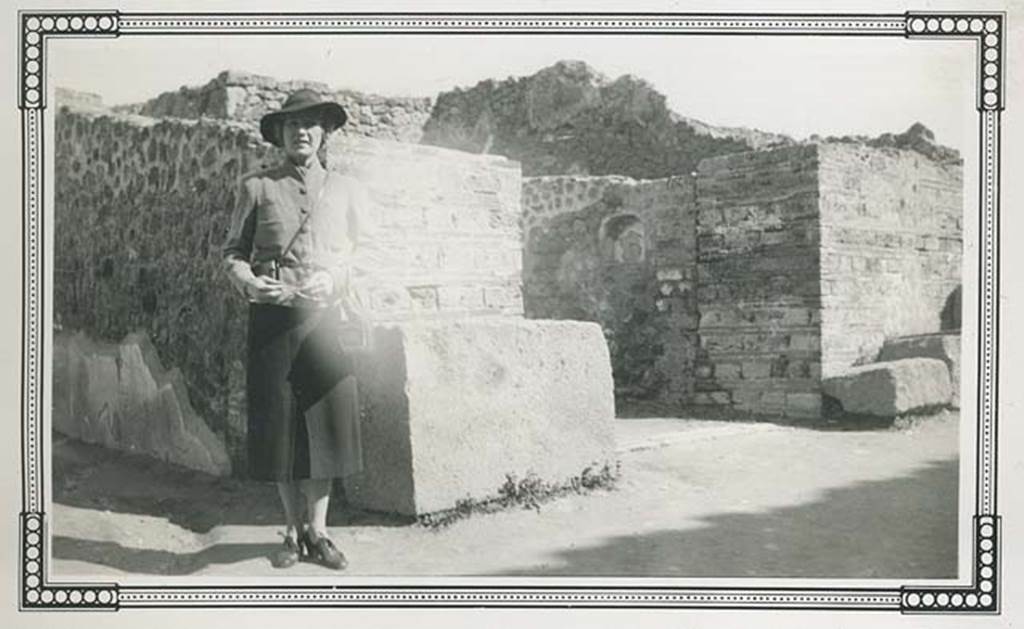
VII.7.5 Pompeii. March 1939.
East wall of entrance corridor (a), on left, and entrance to VII.7.4, on right. Photo courtesy of Rick Bauer.
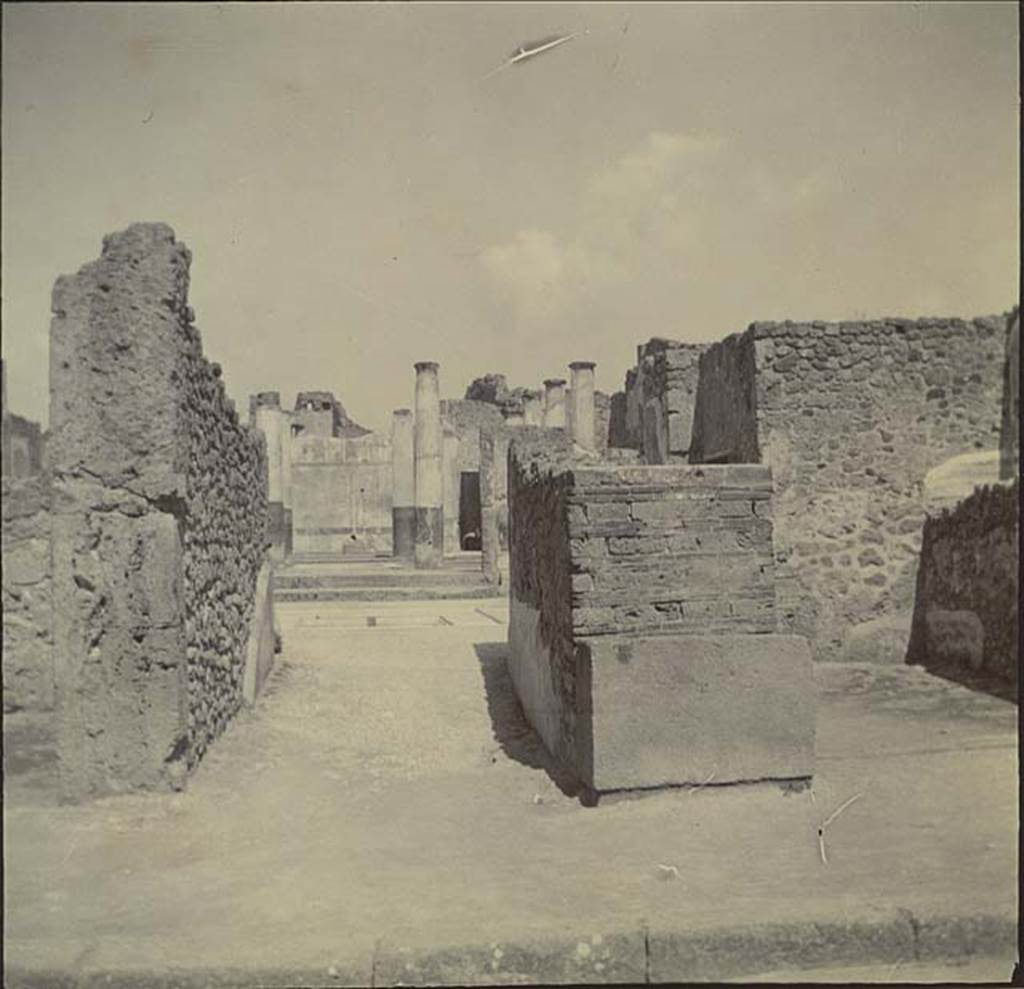
VII.7.5 Pompeii. November 1899. Looking north towards entrance fauces (a). Photo courtesy of Rick Bauer.
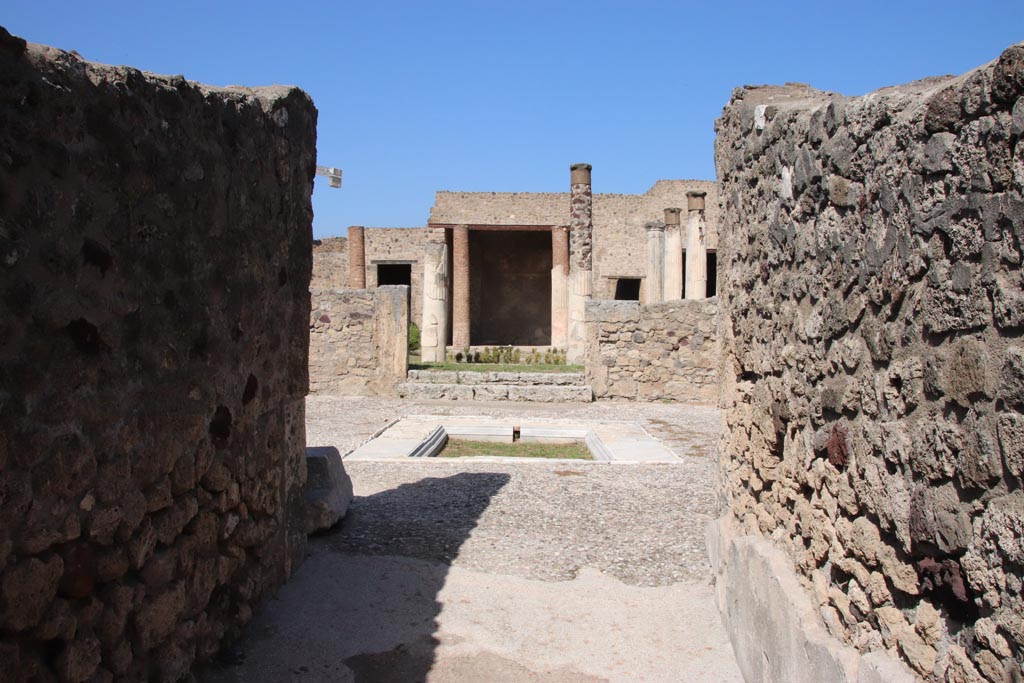
VII.7.5 Pompeii. October
2023. Looking north from entrance doorway. Photo courtesy of Klaus Heese.
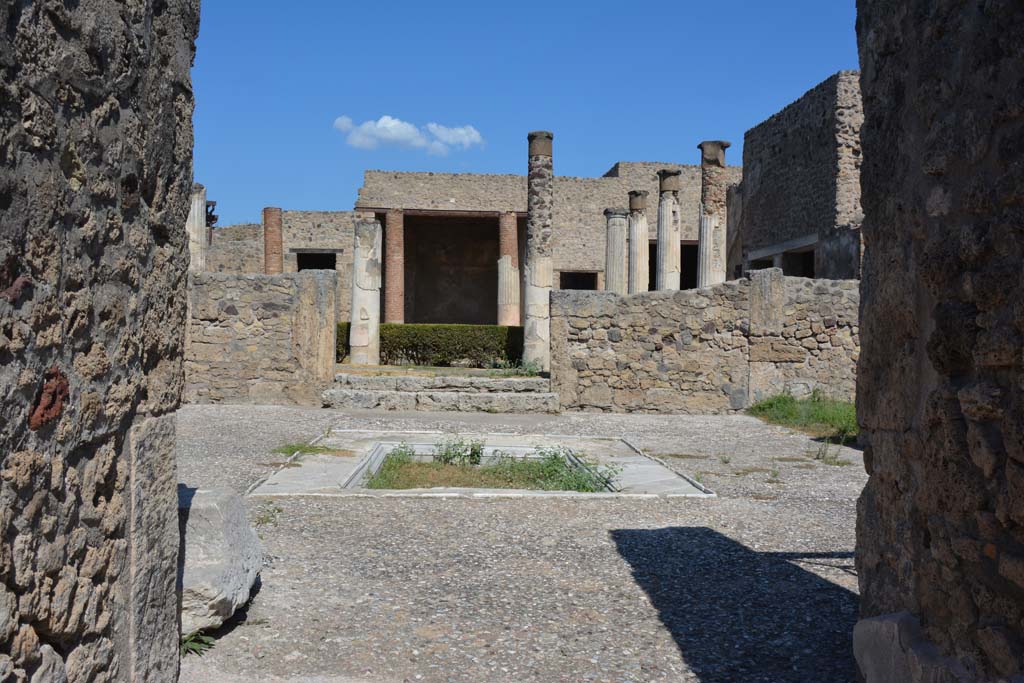
VII.7.5 Pompeii. September 2019.
Looking north to atrium from entrance corridor.
Foto Annette Haug, ERC Grant 681269 DÉCOR
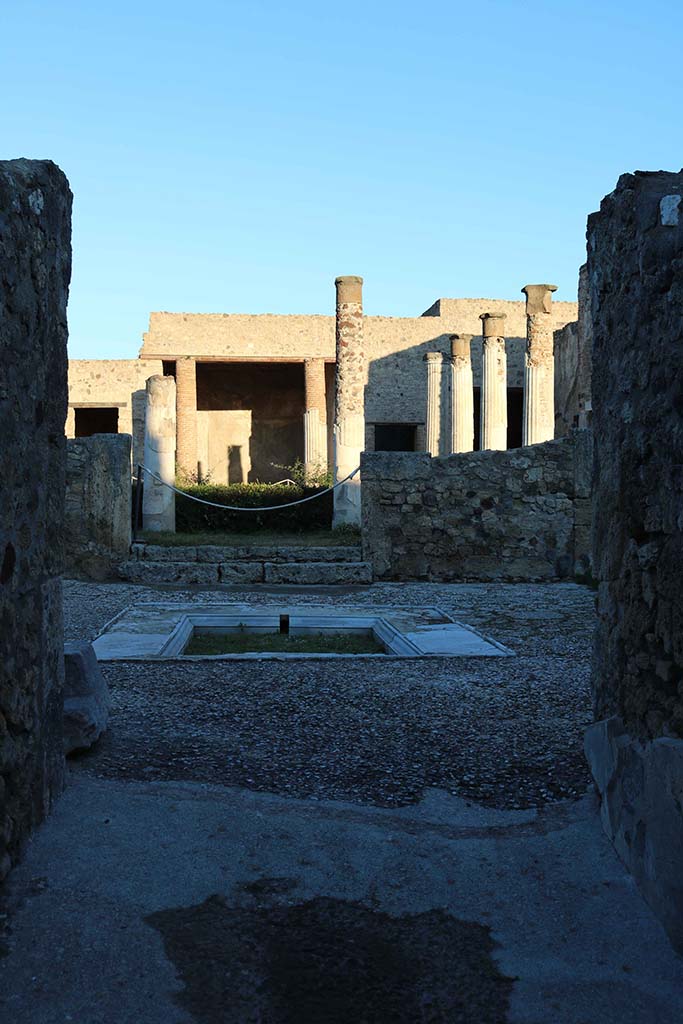
VII.7.5 Pompeii. December 2018.
Looking
north to atrium from entrance corridor. Photo courtesy of Aude Durand.
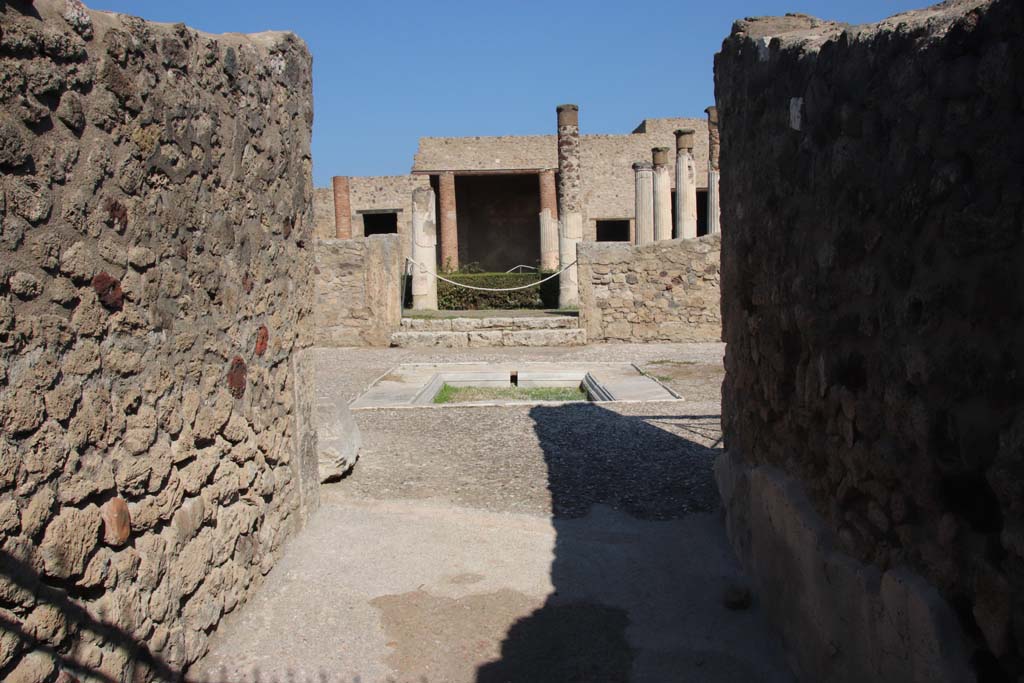
VII.7.5 Pompeii. September 2017.
Looking north across atrium towards peristyle with exedra, from entrance corridor. Photo courtesy of Klaus Heese.
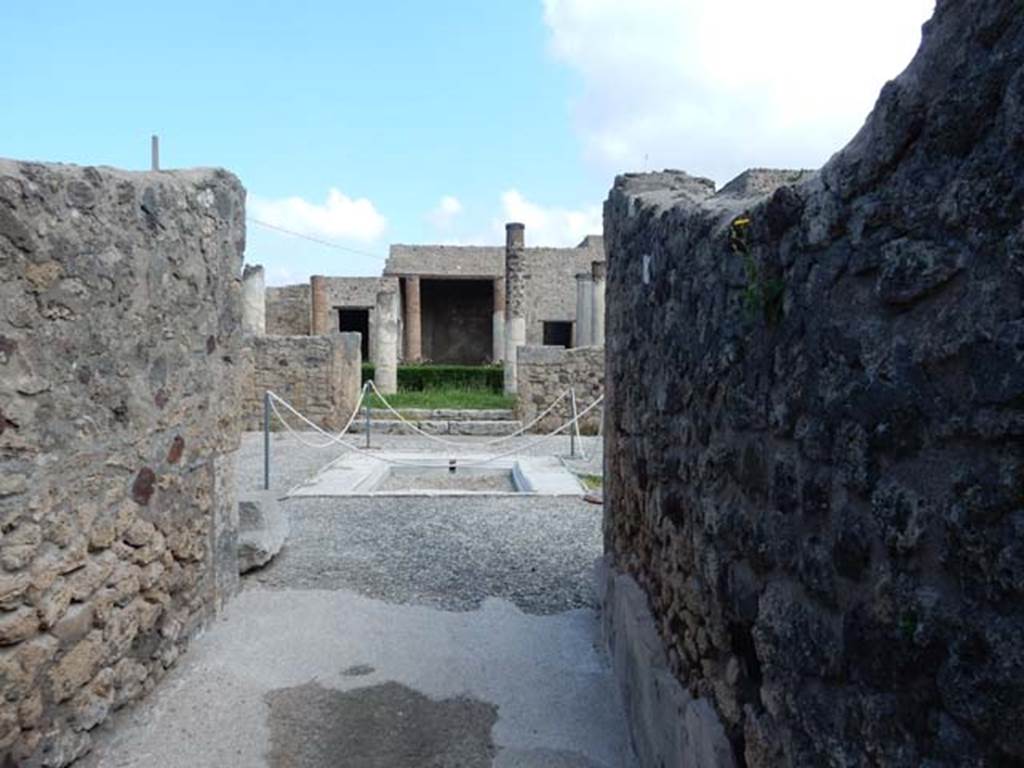
VII.7.5 Pompeii. May 2015. Looking north along entrance fauces (a) to atrium (b). Photo courtesy of Buzz Ferebee.
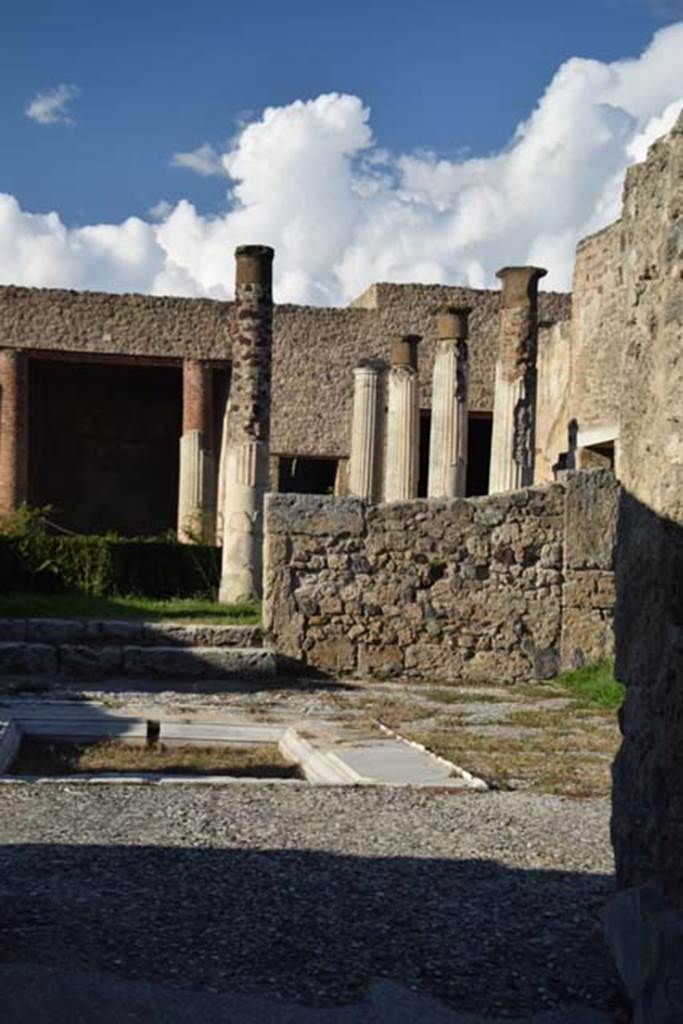
VII.7.5 Pompeii. 3rd November 2016.
Looking north-east across impluvium in atrium (b). Photo courtesy of Marie Schulze.
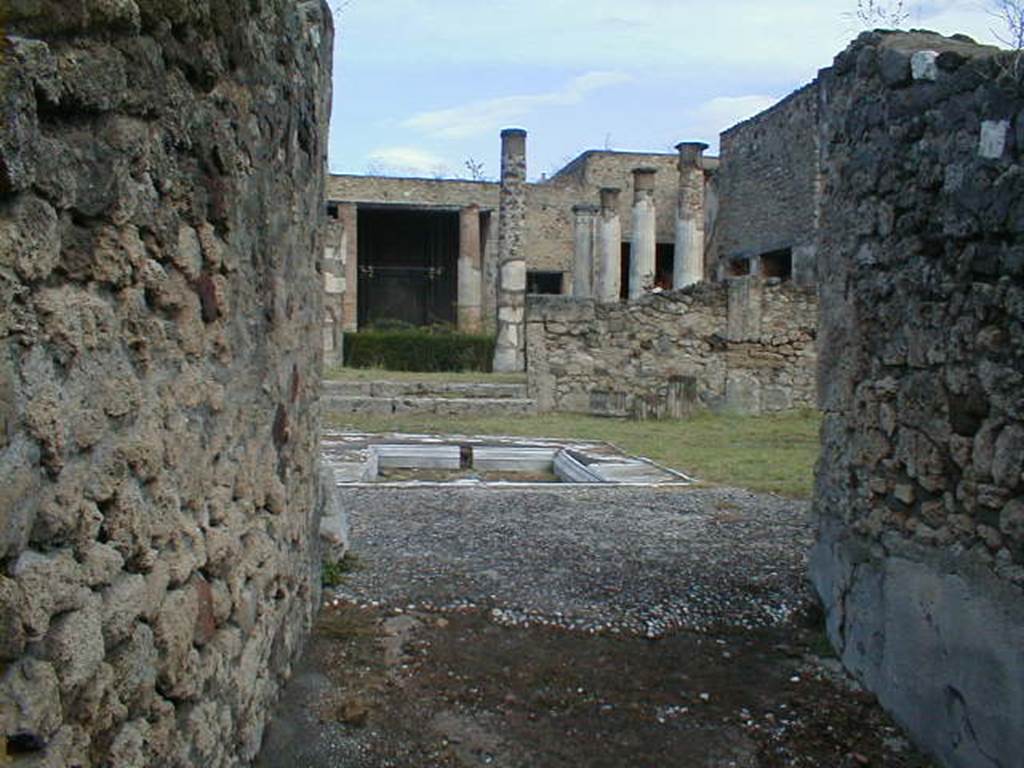
VII.7.5 Pompeii. September 2004. Looking north-east across impluvium in atrium (b), from entrance corridor (a).
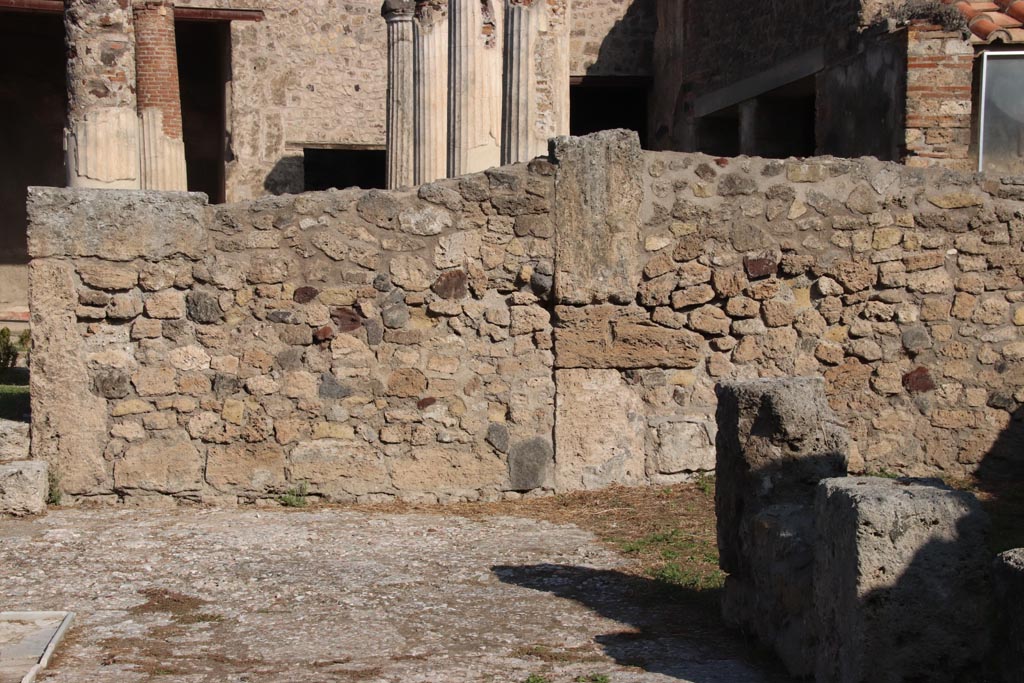
VII.7.5 Pompeii. October
2023. North-east corner of atrium with doorway to room h, east ala. Photo
courtesy of Klaus Heese.
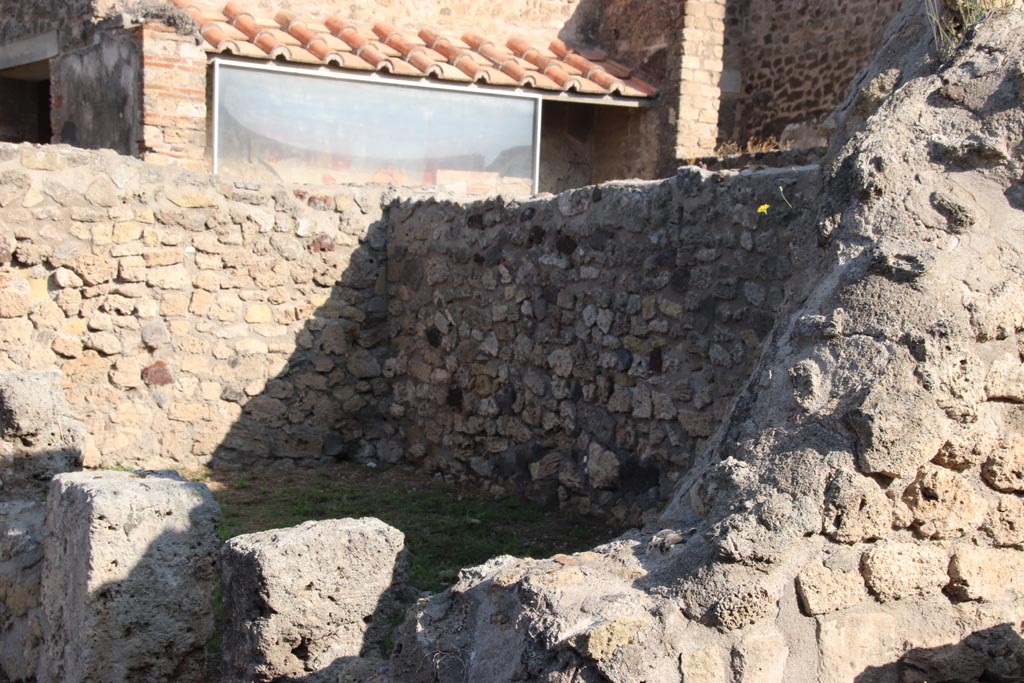
VII.7.5 Pompeii. October
2023. Looking north-east towards room h, now combined with room (g). Photo
courtesy of Klaus Heese.
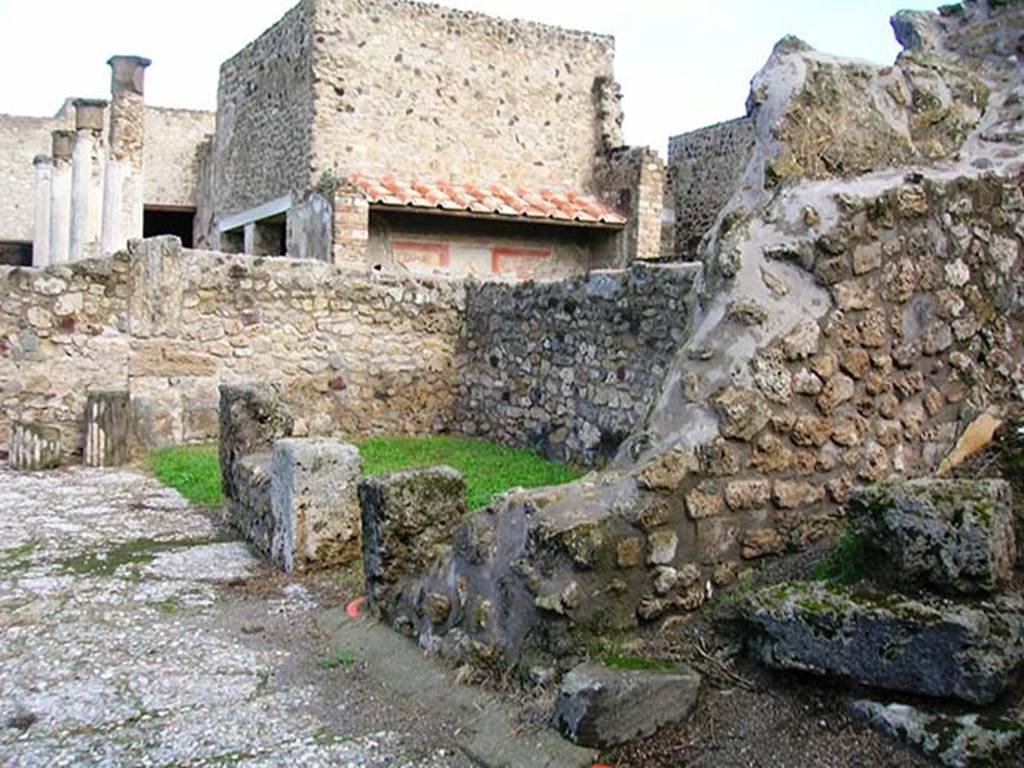
VII.7.5 Pompeii. November 2012. Rooms (h) ala, room g (in centre) (f) (on right) on east side of atrium.
Photo courtesy of Mentnafunangann, see Wikimedia.
This file is licensed under the Creative Commons Attribution-Share Alike 3.0 Unported licence.
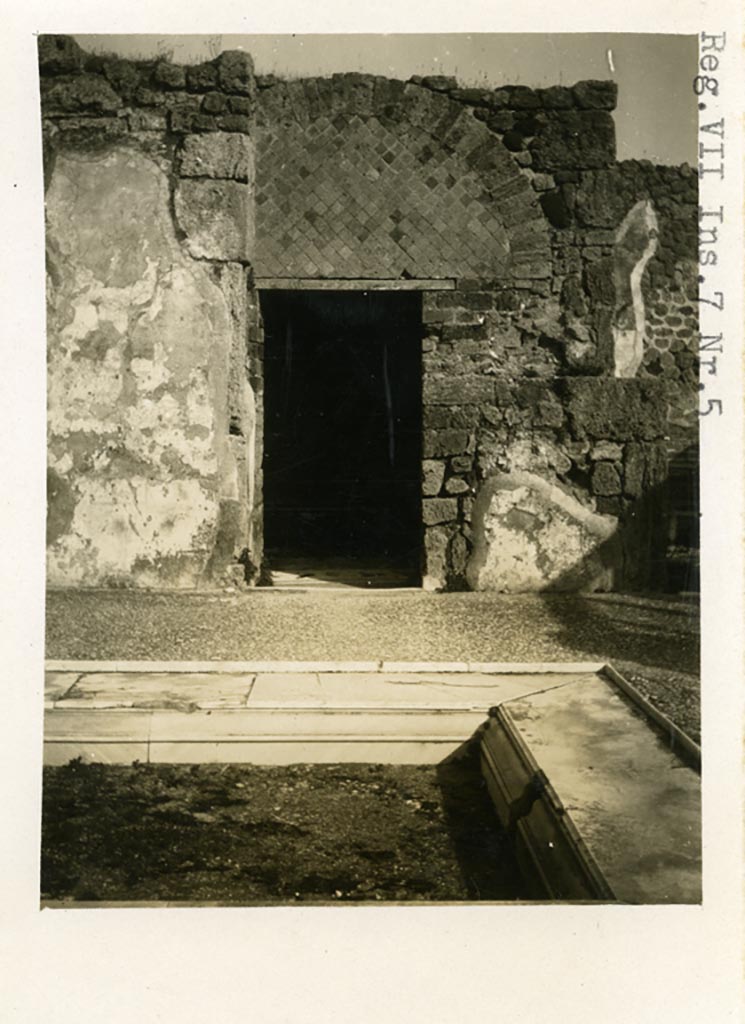
VII.7.5 Pompeii. Pre-1937-39.
Looking east across impluvium in atrium towards doorway to room f, in south-east corner.
Photo courtesy of American Academy in Rome, Photographic Archive. Warsher collection no. 1443.
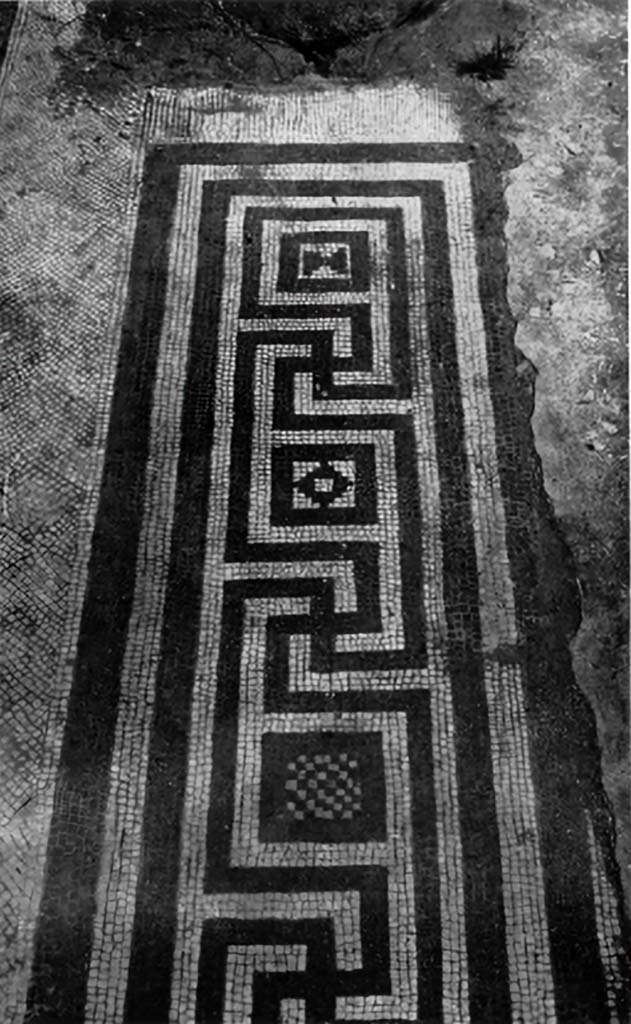
VII.7.5
Pompeii. c.1930. Flooring, showing threshold of the right ala (room h).
In VII.7.5,
the right ala has the meander with every square different, while the left uses
the simplified form.
See Blake,
M., (1930). The pavements of the Roman Buildings of the Republic and Early
Empire. Rome, MAAR, 8, (p.84 & Pl.21, Tav. 2)
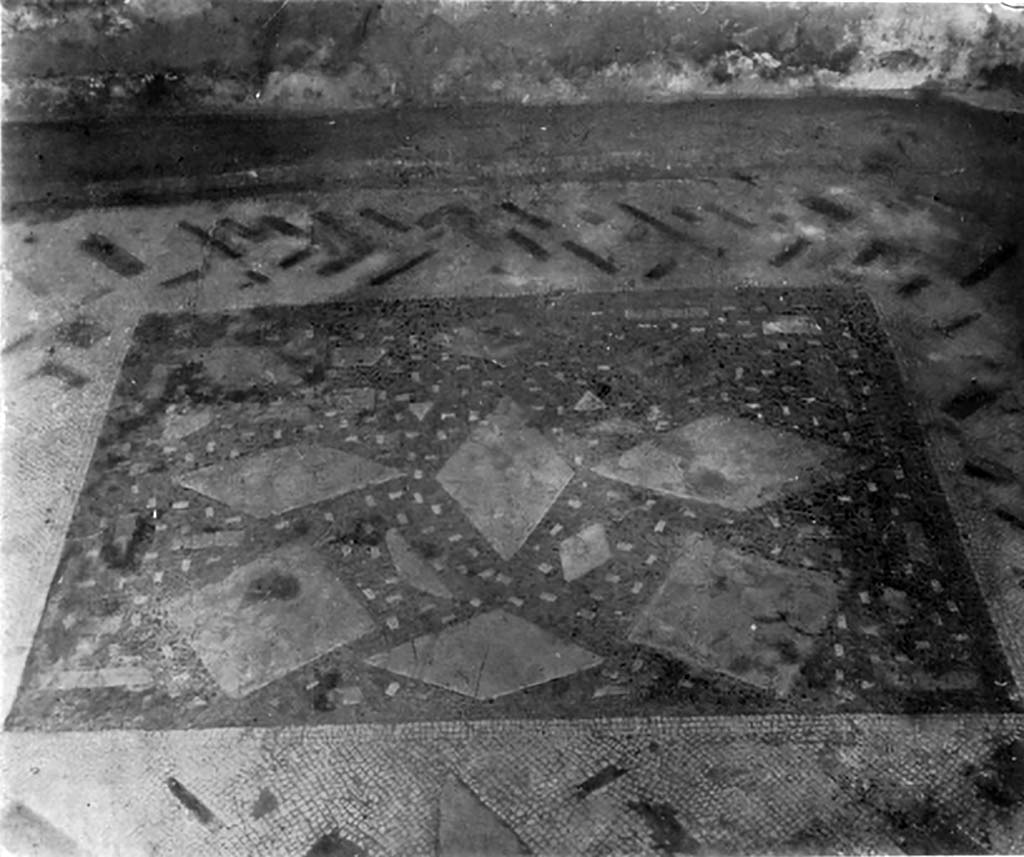
VII.7.5 Pompeii. c.1930. Flooring of central vaulted room on east side of atrium.
According to Blake –
The vaulted room to the right of the atrium of this house, through its various transformations, gives some slight help in dating this type of floor.
The original pavement was apparently a lithostroton
of the Palestrina type, if one may judge by the strip composed of oblong
tesserae which still remains near the back wall. Later a wall of badly wearing
yellow tufa, a variety not used until the middle of the first century AD, was
constructed upon the floor. The pavement is clearly earlier than the cement
floor of the atrium and may well belong to the same period as those of the
alae. The use of coloured marbles rather than limestones suggests the age of Augustus,
or a time slightly previous. In this particular floor, there is a definite
attempt to make a design even out of irregular pieces. The centre has lozenges
of giallo or bigio laid in a rough pattern in the background of fine
black tesserae (0.6cm to 0.07cm), while the background itself has been spotted
with oblong tesserae of white. Around this runs a broad white border in which
are sprinkled long narrow pieces of giallo, affricano, and rosso.
See Blake, M., (1930). The pavements of the Roman Buildings of the Republic and Early Empire. Rome, MAAR, 8, (p.61 & Pl.13, Tav. 2)
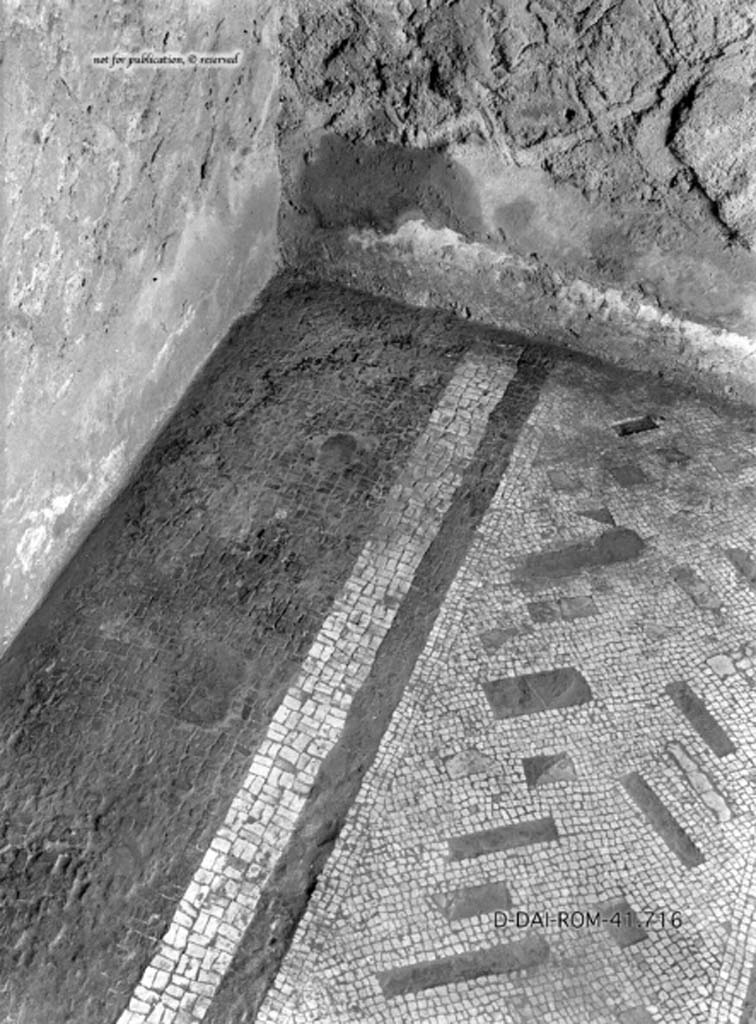
VII.7.5 Pompeii. c.1930. Detail of
flooring in room g, the central room on east side of atrium.
DAIR 41.716. Photo © Deutsches Archäologisches Institut,
Abteilung Rom, Arkiv.
See Pernice, E., 1938. Pavimente und Figürliche
Mosaiken: Die Hellenistische Kunst in Pompeji, Band VI. Berlin: de Gruyter,
(Taf. 37.1).
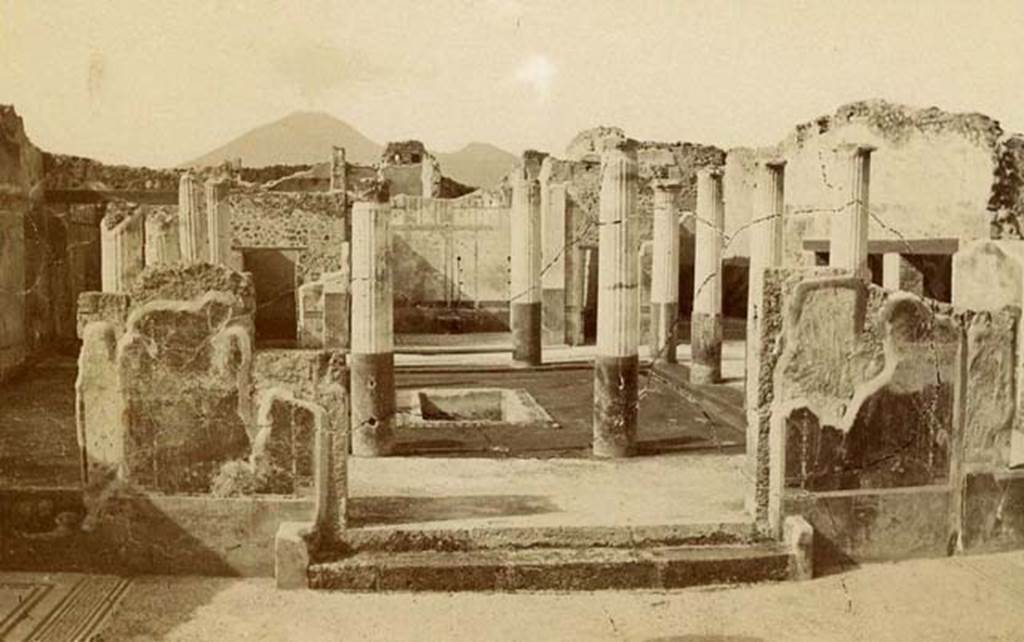
VII.7.5 Pompeii. (circa 1890). Looking north from atrium (b) across peristyle (l) to exedra (u).
On the left can be seen the north wall and flooring of west ala (e). Photo courtesy of Davide Peluso.
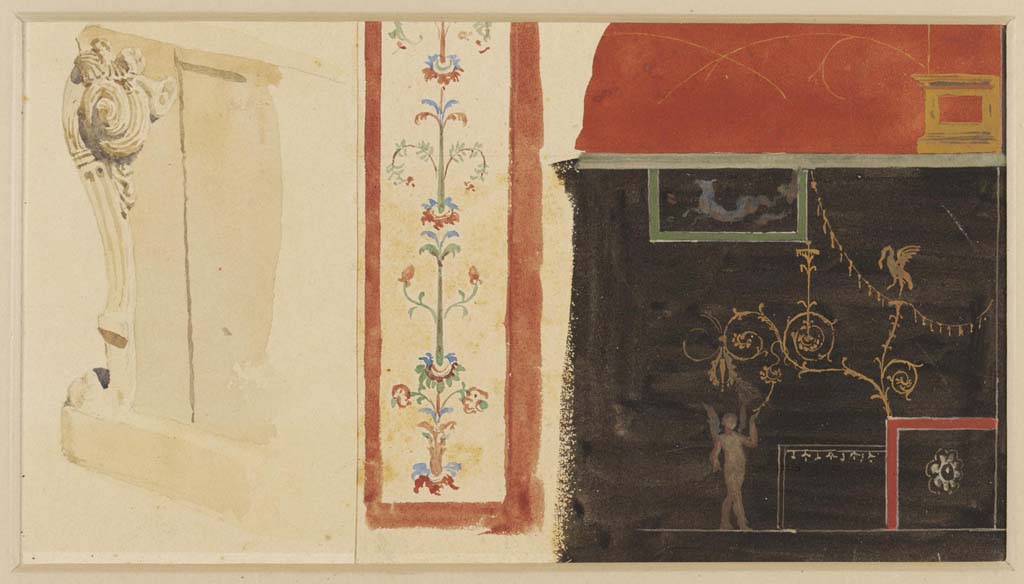
VII.7.5 Pompeii. Undated watercolour by Luigi Bazzani.
The black zoccolo, on the right, may be from a wall in the atrium (see similarity with photo above, and two below).
The other paintings may or may not be from this house.
Photo
© Victoria and Albert Museum. Inventory number 2043-1900.
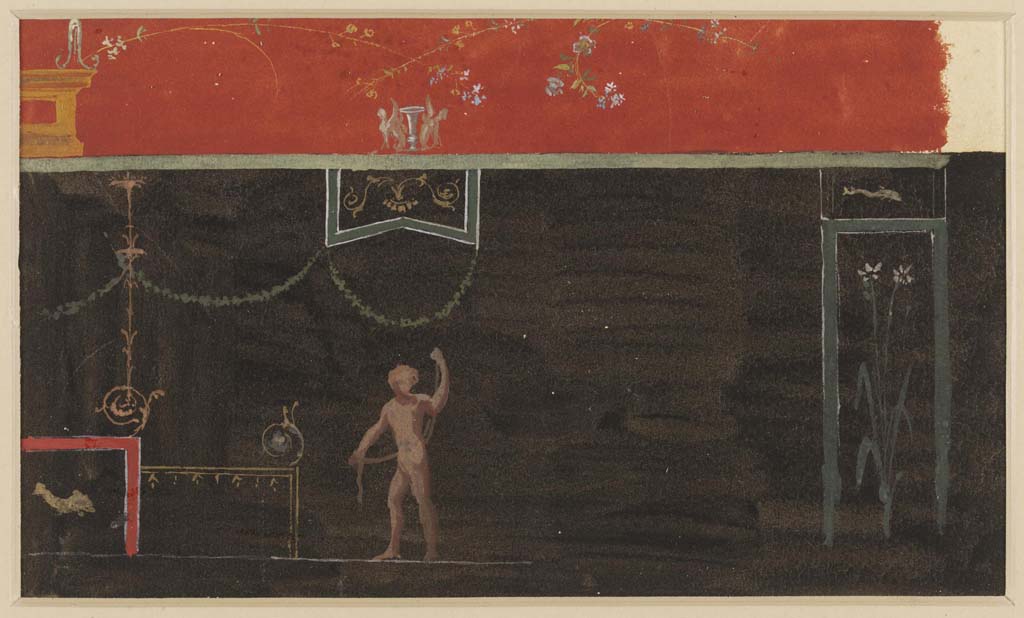
VII.7.5 Pompeii. Undated watercolour by Luigi Bazzani.
This painting of a black
zoccolo may or may not also be from a wall in the atrium.
Photo © Victoria and Albert
Museum. Inventory number 2038-1900.
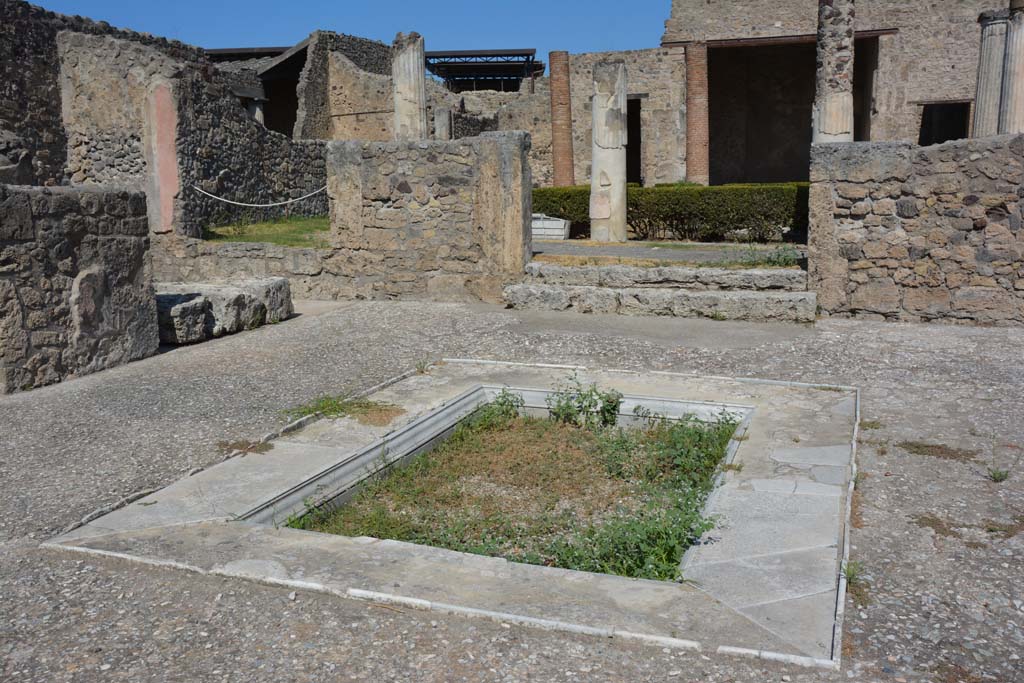
VII.7.5 Pompeii. September 2019. Looking
north-west across atrium towards west ala (e ), on left.
Foto Annette
Haug, ERC Grant 681269 DÉCOR.
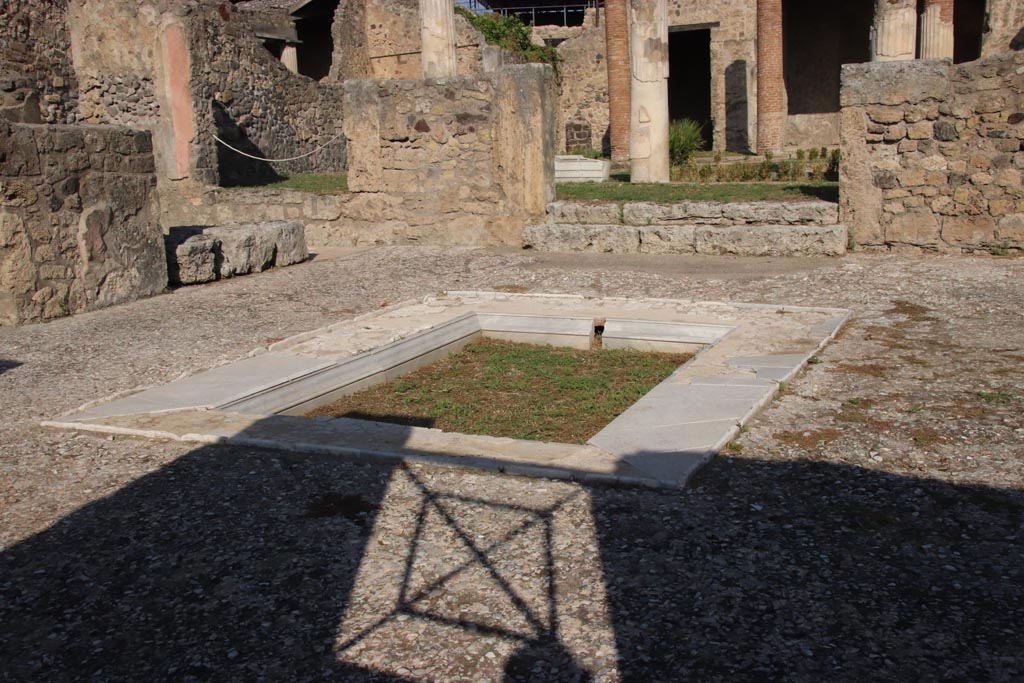
VII.7.5 Pompeii. October 2023.
Looking north-west across impluvium in atrium
towards west ala (e ), on left. Photo
courtesy of Klaus Heese.
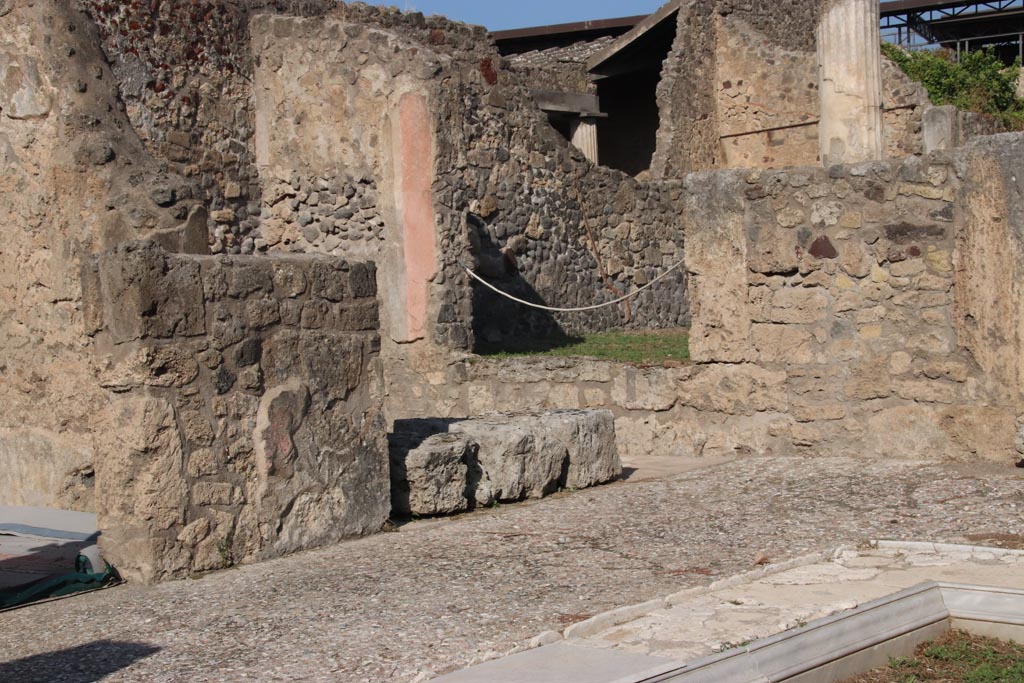
VII.7.5 Pompeii. October 2023. Looking
towards west ala (e ), in centre. Photo
courtesy of Klaus Heese.
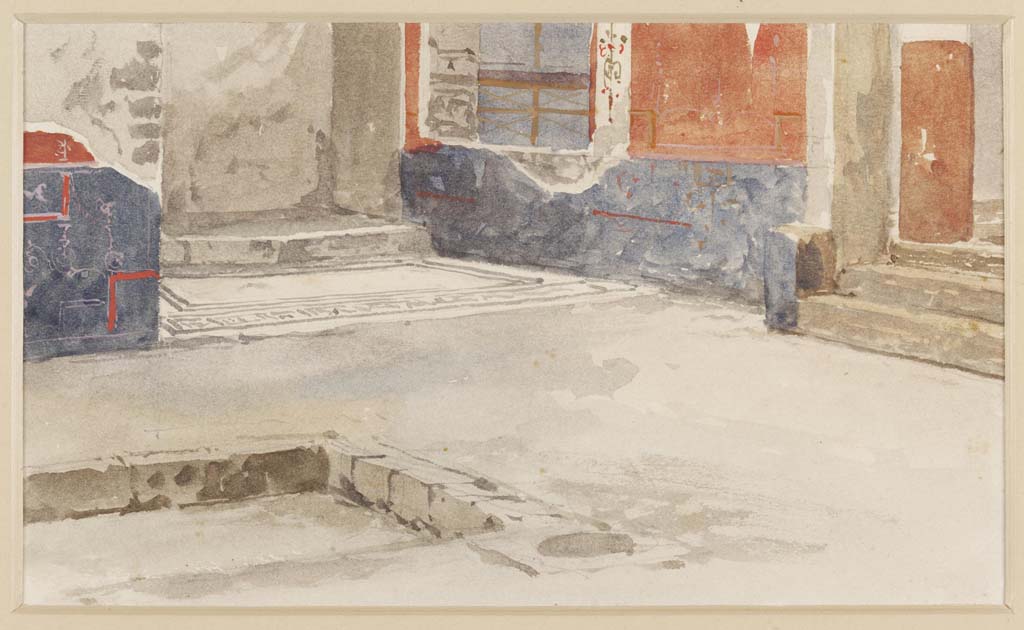
VII.7.5 Pompeii. Undated watercolour by Luigi Bazzani.
Looking across atrium towards west ala (e).
Photo
© Victoria and Albert Museum. Inventory number 2041-1900.
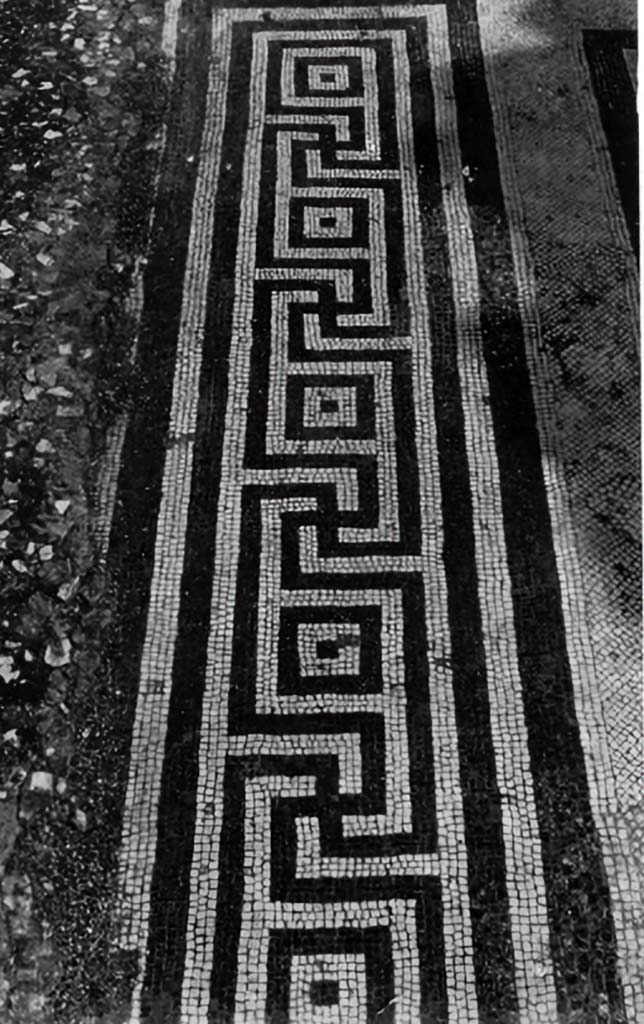
VII.7.5 Pompeii. c.1930. Flooring, showing threshold of the left ala (room e).
According to Blake –
With the more general use of marble, one finds marble fragments combined with those of the coloured limestone, as for example in the atria of V.1.7 and of VII.7.5. In the latter, the pavement is clearly later than the mosaic borders of the alae which in part it covers; it seems to belong to the period of the marble impluvium. (p.31).
In VII.7.5, the right ala has the meander with every square different, while the left uses the simplified form. (p.84)
See Blake, M., (1930). The pavements of the Roman Buildings of the Republic and Early Empire. Rome, MAAR, 8, (p.31, p.84 & Pl.21, Tav. 1)
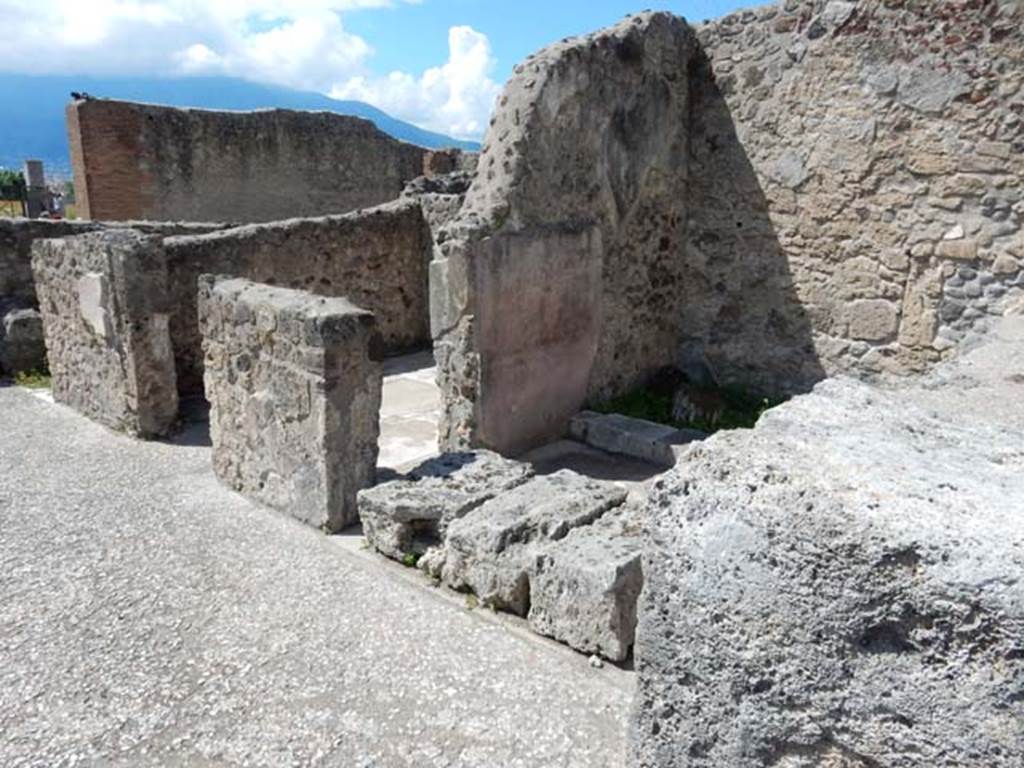
VII.7.5 Pompeii, May 2018.
Looking south-west across west side of atrium, doorways to rooms ( c), (d) with ala ( e), on right. Photo courtesy of Buzz Ferebee.
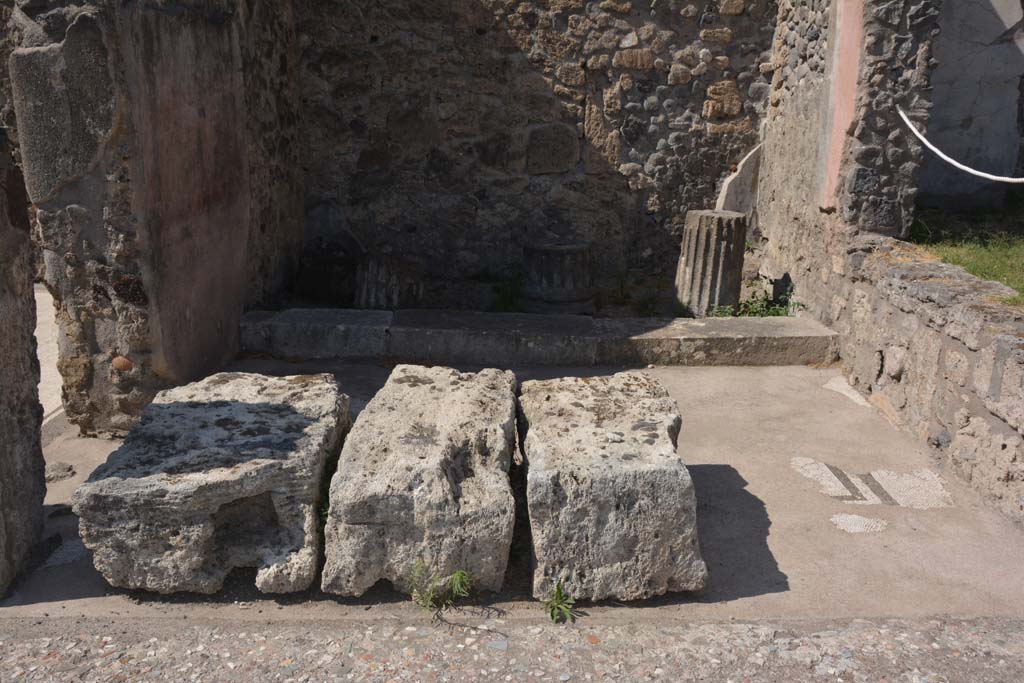
Foto Annette Haug, ERC Grant 681269 DÉCOR.
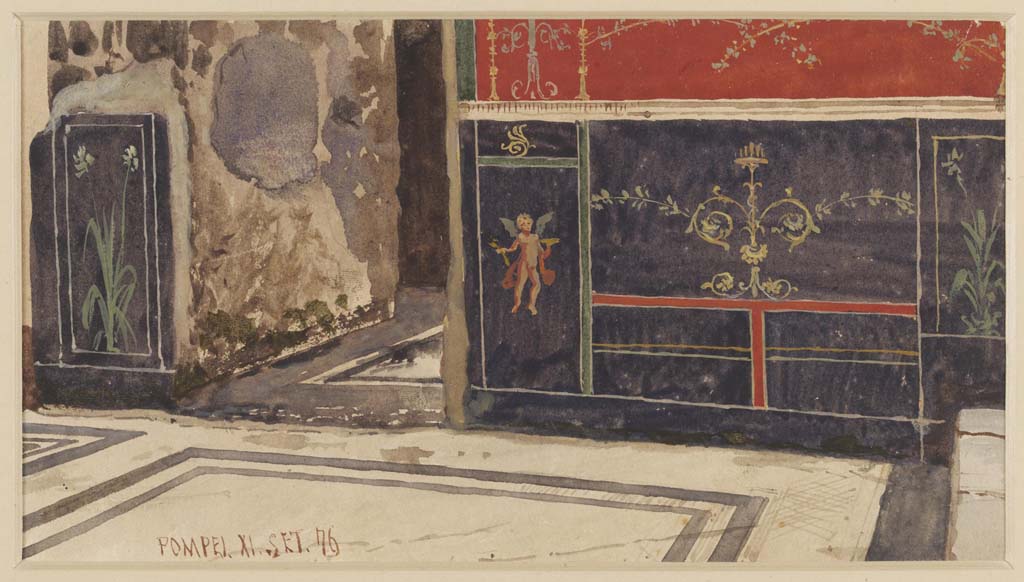
VII.7.5 Pompeii, September 1876. Watercolour by Luigi Bazzani.
West
ala (e), looking towards zoccolo on south wall with doorway into room (d).
Photo
© Victoria and Albert Museum. Inventory number 2040-1900.
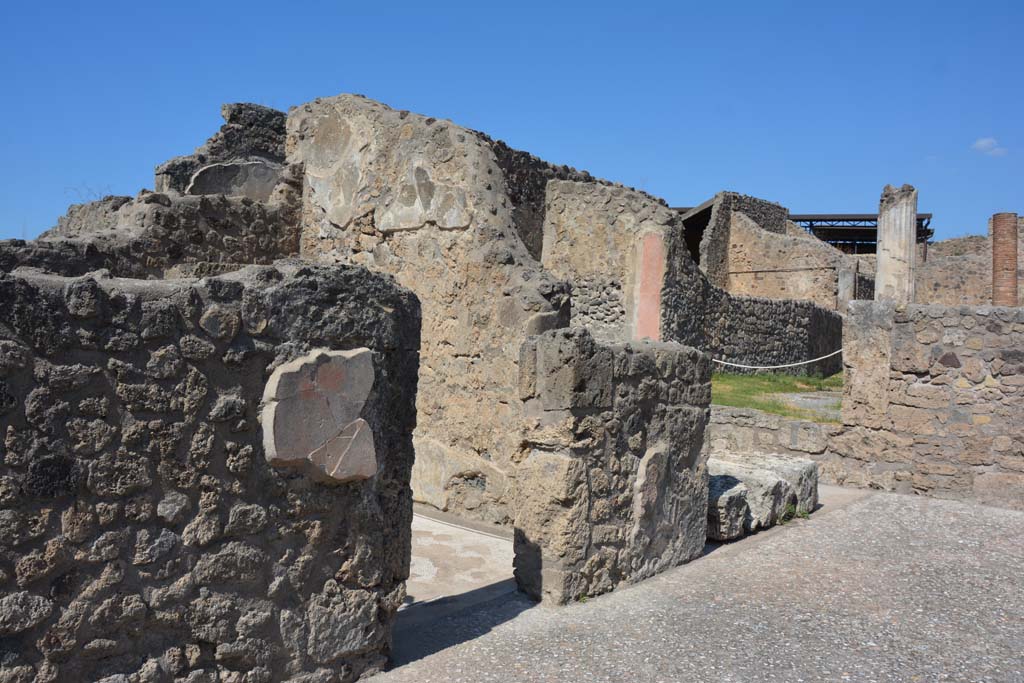
VII.7.5
Pompeii. September 2019.
Looking
north along west side of atrium, towards doorway to room (d), in centre, and
west ala (e ), centre right.
Foto Annette Haug, ERC Grant 681269 DÉCOR.
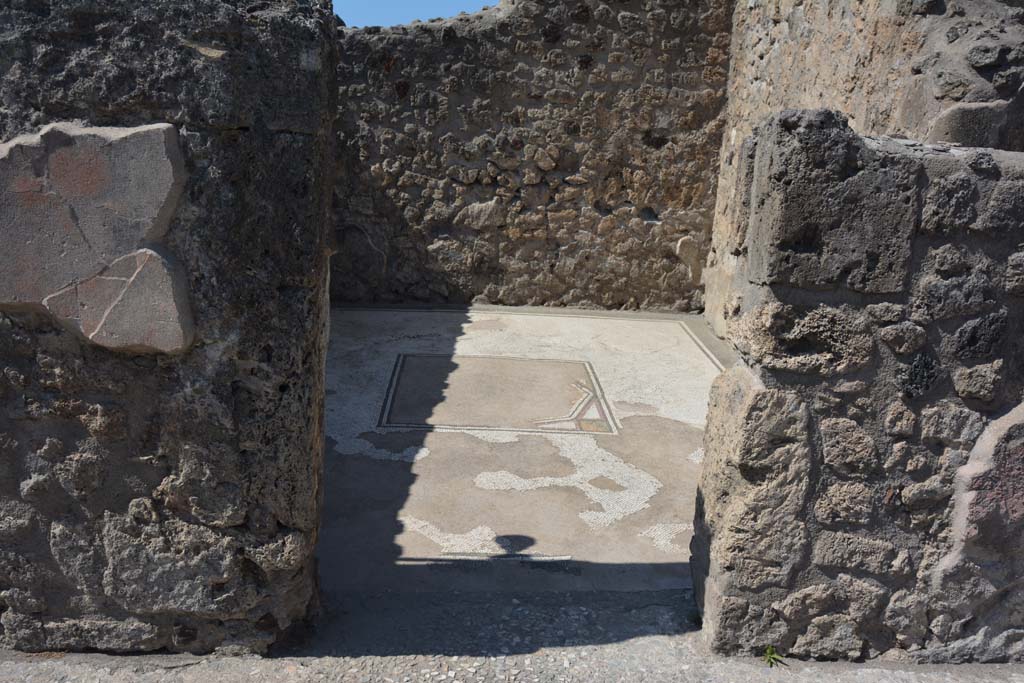
VII.7.5
Pompeii. September 2019. Looking west through doorway from atrium into room
(d).
Foto Annette Haug, ERC Grant 681269 DÉCOR.
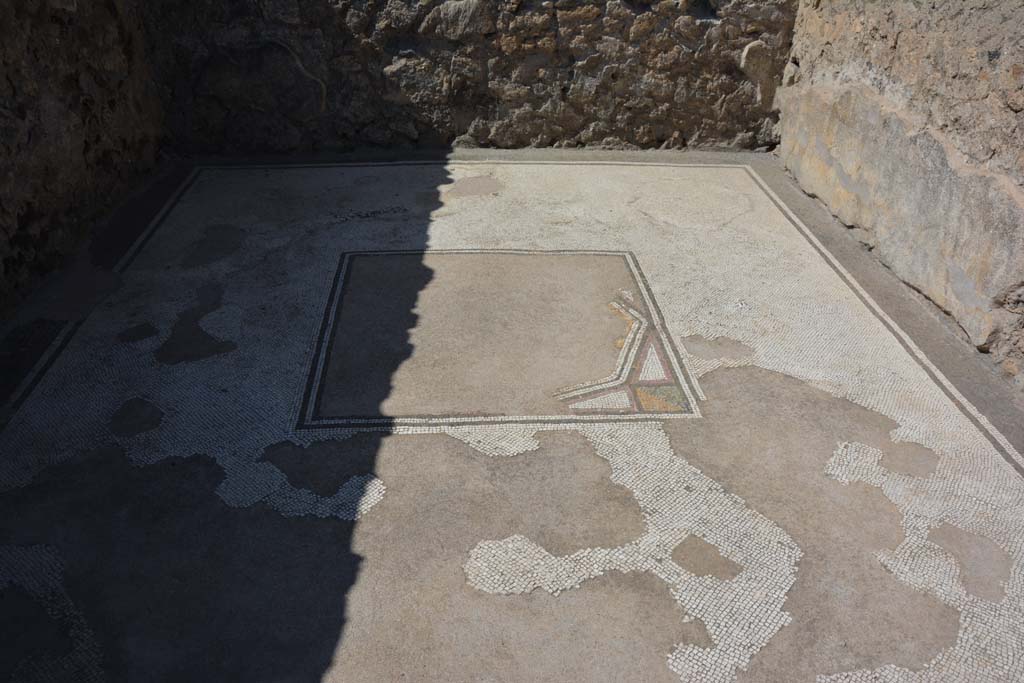
VII.7.5
Pompeii. September 2019. Room (d), looking west across detail of flooring.
Foto Annette Haug, ERC Grant 681269 DÉCOR.
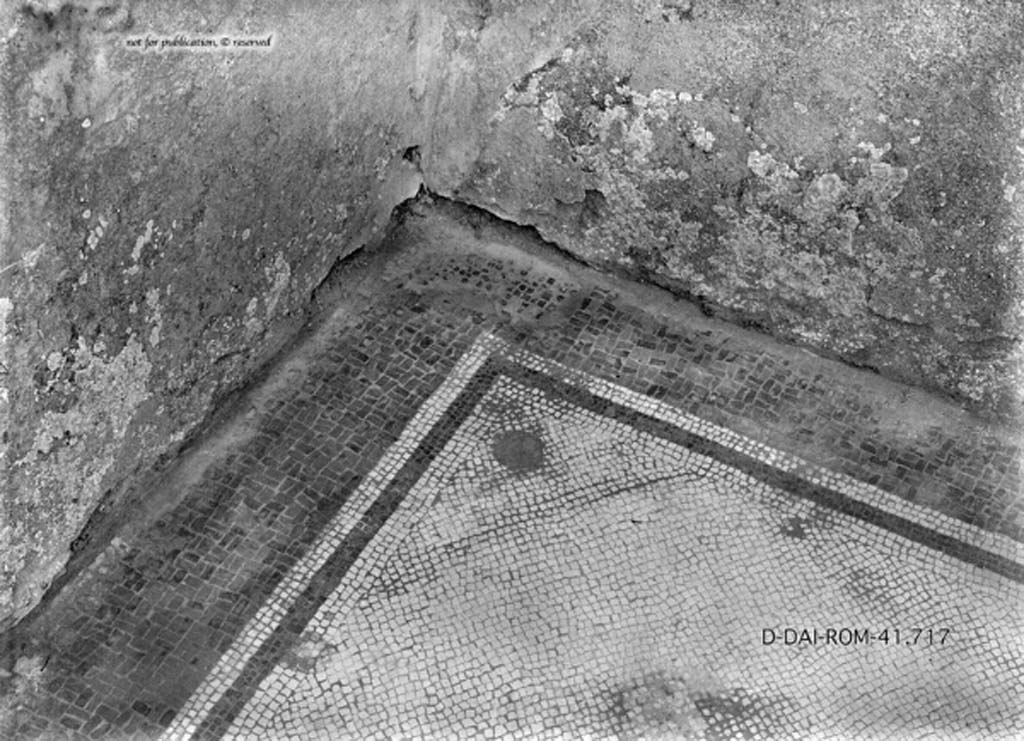
VII.7.5 Pompeii. c.1930. Room d, mosaic flooring in room in centre of west side of atrium.
DAIR 41.717. Photo © Deutsches Archäologisches Institut,
Abteilung Rom, Arkiv.
See Pernice, E., 1938. Pavimente und Figürliche
Mosaiken: Die Hellenistische Kunst in Pompeji, Band VI. Berlin: de Gruyter,
(taf. 37.2).
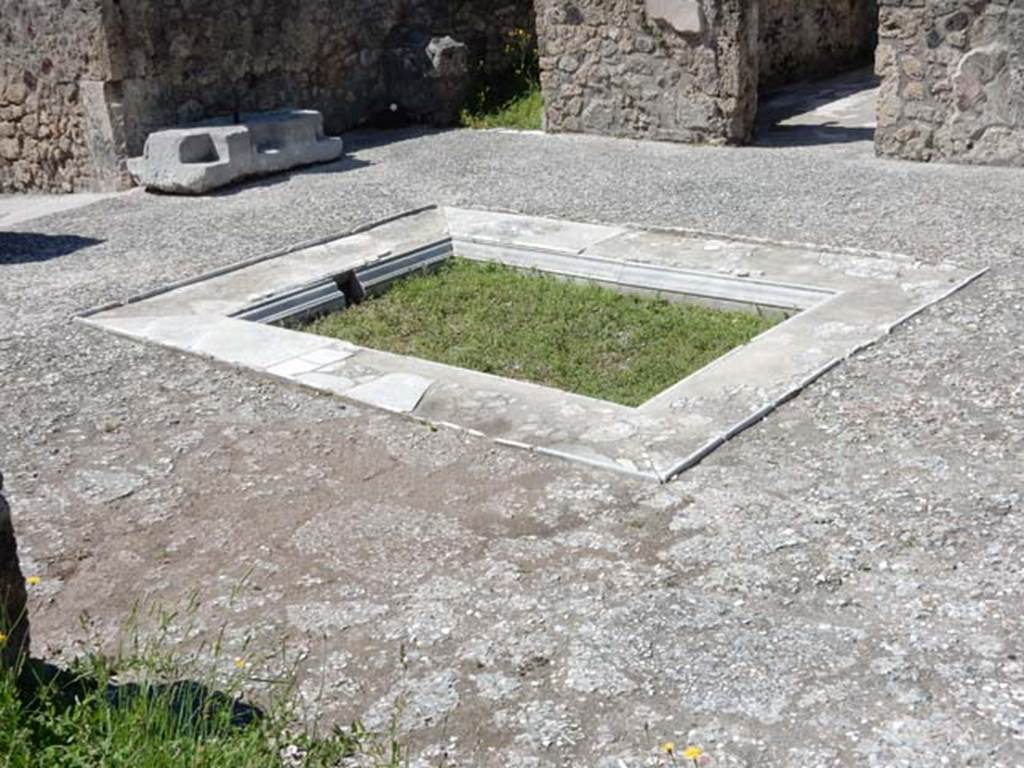
VII.7.5 Pompeii, May 2018.
Looking south-west across atrium towards large piece of travertine for the strong-box, and doorways to rooms (c) and (d) on west side of atrium.
Photo courtesy of Buzz Ferebee.
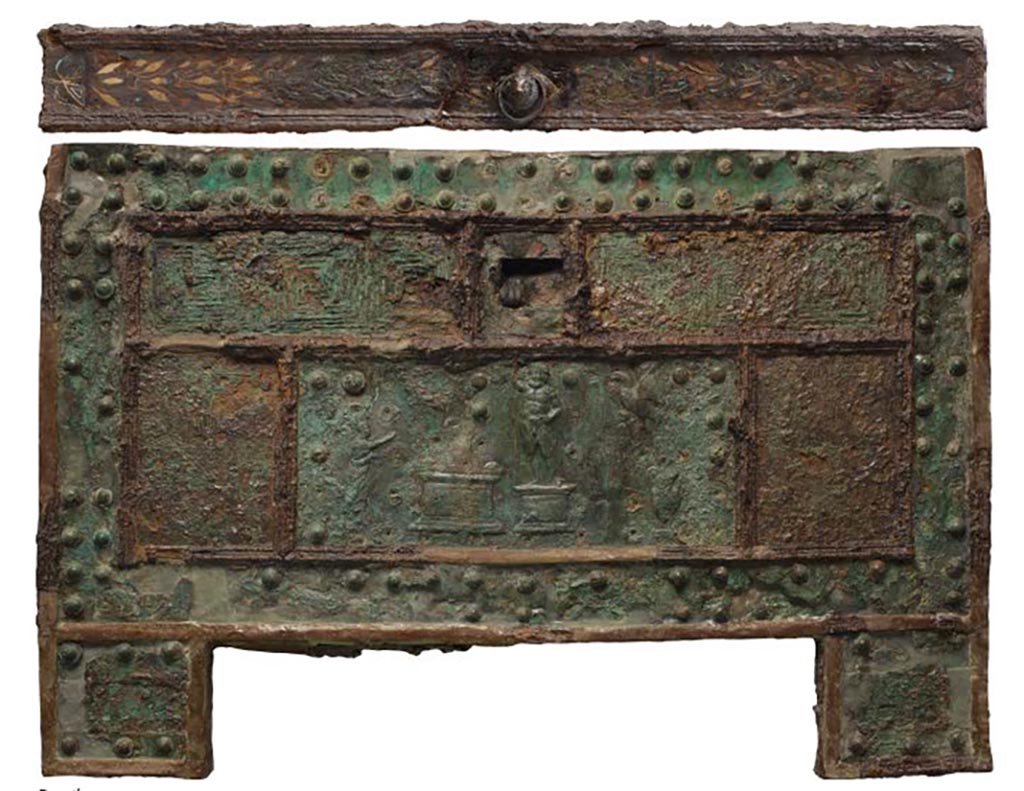
VII.7.5 Pompeii, Found 29 October 1864, now in Naples, Museo Archeologico Nazionale, (inv. 73020).
“Arca”/strong-box with Sacrifice to Jupiter, after
restoration, made of wood, with iron and bronze coating; copper bronze and tin.
The strong-box/safe with an offering to Jupiter was discovered in Pompeii on 29 October 1864 in the House of Triptolemus (VII.7.5)
According to Fiorelli –
…ed immette
nell’atrio tuscanico, ove la cassa di ferro pel domestico peculio stava situata
sopra un grande pezzo di travertino, ch’e a sinistra della porta d’ingresso:
delle sue dipinture rimangono sei Amorini, tutti portanti in mano un corno
d’abbondanza.
(trans: “and leads into the Tuscan atrium, where the iron
chest for domestic money was placed on a large piece of travertine, which is on
the left of the entrance doorway: of its paintings (in the atrium) remain six
Cupids, all carrying in their hand a horn of abundance.”)
See Pappalardo,
U., 2001. La Descrizione di Pompei per Giuseppe Fiorelli (1875). Napoli:
Massa Editore. (p.98)
See Fiorelli, G., 1875. Descrizione di Pompei. Napoli, (p.242).
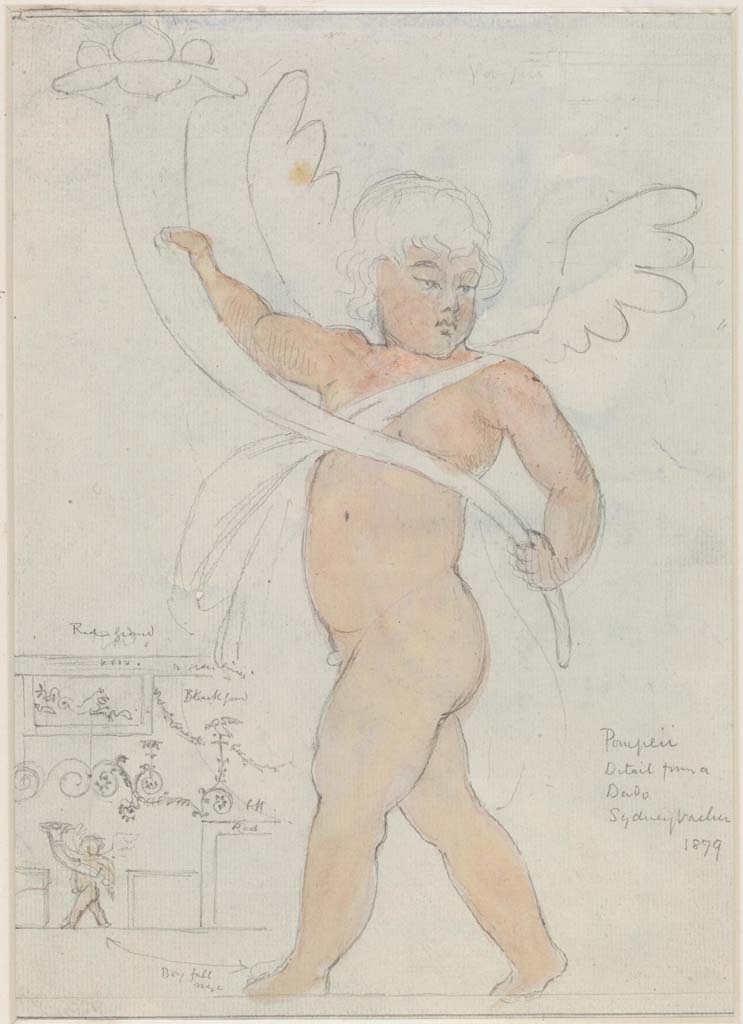
VII.7.5 Pompeii. 1879.
Painting/drawing by Sydney Vacher described as Detail from a Dado.
The
drawing, on the left, describes the middle of the wall as being red, with a
black dado/zoccolo with cupid and red edged squares against the black zoccolo.
Photo
© Victoria and Albert Museum, inventory number E.4414-1910.
According to Fiorelli -
“Esso consiste di una casa, la cui porta segue la
taberna (no.4) ed immette nell’atrio tuscanico, ove la cassa di ferro pel
domestico peculio stava situata sopra un grande pezzo di travertino, ch’era a
sinistra della porta d’ingresso; delle sue dipinture rimangono sei Amorini,
tutta portanti in mano un corno di abbondanza.
Sullo stesso lato trovansi due cubicoli ed un’ala finestrata, che
conteneva un grande armadio: dal lato opposto vi sono le stesse localita, ed il
primo de’ cubicoli rinchiude una gradinata, con accosto la cucina e la latrina.
Non esiste il tablino, ma dall’atrio per due gradini montasi al
viridario......."
See Pappalardo, U., 2001. La Descrizione di Pompei per Giuseppe Fiorelli (1875). Napoli: Massa Editore. (p.98)
(trans: "It consisted of a house, whose door
follows on from the taberna (no.4) and entered into the Tuscanic atrium, where
the iron strong-box for domestic use was situated above a large piece of
travertine, which was to the left of the entrance doorway; of its paintings,
six Cupids remain, all bearing in their hand a horn of abundance. On the same side there were two cubicula and
a windowed ala, which contained a large cupboard: on the opposite side there
were the same rooms, and the first of the cubicula contained a stairway, and
the kitchen and the latrine were nearby. There was no tablinum, but from the
atrium by two steps one went up to the garden area/viridarium.......”
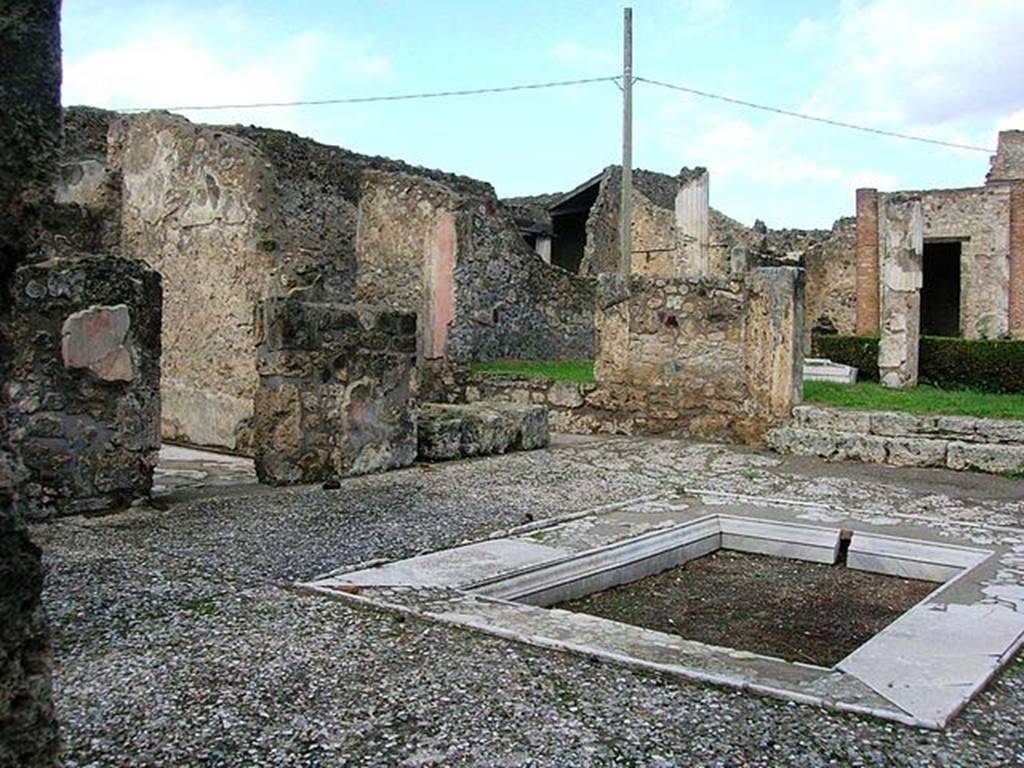
VII.7.5 Pompeii. November 2012. Rooms (c), (d) and ala (e) on west side of atrium. Photo courtesy of Mentnafunangann, see Wikimedia.
This file is licensed under the Creative Commons Attribution-Share Alike 3.0 Unported licence.
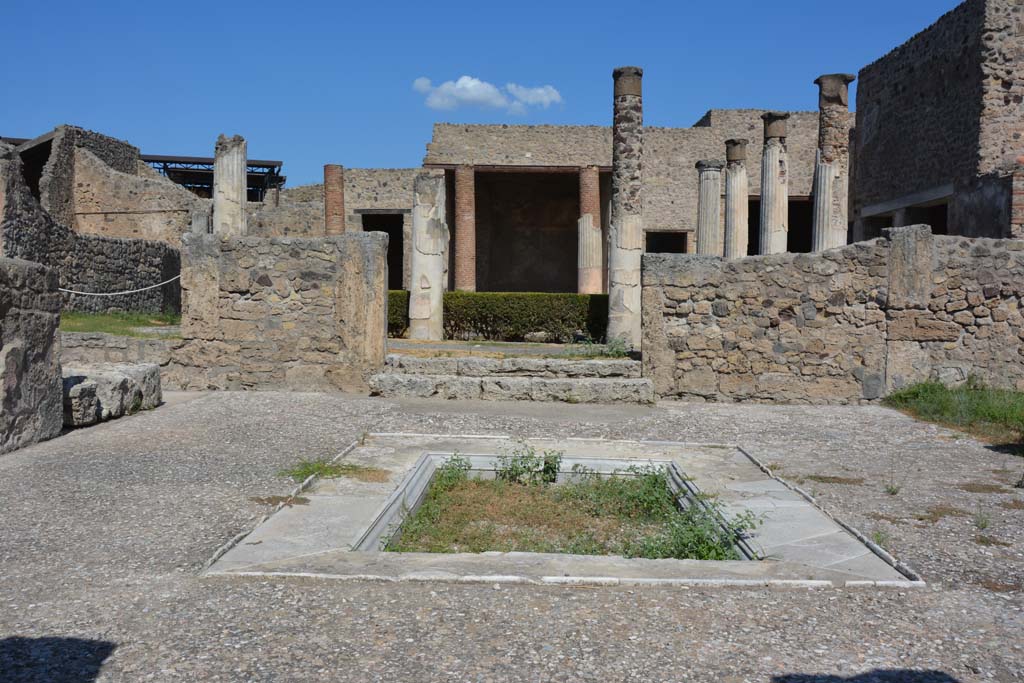
VII.7.5
Pompeii. September 2019. Looking north across atrium flooring towards
impluvium.
Foto Annette Haug, ERC Grant 681269 DÉCOR.
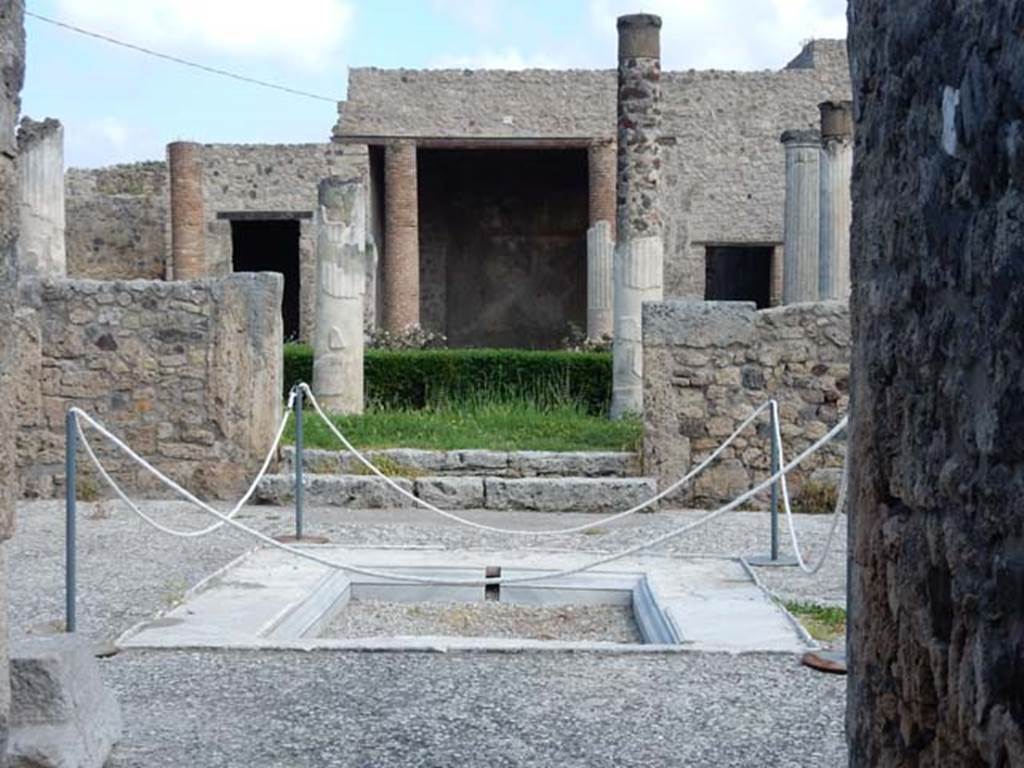
VII.7.5 Pompeii. May 2015. Looking north across marble impluvium in atrium (b).
The floor of the atrium was a beaten mixture of small fragments of marble. Photo courtesy of Buzz Ferebee.
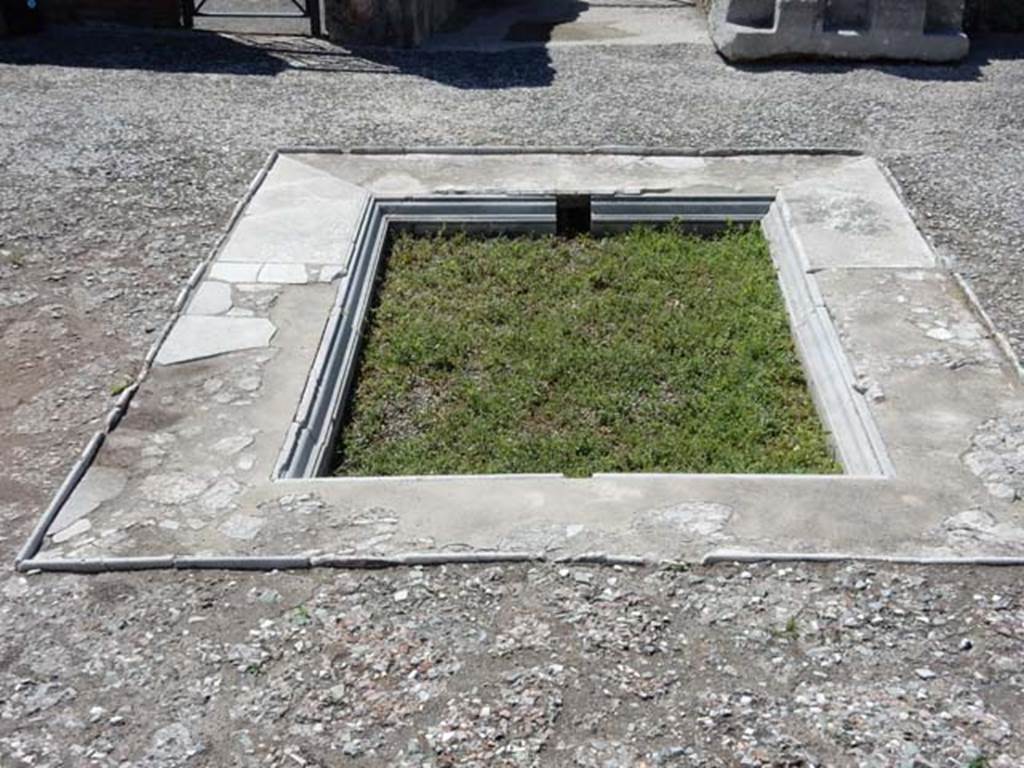
VII.7.5 Pompeii, May 2018. Looking south across atrium, with impluvium. Photo courtesy of Buzz Ferebee.
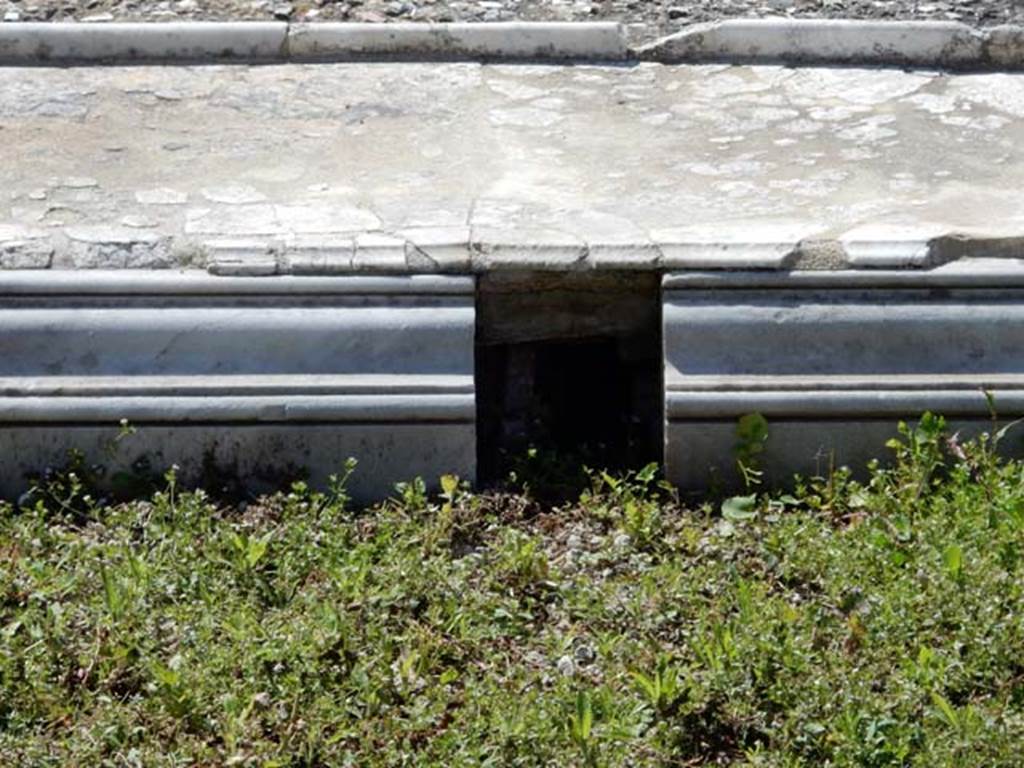
VII.7.5 Pompeii, May 2018. Detail from south side of impluvium. Photo courtesy of Buzz Ferebee.
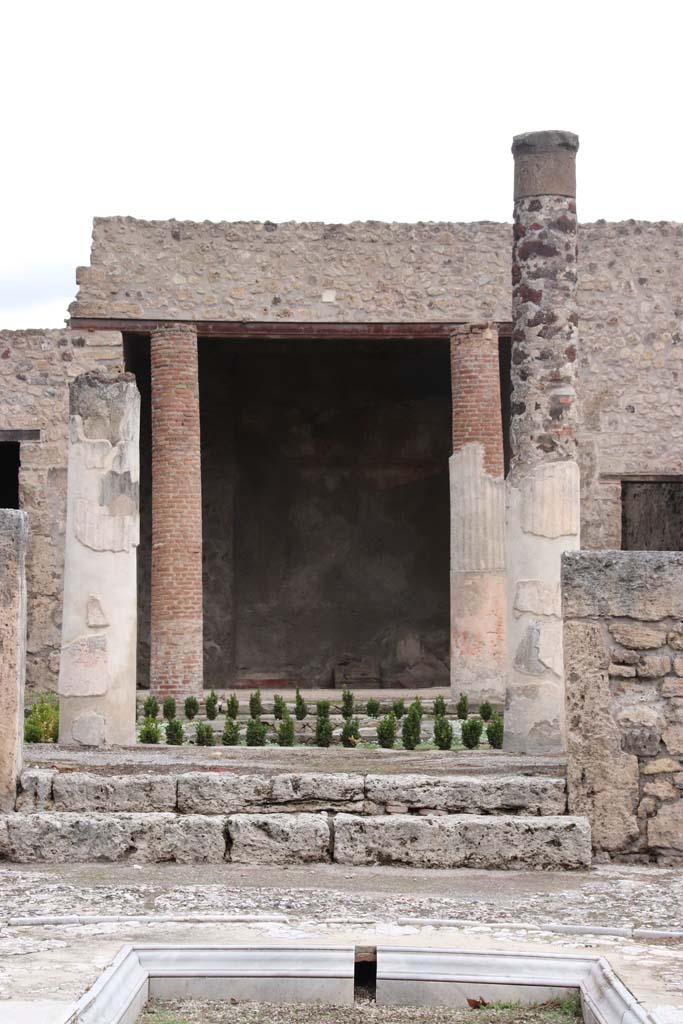
VII.7.5 Pompeii. October 2020.
Looking north across peristyle (l) to the exedra (u). Photo
courtesy of Klaus Heese.
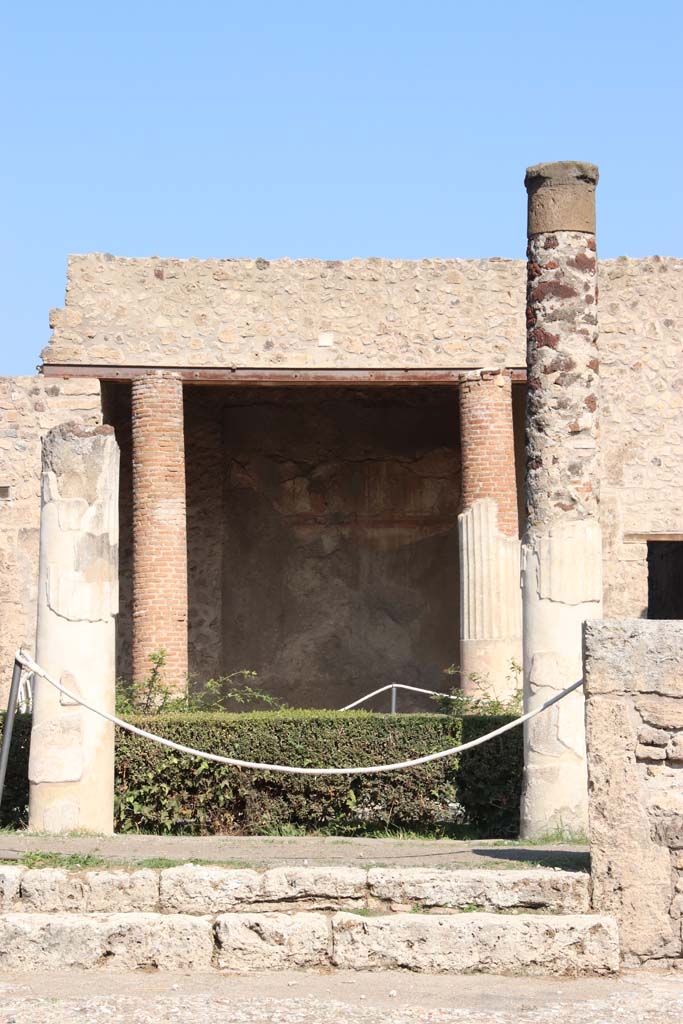
VII.7.5 Pompeii. September 2017.
Looking north across
peristyle (l) to the exedra (u). Photo
courtesy of Klaus Heese.
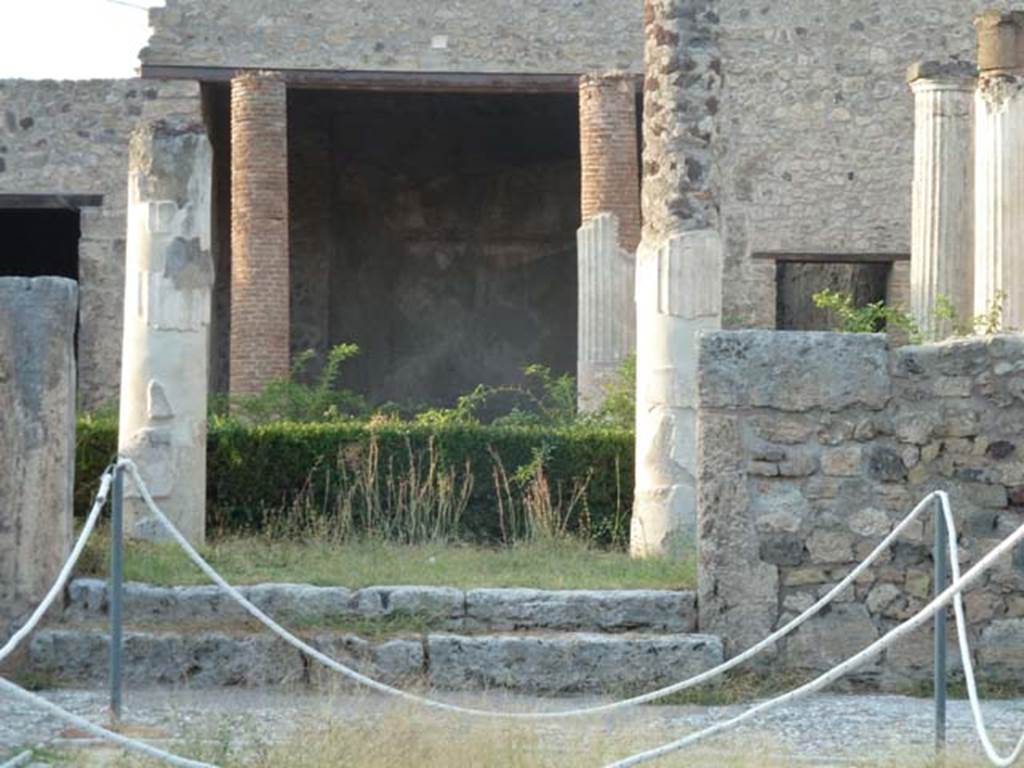
VII.7.5 Pompeii. September 2015. Looking north across peristyle (l) to the exedra (u).
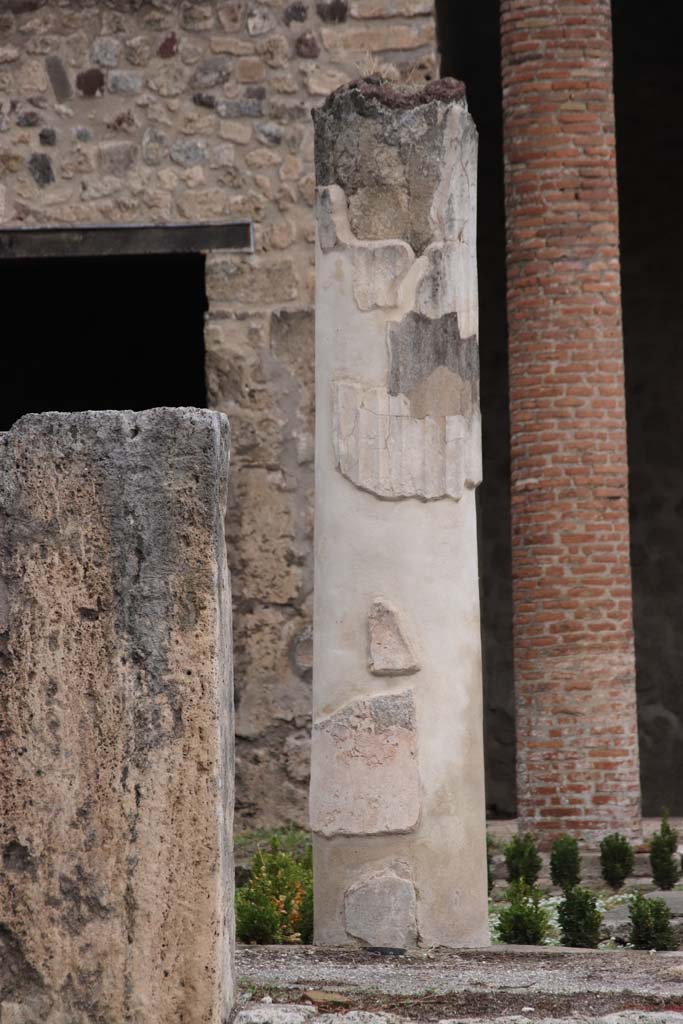
VII.7.5 Pompeii. October 2020.
Looking north towards
columns on west side of peristyle (l). Photo
courtesy of Klaus Heese.
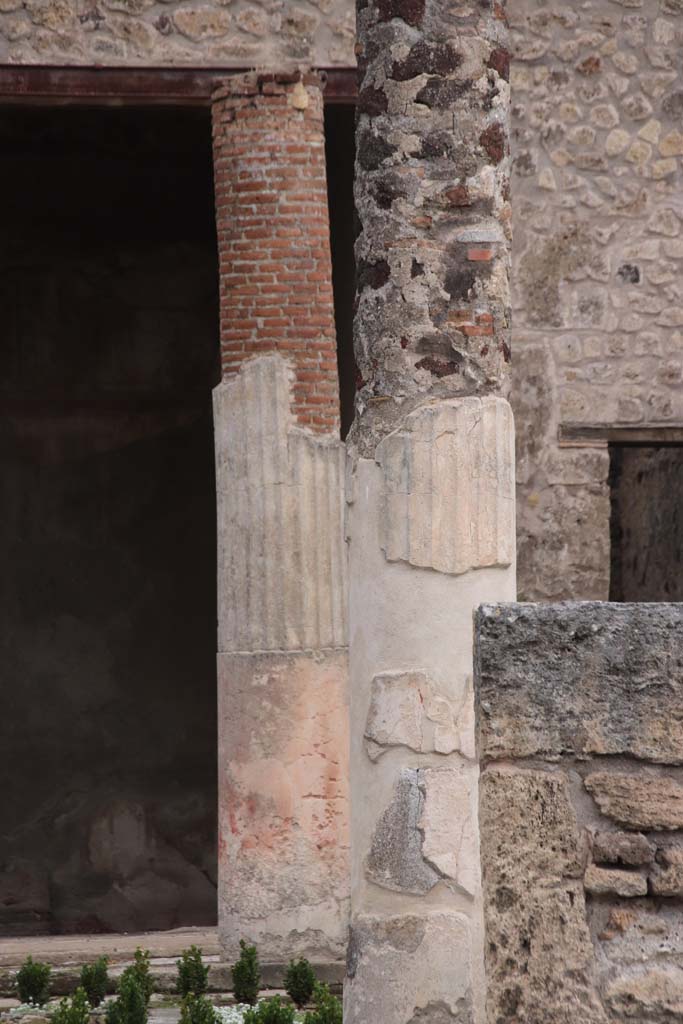
VII.7.5 Pompeii. October 2020.
Looking north
towards columns on east side of peristyle (l). Photo courtesy of Klaus Heese.
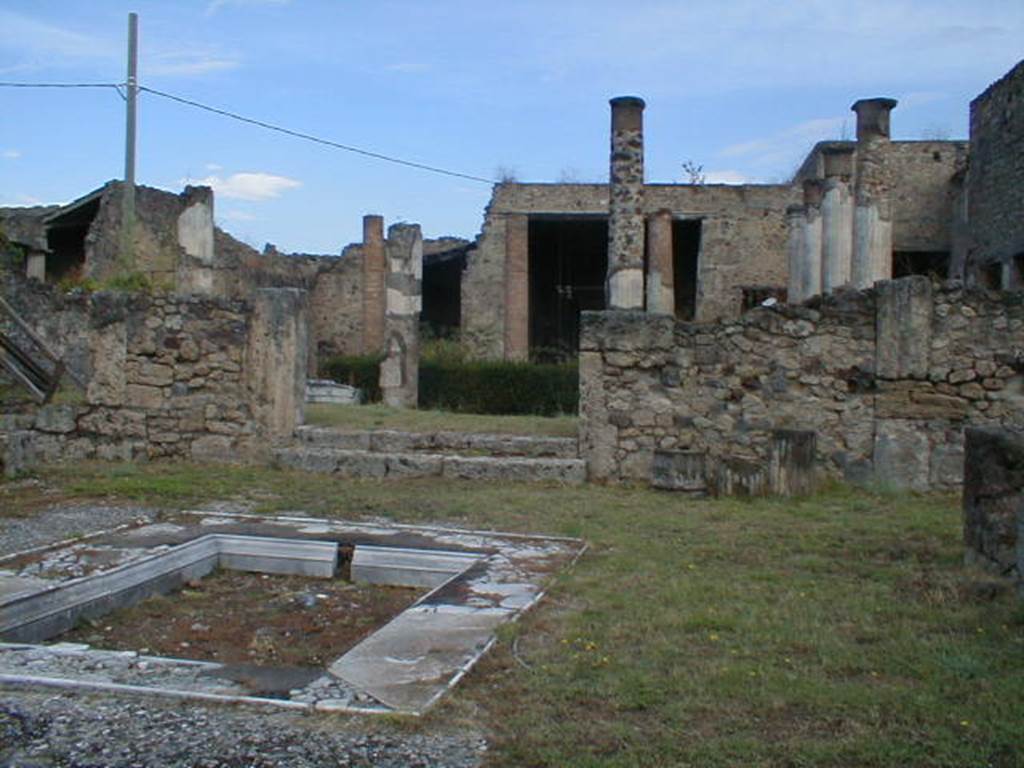
VII.7.5 Pompeii. September 2004. Looking north-west across atrium (b), towards steps to peristyle (l).
Taken from the gate of VII.7.4
According to Jashemski, this house attached to the preceding one, had a peristyle garden enclosed on four sides by a portico.
This was supported by twelve columns, red at the bottom, white and fluted above.
In the middle of the garden was a rectangular pool painted blue on the inside.
There was no tablinum in this house and the peristyle was reached by two steps from the atrium.
The exedra (u) on the north had a fine view across the garden.
See Jashemski, W. F., 1993. The Gardens of Pompeii, Volume II: Appendices. New York: Caratzas. (p.186 and fig.219, the peristyle garden)
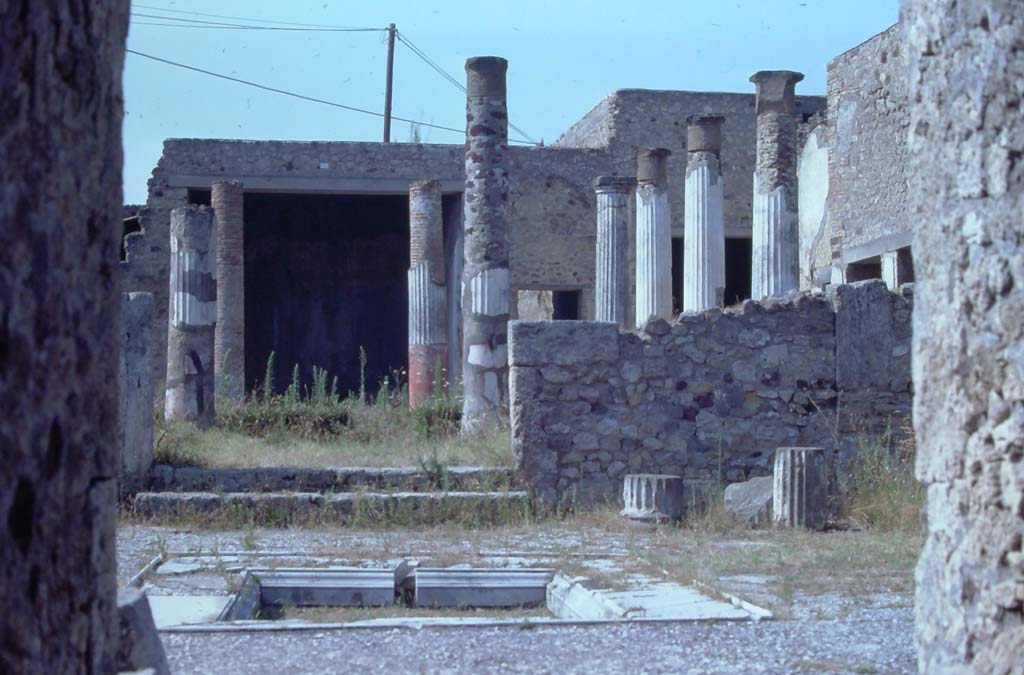
VII.7.5 Pompeii. 7th August 1976. Looking north across impluvium in atrium (b), towards peristyle (l).
Photo courtesy of Rick Bauer, from Dr George Fay’s slides collection.
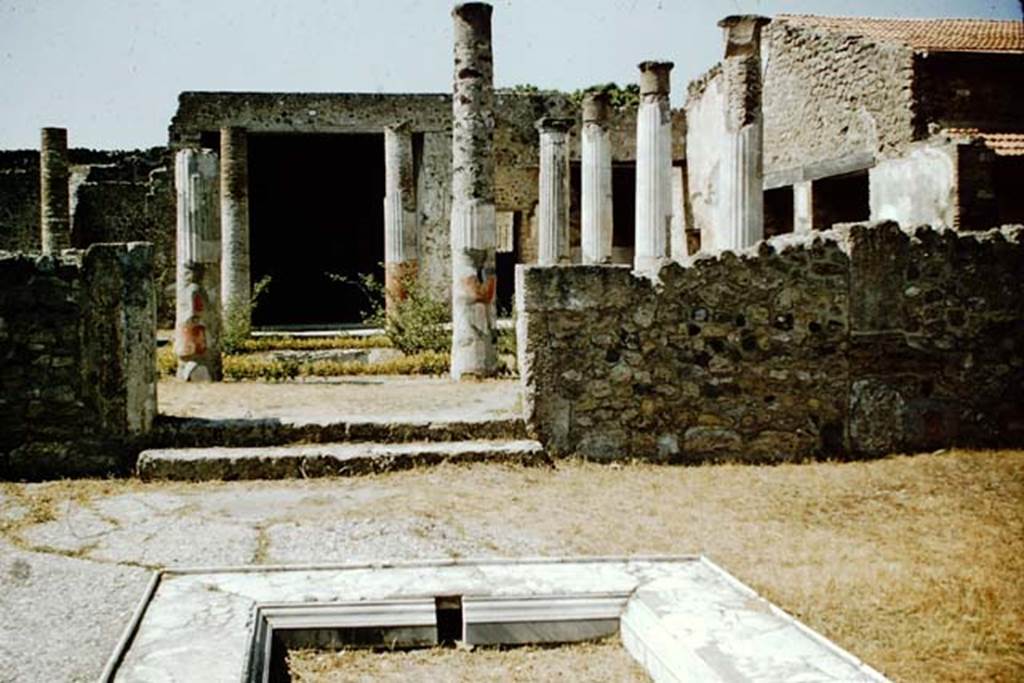
VII.7.5 Pompeii. 1957. Looking north across impluvium in atrium (b), towards peristyle (l). Photo by Stanley A. Jashemski.
Source: The Wilhelmina and Stanley A. Jashemski archive in the University of Maryland Library, Special Collections (See collection page) and made available under the Creative Commons Attribution-Non-Commercial License v.4. See Licence and use details.
J57f0406
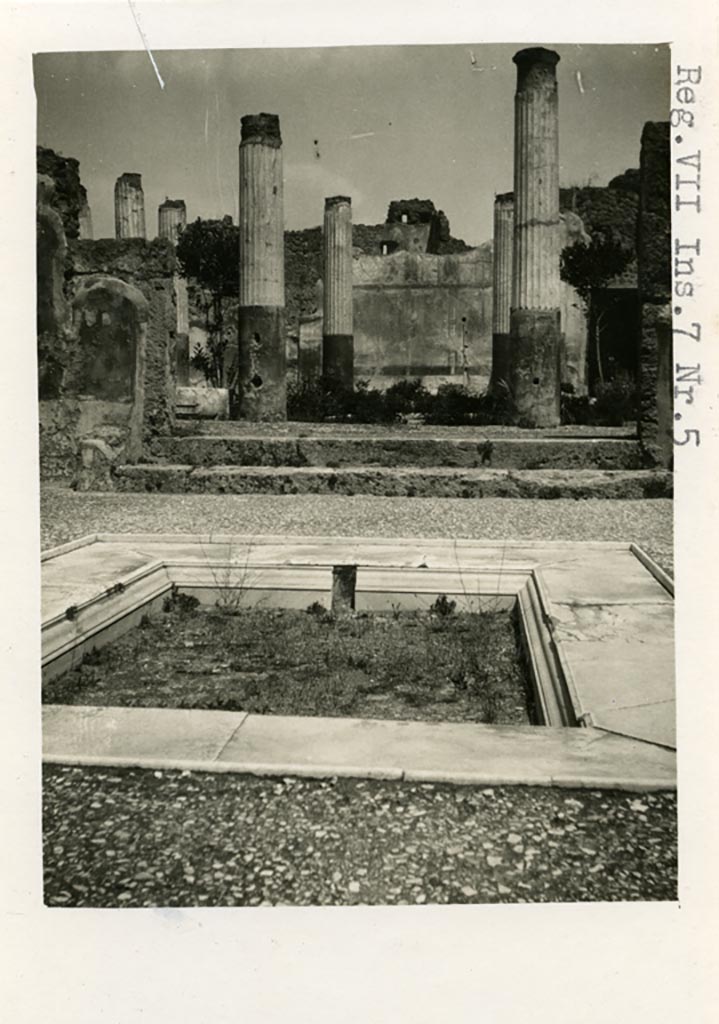
VII.7.5 Pompeii. Pre-1937-39. Looking north across impluvium in atrium (b), towards peristyle (l).
Photo courtesy of American Academy in Rome, Photographic Archive. Warsher collection no. 1442.
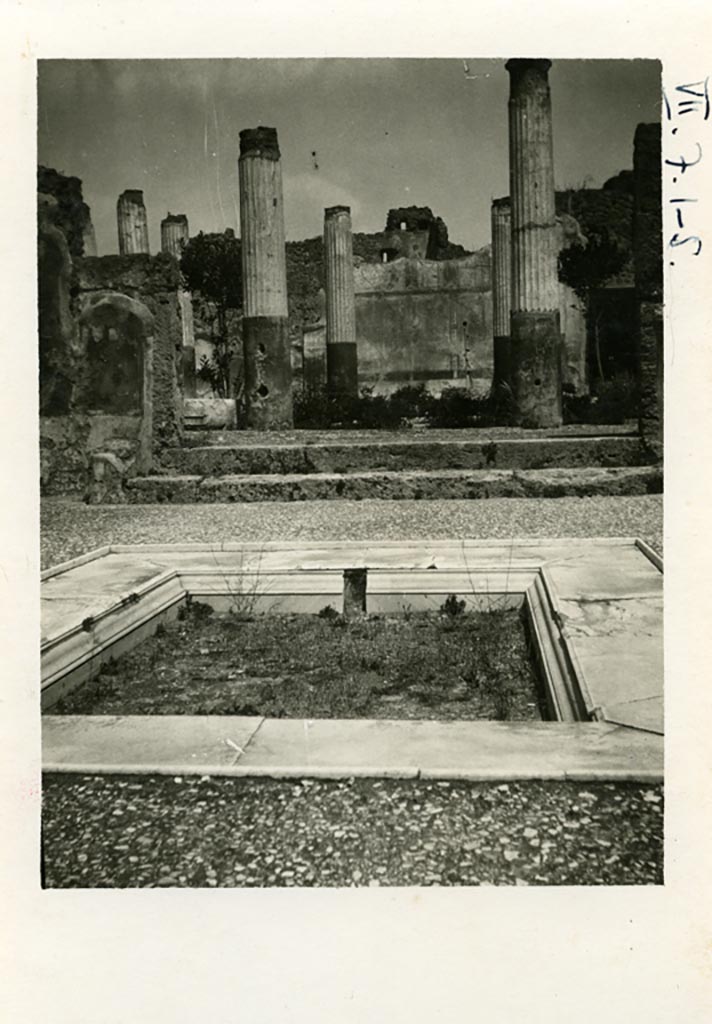
VII.7.5 Pompeii. Pre-1937-39. Looking north across impluvium in atrium (b), towards peristyle (l).
Photo courtesy of American Academy in Rome, Photographic Archive. Warsher collection no. 864.
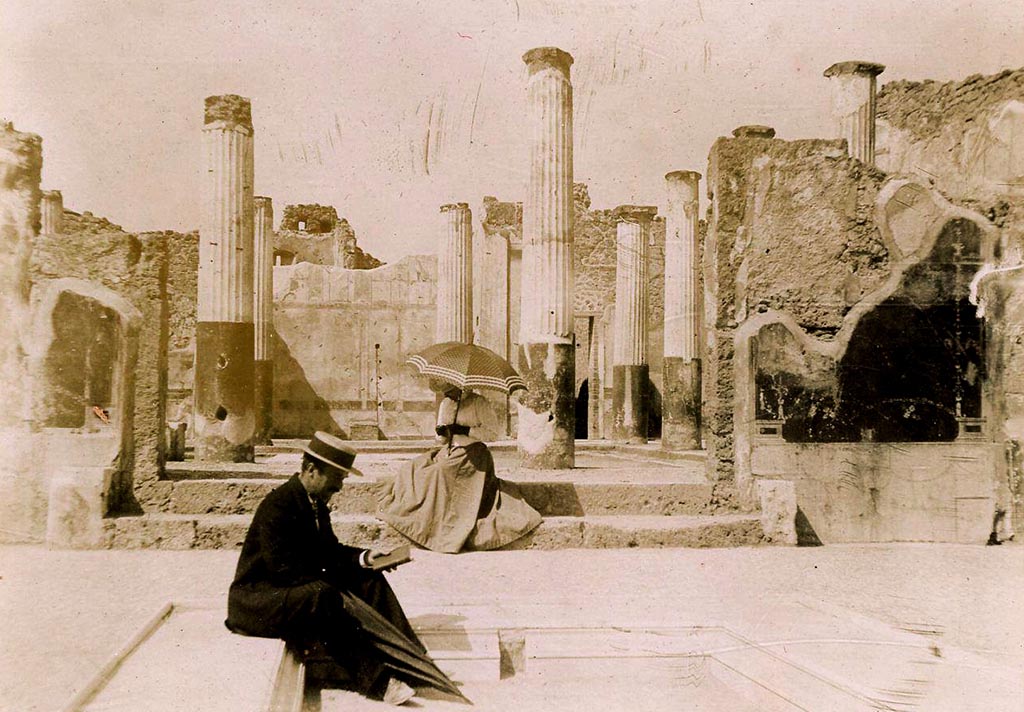
VII.7.5 Pompeii. (circa 1890). Looking north from atrium (b). Photo courtesy of Davide Peluso.
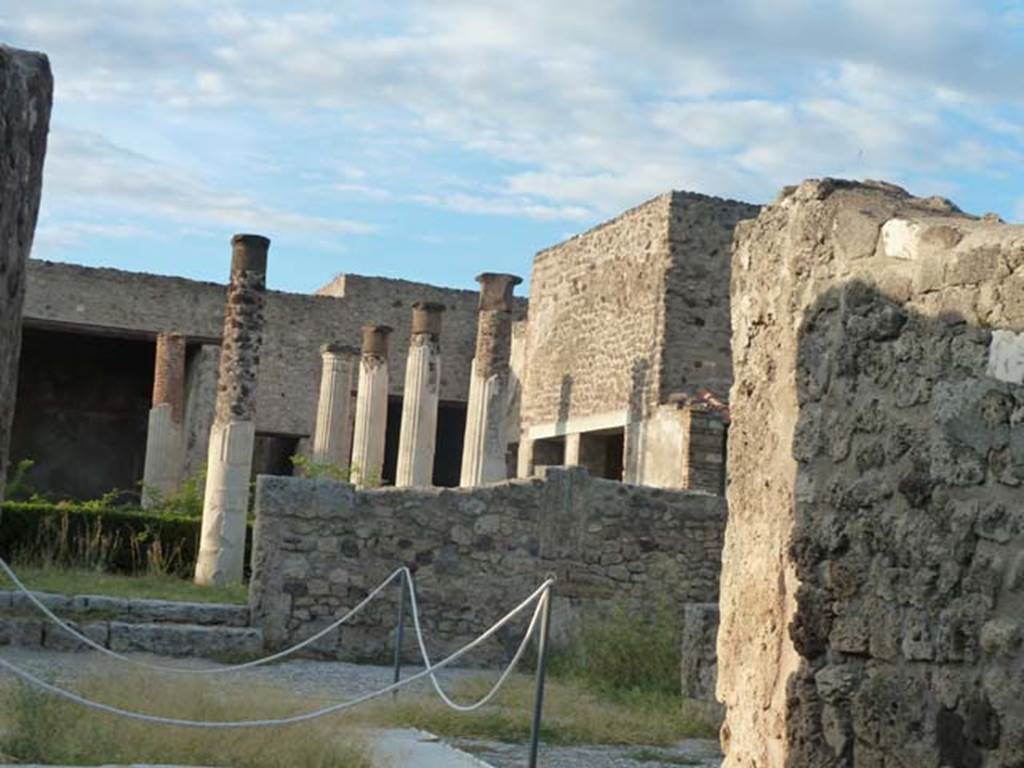
VII.7.5 Pompeii. September 2015.
Looking across east side of atrium towards rooms (m), (n) and (o) on east side of peristyle and (q) and (r) in north-east corner.
According to Garcia y Garcia, this house had a beautiful marble impluvium in the centre of its atrium.
On the night of 24th August 1943, a bomb fell causing grave damage to this house.
It destroyed a part of the floor of the atrium and a good proportion of the rooms to the east and north-east of the peristyle.
Also destroyed was a part of the south and west of the portico, comprising of two columns with painted stucco.
The perimeter wall on the west, and three rooms on the north also fell, with the ruin of the best part of the painted fourth style plaster.
In the winter triclinium (n) on the east side of the peristyle, two important paintings that decorated it, were partially destroyed.
They were of Tryptolemus and the other of Venus, they have been restored in part.
Tryptolemus was shown receiving the ears of corn from Proserpine.
Venus was shown arriving carried by a triton, with a cupid assisting her to descend to the shore.
A young woman was shown receiving her and making an offering upon a garlanded altar.
On the night of 13th September, this house linked to VII.7.2 was again hit by another bomb.
See Garcia y
Garcia, L., 2006. Danni di guerra a Pompei. Rome: L’Erma di Bretschneider. (p.112-114
including photos)
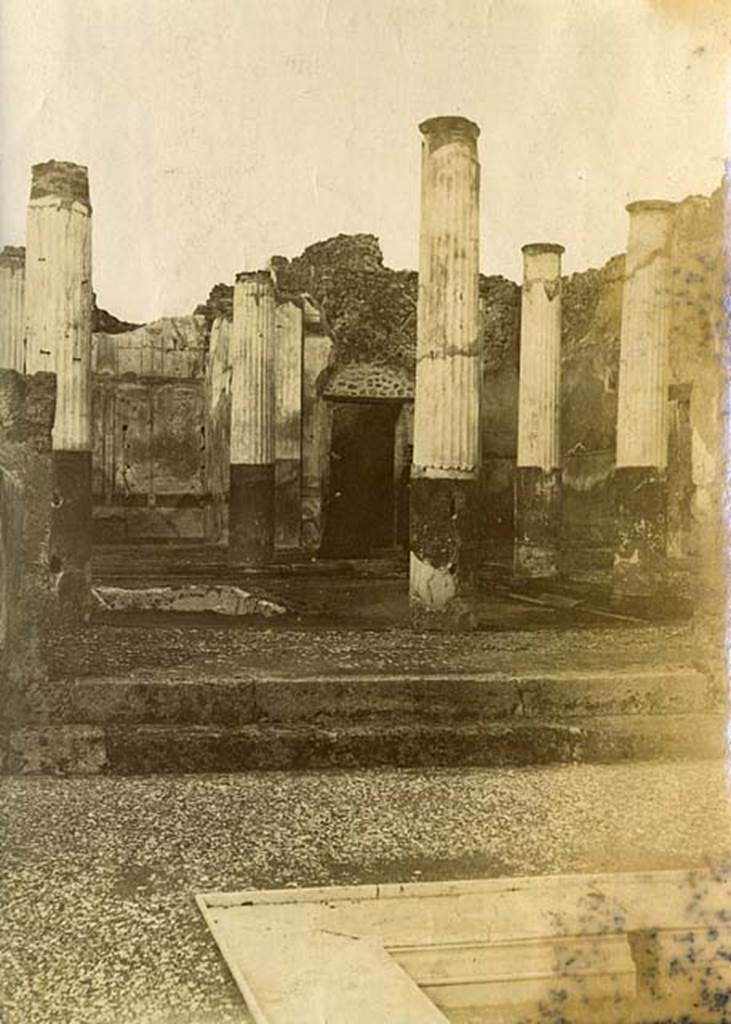
VII.7.5 Pompeii. c.1900’s.
Looking north across impluvium in atrium towards peristyle
and exedra. Photo courtesy of Rick Bauer
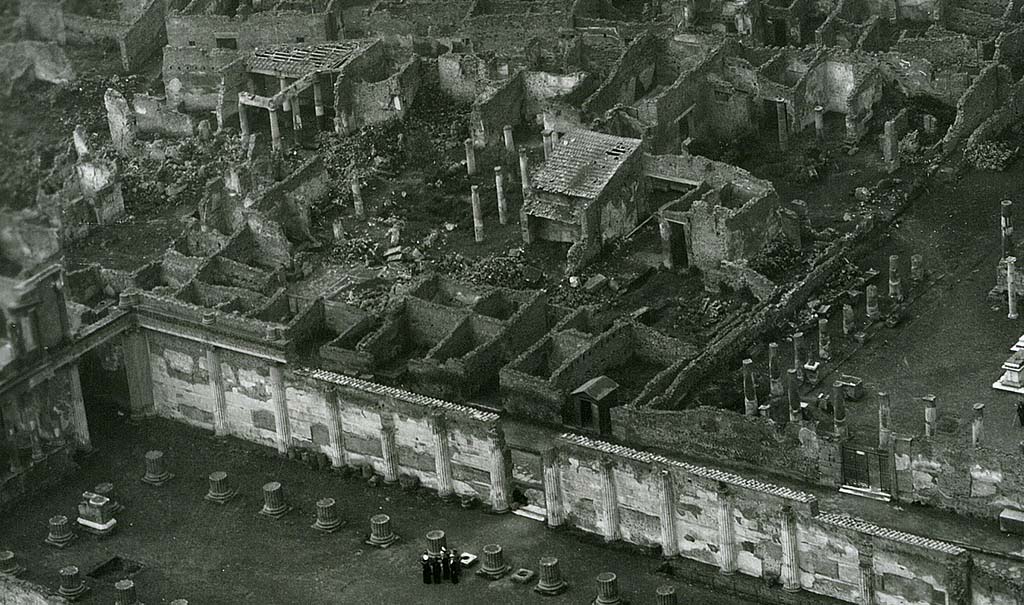
VII.7.5
Pompeii. 1944, detail taken from USAAF aerial photo. Looking north-west across
the Basilica and Via Marina, lower left in photo.
On the north
side of the Via Marina, in the upper part of the photo, the house of House of
Romulus and Remus (VII.7.10), and House of Tryptolemus (VII.7.5 and VII.7.2)
can be seen on the west side of the Temple of Apollo, which is on the right.
Photo courtesy of Rick Bauer.
Part 1 Part 2 Part 3 Part 4 Plan of VII.7.5 and VII.7.14