VII.6.35 Pompeii. Lupanare? Excavated 1822, 1910.
Linked to VII .6.36.
According to Fiorelli,
Of the two shops,
the first had a stair/ladder to the mezzanine level, the second also had a
similar staircase and a doorway exiting onto the Vico, also an aedicula
lararium leaning against the wall, with a single painted serpent and the altar
in stucco relief, near to which was the graffito MARS. [CIL IV 1644]
(Delle due botteghe, la prima ha la scaletta
dell’ammezzato, la seconda oltre una simile gradinata ed una porta uscente nel
vico, tiene il larario a guisa di edicola addossato alla parete, con un solo
serpente e l’ara in rilievo di stucco, presso cui e
graffito MARS. [CIL IV 1644])
According to NdS,
The entrances of doorways numbered 31-36 were
already brought to light before our excavation, as was described by Fiorelli
(signed G. Spano, 15th October 1910, Rome).
See Notizie
degli Scavi di Antichità, 1910, p.486: last paragraph.
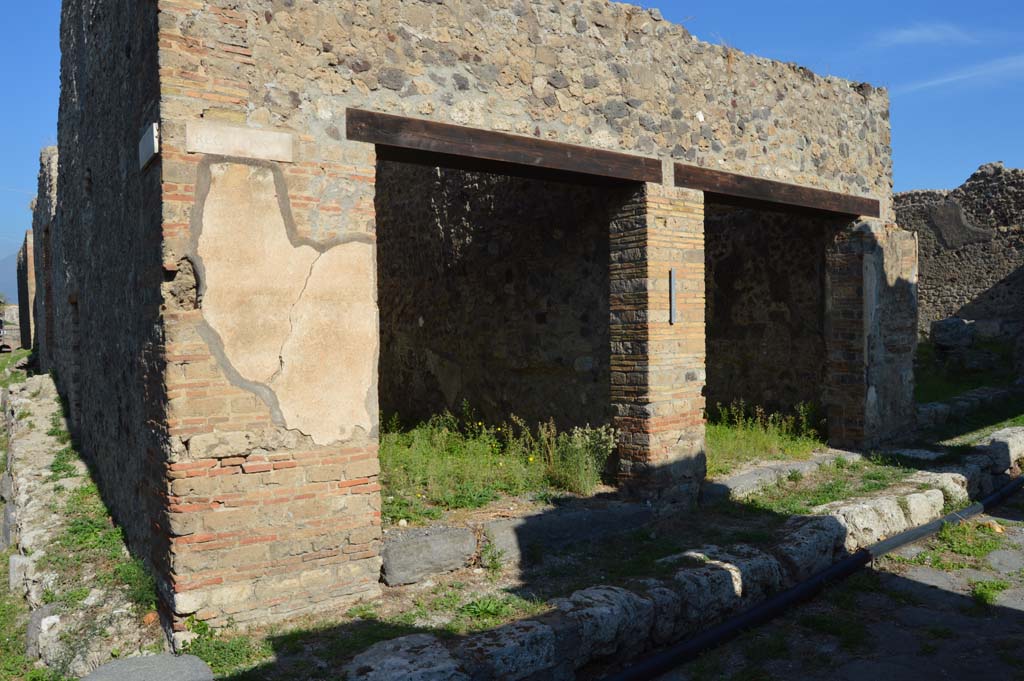
VII.6.35 Pompeii. October
2017.
Looking
towards doorway, on left, at junction of Vicolo del Farmacista, on left, and Vicolo dei
Soprastanti, on right.
Foto Taylor Lauritsen, ERC Grant 681269 DÉCOR.
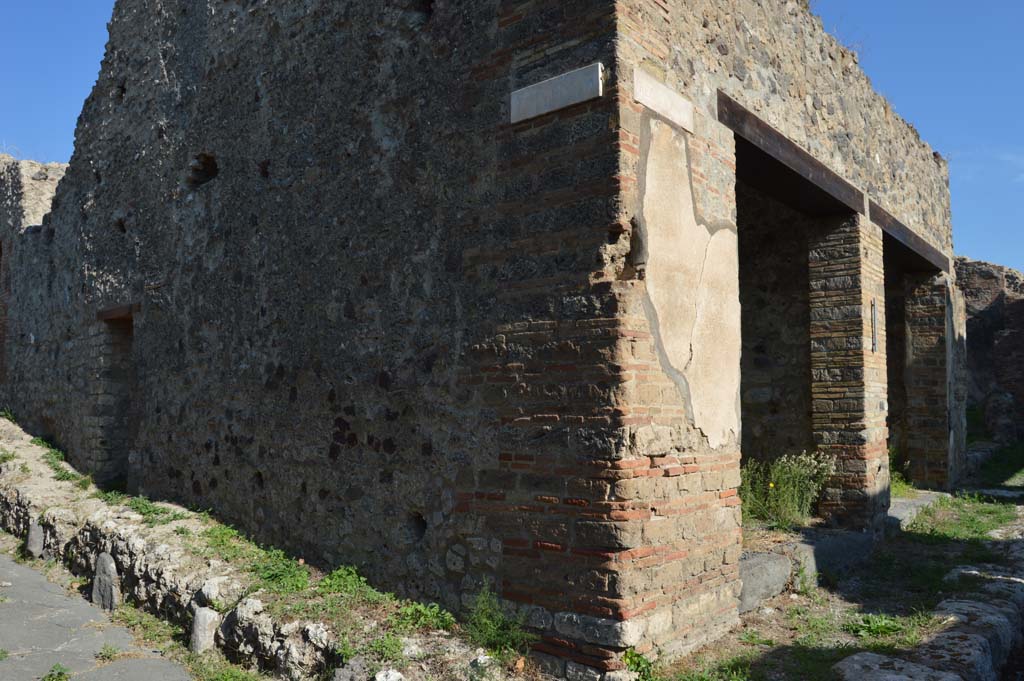
VII.6.35 Pompeii. October
2017.
West side wall on east side
of Vicolo del Farmacista, leading to small rear doorway at VII.6.36, on left.
Foto Taylor Lauritsen, ERC Grant 681269 DÉCOR.
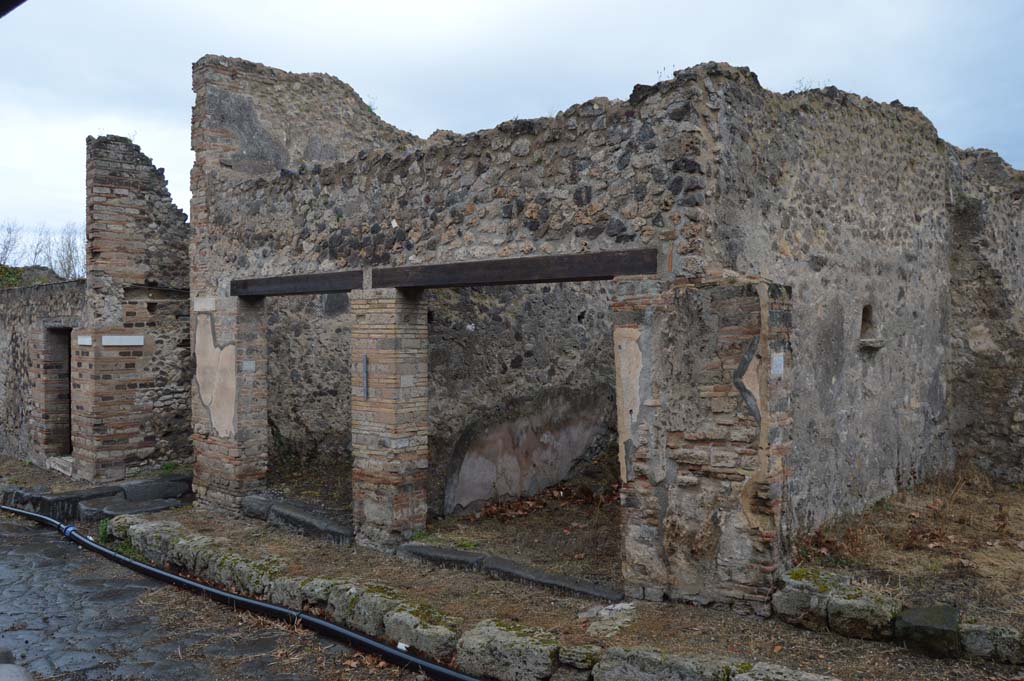
VII.6.35 and VII.6.34 Pompeii in centre. March
2018. Looking towards entrance doorways on north side of Vicolo
dei Soprastanti.
Foto Taylor Lauritsen, ERC
Grant 681269 DÉCOR.
![VII.6.35 Pompeii, on left. June 2012. Looking north towards entrances of VII.6.35 and VII.6.34.
On the pilaster between VII.6.35 and 34 (in the centre) would have been a painting of Victory, a donkey and a lion, now in Naples Archaeological Museum. (see VII.6.35)
According to Garcia y Garcia, on the pilaster between VII.6.36 and 35 (on the left, corner pilaster) would have been a painting of Mercury, now destroyed.
See Garcia y Garcia, L., 2006. Danni di guerra a Pompei. Rome: L’Erma di Bretschneider. (p.109)
According to Della Corte, on the pilaster between VII.6.36 and 35 (on the left) there was a painting of Bacchus, now destroyed.
He agreed that the Victory, donkey and lion, were shown on the middle pilaster.
Many graffiti were found written under these paintings, including amongst others, the names of boys and girls who possibly worked here [CIL IV 1627-1649].
See Della Corte, M., 1965. Case ed Abitanti di Pompei. Napoli: Fausto Fiorentino. (p.169-171)
According to Frohlich, on the left corner pilaster, would have been Mercury.
He agreed that the Victory, donkey and lion, were shown on the middle pilaster.
See Fröhlich, T., 1991. Lararien und Fassadenbilder in den Vesuvstädten. Mainz: von Zabern. (p.327, F51)
According to Fiorelli, on the extreme pilaster, was the figure of Bacchus, with Mercury on the other.
Under the figure of Mercury were many inscriptions, two of the most important being –
Si quis forte meam cupiet viol(are)
puellam illum in desertis
montibus urat amor [CIL IV 1645]
Alliget hic auras (Della Cortes thought « aures ») si quis obiurgat amantes
Et vetet assiduas currere fontis aquas [CIL IV 1649]
See Pappalardo, U., 2001. La Descrizione di Pompei per Giuseppe Fiorelli (1875). Napoli: Massa Editore. (p.160)
According to Boyce, on the two outer pilasters bordering the entrances of these two shops, the figures of Mercury and Bacchus.
See Boyce G. K., 1937. Corpus of the Lararia of Pompeii. Rome: MAAR 14. (p.111, no.17).](7%2006%2035_files/image006.jpg)
VII.6.35 Pompeii, on left. June 2012. Looking north towards entrances of VII.6.35 and VII.6.34.
On the pilaster between VII.6.35 and 34 (in the centre) would have been a painting of Victory, a donkey and a lion.
This was detached and taken to Naples Archaeological Museum, inv. no. 27683.
According to Garcia y Garcia, on the pilaster between VII.6.36 and 35 (on the left, corner pilaster) would have been a painting of Mercury, now destroyed.
See Garcia y
Garcia, L., 2006. Danni di guerra a Pompei. Rome: L’Erma di Bretschneider. (p.109)
According to Della Corte, on the pilaster between VII.6.36 and 35 (on the left) there was a painting of Bacchus, now destroyed.
He agreed that the Victory, donkey and lion, were shown on the middle pilaster.
Many graffiti were found written under these paintings, including amongst others, the names of boys and girls who possibly worked here [CIL IV 1627-1649].
See Della Corte, M., 1965. Case ed Abitanti di Pompei. Napoli: Fausto Fiorentino. (p.169-171)
According to Fröhlich, on the left corner pilaster, would have been Mercury.
He agreed that the Victory, donkey and lion, were shown on the middle pilaster.
See Fröhlich, T., 1991. Lararien und Fassadenbilder in den Vesuvstädten. Mainz: von Zabern. (p.327, F51)
According to Fiorelli, on the extreme pilaster, was the figure of Bacchus, with Mercury on the other.
Under the figure of Mercury were many inscriptions, two of the most important being –
Si quis forte
meam cupiet viol(are)
puellam illum in
desertis
montibus urat
amor [CIL IV 1645]
Alliget hic auras
(Della Cortes thought « aures ») si quis obiurgat amantes
Et vetet assiduas
currere fontis aquas [CIL IV 1649]
See Pappalardo, U., 2001. La Descrizione di Pompei per Giuseppe Fiorelli (1875). Napoli: Massa Editore. (p.160)
According to Boyce, on the two outer pilasters bordering the entrances of these two shops, the figures of Mercury and Bacchus.
See Boyce G. K., 1937. Corpus of the Lararia of Pompeii. Rome: MAAR 14. (p.111, no.17).
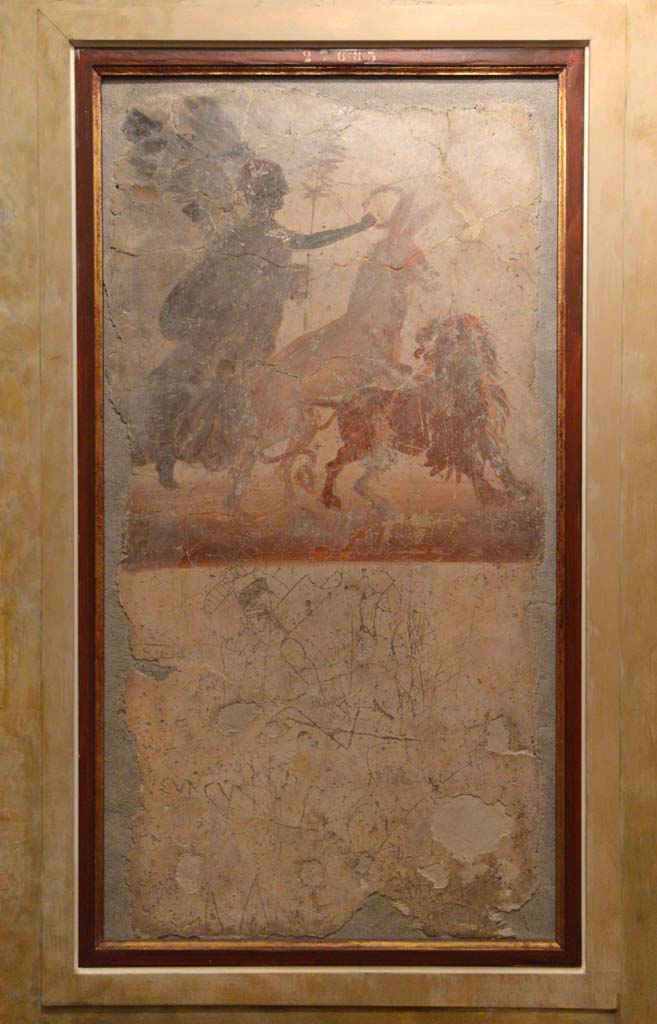
Beneath the painting is the graffito of a gladiatorial scene.
Now in Naples Archaeological Museum. Inventory number 27683.
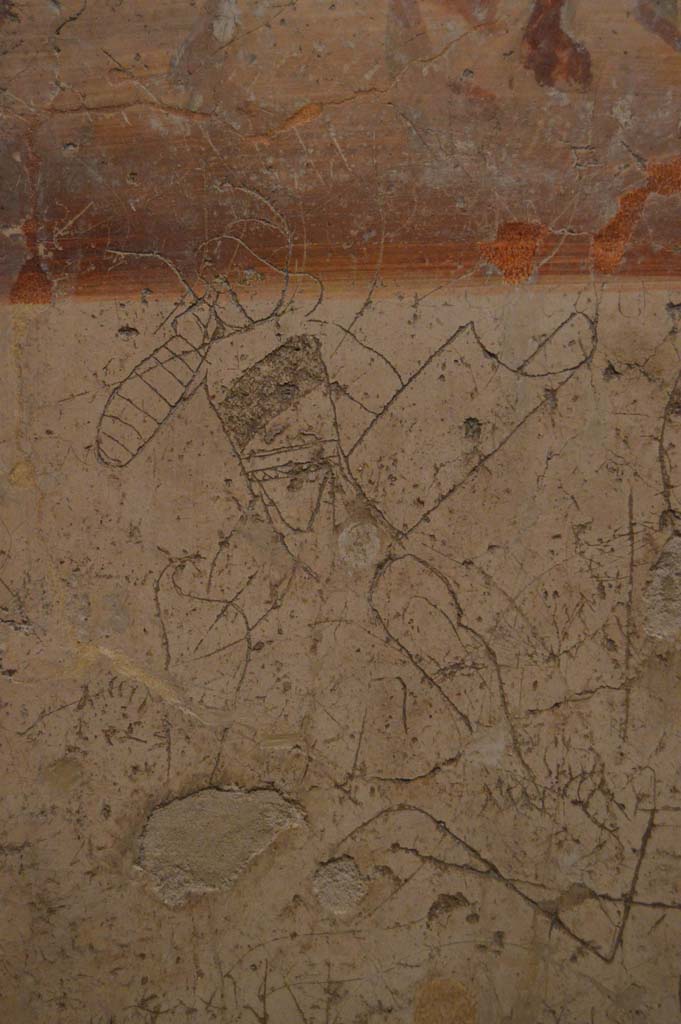
Detail of the graffito of the gladiatorial scene from beneath the painting.
Now in Naples Archaeological Museum. Inventory number 27683.
Foto Taylor Lauritsen, ERC
Grant 681269 DÉCOR.
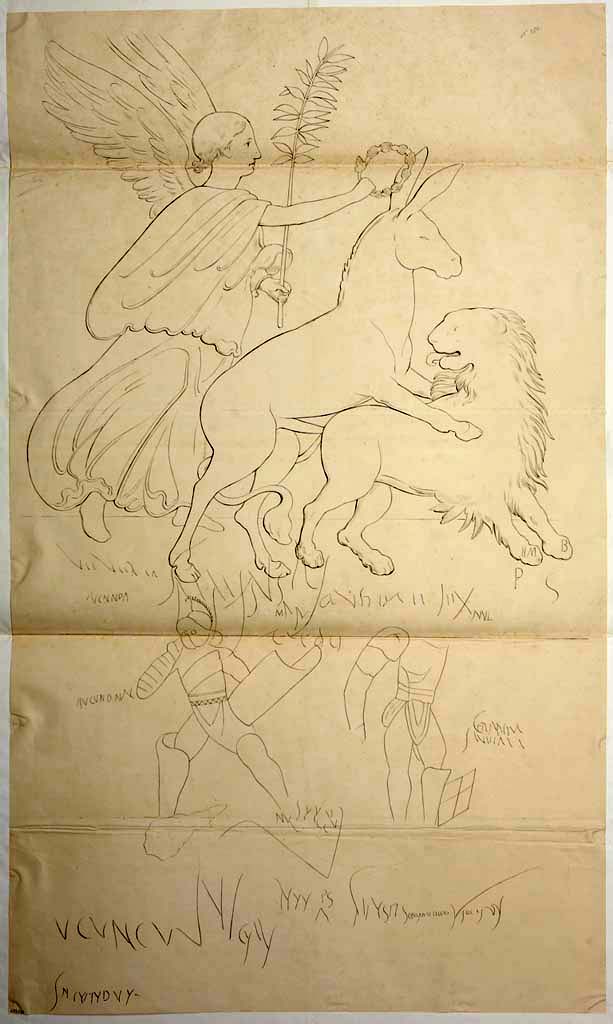
Now in Naples Archaeological Museum. Inventory number ADS 693.
Photo © ICCD. https://www.catalogo.beniculturali.it/
Utilizzabili alle
condizioni della licenza Attribuzione - Non commerciale - Condividi
allo stesso modo 2.5 Italia (CC BY-NC-SA 2.5 IT)
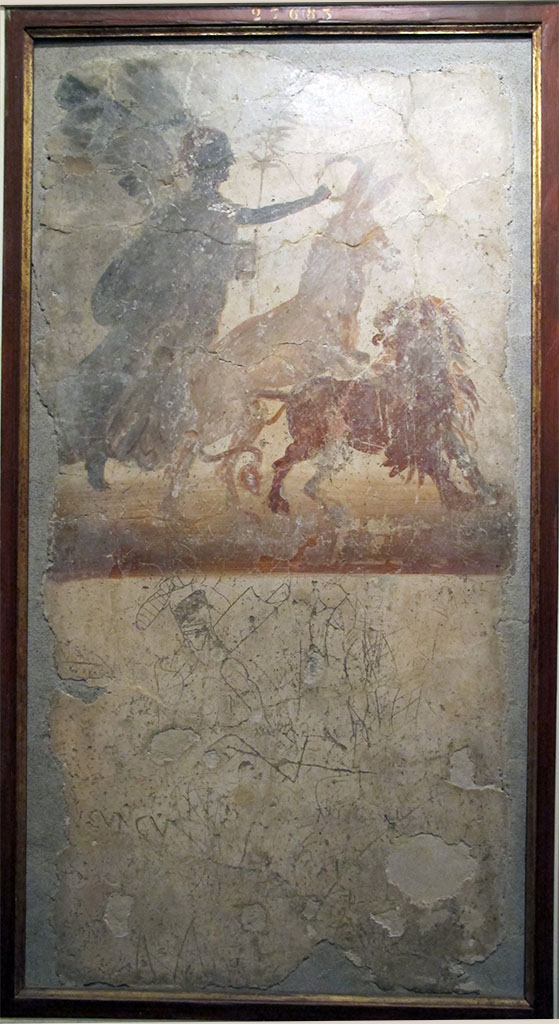
Beneath the painting is the graffito of a gladiatorial scene.
Now in Naples Archaeological Museum. Inventory number 27683.
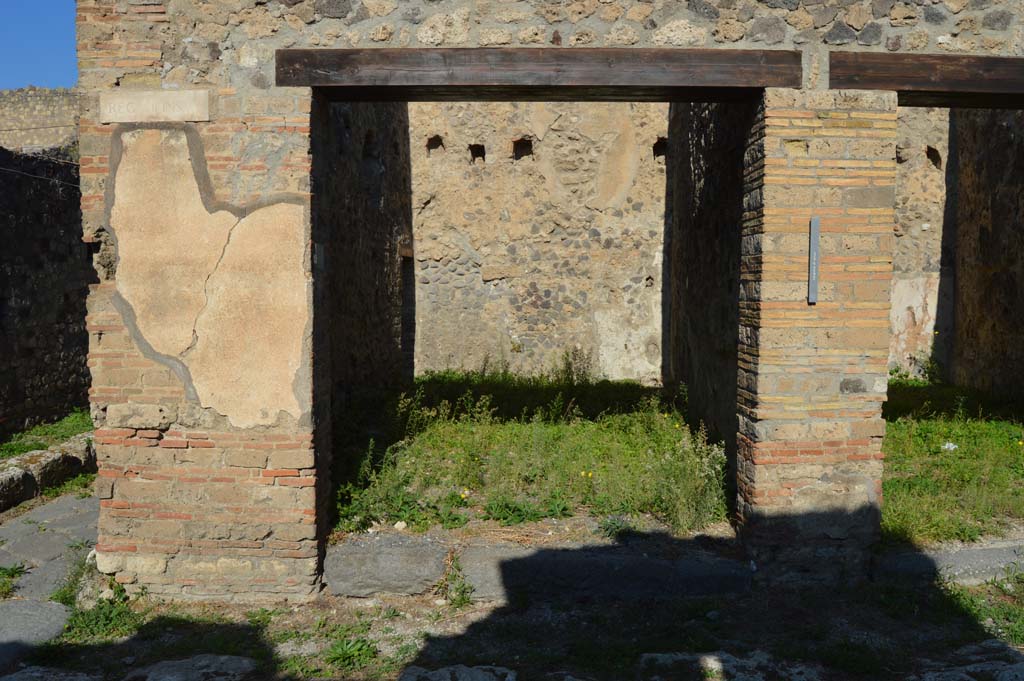
VII.6.35 Pompeii. October
2017. Looking north towards entrance doorway.
Foto Taylor Lauritsen, ERC Grant 681269 DÉCOR.
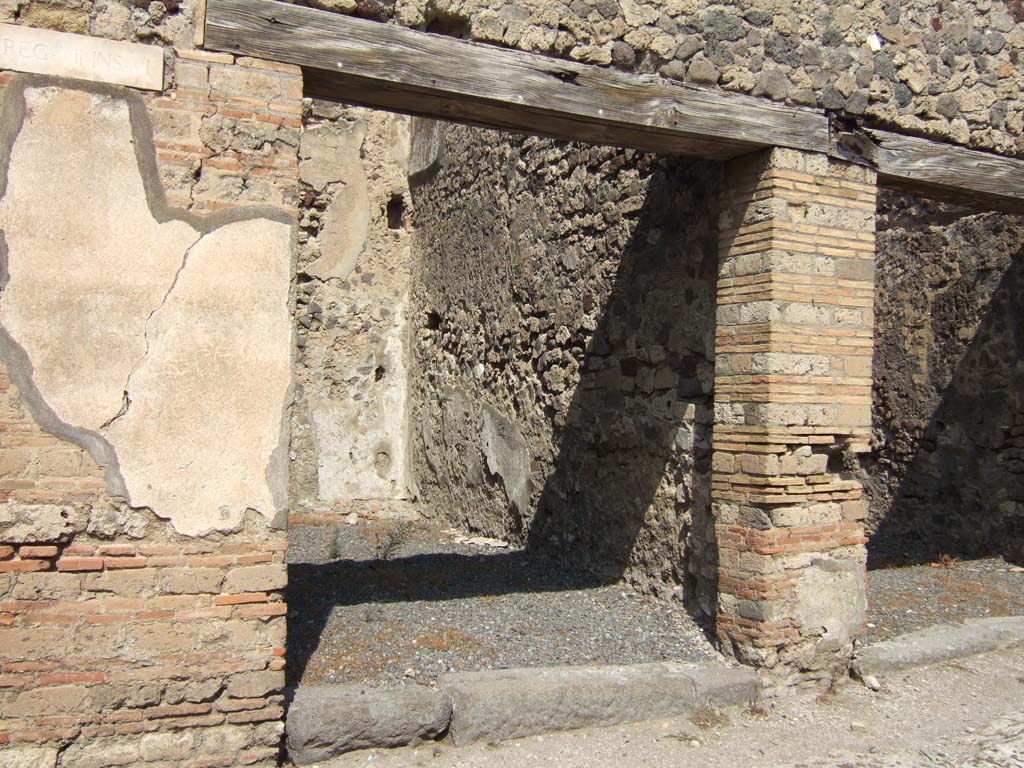
VII.6.35 Pompeii. September 2005. Looking north-east towards entrance.
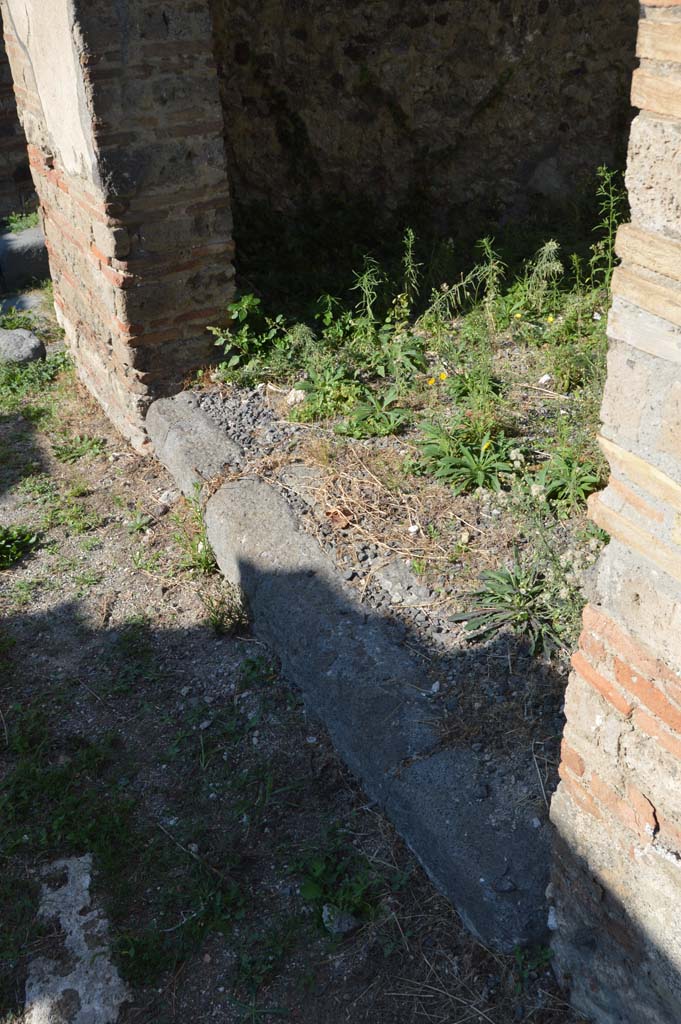
VII.6.35 Pompeii. October 2017. Looking west
along entrance doorway threshold.
Foto Taylor Lauritsen, ERC Grant 681269 DÉCOR.
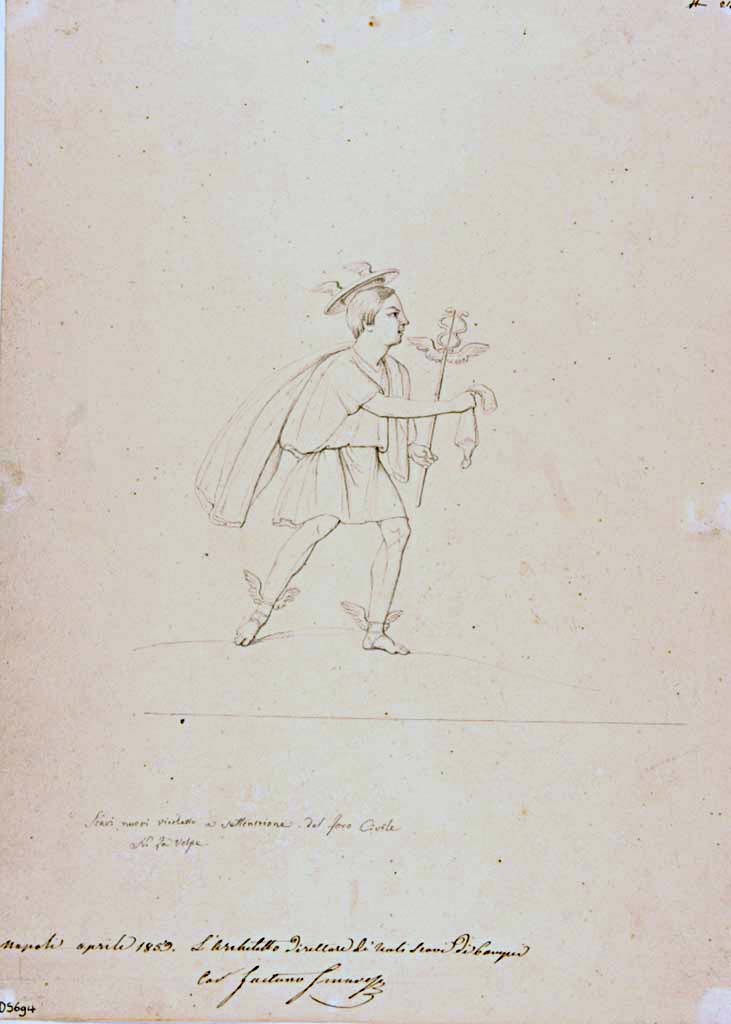
VII.6.35 Pompeii. Drawing by Nicola La Volpe, of Mercury seen on the exterior pilaster to
the left of VII.6.35.
Both
figures of the divinities, Mercury and Bacchus have now faded and disappeared,
this is the only known drawing of one of them.
Now in Naples Archaeological Museum. Inventory number ADS 694.
Photo © ICCD. https://www.catalogo.beniculturali.it/
Utilizzabili alle condizioni della licenza Attribuzione
- Non commerciale - Condividi allo stesso modo 2.5 Italia (CC BY-NC-SA 2.5 IT)
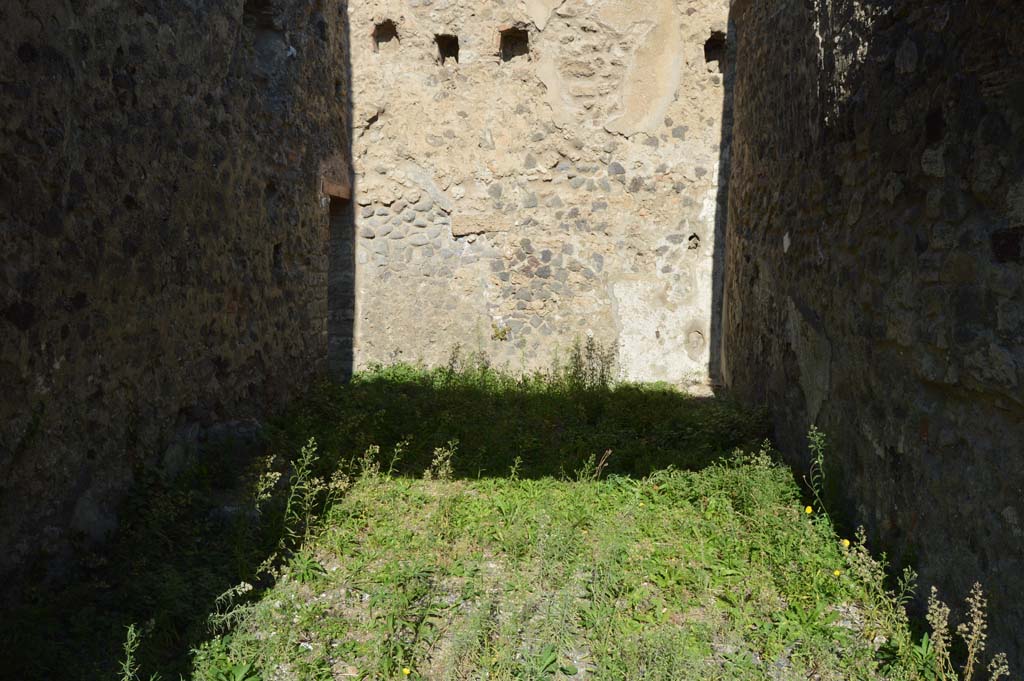
VII.6.35 Pompeii. October 2017. Looking towards
north wall, with doorway at VII.6.36, on left at rear.
Foto Taylor Lauritsen, ERC Grant 681269 DÉCOR.
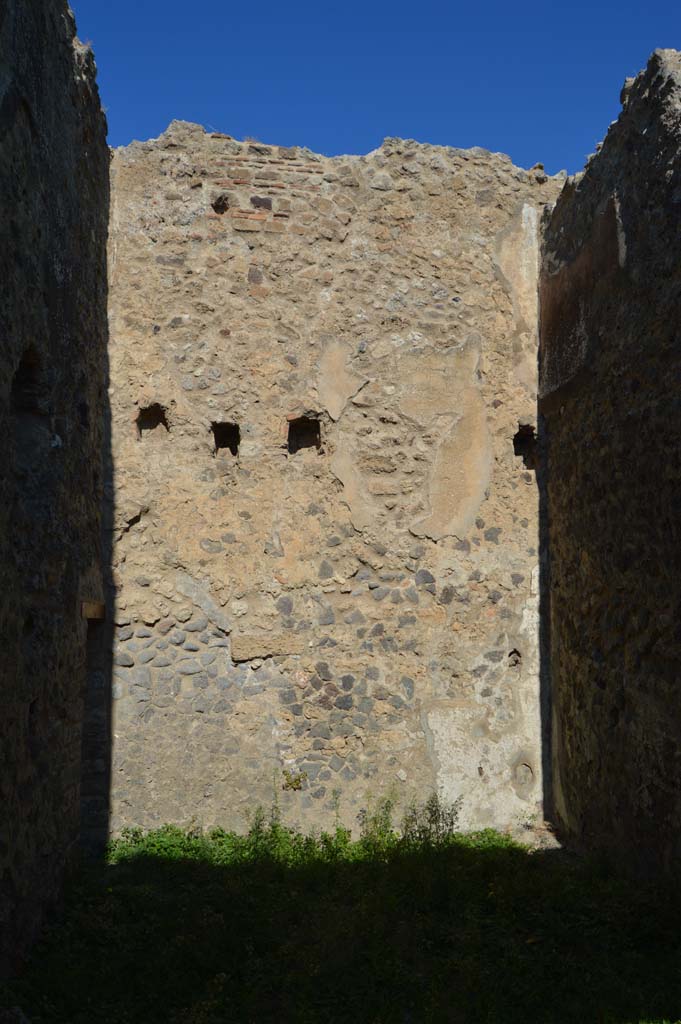
VII.6.35 Pompeii. October
2017. Looking towards north wall with upper floor.
Foto Taylor Lauritsen, ERC Grant 681269 DÉCOR.
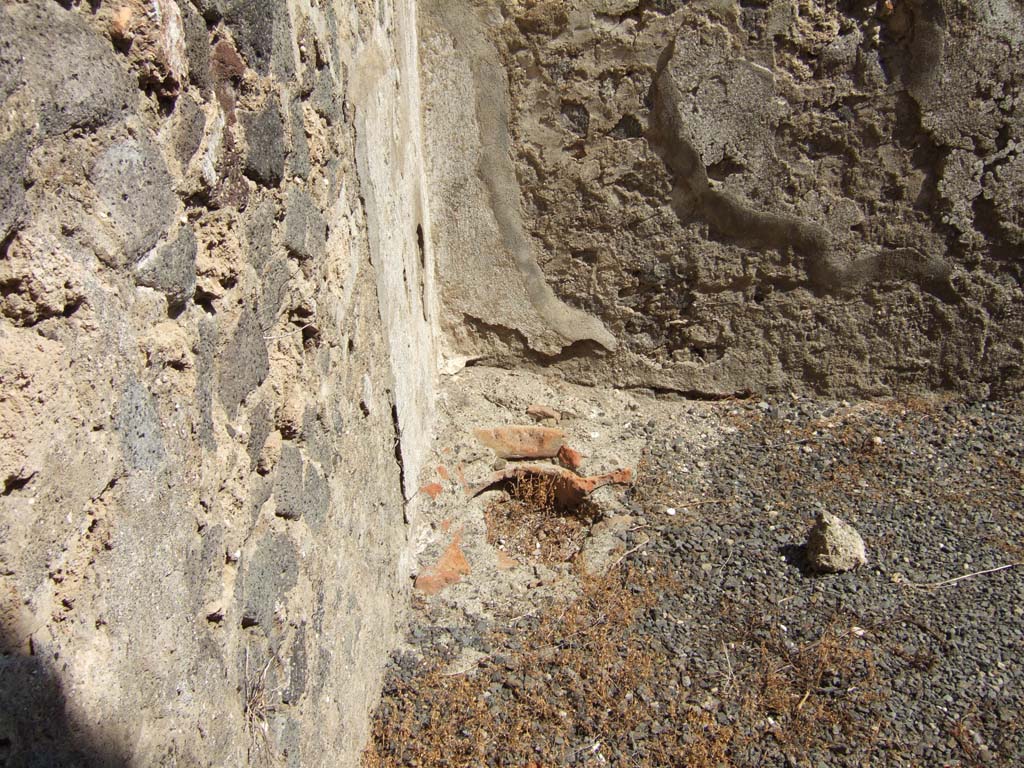
![VII.6.35 Pompeii. Pre-1937-39. Lararium in stucco relief on west wall.
Photo courtesy of American Academy in Rome, Photographic Archive. Warsher collection no. 1906.
According to Boyce, on the west wall of the shop at VII.6.35 was a lararium entirely done in painted stucco.
Within an aedicula was a cylindrical altar in relief around which was coiled a serpent.
Near the serpent was the graffito – MARS [CIL IV 1644]
See Boyce G. K., 1937. Corpus of the Lararia of Pompeii. Rome: MAAR 14. (p.68, no.294, and Pl.28,3)](7%2006%2035_files/image018.jpg)
VII.6.35 Pompeii. Pre-1937-39. Lararium in stucco relief on west wall.
Photo courtesy of American Academy in Rome, Photographic Archive. Warsher collection no. 1906.
According to Boyce, on the west wall of the shop at VII.6.35 was a lararium entirely done in painted stucco.
Within an aedicula was a cylindrical altar in relief around which was coiled a serpent.
Near the serpent was the graffito – MARS [CIL IV 1644]
See Boyce G. K., 1937. Corpus of the Lararia of Pompeii. Rome: MAAR 14. (p.68, no.294, and Pl.28,3)