VII.6.34 Pompeii. Shop or Lupanare? Excavated 1822? 1910.
According to Garcia y Garcia Region VII, Insula VI was one of the insulae most devastated over the years since its excavation.
He calls it the “Cinderella” of Pompeii. Between the years 1759 and 1762 it was vandalised and stripped by the Bourbons, then re-interred.
Then came the slow and non-systematic uncovering again before the final destruction in September 1943.
The area was ignored and abandoned during the years following the war, which reduced the insula to a heap of bricks and masonry.
See Garcia y
Garcia, L., 2006. Danni di guerra a Pompei. Rome: L’Erma di Bretschneider. (p.102).
According to Fiorelli,
34.35. These were
two shops, which perhaps belonged to the same patron, that mark the southern
limit of the insula, ending in the west with a Vico not yet excavated. (Now
Vico del Farmacista). Decorated on the exterior by white plaster, on the
extreme pillars they showed the figures of Bacchus standing between two vines,
resting on the thyrsus and with the cantharus in his hand, from which he poured
the liquid to the tiger; and Mercury on the right with the caduceus and purse.
Below these figures were numerous graffiti inscriptions, two of which of
greater importance were under the painted figure of Mercury:
SI . QVIS FORTE .
MEAM . CVPIET . VIOlare
PVELAM . ILLUM .
IN . DESERTIS
MONTIBVS . VRAT
AMOR [CIL
IV 1645]
ALLIGET . HIC .
AVRAS . SI . QVIS
OBIVRGAT .
AMANTES . ET . VETET
ASSIDVAS CVRRERE
. FONTIS
AQVAS [CIL IV
1649]
On the
intermediate pillar, was painted a standing Victory, in the act of crowning the
Ithyphallic Donkey who pierces the lion, satirical allusion to the defeat of M.
Anthony in the Battle of Actium.
(34.35. Due botteghe, che forse appartennero
allo stesso padrone, segnano il limite meridionale dell’isola, terminando ad
occidente con un vico non ancora scavato. Decorate nello esterno da bianco
intonaco, esse tengono su i pilastri estremi le figure di Bacco in piedi fra due
viti, poggiato al tirso e col cantaro in mano, da cui versa il liquore alla
tigre; e Mercurio gradiente a destra col caduceo e la borsa. Al di sotto di
queste figure sonovi numerose iscrizioni graffite, due delle quali di maggiore
importanza sottostanno alla figura di Mercurio:
SI . QVIS FORTE .
MEAM . CVPIET . VIOlare
PVELAM . ILLUM .
IN . DESERTIS
MONTIBVS . VRAT
AMOR [CIL IV 1645]
ALLIGET . HIC .
AVRAS . SI . QVIS
OBIVRGAT .
AMANTES . ET . VETET
ASSIDVAS CVRRERE
. FONTIS
AQVAS [CIL IV
1649]
Sul pilastro intermedio eravi dipinta la Vittoria
in piedi, in atto di coronare l’asino itifallico che infora il leone, satirica
allusione alla disfatta di M. Antonio nella battaglia di Azio.
See Pappalardo, U., 2001. La
Descrizione di Pompei per Giuseppe Fiorelli (1875). Napoli: Massa Editore. (p.160).
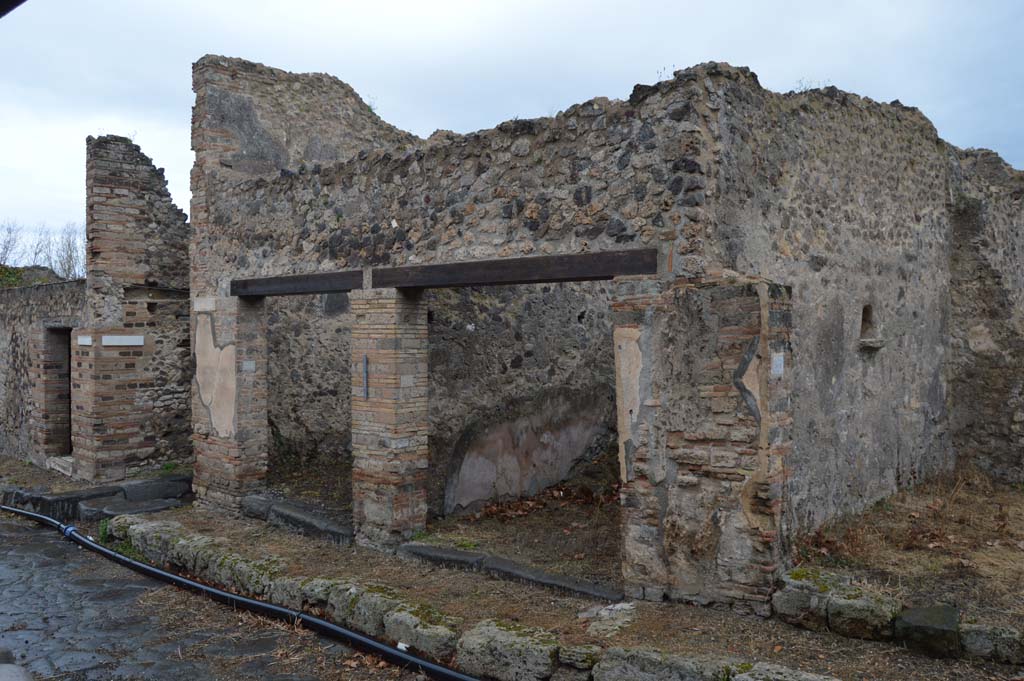
VII.6.35 and VII.6.34 Pompeii in centre. March 2018. Looking towards entrance doorways on
north side of Vicolo dei Soprastanti.
Foto
Taylor Lauritsen, ERC Grant 681269 DÉCOR.
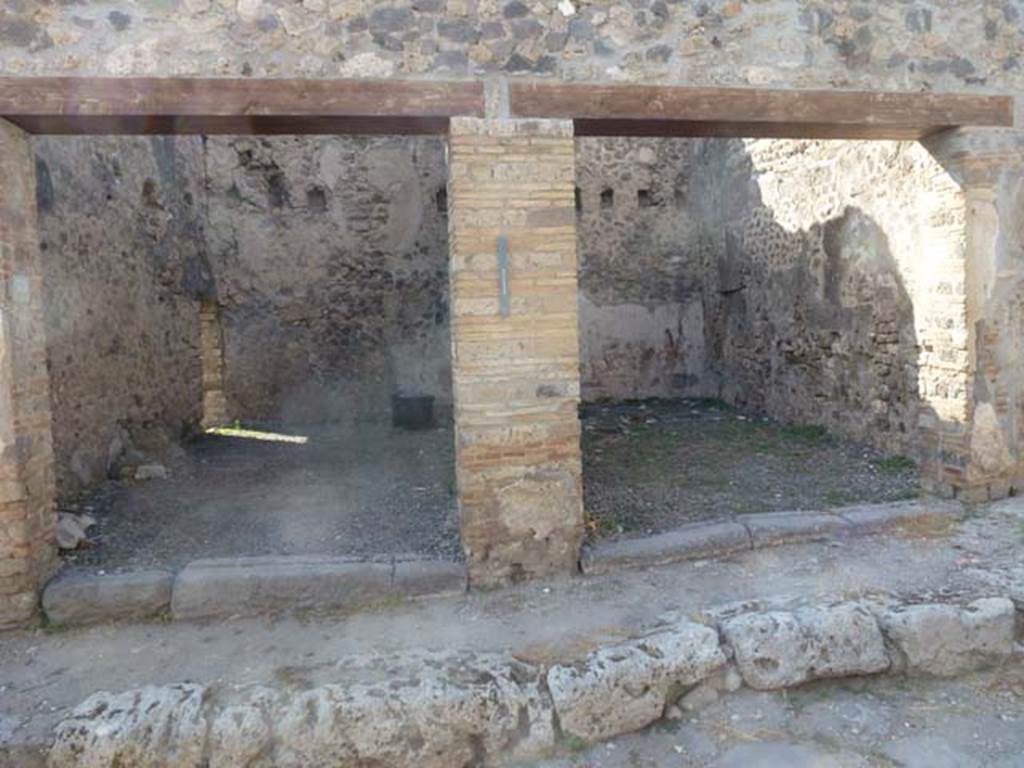
VII.6.34 Pompeii, on right. June 2012. Looking north towards entrances of VII.6.35 and VII.6.34.
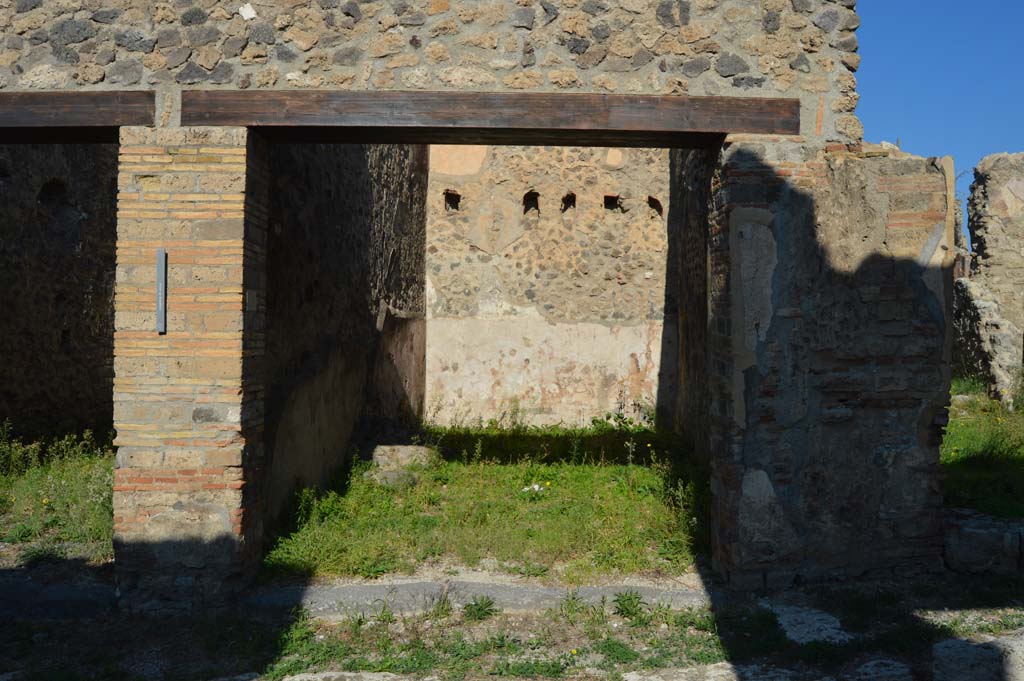
VII.6.34 Pompeii. October 2017. Looking north
towards entrance doorway.
Foto Taylor Lauritsen, ERC
Grant 681269 DÉCOR.
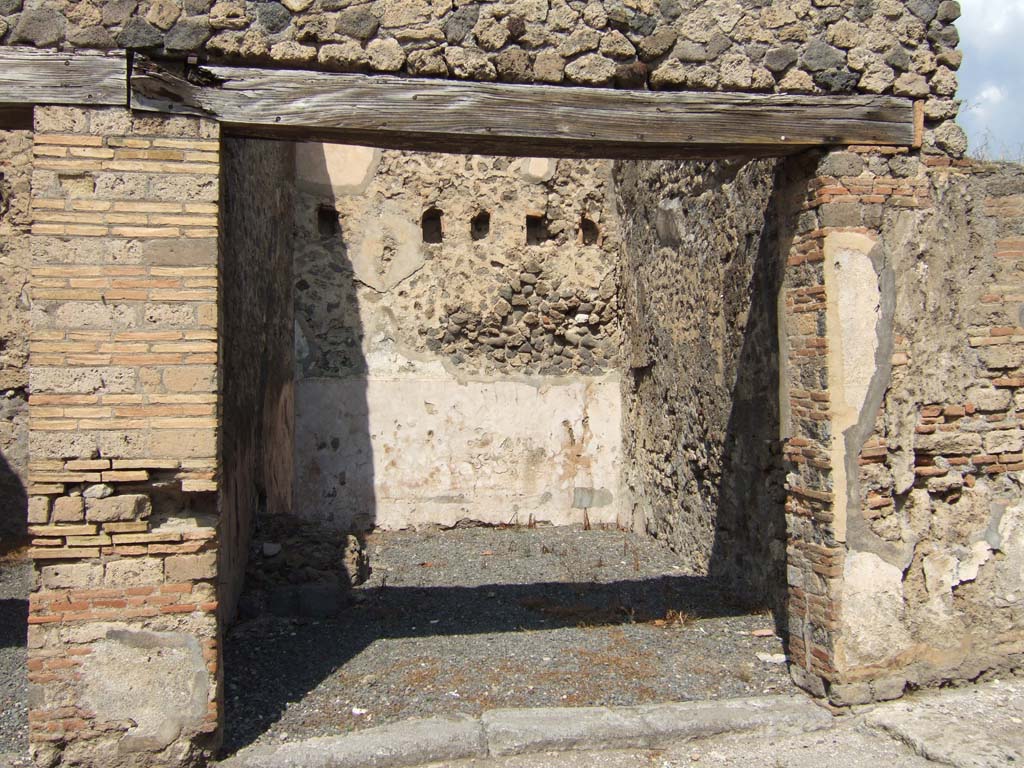
VII.6.34 Pompeii. September 2005. Looking north towards entrance.
On the pilaster between VII.6.35 and 34 (on the left) would have been a painting of Victory, a donkey and a lion, now in Naples Archaeological Museum. (see VII.6.35)
According to Garcia y Garcia, on the pilaster between VII.6.34 and 33 (on the right) would have been a painting of Bacchus, now destroyed.
See Garcia y
Garcia, L., 2006. Danni di guerra a Pompei. Rome: L’Erma di Bretschneider. (p.109)
According to Della Corte, on the pilaster between VII.6.34 and 33 (on the right) there was a painting of Mercury, now destroyed.
Many graffiti were found written under these paintings, including amongst others, the names of boys and girls who possibly worked here [CIL IV 1627-1649].
See Della Corte, M., 1965. Case ed Abitanti di Pompei. Napoli: Fausto Fiorentino. (p.169-171).
According to Fröhlich, on the right pilaster, would have been Bacchus.
He agreed that the Victory, donkey and lion, were shown on the middle pilaster.
See Fröhlich, T., 1991. Lararien und Fassadenbilder in den Vesuvstädten. Mainz: von Zabern. (p.327, F51)
According to Fiorelli, on the extreme pilaster, was the figure of Bacchus, with Mercury on the other.
He agreed that the Victory, donkey and lion, were shown on the middle pilaster
See Pappalardo, U., 2001. La Descrizione di Pompei per Giuseppe Fiorelli (1875). Napoli: Massa Editore. (p.160)
According to Boyce, on the two outer pilasters bordering the entrances of these two shops, the figures of Mercury and Bacchus.
See Boyce G. K., 1937. Corpus of the Lararia of Pompeii. Rome: MAAR 14. (p.111, no.17)
According to Kuivalainen there was “A standing figure, probably on a white background between two vines.
He holds a thyrsus in one hand, in the other a cantharus, from which he pours wine for a panther.
There is an inscription LIB LIBER below the figure’s right foot.”
Kuivalainen comments –
The figure’s identification as Bacchus is confirmed by the rare inscription. The depiction is most likely that of a half-naked youth, known for similar compositions with the pair of Mercury and Bacchus in Pompeii.”
See Kuivalainen, I., 2021. The Portrayal of Pompeian Bacchus. Commentationes Humanarum Litterarum 140. Helsinki: Finnish Society of Sciences and Letters, (p.113, C11).
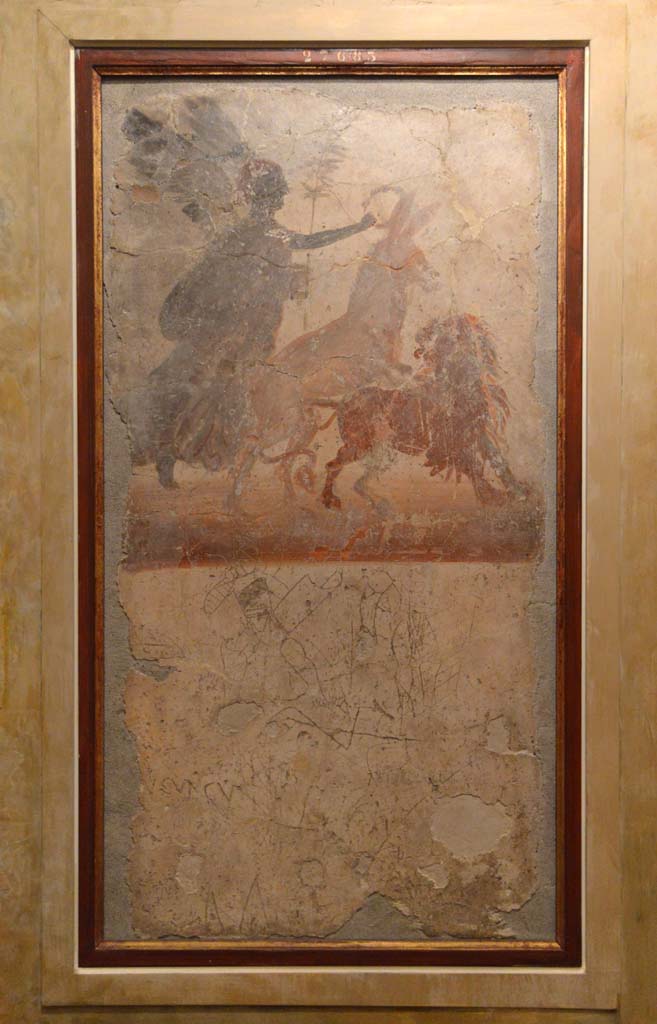
Beneath the painting is the graffito of a gladiatorial scene.
Now in Naples Archaeological Museum. Inventory number 27683.
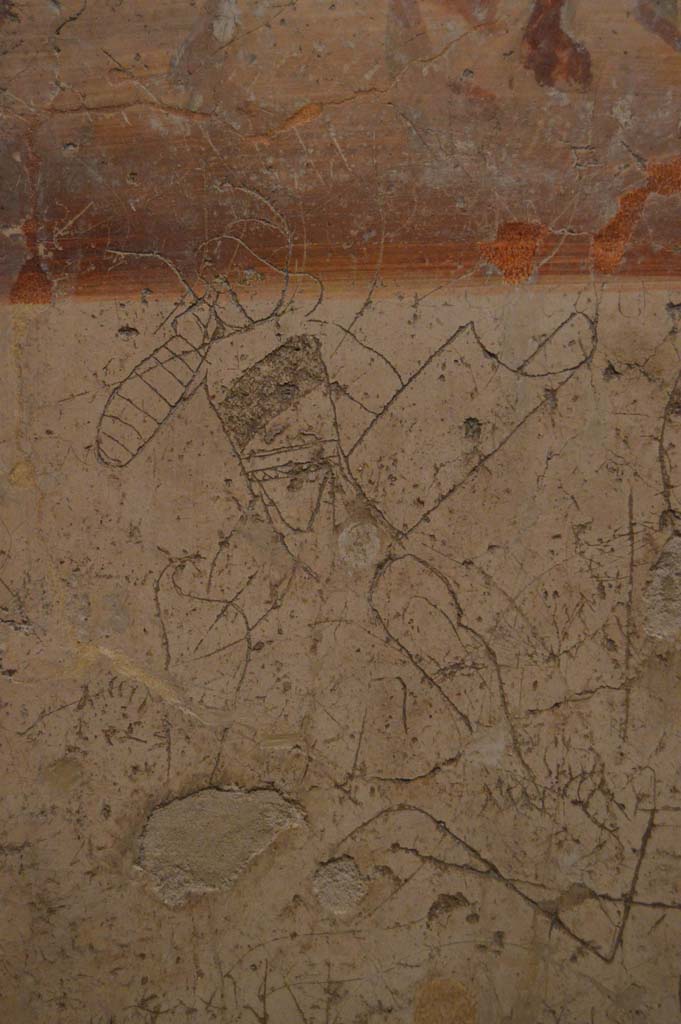
Detail of the graffito of the gladiatorial scene from beneath the painting.
Now in Naples Archaeological Museum. Inventory number 27683.
Foto Taylor Lauritsen, ERC Grant 681269 DÉCOR.
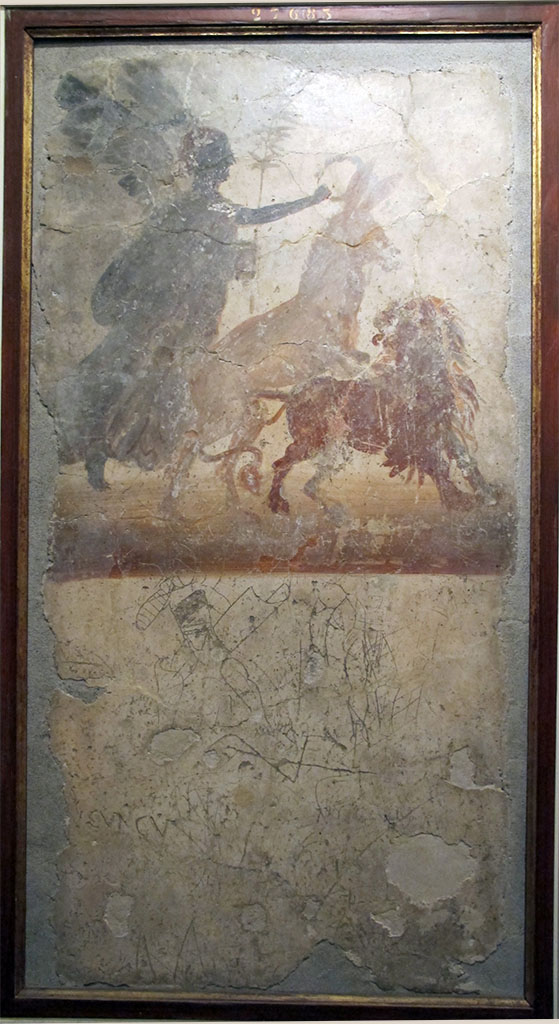
Beneath the painting is the graffito of a gladiatorial scene.
Now in Naples Archaeological Museum. Inventory number 27683.
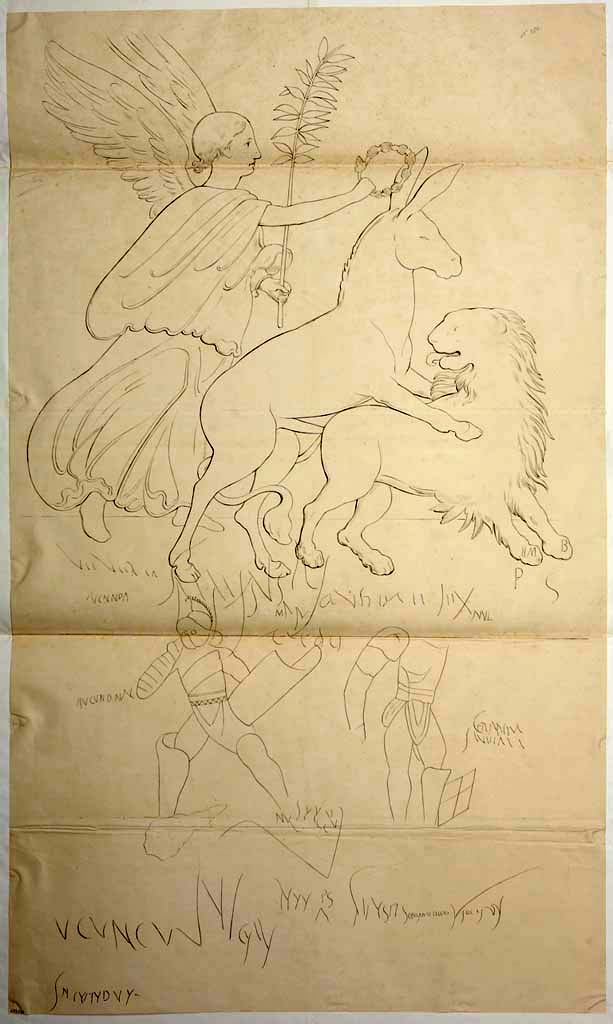
Now in Naples Archaeological Museum. Inventory number ADS 693.
Photo © ICCD. https://www.catalogo.beniculturali.it/
Utilizzabili alle
condizioni della licenza Attribuzione - Non commerciale - Condividi
allo stesso modo 2.5 Italia (CC BY-NC-SA 2.5 IT)
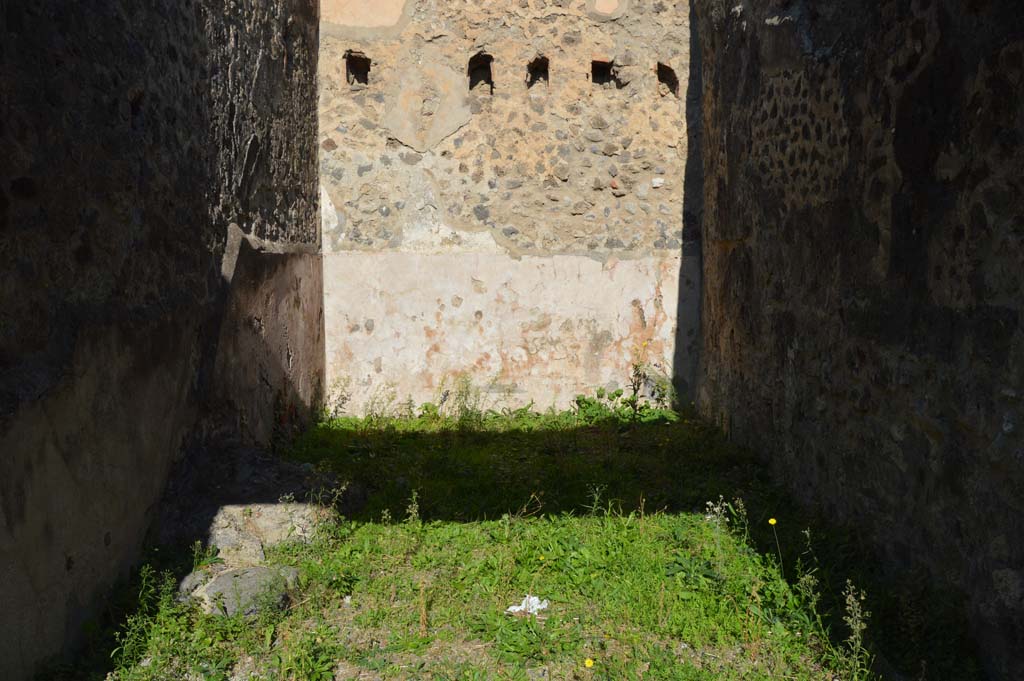
VII.6.34,
Pompeii. October 2017. Looking north from entrance doorway, with base of
stairs, on left.
Foto Taylor Lauritsen, ERC Grant 681269 DÉCOR.
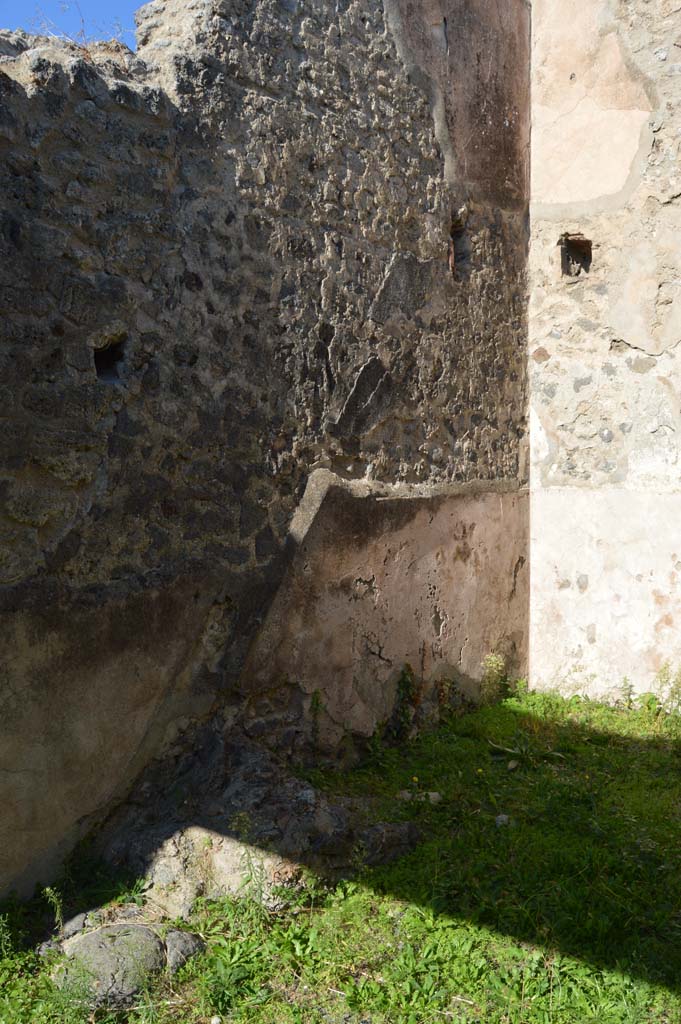
VII.6.34 Pompeii. October 2017.
Looking towards west wall with
base of stairs and imprint of ladder in plaster, and north-west corner.
Foto Taylor Lauritsen, ERC Grant 681269 DÉCOR.
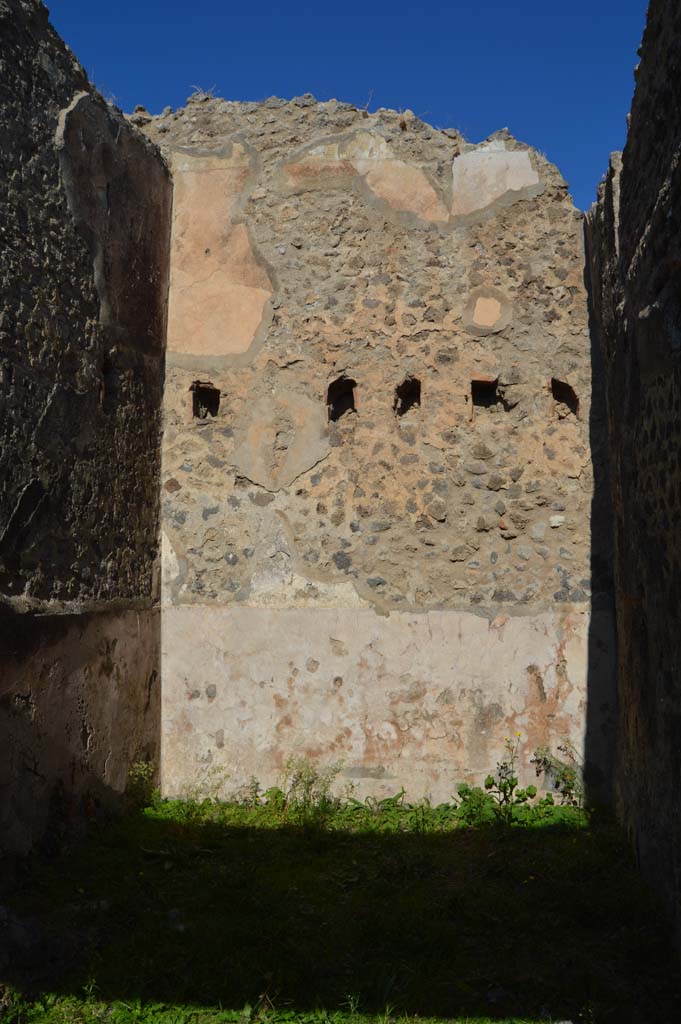
VII.6.34
Pompeii. October 2017. Looking towards north-west corner and north wall.
Foto Taylor Lauritsen, ERC
Grant 681269 DÉCOR.
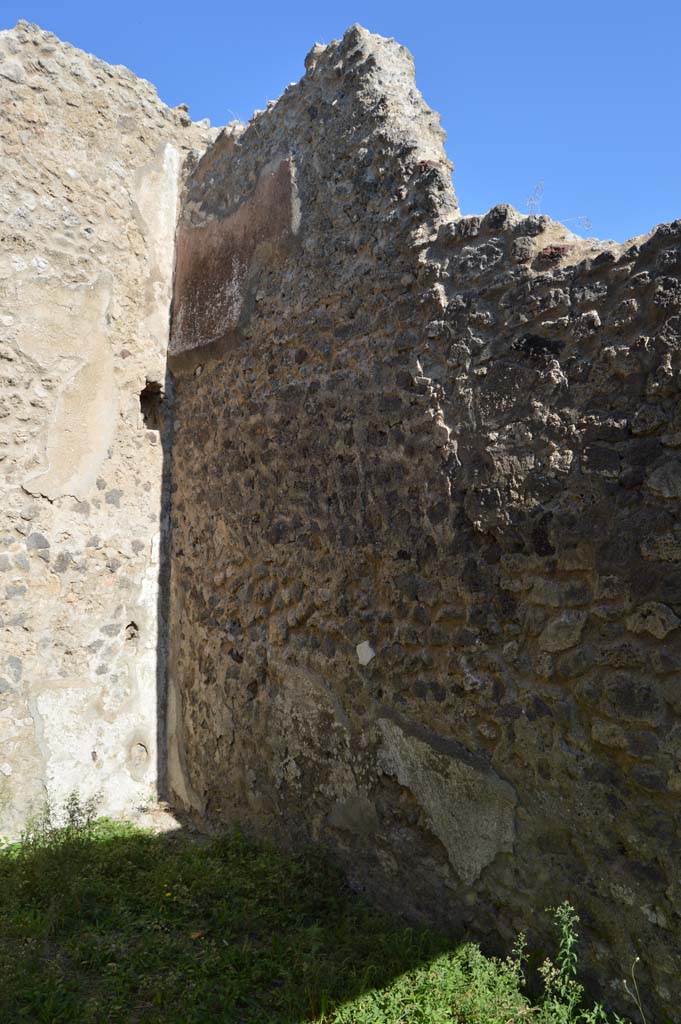
VII.6.34
Pompeii. October 2017. Looking towards north-east corner and east wall.
Foto Taylor Lauritsen, ERC Grant 681269 DÉCOR.
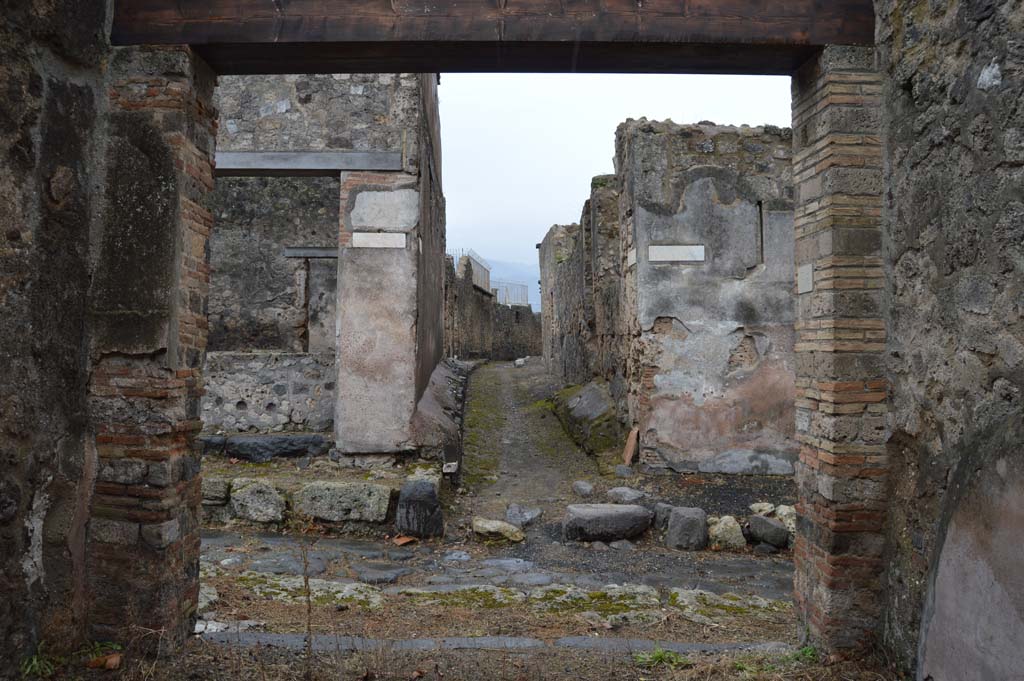
Looking
south from entrance doorway into Vicolo dei Soprastanti, and across to junction
with Vicolo del Gallo.
Foto Taylor Lauritsen, ERC Grant 681269 DÉCOR.
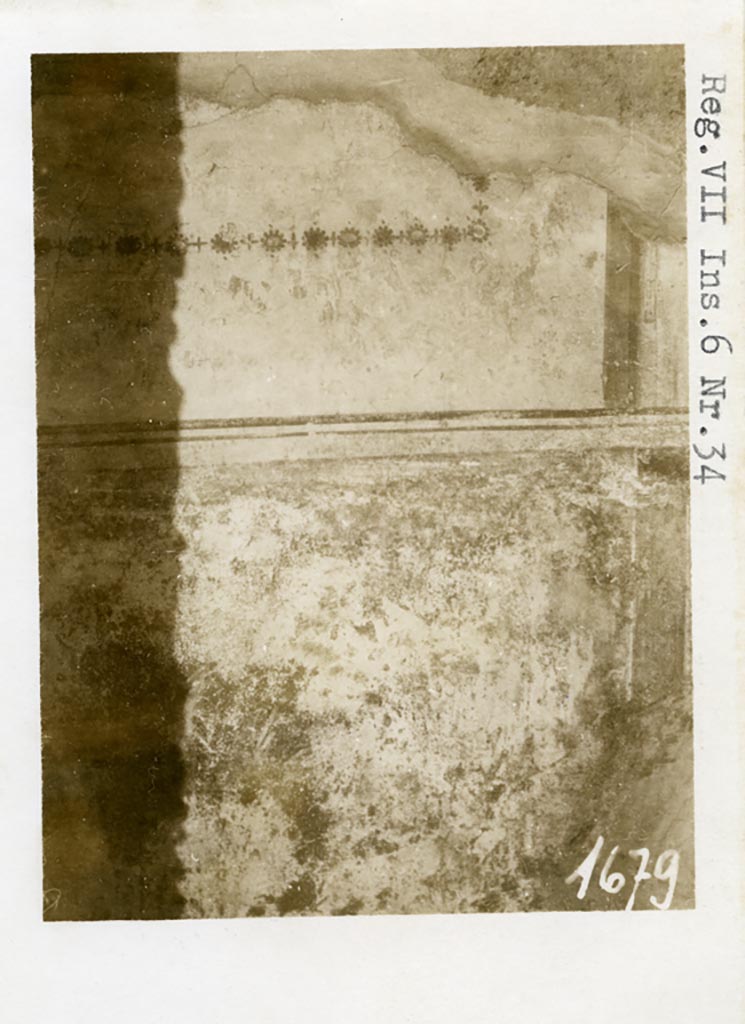
VII.6.34 Pompeii, according to Warsher. Pre-1937-39. Detail of painted decoration.
Photo courtesy of American Academy in Rome, Photographic Archive. Warsher collection no. 1679.