VII.6.29 Pompeii. Workshop and shop. Linked to VII.6.30?
Excavated 1868, 1910. Bombed in 1943.
According to Garcia y Garcia Region VII, Insula VI was one of the insulae most devastated over the years since its excavation.
He calls it the “Cinderella” of Pompeii. Between the years 1759 and 1762 it was vandalised and stripped by the Bourbons, then re-interred.
Then came the slow and non-systematic uncovering again before the final destruction in September 1943.
The area was ignored and abandoned during the years following the war, which reduced the insula to a heap of bricks and masonry.
See Garcia y Garcia,
L., 2006. Danni di guerra a Pompei. Rome: L’Erma di Bretschneider. (p.102).
According
to Fiorelli,
This was a
shop with a ladder stairway
to the mezzanine, and a very narrow passageway into another adjoining house.
(Bottega con scaletta per l’ammezzato, ed un adito
angustissimo di passaggio in altra casa attigua.)
See Pappalardo, U., 2001. La Descrizione di Pompei per Giuseppe Fiorelli (1875). Napoli: Massa Editore. (p.160).
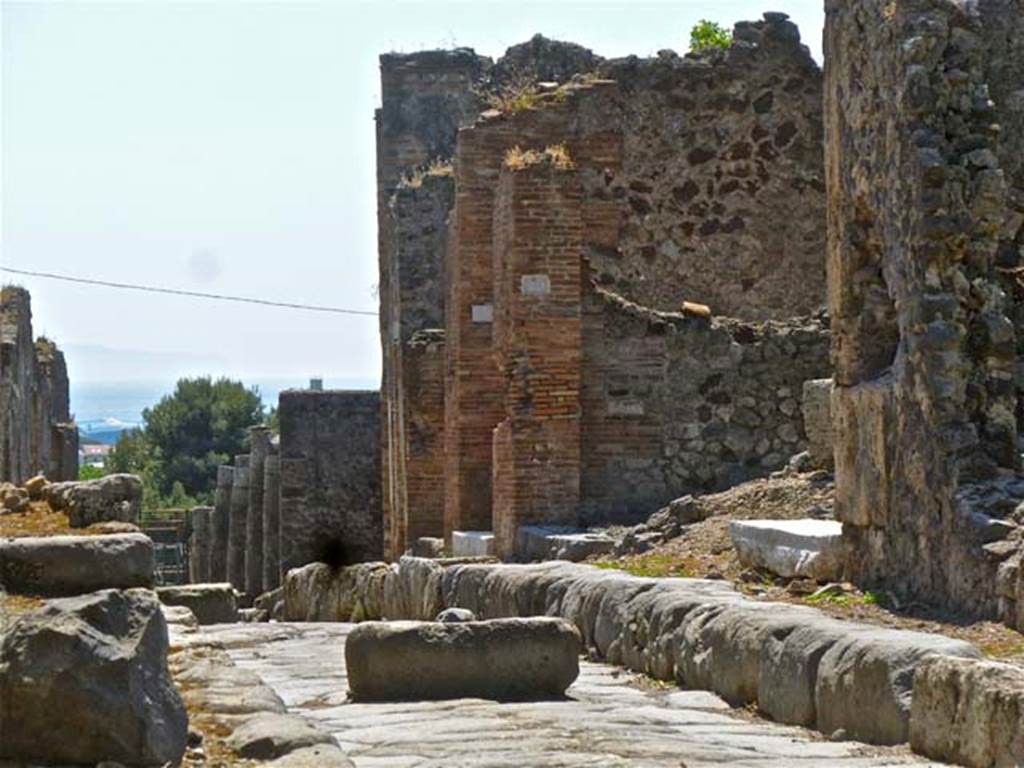
VII.6.29 Pompeii. May 2011. Looking west along Vicolo dei Soprastanti towards entrance doorway (right of centre).
Photo courtesy of Michael Binns.
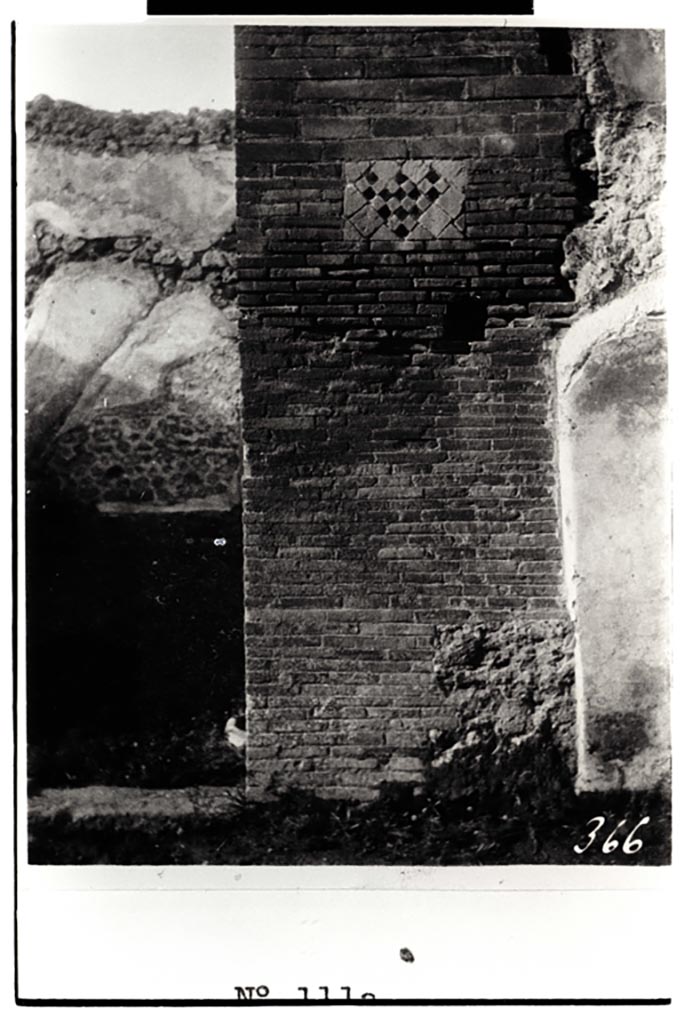
VII.6.29 Pompeii. W.1629. Pilaster on east side of entrance, photographed prior to 1943.
Photo by Tatiana
Warscher. Photo © Deutsches Archäologisches Institut, Abteilung Rom, Arkiv.
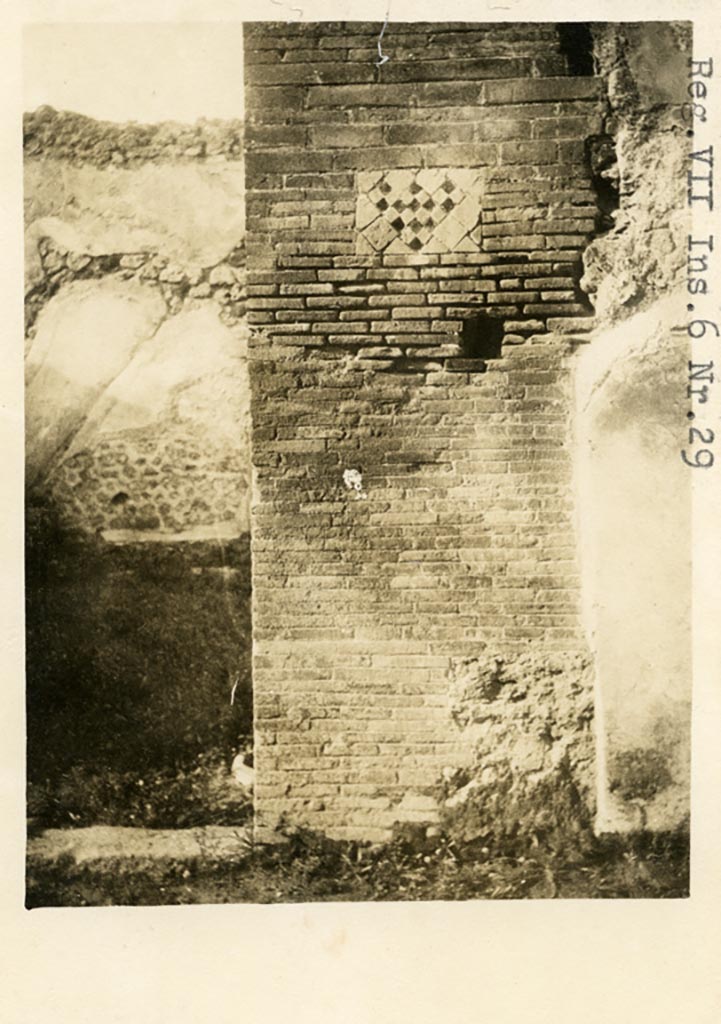
VII.6.29 Pompeii. Pre-1937-39. Pilaster on east side of entrance.
Photo courtesy of American Academy in Rome, Photographic Archive. Warsher collection no. 366.
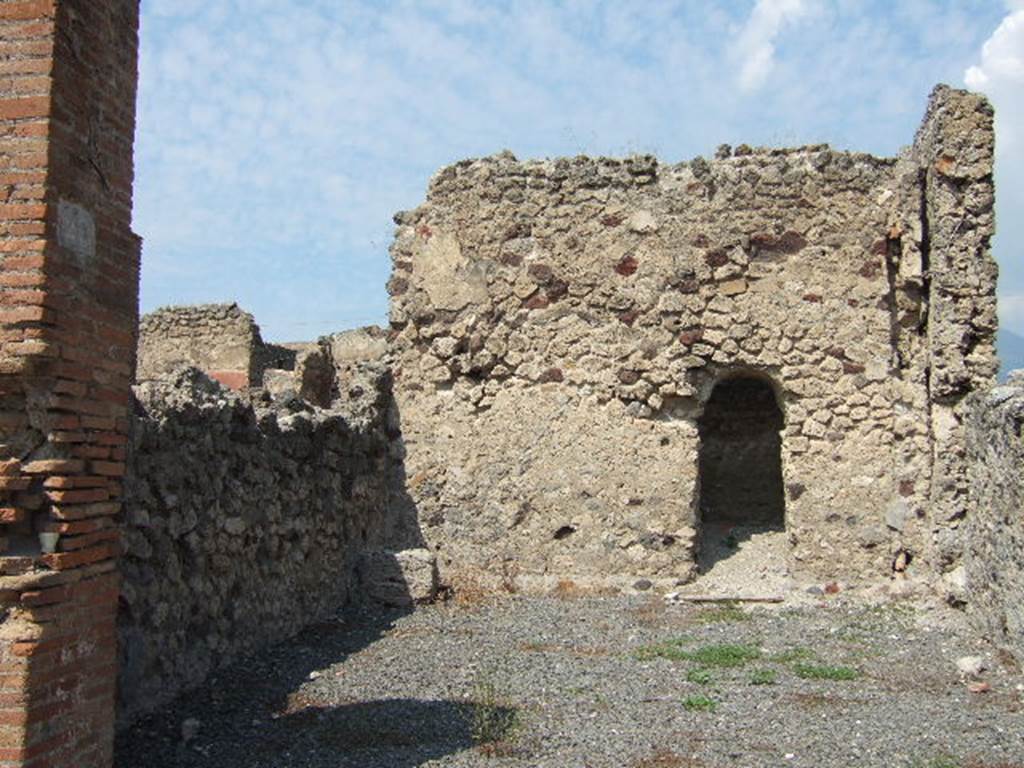
VII.6.29 Pompeii. September 2005. Looking north across shop.
![VII.6.29 Pompeii. September 2005. According to Fiorelli and Eschebach, on the left at the rear would have been a staircase to the upper floor. At the rear there was an arched gateway to the latrine, with a nearby downpipe from the upper floor. See Pappalardo, U., 2001. La Descrizione di Pompei per Giuseppe Fiorelli (1875). Napoli: Massa Editore. (p.160). See Eschebach, L., 1993. Gebäudeverzeichnis und Stadtplan der antiken Stadt Pompeji. Köln: Böhlau. (p.296)
According to Garcia y Garcia, a plaster-cast of the door of this shop, made in 1859, had been put on display in the antiquarium. Fortunately drawings were made of it, as it was destroyed in the bombing in 1943. See Garcia y Garcia, L., 2006. Danni di guerra a Pompei. Rome: L’Erma di Bretschneider. (p.107)
According to Varone, found inscribed in the shop, written by an unknown to an unknown love, was –
Venus es. Ve(nus?) [CIL IV 1625]
Simply translated as – You are Venus, Venus.
See Varone, A., 2002. Erotica Pompeiana: Love Inscriptions on the Walls of Pompeii, Rome: L’erma di Bretschneider. (p. 30)](7%2006%2029_files/image009.jpg)
According to Fiorelli and Eschebach, on the left at the rear would have been a staircase to the upper floor.
At the rear there was an arched gateway to the latrine, with a nearby downpipe from the upper floor.
See Pappalardo,
U., 2001. La Descrizione di Pompei per
Giuseppe Fiorelli (1875). Napoli: Massa Editore. (p.160)
See Eschebach, L., 1993. Gebäudeverzeichnis und Stadtplan der antiken Stadt Pompeji. Köln: Böhlau. (p.296)
According to Garcia y Garcia, a plaster-cast of the door of this shop, made in 1859, had been put on display in the antiquarium.
Fortunately, drawings were made of it, as it was destroyed in the bombing in 1943.
See Garcia y
Garcia, L., 2006. Danni di guerra a Pompei. Rome: L’Erma di Bretschneider. (p.107)
According to Varone, found inscribed in the shop, written by an unknown to an unknown love, was –
Venus es. Ve(nus?) [CIL IV 1625]
Simply translated as – You are Venus, Venus.
See Varone, A., 2002. Erotica Pompeiana: Love Inscriptions on the Walls of Pompeii, Rome: L’erma di Bretschneider. (p. 30)