VII.6.15 Pompeii. Bar. Linked to VII .6.13
and VII .6.14.
Excavated 1868, 1910.
According to Garcia y Garcia Region VII, Insula VI was one of the insulae most devastated over the years since its excavation.
He calls it the “Cinderella” of Pompeii. Between the years 1759 and 1762 it was vandalised and stripped by the Bourbons, then reinterred.
Then came the slow and non-systematic uncovering again before the final destruction in September 1943.
The area was ignored and abandoned during the years following the war, which reduced the insula to a heap of bricks and masonry.
See Garcia y Garcia,
L., 2006. Danni di guerra a Pompei. Rome: L’Erma di Bretschneider. (p.102).
According
to Fiorelli,
In this there was
a sales podium with a single urn, in the rear a masonry seat, and to the side a
very deep room destined perhaps to the patrons.
(In questa vi era il podio per la vendita con una
sola urna, nel fondo un sedile di fabbrica, e di lato una cella assai profonda
destinata forse agli avventori.)
See Pappalardo,
U., 2001. La Descrizione di Pompei per
Giuseppe Fiorelli (1875). Napoli: Massa Editore. (p.160)
According
to NdS,
XIII, XIV,
XV were three doorways of the same large shop, resulting from different rooms.
The north-east
corner of the insula, which occurs between the doorways of XIV and XV, was made
in the lower part with large parallelepipeds of Sarno stone (Samnite
construction), to which another species of masonry was added. This later
re-fitting of older constructions, was observed in many parts of the insula.
(XIII, XIV, XV. Tre vani d’ingresso di una stessa
grande bottega, risultante di diversi ambienti.)
L’angolo nord-est dell’isola, che capita tra i
vani XIV e XV, era fatto inferiormente con grossi parallelepipedi di pietra di
Sarno (costruzione sannitica), ai quali fu poi aggiunta altra specie di
muratura. Tale riattazioni posteriori di costruzioni piu antiche, osservansi in
molte parti dell’isola.
See Notizie degli Scavi, 1910, p.463.
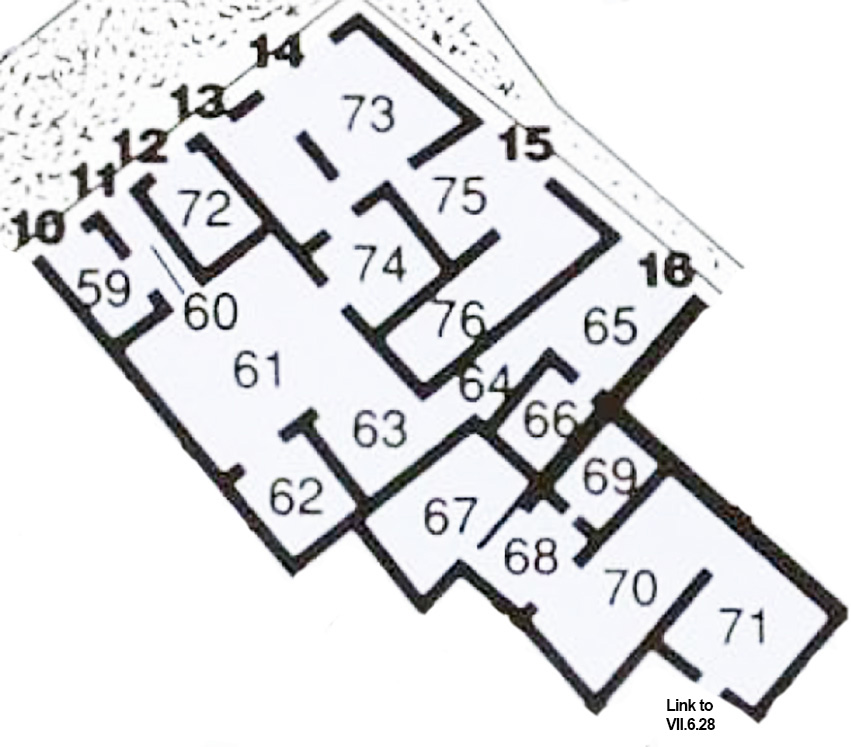
VII.6.15 Pompeii. Plan based on PPM.
See
Carratelli, G. P., 1990-2003. Pompei:
Pitture e Mosaici: Vol. VII. Roma: Istituto della enciclopedia italiana, p. 180.
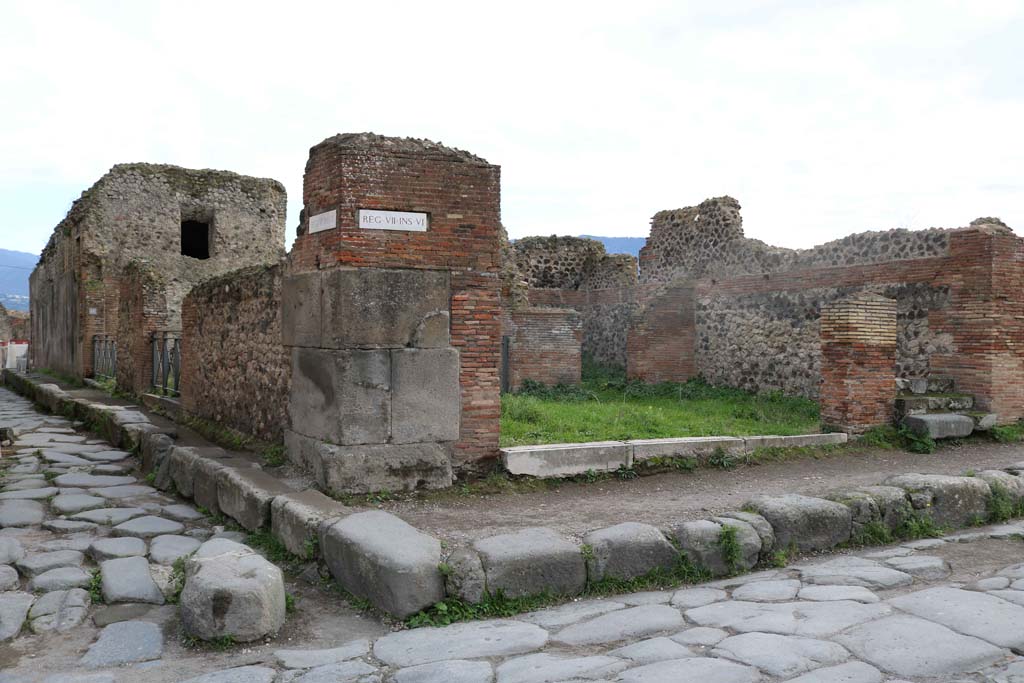
The doorway to VII.6.14 is on
Via delle Terme, linked to VII.6.15, is on the corner of the junction, on the
right.
Photo courtesy of Aude
Durand.
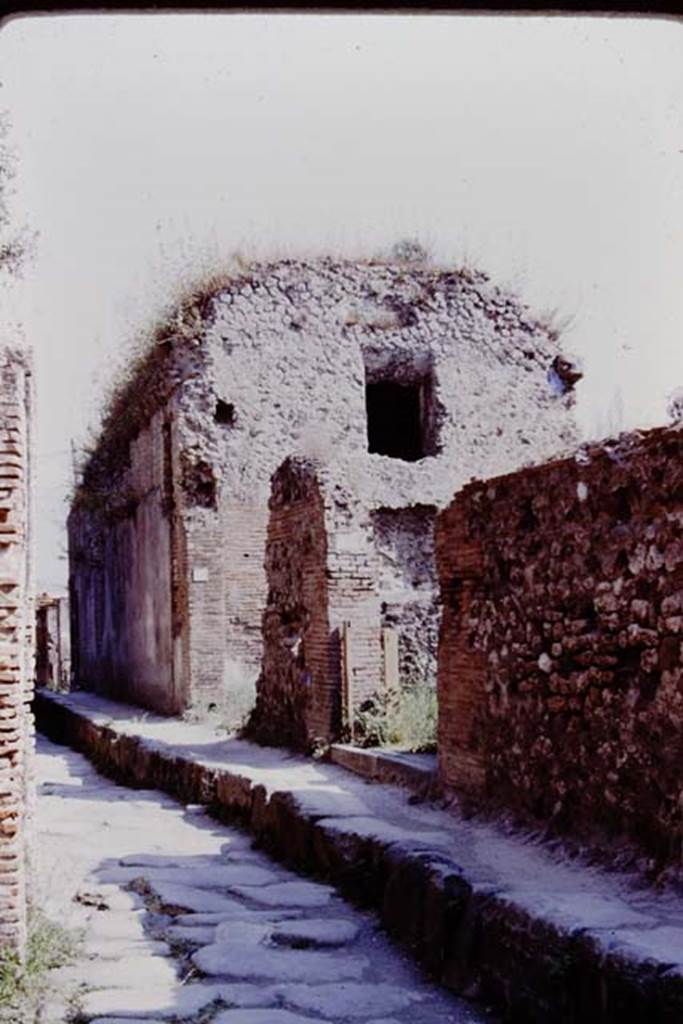
VII.6.15 Pompeii. 1980.
Looking south towards VII.6.17, VII.6.16 and VII.6.15, in centre right. Photo by Stanley A. Jashemski.
Source: The Wilhelmina and Stanley A. Jashemski archive in the University of Maryland Library, Special Collections (See collection page) and made available under the Creative Commons Attribution-Non Commercial License v.4. See Licence and use details.
J80f0215
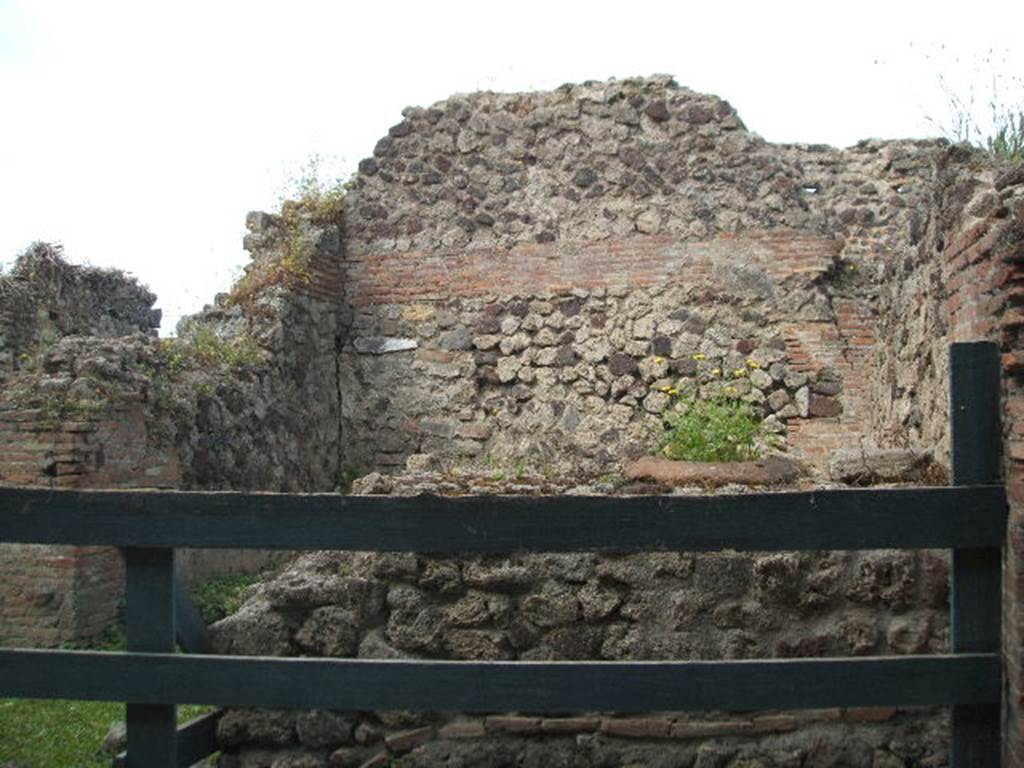
VII.6.15 Pompeii. May 2005. Looking west across bar-room. On the right is the two-sided sales-counter with only one urn.
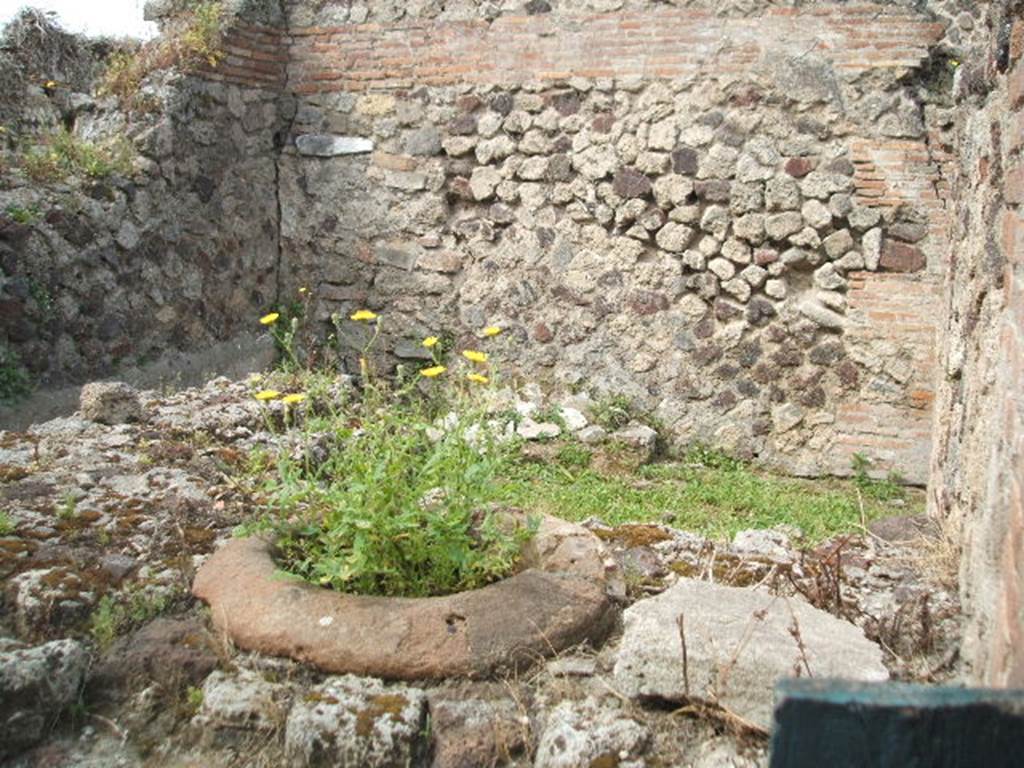
VII.6.15 Pompeii. May 2005. Looking west across north side of bar-room with one urn in the remains of sales-counter.
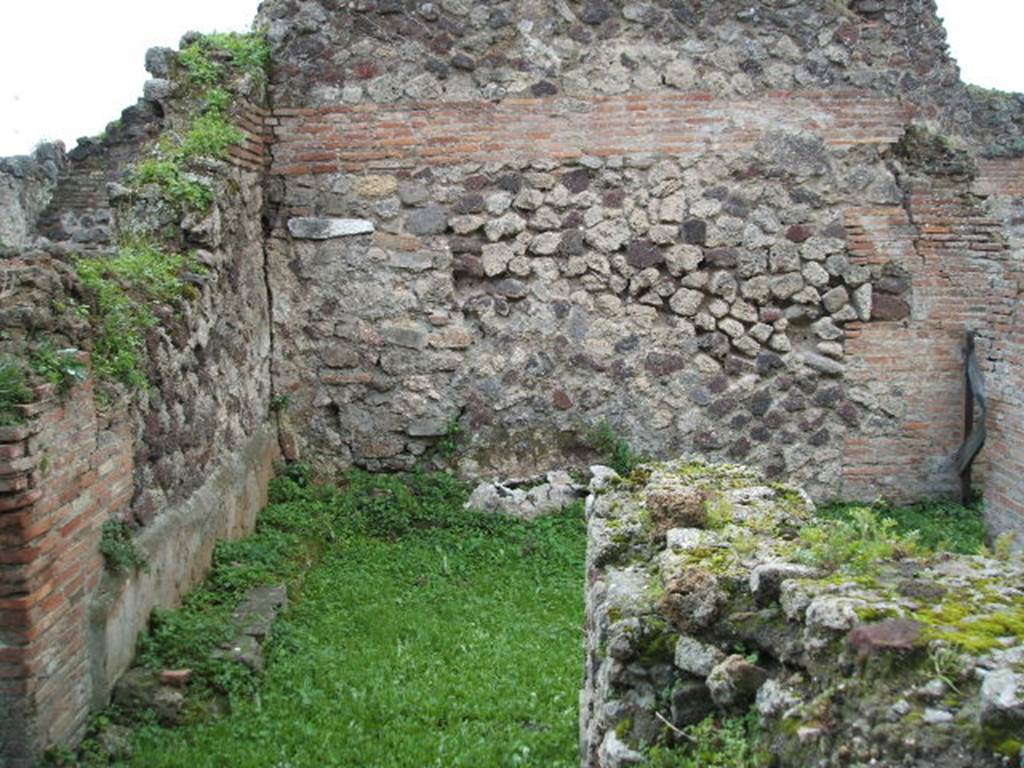
VII.6.15 Pompeii. December 2004. Looking west across south side of bar-room.
In the south wall, in the left-front of the photo, is a doorway leading through to the long room.
In the south-west corner at the rear can be seen the remains of a structure.
Fiorelli called
it “un sedile di Fabbrica” (a seat of
masonry).
Eschebach called it a “zweischenkeliger Herd” (a two-legged hearth).
See Pappalardo,
U., 2001. La Descrizione di Pompei per
Giuseppe Fiorelli (1875). Napoli: Massa Editore. (p.160)
See Eschebach, L., 1993. Gebäudeverzeichnis und Stadtplan der antiken Stadt Pompeji. Köln: Böhlau. (p.294)
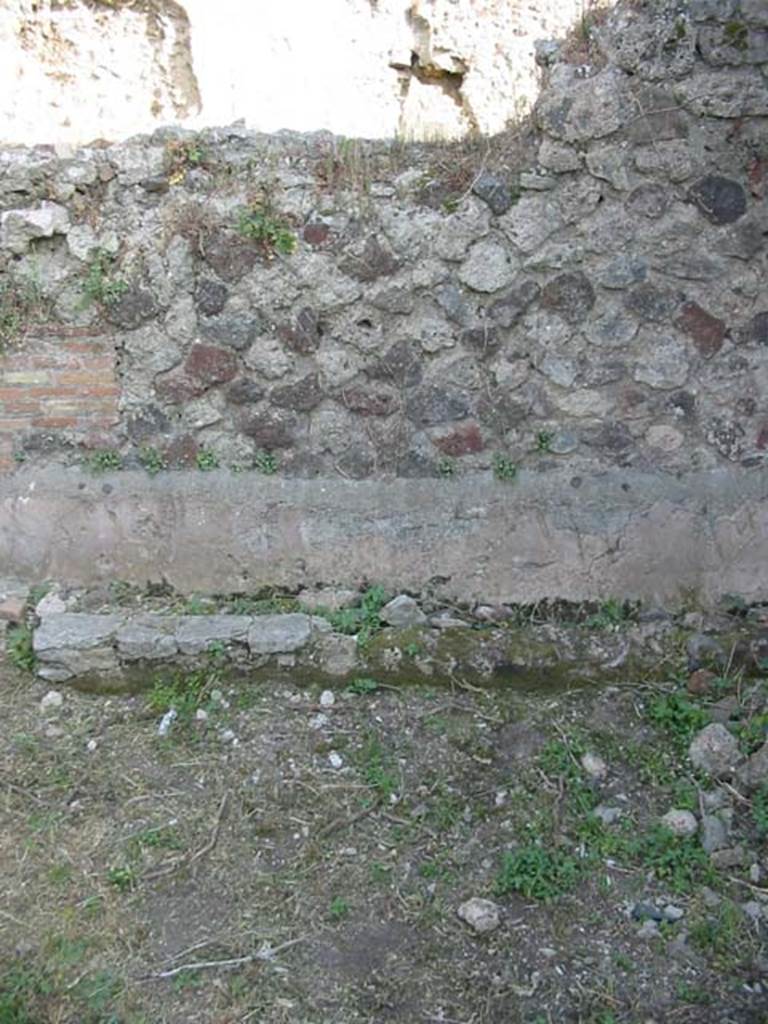
VII.6.15 Pompeii. May 2003. Looking towards base of south wall of bar room. Photo courtesy of Nicolas Monteix.
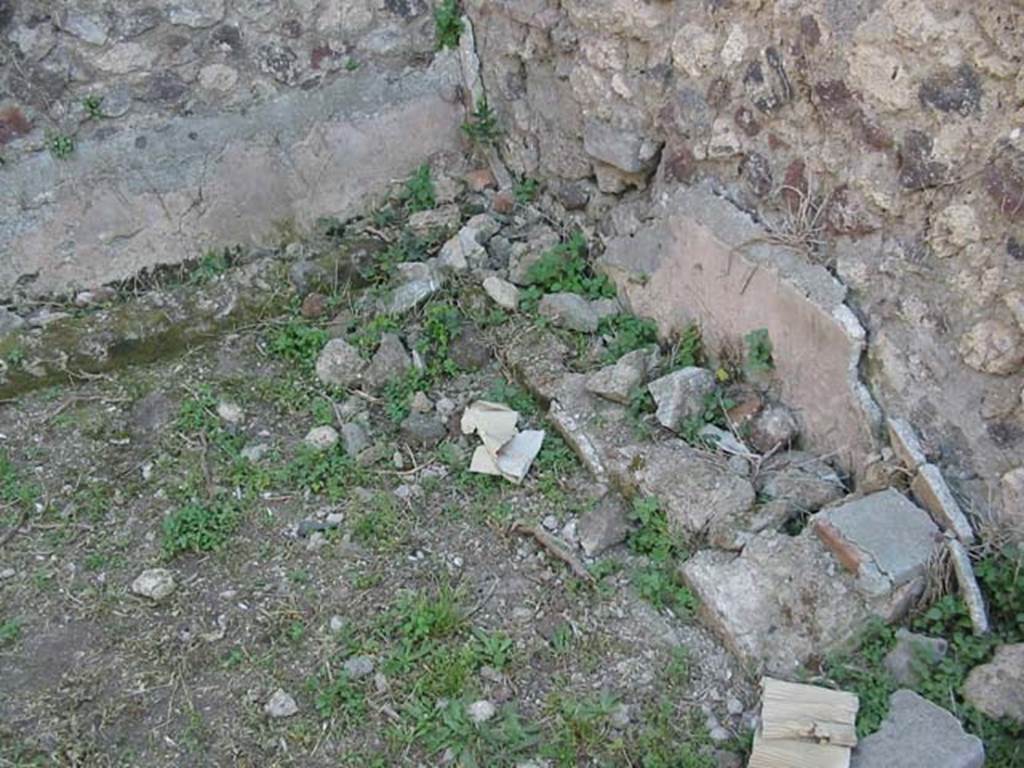
VII.6.15 Pompeii. May 2003. Base of south-west corner at rear of bar-room. Photo courtesy of Nicolas Monteix.
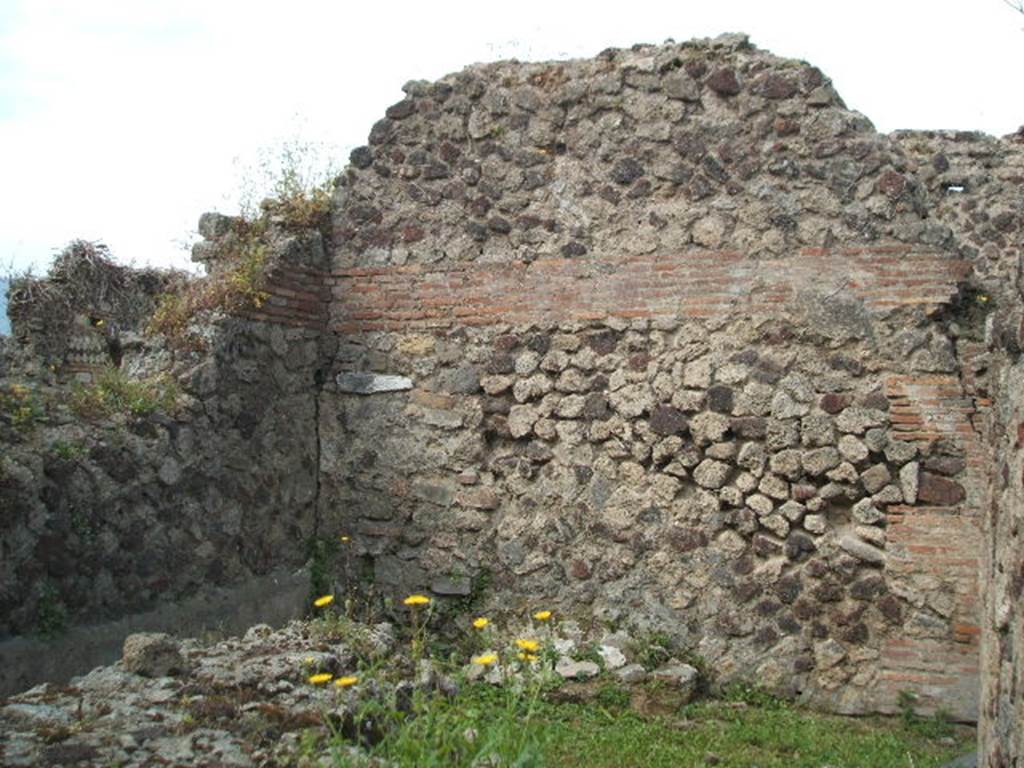
VII.6.15 Pompeii. May 2005. West wall of bar room.
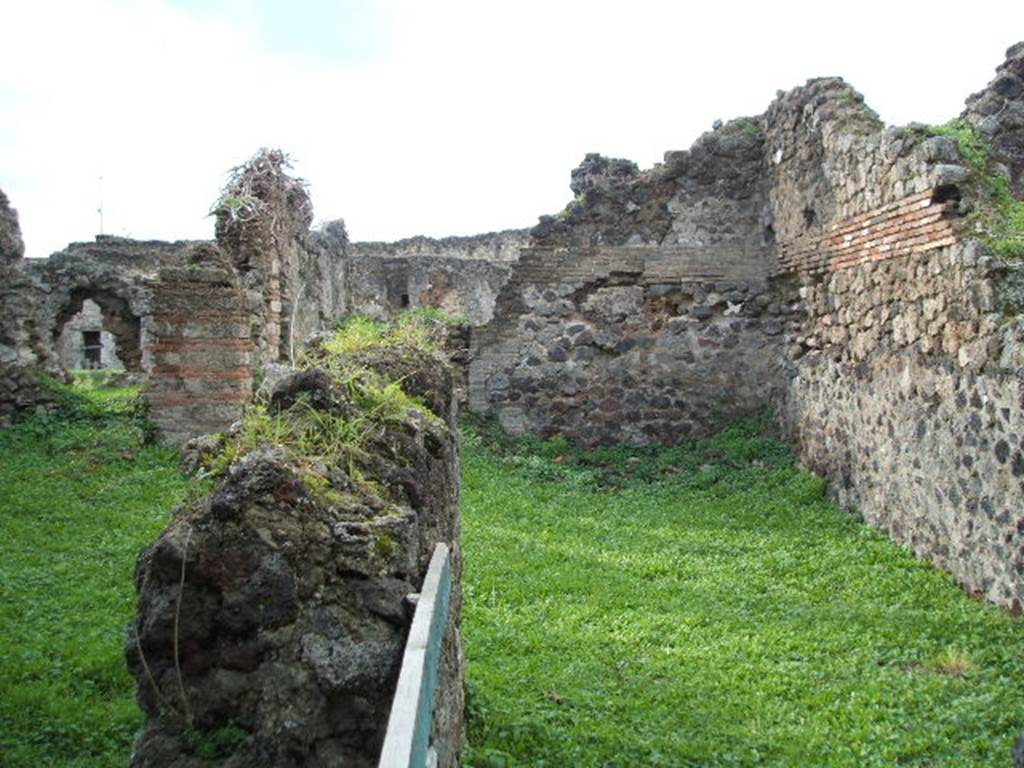
VII.6.16 Pompeii. December 2004 (on left) and VII.6.15, on right.
Looking west across long room linked by doorway to bar room in north wall, perhaps used by the clients.
See also VII.6.14.