VI.16.12 Pompeii. Thermopolium, with rear dwelling.
Excavated 1903.
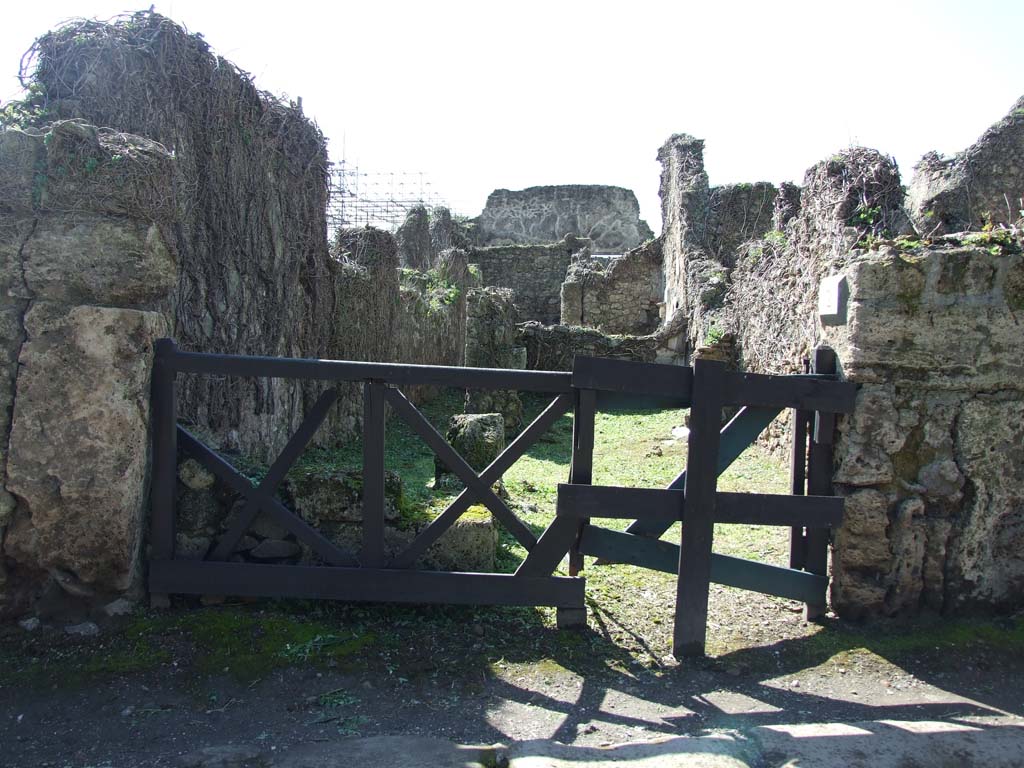
VI.16.12 Pompeii. March 2009. Entrance, looking west to rear.
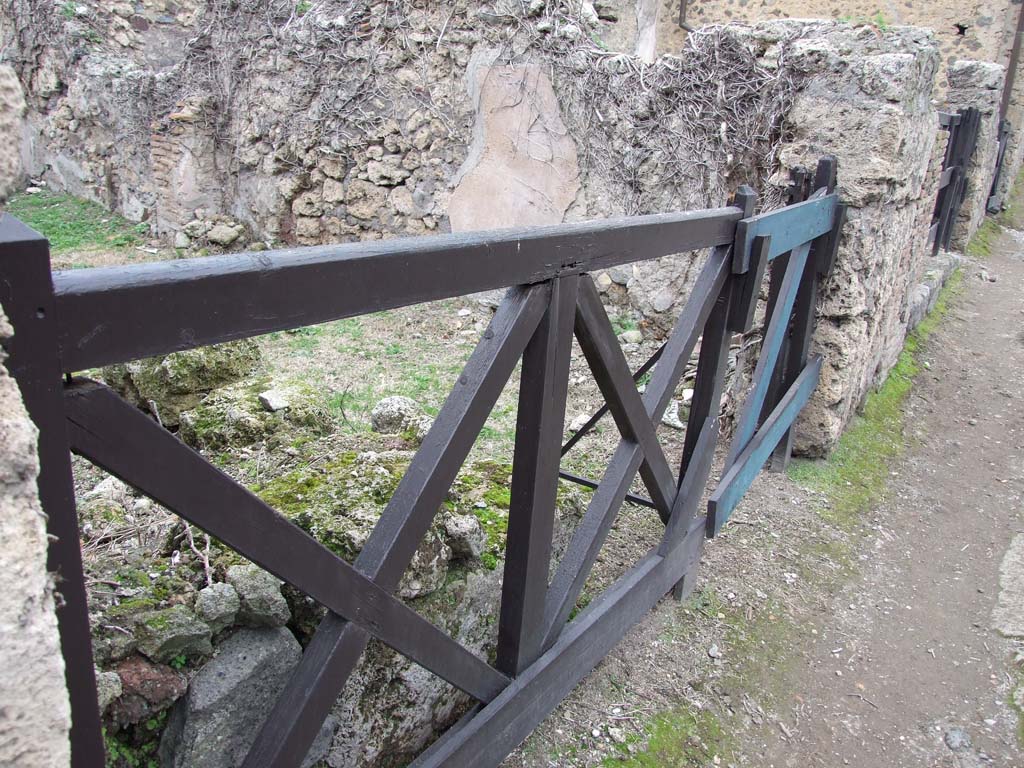
VI.16.12 Pompeii. December 2007. Entrance and north wall of bar room. The bar room had a concrete floor and white walls with a high dado.
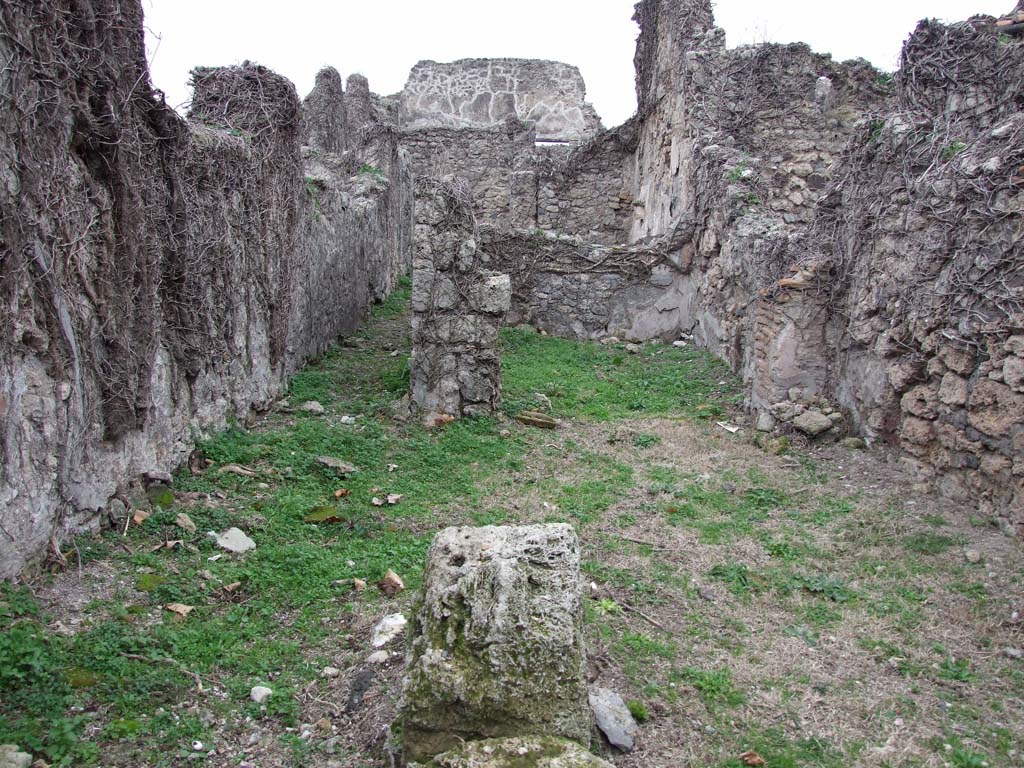
VI.16.12 Pompeii. December 2007. Looking west from counter to rear room and corridor to rear.
According to NdS, found on the 2nd October 1903 near to this counter was a human skull without its skeleton.
See Notizie degli Scavi di Antichità, 1908,
(p.61)
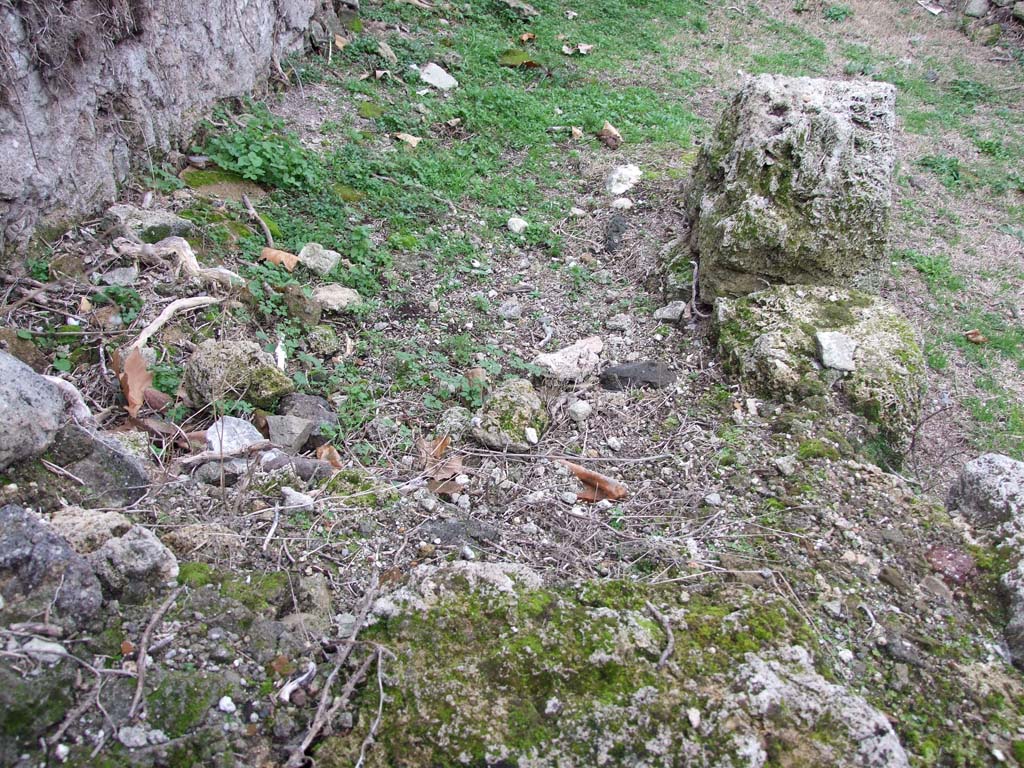
VI.16.12 Pompeii. December 2007. Remains of a two-sided masonry counter.
The top of the counter was covered with fragments of coloured marble and the sides were faced with plaster.
In the side of the counter was found the left half of a white marble rectangular relief, with representation of masks.
On the left was the mask of a Silenus crowned with ivy, also a rock and a plate. To the right was a burning cylindrical altar.
See Eschebach, L., 1993. Gebäudeverzeichnis und Stadtplan der
antiken Stadt Pompeji. Köln: Böhlau. (p.227)
See Notizie degli Scavi di Antichità, 1908,
(p.61)
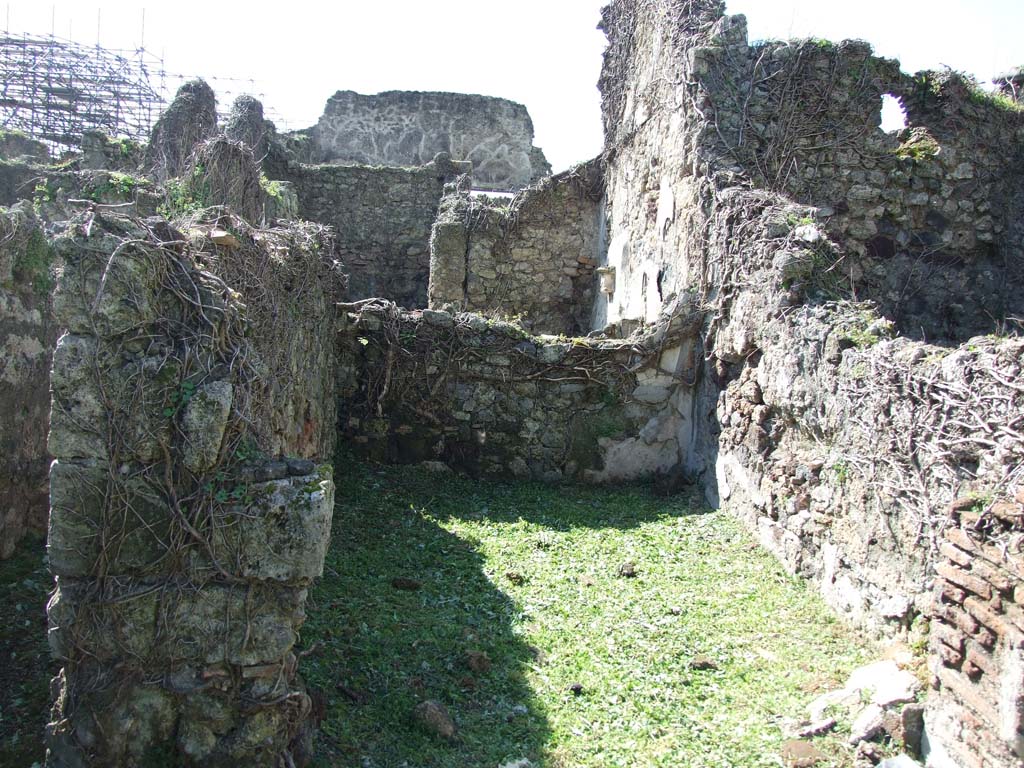
VI.16.12 Pompeii. March 2009. Looking west into rear-room on north-west side behind shop room.
According to NdS, the rear room had flooring of opus signinum, and the walls were of rough plaster.
The room received light from a window in the west wall, with wooden windowsill and jambs.
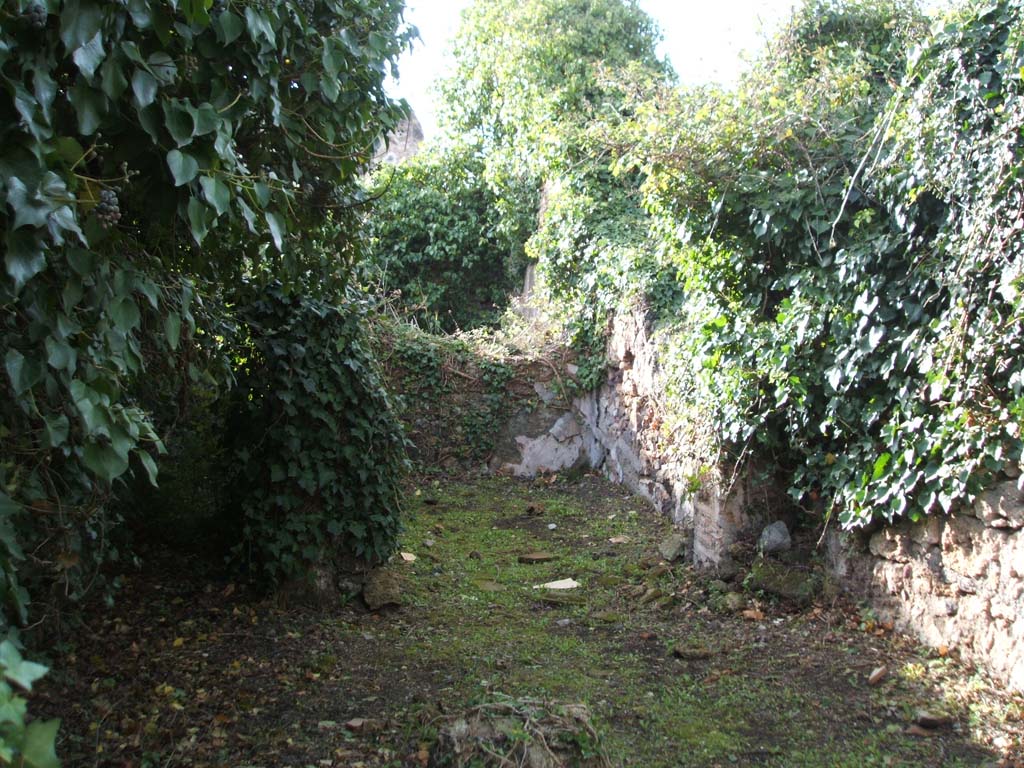
VI.16.12 Pompeii. December 2004. Looking west from counter to rear room and corridor to rear.
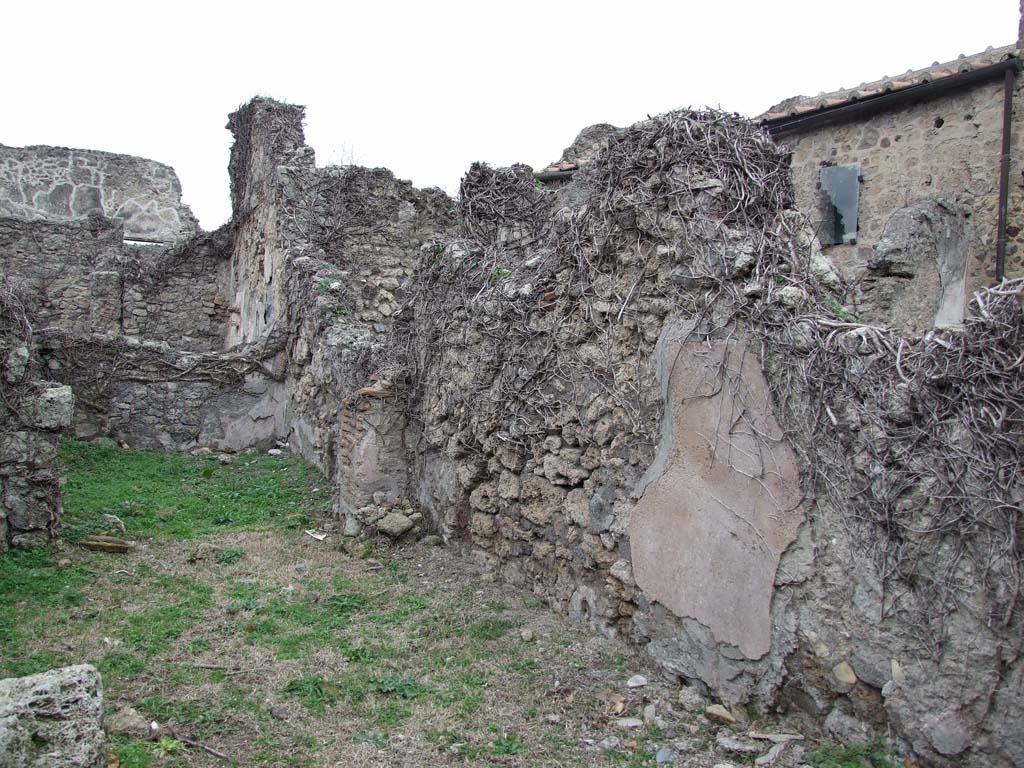
VI.16.12 Pompeii. December 2007. North wall of shop and rear room.
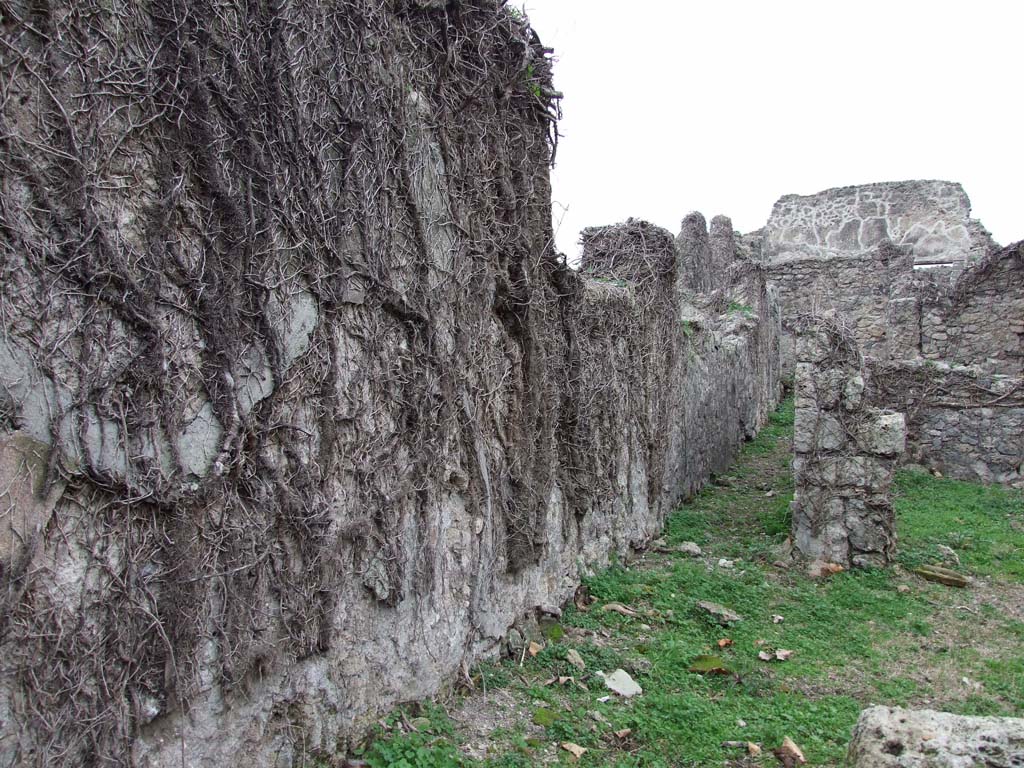
VI.16.12 Pompeii. December 2007. South wall of shop and corridor to rear.
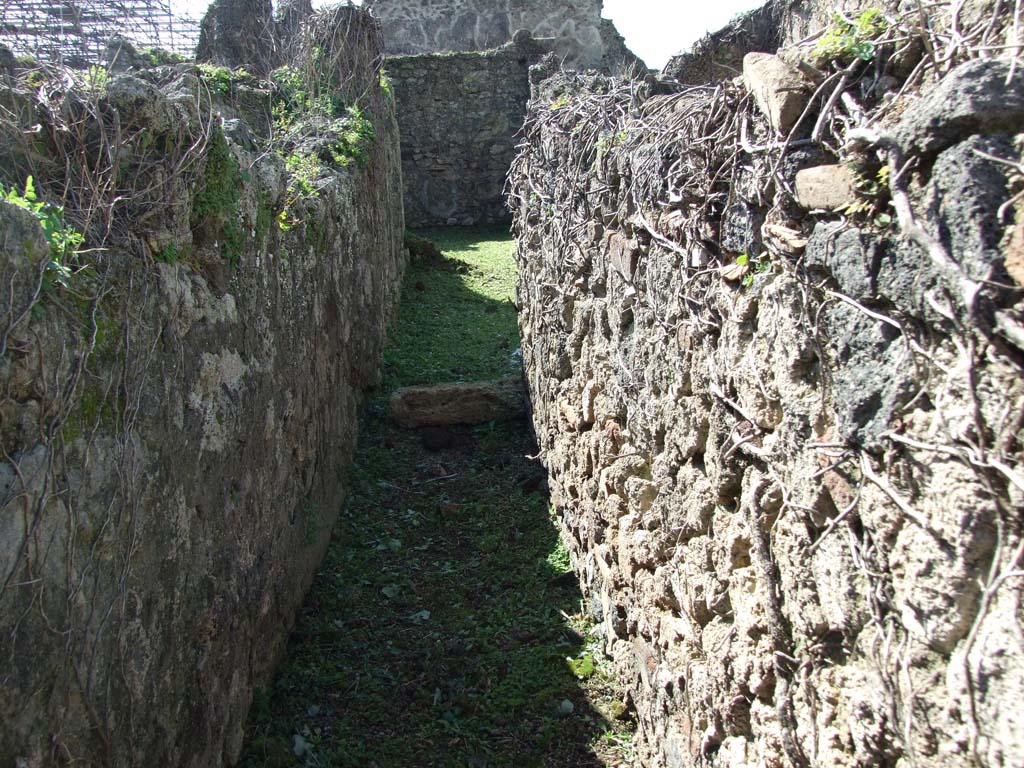
VI.16.12 Pompeii. March 2009. Corridor leading west to two rear rooms.
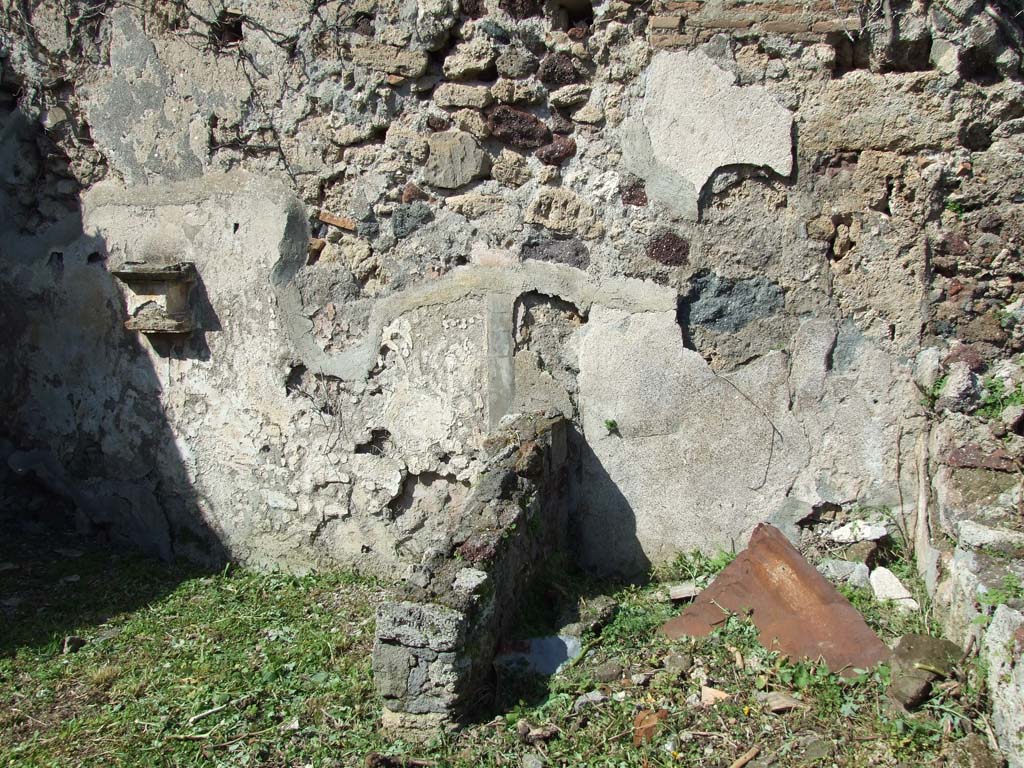
VI.16.12 Pompeii. March 2009. First rear room. North wall.
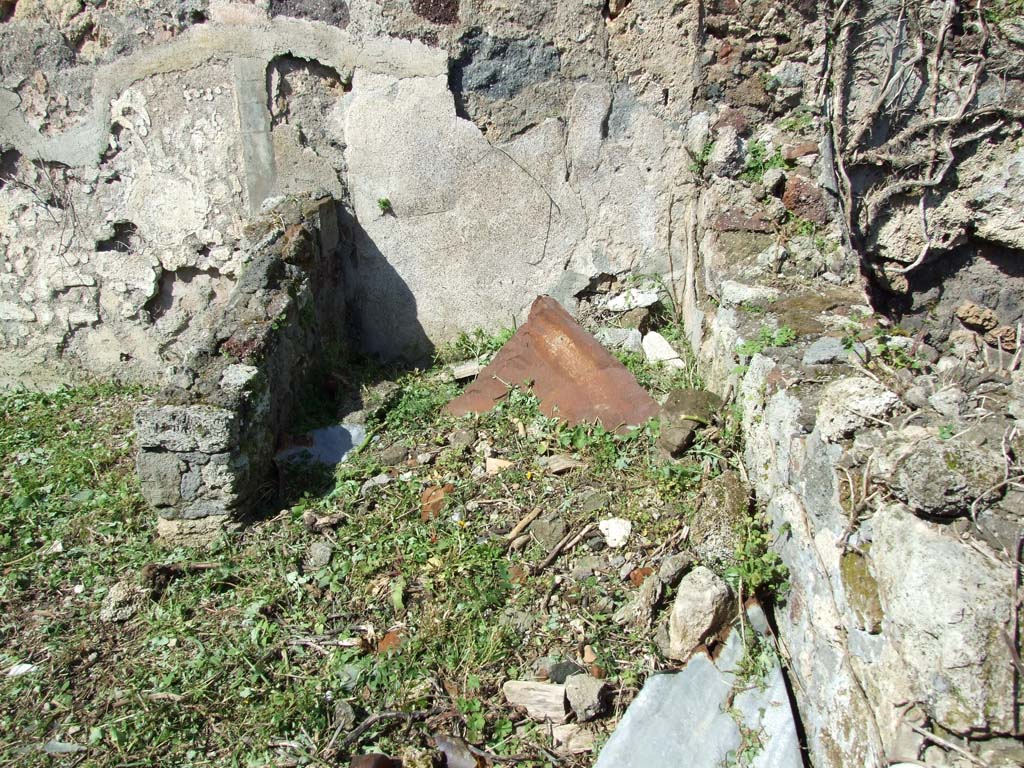
VI.16.12 Pompeii. March 2009. First rear room. North wall, east end with remains of structure.
According to NdS, from the corridor one came into this area, which was probably unroofed.
In the north-east corner of this area, a circular cistern mouth was found, around it was the remains of opus signinum flooring.
The mouth of the cistern was placed between two small walls, the higher one was perpendicular to the north wall, on the left.
The other lower wall was perpendicular to the east wall and would have been in the foreground.
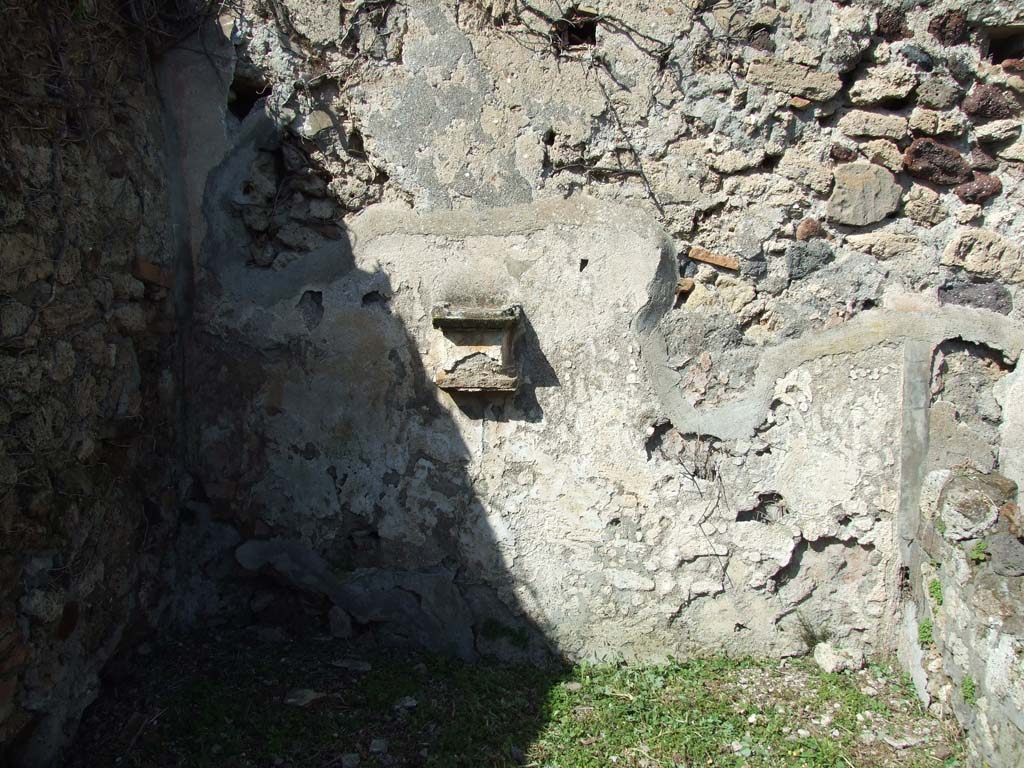
VI.16.12 Pompeii. March 2009. First rear room. North wall, west end of wall with lararium.
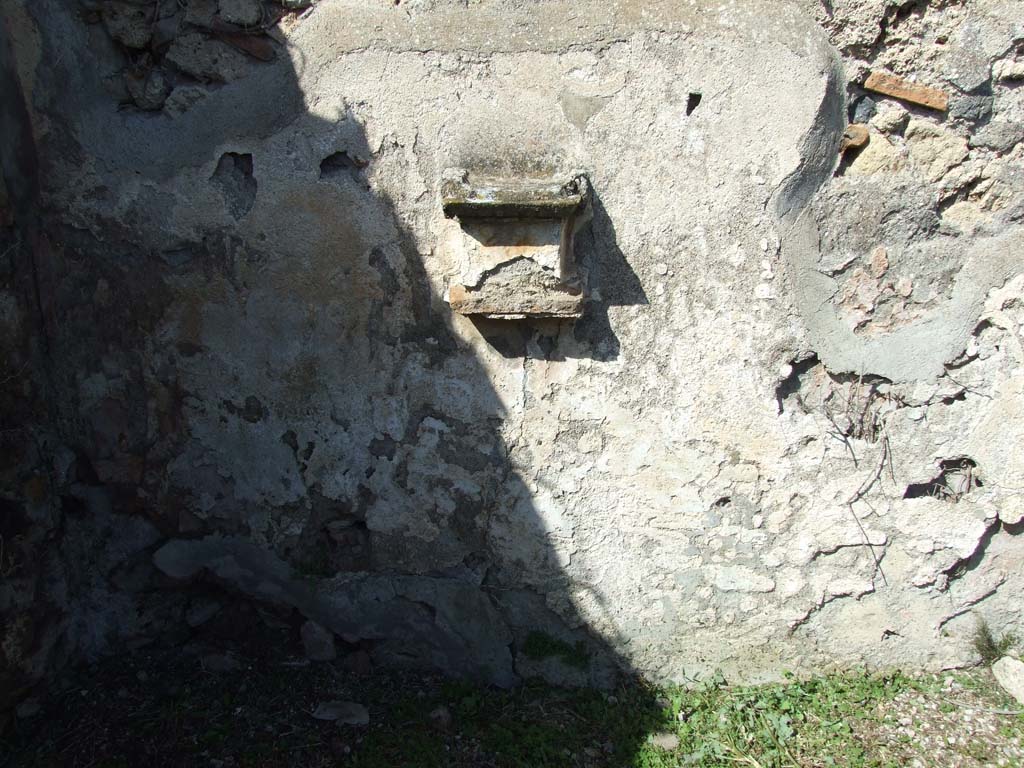
VI.16.12 Pompeii. March 2009. North wall with masonry altar projecting from wall.
There used to be two painted serpents, one either side of the altar.
A painted pine cone was on the wall above the altar.
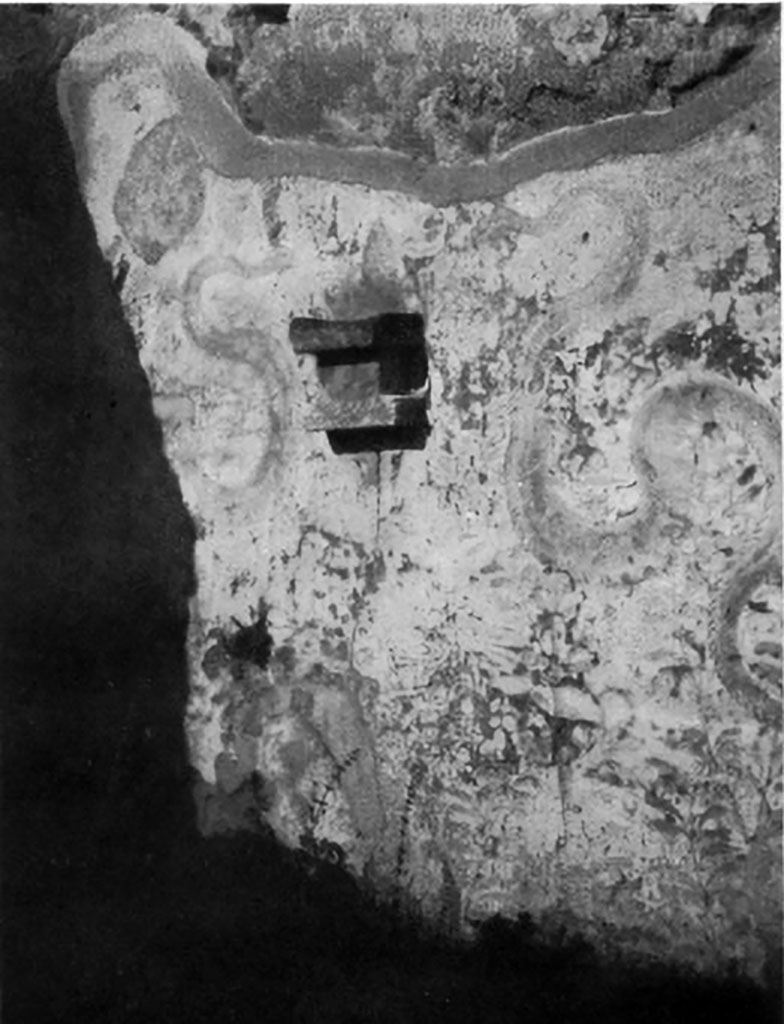
VI.16.12 Pompeii. 1930s photo by Tatiana Warscher of north wall with masonry altar projecting from wall.
The remains of the lararium painting with outlines of two painted serpents and the pine cone can be seen.
See Boyce G. K., 1937. Corpus
of the Lararia of Pompeii. Rome:
MAAR 14. (No.223, p58, Pl.28, 1)
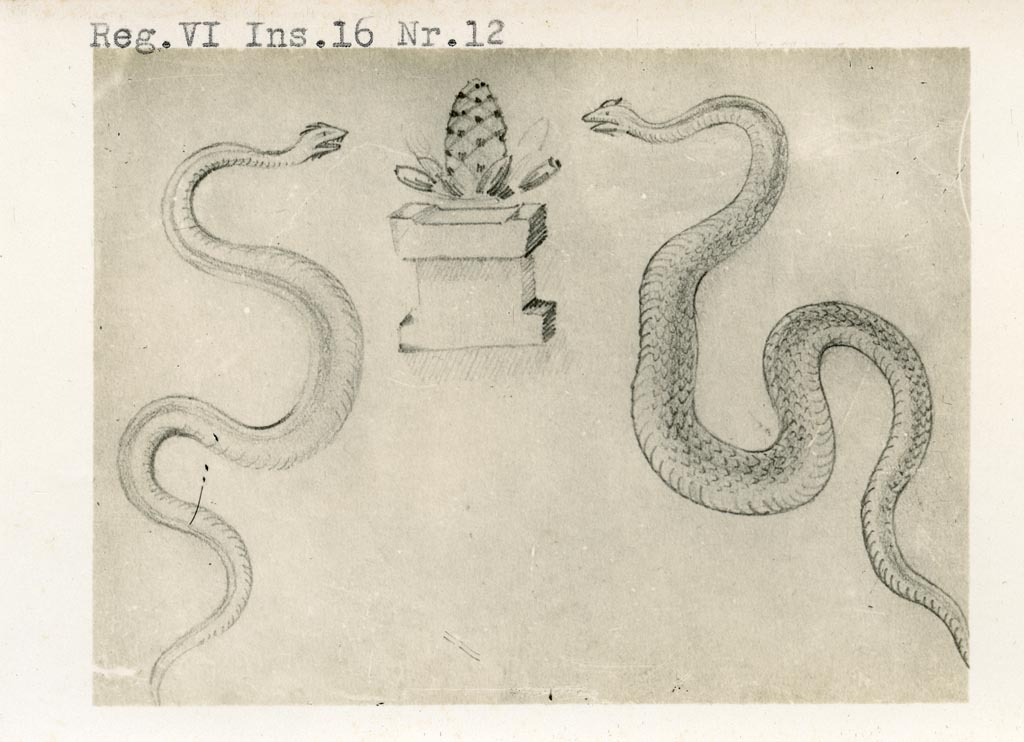
VI.16.12 Pompeii. Pre-1937-39. Early 20th century sketch of two painted serpents and the pinecone.
Photo courtesy of American Academy in Rome, Photographic Archive. Warsher collection no. 612.
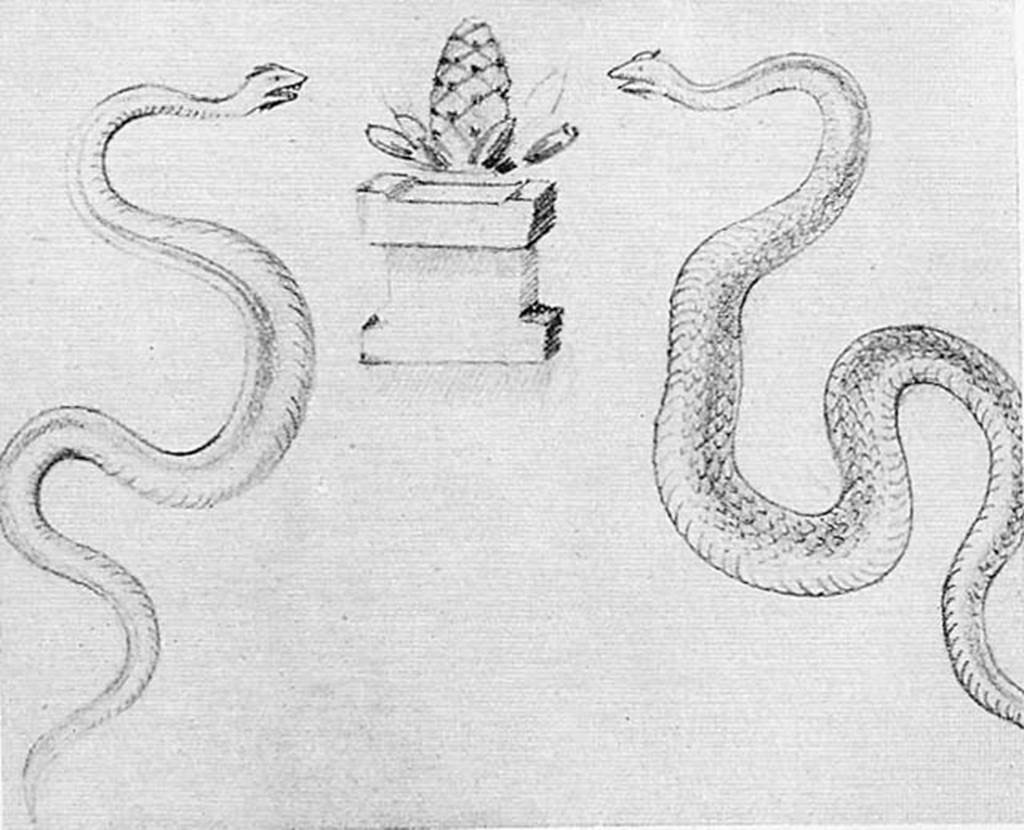
VI.16.12 Pompeii. Early 20th century sketch of lararium painting of two serpents and pinecone.
See Warscher, T., 1925. Pompeji: Ein Führer durch die Ruinen. Berlin und Leipzig: de Gruyter. (p.102, abb 21).
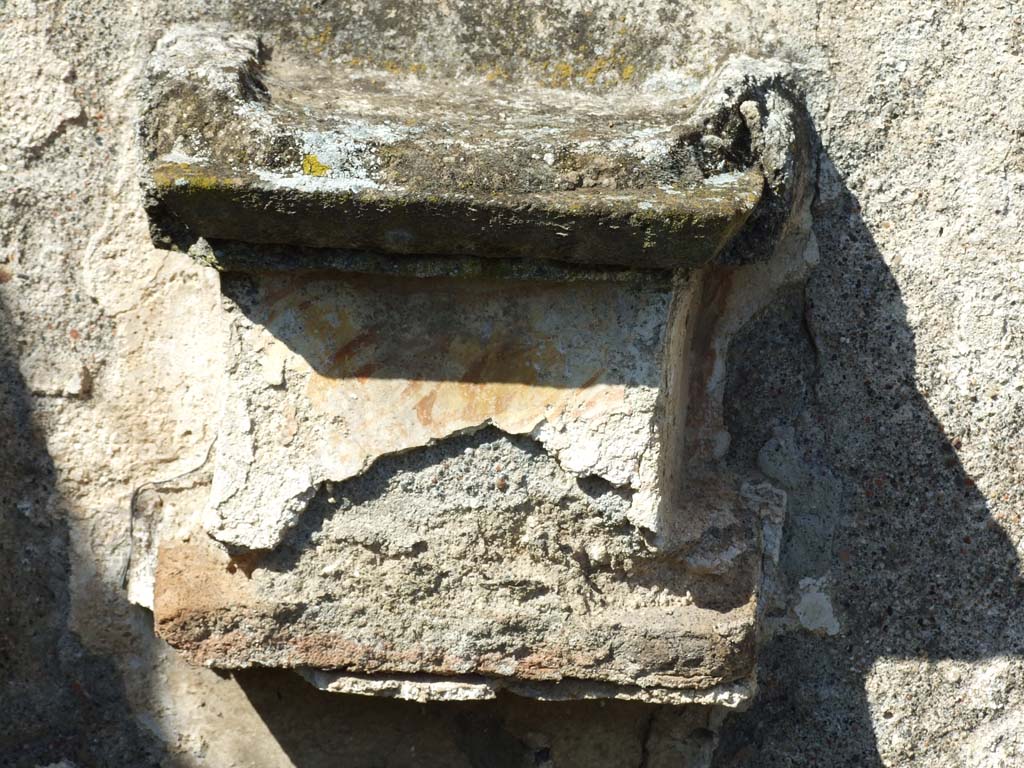
VI.16.12 Pompeii. March 2009. Masonry altar on north wall. According to Boyce, the altar was painted to represent coloured marble.
Painted above it on the wall were a pine cone, egg and fruit.
See Boyce G. K., 1937. Corpus
of the Lararia of Pompeii. Rome:
MAAR 14. (No.223, p58, Pl.28, 1)
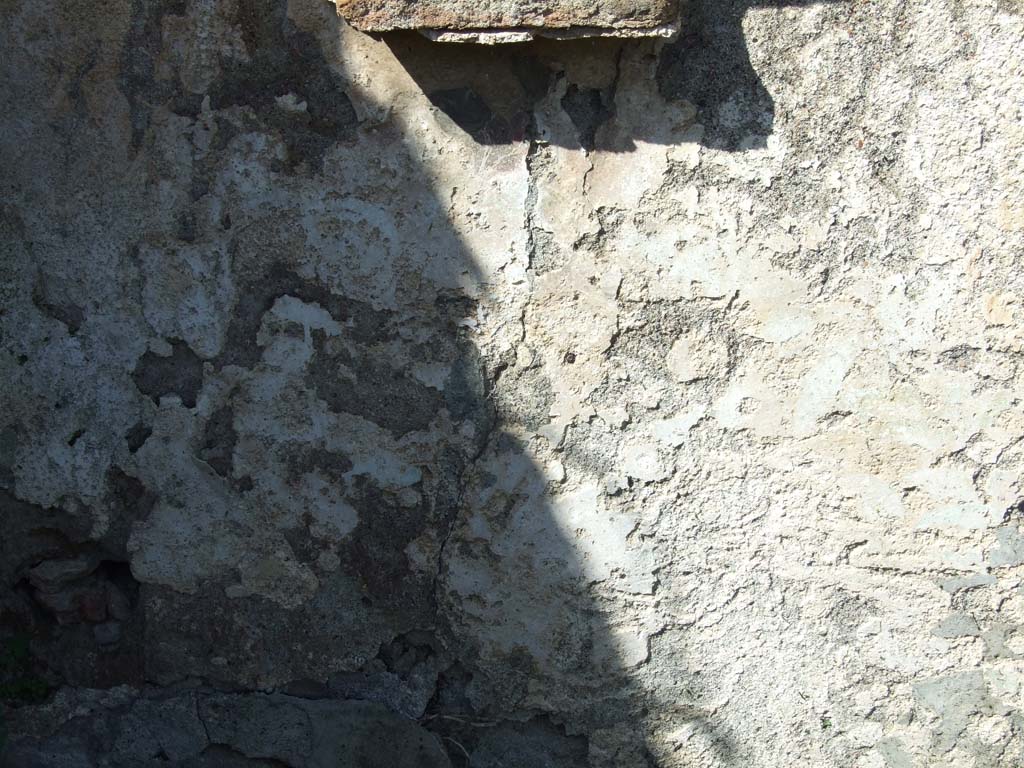
VI.16.12 Pompeii. March 2009. North wall under altar. According to Boyce, there was a panel of white stucco bordered in red.
The lower half was filled with painted green plants with some red leaves.
Two huge serpents, each with red crest and beard, were on either side of the small stone altar which is embedded into the wall.
See Boyce G. K., 1937. Corpus of the Lararia of Pompeii. Rome:
MAAR 14. (No.223, p58, Pl.28, 1)
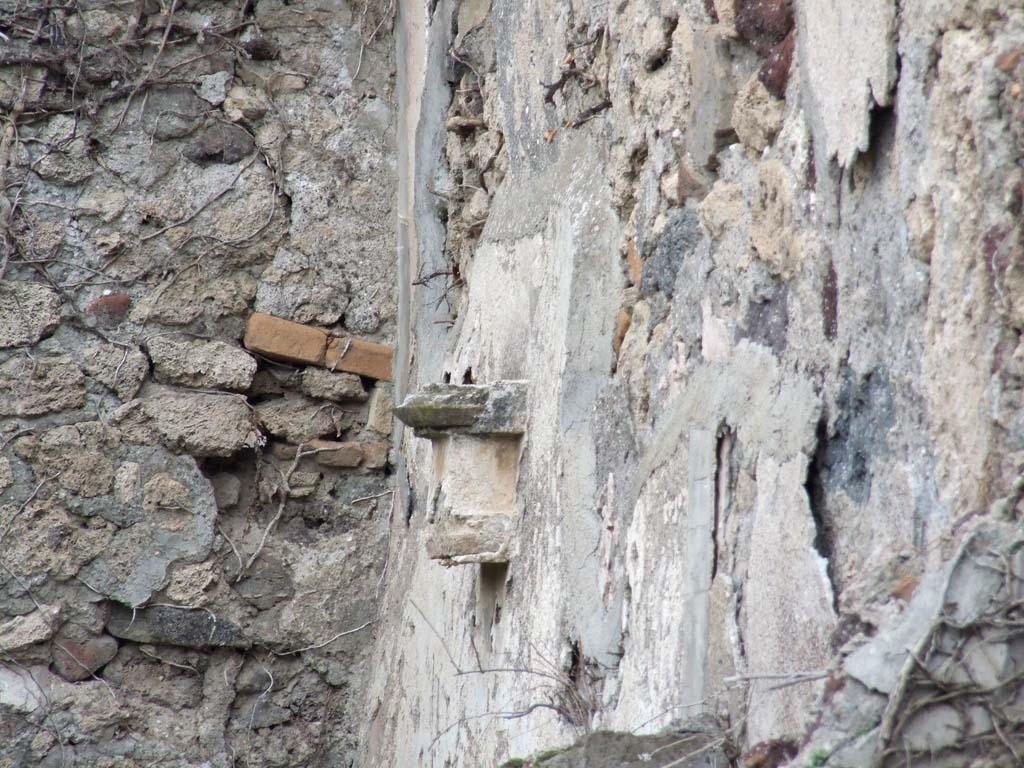
VI.16.12 Pompeii. December 2007. Looking across rear room to rear north-west corner and projecting masonry altar.
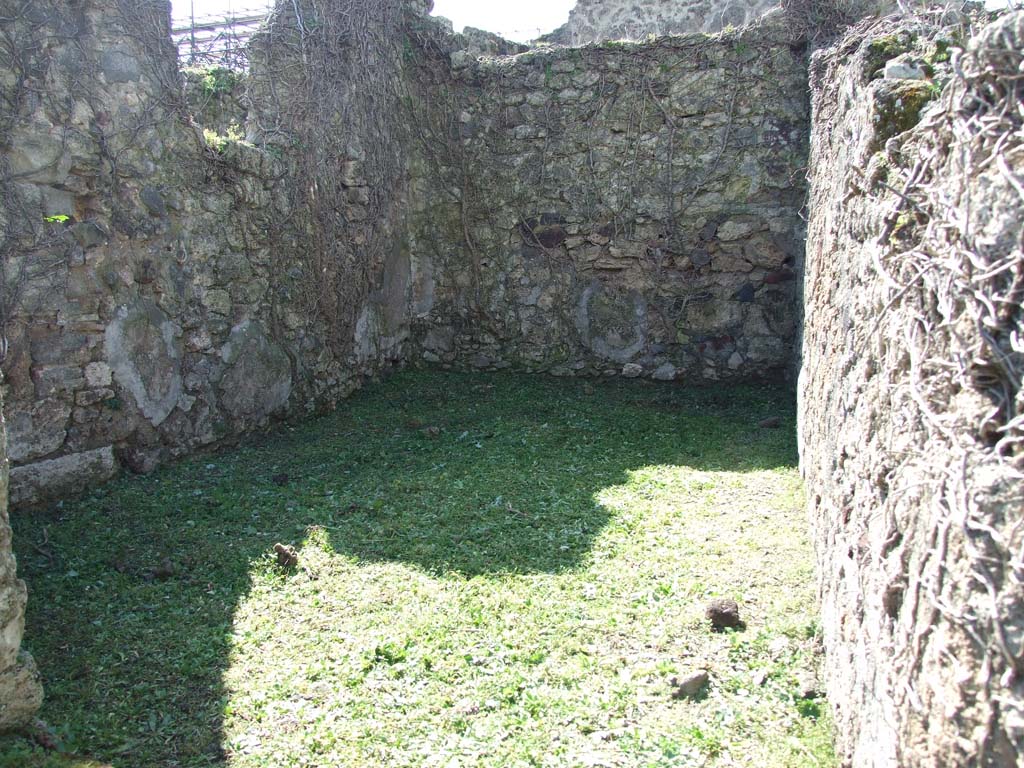
VI.16.12 Pompeii. March 2009. Looking west across second rear room.
According to NdS, a narrow doorway found with only one wooden doorjamb on the left, led into the second rear room.
The tops of the walls were finished with rough white plaster, the lower part had a high dado of brick plaster (intonaco laterizio).
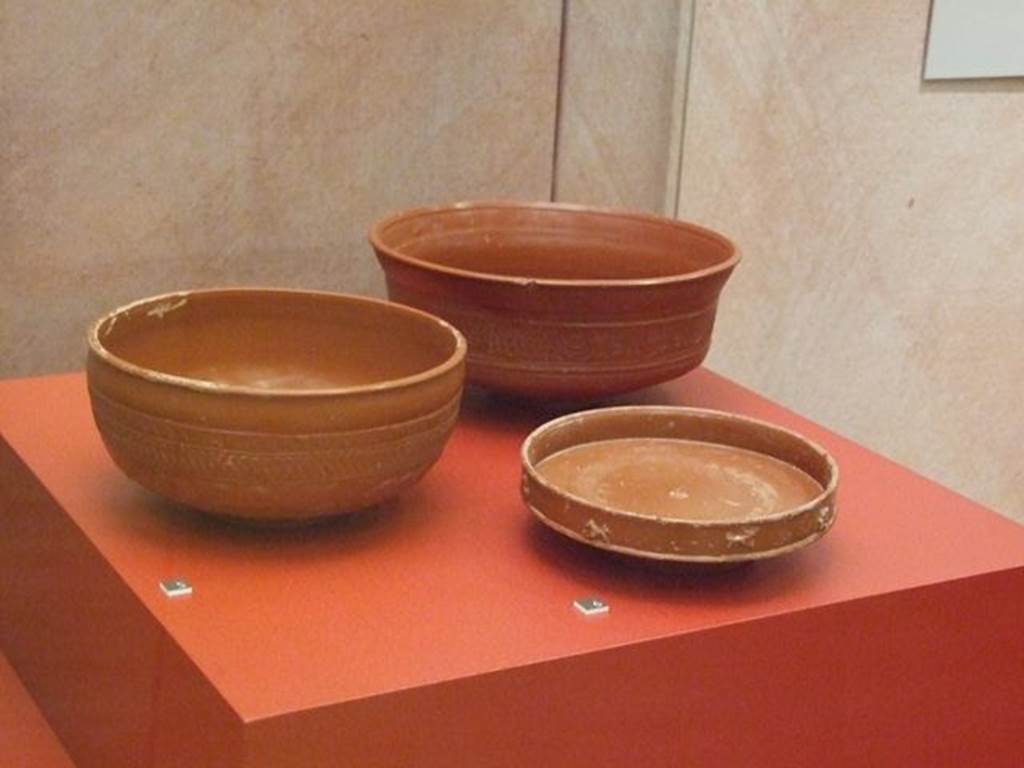
VI.16.12 Pompeii. Terra sigillata plate (front right) made by Sextus Murrius (or Murrus) Festus, Libertus.
SAP inventory number 56106.
Photographed at “A Day in Pompeii” exhibition at Melbourne Museum. September 2009.
The NdS 1908 records the finding on the 3rd of October 1902, by the north wall, of -
Due fondi di scodello aretine, l'uno con la marca di
fabbrica:
S · M · F
See Notizie degli Scavi di Antichità, 1908,
p. 61.
According to the exhibition labels in Melbourne and Cincinnati this translates as Murrus.
According to De Carolis, it takes the form of a footprint and translates as Murrius, a stamp occurring on many other items at Pompeii.
See Conticello,
B., Ed, 1990. Rediscovering Pompeii.
Rome: L’Erma di Bretschneider, no. 122, p. 205.
See Pucci G., 1977. Le terre sigillate italiche, galliche e orientali in L’Instrumentum Domesticum di Ercolano e Pompei nella prima età imperiale. Roma: L’Erma di Bretschneider, p. 13 and note 25.
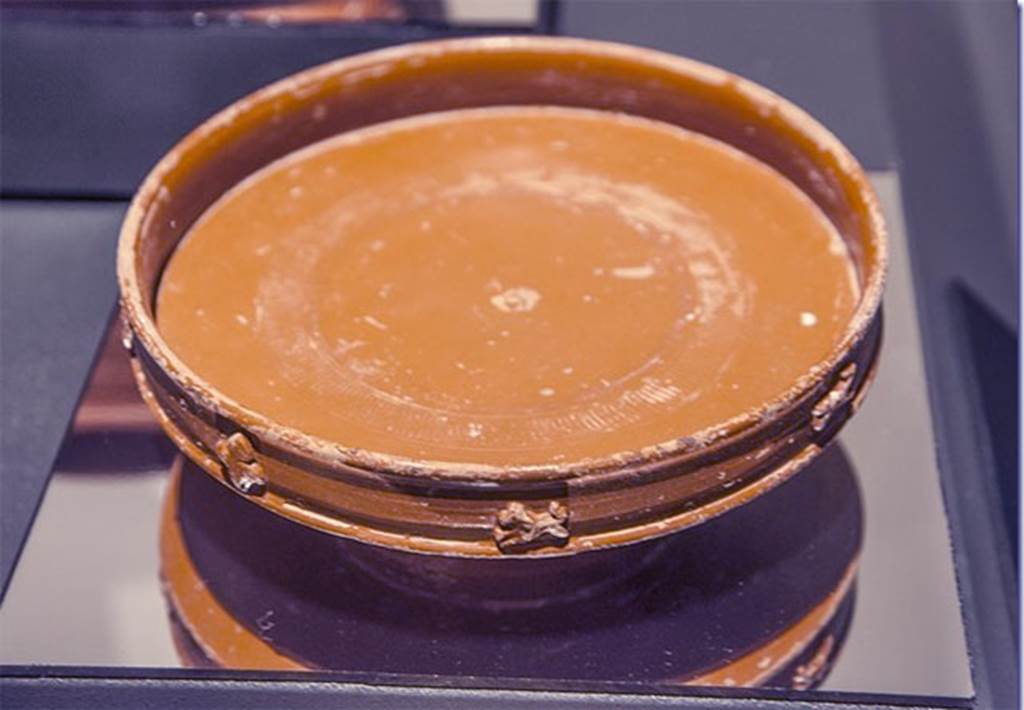
VI.16.12 Pompeii. Terra sigillata plate made by Sextus Murrius (or Murrus) Festus, Libertus.
SAP inventory number 56106.
Photographed at “A Day in Pompeii” exhibition at Cincinnati. Photo courtesy of Dan Pater.