VI.15.18 Pompeii. Stable and
dormitory.
Linked to VI.15.16. Excavated 1897.
In Notizie degli Scavi di Antichità, January 1897, plan on p.14, or June 1897 (p.269), this doorway was not yet shown.
In Notizie degli Scavi di Antichità, November 1897, p.460 it is seen as VI.15.18. See Note on Region VI, Insula 15 plan for information.
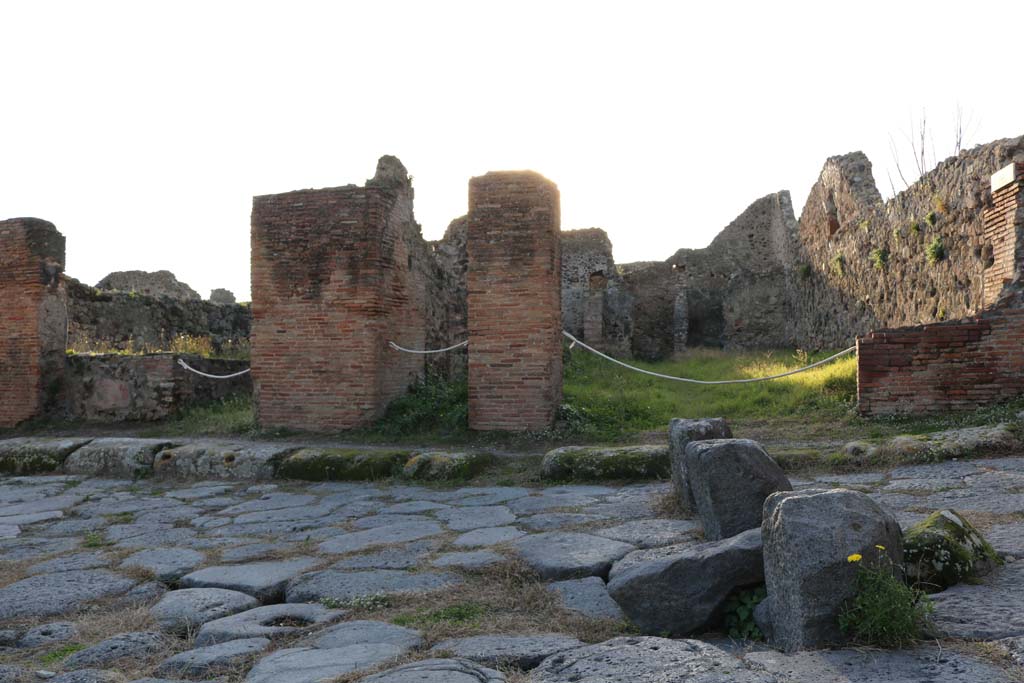
VI.15.18 Pompeii, on right.
December
2018.
Looking
towards entrance doorways on west side of Vicolo dei Vettii. Photo courtesy of
Aude Durand.
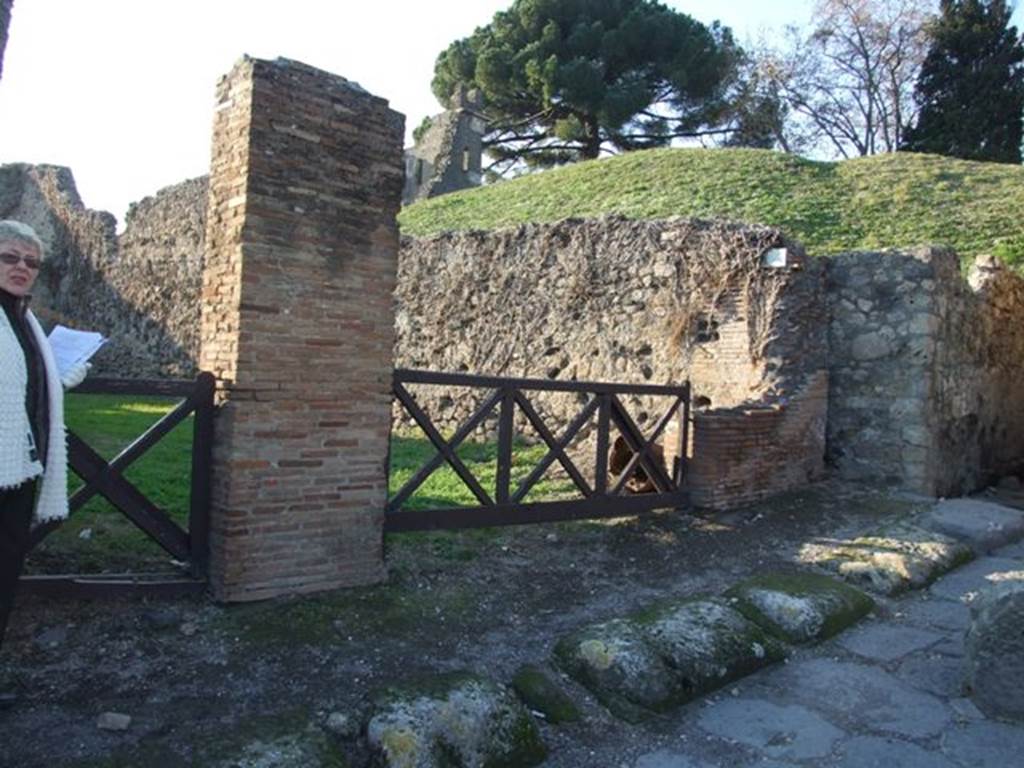
VI.15.18 Pompeii. December 2007. Looking west to entrance doorway.
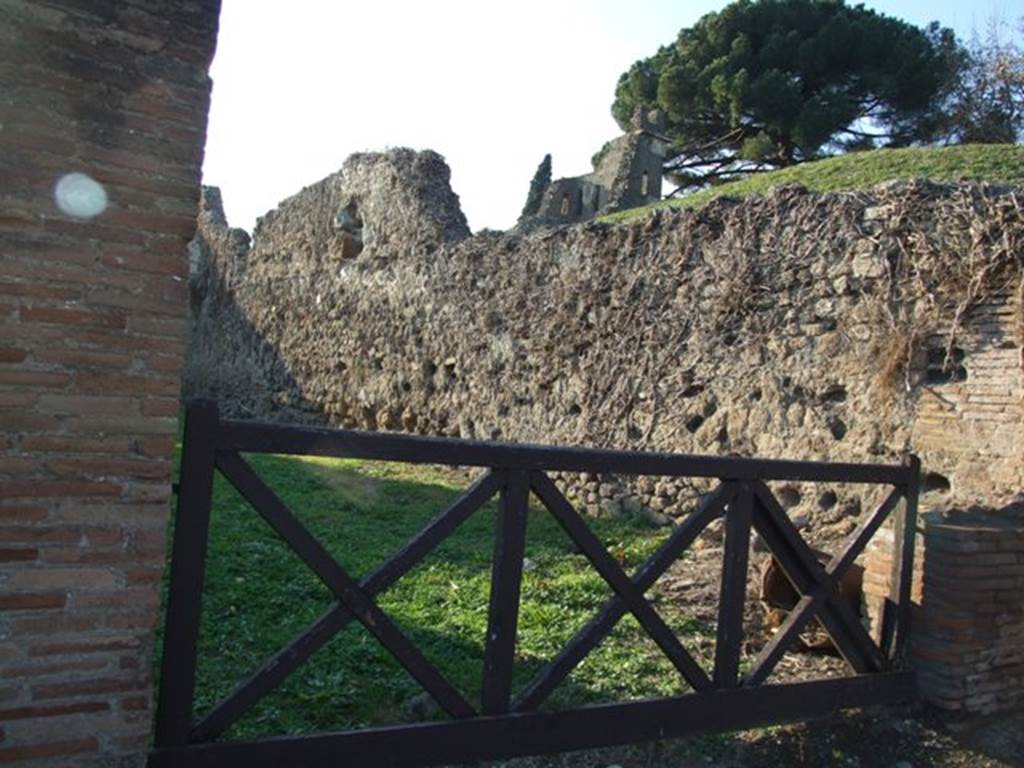
VI.15.18 Pompeii.
December 2007. Entrance doorway.
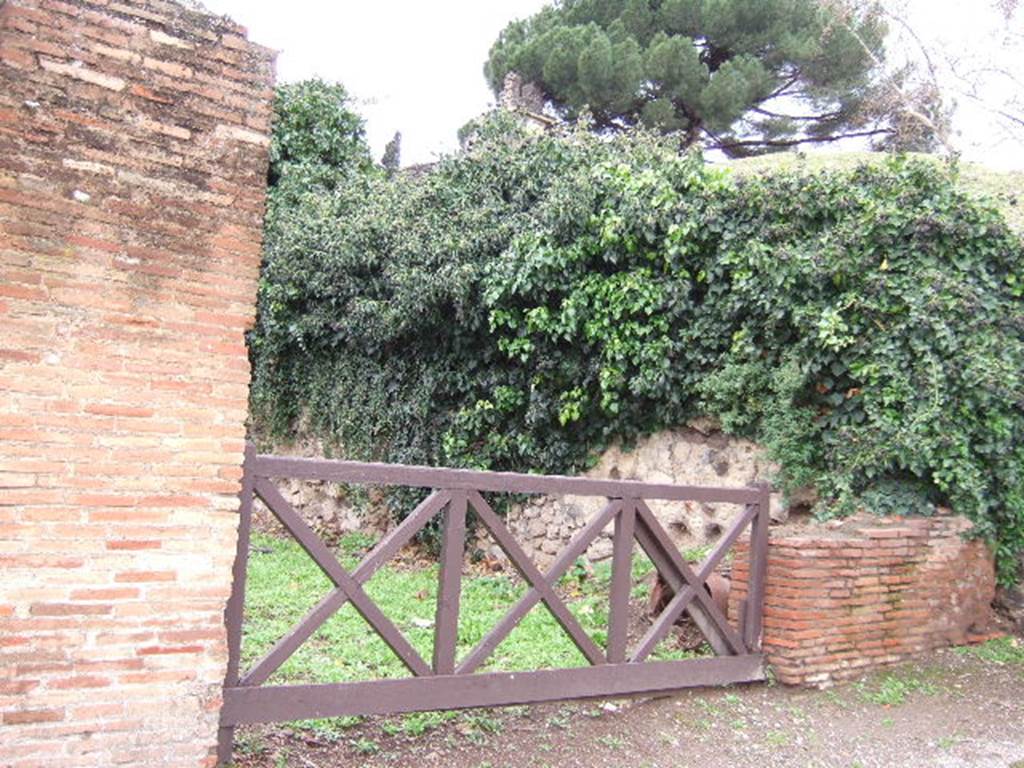
VI.15.18 Pompeii.
December 2005. Entrance doorway.
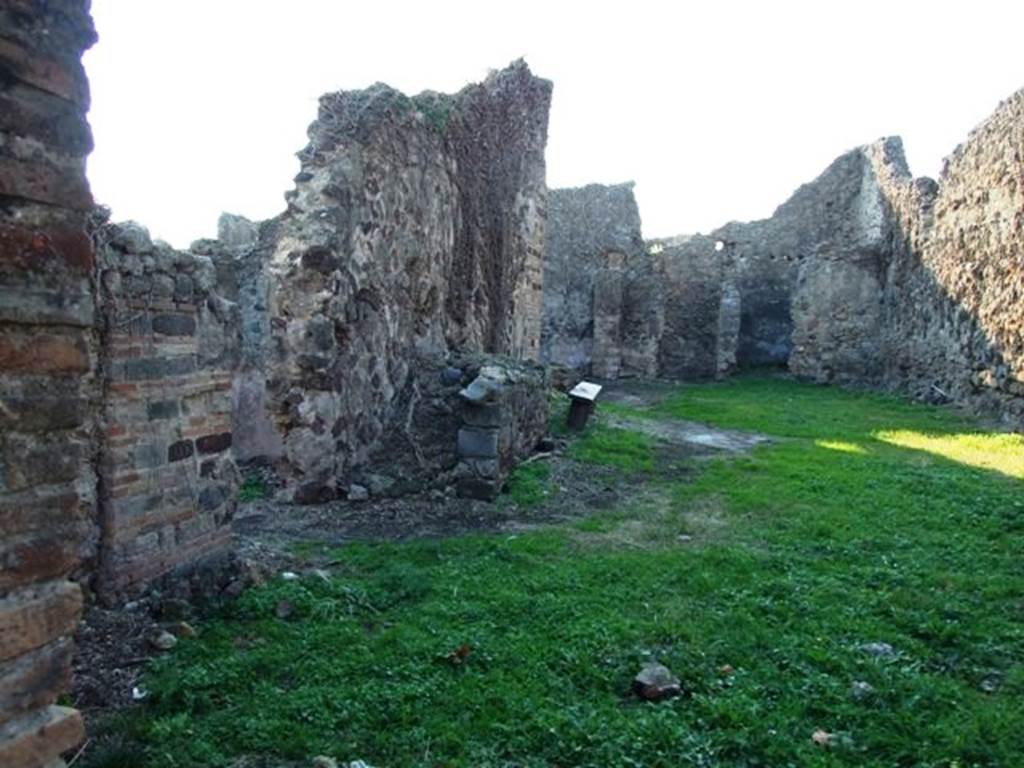
VI.15.18 Pompeii. December 2007. South wall with doorway leading into VI.15.16.
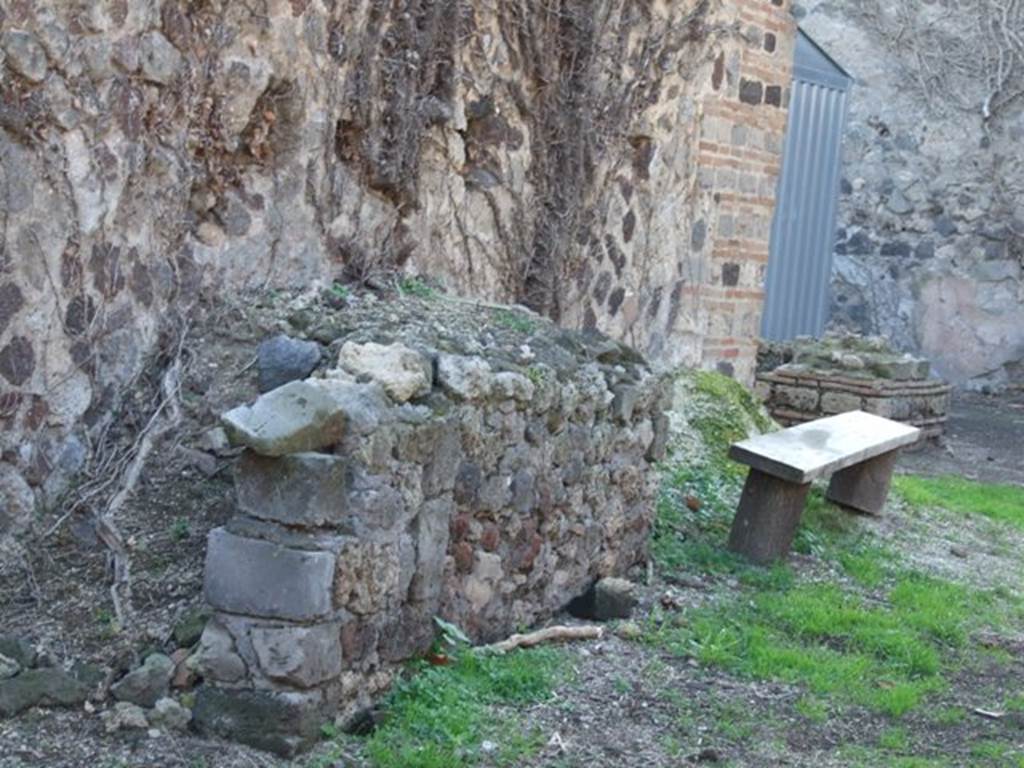
VI.15.18 Pompeii. December 2007. Remains of masonry stairs near south wall.
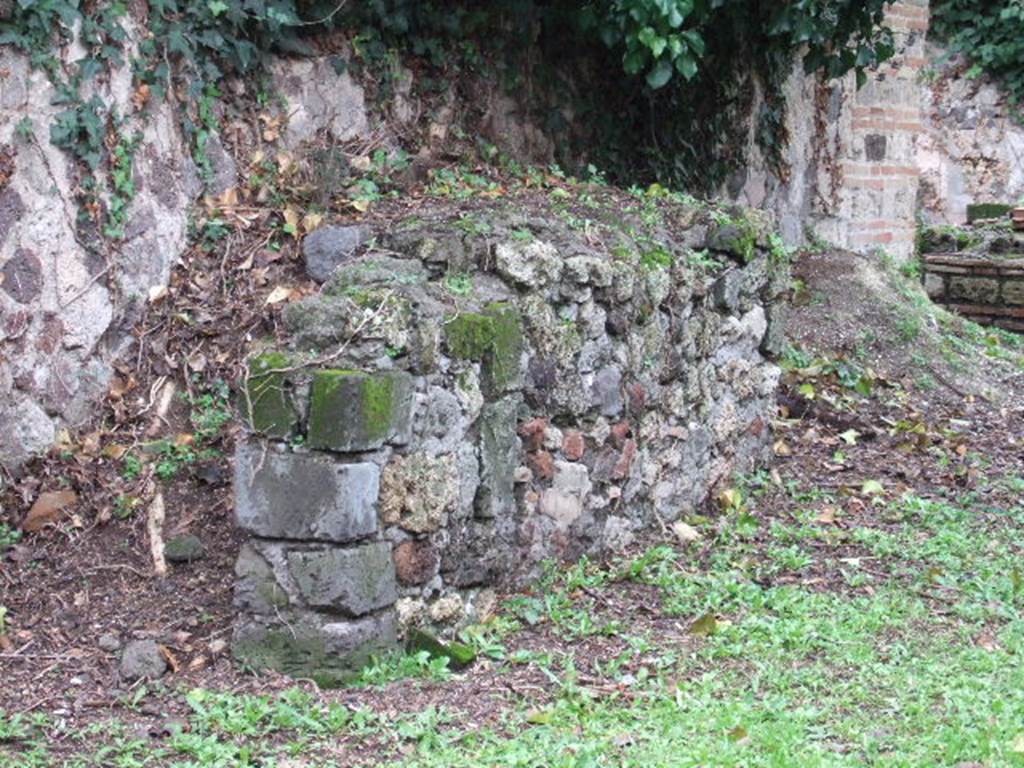
VI.15.18 Pompeii. December 2005. Remains of masonry staircase to upper floor, near south wall.
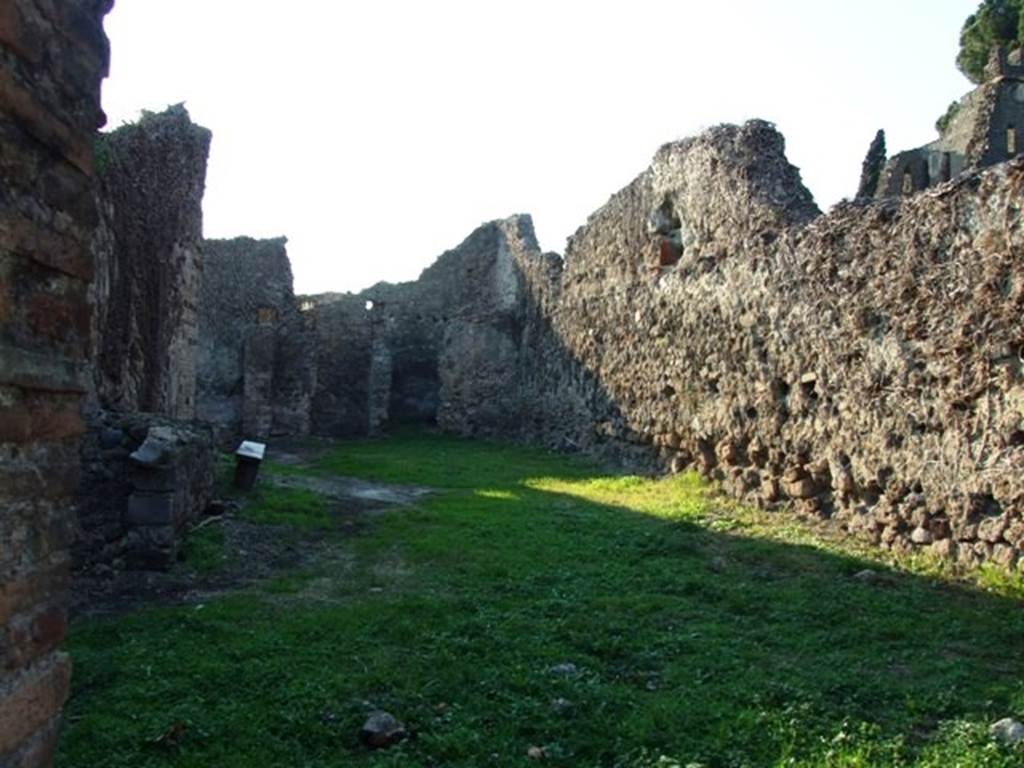
VI.15.18 Pompeii. December 2007. Looking west from entrance.
According to Boyce, this was an irregular building which was undergoing alterations at the time of the eruption.
Its purpose was not clear, perhaps the large central room was used for housing carts.
The walls seem to have been all undecorated except for those in a long narrow room in the south-west corner.
In the south end of that room, a domestic sacellum was built.
The sacellum had a vaulted ceiling and a floor of pounded sherds, and according to Mau dated from the period of the First Style.
Against the south wall stood a masonry altar with concave upper surface.
It was coated with white stucco and upon its front side was painted a small flaming altar with a large serpent on each side.
Near to it on the east wall was a small niche, on the white background of the rear wall was a painted figure.
The figure was clad in a blue garment and reclining upon a couch.
The rear and side walls of the niche were adorned with painted red leaves and three quinces.
In the room to the north, through which access to this sacellum was gained, on the east wall was a rectangular panel of white stucco.
Within the panel was set a tiny niche for a lamp.
Above the panel of white stucco was a second niche coated with coarse plaster and having a painting done in red, on the rear wall.
This painting was very poorly preserved but seemed to represent an aedicula and within it an altar.
See Notizie degli Scavi di Antichità, 1897,
463, photograph p.464.
See Boyce G. K., 1937. Corpus of the Lararia of Pompeii. Rome: MAAR 14. (p.56, no.218)
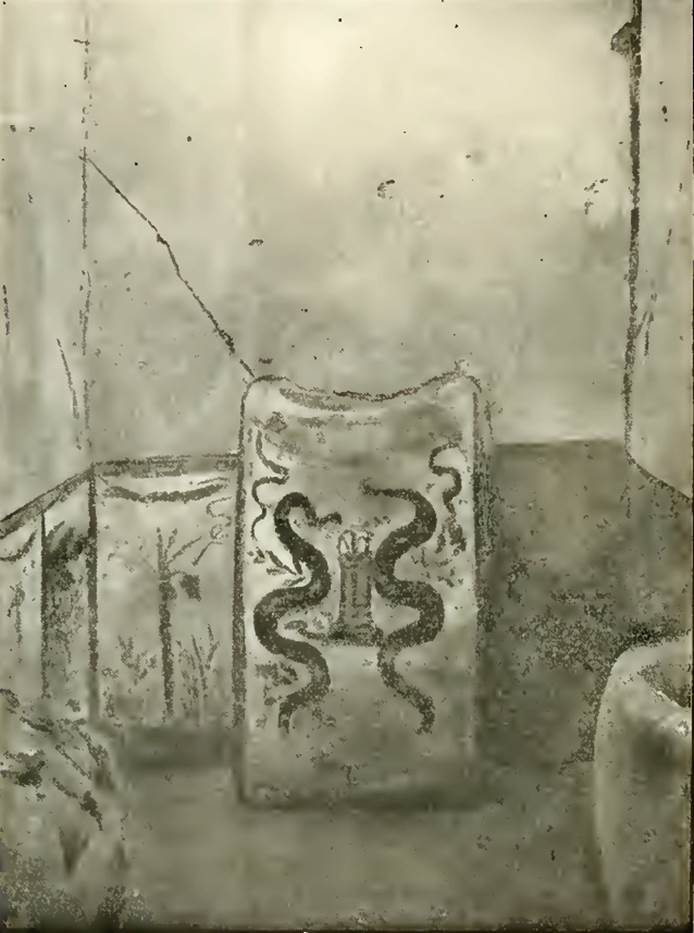
VI.15.18
Pompeii.1897. Sacellum, with altar.
See Notizie
degli Scavi di Antichità, 1897, p.464, fig. 3.
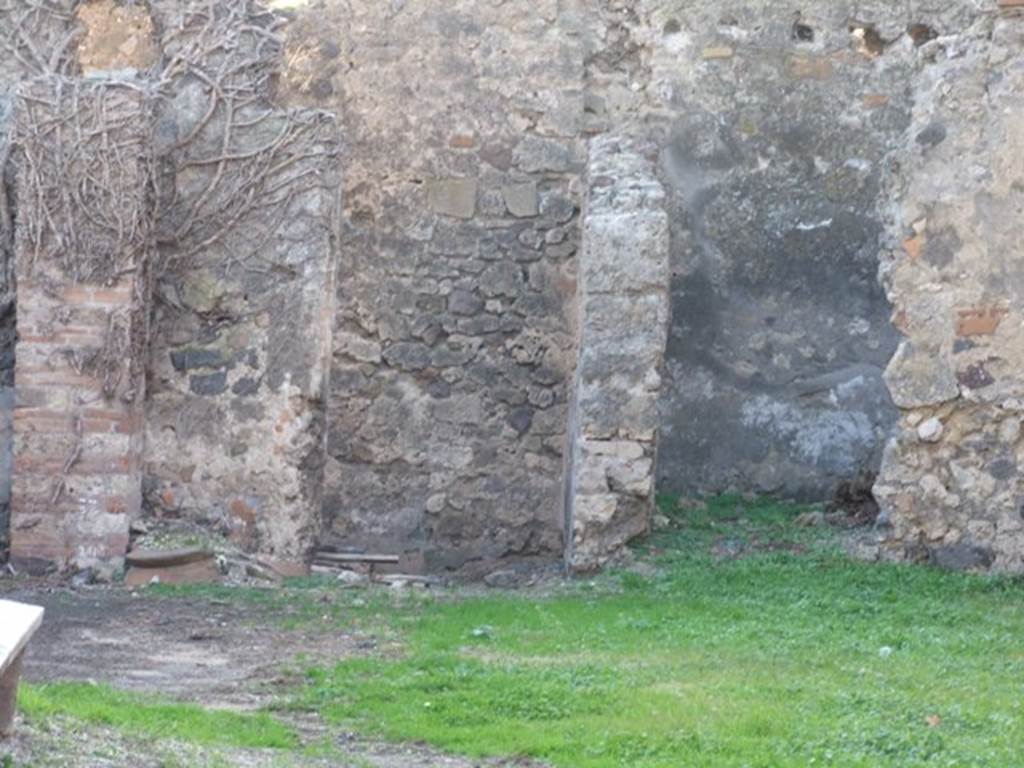
VI.15.18 Pompeii. December 2007. West side with doorways to rear rooms.
The doorway, on the left, leads to the room where, according to NdS, there were two masonry basins buried in the soil.
They were near the west wall and were faced with cocciopesto and joined with each other.
At the south end of this same room was the domestic sacrarium.
Near the south wall was the altar faced with white plaster.
On the east wall, at the extreme south end, nearly at the level of the floor, was a rectangular niche.
The niche was faced internally with white plaster and a painted female figure lying on a bed was painted on the rear wall.
In the lower left side of this niche were painted red leaves similar to Ivy, and on the right side were three quinces with their branch.
The doorway, on the right, leads to a room that showed traces of an upper mezzanine, and had two blocked doorways.
One was in the north wall, the other was in the south wall.
See Notizie degli Scavi di Antichità, November 1897, (p.463)
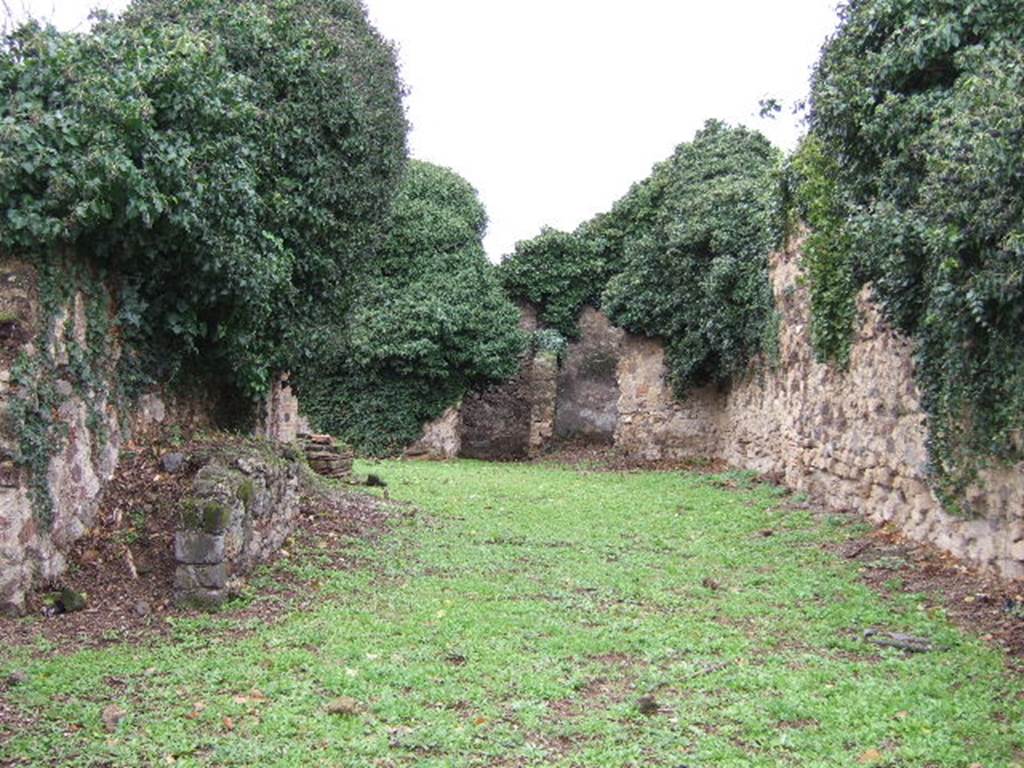
VI.15.18 Pompeii. December 2005. Looking west from entrance.
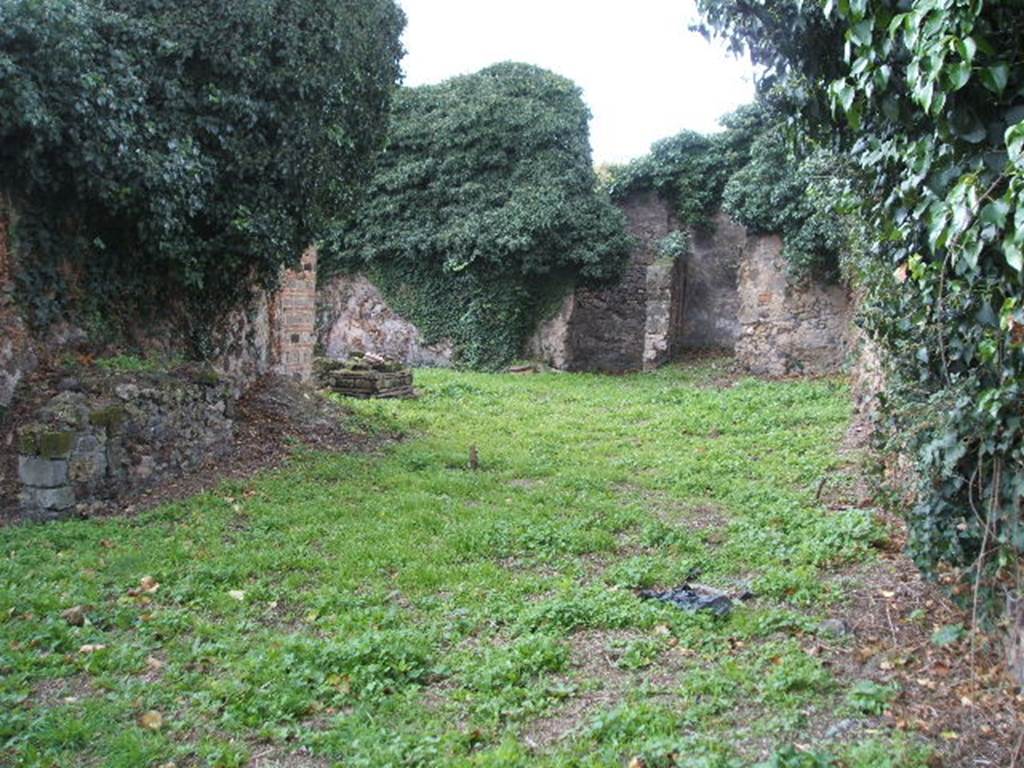
VI.15.18 Pompeii. December 2005. Looking west.
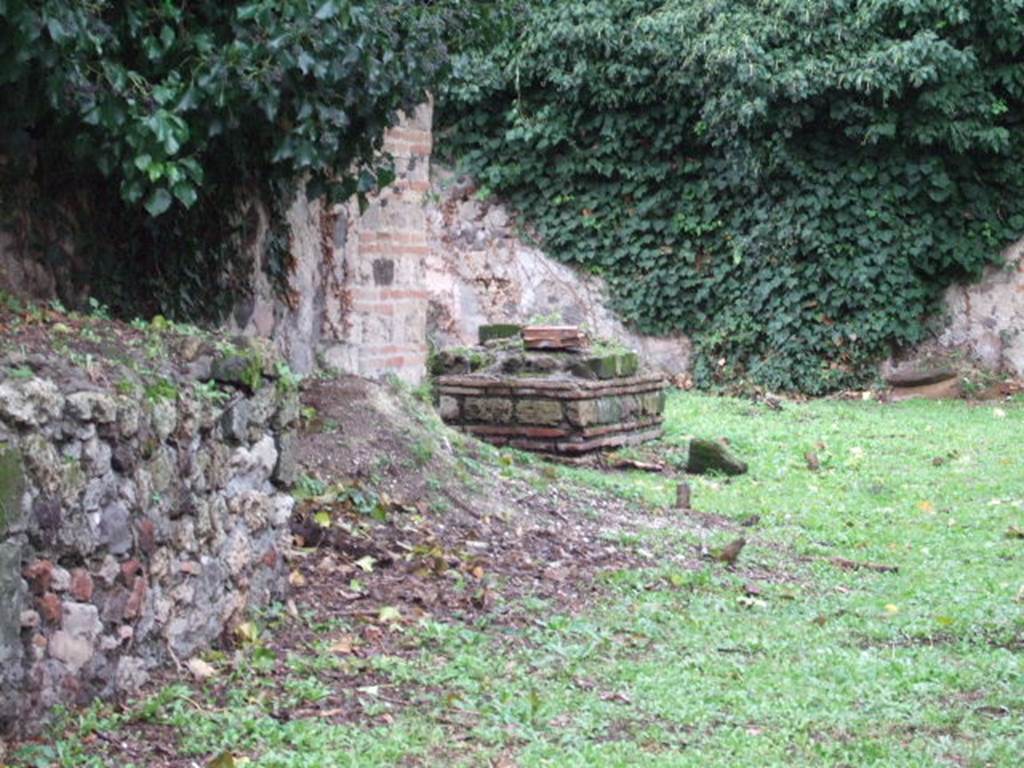
VI.15.18 Pompeii. December 2005. Looking towards rear and garden area in south-west corner.
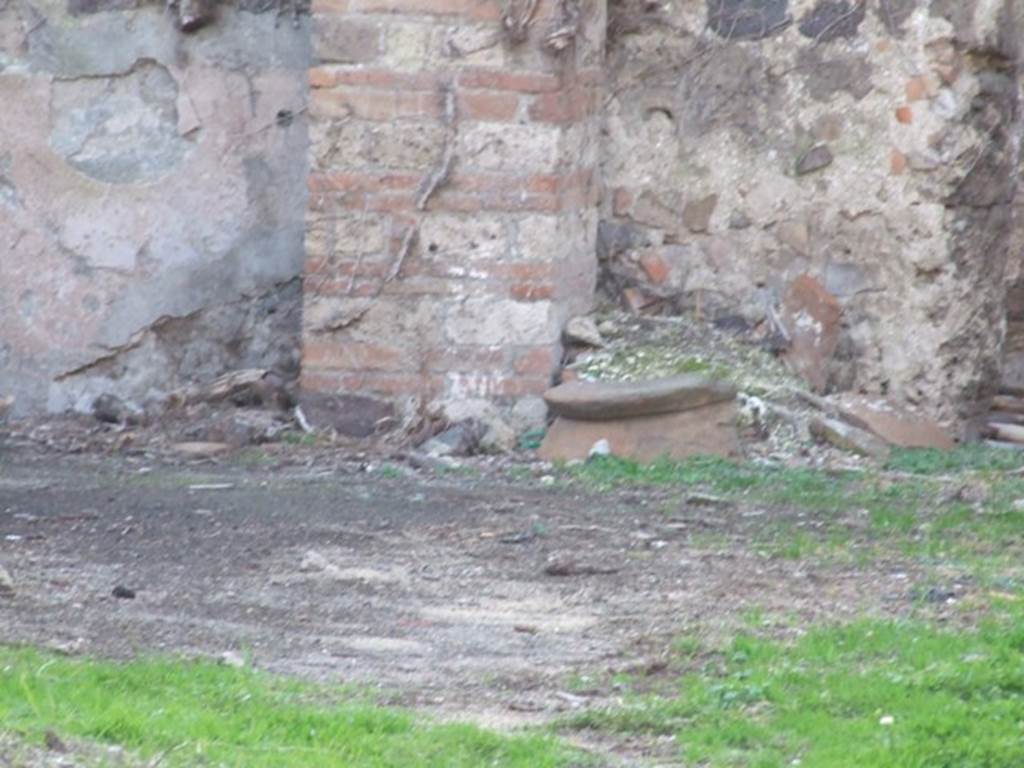
VI.15.18 Pompeii. December 2007. South-west corner, on the left would be part of the small garden.
According to NdS, this small garden would have been surrounded by a portico on three sides.
On the west side was a small room, whose use was not clear.
See Notizie degli Scavi di Antichità, November 1897, (p.462-3)
According to Jashemski, the site was already badly damaged at the time of the eruption.
At the left rear (south-west) is a small area that Sogliano identified as a small garden.
Mau thought the site was too badly damaged to be interpreted.
See Jashemski, W. F., 1993. The Gardens of Pompeii, Volume II: Appendices. New York: Caratzas. (p.158)
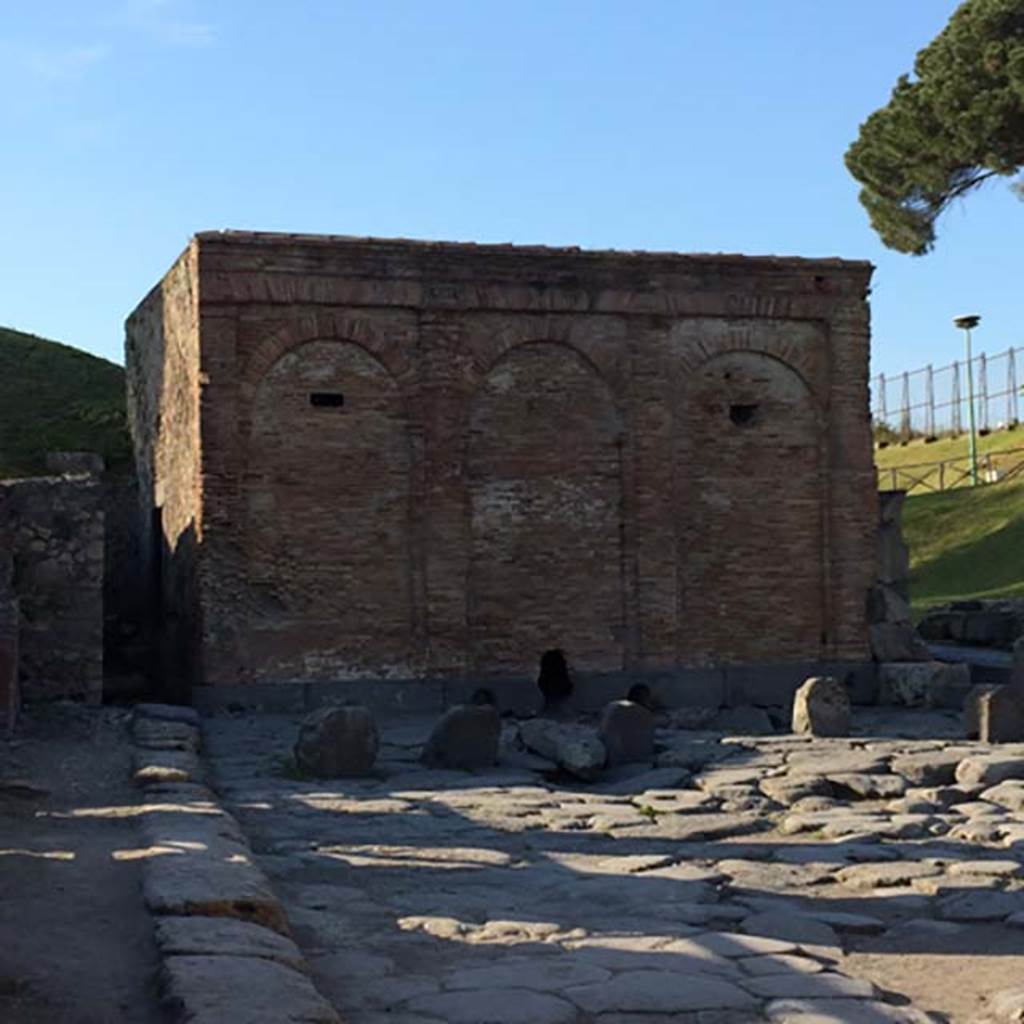
Water tower near to VI.15.18, VI.16.22 and VI.16.23, Pompeii. April 2015. (for more pictures, see our page at “Fountains 61500”).
Photo courtesy of Sharon M. Wolf.
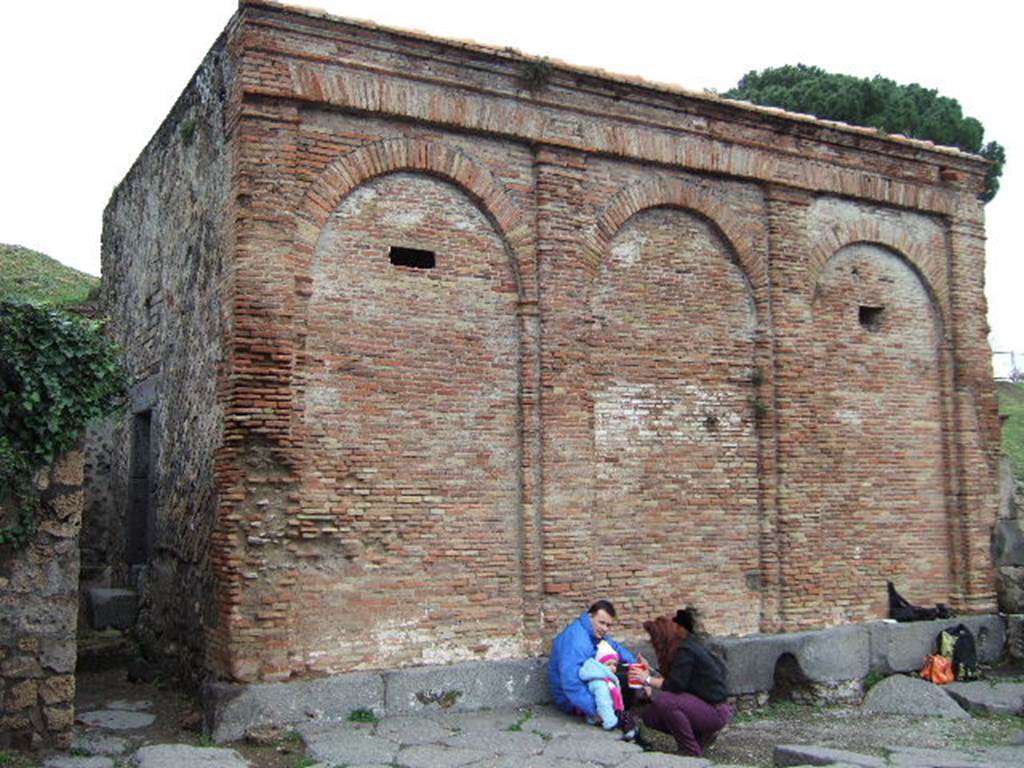
Water tower near to VI.15.18, VI.16.22 and VI.16.23, Pompeii.
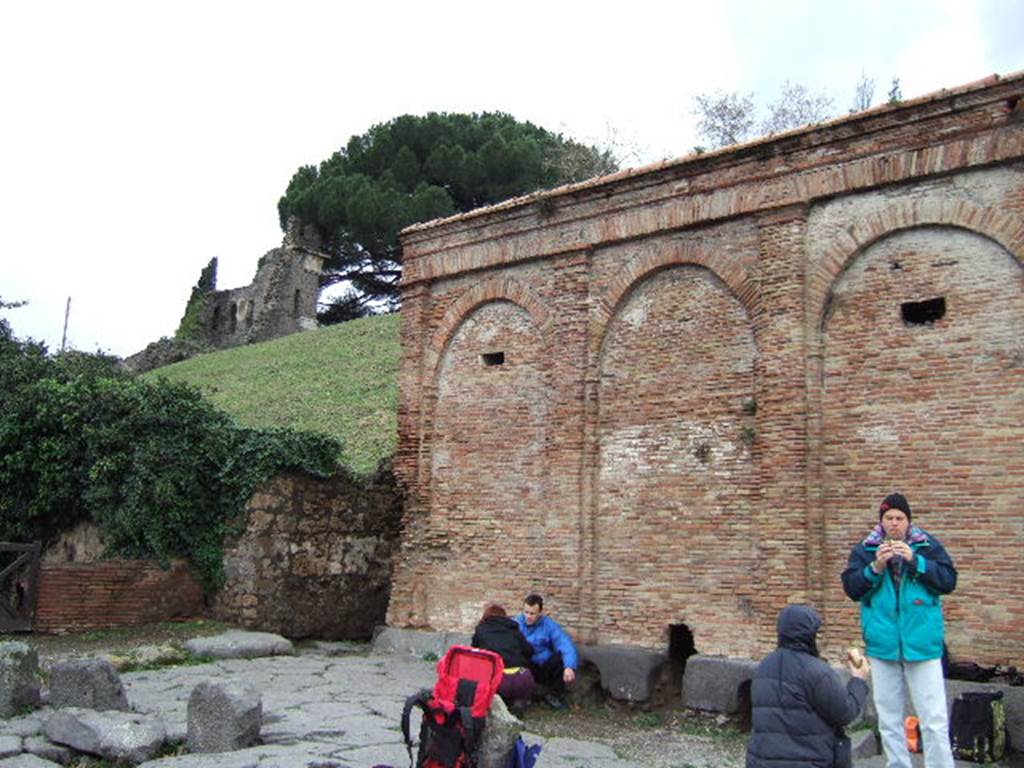
Water tower near to VI.15.18, VI.16.22 and VI.16.23, Pompeii.