VI.14.28 Pompeii. Taberna Lusoria. Excavated 1876.
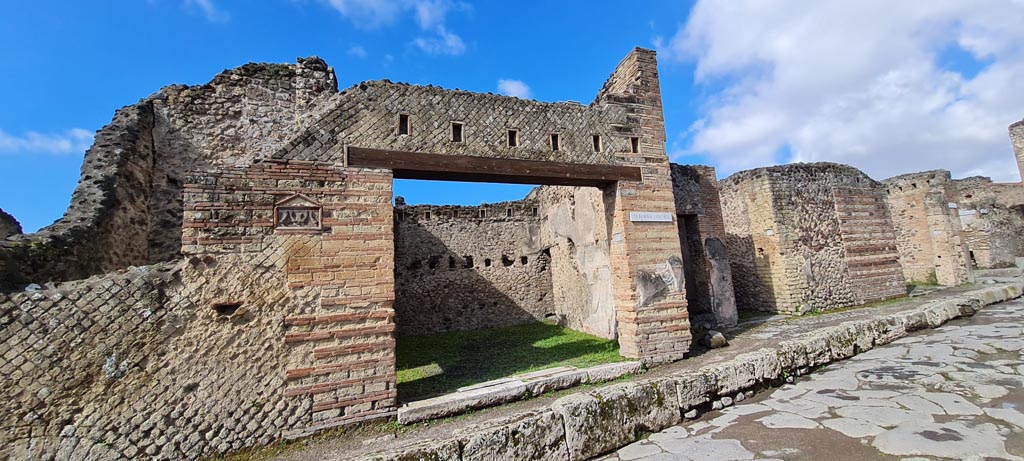
VI.14.28 Pompeii. April 2022.
Looking towards entrance doorway on west side of Via del Vesuvio. Photo courtesy of Giuseppe Ciaramella.
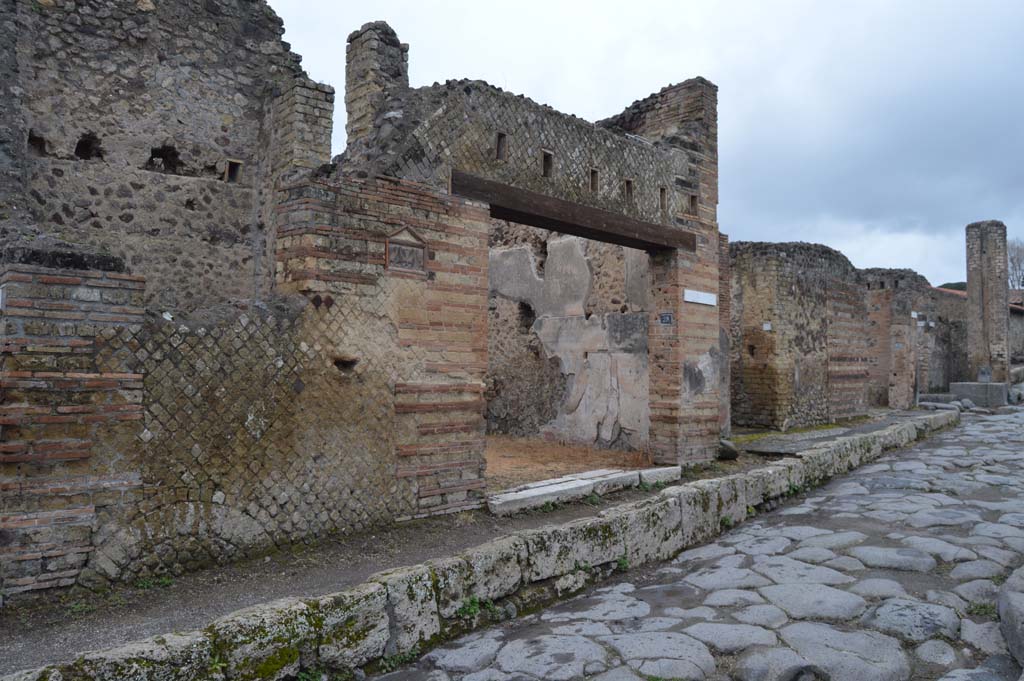
VI.14.28
Pompeii. March 2018. Looking north-west on Via del Vesuvio towards
entrance doorway, and with remains of upper floor.
Foto Taylor Lauritsen, ERC Grant 681269 DÉCOR.
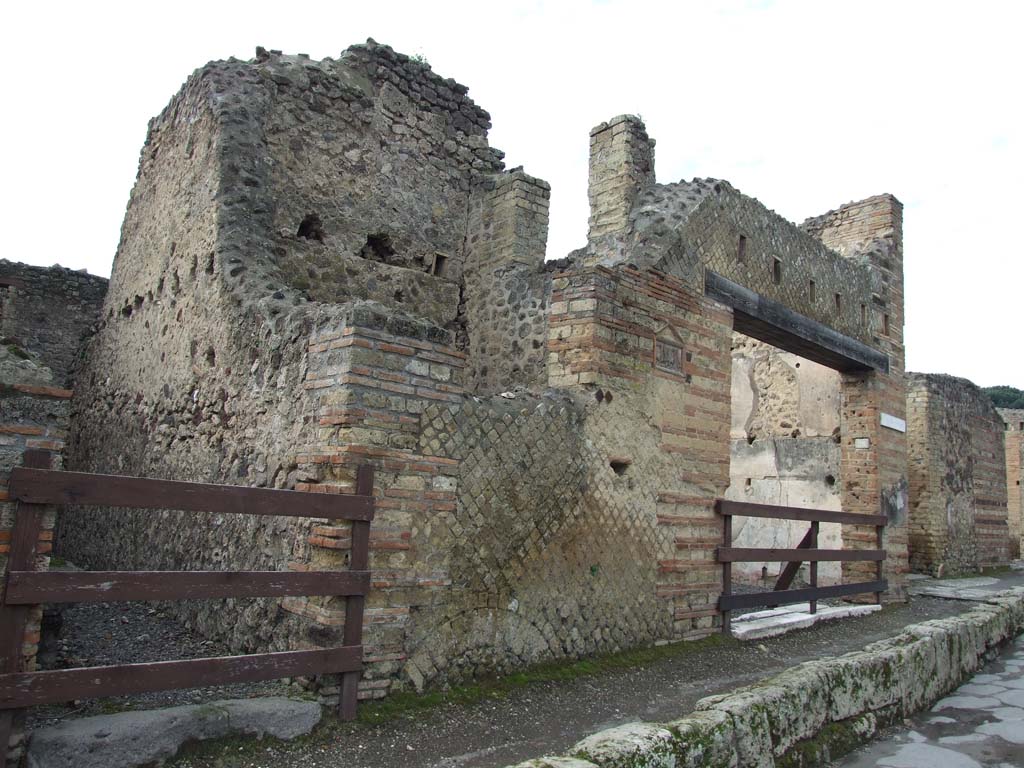
VI.14.28 Pompeii. December 2006. Looking north-west on Via del Vesuvio towards entrance and showing remains of upper floor.
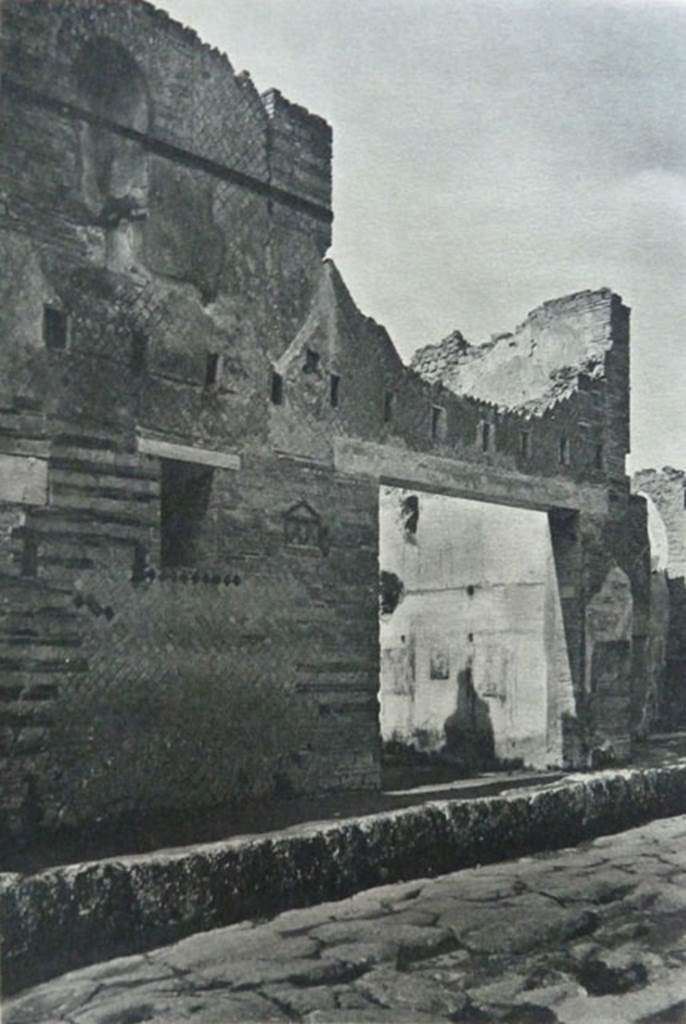
VI.14.28 Pompeii. Old undated photograph.
View showing upper floor and wall paintings in situ.
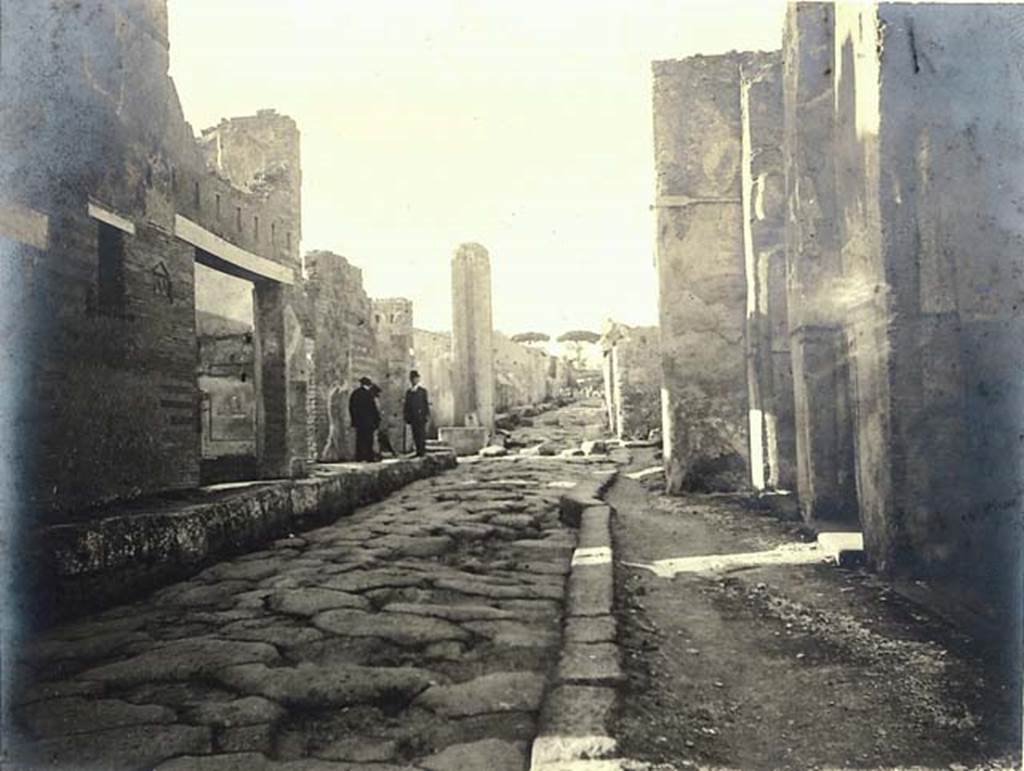
VI.14.28 Pompeii.
About 1909. Via del Vesuvio, looking north.
Taberna Lusoria, on the left, showing upper storey, and plaque on outside wall. Photo courtesy of Rick Bauer.
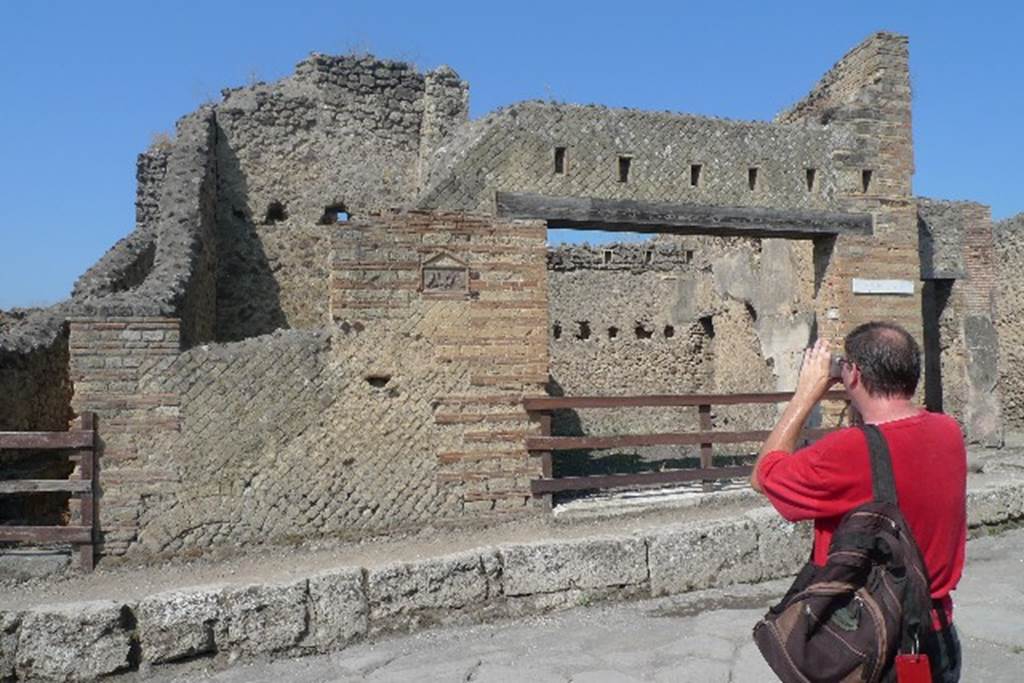
VI.14.28 Pompeii. July 2010. Looking west across Via del Vesuvio. Photo courtesy of Michael Binns.
According to BdI, this doorway would have been open onto the roadway in the manner of a shop.
However, when found, it did not have a sales-counter/podium.
See Bullettino dell’Instituto di Corrispondenza
Archeologica (DAIR), 1876, (p.49)
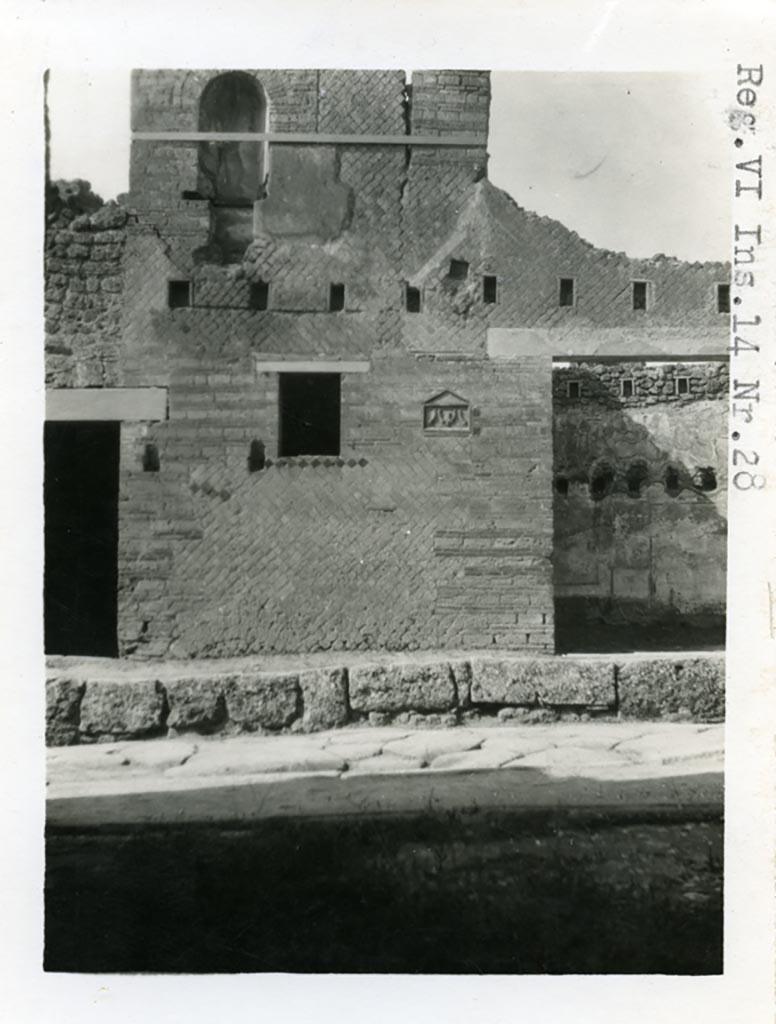
VI.14.28 Pompeii. Pre-1937-39. Looking west across Via del Vesuvio towards front facade.
Photo courtesy of American Academy in Rome, Photographic Archive. Warsher collection no. 1791.
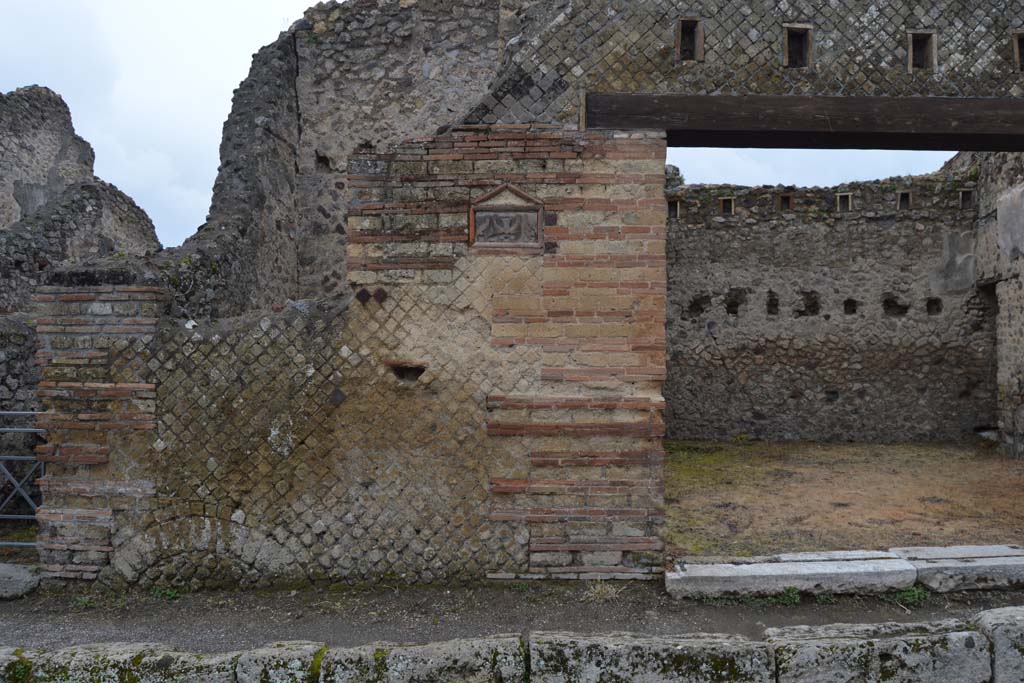
VI.14.28 Pompeii. March 2018. Looking towards
wall on south side of entrance doorway with plaque.
Foto Taylor Lauritsen, ERC Grant 681269 DÉCOR.
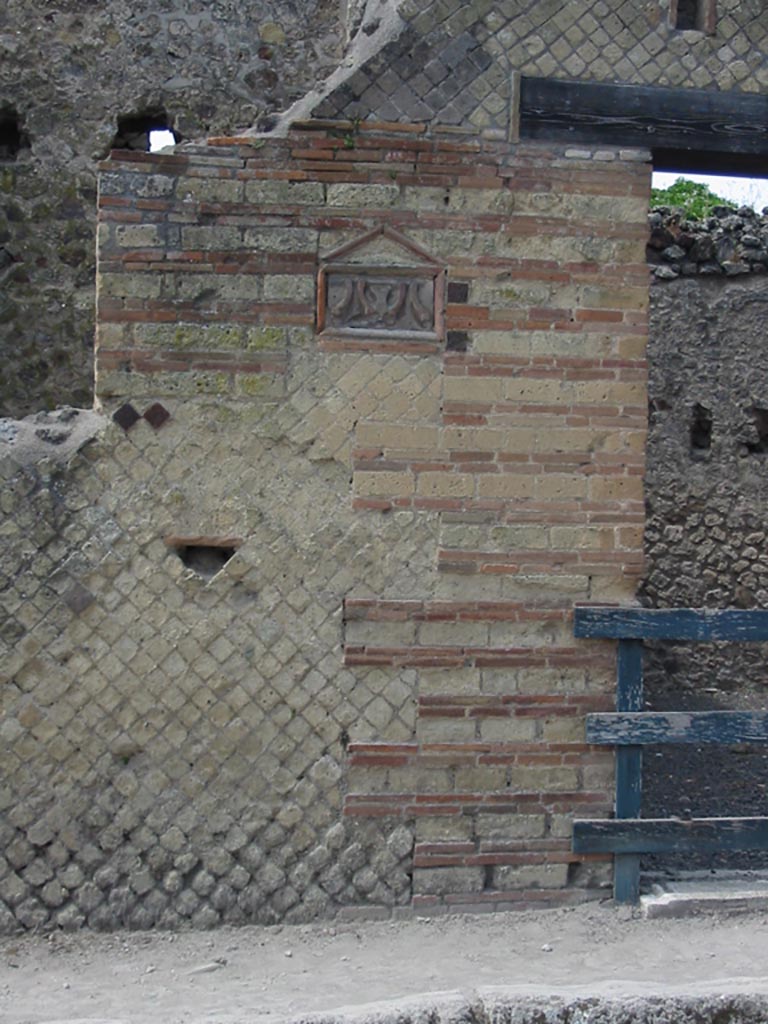
VI.14.28 Pompeii. May 2003. Wall on south side of entrance doorway. Photo courtesy of Nicolas Monteix.
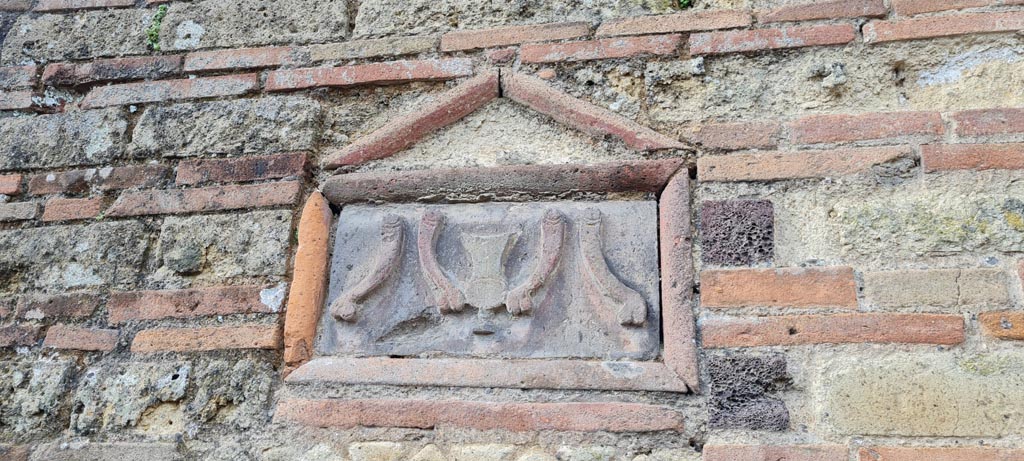
VI.14.28 Pompeii. April 2022.
Terracotta plaque on front façade on south side of entrance doorway. Photo courtesy of Giuseppe Ciaramella.
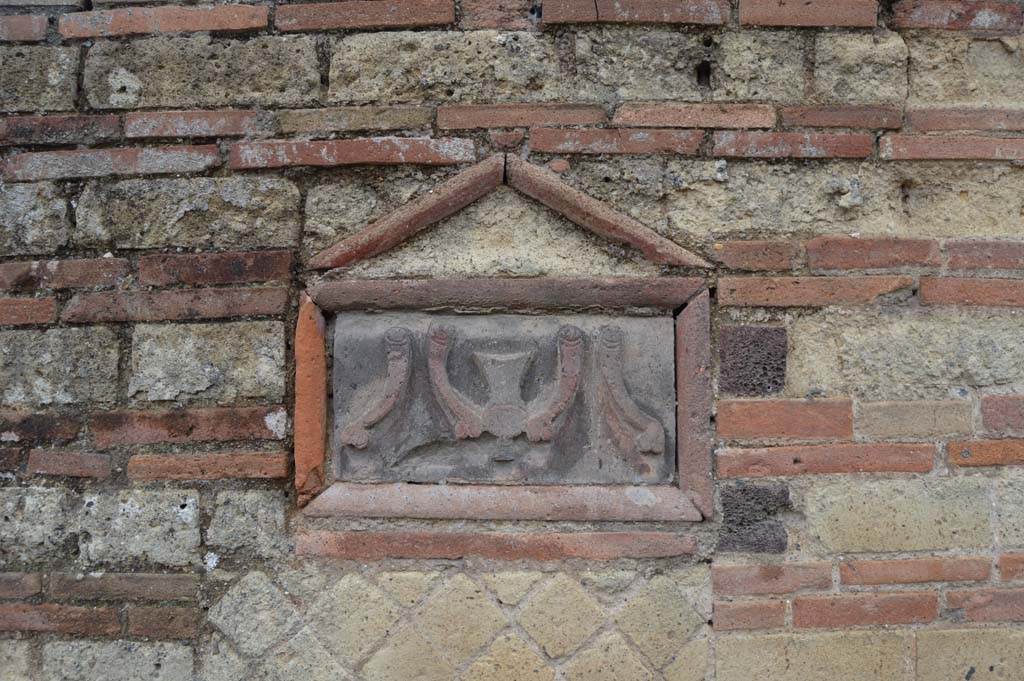
VI.14.28 Pompeii. March 2018. Front façade on
south side of entrance doorway, with terracotta plaque.
Foto Taylor Lauritsen, ERC
Grant 681269 DÉCOR.
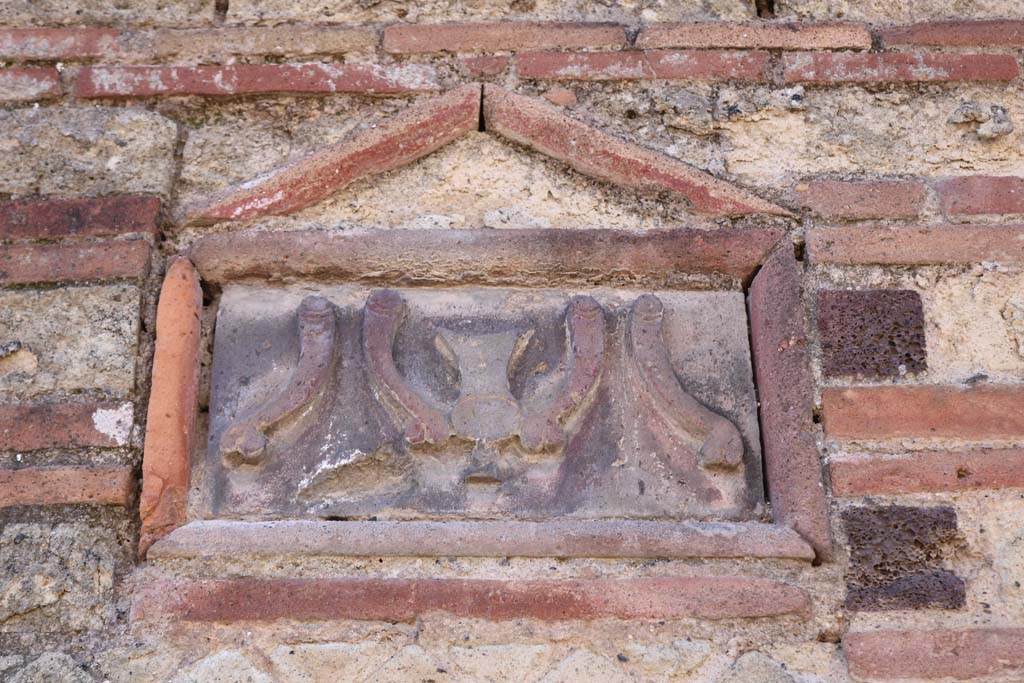
VI.14.28 Pompeii. December 2018.
Plaque on outside wall showing a “fritillus” between four phalluses. A fritillus was the vessel for dice-throwing.
Photo courtesy of Aude Durand.
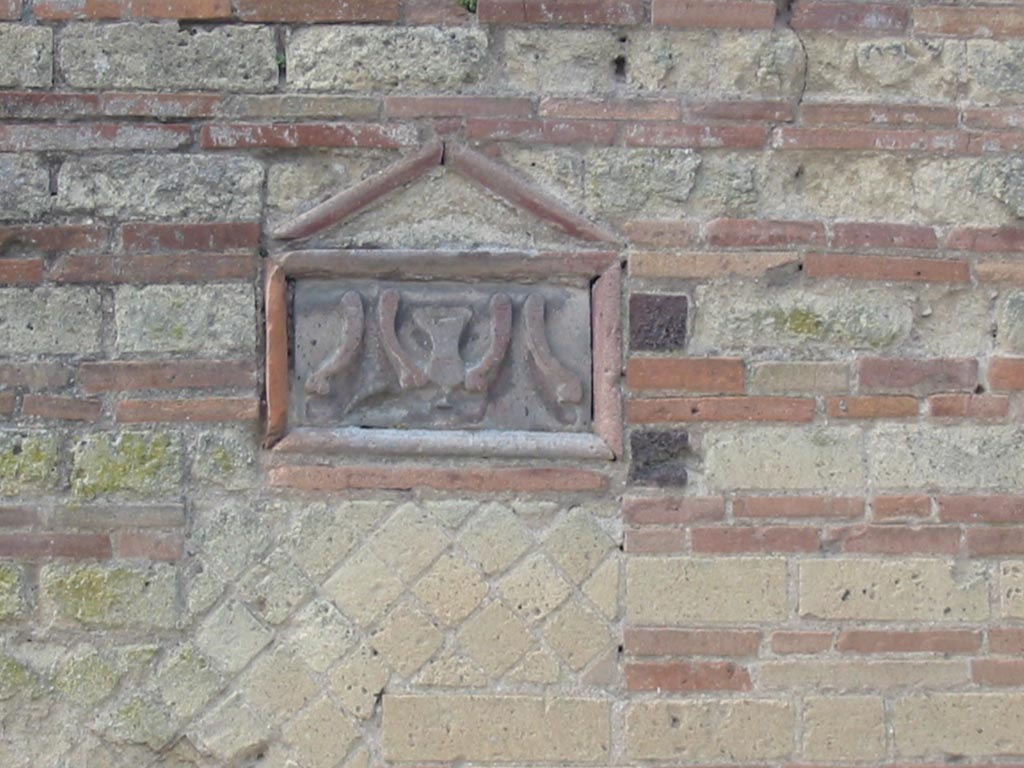
VI.14.28 Pompeii. May 2003. Plaque on wall, south of entrance doorway. Photo courtesy of Nicolas Monteix
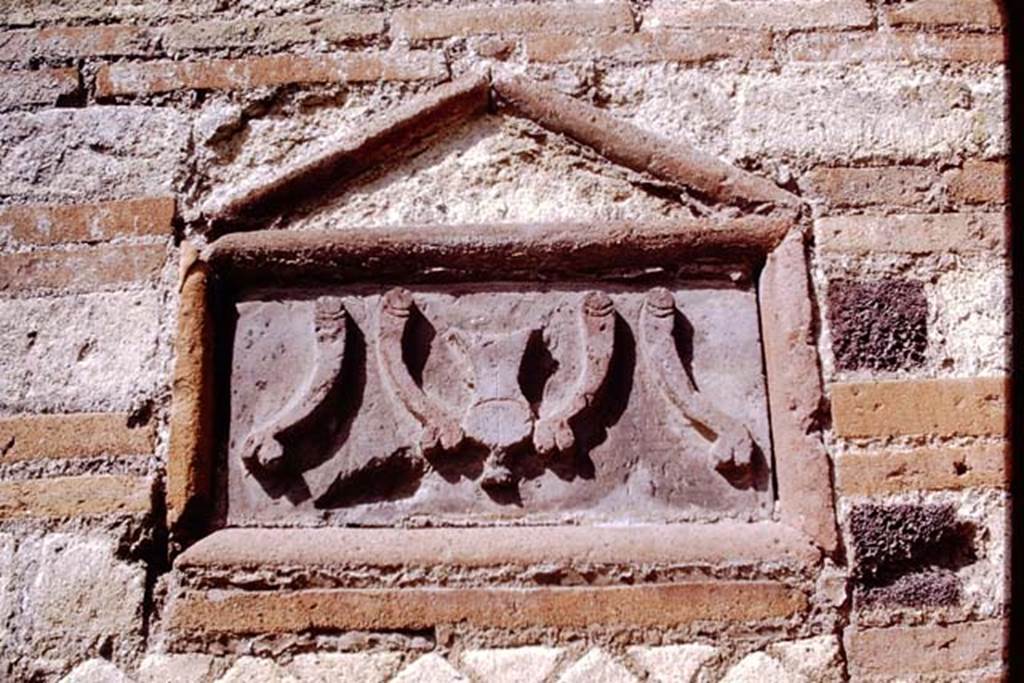
VI.14.28 Pompeii. 1968. Plaque on outside wall showing a “fritillus” between four phalluses. Photo by Stanley A. Jashemski.
Source: The Wilhelmina and Stanley A. Jashemski archive in the University of Maryland Library, Special Collections (See collection page) and made available under the Creative Commons Attribution-Non-Commercial License v.4. See Licence and use details.
J68f0676
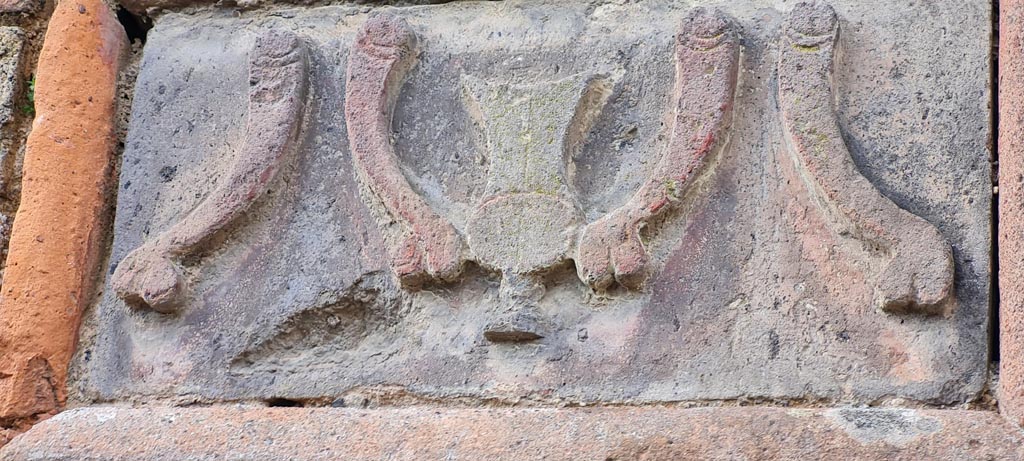
VI.14.28 Pompeii. April 2022. Detail of terracotta plaque. Photo courtesy of Giuseppe Ciaramella.
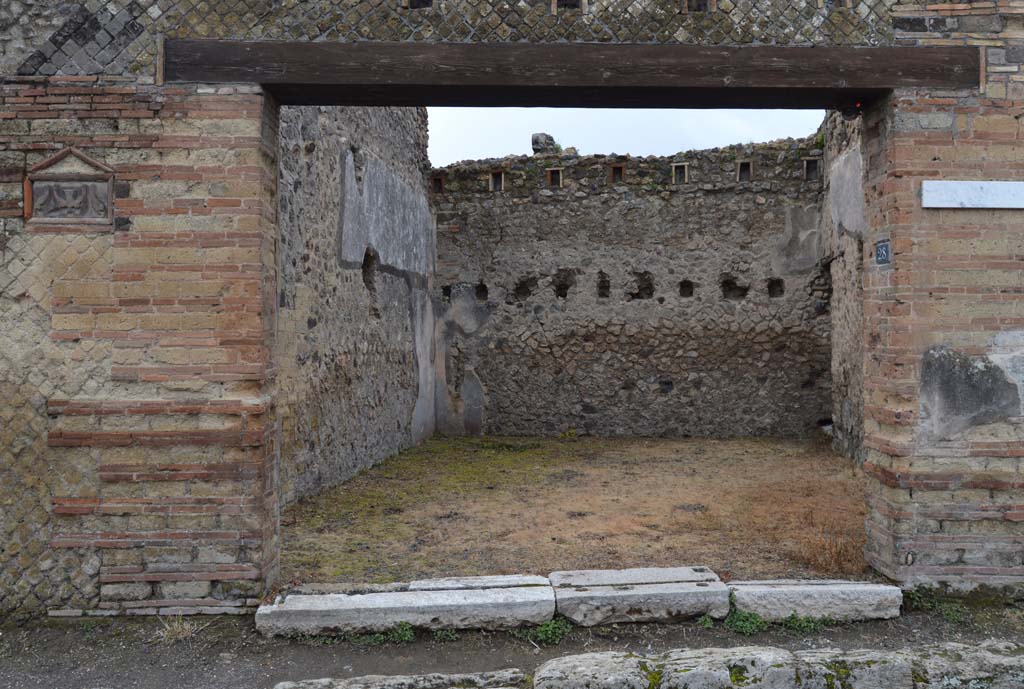
VI.14.28 Pompeii. March 2018. Looking west
towards entrance doorway.
Foto Taylor Lauritsen, ERC
Grant 681269 DÉCOR.
![VI.14.28 Pompeii. May 2005. Entrance doorway and south wall.
According to Della Corte, found on the right door-jamb at the moment of excavation was the recommendation –
Aliari rog (ant) [CIL IV 3485].
Instead of reading alia and aliarius, he believed that the words should have been read as alea and alearius, therefore he called it Taberna Lusoria Aleariorum.
Also found painted on the right, in the ground floor room, was Bacchus who with his wine made joy and merriment.
Also found was a painted Mercury, protector of players, swindlers, cheats and thieves.
See Della Corte, M., 1965. Case ed Abitanti di Pompei. Napoli: Fausto Fiorentino. (p.90)
According to Epigraphik-Datenbank Clauss/Slaby (See www.manfredclauss.de), CIL IV 3485 reads as -
Cn(aeum) Helvium
Sabinum aed(ilem)
aliari rog(ant) [CIL IV 3485]
According to Cooley, this translated as -
The dice-throwers ask for Cn. Helvius Sabinus.
See Cooley, A. and M.G.L., 2004. Pompeii: A Sourcebook. London: Routledge. (p.124, but she quotes CIL IV 3435, and not 3485)](6%2014%2028_files/image022.jpg)
VI.14.28 Pompeii. May 2005. Entrance doorway and south wall.
According to Della Corte, found on the right door-jamb at the moment of excavation was the recommendation –
Aliari rog
(ant) [CIL IV 3485].
Instead of reading alia and aliarius, he believed that the words should have been read as alea and alearius, therefore he called it Taberna Lusoria Aleariorum.
Also found painted on the right, in the ground floor room, was Bacchus who with his wine made joy and merriment.
Also found was a painted Mercury, protector of players, swindlers, cheats and thieves.
See Della Corte, M., 1965. Case ed Abitanti di Pompei. Napoli: Fausto Fiorentino. (p.90)
According to Epigraphik-Datenbank Clauss/Slaby (See www.manfredclauss.de), CIL IV 3485 reads as -
Cn(aeum) Helvium
Sabinum aed(ilem)
aliari
rog(ant) [CIL IV 3485]
According to Cooley, this translated as -
The dice-throwers ask for Cn. Helvius Sabinus.
See Cooley, A. and M.G.L., 2004. Pompeii: A Sourcebook. London: Routledge. (p.124, but she quotes CIL IV 3435, and not 3485)
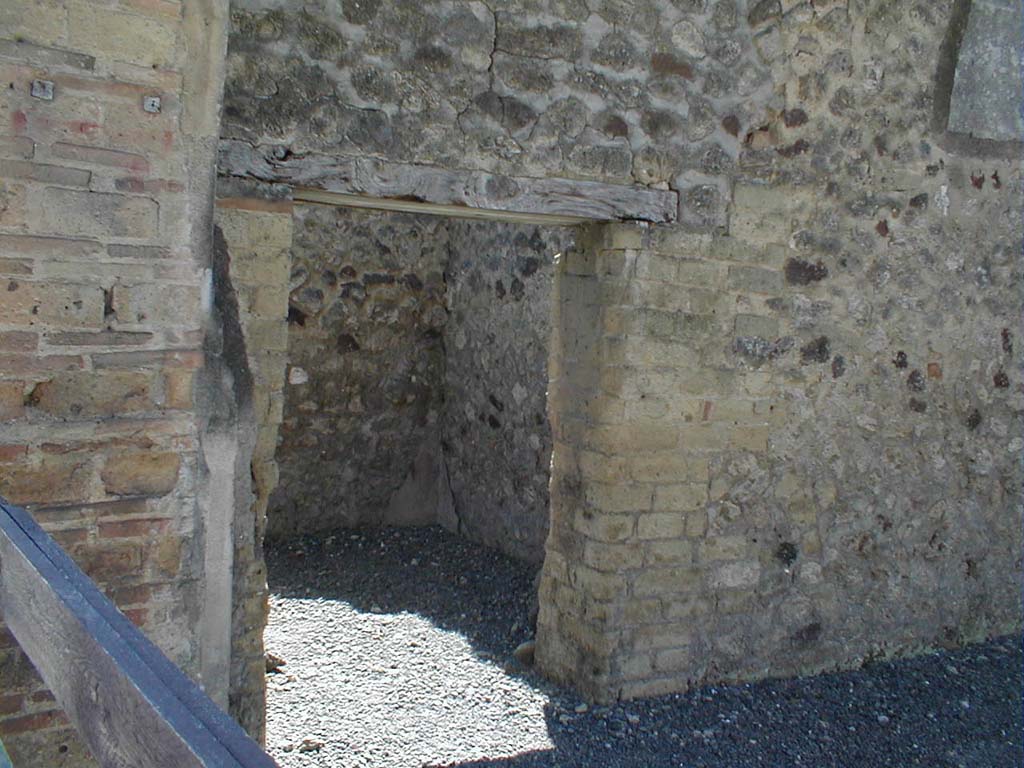
VI.14.28 Pompeii. May 2005. Doorway to room in south wall.
According to BdI, on the ground floor was a main room, with a small room on the south side.
The small room had a window onto the roadway.
Also found in the small room were two paintings, hardly recognisable.
However, in one a man lying on a bed could be recognised.
See Bullettino dell’Instituto di Corrispondenza
Archeologica (DAIR), 1876, (p.50)
![VI.14.28 Pompeii. Drawing of CIL IV 4528 found in small room in south wall. According to Della Corte, graffiti found in this small room were –
VI idus febr(uarias), Vettia
(accepit a me?) denarios XX: usu (ra) (asses) XII.
Non(is) Febr(uariis) (Vettia accepit) a Faustilla
Denarios XV: usu(ra) a(sses) VIII. [CIL IV 4528]
See Della Corte, M., 1965. Case ed Abitanti di Pompei. Napoli: Fausto Fiorentino. (p.94-5, and note 1)
(Note: according to Della Corte, the first word was “VI”, but according to BdI, and Clauss/Slaby, below, the first word should be “IV”.
Then Della Corte and BdI have “Non(is) Febr.....”, whereas Clauss/Slaby has “Nov(embres) Faustilla”).
See BdI, 1876, (p.50)
According to Cooley, this translated as -
8 February. Vettia, 20 denarii: usury 12 asses. 5 February from Faustilla, 15 denarii: usury 8 asses. [CIL IV 4528]
See Cooley, A. and M.G.L., 2004. Pompeii : A Sourcebook. London : Routledge. (p.170)
According to Epigraphik-Datenbank Clauss/Slaby (See www.manfredclauss.de), this read as –
IV Idus Feb(ruarias) Vettia
|(denariis) XX usu(ra) a(sses) XII
Nov(embres) Faustilla
|(denariis) XV usu(ra) a(sses) VIIII [CIL IV 4528]](6%2014%2028_files/image025.jpg)
VI.14.28 Pompeii. Drawing of CIL IV 4528 found in small room in south wall.
According to Della Corte, graffiti found in this small room were –
VI idus
febr(uarias), Vettia
(accepit a me?)
denarios XX: usu (ra) (asses) XII.
Non(is)
Febr(uariis) (Vettia accepit) a Faustilla
Denarios XV:
usu(ra) a(sses) VIII.
[CIL IV 4528]
See Della Corte,
M., 1965. Case ed Abitanti di Pompei.
Napoli: Fausto Fiorentino. (p.94-5, and note 1)
(Note: according to Della Corte, the first word was “VI”, but according to BdI, C.I.L. and Clauss/Slaby, below, the first word should be “IV”.
Then Della Corte and BdI have “Non(is) Febr.....”, whereas Clauss/Slaby has “Nov(embres) Faustilla”).
See BdI, 1876, (p.50)
According to Cooley, this translated as -
8 February. Vettia, 20 denarii: usury 12 asses. 5 February from Faustilla, 15 denarii: usury 8 asses. [CIL IV 4528]
See Cooley, A. and M.G.L., 2004. Pompeii: A Sourcebook. London: Routledge. (p.170)
According to Epigraphik-Datenbank Clauss/Slaby (See www.manfredclauss.de), this read as –
IV Idus Feb(ruarias) Vettia
|(denariis) XX
usu(ra) a(sses) XII
Nov(embres)
Faustilla
|(denariis) XV
usu(ra) a(sses) VIIII [CIL IV 4528]
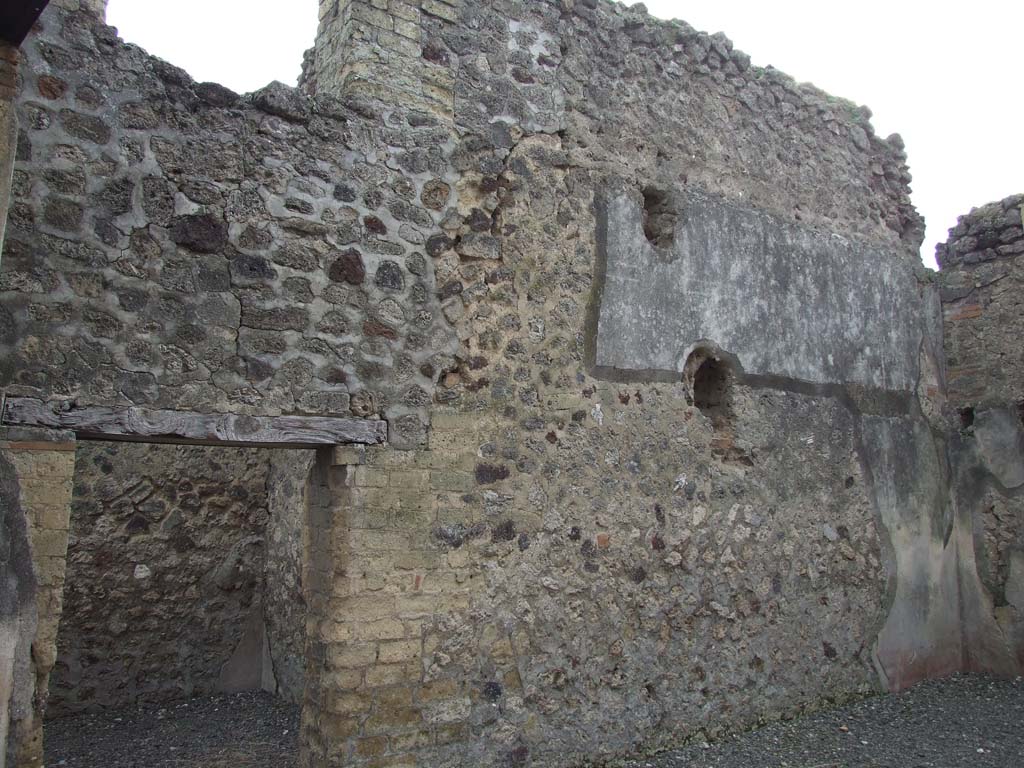
VI.14.28 Pompeii. December 2006. South wall.
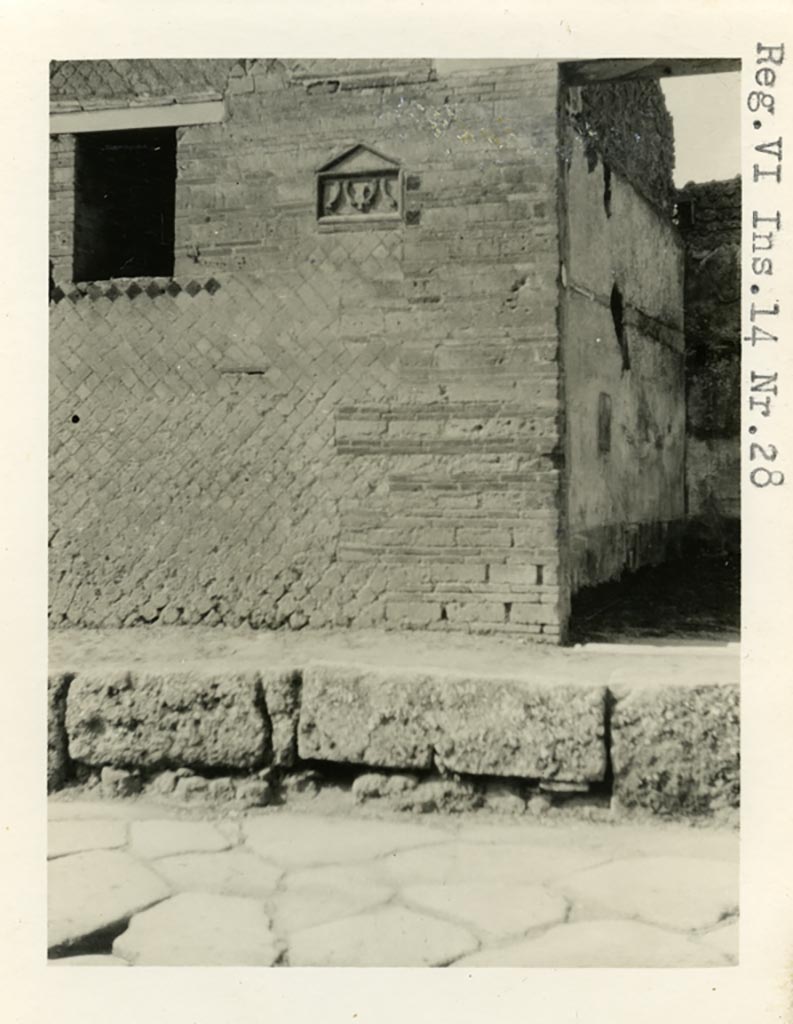
VI.14.28 Pompeii. Pre-1937-39. Looking towards south wall, on right, shown with front facade.
Photo courtesy of American Academy in Rome, Photographic Archive. Warsher collection no. 1791a.
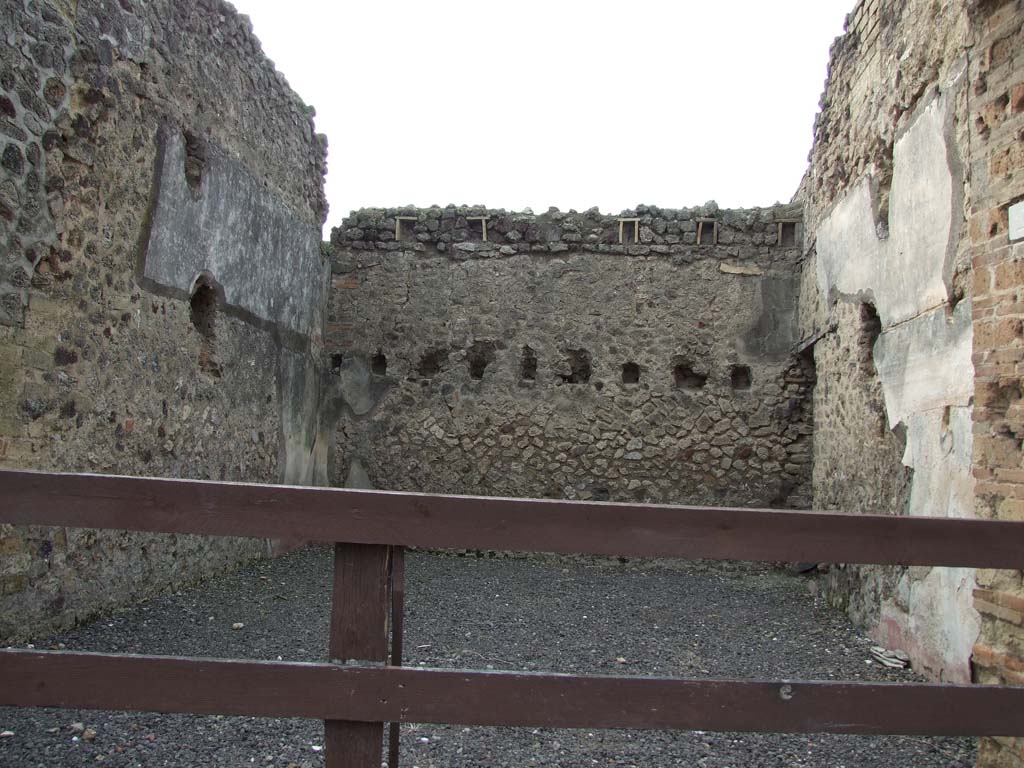
VI.14.28 Pompeii. December 2006. Looking west from entrance.
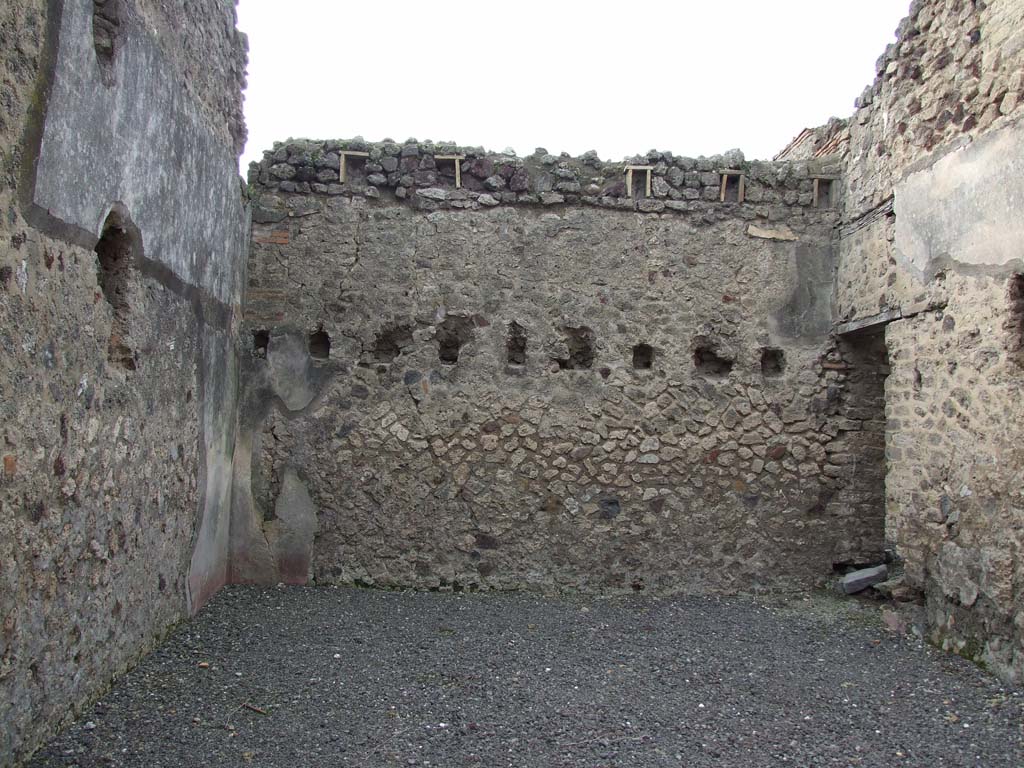
VI.14.28 Pompeii. December 2006. West wall.
According to Della Corte, in the north-west corner was a doorway linking with VI.14.30.
It led to steps to the upper floor, which had a further two rooms.
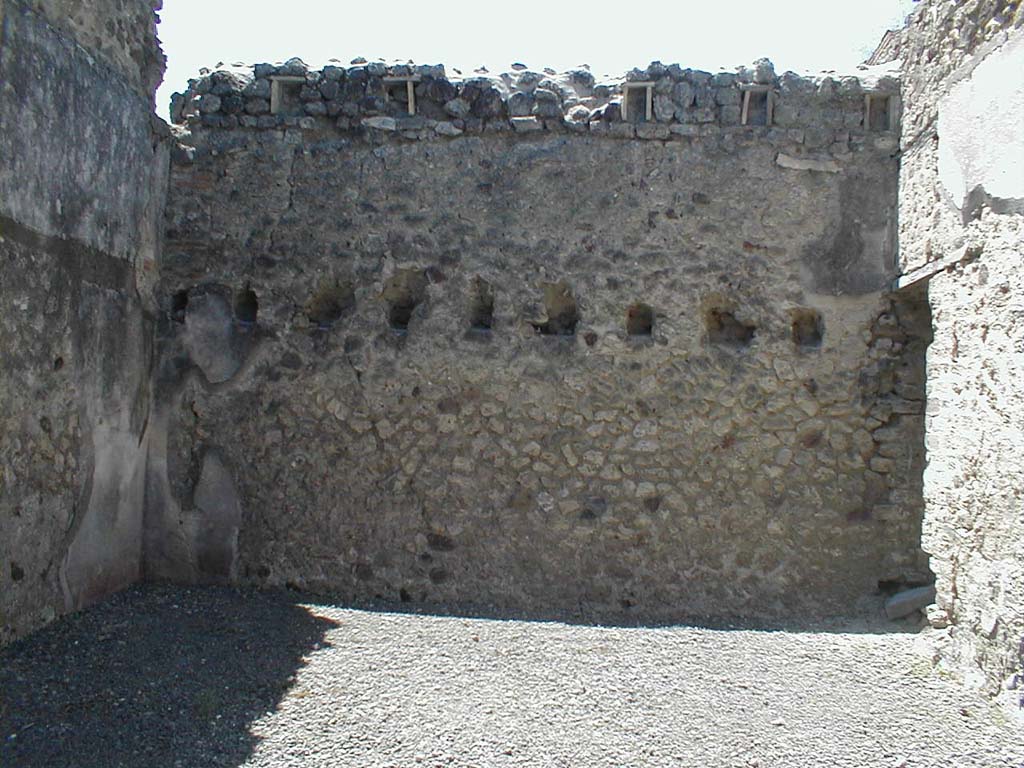
VI.14.28 Pompeii. May 2005. West wall.
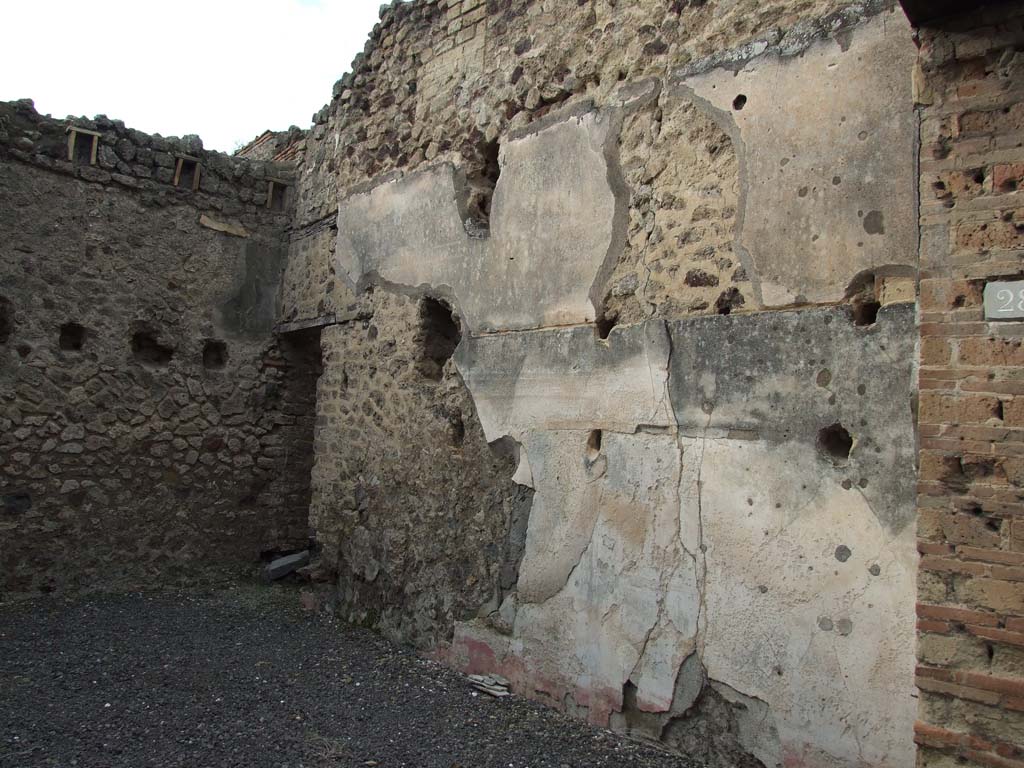
VI.14.28 Pompeii. December 2006.
North wall. In the centre of the north wall was a painting of Venus fishing with the help of cupid.
See Bullettino dell’Instituto di Corrispondenza
Archeologica (DAIR), 1876, p. 49f.
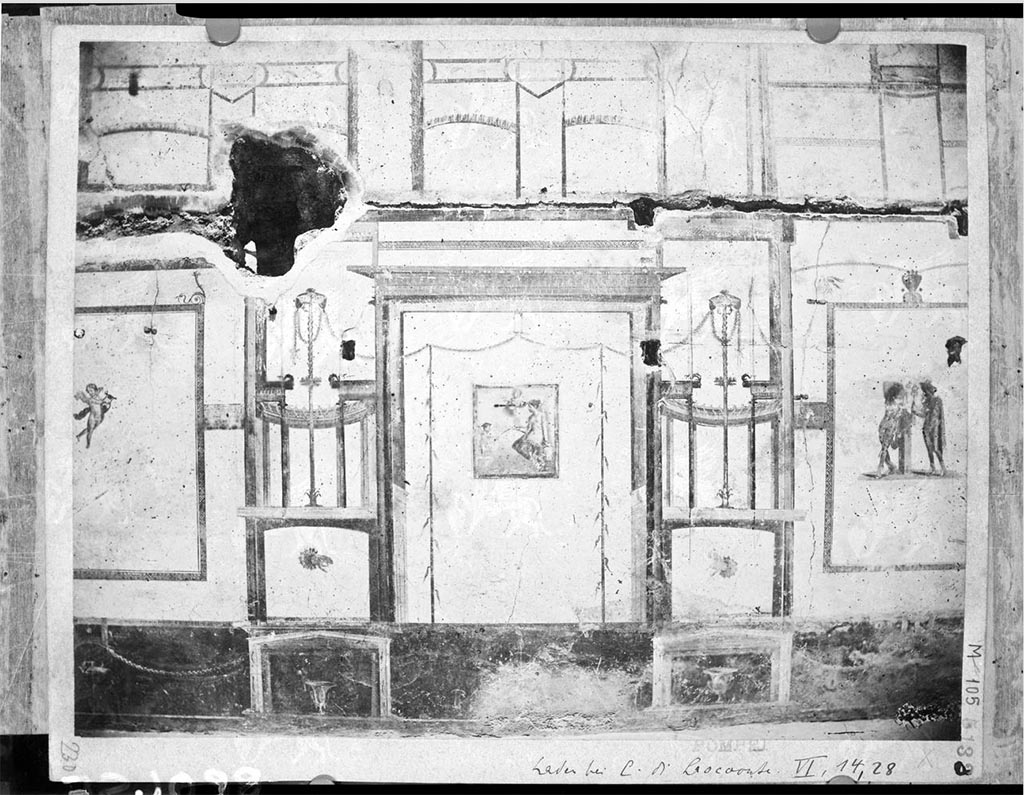
VI.14.28 Pompeii. 1972 reproduction by Van der Poel of an earlier DAIR photo 5133. North wall.
In the panel on the left is a winged cupid, the central painting is Venus Pescatrice and in the panel to the right are Mercury and Bacchus.
A hole and cavities for shelf supports can be seen, matching those visible in our photos.
DAIR 72.1098. Photo
© Deutsches Archäologisches Institut, Abteilung Rom, Arkiv.
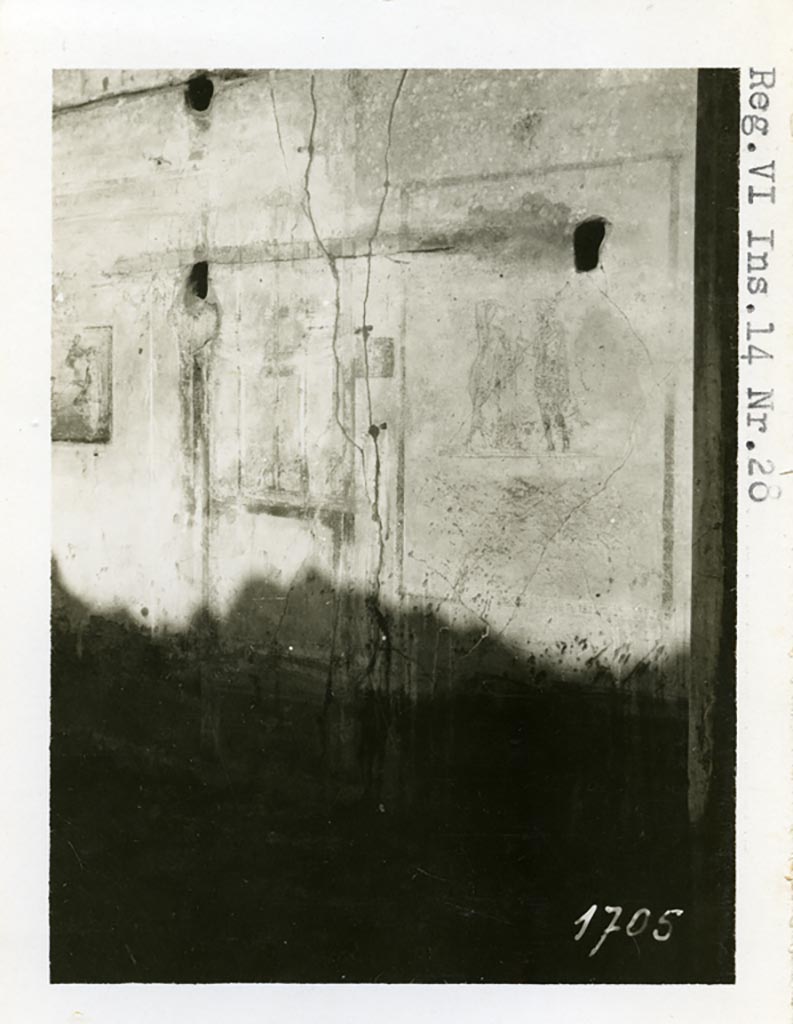
VI.14.28 Pompeii. Pre-1937-39. Detail of east end of north wall.
Photo courtesy of American Academy in Rome, Photographic Archive. Warsher collection no. 1705a.
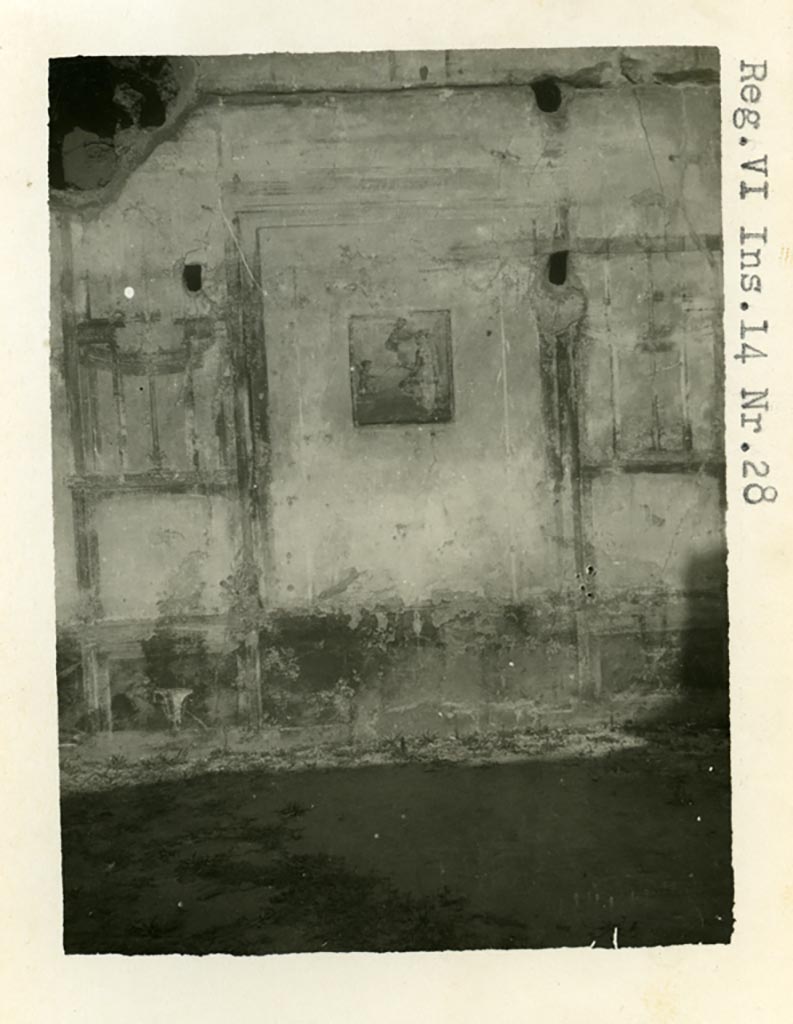
VI.14.28 Pompeii. Pre-1937-39. Looking towards north wall with central painting of Venus fishing.
Photo courtesy of American Academy in Rome, Photographic Archive. Warsher collection no. 675.
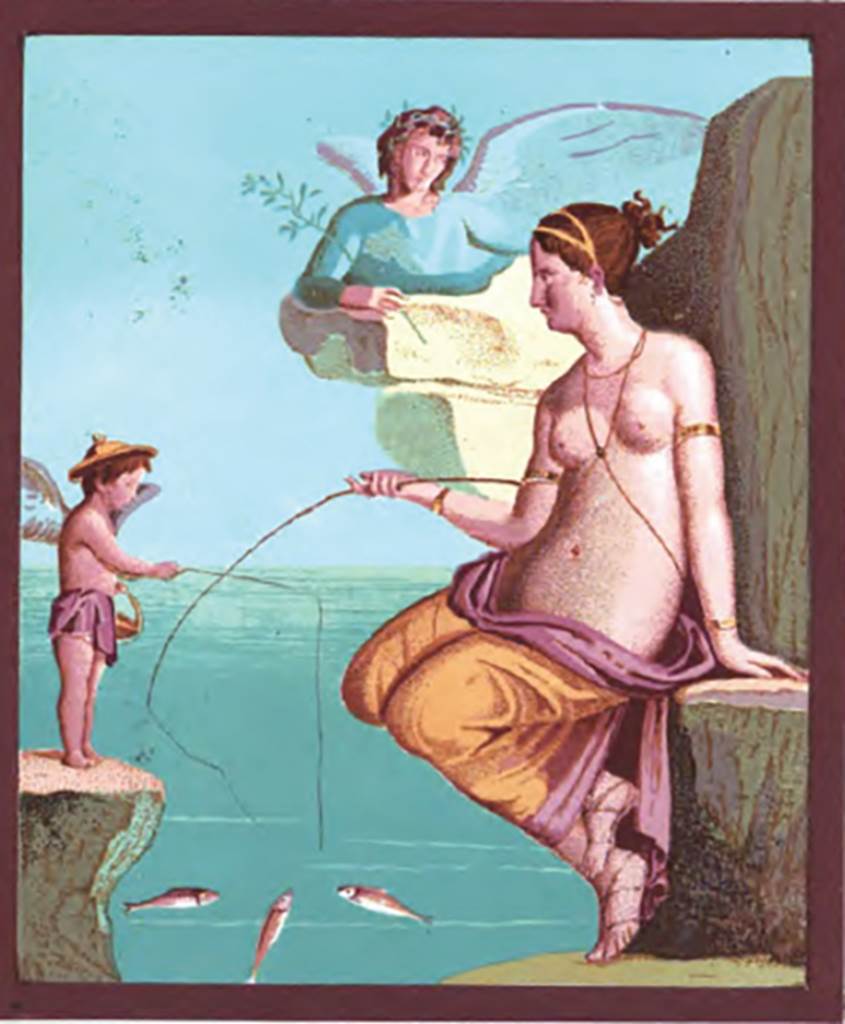
VI.14.28 Pompeii. 1878. Painting of Venus fishing with the help of cupids, found on north wall.
See Presuhn E.,
1878. Pompeji: Die Neuesten Ausgrabungen
von 1874 bis 1878. Leipzig:
Weigel. (IV, Taf. VII).
See Garcia y Garcia, L., 2006. Danni di guerra a Pompei. Rome: L’Erma di Bretschneider. (p.90-1, incl. Fig. 191 with painting of Venus)
See Schefold, K., 1962. Vergessenes Pompeji. Bern: Francke. (p.173 and Taf. 177.3)
See Sogliano, A., 1879. Le pitture murali campane scoverte negli anni 1867-79. Napoli: (p.36, no. 146)
See Bullettino dell’Instituto di Corrispondenza Archeologica (DAIR), 1876, (p.49-50), painting found on same north (right) wall as Mercury and Bacchus, the size of the painting was 0.36 high x 0.33 wide.
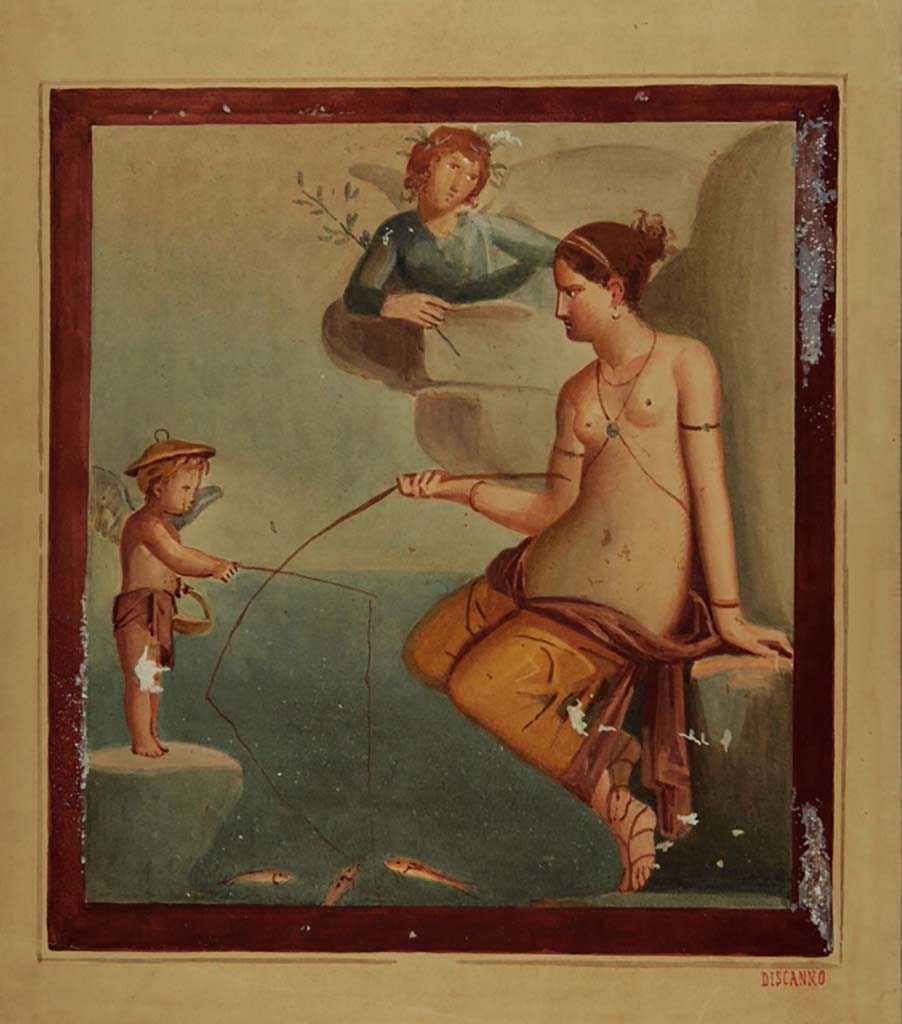
VI.14.28 Pompeii. Painting by Geremia Discanno, of Venus fishing with the help of cupids, found on north wall, now completely faded.
Now in Naples Archaeological Museum. Inventory number ADS 417.
Photo © ICCD. https://www.catalogo.beniculturali.it
Utilizzabili alle condizioni della licenza Attribuzione
- Non commerciale - Condividi allo stesso modo 2.5 Italia (CC BY-NC-SA 2.5 IT)
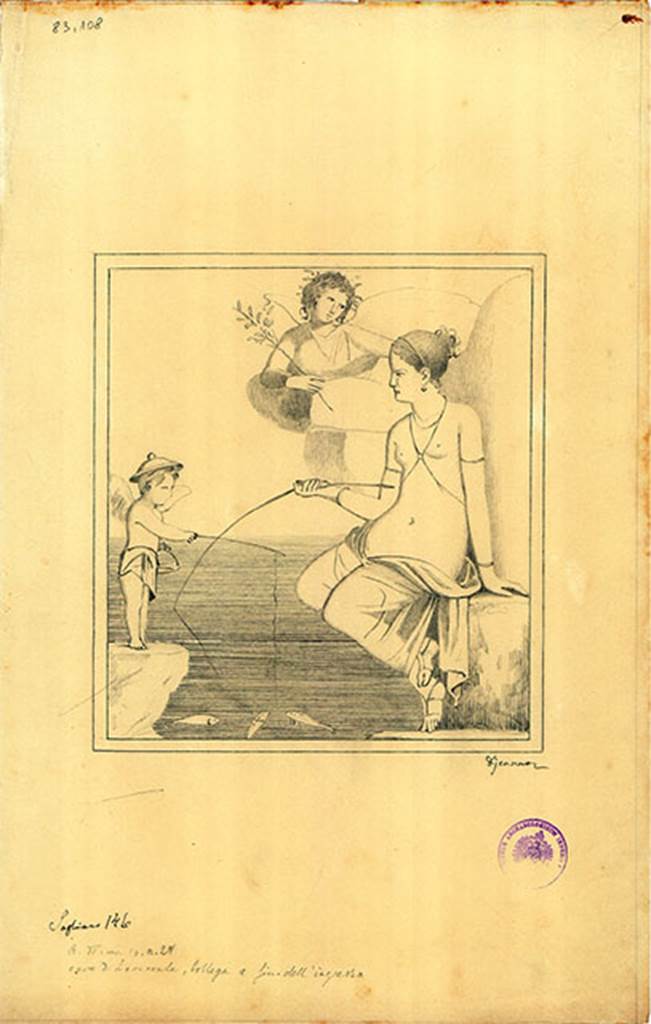
VI.14.28 Pompeii. Drawing by G. Discanno of painting of Venus fishing with the help of cupids, found on north wall.
DAIR 83.108.
Photo © Deutsches Archäologisches Institut, Abteilung Rom, Arkiv.
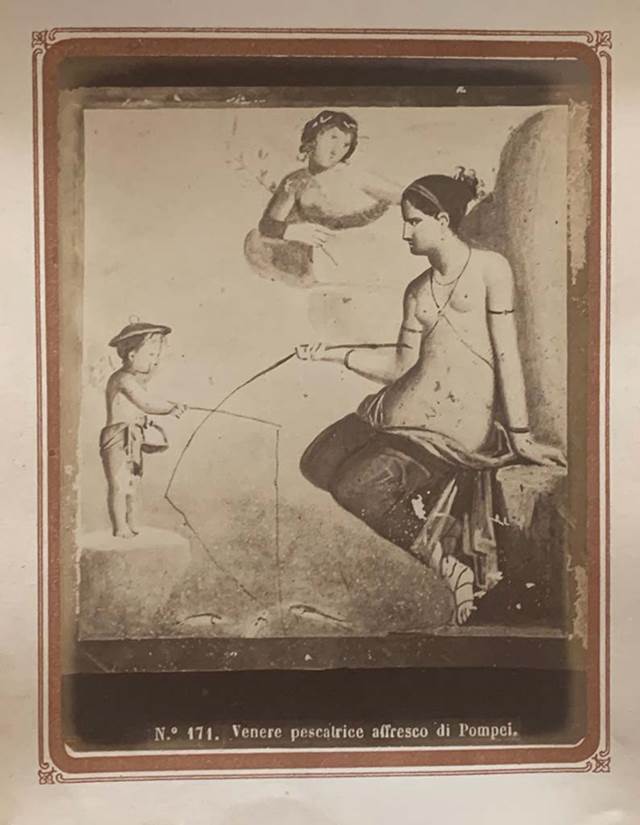
VI.14.28 Pompeii. From an album by Roberto
Rive, dated 1868.
Venere Pescatrice (Venus Fishing) seen on north
wall. Photo courtesy of Rick Bauer.
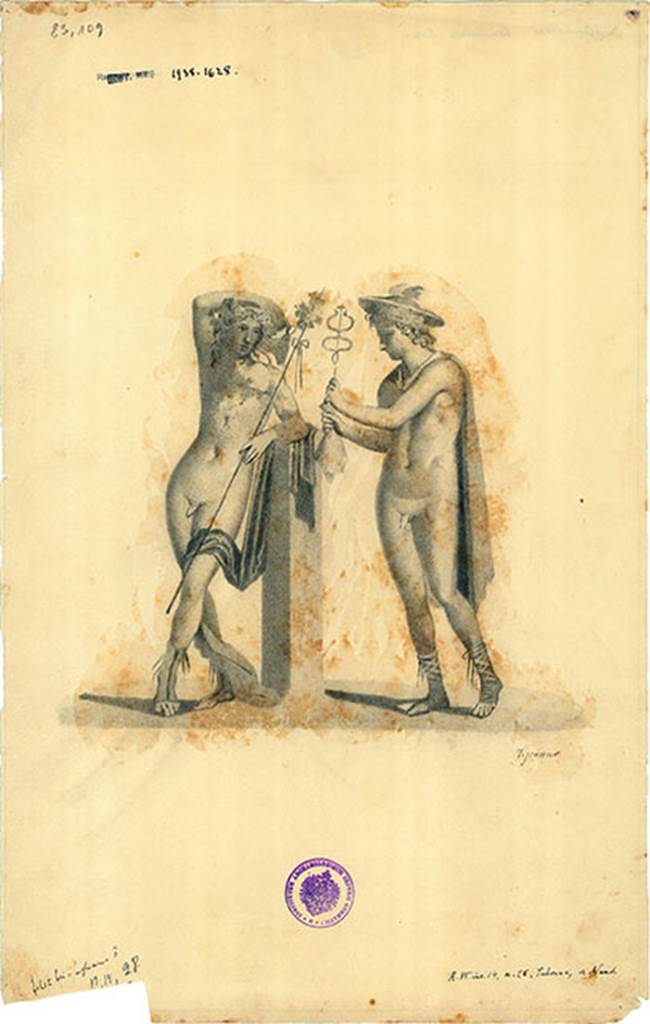
VI.14.28 Pompeii. Drawing by G. Discanno of painting of Mercury and Bacchus from north wall.
DAIR 83.109.
Photo © Deutsches Archäologisches Institut, Abteilung Rom, Arkiv.
According to Kuivalainen, this is a composition of two almost frontal figures.
On the left stands a youth with his weight on his right foot, leaning idly on a low pillar with his left arm holding a thyrsus; he has green boots and wears a violet cloak falling from the pillar over his left thigh to the ground; his right arm is resting on his head, which is in ¾ profile, and his long curls are adorned with a vine wreath; he is looking at his companion.
On his right stands the other youth with his weight on his right foot; he wears reddish boots and a green short cloak, and points towards his companion with both his hands, one holding a purse, the other a caduceus; his head is almost in profile, and he looks at his hands; his hair is curly, and he wears a petasus with wings.
Comments: This is the usual couple of a half-naked young Bacchus and Mercury decorating the right side wall of a taberna, which is clearly visible from the street through a wide opening………..
See Kuivalainen, I., 2021. The Portrayal of Pompeian Bacchus.
Commentationes Humanarum Litterarum
140. Helsinki: Finnish Society of Sciences and Letters, p. 177, F23.

VI.14.28 Pompeii. 1878. Also found were two little boys (or cupids) playing with a puppy and a bunch of grapes, on the west wall.
See Presuhn E.,
1878. Pompeji: Die Neuesten Ausgrabungen
von 1874 bis 1878. Leipzig:
Weigel. (IV, Plate VIII).
See Sogliano, A., 1879. Le pitture murali campane scoverte negli anni 1867-79. Napoli: (p.42, no.181 for description of painting of two cupids, or satyrs)
See Bullettino dell’Instituto di Corrispondenza Archeologica (DAIR), 1876, (p.50), painting of cupids found on rear (west wall), size of painting 0.38 high x 0.32 wide.
There were also flying cupids with all their pleasing attributes, lyre, tambourine, thyrsus, cornucopia, vases or plates for perfumed water, together with Polyphemus receiving Galatea’s letter from cupid, on the south wall.
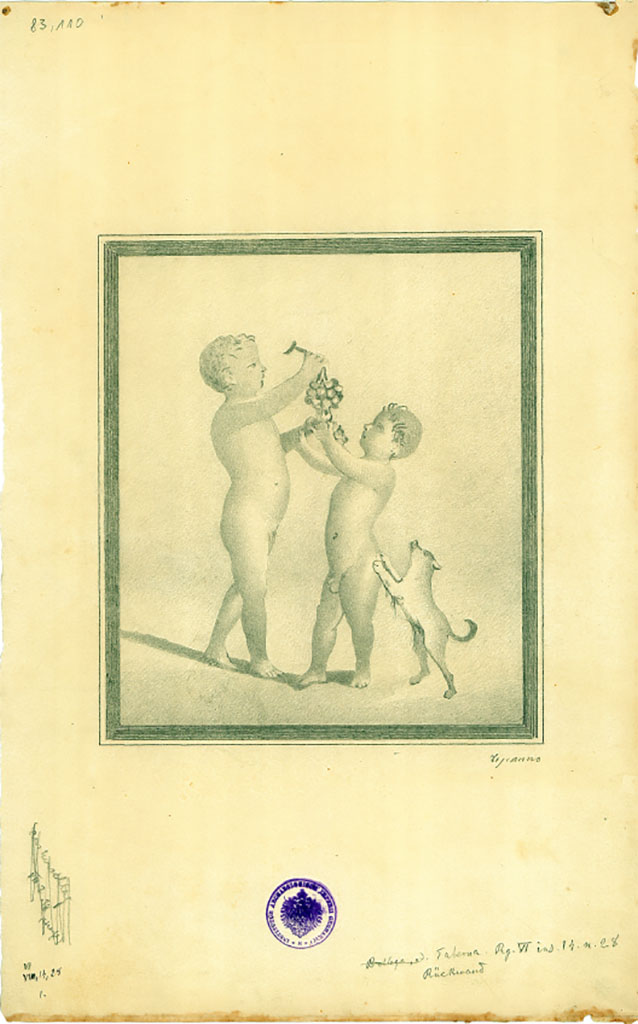
VI.14.28 Pompeii. Copy of painting of two little boys (or cupids) playing with a puppy and a bunch of grapes, on the west wall.
DAIR 83.100. Photo
© Deutsches Archäologisches Institut, Abteilung Rom, Arkiv.
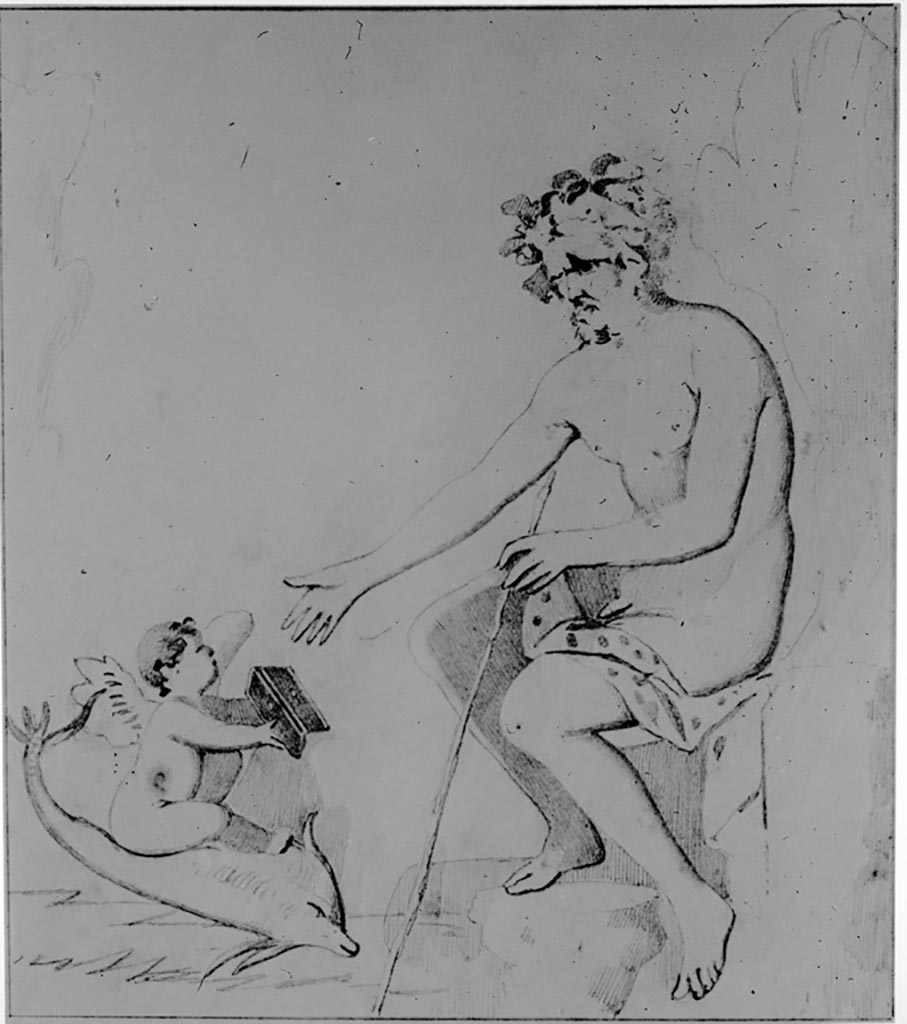
VI.14.28 Pompeii. W1406.
Drawing of painting of Polyphemus and cupid, from the south wall, drawn by Discanno.
Photo by Tatiana
Warscher. Photo © Deutsches Archäologisches Institut, Abteilung Rom, Arkiv.
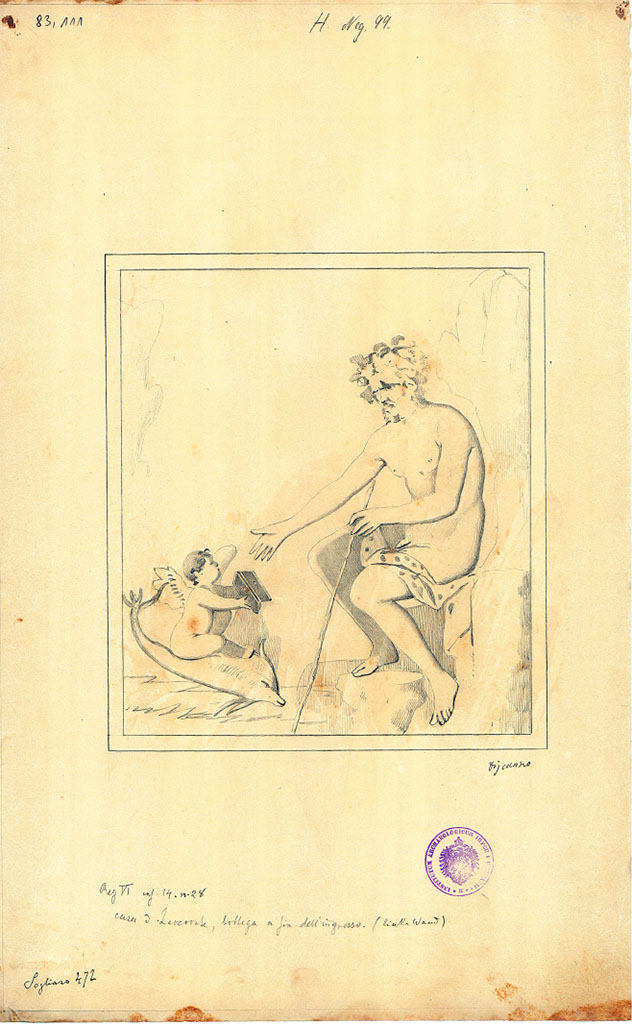
VI.14.28 Pompeii. Drawing of painting of Polyphemus and cupid, from the south wall, drawn by Discanno.
DAIR 83.111. Photo
© Deutsches Archäologisches Institut, Abteilung Rom, Arkiv.
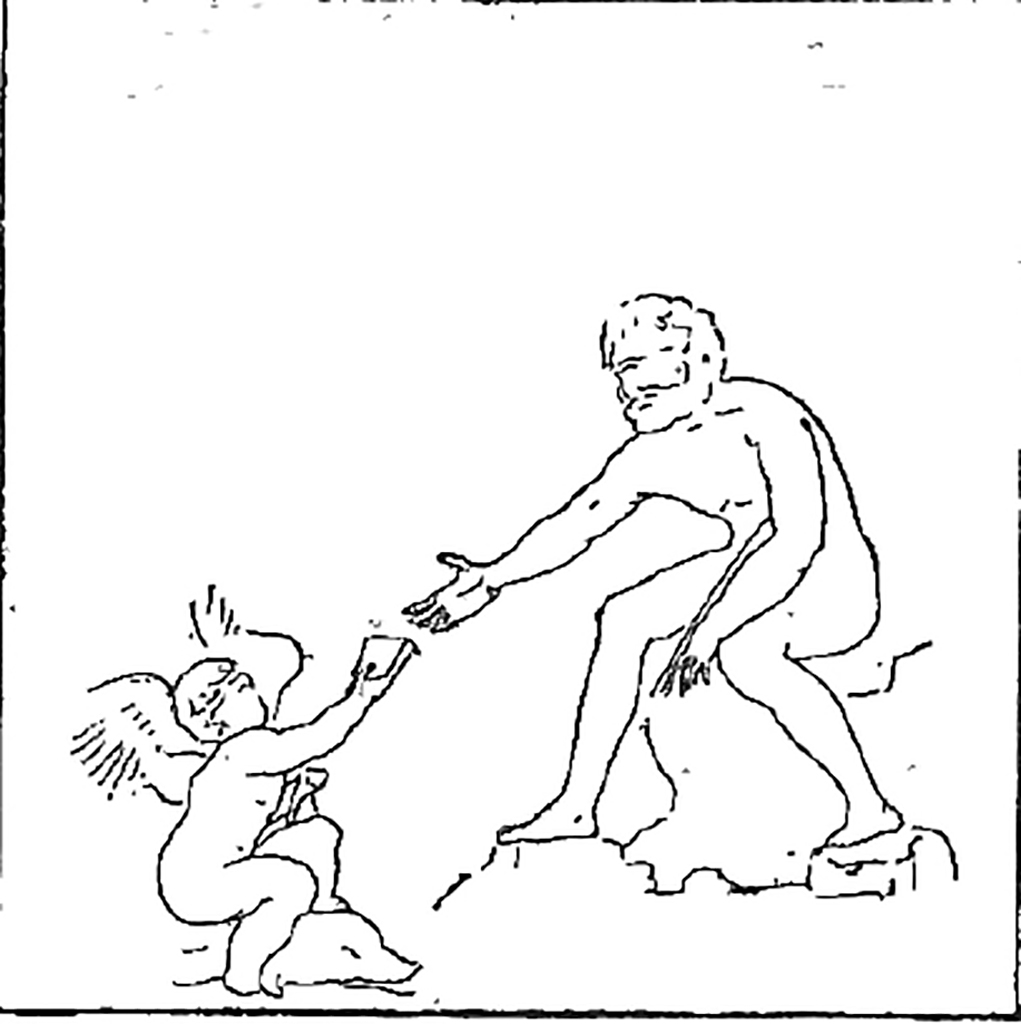
VI.14.28 Pompeii. 1878. Polyphemus receiving Galatea’s letter from cupid sitting on a dolphin, from the south wall.
See Sogliano, A.,
1879. Le pitture murali campane scoverte
negli anni 1867-79. Napoli: (p. 78, no.472).
See Reinach S., 1922. Répertoire de peintures grecques et romaines. Paris Leroux. (172, 5)
See Bullettino dell’Instituto di Corrispondenza Archeologica (DAIR), 1876, (p.50), painting found on left (south) wall, size of painting 0.41 high x 0.34 wide.
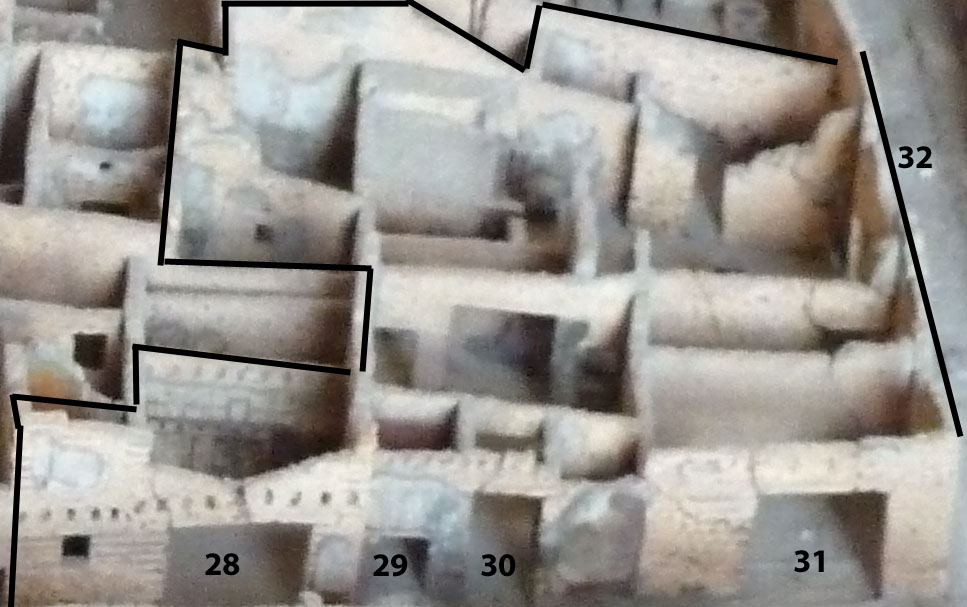
VI.14.28 Pompeii. Cork model in Naples Archaeological Museum, showing area.
According to Della Corte, VI.14.28 consisted of a ground and an upper floor. The ground floor consisted of a small room to the south of the main room.
This communicated with a neighbouring room of passage in its north-west corner with the atrium of the Casa del Laocoonte, and by a wooden staircase to the upper floor. There were another two rooms on the upper floor. Mau observed there may have been another room on the upper floor, at one time in direct communication with the neighbouring room, but then had been walled up.
See Della Corte, M., 1965. Case ed Abitanti di Pompei. Napoli: Fausto Fiorentino. (p.90)
According to Garcia y Garcia, this was a real gambling den of the Roman period.
It was nearly completely destroyed by the nocturnal bombing of the 16th September 1943, with the ruin of the upper floor and nearly total loss of the decoration in fourth Style, which had previously been well preserved.
See Garcia y
Garcia, L., 2006. Danni di guerra a Pompei. Rome: L’Erma di Bretschneider. (p.90-1, incl.
figs 188-192)