VI.8.3 Pompeii. Casa del Poeta
Tragico or House of the Tragic Poet.
Excavated 1824 to 1825. Linked to VI.8.5.
Part 1 Part 2
Part 3 Part 4 VI.8.3 and VI.8.5 Room Plan
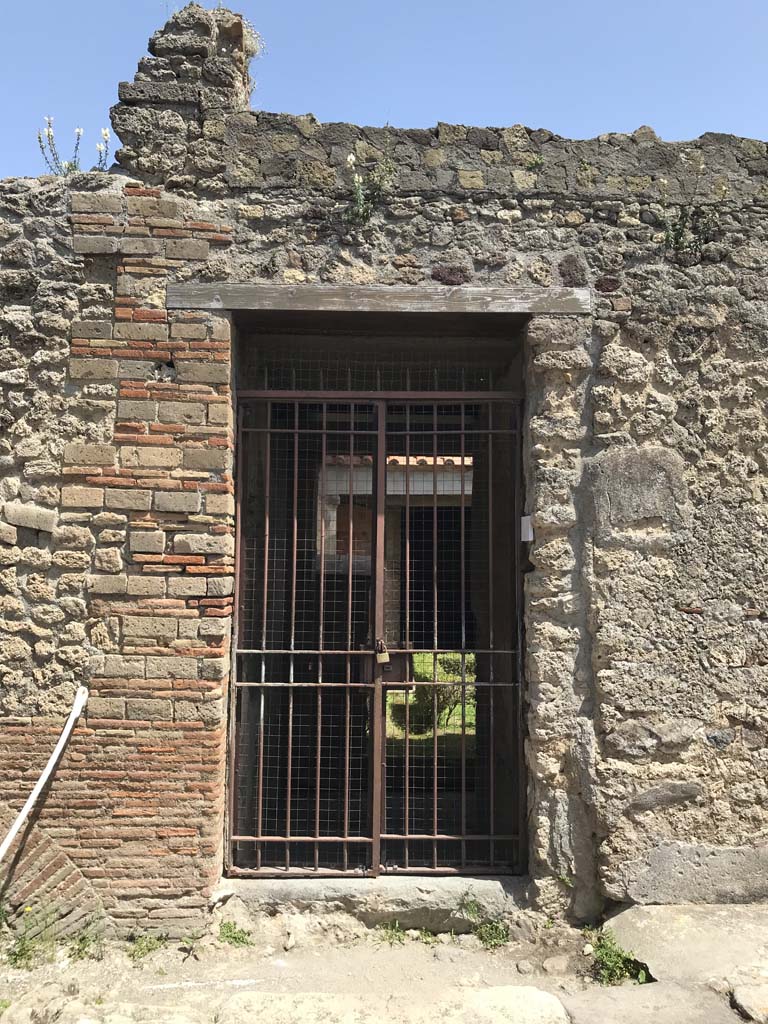
Looking east to rear entrance to peristyle garden. Photo courtesy of Rick Bauer.
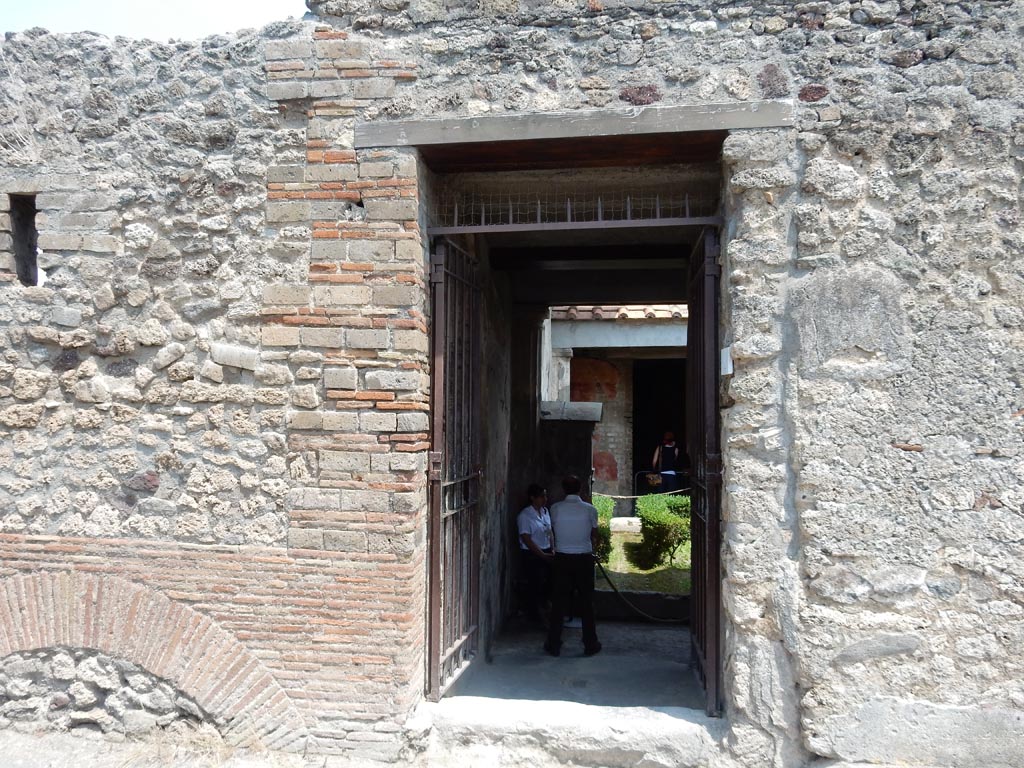
VI.8.3 Pompeii. May 2015. Rear entrance to peristyle garden. Photo courtesy of Buzz Ferebee.
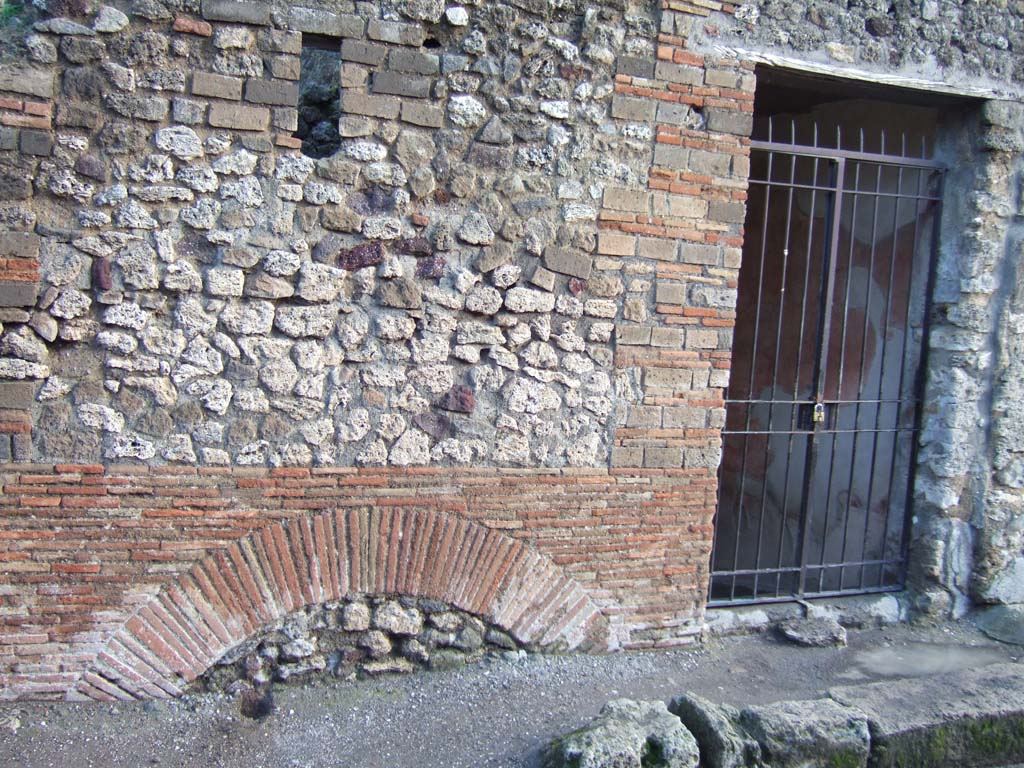
VI.8.3 Pompeii. December 2005. Entrance and side wall.
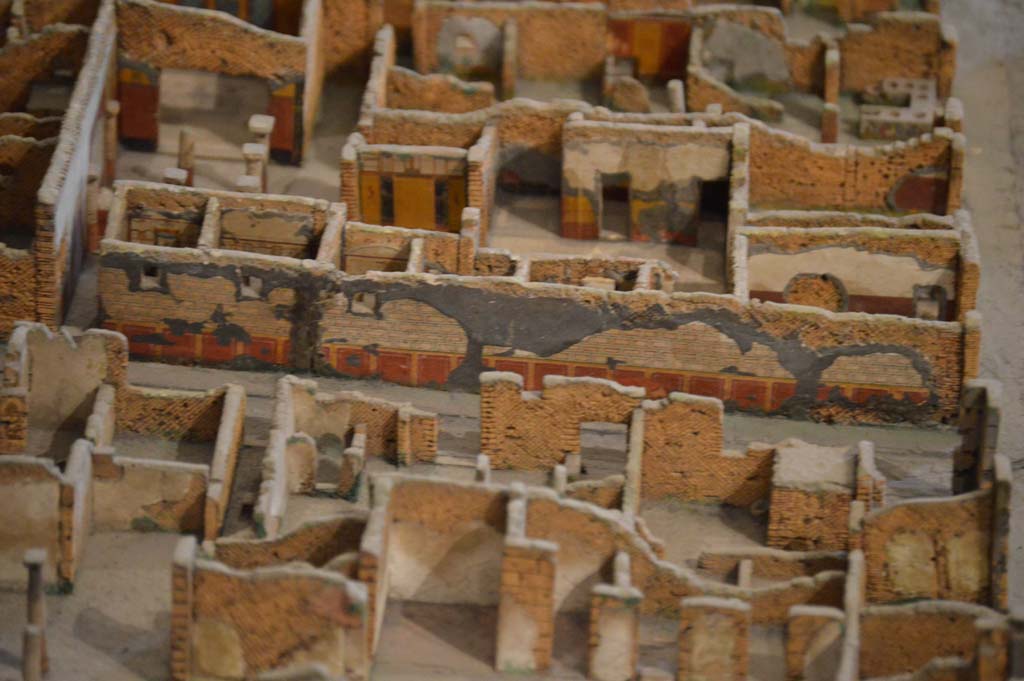
VI.8.3 Pompeii,
entrance doorway, on left side of centre, in Vicolo della Fullonica. Detail
from model in Naples Archaeological Museum.
Looking towards detail of east wall of
roadway, exterior wall of VI.8.3/5, the House of the Tragic Poet.
Foto
Taylor Lauritsen, ERC Grant 681269 DÉCOR.
(For
other photos of the detail of the exterior wall, see Vicolo della
Fullonica).
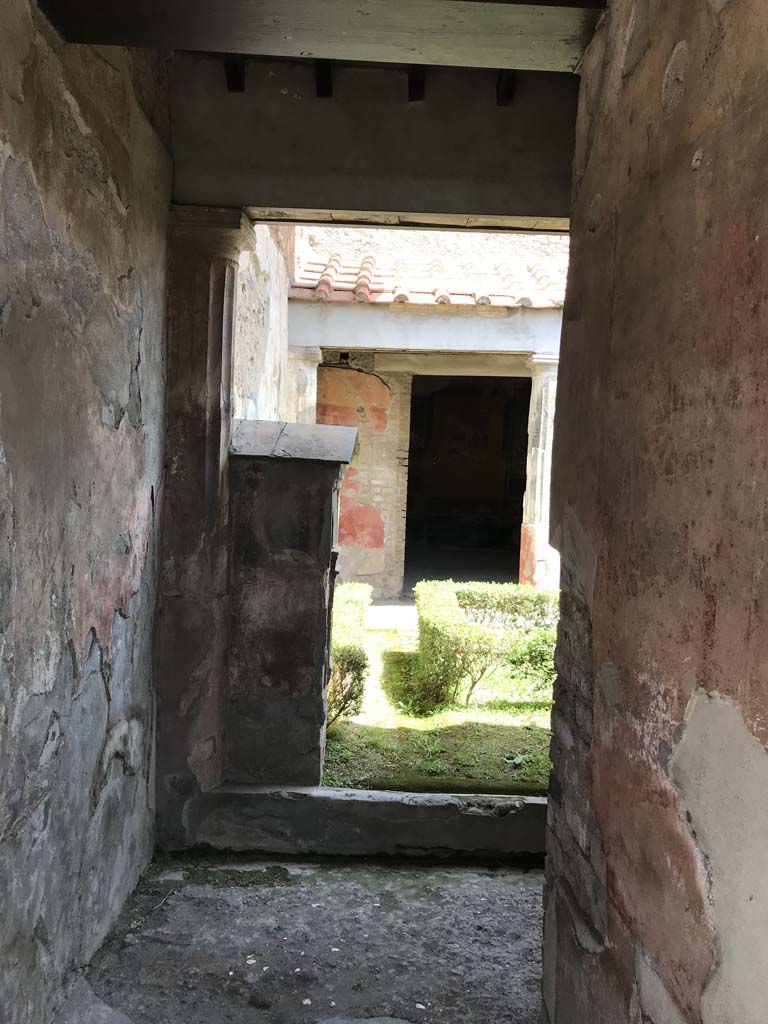
Looking east along entrance corridor towards peristyle garden. Photo courtesy of Rick Bauer.
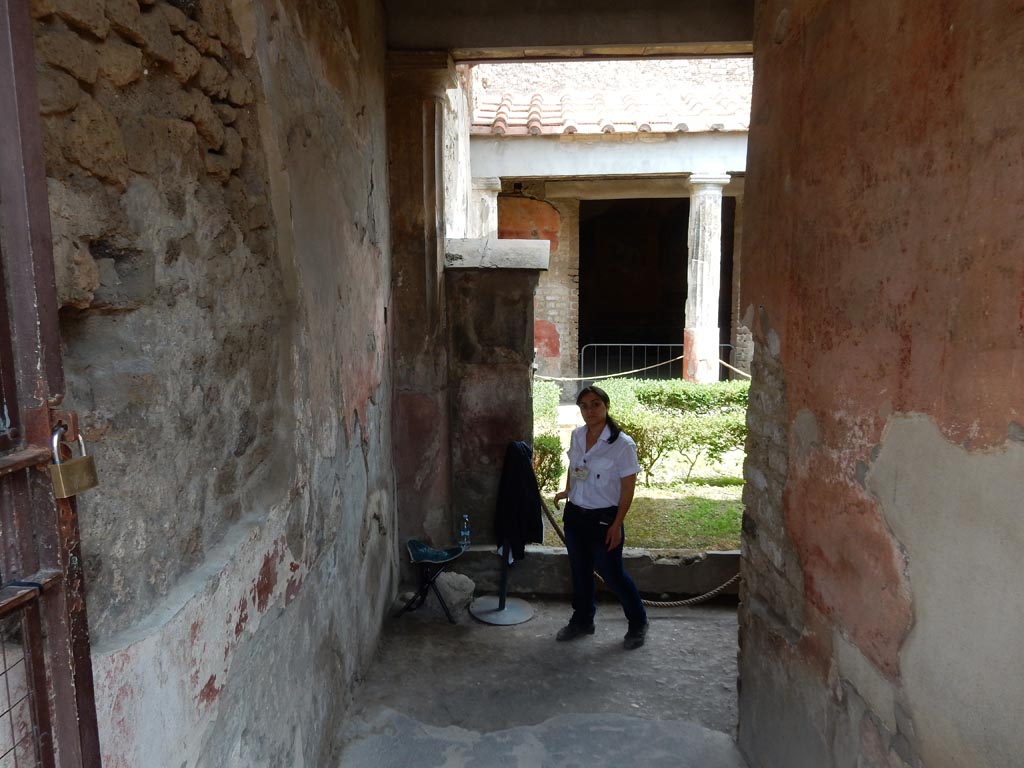
VI.8.3/5 Pompeii. May 2015. Looking east along entrance corridor towards peristyle garden. Photo courtesy of Buzz Ferebee.
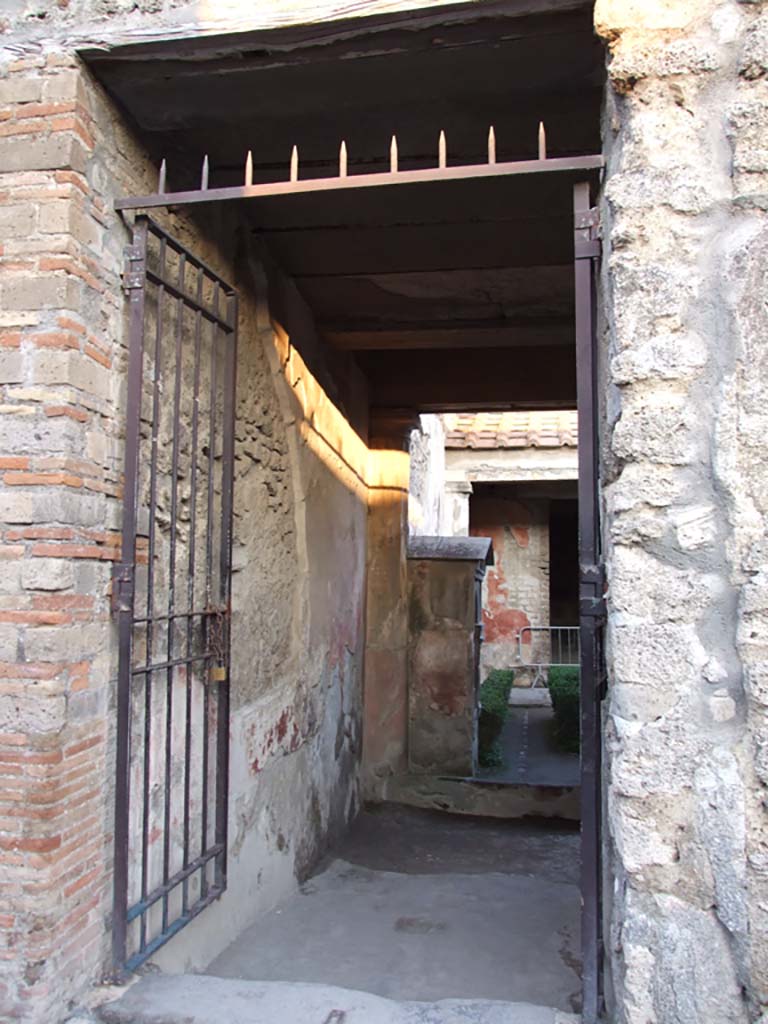
VI.8.3 Pompeii. December
2006. Entrance corridor.
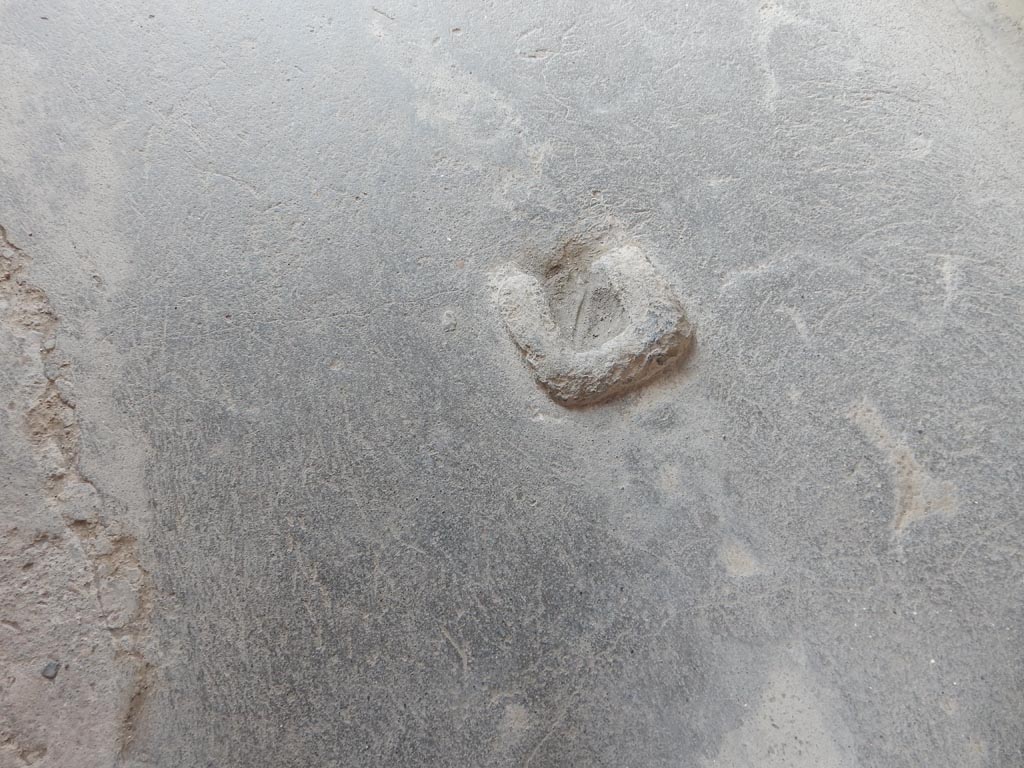
VI.8.3/5 Pompeii. May 2015. Entrance corridor, slot for holding beam to bar doorway. Photo courtesy of Buzz Ferebee.
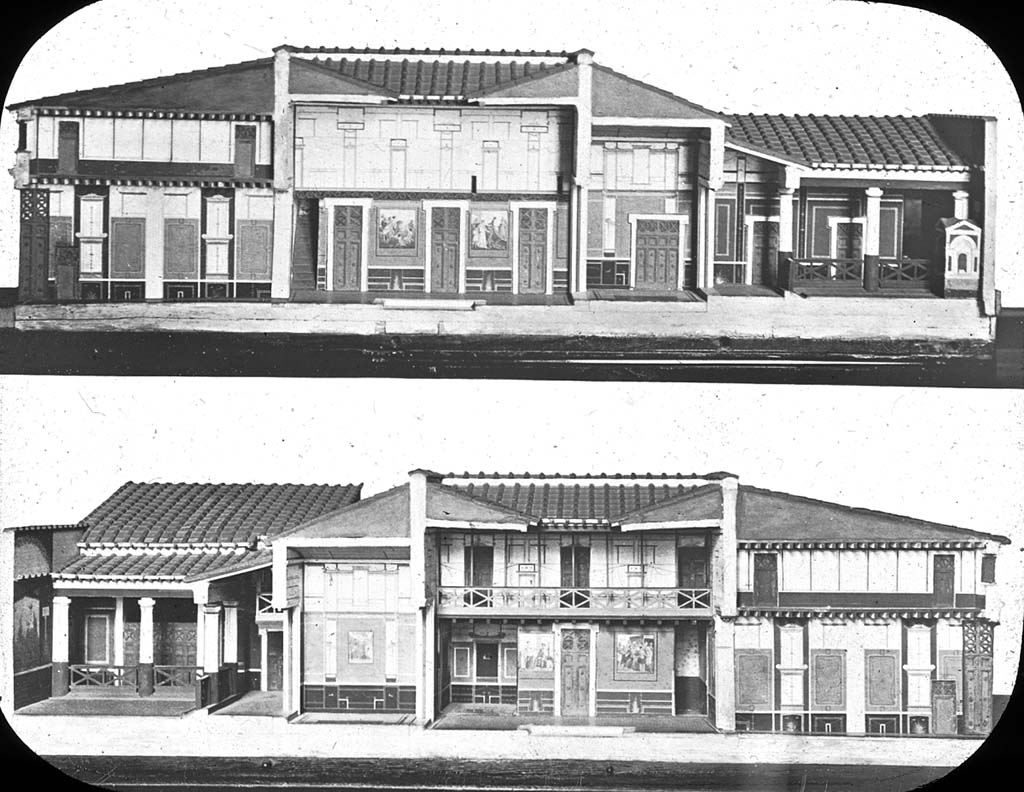
VI.8.3/5 Pompeii. 1895. Lantern slide with cross sections of the house.
Photo courtesy of Brooklyn Museum, Goodyear Collection S03i3125l01.
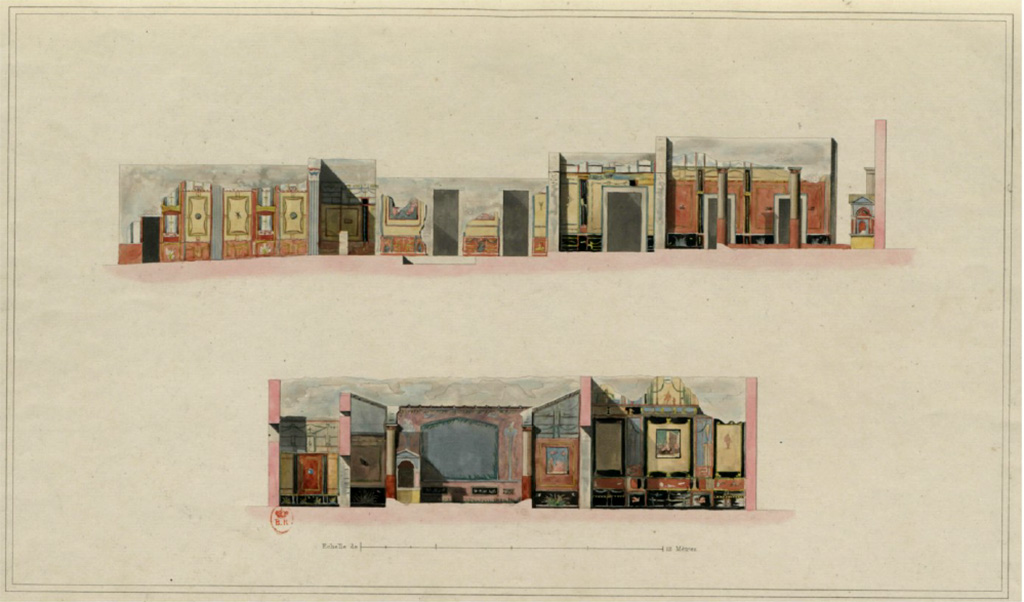
VI.8.3/5 Pompeii. 1828. Watercolour painting of cross sections on the house.
See Raoul Rochette et
Bouchet J., 1828. Choix d'Edifices Inédits : Maison du Poète Tragique. Paris,
pl 2.
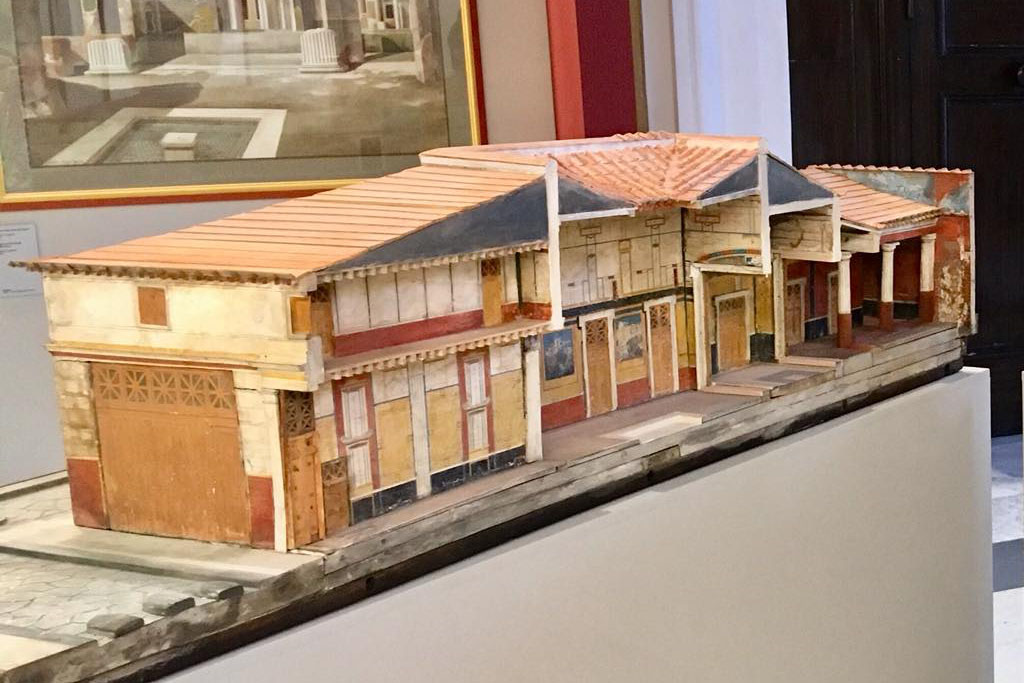
VI.8.3/5 Pompeii. 1861 model of house, west side. Now in Naples Archaeological Museum.
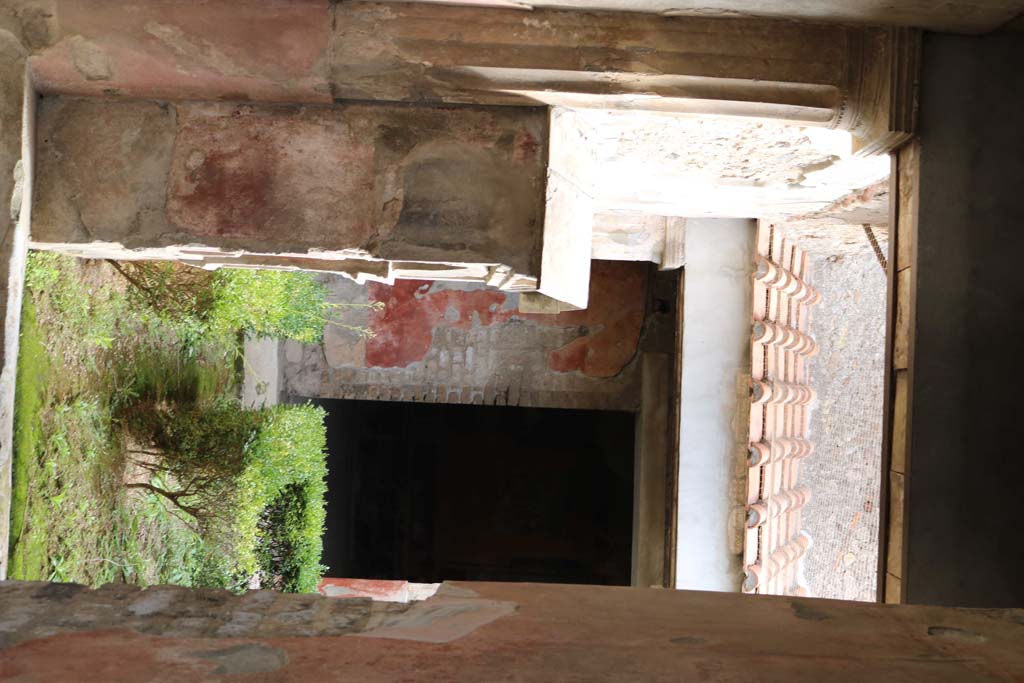
VI.8.3/5 Pompeii. 1861 model of house, east side. Now in Naples Archaeological Museum.
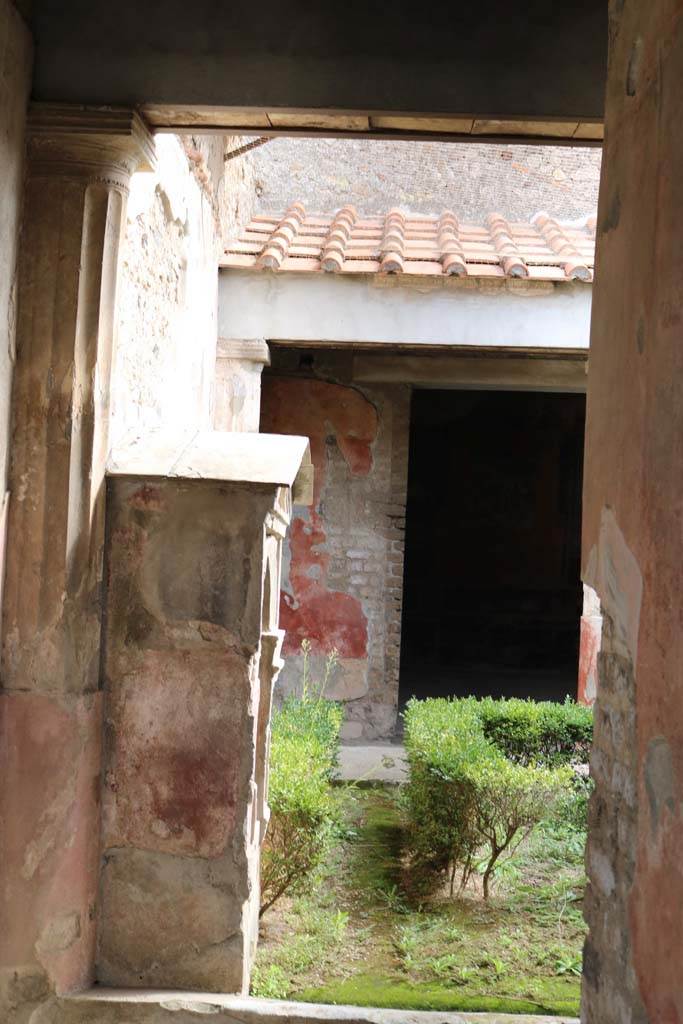
VI.8.3/5 Pompeii. December 2018.
Looking from entrance corridor towards west side of lararium against north wall of peristyle area.
Photo courtesy of Aude Durand.
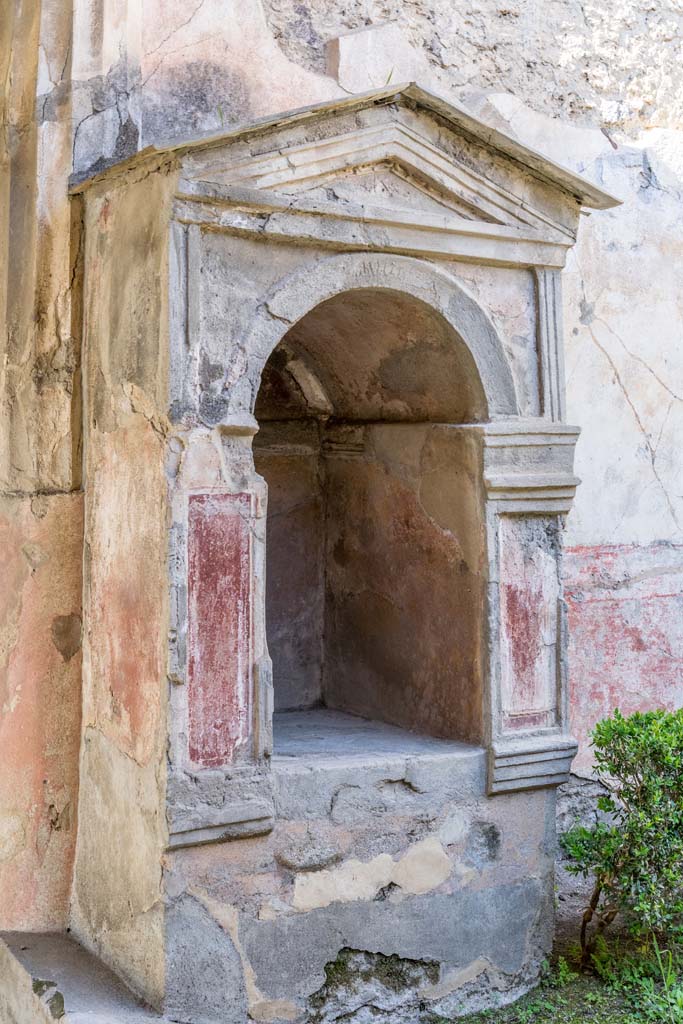
VI.8.3/5 Pompeii. April 2022.
Aedicula lararium near north wall of garden area. Photo
courtesy of Johannes Eber.
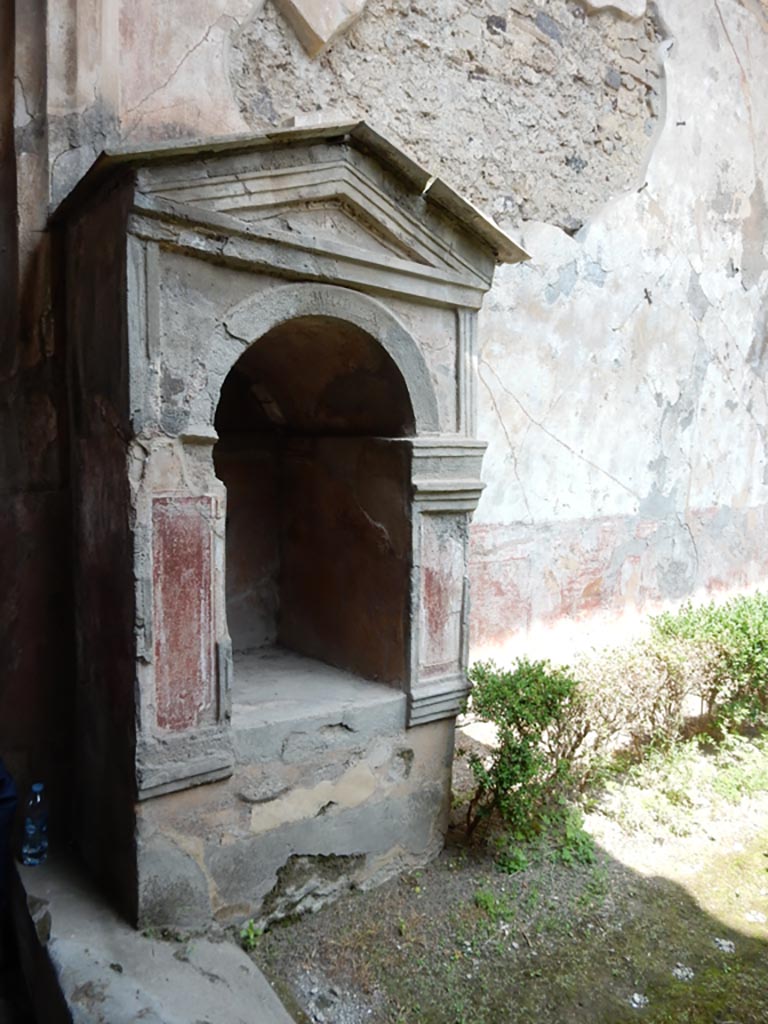
VI.8.3/5 Pompeii. May 2015.
Aedicula lararium near north wall of garden area. Photo courtesy of Buzz Ferebee.
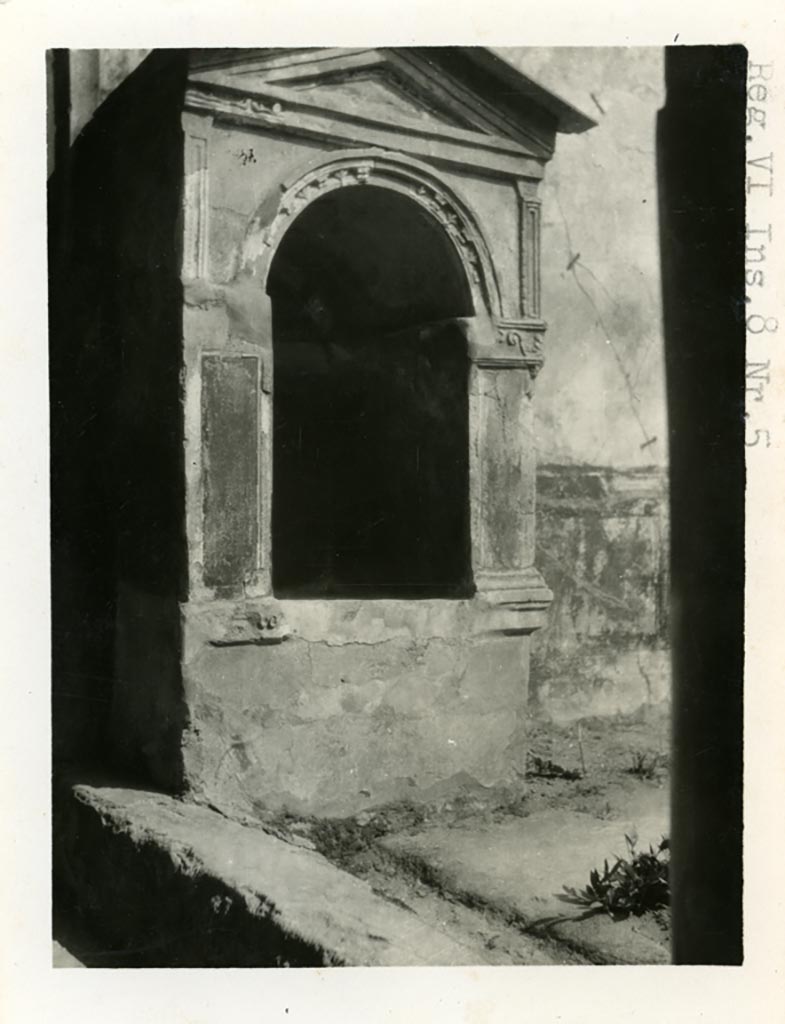
VI.8.3/5 Pompeii. Pre-1937-39. Aedicula lararium near north wall of garden area.
Photo courtesy of American Academy in Rome, Photographic Archive. Warsher collection no. 1557a.
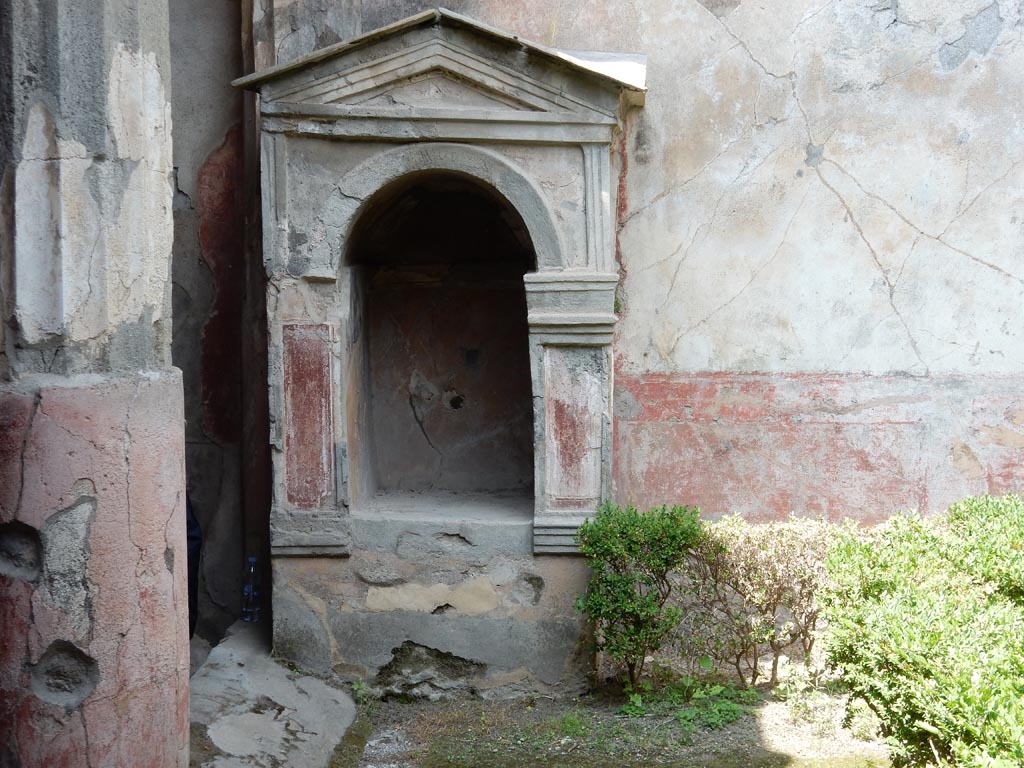
VI.8.3/5 Pompeii. May 2015. Aedicula lararium near north wall of garden area. Photo courtesy of Buzz Ferebee.
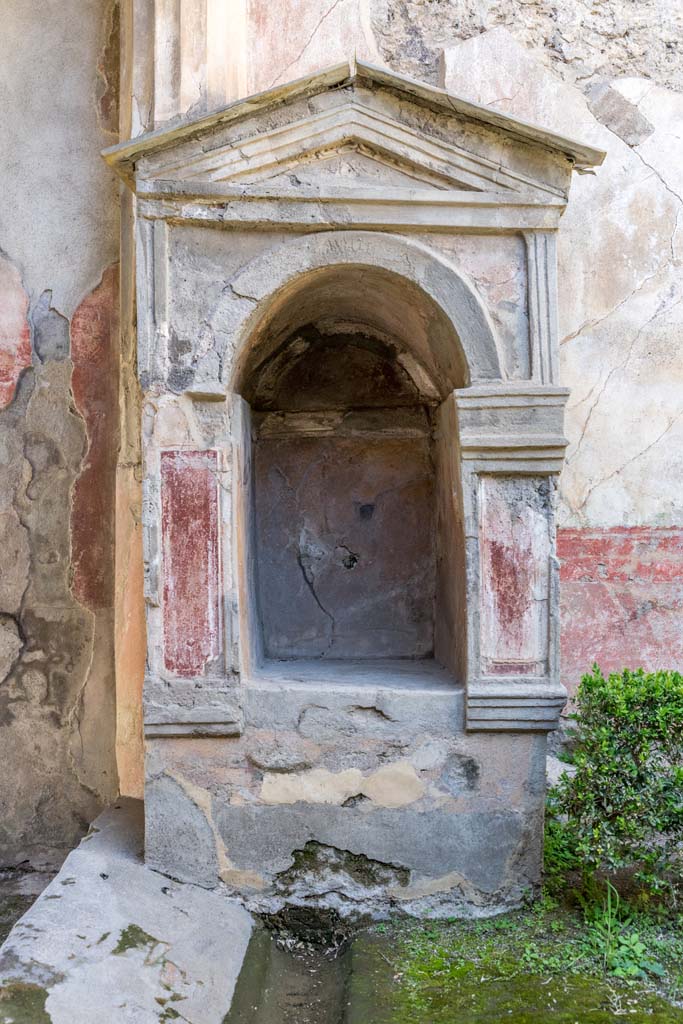
VI.8.3/5 Pompeii. April 2022.
Aedicula lararium near north wall of garden area. Photo courtesy of Johannes Eber.
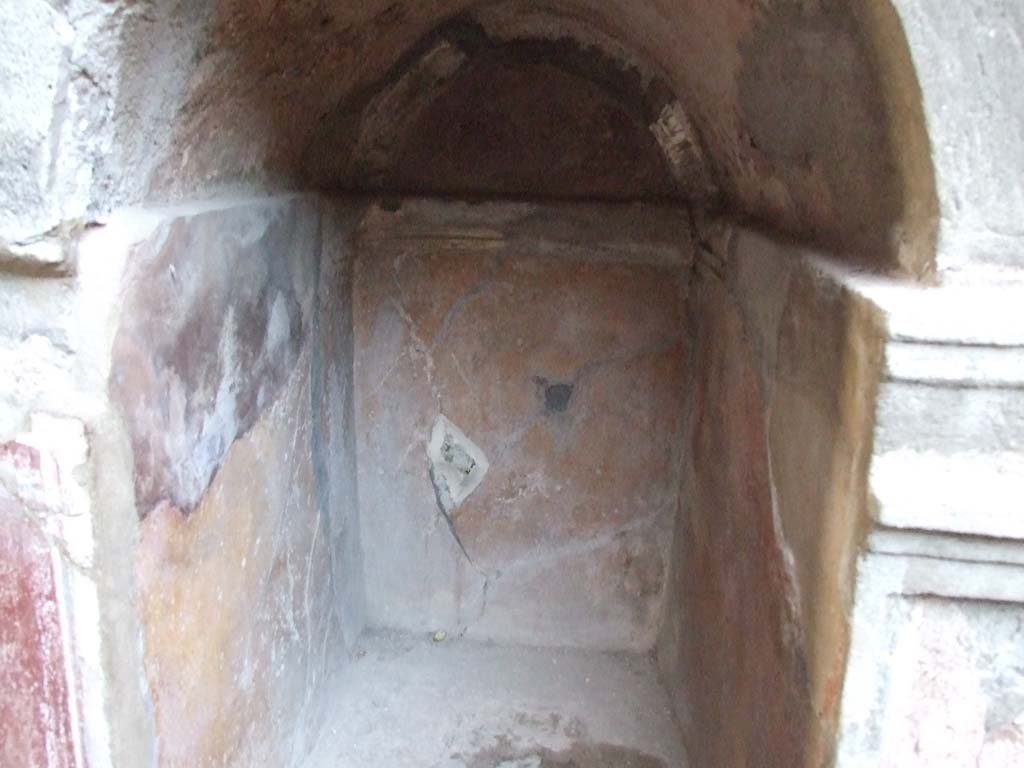
VI.8.3/5 Pompeii.
December 2006. Niche in lararium.
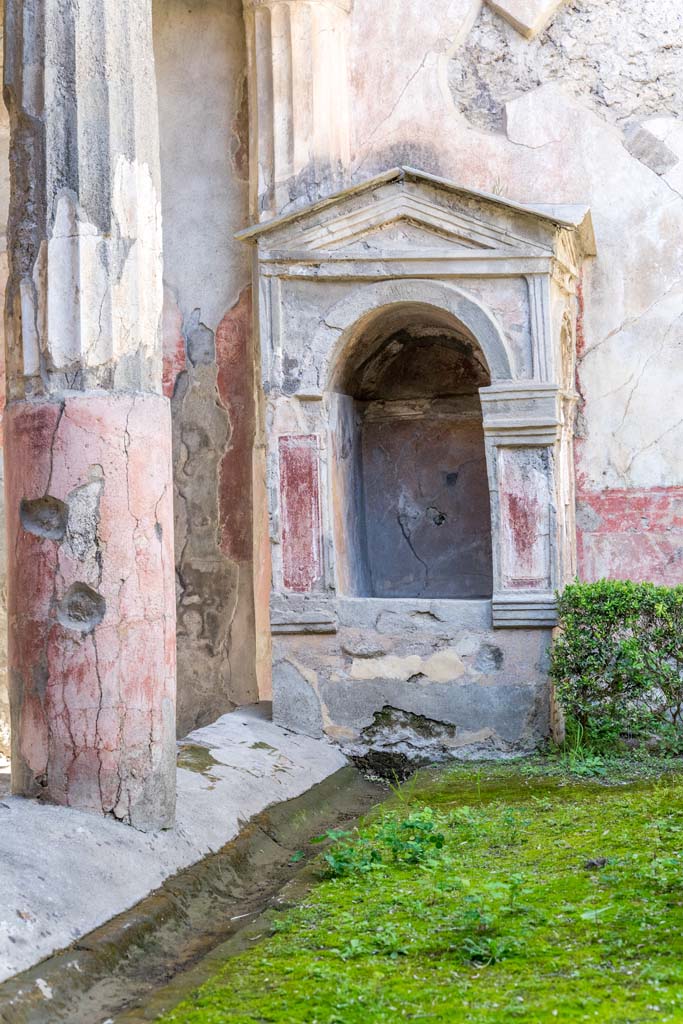
VI.8.3/5 Pompeii. April 2022. Aedicula lararium. Photo
courtesy of Johannes Eber.
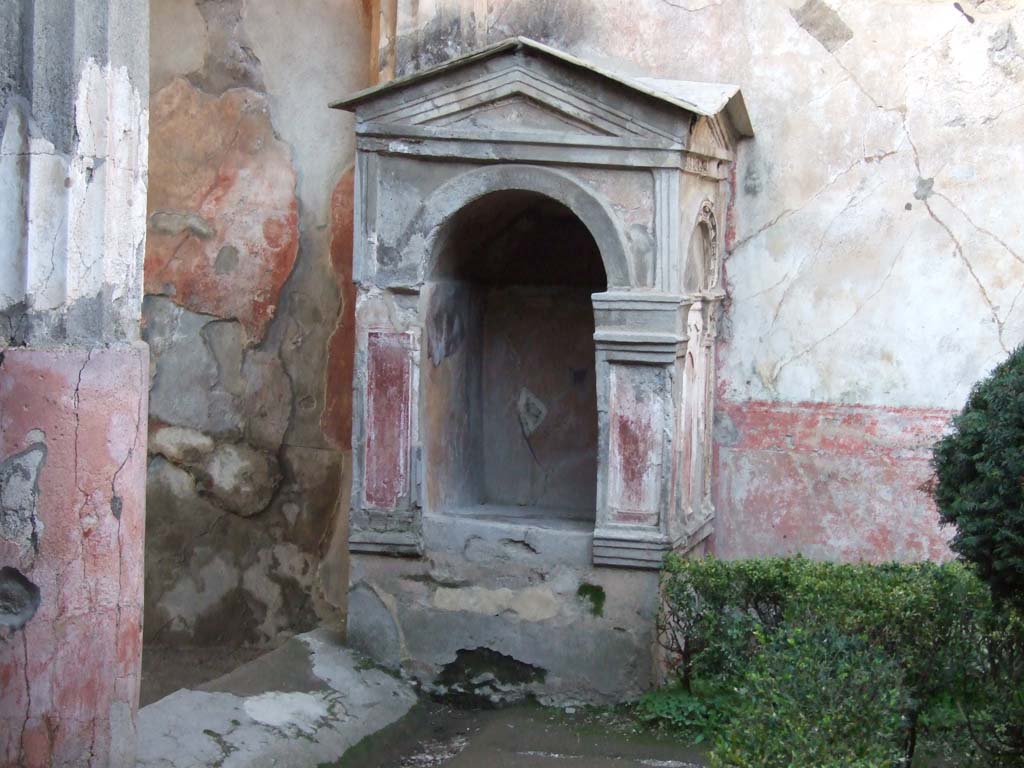
VI.8.3/5 Pompeii. December 2006. Aedicula lararium.
Boyce seemed doubtful that this was for the worship of the household gods and may have just been a decorative feature.
Many of the accounts of the discovery, state that a statuette of a faun was found within this niche, but other reports do not agree.
It is therefore impossible to know if this was the figure that was normally contained within the niche.
Anyway, it did seem likely that it did contain some such single statuette of ornamental character, rather than the images of the gods of the household.
See Boyce G. K., 1937. Corpus of the Lararia of Pompeii. Rome: MAAR 14. (p.48, no.168 and Pl.30,3), and other references.
Now in Naples
Archaeological Museum. Inventory number 6347.
See Pagano, M. and Prisciandaro, R., 2006. Studio sulle provenienze degli oggetti rinvenuti negli scavi borbonici del regno di Napoli. Naples: Nicola Longobardi, p. 132.
PAH II, 126, reporting the discovery on 12th February 1825 called it a lararium for the household gods, and did not mention a statue of a faun.
According to Jashemski, PAH II,125 reported that the statuette of a marble faun (MN 6347) carrying a goatskin full of fruit around his neck was found to the left of the tablinum.
Minervini, thirty-three years later reported that the statue was found in the aedicula, and this account has been repeated down the years.
The shell of a tortoise which had been kept in the garden was also found.
See Jashemski, W. F., 1993. The Gardens of Pompeii, Volume II: Appendices. New York: Caratzas. (p.133, with photos 142, and 143 (marble faun).
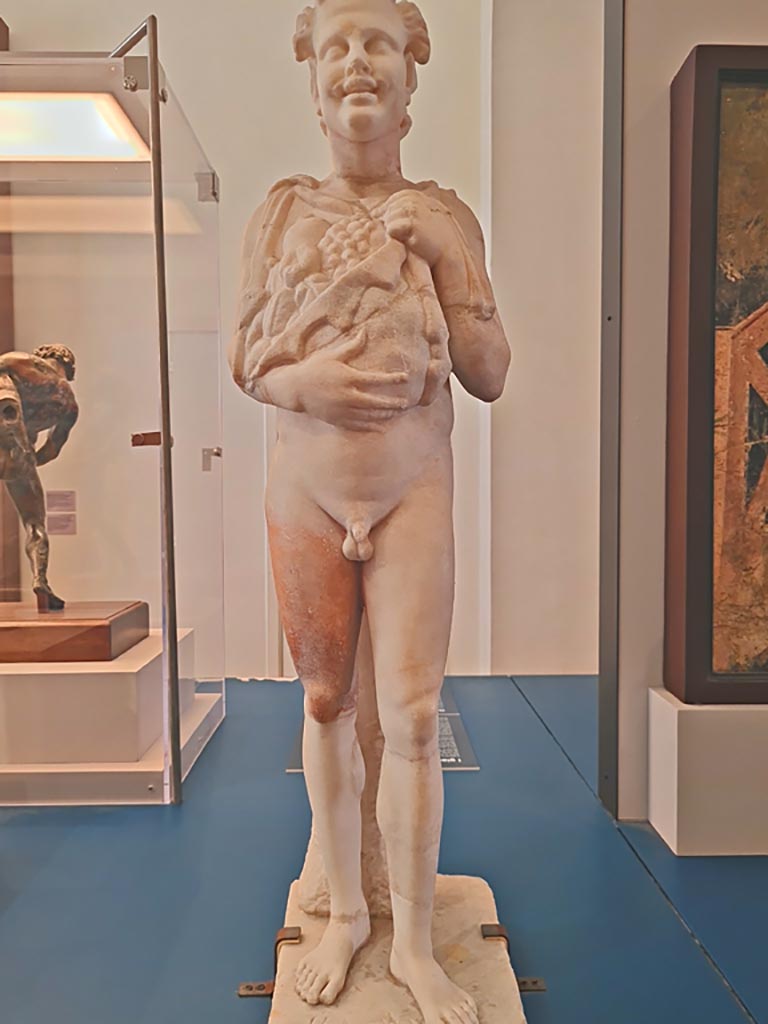
Marble
statue of Faun found in the aedicula in the garden, inv. 6347. Photo courtesy
of Giuseppe Ciaramella.
On display in
“L’altra MANN” exhibition, October 2023, at Naples Archaeological Museum.
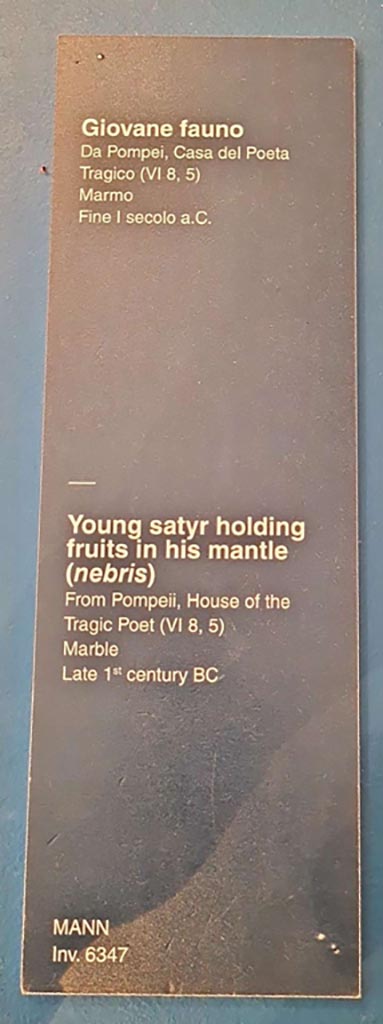
VI.8.5 Pompeii.
October 2023.
Description card for inv. 6347. Photo
courtesy of Giuseppe Ciaramella.
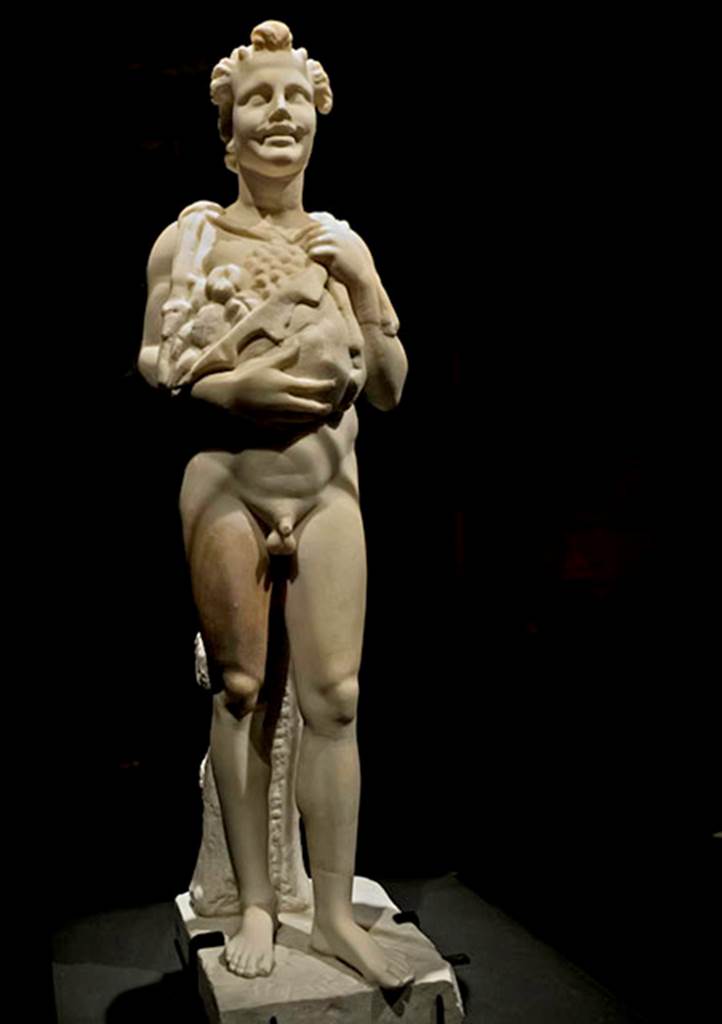
VI.8.3/5 Pompeii.
28th January 1825, found in the tablinum was a marble statuette of a faun, broken in three pieces.
He is carrying a goatskin full of fruit around his neck.
Now in Naples Archaeological Museum. Inventory number 6347.
See Pagano, M. and Prisciandaro, R., 2006. Studio sulle provenienze degli oggetti rinvenuti negli scavi borbonici del regno di Napoli. Naples: Nicola Longobardi, p. 132.
Photo courtesy of Mary Harrsch. Use subject to CC
BY-NC-SA 2.0
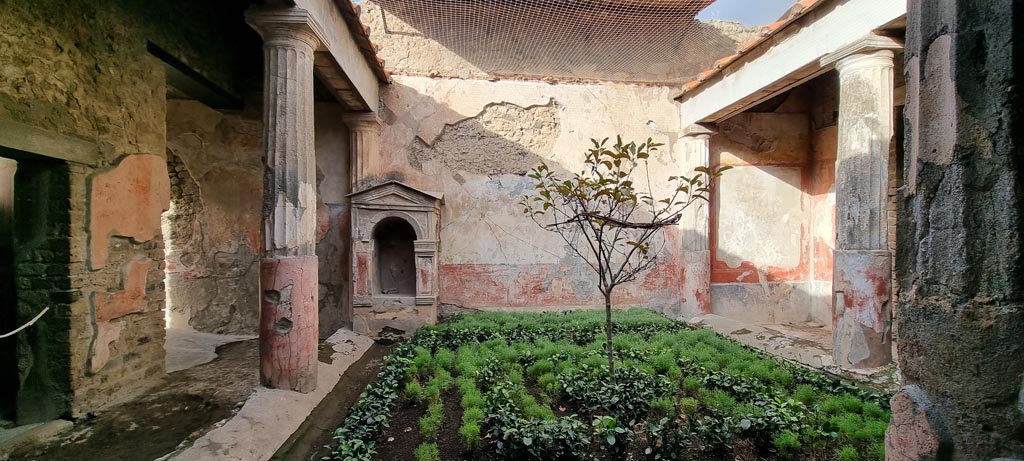
VI.8.3/5 Pompeii.
December 2023. Looking across garden area
towards north wall. Photo courtesy of
Miriam Colomer.
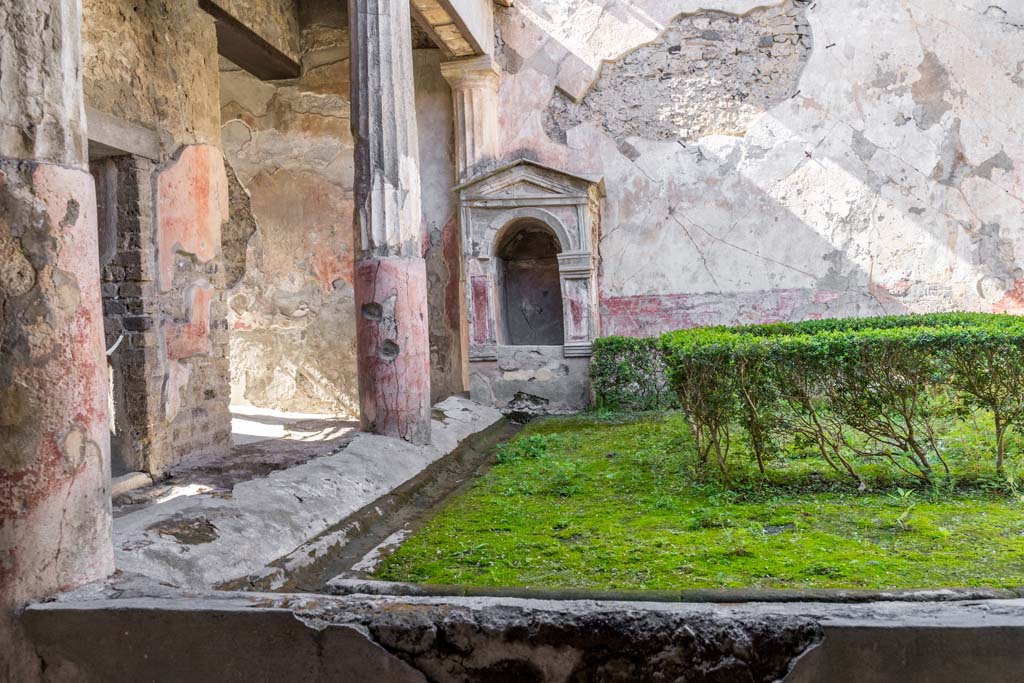
VI.8.3/5 Pompeii. April 2022. Peristyle, looking north. Photo
courtesy of Johannes Eber.
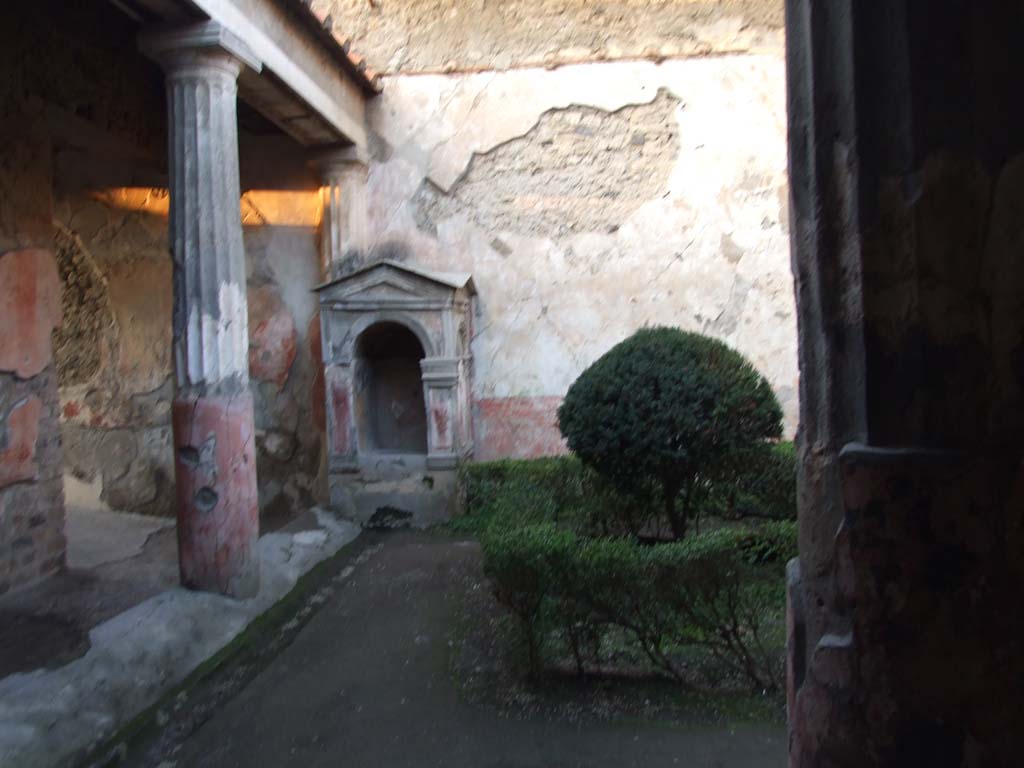
VI.8.3/5 Pompeii. December 2006. Peristyle, looking north.
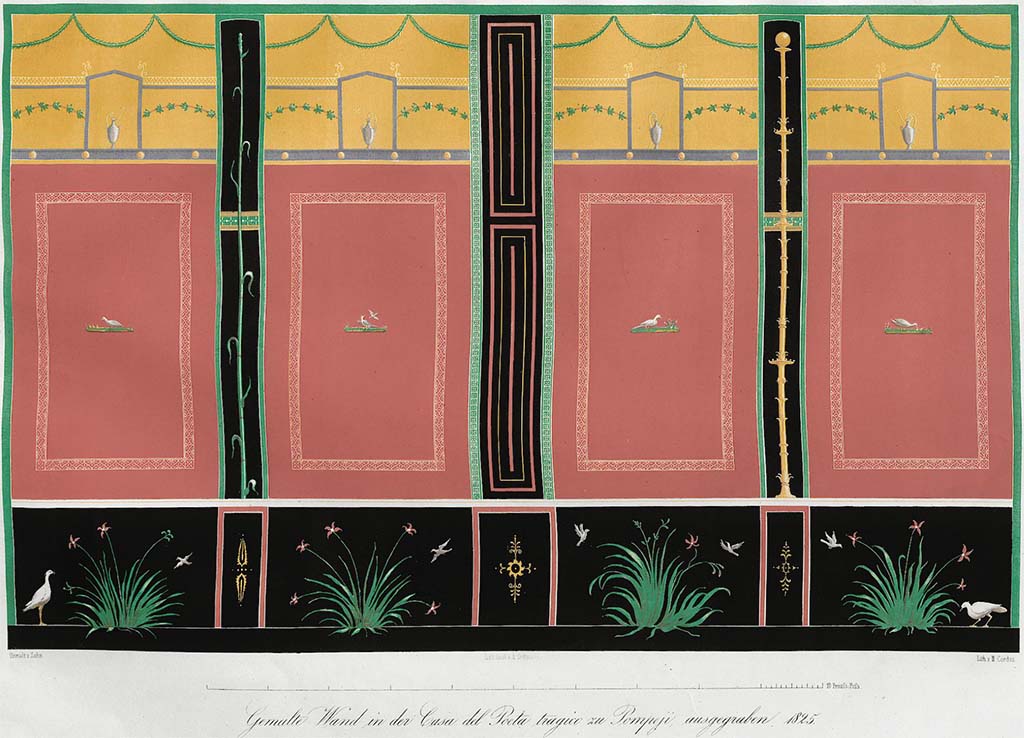
VI.8.3/5 Pompeii. Pre June 1854.
Painting by Zahn, according to him this
wall in its original colours, was found at the back entrance of the house
leading from the side road to the garden area near to the triclinium.
See Zahn, W., 1852-59. Die schönsten Ornamente und merkwürdigsten Gemälde aus Pompeji, Herkulanum und Stabiae: III. Berlin: Reimer, taf. 59.
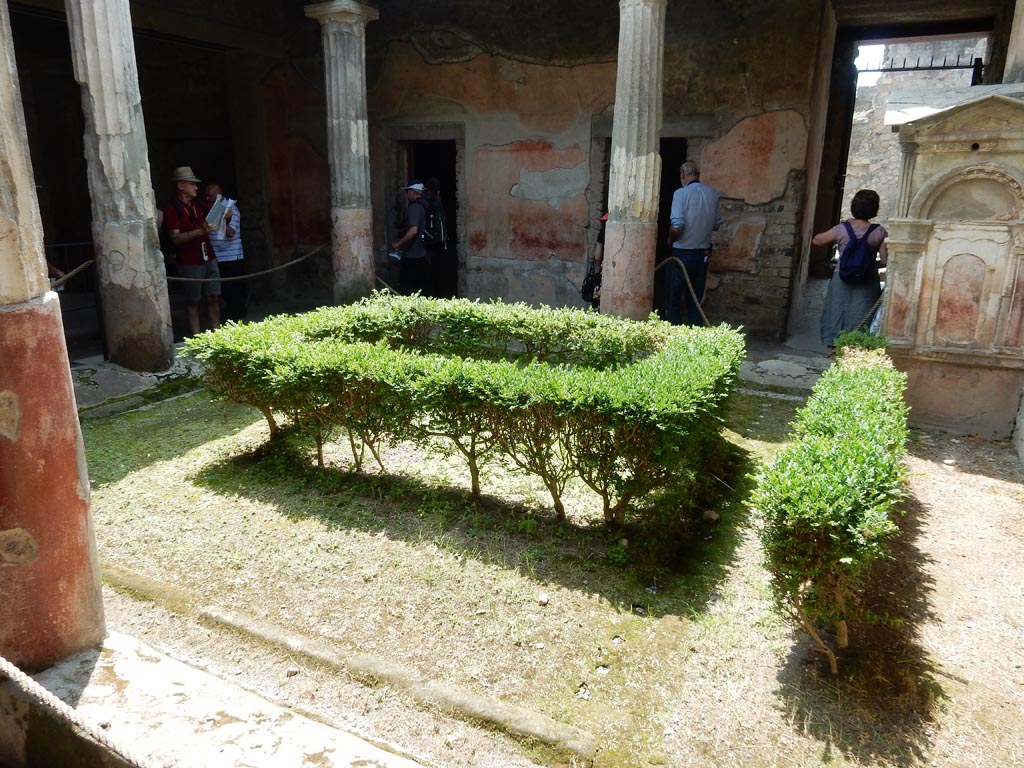
VI.8.3/5 Pompeii. May 2015. Peristyle garden, looking south-west. Photo courtesy of Buzz Ferebee.
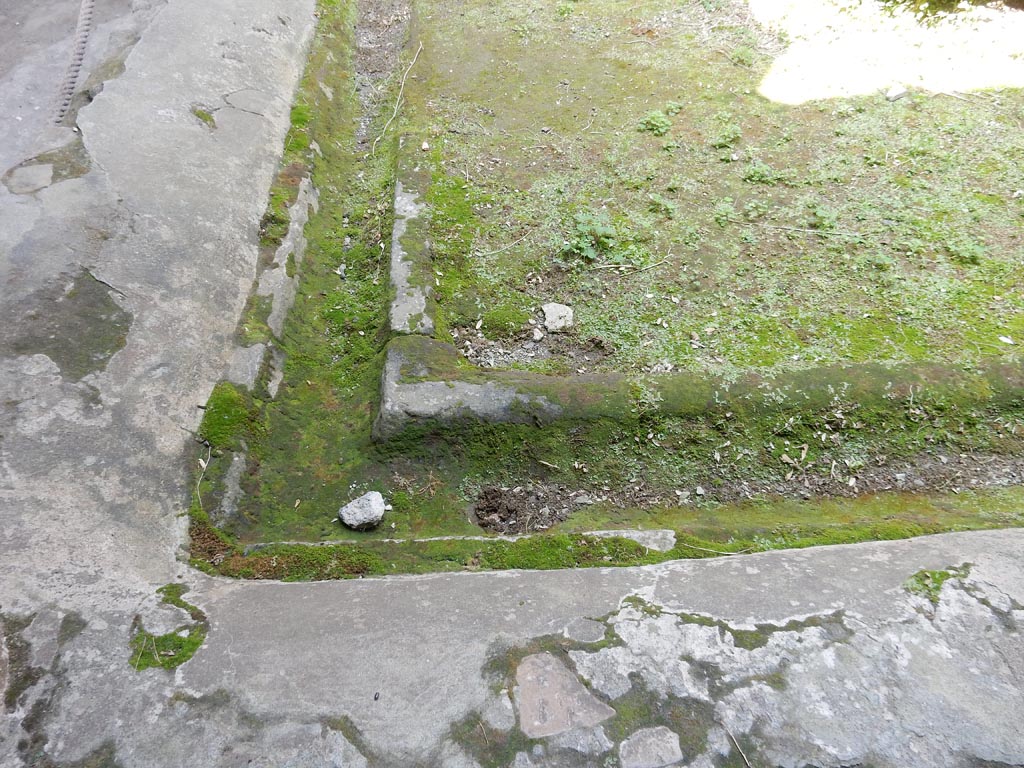
VI.8.3/5 Pompeii. May 2015. Gutter in peristyle garden. Photo courtesy of Buzz Ferebee.
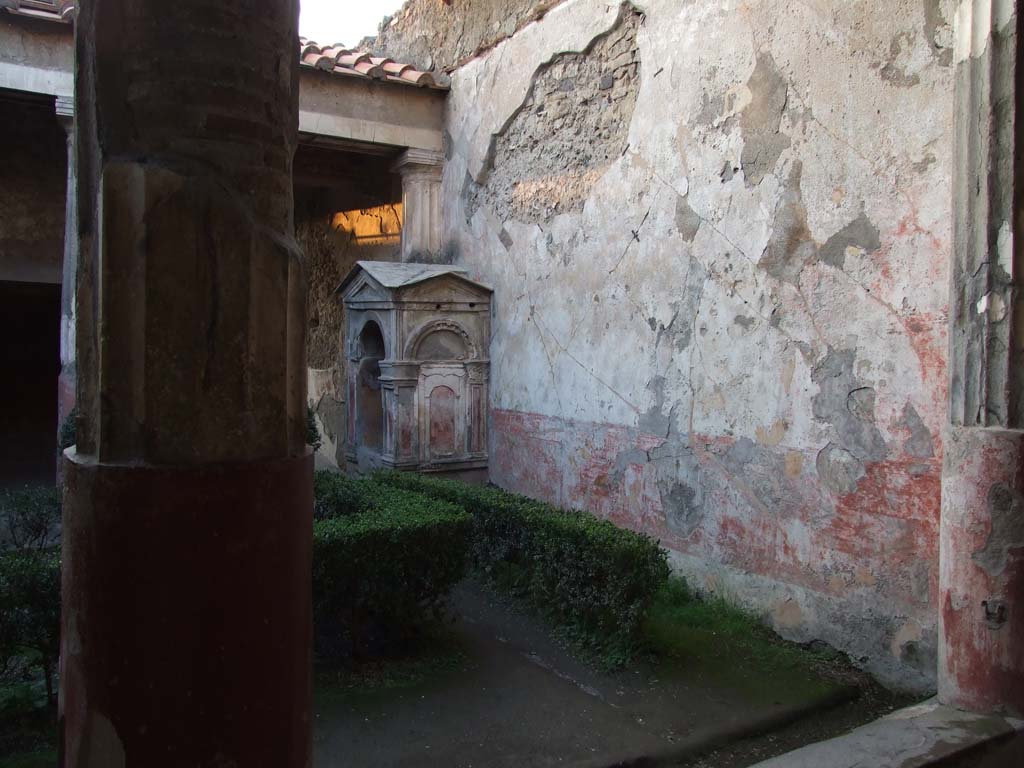
VI.8.3/5 Pompeii. December 2006. Peristyle with lararium against north wall.
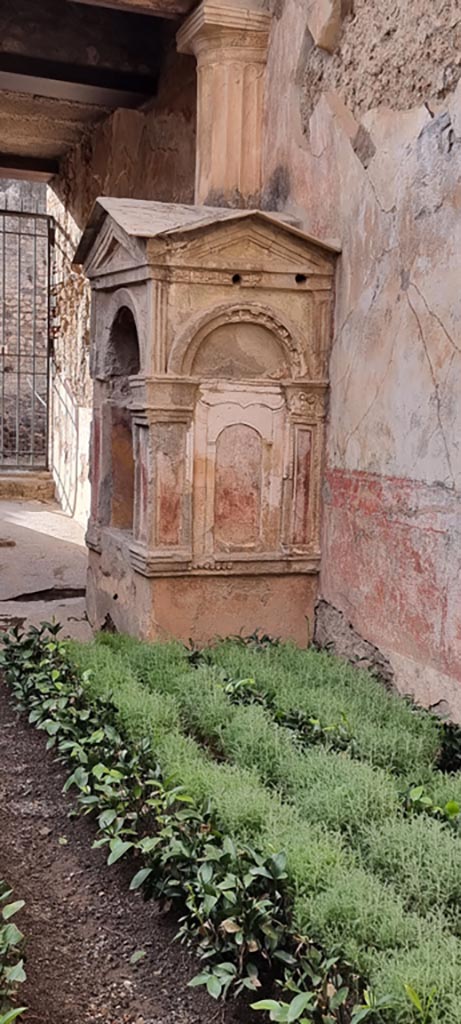
VI.8.3/5 Pompeii. December
2023.
Lararium against north
wall in peristyle, looking west.
Photo courtesy of
Miriam Colomer.
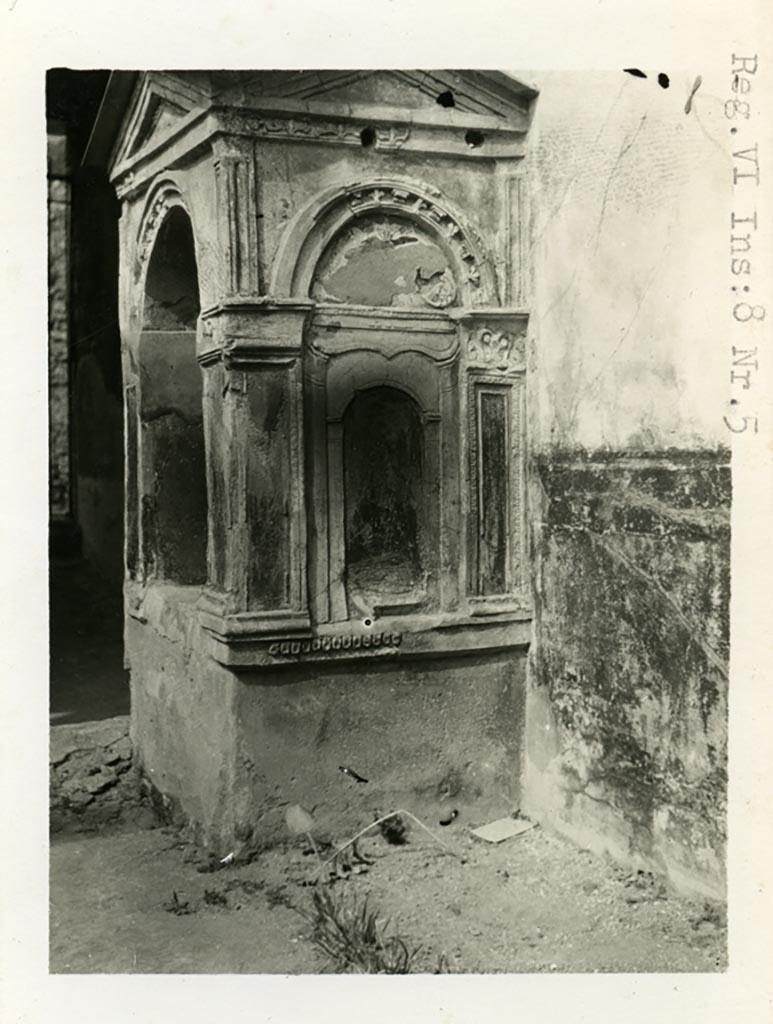
VI.8.3/5 Pompeii. Pre-1937-39. East side of lararium.
Photo courtesy of American Academy in Rome, Photographic Archive. Warsher collection no. 1557.
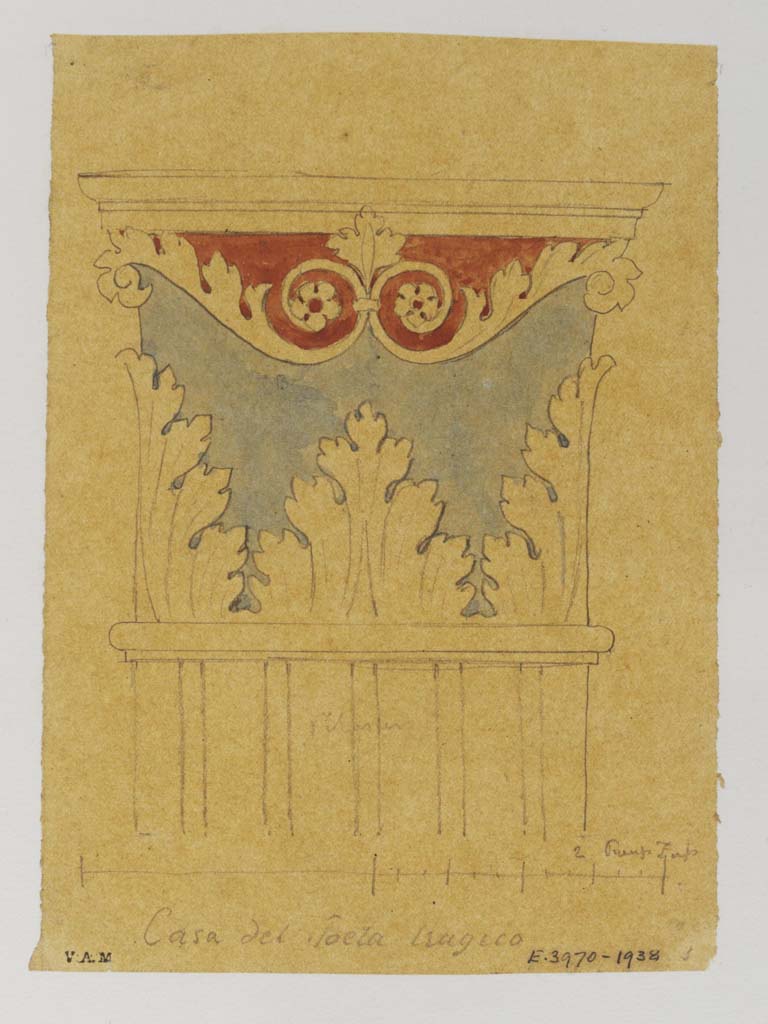
VI.8.3/5 Pompeii. c.1840. Drawing and
watercolour by James
William Wild.
This
would appear to be the stucco decorating the top of the four corners of the
lararium, as opposed to the top of the columns in the peristyle.
Photo © Victoria and Albert Museum, inventory number
E.3970-1938. casa del poeta tragico.
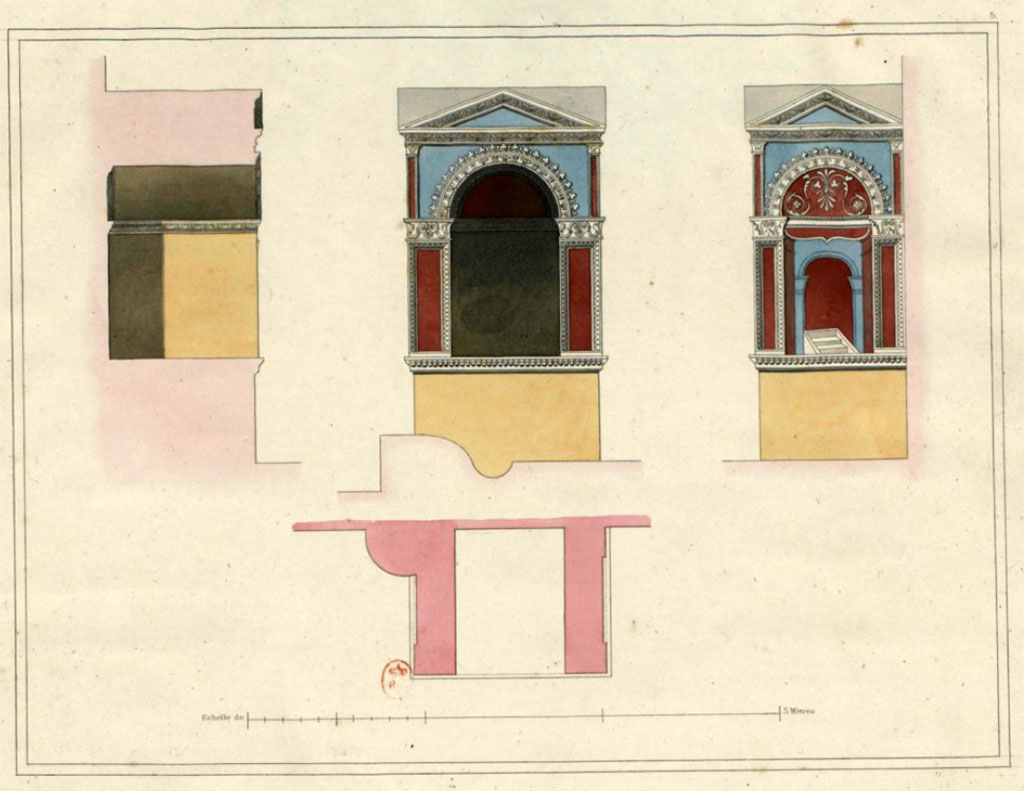
VI.8.3/5 Pompeii. c.1828. Drawings of details of Lararium.
See Raoul Rochette et
Bouchet J., 1828. Choix d'Edifices Inédits : Maison du Poète Tragique. Paris,
pl 5.
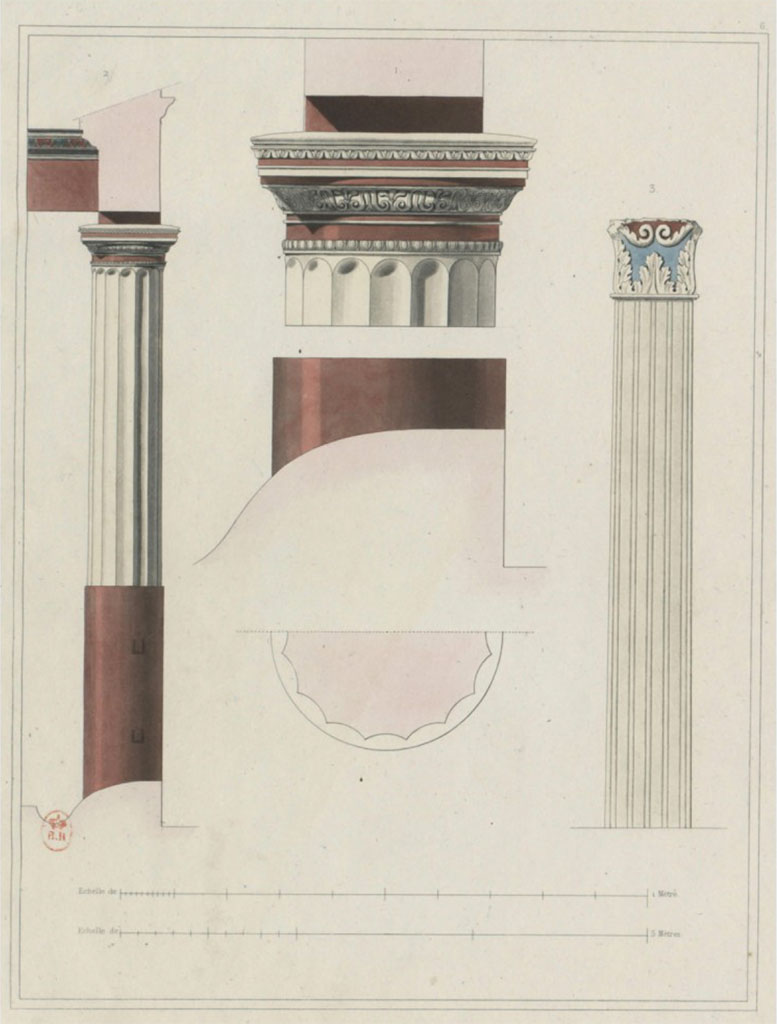
VI.8.3/5 Pompeii. c.1828. Drawings of details of columns and
capitals from peristyle.
See Raoul Rochette et
Bouchet J., 1828. Choix d'Edifices Inédits : Maison du Poète Tragique.
Paris, pl 6.
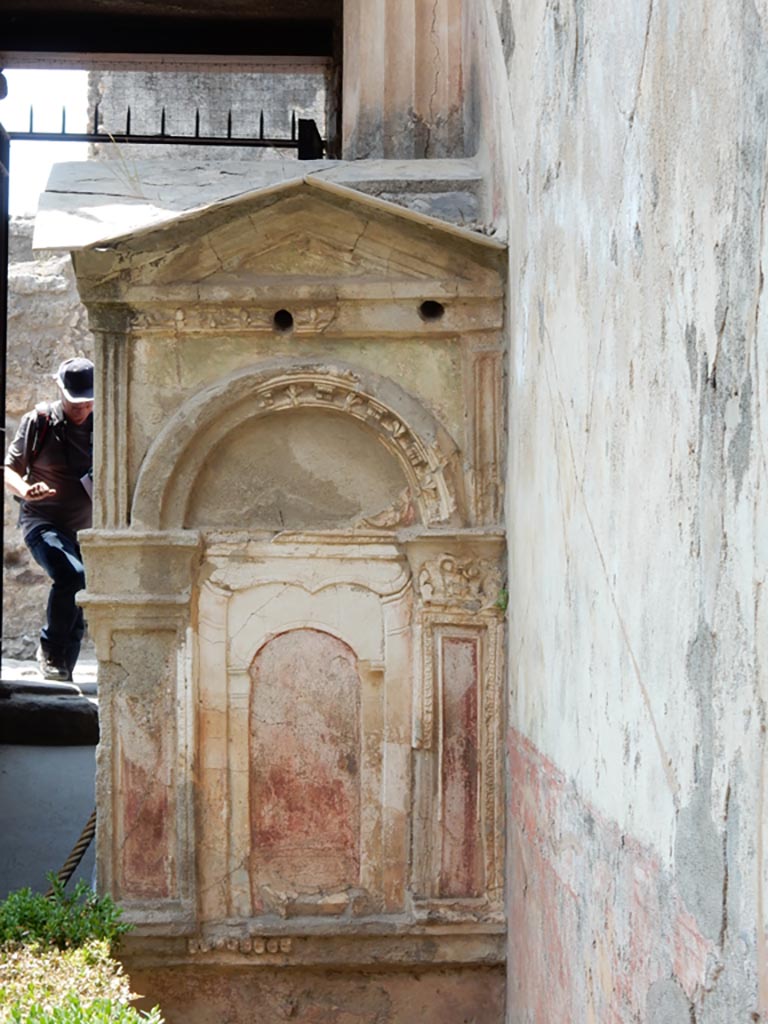
VI.8.3/5 Pompeii. May 2015. East side of lararium. Photo courtesy of Buzz Ferebee.
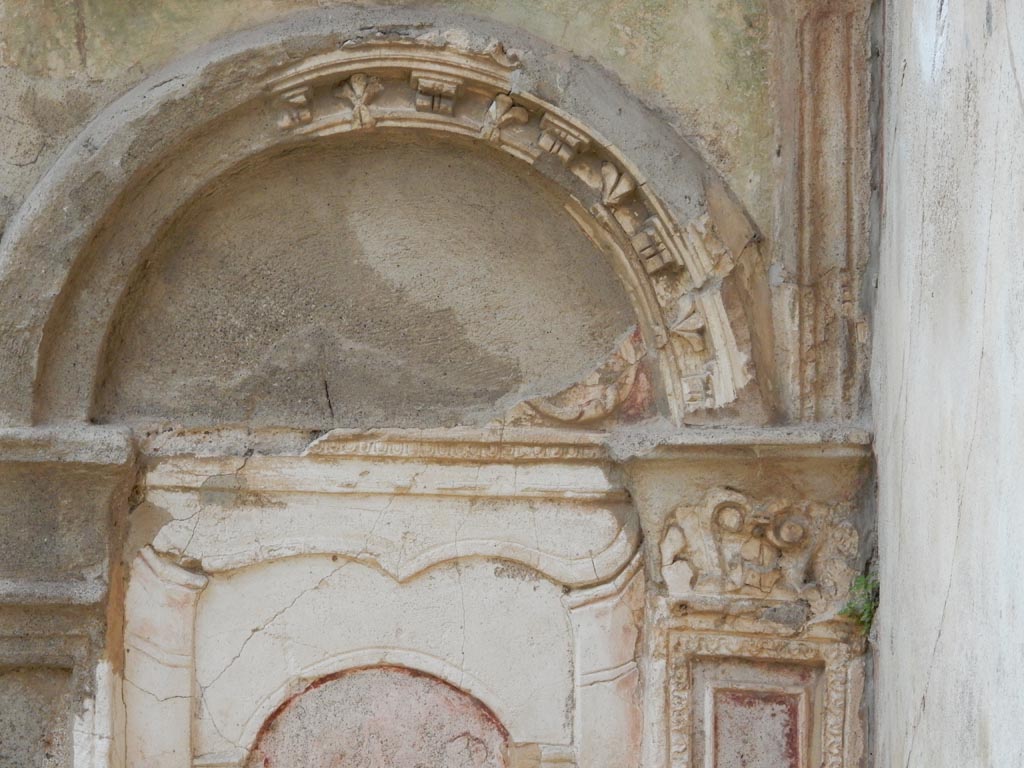
VI.8.3/5 Pompeii. May 2015. Detail of stucco on east side of lararium. Photo courtesy of Buzz Ferebee.
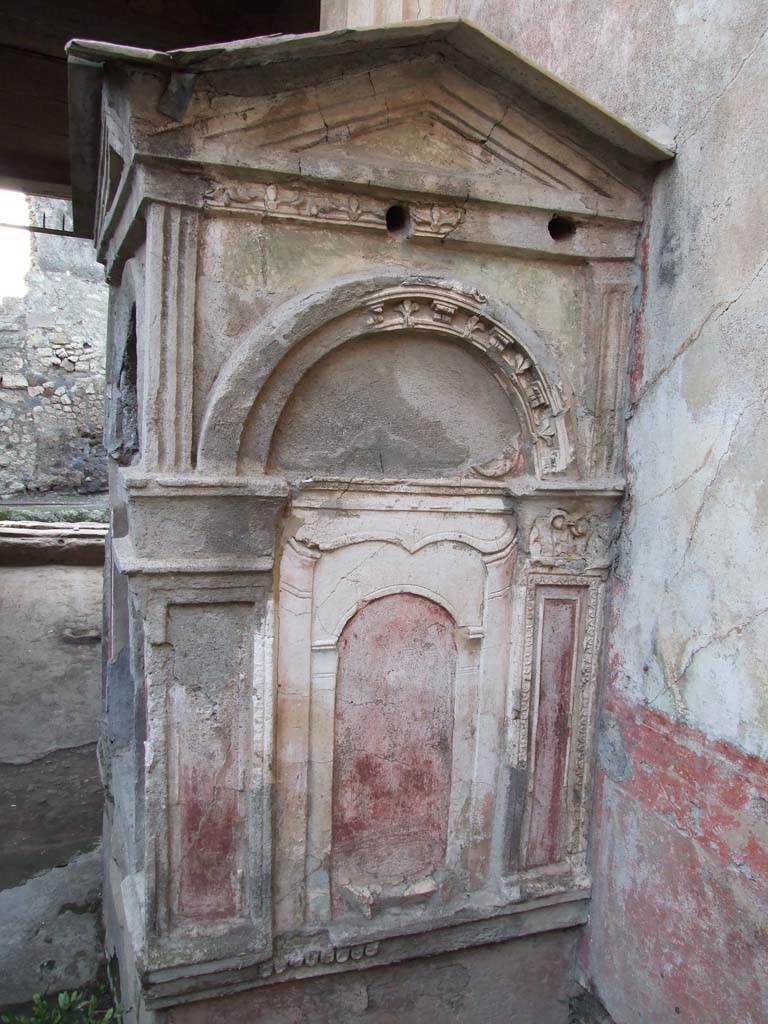
VI.8.3/5 Pompeii. December 2006. East side of lararium.
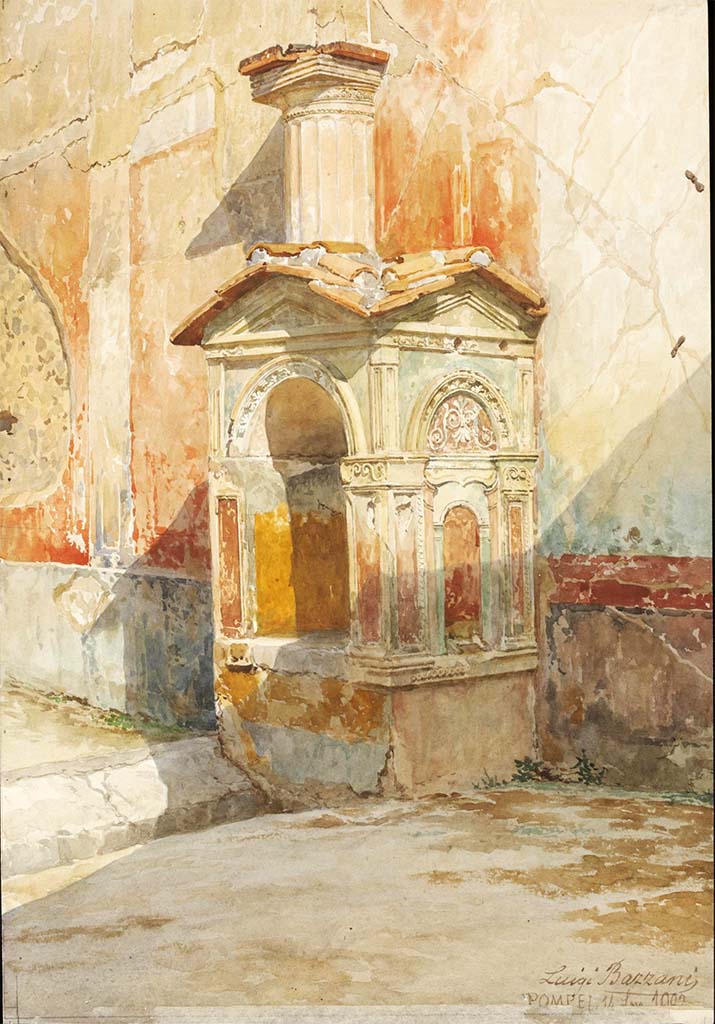
VI.8.3/5 Pompeii. 14th July 1902. Watercolour by Luigi Bazzani.
Looking north-west across peristyle towards lararium.
Photo © Victoria and Albert Museum, inventory number D.1821-1904.
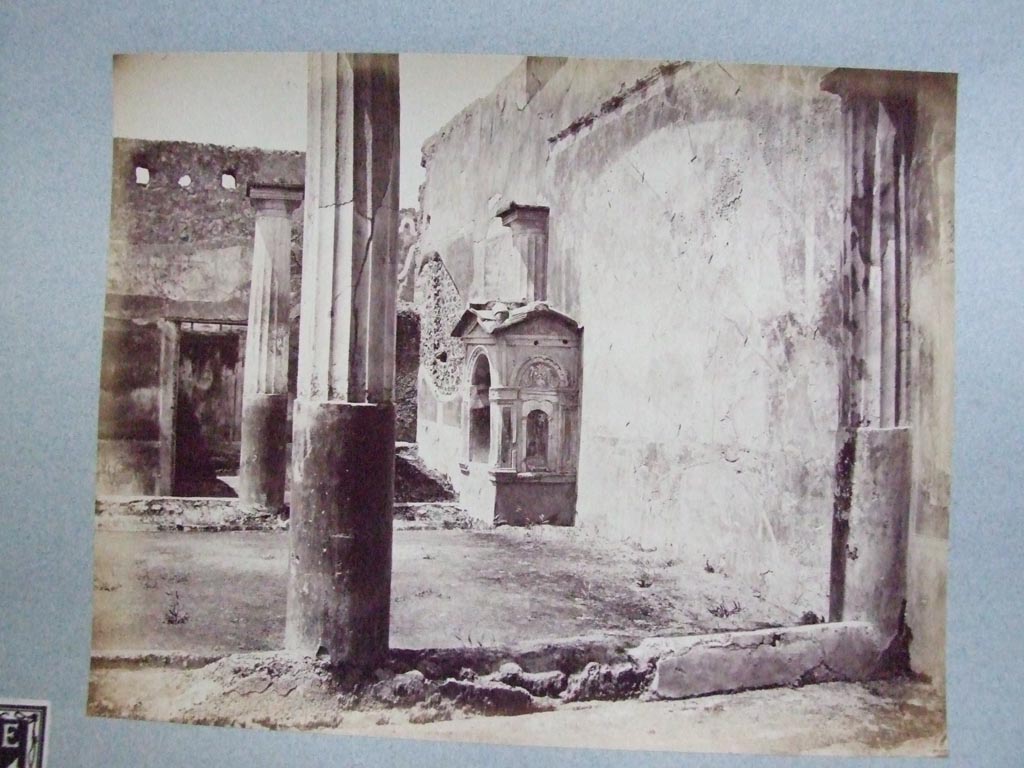
VI.8.3/5 Pompeii. House of the Tragic Poet. Peristyle with aedicula lararium.
Old undated photograph. Courtesy of Society of Antiquaries. Fox Collection.
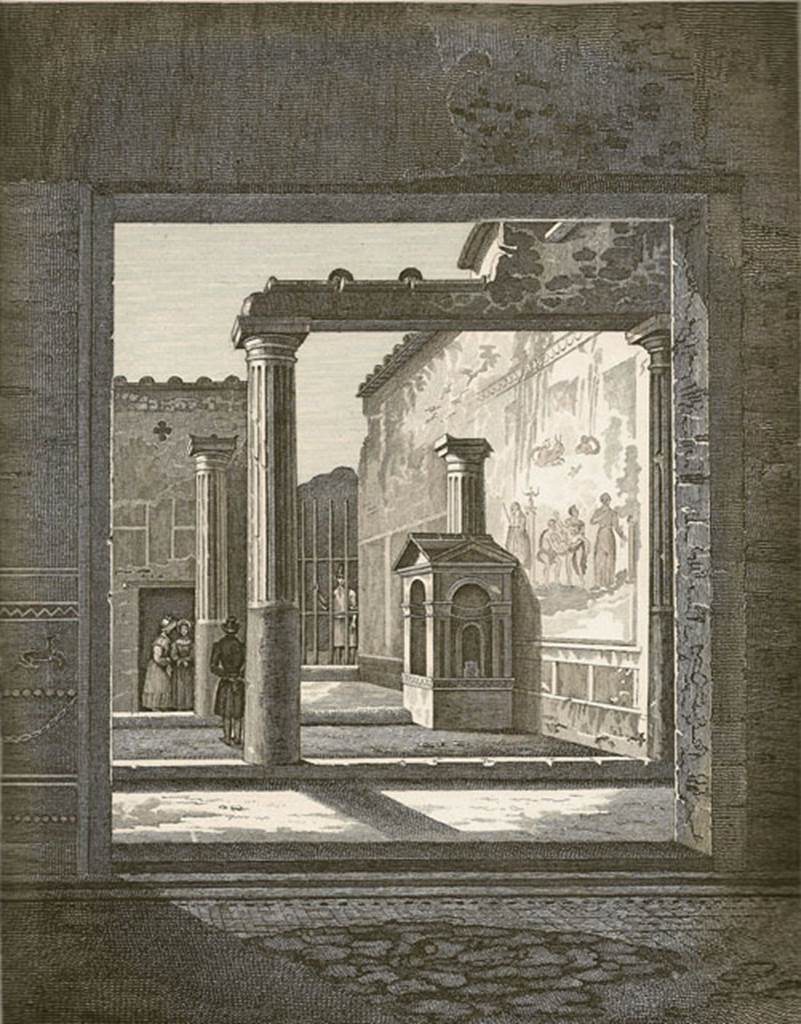
VI.8.3/5 Pompeii. 1845. Old print of peristyle.
The picture of the Sacrifice of Iphigenia is artistically transposed to the north wall of the garden.
It was in fact on the north end of the portico.
See Zuccagni Orlandini, A., 1845. Atlante Illustrativo ossia raccolta dei principali monumenti italiani antichi, del medioevo e moderni e di alcune vedute pittoriche: Vol III: Regno delle due Sicilie. Firenze, Tav. XII, n.1.
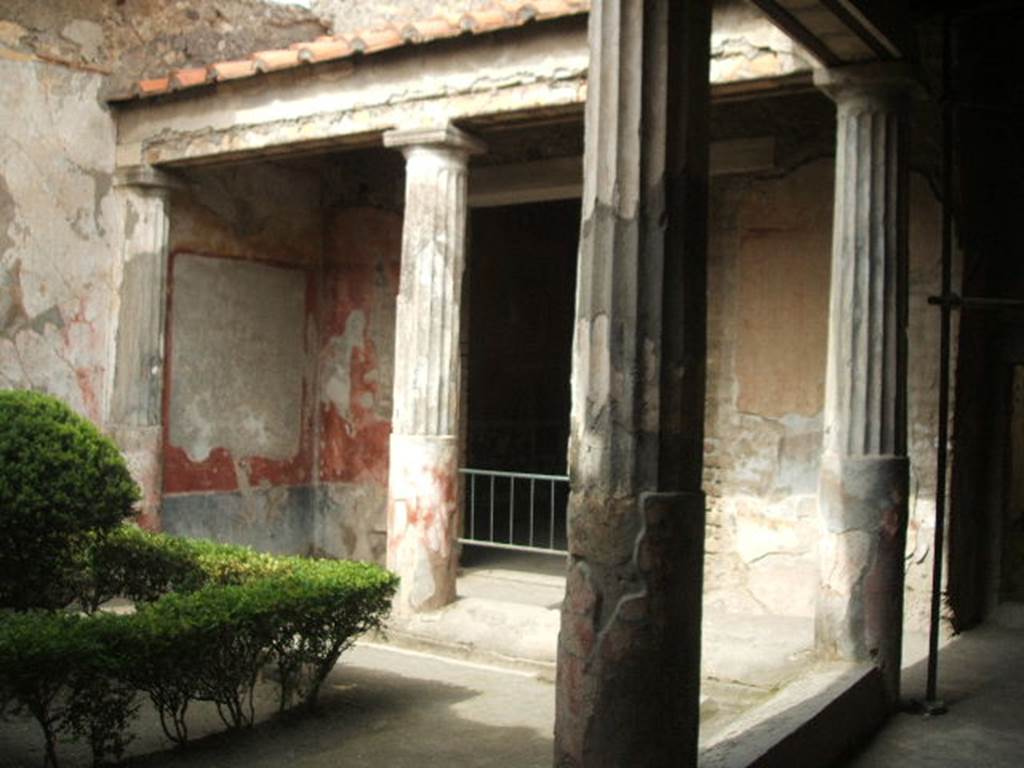
VI.8.3/5 Pompeii. May 2005. Room 11, looking north-east across peristyle.
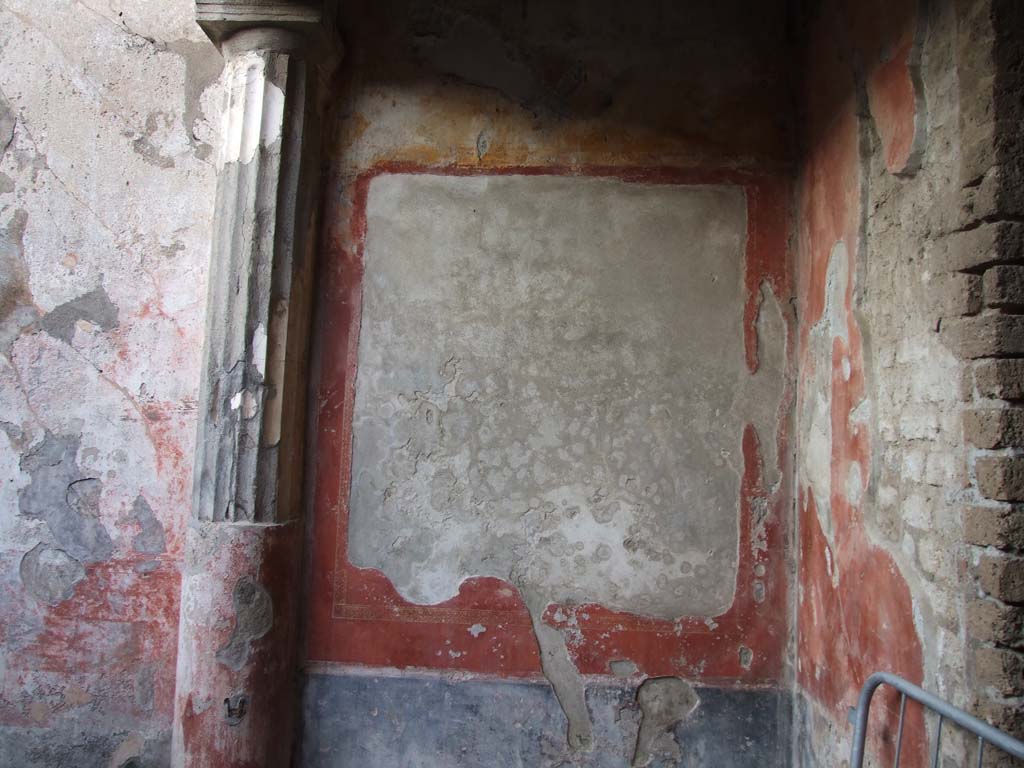
VI.8.3/5 Pompeii. December 2006. Room 11, north-east corner of peristyle.
Mau identified this as the location of the painting of the Sacrifice of Iphigenia which was removed to the Naples Museum.
See Mau, A., 1907, translated by Kelsey F. W. Pompeii: Its Life and Art. New York: Macmillan. (p.318-20).
See Gell, W, 1837. Pompeiana. London: Lewis A. Lewis. (Ch 8, T. XXXV).
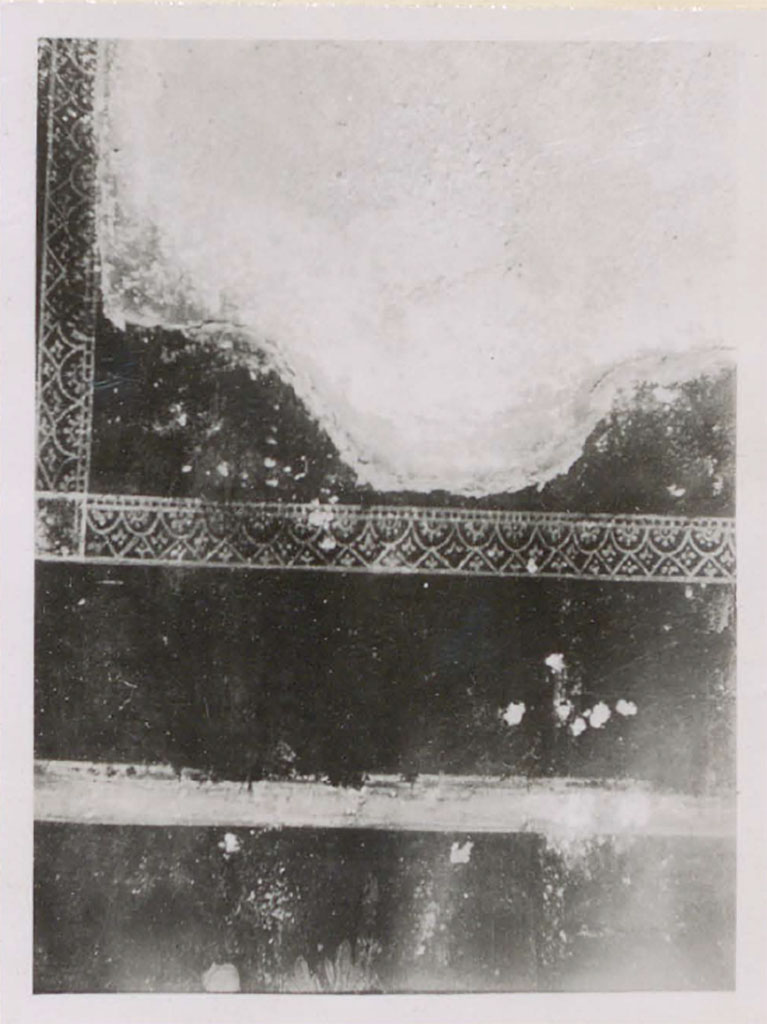
VI.8.3/5 Pompeii. Pre-1942.
Room 11, decoration which formed part of the frame of the painting, from north-east corner of peristyle.
See Warscher, T.
1942. Catalogo illustrato degli affreschi del Museo Nazionale di Napoli.
Sala LXXX. Vol.2. Rome, Swedish Institute, p.47.
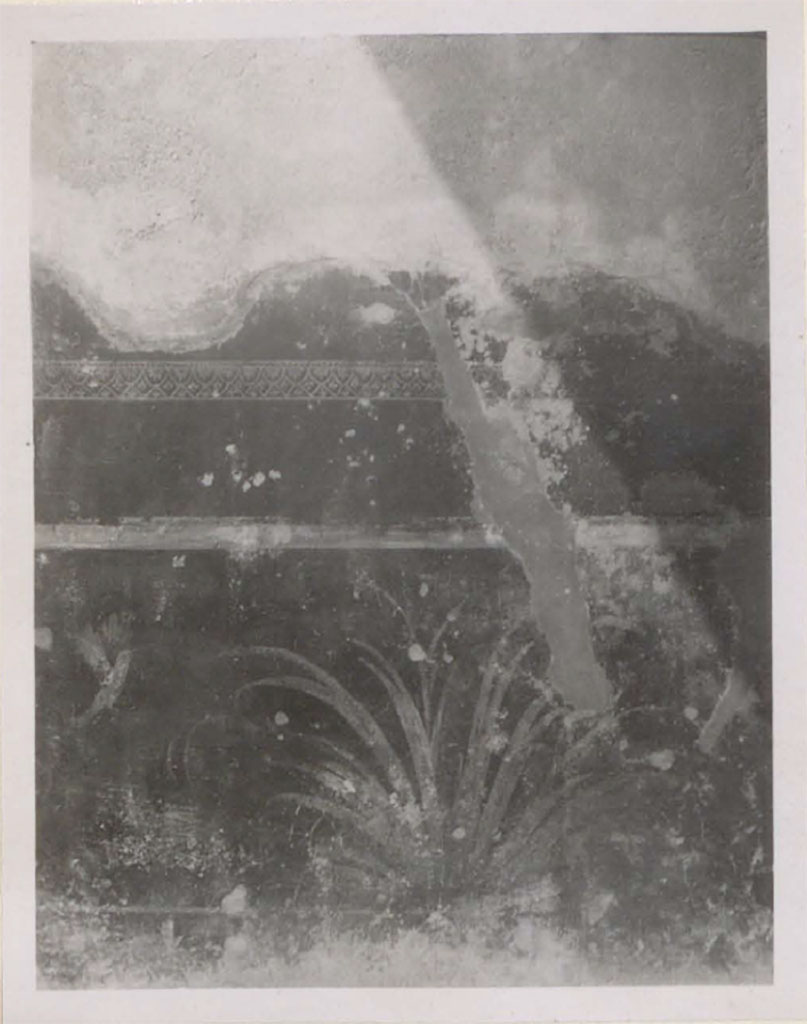
VI.8.3/5 Pompeii. Pre 1942.
Room 11, zoccolo under the painting of Sacrifice of Iphigenia in north-east corner of peristyle.
See Warscher, T.
1942. Catalogo illustrato degli affreschi del Museo Nazionale di Napoli.
Sala LXXX. Vol.2. Rome, Swedish Institute, p.47.
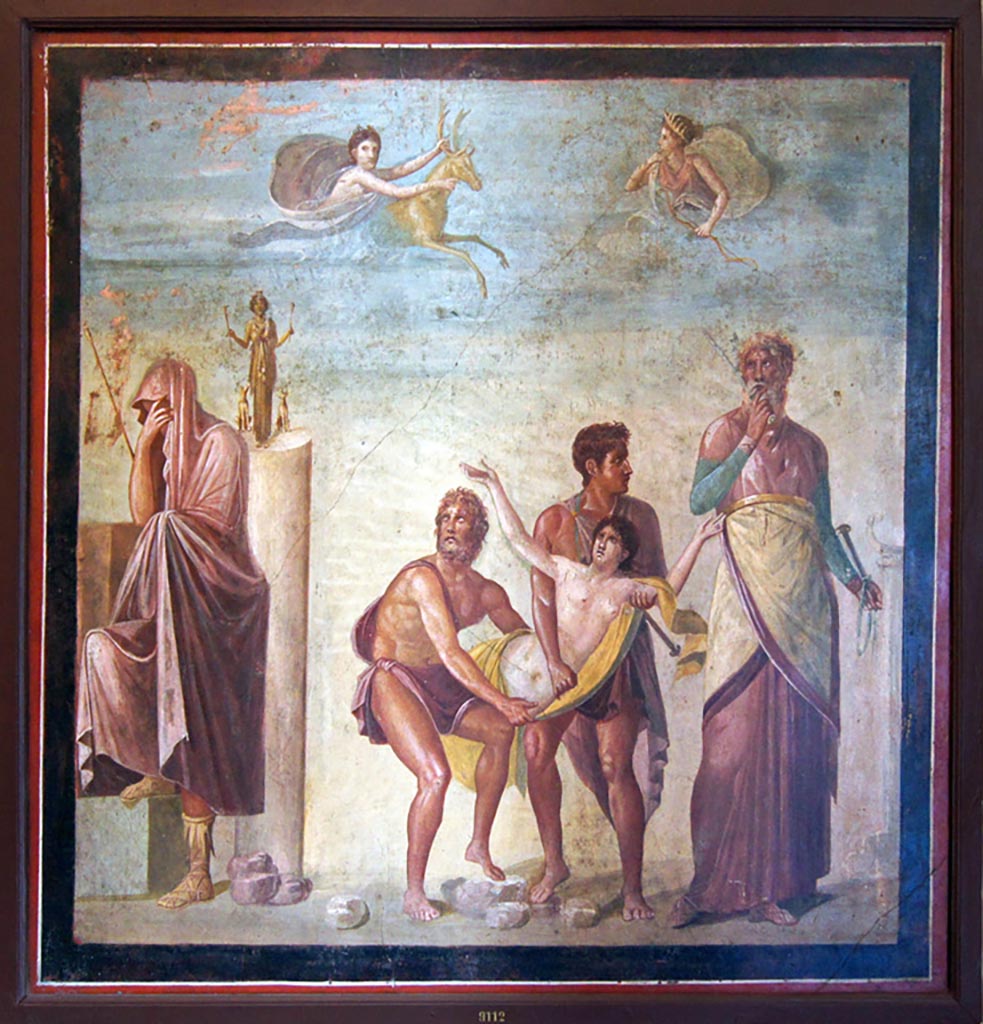
Now in Naples
Archaeological Museum. Inventory number 9112.
Photo courtesy of Giuseppe Ciaramella.
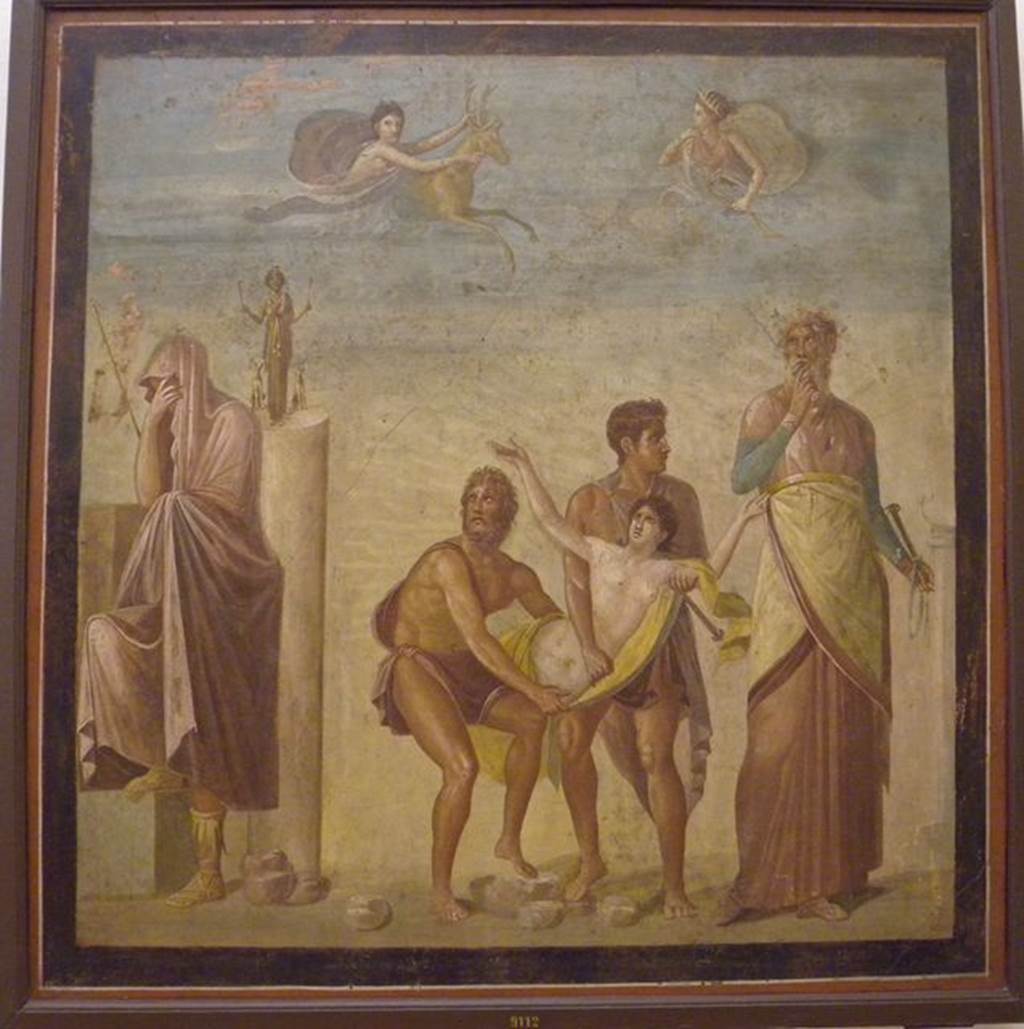
VI.8.3/5 Pompeii. Found on 30th April 1825. North wall of peristyle. Painting of the Sacrifice of Iphigenia.
Agamemnon is to the left with a statue of Artemis on a pillar behind. Two men, perhaps Ulysses and Diomedes, carry Iphigenia to be sacrificed. Calchas is to the right with his unsheathed sword in his hand. Just as the girl is about to be sacrificed Artemis appears in the sky to the right and from the left a nymph brings a deer which the goddess accepts as a substitute.
Now in Naples Archaeological Museum. Inventory number 9112.
See Mau, A., 1907, translated by Kelsey F. W. Pompeii: Its Life and Art. New York: Macmillan. (p.318).
See Helbig, W., 1868. Wandgemälde der vom Vesuv verschütteten Städte Campaniens. Leipzig: Breitkopf und Härtel. (1304, p.283-4).
See Gell, W, 1837. Pompeiana. London: Lewis A. Lewis. (Ch 8, T. XXXV).
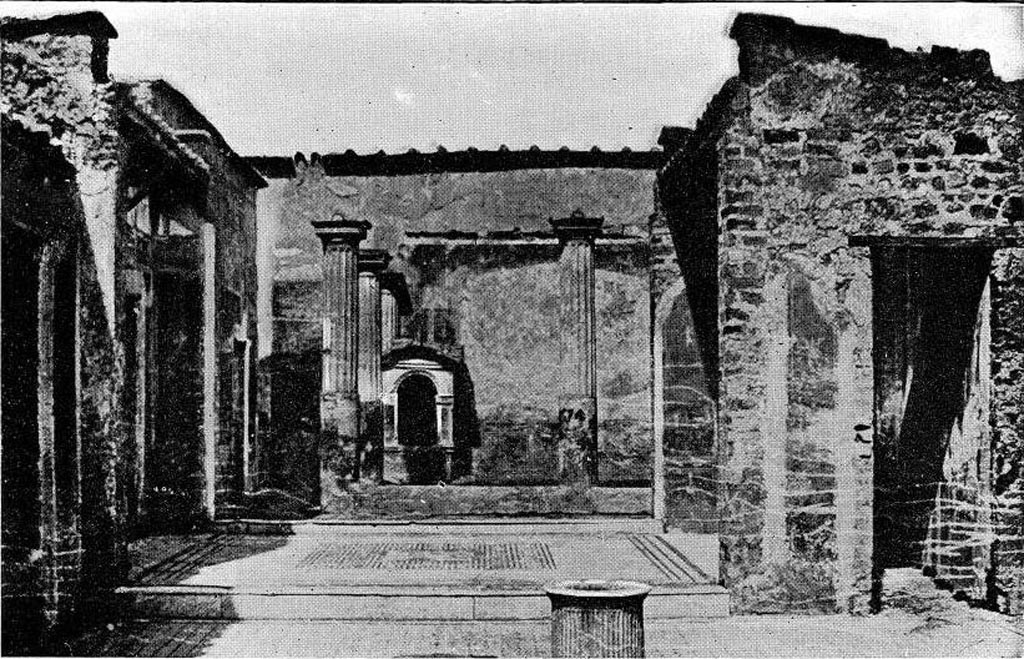
VI.8.3/5 Pompeii. 1915. Looking through tablinum to peristyle and aedicula lararium. Photo courtesy of Rick Bauer.
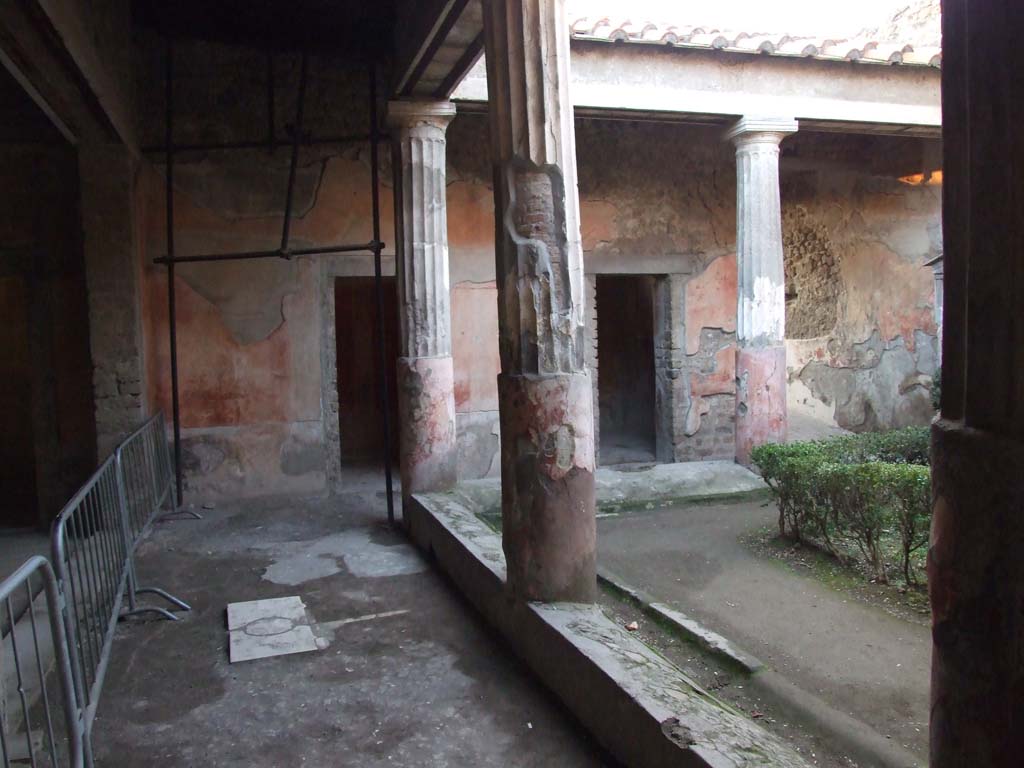
VI.8.3/5 Pompeii. December 2006. Looking west towards west wall, across south side of peristyle.
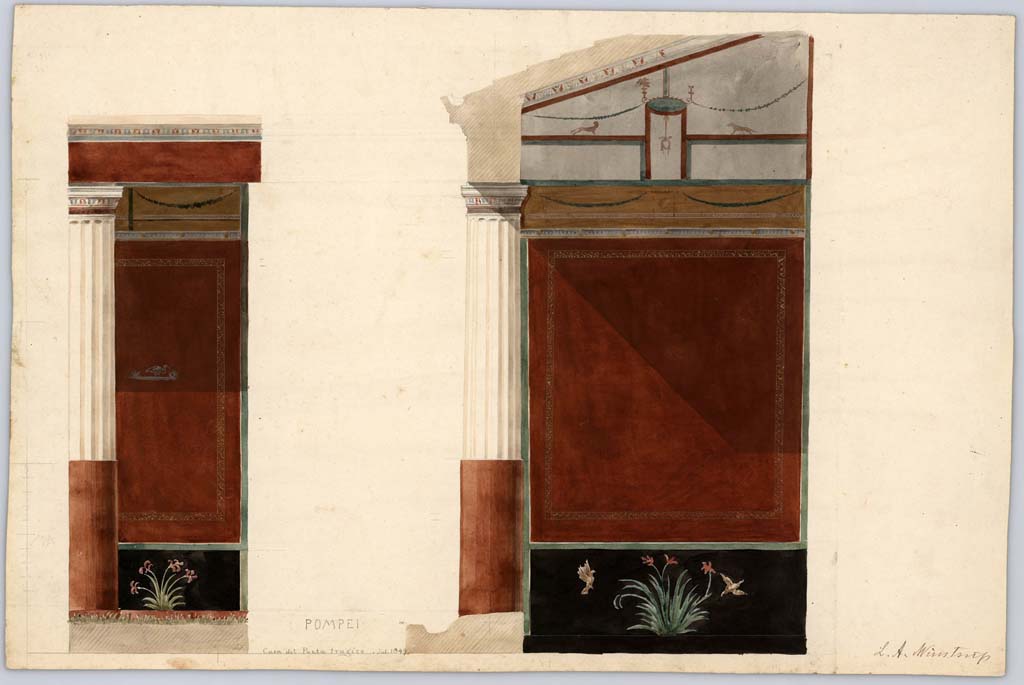
VI.8.3/5 Pompeii. July 1849. Painting by
Laurits Albert Winstrup, showing painted walls in peristyle area.
Photo © Danmarks Kunstbibliotek, inventory
number ark_6187b.
![VI.8.3/5 Pompeii. 1869-1877. Looking across peristyle garden from south-east corner, near kitchen area.
Photo © British School at Rome, Parker Collection call number JHP[PHP]-2171. CC BY-NC-ND 4.0](6%2008%2003_files/image059.jpg)
VI.8.3/5 Pompeii. 1869-1877. Looking north-west across peristyle garden towards west wall with doorways to rooms 15 and 16.
Photo © British School at Rome, Parker Collection call
number JHP[PHP]-2171. CC
BY-NC-ND 4.0
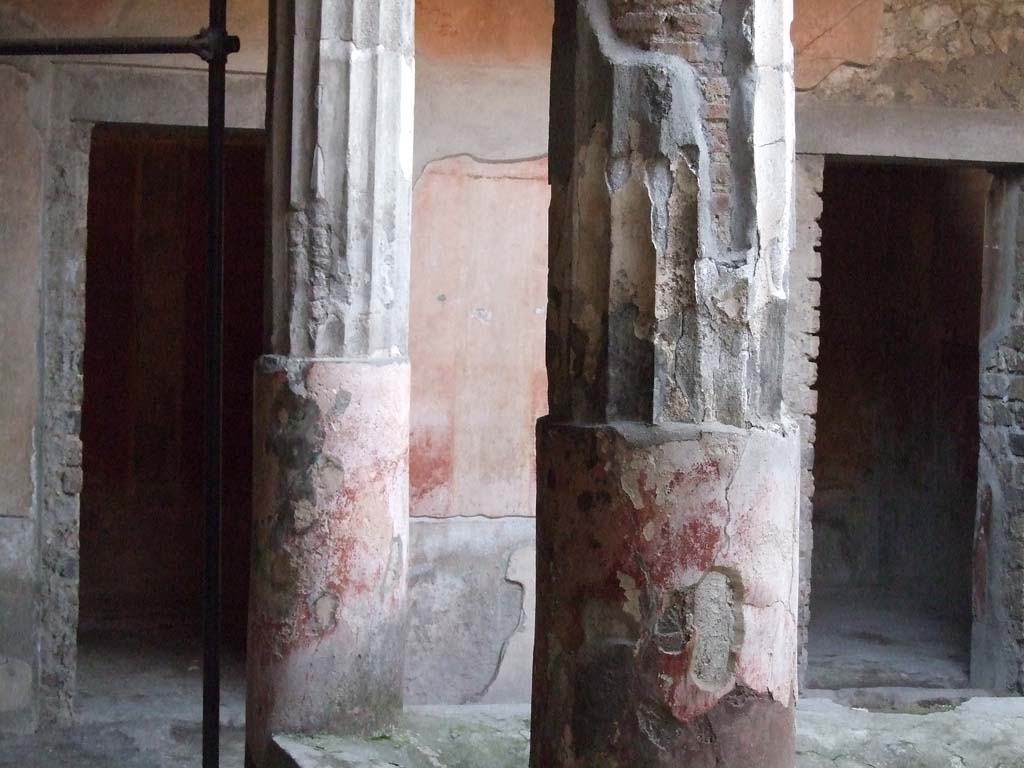
VI.8.3/5 Pompeii. December 2006. Peristyle, looking west.
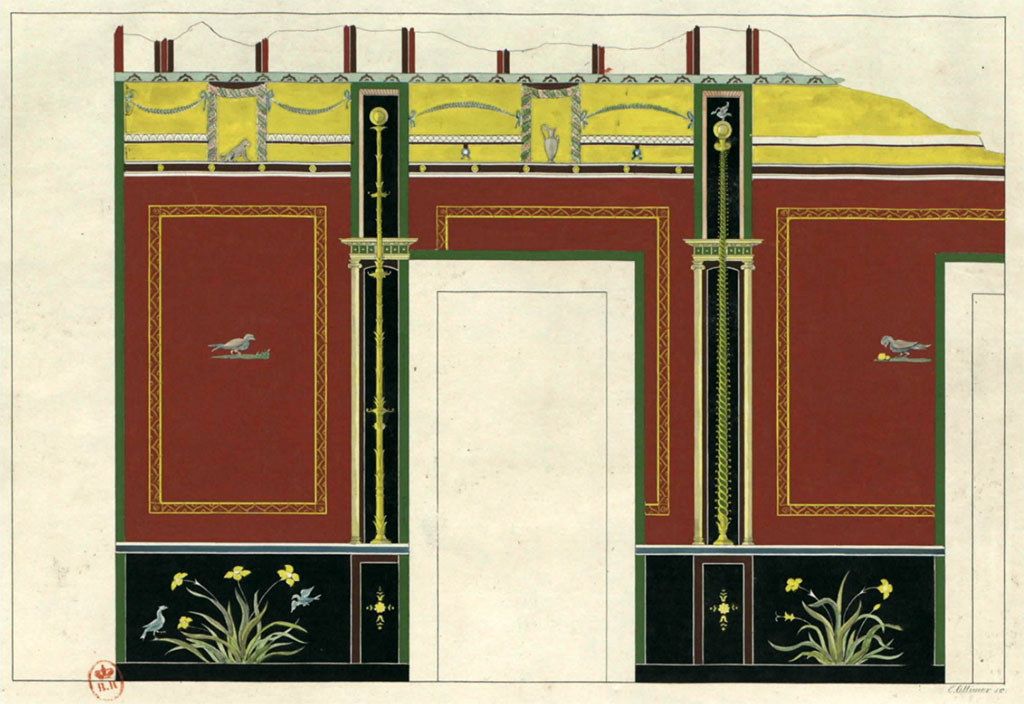
See Raoul Rochette et Bouchet J., 1828. Choix
d'Edifices Inédits : Maison du Poète Tragique. Paris, pl 23.
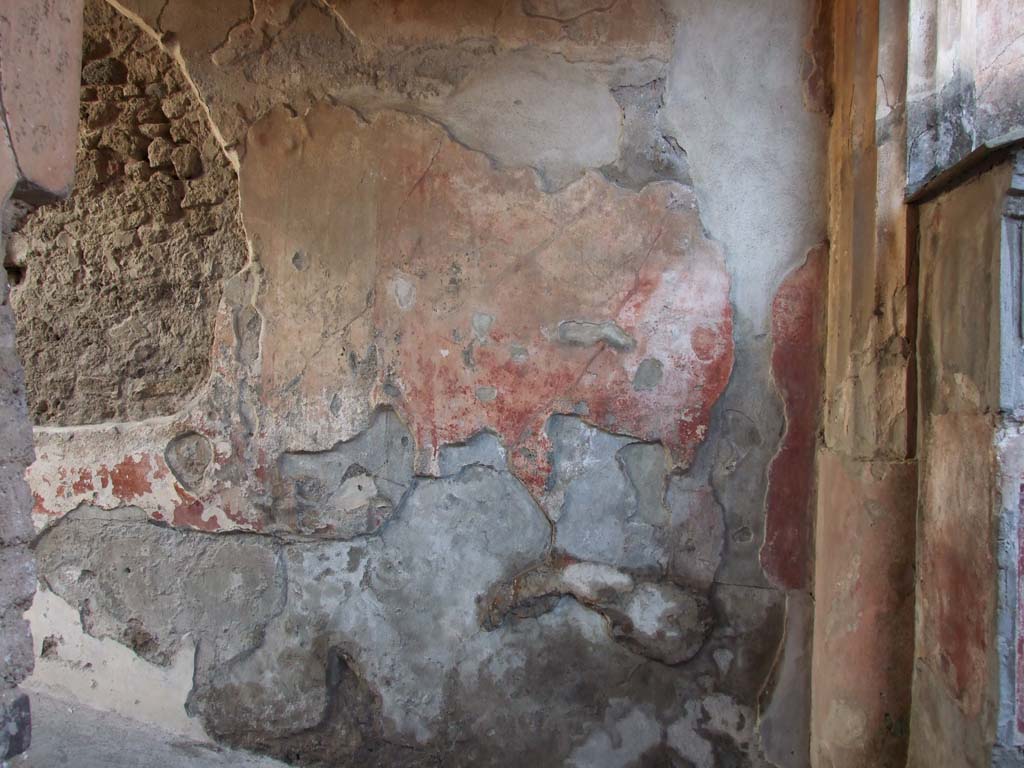
VI.8.3/5 Pompeii. December 2006. Room 11, west wall of peristyle, at north end.
Part 2 Part 3 Part 4 VI.8.3 and VI.8.5 Room Plan