VI.7.9 Pompeii. House of Tullius. Linked to VI.7.8, VI.7.10, VI.7.11, VI.7.12.
Excavated 1825, 1835. Restored
1976. (Strada di Mercurio 32).
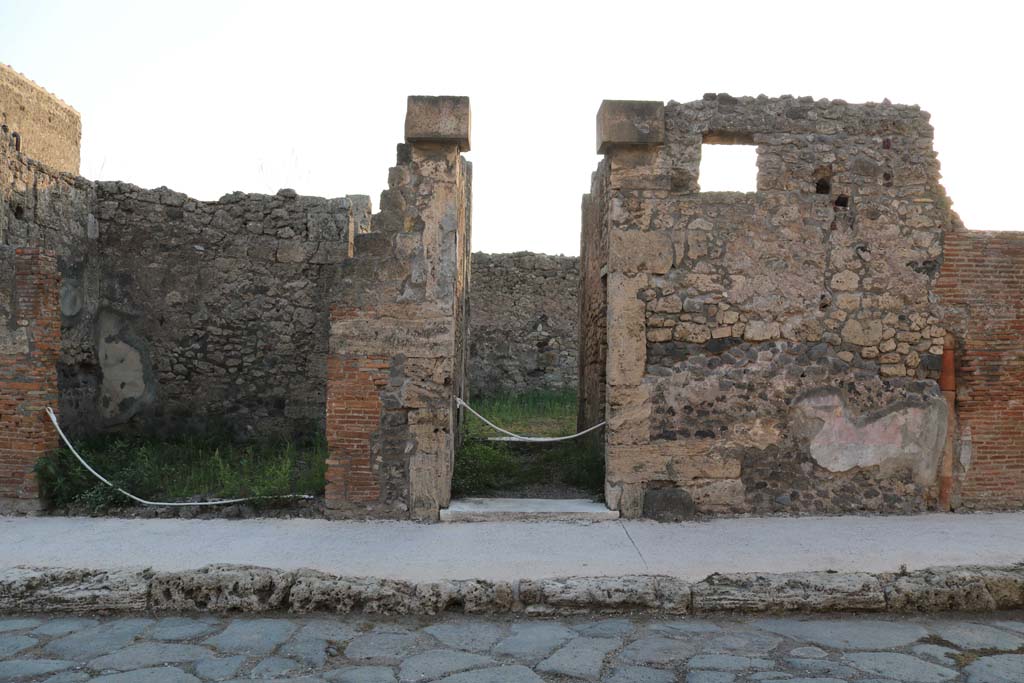
VI.7.9 Pompeii. December 2018. Entrance doorway, in centre, on west side of Via di Mercurio. Photo courtesy of Aude Durand.
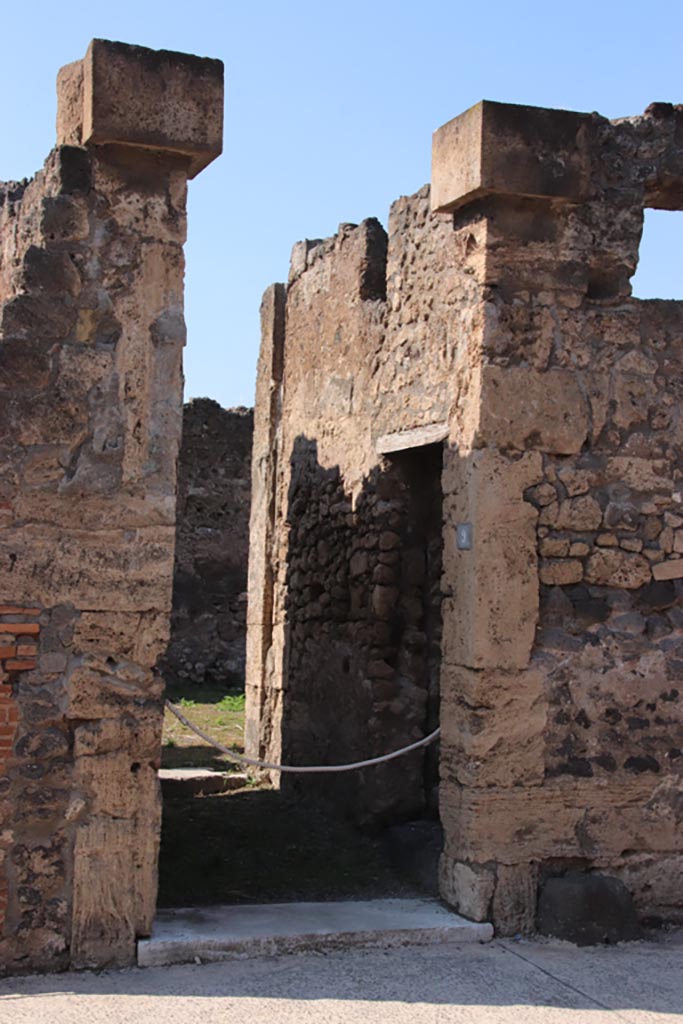
VI.7.9 Pompeii. October 2022.
Looking west towards entrance doorway and north side of entrance corridor/fauces.
Photo courtesy of Klaus Heese.
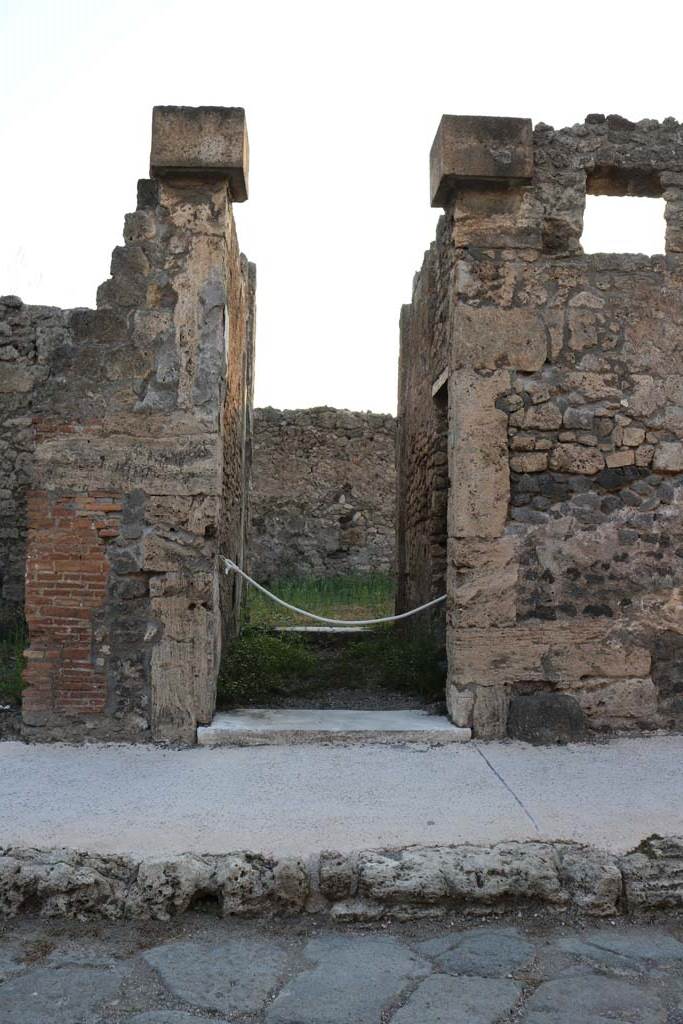
VI.7.9 Pompeii. December 2018.
Looking west to entrance doorway. Photo courtesy of Aude Durand.
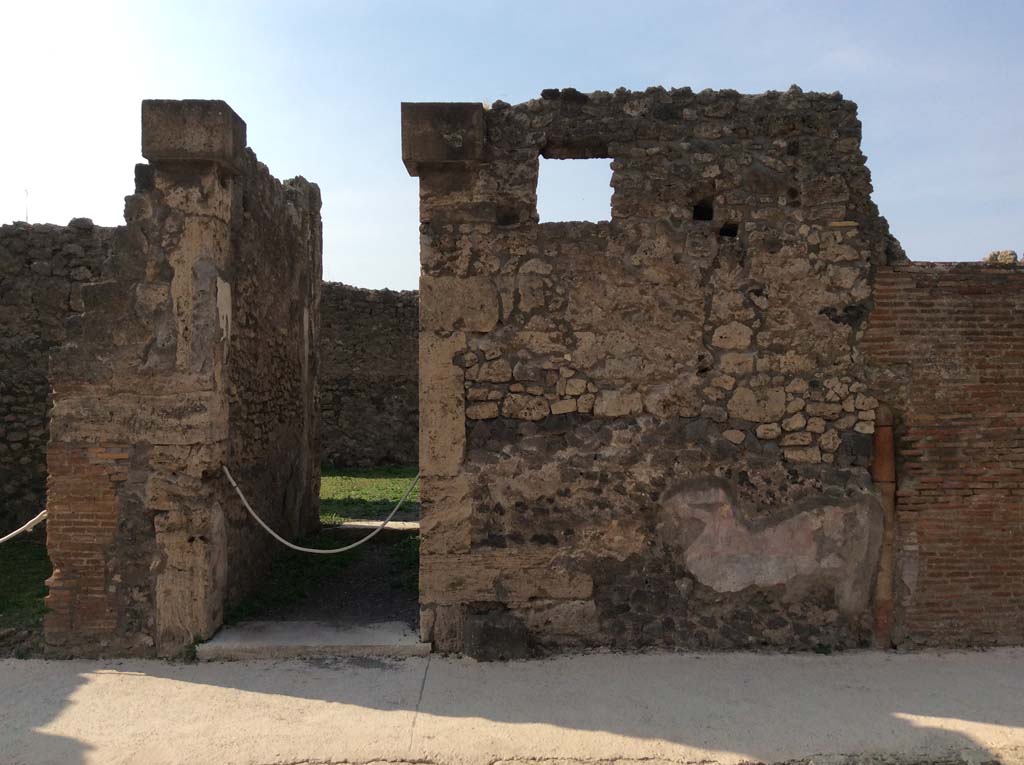
VI.7.9 Pompeii. October 2017. Looking west
towards entrance doorway, and detail from wall on north of doorway.
Foto Taylor Lauritsen, ERC
Grant 681269 DÉCOR.
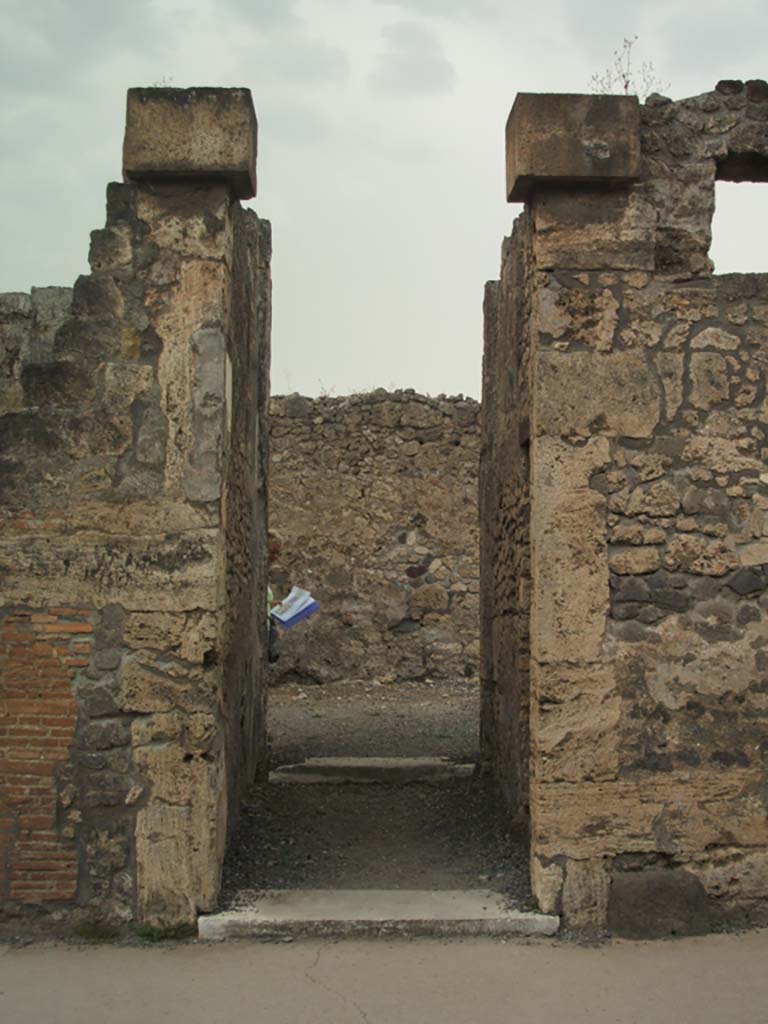
VI.7.9 Pompeii. May 2005. Entrance doorway.
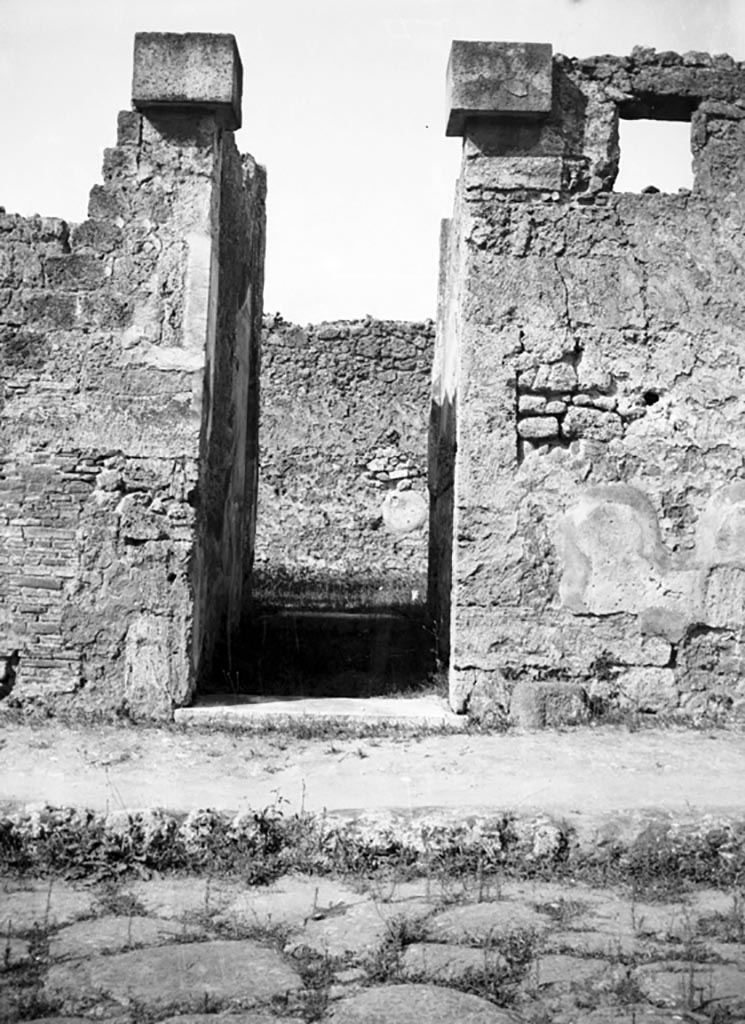
VI.7.9 Pompeii. W.1299. Entrance doorway.
Photo by Tatiana
Warscher. Photo © Deutsches Archäologisches Institut, Abteilung Rom, Arkiv.
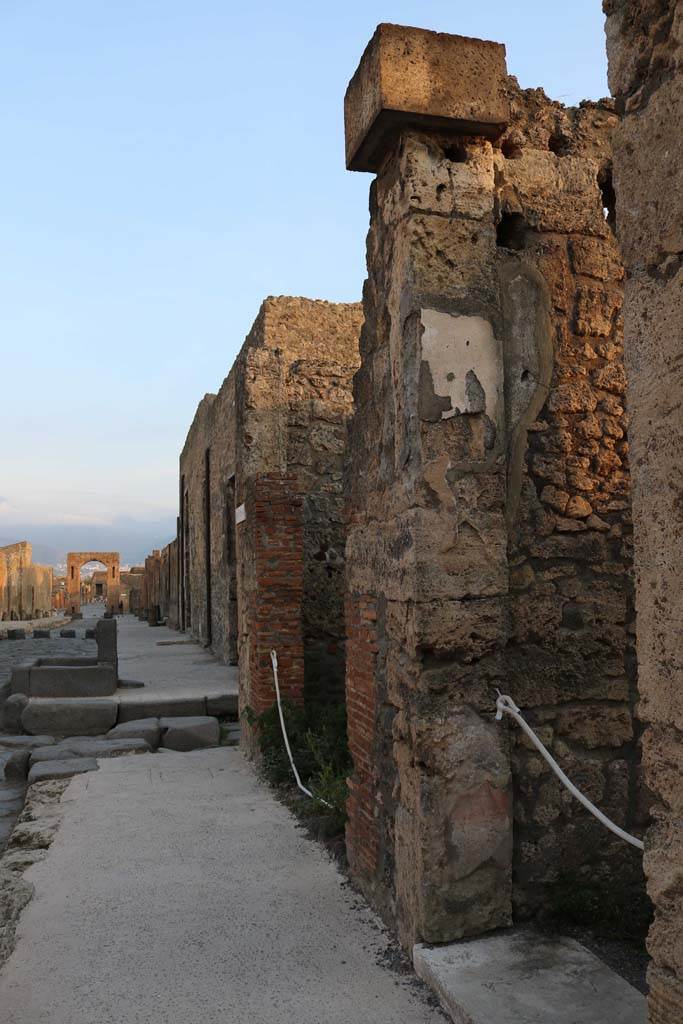
VI.7.9 Pompeii. December 2018.
Entrance doorway on Via di Mercurio, looking towards south side of doorway, on right.
Photo courtesy of Aude Durand.
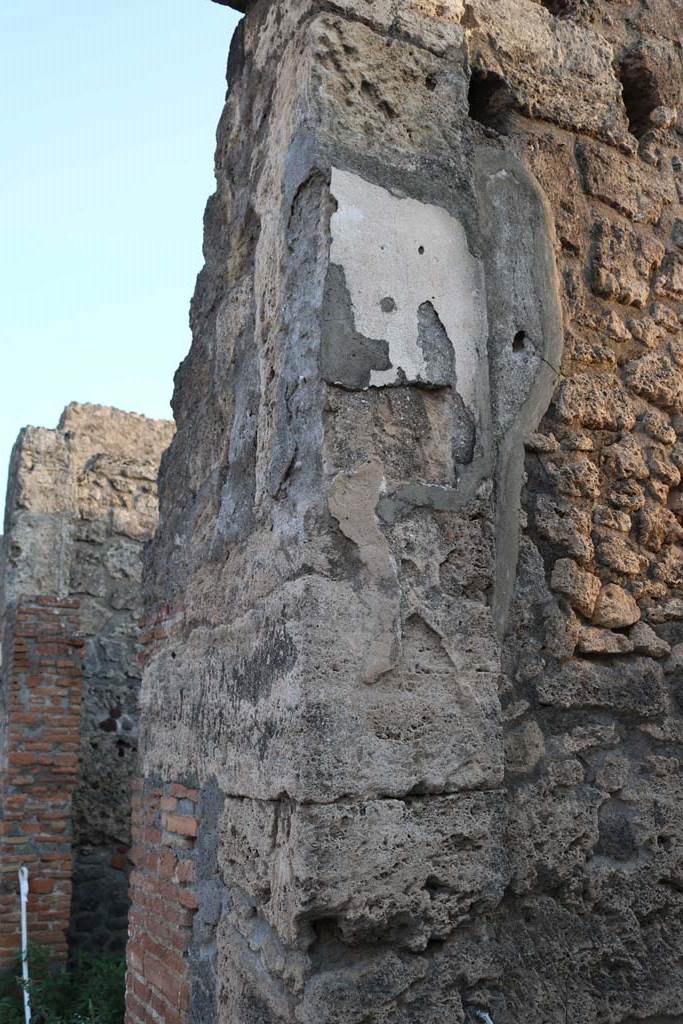
VI.7.9 Pompeii. December 2018.
South side of entrance doorway with remnant of plaster. Photo courtesy of Aude Durand.
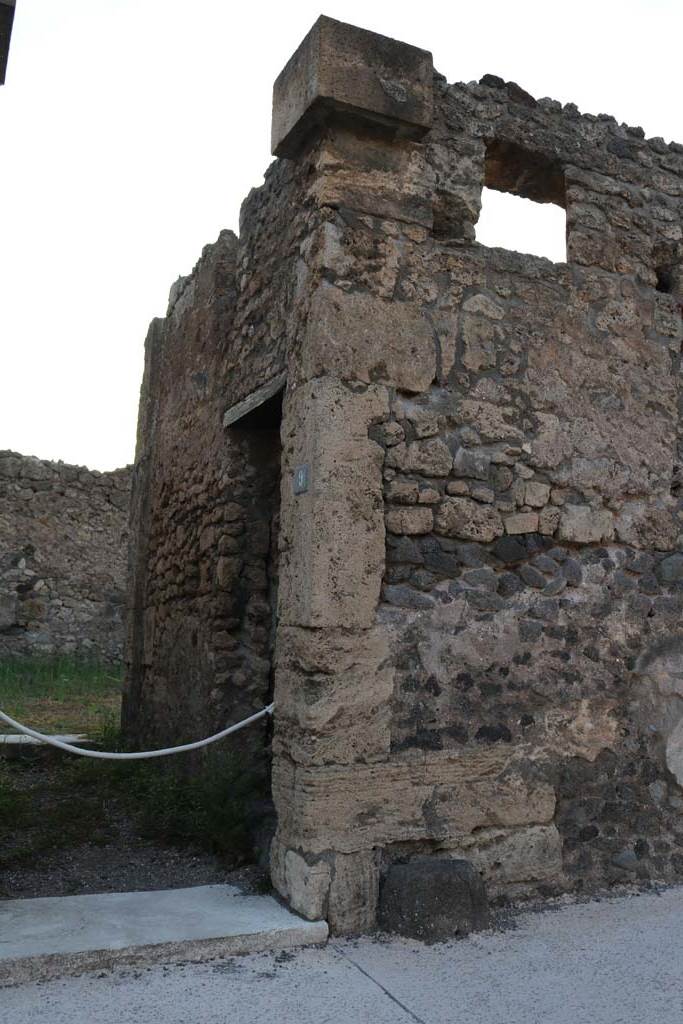
VI.7.9 Pompeii. December 2018.
North side of entrance doorway. Photo courtesy of Aude Durand.
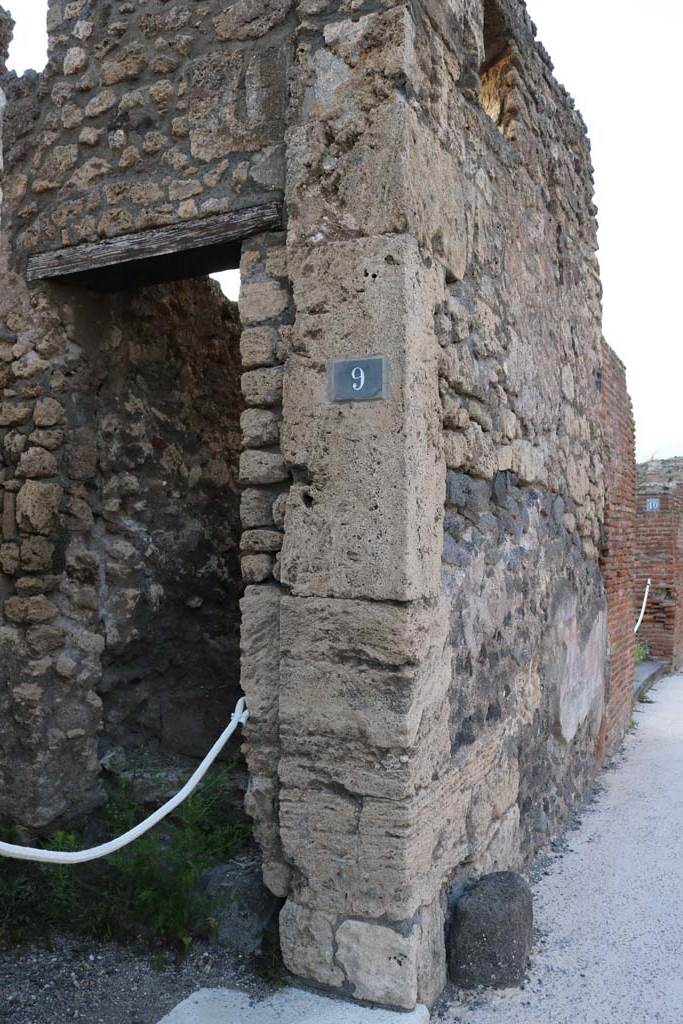
VI.7.9 Pompeii. December 2018.
North side of entrance doorway and front facade. Photo courtesy of Aude Durand.
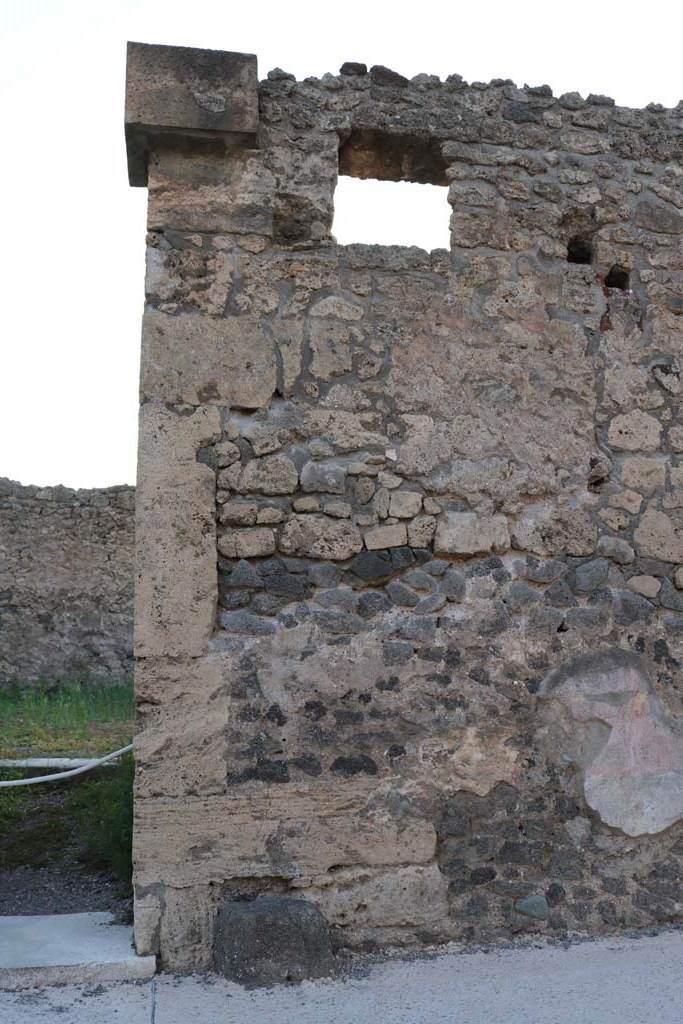
VI.7.9 Pompeii. December 2018.
Front facade on north side of entrance doorway. Photo courtesy of Aude Durand.
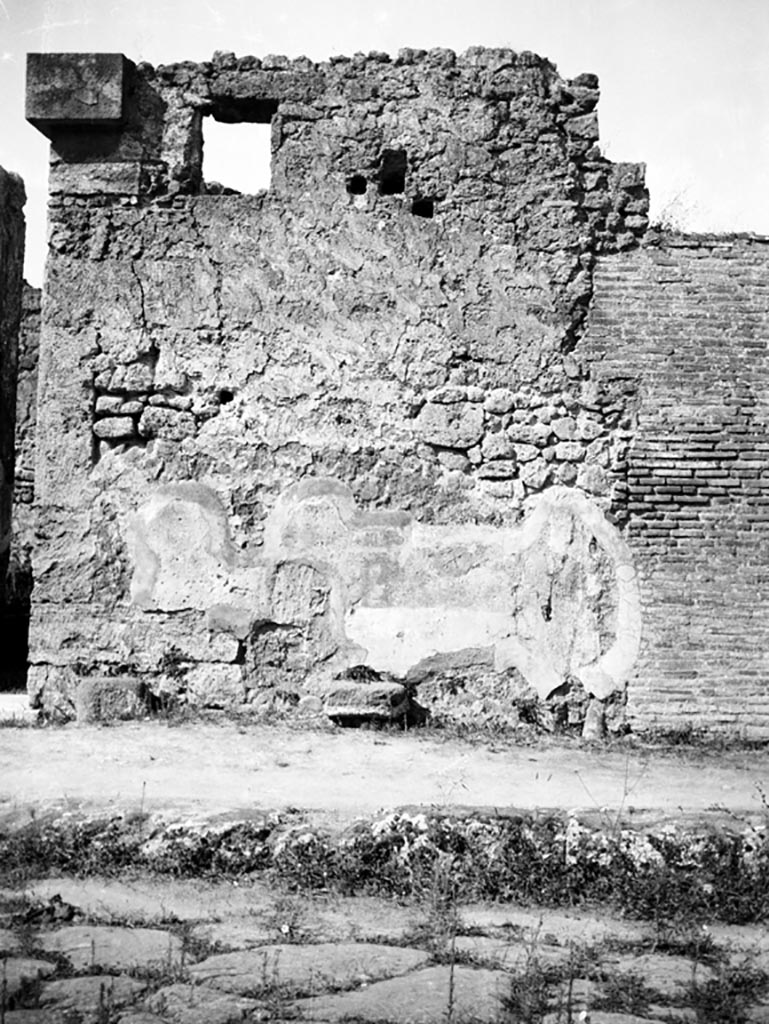
VI.7.9 Pompeii. W.1300. Façade on north side of entrance doorway.
Photo by Tatiana Warscher. Photo © Deutsches
Archäologisches Institut, Abteilung Rom, Arkiv.
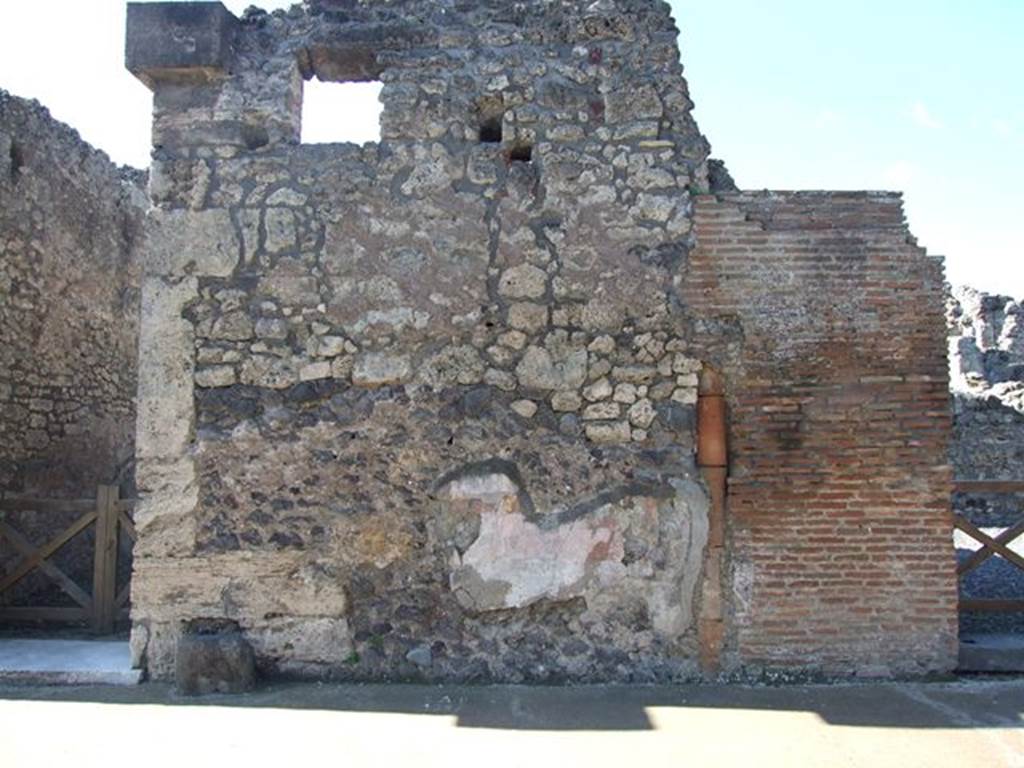
VI.7.9 Pompeii. March 2009. Exterior front façade on north side of entrance doorway, with downpipe.
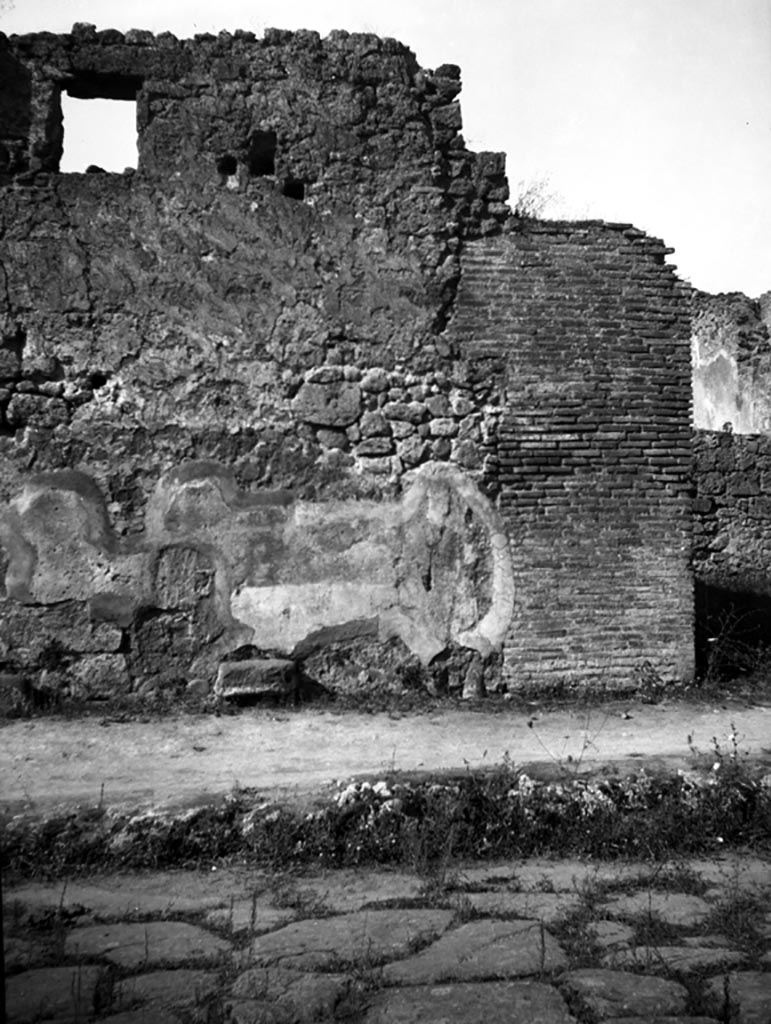
VI.7.9 Pompeii. W.1301. Façade on north side of doorway, and entrance doorway to 6.7.10 (on right).
Photo by Tatiana Warscher. Photo © Deutsches
Archäologisches Institut, Abteilung Rom, Arkiv.
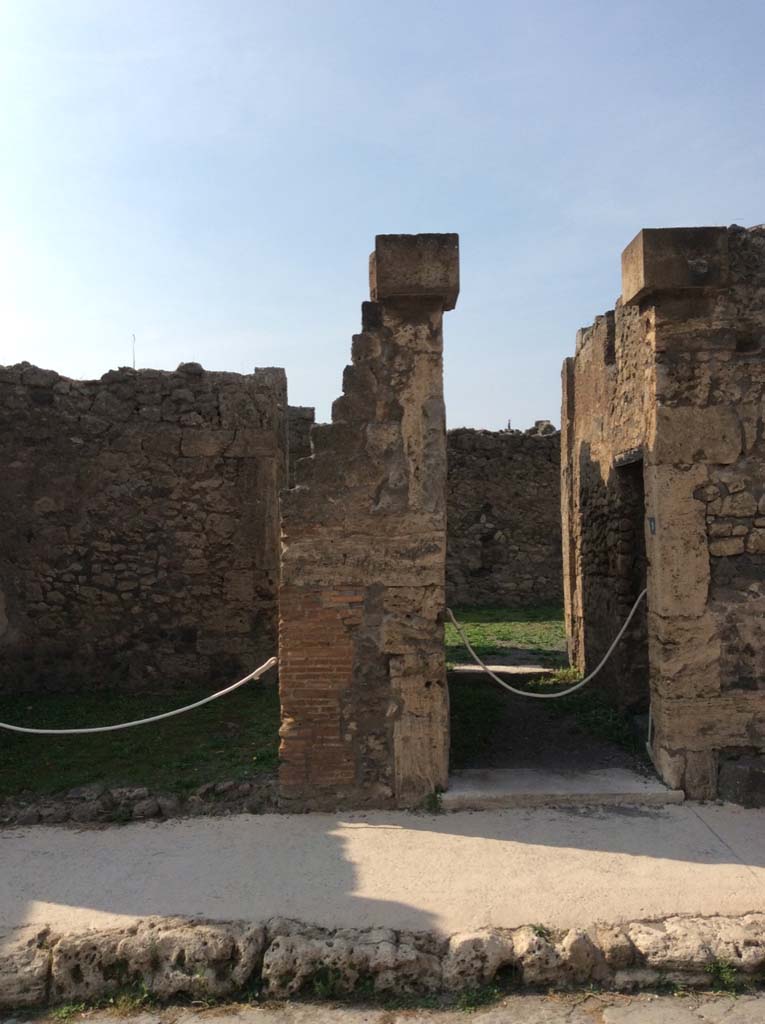
VI.7.9 Pompeii. October 2017.
Pilaster between VI.7.8 and VI.7.9, which
had the wall painting of the Procession of the Carpenters.
Foto Taylor Lauritsen, ERC Grant 681269 DÉCOR.
![VI.7.9 Pompeii. March 2009. Entrance doorway in centre. According to Della Corte, there were four paintings on the external pilasters, Minerva, Mercury and attributes of the Fortuna, group of Daedalus and Pasiphae, and a parade in honour of Minerva and Daedalus.
He thought this proved that here was a carpenter’s workshop, and annexed dwelling. On the ground floor, encumbered by the operations of a carpentry workshop and by the deposits of raw wood, there was no place for a dwelling. This was located on the upper floor, accessible by steps. Due to the electoral recommendation written on the north (right) side of number 9, Della Corte concluded the proprietor’s name could have been Tullius –
Tullius facit [CIL IV 214]
See Della Corte, M., 1965. Case ed Abitanti di Pompei. Napoli: Fausto Fiorentino. (p.52 (VI.7.8-12)
According to Epigraphik-Datenbank Clauss/Slaby (See www.manfredclauss.de) CIL IV 214 read as -
Vedium Siricum
quinq(uennalem) Tullius faci[at]](6%2007%2009_files/image025.jpg)
VI.7.9 Pompeii. March 2009. Entrance doorway in centre.
According to Della Corte, there were four paintings on the external pilasters, Minerva, Mercury and attributes of the Fortuna, group of Daedalus and Pasiphae, and a parade in honour of Minerva and Daedalus.
He thought this proved that here was a carpenter’s workshop, and annexed dwelling.
On the ground floor, encumbered by the operations of a carpentry workshop and by the deposits of raw wood, there was no place for a dwelling.
The dwelling would have been located on the upper floor, accessible by steps.
Due to the electoral recommendation written on the north (right) side of number 9, Della Corte concluded the proprietor’s name could have been Tullius –
Tullius
facit [CIL IV 214]
See Della Corte,
M., 1965. Case ed Abitanti di Pompei.
Napoli: Fausto Fiorentino. (p.52 (VI.7.8-12)
According to Epigraphik-Datenbank Clauss/Slaby (See www.manfredclauss.de) CIL IV 214 read as -
Vedium Siricum
quinq(uennalem)
Tullius faci[at] [CIL IV 214]
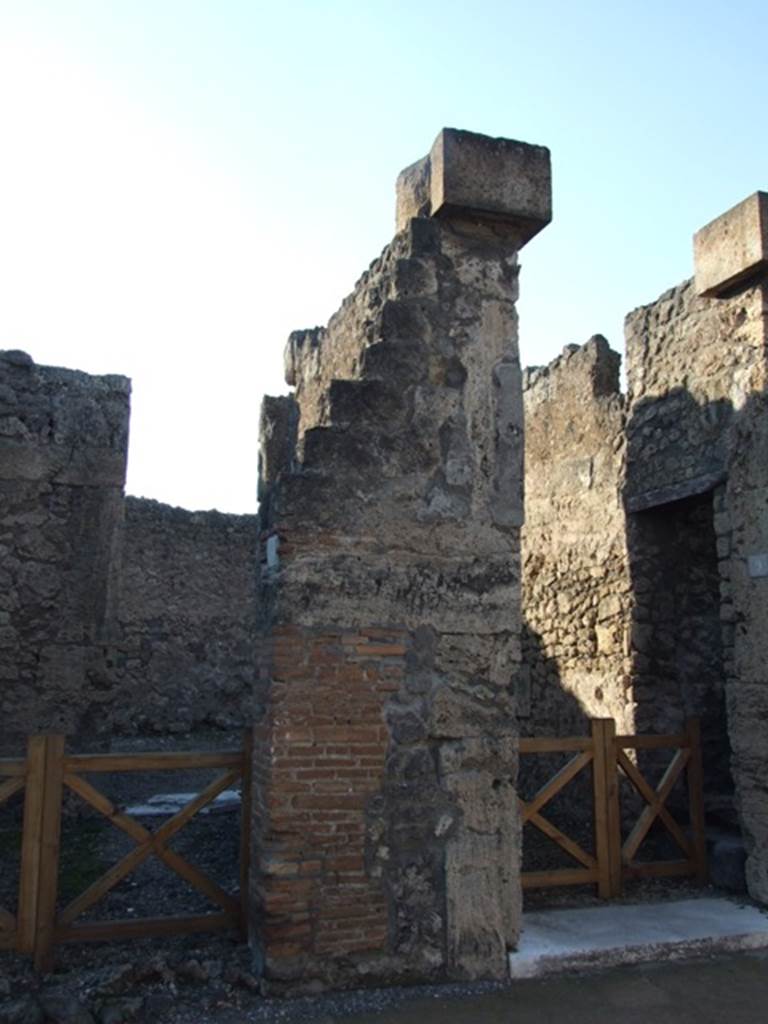
VI.7.9 Pompeii. December 2007.
Pilaster between VI.7.8 and VI.7.9, which had the wall painting of the Procession of the Carpenters.
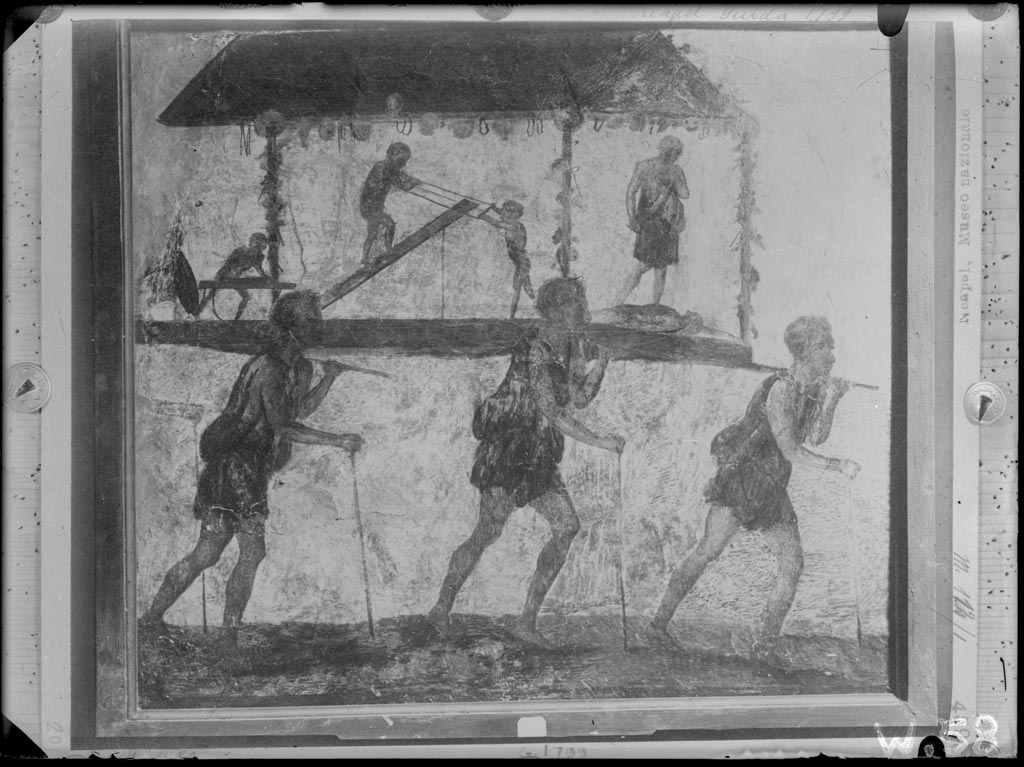
Now in Naples Archaeological Museum. Inventory Number 8991.
Photo by Tatiana Warscher. Photo © Deutsches Archäologisches Institut, Abteilung Rom, Arkiv.
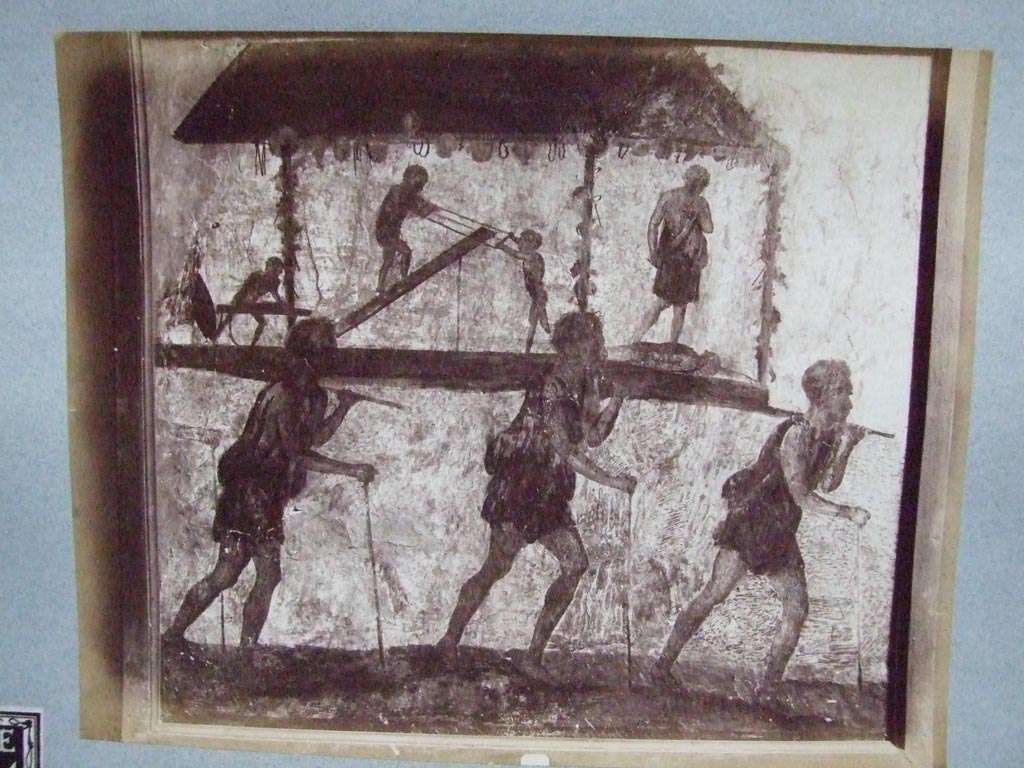
VI.7.9 Pompeii. Wall painting of the Procession of the Carpenters.
Originally found on pilaster between entrances VI.7.8 and VI.7.9.
Now in Naples Archaeological Museum. Inventory Number 8991.
Old undated photograph courtesy of the Society of Antiquaries, Fox Collection.
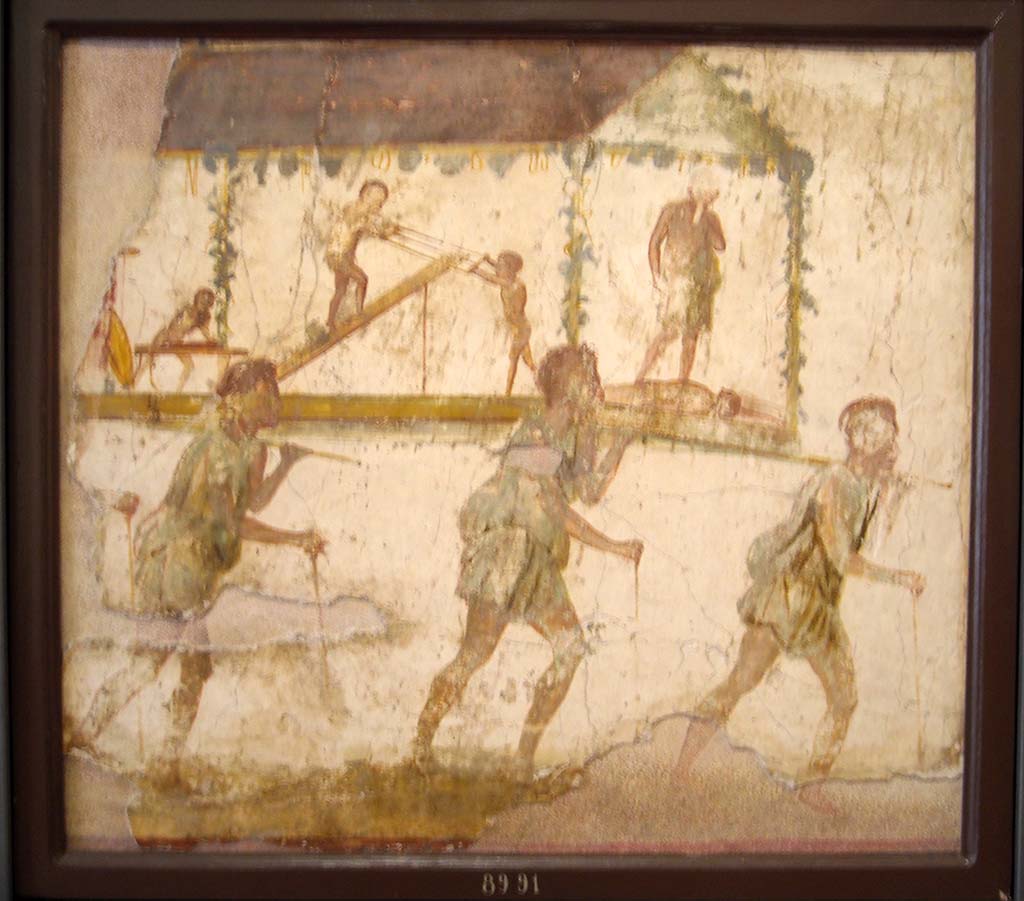
VI.7.9 Pompeii. Wall painting of the Procession of the Carpenters.
Originally found on pilaster between entrances VI.7.8 and VI.7.9.
Now in Naples Archaeological Museum. Inventory number 8991.
See Helbig, W., 1868. Wandgemälde der vom Vesuv verschütteten Städte Campaniens. Leipzig: Breitkopf und Härtel. (1480).
According to Leach, figures of Minerva, Mercury and Daedalus painted on its exterior pilasters (6.7.8-12), as well as another painting of a procession advertising the craft of Daedalus under the protection of Minerva and Mercury, were taken by Mau as an indication that this was a Carpenter’s workshop.
The sign showed 3 carpenters bearing a ferculum (bier or litter) that included a figure of Daedalus and some workmen performing carpenters’ tasks.
A dead figure lies before Daedalus' feet: this may well be a reference to the nephew Perdix whom the legendary artisan murdered through jealousy for his invention of the rake.
(PPM 4, p389-91, however, suggested that the sign indicated a perfumer’s shop that dealt in spices requisite to funeral rituals).
See Leach, E.W: The Social Life of Painting in Ancient Rome and on the Bay of Naples.
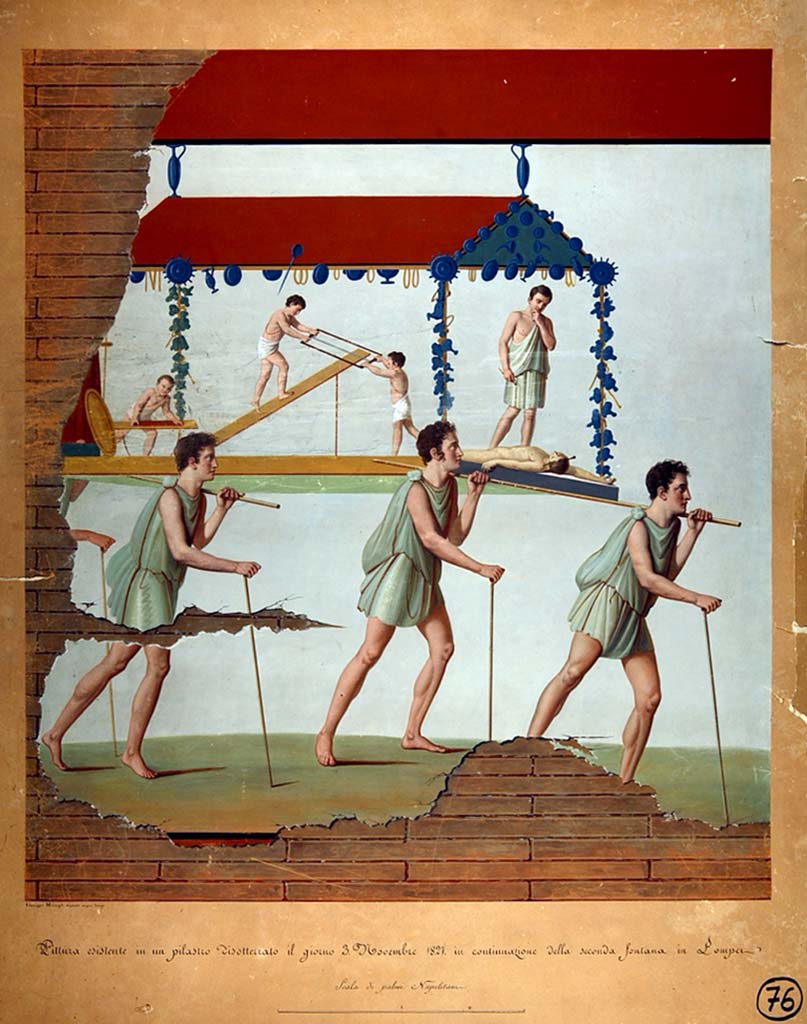
VI.7.9 Pompeii. 1827 copy by G. Marsigli of the wall painting of the Procession of the Carpenters.
Now in Naples Archaeological Museum. Inventory number ADS 173.
Photo © ICCD. https://www.catalogo.beniculturali.it
Utilizzabili alle
condizioni della licenza Attribuzione - Non commerciale - Condividi
allo stesso modo 2.5 Italia (CC BY-NC-SA 2.5 IT)
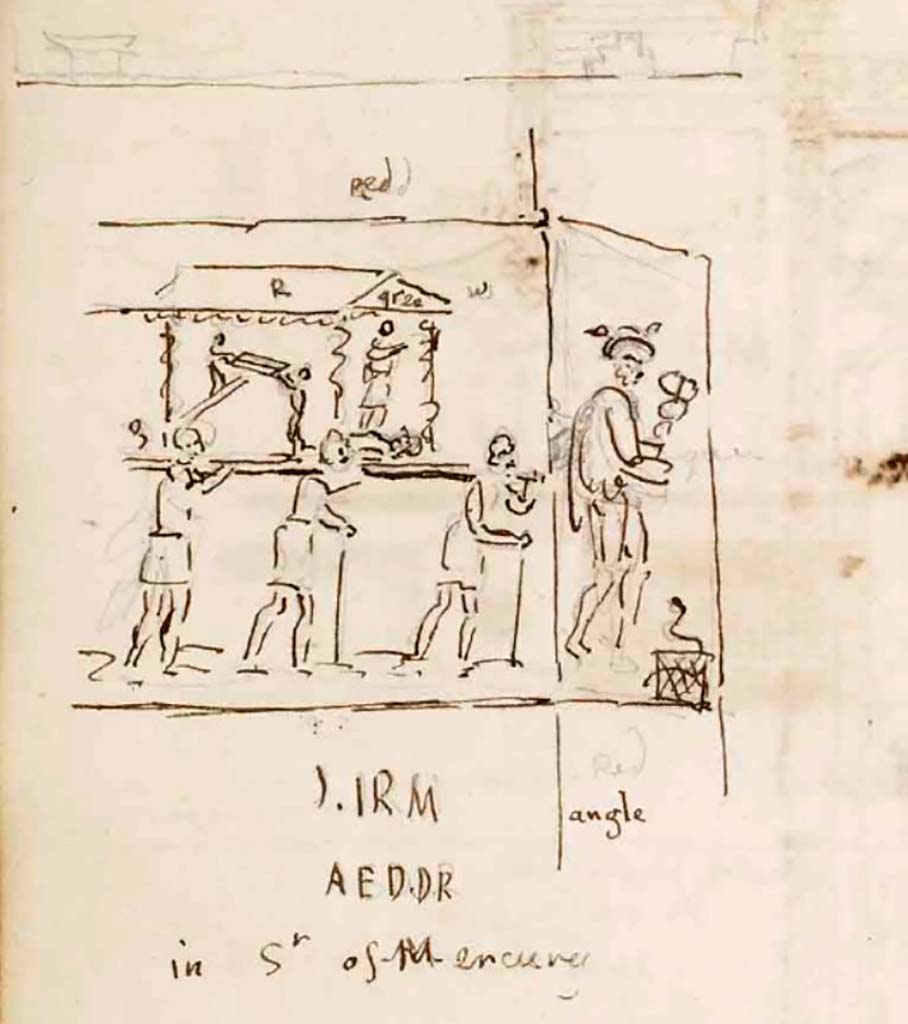
VI.7.9 Pompeii. c.1830. Drawing by Gell showing Procession of the Carpenters and Mercury.
See Gell, W. Sketchbook of Pompeii, c.1830.
See book from Van Der Poel Campanian Collection on Getty
website http://hdl.handle.net/10020/2002m16b425
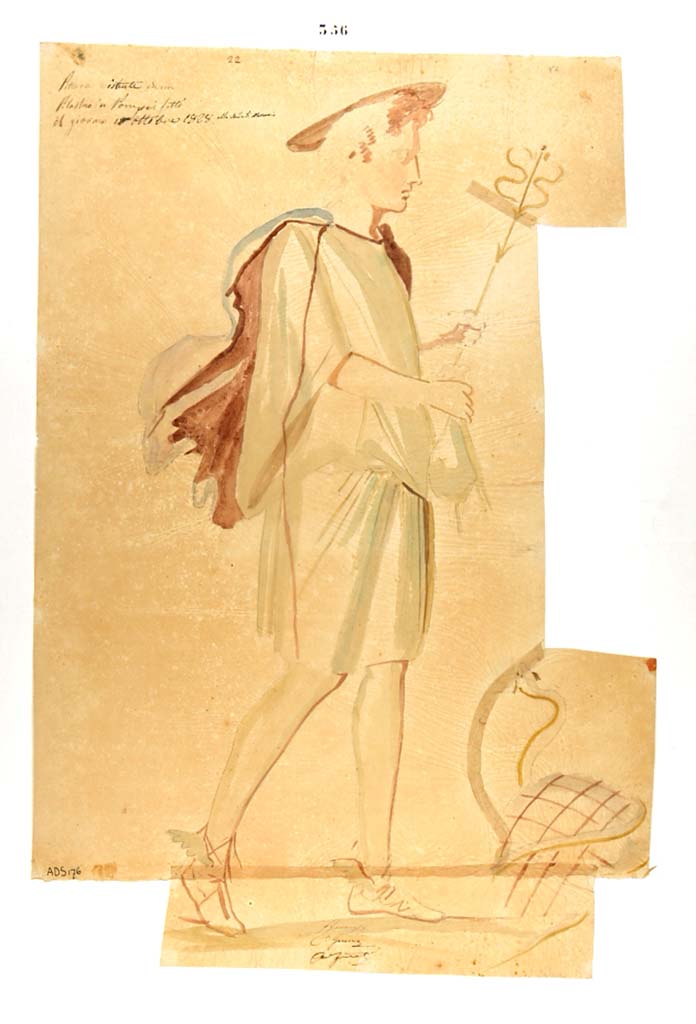
VI.7.9 Pompeii. Watercolour painted 18th October 1828 by Giuseppe Marsigli, showing the figure of Mercury with purse, omphalos and serpent.
This painting was seen on the pilaster on the upper left side of the doorway at VI.7.9, this painting has now faded and disappeared.
Now in Naples Archaeological Museum. Inventory number ADS 176.
Photo © ICCD. https://www.catalogo.beniculturali.it/
Utilizzabili alle condizioni della licenza Attribuzione
- Non commerciale - Condividi allo stesso modo 2.5 Italia (CC BY-NC-SA 2.5 IT)
![VI.7.9 Pompeii. 1834 drawing by G. Marsigli of a painting [from VII.4.48], identical to one found on the entrance pillar, of Daedalus showing Pasiphae the wooden cow.
Now in Naples Archaeological Museum. Inventory number ADS 578.
Photo © ICCD. https://www.catalogo.beniculturali.it/
Utilizzabili alle condizioni della licenza Attribuzione - Non commerciale - Condividi allo stesso modo 2.5 Italia (CC BY-NC-SA 2.5 IT)
See Helbig, W., 1868. Wandgemälde der vom Vesuv verschütteten Städte Campaniens. Leipzig: Breitkopf und Härtel. (1207).
See Real Museo Borbonico XIV, Ta. 1.](6%2007%2009_files/image034.jpg)
VI.7.9 Pompeii. 1834 drawing by G. Marsigli of a painting [from VII.4.48], identical to one found on the entrance pillar, of Daedalus showing Pasiphae the wooden cow.
Now in Naples Archaeological Museum. Inventory number ADS 578.
Photo © ICCD. https://www.catalogo.beniculturali.it/
Utilizzabili alle condizioni della licenza Attribuzione
- Non commerciale - Condividi allo stesso modo 2.5 Italia (CC BY-NC-SA 2.5 IT)
See Helbig, W., 1868. Wandgemälde der vom Vesuv verschütteten Städte Campaniens. Leipzig:
Breitkopf und Härtel. (1207).
See Real
Museo Borbonico XIV, Ta. 1.
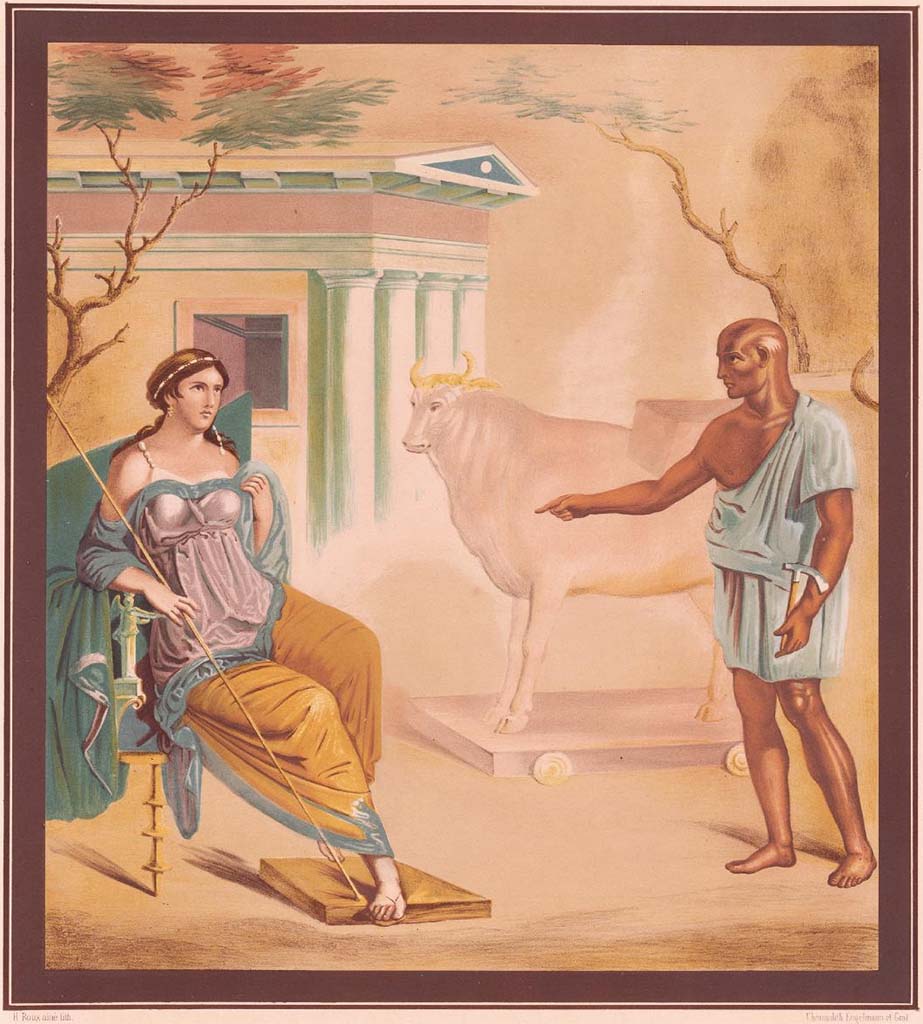
VI.7.9 Pompeii. 1846 painting by H. Roux of a painting of Daedalus showing Pasiphae the wooden cow, found on the entrance pillar.
According to Helbig, allegedly identical paintings were found on the entrance pillar of VI.7.9 (Helbig 1207) and in the tablinum of VII.4.48 (Helbig 1206).
See Helbig, W., 1868. Wandgemälde der vom Vesuv verschütteten Städte Campaniens. Leipzig:
Breitkopf und Härtel, 1207.
See Raoul-Rochette M.,
1846. Choix de Peintures de Pompei. Paris
: L’Imprimerie Royale, pl. 13.
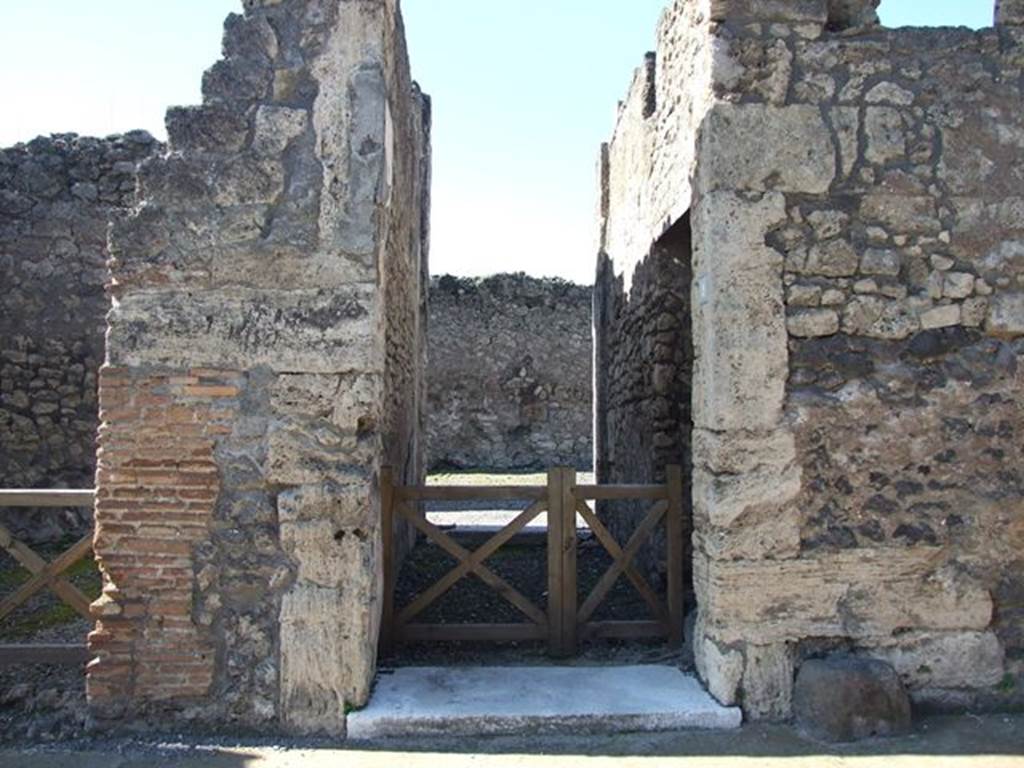
VI.7.9 Pompeii. March 2009. Looking west from entrance along entrance corridor or fauces.
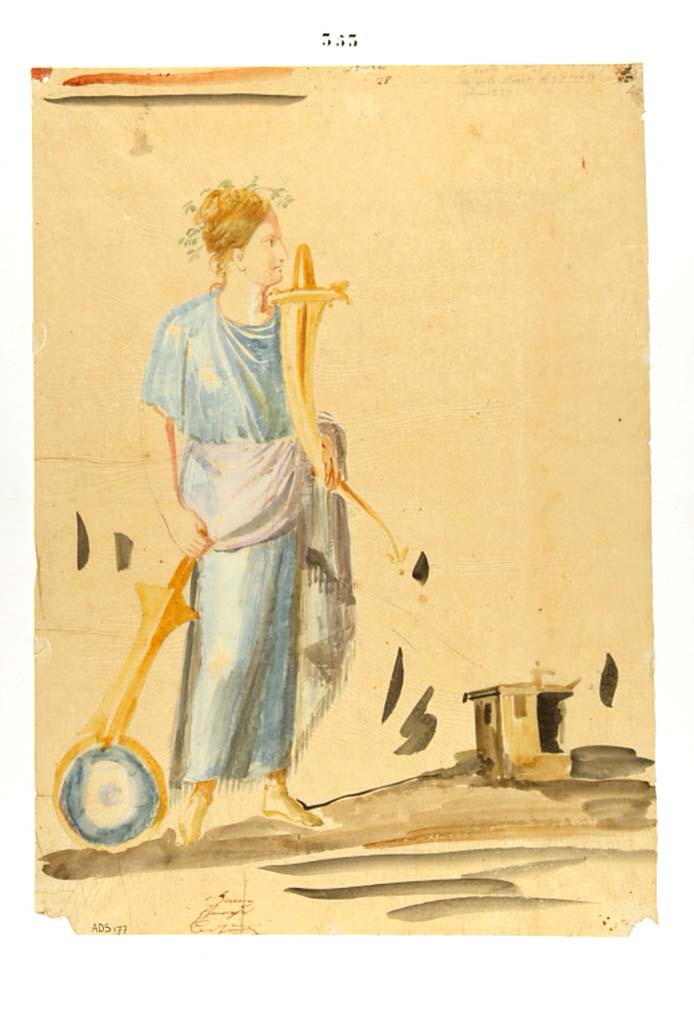
VI.7.9 Pompeii. Watercolour painted 14th November 1827 by Giuseppe Marsigli, showing the figure of Fortuna and her attributes.
Now in Naples Archaeological Museum. Inventory number ADS 177.
This painting was seen on the pilaster on the upper right side of the doorway at VI.7.9, opposite to the figure of Mercury.
On the same pilaster on the side turned towards the roadway, was a painted Minerva.
Photo © ICCD. https://www.catalogo.beniculturali.it/
Utilizzabili alle
condizioni della licenza Attribuzione - Non commerciale - Condividi
allo stesso modo 2.5 Italia (CC BY-NC-SA 2.5 IT)
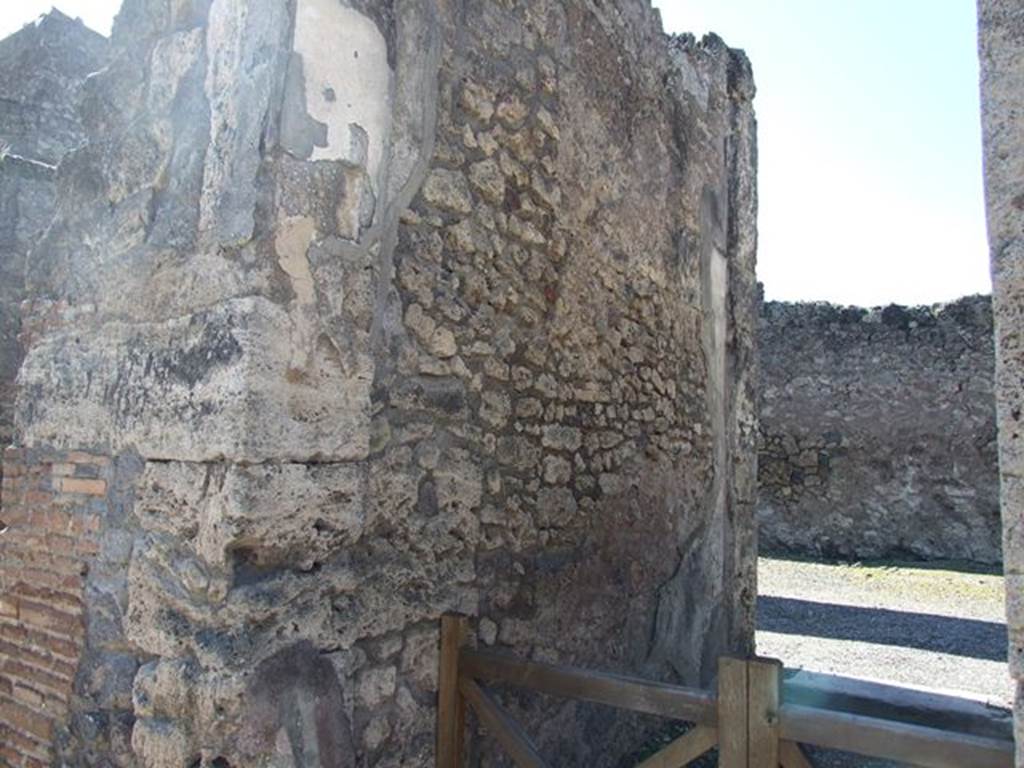
VI.7.9 Pompeii. March 2009. South wall of fauces.
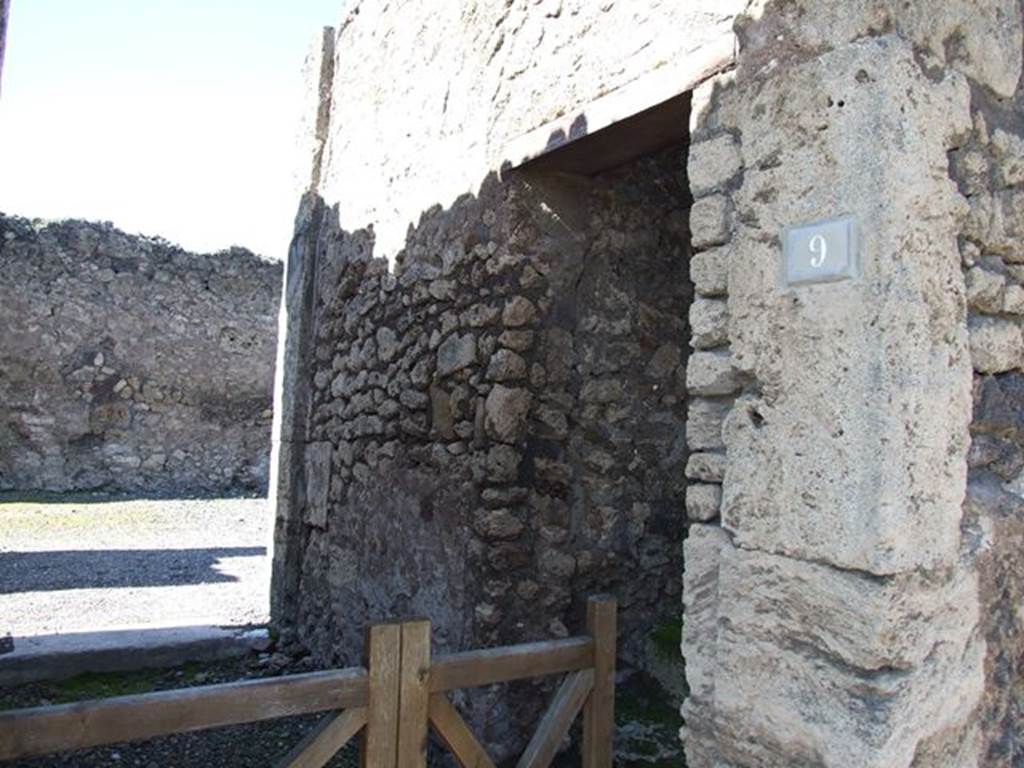
VI.7.9 Pompeii. March 2009. North wall of fauces, with entrance to stairs.
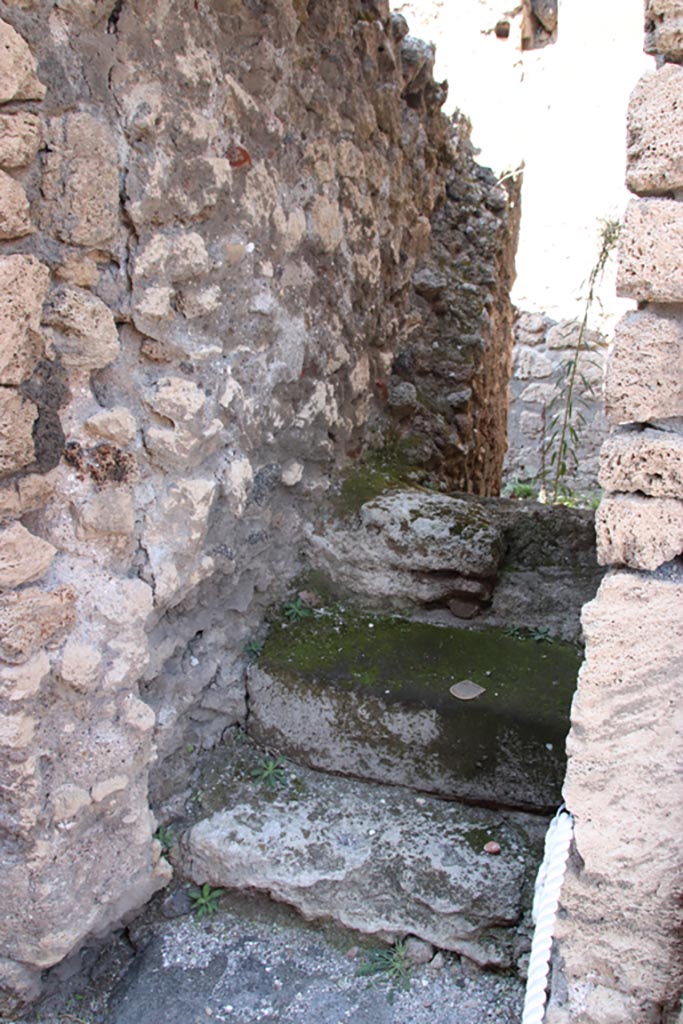
Steps to upper floor in north wall of entrance corridor. Photo courtesy of Klaus Heese.
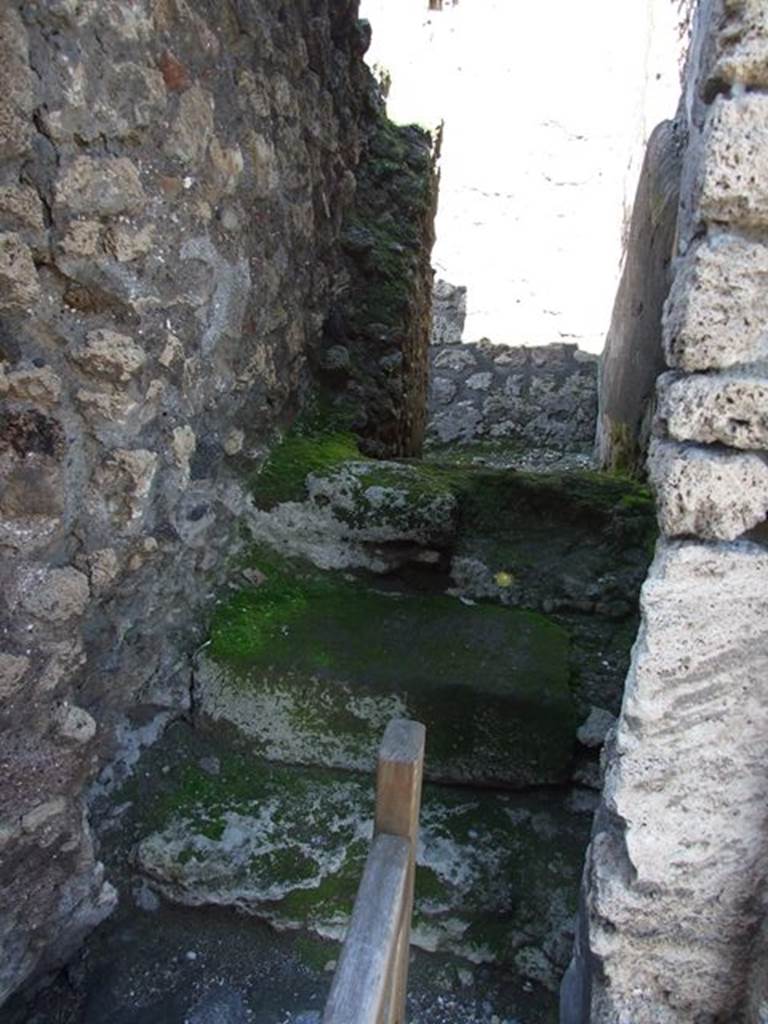
VI.7.9 Pompeii. March 2009. North wall of fauces, with stairs to upper floor.
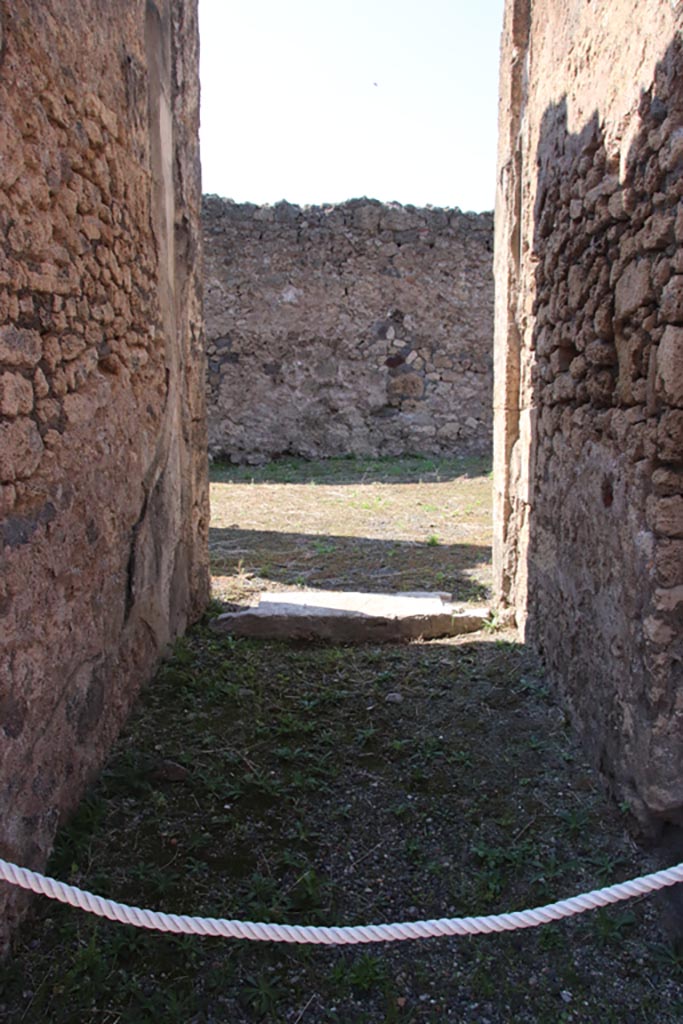
Looking west towards atrium along entrance corridor/fauces. Photo courtesy of Klaus Heese.
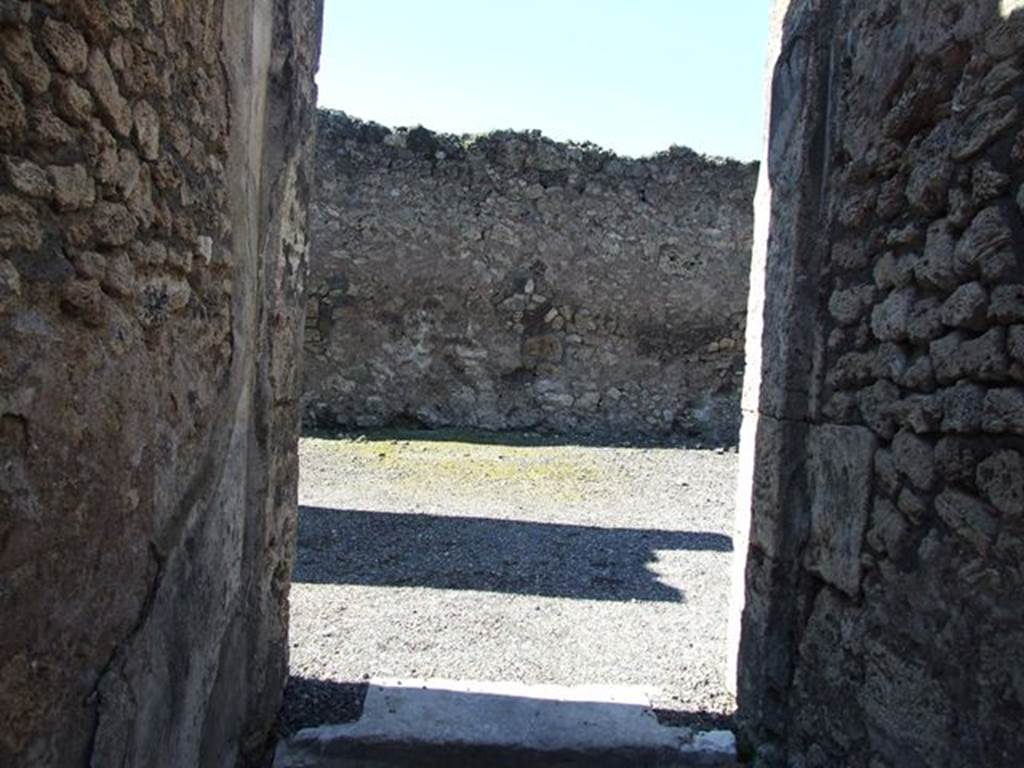
VI.7.9 Pompeii. March 2009. Looking west from entrance corridor or fauces towards atrium.
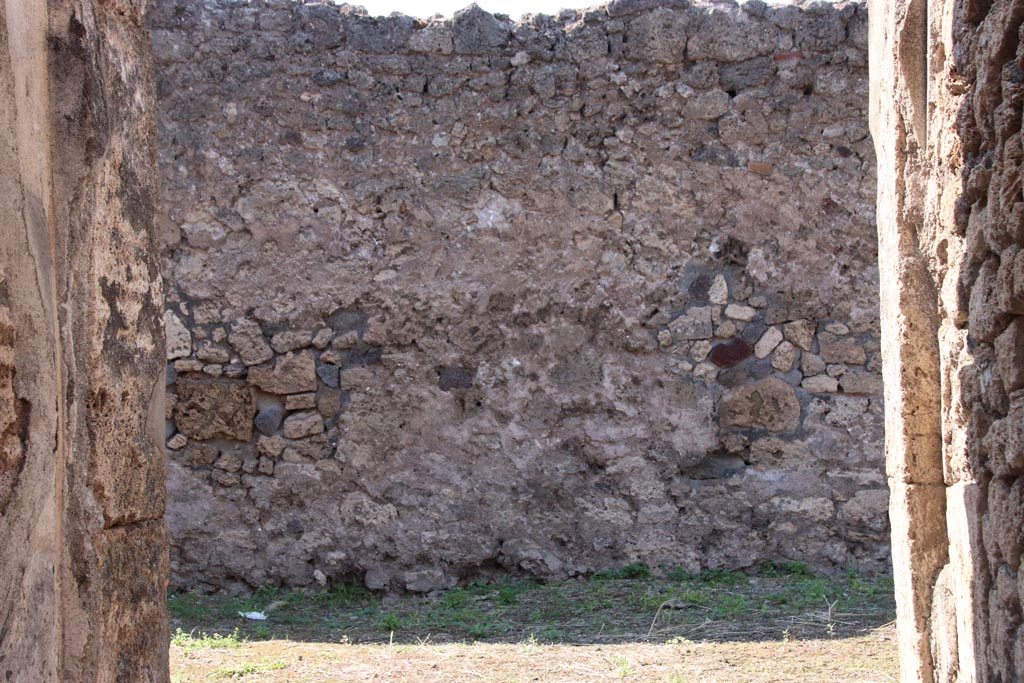
VI.7.9 Pompeii. October 2022. West wall of atrium. Photo courtesy of Klaus Heese.
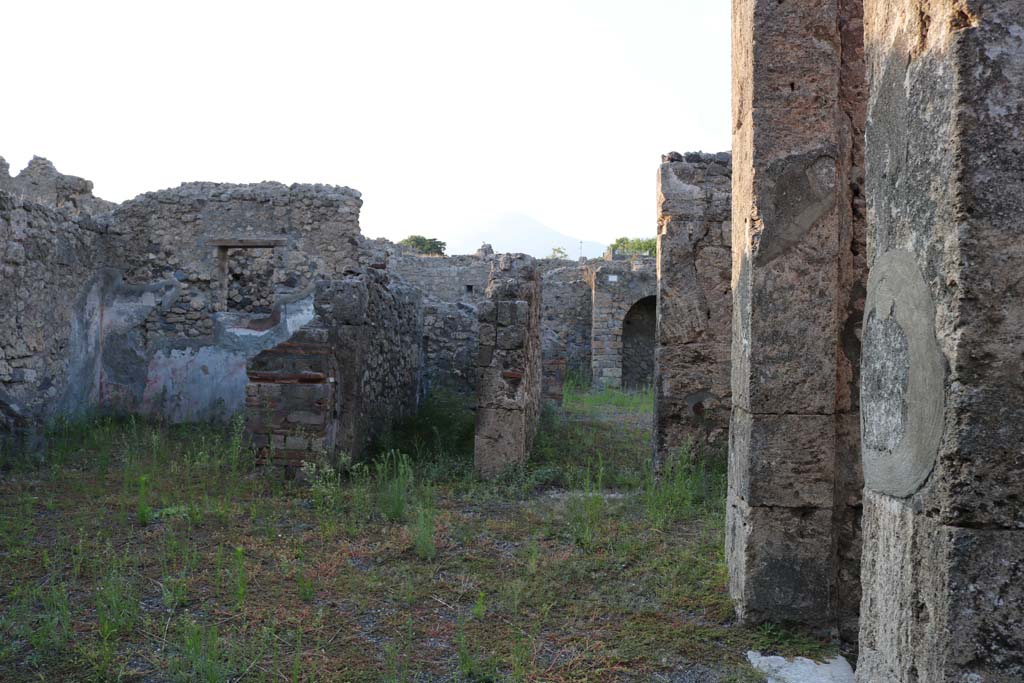
VI.7.9 Pompeii. December 2018.
Looking north across atrium towards doorway linking with
VI.7.10 and 11 with arched recess, centre right. Photo courtesy of Aude Durand.
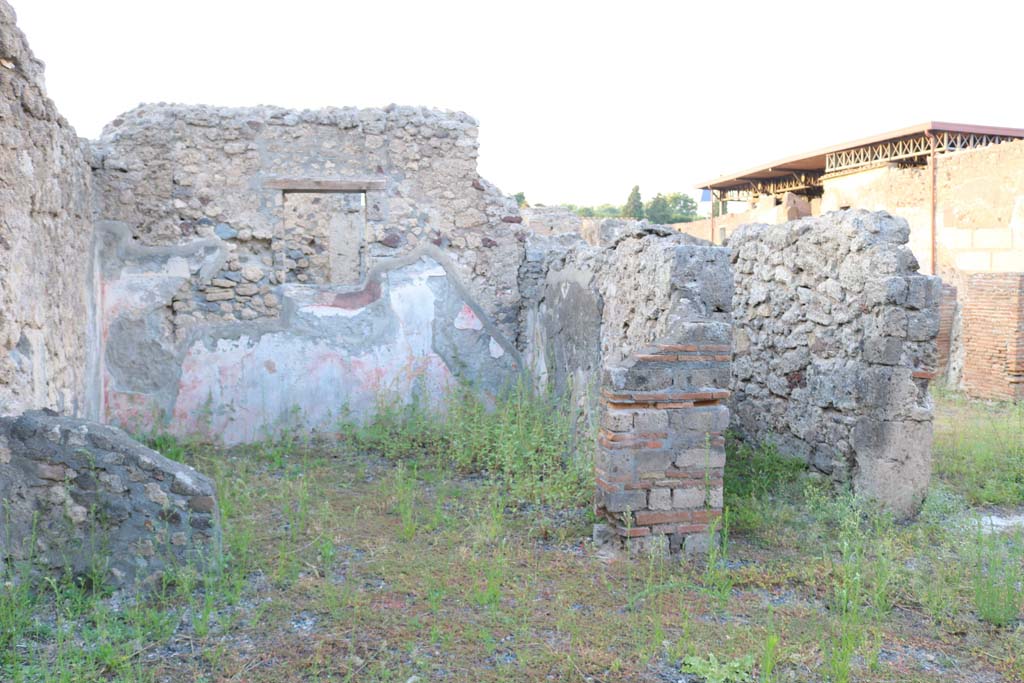
VI.7.9 Pompeii. December 2018. Looking north across atrium
towards large room. Photo courtesy of Aude Durand.
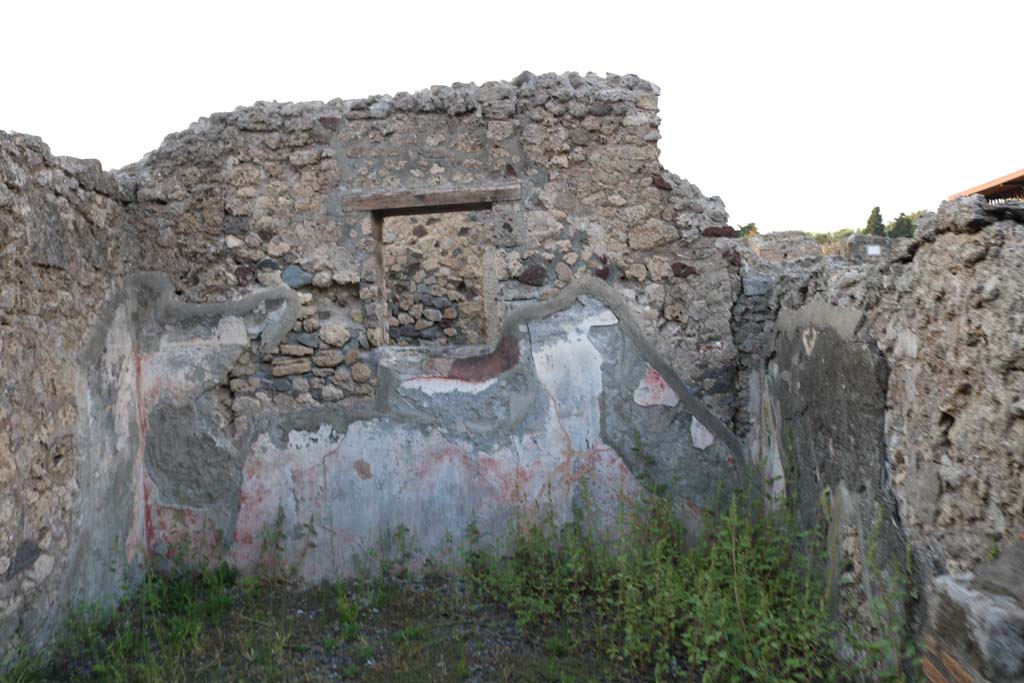
VI.7.9 Pompeii. December 2018.
Looking towards
north wall with window, in large room on north side of atrium. Photo courtesy of Aude Durand.
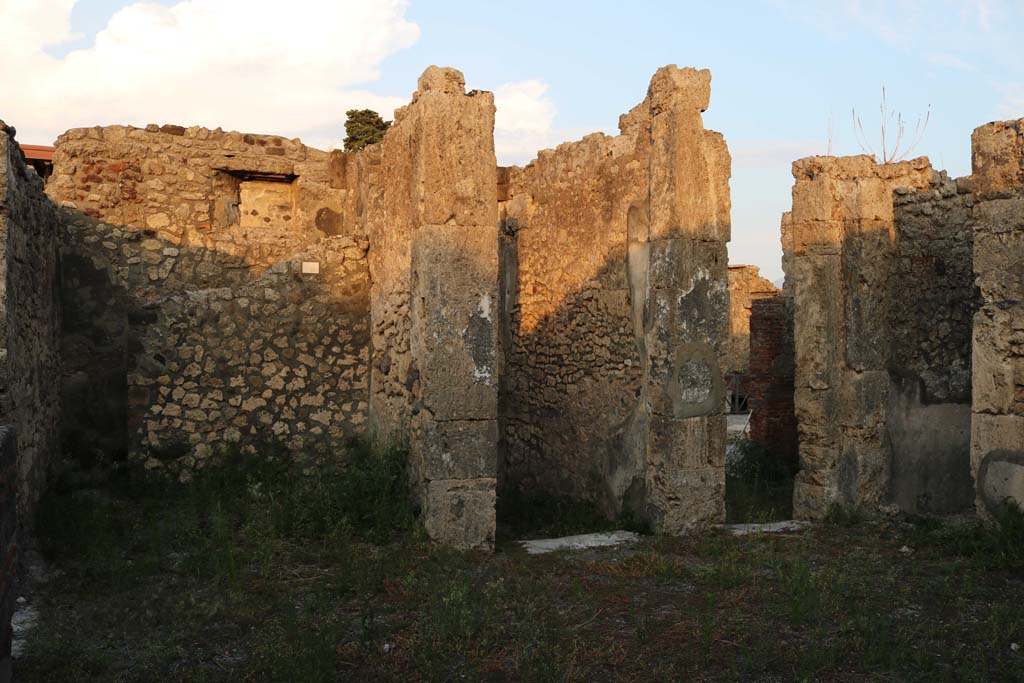
VI.7.9 Pompeii. December 2018.
Looking east across
atrium towards entrance corridor, in centre, and VI.7.8, doorway to shop, centre right. Photo courtesy of Aude
Durand.
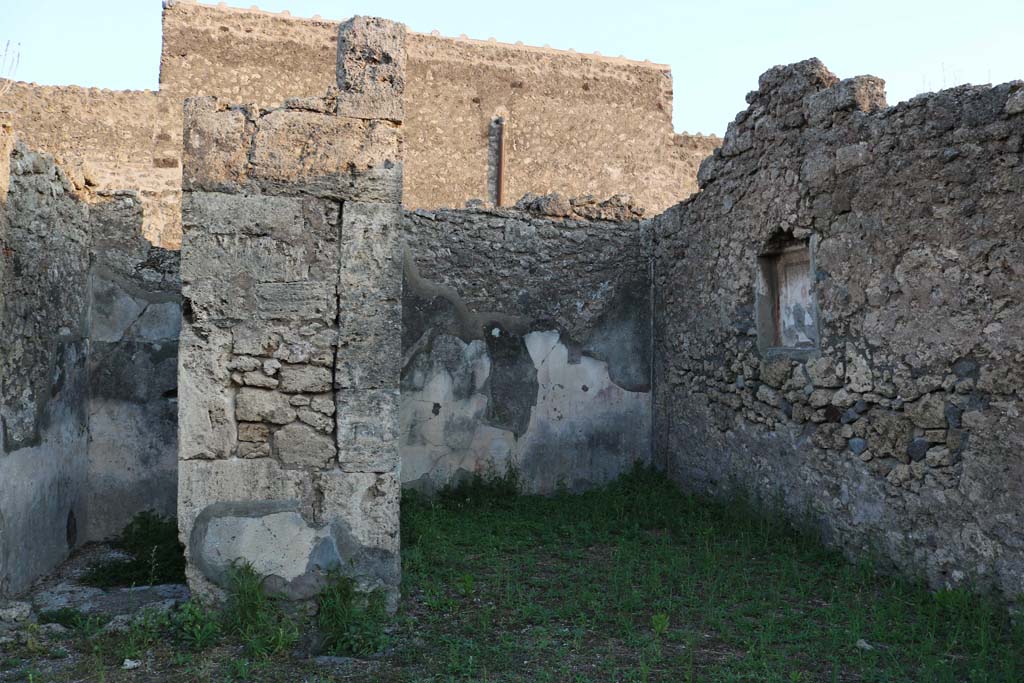
VI.7.9 Pompeii. December 2018.
Looking towards south side of atrium, with doorway to cubiculum with two windows, and doorway to south ala.
Photo courtesy of Aude Durand.
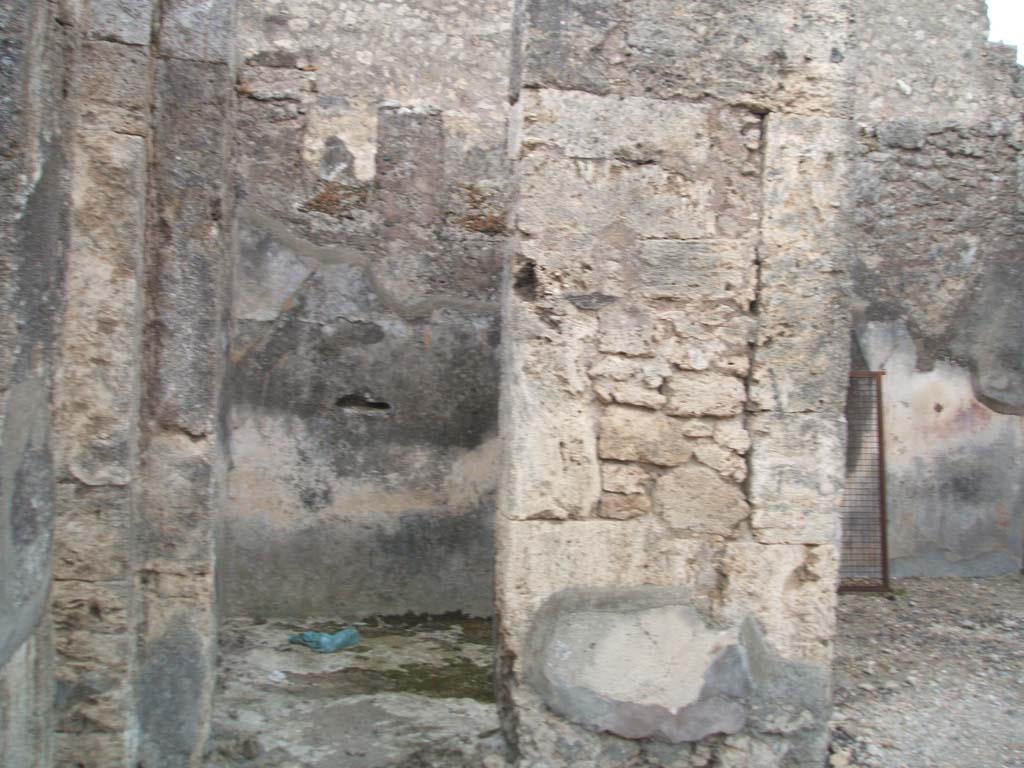
VI.7.9 Pompeii. May 2005. South side of atrium, with doorway to cubiculum with two windows, and doorway to south ala.
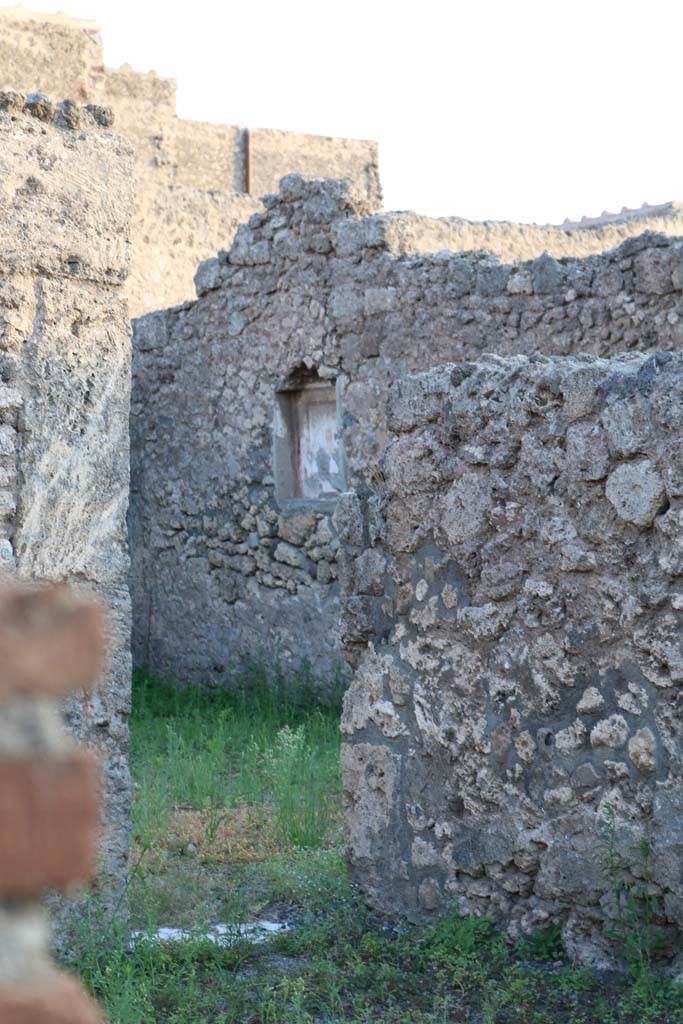
VI.7.9 Pompeii. December 2018.
Looking towards west wall of south ala. Photo courtesy of Aude Durand.
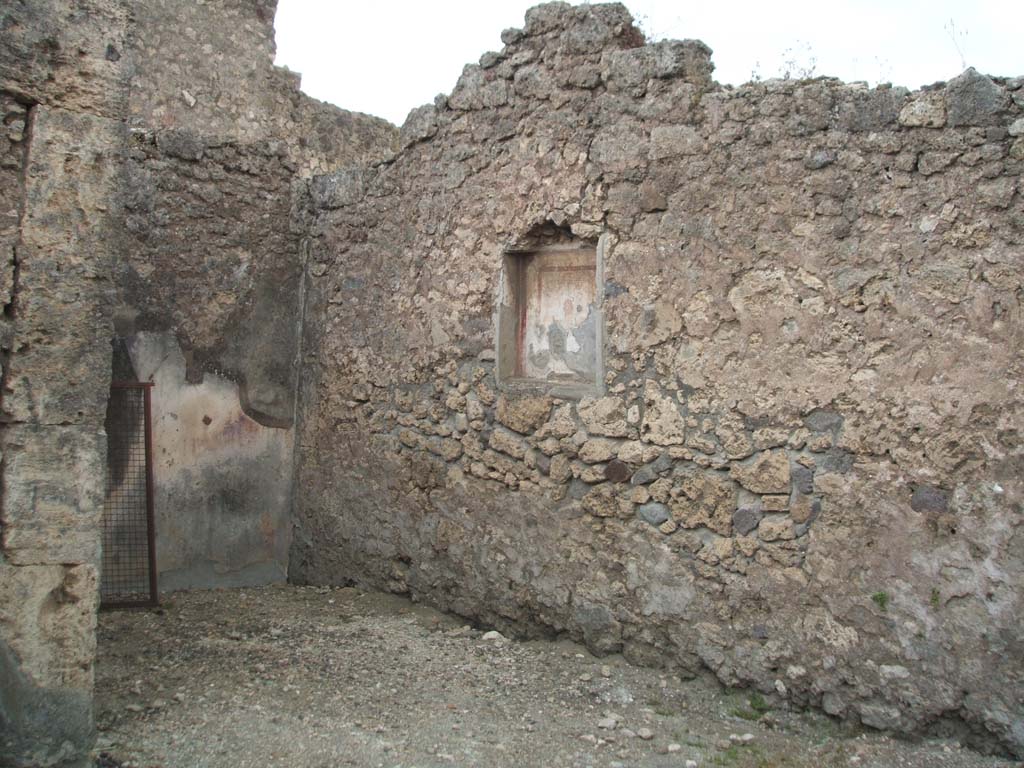
VI.7.9 Pompeii. May 2005. West wall of south ala, with niche with small painting of the head of the Gorgon.
According to Frohlich and Giacobello, on the west wall of the atrium, was a niche with a painted mask on a white background.
A painted lararium was also documented but of this there is no trace, according to them.
See Fröhlich, T.,
1991. Lararien und Fassadenbilder in den
Vesuvstädten. Mainz: von
Zabern. (L63, Picture 34,1)
See Giacobello, F., 2008. Larari Pompeiani: Iconografia e culto dei Lari in ambito domestico. Milano: LED Edizioni. (p.242)
According to Sogliano, in the kitchen was a painted lararium of an altar and a serpent nearby.
See Sogliano, A., 1879. Le pitture murali campane scoverte negli anni 1867-79. Napoli: (p.17, no.48).
(The kitchen would have been on the north side, at the rear of the stairs, and has not yet been photographed).
According to Boyce, Helbig wrongly assigned the shrine from VI.7.7, to VI.7.9 (see VI.7.7)
See Boyce G. K., 1937. Corpus
of the Lararia of Pompeii. Rome:
MAAR 14. (p.47, no.163, note 1)
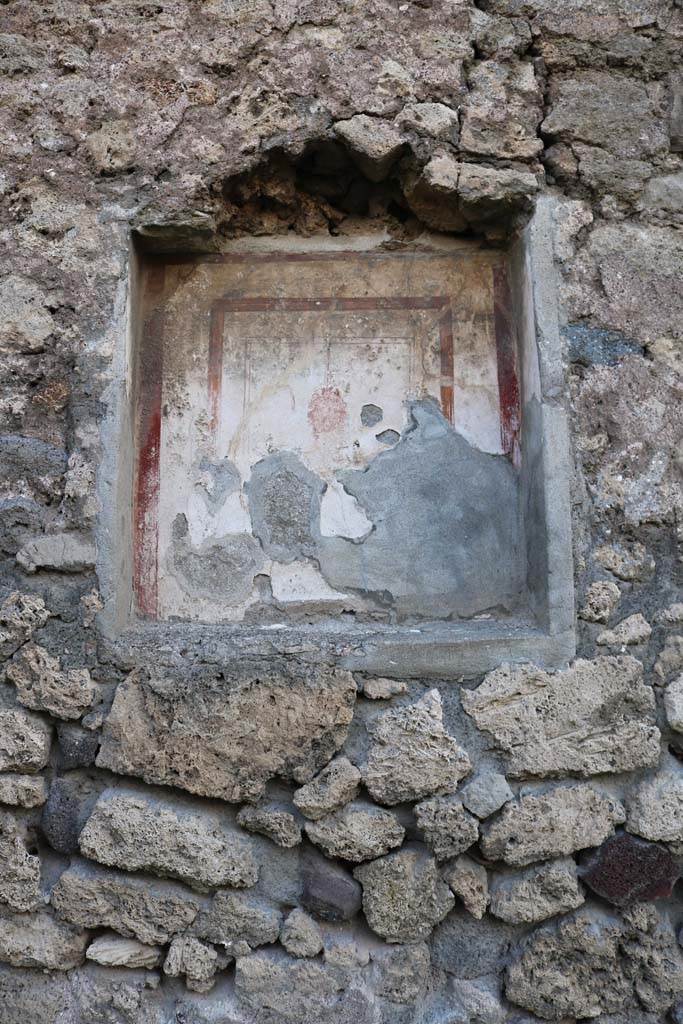
VI.7.9 Pompeii. December 2018.
Niche on west wall in south ala, with head of the Gorgon. Photo courtesy of Aude Durand.
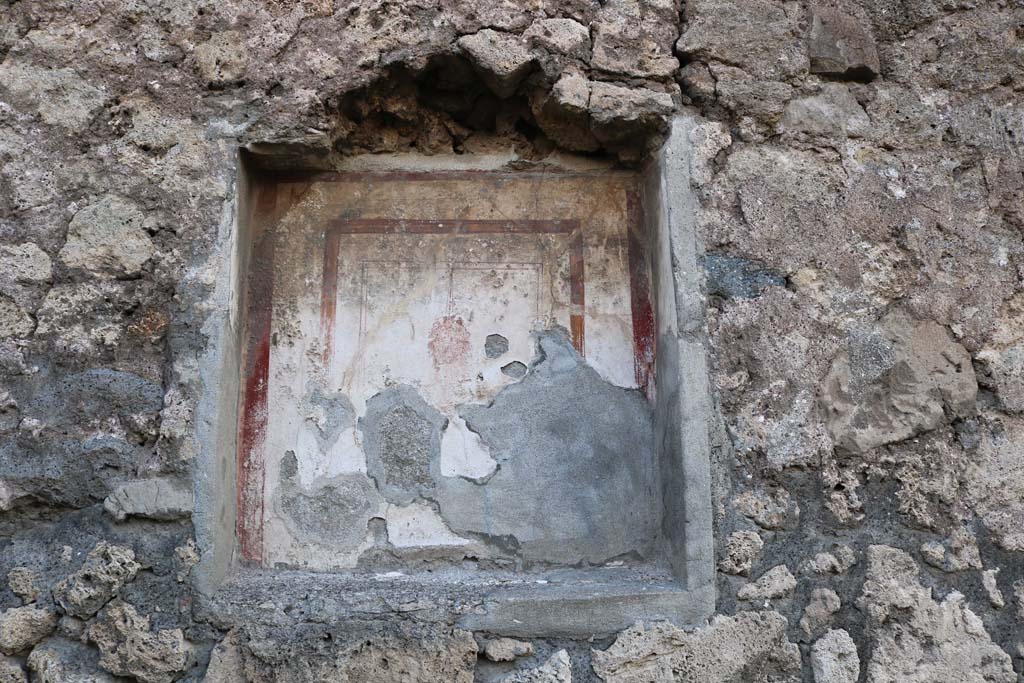
VI.7.9 Pompeii. December 2018.
West wall in south ala, showing niche with painted head of the Gorgon. Photo courtesy of Aude Durand.
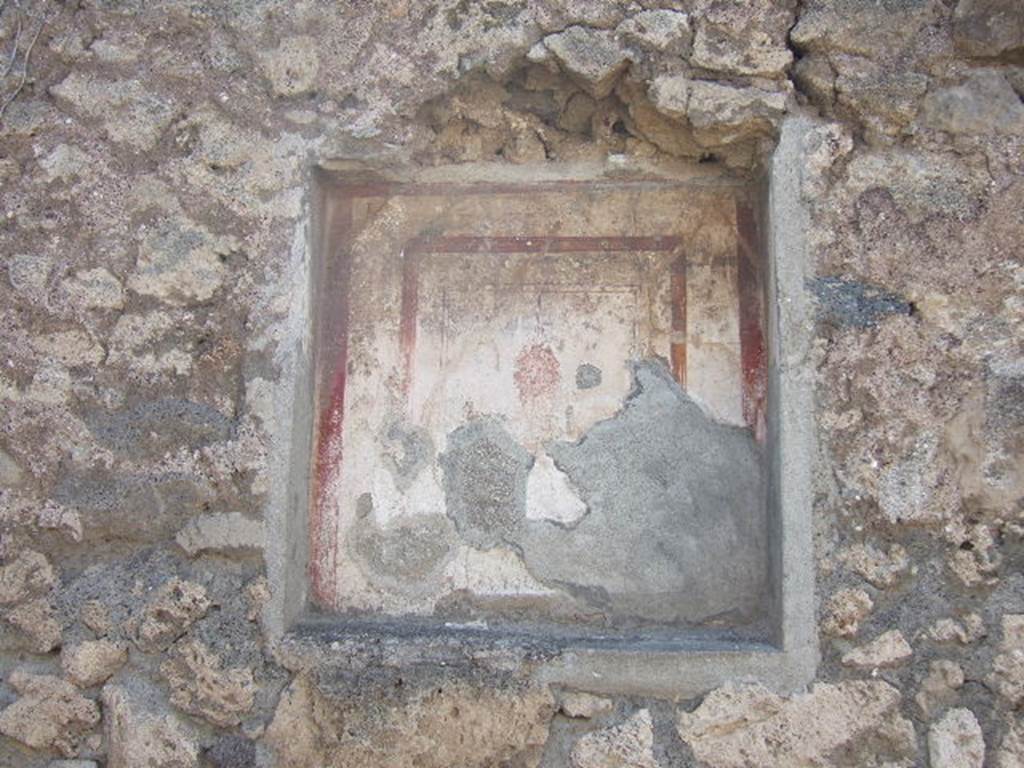
VI.7.9 Pompeii. December 2007. Niche in south ala, with head of the Gorgon.
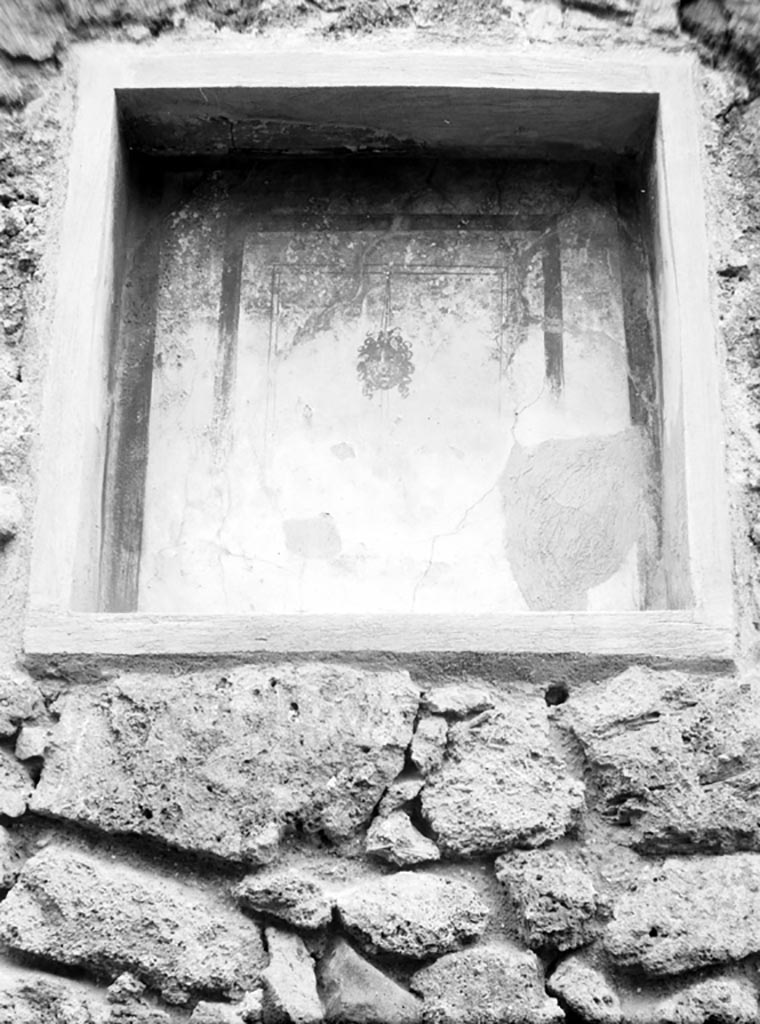
VI.7.9/10 Pompeii. W.1298. Painting in niche.
Photo by Tatiana
Warscher. Photo © Deutsches Archäologisches Institut, Abteilung Rom, Arkiv.
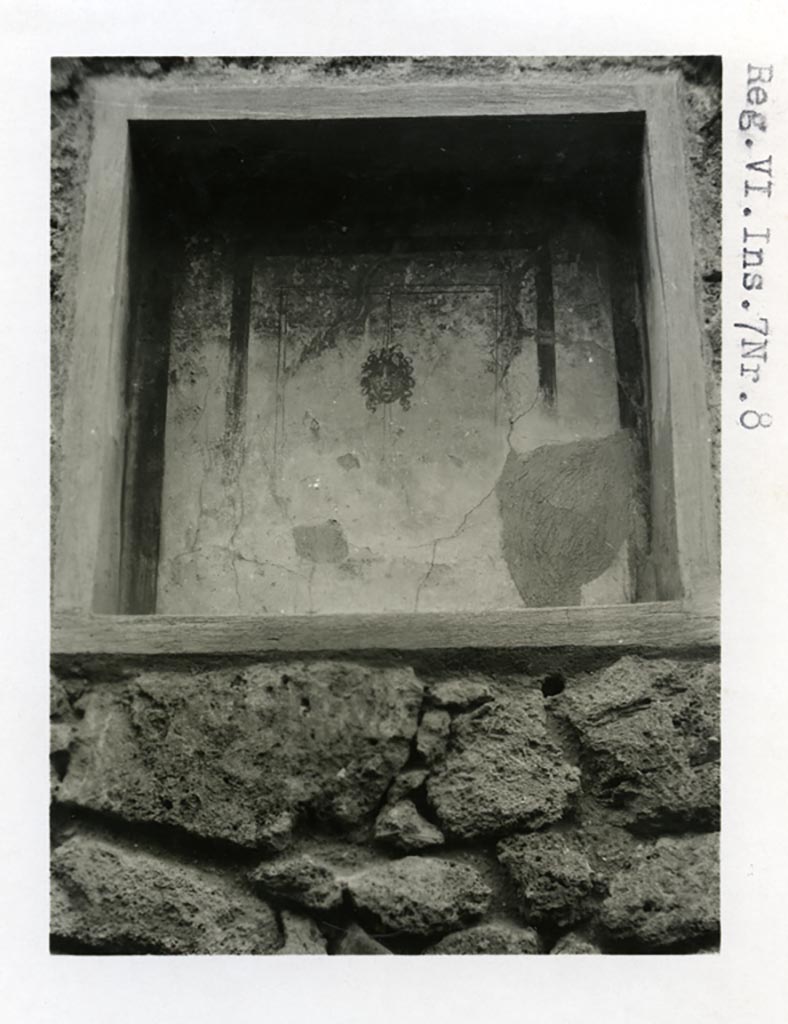
VI.7.9 Pompeii but shown as VI.7.8 on photo. Pre-1937-39. Painting in niche.
Photo courtesy of American Academy in Rome, Photographic Archive. Warsher collection no. 1590.
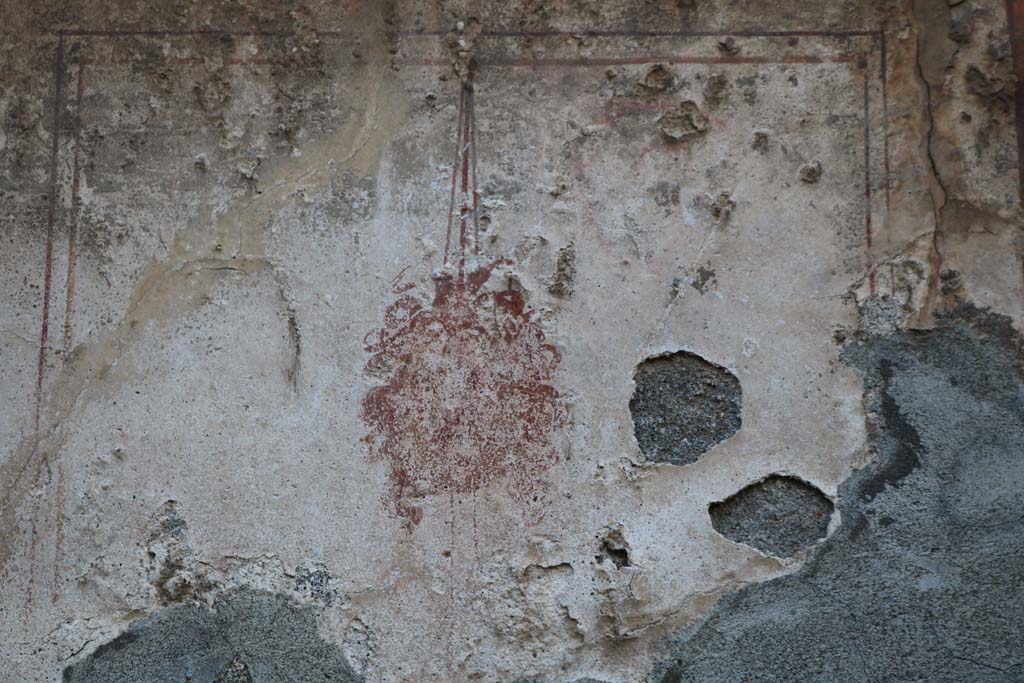
VI.7.9 Pompeii. December 2018. Detail of painted Gorgon from niche in west wall of south ala. Photo courtesy of Aude Durand.
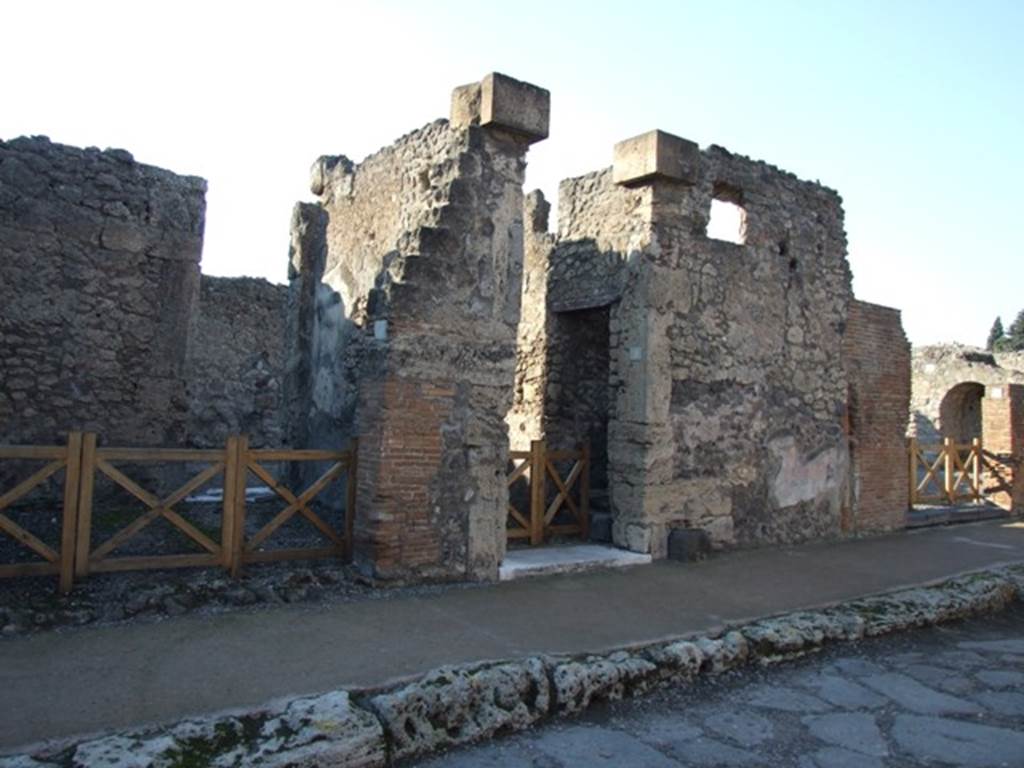
VI.7.9 Pompeii. December 2007. Looking north-west towards front façade.
The pilaster between VI.7.8 and VI.7.9 (left of centre) had the wall painting of the Procession of the Carpenters.