VI.1.18 Pompeii. Thermopolium and popina of Phoebus. Taberna Phoebi.
Linked to VI.1.20. Excavated 1789.
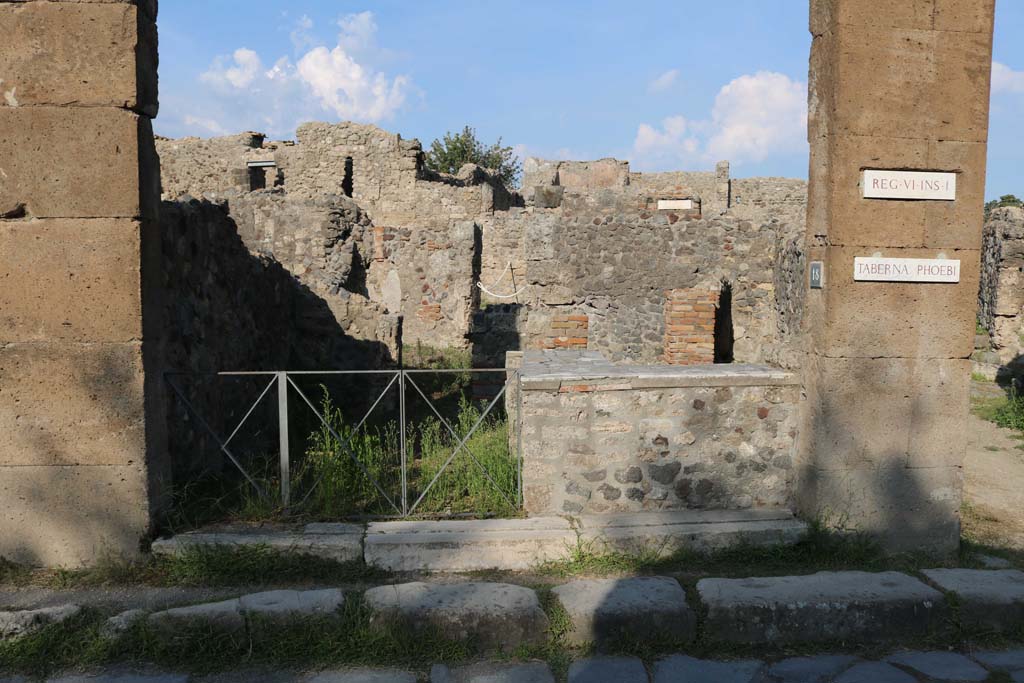
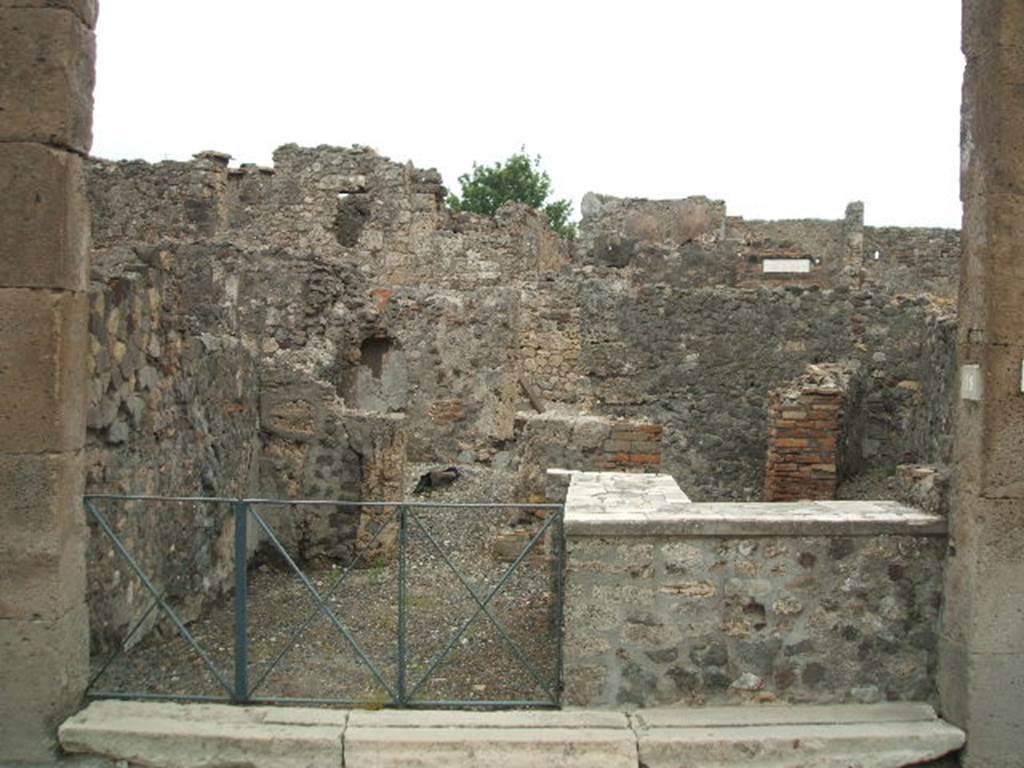
VI.1.18 Pompeii. May 2005. Entrance doorway, looking east.
![VI.1.18 Pompeii. December 2007. Various programmata were found near to this taberna. Fiorelli wrote that one of them must surely be the name of the person who perhaps sold hot drinks and food here:-
M. HOLCONIUM PRISCUM
C GAVIUM RUFUM II VIR
PHOEBUS CUM EMPTORIBUS
SUIS ROGAT [CIL IV 103]
See Pappalardo, U., 2001. La Descrizione di Pompei per Giuseppe Fiorelli (1875). Napoli: Massa Editore. (p.49).](6%2001%2018_files/image006.jpg)
VI.1.18 Pompeii. December 2007. Various electoral recommendations were found near to this taberna.
Fiorelli wrote that one of them must surely be the name of the person who perhaps sold hot drinks and food here: -
M . HOLCONIVM .
PRISCVM
C . GAVIVM .
RVFVM . II . VIR
PHOEBVS . CVM .
EMPTORIBVS
SVIS . ROGAT
[CIL IV 103]
See Pappalardo, U., 2001. La Descrizione di Pompei per Giuseppe Fiorelli (1875). Napoli: Massa Editore. (p.49).
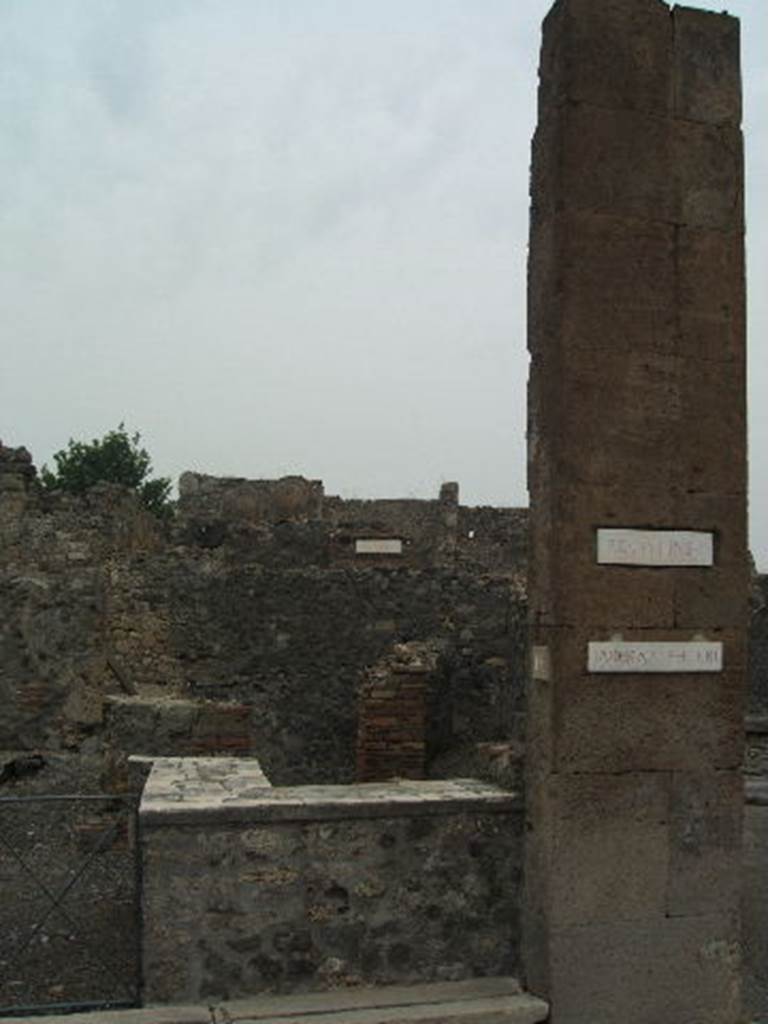
VI.1.18 Pompeii. May 2005. Looking east across bar counter.
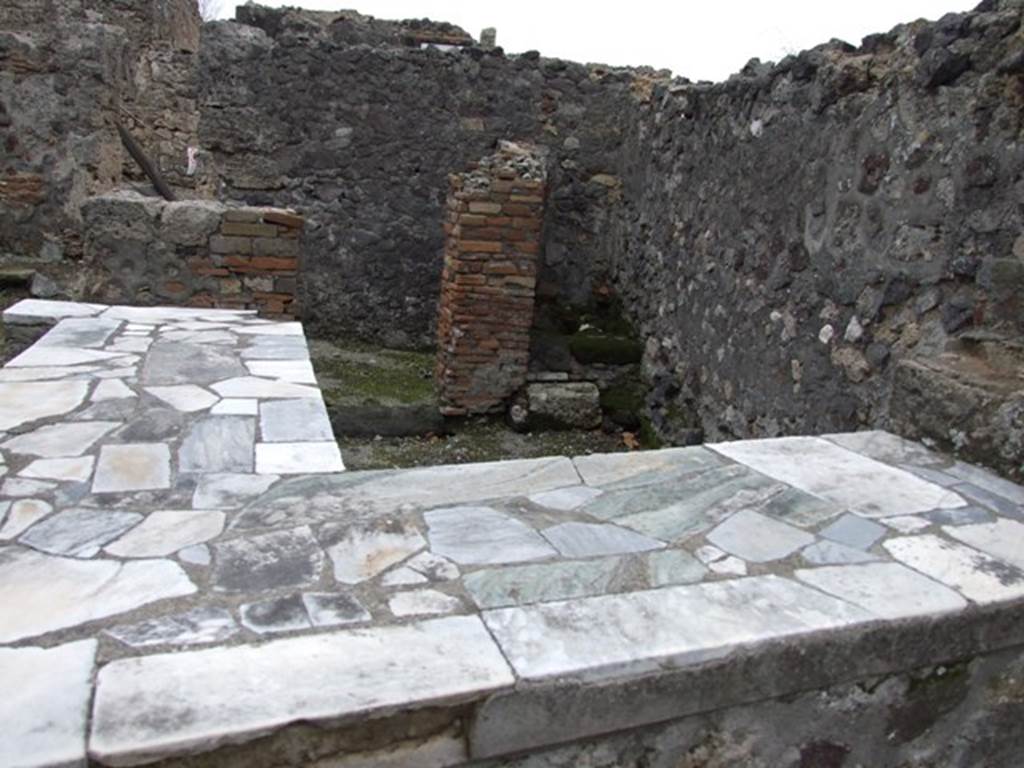
VI.1.18 Pompeii. December 2007. Two-sided marble counter with hearth and two-tier shelving, looking east.
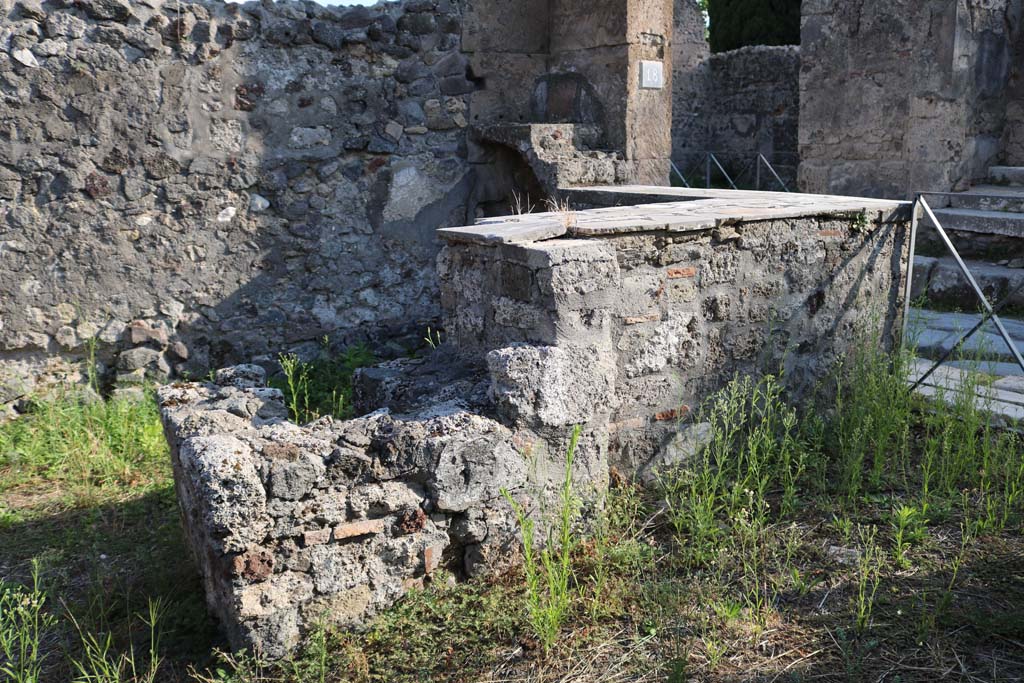
VI.1.18, Pompeii. December 2018.
Looking south to two-sided marble counter with hearth and two-tier shelving. Photo courtesy of Aude Durand.
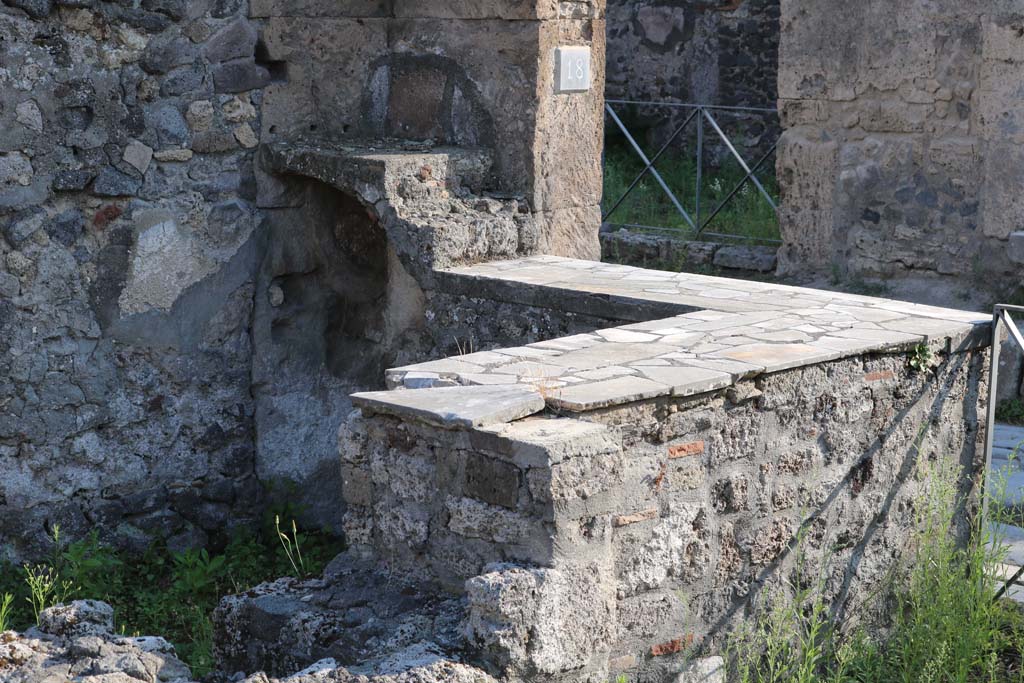
VI.1.18, Pompeii. December 2018.
Looking south-west across hearth at east end of two-sided marble counter and two-tier shelving. Photo courtesy of Aude Durand.
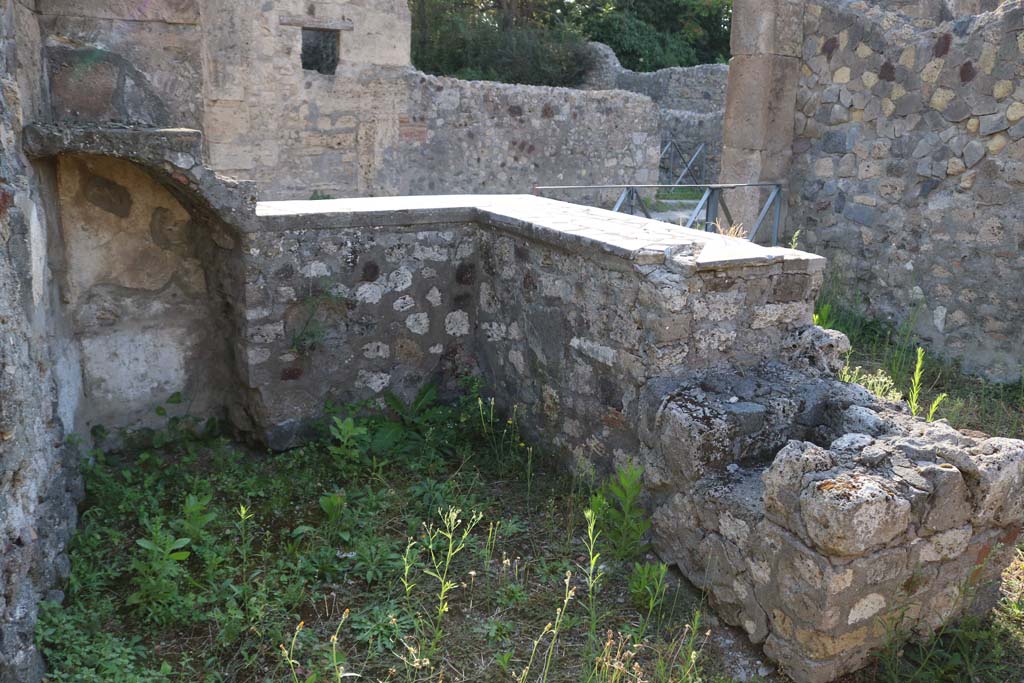
VI.1.18, Pompeii. December 2018. Looking west from rear of counter. Photo courtesy of Aude Durand.
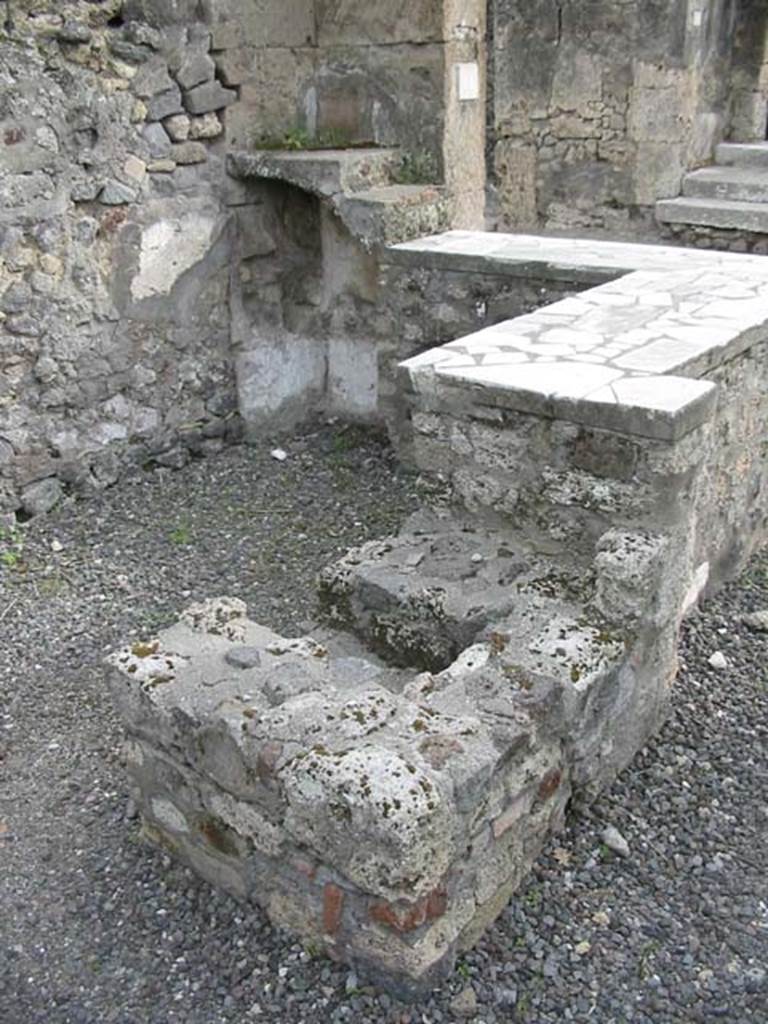
VI.1.18 Pompeii. May 2003.
Looking across hearth and counter, from rear. Photo courtesy of Nicolas Monteix.
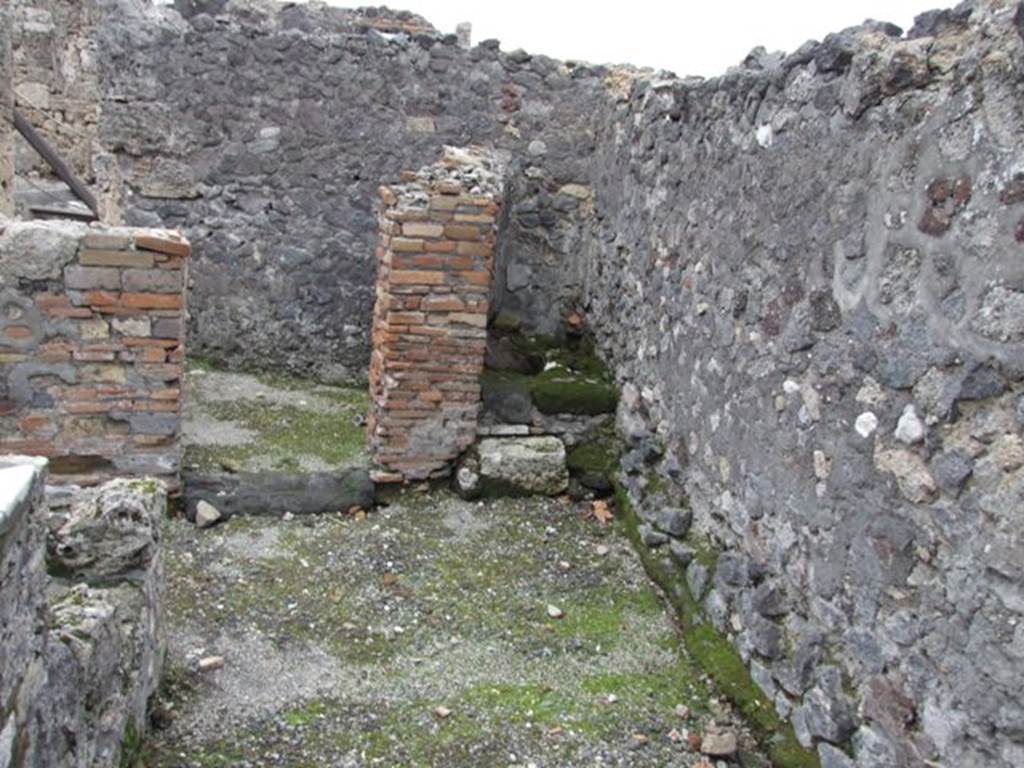
VI.1.18 Pompeii. December 2007. Looking east to doorway to rear and fusorium, on the right.
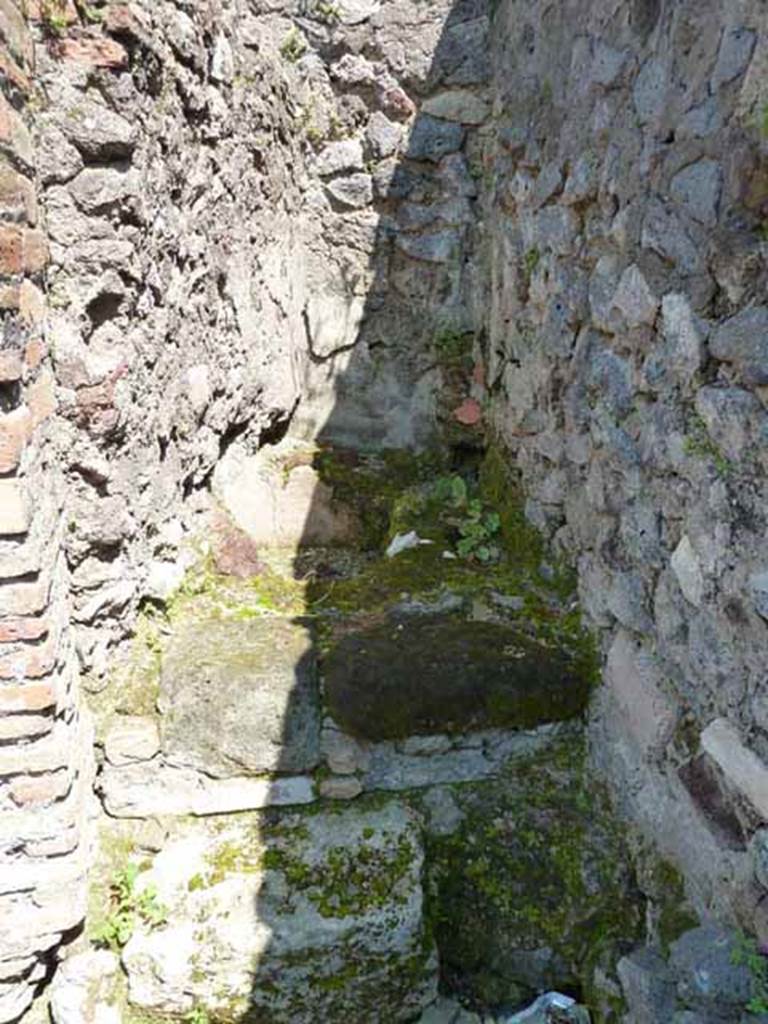
VI.1.18 Pompeii. May 2010. Fusorium or cistern.
According to Hobson, it used to be thought that the latrine was in the south-east corner of the Bar of Phoebus.
This feature is now considered to be a cistern, the latrine being only 3m away in another small room.
See Hobson, B., 2009. Latrinae et foricae: Toilets in the Roman World. London; Duckworth. (p.160)
On page 72 he writes that it is possible that some of the down pipes in the city were just for the provision or disposal of water.
In this bar, there is a cistern which was supplied by an internal pipe from the roof.
This particular feature was wrongly identified as a latrine in all the references prior to the work carried out by the Anglo-American Project.
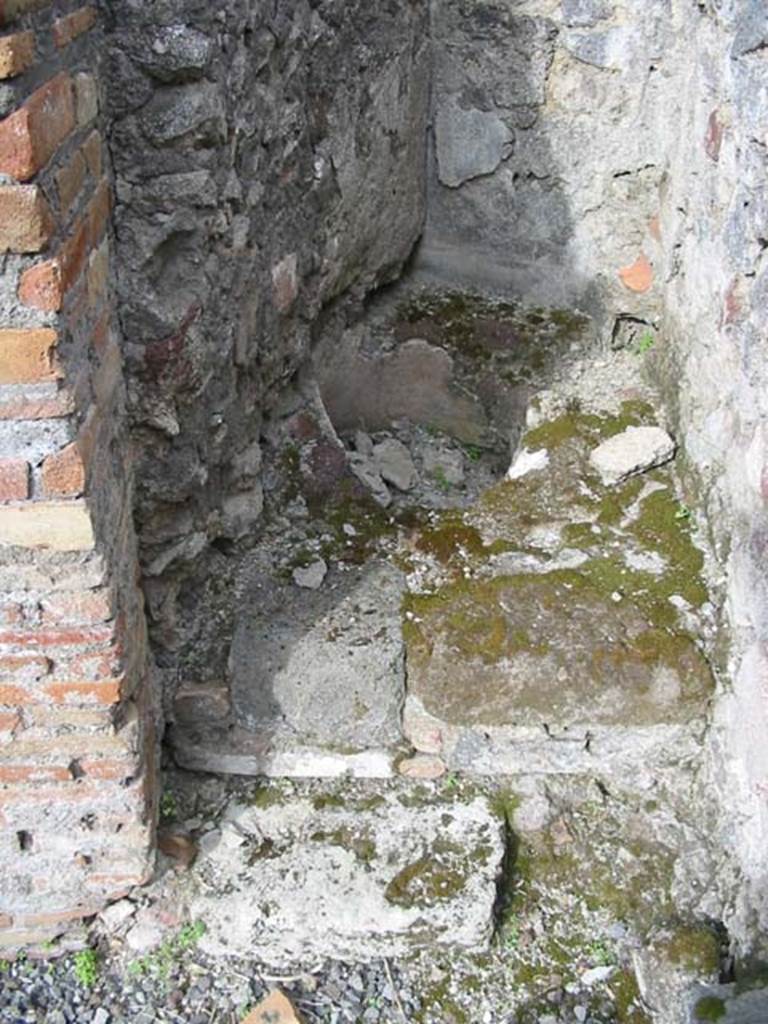
VI.1.18 Pompeii. May 2003. Fusorium or cistern. Photo courtesy of Nicolas Monteix.
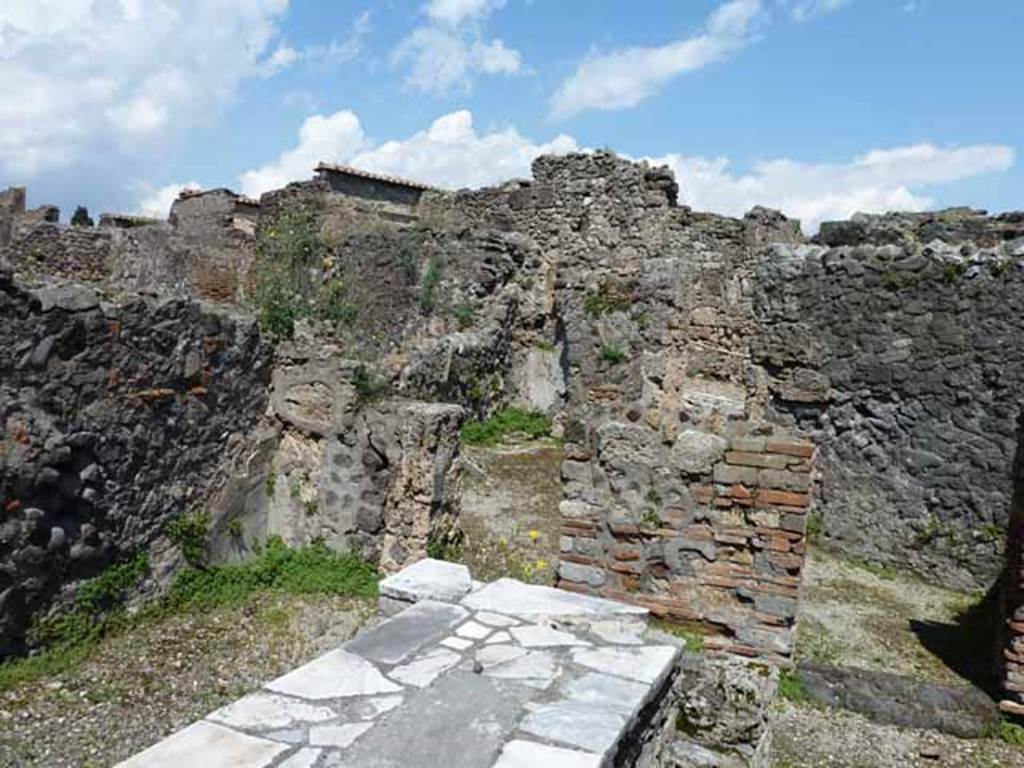
VI.1.18 Pompeii. May 2010. Looking east to two small linked rooms at rear, and towards rear entrance with kitchen and latrine.
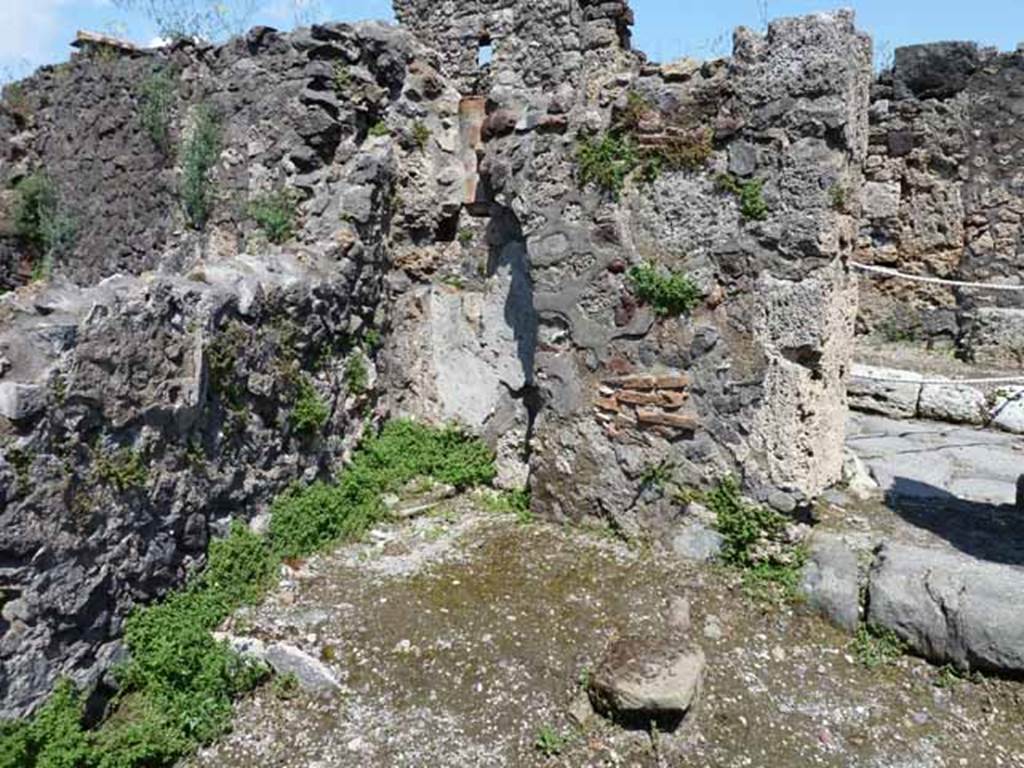
VI.1.18 Pompeii. May 2010. Kitchen and latrine, on north side of entrance at VI.1.20.
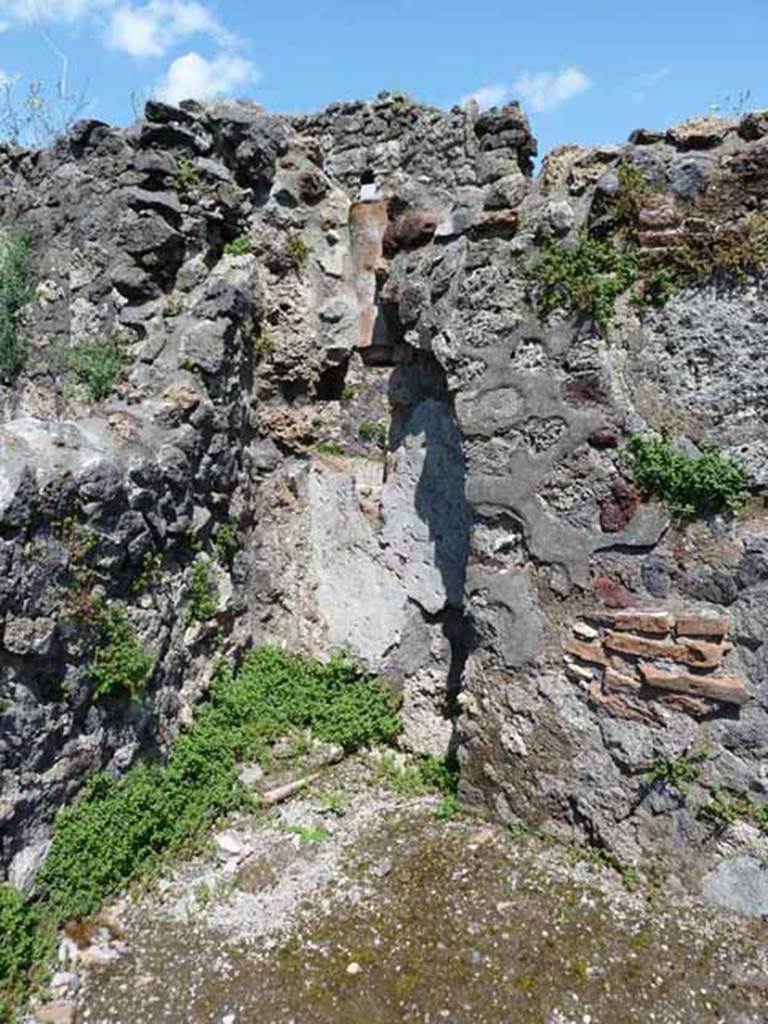
VI.1.18 Pompeii. May 2010. Latrine, with down-pipe from upper floor.
According to Hobson, the cesspit of this toilet, outside in the sidewalk of the Vicolo di Narciso, also received the contents of an upper storey latrine.
This time the space for the downpipe was cut into the eastern wall of the property.
Excavations of the rest of the bar area, showed that this latrine was a late addition.
There had previously been a latrine in a different part of the property which had been built over.
See Hobson, B., 2009. Latrinae et foricae: Toilets in the Roman World. London; Duckworth. (p.66-67)
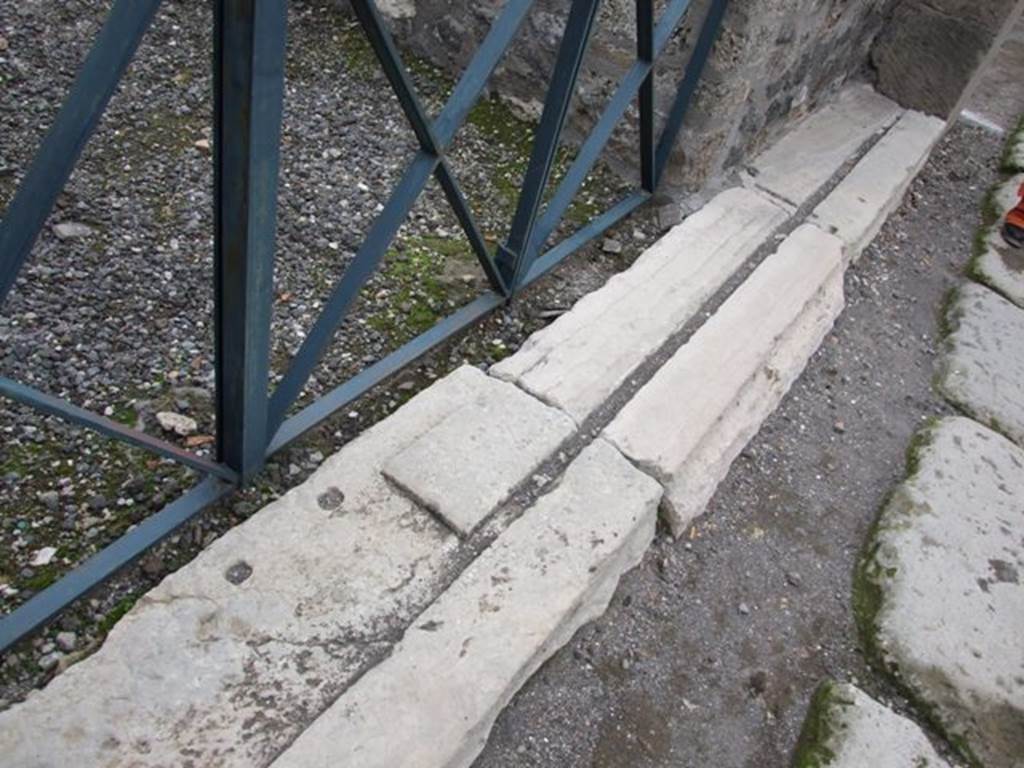
VI.1.18 Pompeii. December 2007. Threshold or sill.