V.4.13 Pompeii. Domus of M Fabius Secundus and Optata
or Casa delle origine di Roma.
Linked to V.4.12. Excavated 1873, 1899 and 1903.
Part 1 Part 2 Part 3
Part 4 Plan
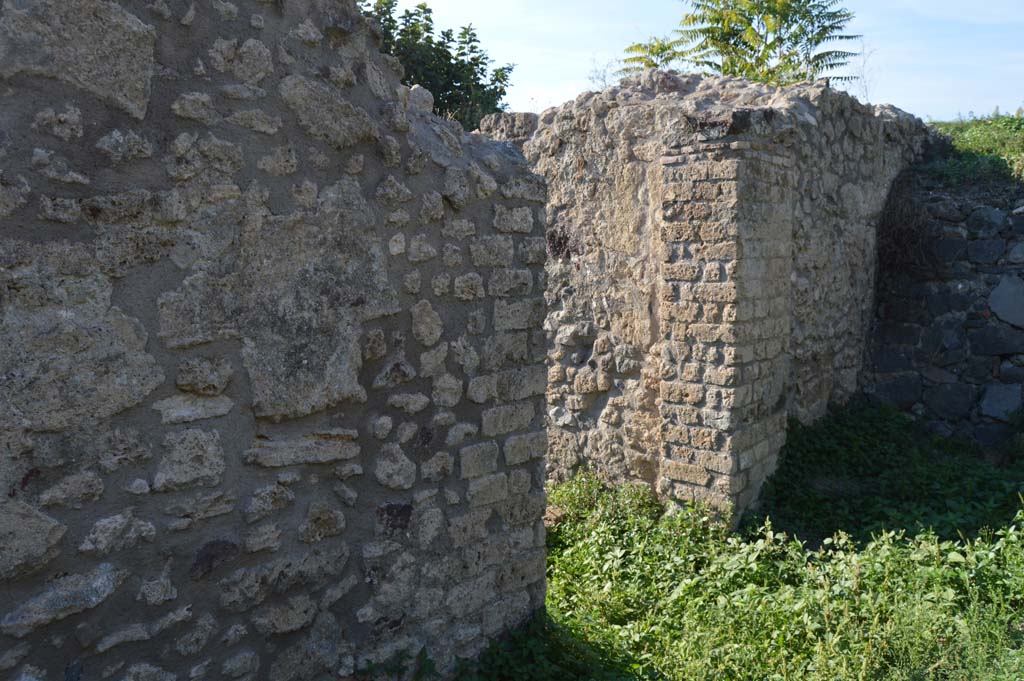
Foto Taylor Lauritsen, ERC Grant 681269 DÉCOR.
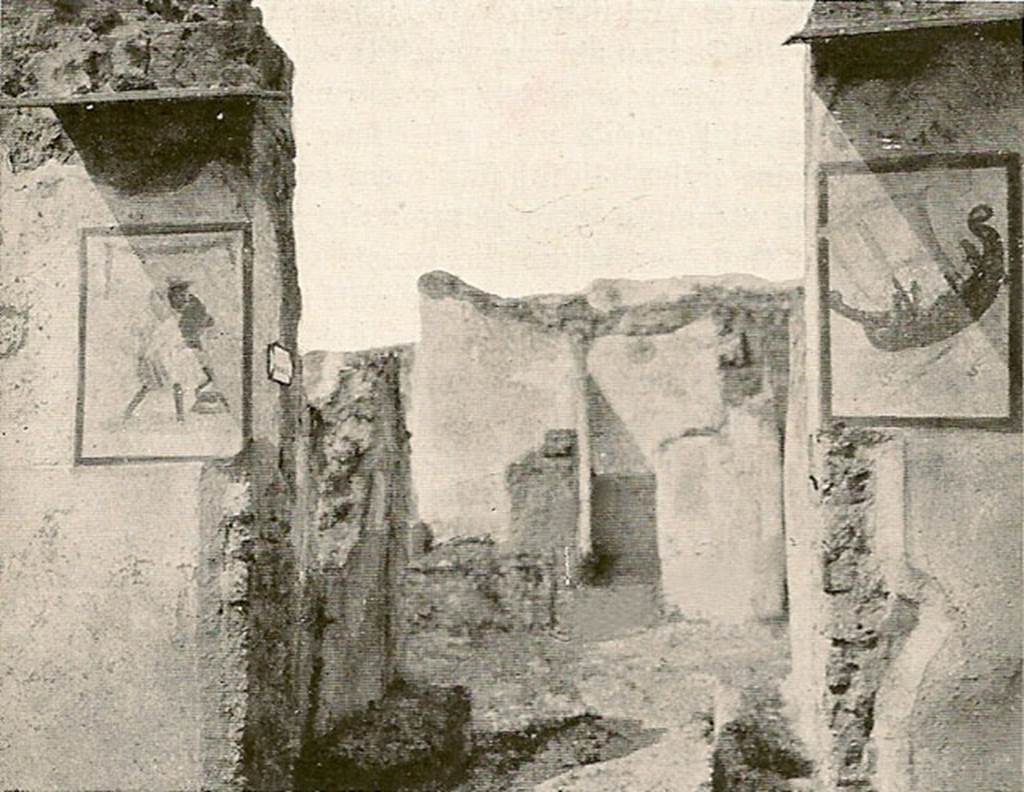
V.4.13 Pompeii. Old undated photograph. Paintings on entrance pillars.
A painting of Mercury was found on the left entrance pillar. A painting of a ship in full sail was on the right entrance pillar.
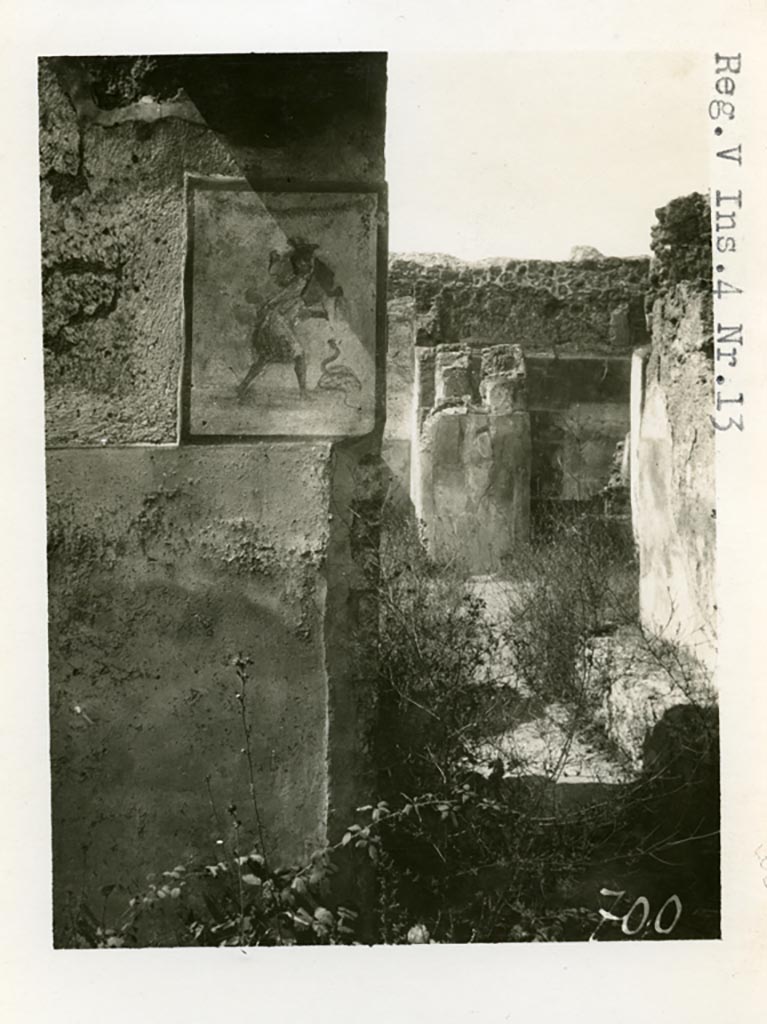
V.4.13 Pompeii. Pre-1937-39. Painting on south entrance pillar.
Photo courtesy of American Academy in Rome, Photographic Archive. Warsher collection no. 700.
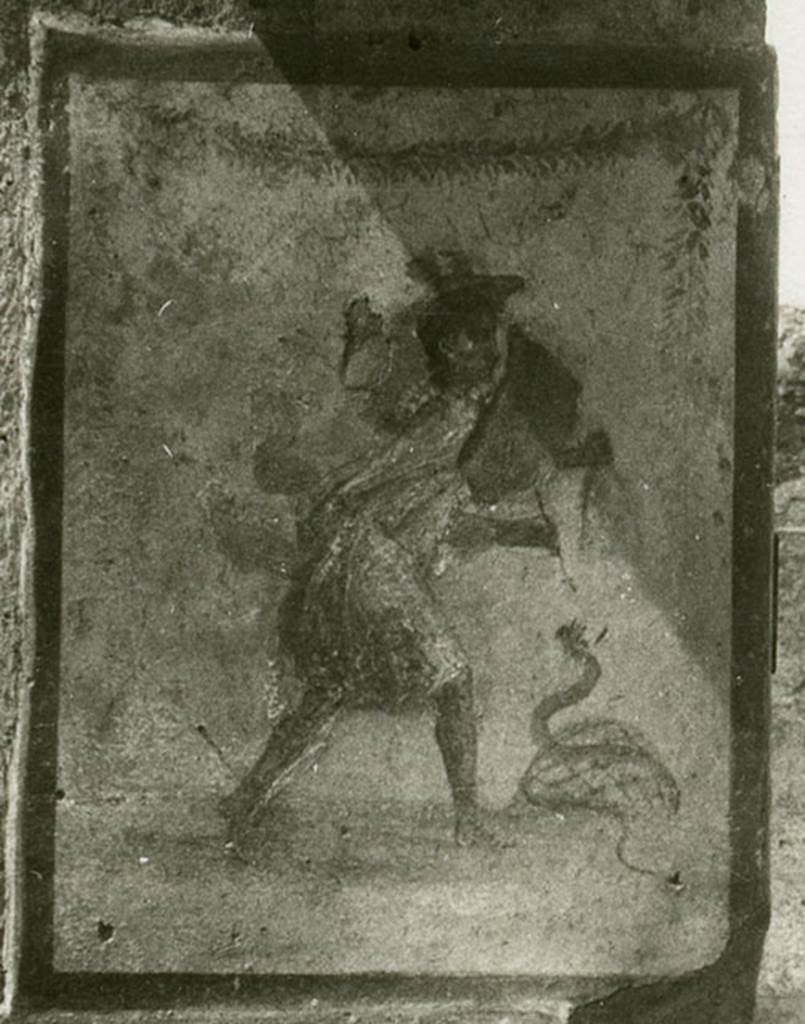
V.4.13 Pompeii. Pre-1937-39. Mercury painting on south entrance pillar.
Photo courtesy of American Academy in Rome, Photographic Archive. Detail from Warsher collection no. 700.
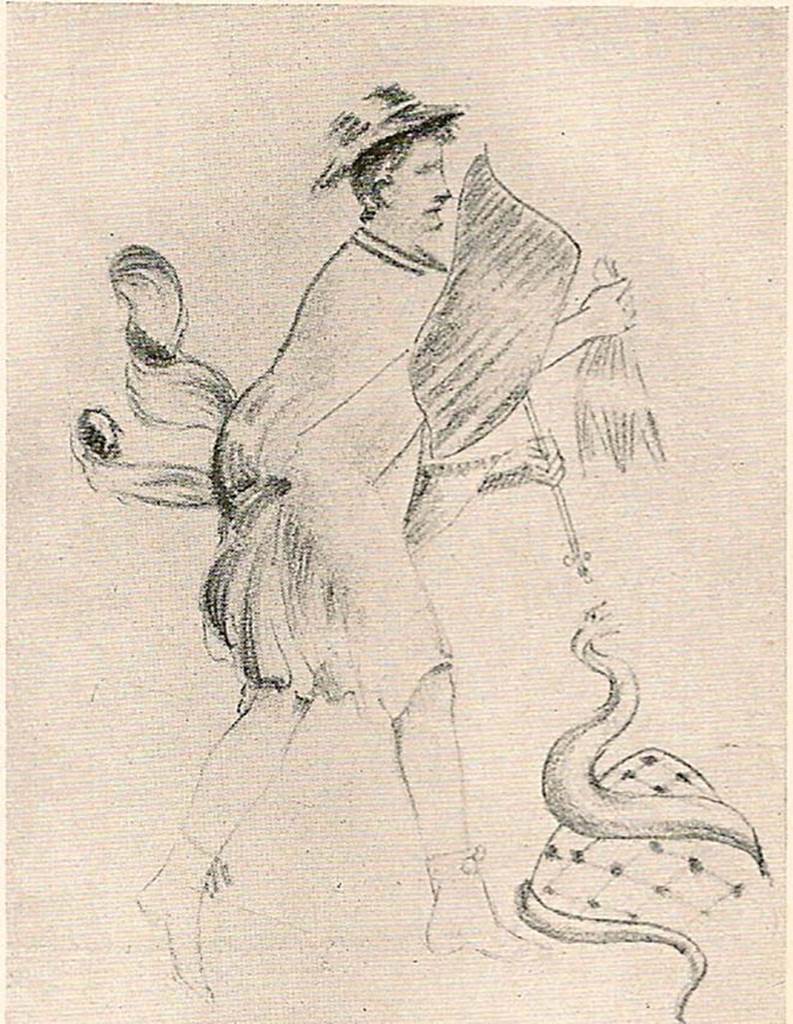
V.4.13 Pompeii. Found on the left entrance pillar.
Sketch of painting of Mercury, with serpent coiling around an omphalos at his feet.
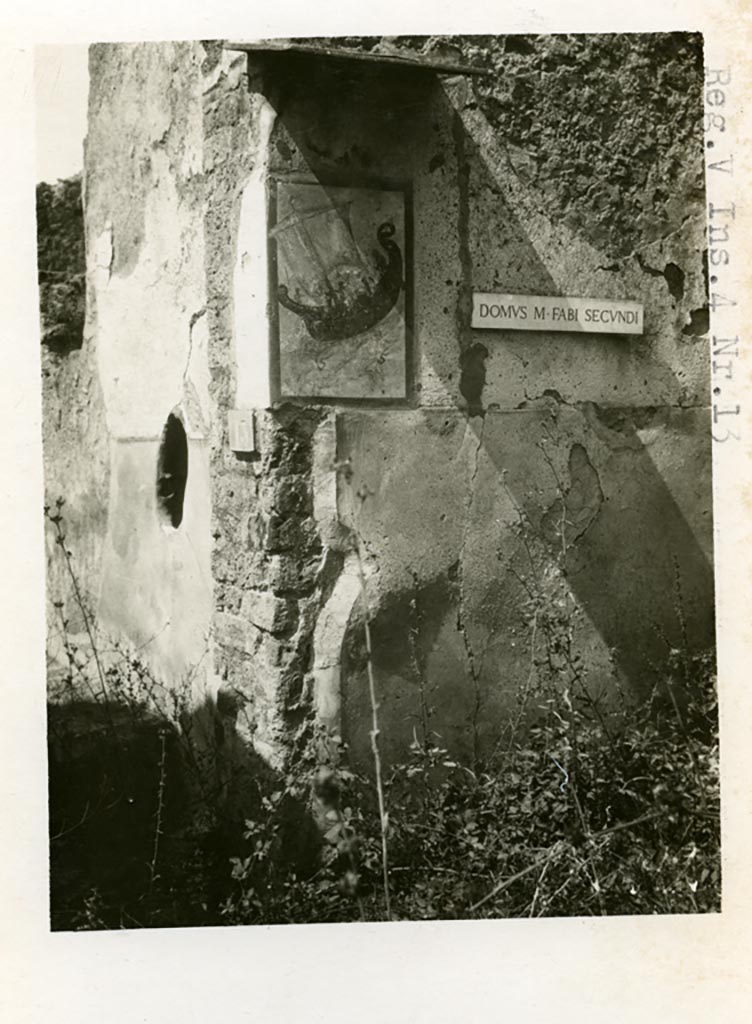
V.4.13 Pompeii. Pre-1937-39. Painting on north entrance pillar.
Photo courtesy of American Academy in Rome, Photographic Archive. Warsher collection no. 699.
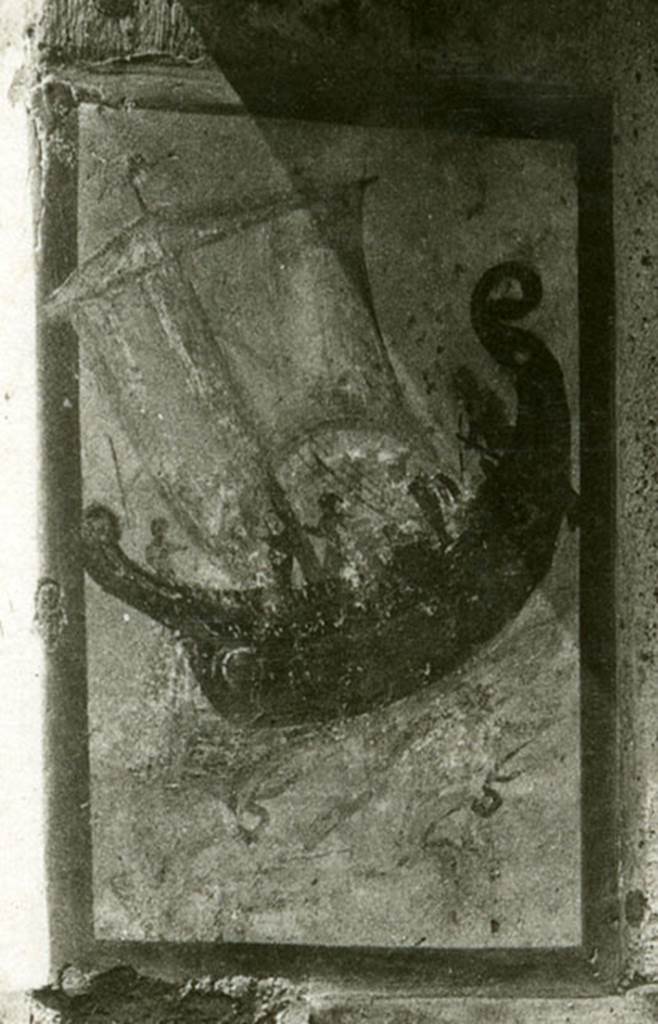
V.4.13 Pompeii. Pre-1937-39. Painting of ship in full sail on north entrance pillar.
Photo courtesy of American Academy in Rome, Photographic Archive. Detail from Warsher collection no. 699.
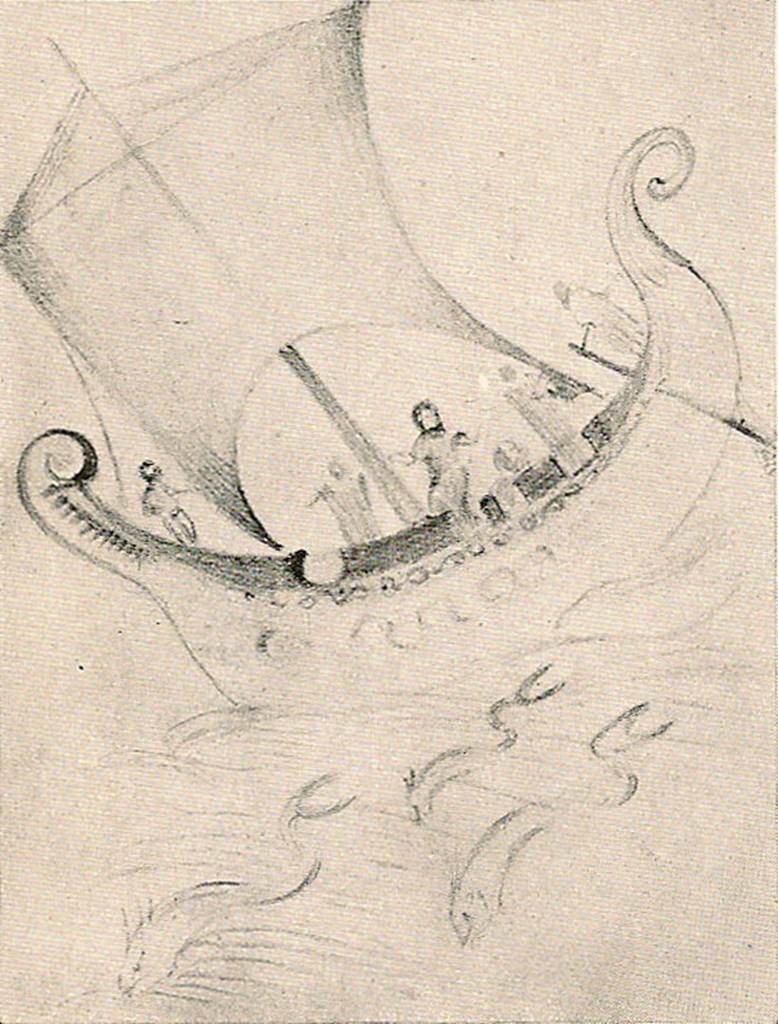
V.4.13 Pompeii. Found on the right entrance pillar. Sketch of painting of a ship in full sail.
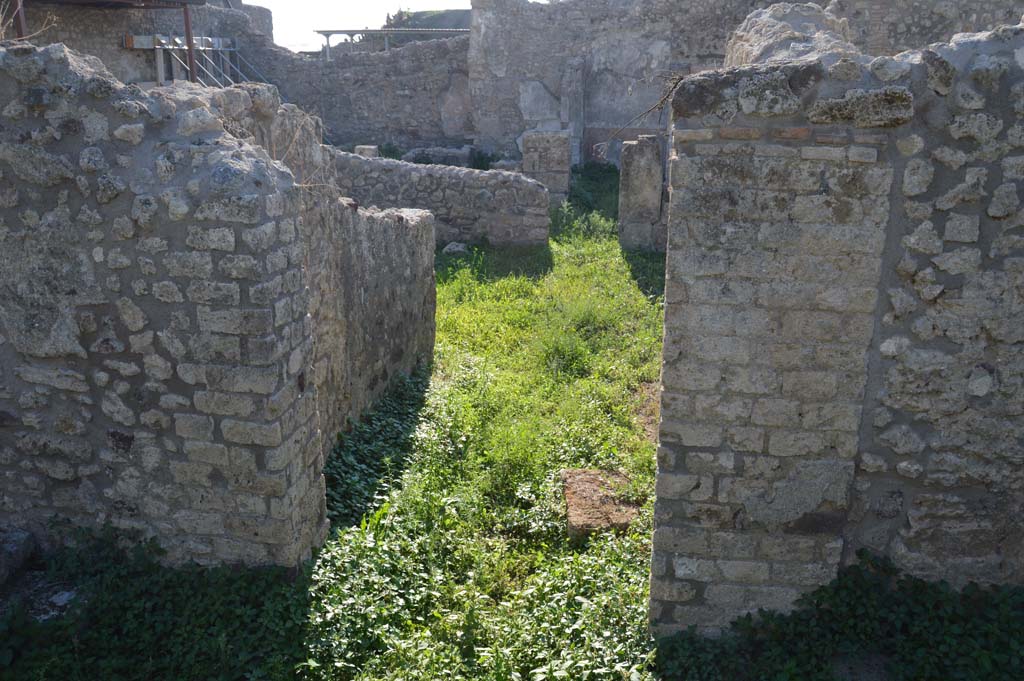
V.4.13 Pompeii. October 2017. Looking
west from entrance doorway.
Foto Taylor Lauritsen, ERC
Grant 681269 DÉCOR.
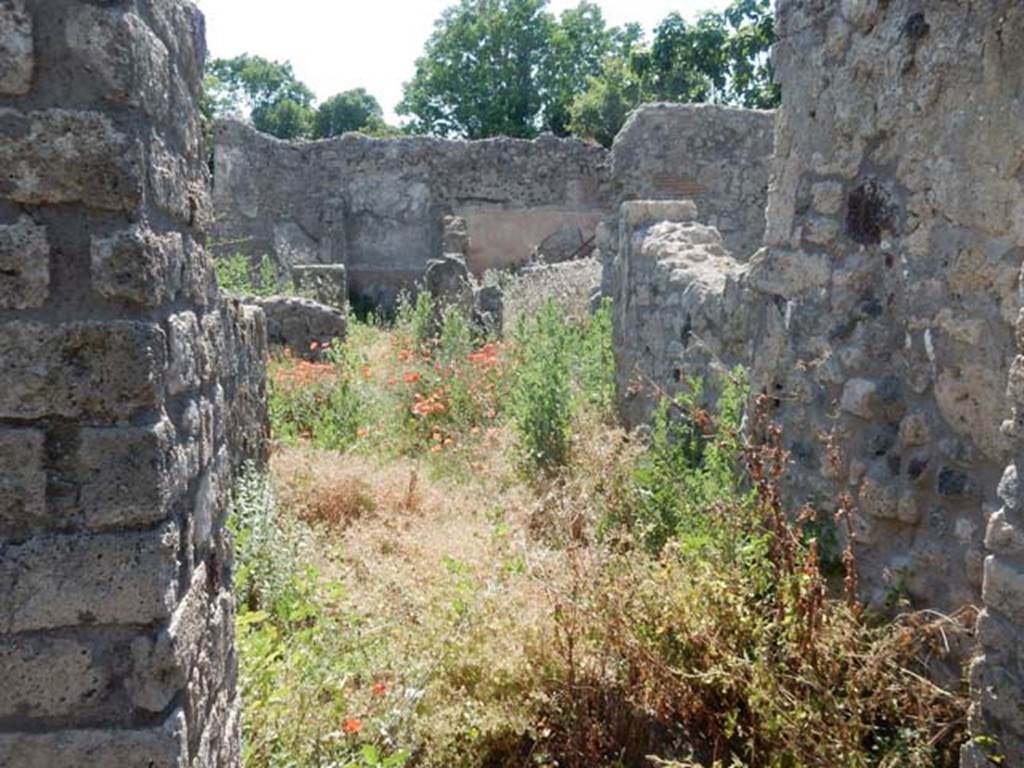
V.4.13 Pompeii. May 2017. Looking west from entrance doorway. Photo courtesy of Buzz Ferebee.
![V.4.13 Pompeii. March 2009. Entrance. On the left pillar was a painting of Mercury.
On the right pillar was a painting of a ship. See Fröhlich, T., 1991. Lararien und Fassadenbilder in den Vesuvstädten. Mainz: von Zabern. (F33, T:55,4). See Warscher, T., 1925. Pompeji: Ein Führer durch die Ruinen. Berlin und Leipzig: de Gruyter. (p.129, Abb. 28; p.130, Abb. 29). Found in the house was a seal/signet with the name of M. Fabius Secundus (S.42). On the external dado of the house between V.4.12 and V.4.13, according to Della Corte was the graffito salute from a woman, probably his wife. It read -
Optata Secundo
suo salutem [CIL IV 6755]
See Della Corte, M., 1965. Case ed Abitanti di Pompei. Napoli: Fausto Fiorentino. (p.110)
Also found in the same place, CIL IV 6754, which read –
Felicus.
See Notizie degli Scavi di Antichità, 1905, p.86.](5%2004%2013_files/image019.jpg)
V.4.13 Pompeii. March 2009. Entrance. On the left pillar was a painting of Mercury. On the right pillar was a painting of a ship.
See Fröhlich, T.,
1991. Lararien und Fassadenbilder in den
Vesuvstädten. Mainz: von Zabern. (F33, T:55,4).
See Warscher, T., 1925. Pompeji: Ein Führer durch die Ruinen. Berlin und Leipzig: de Gruyter. (p.129, Abb. 28; p.130, Abb. 29).
Found in the house was a seal/signet with the name of M. Fabius Secundus (S.42).
On the external dado of the house between V.4.12 and V.4.13,
according to Della Corte was the graffito salute from a woman, probably his
wife. It read -
Optata Secundo
suo salutem [CIL
IV 6755]
See Della Corte, M., 1965. Case ed Abitanti di Pompei. Napoli: Fausto Fiorentino. (p.110)
Also found in the same place, CIL IV 6754, which read –
Felicus.
See Notizie degli Scavi di Antichità, 1905,
p.86.
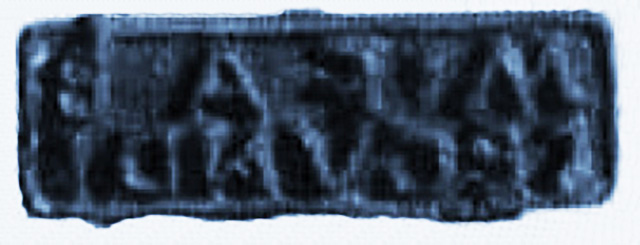
V.4.13 Pompeii. Found 23rd May 1903 in a cubiculum. Seal of M. F A B SECVNDI.
According to Sogliano, this meant the owner of the house was Marcus Fabius Secundus.
SAP Inventory
number 20038.
See Notizie degli Scavi di Antichità, 1905,
p.97.
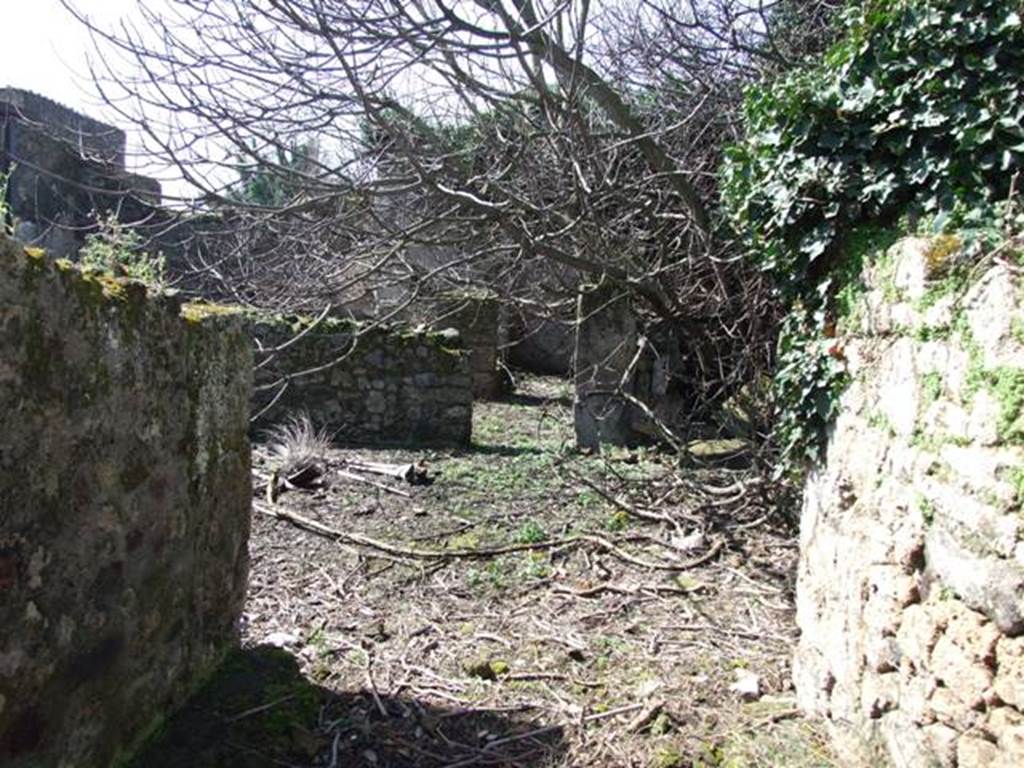
V.4.13 Pompeii. March 2009. Looking west from entrance fauces.
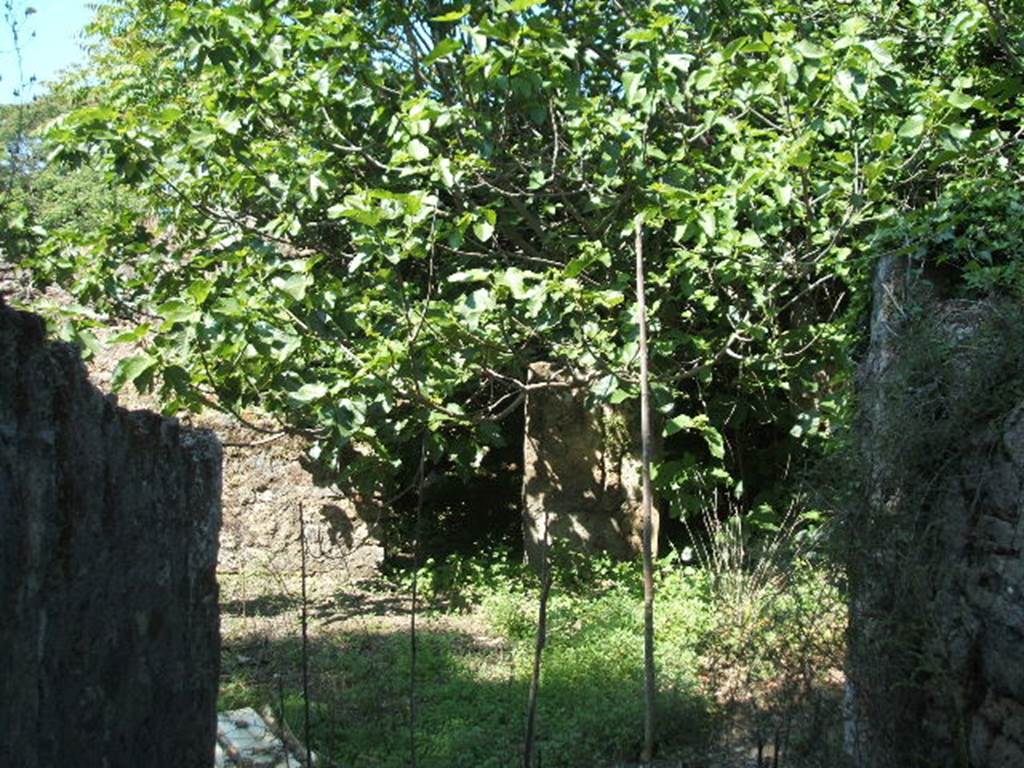
V.4.13 Pompeii. May 2005. Looking west from entrance fauces.
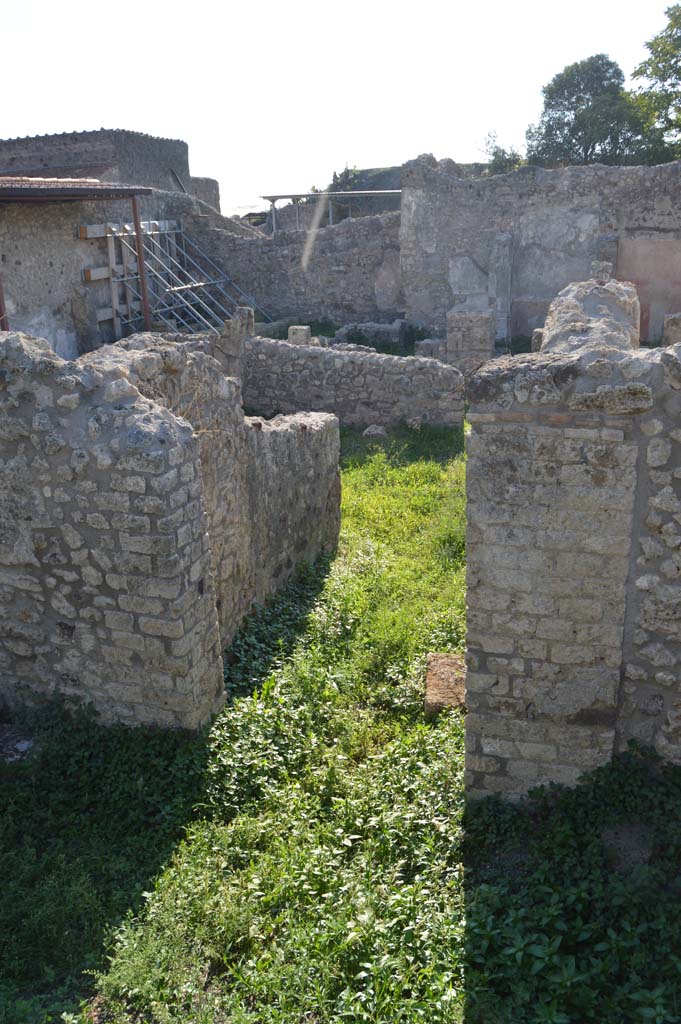
V.4.13 Pompeii. October 2017. Looking
south-west from entrance doorway.
Foto Taylor Lauritsen, ERC Grant 681269 DÉCOR.
V.4.13 Pompeii. March 2009. North-west corner of atrium or light yard.
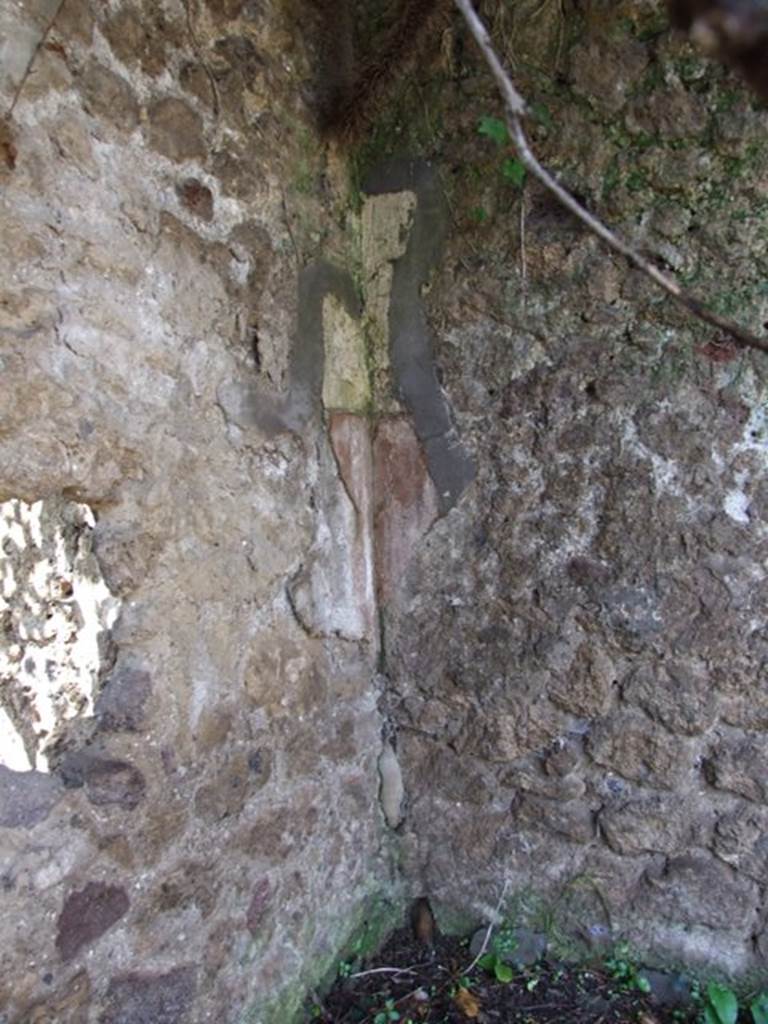
V.4.13 Pompeii. March 2009. North-west corner of atrium or light yard.
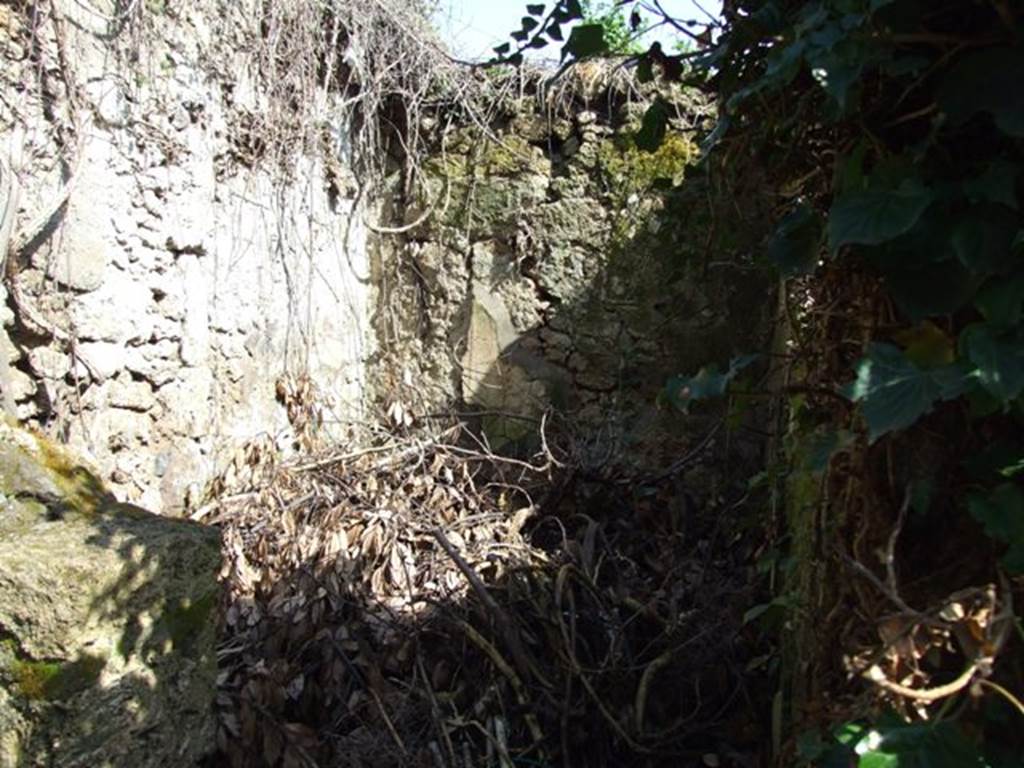
V.4.13 Pompeii. March 2009. Cubiculum on north side of entrance.
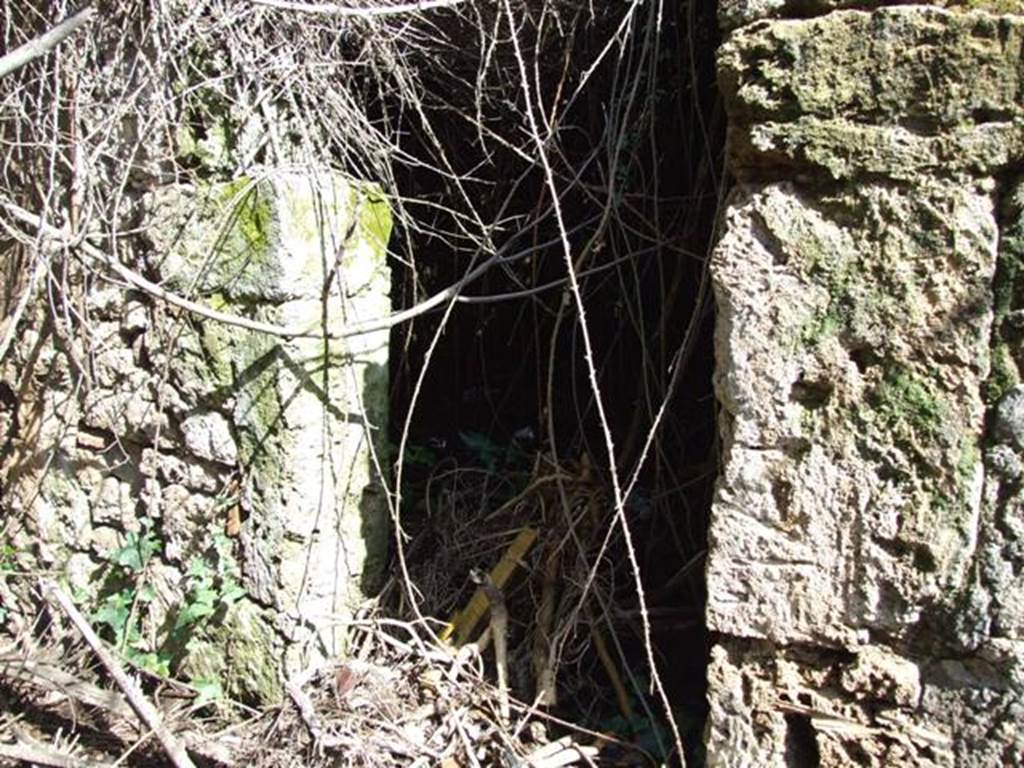
V.4.13 Pompeii. March 2009. Entrance to kitchen and latrine.
According to Boyce, painted on the south wall of the kitchen, on a white background, were two yellow serpents.
They were near a very small cylindrical altar. In the zone above, one Lar was visible at the time of excavation.
See Boyce G. K., 1937. Corpus of the Lararia of Pompeii. Rome: MAAR 14. (p.42, no.127)
According to Giacobello, the lararium was on the south wall, the hearth was located near to the east wall.
The kitchen might not be accessible because of vegetation.
See Giacobello, F., 2008. Larari Pompeiani: Iconografia e culto dei Lari in ambito domestico. Milano: LED Edizioni. (p.170)
According to Van der Poel’s plan, the latrine was in the north-east corner of the kitchen.
See Van der Poel, H. B., 1986. Corpus Topographicum Pompeianum, Part IIIA. Austin: University of Texas. (p. 79)
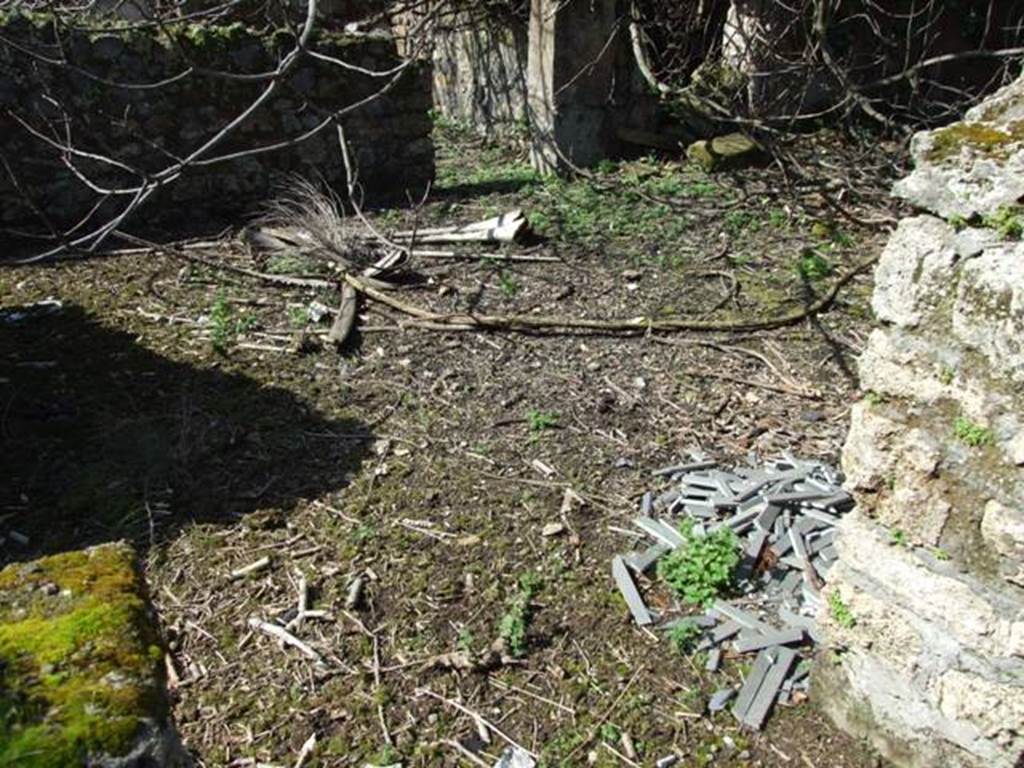
V.4.13 Pompeii. March 2009. Looking north-west across atrium or light yard from V.4.12.
V.4.13 Pompeii. May 2005. North-west side of atrium or light yard.
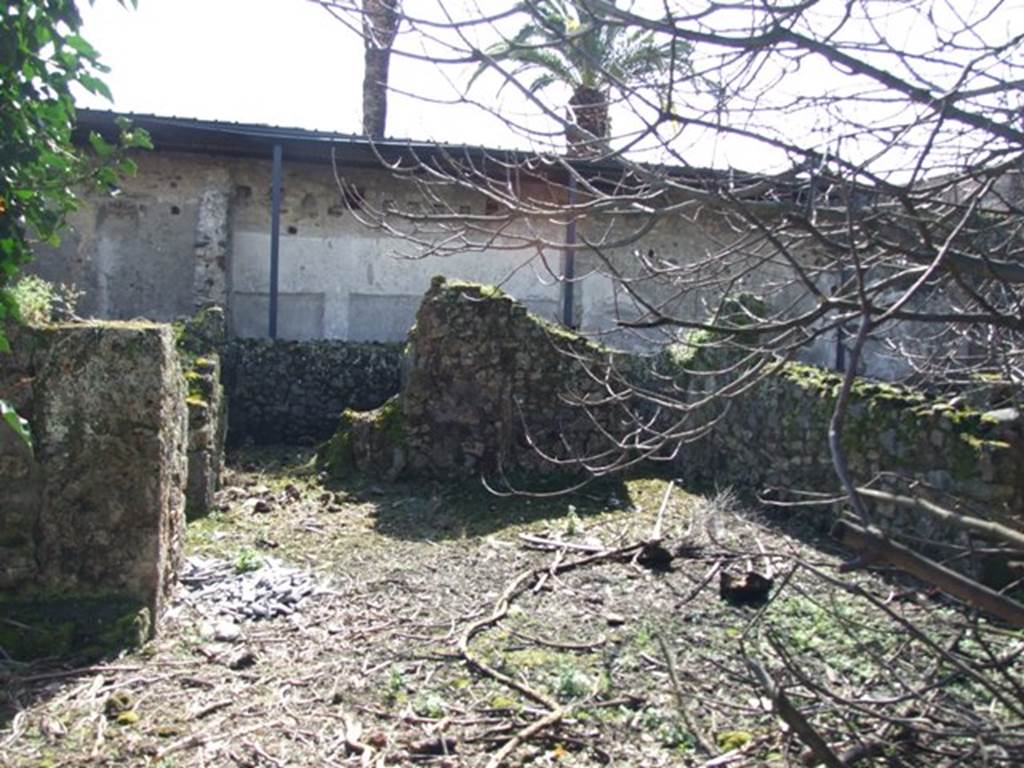
V.4.13 Pompeii. March 2009. Looking south across atrium or light yard.
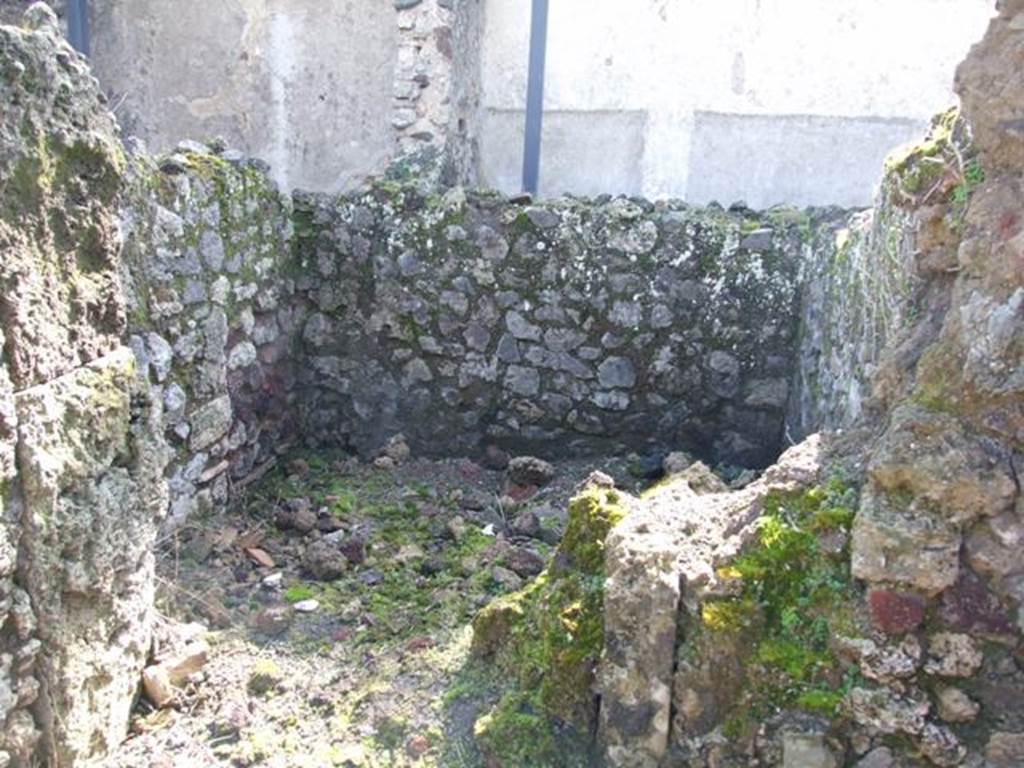
V.4.13 Pompeii. March 2009. Small room, south-east of atrium or light yard, next to site of staircase.
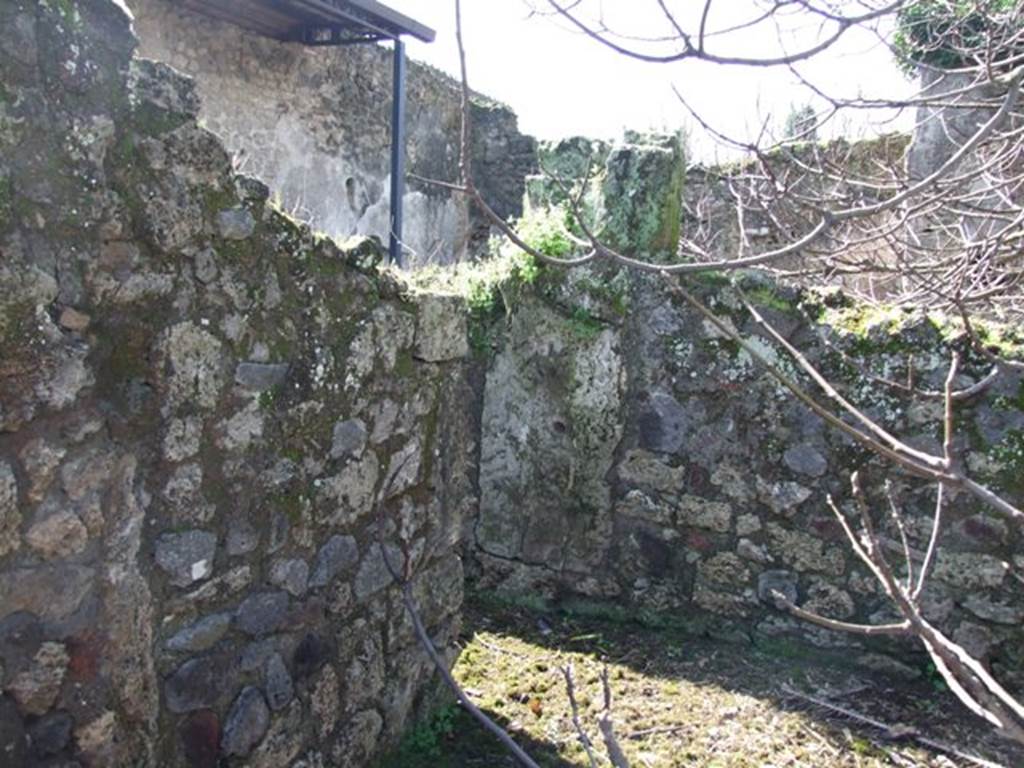
V.4.13 Pompeii. March 2009. Site of staircase and doorway to triclinium “K”.
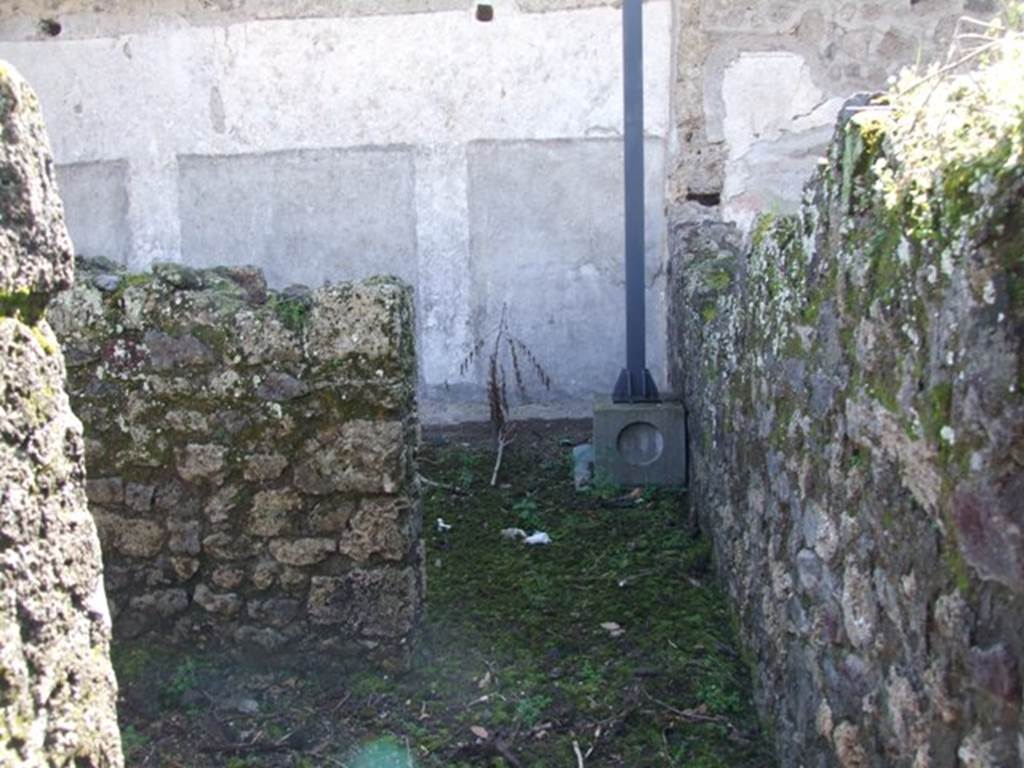
V.4.13 Pompeii. March 2009. Anteroom leading to triclinium “K”, looking south.
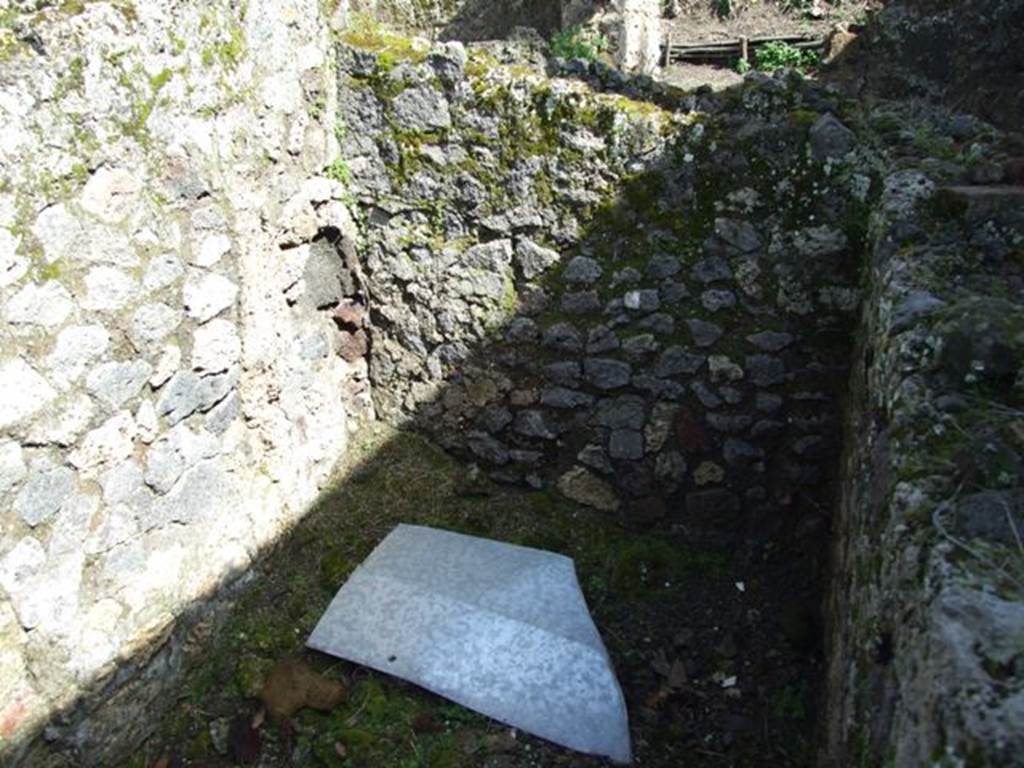
V.4.13 Pompeii. March 2009. Anteroom leading to triclinium “K”. Looking east.
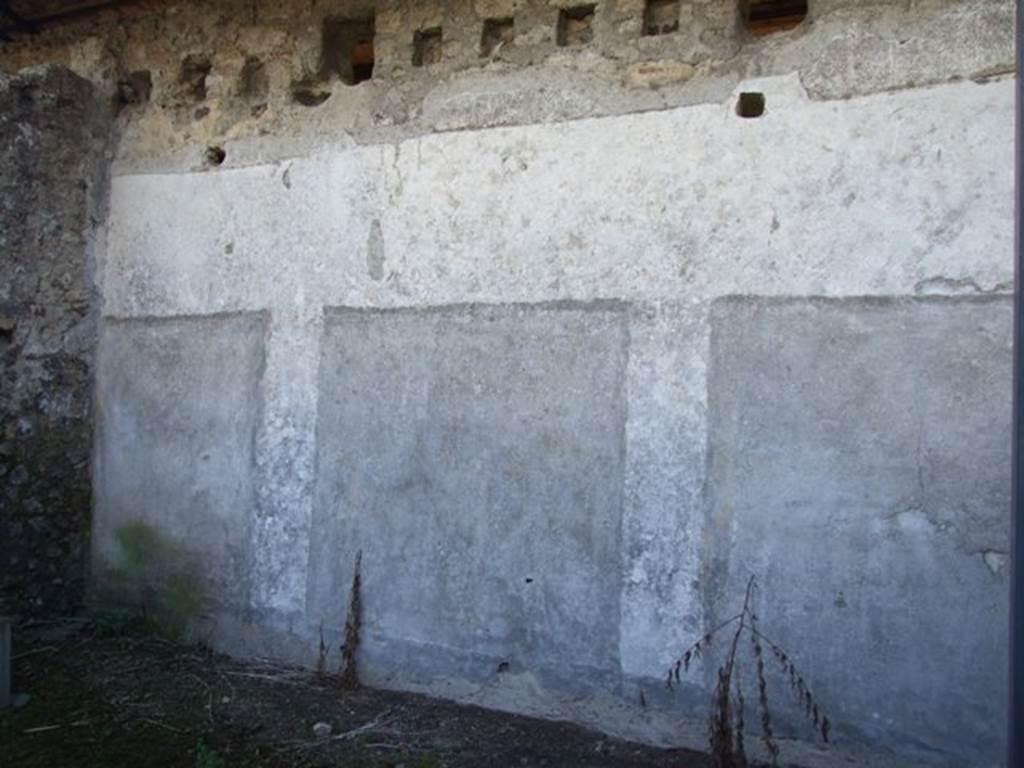
V.4.13 Pompeii. March 2009. Triclinium “K”, south wall.