III.4.1 Pompeii. Taberna vasaria of Zosimus. Pottery.
Southern part of insula excavated 1916. Back entrance at III.4.a.
The west wall was badly affected by the collapse of the wall and roof of III.3.6 in November 2010.
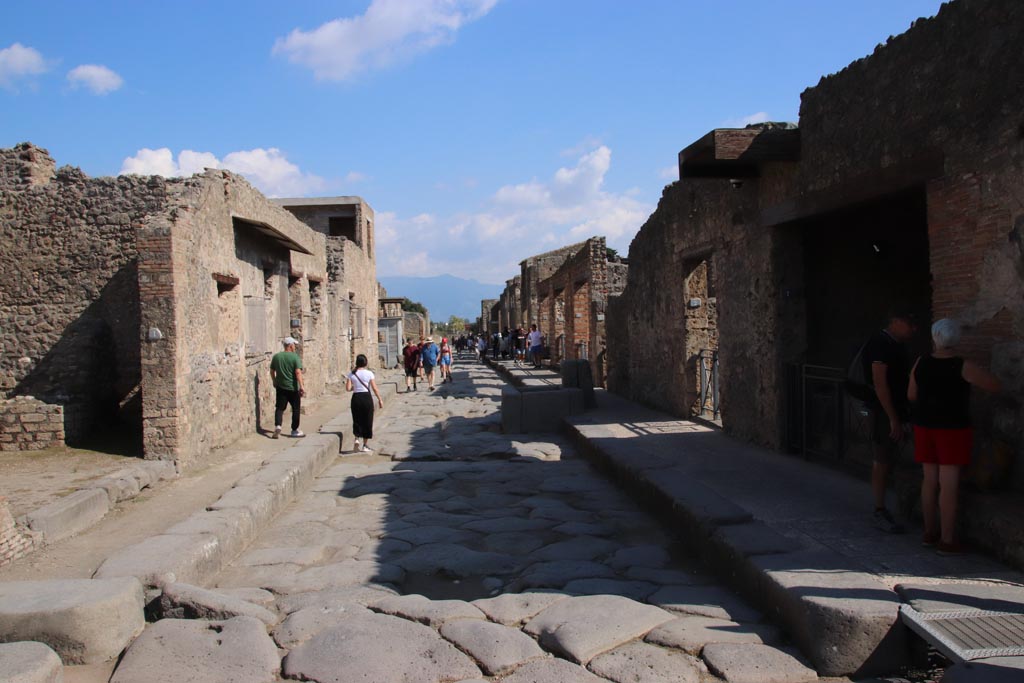
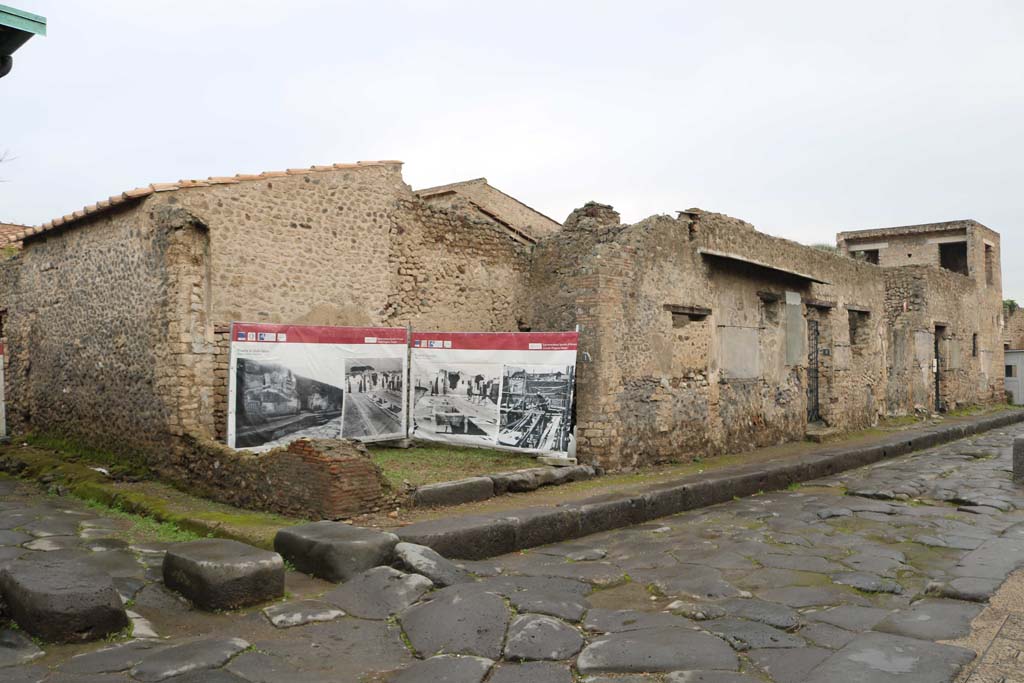
III.4.1 Pompeii. December 2018. Entrance doorway on north
side of Via dell’Abbondanza. Photo courtesy of Aude Durand.
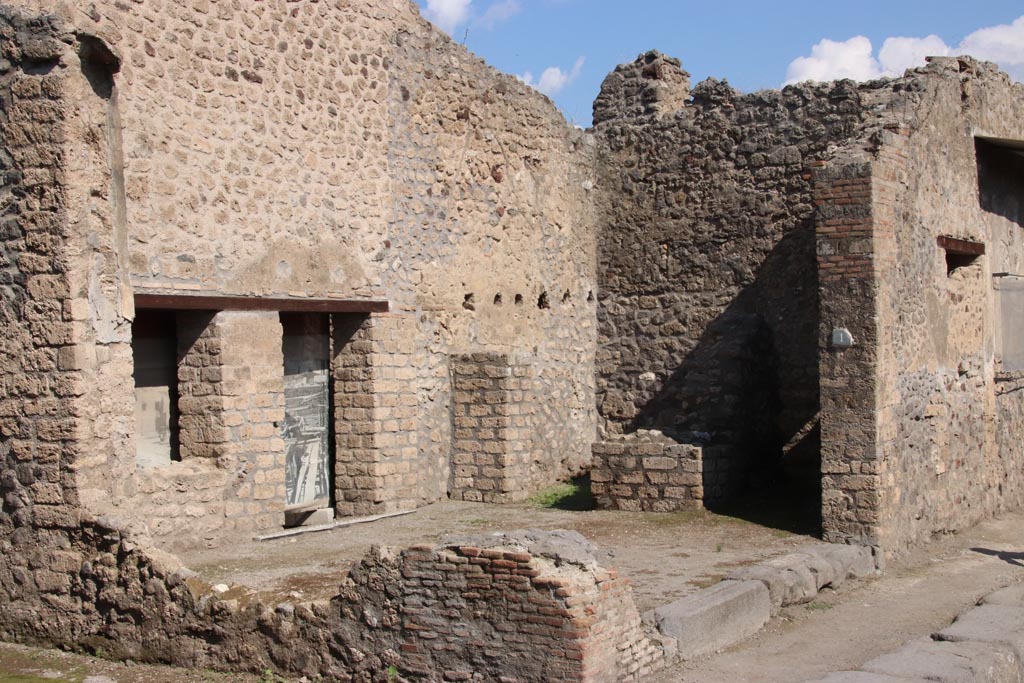
III.4.1 Pompeii. October 2022. Looking north-east towards restored workshop. Photo courtesy of Klaus Heese
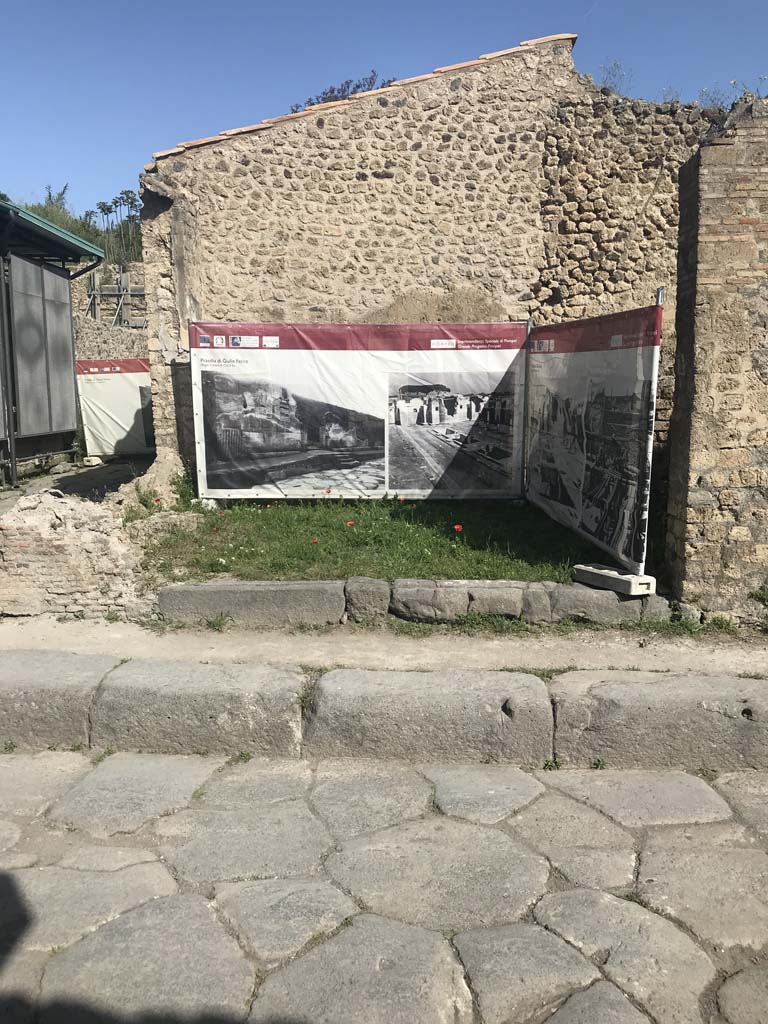
III.4.1 Pompeii, on right. Vicolo di Ifigenia, on left. April 2019. Looking north towards entrance threshold.
The west wall, on left, has not been restored. Photo courtesy of Rick Bauer.
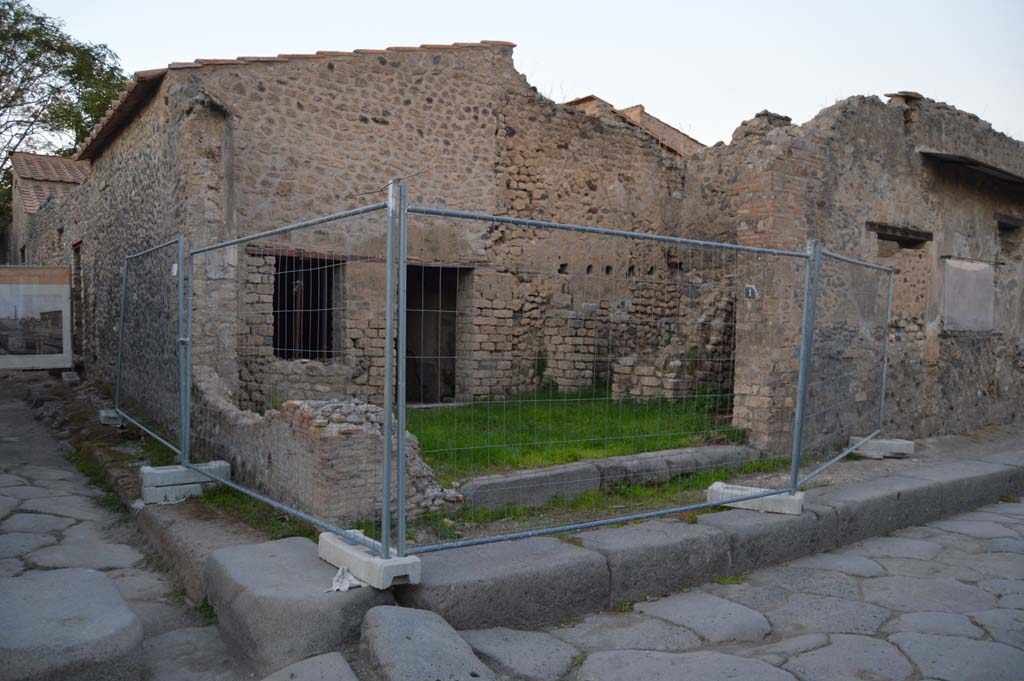
III.4.1 Pompeii. October 2017. Looking towards entrance doorway threshold on north side of Via dell’Abbondanza.
The small roadway Vicolo di Ifigenia is on the left.
Foto Taylor
Lauritsen, ERC Grant 681269 DÉCOR.
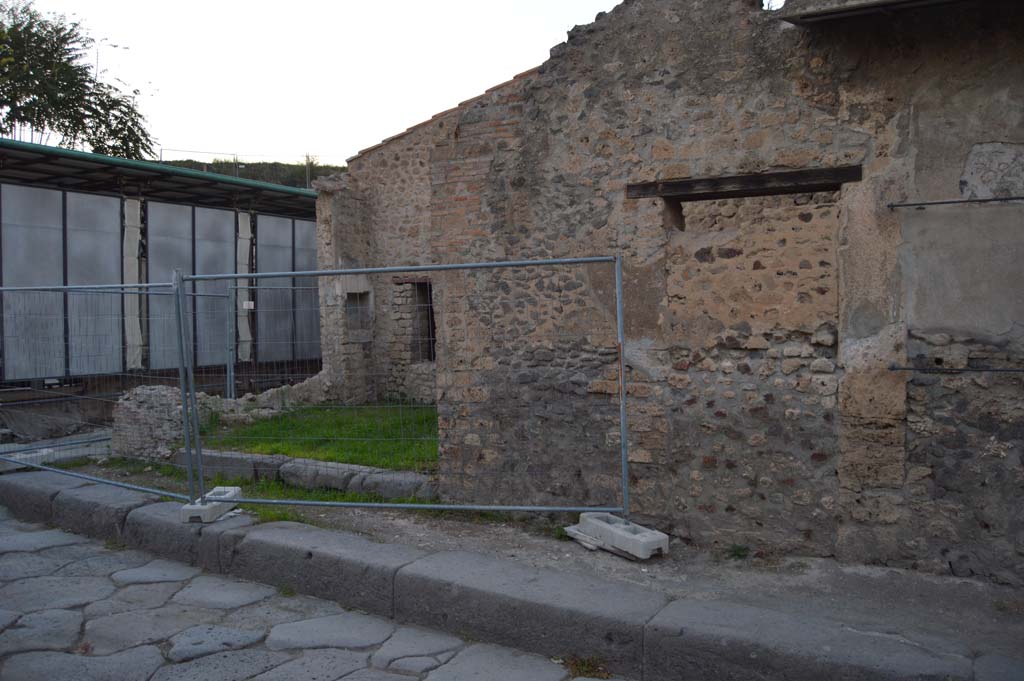
III.4.1 Pompeii. October 2017. Looking north-west towards entrance doorway.
Foto Taylor Lauritsen, ERC Grant 681269 DÉCOR.
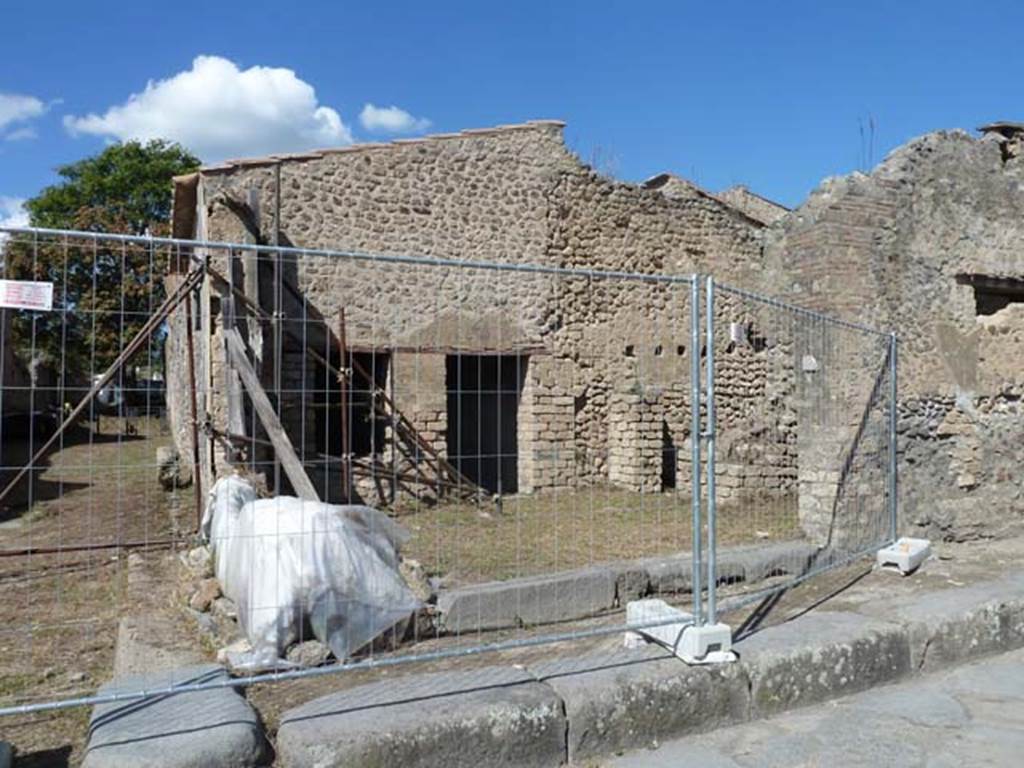
III.4.1 Pompeii. September 2015. Looking towards threshold and remains of entrance doorway.
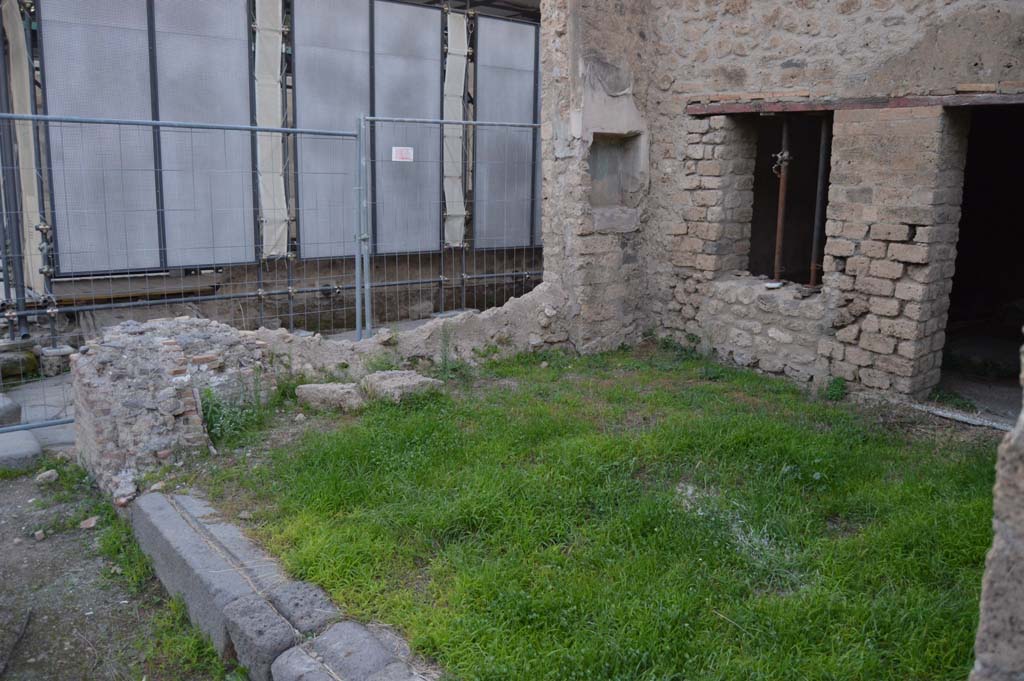
III.4.1 Pompeii. October 2017. Looking towards niche in north-west corner, and remains of west wall of workshop.
Foto Taylor
Lauritsen, ERC Grant 681269 DÉCOR.
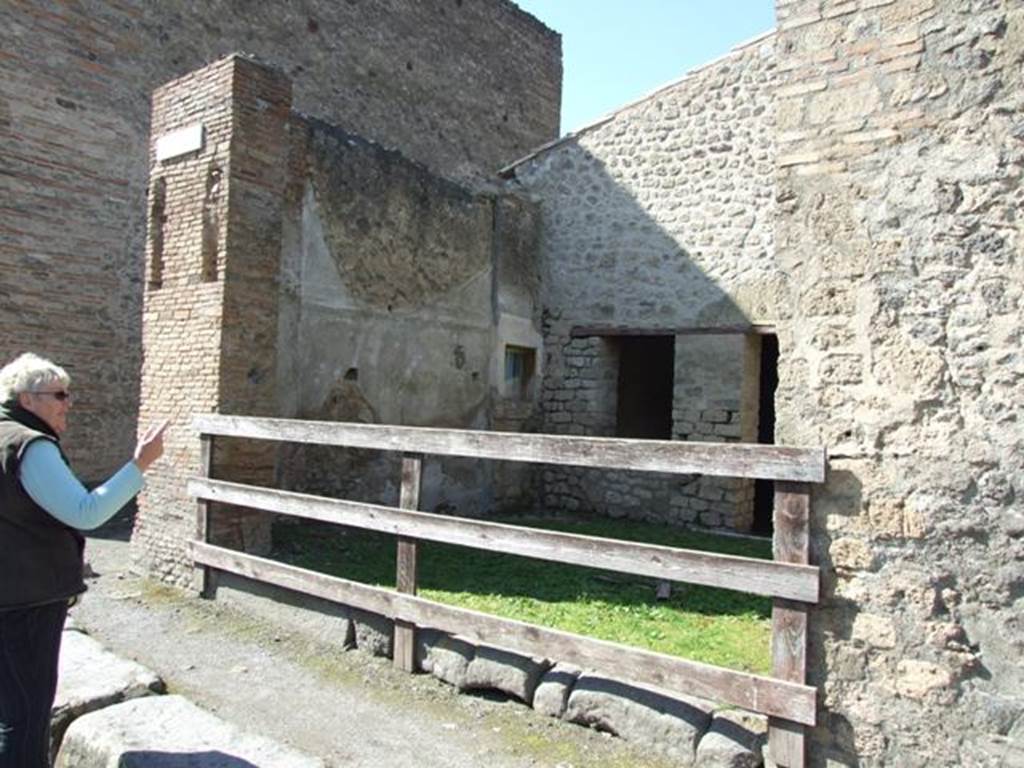
III.4.1 Pompeii. March 2009. Looking north-west across entrance doorway, towards west wall with niche.
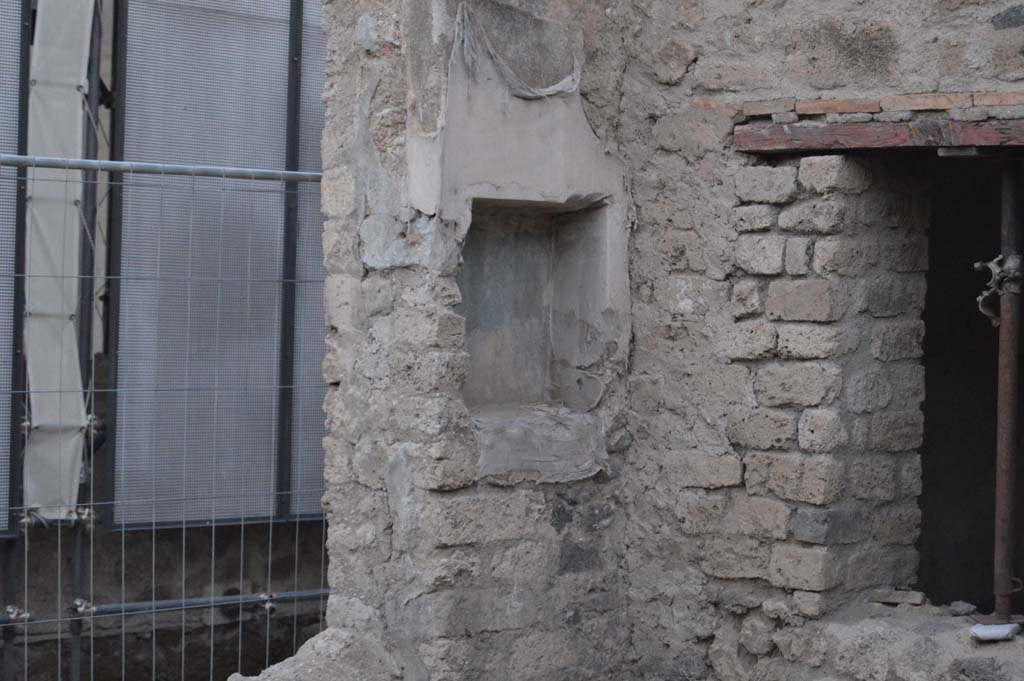
III.4.1 Pompeii. October 2017. West wall in north-west corner of workshop room, detail of niche.
Foto Taylor
Lauritsen, ERC Grant 681269 DÉCOR.
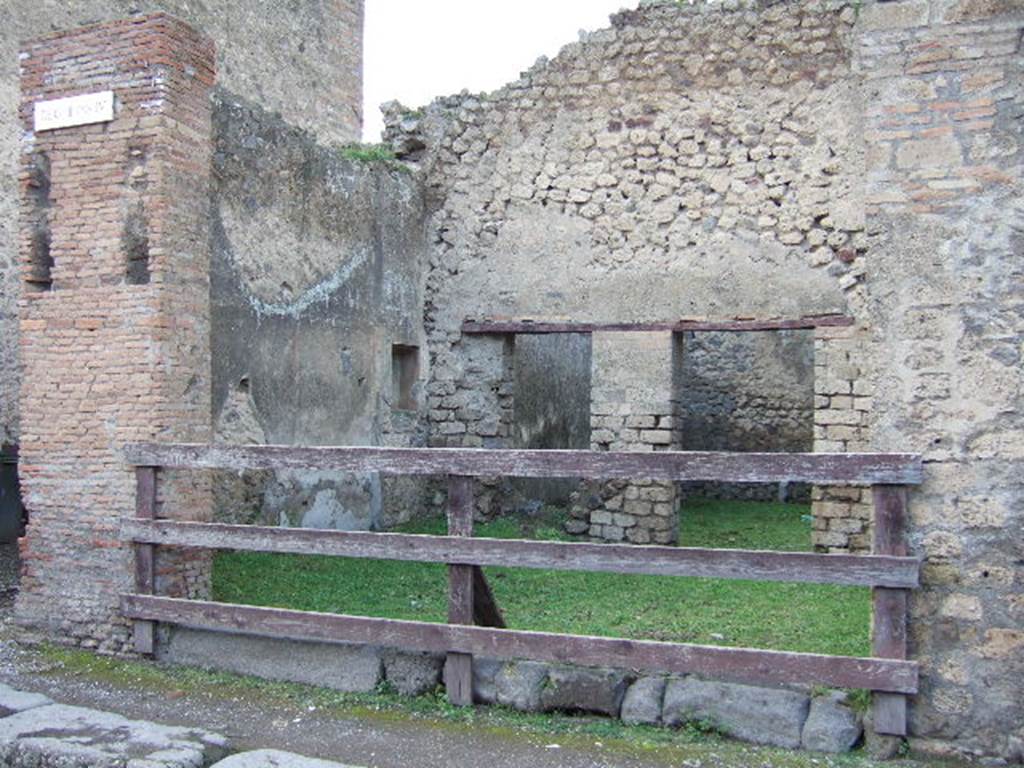
III.4.1 Pompeii. December 2005. Entrance, looking towards north-west corner with niche.
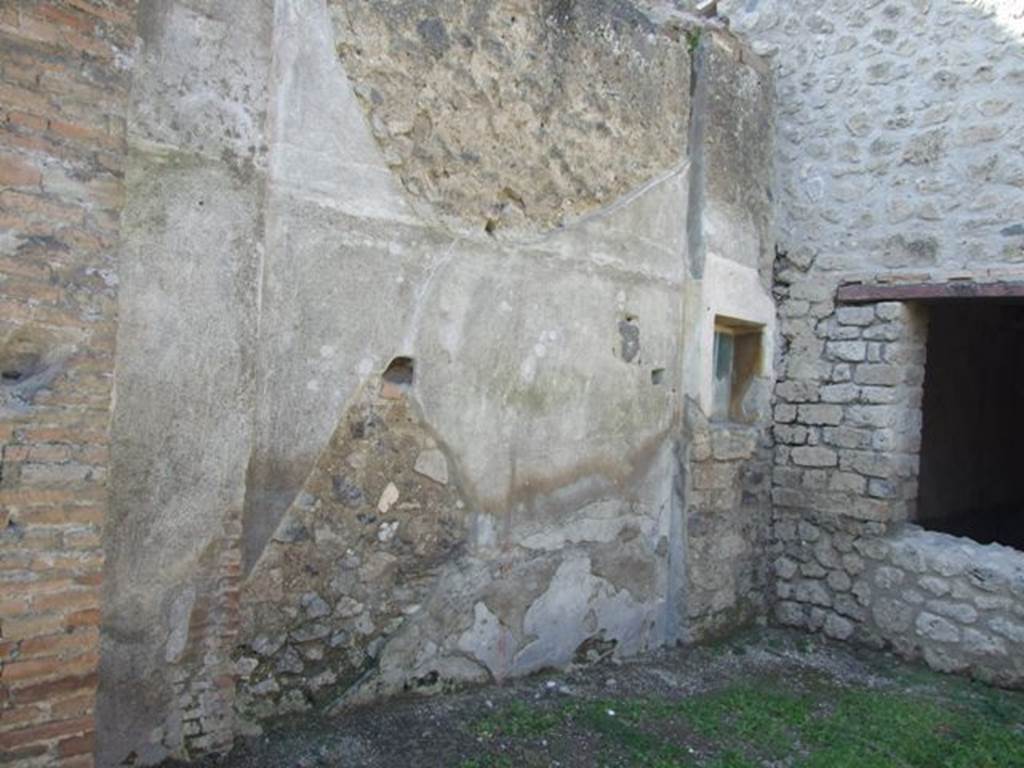
III.4.1 Pompeii. March 2009. West wall, with niche.
The high zoccolo was painted black. Originally the wall would have been decorated with four painted panels (just visible).
The following graffiti was found –
Behind the left pilaster of the entrance
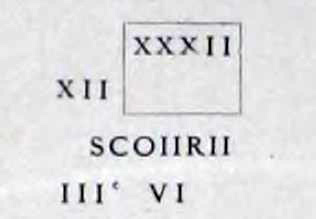
West wall, first panel on south side

On the same west wall, second panel, half to the left
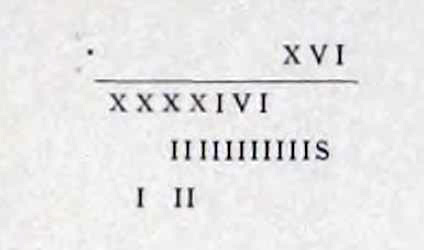
On the same second panel, half to the right
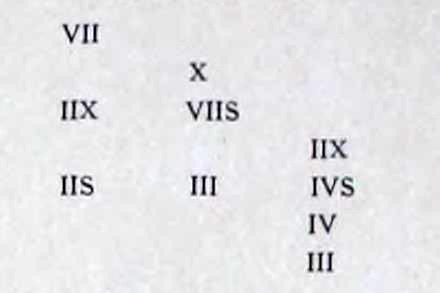
Distributed on the third panel, were these other notes
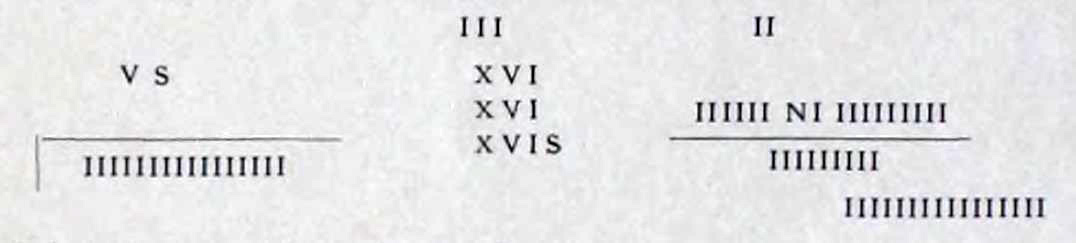
Read on the fourth panel, and repeated, was the name –
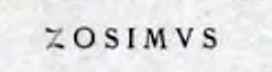
See Notizie
degli Scavi, 1927, (p.99).
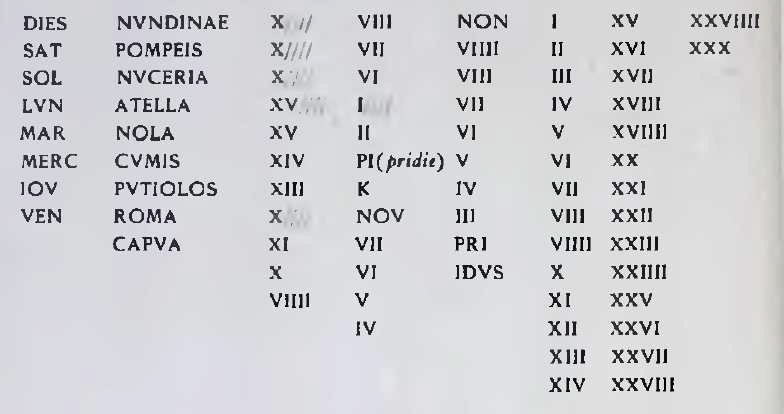
III.4.1 Pompeii. Graffiti on the west wall, from Notizie degli Scavi, 1927, (p.98)
According
to NdS -
On 26th
April 1917, the excavation was made deeper down to the floor and proceeded to
clean all the plaster, in the middle of the same (west) wall was the following
graffiti -
![III.4.1 Pompeii. Graffiti on the west wall that mentions the market held at Pompeii, Nuceria, Atella, Nola, Cumae, Puteoli, Roma and Capua.
According to Epigraphik-Datenbank Clauss/Slaby (See www.manfredclauss.de) this read as
Dies / Sat(urni) / Sol(is) / Lun(ae) / Mar(tis) / Merc(urii) / Iov(is) / Ven(eris) //
Nundinae / Pompeis / Nuceria / Atilla / Nola / Cumis / Put<e=I>olis / Roma / Capua //
X[VIIII] / X[VIII] / X[VII] / XV[I] / XV / XIV / XIII / X[II] / XI / X / VIIII //
VIII / VII / VI / [V] / [I]V / [I]II / II / pr(idie) / K(alendae) / Non(ae) / VII / VI // Non(ae) / VIIII //
VIII / VII / VI / V / IV / III / pri(die) / Idus //
I / II / III / IV / V / VI / VII / VIII / VIIII / X / XI / XII / XIII / XIV /
XV / XVI / XVII / XVIII / XVIIII / XX / XXI / XXII / XXIII / XXIIII / XXV / XXVI / XXVII / XXVIII //
XXVIIII / XXX
[CIL IV, 8863]
See Della Corte, M., 1965. Case ed Abitanti di Pompei. Napoli: Fausto Fiorentino. (p. 357).](3%2004%2001_files/image027.jpg)
III.4.1 Pompeii. Graffiti on the west wall that mentions the market held at Pompeii, Nuceria, Atella, Nola, Cumae, Puteoli, Roma and Capua.
According to Epigraphik-Datenbank Clauss/Slaby (See www.manfredclauss.de) this read as
Dies / Sat(urni)
/ Sol(is) / Lun(ae) / Mar(tis) / Merc(urii) / Iov(is) / Ven(eris) //
Nundinae /
Pompeis / Nuceria / Atilla / Nola / Cumis / Put<e=I>olis / Roma / Capua
//
X[VIIII] /
X[VIII] / X[VII] / XV[I] / XV / XIV / XIII / X[II] / XI / X / VIIII //
VIII / VII / VI /
[V] / [I]V / [I]II / II / pr(idie) / K(alendae) / Non(ae) / VII / VI // Non(ae)
/ VIIII //
VIII / VII / VI /
V / IV / III / pri(die) / Idus //
I / II / III / IV
/ V / VI / VII / VIII / VIIII / X / XI / XII / XIII / XIV /
XV / XVI / XVII /
XVIII / XVIIII / XX / XXI / XXII / XXIII / XXIIII / XXV / XXVI / XXVII / XXVIII
//
XXVIIII / XXX
[CIL IV 8863]
For other graffiti found on amphorae in area of rear posticum, see
III.4.a, and see Notizie degli Scavi, 1927, (p.100.)
See Notizie
degli Scavi, 1916, p.154, and 155
See Notizie
degli Scavi, 1917, p.256-260
See Della Corte,
M., 1965. Case ed Abitanti di Pompei.
Napoli: Fausto Fiorentino. (p. 357).
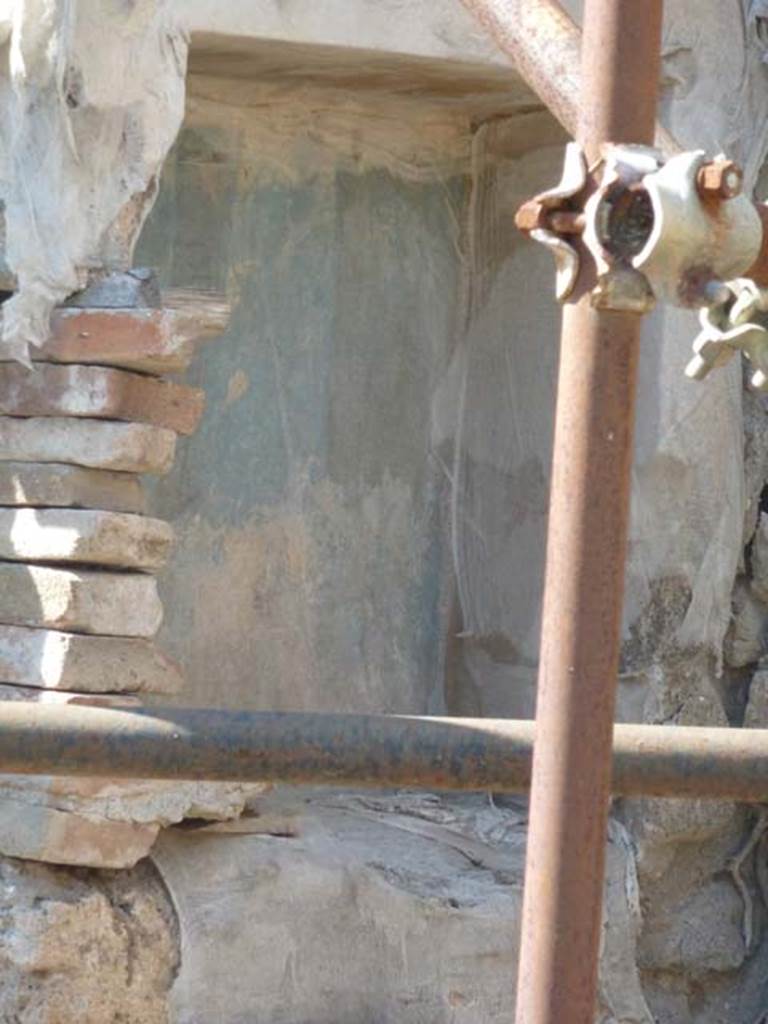
III.4.1 Pompeii. September 2015. Niche on west wall in north-west corner.
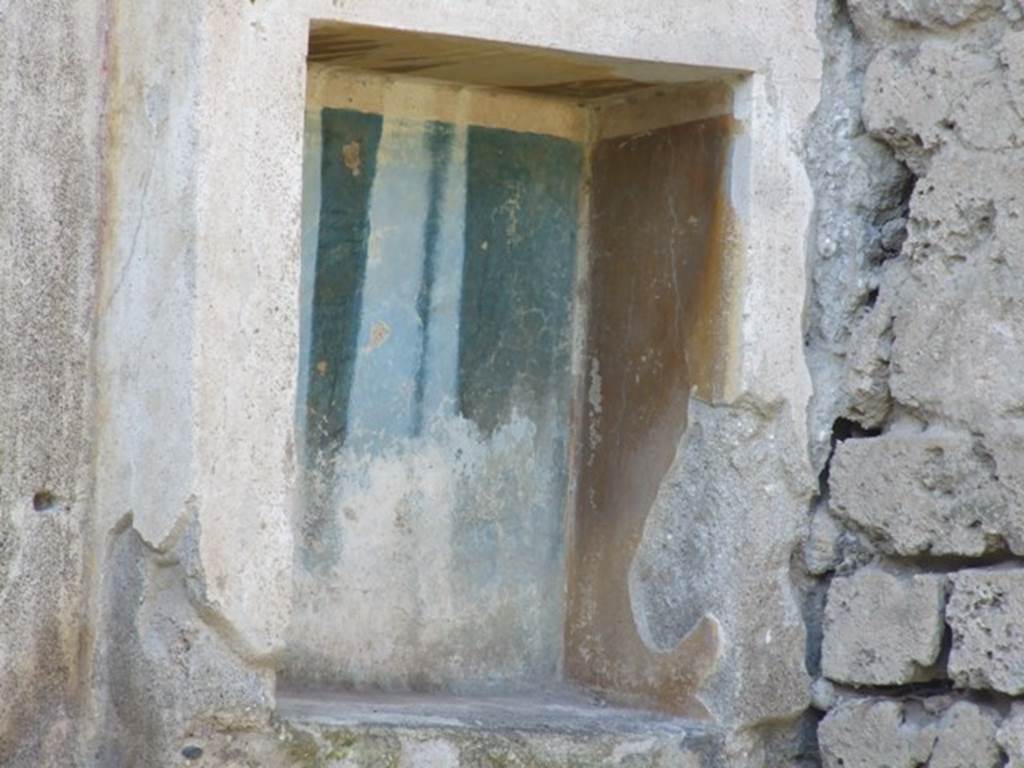
III.4.1 Pompeii. March 2009. Rectangular niche on west wall.
According to NdS, on the structure of the niche lararium, the following numerical notes were found:
In the pediment -

In the ceiling –

On the zoccolo –

See Notizie
degli Scavi, 1927, (p.99, nos. 53-55.)
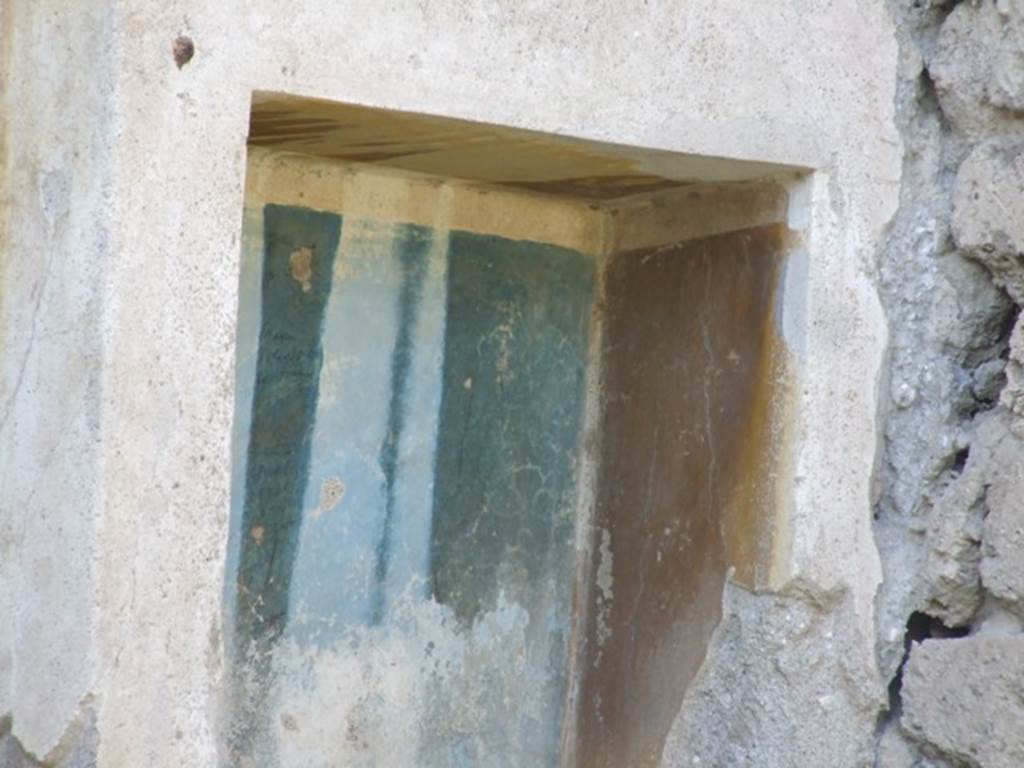
III.4.1 Pompeii. March 2009. Yellow and blue walls inside the niche.
According to Boyce, it had an aedicula façade painted on the wall around it.
Two pilasters supported a white architrave and a blue pediment which was ornamented with a white disc in the centre and surrounded by white cornices.
The side walls within the niche were yellow, the back wall was blue, and the edges white.
See Boyce G. K., 1937. Corpus of the Lararia of Pompeii. Rome: MAAR 14. (p.30, No.65, Pl.1, 6)
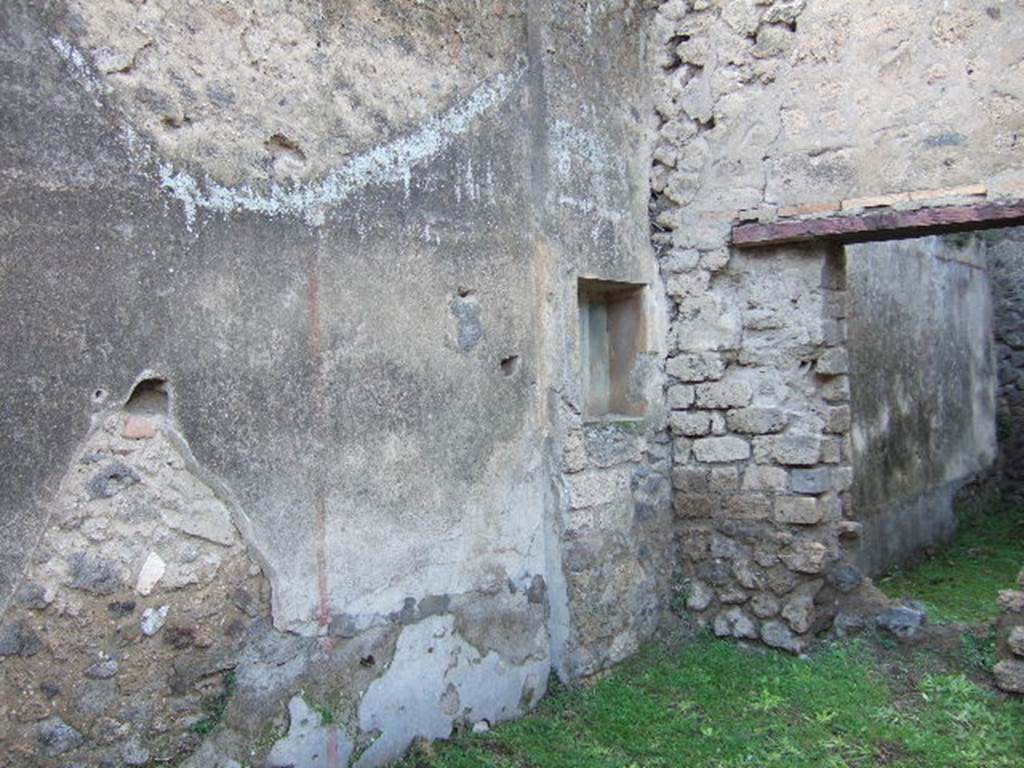
III.4.1 Pompeii. December 2005. West wall with niche.
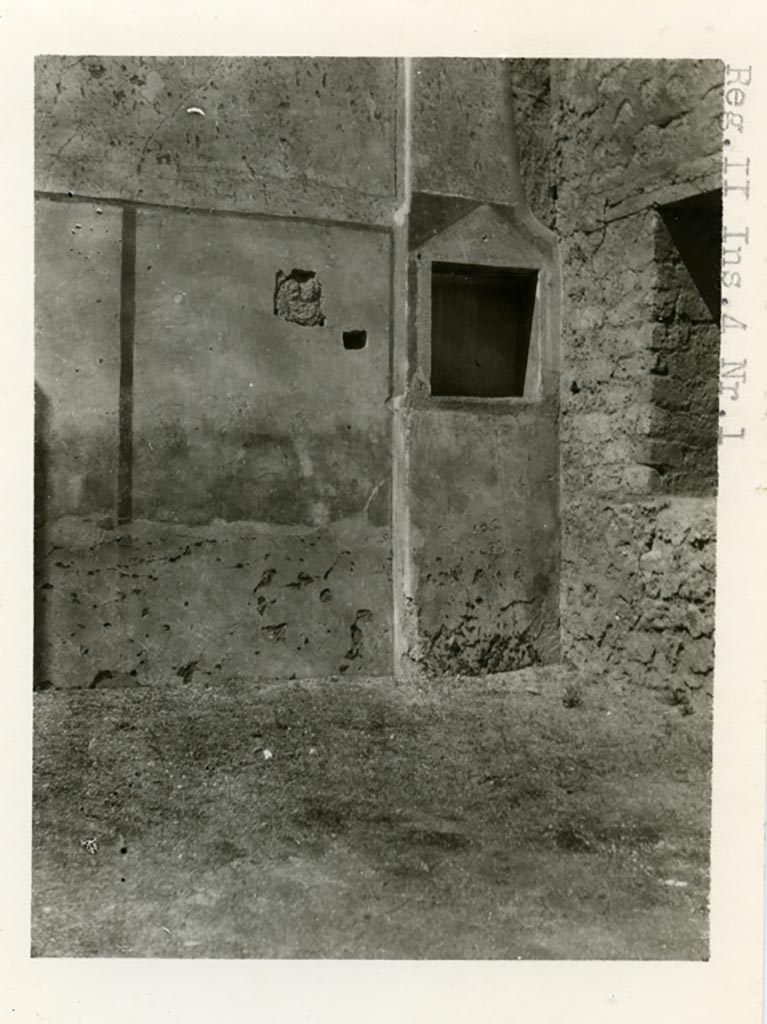
III.4.1 Pompeii but listed as II.4.1 on photo. Pre-1937-39.
Looking towards north-west corner and niche with pediment.
Photo courtesy of American Academy in Rome, Photographic Archive. Warsher collection no. 1573.
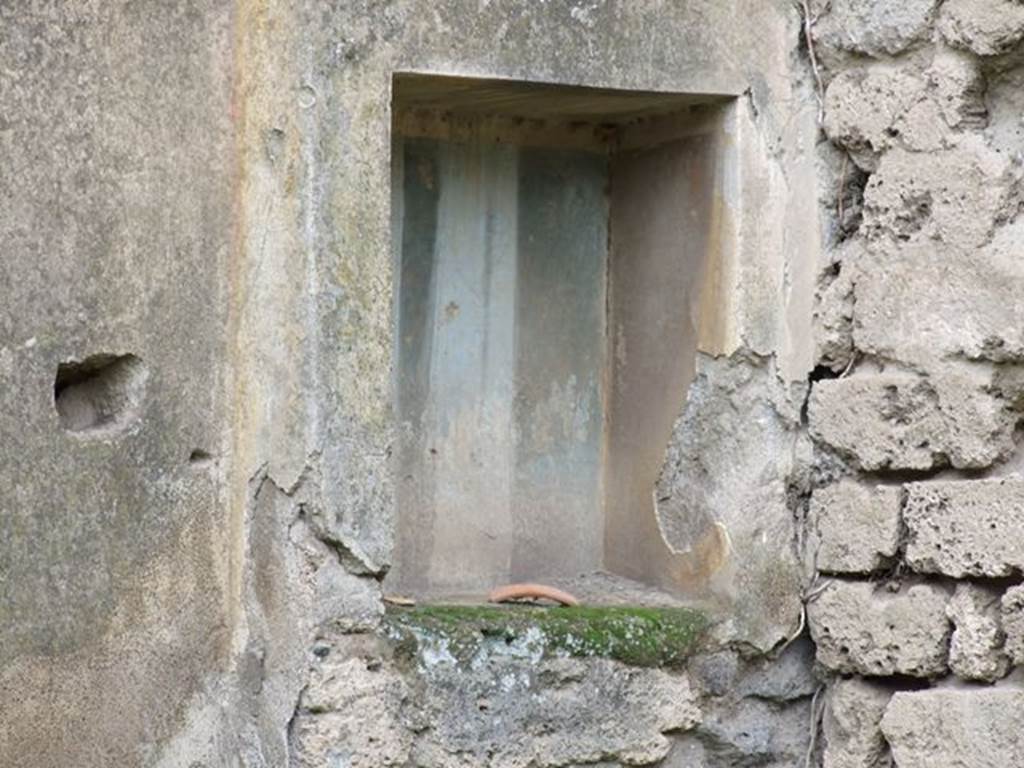
III.4.1 Pompeii. December 2005. Rectangular niche on west wall.
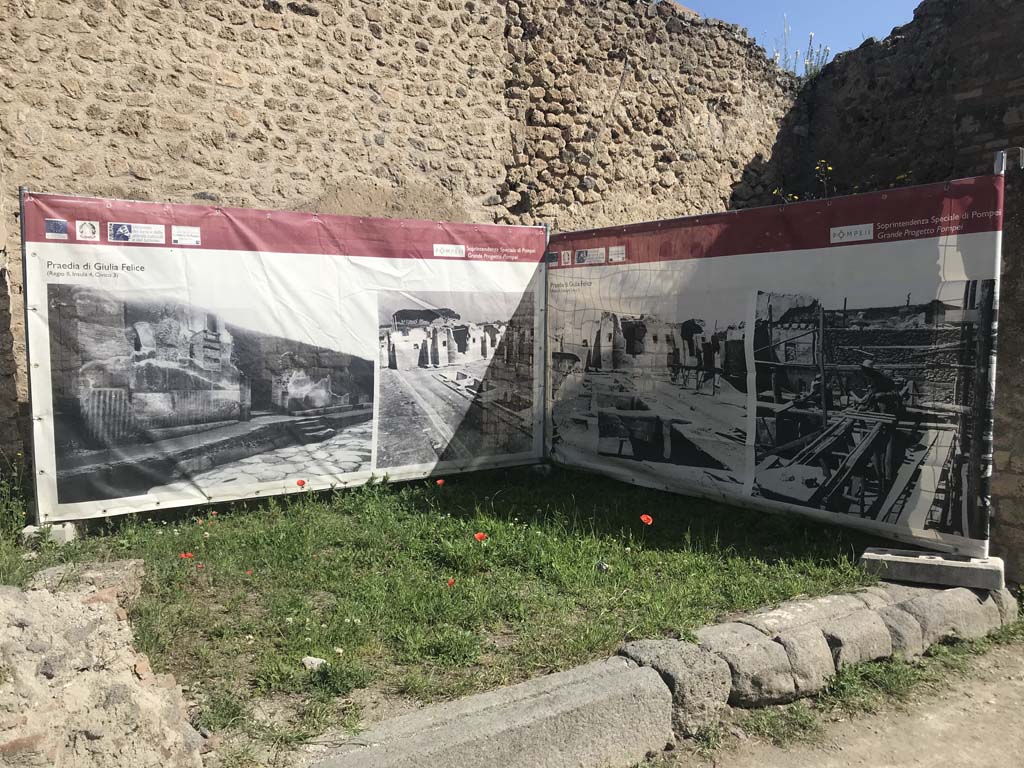
III.4.1 Pompeii. April 2019. Looking across threshold towards north-east corner.
(NB: the photos of the Praedia of Giulia Felice are just here as a screen – the actual site is a couple of hundred metres away on the other side of Via dell’Abbondanza). Photo courtesy of Rick Bauer.
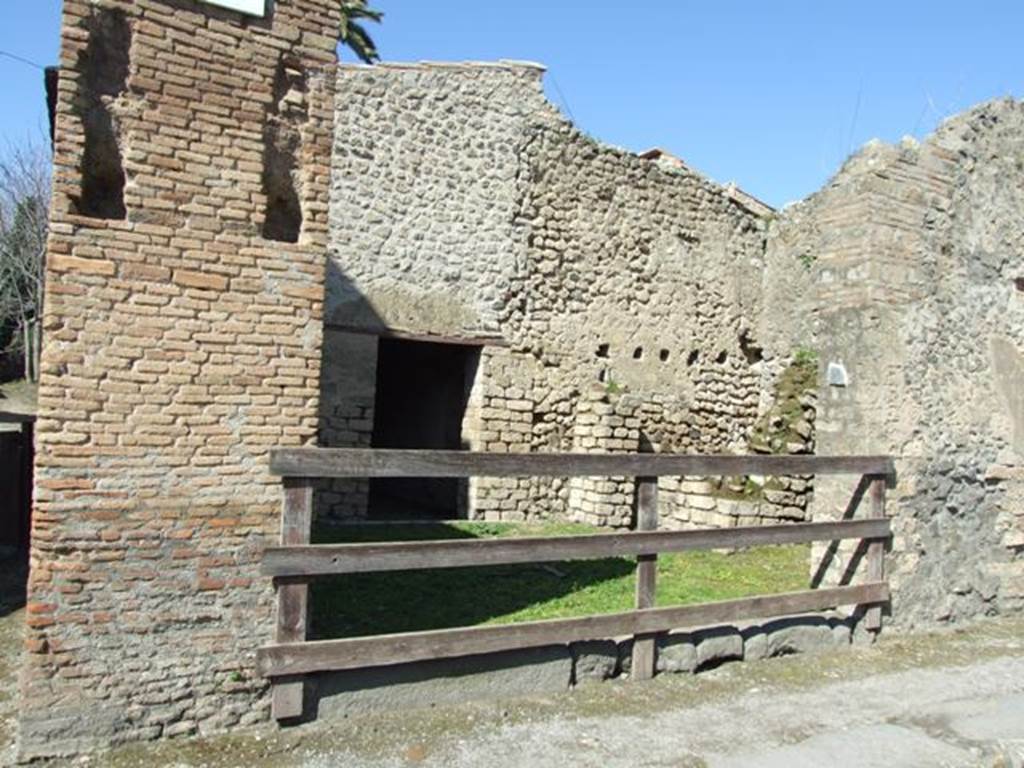
III.4.1 Pompeii. March 2009. Looking north-east across entrance doorway.
![III.4.1 Pompeii. December 2004. Entrance, looking north-east.
According to Della Corte, found on the left pilaster in red letters, unfortunately mutilated and no longer conserved, were the words that told what was sold here -
Vasa faecaria ven(dit) [CIL IV 7678]
See Della Corte, M., 1965. Case ed Abitanti di Pompei. Napoli: Fausto Fiorentino. (p. 357).](3%2004%2001_files/image045.jpg)
III.4.1 Pompeii. December 2004. Entrance, looking north-east.
According to Della Corte, found on the left pilaster in red letters, unfortunately mutilated and no longer conserved, were the words that told what was sold here -
Vasa faecaria
ven(dit) [CIL IV 7678]
See Della Corte, M.,
1965. Case ed Abitanti di Pompei. Napoli: Fausto Fiorentino. (p. 357).