II.1.1 Pompeii. Caupona of Hermes. Linked to II.1.13.
Street front excavated 1915. Completely excavated 1950 to 1951.
Restored 1987 and 2004.
(Originally when excavated, this was numbered as Reg. II, Insula 4, no.1).
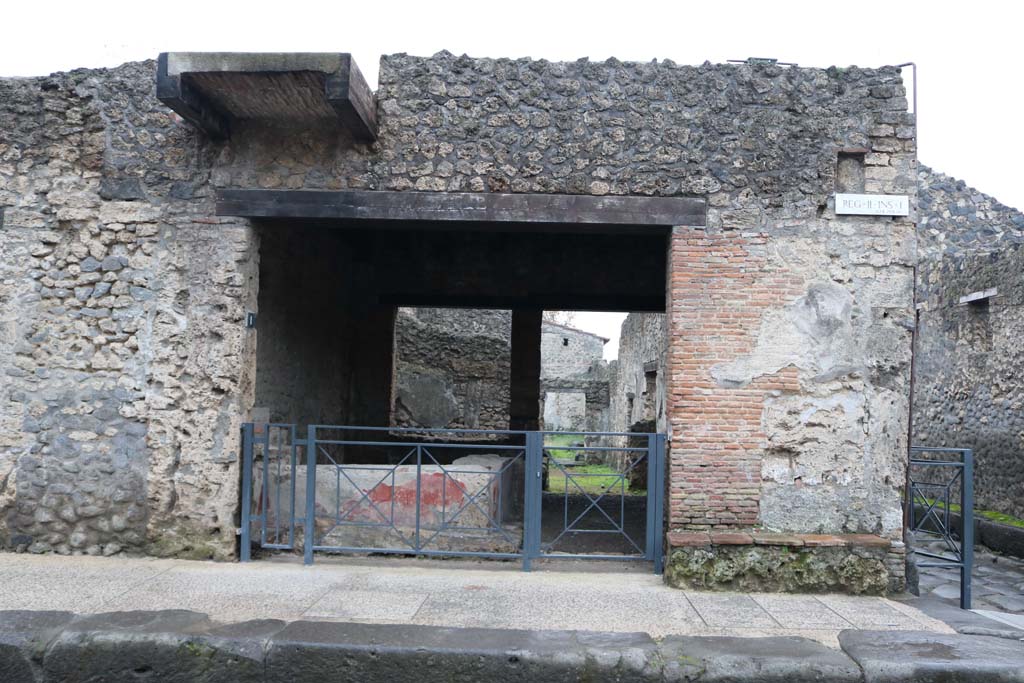
II.1.1 Pompeii. December 2018.
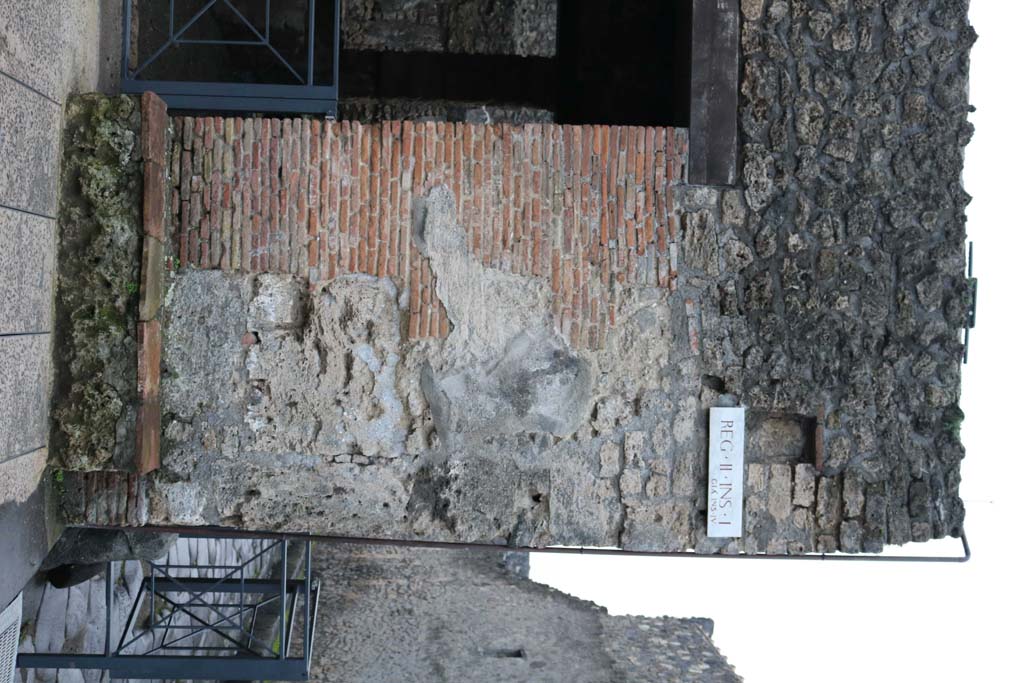
Looking south to entrance doorway on Via dell’Abbondanza, Via di Nocera is on the right. Photo courtesy of Aude Durand.
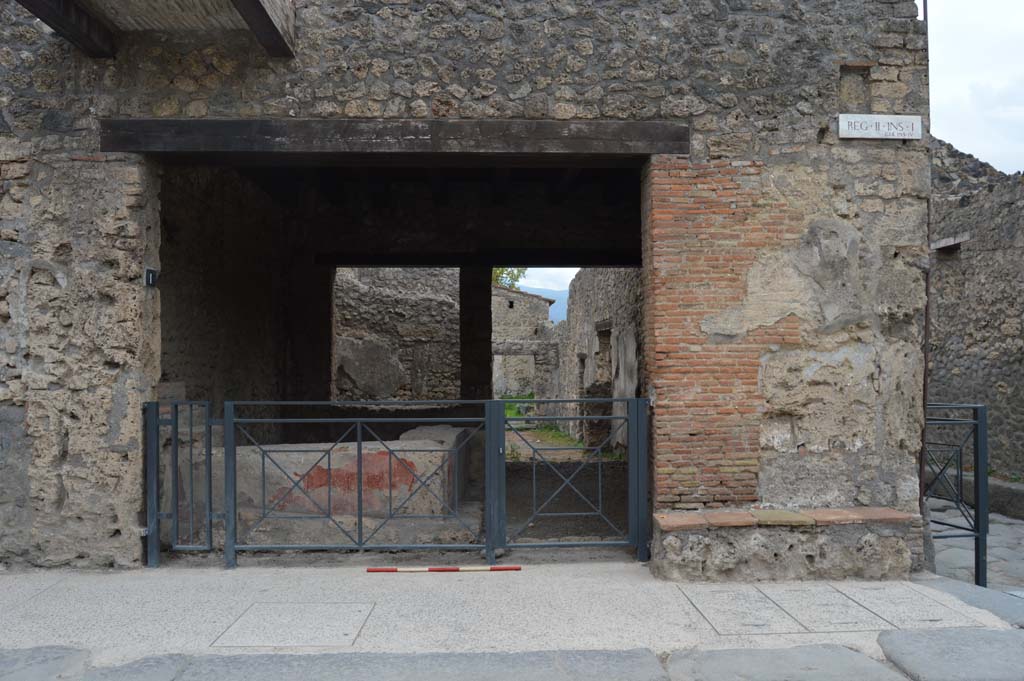
II.1.1 Pompeii. October 2017. Looking south towards entrance doorway.
Foto Taylor Lauritsen, ERC Grant 681269 DÉCOR.
![II.1.1 Pompeii. December 2006. Entrance and restored balcony on upper floor. According to Frohlich and Boyce, on the pillars on both sides of the entrance a painting of Hercules on the right, and Mercury on the left were found. Both of these have now faded and been destroyed.
See Fröhlich, T., 1991. Lararien und Fassadenbilder in den Vesuvstädten. Mainz: von Zabern. (F14) See Boyce G. K., 1937. Corpus of the Lararia of Pompeii. Rome: MAAR 14. (p.110, no.5 (as II.iv.1)
According to Della Corte, on the left side of the entrance the graffiti recalled the names of the girls working here
Palmyra sitifera [CIL IV 8475]
[?....]trena culibonia [CIL IV 8473]
See Della Corte, M., 1965. Case ed Abitanti di Pompei. Napoli: Fausto Fiorentino. (p. 366)
According to Epigraphik-Datenbank Clauss/Slaby (See www.manfredclauss.de), they read as
Pamhira si[t]ifera [CIL IV 8475]
]matrona culibonia [CIL IV 8473]
According to Varone and Stefani, to the left of the entrance, but nearer the entrance II.1.2, the following could be read:
(Pop]idium Secundum
[aed(ilem)] Primio rog(at) [CIL IV 7495]
See Varone, A. and Stefani, G., 2009. Titulorum Pictorum Pompeianorum, Rome: L’erma di Bretschneider, (p.179)](2%2001%2001_files/image005.jpg)
II.1.1 Pompeii. December 2006. Entrance and restored balcony on upper floor.
According to Frohlich and Boyce, on the pillars on both sides of the entrance a painting of Hercules on the right, and Mercury on the left were found.
Both have now faded and vanished.
See Fröhlich, T., 1991. Lararien und Fassadenbilder in den Vesuvstädten. Mainz: von Zabern. (F14)
See Boyce G. K., 1937. Corpus of the Lararia of Pompeii. Rome: MAAR 14. (p.110, no.5 (as II.iv.1)
According to Della Corte, on the left side of the entrance the graffiti recalled the names of the girls working here
Palmyra
sitifera [CIL IV 8475]
[?....]trena
culibonia [CIL IV 8473]
See Della Corte, M., 1965. Case ed Abitanti di Pompei. Napoli: Fausto Fiorentino. (p. 366)
According to Epigraphik-Datenbank Clauss/Slaby (See www.manfredclauss.de), they read as
Pamhira
si[t]ifera [CIL IV 8475]
]matrona
culibonia [CIL IV 8473]
According to Varone and Stefani, to the left of the entrance, but nearer the entrance II.1.2, the following could be read:
(Pop]idium
Secundum
[aed(ilem)]
Primio rog(at) [CIL IV 7495]
See Varone, A. and Stefani, G., 2009. Titulorum Pictorum
Pompeianorum, Rome:
L’erma di Bretschneider, (p.179)
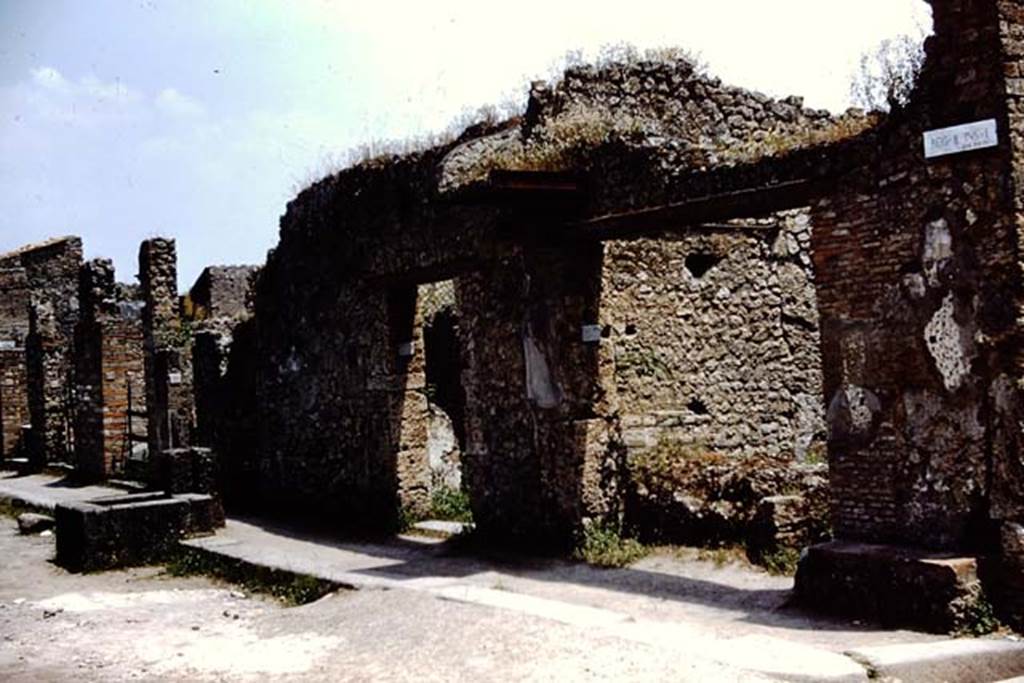
II.1.1 Pompeii, on right. 1961.
Looking east along insula on south side of Via dell’Abbondanza. Photo by Stanley A. Jashemski.
Source: The Wilhelmina and Stanley A. Jashemski archive in the University of Maryland Library, Special Collections (See collection page) and made available under the Creative Commons Attribution-Non Commercial License v.4. See Licence and use details.
J61f0639
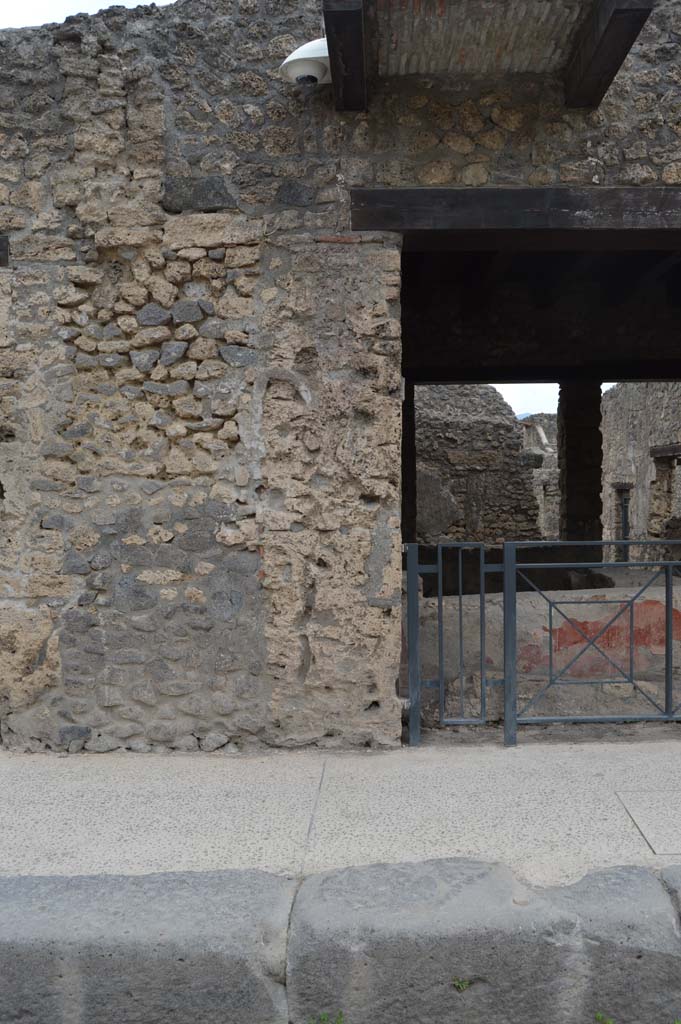
II.1.1 Pompeii, October 2017. Looking towards
east side of entrance doorway.
Foto Taylor Lauritsen, ERC
Grant 681269 DÉCOR.
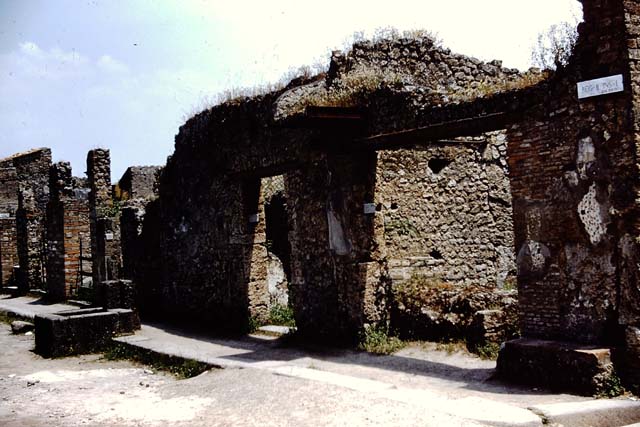
II.1.1 Pompeii but shown as II.4.1 on the photo. Pre-1937-39. East side of entrance doorway.
Photo courtesy of American Academy in Rome, Photographic Archive. Warsher collection no. 1876.
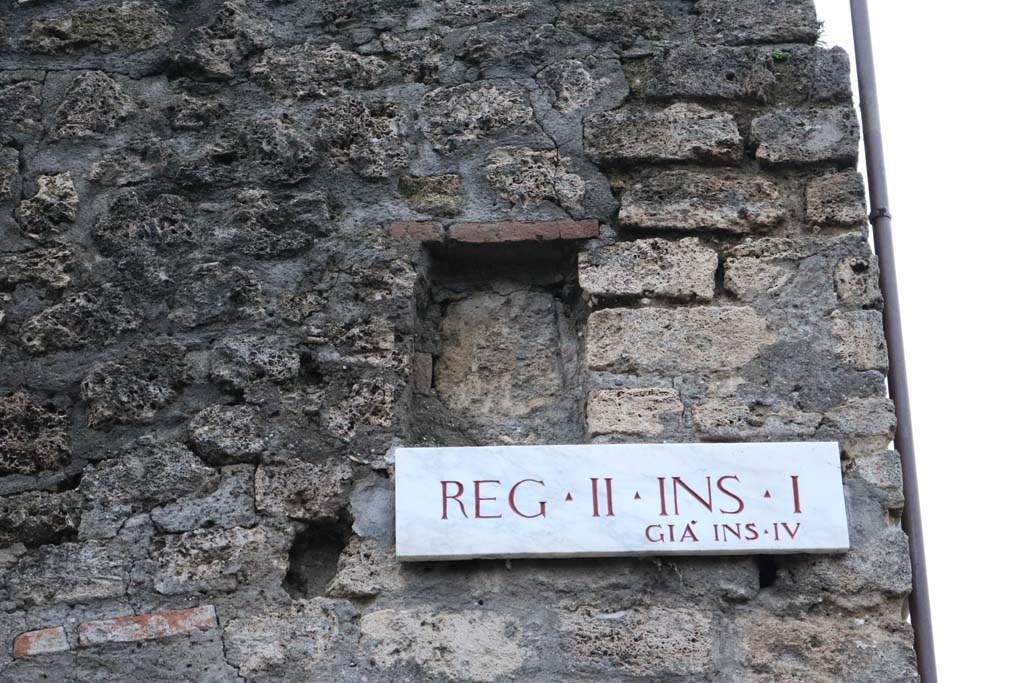
II.1.1 Pompeii. December 2018.
Insula identification plaque, Reg. II. Ins.1, previously known as
Ins. IV., with niche/recess above. Photo courtesy of Aude Durand.
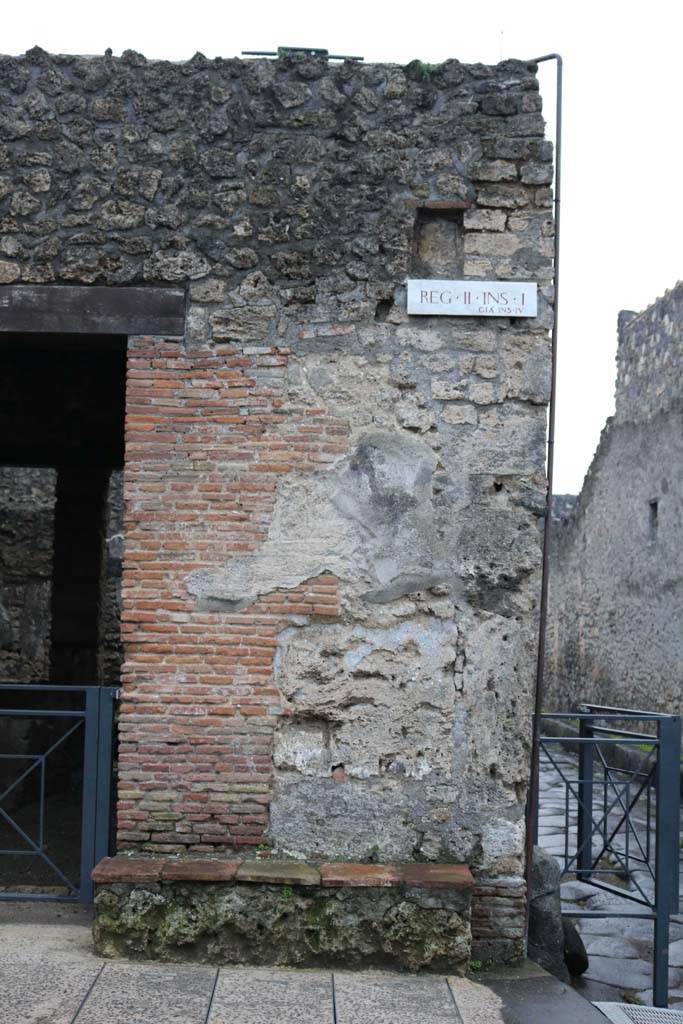
II.1.1 Pompeii. December 2018.
Bench outside II.1.1
on west side of entrance. Photo
courtesy of Aude Durand.
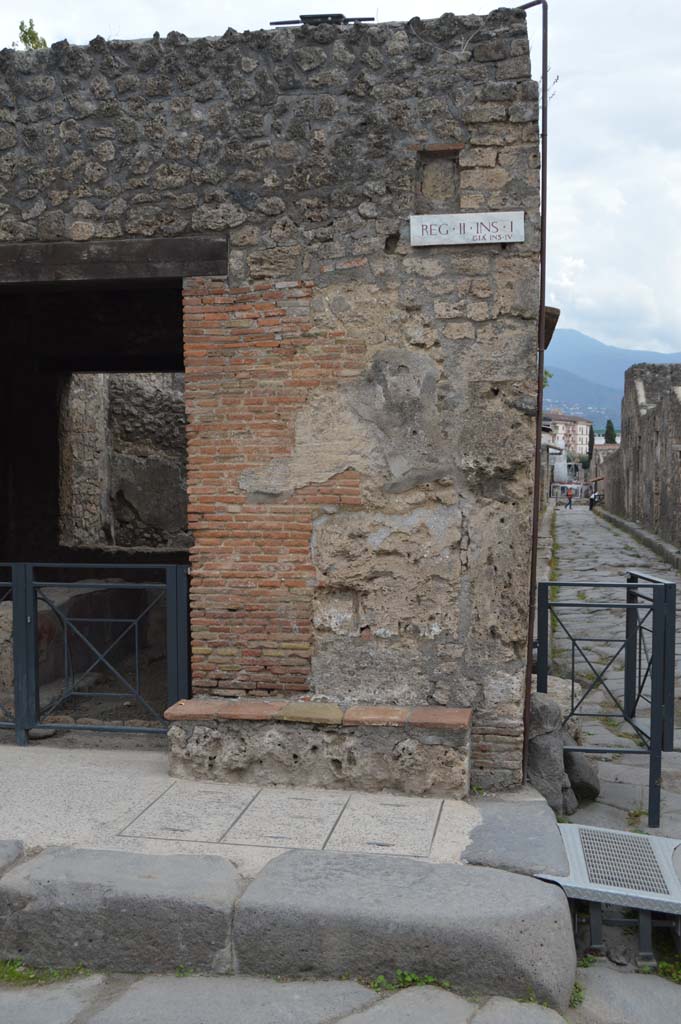
II.1.1 Pompeii. October 2017.
Looking south on Via dell’Abbondanza towards bench outside of west side of entrance.
On the right is the
Via di Nocera.
Foto Taylor Lauritsen, ERC Grant 681269 DÉCOR.
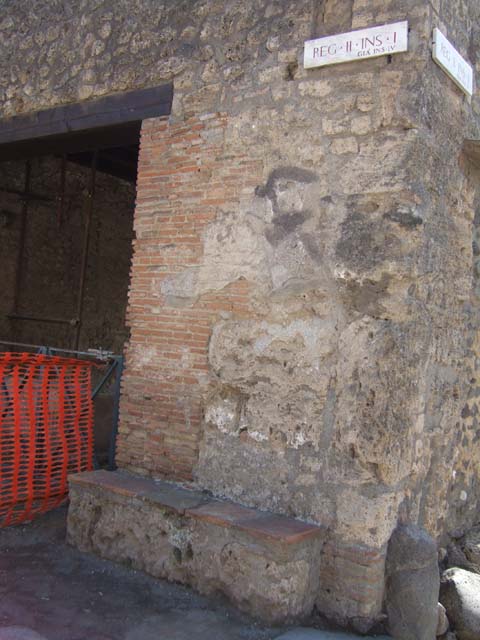
II.1.1 Pompeii. July 2021. Looking east from bench on west side of entrance doorway.
Foto Annette Haug, ERC Grant 681269 DÉCOR.
![II.1.1 Pompeii. September 2005. Bench outside II.1.1
According to Della Corte, found here on the corner pilaster to the right of the doorway, was CIL IV 7489.
This gave the name of the keeper of this caupona – Hermes cupit [CIL IV 7489]
According to Epigraphik-Datenbank Clauss/Slaby (See www.manfredclauss.de) it read as
Popidium Secundum
aed(ilem) d(ignum) r(ei) p(ublicae) o(ro) v(os) f(aciatis) Hermes
cupit [CIL IV 7489]](2%2001%2001_files/image016.jpg)
II.1.1 Pompeii. September 2005. Bench outside II.1.1
According to Della Corte, found here on the corner pilaster to the right of the doorway, was CIL IV 7489.
This gave the name of the keeper of this caupona – Hermes cupit [CIL IV 7489]
According to Epigraphik-Datenbank Clauss/Slaby (See www.manfredclauss.de) it read as
Popidium Secundum
aed(ilem) d(ignum)
r(ei) p(ublicae) o(ro)
v(os) f(aciatis) Hermes
cupit [CIL IV 7489]
![II.1.1 Pompeii. 1917. Entrance when first excavated, with graffiti shown to right.
See Spinazzola in Notizie degli Scavi di Antichità, 1917, (p.252, fig.5)
On the right side of the entrance, above the bench near the corner of the insula, graffiti were found.
See Varone, A. and Stefani, G., 2009. Titulorum Pictorum Pompeianorum, Rome: L’erma di Bretschneider, (p.179-80)
According to Epigraphik-Datenbank Clauss/Slaby (See www.manfredclauss.de) they read as
Popidium Secundum
aed(ilem) d(ignum) r(ei) p(ublicae) o(ro) v(os) f(aciatis) Hermes
cupit [CIL IV 7489]
L(ucium) Ceium Secundum
II vir(um)
rogant clientes [CIL IV 7490]](2%2001%2001_files/image017.jpg)
II.1.1 Pompeii. 1917. Entrance when first excavated, with graffiti shown to right.
See Spinazzola in Notizie degli Scavi di Antichità, 1917, (p.252, fig.5)
On the right side of the entrance, above the bench near the corner of the insula, graffiti were found.
See Varone, A. and Stefani, G., 2009. Titulorum Pictorum
Pompeianorum, Rome:
L’erma di Bretschneider, (p.179-80)
According to Epigraphik-Datenbank Clauss/Slaby (See www.manfredclauss.de) they read as
Popidium Secundum
aed(ilem)
d(ignum) r(ei) p(ublicae) o(ro) v(os) f(aciatis) Hermes
cupit [CIL IV 7489]
L(ucium) Ceium
Secundum
II vir(um)
rogant
clientes [CIL IV 7490]
II.1.1 Pompeii. July 2021. Bench on Via dell’Abbondanza on west side of doorway.
Foto Annette Haug, ERC Grant 681269 DÉCOR.
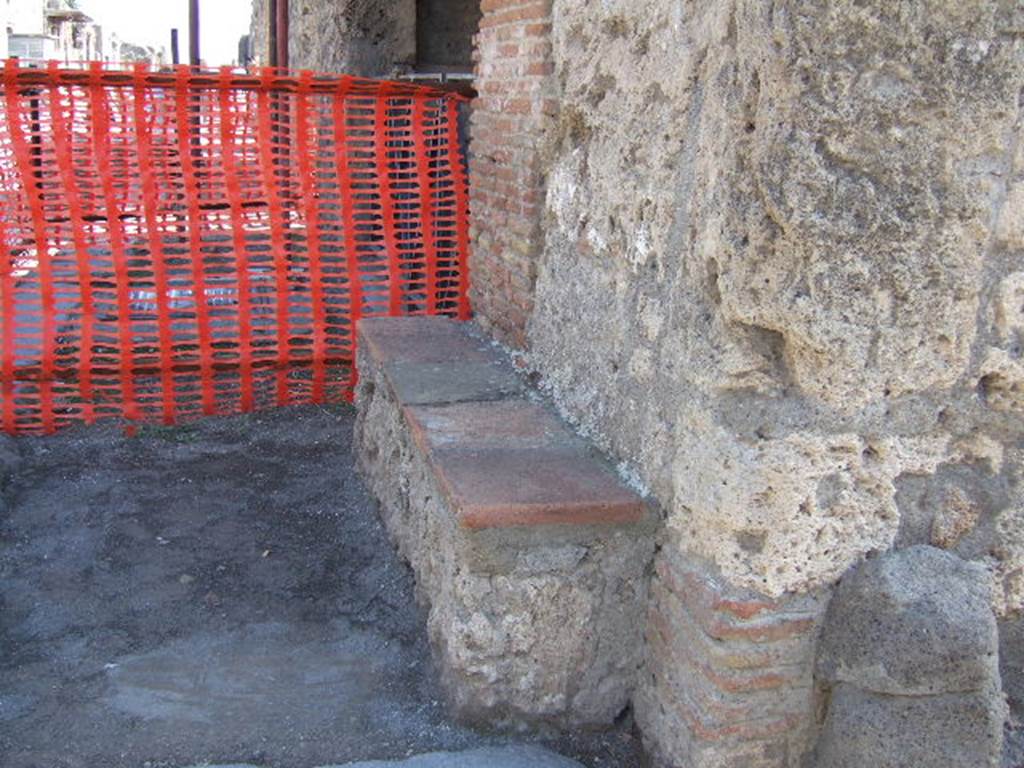
II.1.1 Pompeii. September 2005. Bench outside II.1.1, looking east.
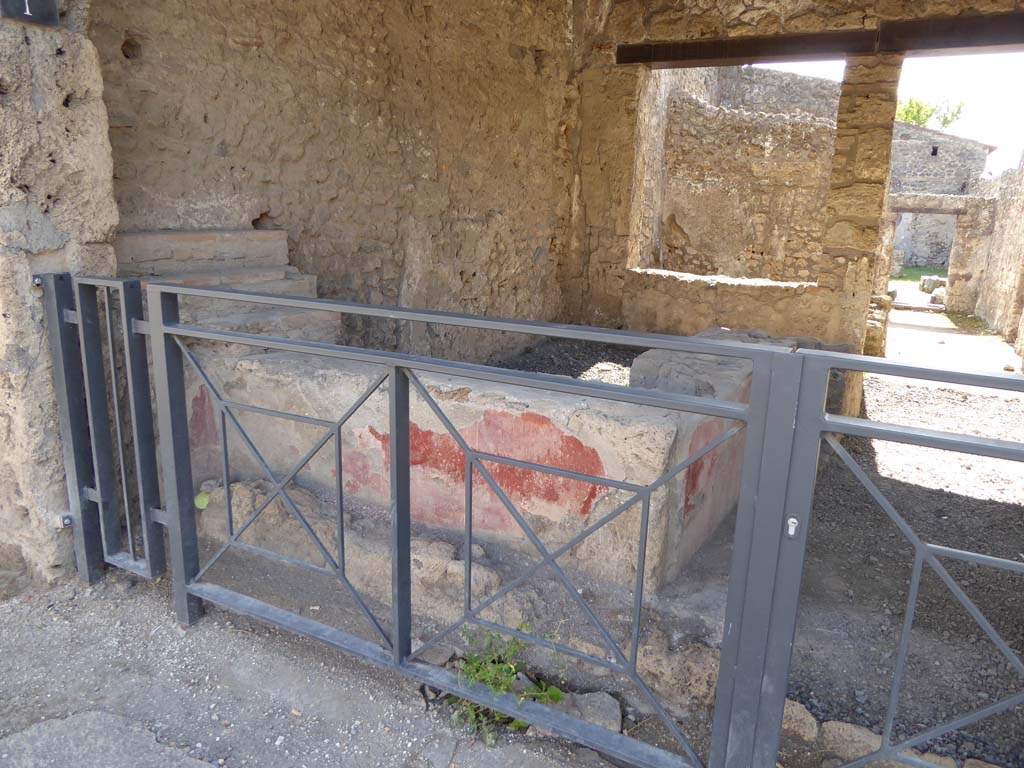
II.1.1 Pompeii. July 2021. Looking south-east towards two-sided counter from entrance doorway.
Foto Annette Haug, ERC Grant 681269 DÉCOR.
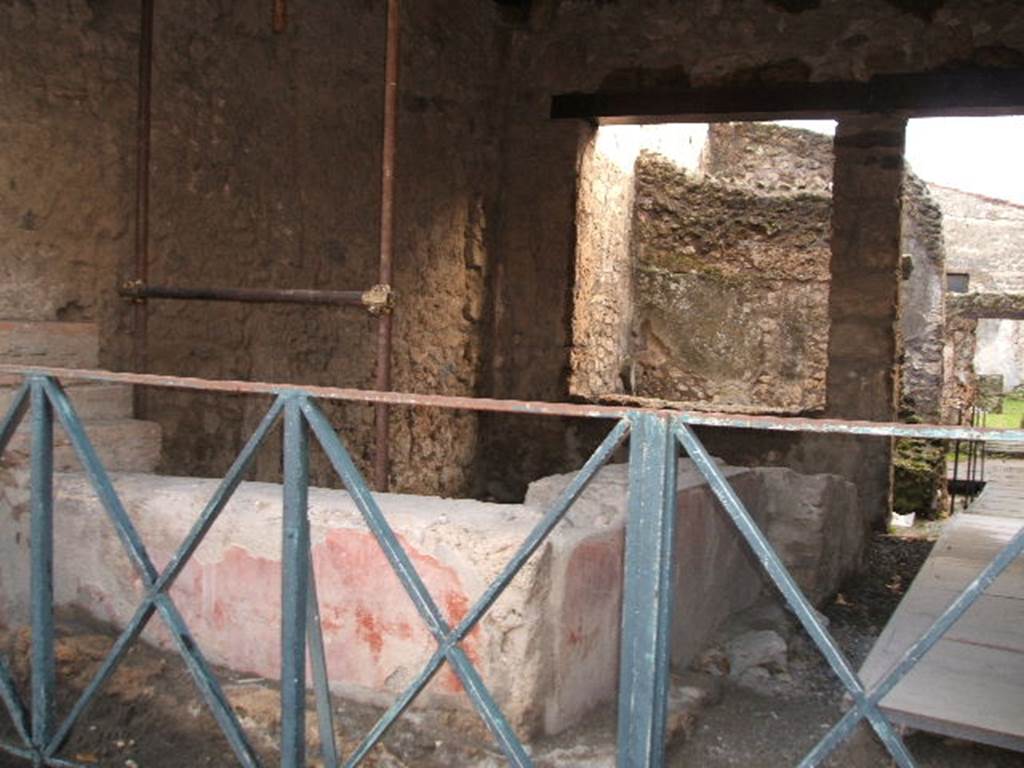
II.1.1 Pompeii. December 2004. Looking south-east towards two-sided counter.
According to NdS, the masonry of the counter was covered in stucco, which was painted to imitate a beautiful design of rich polychrome marble inlay.
In the centre of the front of the counter was a yellow circle, at the sides of it were two narrow vertical rectangles.
These were of white marble veined with green lozenges.
At either end of the counter were two narrow vertical rectangles of yellow.
At the top, it was finished with a band of white marble.
The base was painted with a red background.
The exterior side of the counter was also painted, it showed three large Iris plants with birds flying between them.
At the south end of the side counter, a bronze cauldron was found.
It was round with a cylindrical neck, and without a lid, it was 0.80 high.
Beneath it there was a small hearth.
See Notizie degli Scavi, 1917, (p.250)
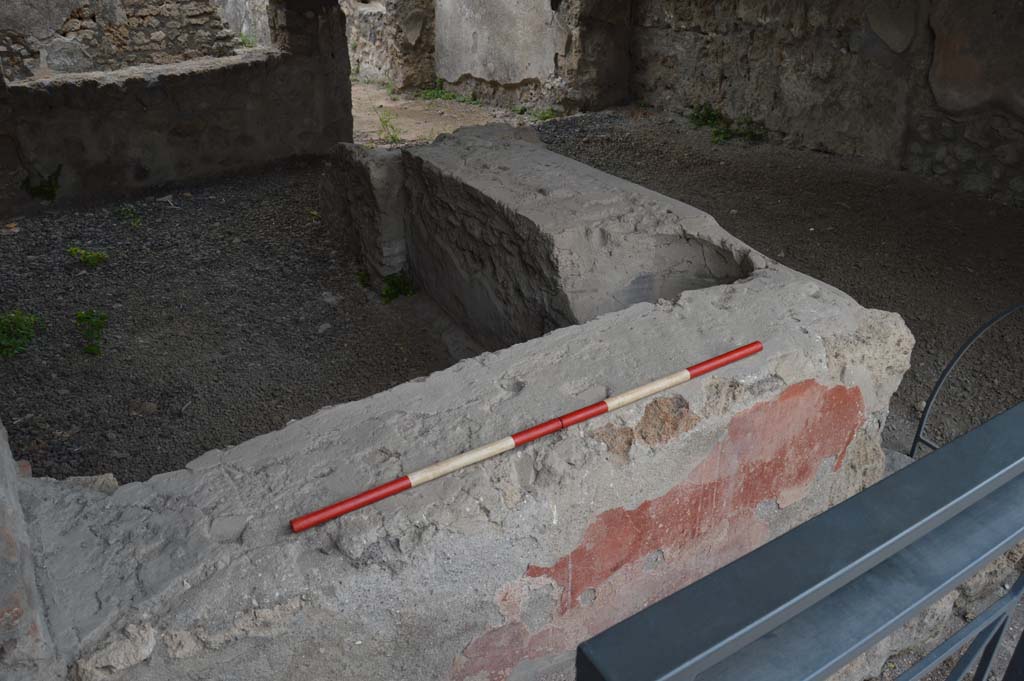
II.1.1 Pompeii. October 2017. Looking
south-west across counter from entrance doorway.
Foto Taylor Lauritsen, ERC Grant 681269 DÉCOR.
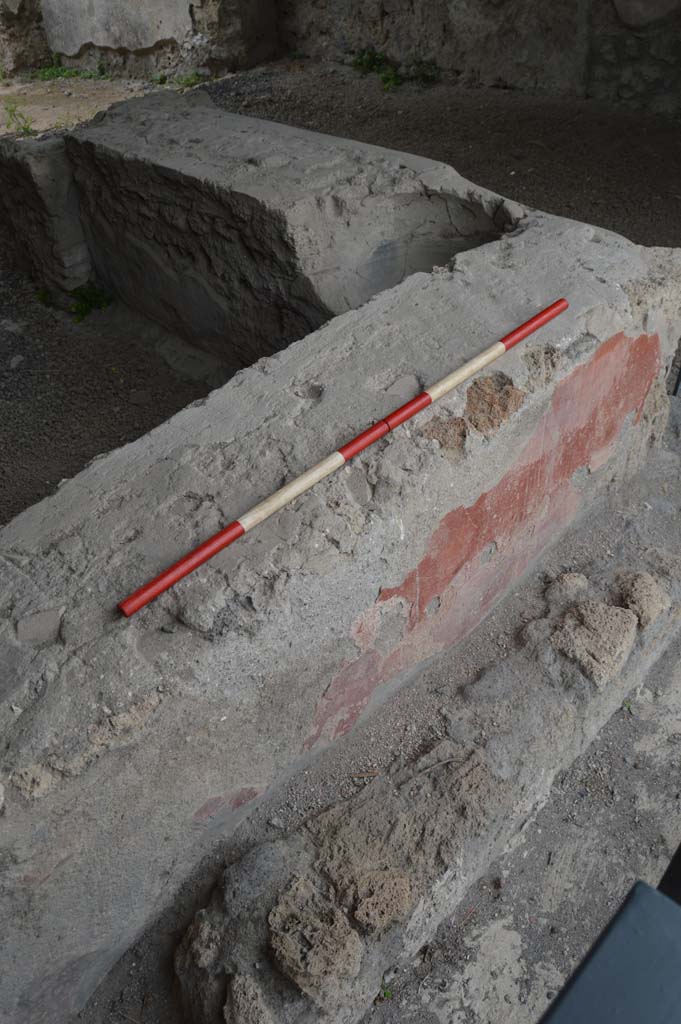
II.1.1 Pompeii. October 2017. Looking
south-west across detail of front of counter.
Foto Taylor Lauritsen, ERC
Grant 681269 DÉCOR.
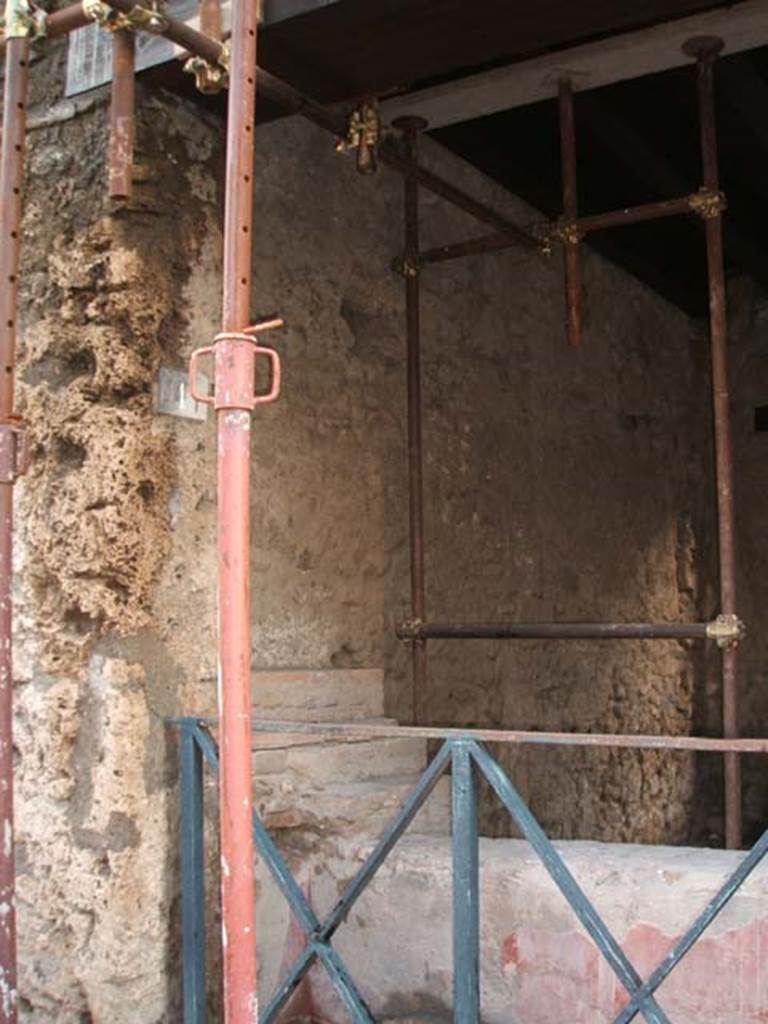
II.1.1 Pompeii. December 2004. Looking south-east across east side from north-east corner.
To the left of the counter were three display shelves, painted in red ornamented with white lines.
These were intended to display the crockery and glassware for the customer’s drinks.
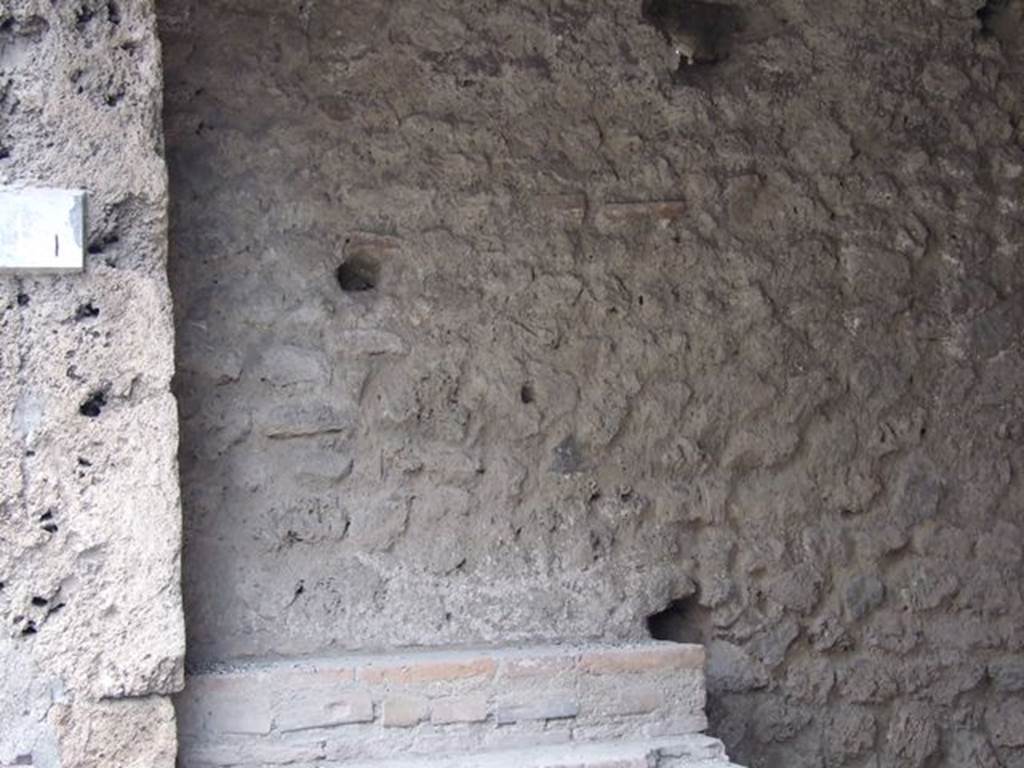
II.1.1 Pompeii. December 2006. East wall with display shelves in north-east corner.
When excavated parts of the conserved base of the east and west wall showed painted stucco with red droplets.
On the surviving part of the east wall, painted decoration - including panels painted with yellow lines of small leaves on a red background - could be seen.
See Notizie degli Scavi, 1917, (p.251)
![II.1.1 Pompeii. Drawing of graffiti, found on the east wall. According to Della Corte, on 4th September 1916, two graffiti were found at the top of the preserved red stucco of the east wall of the bar. He could read the remains of this graffito traced with chalk. It read –
ut te…
Carminio…
lega…
cas…
pytr…
See Della Corte, M. (Epigrafi inedite) in Maiuri, A., 1928. Nuovi Scavi nella Via dell’Abbondanza. Milano: Hoepli. (p.92 & Tav.X).
According to Epigraphik-Datenbank Clauss/Slaby (See www.manfredclauss.de) this read
Ut te
Carminio
Lega
Cas
pyta [CIL IV 8476a]](2%2001%2001_files/image031.jpg)
II.1.1 Pompeii. Drawing of graffiti, found on the east wall.
According to Della Corte, on 4th September 1916, two graffiti were found at the top of the preserved red stucco of the east wall of the bar.
He could read the remains of this graffito traced with chalk.
It read –
ut te…
Carminio…
lega…
cas…
pytr…
See Della Corte, M. (Epigrafi inedite) in Maiuri, A., 1928. Nuovi Scavi nella Via dell’Abbondanza. Milano: Hoepli. (p.92 & Tav.X)
According to Epigraphik-Datenbank Clauss/Slaby (See www.manfredclauss.de) this read
Ut te
Carminio
Lega
Cas
pyta [CIL IV 8476a]
![II.1.1 Pompeii. Drawing of graffiti, found on the east wall. According to Della Corte, on 4th September 1916, two graffiti were found at the top of the preserved red stucco of the east wall of the bar. He could read the remains of this graffito traced with chalk. It read –
Capre(n)s(is ?)…
X Ka(lendas)…
p. i… o t a c n ?
V… v s…
Idu(s) a…
VII K(al)…
IX K(al)…
See Della Corte, M. (Epigrafi inedite) in Maiuri, A., 1928. Nuovi Scavi nella Via dell’Abbondanza. Milano: Hoepli. (p.92 & Tav.X).
According to Epigraphik-Datenbank Clauss/Slaby (See www.manfredclauss.de) this read
Capre(n)/s(es)
X Ka[l(endas)]
pi ctacn
v //
Idu(s) a
VII
IX K(alendas) [CIL IV 8476b]](2%2001%2001_files/image033.jpg)
II.1.1 Pompeii. Drawing of graffiti, found on the east wall.
According to Della Corte, on 4th September 1916, two graffiti were found at the top of the preserved red stucco of the east wall of the bar.
He could read the remains of this graffito traced with chalk.
It read –
Capre(n)s(is ?)…
X Ka(lendas)…
p. i… o t a c n ?
V… v s…
Idu(s) a…
VII K(al)…
IX K(al)…
See Della Corte, M. (Epigrafi inedite) in Maiuri, A., 1928. Nuovi Scavi nella Via dell’Abbondanza. Milano: Hoepli. (p.92 & Tav.X)
According to Epigraphik-Datenbank Clauss/Slaby (See www.manfredclauss.de) this read
Capre(n)/s(es)
X Ka[l(endas)]
pi ctacn
v //
Idu(s) a
VII
IX
K(alendas) [CIL IV 8476b]
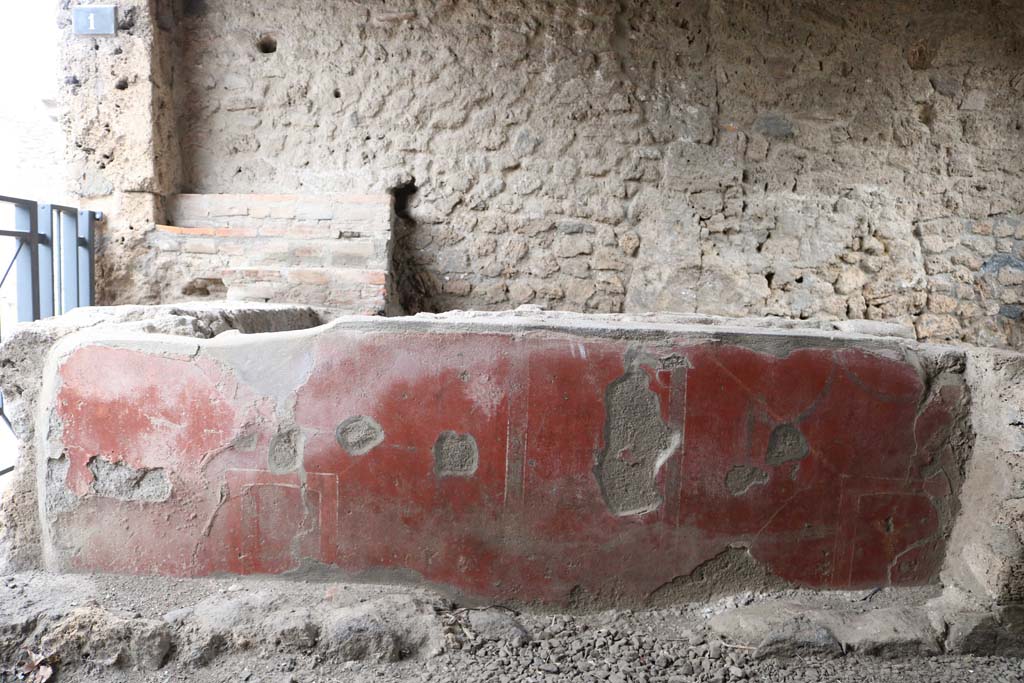
II.1.1 Pompeii. December 2018. Looking east across
counter with remains of red painted decoration. Photo courtesy of Aude Durand.
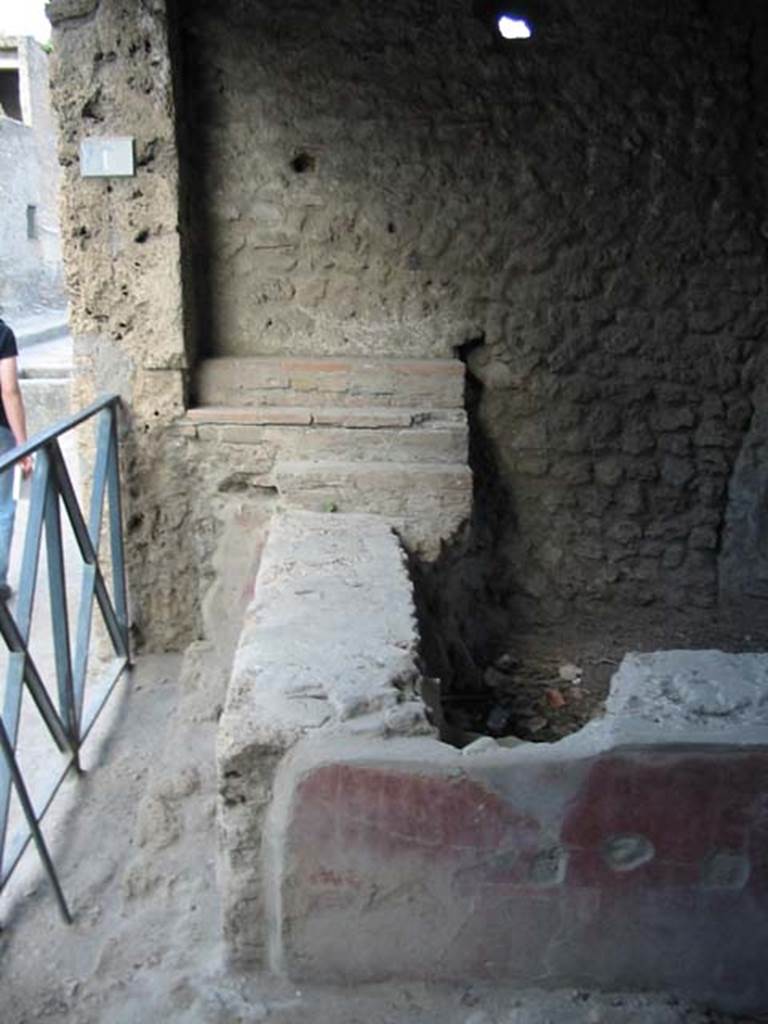
II.1.1 Pompeii. May 2003.
Looking east across counter with remains of red stucco. Photo courtesy of Nicolas Monteix.
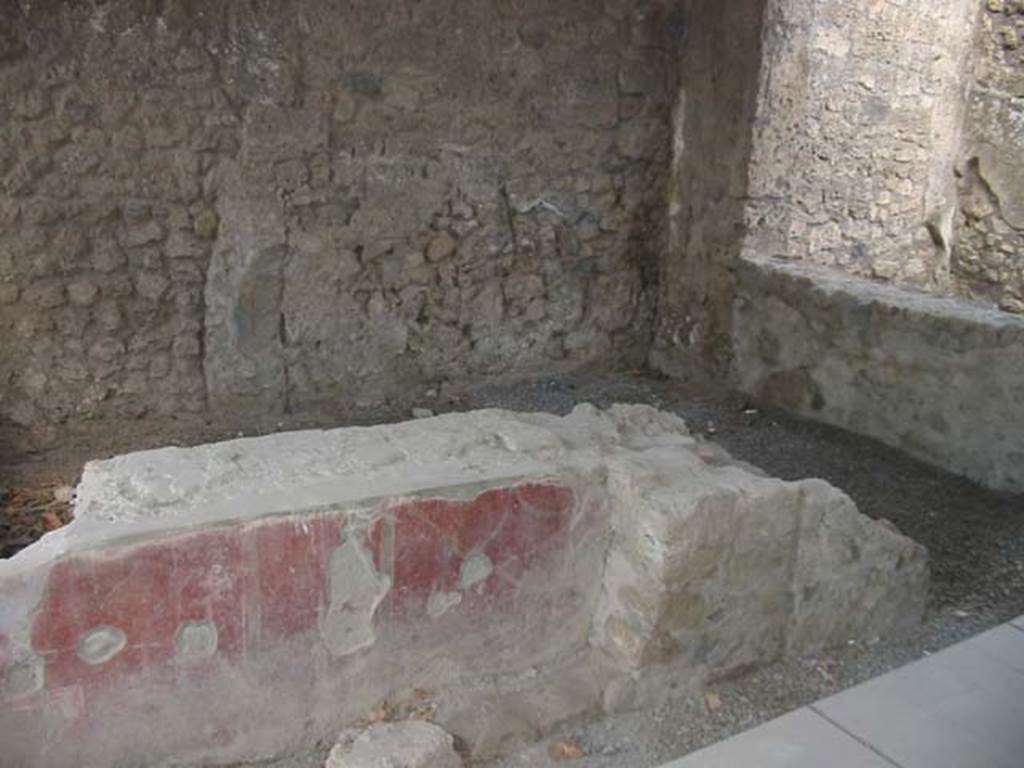
II.1.1 Pompeii. May 2003.
Looking south-east across counter, with hearth on its southern end. Photo courtesy of Nicolas Monteix.
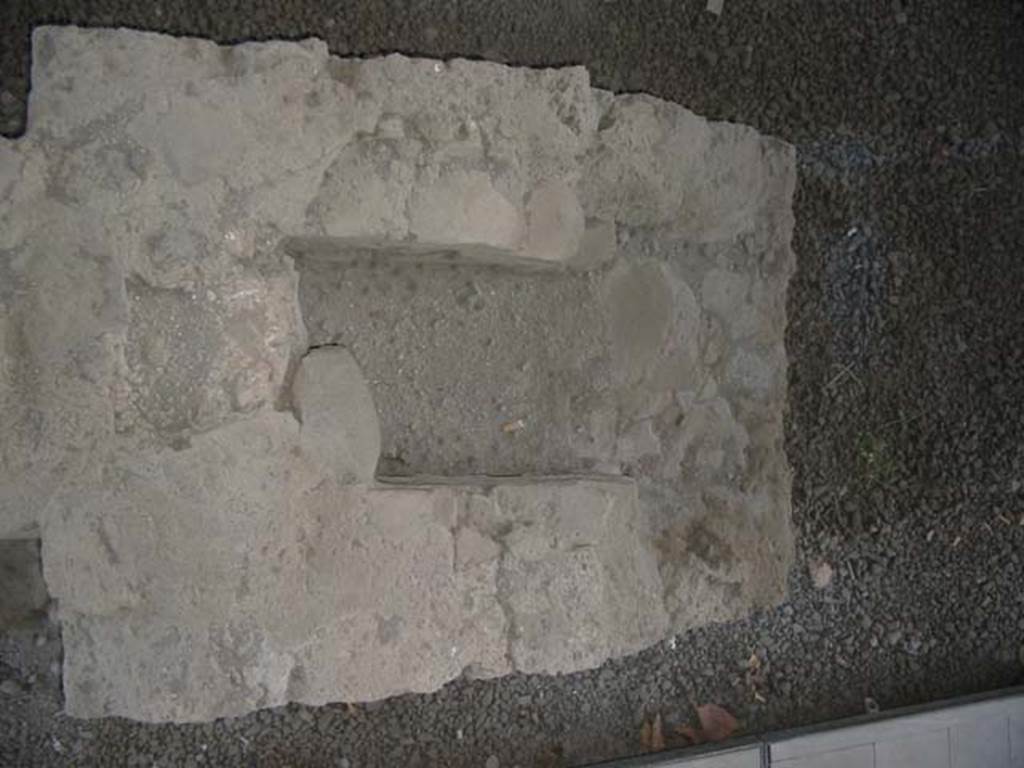
II.1.1 Pompeii. May 2003. Looking down on hearth at south end of counter. Photo courtesy of Nicolas Monteix.
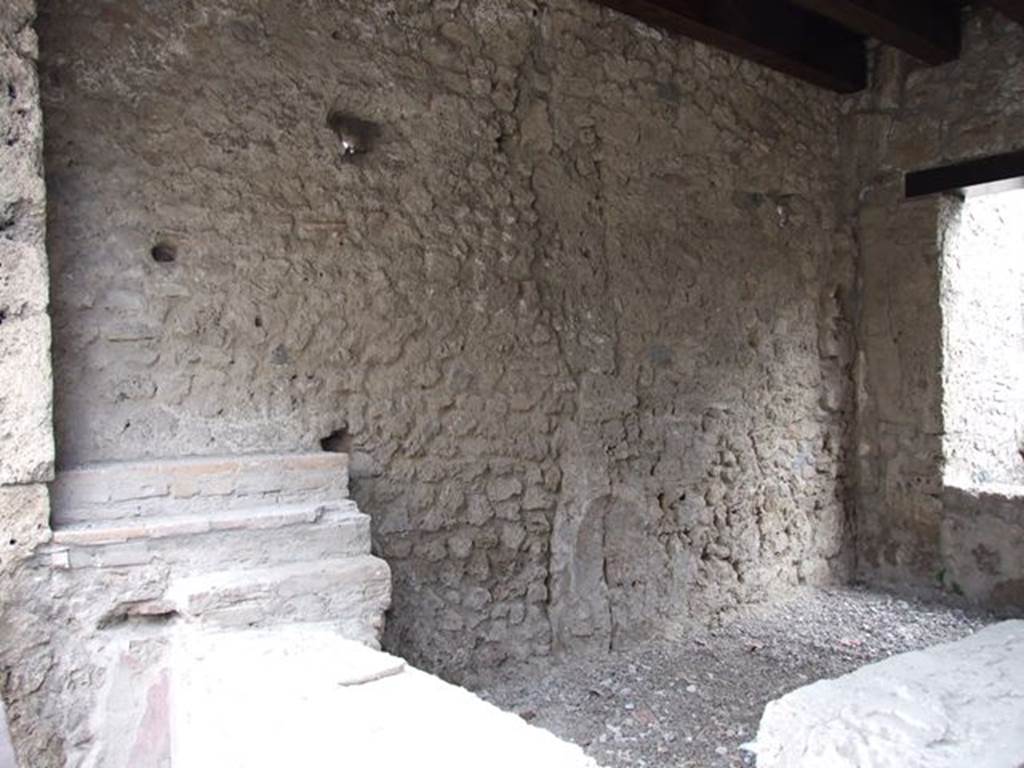
II.1.1 Pompeii. December 2006. Counter and east wall.
In the south-east corner there was a niche of a lararium to Venus which is no longer visible.
According to Boyce, the arched niche on the east wall had a painted blue border.
In front of it stood a small table decorated with metopes.
Nothing was found in the niche, but when the soil under the niche was investigated, fragments of a pseudo-alabaster statuette of Venus was found.
It was of very rough workmanship but had been gilded originally.
In front of the image of the goddess stood a small altar of terracotta.
See Boyce G. K., 1937. Corpus of the Lararia of Pompeii. Rome: MAAR 14. (p. 30, no. 61)
Boyce gives a reference to Not. Scavi 1917, 251, with a photograph of the statuette, on p. 253.
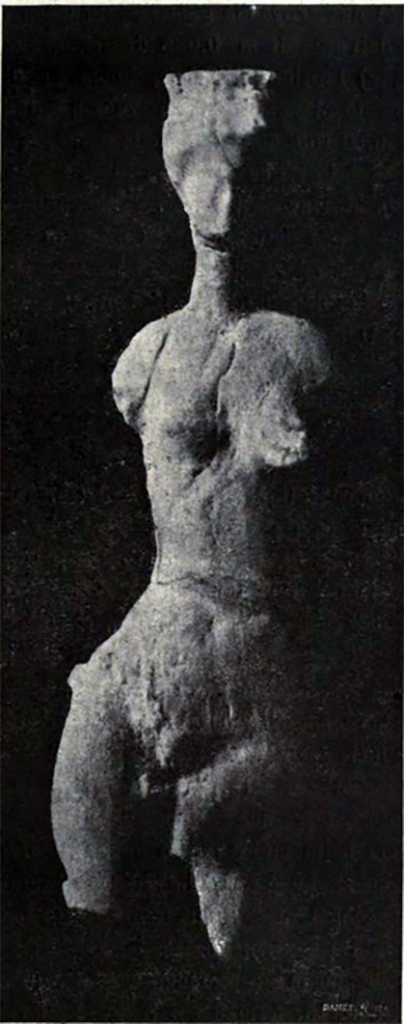
II.1.1 Pompeii. 1917.
Pseudo-alabaster statuette of Venus found in fragments below the lararium niche.
It was of very rough workmanship but had been gilded originally.
See Notizie degli Scavi di Antichità, 1917,
p. 251-3, fig. 6.
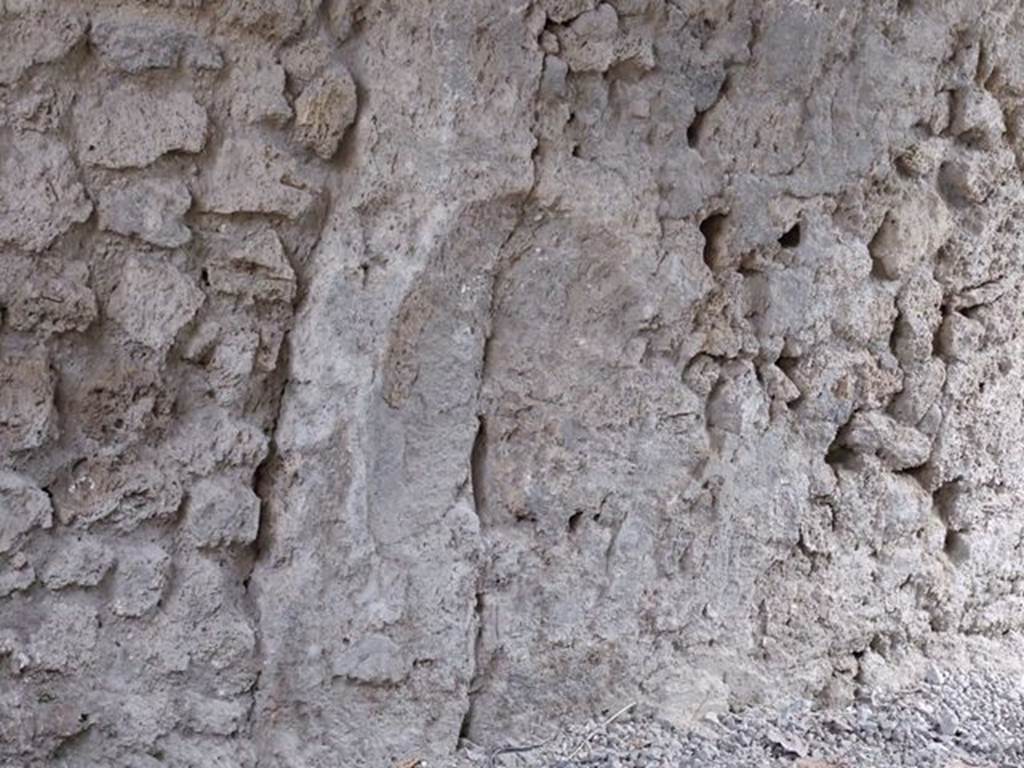
II.1.1 Pompeii. December 2006. East wall.
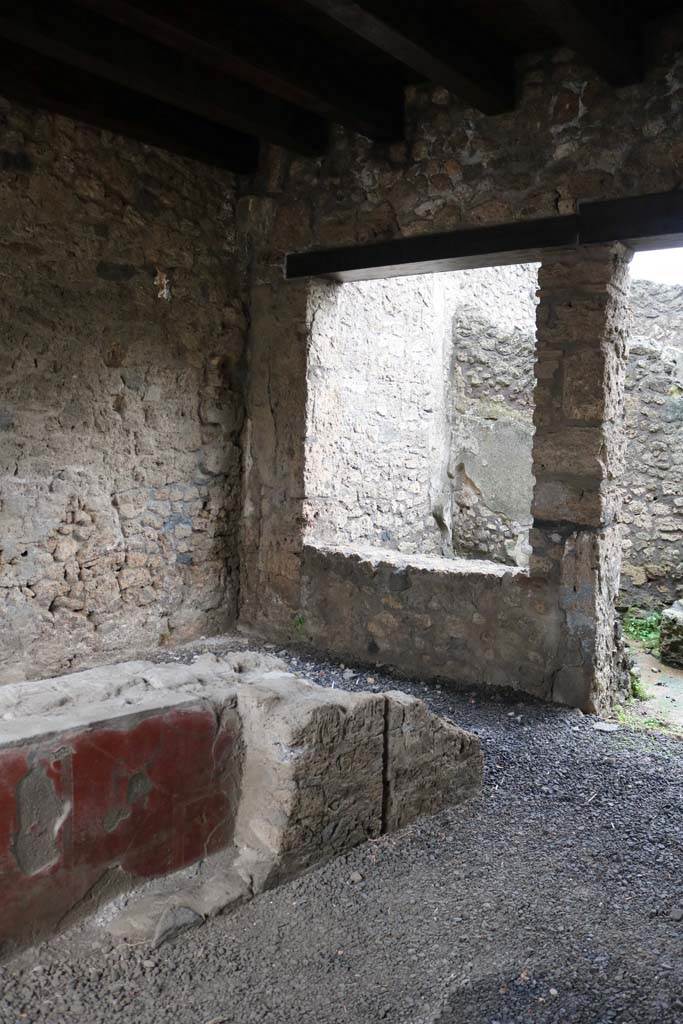
II.1.1 Pompeii. December 2018.
Looking
south-east across counter towards window in south wall. Photo courtesy of Aude Durand.
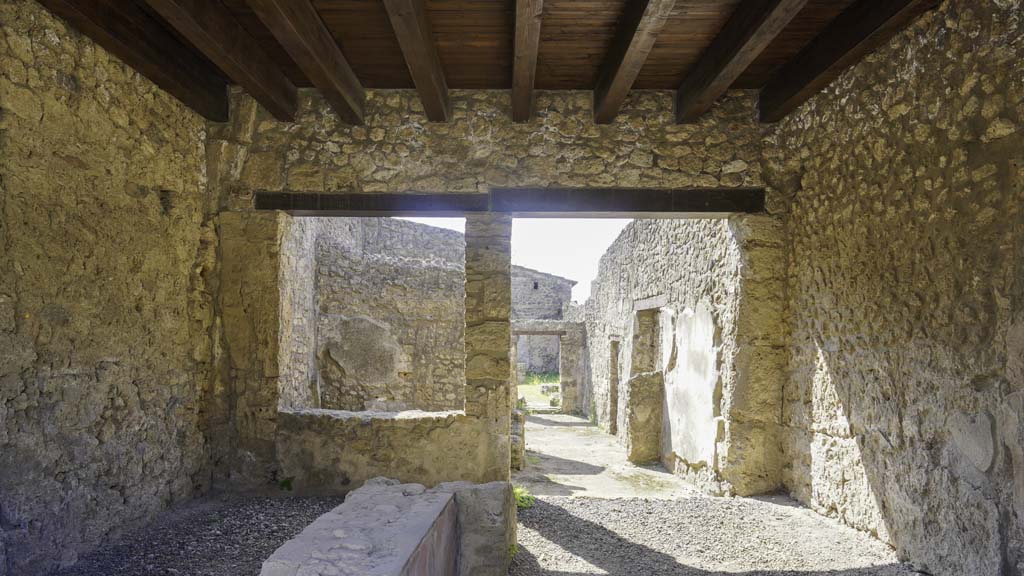
II.1.1 Pompeii. August 2021. Looking south towards
rear and II.1.13. Photo
courtesy of Robert Hanson.
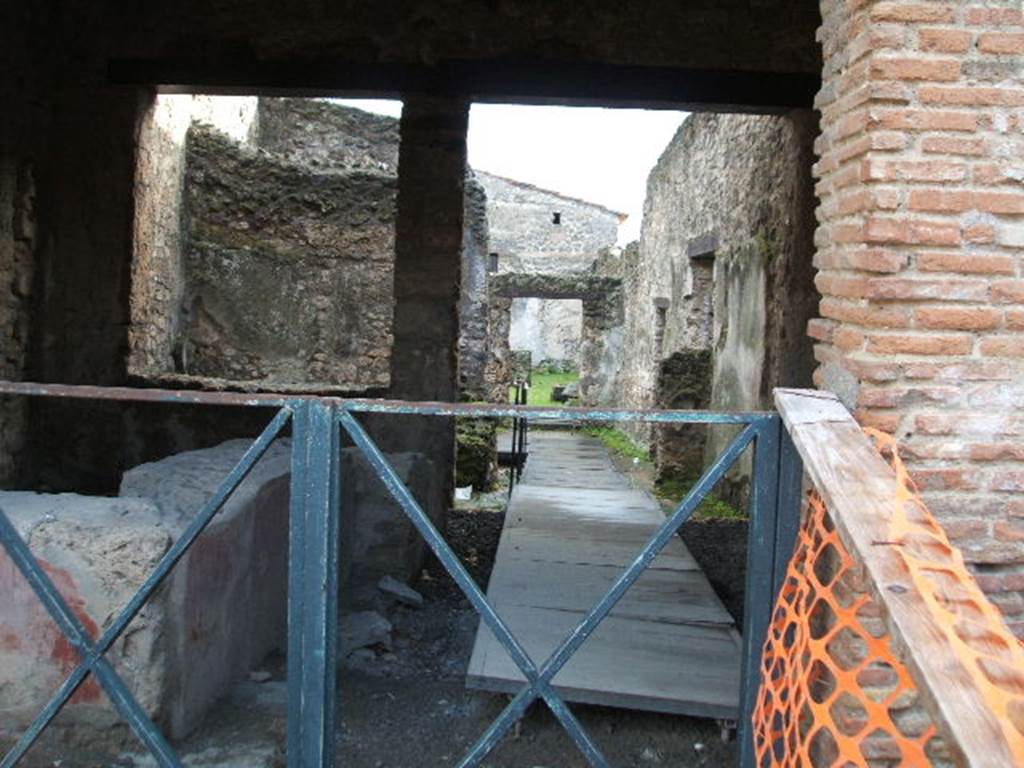
II.1.1 Pompeii. December 2004. Looking south towards rear and II.1.13.
According to Jashemski, the living quarters behind the bar, linked to II.1.13, had a small garden in the rear south-east corner.
The east wall had broken amphoras inserted in its top.
See Jashemski, W. F., 1993. The Gardens of Pompeii, Volume II: Appendices. New York: Caratzas. (p.75).
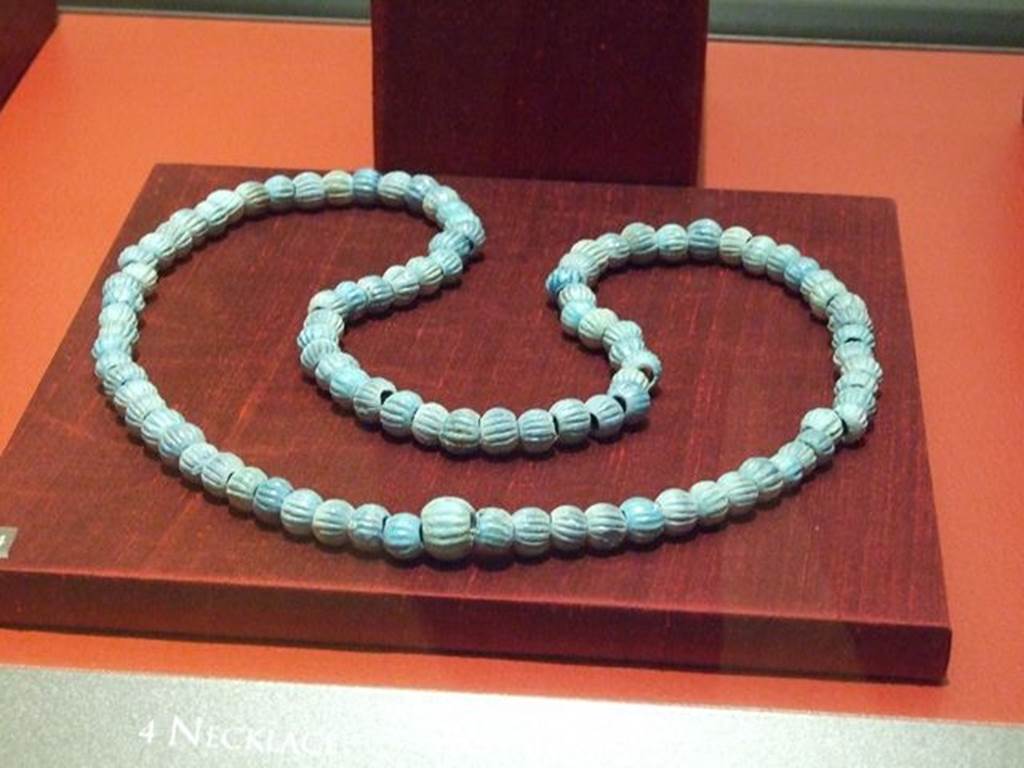
II.1.1 Pompeii. Blue glass paste necklace. SAP 10512.
Photographed at “A Day in Pompeii” exhibition at Melbourne Museum. September 2009.
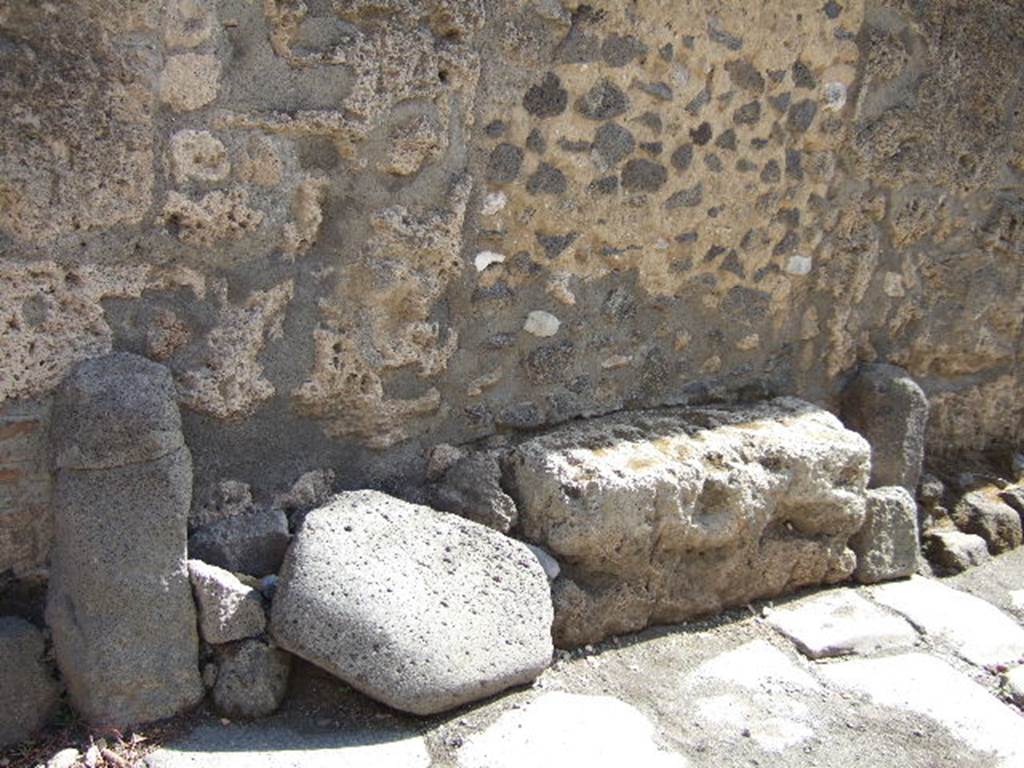
II.1.1 Pompeii. September 2005. Via di Nocera on north-west corner at II.1.1.