I.13.1 Pompeii. Domus of Tiberius-Crassius Crescens and Tiberius-Crassius Firmus.
Excavated 1914 and 1951 to 1953.
(Originally when excavated, this was numbered as Reg. II, Insula 3, no.1).
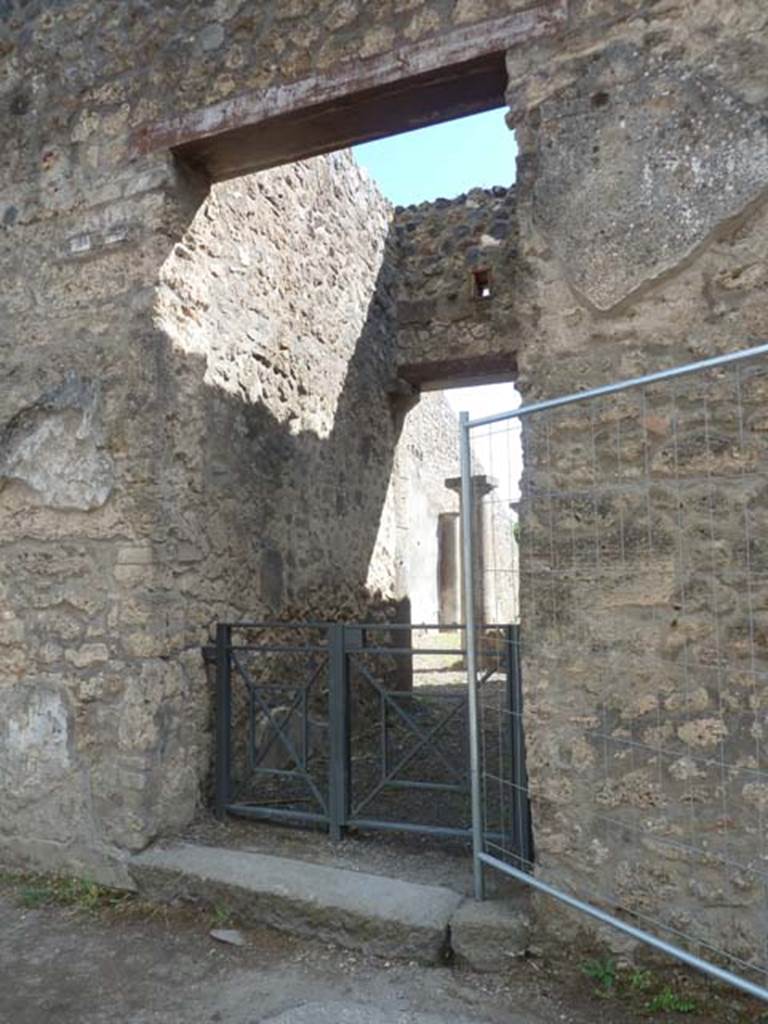
I.13.1 Pompeii. September 2015. Entrance doorway.
![Street wall outside of I.13.1 on Via dell’Abbondanza. December 2007.
According to Della Corte, two electoral recommendations were found written on both sides of the entrance –
Crescens rog(at) [CIL IV 7448]
Crescens cupidus rog(at) [CIL IV 7455]
He thought these proved the owner of the house was probably a Crescens (and most likely Crassius).
There was a third recommendation written to the left of entrance number l.13.3 – Crescens rog(at) [CIL IV 7462] See Della Corte, M., 1965. Case ed Abitanti di Pompei. Napoli: Fausto Fiorentino. (p.355)
According to Epigraphik-Datenbank Clauss/Slaby (See www.manfredclauss.de), these read as -
L(ucium) Ovidium
aed(ilem) Crescens rog(at) [CIL IV 7448]
Trebium et Rufum
aed(iles) o(ro) v(os) Crescens cupidus rog(at) [CIL IV 7455]
Cn(aeum) Helvium Sabin(um)
aed(ilem) Crescens rog(at) [CIL IV 7462]](1%2013%2001_files/image005.jpg)
Street wall outside of I.13.1 on Via dell’Abbondanza. December 2007.
According to Della Corte, two electoral recommendations were found written on both sides of the entrance –
L(ucium) Ovidium
aed(ilem)
Crescens rog(at) [CIL IV 7448]
Trebium et Rufum
aed(iles) o(ro)
v(os) Crescens cupidus rog(at) [CIL
IV 7455]
He thought these proved the owner of the house was probably a Crescens (and most likely Crassius).
There was a third recommendation written to the left of entrance number l.13.3 –
Cn(aeum)
Helvium Sabin(um)
aed(ilem)
Crescens rog(at) [CIL IV 7462]
See Della Corte,
M., 1965. Case ed Abitanti di Pompei.
Napoli: Fausto Fiorentino. (p.355)
See
Epigraphik-Datenbank Clauss/Slaby (www.manfredclauss.de).
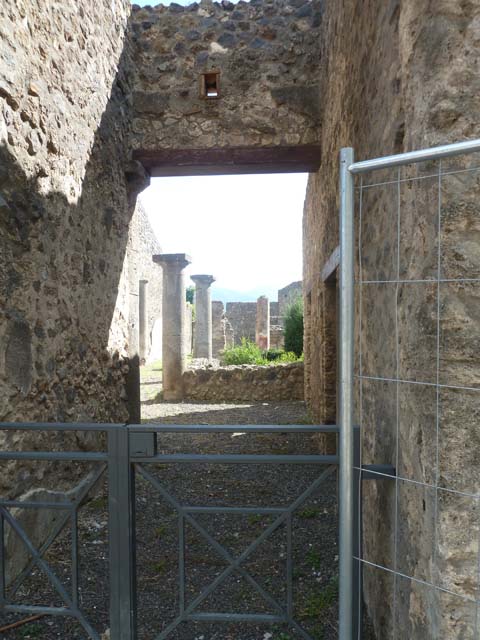
I.13.1 Pompeii. December 2007. Entrance.
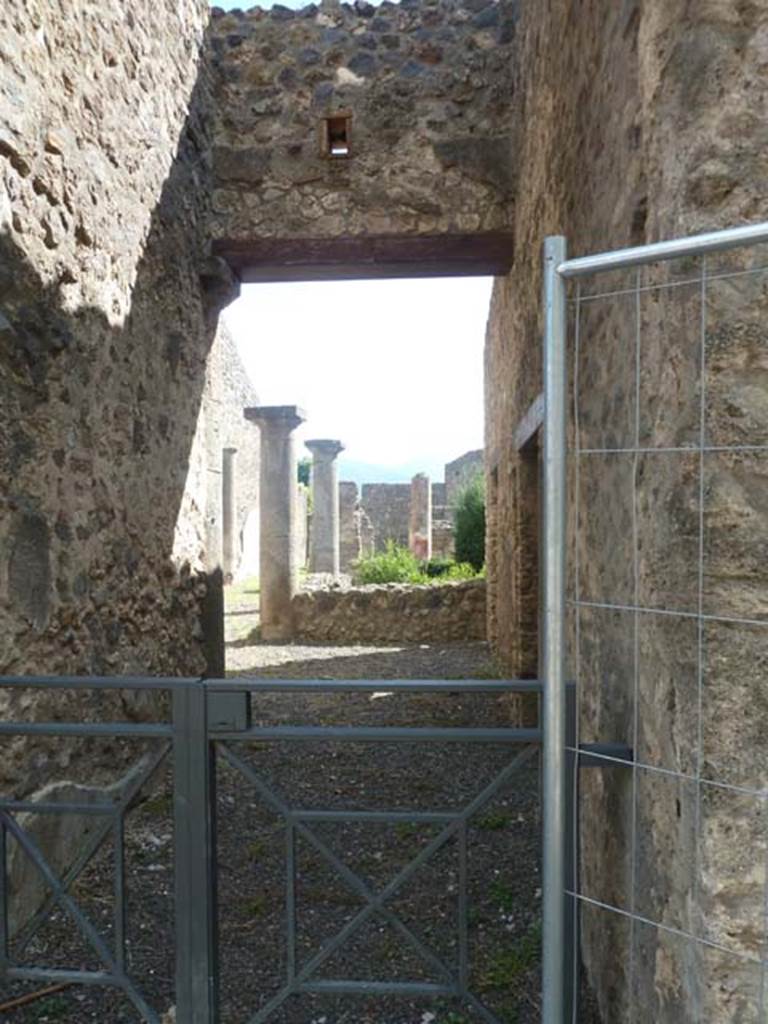
I.13.1 Pompeii. September 2015. Looking south through entrance doorway.
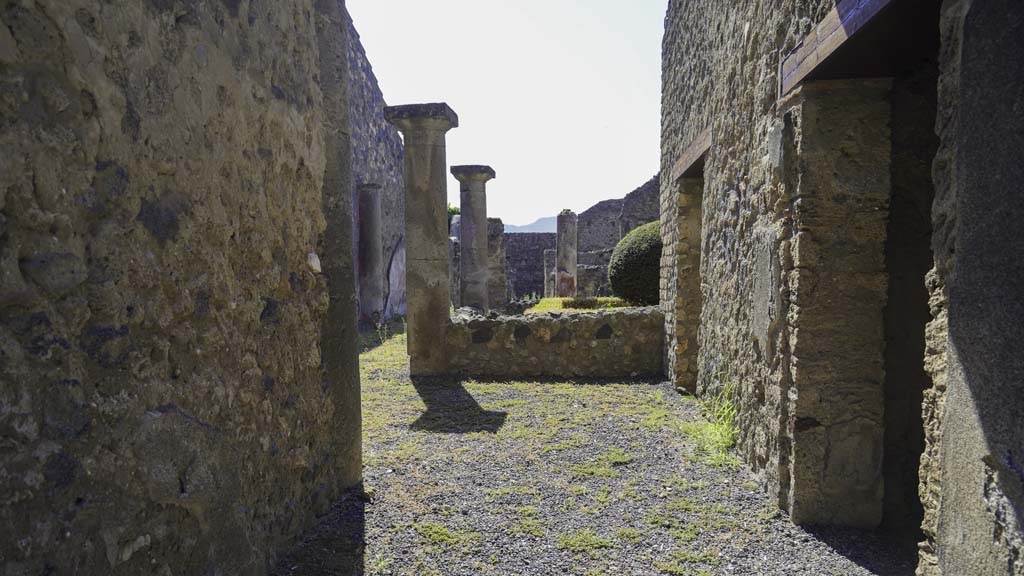
I.13.1 Pompeii. August 2021. Looking south along
entrance corridor towards peristyle. Photo courtesy of Robert Hanson.
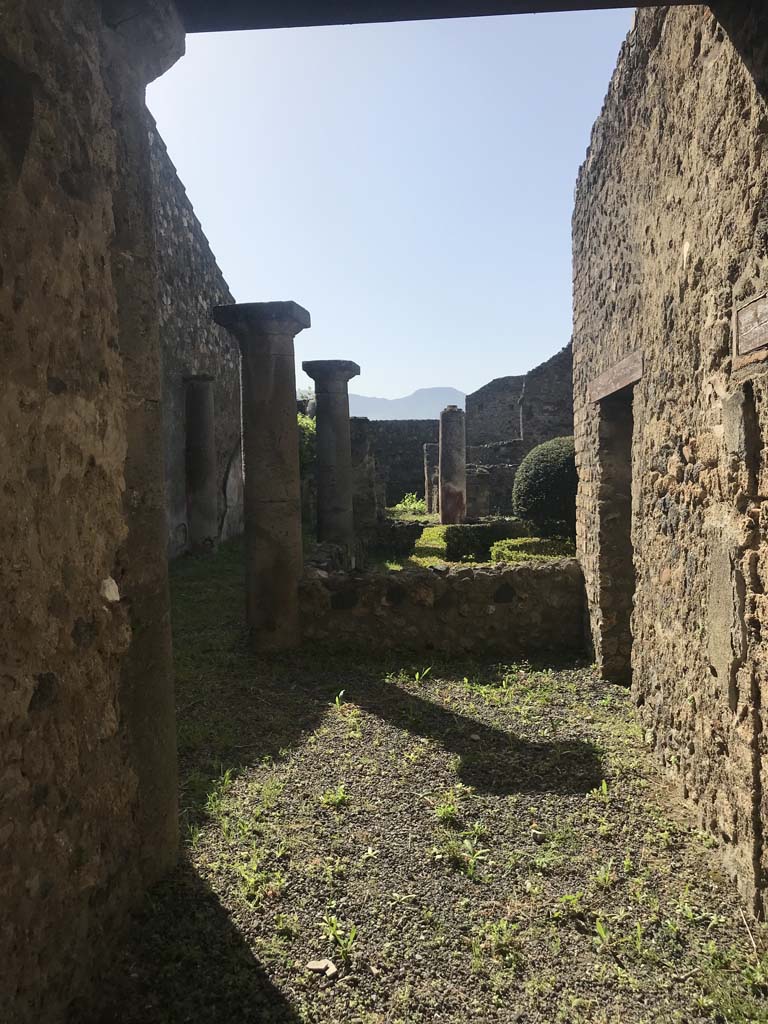
I.13.1 Pompeii. April 2019. Looking south along entrance corridor. Photo courtesy of Rick Bauer.
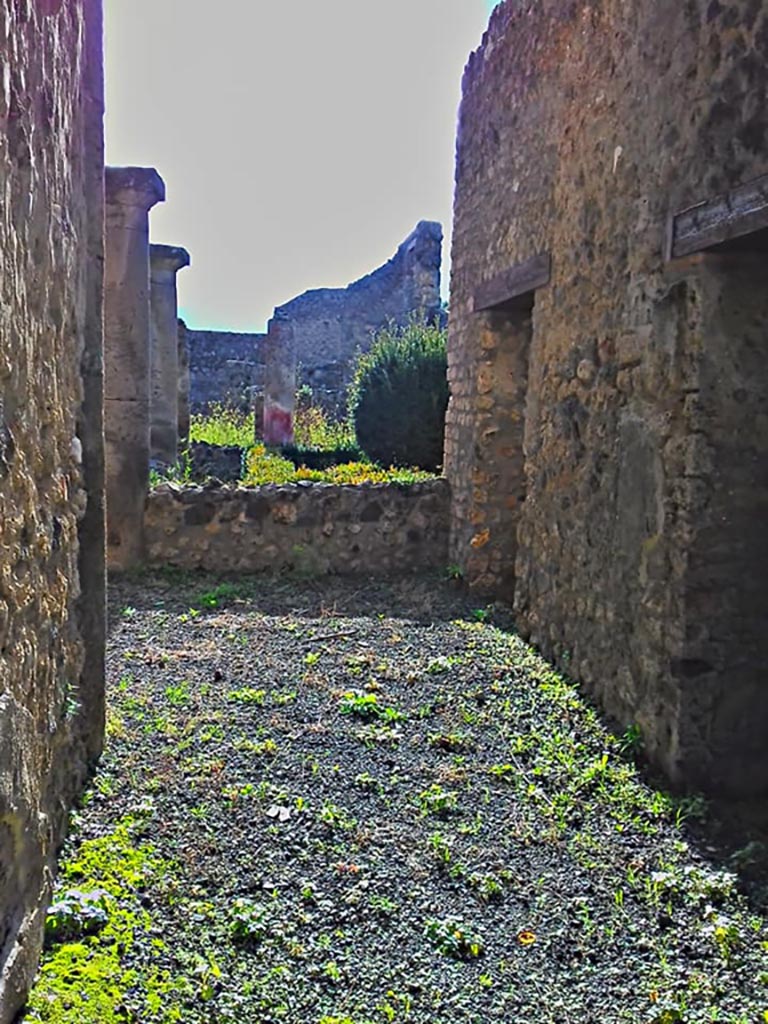
I.13.1 Pompeii. 2017/2018/2019.
Looking south along entrance corridor. Photo courtesy of
Giuseppe Ciaramella.
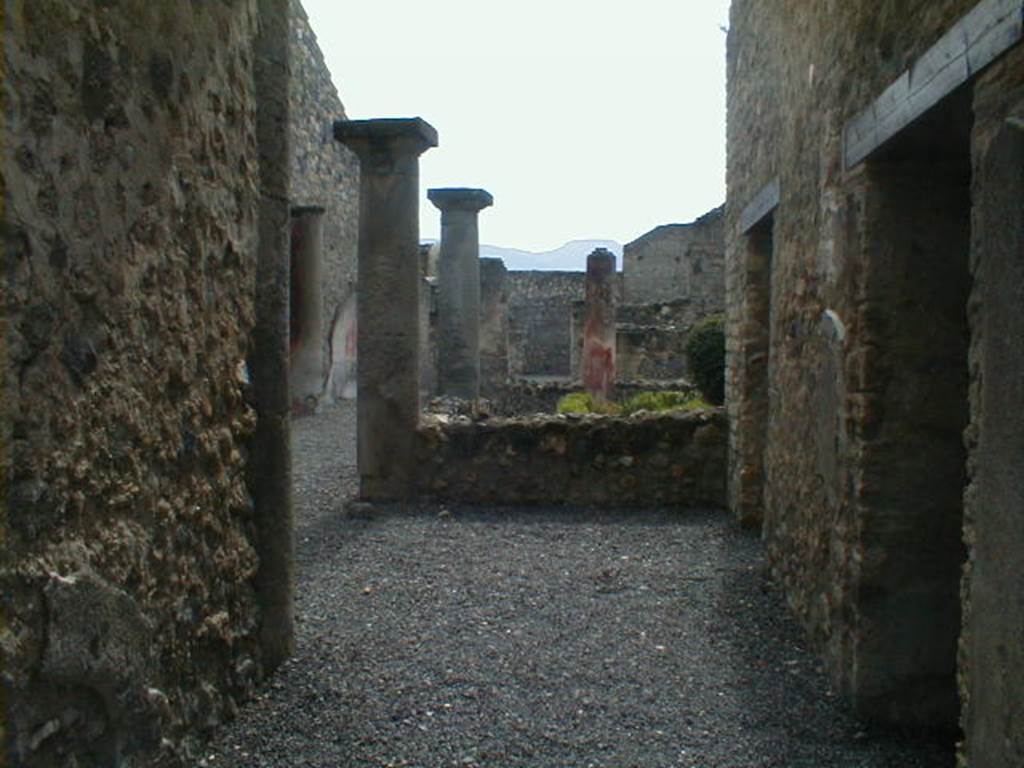
I.13.1 Pompeii. September 2004. Entrance corridor leading to peristyle.
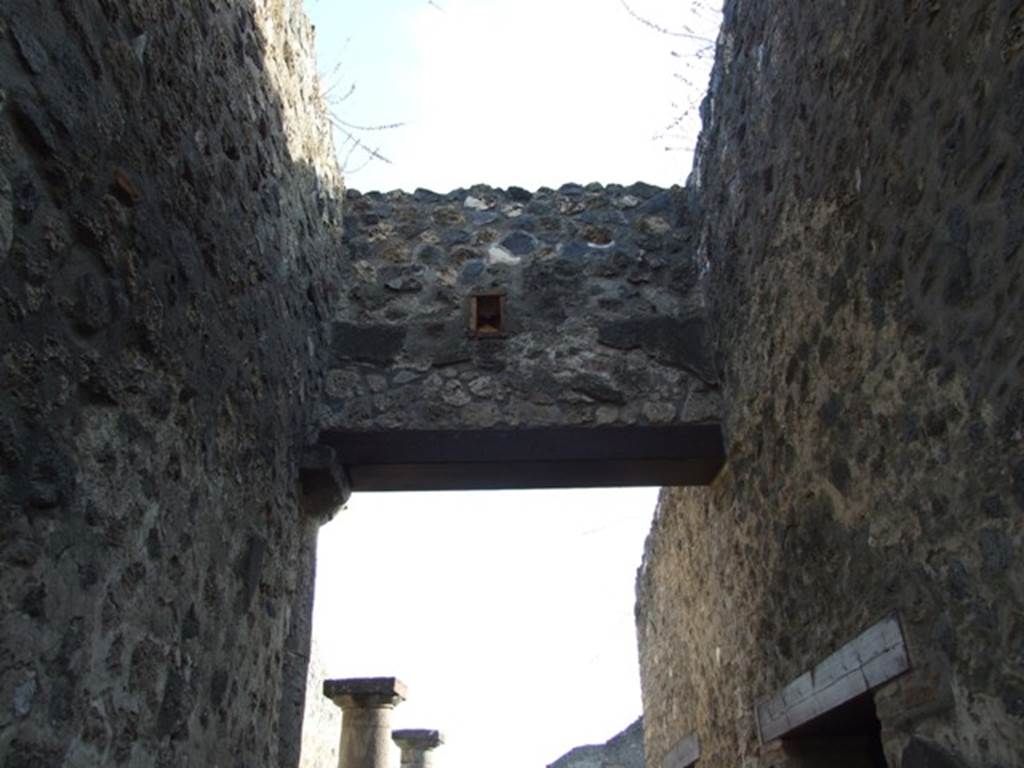
I.13.1 Pompeii. December
2007. Entrance corridor.
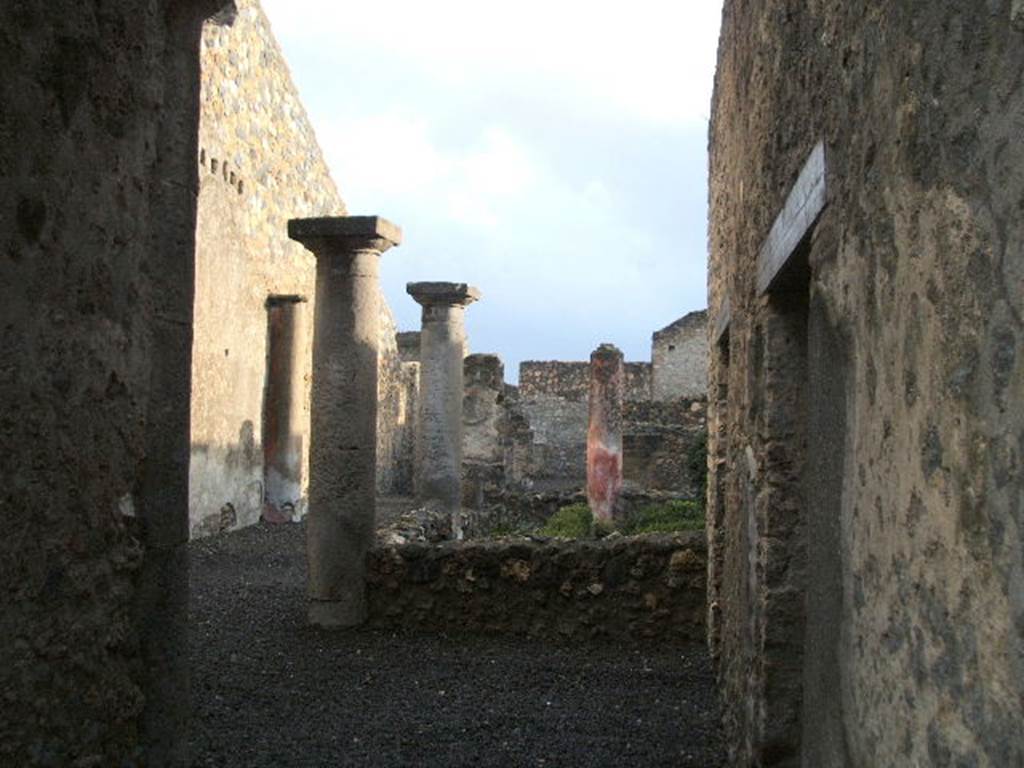
I.13.1 Pompeii. December 2004. Looking south from entrance corridor.
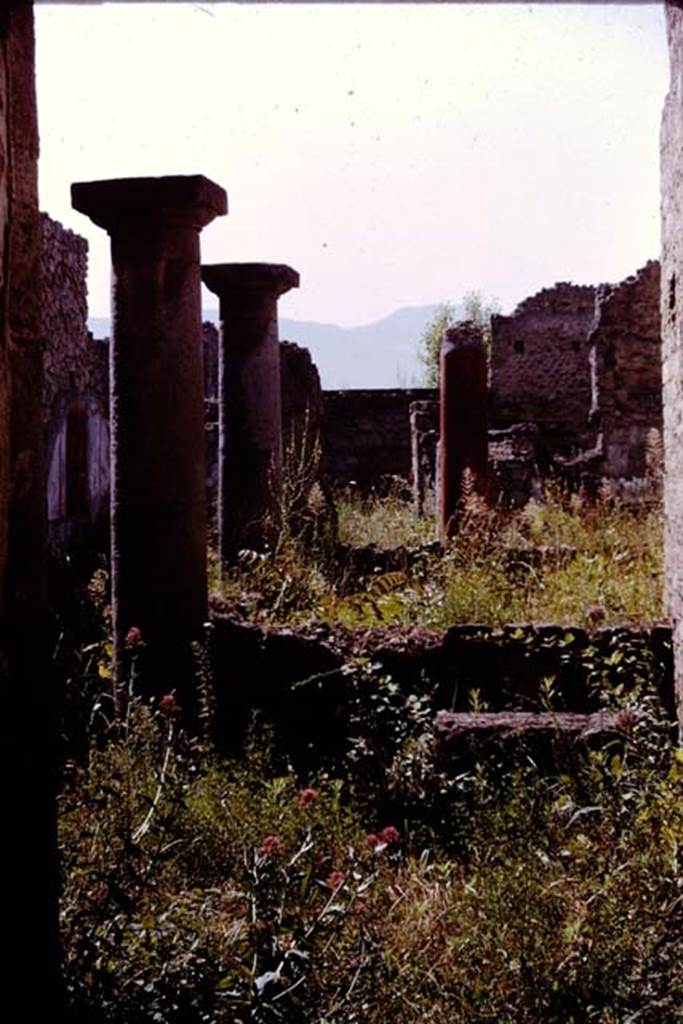
I.13.1 Pompeii. 1964.
Looking south from entrance corridor. Photo by Stanley A. Jashemski.
Source: The Wilhelmina and Stanley A. Jashemski archive in the University of Maryland Library, Special Collections (See collection page) and made available under the Creative Commons Attribution-Non Commercial License v.4. See Licence and use details.
J64f1079
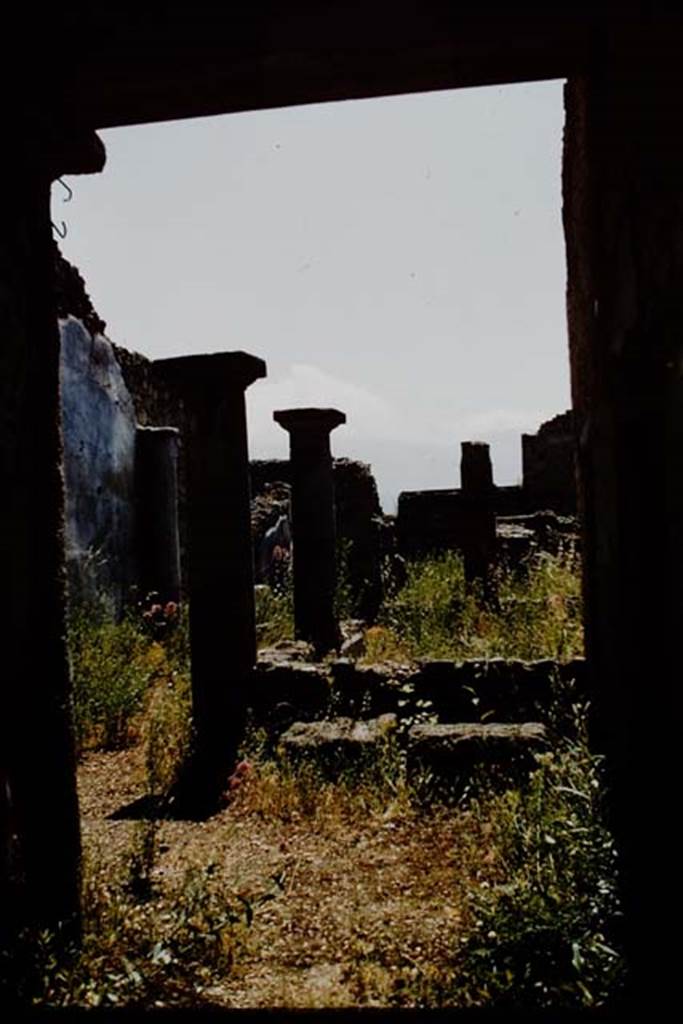
I.13.1 Pompeii. 1961.
Looking south from entrance corridor. Photo by Stanley A. Jashemski.
Source: The Wilhelmina and Stanley A. Jashemski archive in the University of Maryland Library, Special Collections (See collection page) and made available under the Creative Commons Attribution-Non Commercial License v.4. See Licence and use details.
J61f0283
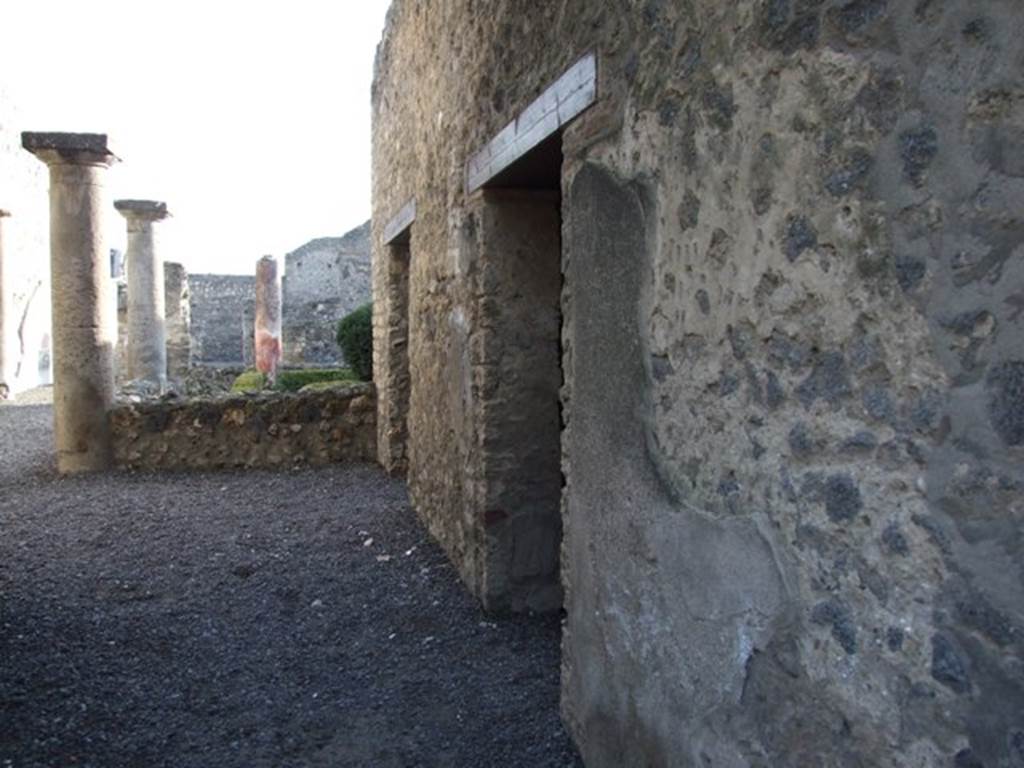
I.13.1 Pompeii. December 2007. West wall of entrance corridor with two rooms.
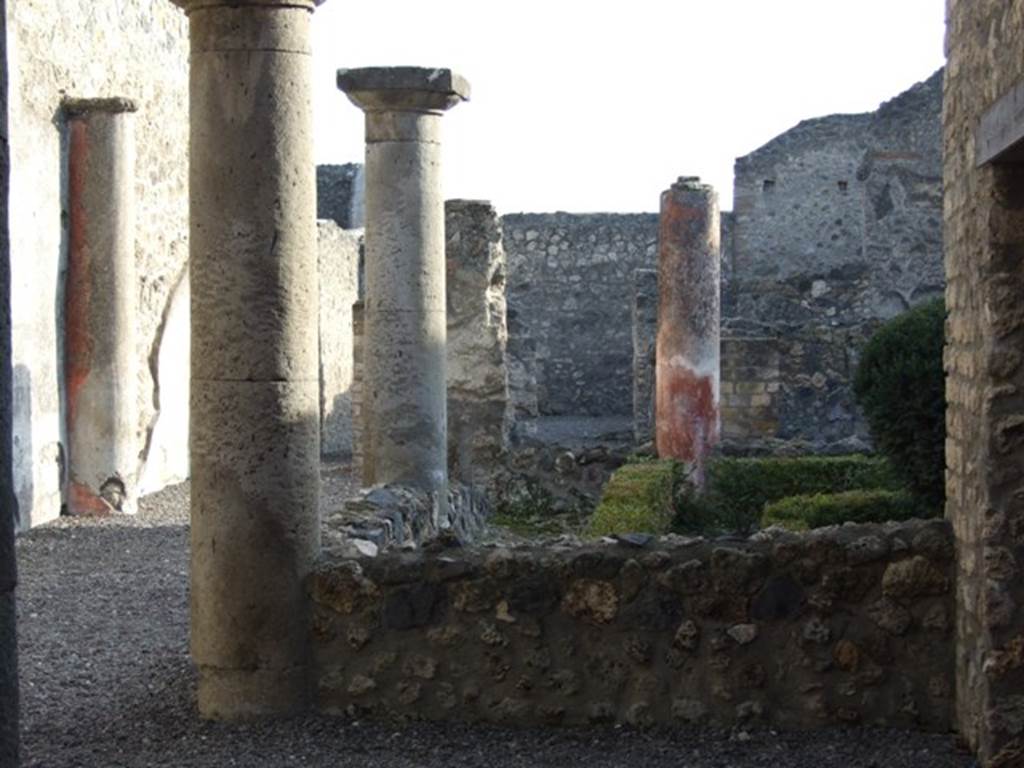
I.13.1 Pompeii. December 2007. Peristyle and garden area.
According to Jashemski, the small peristyle garden was at the front of the house.
It had a portico on the south, east and part of the north sides.
It was supported by 3 columns, an engaged column on the south-west corner, and a pillar on the south-east corner.
The garden was enclosed by a low wall.
See Jashemski, W. F., 1993. The Gardens of Pompeii, Volume II: Appendices. New York: Caratzas. (p.56)
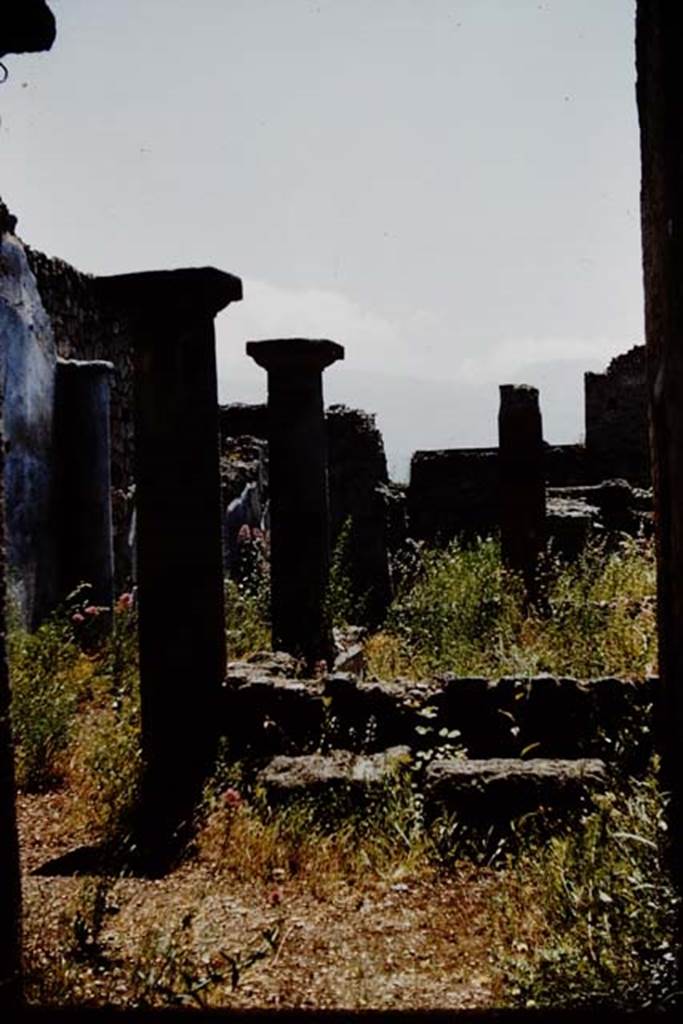
I.13.1 Pompeii. 1961.
Looking south across garden. Photo by Stanley A. Jashemski.
Source: The Wilhelmina and Stanley A. Jashemski archive in the University of Maryland Library, Special Collections (See collection page) and made available under the Creative Commons Attribution-Non Commercial License v.4. See Licence and use details.
J61f0284
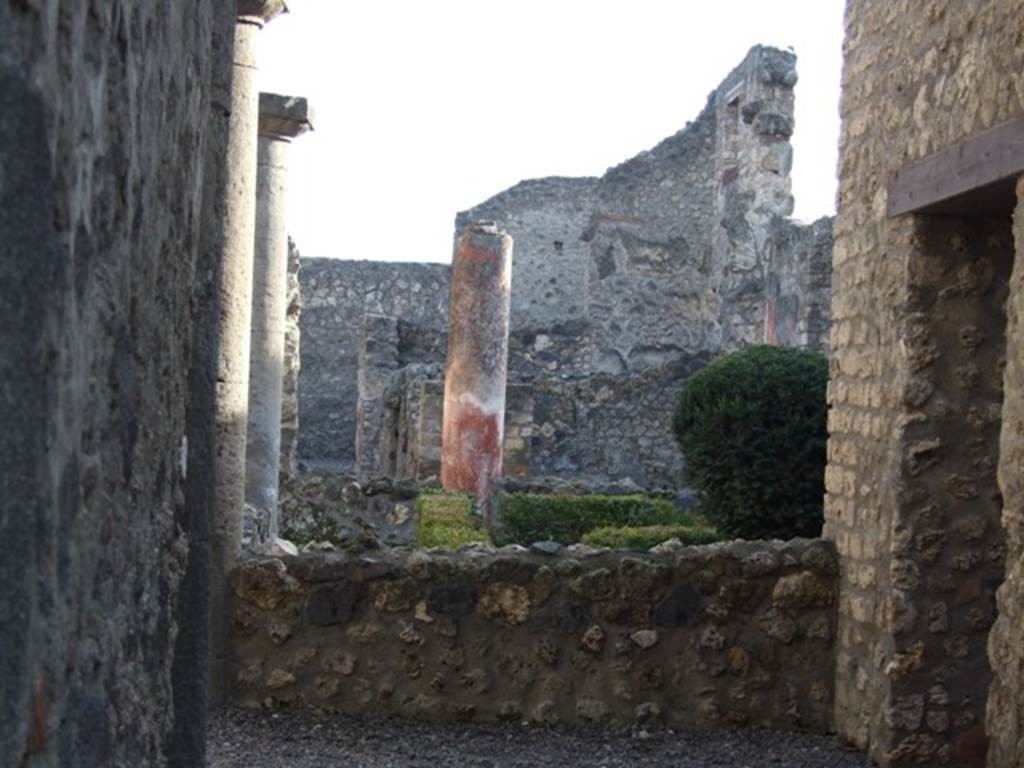
I.13.1 Pompeii. December 2007. Looking south to peristyle and garden area.
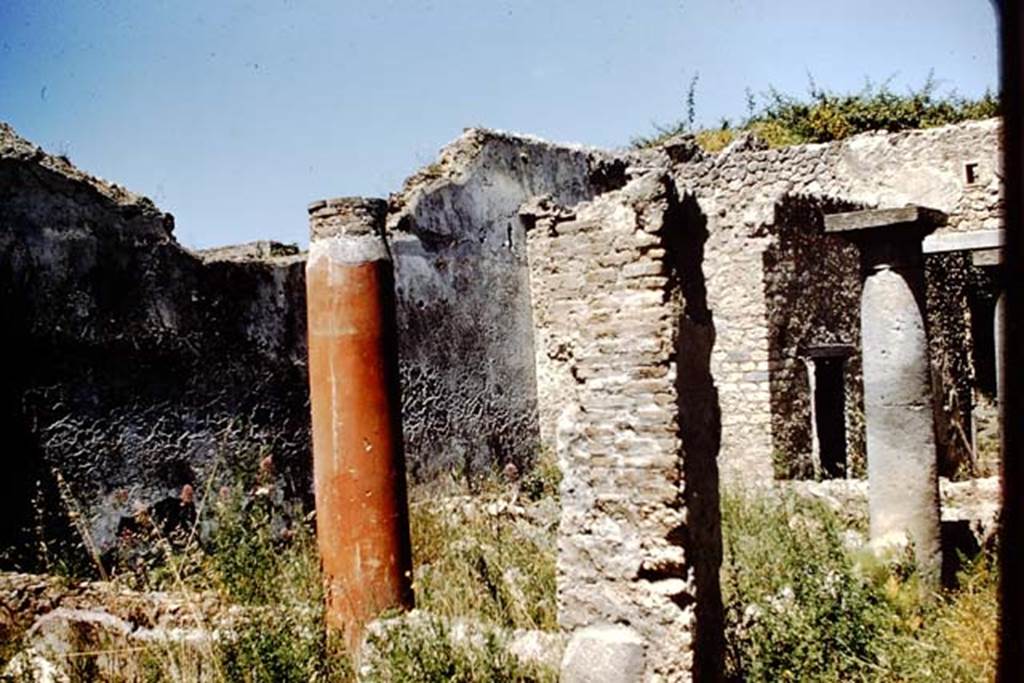
I.13.1 Pompeii. 1961. Looking north from the south-east corner of the portico. Photo by Stanley A. Jashemski.
Source: The Wilhelmina and Stanley A. Jashemski archive in the University of Maryland Library, Special Collections (See collection page) and made available under the Creative Commons Attribution-Non Commercial License v.4. See Licence and use details.
J61f0266
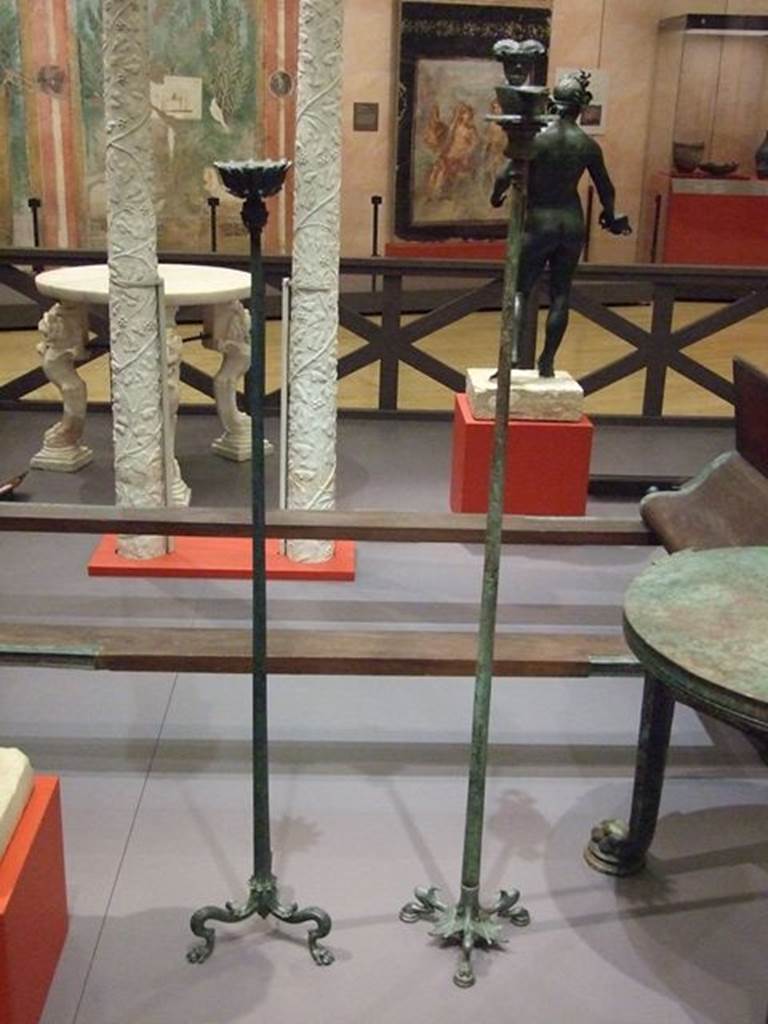
I.13.1 Pompeii. Bronze candelabrum (on left). SAP 11354.
This has a tripod base with lion’s paw feet with a lanceolate leaf over each one, and top decorated with leaves.
Photographed at “A Day in Pompeii” exhibition at Melbourne Museum. September 2009.