I.7.7
Pompeii. Casa del Sacerdos Amandus or House of the Priest Amandus
or Casa dell’affresco di
Spartaco.
Excavated 1912 and 1924.
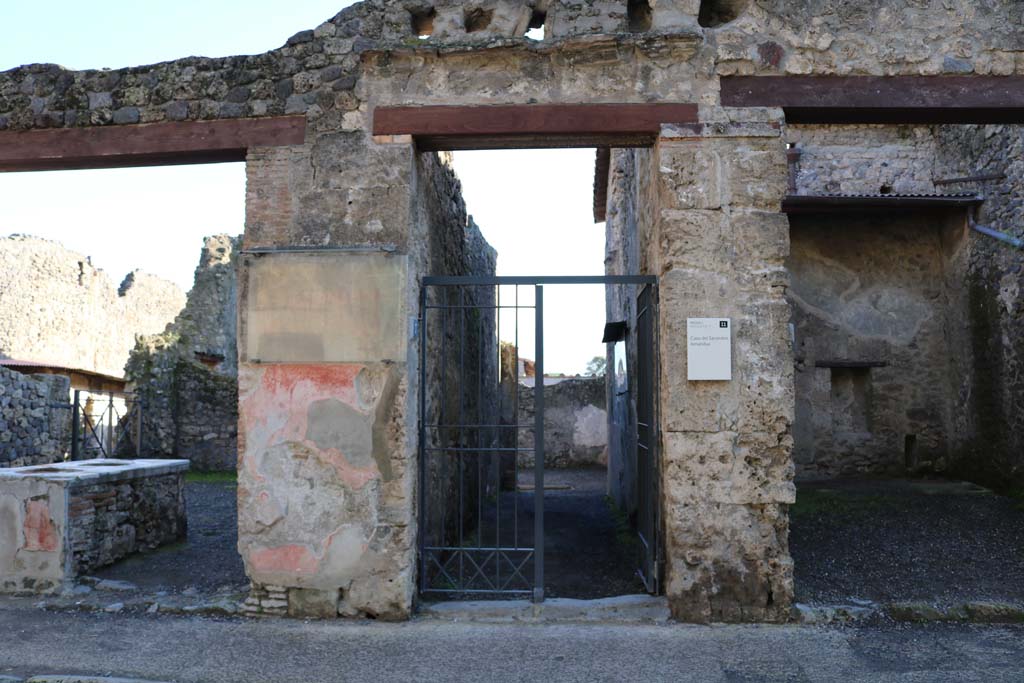
I.7.7 Pompeii, in centre. December 2018. Looking south towards entrance doorway. Photo courtesy of Aude Durand.
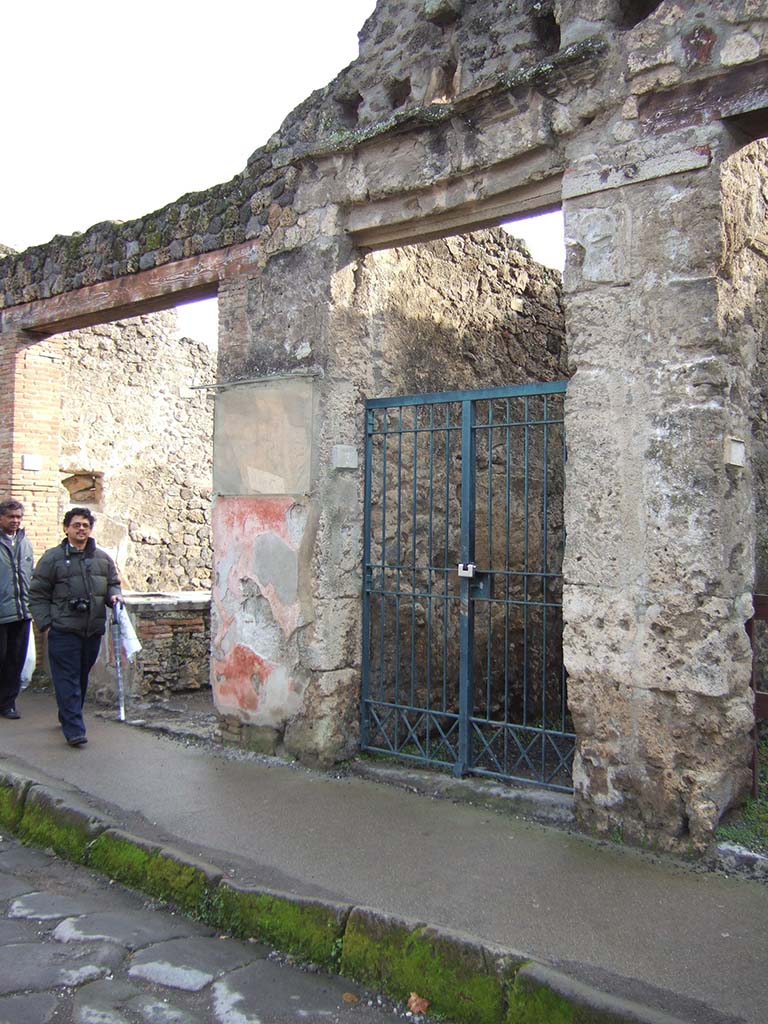
I.7.7 Pompeii. December 2007. Entrance doorway.
![I.7.7 Pompeii. December 2007. Graffiti on east side of entrance.
According to Varone and Stefani, found on the east side of the entrance doorway, were CIL IV 7233 and 7234.
See Varone, A. and Stefani, G., 2009. Titulorum Pictorum Pompeianorum, Rome: L’erma di Bretschneider, (p.80-81)
According to Epigraphik-Datenbank Clauss/Slaby (See www.manfredclauss.de), they read as -
Secundum aed(ilem)
[3] rog(at) [CIL IV 7233]
C(aium) Lollium
[ [CIL IV 7234]](1%2007%2007_files/image004.jpg)
I.7.7 Pompeii. December 2007. Graffiti on east side of entrance.
According to Varone and Stefani, found on the east side of the entrance doorway, were CIL IV 7233 and 7234.
See Varone, A. and Stefani, G., 2009. Titulorum Pictorum Pompeianorum, Rome: L’erma di Bretschneider, (p.80-81)
According to Epigraphik-Datenbank Clauss/Slaby (See www.manfredclauss.de), they read as -
Secundum aed(ilem)
[3] rog(at) [CIL IV 7233]
C(aium) Lollium
[ [CIL IV 7234]
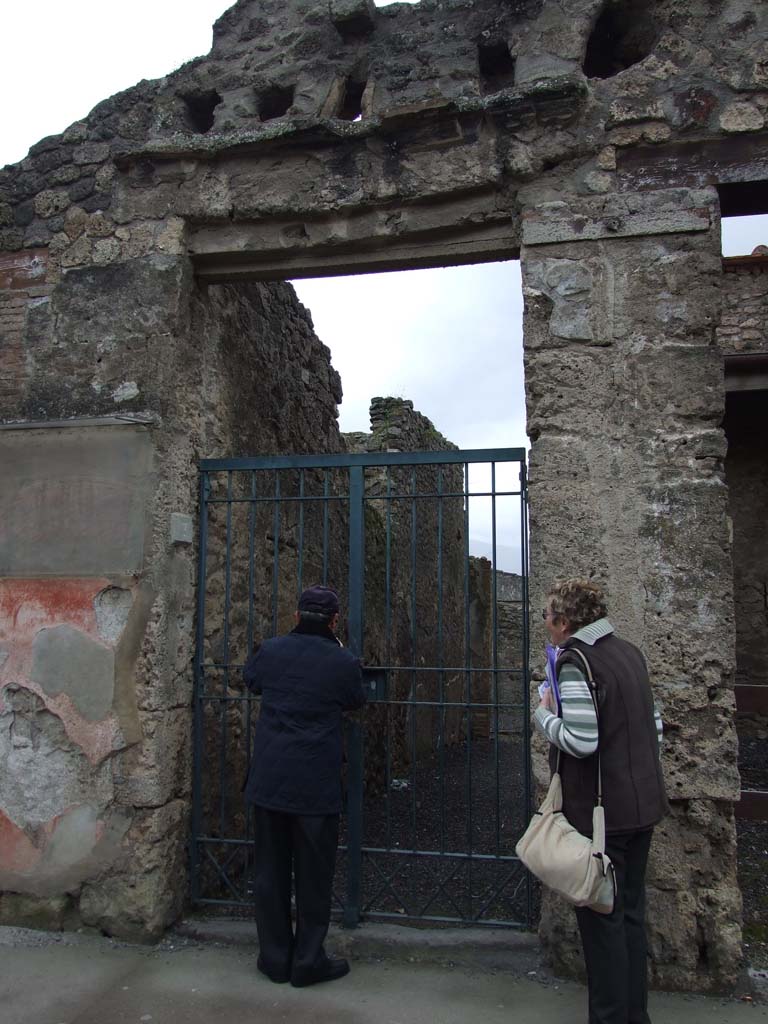
I.7.7 Pompeii. December 2006. Entrance doorway.
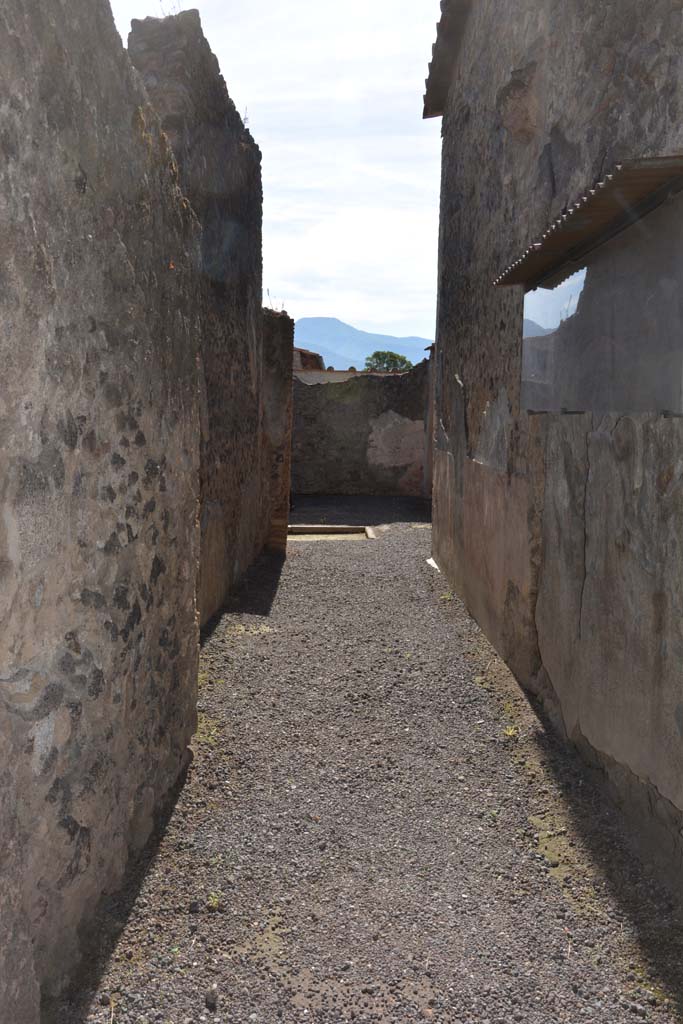
I.7.7
Pompeii. October 2019. Looking south to atrium from vestibule/entrance
corridor.
Foto Annette Haug, ERC Grant 681269 DÉCOR.
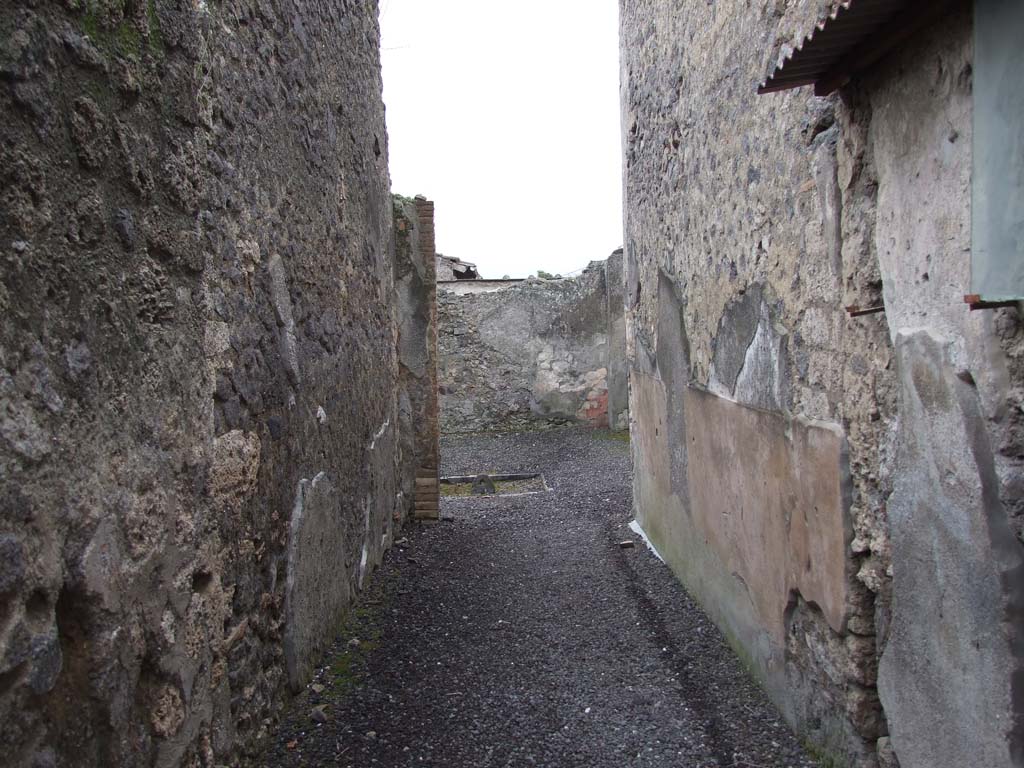
I.7.7 Pompeii. December 2006. Vestibule, looking south to atrium.
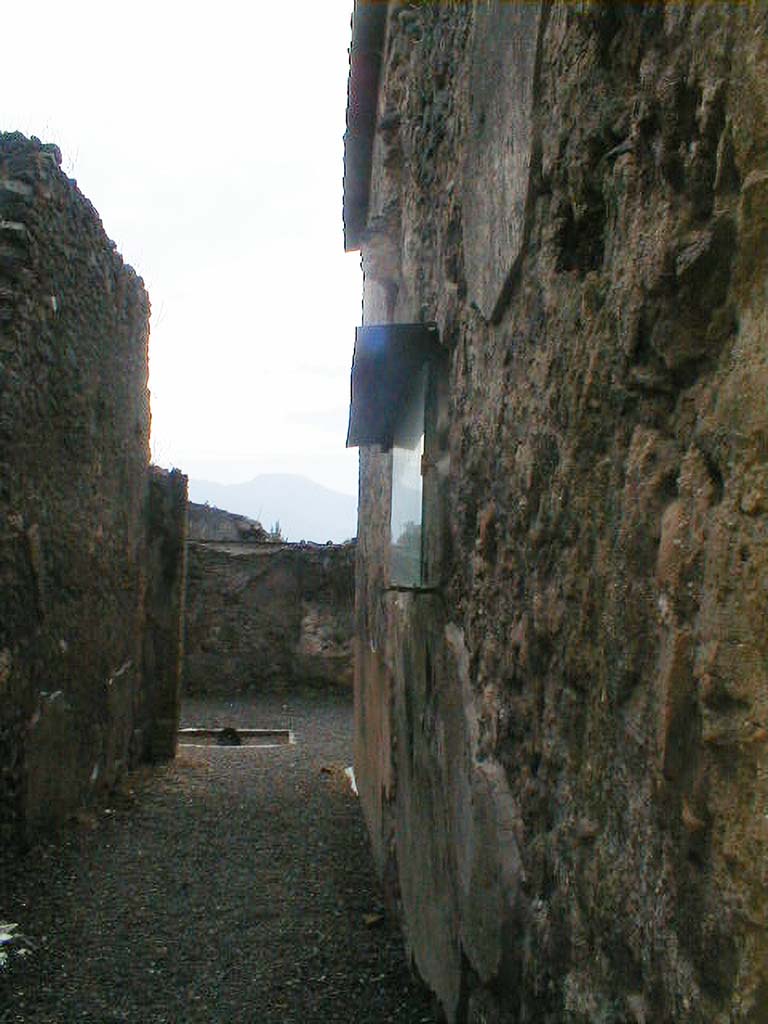
I.7.7 Pompeii. September 2004. Looking south along west wall of vestibule/entrance corridor.
![I.7.7 Pompeii. December 2006.
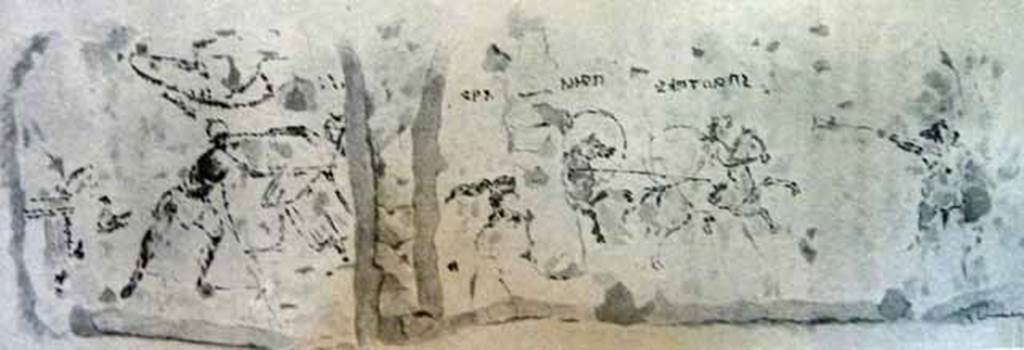
West wall of vestibule with remains of ancient combat wall painting with Oscan inscriptions.
This came to light when a good part of the wall plaster fell, revealing beneath it, the ancient painting of figures with traces of inscriptions.
Above a figure fleeing on horseback to the right, was written in Oscan – “SPARTAKS”.
Badly mutilated but above the figure of the horseman chasing him, was written “PHELI…..ANS”.
See Notizie degli Scavi di Antichità, 1927, 21, Abb 5.
Jacobelli described it as being 2.06 m long and 0.45m high.
On the far right a figure with the head of an animal is playing a long trumpet.
Two fighters on horseback, armed with round shields. One pursues the other and wounds him with a long lance.
Above the attacker is an Oscan inscription Phili[….] ans, interpreted as Phili[ks pumpaii]ans . Above the wounded horseman is the name Spartaks.
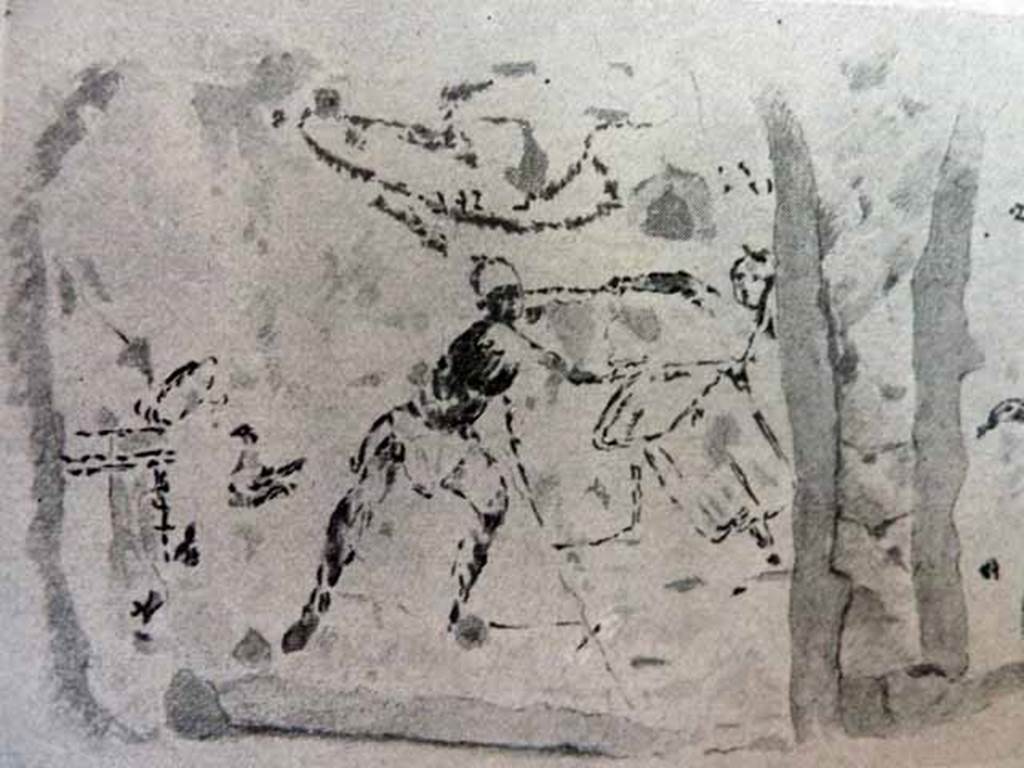
On the left is a duel between two dismounted gladiators (possibly Samnites) armed with swords and rectangular shields.
There are undecipherable Oscan inscriptions above their heads.
At the left end is a structure which may possibly be an altar.
One theory is that it showed the death of Spartacus following a wound on the thigh as described in ancient sources.
A second theory is that it predates the revolt of Spartacus and shows a gladiatorial spectacle with a gladiator called Spartacus which was a common name amongst Thracians.
See Jacobelli, L., 2003. Gladiators at Pompeii. Roma: L’Erma di Bretschneider. (p.75, fig 62)](1%2007%2007_files/image009.jpg)
I.7.7 Pompeii. December 2006.
West wall of vestibule with remains of ancient combat wall painting with Oscan inscriptions.
This came to light when a good part of the wall plaster fell, revealing beneath it, the ancient painting of figures with traces of inscriptions.
Above a figure fleeing on horseback to the right, was written in Oscan – “SPARTAKS”.
Badly mutilated but above the figure of the horseman chasing him, was written “PHELI…..ANS”.
See Notizie degli Scavi di Antichità, 1927, 21, Abb 5.
Jacobelli described it as being 2.06 m long and 0.45m high.
On the far right a figure with the head of an animal is playing a long trumpet.
Two fighters on horseback, armed with round shields. One pursues the other and wounds him with a long lance.
Above the attacker is an Oscan inscription Phili[….] ans, interpreted as Phili[ks pumpaii]ans . Above the wounded horseman is the name Spartaks.
On the left is a duel between two dismounted gladiators (possibly Samnites) armed with swords and rectangular shields.
There are undecipherable Oscan inscriptions above their heads.
At the left end is a structure which may possibly be an altar.
One theory is that it showed the death of Spartacus following a wound on the thigh as described in ancient sources.
A second theory is that it predates the revolt of Spartacus and shows a gladiatorial spectacle with a gladiator called Spartacus which was a common name amongst Thracians.
See Jacobelli, L., 2003. Gladiators
at Pompeii. Roma: L’Erma di
Bretschneider. (p.75, fig 62)
I.7.7 Pompeii. Remains of wall painting showing ancient battle.
I.7.7 Pompeii. Detail from ancient combat wall painting.
At the left end is a structure which may possibly be an altar.
Duel between two dismounted gladiators (possibly Samnites) armed with swords and rectangular shields.
There are undecipherable Oscan inscriptions above their heads.
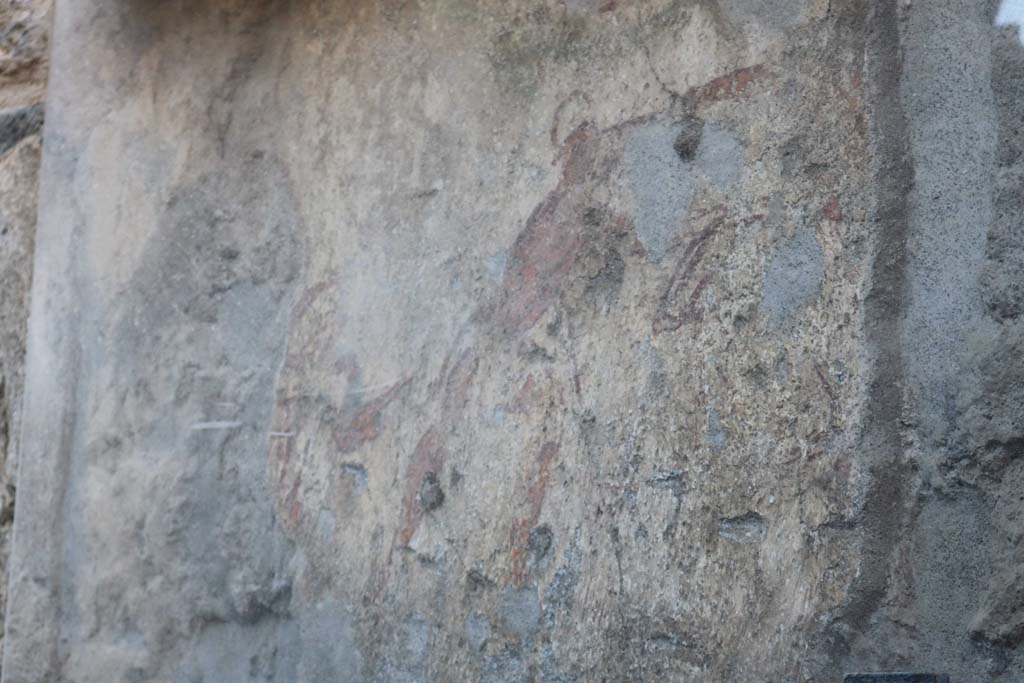
I.7.7 Pompeii. December 2018. Detail from left end of
ancient combat wall painting. Photo courtesy of Aude Durand.
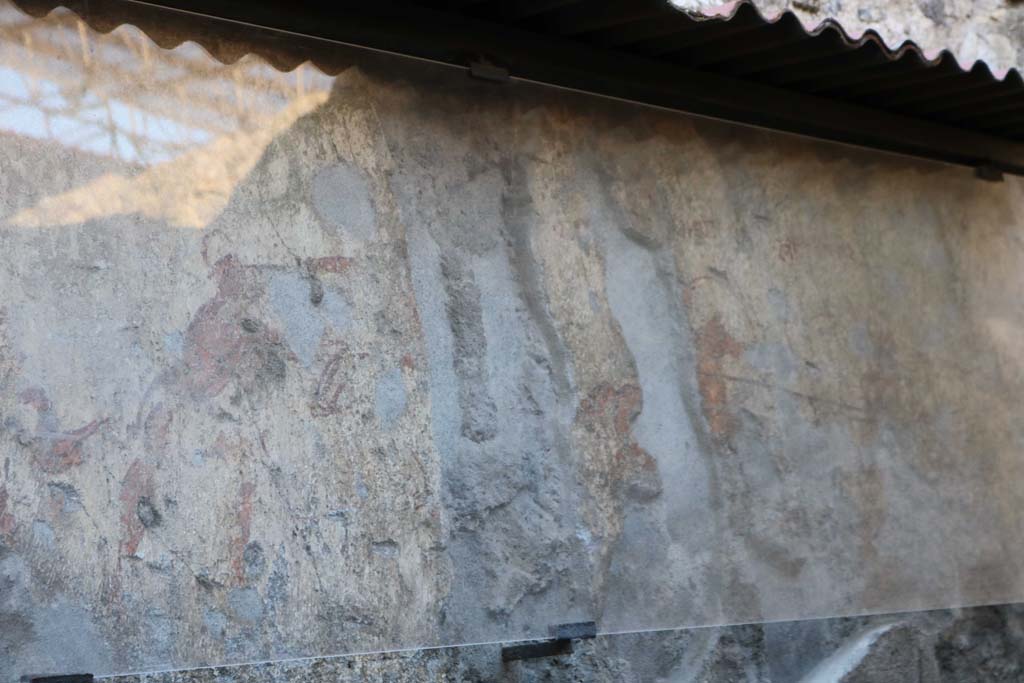
I.7.7 Pompeii. December 2018. Detail from left and right end
of ancient combat wall painting. Photo courtesy of Aude Durand.
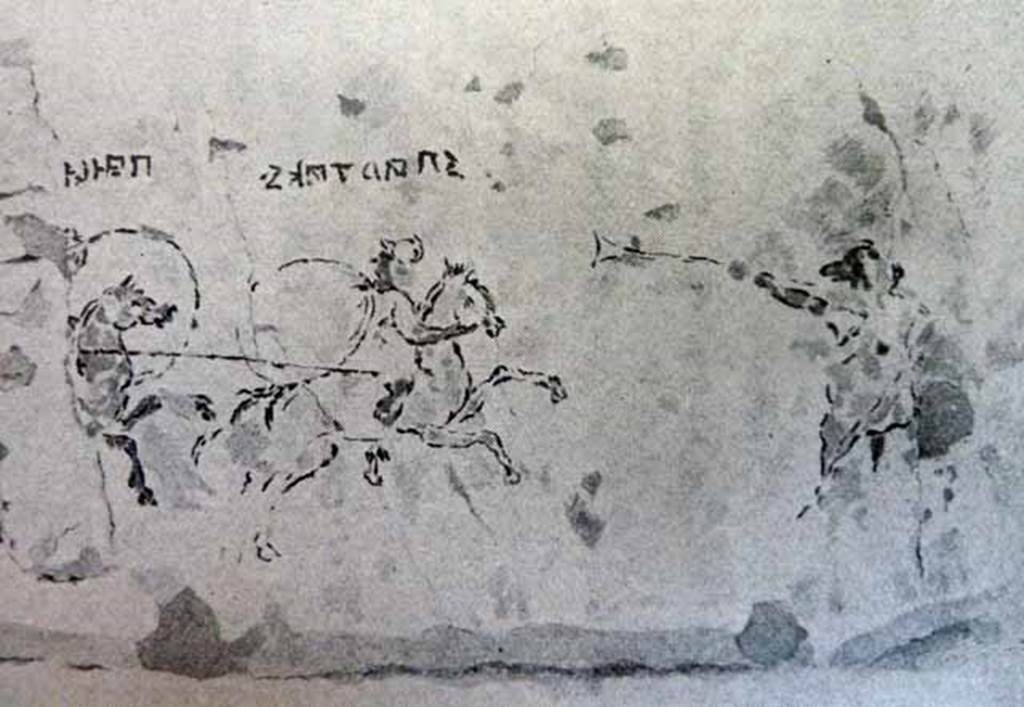
I.7.7 Pompeii. Detail from ancient combat wall painting.
Two fighters on horseback, armed with round shields. One pursues the other and wounds him with a long lance.
On the far right a figure with the head of an animal is playing a long trumpet.
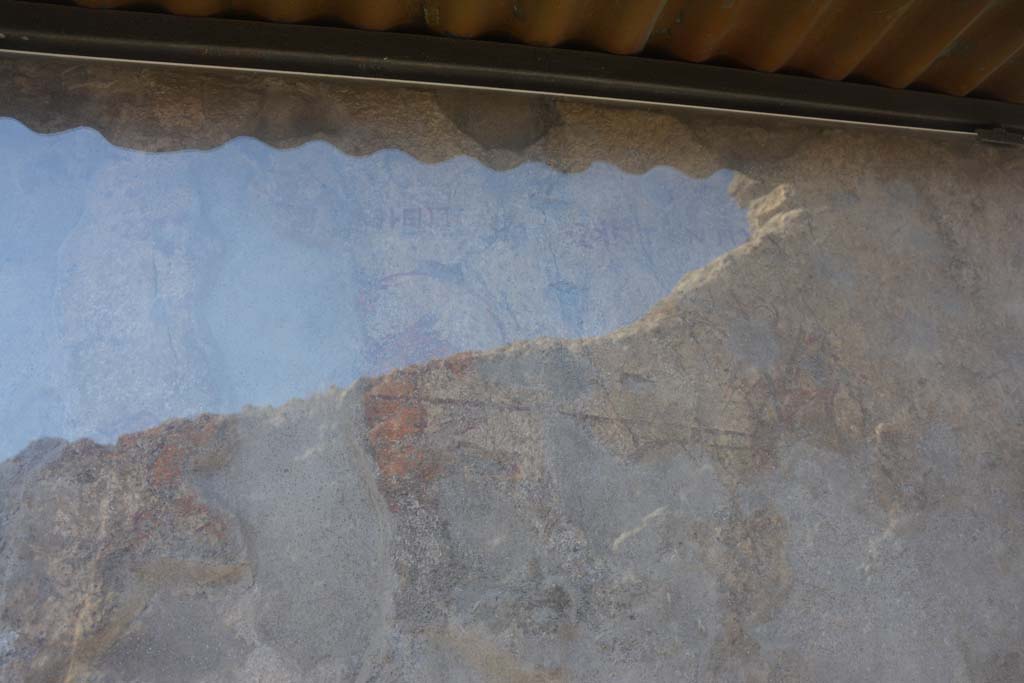
I.7.7 Pompeii. October 2019. Detail of horses, in centre and right, from ancient combat wall painting.
Foto Annette Haug, ERC Grant 681269 DÉCOR.
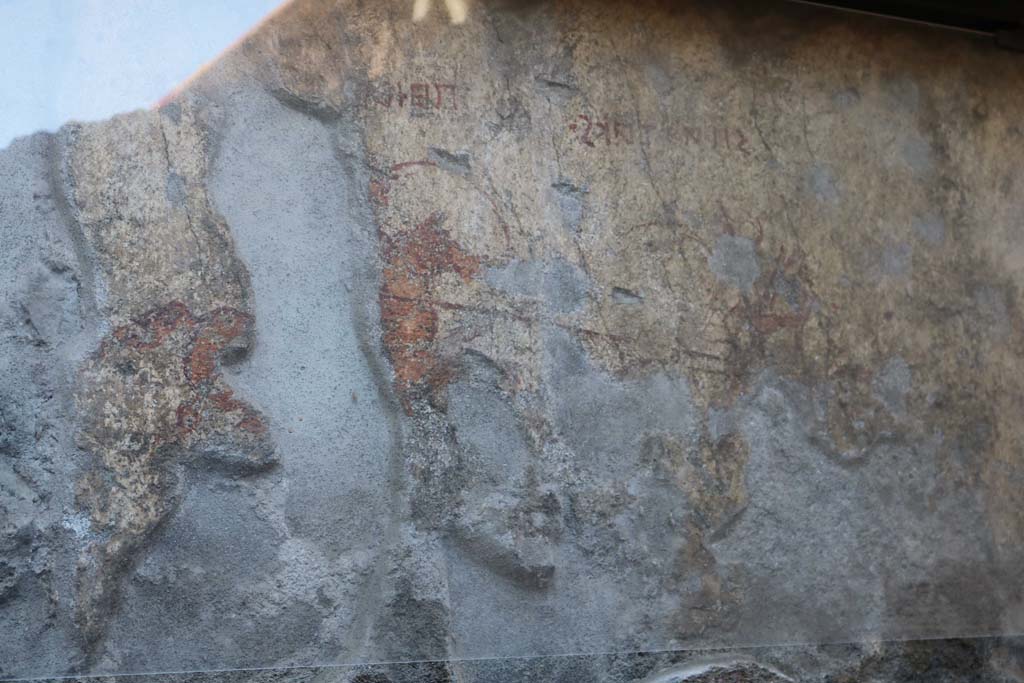
I.7.7 Pompeii. December 2018. Detail of horses, in centre
right, of ancient combat wall painting. Photo courtesy of Aude Durand.
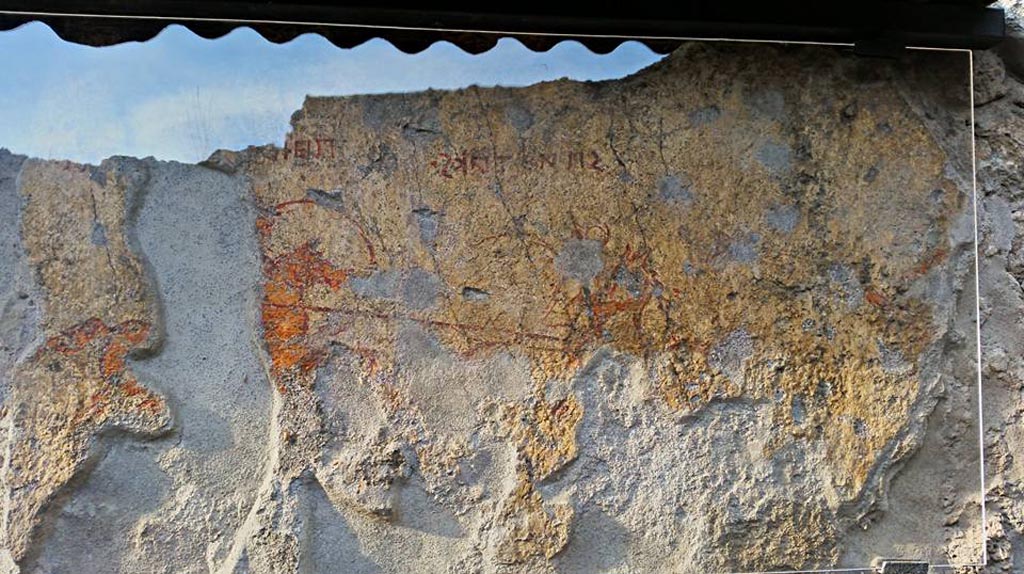
I.7.7 Pompeii. 2015/2016. Detail of horses, in centre
right, of ancient combat wall painting. Photo courtesy of Giuseppe Ciaramella.
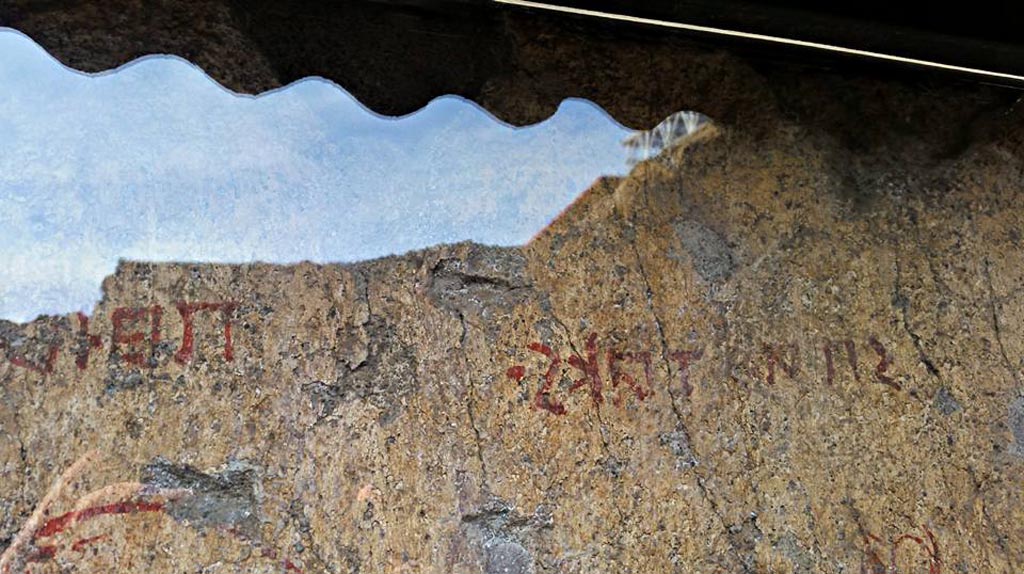
I.7.7 Pompeii. 2015/2016. Detail of Oscan inscriptions. Photo
courtesy of Giuseppe Ciaramella.
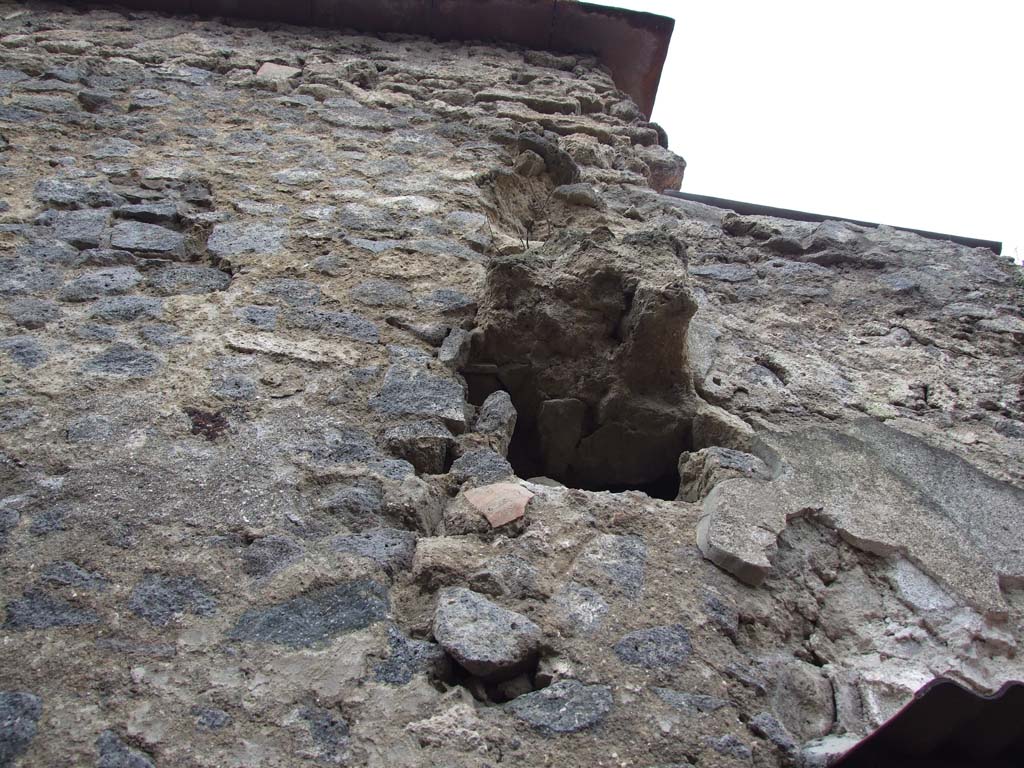
I.7.7 Pompeii. December 2006. West wall of vestibule.
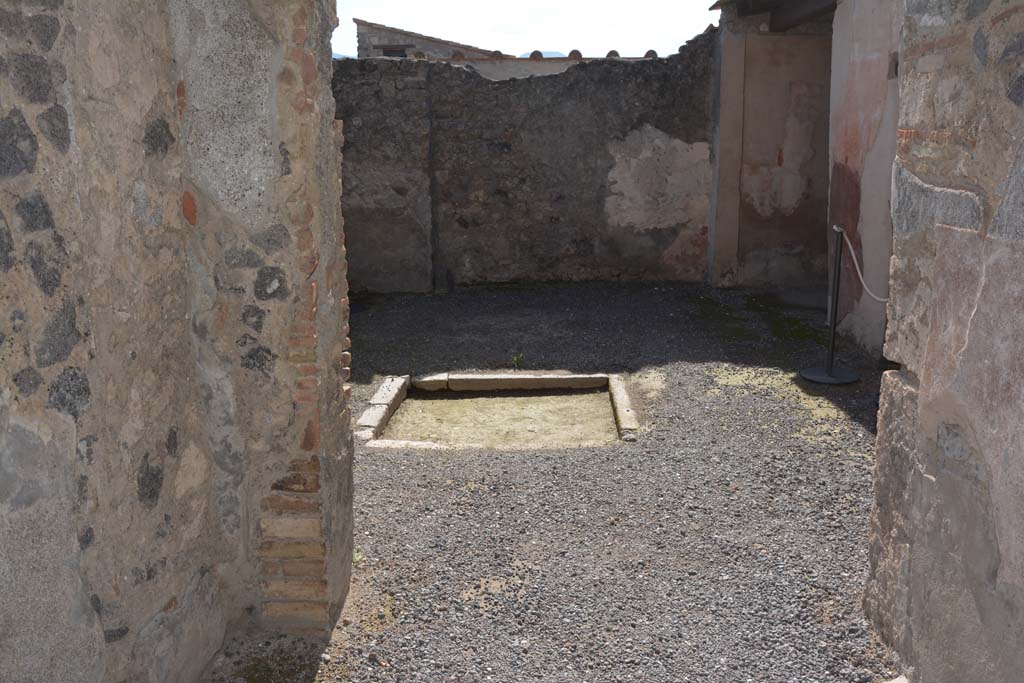
I.7.7 Pompeii. October 2019. Looking south from entrance corridor
towards impluvium in atrium.
Foto Annette Haug, ERC Grant 681269 DÉCOR.
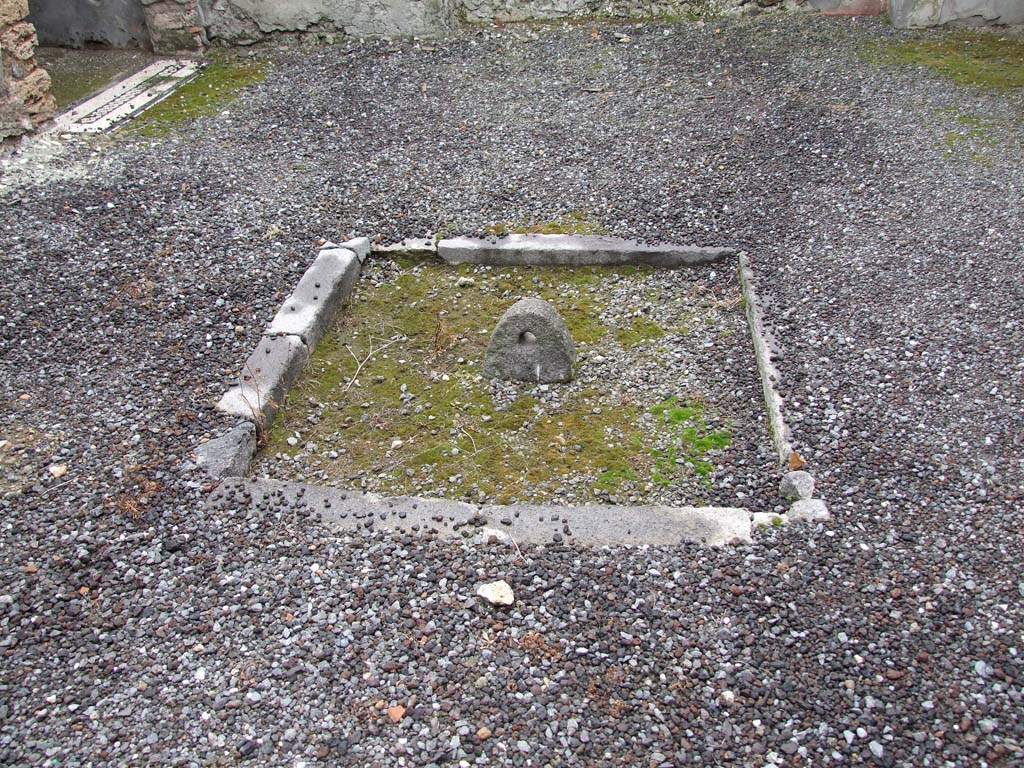
I.7.7 Pompeii. December 2006. Impluvium.
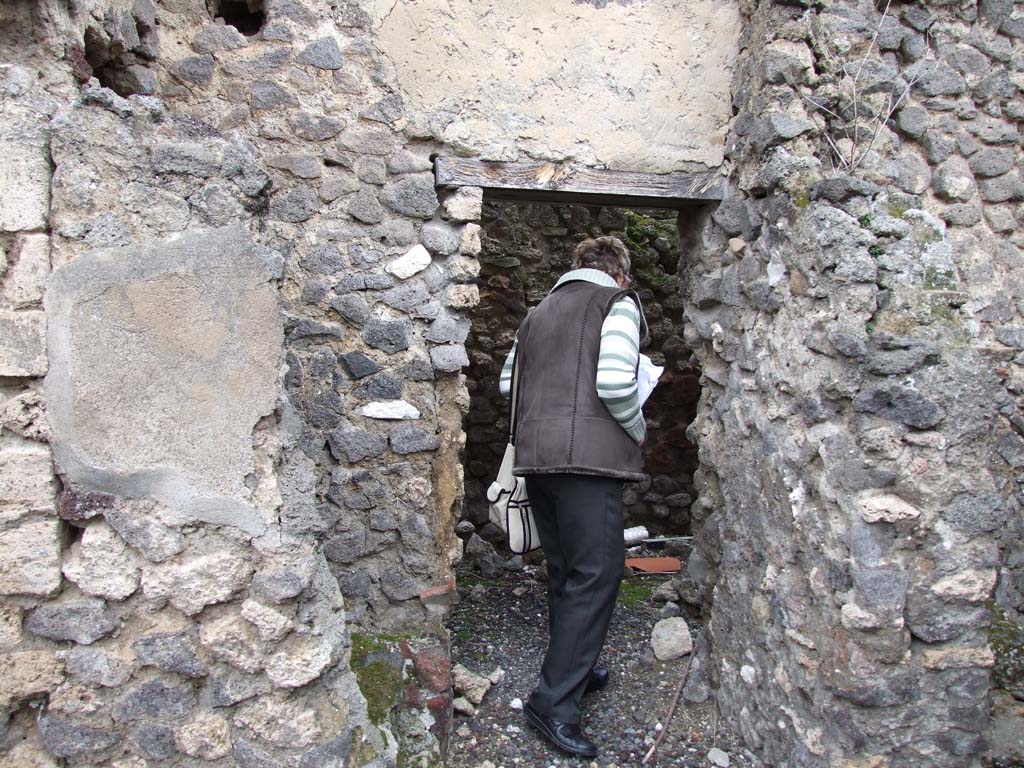
I.7.7 Pompeii. December 2006. Doorway to room on east of entrance.
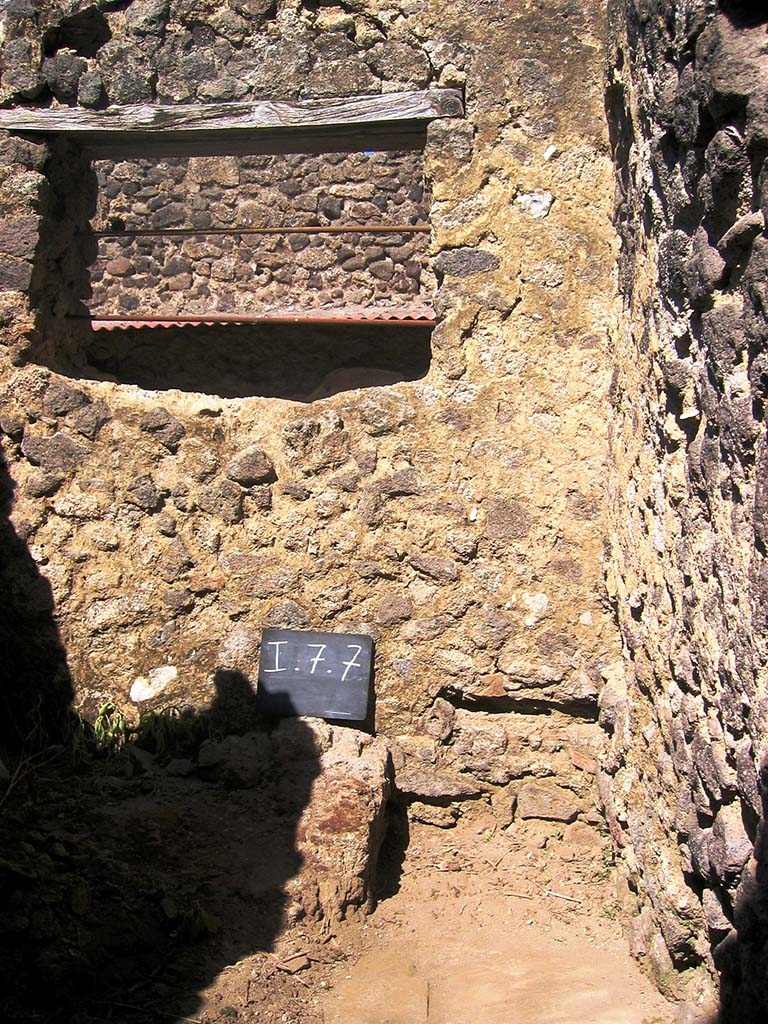
I.7.7 Pompeii. July 2007.
Looking east towards latrine in small room on east side of entrance. Photo courtesy of Barry Hobson.
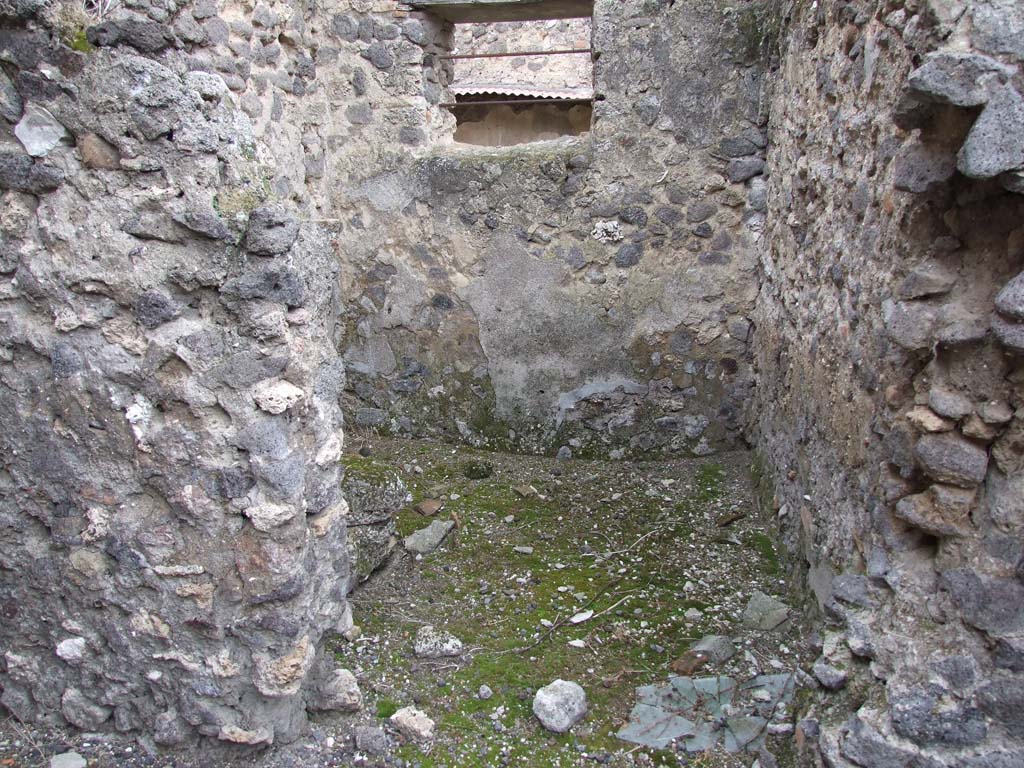
I.7.7 Pompeii. December 2006. Cubiculum or bedroom to east of entrance.
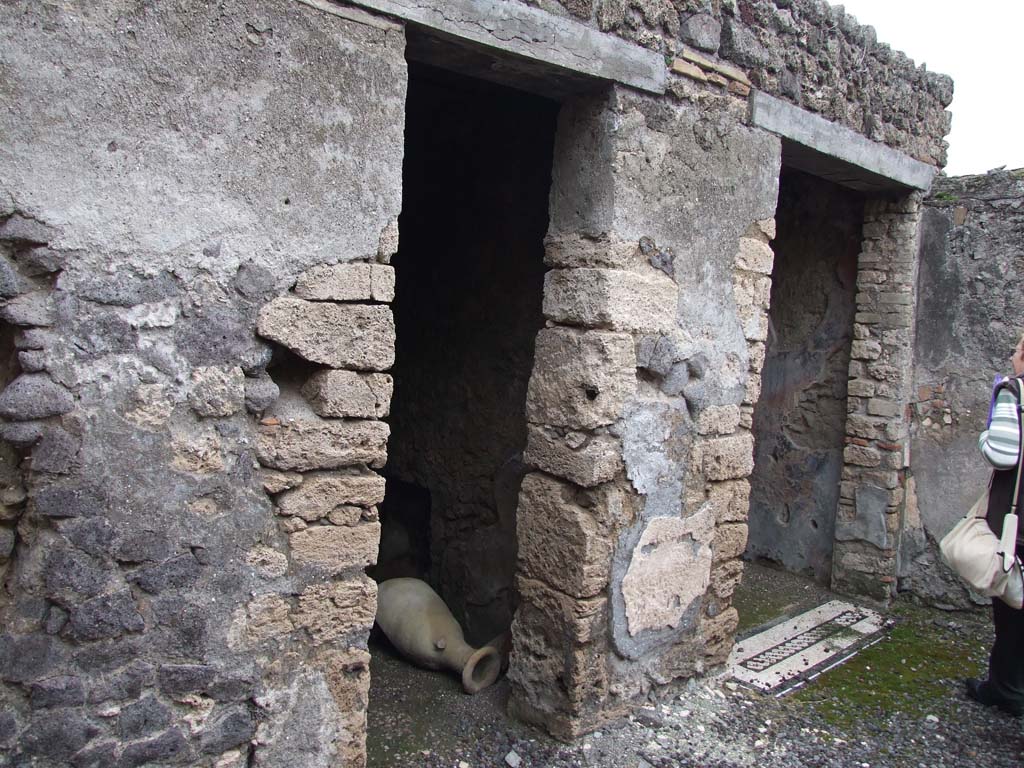
I.7.7 Pompeii. December 2006. Doorway to bedroom on east side and ala with mosaic threshold.
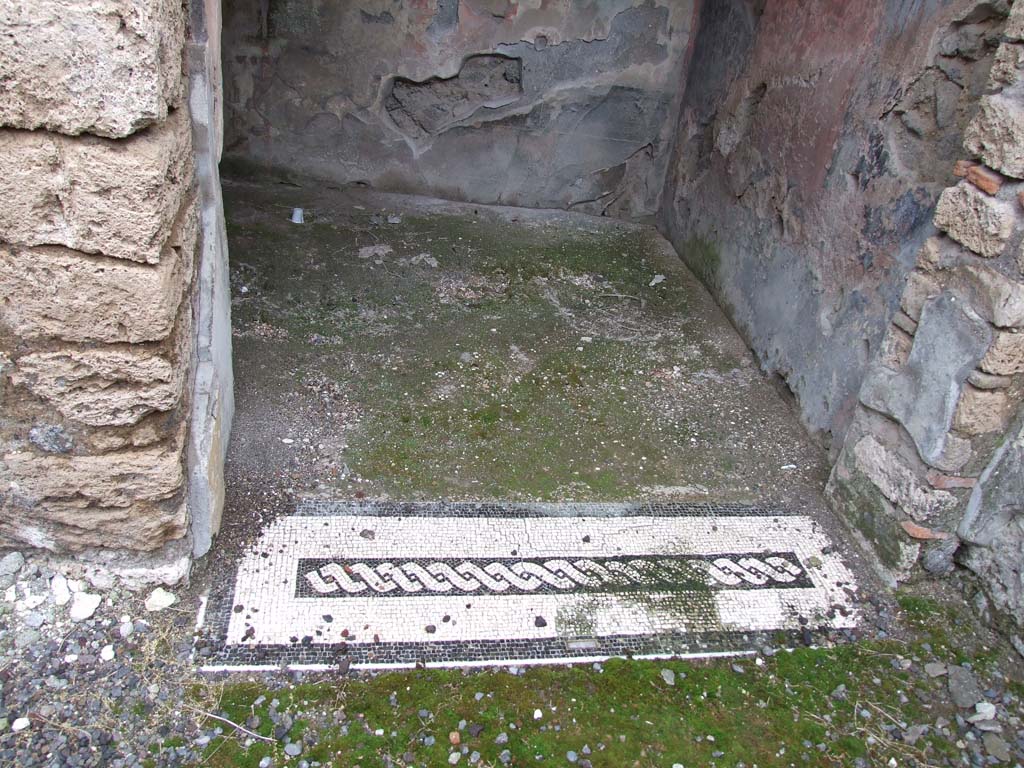
I.7.7 Pompeii. December 2006. Eastern ala with mosaic threshold, looking east.
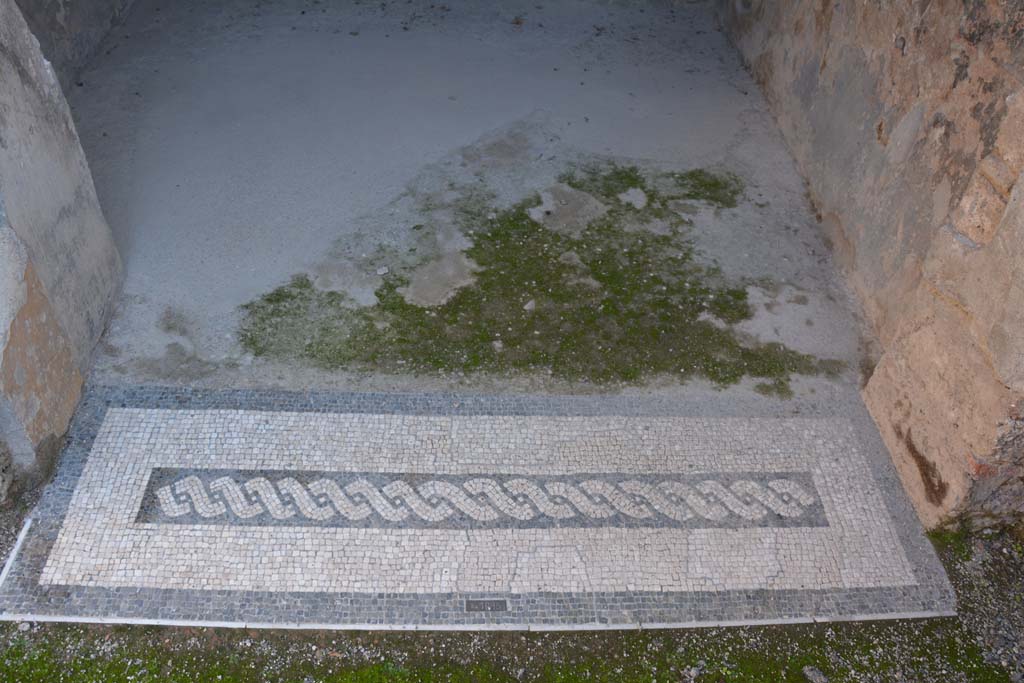
I.7.7 Pompeii. October 2019. Detail of doorway
threshold from east ala.
Foto Annette Haug, ERC
Grant 681269 DÉCOR.
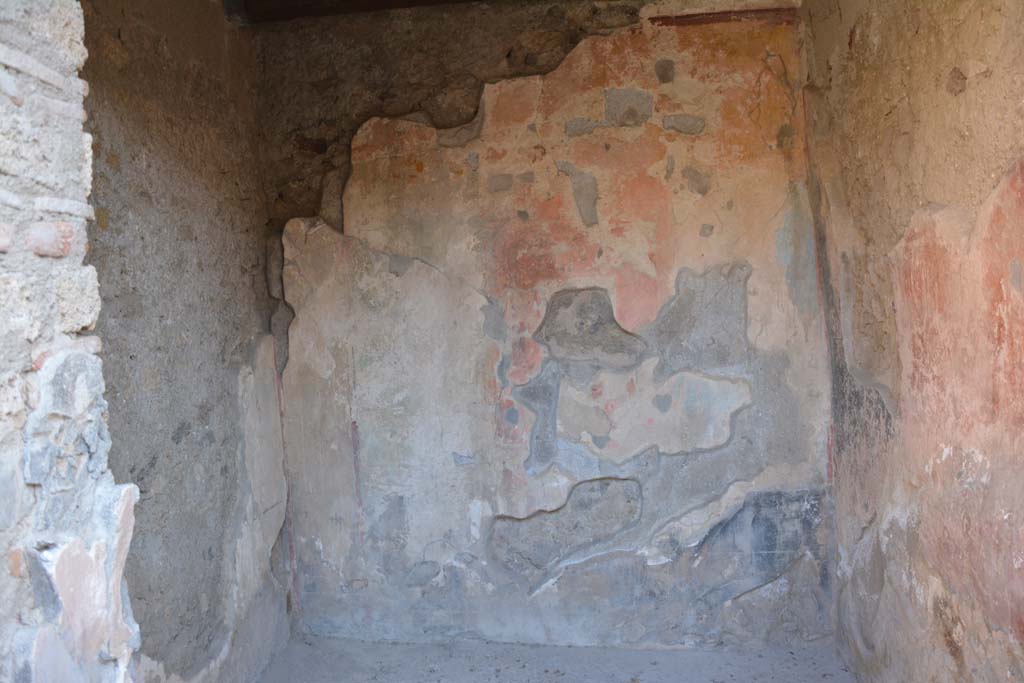
I.7.7 Pompeii. October 2019. East wall
of ala, with remaining detail of painted decoration.
Foto Annette Haug, ERC Grant 681269 DÉCOR.
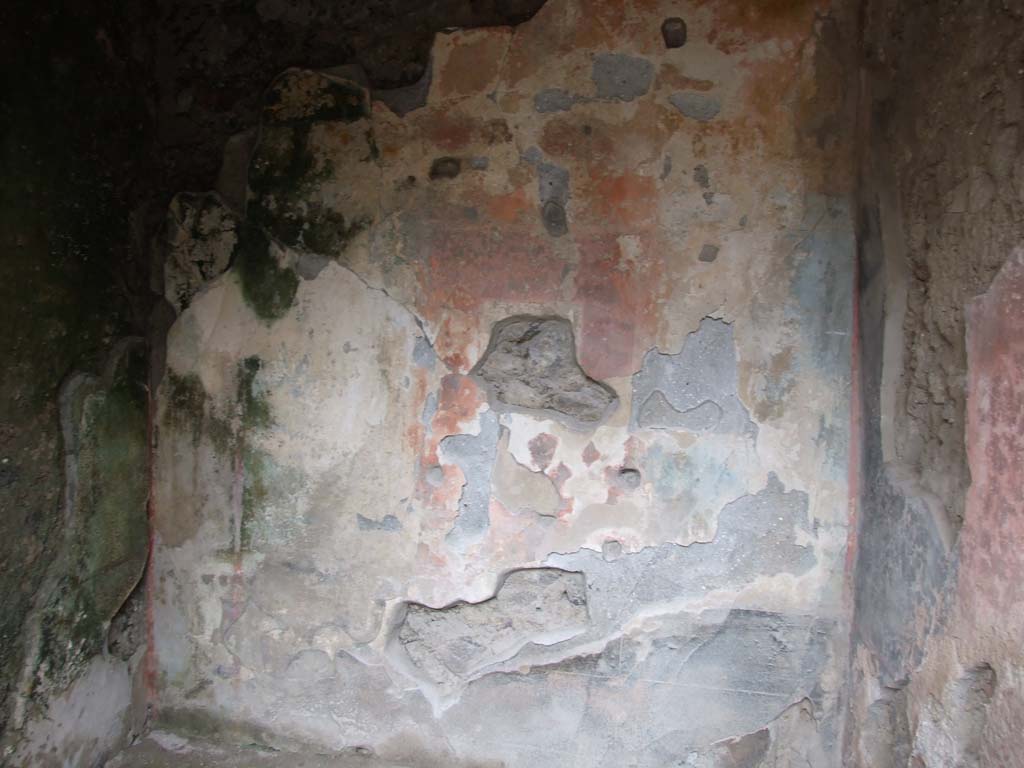
I.7.7 Pompeii. December 2006. East wall of ala.