I.5.3 Pompeii. Ruined site east of Tannery at I.5.2, possibly a stable and/or hospitium.
Neglected (some parts since antiquity). Excavated 1873.
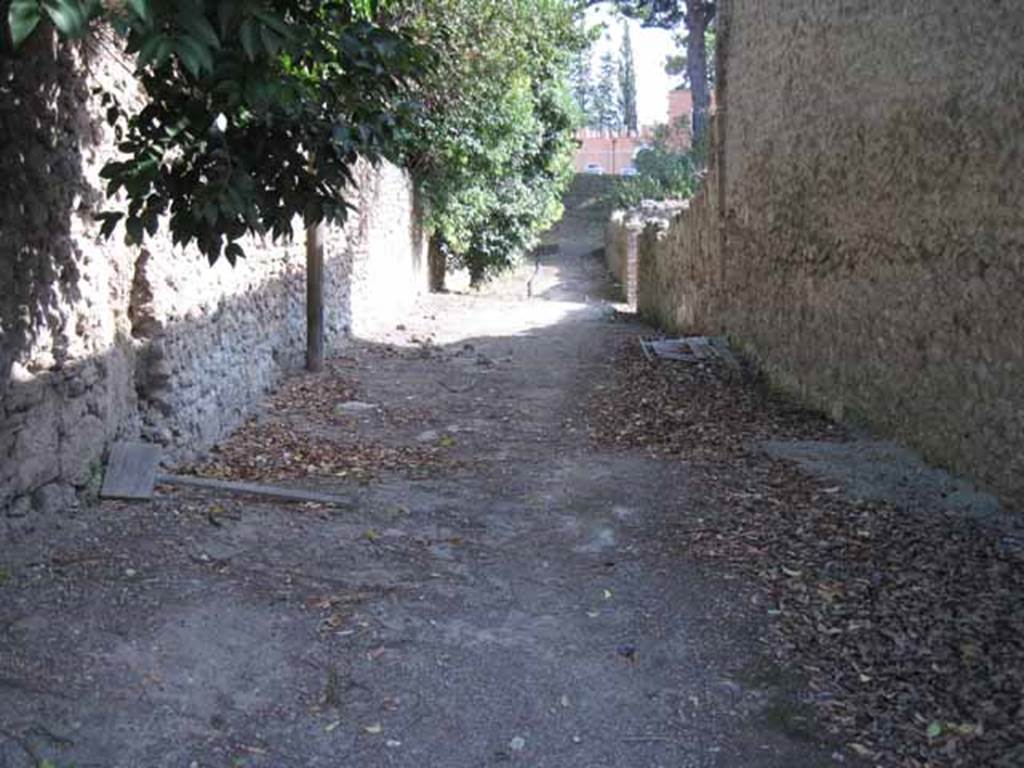
I.25 Pompeii, on left. September 2010.
Vicolo del Citarista looking south to walls. I.5.3, entrance on right. Photo courtesy of Drew Baker.
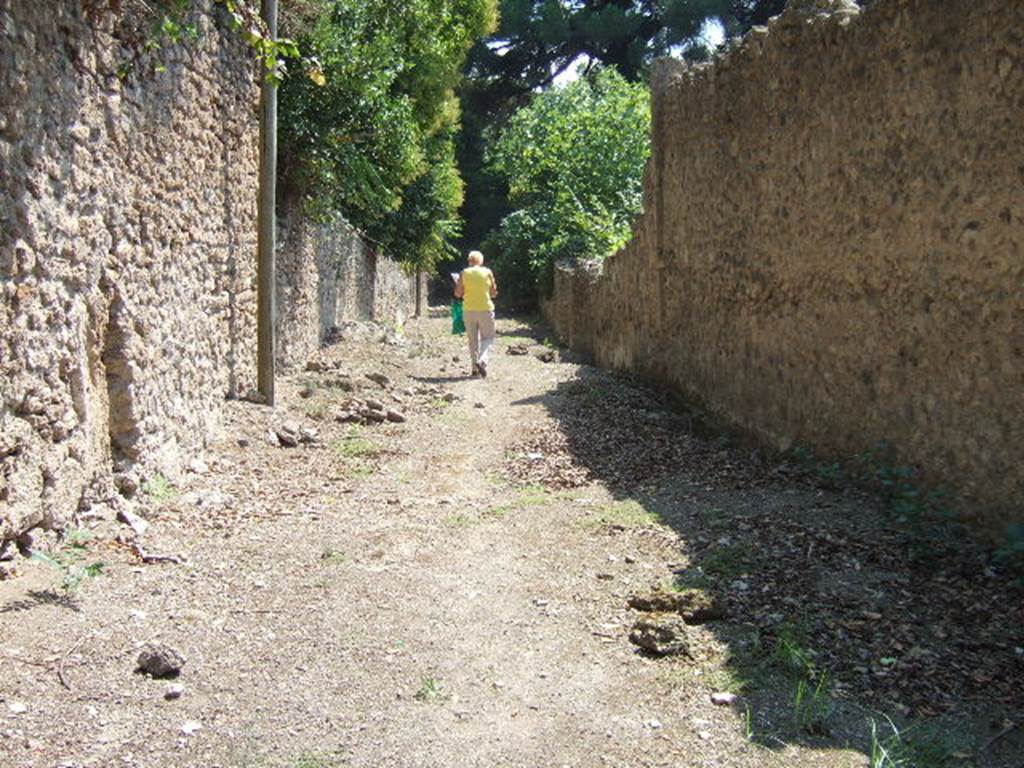
I.25 Pompeii, unexcavated, on left. September 2005. Vicolo looking south. I.5.3 and side wall of I.5.2, on right.
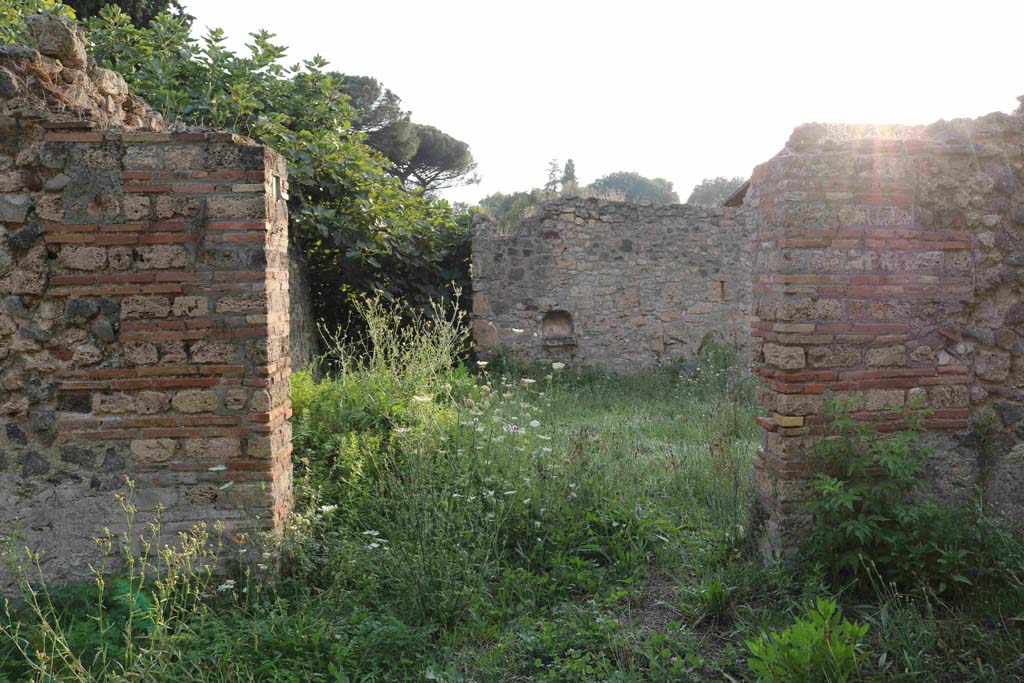
I.5.3 Pompeii. September 2018. Entrance doorway, looking west along south side. Photo courtesy of Aude Durand.
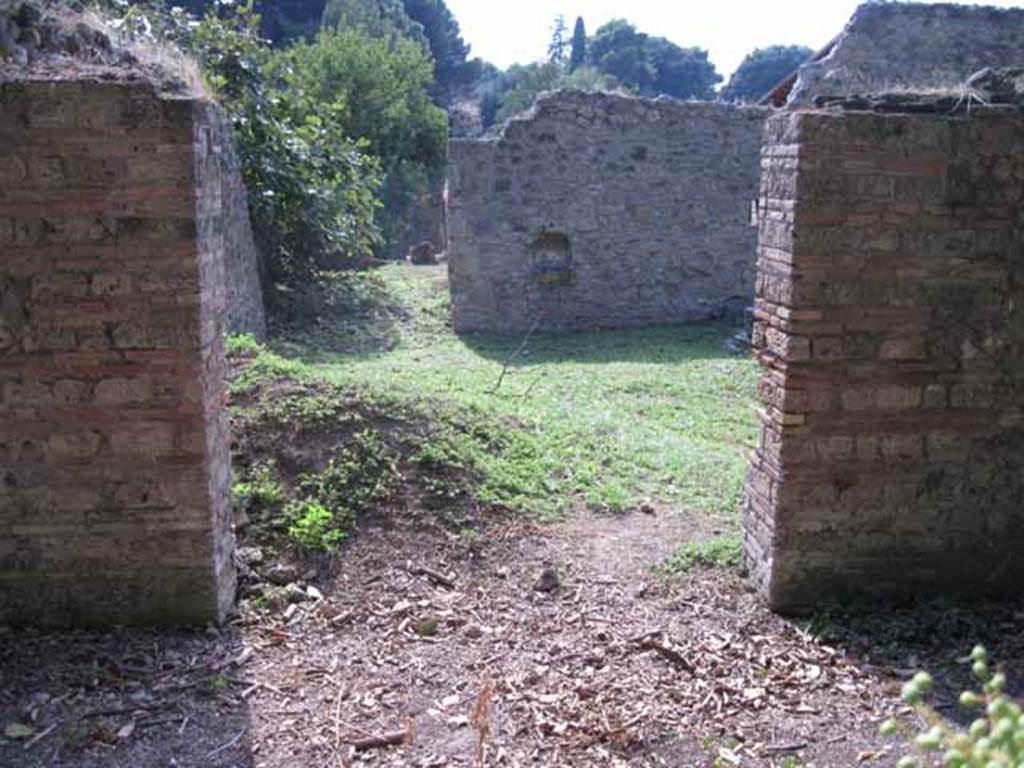
I.5.3 Pompeii. September 2010. Entrance doorway, looking west along south side. Photo courtesy of Drew Baker.
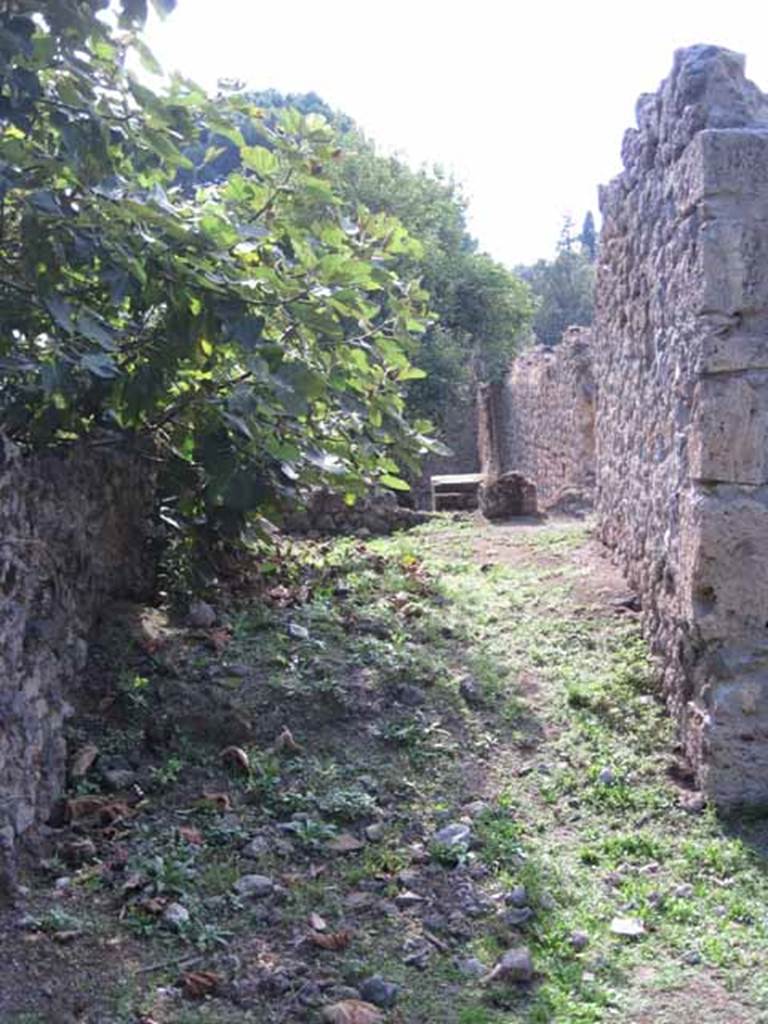
I.5.3 Pompeii. September 2010.
Small room or stable, on west side of large open area. Photo courtesy of Drew Baker.
Jashemski reported that a watering trough for animals could still be seen.
See Jashemski, W. F., 1993. The Gardens of Pompeii, Volume II: Appendices. New York: Caratzas. (p.33)
Possibly, the watering trough is the one in the garden of I.5.2, on the south-west corner of this rear wall.
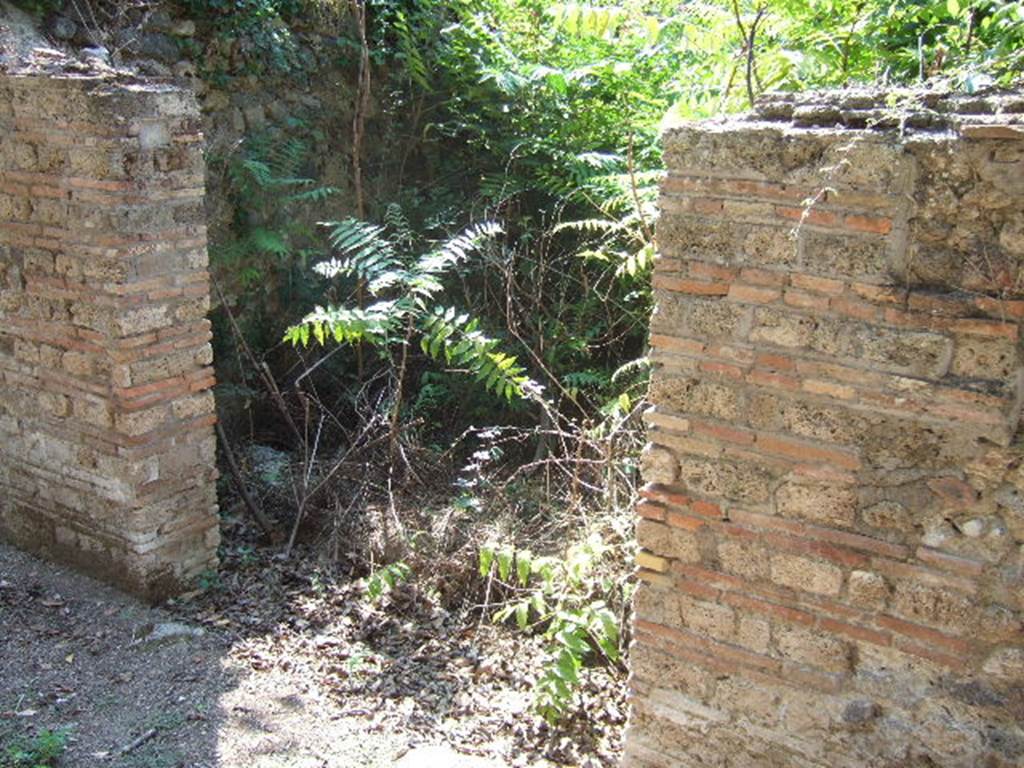
I.5.3 Pompeii. September 2005. Entrance doorway.
.
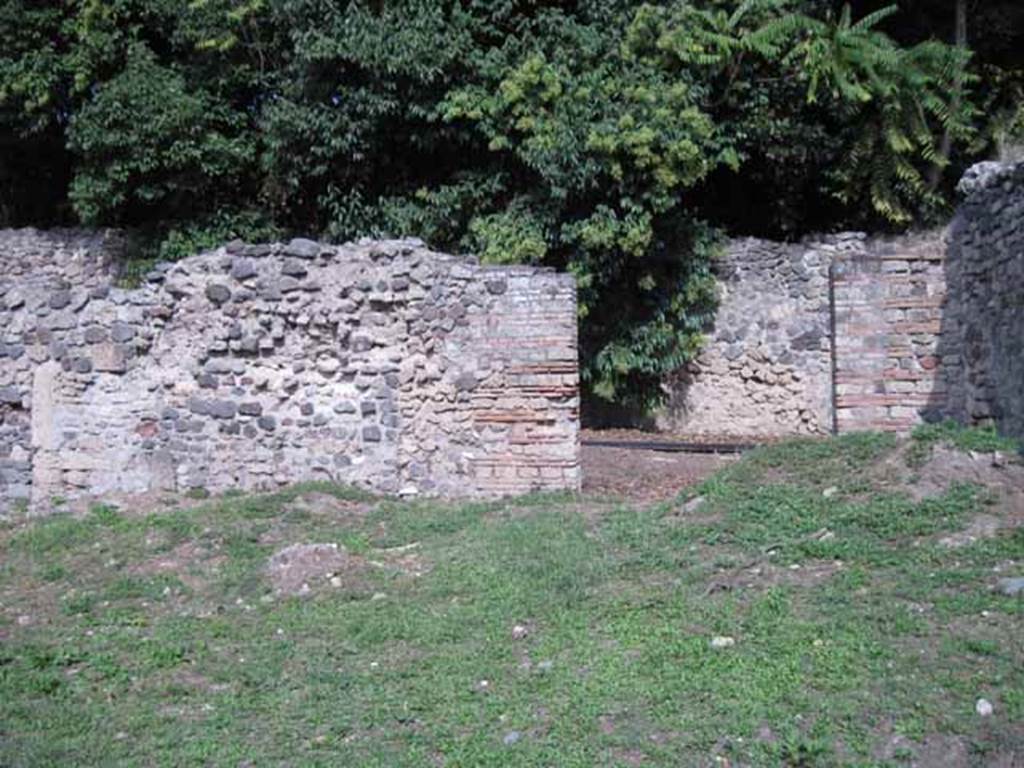
I.5.3 Pompeii. September 2010. Looking east towards entrance, from large open area. Photo courtesy of Drew Baker.
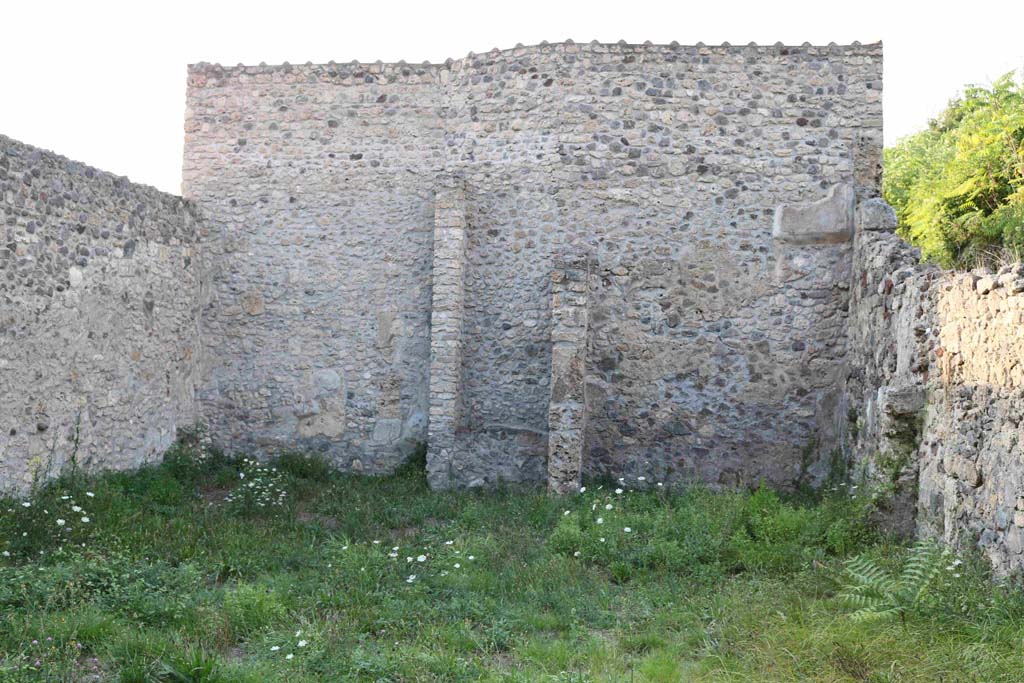
I.5.3 Pompeii. September 2018. Looking north across large area. Photo courtesy of Aude Durand.
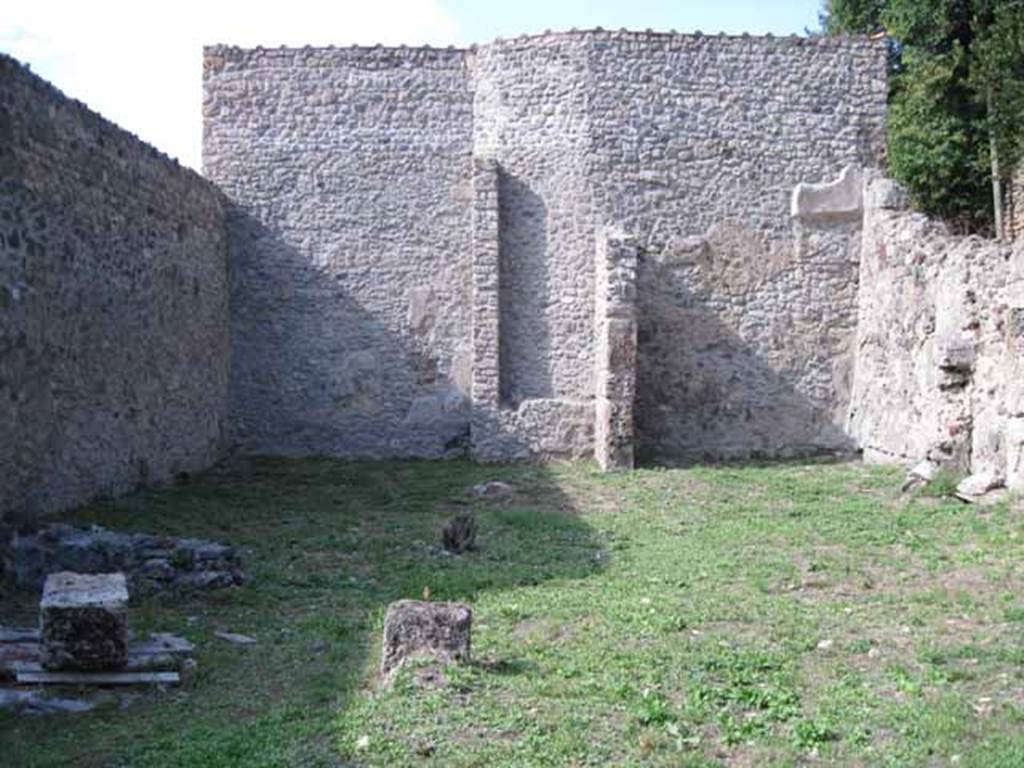
I.5.3 Pompeii. September 2010. Looking north across large area. Photo courtesy of Drew Baker.
Jashemski thought that this site, (excavated in 1874) and already destroyed in antiquity, had probably been a hospitium.
See Jashemski, W. F., 1993. The Gardens of Pompeii, Volume II: Appendices. New York: Caratzas. (p.33)
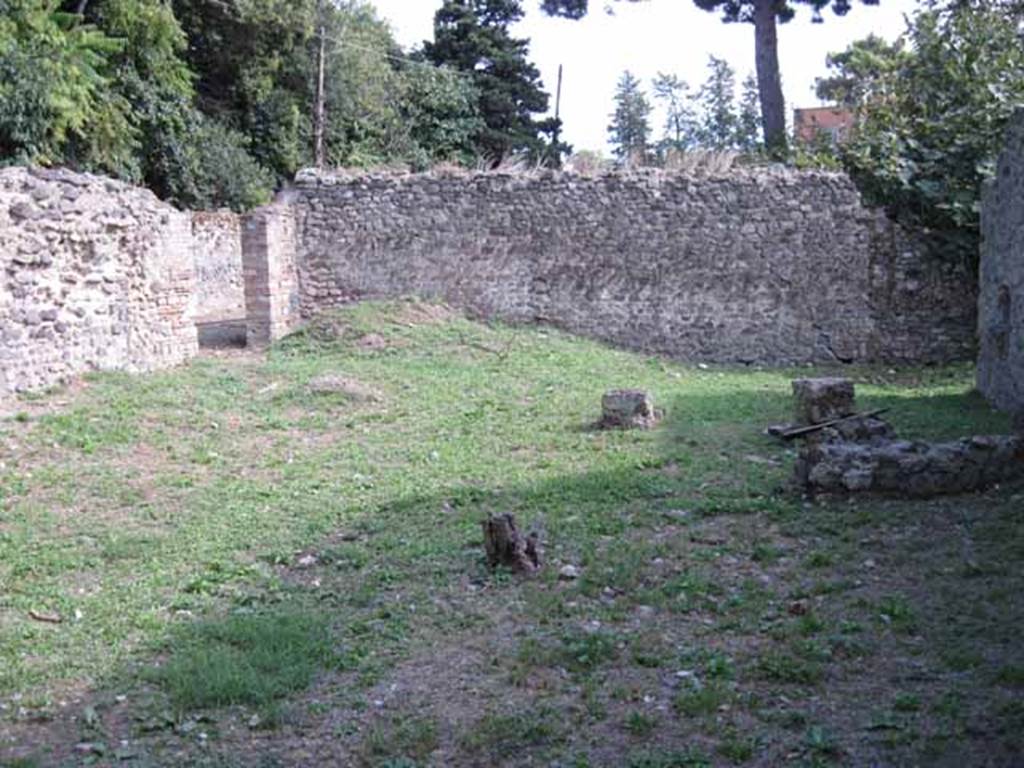
I.5.3 Pompeii. September 2010.
Looking south across large open area, with the entrance doorway in the east wall, on the left. Photo courtesy of Drew Baker.
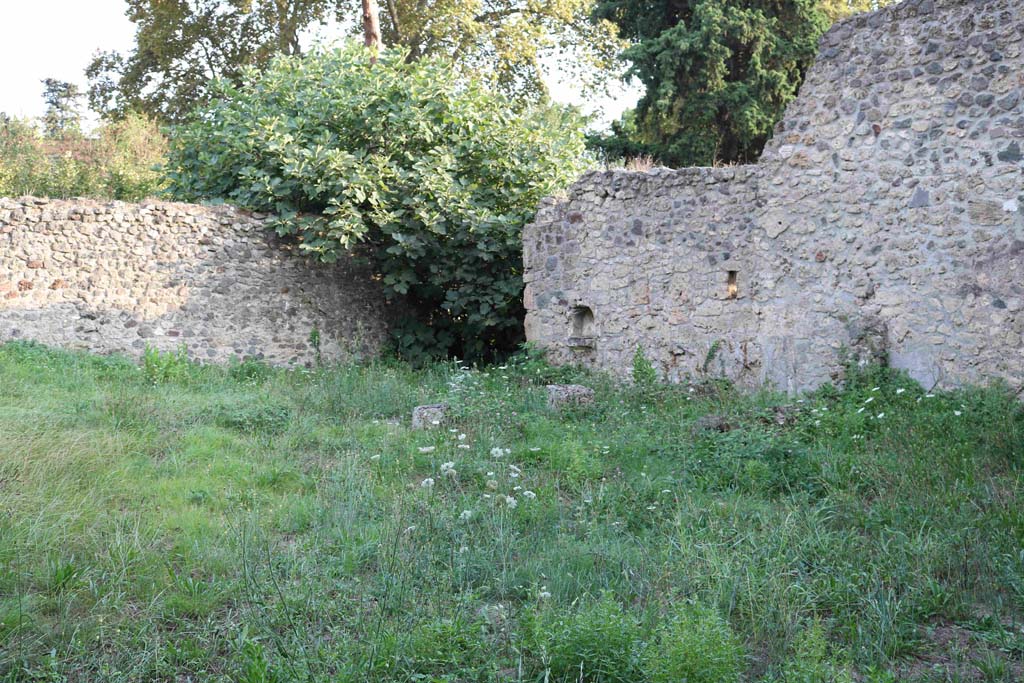
I.5.3 Pompeii. September 2018.
Looking south-west across large open area, towards a niche in the west wall, at its south end. Photo courtesy of Aude Durand.
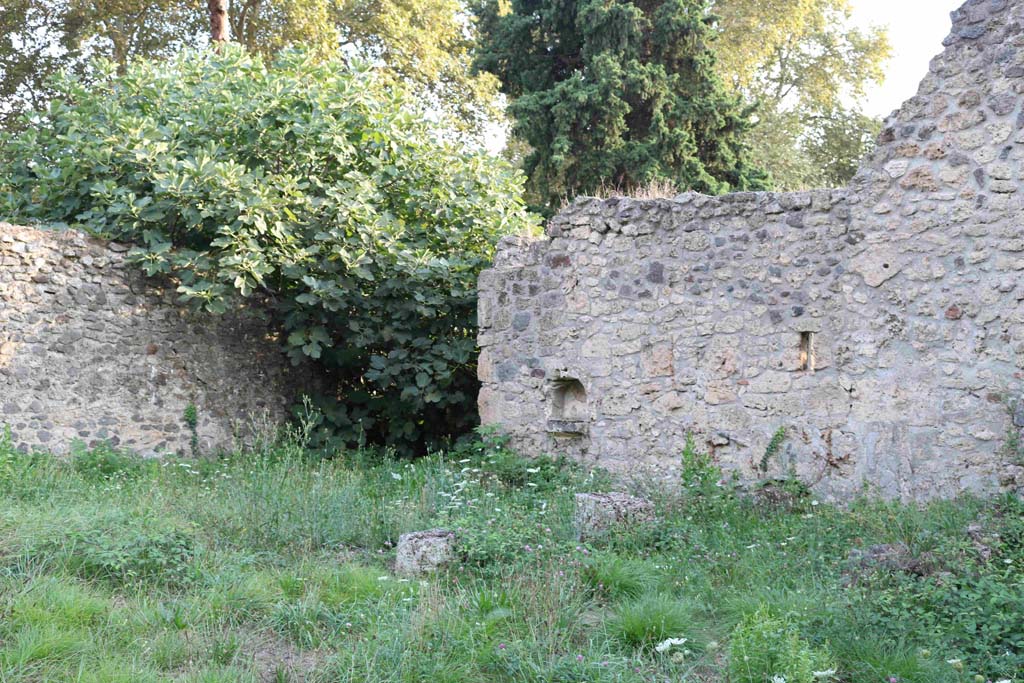
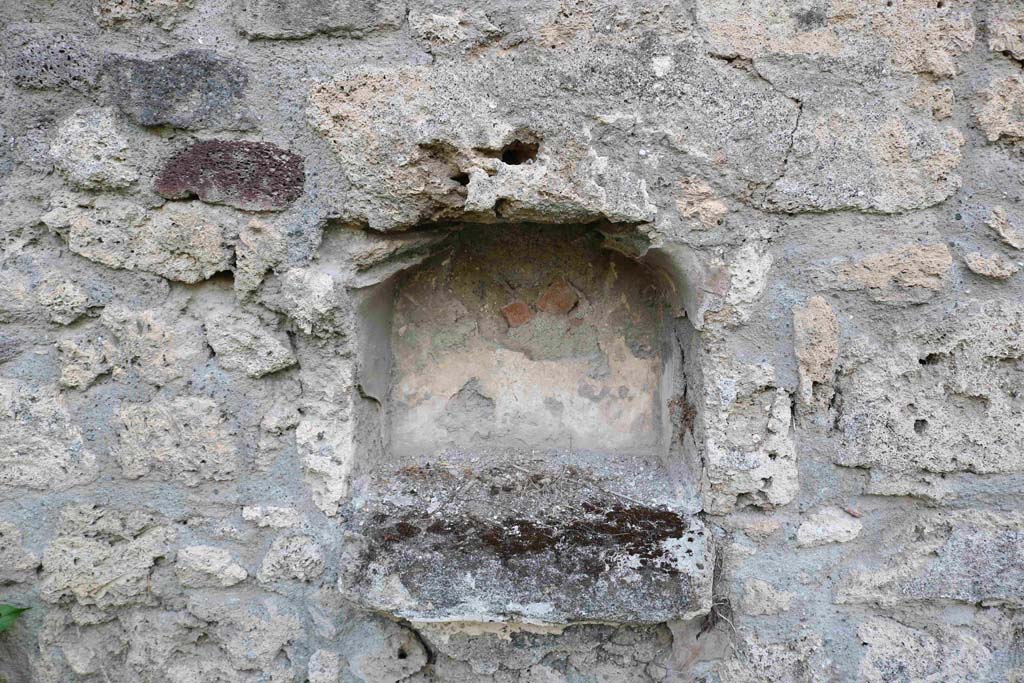
I.5.3 Pompeii. September 2018. Niche in west wall. Photo courtesy of Aude Durand.
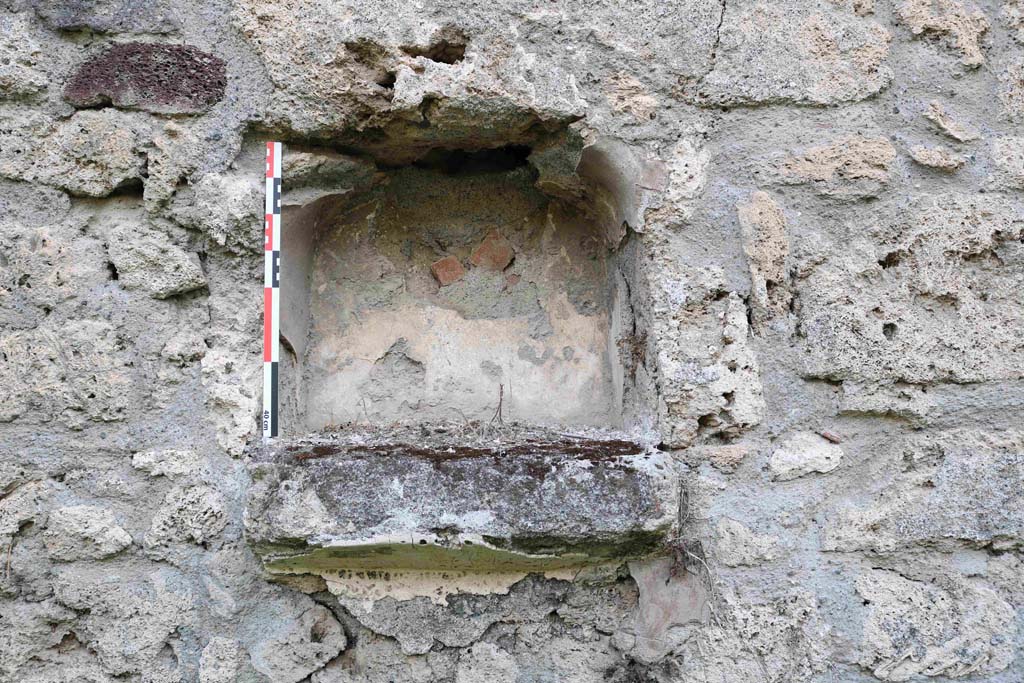
I.5.3 Pompeii. September 2018. Detail of niche in west wall. Photo courtesy of Aude Durand.
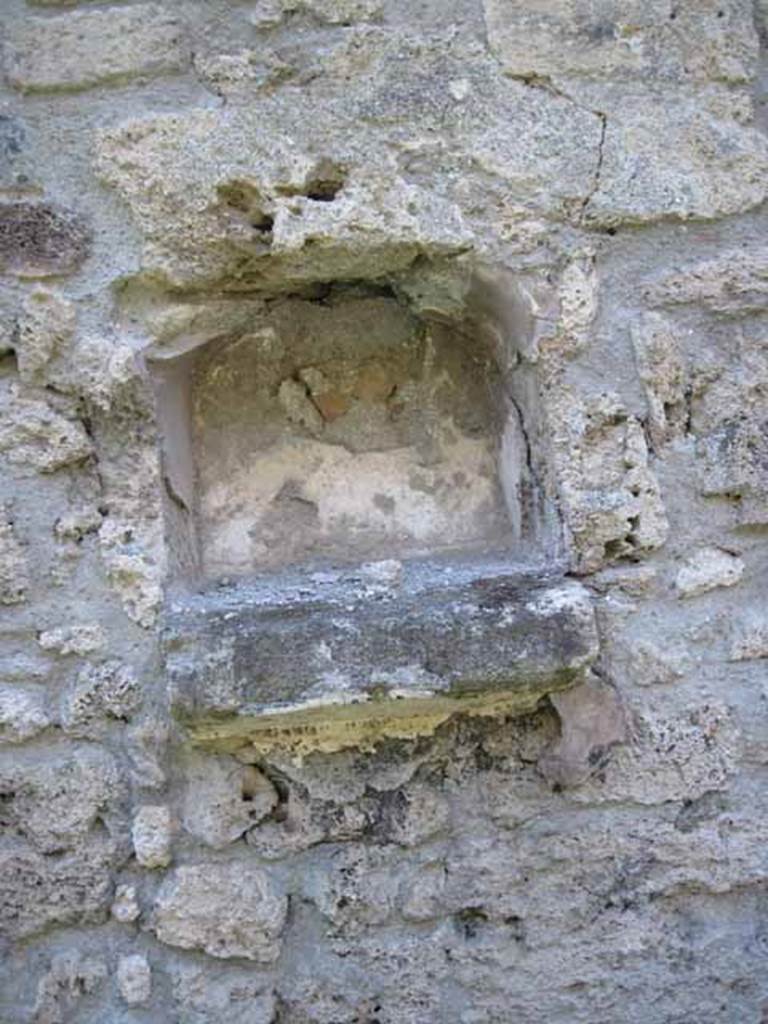
I.5.3 Pompeii. September 2010. Niche in west wall of large open area. Photo courtesy of Drew Baker.
Boyce reported that there was an arched niche in the west wall with projecting floor.
See Boyce G. K., 1937. Corpus of the Lararia of Pompeii. Rome: MAAR 14. (p.25)
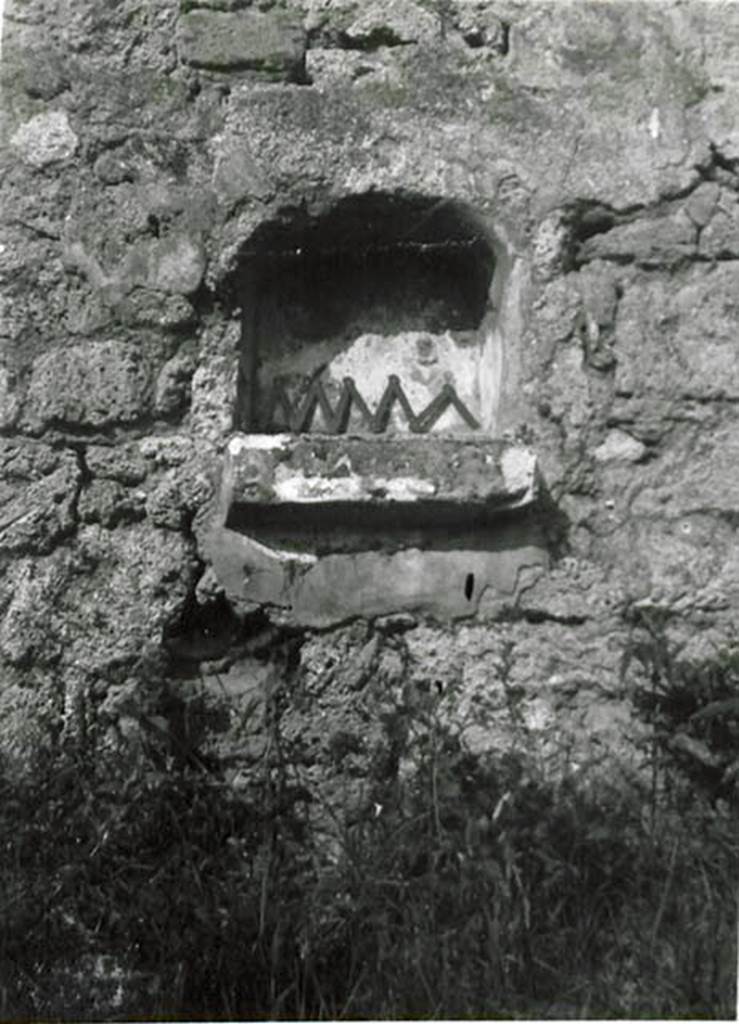
I.5.3 Pompeii. 1936, taken by Tatiana Warscher. Niche in west wall of large open area.
Warscher
described this as “Nicchia dei penati nel muro ovest della stanza “a”.
She also noted
“Del piccolo muro o forse d’una specie d’impluvio che è marcato sulla pianta io
non ho trovato nessuna traccia”
See Warscher T., 1936. Codex Topographicus Pompeianus: Regio I.1, I.5. (no.36), Rome: DAIR, whose copyright it remains.
(translation – Niche for worshipping the household gods
in the west wall of room “a”.
Of the small wall, or perhaps a type of impluvium, that
is marked on the plan, I have not found any trace”.)
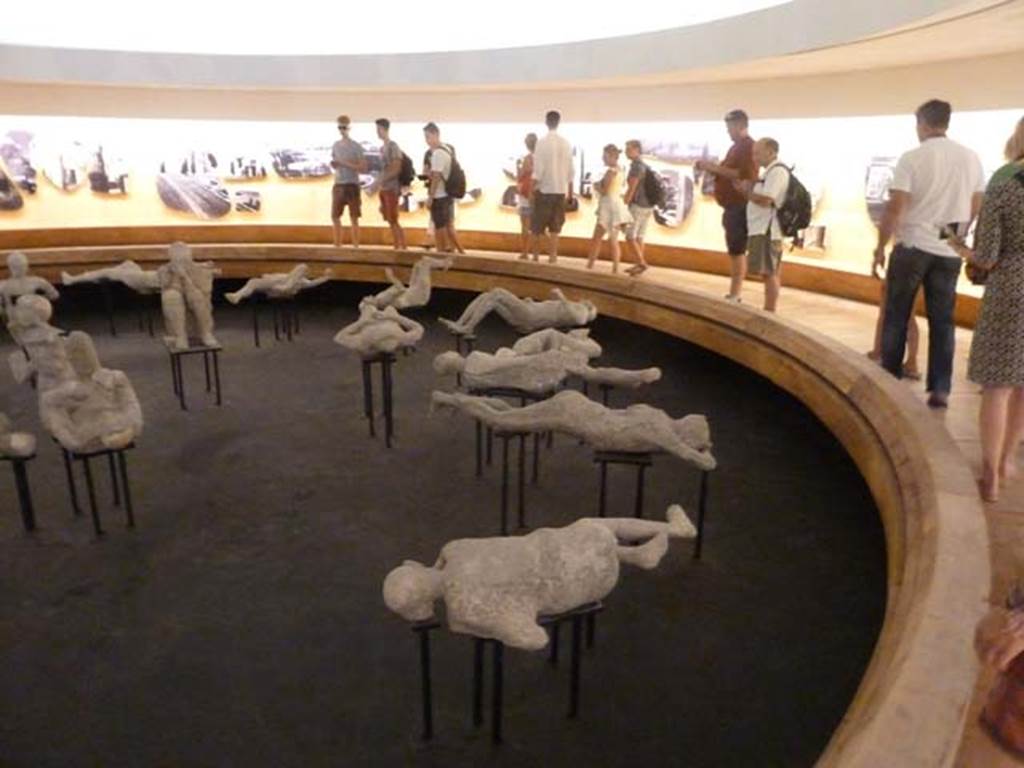
I.5.3 Pompeii. September 2015. Exhibits from the Summer 2015 exhibition in the amphitheatre.
Victim numbered 7, found in the garden of I.5.3, can be seen on the lower right.
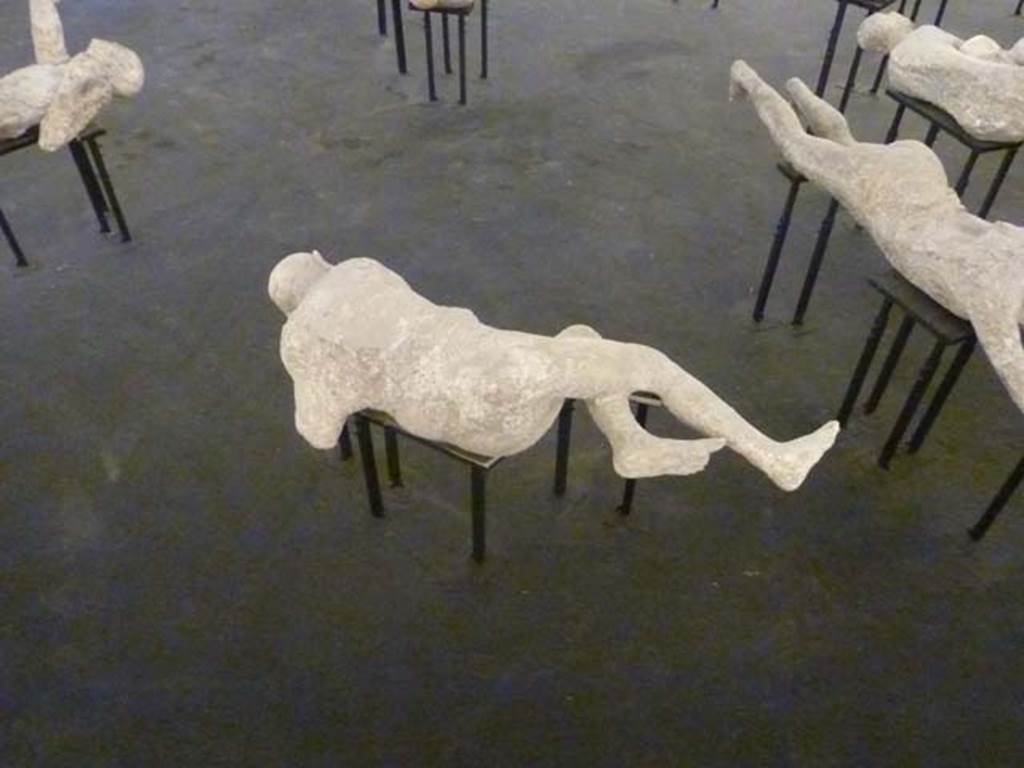
I.5.3 Pompeii. September 2015.
Plaster cast of victim numbered 7, on display as an exhibit in the Summer 2015 exhibition in the amphitheatre.
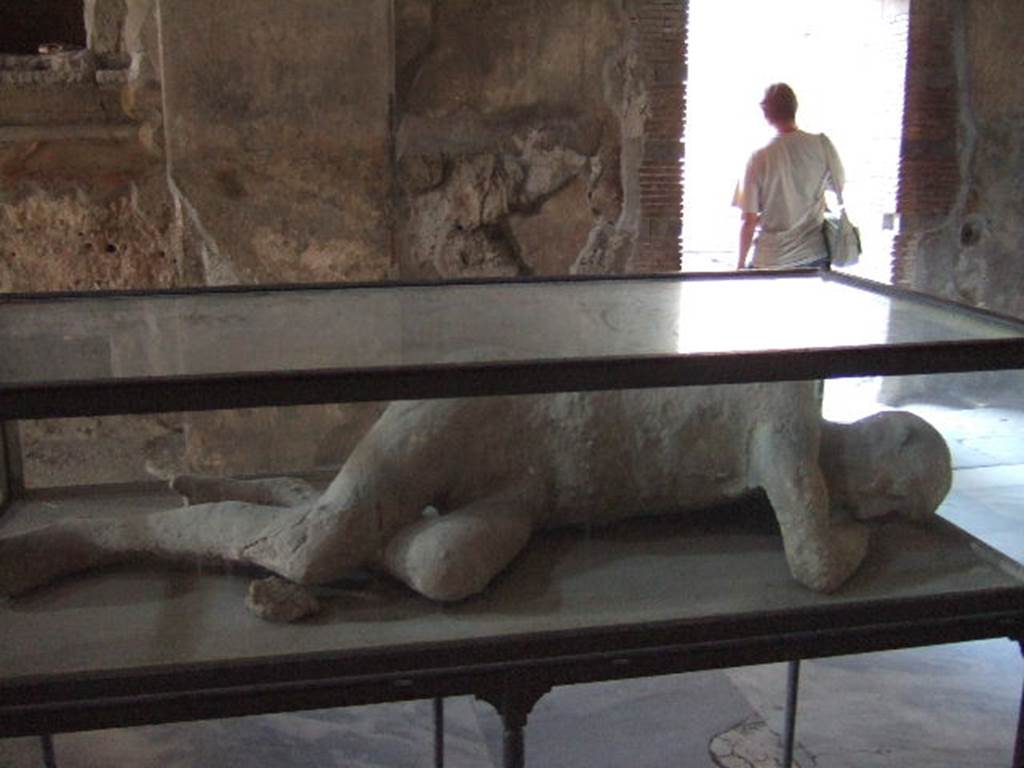
Found in I.5.3. in 1873, on display in
Known as the Seventh Victim or The Sick Man or the Sleeping Man.
This plaster cast was recovered by Fiorelli on 25th September 1873 during the excavation of the garden of I.5.3.
This was one of the human plaster casts, as were in the Pompeii Antiquarium prior to the 1943 bombing – then either destroyed or now restored and on display elsewhere.
See Pappalardo, U., 2001. La Descrizione di Pompei per Giuseppe Fiorelli (1875). Napoli: Massa Editore. (p.165)
See SSANP: Boscoreale Antiquarium exhibition catalogue: The Casts, 5 March – 20
December 2010. (p.7)
See Garcia y
Garcia, L., 2006. Danni di guerra a
Pompei. Rome: L’Erma di Bretschneider. (p.191)
See Dwyer, E., 2010. Pompeii’s Living Statues. Univ. of Michigan Press. (p.85)
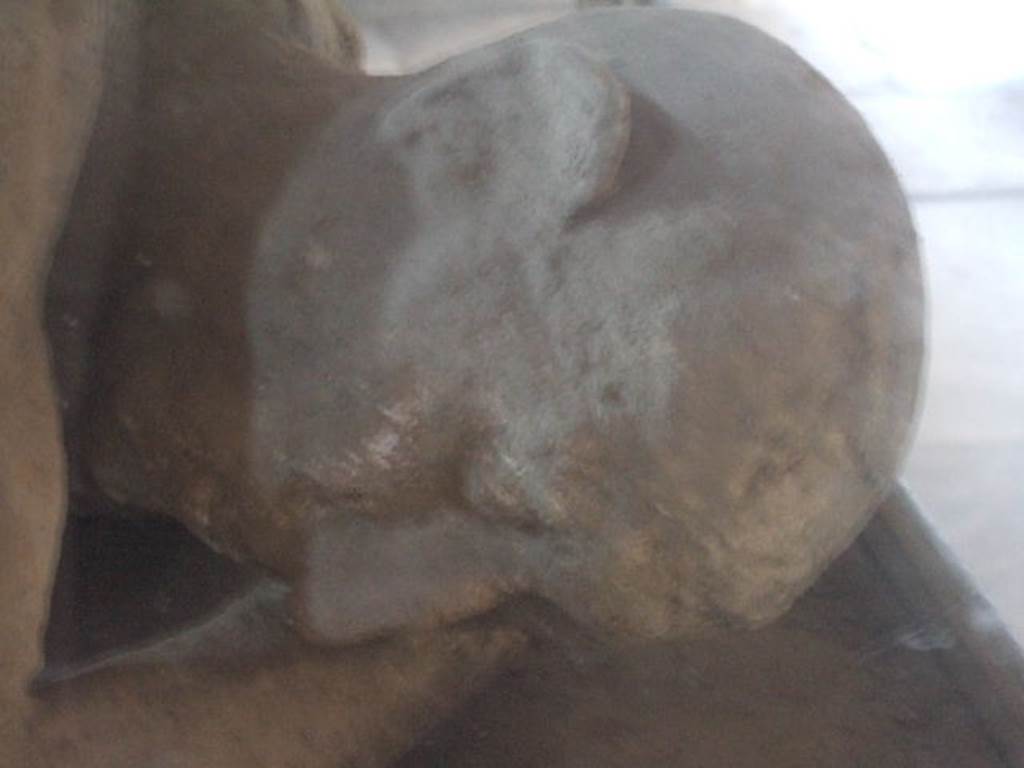
I.5.3 Pompeii. Detail of head of plaster cast known as The Sick Man.
In 1875 Fiorelli wrote: “……he lay down on the ground and there fell calmly into his eternal sleep”
On display in
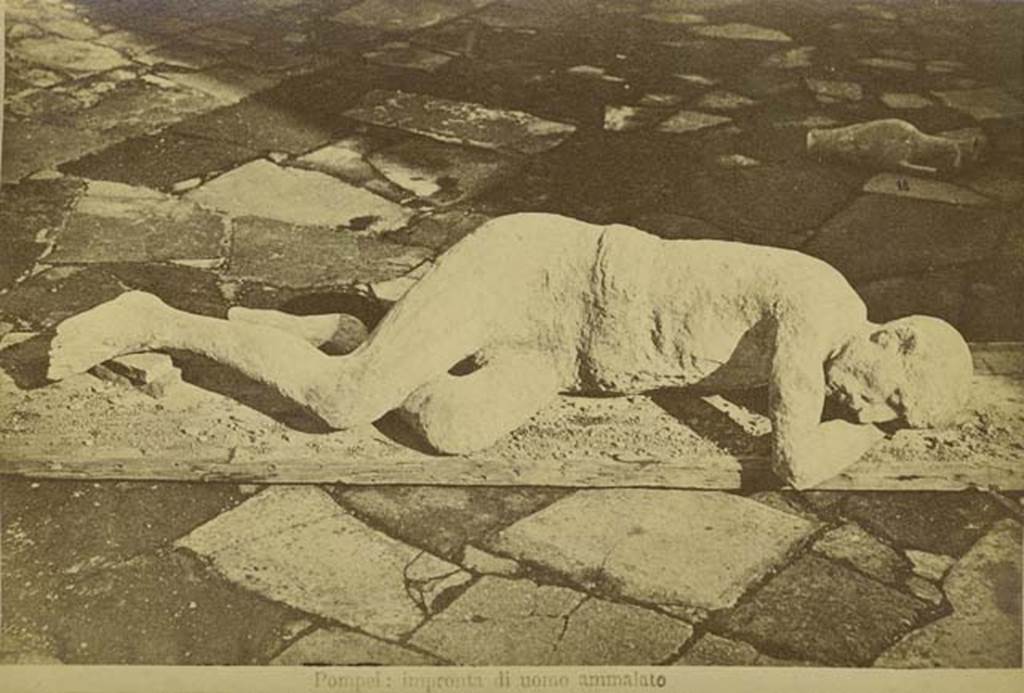
I.5.3 Pompeii. Cabinet card by G. Sommer dated 1892 and titled “imprint (cast) of a sick man”. Photo courtesy of Rick Bauer.
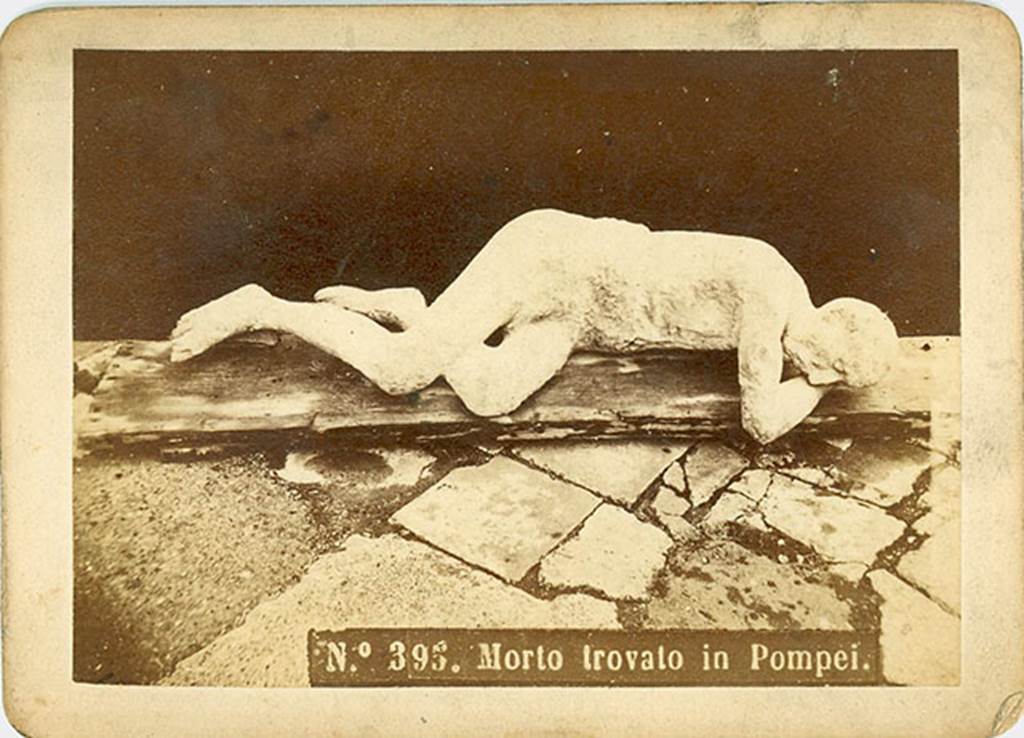
I.5.3 Pompeii. Old 19th century CDV number 395 by Roberto Rive of body found in Pompeii [in 1873]. Photo courtesy of Rick Bauer.
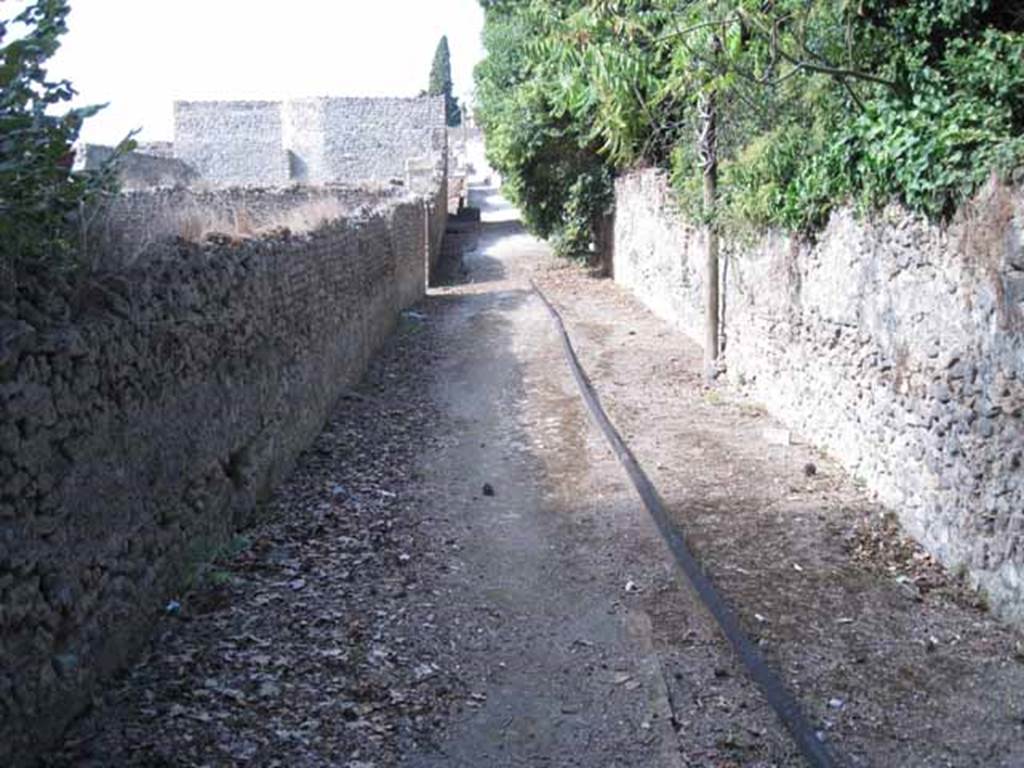
I.5.3 Pompeii. September 2010.
Looking north along Vicolo del Citarista, with entrance doorway in the wall, on the left. Photo courtesy of Drew Baker.
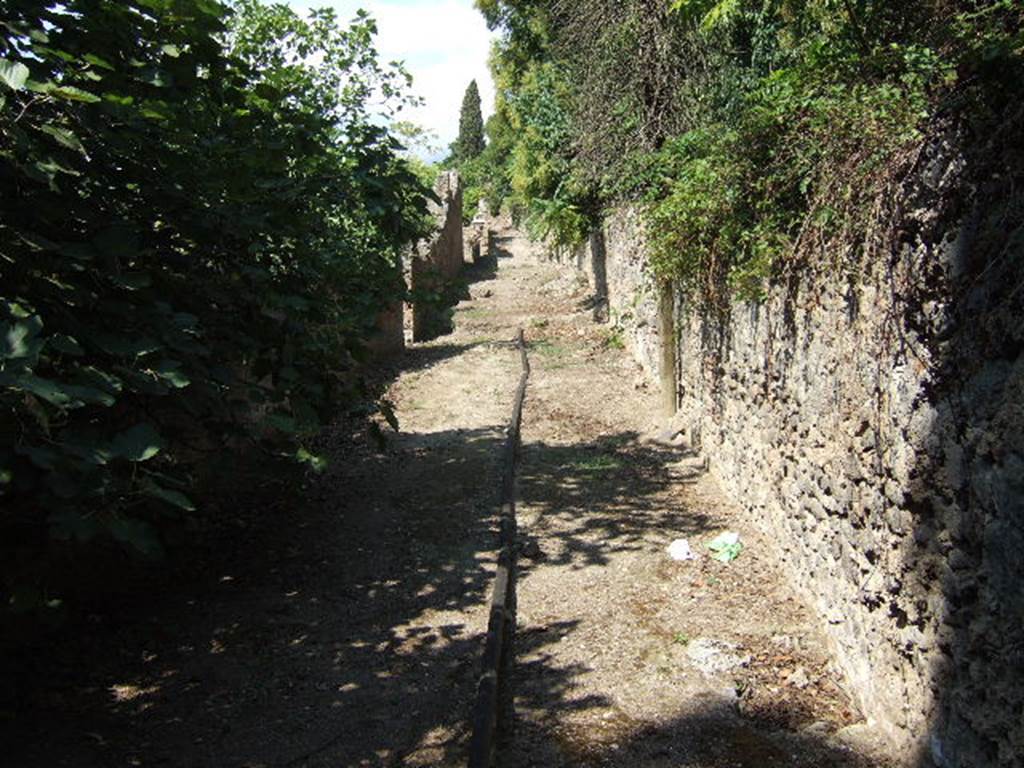
I.5.3 Pompeii, on left. September 2005. Vicolo del Citarista, looking north. I.25 unexcavated, on right.
This extract from Tatiana Warscher’s “Codex Topographicus Pompeianus: Regio I.1, I.5” (1936) appears at the end of all the properties in I.5 on this website.
Warscher quoting
Mau in Bull. Inst.1875, p.25, described Vicolo del Conciapelle
as via tertia, -
“L’insula 5 della
Regione I è quasi tutta occupata dalla conceria. Fuori di essa non vi è che il
compreso rozzo sul lato E ed una bottega con tre camere sul cantone NO”
(Translation: Insula 5 of Region I was nearly all
occupied by a tannery. Outside of this, there was nothing other than a coarse
complex on its east side, and a shop with three rooms in the north-west corner
of the insula).
Quoting Sogliano in Giornale degli Scavi. N.S.III, no.21, 1874, p.8, she wrote –
“Chiameremo 5 per
l’ordine cronologico dei cavamenti quest’isola della I Regione, la quale per
essere parallela e vicina alla I doverebbe piuttosto dirsi 2.
Considerando la
parte finora scoverta, osserviamo a prima vista che la sua costruzione offre in
taluni punti grandi lastre del tufo di Sarno, in altri quello di Nocera, e per
lo più l’opus incertum.
I tre vicoli, che
rasentano ad oriente, settentrione ed occidente, non sono lastricati; il
settentrionale è accessibile solo per i due altri margines, ricongiunti nel
mezzo di esso da un piccolo ponte in fabbrica.
Quest’isola, per
la sua situazione presso la porta Stabiana e per la sua località, sembra sia
stata abitata in gran parte da persone viventi col commercio e coll’industria”.
See Warscher T., 1936. Codex Topographicus Pompeianus: Regio I.1, I.5. Rome: DAIR, whose copyright it remains.
(Translation: we will call insula 5 for the chronological
order of the excavating of this insula of Region I, which being parallel and
near to insula 1, should rather be called 2. Considering the part already
excavated, we see at first glance that its construction offers in some places large slabs of Sarno tufa, Nocera tufa in other
places, and mostly opus incertum. The three vicoli, that border to the East,
North and West, are not paved; the North was accessible only by its two other
sides, reuniting in the middle of it by a small masonry bridge. This insula,
for its situation near the Stabian Gate and due to its location, seems to have
been inhabited largely by persons living with commerce and industry.")